Sonnet—To Science by Edgar Allan Poe: Summary, Themes, Meaning & Analysis
Edgar Allan Poe’s Sonnet—To Science explores the tension between imagination and reason, presenting science as a force that strips the world of its wonder, beauty, and myth. Through the rigid form of the sonnet, Poe confronts what he sees as the cold, analytical gaze of science, which replaces mystery with explanation and reduces the imaginative richness of the universe to mere “realities.” The poem draws on Romantic and Gothic concerns, positioning science as an almost predatory force that threatens the emotional and creative life of the poet.
At a deeper level, the poem raises questions about progress, knowledge, and loss, suggesting that intellectual advancement may come at the cost of spiritual or imaginative depth. Poe does not reject knowledge entirely, but instead presents an unresolved tension between discovery and enchantment, leaving the reader to consider what is sacrificed when the unknown becomes known. This ambiguity makes the poem a powerful reflection on the limits of human understanding and the role of imagination in shaping meaning. For further exploration of Poe’s work and themes, see the Edgar Allan Poe Hub and the Literature Library.

Context of Sonnet—To Science
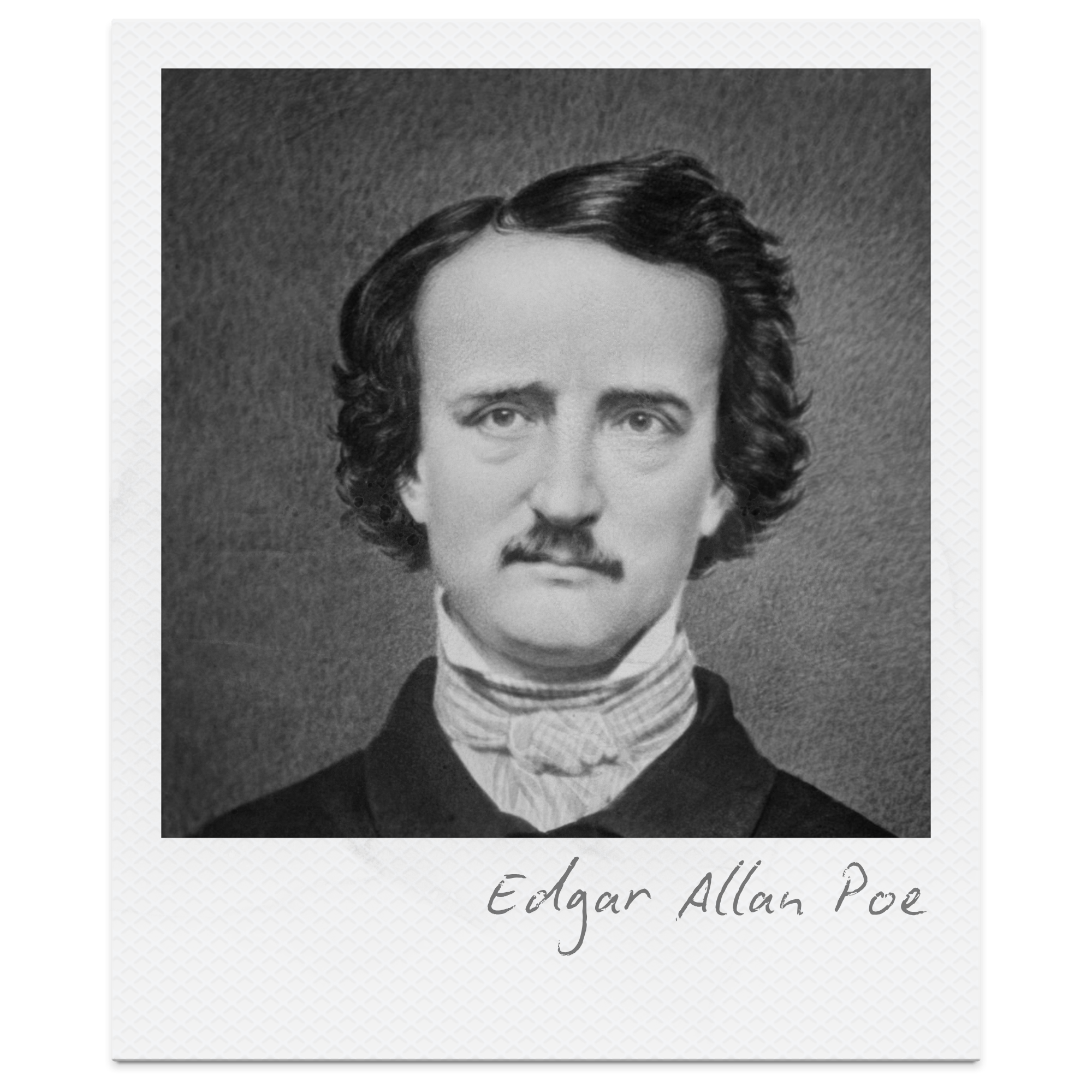
Edgar Allan Poe wrote Sonnet—To Science in the early nineteenth century, a period shaped by rapid scientific advancement and growing confidence in rational thought. As part of the broader Romantic movement, Poe was deeply invested in the power of imagination, emotion, and the sublime—values that often stood in opposition to the emerging dominance of empirical science. While scientific progress promised knowledge and control over the natural world, writers like Poe questioned what might be lost in the process, particularly the sense of mystery and wonder that defined earlier poetic traditions.
Thematically, the poem reflects enduring concerns in Poe’s work, including loss, disillusionment, and the erosion of beauty. Here, however, that loss is not tied to death alone, but to the displacement of myth, nature, and imagination by rational explanation. References to figures such as Diana, Hamadryads, and Naiads evoke a world once alive with symbolic meaning, now stripped of its enchantment. Science becomes a disruptive force that removes the poetic lens through which the world is experienced, aligning the poem with broader themes of imagination vs reality, myth vs reason, and the cost of progress. If you would like to read more about the context surrounding Poe’s work, then read our Edgar Allan Poe Context Post.
Sonnet—To Science: At a Glance
Form: Shakespearean Sonnet
Mood: critical, disillusioned, confrontational
Central tension: the conflict between scientific reason and poetic imagination, where knowledge threatens to dismantle wonder
Core themes:
Imagination vs reality
Science vs poetry
Loss of myth and enchantment
Progress and its consequences
Knowledge vs beauty
Displacement of the natural world
One-sentence meaning: Science, in its pursuit of truth and explanation, strips the world of its mystery and beauty, undermining the imaginative and emotional richness that poetry seeks to preserve.
Quick Summary of Sonnet—To Science
The speaker directly addresses science, portraying it as a powerful but destructive force that interferes with the poet’s inner world. From the opening, science is personified and criticised for its “peering eyes,” which relentlessly analyse and alter everything they observe, leaving little room for imagination or emotional experience.
As the poem develops, the speaker questions how anyone devoted to creativity could love or trust science, since it refuses to allow the mind to wander freely. Instead of encouraging exploration and wonder, science restricts the poet, grounding lofty dreams and imaginative flights in harsh reality. The idea of seeking “treasure in the jewelled skies” becomes impossible under the scrutiny of rational explanation.
By the end, the speaker presents science as a force that has stripped the world of its mythological richness, driving away figures like Diana, the Hamadryad, and the Naiad. These losses symbolise the disappearance of beauty, mystery, and enchantment. The final line suggests that even the speaker’s personal sense of wonder—his “summer dream”—has been taken, leaving a world diminished by knowledge.
Title, Form, Structure, and Metre of Sonnet—To Science
This poem’s title, form, and structure work together to reinforce its central conflict between scientific reason and poetic imagination, with the sonnet itself acting as a quiet demonstration of the enduring power of poetic form.
Title
The title Sonnet—To Science signals both form and address. The word “sonnet” places the poem within a long-standing poetic tradition associated with love, reflection, and philosophical argument, while “To Science” establishes an apostrophic voice, directly confronting science as if it were a living force. This framing immediately creates tension: a traditional poetic form is being used to challenge the authority of modern, rational thought.
Form and Structure
The poem follows a Shakespearean sonnet structure, consisting of three quatrains and a final rhyming couplet. This allows Poe to build a logical, escalating argument:
First quatrain: introduces science as a destructive force
Second quatrain: questions its value to the poet and imagination
Third quatrain: presents the loss of myth and natural wonder
Final couplet: delivers a personal, emotional conclusion
A key structural feature is the volta (turn), which occurs in line 13:
“The Elfin from the green grass, and from me”
Here, the poem shifts from a general critique of science to a personal admission of loss. The speaker is no longer discussing what science has done to the world, but what it has taken from him specifically. This shift intensifies the emotional impact and reinforces the idea that the conflict between reason and imagination is not abstract, but deeply personal.
Metre
The poem is written in iambic pentameter, meaning each line typically contains five iambs (an unstressed syllable followed by a stressed one: da-DUM).
For example:
To seek | for trea | sure in | the jew | elled skies
This creates a steady, natural rhythm that mirrors spoken English, giving the poem both control and fluidity.
However, Poe deliberately disrupts this regular pattern at key moments. For example:
Science! | true daugh | ter of | Old Time | thou art
The opening stress on “Science!” creates a trochaic inversion (DUM-da), immediately breaking the expected rhythm. This gives the line a more forceful, confrontational tone, mirroring the intrusive power the speaker attributes to science.
Similarly:
Vulture, | whose wings | are dull | real | ities
Again, the stressed opening emphasises the harsh metaphor of “Vulture,” reinforcing the idea of science as predatory.
These variations show how metrical disruption reflects thematic disruption—science interrupts not only imagination, but the very rhythm of the poem itself.
Rhyme Scheme
The poem broadly follows the Shakespearean rhyme scheme, but with a subtle variation:
ABAB BDBD EFEF GG
We can see this clearly in the opening lines:
art (A)
eyes (B)
heart (A)
realities (B)
The second quatrain continues the alternating pattern, but interestingly reuses the “B” rhyme sound:
wise (B)
wandering (D)
skies (B)
wing (D)
This creates a sense of echo and insistence, as the repeated rhyme reinforces the speaker’s persistent questioning of science.
The final couplet:
me (G)
tree (G)
provides a closed, emphatic conclusion, typical of Shakespearean sonnets. Here, the rhyme tightens the emotional focus, bringing the argument to a personal and definitive end.
Importantly, rhyme itself becomes symbolic. As a distinctly poetic device, its controlled pattern contrasts with the cold logic of science. The poem’s reliance on sound, rhythm, and repetition subtly reinforces the speaker’s allegiance to artistic expression, demonstrating the very beauty and structure that science cannot replicate.
The Speaker of Sonnet—To Science
The speaker of Sonnet—To Science is not explicitly identified, but is clearly aligned with the role of the poet, representing a voice deeply invested in imagination, emotion, and creative freedom. Rather than presenting a detached or neutral perspective, the speaker adopts a highly confrontational and accusatory tone, directly addressing science as an opposing force.
The use of apostrophe creates immediacy, allowing the speaker to challenge science as though it were a conscious entity. This gives the poem a sense of urgency and tension, as the speaker moves from critique to frustration and, ultimately, to personal loss. The repeated rhetorical questions reinforce this tone, suggesting both disbelief and resistance to the dominance of rational thought.
As the poem progresses, the speaker’s voice becomes increasingly personal and vulnerable. While the earlier lines focus on the broader impact of science on myth, nature, and imagination, the final lines reveal that the speaker himself has been affected. The shift to “from me” signals that this is not simply an abstract argument, but a lived experience of loss.
The speaker also appears to be well-read and culturally aware, drawing on classical mythology (Diana, Hamadryad, Naiad) to emphasise what has been erased. This suggests a voice that values symbolic meaning and artistic tradition, positioning imagination as a source of truth that science cannot fully replace.
Line by Line Analysis of Sonnet—To Science
The structure of the poem is essential to how its meaning unfolds, with each line contributing to a sustained critique of science as a disruptive force. Rather than developing ideas in broad stanzas alone, Poe carefully constructs meaning through individual lines, allowing shifts in tone, imagery, and argument to emerge with precision. This line-by-line progression reflects the speaker’s increasingly urgent resistance to rational explanation, as the poem moves from accusation, to questioning, to personal loss.
By analysing the poem at the level of line by line analysis, we can see how each line builds upon the last, creating a cumulative effect in which science gradually dismantles imagination, myth, and finally the speaker’s own inner world.
Science! true daughter of Old Time thou art!
The poem opens with a direct apostrophe, immediately personifying science as an active and powerful force. The phrase “daughter of Old Time” links science to progress and historical development, but also suggests something inevitable and difficult to resist.
♦ Apostrophe
♦ Science is directly addressed as if it were alive
♦ Creates a confrontational, accusatory tone
♦ Personification
♦ Science is given identity and agency as a “daughter”
♦ Implies it actively shapes and controls the world
♦ Trochaic inversion
♦ The stressed opening syllable (“Science!”) disrupts the expected rhythm
♦ Reflects the forceful, intrusive nature of science
Who alterest all things with thy peering eyes.
Science is presented as constantly observing and altering the world through its analytical gaze. The phrase “peering eyes” suggests an invasive, almost unsettling scrutiny that removes mystery.
♦ Imagery
♦ Visual image of “peering eyes” creates a sense of surveillance
♦ Suggests nothing can escape scientific observation
♦ Personification
♦ Science is given human features (eyes)
♦ Reinforces its active, controlling presence
♦ Semantic field of observation
♦ “Peering” implies close, intrusive inspection
♦ Suggests analysis replaces wonder with scrutiny
Why preyest thou thus upon the poet’s heart,
The speaker shifts into questioning, accusing science of attacking the emotional core of the poet. The verb “preyest” introduces a violent, predatory tone.
♦ Rhetorical question
♦ Challenges the necessity of science’s dominance
♦ Reflects frustration and resistance
♦ Predatory imagery
♦ “Preyest” suggests hunting and consumption
♦ Positions science as harmful to creativity
♦ Metaphor
♦ “Poet’s heart” represents imagination and emotion
♦ Implies science damages inner life
Vulture, whose wings are dull realities?
Science is explicitly compared to a vulture, reinforcing its role as a scavenger that feeds on what once lived. “Dull realities” contrasts sharply with imaginative richness.
♦ Metaphor
♦ Science becomes a “vulture”
♦ Suggests it feeds on and destroys beauty
♦ Juxtaposition
♦ “Dull realities” contrasts with poetic imagination
♦ Highlights loss of wonder
♦ Symbolism
♦ Vulture symbolises decay and death
♦ Implies science reduces life to lifeless facts
How should he love thee? or how deem thee wise,
The speaker questions how a poet could possibly admire or trust science. The tone becomes more reflective but remains critical.
♦ Rhetorical question
♦ Emphasises incompatibility between science and poetry
♦ Reinforces the speaker’s rejection of science
♦ Diction of judgement
♦ “Love” and “wise” suggest emotional and intellectual value
♦ Suggests science fails on both levels
Who wouldst not leave him in his wandering
Science is criticised for restricting the poet’s ability to wander freely, both physically and imaginatively. Wandering suggests creativity and exploration.
♦ Symbolism
♦ “Wandering” represents imagination and creative freedom
♦ Suggests poetry thrives on openness
♦ Negative construction
♦ “Wouldst not leave him” implies control and restriction
♦ Reinforces science as limiting
To seek for treasure in the jewelled skies,
The poet’s imaginative journey is described as a search for treasure, elevating creativity to something valuable and rare. The “jewelled skies” evoke beauty and wonder.
♦ Metaphor
♦ “Treasure” symbolises imaginative discovery
♦ Suggests creativity is valuable
♦ Imagery
♦ “Jewelled skies” creates a rich, celestial image
♦ Reinforces beauty and mystery
♦ Romantic symbolism
♦ The sky represents the infinite and unknown
♦ Contrasts with science’s need to define and explain
Albeit he soared with an undaunted wing?
The poet is imagined as fearless and ambitious, capable of soaring freely. However, this freedom is threatened by science.
♦ Symbolism
♦ “Soared” represents imaginative elevation
♦ Suggests transcendence beyond reality
♦ Adjective choice
♦ “Undaunted” emphasises courage and independence
♦ Highlights the strength of poetic vision
♦ Contrast
♦ Freedom of flight contrasts with scientific restriction
♦ Reinforces central conflict
Hast thou not dragged Diana from her car,
Science is accused of stripping away mythology, beginning with Diana, the Roman goddess of the moon. This suggests the removal of symbolic meaning from the world.
♦ Mythological allusion
♦ Reference to Diana connects to classical tradition
♦ Represents beauty, mystery, and divine presence
♦ Violent verb
♦ “Dragged” suggests force and destruction
♦ Implies science removes meaning aggressively
And driven the Hamadryad from the wood
The destruction continues with the removal of the Hamadryad, a tree spirit, symbolising the loss of nature’s enchantment.
♦ Mythological allusion
♦ Hamadryad represents nature’s spirit
♦ Suggests nature once held deeper meaning
♦ Verb choice
♦ “Driven” implies expulsion
♦ Reinforces loss and displacement
To seek a shelter in some happier star?
The mythological figures are forced to flee, suggesting that wonder no longer belongs in the natural world.
♦ Imagery
♦ “Happier star” suggests escape to another realm
♦ Implies Earth has lost its magic
♦ Tone shift
♦ Slightly wistful, suggesting longing for what is lost
♦ Reinforces emotional impact
Hast thou not torn the Naiad from her flood,
The Naiad, a water spirit, is also removed, continuing the pattern of erasing myth from nature.
♦ Mythological allusion
♦ Naiad represents water and fluidity
♦ Suggests all elements of nature are affected
♦ Violent verb
♦ “Torn” suggests sudden, painful removal
♦ Emphasises destruction
The Elfin from the green grass, and from me
The destruction expands from mythological beings to include the speaker himself, marking a shift toward the personal.
♦ Structural shift (volta)
♦ Movement from external to personal impact
♦ Intensifies emotional stakes
♦ Symbolism
♦ “Elfin” represents folklore and imagination
♦ Suggests even small traces of magic are gone
The summer dream beneath the tamarind tree?
The final line reveals what has been lost: the speaker’s own dream, symbolising imagination, peace, and beauty. The natural setting reinforces what has been taken.
♦ Symbolism
♦ “Summer dream” represents imagination and emotional richness
♦ Suggests something fleeting and precious
♦ Natural imagery
♦ “Tamarind tree” evokes warmth and tranquillity
♦ Reinforces contrast with scientific coldness
♦ Emotive conclusion
♦ Ends on personal loss rather than abstract argument
♦ Leaves the reader with a sense of absence and longing
Key Techniques in Sonnet—To Science
Poe uses a range of poetic techniques to construct his argument that science threatens imagination, combining classical references, sound, and rhetorical structure to create a sustained sense of loss and resistance.
♦ Allusion – References to figures such as Diana, the Hamadryad, and the Naiad draw on classical mythology, presenting a world once rich with symbolic meaning; their violent removal by science illustrates how rational explanation displaces myth, beauty, and wonder, making the loss feel culturally and spiritually significant
♦ Apostrophe – The poem directly addresses science as if it were a living force, creating an immediate and confrontational tone; this technique allows the speaker to challenge science directly, reinforcing the sense of conflict between reason and imagination
♦ Metaphor – Science is compared to a “vulture” that preys upon the poet’s heart, transforming it into a predatory force; this metaphor suggests that science does not simply explain the world but feeds on and destroys creativity, intensifying the poem’s critique
♦ Rhetorical Questions – A series of questions (“Why preyest thou…?”, “How should he love thee?”) structures the poem, emphasising the speaker’s frustration and disbelief; these questions are not meant to be answered, instead reinforcing the idea that science is fundamentally incompatible with poetic values
♦ Alliteration – Subtle repetition of consonant sounds (e.g., “peering… poet’s”, “dull realities”) creates a controlled musicality; this reinforces the poetic craft of the piece, subtly contrasting with the cold precision of science
♦ Enjambment – Lines occassionally run into one another without pause, reflecting the movement of thought and questioning; this creates a sense of continuity and urgency, mirroring the speaker’s ongoing struggle against scientific dominance
♦ Symbolism – Elements such as the “jewelled skies”, mythological figures, and the “summer dream” symbolise imagination, beauty, and emotional depth; their removal or destruction represents the wider loss of wonder and meaning in a world governed by science
♦ Personification – Science is consistently given human qualities (eyes, intent, agency), presenting it as an active force rather than an abstract concept; this makes the conflict feel more immediate and personal
♦ Contrast (Imagination vs Reality) – The poem repeatedly contrasts rich, imaginative imagery with “dull realities,” highlighting the tension between creative vision and scientific explanation; this reinforces the central idea that knowledge may come at the cost of beauty and mystery
Themes in Sonnet—To Science
The poem explores a series of interconnected themes that reflect a deep tension between rational progress and imaginative experience, presenting science as both powerful and profoundly disruptive.
Imagination vs Reality
At the heart of the poem is the conflict between imagination and reality, where science represents a force that reduces the world to observable facts. The speaker values imagination as a means of accessing beauty, wonder, and possibility, while reality—defined through scientific scrutiny—becomes limiting and reductive. This tension suggests that understanding the world may come at the cost of experiencing it fully.
Science vs Poetry
Poe presents science and poetry as fundamentally opposed ways of seeing. While science seeks to explain, categorise, and define, poetry thrives on ambiguity, symbolism, and emotional resonance. The speaker implies that science undermines the very foundation of poetry by stripping away the mystery that gives it meaning, making it difficult for the poet to coexist with a world dominated by rational thought.
Loss of Myth and Enchantment
Through repeated references to classical mythology, the poem highlights the disappearance of a world once filled with symbolic meaning. Figures like Diana, the Hamadryad, and the Naiad represent a time when nature was alive with story, presence, and enchantment. Their removal suggests that science has replaced myth with explanation, leaving the world diminished and less meaningful.
Progress and Its Consequences
The poem does not deny the power of progress, but questions its cost. Science, as a product of time and advancement, is shown to bring knowledge while simultaneously erasing older ways of understanding the world. This creates a sense of unease, as progress is associated not only with discovery, but with loss, displacement, and emotional emptiness.
Knowledge vs Beauty
Poe explores the idea that knowledge and beauty are not always compatible. Scientific understanding may reveal how the world works, but it can also strip away the aesthetic and emotional richness that makes it meaningful. The speaker suggests that beauty lies not in explanation, but in mystery and perception, and that science risks replacing this with something colder and less fulfilling.
Displacement of the Natural World
Nature in the poem is presented as something once inhabited by myth, spirit, and imagination, but now emptied by scientific reasoning. The removal of mythological beings from their natural environments symbolises a broader displacement, where the natural world is no longer a source of wonder, but a subject to be analysed and controlled.
Personal Loss and Inner Disillusionment
Beyond its broader themes, the poem ultimately becomes a reflection on personal loss. The speaker’s final admission that science has taken his own “summer dream” suggests that this conflict is not merely philosophical, but deeply emotional. The loss of imagination becomes a loss of identity, comfort, and inner richness, leaving the speaker in a world that feels diminished.
Alternative Interpretations of Sonnet—To Science
The poem invites multiple readings, as its critique of science can be understood through different critical lenses, each revealing a deeper layer of meaning about knowledge, imagination, and human experience.
Psychological Interpretation: imagination under threat
From a psychological perspective, the poem can be read as an expression of anxiety about the loss of the inner imaginative world. Science represents the dominance of logic, order, and rational control, which threatens the more fluid, creative processes of the mind. The “poet’s heart” becomes a symbol of emotional and imaginative depth, while the “vulture” suggests a force that consumes and diminishes it.
The final shift to “from me” reinforces this reading, suggesting that the speaker experiences a personal crisis in which imagination is being replaced by analysis. The loss of the “summer dream” can be interpreted as the loss of childlike wonder, creativity, or even psychological freedom.
Gothic Interpretation: science as a destructive force
From a Gothic lens, science takes on a more sinister role, functioning as an almost monstrous or predatory presence. The imagery of the vulture, along with violent verbs such as “dragged” and “torn,” presents science as something that destroys rather than enlightens.
The removal of mythological beings can be seen as a kind of spiritual decay, where the world is stripped of its supernatural depth and reduced to lifeless matter. In this sense, science becomes a force that replaces the unknown not with comfort, but with a colder, more unsettling emptiness.
Existential Interpretation: meaning in a disenchanted world
From an existential perspective, the poem reflects a world in which traditional sources of meaning—myth, nature, and imagination—have been eroded. Science, while offering explanation, does not provide the same sense of purpose or emotional connection, leaving the speaker questioning what remains.
The loss of the “summer dream” suggests a deeper concern: if the world is fully explained, does it lose its ability to inspire meaning? The poem can therefore be read as an exploration of disenchantment, where knowledge does not lead to fulfilment, but to a sense of absence.
Romantic Interpretation: resistance to rationalism
From a Romantic lens, the poem aligns with a broader resistance to Enlightenment rationalism. The speaker defends the value of emotion, imagination, and the sublime, positioning these as essential aspects of human experience that science cannot replicate.
The celebration of mythological imagery and natural beauty reflects a belief that truth is not found solely in facts, but in feeling, perception, and artistic expression. Science, in this interpretation, becomes a symbol of modernity’s attempt to control and define what should remain open and mysterious.
Teaching Ideas for Sonnet—To Science
This poem offers rich opportunities for exploring conflict between ideas, language analysis, and creative response, making it ideal for both analytical and imaginative classroom work.
1. Debate: Is Knowledge Always a Good Thing?
Students explore the central tension of the poem by debating whether scientific progress improves or diminishes human experience. One side can argue that science enhances understanding and control, while the other defends the importance of imagination, myth, and emotional depth.
This encourages students to engage with the poem’s ideas while developing evaluative and argumentative skills, moving beyond simple comprehension.
2. Line-by-Line Language Investigation
Students select 3–5 lines and analyse how language, imagery, and structure contribute to meaning. They should focus on:
Word choice (e.g., “vulture,” “peering”)
Techniques (metaphor, allusion, rhetorical questions)
Effect on tone and meaning
This activity reinforces close reading skills and helps students understand how meaning is constructed at a detailed level.
3. Character / Theme Debate
Question: Is science presented as a destructive force, or is the speaker simply resistant to change?
Students use evidence from the poem to explore whether the speaker’s perspective is justified or biased. This encourages deeper thinking about voice, reliability, and interpretation, while allowing for multiple valid viewpoints.
4. Model Analytical Paragraph + Evaluation
Question: How does Poe present science as a threat to imagination?
Model paragraph:
Poe presents science as a destructive force through the metaphor of the “vulture,” which suggests that science feeds upon and destroys the poet’s emotional core. The image of “peering eyes” reinforces this idea, implying an intrusive and relentless form of observation that strips the world of mystery. By combining predatory imagery with personification, Poe constructs science as an active force that undermines imagination, positioning it in direct opposition to the creative and emotional values the speaker seeks to protect.
Student tasks:
Identify the techniques used
Explain the effect of key words
Evaluate how convincing the presentation of science is
Rewrite or extend the paragraph with an alternative interpretation
5. Creative Writing Extension
Students respond to the poem by exploring the tension between imagination and reality in their own writing.
Tasks:
Write a poem or short piece in which a force (e.g., science, time, technology) removes something magical from the world
Reimagine a mythological or natural setting where wonder is disappearing
Write from the perspective of a character who has lost their own “summer dream”
Encourage students to use imagery, symbolism, and personification to mirror Poe’s style, while developing their own voice.
Extend this activity using the Gothic Writing Hub and the Creative Writing Archive for further prompts, themes, and stylistic inspiration.
Go Deeper into Sonnet—To Science
This poem sits within a wider network of texts that explore imagination, knowledge, and the cost of understanding, making it ideal for comparison across both Edgar Allan Poe’s work and the broader literary tradition.
Use Best Poe Texts for the Classroom as a starting point to explore recurring themes such as beauty, loss, imagination, and obsession, helping students build a cohesive understanding of Poe’s ideas.
◆ The Oval Portrait by Edgar Allan Poe – Both texts explore how art and beauty are preserved at a cost, with creativity linked to loss; science in the sonnet mirrors the destructive process of creation in the story
◆ The Raven by Edgar Allan Poe – Like the sonnet, this poem explores the limits of rational understanding, showing how logic cannot resolve emotional suffering or restore lost meaning
◆ A Dream Within a Dream by Edgar Allan Poe – Both texts question the stability of reality and perception, suggesting that what feels meaningful may ultimately be fragile or illusory
◆ The Haunted Palace by Edgar Allan Poe – Both explore the loss of something once vibrant and alive, whether imagination or the mind itself, creating a shared sense of decline and erosion
◆ The World Is Too Much With Us by William Wordsworth – Wordsworth similarly critiques how modern life distances humanity from nature, myth, and spiritual meaning, echoing Poe’s concern with the loss of wonder
◆ Ode on a Grecian Urn by John Keats – Keats explores the relationship between beauty and truth, raising similar questions about whether artistic perception offers a deeper or more lasting form of understanding than rational knowledge
◆ Remember by Christina Rossetti – While focused on memory and loss, Rossetti’s poem similarly reflects on what is preserved and what fades, linking to Poe’s concern with the fragility of emotional and imaginative experience
These comparisons allow students to explore how different writers respond to the tension between knowledge, beauty, and meaning, deepening their understanding of the poem’s central ideas.
Final Thoughts
Sonnet—To Science remains a powerful exploration of the tension between knowledge and imagination, questioning whether progress inevitably comes at the cost of beauty, myth, and emotional depth. Through its controlled form and confrontational voice, the poem not only critiques science but also demonstrates the enduring strength of poetry as a way of seeing the world.
At its core, the poem resists offering a simple answer. While science is presented as intrusive and destructive, its power is undeniable, leaving the reader to consider whether this loss of wonder is a necessary consequence of understanding. This ambiguity is what gives the poem its lasting resonance, positioning it within a broader conversation about truth, perception, and meaning.
To explore more of Poe’s work and related themes, see the Edgar Allan Poe Hub and the Literature Library.
Choose Your Next Text