Notes from the Inkpot
Writing, teaching, creating - one ink-stained idea at a time.


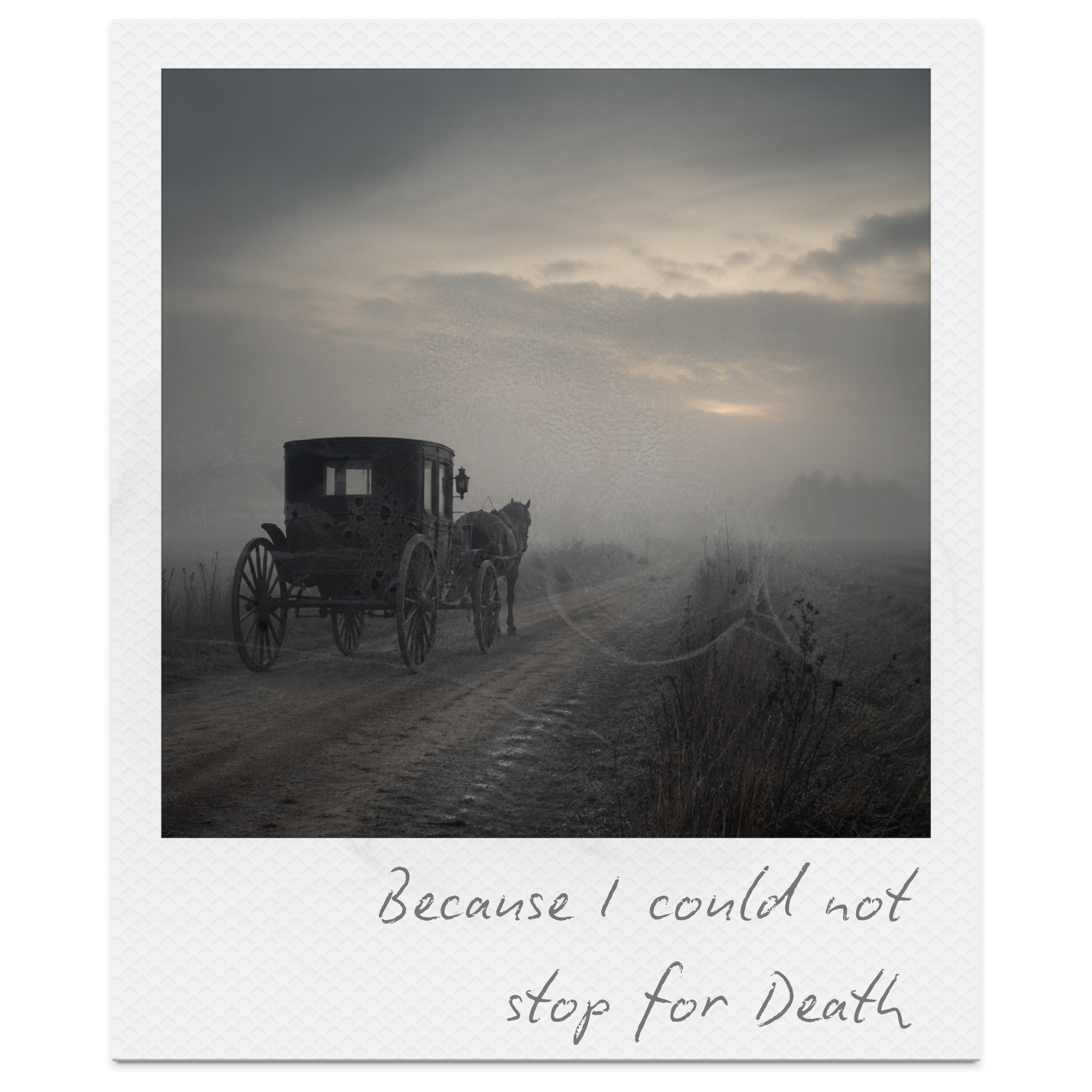
Because I could not stop for Death by Emily Dickinson: Summary, Themes & Analysis
Emily Dickinson’s Because I could not stop for Death presents death as a calm, deliberate journey, using personification and symbolism to transform a typically feared concept into something controlled and almost reassuring. Through the image of a carriage ride, the poem moves steadily through the stages of life, suggesting that death is not a sudden end but a process leading toward eternity. However, beneath this calm surface lies a deeper sense of uncertainty, as shifts in perspective and imagery reveal the limits of human understanding. The progression from familiar scenes to the final realisation of eternity highlights how time and control break down beyond life, leaving the reader with a quiet but unsettling reflection on what lies beyond death.
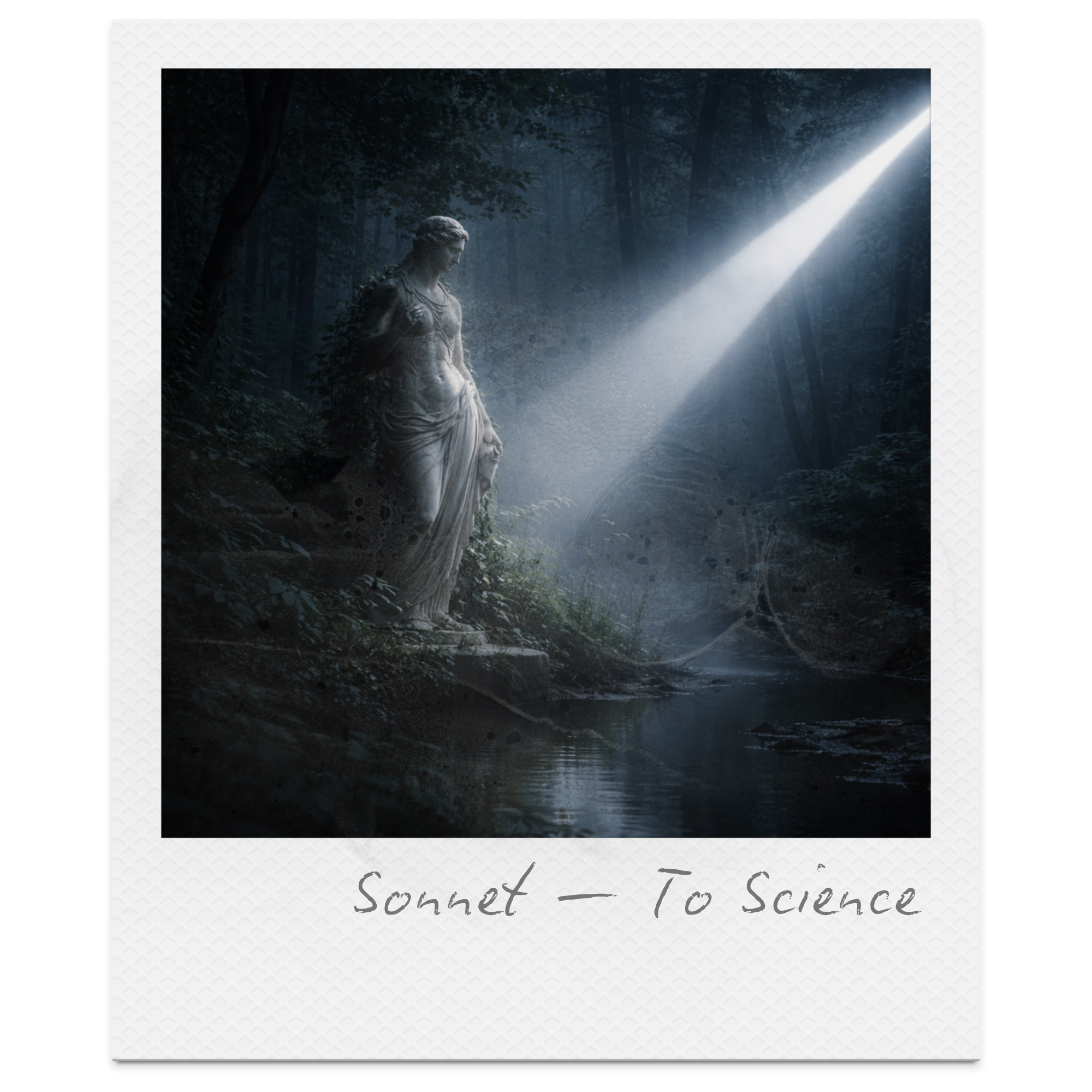
Sonnet—To Science by Edgar Allan Poe: Summary, Themes, Meaning & Analysis
Edgar Allan Poe’s Sonnet—To Science explores the tension between imagination and reason, presenting science as a force that strips the world of its wonder, beauty, and myth. Through a structured sonnet form and a confrontational voice, Poe challenges the dominance of rational thought, suggesting that scientific progress may come at the cost of creativity, emotional depth, and symbolic meaning. The poem draws on classical mythology and rich imagery to show how explanation can replace enchantment, leaving the world diminished. At the same time, the poem remains deliberately ambiguous. While science is criticised for its intrusive “peering eyes,” it is also shown to be an unavoidable force shaped by time and progress. This creates a deeper question at the heart of the poem: does understanding the world mean losing the ability to experience it with wonder? Through this unresolved tension, Poe invites readers to reflect on the balance between knowledge and imagination, making the poem as relevant now as it was in his own time.
Sweet Death by Christina Rossetti: Summary, Themes, Symbolism & Analysis
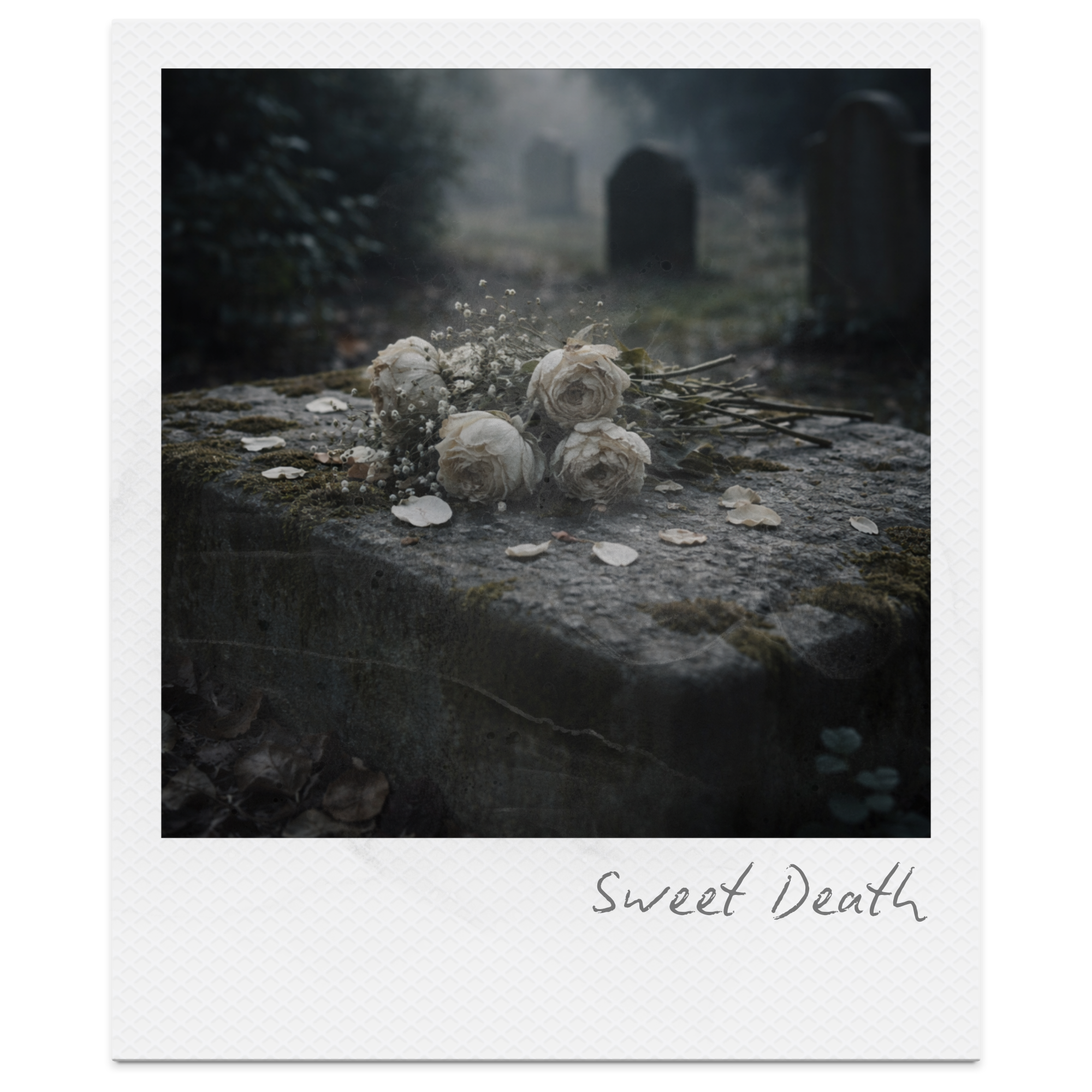
Christina Rossetti’s Sweet Death is a reflective poem that explores mortality, the passing of youth and beauty, and the promise of spiritual rest. Through vivid imagery drawn from nature, Rossetti observes how blossoms fall, colours fade, and life gradually returns to the earth. These natural processes become a metaphor for human life, suggesting that death is not simply an ending but part of a larger cycle of transformation and renewal. As the poem develops, Rossetti moves beyond the natural world to consider a deeper spiritual perspective. The fading of earthly beauty is contrasted with the enduring presence of God, saints, and divine rest, implying that true permanence lies beyond human life. In this way, Sweet Death encourages readers to view mortality not with fear, but with a sense of acceptance, presenting death as a transition toward lasting peace rather than a final loss.
Confluents by Christina Rossetti: Summary, Themes, Symbolism & Analysis
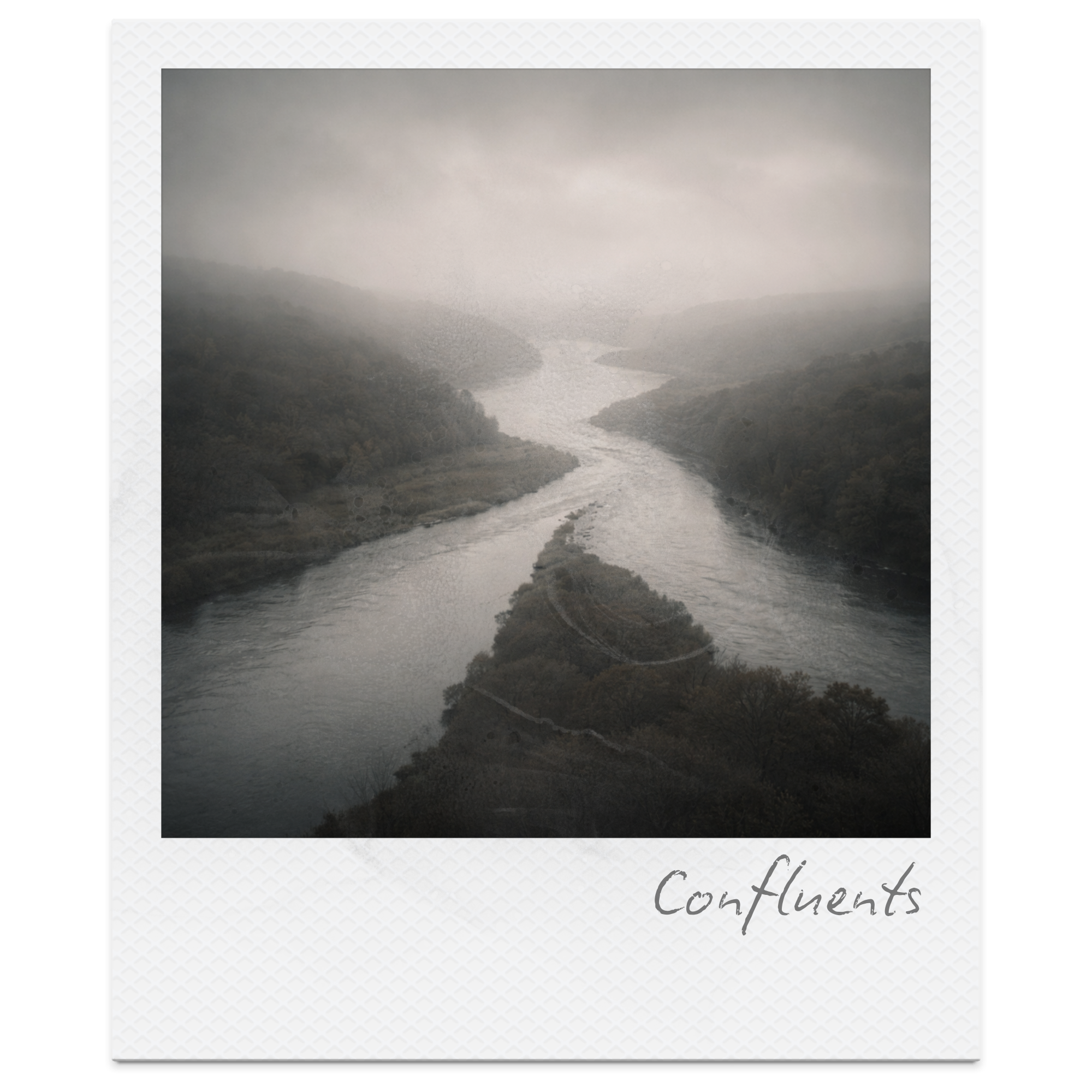
Christina Rossetti’s Confluents explores spiritual longing, devotion, and the desire for union through a series of natural comparisons. Rivers flowing toward the sea, roses opening to sunlight, and dew rising into the air all reflect the speaker’s belief that the soul instinctively seeks connection with something greater than itself. This analysis examines the poem’s imagery, symbolism, structure, and key quotations, showing how Rossetti uses natural processes to represent emotional and spiritual yearning. It also explores the poem’s themes of faith, distance, and hope, offering interpretations and teaching ideas suitable for GCSE, A Level, and secondary English literature study.
10 Supernatural Gothic Poetry Prompts for Teens & Adults: Presence, Memory, and the Unseen
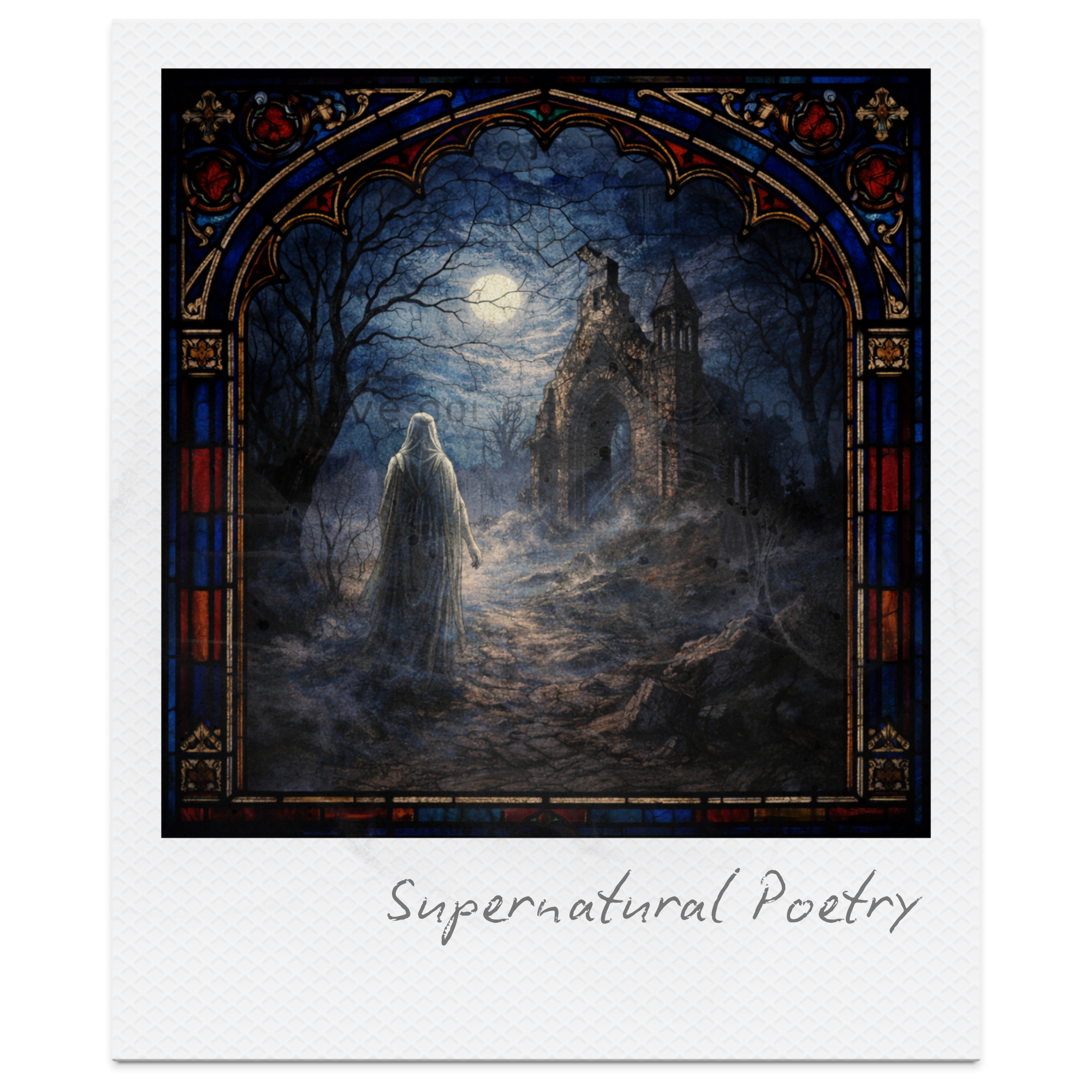
Supernatural gothic poetry explores the uneasy boundary between the living world and something just beyond it. Rather than relying on overt horror, these poems build atmosphere through suggestion — a voice heard in an empty room, a shadow that moves where it shouldn’t, or the quiet feeling that the past has not entirely disappeared. In many gothic poems, the supernatural is never fully explained, allowing memory, grief, and imagination to blur together. These supernatural gothic poetry prompts are designed to help writers explore atmosphere, symbolism, and emotional tension through carefully crafted imagery. Whether used in classrooms, writing groups, or independent practice, the prompts encourage poets to focus on mood, voice, and suggestion — capturing moments where something unseen lingers just beneath the surface.
10 Personification Poetry Prompts for Teens & Adults: Voice, Agency, and the Living World
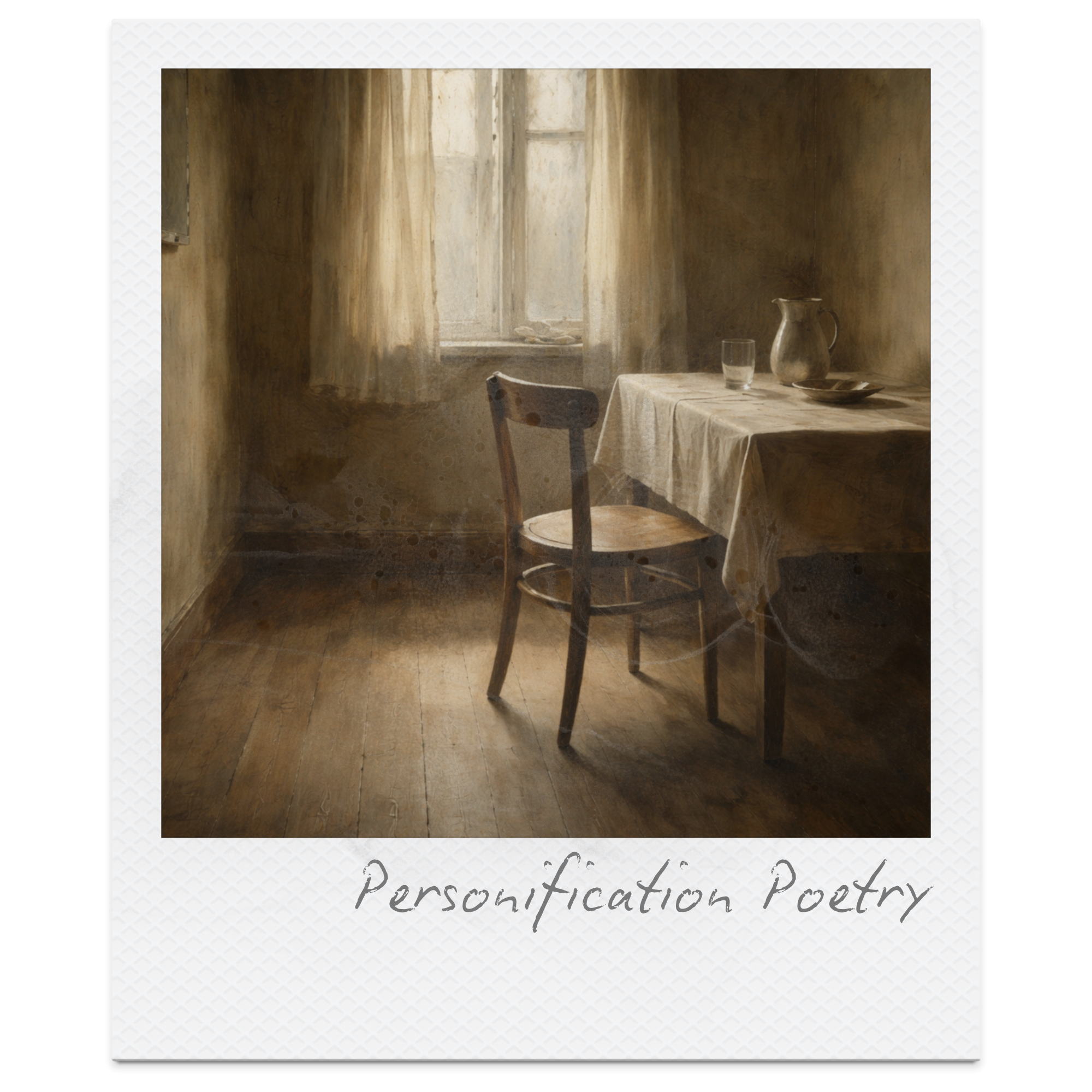
Personification poetry gives voice to objects, spaces, and abstract forces, allowing writers to explore emotion, memory, and power with restraint and precision. Rather than relying on confession or overt symbolism, strong personification poems shift agency away from the human speaker, letting rooms remember, time wait, silence observe, and weather decide. This technique creates distance while deepening meaning, making personification a powerful craft choice in both classroom and creative writing contexts. These personification poetry prompts for teens and adults are designed to support craft-focused poetry writing, offering structured starting points that emphasise voice, agency, and sustained metaphor. With model texts, writing techniques, and image-led approaches, this collection helps writers move beyond surface personification into poems that feel controlled, intentional, and emotionally precise.