10 Supernatural Gothic Poetry Prompts for Teens & Adults: Presence, Memory, and the Unseen
Supernatural gothic poetry explores the uneasy boundary between the living world and something just beyond it. Rather than relying on overt horror, these poems often build atmosphere through suggestion — a voice heard in an empty room, a figure glimpsed in fog, or the quiet sense that the past has not fully disappeared.
In many gothic poems, the supernatural is never clearly explained. Ghosts may appear as memories, echoes, or presences that linger within familiar places. The power of the poem often lies in uncertainty: whether what the speaker experiences is truly supernatural or something shaped by grief, longing, or imagination.
These supernatural gothic poetry prompts for teens and adults are designed to support atmosphere-driven writing in classrooms, writing groups, and independent practice. Each prompt encourages writers to work with imagery, ambiguity, and emotional tension rather than dramatic supernatural events.
Alongside the prompts, you’ll find suggested opening lines, writing techniques, and ekphrastic poetry images to help writers begin with atmosphere rather than explanation.
If you’re exploring gothic writing more broadly, you may also want to visit the Gothic Writing Hub or the Horror Writing Hub, which gathers gothic story prompts, explores darker themes, and genre guides across poetry and fiction.
For writers looking for inspiration across genres, the Creative Writing Archive collects hundreds of writing prompts, storytelling ideas, and visual inspiration designed to support reflective and imaginative writing.
Short on time?
Scroll down for the 10 supernatural gothic poetry prompts, or keep reading for techniques and poem examples that demonstrate how writers build supernatural atmosphere through imagery and voice.
How to Approach Supernatural Gothic Poetry
Supernatural gothic poetry works best when it leaves room for doubt. The poem may suggest ghosts, presences, or memories that feel almost alive, but it rarely confirms exactly what is happening.
Start with atmosphere rather than explanation. Many supernatural poems begin with quiet, ordinary settings — an empty house, a mist-covered path, a room at dusk — before introducing a subtle disturbance. This shift from normality to unease allows the supernatural element to emerge gradually.
Focus on small sensory details. A faint sound, the movement of curtains, or a shadow where no light should fall can create tension more effectively than dramatic events. In gothic poetry, suggestion often feels more powerful than revelation.
Objects can also carry supernatural meaning. Letters, portraits, jewellery, mirrors, and flowers frequently appear in gothic poems as reminders of people who are absent but not entirely gone.
Voice plays a crucial role. The speaker might doubt their own perception, wonder whether they imagined something, or sense a presence they cannot explain. This uncertainty allows the poem to remain psychologically and emotionally complex.
Above all, resist the urge to clarify everything. The supernatural in gothic poetry often exists in the space between what is seen and what is suspected.
Techniques to Try in Supernatural Gothic Poetry
Supernatural gothic poetry often relies on sound, imagery, and figurative language to create atmosphere. Rather than explaining the supernatural directly, poets use craft techniques to suggest unease, presence, and emotional tension.
Try experimenting with one or two techniques as you draft your poem.
◆ Onomatopoeia
Onomatopoeia uses words that imitate real sounds. In gothic poetry, this can help create atmosphere by drawing attention to small noises that break the silence — footsteps, whispers, creaking doors, or rustling leaves. Words such as whisper, creak, tap, or rustle can make the reader feel physically present in the setting.
◆ Metaphor
A metaphor compares two things by describing one as if it were the other. In supernatural poetry, metaphors often connect emotional states with physical environments. For example, a poet might describe fog as a curtain drawn between worlds or silence as a room holding its breath. Metaphor allows supernatural ideas to emerge through imagery rather than explanation.
◆ Simile
A simile compares two things using like or as. Similes help readers visualise atmosphere or emotional tension. For example: The mist closed around the house like a secret. This technique allows writers to create vivid images while keeping the language accessible.
◆ Assonance
Assonance is the repetition of vowel sounds within nearby words. Poets often use this technique to shape the mood of a poem. For example: The low wind moved through the broken road. The repeated “o” sound creates a slow, hollow tone that suits gothic atmosphere.
◆ Alliteration
Alliteration is the repetition of the same consonant sound at the beginning of nearby words. In gothic poetry, this can emphasise mood or atmosphere. For example: Silent shadows slipped across the stair. The repeated “s” sound creates a hushed, whispering effect.
◆ Personification
Personification gives human qualities to non-human things such as objects, landscapes, or weather. In gothic poetry, this technique often makes the environment feel alive or aware. For example: The house watched me enter. This can subtly suggest supernatural presence without directly stating it.
◆ Repetition
Repetition involves deliberately repeating a word, phrase, or image within the poem. In gothic writing, repetition often reflects obsession, memory, or emotional intensity. A repeated phrase can create the feeling of something returning again and again, like an echo or lingering thought.
◆ Symbolism
Symbolism occurs when objects or images represent deeper ideas. Gothic poems often use symbolic objects such as mirrors, candles, letters, portraits, or flowers to suggest themes like memory, grief, or secrecy. Rather than explaining the symbol directly, allow it to appear naturally throughout the poem.
◆ Enjambment
Enjambment occurs when a sentence continues across line breaks rather than ending at the end of a line. This technique can create suspense or hesitation, encouraging the reader to move slowly through the poem. In gothic poetry, enjambment often mirrors uncertainty or gradual revelation.
◆ Imagery
Imagery uses sensory details to help the reader see, hear, or feel the world of the poem. In supernatural poetry, imagery often focuses on subtle disturbances such as flickering candlelight, distant footsteps, moving shadows, or fog-covered landscapes. Strong imagery allows atmosphere to develop naturally.
Read for Inspiration: Supernatural Gothic Poetry
Reading supernatural poetry can help writers understand how atmosphere, imagery, and suggestion create tension without relying on explicit supernatural events. Many gothic poems leave space for uncertainty, allowing readers to question whether what they are witnessing is truly supernatural or shaped by memory, grief, or imagination.
Pay attention to how these poets use sound, imagery, and repetition to build atmosphere.
◆ Edgar Allan Poe – The Raven
Poe’s famous poem explores grief, obsession, and the haunting presence of memory through repetition and rhythm. The raven itself may represent a supernatural visitor, a symbol of grief, or a projection of the speaker’s mind. The poem demonstrates how refrain and sound patterns can intensify gothic atmosphere.
◆ Emily Dickinson – I heard a Fly buzz – when I died –
Dickinson transforms a quiet deathbed scene into something unsettling through subtle imagery and unexpected interruption. The poem shows how calm language and small sensory details can create an eerie sense of the supernatural.
◆ Samuel Taylor Coleridge – The Rime of the Ancient Mariner
Coleridge’s narrative poem is filled with supernatural elements, ghostly presences, and symbolic landscapes. The poem demonstrates how nature, guilt, and spiritual consequence can intertwine with supernatural storytelling.
◆ Christina Rossetti – After Death
Rossetti’s poem presents the speaker observing events after her own death, creating a quiet supernatural perspective rooted in emotional revelation. The poem shows how gothic poetry can explore love, regret, and recognition through restrained imagery.
◆ Thomas Hardy – The Voice
Hardy’s poem captures the haunting sensation of hearing a voice that may belong to memory or something beyond it. The poem demonstrates how repetition and uncertainty can create a powerful supernatural atmosphere.
Choose one or two poems to read closely before writing. Notice how the poets build tension through imagery, sound, and suggestion rather than direct explanation.
Supernatural Gothic Poetry Writing Prompts
The prompts below invite writers to explore supernatural themes through atmosphere, ambiguity, and emotional tension. Rather than focusing on dramatic supernatural events, these prompts encourage writers to capture a single moment where something feels slightly wrong, unexplained, or just beyond understanding.
Focus on imagery and mood rather than explanation. Often the most effective supernatural poems suggest more than they reveal.
Supernatural Gothic Poetry Prompt 1: The Footsteps Above
Write a poem about hearing footsteps in a place that should be empty.
Possible opening line:
The house remembered someone walking.
Craft focus:
Use sound imagery to create tension. Small noises can make an empty space feel suddenly inhabited.
Supernatural Gothic Poetry Prompt 2: The Window at Dusk
Write a poem about seeing something outside a window at twilight that disappears when you look again.
Possible opening line:
Someone stood where the garden meets the fog.
Craft focus:
Create visual contrast between light and shadow to build uncertainty.
Supernatural Gothic Poetry Prompt 3: A Voice in the Wind
Write a poem about hearing a voice carried by the wind that might belong to someone from the past.
Possible opening line:
The wind said your name before I did.
Craft focus:
Allow memory and atmosphere to blur together so the reader questions whether the voice is real.
Supernatural Gothic Poetry Prompt 4: The Door That Opens
Write about a door slowly opening even though no one is there.
Possible opening line:
No hand touched the handle.
Craft focus:
Use line breaks and pacing to slow the moment and create suspense.
Supernatural Gothic Poetry Prompt 5: The Figure in the Fog
Write about seeing a distant figure through mist or fog.
Possible opening line:
Someone was waiting where the road disappears.
Craft focus:
Focus on limited visibility. Reveal only fragments of what the speaker sees.
Supernatural Gothic Poetry Prompt 6: The Object That Remains
Write about an object that seems connected to someone who is no longer alive.
Possible opening line:
It still holds the warmth of a vanished hand.
Craft focus:
Use concrete physical details to suggest emotional or supernatural meaning.
Supernatural Gothic Poetry Prompt 7: The Shadow That Moves
Write about noticing a shadow behaving strangely or moving where nothing should be.
Possible opening line:
My shadow stayed still.
Craft focus:
Create unease by describing subtle disturbances in familiar surroundings.
Supernatural Gothic Poetry Prompt 8: The Path at Twilight
Write about walking along a path at dusk and sensing that something is following you.
Possible opening line:
The evening walked beside me.
Craft focus:
Use landscape and atmosphere to mirror the speaker’s emotional state.
Supernatural Gothic Poetry Prompt 9: The Forgotten Grave
Write about standing beside a grave that no one seems to remember.
Possible opening line:
The name had almost faded away.
Craft focus:
Let place and history shape the emotional tone of the poem.
Supernatural Gothic Poetry Prompt 10: The Thing That Returned
Write about something from the past appearing again when it should have remained buried.
Possible opening line:
I thought we had buried it.
Craft focus:
Build tension through gradual revelation, allowing the supernatural suggestion to emerge slowly.
Ekphrastic Poetry: Writing From Images
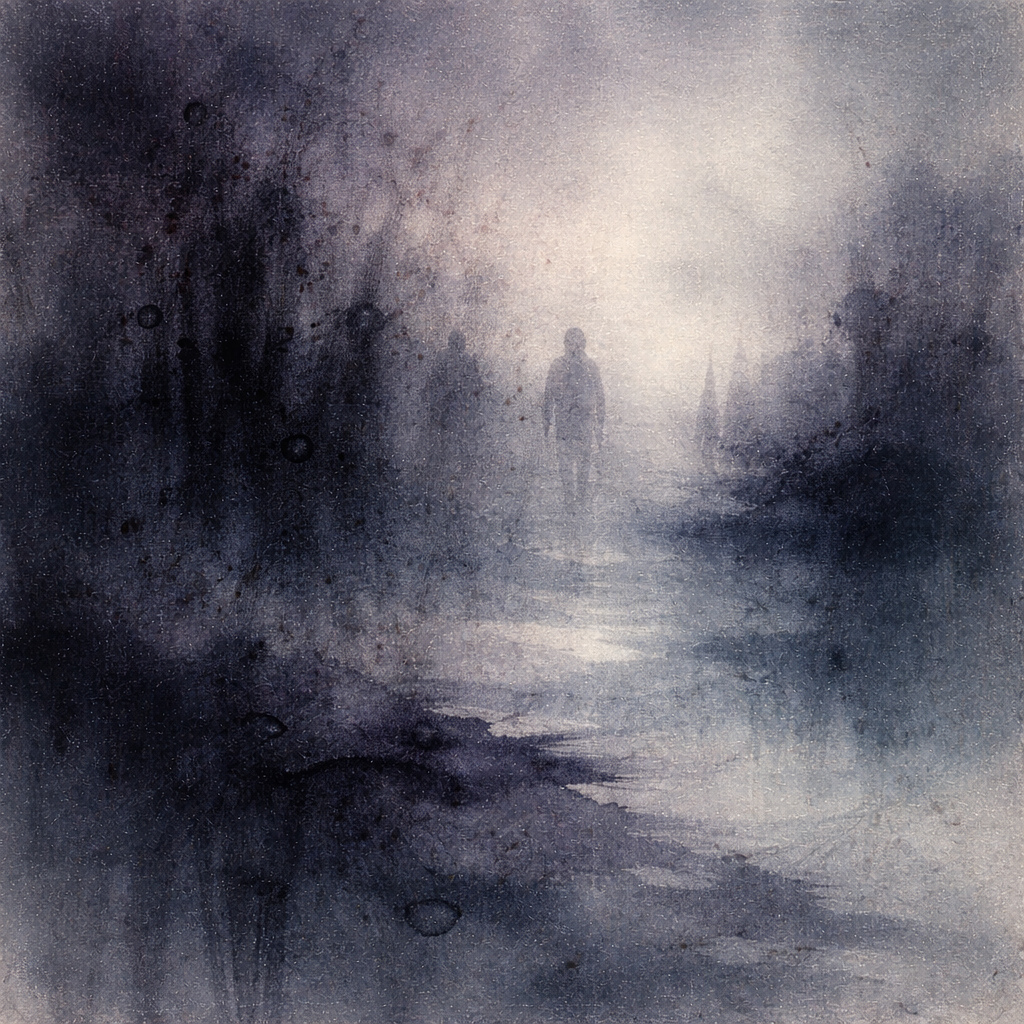
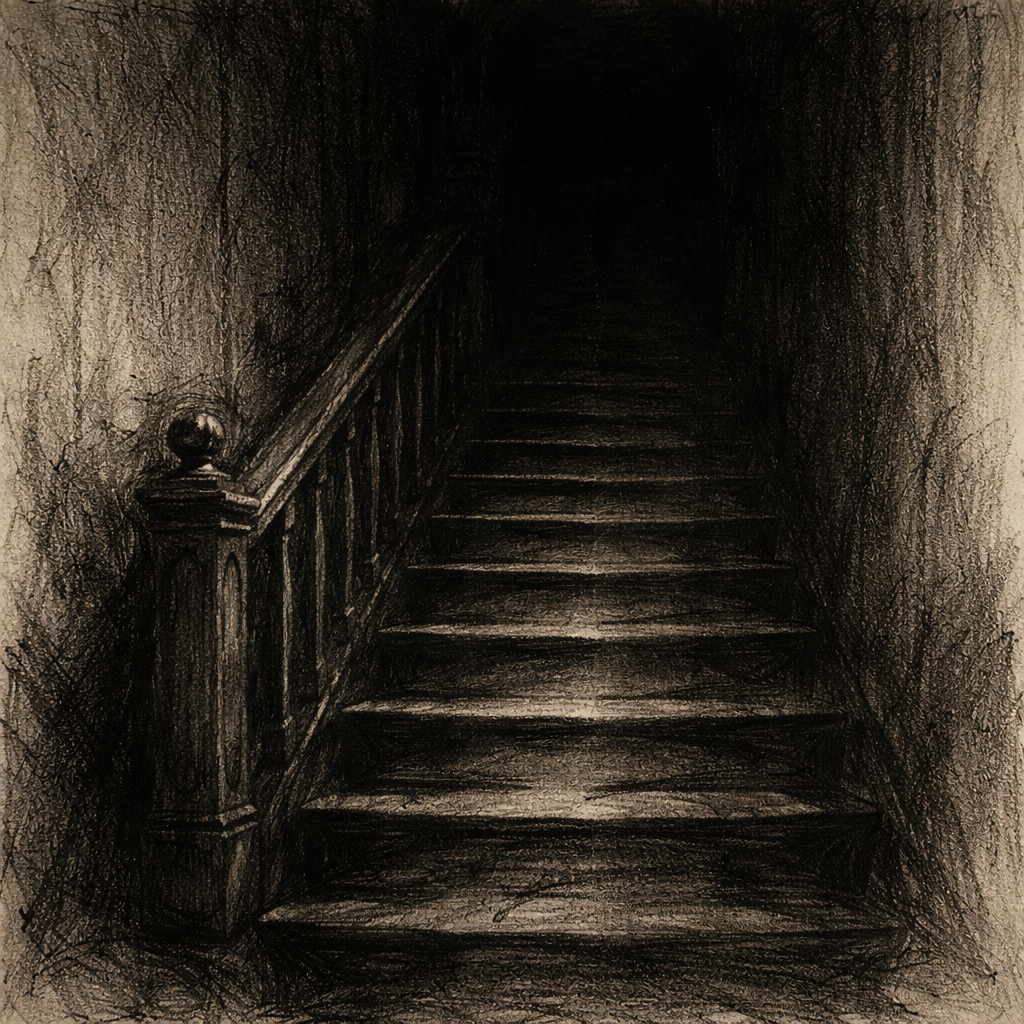
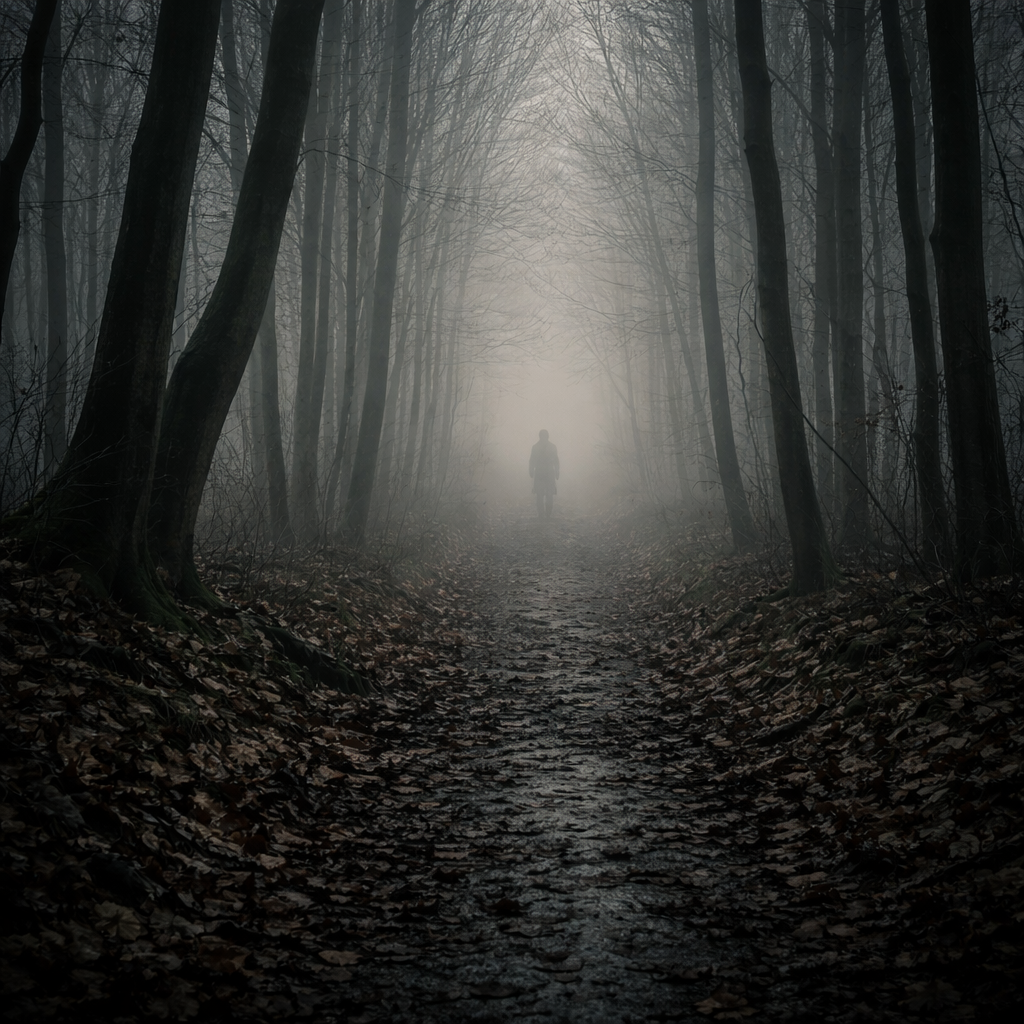
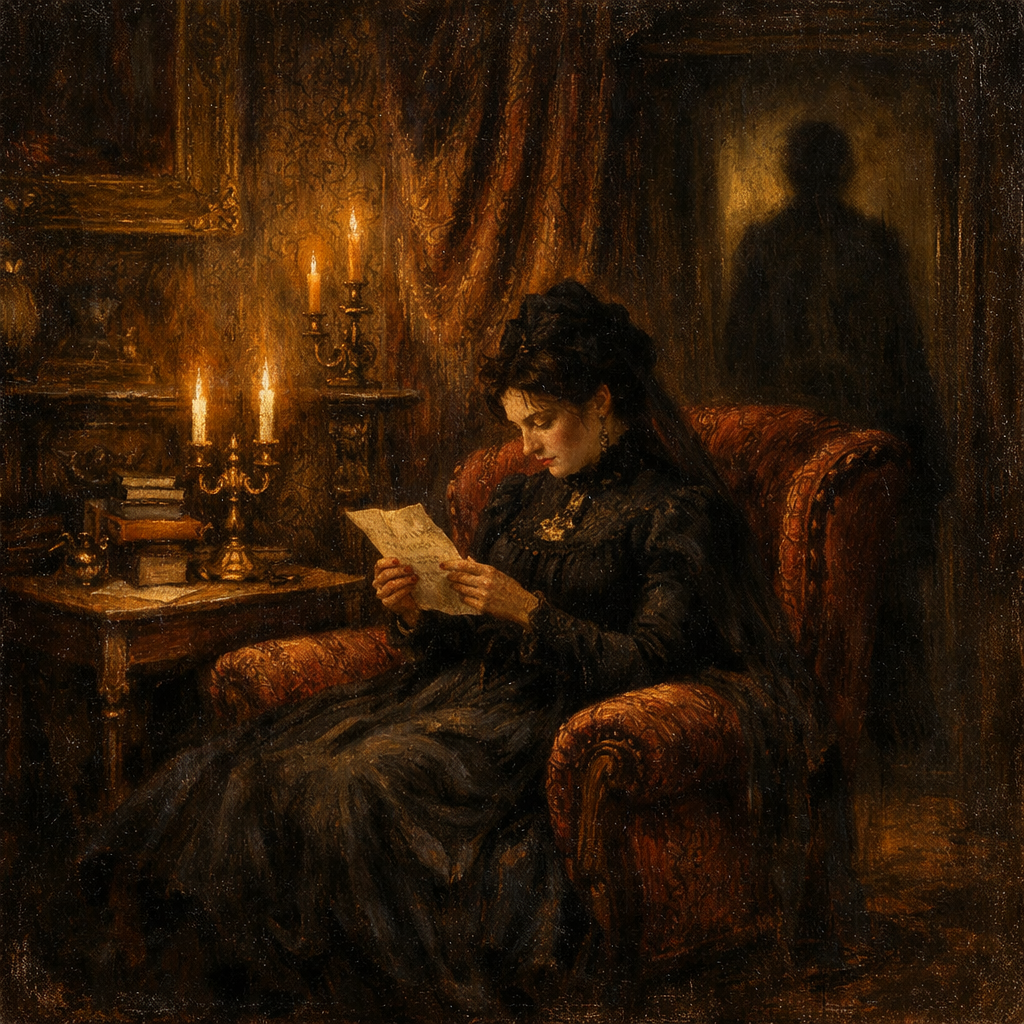
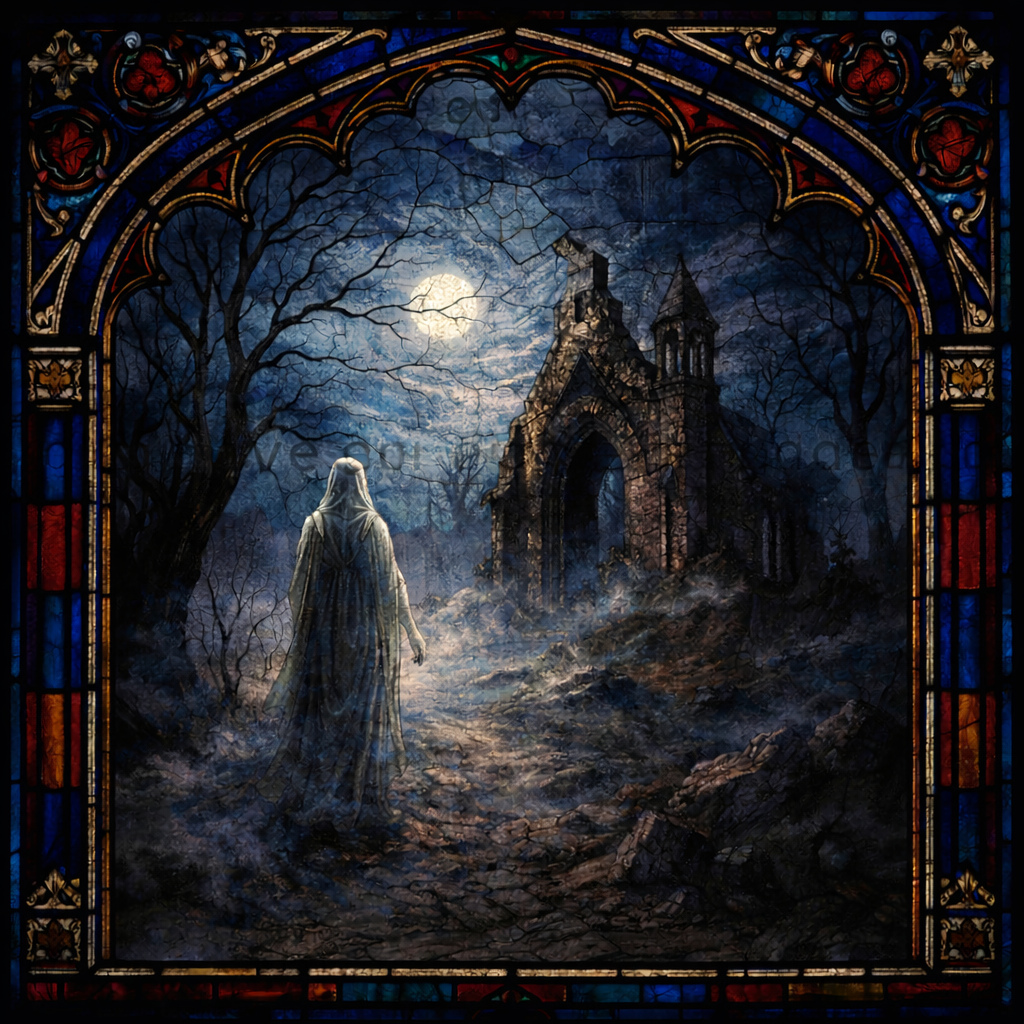
Ekphrastic poetry uses visual images as a starting point for writing, focusing less on description and more on atmosphere, suggestion, and emotional response. In supernatural gothic poetry, images often hint at something just beyond what can be seen — a figure in mist, a quiet doorway, or a place that feels strangely inhabited.
The images below are designed to support supernatural gothic poetry by encouraging writers to explore presence, memory, and the possibility that something unseen may exist just outside the frame.
When working with these images, try one or more of the following approaches:
◆ Focus on a single unsettling detail rather than the entire image
◆ Write what the image suggests, not what it literally shows
◆ Imagine what happened immediately before or after the moment captured
◆ Let the image suggest a presence, memory, or voice that cannot be fully explained
◆ Experiment with silence and white space to mirror the stillness of the scene
There is no requirement to describe the image directly. The goal is to let the visual prompt open a door, then follow where the poem leads.
Go Deeper into Supernatural Gothic Poetry
If these supernatural gothic poetry prompts resonated, you may want to explore longer or more immersive forms of writing that work with the same ideas — presence, memory, uncertainty, and the unseen. Supernatural poetry often benefits from shifting between poetry and narrative, allowing atmosphere, fragments, and voices to unfold in different ways.
One way to deepen your work is to experiment with form and perspective:
◆ Rewrite a poem as a fragment — a letter, diary entry, or discovered document — allowing gaps and omissions to carry meaning.
◆ Let setting act as a presence, shaping mood and tension rather than simply describing place.
◆ Explore uncertain or unreliable voices, where the speaker questions what they have seen or heard.
◆ Revisit a poem from the moment before or after its central image, allowing atmosphere to linger rather than resolve.
For writers interested in expanding beyond poetry, supernatural themes often translate naturally into gothic storytelling. A poem about a presence in a quiet room, a voice in the wind, or a figure seen in fog can easily become the starting point for a short story, fragment, or atmospheric scene.
If you’d like to explore these ideas further, the Gothic Writing Hub brings together prompts focused on gothic themes, supernatural atmosphere, haunted settings, and gothic storytelling techniques across poetry and fiction.
Final Thoughts
Supernatural gothic poetry rarely explains the mystery it introduces. Instead, it allows atmosphere, imagery, and emotional tension to unfold gradually, leaving space for interpretation.
The most powerful poems often emerge from small disturbances — a sound in an empty room, a shadow moving where it should not, or the quiet feeling that something unseen may still be present.
You may return to these prompts more than once. A line that feels uncertain now may shift later. An image may reveal something new over time. That’s part of the process.
Write slowly. Stop early. Leave space on the page.
And if something lingers after the poem ends — a sound, a figure, a question — let it remain unresolved.
If you enjoy exploring gothic atmosphere and supernatural themes through poetry, you can also visit the Gothic Writing Hub or the Horror Writing Hub, discover prompts focused on gothic genres, darker themes, characters, and settings, or browse the Creative Writing Archive to explore writing prompts inspired by literature, genre, and visual storytelling.
Choose Your Next Theme