The Haunted Palace by Edgar Allan Poe: Summary, Themes, Meaning & Analysis
The Haunted Palace by Edgar Allan Poe is a richly symbolic gothic poem that explores the fragile boundary between sanity and madness, order and decay, and the mind as a living structure. Through the extended metaphor of a once-glorious palace that falls into ruin, Poe constructs a haunting allegory of psychological collapse, where beauty, harmony, and intellect are gradually overtaken by darkness and disorder. Rooted firmly in the Gothic tradition, the poem blends imagery, symbolism, and musicality to trace the unsettling transformation of the human mind.
At its core, the poem invites multiple interpretations: it can be read as a depiction of mental deterioration, a meditation on memory and loss, or even as a broader reflection on the inevitable decline of human consciousness itself. The shift from radiant harmony to grotesque distortion mirrors the instability of perception, leaving the reader uncertain whether the horror is supernatural or entirely internal. For more on Poe’s exploration of the gothic psyche, visit the Edgar Allan Poe Hub, or explore wider literary analyses in the Literature Library.

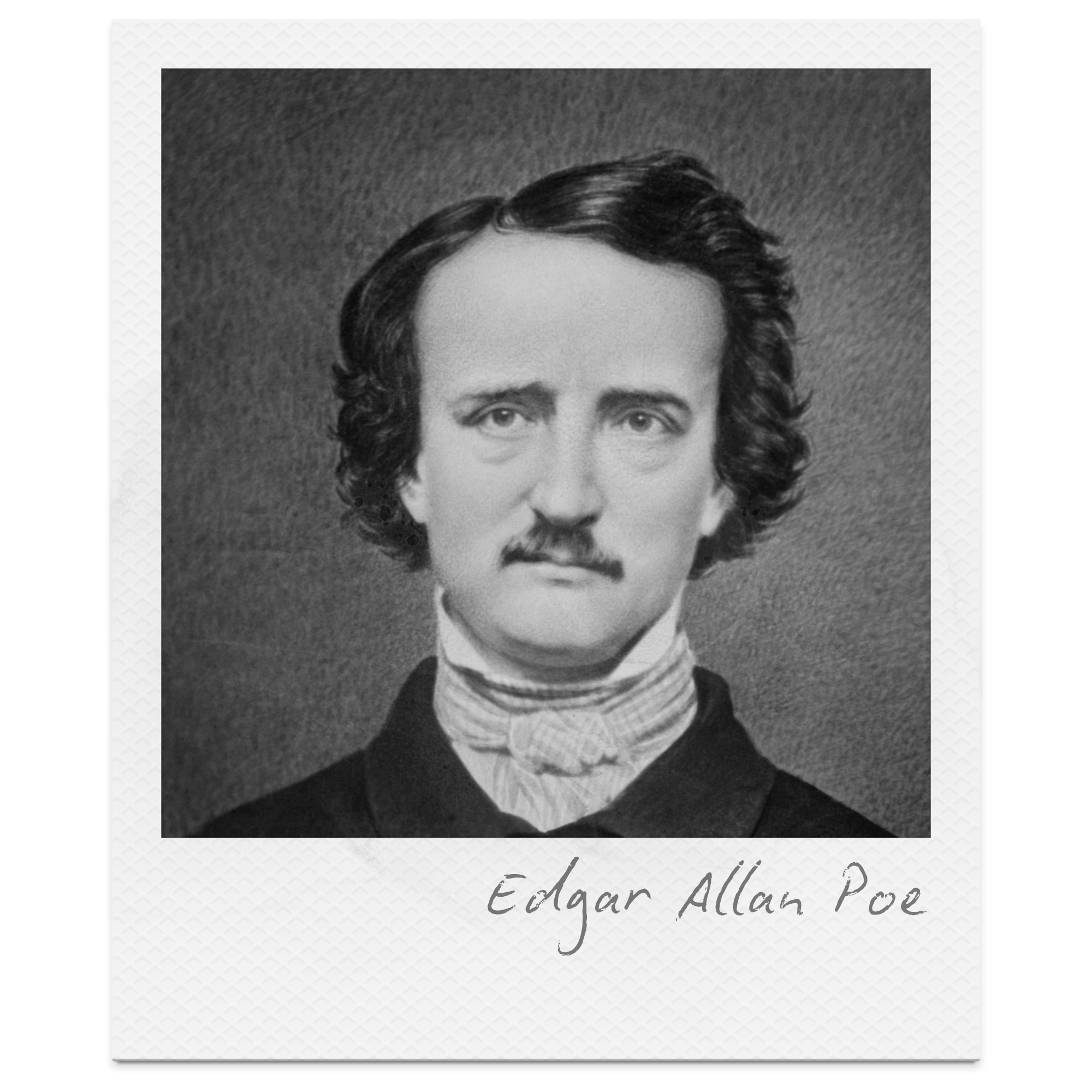
Context of The Haunted Palace
Written in 1839 and later embedded within The Fall of the House of Usher, “The Haunted Palace” functions as both a standalone poem and a crucial piece of symbolic storytelling within Poe’s wider gothic canon. In Usher, the poem is recited by Roderick Usher himself, directly mirroring his deteriorating mental state. This dual existence gives the poem a layered context: it is not simply about decline, but about self-awareness within madness, where the speaker recognises the loss of order even as it unfolds. The palace becomes a clear allegory for the human mind, once harmonious and radiant, now overtaken by chaos and distortion.
More broadly, the poem reflects Poe’s recurring preoccupation with the collapse of reason, a theme shaped by both his personal experiences and the wider gothic fascination with unstable consciousness. Rather than presenting madness as sudden, Poe frames it as a gradual corruption—something that begins in beauty and symmetry before being infiltrated by “evil things.” This aligns with the Romantic and Gothic interest in the mind as a delicate, almost architectural space, vulnerable to internal and external forces. For a deeper exploration of Poe’s influences, themes, and historical context, see the Edgar Allan Poe Context Post.
The Haunted Palace: At a Glance
Form: Lyric poem; extended allegorical narrative
Mood: Luminous, melancholic, increasingly grotesque
Central tension: The conflict between order and harmony and the encroaching forces of madness and decay
Core themes:
Sanity and psychological collapse
The mind as a physical structure
Memory and loss
Corruption of beauty and order
The passage from harmony to chaos
One-sentence meaning: A once-radiant palace symbolising the human mind falls into ruin, reflecting the gradual and irreversible descent from sanity into madness.
Quick Summary of The Haunted Palace
The poem opens with the image of a beautiful and radiant palace set within a lush valley, described as a place of harmony, order, and divine presence. This palace represents a mind in its ideal state—balanced, intelligent, and alive with thought and creativity. Music, light, and movement flow naturally through its structure, suggesting a world where reason and imagination exist in perfect unity.
As the poem develops, this harmony begins to unravel. Subtle shifts give way to a darker tone as “evil things” invade the palace, disrupting its former beauty. The once-bright banners and musical voices fade, replaced by disorder and unease. This marks the turning point, where the mind—once stable—becomes increasingly fragmented and unstable.
By the final stanza, the transformation is complete. The palace is no longer a place of light but of horror, where distorted figures move chaotically and laughter becomes unsettling rather than joyful. The imagery suggests a total collapse into madness, with the mind now unrecognisable from its former state—trapped in a haunting, irreversible decline.
Title, Form, Structure, and Metre
The meaning of “The Haunted Palace” is inseparable from its form, as Edgar Allan Poe carefully aligns structure, rhythm, and sound to mirror the poem’s central idea: the gradual collapse of a once-harmonious mind. The poem’s musical precision initially reflects order and beauty, but subtle disruptions in metre and sound patterns parallel the creeping instability it describes.
Title
The title “The Haunted Palace” immediately establishes a tension between grandeur and decay. A palace suggests beauty, control, and intellectual order, while haunted implies intrusion, disturbance, and loss of stability. This contrast reinforces the poem’s central metaphor: the mind as a once-radiant structure now overtaken by madness.
Form and Structure
The poem is composed of six eight-line stanzas (octaves), each broadly following a rhyme scheme of ABABCDCD, creating a controlled and balanced musical structure. A clearer example from the opening stanza is:
tenanted (A) / head (B) / dominion (C) / there! (D) / pinion (C) / fair! (D)
More precisely, Poe builds paired rhyme clusters within each stanza:
tenanted / head (slant rhyme pair)
dominion / pinion (full rhyme)
there / fair (full rhyme)
This creates a layered sound pattern where some rhymes are exact and others are approximate, contributing to a rich but slightly unstable sonic texture.
Rather than perfect symmetry, Poe uses near rhyme and echoing sounds to give the poem a flowing, musical quality. This is important: the structure feels ordered, but not rigidly perfect—foreshadowing the instability beneath the surface.
As the poem progresses, this controlled pattern remains, but the imagery it carries becomes increasingly distorted—“discordant melody,” “hideous throng”—creating a tension between formal order and psychological chaos.
Metre
The dominant metre is trochaic tetrameter, where each line typically follows a stressed–unstressed pattern:
/ ˘ / ˘ / ˘ / ˘
In the GREEN | est OF | our VAL | leys
This falling rhythm gives the poem a chant-like, incantatory quality, reinforcing the sense of grandeur and control in the opening stanzas.
However, Poe introduces deliberate variations. For example:
ON its ROOF did FLOAT and FLOW
Here, the clustering of stressed syllables (ROOF, FLOAT, FLOW) creates a near-spondaic effect, slowing the rhythm and adding weight.
Shorter lines disrupt the flow:
It STOOD THERE!
This contraction into a much tighter rhythmic unit creates emphasis and interruption, almost like a crack in the poem’s otherwise controlled surface.
Later lines become more irregular:
VAST FORMS that MOVE fanTAS | tiCALly
The shifting stress pattern stretches the rhythm, making it feel less stable and more chaotic.
Overall, Poe’s metrical control is not just decorative—it is structural to meaning. The poem begins with smooth, controlled musicality, but gradually incorporates disruption and irregularity, mirroring the descent from harmony into psychological disorder.
Speaker and Voice of The Haunted Palace
The speaker of “The Haunted Palace” is detached and observant, recounting the rise and fall of the palace with a tone that shifts from admiration to mourning and finally to unease. At first, the voice feels almost celebratory, describing a world of harmony, beauty, and intellectual brilliance. The language is elevated and lyrical, suggesting a speaker who reveres the palace as something idealised and complete.
However, this distance is complicated by moments of emotional intrusion. The exclamatory aside—“Ah, let us mourn!”—breaks the otherwise controlled narration, revealing that the speaker is not entirely objective. This shift suggests a growing awareness of loss, as though the speaker recognises the significance of the palace’s decline even while attempting to describe it from afar.
As the poem progresses, the tone darkens noticeably. The speaker’s language becomes more fragmented and unsettling, mirroring the transformation of the palace itself. Descriptions of “discordant melody” and “hideous throng” replace the earlier harmony, indicating that the speaker is now witnessing something distorted and unnatural.
Importantly, the speaker’s reliability becomes ambiguous. While the poem can be read as an allegorical description of a mind’s collapse, the increasingly surreal imagery raises the question of whether the speaker is observing madness—or participating in it. This ambiguity reinforces the poem’s central tension between external description and internal experience, leaving the reader uncertain where the boundary between reality and perception truly lies.
Stanza by Stanza Analysis of The Haunted Palace
The meaning of “The Haunted Palace” unfolds gradually across its six stanzas, with each one marking a distinct stage in the transformation from harmony and order to decay and psychological collapse. Rather than presenting a sudden shift, Edgar Allan Poe carefully constructs a progression in which imagery, tone, and sound evolve together, allowing the reader to experience the palace’s decline in real time.
By analysing the poem stanza by stanza, it becomes clear how Poe uses repetition, contrast, and structural control to trace the movement from beauty to distortion, reinforcing the poem’s central metaphor of the mind as a fragile, inhabited space.
Stanza 1: Idealised Harmony
The opening stanza establishes a vision of perfect harmony, beauty, and divine order, presenting the palace as an idealised structure untouched by corruption. The setting—“the greenest of our valleys”—immediately evokes abundance and vitality, suggesting a mind in its most fertile and balanced state. The presence of “good angels” reinforces this sense of protection and purity, positioning the palace within a space of spiritual and intellectual perfection.
The palace itself is described as “fair and stately” and “radiant”, with repetition emphasising its splendour and stability. Crucially, it exists within “the monarch Thought’s dominion”, making the metaphor explicit: this is not simply a building, but a representation of the human mind at its peak, ruled by reason and clarity.
The stanza’s tone is reverential and controlled, supported by smooth rhythm and balanced phrasing. The exclamatory line—“It stood there!”—adds emphasis without disrupting the overall harmony, reinforcing the sense of awe. By the end of the stanza, the palace is framed as something almost sacred, a structure of perfect order and intellectual beauty, setting a stark contrast for the decay that follows.
Stanza 2: Golden Memory
The second stanza sustains the image of splendour, but subtly reframes it as something already lost, introducing the idea of memory and distance. The “banners yellow, glorious, golden” reinforce the palace’s former grandeur, with the accumulation of adjectives creating a sense of richness and radiance. The flowing motion—“did float and flow”—adds to the musicality, suggesting ease, grace, and continuity.
However, the parenthetical aside—“(This—all this—was in the olden / Time long ago)”—marks a crucial tonal shift. The present moment is interrupted by reflection, revealing that the beauty being described no longer exists. This creates a layer of nostalgia and loss, transforming the palace from a living space into a remembered one.
The imagery of “every gentle air that dallied” and “a winged odor” evokes something intangible and fleeting, as if the palace’s harmony cannot be fully grasped. The sensory language—touch, movement, scent—suggests a world that once felt complete, but now lingers only as an impression.
Structurally, the stanza remains controlled and musical, but its meaning has shifted: the palace is no longer simply perfect—it is perfect in retrospect. This introduces the poem’s central tension between what was and what is, foreshadowing the inevitable decline that will follow.
Stanza 3: Ordered Consciousness
The third stanza deepens the palace metaphor by shifting focus inward, presenting a vision of controlled movement, harmony, and intellectual order. The introduction of “wanderers” suggests external observers, reinforcing the idea that the palace—and by extension the mind—is something that can be perceived from the outside, yet not fully entered.
The “two luminous windows” are a key symbolic detail, often read as the eyes, offering a glimpse into the interior of the mind. Through them, the wanderers see “spirits moving musically / To a lute’s well-tuned law”, an image of perfect coordination and rhythm. This suggests that thoughts, emotions, and perceptions are functioning in complete harmony, governed by an underlying structure or “law.”
At the centre of this ordered system sits the “Porphyrogene”—a figure associated with royal birth and legitimacy—representing the ruling consciousness or rational self. His position “upon a throne” reinforces the idea of control and authority, suggesting a mind that is not only active but well-governed and self-aware.
The tone remains elevated and composed, with musical imagery dominating the stanza. Everything moves according to pattern and design, reinforcing the sense of balance and coherence. At this stage, the palace is not only beautiful—it is fully alive, functioning as a symbol of a stable and unified mind at its peak.
Stanza 4: Flowing Expression
The fourth stanza shifts attention to the palace door, extending the metaphor of the mind by focusing on outward expression. Described as “pearl and ruby glowing”, the door suggests richness and refinement, symbolising the mouth or voice through which thought is communicated. This continues the idea of the mind as a living, functioning structure—one that not only contains harmony, but expresses it.
The repetition in “flowing, flowing, flowing” reinforces a sense of effortless continuity, as if ideas and language emerge naturally and without obstruction. This is further emphasised by the image of “a troop of Echoes”, whose role is to carry and amplify the king’s voice. The use of “Echoes” suggests both sound and reflection, implying that what is spoken is not random, but a coherent extension of the ruler’s intellect.
These voices are described as possessing “surpassing beauty”, and their purpose is to express the “wit and wisdom of their king”. This reinforces the image of a mind in perfect alignment, where thought, language, and expression operate in complete harmony. The palace is not only ordered internally—it communicates that order outwardly with clarity and elegance.
Stanza 5: Invasion and Collapse
The fifth stanza marks a decisive turning point, as the poem shifts from harmony to corruption and irreversible decline. The abrupt opening—“But evil things”—breaks the established rhythm of beauty and order, signalling intrusion and disruption. These forces, “in robes of sorrow”, are both external and symbolic, suggesting the arrival of madness, grief, or psychological disturbance that overwhelms the once-stable mind.
The attack on the “monarch’s high estate” reinforces the collapse of central authority—the rational self that previously governed the palace. The exclamatory aside—“Ah, let us mourn!”—is a rare moment of direct emotional intervention from the speaker, intensifying the sense of loss. The declaration that “never morrow / Shall dawn upon him” suggests permanence, indicating that this is not a temporary disturbance but a final and irreversible fall.
The imagery of transformation becomes more muted and elegiac. What once “blushed and bloomed” is now reduced to a “dim-remembered story”, emphasising the distance between past vitality and present decay. The language of burial—“entombed”—suggests that the palace’s former glory is not merely lost, but sealed away and inaccessible, reinforcing the theme of memory as something fractured and unreachable.
Structurally, the stanza retains its form, but the tone has shifted completely. The musicality that once conveyed harmony now carries mourning, creating a dissonance between structure and meaning. This moment represents the full collapse of order, where the mind is no longer governed, but overtaken by forces it cannot resist.
Stanza 6: Grotesque Aftermath
The final stanza presents the complete transformation of the palace into a space of distortion, chaos, and irretrievable madness. The reintroduction of “travellers” mirrors the earlier “wanderers”, but their perspective has shifted dramatically. Where they once observed harmony through “luminous windows”, they now look through “red-litten windows”, a striking change in imagery that suggests violence, fever, or a corrupted interior state.
Inside, the orderly “spirits moving musically” have been replaced by “vast forms that move fantastically / To a discordant melody”. The language here is deliberately unsettling: “vast” and “fantastically” imply distortion and exaggeration, while “discordant” breaks the earlier sense of musical harmony. This signals a complete collapse of structure, where movement is no longer governed by pattern, but by chaos.
The palace door—once a source of flowing beauty and expression—is now described as “pale”, suggesting lifelessness or decay. From it emerges a “hideous throng” that “rush[es] out forever”, evoking something uncontrollable and relentless. The image resembles a flood or eruption, reinforcing the idea that the mind has lost all containment, with its inner disorder spilling outward.
The final line—“And laugh—but smile no more”—captures the poem’s most disturbing transformation. Laughter, once associated with joy or expression, is now hollow and mechanical, stripped of genuine emotion. The absence of a smile suggests a complete loss of humanity, leaving behind only a grotesque echo of what once was.
At this point, the palace is no longer a symbol of decline—it is the embodiment of madness fully realised, where order has been replaced by permanent distortion, and the mind has become something both alien and irrecoverable.
Key Quotes from The Haunted Palace
Poe’s language in “The Haunted Palace” is rich with symbolism, musicality, and shifting imagery, allowing each stage of the palace’s transformation to be traced through carefully crafted lines. The following quotes reveal how meaning is constructed through sound, structure, and metaphor, reinforcing the poem’s exploration of psychological decline and distorted perception.
Harmony and Order
“In the greenest of our valleys”
♦ Imagery – The superlative “greenest” evokes abundance and vitality
♦ Meaning – Suggests a mind in its most fertile, balanced state
♦ Effect – Establishes an idealised, almost Edenic beginning
“In the monarch Thought’s dominion”
♦ Symbolism – The palace is explicitly linked to the mind through “Thought”
♦ Meaning – Positions reason as the ruling force of this internal world
♦ Effect – Reinforces the allegory of psychological order and control
“Spirits moving musically / To a lute’s well-tuned law”
♦ Sound & imagery – Musical language creates harmony and precision
♦ Meaning – Represents thoughts functioning in perfect coordination
♦ Effect – Emphasises stability and intellectual coherence
Expression and Perfection
“Through which came flowing, flowing, flowing”
♦ Repetition – The triple repetition mimics continuous movement
♦ Meaning – Suggests effortless expression of thought and language
♦ Effect – Creates a sense of fluidity and abundance
“A troop of Echoes, whose sweet duty / Was but to sing”
♦ Personification – “Echoes” are given purpose and agency
♦ Meaning – Symbolises language reflecting and amplifying thought
♦ Effect – Reinforces harmony between mind and expression
“The wit and wisdom of their king”
♦ Symbolism – The “king” represents rational consciousness
♦ Meaning – Suggests a mind governed by intelligence and clarity
♦ Effect – Highlights the peak of intellectual and creative order
Collapse and Loss
“But evil things, in robes of sorrow”
♦ Contrast – “But” signals a sharp structural and tonal shift
♦ Meaning – Introduces the forces of corruption and psychological decline
♦ Effect – Marks the turning point of the poem
“Never morrow / Shall dawn upon him, desolate!”
♦ Finality – Absolute language removes any sense of recovery
♦ Meaning – Suggests irreversible mental collapse
♦ Effect – Intensifies the tragic tone
“A dim-remembered story / Of the old time entombed”
♦ Metaphor – Memory is framed as something buried
♦ Meaning – The past is inaccessible, preserved only faintly
♦ Effect – Reinforces loss and distance from former harmony
Madness and Distortion
“Through the red-litten windows see”
♦ Colour symbolism – Red suggests violence, fever, or instability
♦ Meaning – Indicates a corrupted interior state
♦ Effect – Replaces earlier light imagery with something unsettling
“To a discordant melody”
♦ Sound contrast – Opposes earlier musical harmony
♦ Meaning – Represents the breakdown of structure and order
♦ Effect – Signals psychological chaos
“A hideous throng rush out forever”
♦ Imagery – Violent, uncontrolled movement
♦ Meaning – Suggests the mind can no longer contain its disorder
♦ Effect – Creates a sense of overwhelming chaos
“And laugh—but smile no more”
♦ Juxtaposition – Laughter without smiling creates unease
♦ Meaning – Emotion has become distorted and inhuman
♦ Effect – Ends the poem on a haunting, unsettling note
Key Techniques in The Haunted Palace
In “The Haunted Palace,” Edgar Allan Poe uses a tightly controlled blend of symbolism, sound, and structural patterning to mirror the poem’s central movement from harmony to psychological collapse. Each technique is not only decorative but functional, working to reinforce the extended metaphor of the mind as a living, fragile structure that gradually deteriorates.
♦ Extended Metaphor (Allegory) – The palace represents the human mind throughout the poem, with its rooms, windows, and ruler symbolising thought, perception, and consciousness → This allows Poe to depict mental decline as a physical transformation, making the abstract process of madness vivid and tangible
♦ Symbolism – Key elements such as the “luminous windows” (eyes), “palace door” (mouth), and “Porphyrogene” (rational self) carry layered meaning → This deepens the reading by linking physical imagery to psychological and internal processes
♦ Imagery – Vivid visual and sensory descriptions shift from “radiant”, “golden”, and “glowing” to “red-litten” and “hideous” → This contrast reinforces the transition from beauty to corruption, allowing the reader to experience the decline emotionally
♦ Sound Devices (Repetition, Rhythm, Musicality) – Repetition such as “flowing, flowing, flowing” and the consistent rhyme scheme create a musical quality that later becomes disrupted → This mirrors the movement from harmony to discord, particularly in the shift to a “discordant melody”
♦ Trochaic Metre with Variation – The dominant trochaic tetrameter establishes a strong, controlled rhythm, but is disrupted by shorter lines and irregular stress patterns → This reflects the breakdown of order, as the poem’s sound structure becomes less stable over time
♦ Contrast (Before vs After) – The poem is structured around a clear division between past splendour and present decay → This sharp contrast heightens the sense of loss and emphasises the irreversibility of psychological collapse
♦ Exclamatory Interruption – The aside “Ah, let us mourn!” breaks the narrative voice → This moment of emotional intrusion disrupts the poem’s control, signalling the speaker’s increasing involvement and the collapse of distance
♦ Personification – Elements such as “Echoes” are given agency and purpose → This reinforces the idea of the mind as a living, functioning system, where even sound and expression have structure and intent
♦ Colour Symbolism – The shift from “golden” and “radiant” to “red-litten” and “pale” reflects emotional and psychological change → This visual progression reinforces the descent into instability, illness, and decay
♦ Structural Consistency vs Semantic Breakdown – The poem maintains its formal structure even as the imagery becomes chaotic → This creates a disturbing tension, suggesting that the outer form of the mind remains while its internal coherence collapses
Themes in The Haunted Palace
In “The Haunted Palace,” Edgar Allan Poe explores a tightly interwoven set of themes centred on the fragility of the human mind. Through the extended palace metaphor, abstract ideas such as sanity, memory, and decay are rendered as something physical and visible, allowing the reader to witness the gradual shift from order to irreversible disorder.
Sanity and Psychological Collapse
At its core, the poem traces the movement from mental clarity to madness, presenting psychological collapse as a slow, invasive process rather than a sudden break. The palace begins as a space of harmony and control, governed by “the monarch Thought,” but is gradually overtaken by “evil things.” This progression suggests that sanity is not fixed, but fragile and vulnerable to disruption, ultimately giving way to distortion and instability.
The Mind as a Physical Structure
Poe’s central metaphor transforms the mind into a tangible, architectural space, where each element carries symbolic meaning. The “windows” function as eyes, the “palace door” as the mouth, and the “Porphyrogene” as the ruling consciousness. This structural mapping allows the poem to depict mental processes as physical events, making the decline of the mind feel concrete and observable, rather than abstract.
Memory and Loss
The poem is deeply shaped by the tension between past and present, particularly in the shift introduced by “the olden / Time long ago.” The palace’s former glory is preserved only as a “dim-remembered story,” suggesting that memory itself is unreliable and fading. This theme reinforces the idea that once harmony is lost, it cannot be fully recovered—only recalled imperfectly, like something buried or entombed.
Corruption of Beauty and Order
The palace begins as a symbol of perfect beauty, symmetry, and refinement, but this order is gradually corrupted. Imagery that is initially radiant—“golden,” “glowing,” “luminous”—is replaced by darker, more unsettling language. This transformation suggests that beauty is not permanent, but susceptible to decay, particularly when the structures that sustain it begin to fail.
The Passage from Harmony to Chaos
Structurally and thematically, the poem is driven by a clear progression from balance to disorder. Early musical imagery—“spirits moving musically”—gives way to “discordant melody,” reflecting the breakdown of pattern and coherence. This shift is not abrupt, but gradual, reinforcing the idea that chaos emerges from within order itself, rather than arriving as an external force.
Appearance vs Reality
Throughout the poem, there is a tension between the palace’s outward structure and its internal state. Even as the form of the palace remains intact, its inner harmony collapses. This suggests that external appearances can mask internal decay, reinforcing the unsettling idea that disorder may exist beneath a surface of control.
Alternative Interpretations of The Haunted Palace
While “The Haunted Palace” can be read as a clear allegory of psychological decline, Edgar Allan Poe constructs the poem in a way that supports multiple critical lenses. Its symbolic richness and structural control allow it to move beyond a single meaning, inviting interpretations that explore the mind, identity, beauty, and existence itself.
Psychoanalytical Interpretation: The Mind as a Fragmenting Self
From a psychoanalytical perspective, the palace represents the structured psyche, initially governed by rational control and coherence. The “monarch Thought” can be understood as the conscious mind, maintaining order over internal processes. However, the intrusion of “evil things” suggests the emergence of repressed material, breaking through the boundaries of control.
As the poem progresses, the harmonious movement of “spirits” becomes distorted, reflecting a fragmentation of the self. The final images—“vast forms” and a “hideous throng”—suggest a psyche no longer unified, but overwhelmed by unconscious forces. In this reading, the poem becomes a study of internal collapse, where identity disintegrates under the pressure of what cannot be contained.
Gothic Interpretation: The Mind as a Haunted Space
Through a gothic lens, the poem transforms the mind into a haunted architectural space, where internal disturbance is externalised as supernatural intrusion. The palace begins as a place of beauty and order, but becomes progressively “haunted” by forces that disrupt its stability.
The shift from “luminous windows” to “red-litten windows”, and from musical harmony to “discordant melody”, mirrors classic gothic transformations, where familiar spaces become uncanny and threatening. The palace is no longer a sanctuary, but a site of horror. This interpretation aligns closely with The Fall of the House of Usher, where psychological collapse is similarly reflected in physical surroundings.
Existential Interpretation: The Collapse of Meaning and Order
An existential reading frames the poem as a meditation on the fragility of meaning, structure, and coherence. The palace initially represents a world governed by logic, beauty, and intelligibility, where everything moves according to “a lute’s well-tuned law.”
However, this order proves unstable. The descent into “discordant melody” and chaotic movement suggests a universe in which structure ultimately gives way to disorder, and meaning cannot be sustained. The final image—laughter without a smile—captures a state of existence emptied of genuine feeling or purpose. In this interpretation, the poem reflects the unsettling idea that beneath apparent order lies inevitable collapse and existential void.
Romantic Interpretation: The Failure of Idealised Beauty
From a Romantic perspective, the poem begins with an almost idealised vision of beauty, harmony, and unity between mind and environment. The palace, set in “the greenest of our valleys”, evokes a world of perfect balance and imaginative richness, aligning with Romantic ideals of aesthetic and emotional fulfilment.
Yet Poe ultimately undermines this vision. The transformation of the palace into a site of decay suggests that such perfection is temporary and illusory, vulnerable to time and internal disruption. The shift from radiant imagery to grotesque distortion reflects a loss of faith in the permanence of beauty, revealing instead its susceptibility to corruption. In this reading, the poem becomes a quiet critique of Romantic idealism, exposing the instability beneath its surface.
Teaching Ideas for The Haunted Palace
“The Haunted Palace” offers rich opportunities for exploring symbolism, structure, and psychological themes, making it ideal for both analytical and creative classroom work. Its extended metaphor and clear structural progression allow students to engage with the poem at multiple levels, from close language analysis to conceptual interpretation.
1. Mapping the Mind: Extended Metaphor Analysis
Ask students to map each element of the palace onto parts of the human mind. For example, the “windows” as eyes, the “palace door” as the mouth, and the “Porphyrogene” as the conscious self.
Students can create a labelled diagram or write a short explanation of how each symbol contributes to the overall meaning. This helps reinforce understanding of extended metaphor and allegory, while encouraging precise textual analysis.
2. Tracking the Shift: From Harmony to Chaos
Have students track the poem’s movement from order to disorder by identifying key words and phrases from each stanza. They can create a two-column table: one for harmony and control, and one for decay and distortion.
This activity helps students see how tone, imagery, and sound evolve across the poem, reinforcing the idea that structure and meaning are closely linked.
3. Character / Theme Debate
Pose a conceptual question such as:
Is the palace destroyed by external forces, or does the collapse come from within?
Students can engage in a silent debate or structured discussion, using quotations from the poem to support their ideas. This encourages deeper engagement with themes such as psychological collapse, responsibility, and perception.
4. Model Analytical Paragraph + Evaluation
Question: How does Poe present the decline of the mind in “The Haunted Palace”?
Model Paragraph:
Poe presents the decline of the mind through a sustained extended metaphor, transforming a once “radiant” palace into a space of distortion and chaos. Initially, the palace exists within “the monarch Thought’s dominion,” suggesting rational control and harmony. However, the abrupt shift introduced by “But evil things” signals the intrusion of disorder, marking the beginning of psychological collapse. This transformation culminates in the image of a “discordant melody,” where the earlier musical harmony has been replaced by instability and fragmentation. Through this progression, Poe suggests that the mind is not a fixed structure, but one that can be gradually overtaken by forces beyond its control.
Student Tasks:
Identify one additional quotation that supports this interpretation
Analyse how language or structure contributes to meaning
Evaluate whether the collapse is presented as inevitable or preventable
5. Creative Writing Extension: The Mind as a Place
Invite students to write their own descriptive piece based on the idea of the mind as a physical space. They could create a setting that represents an emotional or psychological state—such as a crumbling house, a frozen landscape, or an abandoned city.
Encourage them to focus on symbolism, atmosphere, and sensory detail, mirroring Poe’s approach. Students can then annotate their work to explain how their setting reflects internal experience.
For further inspiration, explore the Gothic Writing Hub and the Creative Writing Archive, where students can find additional prompts and models to develop their ideas.
Go Deeper into The Haunted Palace
“The Haunted Palace” sits at the centre of Edgar Allan Poe’s exploration of madness, consciousness, and decay, making it an ideal text for comparison across both his poetry and prose. Its allegorical structure and focus on the mind connect directly to some of Poe’s most powerful classroom texts, as well as to wider Gothic literature, where similar themes of psychological instability and haunted spaces recur.
For a full breakdown of high-impact, teachable Poe texts, see Best Poe Texts for the Classroom.
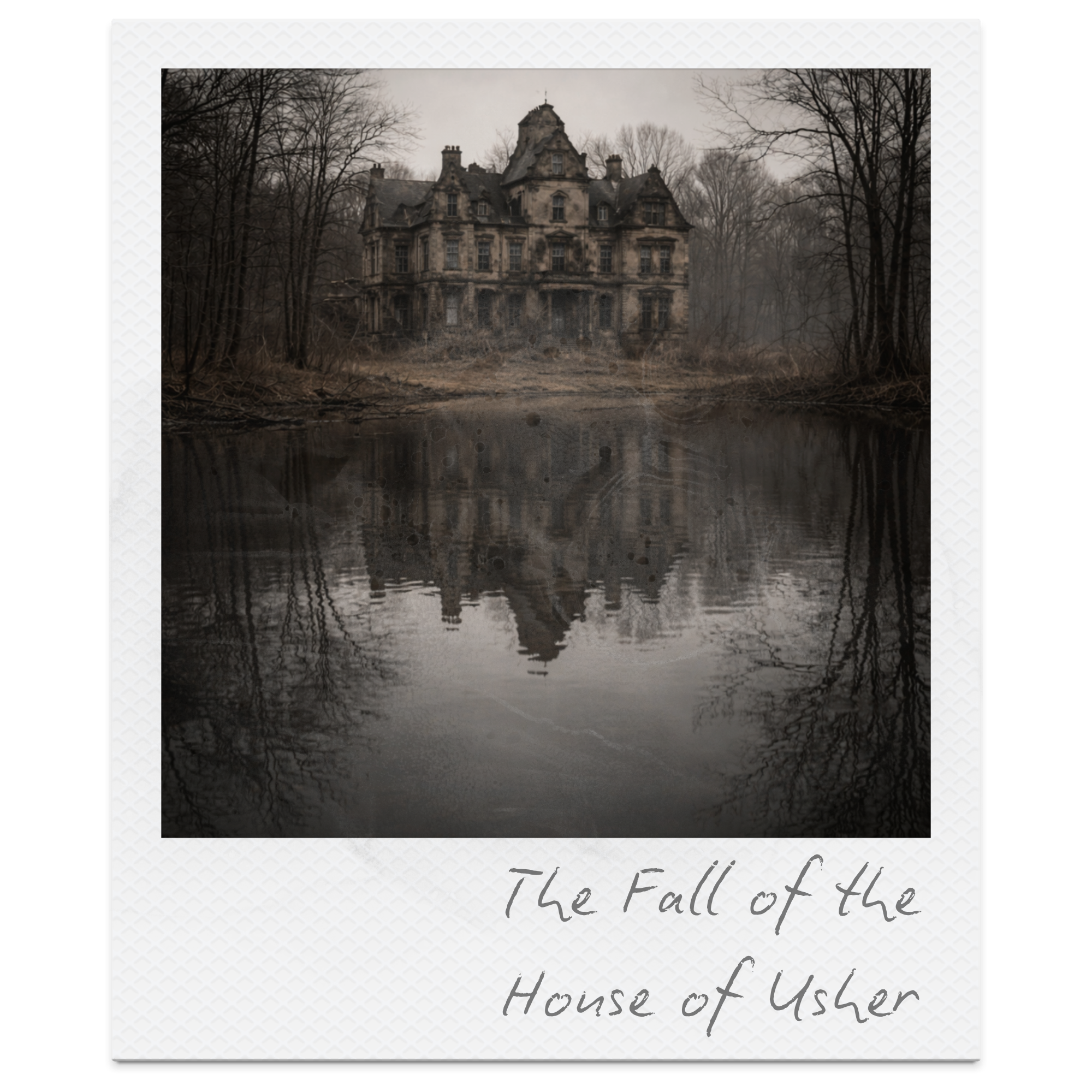
◆ The Fall of the House of Usher– Both texts present the mind as a decaying structure, with the physical collapse of Usher’s house mirroring the internal collapse depicted in “The Haunted Palace.” The poem is embedded within the story itself, making this the most direct and essential comparison.
◆ The Raven – Explores grief and psychological torment through a speaker trapped in obsessive thought. Like “The Haunted Palace,” it uses sound and repetition to reflect the mind’s descent into instability, particularly through its musical structure.
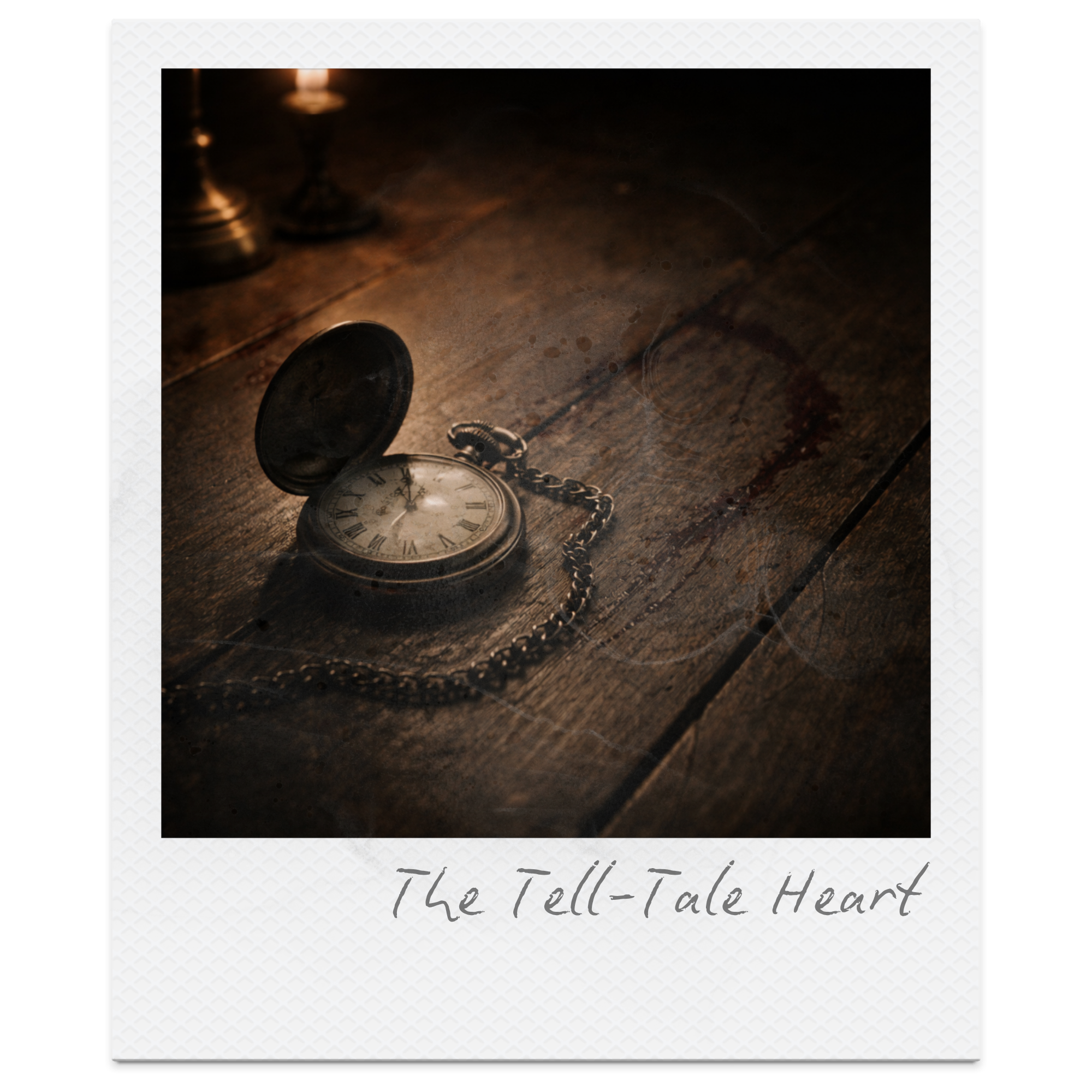
◆ The Tell-Tale Heart – Presents a narrator whose insistence on rationality masks clear madness. Both texts examine the breakdown of perception and self-awareness, showing how the mind can distort reality while believing itself to be controlled.
◆ The Strange Case of Dr Jekyll and Mr Hyde – Like Poe’s poem, this text explores the fragmentation of identity, presenting the self as divided and unstable. Gothic literature often uses this idea of duality to reflect inner conflict and psychological breakdown.
◆ Frankenstein – Examines the consequences of intellectual ambition and the corruption of creation, paralleling the shift from order to chaos in Poe’s palace. Both texts explore how something once controlled can become uncontrollable.
◆ Young Goodman Brown – Explores the collapse of faith, perception, and moral certainty, with a protagonist who can no longer distinguish between reality and illusion. Like Poe, Nathaniel Hawthorne uses Gothic elements to create a sense of psychological unease and impending doom.
Together, these texts allow students to trace a consistent Gothic concern: the idea that the most terrifying space is not the external world, but the human mind itself, where order can quietly—and irreversibly—give way to chaos.
Final Thoughts
“The Haunted Palace” stands as one of Edgar Allan Poe’s most powerful explorations of the human mind as both a place of beauty and a site of collapse. Through its extended metaphor and tightly controlled structure, the poem transforms abstract psychological ideas into something vivid and unsettling, allowing readers to witness the gradual movement from harmony to irreversible disorder.
What makes the poem particularly compelling is its ambiguity. While it can be read as a clear allegory of madness, it also resists a single, fixed interpretation. The palace may represent an individual psyche, a broader human condition, or even the instability of perception itself. This openness ensures that the poem remains deeply interpretative, inviting readers to question where the boundary between order and chaos truly lies.
To explore more of Poe’s work and recurring themes of gothic psychology and decay, visit the Edgar Allan Poe Hub, or continue building connections across texts in the Literature Library.
Choose Your Next Text