10 Gothic Romance Poetry Prompts for Teens & Adults: Desire, Darkness, and Devotion
Gothic romance poetry explores the tension between love and danger, beauty and decay, devotion and destruction. Rather than presenting love as purely uplifting or harmonious, it reveals how desire can become obsessive, forbidden, or entangled with mortality.
Across literary traditions, poets have used gothic romance to examine unattainable love, haunting memory, emotional intensity, and the blurred boundary between life and death. These poems often centre on longing that cannot be fulfilled — or should not be.
At its strongest, gothic romance poetry is not simply dramatic or tragic. Instead, it is controlled and atmospheric, using imagery, voice, and restraint to explore emotional depth. The result is poetry that feels intense without becoming excessive.
Rather than relying on melodrama alone, effective gothic romance poetry builds a sense of slow tension. Love is rarely straightforward. It lingers, haunts, or transforms into something darker.
These gothic romance poetry prompts for teens and adults are designed to support craft-focused, atmospheric writing in classrooms, writing groups, and independent practice. Each prompt encourages writers to explore desire, loss, obsession, and emotional complexity through careful language and structure. If you are looking for more writing inspiration, then check out the Poetry Writing Hub, Gothic Writing Hub, or the Creative Writing Archive.
Short on time?
Scroll down for the 10 gothic romance poetry prompts, or keep reading for writing techniques and poetic examples that support gothic romance poetry with intention and craft.
How to Approach Gothic Romance Poetry
Gothic romance poetry begins with tension. Instead of writing about love as stable or resolved, focus on what disrupts it: distance, secrecy, memory, death, or transformation.
Voice is central. Many gothic romance poems use a confessional or intimate speaker, addressing a lost lover, an absent figure, or someone who may never fully return that love. This directness creates emotional immediacy.
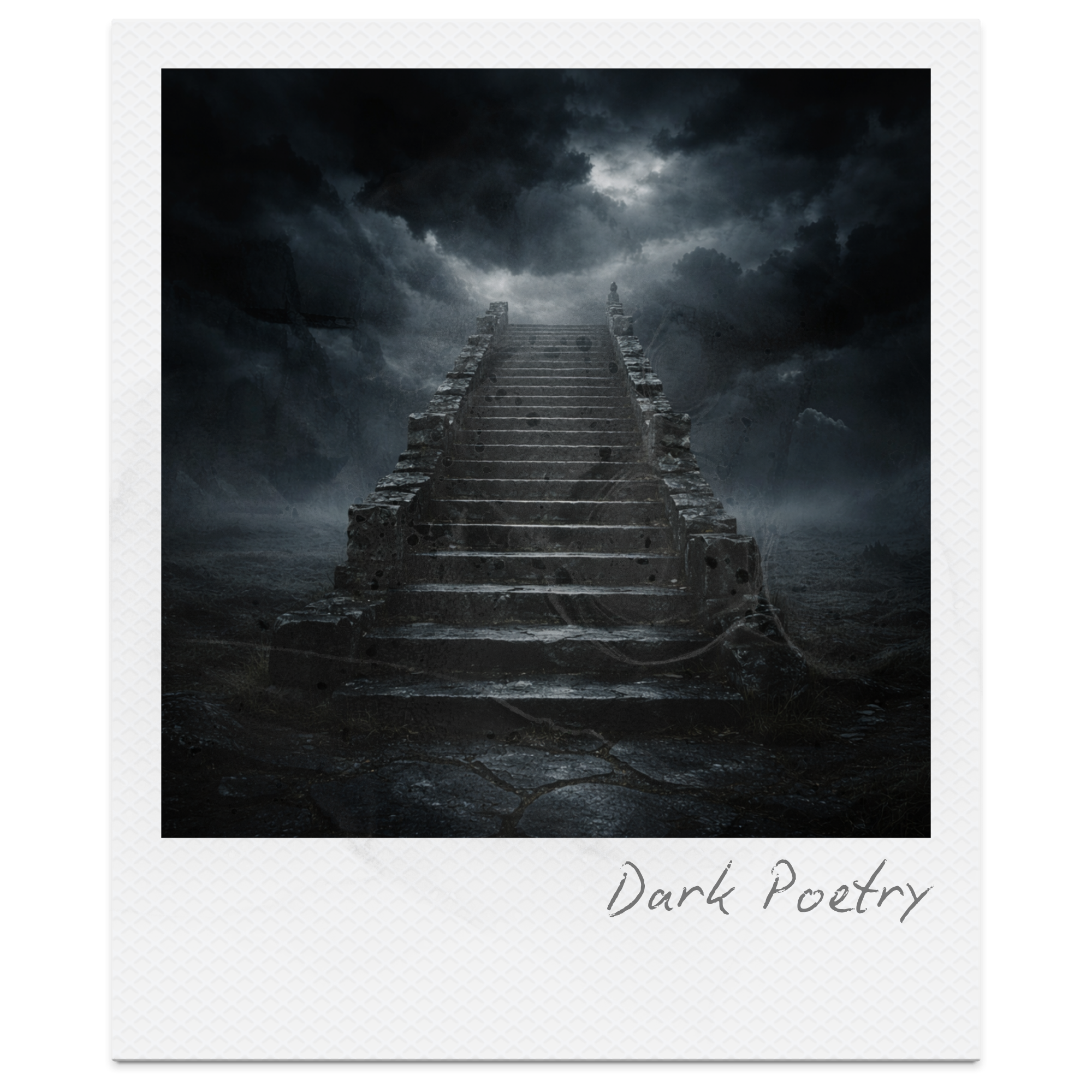
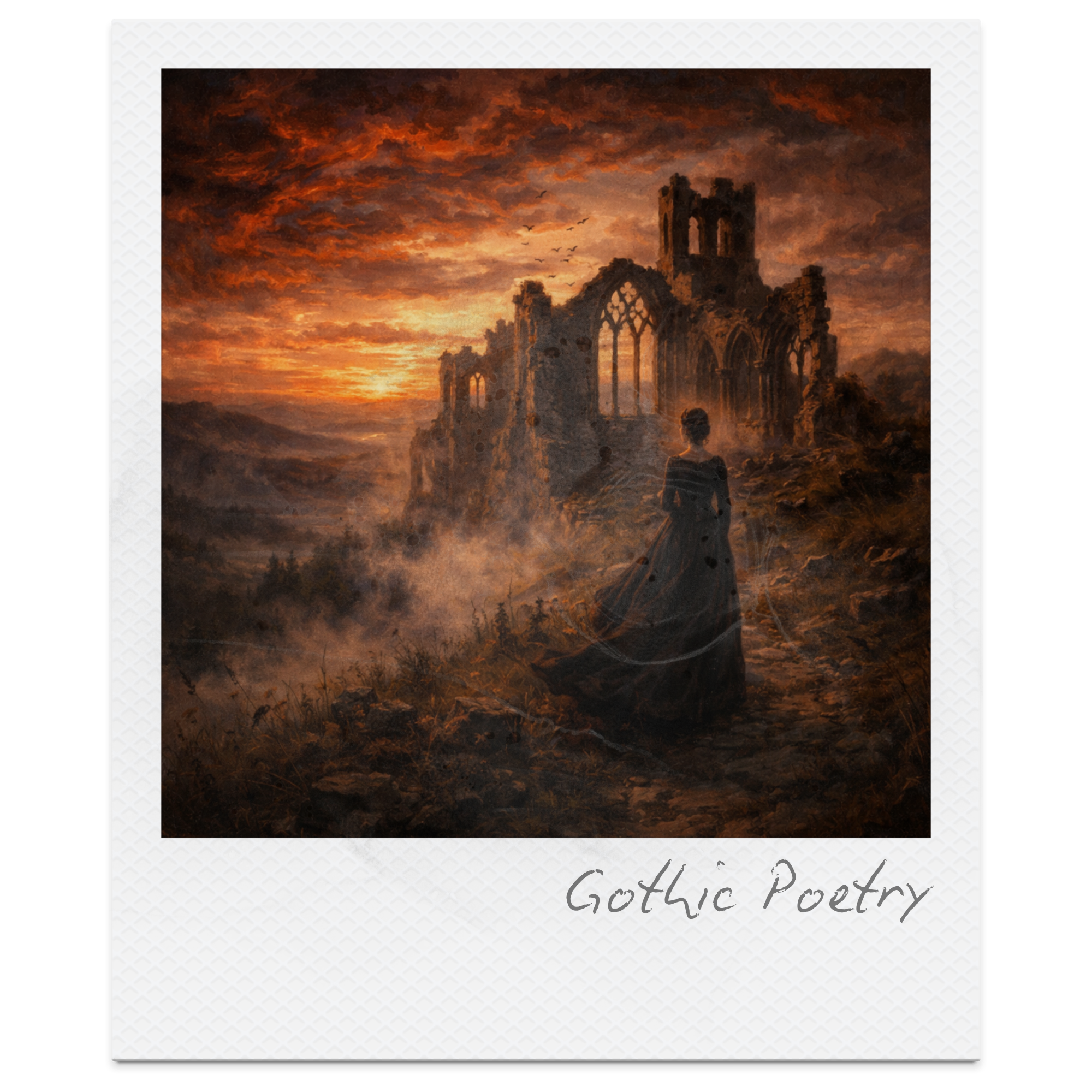
Imagery carries much of the meaning. Gothic romance often relies on symbolic settings — ruined buildings, night landscapes, fading light, or enclosed spaces — to mirror emotional states. These settings are not decorative; they reflect the relationship itself.
Tone should remain controlled. Even when emotions are intense, the poem benefits from restraint rather than excess, allowing images and implications to carry meaning.
Structure shapes the emotional experience. Repetition, cyclical phrasing, and fragmented lines can reflect obsession, memory, or unresolved longing, reinforcing the poem’s themes.
Techniques to Try in Gothic Romance Poetry
Gothic romance poetry often feels instinctive, but its emotional impact relies on deliberate craft.
Try one or two techniques at a time, allowing intensity to emerge through control rather than exaggeration.
◆ Obsessive Repetition
Repeat a phrase, image, or idea with slight variation. This mirrors fixation, longing, or emotional entrapment.
◆ Unattainable Love
Write about a love that cannot be fulfilled — due to distance, death, class, time, or internal conflict.
◆ Decay as Symbolism
Use physical decay (fading flowers, ruined buildings, extinguished light) to reflect emotional deterioration or lost love.
◆ Intimate Address
Speak directly to a lover — present, absent, or imagined. The second-person voice creates immediacy and vulnerability.
◆ Blurring Life and Death
Allow the boundary between the living and the dead to feel uncertain. Memory, ghosts, or imagined presence can complicate love.
◆ Enclosed Settings
Set the poem in confined or isolated spaces — rooms, corridors, gardens, graves — to heighten emotional intensity.
◆ Sensory Contrast
Combine beauty with unease — warmth with coldness, softness with sharpness — to reflect the dual nature of gothic romance.
◆ Fragmented Structure
Break lines or ideas abruptly to reflect emotional instability, hesitation, or unresolved tension.
Read for Inspiration: Gothic Romance in Poetry
Reading established poems helps writers understand how emotion, atmosphere, and restraint work together in gothic romance poetry.
◆ Edgar Allan Poe – “Annabel Lee”
A haunting exploration of love that persists beyond death, blending devotion with obsession and mythic intensity.
◆ Christina Rossetti – “Remember”
A restrained meditation on love, memory, and letting go, where absence becomes central to emotional meaning.
◆ Emily Brontë – selected poems (e.g. “Remembrance”)
Brontë’s poetry captures enduring, often destructive love tied to landscape, time, and emotional isolation.
◆ Lord Byron – “When We Two Parted”
A poem of secrecy, loss, and lingering emotional pain, where love becomes entwined with betrayal and silence.
◆ Elizabeth Barrett Browning – selected sonnets from Sonnets from the Portuguese
Explores intense romantic devotion while maintaining emotional control and poetic structure.
Choose one or two poems to read closely before writing. Notice how imagery, tone, and structure shape emotional intensity without excess.
Gothic Romance Poetry Writing Prompts
The prompts below encourage writers to explore love, longing, obsession, and emotional tension through controlled, atmospheric poetry.
You can work through them in order or choose one that resonates.
Gothic Romance Poetry Prompt 1: The Love That Lingers
Write about a love that continues after separation or death.
Possible opening line:
You are still here, though no one else can see you.
Craft focus:
Memory and emotional persistence.
Gothic Romance Poetry Prompt 2: The Forbidden Relationship
Write about a relationship that cannot exist openly.
Possible opening line:
We only speak where shadows gather.
Craft focus:
Secrecy and tension.
Gothic Romance Poetry Prompt 3: Love and Decay
Use physical decay to reflect the state of a relationship.
Possible opening line:
The roses have not survived the winter.
Craft focus:
Symbolism and imagery.
Gothic Romance Poetry Prompt 4: Speaking to the Absent
Write a poem addressed to someone who is no longer present.
Possible opening line:
If I say your name, will you return?
Craft focus:
Voice and direct address.
Gothic Romance Poetry Prompt 5: A Haunted Space
Set the poem in a place shaped by past love.
Possible opening line:
This house remembers what we tried to forget.
Craft focus:
Setting as emotional reflection.
Gothic Romance Poetry Prompt 6: Love as Obsession
Explore a love that has become consuming or unhealthy.
Possible opening line:
I have learned the pattern of your absence.
Craft focus:
Repetition and fixation.
Gothic Romance Poetry Prompt 7: The Moment of Parting
Capture the exact moment a relationship ends.
Possible opening line:
We did not notice when it began to fade.
Craft focus:
Subtle emotional shift.
Gothic Romance Poetry Prompt 8: Love Across Distance
Write about lovers separated by time, space, or circumstance.
Possible opening line:
The distance between us grows in silence.
Craft focus:
Atmosphere and longing.
Gothic Romance Poetry Prompt 9: The Unspoken Truth
Focus on something essential that remains unsaid.
Possible opening line:
There is something I never told you.
Craft focus:
Restraint and implication.
Gothic Romance Poetry Prompt 10: Love That Transforms
Write about how love changes into something else — grief, anger, memory, or myth.
Possible opening line:
What we were has taken another form.
Craft focus:
Transformation and ambiguity.
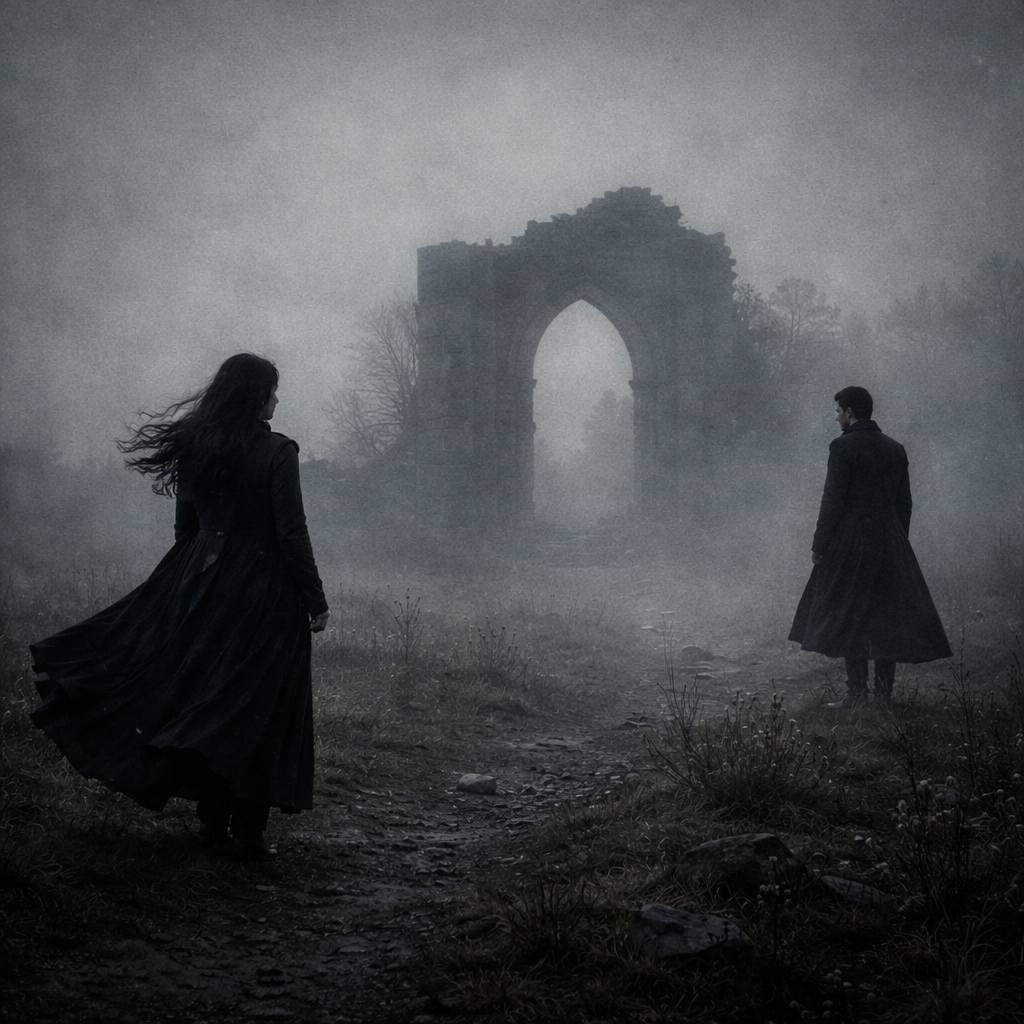
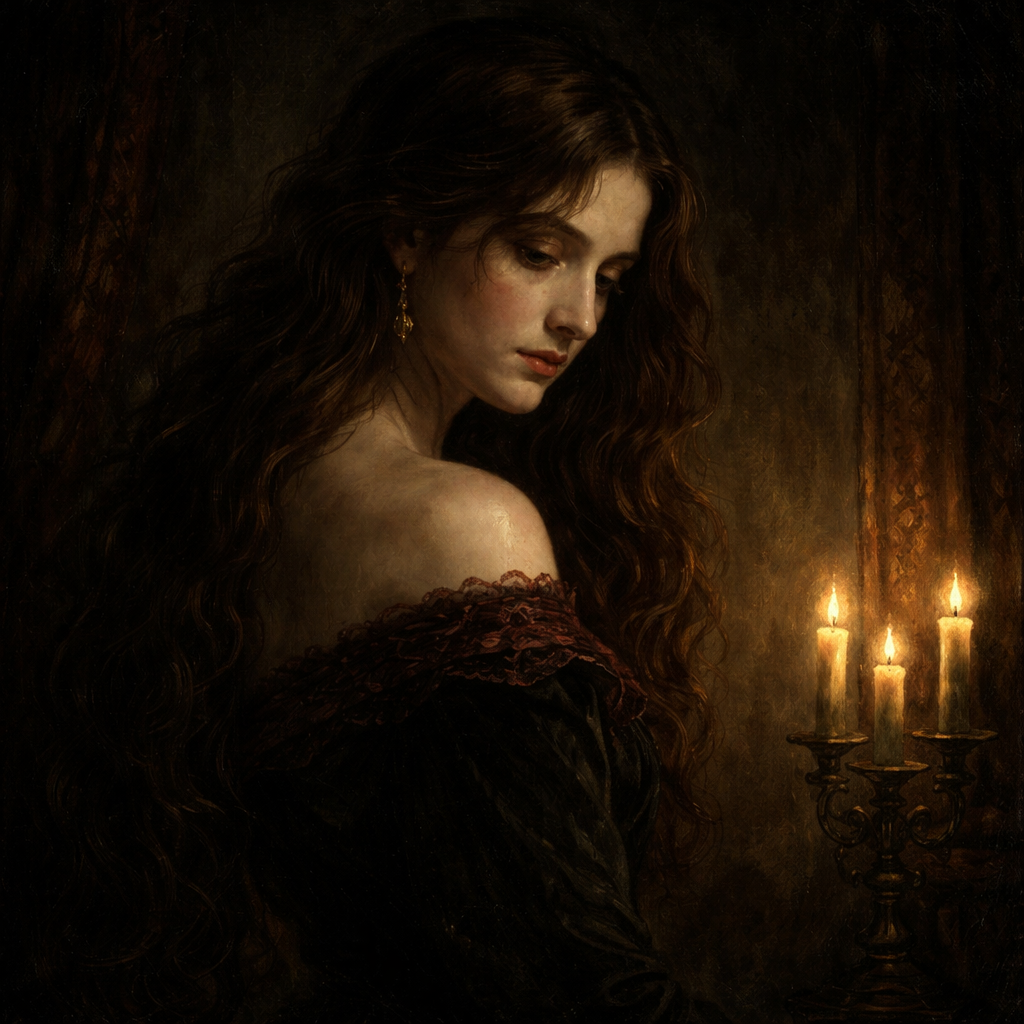
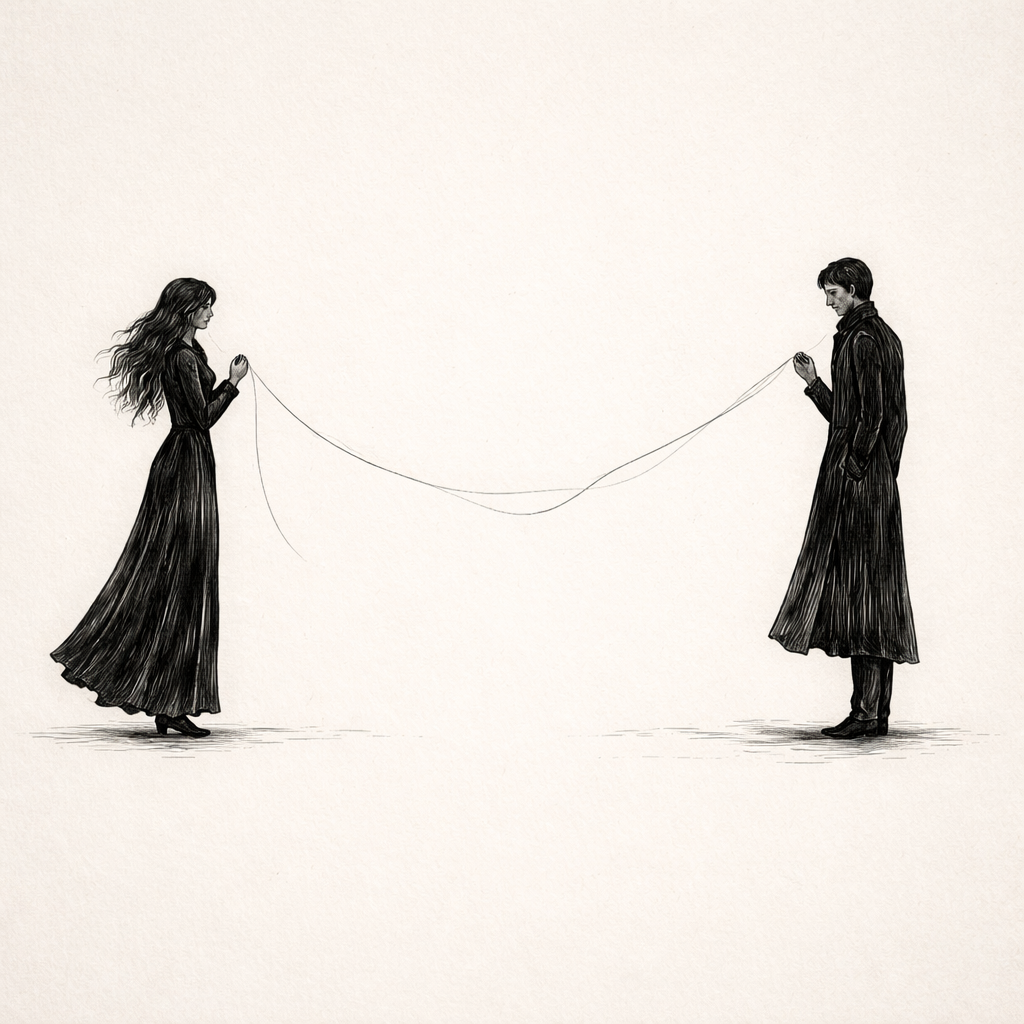
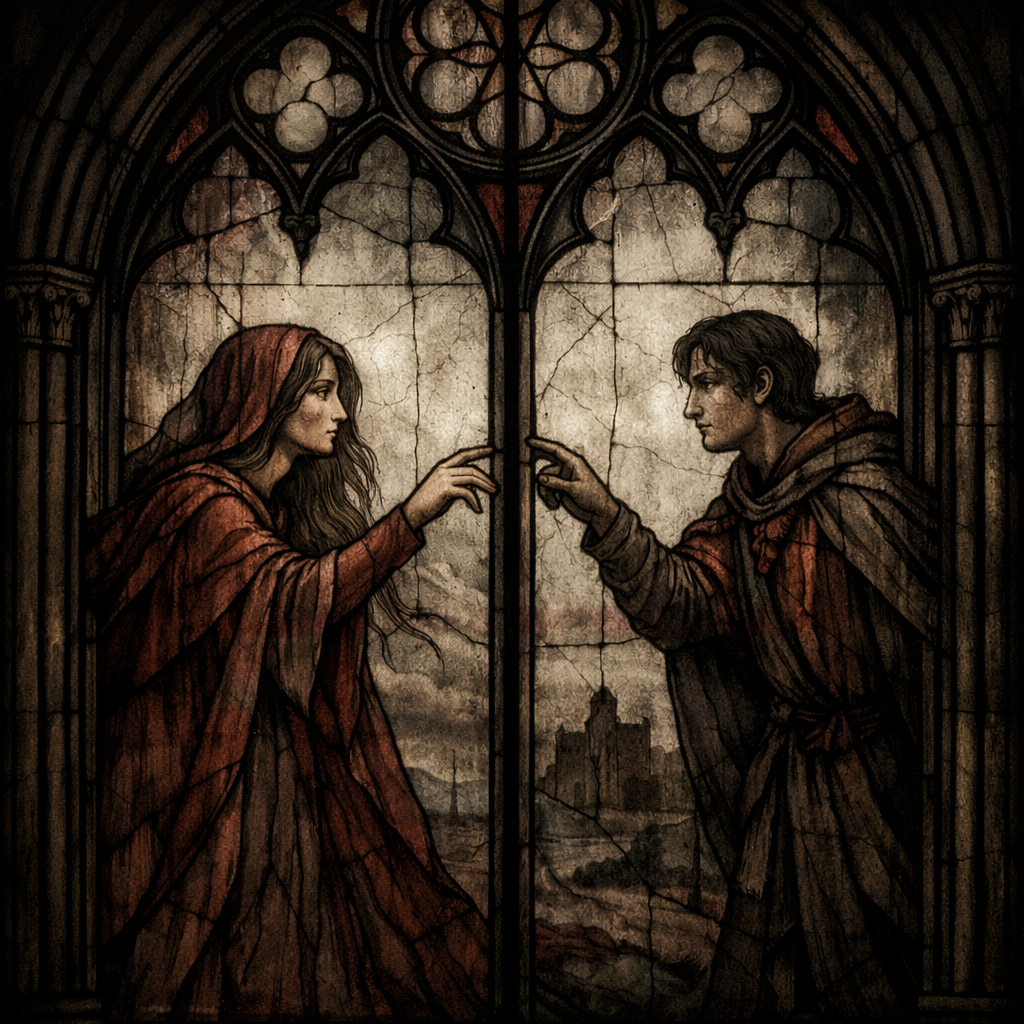
Ekphrastic Gothic Romance Poetry: Writing from Images
Ekphrastic poetry offers a powerful way into gothic romance by beginning with visual atmosphere.
Images of abandoned places, dim interiors, fading objects, or solitary figures can inspire poems that explore emotional intensity without overt explanation.
When writing ekphrastic gothic romance poetry, focus on what the image suggests:
◆ Who once loved here?
◆ What has been lost or left behind?
◆ What remains — and why?
◆ What is remembered differently than it truly was?
You might try:
◆ Writing from the perspective of someone within the image
◆ Imagining a past relationship tied to the setting
◆ Letting light, shadow, and texture suggest emotional meaning
◆ Treating absence as the central subject of the poem
The image becomes a trace of a relationship, not just a setting.

Go Deeper into Gothic Romance Poetry
If these prompts sparked ideas, extend your writing further:
◆ Write a sequence of poems about the same relationship over time
◆ Retell the same love story from two different perspectives
◆ Shift a poem from romantic to unsettling by altering tone
◆ Combine gothic imagery with restrained emotional language
Gothic romance poetry rewards patience and control. By allowing emotion to unfold through imagery and structure, writers create work that feels intense without losing clarity.
Final Thoughts
Gothic romance poetry is not about exaggeration.
It is about tension, restraint, and emotional depth.
Focus on what cannot be resolved.
Let imagery carry meaning.
Allow silence to speak.
If you’d like to explore this further, the Creative Writing Archive brings together poetry prompts, techniques, and image-based exercises designed to support thoughtful, atmospheric writing across genres.
Gothic romance reminds us that love is not always gentle —
but it is always revealing.
If you are looking for more writing inspiration, then check out the Poetry Writing Hub, Gothic Writing Hub, or the Creative Writing Archive.
Choose Your Next Theme