Eldorado by Edgar Allan Poe: Summary, Themes, Meaning & Analysis
At first glance, Eldorado appears to tell a simple, almost romantic tale of a knight’s quest for a legendary land of gold. Yet beneath its deceptively light rhythm and song-like structure, the poem explores the inevitability of failure, the persistence of hope, the passage of time, and the human desire for meaning beyond the material world. Poe transforms the familiar motif of a heroic journey into something far more unsettling: a lifelong search that ends not in triumph, but in ambiguity and possible illusion.
As the knight grows older and his quest remains unfulfilled, Eldorado shifts from a tale of adventure into a meditation on mortality, disillusionment, and the tension between earthly ambition and spiritual transcendence. The poem resists a single fixed interpretation—Eldorado may represent wealth, happiness, purpose, or even the afterlife—inviting readers to question whether the knight’s journey is misguided from the beginning, or whether its meaning lies in the act of seeking itself. For more on Poe’s broader exploration of death, obsession, and the gothic imagination, see the Edgar Allan Poe Hub, or explore a wider range of texts and authors in the Literature Library.

Context of Eldorado
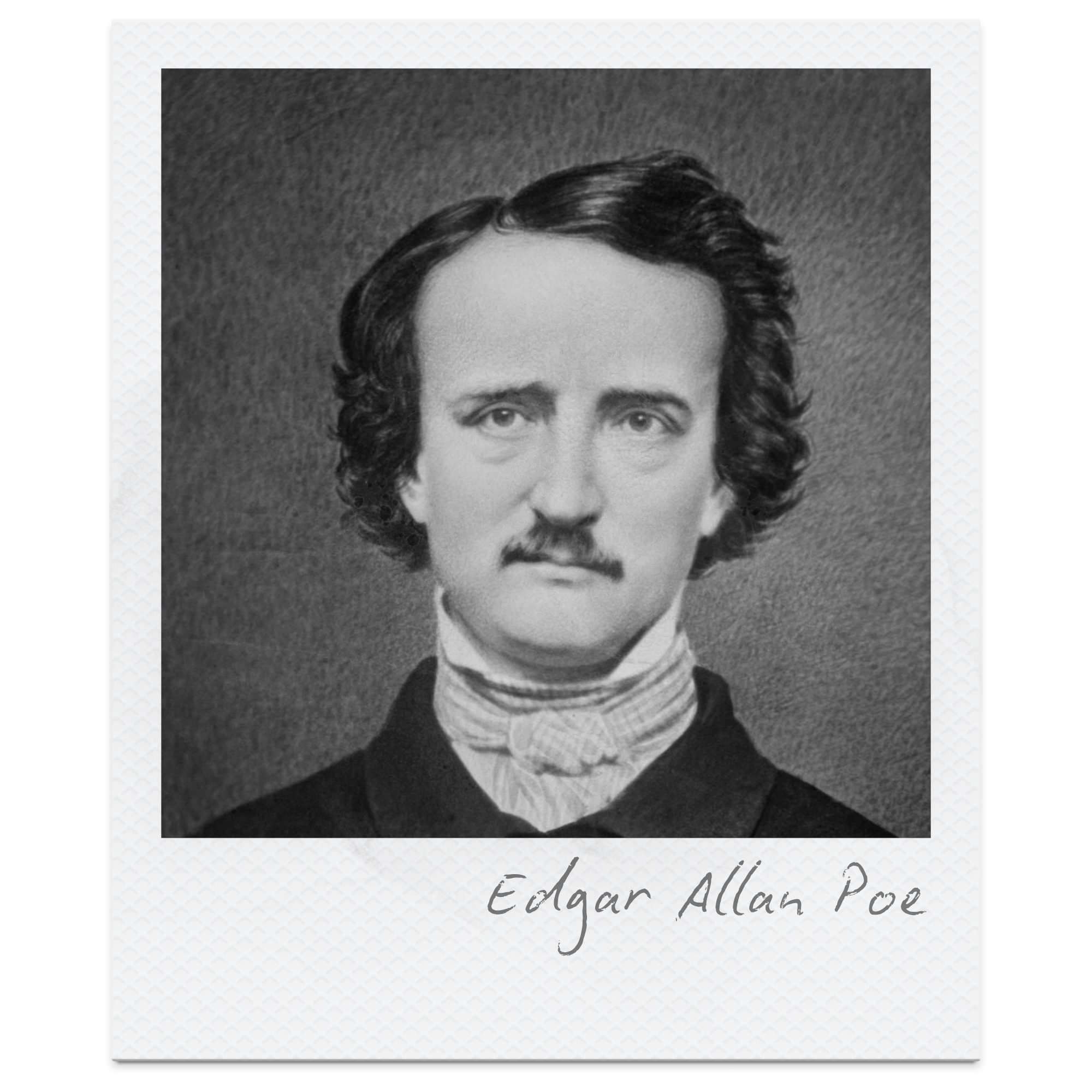
Written in 1849, the same year as his death, Eldorado reflects the late style of Edgar Allan Poe, where brevity, musicality, and symbolic depth converge. Unlike his longer, more overtly Gothic works, this poem adopts the form of a ballad, drawing on medieval imagery and the romanticised figure of the knight. However, Poe subverts this traditional quest narrative: rather than achieving glory or discovery, the knight’s journey becomes one of endless searching, growing disillusionment, and quiet despair. The poem’s simplicity is therefore deceptive, masking a deeply philosophical exploration of human ambition and limitation.
Thematically, Eldorado engages with the passage of time, the illusion of fulfilment, and the possibility that meaning lies beyond the physical world. The legendary city of gold becomes less a literal destination and more a symbolic construct—representing wealth, happiness, purpose, or even spiritual salvation. By the final stanza, the direction given to the knight—“Over the Mountains / Of the Moon”—suggests a movement beyond earthly reality, aligning the poem with Poe’s recurring fascination with death, transcendence, and the unknown. For a broader understanding of how these ideas operate across Poe’s work, see the Edgar Allan Poe Context Post.
Eldorado: At a Glance
Form: Ballad (lyrical narrative poem)
Mood: Hopeful, melancholic, reflective
Central tension: The desire to achieve a lifelong goal vs the reality of its possible impossibility
Core themes: the illusion of fulfilment, the passage of time, mortality, perseverance, spiritual vs material pursuit
One-sentence meaning: A knight’s lifelong search for Eldorado becomes a symbolic exploration of humanity’s pursuit of meaning, suggesting that true fulfilment may lie beyond the physical world rather than within it.
Quick Summary of Eldorado
The poem follows a cheerful and determined knight who sets out on a lifelong quest to find the legendary land of Eldorado. Filled with optimism and purpose, he travels through both “sunshine and shadow,” singing as he journeys, driven by the belief that this golden land can be found.
As time passes, however, the knight grows older and begins to lose hope. Despite his persistence, he finds no trace of Eldorado, and a sense of disillusionment settles over him. His strength fades, and the once-hopeful journey becomes marked by exhaustion and uncertainty.
Near the end of his life, the knight encounters a mysterious “pilgrim shadow” and asks where Eldorado can be found. The shadow directs him beyond the physical world—“Over the Mountains / Of the Moon”—suggesting that Eldorado may exist only beyond life itself. The poem closes on this ambiguous note, leaving the knight’s fate unresolved and the meaning of his quest open to interpretation.
Title, Form, Structure, and Metre of Eldorado
The meaning of Eldorado is inseparable from its ballad form, tightly controlled rhyme scheme, and shifting metrical patterns, all of which mirror the knight’s journey from certainty to instability. Poe’s technical precision ensures that the poem’s sound and structure reinforce its central concerns with repetition, endurance, and the ultimate futility of earthly pursuit.
Title
The title Eldorado invokes the legendary “city of gold,” historically associated with wealth, conquest, and impossible discovery. In Poe’s poem, however, the term becomes symbolic rather than literal, representing fulfilment, purpose, or transcendence beyond human reach.
The knight’s failure to locate Eldorado transforms the title into something paradoxical: it names both the goal of the journey and the evidence of its impossibility, reinforcing the poem’s exploration of illusion, desire, and unattainable ideals.
Form and Structure
Eldorado is structured as a four-stanza ballad, each composed of six lines (sestets). This traditional form evokes medieval quest narratives, aligning the poem with the archetype of the wandering knight. However, Poe subtly undermines this heroic structure by denying the expected resolution.
The rhyme scheme follows a regular AABCCB pattern, which can be seen clearly in the opening stanza:
Gaily bedight (A)
A gallant knight (A)
In sunshine and in shadow (B)
Had journeyed long (C)
Singing a song (C)
In search of Eldorado (B)
This pattern creates a sense of symmetry and musicality, with the repeated “shadow” / “Eldorado” rhyme linking darkness and desire. Structurally, the stanza moves in a wave-like motion: from paired rhymes (A, C) into the recurring B rhyme, which binds each stanza together.
Importantly, this repetition suggests that the knight is caught in a cycle, moving continuously between hope (Eldorado) and obscurity or failure (shadow). The fact that these two words rhyme subtly implies that they are intertwined, or even equivalent, reinforcing the poem’s darker implications.
In the final stanza, this structural stability begins to fracture. While the rhyme scheme broadly remains, the expected sound patterns loosen, reflecting the shift from a physical quest to a metaphysical directive.
Metre and Rhythm
Poe primarily uses iambic dimeter and iambic trimeter, but he constantly disrupts and varies these patterns to mirror the instability of the knight’s journey.
For example, a regular iambic dimeter line such as:
A gallant knight
can be broken down as:
a GAL | lant KNIGHT
(unstressed → stressed | unstressed → stressed)
However, Poe immediately destabilises this pattern in the opening line:
Gaily bedight
becomes:
GAIly | be DIGHT
(stressed → unstressed | unstressed → stressed)
This opening trochaic inversion disrupts the expected rhythm from the outset, subtly suggesting that the journey will not follow a stable or predictable path.
The longer third lines expand into iambic trimeter with an extra unstressed syllable (a feminine ending):
In sunshine and in shadow
breaks into:
in SUN | shine AND | in SHAD | ow
(unstressed → stressed | unstressed → stressed | unstressed → stressed + extra syllable)
This additional syllable creates a lingering, unresolved effect. The line does not close cleanly, echoing the poem’s central idea that the knight’s search is never fully completed.
Similarly, the sixth line:
In search of Eldorado
can be broken down as:
in SEARCH | of EL | do RA | do
again extending beyond a neat trimeter structure
Across the first three stanzas, this pattern holds: short, controlled lines (dimeter) are repeatedly extended by longer, unresolved lines (trimeter with extra syllables), creating a rhythm that moves forward but never settles.
In the final stanza, however, Poe deliberately disrupts this system. Lines such as:
Over the Mountains
Of the Moon,
shift into a heavier, more forceful rhythm:
Over the MOUN | tains
OF the MOON
These lines rely more heavily on stressed syllables, creating a more abrupt and declarative sound. The earlier musicality gives way to something more directive and final.
This metrical shift is crucial. As the knight approaches the end of his life, the poem’s rhythm breaks away from its earlier patterns, mirroring the collapse of the structured, hopeful quest. The steady “song” of the journey is replaced by a rhythm that feels disjointed and absolute, reinforcing the idea that Eldorado lies beyond the ordered world of human experience.
The Speaker of Eldorado
The speaker of Eldorado presents a third-person narrative voice, recounting the story of a knight’s lifelong quest. On the surface, this voice appears detached and observational; however, the poem’s recurring imagery, tonal shifts, and thematic focus suggest that the speaker is far from neutral. Instead, the narrative voice reveals a perspective shaped by disillusionment, mortality, and a deep awareness of life’s limitations.
Although the speaker does not explicitly identify themselves, their framing of the knight’s journey is notably pessimistic. The quest is introduced with optimism, yet the narrative quickly foregrounds failure and absence—the knight finds “No spot of ground / That looked like Eldorado.” The emphasis is not on adventure or possibility, but on the inevitability of disappointment, suggesting that the speaker views such pursuits as fundamentally unattainable.
This perspective is reinforced through the poem’s persistent focus on shadow imagery. The knight travels through “sunshine and shadow,” but it is the shadow that ultimately dominates: it falls “o’er his heart,” appears as the mysterious “pilgrim shadow,” and culminates in the “Valley of the Shadow.” These repeated references create a tonal pattern that aligns the speaker with darkness, uncertainty, and death, rather than hope or fulfilment.
The speaker’s voice therefore appears shaped by a worldview in which aspiration is inseparable from loss. One possible interpretation is that the speaker reflects the mindset of someone who, like the knight, has pursued meaning or fulfilment without success. This would explain the poem’s emphasis on aging, exhaustion, and the erosion of hope, as well as its shift towards a more existential or spiritual conclusion.
Ultimately, the speaker functions less as a neutral storyteller and more as a philosophical guide, shaping how the reader interprets the knight’s journey. Through their focus on failure, shadow, and transcendence, the speaker suggests that the search for Eldorado—whether understood as wealth, happiness, or purpose—may be inherently unresolvable within human life, existing instead as an idea that can only be approached, never fully attained.
Stanza by Stanza Analysis of Eldorado
A close examination of Eldorado reveals how Edgar Allan Poe uses structural progression, shifting imagery, and tonal development to trace the knight’s journey from hopeful ambition to existential uncertainty. Each stanza marks a distinct stage in this journey, moving from youthful optimism, through disillusionment and decline, and ultimately towards a metaphysical resolution that resists closure.
By analysing the poem stanza by stanza, it becomes clear that Poe carefully aligns form, rhythm, and imagery with the knight’s psychological and physical state. The repetition of key motifs—particularly shadow, journey, and distance—creates a sense of inevitability, while subtle structural shifts signal the movement from a physical quest to something far more symbolic and abstract.
Stanza 1: The Idealised Quest and Illusion of Purpose
The opening stanza presents the knight at the height of youth, confidence, and purpose, establishing the quest that will define the entire poem. The phrase “Gaily bedight” emphasises appearance and presentation: the knight is richly dressed, suggesting not only status and nobility, but also an idealised, almost romantic vision of chivalry. This is reinforced by “A gallant knight,” where “gallant” conveys both bravery and honour, aligning him with the traditional hero of medieval quest narratives.
Structurally, the stanza begins with a rhyming couplet (“bedight” / “knight”), immediately creating a sense of order and harmony. This controlled opening reflects the knight’s certainty and direction at the start of his journey. However, Poe delays the revelation of the knight’s purpose until the final line, building a sense of narrative anticipation. The reader is first given description, then action, and only finally the goal: “In search of Eldorado.” This structural choice mirrors the nature of a quest itself—the destination is always deferred, positioned just out of immediate reach.
The imagery of “sunshine and shadow” introduces an early hint of duality. While it initially suggests the knight’s endurance through different landscapes and conditions, it also foreshadows the poem’s deeper concern with hope versus darkness, aspiration versus uncertainty. Even in this opening moment of optimism, the presence of “shadow” subtly disrupts the brightness of “sunshine,” implying that the quest is never purely triumphant.
Sound also plays a key role in shaping the stanza’s tone. The repeated alliteration of the “s” sound—“sunshine,” “shadow,” “singing,” “song,” “search”—creates a soft, flowing rhythm that enhances the poem’s musical, ballad-like quality. This reinforces the image of the knight “singing a song,” suggesting a journey marked by confidence and forward momentum.
However, the final rhyme between “shadow” and “Eldorado” is particularly significant. By linking these two words, Poe subtly suggests that the object of desire and the presence of darkness are intertwined. From the very beginning, the quest is framed not simply as a pursuit of glory, but as something already touched by illusion and uncertainty, hinting that Eldorado may be as intangible as a shadow itself.
Stanza 2: The Collapse of Hope and the Weight of Time
The second stanza marks a decisive turning point, shifting the poem from youthful optimism to inevitable decline. The opening conjunction “But” immediately disrupts the tone established in Stanza 1, signalling that the knight’s journey has not led to fulfilment. Instead, it introduces a stark contrast: despite his earlier confidence, “he grew old,” emphasising the passage of time and suggesting that the quest has consumed his entire life.
The phrase “This knight so bold” now feels reflective, almost diminished. Structurally, the delayed identification of the knight—following the pronoun “he”—creates a sense of distance and detachment, as though the once-idealised figure has lost some of his former clarity and stature. The heroic identity established in the opening stanza begins to erode, replaced by a figure defined more by aging and endurance than by glory.
The imagery of shadow becomes more psychologically significant in this stanza. Unlike the earlier, balanced pairing of “sunshine and shadow,” the shadow here falls specifically “o’er his heart,” suggesting emotional heaviness, disappointment, and possibly despair. The inversion of the phrase—placing “o’er his heart” before “a shadow / Fell”—draws attention to the internal impact of the knight’s failure, foregrounding the emotional consequence rather than the external event.
The final lines emphasise absence: the knight finds “No spot of ground / That looked like Eldorado.” The phrasing is crucial. He does not fail to reach Eldorado itself; rather, he cannot even find anything that resembles it. This deepens the sense of futility, suggesting that the ideal he seeks may not exist at all within the physical world.
Structurally, the stanza mirrors this shift. While the rhyme scheme remains consistent, the tone is now more somber and restrained, and the earlier musicality begins to feel weighted by repetition. The journey continues, but its meaning has changed: what once appeared as a heroic quest is now revealed as a lifelong search defined by absence, disappointment, and the gradual erosion of hope.
Stanza 3: Physical Decline and the Turn Towards the Unknown
The third stanza deepens the poem’s movement from earthly pursuit to existential questioning, as the knight’s physical decline mirrors his growing uncertainty and desperation. The phrase “as his strength / Failed him at length” emphasises both time and exhaustion, suggesting that the quest has not only consumed his life but has also left him weakened and vulnerable. The repetition of soft sounds and the slowing rhythm reinforce a sense of diminishing energy, as the knight approaches the limits of his endurance.
At this point, the quest shifts direction. Instead of continuing his search through the physical world, the knight encounters a “pilgrim shadow.” The term “pilgrim” is significant: it suggests a spiritual journey, often associated with faith, guidance, and the search for meaning beyond the material. However, this figure is also a “shadow,” aligning it with the poem’s recurring imagery of darkness, uncertainty, and death. The combination creates an ambiguous presence—both guide and omen—suggesting that the knight has crossed into a space where the boundaries between the living and the supernatural begin to blur.
The knight’s direct address—“Shadow… Where can it be— / This land of Eldorado?”—marks a shift in voice and structure. For the first time, the poem includes dialogue, breaking the earlier narrative flow and creating a moment of urgency and vulnerability. The repetition of the question highlights the knight’s desperation, as his lifelong quest is reduced to a final appeal for direction.
Structurally, this stanza acts as a pivot between the physical and the metaphysical. The knight is no longer actively searching; instead, he is seeking answers, indicating a loss of agency. His journey, once defined by movement and song, is now defined by uncertainty and dependence on an external, possibly supernatural force. This prepares the reader for the final stanza, where the quest will move fully beyond the boundaries of the earthly world.
Stanza 4: The Final Directive and the Turn to the Afterlife
The final stanza delivers the poem’s resolution, but rather than offering clarity, it deepens the sense of ambiguity and transcendence. The “pilgrim shadow” finally responds, yet its answer is not a clear destination but a directional command, shifting the quest from a physical search to something profoundly metaphysical.
The instruction to travel “Over the Mountains / Of the Moon” immediately moves the knight beyond the known, earthly world. These mountains are distant, almost mythical, suggesting a place that is remote, unreachable, and symbolic rather than literal. This reinforces the idea that Eldorado cannot be found through ordinary means; it lies beyond the boundaries of human experience.
The phrase “Down the Valley of the Shadow” intensifies this shift. The allusion to the biblical “valley of the shadow of death” introduces an explicit connection to mortality and the afterlife, suggesting that the knight’s journey must pass through death itself. At this point, the quest is no longer about discovery or achievement, but about transcendence beyond life.
The repeated imperative “Ride, boldly ride” echoes the knight’s earlier determination, but now carries a different weight. It functions less as encouragement and more as a final, almost inevitable command, urging the knight forward despite the implications of the path ahead. The repetition reinforces both urgency and inevitability, as though there is no alternative but to continue.
Structurally, this stanza breaks from the earlier patterns of certainty. The rhythm becomes more forceful and less fluid, mirroring the shift from a measured journey to a decisive, irreversible movement. The dialogue introduced in the previous stanza now culminates in a response that offers no tangible resolution, only a continuation into the unknown.
The closing line—“If you seek for Eldorado!”—leaves the poem suspended between hope and futility. The conditional “If” is crucial: it implies that the quest remains a choice, yet one that leads inevitably towards distance, shadow, and death. In this way, Poe reframes Eldorado as something that cannot be possessed or reached within life, but only pursued endlessly, reinforcing the poem’s central idea that the ultimate object of desire may exist only beyond human reach.
Key Quotes from Eldorado
Poe’s use of compressed, musical language allows each line of Eldorado to carry significant thematic weight. The following quotes highlight how imagery, symbolism, and sound contribute to the poem’s exploration of quest, disillusionment, and transcendence.
The Idealised Quest
“Gaily bedight, / A gallant knight,”
♦ Imagery – The decorative language emphasises the knight’s polished, almost theatrical appearance
♦ Meaning – Presents an idealised vision of chivalry and heroic identity
♦ Effect – Establishes early optimism and confidence, framing the quest as noble and purposeful
“In sunshine and in shadow,”
♦ Juxtaposition – The pairing of light and dark introduces duality
♦ Meaning – Suggests the journey includes both hope and hardship
♦ Effect – Foreshadows the growing dominance of shadow (despair, uncertainty)
“Singing a song,”
♦ Sound / tone – Light, musical phrasing reflects rhythm of a ballad
♦ Meaning – Indicates the knight’s confidence and emotional ease
♦ Effect – Reinforces the contrast with later silence and exhaustion
Disillusionment and Decline
“But he grew old— / This knight so bold—”
♦ Structural shift – The conjunction “But” marks a tonal turning point
♦ Meaning – Highlights the passage of time and erosion of identity
♦ Effect – Undermines the heroic image established earlier
“And o’er his heart a shadow— / Fell”
♦ Symbolism – Shadow represents despair, emotional burden, or depression
♦ Meaning – Suggests internalisation of failure
♦ Effect – Shifts focus from external journey to psychological impact
“No spot of ground / That looked like Eldorado.”
♦ Ambiguity – “Looked like” implies uncertainty about the goal itself
♦ Meaning – Suggests Eldorado may not exist in any recognisable form
♦ Effect – Deepens the sense of futility and unattainability
The Supernatural and the Turn to the Unknown
“He met a pilgrim shadow—”
♦ Symbolism – Combines spiritual journey (“pilgrim”) with death imagery (“shadow”)
♦ Meaning – Represents a guide between life and the afterlife
♦ Effect – Signals transition from physical quest to metaphysical search
“‘Where can it be— / This land of Eldorado?’”
♦ Direct speech – Introduces urgency and vulnerability
♦ Meaning – Reduces lifelong quest to a single desperate question
♦ Effect – Highlights the knight’s dependence and uncertainty
“‘Over the Mountains / Of the Moon,’”
♦ Imagery – Suggests distance, elevation, and the unreal
♦ Meaning – Implies Eldorado lies beyond the physical world
♦ Effect – Expands the quest into the mythical and symbolic
“‘Down the Valley of the Shadow,’”
♦ Allusion – Biblical reference to death and mortality
♦ Meaning – Suggests the journey must pass through death itself
♦ Effect – Reinforces the poem’s movement towards finality and transcendence
“‘Ride, boldly ride,’”
♦ Repetition / imperative – Commanding tone echoes earlier confidence
♦ Meaning – Encourages perseverance despite inevitable outcome
♦ Effect – Creates tension between hope and futility
Key Techniques in Eldorado
Poe’s Eldorado achieves its depth through precise, controlled use of poetic techniques, where sound, structure, and symbolism work together to reinforce the poem’s central ideas of illusion, endurance, and the limits of human aspiration.
♦ Symbolism – Eldorado functions as a shifting symbol for wealth, fulfilment, purpose, or the afterlife, while the recurring “shadow” represents despair, death, and uncertainty, linking the knight’s external journey to an internal, psychological and existential struggle
♦ Imagery – Contrasting images such as “sunshine” and “shadow” establish a duality between hope and disillusionment, while later images like the “Mountains of the Moon” and “Valley of the Shadow” expand the poem into the mythical and metaphysical, suggesting a movement beyond the physical world
♦ Alliteration – The repetition of soft “s” sounds in phrases like “sunshine,” “shadow,” “singing,” “song,” “search” creates a musical, flowing rhythm that reflects the knight’s early confidence, while also reinforcing the poem’s ballad-like quality
♦ Repetition – Structural and lexical repetition, particularly of “shadow” and “Eldorado,” creates a cyclical pattern that mirrors the knight’s endless, unresolved quest, suggesting he is trapped between desire and absence
♦ Rhyme Scheme (AABCCB) – The tightly controlled rhyme scheme produces a sense of order and forward movement, but the linking of “shadow” and “Eldorado” subtly implies that the desired goal and darkness are intertwined, reinforcing the poem’s underlying pessimism
♦ Metre Variation – The combination of iambic dimeter and trimeter, alongside trochaic inversions and irregularities in the final stanza, creates a rhythm that begins as stable and song-like but gradually becomes unsettled, reflecting the breakdown of the knight’s certainty
♦ Juxtaposition – The consistent pairing of opposing ideas—youth vs age, light vs shadow, hope vs despair, journey vs stagnation—highlights the tension at the heart of the poem and reinforces the inevitability of disillusionment over time
♦ Dialogue – The introduction of direct speech in the final stanzas shifts the poem from narrative to philosophical exchange, emphasising the knight’s vulnerability and dependence, while also foregrounding the poem’s unresolved, ambiguous conclusion
♦ Enjambment and Syntax Inversion – Poe frequently alters natural word order (e.g., “o’er his heart a shadow / Fell”), drawing attention to key emotional moments and creating a slightly disorienting effect that mirrors the knight’s psychological instability
Themes in Eldorado
Poe’s Eldorado explores a tightly interconnected set of ideas centred on human desire, limitation, and transcendence. Through the knight’s journey, the poem examines how ambition, time, and belief shape our understanding of fulfilment, ultimately suggesting that what we seek may lie beyond the physical world.
The Illusion of Fulfilment
At the heart of the poem is the idea that Eldorado represents an ideal that cannot be realised. The knight’s lifelong search yields “No spot of ground / That looked like Eldorado,” suggesting that fulfilment is not simply difficult to attain, but may be entirely illusory. Poe presents Eldorado as something that exists more powerfully as an idea than a reality, reinforcing the notion that human desire often attaches itself to unreachable or imagined goals.
The Futility of the Quest
Closely linked to this illusion is the idea that the knight’s journey is inherently futile. He dedicates his entire life to the search, yet achieves no tangible progress, and even at the end receives only vague, unattainable directions. The poem suggests that the issue is not simply that Eldorado is hard to find, but that it may be impossible to reach at all, positioning the quest itself as ultimately doomed from the outset.
The Passage of Time
The line “But he grew old” marks a crucial shift, foregrounding the relentless movement of time. The knight’s journey spans his entire life, transforming what begins as a hopeful quest into a narrative of aging and loss. Time in the poem is not restorative or rewarding; instead, it gradually erodes both physical strength and emotional certainty, highlighting the cost of pursuing a singular, unfulfilled goal.
Mortality
Closely linked to time is the theme of mortality, which becomes increasingly explicit as the poem progresses. The recurring imagery of “shadow,” culminating in the “Valley of the Shadow,” suggests that the knight’s journey ultimately leads towards death. Rather than presenting death as an end, however, Poe frames it as a threshold, implying that the true destination of the quest may only be accessible beyond life itself.
Perseverance
Despite the growing sense of futility, the knight continues his journey, embodying a form of relentless perseverance. The repeated imperative “Ride, boldly ride” reinforces this idea, suggesting that the act of continuing—despite exhaustion and uncertainty—holds its own significance. Poe complicates this theme, however, by questioning whether perseverance is admirable or misguided, leaving the reader to consider whether persistence without fulfilment is meaningful or tragic.
Spiritual vs Material Pursuit
The poem ultimately shifts from a material quest to a spiritual journey. While Eldorado initially appears as a physical place associated with wealth and discovery, the final stanza redefines it as something located beyond the earthly realm. The movement towards the “Mountains of the Moon” and the “Valley of the Shadow” suggests that true fulfilment lies not in material achievement, but in a form of transcendence or acceptance beyond life.
Hope vs Despair
The poem traces a clear movement from hope to despair, structured across the four stanzas. The knight begins as confident and purposeful, “singing a song,” but gradually becomes defined by disillusionment, exhaustion, and uncertainty. The growing dominance of shadow imagery reflects this emotional shift, as optimism is slowly replaced by a darker, more fatalistic outlook.
The Journey vs The Destination
Poe ultimately raises the question of whether the journey itself holds meaning, or whether a life spent pursuing an unattainable goal is inherently empty. The knight never reaches Eldorado, forcing readers to consider whether the value lies in the act of seeking or whether the absence of fulfilment renders the journey tragic and unresolved. This ambiguity is central to the poem’s power, leaving the reader to decide whether the knight’s quest represents purpose or futility.
Alternative Interpretations of Eldorado
Poe’s Eldorado resists a single, fixed meaning, instead inviting multiple readings shaped by psychology, genre, philosophy, and allegory. The knight’s journey can be understood not only as a literal quest, but as a symbolic exploration of human desire, mortality, and the search for meaning.
Psychoanalytical Interpretation: The Projection of Unfulfilled Desire
From a psychoanalytical perspective, Eldorado can be read as a projection of the knight’s unconscious desires and unattainable ideals. The lifelong search reflects an internal drive towards something that can never be fully realised, suggesting a form of psychological fixation or obsession.
The recurring “shadow” imagery reinforces this reading, symbolising the knight’s growing despair and internal conflict, while the “pilgrim shadow” may represent a manifestation of his own subconscious, guiding him towards an acceptance of failure and mortality. In this sense, the journey is not external, but internal—a movement deeper into the unresolved tensions of the mind.
Gothic Interpretation: The Quest as a Journey Towards Death
A Gothic reading emphasises the poem’s use of dark imagery, supernatural elements, and death symbolism. The repeated references to “shadow,” culminating in the “Valley of the Shadow,” position the knight’s journey as one that leads inevitably towards death and the unknown.
The “pilgrim shadow” can be interpreted as a supernatural guide, or even a figure associated with death itself, directing the knight beyond the boundaries of the living world. The final instructions—travelling beyond earthly landscapes into mythical and shadowed spaces—suggest that Eldorado is not a physical place, but something that exists only in the afterlife, reinforcing the poem’s alignment with Gothic themes of mortality and transcendence.
Existential Interpretation: The Absurd Search for Meaning
From an existential perspective, Eldorado can be read as a reflection on the human search for meaning in an indifferent or unknowable world. The knight dedicates his entire life to a goal that remains undefined and ultimately unattainable, highlighting the absurdity of human striving.
The poem offers no clear resolution—only further distance and uncertainty—suggesting that meaning is not something that can be definitively achieved. Instead, the knight’s journey embodies the tension between hope and futility, raising the possibility that human existence itself is defined by the pursuit of goals that may never be fulfilled.
Allegorical Interpretation: A Life’s Journey Towards Spiritual Truth
Viewed as an allegory, the knight represents every individual, and his journey becomes a metaphor for the progression of human life. Eldorado, in this context, symbolises ultimate truth, fulfilment, or spiritual enlightenment.
The movement from youthful optimism to aging and eventual guidance towards the “Valley of the Shadow” reflects the stages of life, culminating in death as a transition rather than an end. The poem suggests that true fulfilment may not be found through material success or worldly achievement, but through a form of spiritual transcendence that lies beyond the limits of earthly existence.
Teaching Ideas for Eldorado
Eldorado offers a rich opportunity for students to explore how structure, symbolism, and sound work together to shape meaning. Its brevity makes it ideal for close analysis, while its ambiguity encourages interpretation, debate, and creative response.
1. Tracking the Shift from Hope to Disillusionment
Ask students to map the knight’s journey across the four stanzas, focusing on how tone, imagery, and structure change. Students can annotate where optimism begins to fracture, particularly through the increasing dominance of shadow imagery. This helps develop an understanding of how structural progression reflects thematic development.
2. Symbolism of Eldorado
Students explore what Eldorado represents: wealth, happiness, purpose, or the afterlife. They can gather textual evidence to support different interpretations and consider how Poe deliberately maintains ambiguity. This works well as a discussion or written response exploring how symbolism operates across the whole poem.
3. Debate: Is the Quest Meaningful or Futile?
Set up a class debate around the question:
“Is the knight’s journey meaningful, even though he never finds Eldorado?”
Students must use evidence from across the poem, encouraging engagement with theme, structure, and interpretation rather than surface-level reading.
4. Model Analytical Paragraph + Evaluation
Question:
How does Poe present the idea that Eldorado is unattainable?
Model Paragraph:
Poe presents Eldorado as unattainable through his use of symbolism and structural progression, showing that the knight’s lifelong quest leads only to disillusionment. The phrase “No spot of ground / That looked like Eldorado” suggests not only that the knight cannot find the land itself, but that he cannot even locate anything resembling it, reinforcing the idea that Eldorado may not exist in the physical world. This sense of absence is intensified by the recurring image of the “shadow,” which comes to dominate the poem and symbolises despair and mortality. Structurally, the shift in the final stanza towards mythical and spiritual imagery, such as the “Valley of the Shadow,” suggests that Eldorado can only be reached beyond life itself. Through this combination of symbolism, imagery, and structural change, Poe implies that the knight’s goal is ultimately unattainable within human experience.
Student Tasks (Improve & Extend):
Identify where the paragraph uses evidence, analysis, and conceptual understanding
Add a second embedded quotation to deepen the argument
Improve one sentence by making the analysis more precise (zoom in on a word or technique)
Extend the paragraph by linking to another theme (e.g., time, mortality, or illusion)
5. Creative Writing Extension
Use Eldorado as a springboard into symbolic and atmospheric creative writing. Students can explore the idea of a lifelong quest, an unreachable place, or a shifting definition of fulfilment.
Tasks:
Write a short narrative about a character searching for something they can never quite reach
Reimagine Eldorado in a modern or dystopian setting
Write from the perspective of the “pilgrim shadow”, guiding another traveller
Create a descriptive piece based on the “Valley of the Shadow”
For further inspiration, explore the Gothic Writing Hub and the Creative Writing Archive, where students can experiment with atmosphere, symbolism, and unresolved endings. The prompt collections below fit well with the text.

Go Deeper into Eldorado
Eldorado gains additional depth when read alongside other texts that explore grief, illusion, the passage of time, and the search for meaning. Comparing the poem to both Poe’s wider work and other literary texts allows students to see how these ideas are developed across different forms, voices, and contexts. For a broader selection of classroom-friendly texts, see the Best Poe Texts for the Classroom post.
◆ Annabel Lee – Love Beyond Death
Both poems explore the persistence of desire beyond the limits of life. While Annabel Lee presents love as something that endures even after death, Eldorado suggests that fulfilment may only be found through death, creating an interesting contrast between emotional permanence and existential absence.
◆ The Raven – Obsession and Psychological Decline
Like the knight in Eldorado, the speaker of The Raven becomes trapped in a cycle of repetition and unresolved longing. Both texts use sound, rhythm, and refrain to reinforce the idea that the search for answers—whether for lost love or meaning—leads to increasing despair rather than resolution.
◆ A Dream Within a Dream – Illusion and the Fragility of Reality
This poem directly questions the nature of reality, aligning closely with Eldorado’s suggestion that fulfilment may be illusory or unattainable. Both texts explore the idea that what we pursue—whether time, meaning, or happiness—may ultimately slip beyond our grasp.
◆ The Bells – Time and Inevitable Progression
The Bells traces a movement from joy to death through shifts in sound and rhythm, much like Eldorado moves from optimism to despair through its structural progression. Both texts emphasise the inevitability of change, reinforcing the themes of time and mortality.
◆ Remember – Memory, Death, and Letting Go
Rossetti’s Remember offers a contrasting perspective on mortality. While Eldorado presents death as a possible gateway to fulfilment, Remember explores the tension between holding on and letting go, suggesting that meaning may lie in acceptance rather than pursuit. This creates a useful comparison between active searching and quiet resignation.
◆ Goblin Market – Desire and Temptation
Although very different in narrative, Goblin Market also explores the dangers of desire and pursuit. Both texts question whether what is sought is truly beneficial or attainable, though Rossetti presents a more redemptive resolution, contrasting with Poe’s ambiguity.
◆ The Great Gatsby – The Illusion of the American Dream
Fitzgerald’s novel echoes Eldorado’s central idea that dreams of fulfilment may be fundamentally unattainable. Gatsby’s pursuit of an idealised future mirrors the knight’s search for Eldorado, with both characters driven by hope that ultimately leads to disillusionment.
◆ Waiting for Godot – The Absurdity of Waiting and Meaning
Beckett’s play provides a powerful existential parallel. Like the knight’s endless search, the characters’ waiting in Waiting for Godot reflects the absence of resolution and the uncertainty of purpose, reinforcing the idea that human existence may be defined by unanswered questions rather than fulfilment.
Through these comparisons, Eldorado can be understood not just as a simple quest narrative, but as part of a wider literary exploration of illusion, desire, mortality, and the search for meaning across time and genre.
Final Thoughts
Eldorado may appear simple in form, but it offers a profound exploration of human desire, illusion, and the limits of fulfilment. Through the knight’s lifelong journey, Edgar Allan Poe transforms a traditional quest narrative into something far more reflective, revealing how hope can persist even in the face of inevitable disappointment. The poem’s controlled structure and shifting imagery reinforce the idea that what we seek may remain just beyond reach, shaping our lives without ever being fully realised.
At the same time, Poe resists offering a definitive conclusion. Eldorado may represent wealth, happiness, purpose, or the afterlife, and the knight’s final direction towards the “Valley of the Shadow” leaves the reader suspended between despair and transcendence. This ambiguity is central to the poem’s power, encouraging multiple interpretations and reinforcing its relevance across different contexts and readings.
For further exploration of Poe’s treatment of death, obsession, and the gothic imagination, visit the Edgar Allan Poe Hub, or explore related texts and themes in the Literature Library.
Choose Your Next Text