The Oval Portrait by Edgar Allan Poe: Summary, Themes, Symbolism & Analysis
The Oval Portrait by Edgar Allan Poe is a haunting Gothic short story that explores the relationship between art and life, revealing how artistic obsession can become an act of destruction. Through its eerie framing narrative and unsettling revelation, Poe examines the cost of artistic perfection and the disturbing power of representation.
This analysis explores the story’s key themes, meaning, and symbolism, focusing on ideas such as obsession, control, identity, and the blurred boundary between life and death. You can continue exploring Poe’s work through the Edgar Allan Poe Hub and the wider Literature Library, where this story connects to broader Gothic conventions, psychological narratives, and recurring ideas about beauty, mortality, and decay.

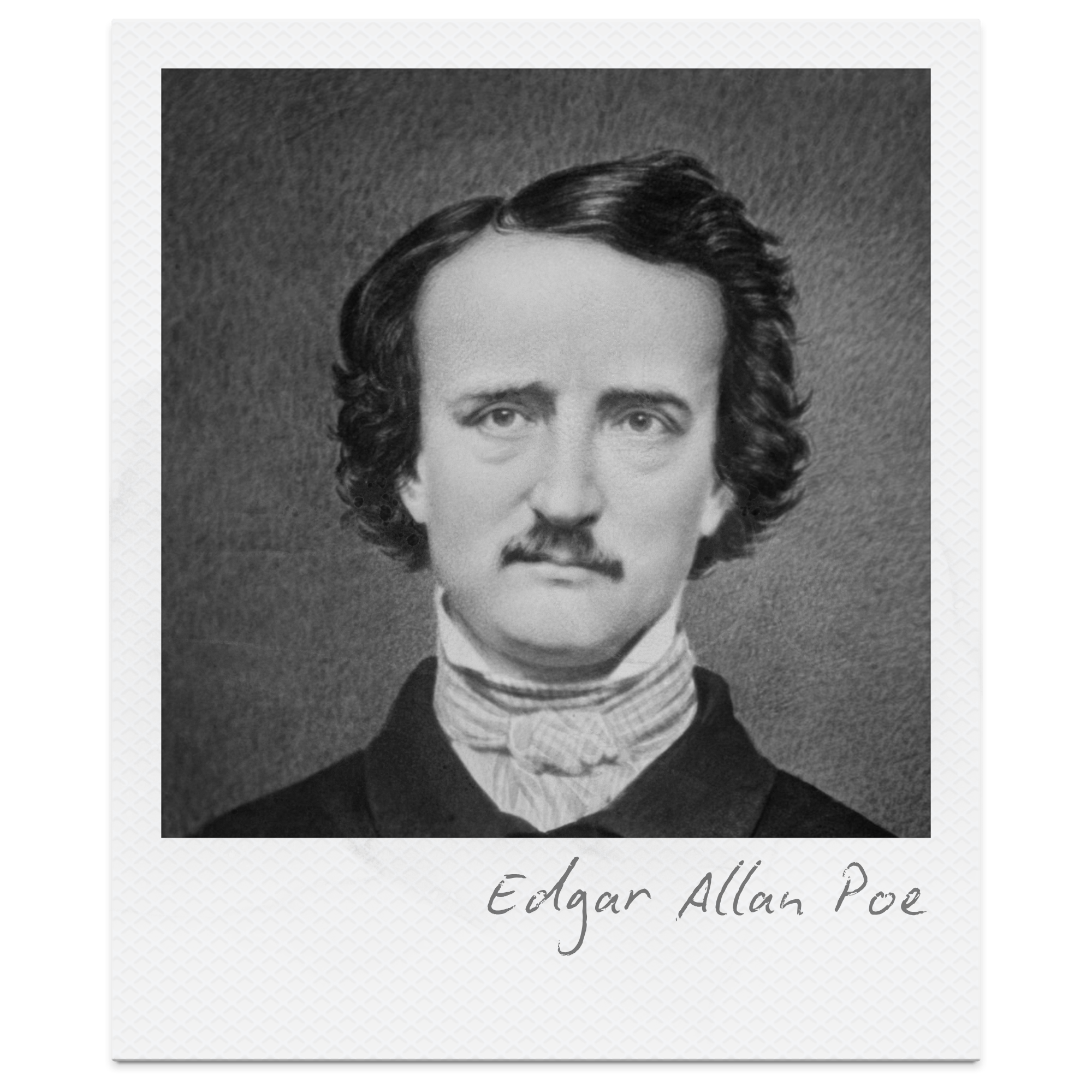
Context of The Oval Portrait
Edgar Allan Poe wrote The Oval Portrait, published in 1850 shortly after his death, placing it among his final works and reinforcing its preoccupation with mortality, beauty, and the fragile boundary between life and art. Poe’s writing repeatedly returns to the idea of the “death of a beautiful woman”, which he described as the most poetic subject; however, in this story, that idea is taken further, becoming something more unsettling. Beauty is not simply lost, but drained, captured, and preserved through art, suggesting that artistic creation itself can become an act of destruction.
The story is firmly rooted in Gothic tradition, with its isolated château, decaying interior, and stark contrasts of light and shadow. Yet Poe goes beyond atmosphere, using setting as a direct extension of psychological and thematic meaning. The confined turret, the oppressive darkness, and the artificial candlelight mirror the painter’s obsessive focus, reinforcing the idea that art can distort reality and consume life itself. Emerging at a time when nineteenth-century writers were increasingly concerned with the role of the artist, the story reflects a growing tension between idealised beauty and lived experience, questioning whether the pursuit of perfection ultimately destroys what it seeks to preserve.
For a deeper understanding of these recurring ideas across Poe’s work, explore the Edgar Allan Poe Context Post, where themes of obsession, mortality, and psychological intensity are explored in greater detail.
The Oval Portrait: At a Glance
Form: Gothic short story
Mood: eerie, unsettling, obsessive
Central tension: The conflict between art and life, as the painter’s pursuit of perfection drains the life from his wife
Core themes: obsession, art vs life, control, beauty and mortality, identity, sacrifice
One-sentence meaning: The Oval Portrait reveals how the obsessive pursuit of artistic perfection can consume reality itself, transforming love into destruction and life into lifeless art.
Quick Summary of The Oval Portrait
A wounded narrator and his servant take refuge in a seemingly abandoned château, settling in a small, richly decorated room filled with paintings. Unable to sleep, the narrator studies the artwork by candlelight, using a book found nearby to guide his understanding. While adjusting the position of the candelabrum, he suddenly illuminates a previously hidden portrait of a young woman, whose lifelike expression shocks and unsettles him.
Fixated on the painting, the narrator becomes increasingly disturbed by its intense realism, feeling as though it possesses a strange, almost living presence. Seeking an explanation, he turns to the book, which reveals the history behind the portrait and the identity of the artist.
The account tells of a painter who was deeply devoted to his art and married a young woman of great beauty and vitality. As he became consumed by painting her portrait, he grew increasingly detached from her, failing to notice her gradual decline. When the painting was finally completed, he declared it to be “Life itself”—only to discover that his wife had died in the process, making the portrait a chilling symbol of obsession, sacrifice, and the destructive power of artistic perfection.
Title, Form, Structure, and Narrative Voice
This section explores how Poe uses title, structure, and narrative voice to shape meaning, revealing how the story’s form is inseparable from its exploration of obsession, art, and the fragile boundary between life and death.
Title
The title The Oval Portrait appears deceptively simple, referring directly to the painting at the centre of the story. However, the oval frame carries deeper symbolic significance. Its enclosed, contained shape reflects the way life is captured, restricted, and ultimately imprisoned within art. The portrait becomes more than an object—it represents the transformation of a living subject into something static, lifeless, and controlled, reinforcing the story’s central tension between art and life.
Form and Structure
The Oval Portrait is a Gothic short story constructed through a frame narrative, where a primary narrator discovers a secondary story embedded within a book. This layered structure creates distance while also intensifying the story’s impact, as the reader moves from observation to revelation.
The narrative follows a clear structural progression:
Exposition: A wounded narrator seeks refuge in an abandoned château, establishing an atmosphere of isolation, decay, and unease.
Rising Action: The narrator studies the paintings, becoming fixated on a newly revealed portrait that appears disturbingly lifelike.
Climax: The narrator reads the embedded account and realises that the painter’s obsessive process has drained the life from his wife.
Resolution: The revelation that the woman has died at the moment the portrait is completed transforms the artwork into a symbol of destruction rather than preservation.
Narrative Voice
The story is told through a first-person narrator, whose wounded condition and incipient delirium immediately raise questions about reliability. His perception is unstable, shaped by fatigue, darkness, and heightened sensitivity, which blurs the boundary between reality and illusion.
The tone is intense, absorbed, and increasingly obsessive, mirroring the painter’s own fixation. This parallel subtly aligns narrator and artist, suggesting that the act of looking can become as consuming as the act of creating.
Setting as Structure
Poe uses setting not just as backdrop, but as a structural device, guiding both the narrator and the reader toward the story’s central revelation.
The movement through space reflects a process of narrowing focus:
From the vast, abandoned château
To the confined turret chamber
To the shadowed niche
To the single, illuminated portrait
This progression mirrors a psychological descent into obsession, where everything external falls away and attention becomes fixated on a single object. The architecture of the space effectively traps both narrator and reader, directing vision and controlling what is seen and when.
In this way, structure and setting merge, reinforcing the idea that art isolates, confines, and ultimately consumes life itself.
Setting of The Oval Portrait
The setting of The Oval Portrait is central to its meaning, functioning not just as a backdrop but as a reflection of psychological obsession, decay, and the blurred boundary between art and life. Poe constructs a confined, atmospheric space in which perception becomes distorted and reality increasingly unstable.
The story unfolds within a seemingly abandoned château, described as a place of “commingled gloom and grandeur,” immediately establishing a contrast between beauty and decay. This duality mirrors the central conflict of the story, where artistic beauty is inseparable from destruction. Inside, the narrator occupies a remote turret chamber, a space that is both physically and symbolically isolated. The room is “rich, yet tattered and antique,” suggesting a world where past elegance has deteriorated, reinforcing themes of decline, neglect, and the passage of time.
The atmosphere is further shaped by the interplay of light and shadow, which governs what can be seen and understood. Much of the room is initially obscured in “deep shade,” with visibility controlled by the narrator’s manipulation of the candlelight. When the “rays of the numerous candles” suddenly illuminate the hidden portrait, the moment feels almost supernatural, as though the act of seeing itself has summoned something into being. This artificial lighting creates a distorted environment where perception is unreliable, reinforcing the idea that art can blur the line between illusion and reality.
Symbolically, the interior space of the château reflects the mind of the artist. The enclosed, oppressive environment mirrors the painter’s obsessive focus, where all external reality is shut out in favour of artistic creation. The turret becomes a space of confinement and control, echoing the way the young woman is physically and metaphorically trapped within the artist’s vision. The gradual revelation of the portrait from darkness into light parallels the process of artistic creation, but also exposes its cost: the replacement of living vitality with lifeless representation.
Ultimately, the setting reinforces the story’s central idea that environment and psychology are inseparable. The decaying château, the confined chamber, and the manipulated light all contribute to a world in which obsession thrives, reality is distorted, and life itself can be consumed by the pursuit of artistic perfection.
Characters in The Oval Portrait
The characters in The Oval Portrait are less individualised figures and more symbolic embodiments of key ideas, representing the destructive tension between art and life, obsession and love, and creation and sacrifice. Poe presents them through limited detail, allowing their roles to function psychologically and thematically rather than realistically.
The Narrator
The unnamed narrator serves as both observer and interpreter, guiding the reader through the unfolding mystery while reflecting the story’s focus on perception and psychological instability. From the outset, his wounded condition and “incipient delirium” suggest that his understanding of reality may be unreliable, creating uncertainty around what he sees and how he interprets it.
His reaction to the portrait reveals the power of art to disturb and dominate the mind. He becomes fixated on its “absolute life-likeliness of expression,” a phrase that captures both admiration and unease. The intensity of his response—being “confounded, subdued, and appalled”—suggests that the painting exerts a psychological force over him, mirroring the obsessive dynamic at the heart of the embedded narrative.
Symbolically, the narrator represents the viewer of art, showing how passive observation can become an active psychological experience. His role highlights the idea that art is not neutral; it has the capacity to shape perception, blur reality, and draw the viewer into its illusion.
The Painter
The painter is the embodiment of obsessive artistic creation, defined by his devotion to his craft above all else. He is described as “passionate, studious, austere,” immediately establishing a character driven by intensity and discipline, but also emotional detachment. Crucially, he is said to have “already a bride in his Art,” positioning art as his true loyalty and suggesting that his marriage is secondary.
As he works on the portrait, his obsession deepens into complete psychological absorption. He becomes “lost in reveries” and fails to notice the physical decline of his wife, revealing a dangerous inability to distinguish between artistic vision and lived reality. His focus narrows entirely onto the act of creation, to the point where he “would not see” the consequences of his actions.
The most disturbing moment comes when he unknowingly transfers life into the painting, as “the tints which he spread upon the canvas were drawn from the cheeks of her who sate beside him.” This metaphor suggests a literal draining of life, reinforcing the idea that artistic perfection is achieved through destruction and sacrifice.
Symbolically, the painter represents the danger of unchecked obsession, embodying the idea that the pursuit of perfection can become dehumanising. His final declaration—“This is indeed Life itself!”—is deeply ironic, as it marks the moment he recognises the success of his art, only to realise it has cost him actual life.
The Young Woman
The young woman is presented as a figure of beauty, vitality, and ultimately sacrifice, defined in contrast to the painter’s obsession. She is described as a “maiden of rarest beauty” who is “all light and smiles, and frolicsome as the young fawn,” imagery that emphasises her innocence, energy, and connection to life.
However, her role quickly becomes one of submission and gradual decline. She is “humble and obedient,” agreeing to sit for the portrait despite her fear of the painter’s art, which she sees as a rival. Her emotional and physical deterioration is subtle but devastating, as she “pined visibly to all but him,” highlighting both her suffering and the painter’s blindness.
Even as she weakens, she continues to support him, “smiled on and still on, uncomplainingly,” suggesting a tragic acceptance of her fate. This reinforces the theme of sacrifice, where her life is willingly given, even as it is being taken.
Symbolically, the young woman represents life itself, as well as the human cost of artistic ambition. Her transformation from a living presence into a painted image reflects the central idea of the story: that art, in seeking to preserve beauty, may instead destroy the very life it captures.
Pedro
Pedro, the narrator’s valet, plays a minor but functional role within the story. Though largely silent and passive, his presence reinforces the narrator’s physical vulnerability and dependence. His sleep during key moments—when the portrait is revealed—further isolates the narrator, emphasising the story’s focus on individual perception and psychological experience.
Symbolically, Pedro represents grounded reality, in contrast to the narrator’s heightened and unstable perception. His absence from the central discovery allows the narrative to remain enclosed within the narrator’s subjective experience, reinforcing the theme that seeing—and interpreting—is deeply personal and potentially unreliable.
Themes in The Oval Portrait
The themes in The Oval Portrait are tightly interwoven, revealing how Poe explores the destructive consequences of obsession, the tension between art and life, and the cost of pursuing beauty at the expense of human connection. Each theme builds toward the story’s central idea: that the desire to preserve life through art can ultimately destroy it.
Obsession
At the heart of the story is the theme of obsession, embodied most clearly in the painter’s relentless dedication to his work. He becomes “lost in reveries,” completely absorbed in the act of creation, to the point where he no longer perceives reality. This obsessive focus isolates him from the world around him, narrowing his vision until only the portrait matters.
His inability—or refusal—to recognise his wife’s decline shows how obsession distorts perception. He “would not see” what is happening before him, suggesting that obsession is not simply intense focus, but a wilful blindness. Ultimately, this fixation leads to destruction, demonstrating that unchecked obsession can consume both the individual and those around them.
Art vs Life
The tension between art and life is central to the story’s meaning. The painter seeks to capture life perfectly, yet in doing so, he destroys the very thing he aims to preserve. The portrait’s “absolute life-likeliness of expression” becomes deeply unsettling, as it suggests that life has been transferred from the subject into the artwork.
This is made explicit in the chilling image that “the tints… were drawn from the cheeks of her who sate beside him,” implying that the creation of art requires the draining of life itself. The story ultimately presents art not as a celebration of life, but as something that can replace and erase it, raising questions about the ethics and consequences of artistic creation.
Control
The theme of control is evident in both the painter’s actions and the physical environment of the story. The young woman is confined to the “dark, high turret-chamber”, a space that symbolises both physical and psychological restriction. Within this space, the painter exerts complete control over her image, posture, and presence.
This control extends beyond the physical into the symbolic, as he shapes not just her appearance, but her identity. By reducing her to an object of study, he transforms her into something passive and silent, reinforcing the idea that control in art can become an act of domination. The more control he exerts over the portrait, the less control she retains over her own life.
Beauty and Mortality
Poe closely links beauty and mortality, presenting them as inseparable forces. The young woman is described as a “maiden of rarest beauty,” full of life and vitality, yet this very beauty becomes the reason for her destruction. The painter’s desire to preserve her beauty leads directly to her death, suggesting that beauty is both valuable and vulnerable.
The completed portrait captures her at a moment of perfect stillness, but this perfection is only possible because she is no longer alive. In this way, the story suggests that attempts to preserve beauty inevitably confront the reality of mortality, raising unsettling questions about whether beauty can exist independently of life.
Identity
The theme of identity is explored through the transformation of the young woman from a living individual into a painted image. Initially, she is defined by her personality—“all light and smiles, and frolicsome as the young fawn”—but as the painting progresses, her identity becomes increasingly tied to her representation.
The painter no longer sees her as a person, but as a subject to be perfected. This shift reduces her to an object, stripping away her individuality and replacing it with an idealised version of herself. The portrait becomes a fixed identity, one that is preserved in art but detached from the complexity of real life.
Sacrifice
The theme of sacrifice underpins the entire narrative, as the young woman’s life is gradually given over to the painter’s work. Her willingness to sit for the portrait, despite her fear, reflects her emotional devotion, yet this devotion becomes self-destructive. She “smiled on and still on, uncomplainingly,” even as her health deteriorates.
This sacrifice is not immediate, but slow and cumulative, making it all the more tragic. By the time the portrait is complete, the cost has been fully realised: her life has been exchanged for artistic perfection. The story suggests that great art may demand sacrifice—but questions whether that sacrifice can ever be justified.
Perception and Illusion
The story also explores the instability of perception, particularly through the narrator’s experience. His “incipient delirium” casts doubt on what he sees, while the portrait itself appears so lifelike that it blurs the line between illusion and reality.
The use of artificial candlelight further distorts perception, revealing and concealing at the same time. This reinforces the idea that what is seen cannot always be trusted, and that art has the power to create convincing illusions that challenge our understanding of truth.
Power of Art
Finally, Poe examines the power of art itself, presenting it as something both awe-inspiring and dangerous. The portrait’s ability to evoke such a strong reaction—leaving the narrator “confounded, subdued, and appalled”—demonstrates its emotional and psychological impact.
However, this power comes at a cost. The painting is not simply a representation of life, but a replacement for it. By the end of the story, art is shown to possess a kind of dominance over reality, suggesting that its power lies not just in what it depicts, but in what it takes.
Key Quotes from The Oval Portrait
The following quotes reveal how Poe develops character, setting, structure, and key themes, using language that blurs the boundary between art and life and reinforces the story’s central ideas of obsession, control, and sacrifice.
Character
Poe presents characters not as fully realistic individuals, but as symbolic figures shaped by obsession, power, and the tension between creation and destruction.
The Painter
“passionate, studious, austere”
◆ The triplet emphasises his intensity and discipline, but also emotional detachment
◆ Suggests a personality shaped by obsession rather than balance
◆ Foreshadows his inability to prioritise human relationships over art
“having already a bride in his Art”
◆ Metaphor positions art as his true partner, replacing his wife
◆ Highlights the theme of art vs life, where creation supersedes love
◆ Suggests emotional displacement and misdirected devotion
“lost in reveries”
◆ Suggests complete psychological immersion in artistic creation
◆ Implies detachment from reality and human connection
◆ Reinforces how obsession narrows perception
The Young Woman
“all light and smiles, and frolicsome as the young fawn”
◆ Natural imagery conveys innocence, vitality, and connection to life
◆ Contrasts sharply with her later decline, reinforcing beauty and mortality
◆ Establishes what will be lost through the painter’s obsession
“smiled on and still on, uncomplainingly”
◆ Repetition emphasises her passivity and endurance
◆ Suggests emotional sacrifice and quiet suffering
◆ Highlights imbalance of power and control within the relationship
“grew daily more dispirited and weak”
◆ Gradual phrasing emphasises the slow, almost unnoticed nature of her decline
◆ Reinforces the theme of sacrifice as a process, not a single moment
◆ Highlights the painter’s failure to perceive reality
The Narrator
“incipient delirium”
◆ Signals unreliable perception from the outset
◆ Blurs boundary between reality and illusion
◆ Creates ambiguity around what is seen and how it is interpreted
“confounded, subdued, and appalled”
◆ Triplet reflects the overwhelming psychological impact of the portrait
◆ Suggests art’s ability to dominate and unsettle the viewer
◆ Reinforces the theme of the power of art
Setting
The setting shapes both atmosphere and meaning, reflecting the story’s focus on decay, isolation, and distorted perception.
Atmosphere and Decay
“commingled gloom and grandeur”
◆ Juxtaposition creates a sense of beauty intertwined with decay
◆ Establishes classic Gothic atmosphere
◆ Mirrors the central tension between artistic beauty and destruction
“rich, yet tattered and antique”
◆ Contrasting adjectives reflect deterioration beneath surface beauty
◆ Symbolises the passage of time and inevitable decay
◆ Links setting to themes of mortality and decline
Light and Perception
“deep shade” / “rays of the numerous candles”
◆ Contrast between darkness and artificial light controls perception
◆ Suggests truth is revealed selectively, not naturally
◆ Reinforces theme of illusion vs reality
Structure and Framing
Poe’s use of a frame narrative shapes how the story is revealed, reinforcing themes of discovery, control, and interpretation.
Story Within a Story
“Turning to the number which designated the oval portrait”
◆ Highlights the act of reading as a structured uncovering of truth
◆ Emphasises the controlled nature of revelation
◆ Reinforces the idea that meaning is mediated through texts and interpretation
“I saw at once… that the peculiarities… must have dispelled such idea”
◆ Shows the narrator attempting to rationalise his perception
◆ Suggests tension between logic and emotional response
◆ Reinforces instability of perception and certainty
Themes
Poe’s use of language reinforces the story’s central themes, showing how obsession, art, and control intersect to produce destruction.
Art vs Life
“the tints… were drawn from the cheeks of her who sate beside him”
◆ Metaphor suggests a literal transfer of life into art
◆ Reinforces the idea that creation requires destruction
◆ Central image linking art directly to death
“This is indeed Life itself!”
◆ Exclamatory tone shows the painter’s triumph
◆ Deep irony—he recognises life in the painting, not in his wife
◆ Marks the moment where art replaces reality completely
Control
“dark, high turret-chamber”
◆ Enclosed space symbolises confinement and restriction
◆ Reflects painter’s dominance over environment and subject
◆ Links physical space to psychological control
Beauty and Mortality
“maiden of rarest beauty”
◆ Idealised description elevates her to almost artistic perfection
◆ Suggests beauty as something to be preserved
◆ Foreshadows the link between beauty and death
Identity
“a mere head and shoulders”
◆ Reduction of the woman to a partial image
◆ Symbolises loss of full identity
◆ Reinforces transformation from person to object
Sacrifice
“pined visibly to all but him”
◆ Highlights her gradual decline
◆ Emphasises the painter’s blindness
◆ Reinforces theme of sacrifice through neglect
“grew daily more dispirited and weak”
◆ Reinforces the slow erosion of life over time
◆ Suggests sacrifice is prolonged and unnoticed
◆ Highlights emotional and physical depletion
Perception and Illusion
“absolute life-likeliness of expression”
◆ Suggests art can replicate life convincingly
◆ Blurs boundary between real and artificial
◆ Creates unease around what is authentic
Key Techniques in The Oval Portrait
Poe uses a range of literary techniques to construct a narrative that is both psychologically unsettling and thematically precise. Through his use of imagery, structure, and narrative voice, he reinforces the story’s central concerns with obsession, control, and the destructive tension between art and life.
◆ Symbolism – The oval portrait itself symbolises the containment and preservation of life within art, but also its transformation into something static and lifeless. The frame represents control and enclosure, reinforcing the idea that artistic creation can imprison rather than immortalise.
◆ Gothic Setting – The isolated château, decaying interior, and shadow-filled turret create a classic Gothic atmosphere of unease and isolation. This setting reflects the psychological state of the characters, particularly the painter’s obsessive focus, showing how environment mirrors inner turmoil.
◆ Light and Shadow Imagery – The contrast between “deep shade” and the “rays of the numerous candles” symbolises the tension between knowledge and illusion. Artificial light reveals the portrait, but also distorts perception, suggesting that what is seen may not be entirely truthful or reliable.
◆ Frame Narrative – The story’s story-within-a-story structure distances the reader from events while also intensifying their impact. The act of reading about the portrait mirrors the narrator’s experience, reinforcing the idea that meaning is mediated through layers of interpretation.
◆ Unreliable Narrator – The narrator’s “incipient delirium” introduces uncertainty from the outset, creating doubt around perception and reality. This instability enhances the story’s tension, as readers must question whether what is described is entirely trustworthy.
◆ Irony – The painter’s declaration, “This is indeed Life itself!,” is deeply ironic, as it marks the moment he recognises success in his art while simultaneously realising that his wife has died. This highlights the theme that art can replace and destroy life.
◆ Juxtaposition – Phrases such as “commingled gloom and grandeur” and “rich, yet tattered and antique” place beauty alongside decay, reinforcing the idea that creation and destruction are inseparable.
◆ Metaphor – The description that “the tints… were drawn from the cheeks of her” functions as a powerful metaphor for the transfer of life into art. It suggests that artistic creation is not passive, but an active process of consumption and depletion.
◆ Repetition – The phrase “smiled on and still on” emphasises the young woman’s endurance and passivity, reinforcing the theme of sacrifice and highlighting the slow, ongoing nature of her decline.
◆ Narrative Compression – The story condenses events into a brief, intense narrative, reflecting the painter’s single-minded focus. This compressed structure mirrors the speed at which obsession overtakes reality, creating a sense of inevitability.
◆ Sensory Detail – Poe’s detailed descriptions of light, texture, and space immerse the reader in the environment, heightening the story’s atmosphere while reinforcing the connection between physical setting and psychological experience.
Alternative Interpretations of The Oval Portrait
While The Oval Portrait can be read as a straightforward Gothic tale of obsession and destruction, it also invites multiple interpretations depending on the critical lens applied. Each reading reveals different dimensions of the story, showing how Poe’s narrative explores not just art and life, but power, identity, and the human cost of creation.
Feminist Interpretation: Objectification and the Erasure of Female Identity
From a feminist perspective, the story exposes the systematic objectification and silencing of women. The young woman is reduced from a living individual—“all light and smiles”—to a passive subject confined within the “dark, high turret-chamber”. Her identity is gradually erased as she becomes an object to be observed, controlled, and ultimately preserved. The portrait symbolises the way female identity can be reshaped and overwritten by male authority, suggesting that admiration can function as a form of domination.
Psychological Interpretation: Obsession and the Distortion of Reality
A psychological reading emphasises the destructive power of obsession, showing how fixation narrows perception and detaches individuals from reality. The painter, “lost in reveries,” becomes consumed by his work, unable to recognise his wife’s decline. Similarly, the narrator’s “incipient delirium” destabilises his perception, blurring the boundary between reality and illusion. The story suggests that obsession does not simply intensify focus—it distorts understanding, leading to both emotional and physical destruction.
Artistic Interpretation: The Paradox of Creation and Destruction
Through an artistic lens, the story can be read as a critique of the pursuit of perfect representation. The painter’s goal is to capture life with absolute precision, yet his success results in death. His declaration—“This is indeed Life itself!”—reveals the central paradox: art achieves perfection only by replacing the living with the lifeless. Poe presents artistic creation as an act that does not preserve life, but competes with and ultimately consumes it.
Power and Control Interpretation: Domination Through Creation
A power-focused reading highlights the dynamics of control and ownership embedded in the act of creation. The painter exerts total authority over both space and subject, confining his wife and reducing her to an object of study. This imbalance reflects a broader structure in which the creator dominates the created, shaping identity according to his own vision. The portrait becomes a symbol of absolute control, preserving the subject in a fixed and powerless state.
Mortality Interpretation: Beauty Preserved Through Death
From a mortality-focused perspective, the story explores the inescapable link between beauty and death. The young woman’s “rarest beauty” becomes the very reason for her destruction, as the painter seeks to preserve it indefinitely. The completed portrait captures a moment of perfection, but only because it freezes what is inherently temporary. This interpretation suggests that attempts to preserve beauty inevitably result in its separation from life, reinforcing the idea that beauty cannot exist without mortality.
Romantic / Anti-Romantic Interpretation: The Danger of Idealising the Artist
Viewed through a Romantic or anti-Romantic lens, the story challenges the idealisation of the artist as a figure of genius and inspiration. While Romanticism celebrates artistic passion, Poe presents a darker alternative: the artist as someone whose devotion becomes destructive. The painter’s intensity does not elevate life, but diminishes it, suggesting that artistic ambition can lead to imbalance, isolation, and harm. In this sense, the story critiques the belief that artistic creation is inherently noble.
This range of interpretations demonstrates the richness of Poe’s narrative, showing how The Oval Portrait can be understood not only as a Gothic story, but as a complex exploration of power, perception, and the cost of transforming life into art.
Teaching Ideas for The Oval Portrait
The Oval Portrait offers rich opportunities to explore Gothic conventions, obsession, and the relationship between art and life, making it ideal for both analytical and creative classroom work. Its brevity allows for close reading, while its ambiguity encourages students to develop more sophisticated interpretations of character, setting, and theme.
1. Art vs Life: Conceptual Debate
Students explore the central tension between art and life, considering whether artistic creation can justify its consequences.
Ask students to respond to the statement:
“The painter is justified in sacrificing his wife for the sake of great art.”
Students can prepare arguments for and against, using evidence such as:
◆ “This is indeed Life itself!”
◆ “the tints… were drawn from the cheeks of her”
◆ The wife’s “humble and obedient” nature
Encourage students to consider:
◆ Whether the painter is aware of his actions
◆ Whether the story presents art as creative or destructive
◆ The ethical limits of artistic ambition
This activity develops argumentative writing, evaluation skills, and engagement with big conceptual ideas.
2. Setting as Psychology Investigation
Students analyse how Poe uses setting as a reflection of psychological state rather than simply a backdrop.
Provide key descriptions such as:
◆ “commingled gloom and grandeur”
◆ “rich, yet tattered and antique”
◆ “dark, high turret-chamber”
Working in pairs or small groups, students explore how these details reflect:
◆ Decay and decline
◆ Isolation and confinement
◆ Obsessive focus and narrowing perception
Students should consider:
◆ How the movement from château → turret → portrait mirrors psychological descent
◆ How light and shadow control what is seen and understood
◆ How the environment reflects the painter’s obsession and control
This activity reinforces the idea that setting = meaning, encouraging deeper analytical thinking.
3. Analytical Paragraph + Peer Marking
Essay Focus:
How does Poe present the dangers of obsession in The Oval Portrait?
Students write a focused analytical paragraph using embedded quotations.
Encourage students to include:
◆ A clear topic sentence focused on obsession
◆ Embedded quotation (e.g. “lost in reveries”)
◆ Analysis of language and effect
◆ Link back to the question
After writing, students exchange paragraphs and assess each other using a success criteria checklist:
◆ Clear argument
◆ Use of evidence
◆ Depth of analysis
◆ Clarity of expression
This develops exam technique, critical evaluation, and precision in writing.
4. Interpretations and Critical Lenses
Students explore how the story changes when viewed through different interpretative lenses.
Assign groups different perspectives:
◆ Feminist (control and objectification)
◆ Psychological (obsession and perception)
◆ Artistic (creation vs destruction)
Each group presents:
◆ A short explanation of their interpretation
◆ Supporting evidence from the text
◆ A judgement on what the story ultimately suggests
Students should then compare interpretations and evaluate:
◆ Which reading is most convincing
◆ Whether multiple interpretations can coexist
◆ How perspective shapes meaning
This encourages independent thinking and introduces higher-level literary analysis.
5. Creative Writing Extension: Art and Obsession
Students use the story as inspiration for their own creative writing, focusing on the theme of obsession and the blurred boundary between creation and destruction.
Prompts could include:
◆ A character becomes obsessed with capturing something perfectly (a painting, photograph, or memory)
◆ A piece of art begins to reflect more than it should
◆ A creator realises too late what has been lost in the process of making something “perfect”
Encourage students to:
◆ Use setting symbolically (e.g. confined spaces, light vs shadow)
◆ Mirror Poe’s focus on psychology and atmosphere
◆ Build tension through gradual realisation rather than action
For further inspiration, students can explore the Gothic Writing Hub and the Creative Writing Archive, where they can access additional prompts and ideas linked to Gothic themes, obsession, and psychological storytelling.
This range of activities allows students to engage with The Oval Portrait through analysis, discussion, and creative application, building both interpretative confidence and writing skill.
Go Deeper into The Oval Portrait
The Oval Portrait connects strongly to many of Edgar Allan Poe’s recurring concerns, particularly obsession, psychological instability, and the blurred boundary between life and art. Exploring these connections allows students to deepen their understanding of how Poe develops similar ideas across different texts, while recognising how each story approaches them in distinct ways.
◆ The Tell-Tale Heart – Both texts explore obsession and psychological fixation, showing how a single idea can dominate perception. While The Oval Portrait centres on artistic obsession, The Tell-Tale Heart presents a narrator consumed by the old man’s eye, demonstrating how reality becomes distorted through obsession.
◆ The Fall of the House of Usher – Like The Oval Portrait, this story uses setting as a reflection of psychological and emotional decay. Both texts feature enclosed, oppressive environments where identity, art, and deterioration are intertwined, reinforcing the idea that external spaces mirror internal states.
◆ The Masque of the Red Death – This story offers a strong comparison in its exploration of artifice and control. Prince Prospero attempts to aestheticise and contain reality within his constructed world, much like the painter seeks to control life through art, yet both ultimately confront the inevitability of death.
◆ Ligeia – Both texts explore the relationship between love, death, and idealisation, particularly how a woman becomes transformed into something almost symbolic or artistic. In each case, identity is shaped by perception, raising questions about control and representation.
◆ Annabel Lee – This poem similarly explores the preservation of beauty and love beyond death, but in a more romanticised form. In contrast, The Oval Portrait presents this preservation as unsettling, suggesting that capturing beauty may come at a destructive cost.
Beyond Poe, these ideas connect to a wider literary tradition that explores art, identity, and control.
◆ In an Artist’s Studio – This poem directly parallels Poe’s story in its critique of female objectification through art, showing how a woman is repeatedly reimagined and reshaped by the male artist’s gaze, losing her individual identity in the process.
◆ The Picture of Dorian Gray – Wilde’s novel similarly explores the relationship between art, beauty, and corruption, where a portrait reflects the hidden consequences of a life lived in pursuit of aesthetic perfection.
◆ Frankenstein – Shelley’s novel offers a broader exploration of creation and responsibility, raising similar questions about the consequences of bringing something into existence without considering its ethical implications.
These connections position The Oval Portrait within a wider conversation about creation, control, and the cost of transforming life into art, encouraging deeper comparative thinking and more sophisticated interpretation.
Final Thoughts
The Oval Portrait remains a powerful exploration of how obsession, art, and control can intersect to produce destruction rather than preservation. Through its compact yet layered narrative, Edgar Allan Poe reveals that the pursuit of perfection is not neutral—it carries consequences, particularly when it prioritises idealised beauty over lived reality.
The story’s enduring impact lies in its ambiguity. Is the painter a tragic figure consumed by genius, or a warning about the dangers of unchecked ambition? Poe offers no clear resolution, instead leaving readers to grapple with the unsettling possibility that art can both immortalise and erase, preserving form while destroying substance.
To continue exploring these ideas, visit the Edgar Allan Poe Hub for more of Poe’s work, and the Literature Library to connect this story to a wider range of texts exploring Gothic themes, psychological narratives, and the complex relationship between creation and consequence.
Choose Your Next Text