In an Artist’s Studio by Christina Rossetti: Summary, Themes, Symbolism & Analysis
Christina Rossetti’s In an Artist’s Studio explores the unsettling relationship between art, identity, and possession. Through the image of a painter repeatedly depicting the same woman in different roles — queen, saint, angel — Rossetti reveals how artistic representation can transform a real person into an idealised object of male imagination. The poem suggests that the woman portrayed across the canvases is no longer seen as an individual with her own life and experiences, but as a symbol shaped by the artist’s desires.
At the same time, the poem raises deeper questions about power, creativity, and the construction of female identity. Rossetti contrasts the woman “as she is” with the image the artist prefers to paint, exposing the gap between reality and fantasy. Through this tension, In an Artist’s Studio becomes a powerful reflection on the male gaze, artistic obsession, and the loss of authentic selfhood, revealing how beauty and inspiration can also become forms of control.
This poem is part of a wider exploration of Rossetti’s work. You can find more analyses and comparisons in the Christina Rossetti Poetry Hub.

Historical and Artistic Context of In an Artist’s Studio
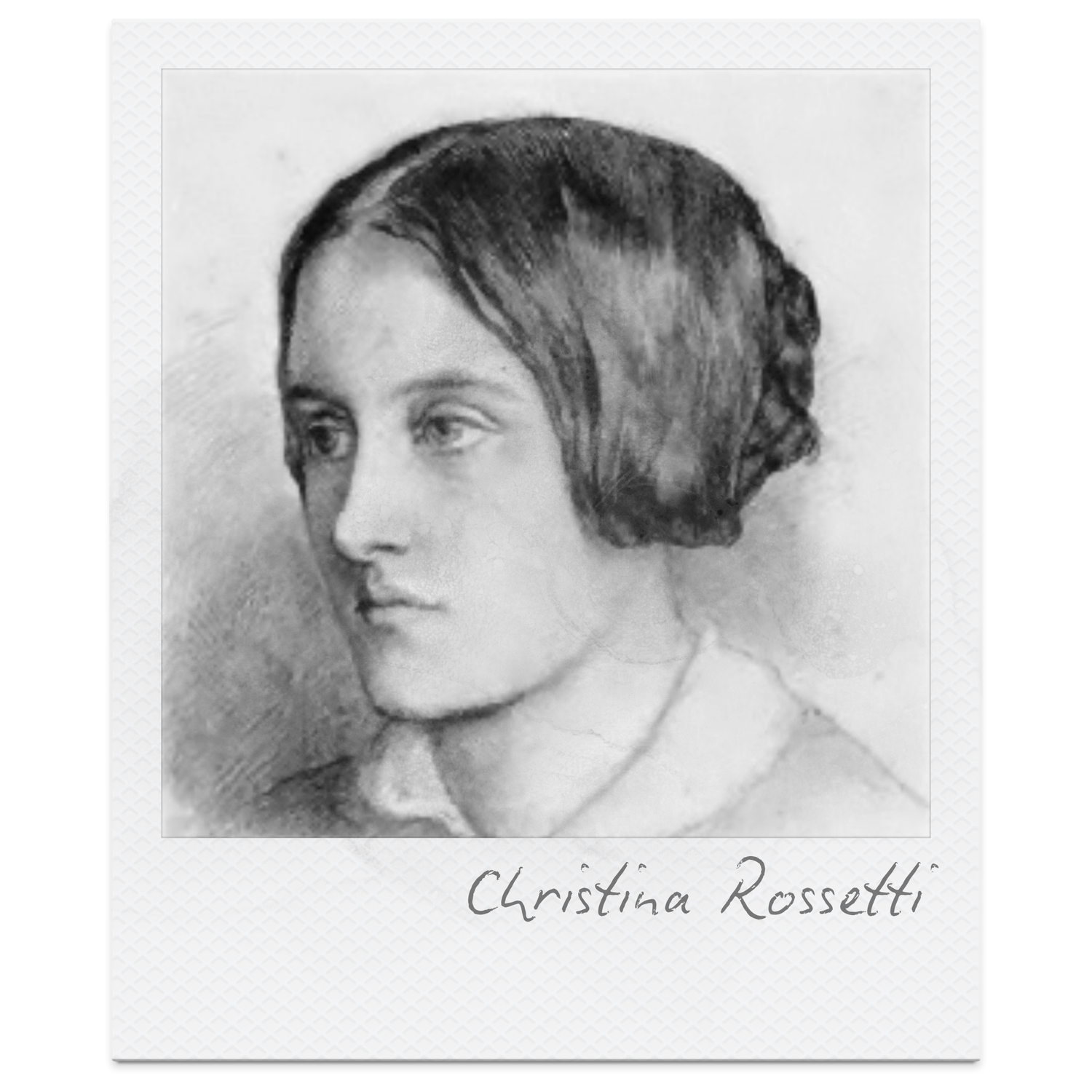
Christina Rossetti wrote In an Artist’s Studio during the Victorian period, a time when art, beauty, and femininity were closely intertwined in cultural imagination. Many nineteenth-century painters repeatedly used the same female models across multiple works, presenting them as queens, saints, angels, or mythological figures. While these images celebrated feminine beauty, they often reduced women to idealised artistic symbols rather than individuals with their own identities and experiences.
The poem is widely understood to reflect Rossetti’s awareness of the artistic world surrounding her brother, Dante Gabriel Rossetti, a leading member of the Pre-Raphaelite Brotherhood. Pre-Raphaelite artists frequently painted the same women again and again, turning real models into recurring aesthetic icons within their work. These paintings often emphasised beauty, symbolism, and emotional intensity, but they also revealed how women could become muses shaped by male artistic imagination.
Rossetti’s poem quietly critiques this dynamic. By describing how “one face looks out from all his canvases,” she suggests that the woman’s real self has been replaced by a series of idealised versions created by the artist’s desire and fantasy. Written during a period when Victorian society often expected women to embody passive beauty and moral purity, In an Artist’s Studio exposes the tension between real female identity and the artistic images imposed upon it.
You can read more about the context surrounding Rossetti’s work here.
In an Artist’s Studio: At a Glance
Form: Petrarchan sonnet
Mood: observant, critical, quietly unsettling
Central tension: the real woman vs the artist’s idealised vision of her
Core themes: objectification, artistic control, identity, the male gaze, illusion vs reality
One-sentence meaning:
Rossetti exposes how an artist repeatedly transforms the same woman into different idealised figures, revealing how artistic imagination can erase a woman’s true identity and replace it with a fantasy shaped by male desire.
Quick Summary of In an Artist’s Studio
In this sonnet, the speaker observes a painter’s studio and notices that the same woman appears in every painting, regardless of the role she is supposed to represent. Whether she is portrayed as a queen, saint, or angel, the paintings always return to “one face” and “one selfsame figure.” This repetition suggests that the artist is not truly depicting different subjects but repeatedly reshaping the same woman according to his artistic imagination.
As the poem develops, Rossetti reveals that the woman herself is largely absent as a real person. Instead, the artist “feeds upon her face by day and night,” suggesting an almost parasitic artistic obsession in which the painter continually consumes her image for inspiration. The woman appears gentle and devoted, looking back at the artist with “true kind eyes,” yet her presence in the paintings reflects the artist’s fantasy rather than her lived identity.
In the final lines, Rossetti exposes the central tension of the poem: the woman is painted “not as she is, but was when hope shone bright.” The artist preserves an idealised version of her from the past, ignoring who she has become in reality. Through this contrast between the real woman and the imagined muse, Rossetti critiques the way art can transform a living person into a symbolic object shaped by desire, memory, and artistic control.
Title, Form, Structure, and Metre in In an Artist’s Studio
Christina Rossetti’s use of sonnet form, controlled rhyme, and regular metre plays an important role in shaping the meaning of In an Artist’s Studio. The poem’s highly structured form reflects the way the artist repeatedly reproduces the same woman in carefully arranged poses. At the same time, the traditional associations of the sonnet with idealised love and admiration reinforce the poem’s central tension between the real woman and the idealised image created by the artist.
The Significance of the Title
The title In an Artist’s Studio immediately situates the poem within a creative space of observation and representation. Rather than naming the woman or the artist, the title focuses on the setting itself, suggesting that the poem will explore the process of artistic creation rather than a personal relationship. This framing prepares the reader to view the scene critically, as if the speaker has stepped into the studio and is examining the paintings with fresh eyes.
The title also emphasises distance and perspective. The poem does not speak as the artist or as the woman being painted; instead, the speaker observes the studio from the outside. This observational position allows Rossetti to reveal how the artistic environment transforms a real person into a constructed aesthetic object.
Form and Structural Design
In an Artist’s Studio is written as a Petrarchan sonnet, a form traditionally associated with expressions of love, admiration, and idealised beauty. In Renaissance and Victorian poetry, the sonnet frequently celebrates the beloved as a perfect and almost unattainable figure. Rossetti’s use of this form therefore becomes deeply ironic. The sonnet structure mirrors the way the artist repeatedly transforms the woman into a beautiful, symbolic muse, reinforcing the tradition of idealising female figures within art and poetry.
However, Rossetti subtly subverts this tradition. Instead of praising the woman, the poem exposes how she has been reduced to a series of artistic fantasies. The carefully structured sonnet reflects the painter’s attempt to control and shape the woman’s image, much as the rigid form of the poem shapes language into a predetermined pattern.
The poem’s structure also reinforces its central idea of repetition. The opening lines emphasise how “one face” appears across multiple canvases, and the sonnet form mirrors this sense of carefully repeated artistic composition, as if each painting is another variation of the same image.
Rhyme Scheme and Poetic Pattern
The octave of the sonnet follows the classic Petrarchan rhyme scheme ABBAABBA, creating a tightly enclosed pattern of sound. This structure produces a sense of containment, reflecting how the woman is visually confined within the artist’s paintings.
For example:
One face looks out from all his canvases,
One selfsame figure sits or walks or leans:
We found her hidden just behind those screens,
That mirror gave back all her loveliness.
The enclosed rhyme reinforces the impression that the woman is repeatedly framed and contained within the artist’s artistic vision. The repetition of sounds echoes the repetition of images across the canvases.
In a traditional Petrarchan sonnet, the octave typically introduces a situation or observation, while the sestet reflects upon its meaning. Rossetti follows this pattern: the octave describes the repeated images of the woman across the paintings, while the sestet shifts toward a more critical reflection on the artist’s relationship with his muse.
Metre and Rhythmic Movement
The poem is written primarily in iambic pentameter, the most common metre of English sonnets. Each line typically contains five iambic feet, producing a steady rhythm that mirrors the controlled and deliberate nature of artistic composition.
For example:
one FACE | looks OUT | from ALL | his CAN | vasES
This regular rhythmic movement reinforces the poem’s sense of order and artistic control. The steady beat of the metre echoes the repetitive process of painting the same figure again and again.
At the same time, Rossetti occasionally introduces slight variations in rhythm, allowing certain words to stand out within the line. These subtle shifts draw attention to key ideas such as the woman’s face, beauty, and transformation into artistic symbol, reinforcing the poem’s exploration of how identity is reshaped through artistic representation.
Speaker and Narrative Perspective in In an Artist’s Studio
The speaker of In an Artist’s Studio appears to be an observant outsider, someone who has entered the studio and is examining the paintings with careful attention. The use of the collective pronoun “we” in the line “We found her hidden just behind those screens” suggests that the speaker is not the artist himself, but rather part of a group of viewers who have discovered the repeated presence of the same woman across the canvases. This perspective creates a sense of detached observation, allowing the speaker to comment critically on what the paintings reveal.
Because the speaker stands outside the relationship between artist and model, the poem adopts a tone of quiet scrutiny rather than admiration. Instead of celebrating the woman’s beauty, the speaker notices the unsettling repetition of her image. The phrase “One face looks out from all his canvases” immediately signals that something unusual is happening: the same woman appears again and again, transformed into different symbolic roles.
This observational perspective allows Rossetti to expose the imbalance of power within the artistic relationship. The speaker recognises that the woman portrayed across the paintings is not represented as a real person but as a muse shaped by the artist’s imagination. Although she appears serene and devoted within the paintings, the speaker ultimately reveals that she is shown “not as she is, but as she fills his dream.” In this way, the speaker’s detached perspective becomes a crucial tool for revealing how the artist’s vision replaces the woman’s true identity with an idealised fantasy.
Close Analysis of In an Artist’s Studio
Although In an Artist’s Studio appears as a single fourteen-line stanza, it follows the traditional structure of a Petrarchan sonnet, dividing into an octave (lines 1–8) and a sestet (lines 9–14). This structure allows Rossetti to move from careful observation of the paintings toward a more critical reflection on the relationship between artist, muse, and artistic representation. The shift between these sections functions like a subtle volta, revealing the deeper implications of the artist’s repeated portrayals of the same woman.
The Octave (Lines 1–8): Repetition and the Construction of the Muse
The poem begins with the striking observation that “one face looks out from all his canvases.” Immediately, Rossetti establishes the central idea of repetition. Despite the variety of paintings in the studio, the same woman appears again and again. The phrase “one selfsame figure” reinforces this sense of duplication, suggesting that the artist continually reproduces the same image in different forms.
Rossetti then describes the various roles the woman occupies within the paintings. She appears as “a queen in opal or in ruby dress,” “a nameless girl in freshest summer-greens,” and even “a saint, an angel.” These different identities show how the artist repeatedly transforms the woman into symbolic or idealised figures. However, the poem emphasises that these images all ultimately represent “the same one meaning, neither more nor less.” In other words, although the costumes and settings change, the paintings are all variations of the same fantasy.
The octave therefore reveals how the artist constructs the woman as a universal muse, stripping away her individuality and replacing it with a series of aesthetic roles. She becomes less a real person and more a symbol of beauty and inspiration, repeatedly reshaped according to the artist’s imagination.
The Sestet (Lines 9–14): Artistic Possession and Idealised Fantasy
In the sestet, Rossetti shifts from describing the paintings themselves to examining the artist’s relationship with the woman he paints. The line “He feeds upon her face by day and night” introduces a darker image of artistic obsession. The verb “feeds” suggests a kind of consumption or dependence, implying that the artist continually draws inspiration from her image without recognising her as a separate individual.
The woman, meanwhile, appears passive within this relationship. She “looks back on him” with “true kind eyes,” suggesting devotion or loyalty. However, Rossetti subtly questions whether this portrayal reflects reality. The speaker points out that the woman depicted in the paintings is “not as she is.” Instead, she is shown “as she fills his dream.”
These final lines reveal the poem’s central critique. The artist does not paint the woman as she truly exists, but as he imagines her to be — frozen in a moment “when hope shone bright.” Through this contrast between reality and fantasy, Rossetti exposes how the artist’s vision transforms a living person into an idealised figure preserved within his artistic dream.
Key Quotes from In an Artist’s Studio
Christina Rossetti’s sonnet is rich in symbolic imagery, repetition, and subtle critique of artistic power. Through carefully chosen language and metaphor, the poem explores how a woman becomes transformed into an idealised artistic image rather than a real individual. The following quotations highlight how Rossetti develops themes of objectification, artistic control, and illusion versus reality.
“One face looks out from all his canvases”
◆ The phrase “one face” immediately establishes the poem’s central idea of repetition and artistic fixation, suggesting that the artist continually returns to the same woman regardless of the subject of the painting.
◆ The verb “looks out” creates an almost eerie image of the woman’s face emerging from the canvases themselves, suggesting that her identity has become trapped within the artist’s artwork.
◆ The possessive phrase “his canvases” reinforces the imbalance of power in the poem, emphasising that the artist controls how the woman is represented.
◆ This line introduces the theme of objectification, as the woman exists primarily as a visual subject within the artist’s work rather than as an independent person.
“One selfsame figure sits or walks or leans”
◆ The repetition of “one selfsame” intensifies the idea of duplication, emphasising that every painting reproduces the same woman.
◆ The verbs “sits,” “walks,” and “leans” evoke the different poses commonly used by artists when directing models, highlighting how the woman’s body is arranged and displayed within the paintings.
◆ This catalogue of poses suggests that the artist repeatedly manipulates the woman’s image to produce new compositions while still relying on the same underlying figure.
◆ Rossetti therefore emphasises how the woman’s individuality is replaced by a series of controlled artistic poses.
“That mirror gave back all her loveliness”
◆ The mirror suggests the process of reflection and representation, reminding readers that the paintings themselves are mediated images rather than direct reality.
◆ By stating that the mirror “gave back” her beauty, Rossetti hints that the artist’s vision may depend on reflected or constructed images rather than the living woman herself.
◆ Mirrors in literature often symbolise self-perception and illusion, reinforcing the poem’s exploration of the difference between reality and artistic fantasy.
◆ The emphasis on “loveliness” highlights how the woman is valued primarily for her beauty.
“A queen in opal or in ruby dress”
◆ The luxurious imagery of “opal” and “ruby” evokes the rich colours and decorative symbolism associated with Pre-Raphaelite painting.
◆ By presenting the woman as a queen, the artist elevates her into an idealised figure of admiration and fantasy.
◆ The elaborate costume suggests that the artist repeatedly transforms the woman into different symbolic roles, reinforcing the idea that she functions as a muse rather than a real individual.
◆ This line also reflects the Victorian tradition of portraying women as allegorical figures representing beauty, virtue, or spirituality.
“A saint, an angel — every canvas means / The same one meaning, neither more nor less”
◆ The religious imagery of “saint” and “angel” shows how the artist idealises the woman into figures associated with purity and spiritual perfection.
◆ The phrase “every canvas means / The same one meaning” emphasises the monotony of the artist’s vision, suggesting that despite the different costumes or roles, the paintings ultimately repeat the same idea.
◆ Rossetti exposes how the woman’s identity has been reduced to a single symbolic function within the artist’s work.
◆ This line reinforces the theme of artistic control, showing how the artist imposes meaning upon the woman rather than representing her true self.
“He feeds upon her face by day and night”
◆ The verb “feeds” introduces a disturbing metaphor of consumption, suggesting that the artist draws constant creative nourishment from the woman’s image.
◆ This image implies a parasitic relationship, where the artist benefits from her beauty while she remains passive within the paintings.
◆ The phrase “by day and night” emphasises the intensity and persistence of the artist’s obsession.
◆ Rossetti therefore exposes the troubling power dynamic between artist and muse, where inspiration becomes a form of possession.
“Not as she is, but as she fills his dream”
◆ The repeated contrast between “as she is” and the image within the painting highlights the gap between reality and artistic fantasy.
◆ The phrase “his dream” emphasises that the woman exists primarily within the artist’s imagination rather than as a real individual.
◆ Rossetti suggests that the artist preserves an idealised version of the woman that may no longer exist in reality.
◆ The final line therefore exposes the poem’s central critique: the artist does not paint the woman truthfully but reshapes her into a beautiful illusion created by his own desires and dreams.
Key Literary Techniques in In an Artist’s Studio
Christina Rossetti uses a range of formal, structural, and rhetorical techniques to expose the tension between the real woman and the artist’s idealised image of her. Through controlled repetition, symbolic imagery, and carefully structured sonnet form, the poem reveals how artistic representation can transform a living person into an aesthetic object shaped by imagination, desire, and memory.
◆ Anaphora and lexical repetition – Rossetti repeatedly emphasises the word “one” in phrases such as “one face” and “one selfsame figure.” This is a form of anaphoric repetition, where a key word is repeated at the beginning of clauses to emphasise a central idea. The repetition reinforces the artist’s obsessive focus on a single woman and suggests that every painting ultimately returns to the same figure. This lexical pattern mirrors the mechanical reproduction of the same muse across multiple canvases, emphasising the poem’s critique of artistic fixation.
◆ Catalogue imagery and typological symbolism – The sequence “A queen… / A nameless girl… / A saint, an angel” creates a catalogue of symbolic female roles. This technique resembles a typological list in which a figure is repeatedly transformed into different symbolic identities. Each role represents a culturally recognisable ideal of femininity—royalty, innocence, spiritual purity—but Rossetti reveals that these identities are merely costumes placed upon the same woman. The catalogue therefore exposes how artistic representation turns the woman into a universalised feminine ideal rather than an individual.
◆ Enjambment and semantic continuation – Rossetti uses enjambment in the line
“A saint, an angel — every canvas means / The same one meaning, neither more nor less.”
The sentence flows across the line break, delaying the completion of the thought. This enjambment creates a sense of continuity and accumulation, mirroring the endless repetition of the woman’s image across the paintings. The continuation into the following line reinforces the idea that despite the variety of images, they all ultimately express “the same one meaning.”
◆ Metaphor of artistic consumption – The striking line “He feeds upon her face by day and night” introduces a metaphor of creative consumption. The verb “feeds” suggests a parasitic or predatory relationship in which the artist continually draws nourishment from the woman’s image. Rather than portraying artistic inspiration as noble or romantic, Rossetti presents it as a form of appropriation, implying that the artist exploits the woman’s beauty to sustain his creative identity.
◆ Binary contrast and antithesis – The poem repeatedly contrasts the woman “as she is” with the idealised version preserved in the artist’s imagination. This use of antithesis highlights the central tension between reality and artistic fantasy. By repeating the phrase “Not as she is”, Rossetti emphasises the distance between the living woman and the constructed image within the paintings.
◆ Ekphrasis and meta-artistic commentary – The poem functions as a form of ekphrastic poetry, meaning it reflects upon visual art. However, rather than simply describing paintings, Rossetti uses ekphrasis to critique the process of artistic representation itself. By observing the studio and its canvases, the poem becomes a meditation on how art constructs identity and transforms real people into symbolic figures.
◆ Petrarchan sonnet conventions and subversion – The poem adopts the traditional Petrarchan sonnet structure, historically associated with idealised love poetry in which a male speaker praises a beautiful woman. Rossetti deliberately subverts this convention. Instead of celebrating the beloved, the poem exposes how idealisation itself can erase individuality. The sonnet form therefore mirrors the artist’s impulse to idealise and preserve beauty, while simultaneously critiquing that impulse.
◆ Semantic closure in the final line – The concluding phrase “as she fills his dream” provides a form of semantic closure, revealing the ultimate source of the paintings: the artist’s imagination. By ending the poem with the word “dream,” Rossetti emphasises that the woman portrayed across the canvases exists primarily within the artist’s fantasy, not within reality.
Ok, we need to start writing some poetry deep dives. Do you remember the standard for Rossetti? I will give you the structure as we go
Themes in In an Artist’s Studio
Christina Rossetti’s In an Artist’s Studio explores a number of interconnected themes centred on identity, artistic power, and the tension between reality and representation. Through the repeated image of the same woman appearing across different paintings, Rossetti examines how artistic imagination can reshape a person into an idealised symbol rather than a real individual. The poem ultimately questions how beauty, creativity, and admiration can also become forms of control and erasure.
Objectification and the Male Gaze
One of the most significant themes in the poem is the objectification of women within art. The artist repeatedly paints the same woman in different roles, transforming her into queen, saint, and angel. These images elevate her into figures of beauty and purity, yet they also remove her individuality.
Rossetti exposes how the woman becomes a visual object shaped by the artist’s imagination. The phrase “He feeds upon her face by day and night” suggests that the artist consumes her beauty as a source of inspiration. Rather than being represented as a person with her own thoughts or agency, the woman exists primarily as a muse whose image sustains the artist’s creativity.
Identity and the Loss of the Individual Self
The poem also explores how artistic representation can erase a person’s true identity. Although the woman appears in many paintings, the poem emphasises that she is always the same figure: “one face” and “one selfsame figure.” This repetition reveals how the artist reduces her individuality to a single aesthetic ideal.
Rossetti highlights the gap between the woman’s real self and the version preserved within the paintings. The line “Not as she is” makes it clear that the artist does not depict her as she truly exists. Instead, he repeatedly recreates an earlier or imagined version of her, suggesting that art can replace lived identity with a constructed image.
Idealisation and Artistic Fantasy
Another central theme is the tension between reality and idealised imagination. The artist repeatedly transforms the woman into symbolic figures of beauty and virtue, presenting her as a perfect muse. However, Rossetti reveals that these images represent the artist’s fantasy rather than the woman herself.
The final lines of the poem make this distinction explicit. The woman is painted “not as she is, but was when hope shone bright.” The artist preserves a moment of imagined perfection from the past, ignoring how the woman may have changed over time. This theme highlights how art can freeze beauty and youth within an idealised image, creating a version of reality shaped by memory and desire.
Artistic Possession and Creative Power
The poem also examines the power relationship between artist and subject. The artist controls how the woman is represented, choosing her costumes, poses, and identities within the paintings. In doing so, he effectively claims creative ownership over her image.
Rossetti’s language suggests that this relationship is not entirely benign. The metaphor of feeding implies that the artist depends on the woman’s image to sustain his creativity. In this sense, artistic inspiration becomes a form of possession, where the woman’s beauty and identity are absorbed into the artist’s work.
Illusion and Reality
Finally, the poem explores the broader theme of illusion versus reality. The paintings appear to present beautiful and meaningful images, yet Rossetti reveals that they are built upon illusion and selective memory. The woman shown across the canvases does not represent the living person but rather an idealised dream preserved within art.
By exposing this difference between reality and artistic representation, Rossetti encourages readers to question the images they see. The poem ultimately suggests that art can both celebrate beauty and distort truth, transforming individuals into symbols shaped by the imagination of others.
Alternative Interpretations of In an Artist’s Studio
Although In an Artist’s Studio appears to describe a painter repeatedly depicting the same woman, the poem invites multiple interpretations. Rossetti’s careful use of symbolism, sonnet form, and observational perspective allows the poem to be read through different critical lenses, each revealing new aspects of the relationship between artist, subject, and representation.
Feminist Interpretation: The Male Gaze and Female Objectification
From a feminist perspective, the poem critiques the objectification of women within artistic culture. The artist repeatedly transforms the same woman into different idealised figures—queen, saint, angel—yet these roles are all shaped by male artistic imagination rather than the woman’s own identity.
The phrase “He feeds upon her face by day and night” suggests that the artist consumes her beauty as a source of creative inspiration. Rather than being portrayed as a person with agency, the woman becomes a passive muse whose image sustains the artist’s work. The repetition of “one face” and “one selfsame figure” reinforces this idea, showing how her individuality disappears beneath the roles assigned to her.
From this perspective, Rossetti exposes how nineteenth-century artistic traditions often celebrated female beauty while simultaneously silencing women’s voices and experiences.
Psychological Interpretation: Projection and Obsessive Idealisation
A psychological reading of the poem focuses on the artist’s obsessive fixation on the woman’s image. The repeated paintings suggest that the artist is less interested in the real woman than in the idea of her that exists within his imagination.
The line “Not as she is, but was when hope shone bright” implies that the artist clings to a past version of the woman, preserving an earlier moment of beauty or emotional possibility. The paintings therefore become a form of psychological projection, allowing the artist to maintain an idealised image that may no longer exist.
In this interpretation, the woman becomes a screen for the artist’s desires and memories, revealing how artistic representation can reflect the inner world of the creator rather than the reality of the subject.
Artistic Interpretation: A Critique of the Pre-Raphaelite Muse
The poem can also be read as a commentary on the artistic practices of the Pre-Raphaelite movement, in which female models were frequently painted again and again in different symbolic roles. Rossetti’s brother, Dante Gabriel Rossetti, was known for repeatedly depicting the same women as mythological or religious figures.
By showing how the same woman appears across every canvas, Rossetti highlights the process by which a real model becomes transformed into a recurring artistic icon. The catalogue of roles—queen, saint, angel—reflects the way artists used female figures to embody abstract ideas such as beauty, purity, or spirituality.
From this perspective, the poem functions as a subtle meta-artistic critique, questioning the ethics of artistic representation and the power artists hold over the images they create.
Existential Interpretation: Identity and the Loss of the Self
An existential reading of the poem focuses on the theme of identity constructed through external perception. The woman depicted in the paintings exists primarily through the artist’s vision, not through her own sense of self.
The repeated contrast between “as she is” and “as she fills his dream” suggests that the woman’s true identity has been replaced by the image created by the artist. In this sense, the poem explores the unsettling possibility that a person’s identity may be shaped—or even erased—by how others imagine them.
Rossetti therefore raises a broader philosophical question about authenticity and selfhood, suggesting that when individuals are reduced to symbols within someone else’s narrative, their true selves risk disappearing entirely.
Teaching In an Artist’s Studio: Ideas and Activities
Christina Rossetti’s In an Artist’s Studio offers rich opportunities for classroom exploration because it combines clear imagery, sonnet structure, and complex themes about art, identity, and representation. The poem works particularly well with older students because it encourages discussion about the power of artistic representation, the construction of beauty, and the difference between reality and idealisation. It also lends itself naturally to interdisciplinary study, especially when paired with Pre-Raphaelite paintings, allowing students to analyse how literature and visual art engage with similar cultural ideas.
The activities below focus on close reading, interpretive debate, and analytical writing, helping students move beyond identifying techniques to explaining how Rossetti constructs meaning through form, imagery, and perspective.
1. Analysing the Male Gaze Through Art
Begin by showing students several Pre-Raphaelite paintings of women, particularly works by Dante Gabriel Rossetti or other artists associated with the movement. Ask students to observe the paintings carefully before introducing the poem.
Students could explore:
◆ how women are posed and positioned within the paintings
◆ what qualities of beauty or femininity the paintings emphasise
◆ whether the women appear active participants or passive subjects
After reading the poem, students can discuss how Rossetti’s description of the artist “feeding upon her face” reflects the way these images present women as objects of admiration rather than independent individuals. This activity helps students connect literary analysis with visual culture and artistic context.
2. Tracking the Construction of the Muse
Ask students to focus on the catalogue of roles assigned to the woman in the poem: queen, nameless girl, saint, angel.
Students could investigate:
◆ how each role reflects a different cultural ideal of femininity
◆ why the artist might transform the same woman into these symbolic figures
◆ how these identities erase the woman’s individuality
Students could then write a short explanation of how Rossetti uses this sequence of identities to reveal how the artist constructs the woman as a universal symbol of beauty rather than a real person.
3. Exploring the Volta: The Turning Point of the Sonnet
Because In an Artist’s Studio is a Petrarchan sonnet, students can analyse how the poem shifts between the octave and the sestet.
Students might explore:
◆ how the octave focuses on describing the repeated paintings
◆ how the sestet reveals the artist’s obsession and the difference between reality and fantasy
◆ how the final lines expose the artist’s idealised vision of the woman
Students could map this shift visually on the poem, identifying where the tone moves from observation to critique. This helps students understand how sonnet structure contributes to meaning.
4. Interpreting the Final Line
Direct students to examine the final line of the poem: “Not as she is, but as she fills his dream.”
Students could discuss:
◆ what the phrase “his dream” suggests about the artist’s imagination
◆ why Rossetti emphasises the difference between reality and artistic vision
◆ how this final line reframes the earlier descriptions of the paintings
This activity encourages students to think about how poets often reveal the poem’s central idea in its closing lines.
5. Analytical Writing: Exploring an Essay Question
Students studying poetry are often required to write analytical responses that combine quotation, technique, and interpretation. Practising focused analytical paragraphs can help students develop these skills before attempting longer essays.
The following questions could be used to explore In an Artist’s Studio:
◆ How does Rossetti present the relationship between artist and muse?
◆ In what ways does Rossetti explore the theme of objectification in the poem?
◆ How does Rossetti use imagery and structure to critique artistic idealisation?
◆ To what extent does the poem suggest that art distorts reality?
Teachers might ask students to:
◆ write one analytical paragraph responding to one of these questions
◆ identify where the paragraph includes quotation, technique, and interpretation
◆ evaluate how effectively the paragraph develops a clear argument
Model Analytical Paragraph
Rossetti presents the relationship between artist and muse as one shaped by control and idealisation. The opening line reveals that “one face looks out from all his canvases,” suggesting that the same woman repeatedly appears in the artist’s paintings. The repetition of “one” emphasises the artist’s fixation on a single figure, implying that he continually reshapes her image rather than representing different subjects. This idea becomes more disturbing in the sestet, where the speaker claims that the artist “feeds upon her face by day and night.” The metaphor of feeding suggests a parasitic relationship in which the artist consumes the woman’s beauty as a source of inspiration. Rossetti ultimately exposes the artificial nature of these images in the final line, explaining that the woman is depicted “not as she is, but as she fills his dream.” Through this contrast between reality and fantasy, the poem critiques the way artistic representation can transform a living person into an idealised object shaped by the artist’s imagination.
Classroom Extension
Students could use the model paragraph to:
◆ highlight the main argument of the paragraph
◆ identify where the analysis explains language and literary technique
◆ apply exam mark schemes to evaluate the paragraph’s effectiveness
◆ improve the paragraph by adding further textual evidence or deeper interpretation
This activity helps students understand how strong literary analysis combines clear argument, textual evidence, and discussion of literary techniques to produce effective exam responses.
Go Deeper into In an Artist’s Studio
Readers interested in In an Artist’s Studio may wish to explore other Christina Rossetti poems that examine identity, female representation, emotional restraint, and the tension between appearance and reality. Many of Rossetti’s poems question how women are perceived, idealised, or constrained within social and emotional relationships, making them valuable comparisons when studying this poem.
◆ From the Antique – Like In an Artist’s Studio, this poem explores the limitations placed upon women by social expectations. The speaker longs to escape the roles assigned to her as a woman, revealing a deep frustration with the way female identity is defined by external pressures.
◆ Shut Out – This poem presents a woman excluded from a garden that once belonged to her. The imagery of barriers and exclusion reflects themes of loss of control and restricted identity, echoing the way the woman in In an Artist’s Studio is confined within the artist’s representation.
◆ Maude Clare – Rossetti’s dramatic poem explores female power, jealousy, and social reputation within the context of marriage. Like In an Artist’s Studio, it examines how women’s identities become publicly constructed and judged within social systems.
◆ No, Thank You, John – This poem offers a striking contrast to In an Artist’s Studio. While the woman in the studio is passively transformed into a muse, the speaker of No, Thank You, John asserts her independence by rejecting a suitor and insisting on emotional honesty.
◆ An Apple-Gathering – Both poems explore the emotional consequences of relationships shaped by expectation and idealisation. In An Apple-Gathering, the speaker reflects on lost opportunity in love, while In an Artist’s Studio examines how romantic and artistic fantasies can distort reality.
◆ Echo – This poem also explores themes of memory, longing, and emotional projection. Like the artist who clings to an idealised image of the woman, the speaker of Echo longs for a past presence that may no longer exist.
◆ Remember – Rossetti’s famous sonnet reflects on love, memory, and absence. Both poems explore how individuals can be preserved in idealised forms within memory or imagination, raising questions about the relationship between real identity and remembered image.
Reading these poems alongside In an Artist’s Studio highlights Rossetti’s recurring interest in female identity, emotional perception, and the tension between reality and symbolic representation.
Final Thoughts
Christina Rossetti’s In an Artist’s Studio reveals how artistic admiration can easily become possession and distortion. Through the tightly controlled form of the Petrarchan sonnet and the repeated image of the same woman appearing across multiple paintings, Rossetti exposes the unsettling tension between real identity and artistic idealisation. What initially appears to be a celebration of beauty gradually becomes a critique of the way art can reshape a living person into a symbol created by another’s imagination.
The poem’s final lines leave readers with an uncomfortable realisation: the woman preserved within the paintings is “not as she is, but as she fills his dream.” In this sense, Rossetti suggests that artistic representation can freeze individuals within an idealised moment, preserving beauty while simultaneously erasing the complexity of the real person. Through its careful use of imagery, structure, and perspective, the poem becomes a powerful reflection on the male gaze, artistic control, and the fragile boundary between admiration and objectification.
If you’d like to explore more of Rossetti’s poetry, visit the Christina Rossetti Poetry Hub, where you can browse analyses of her poems and discover recurring themes across her work. If you would like to explore more poetry analysis, literary context, and teaching resources for other authors, visit the Literature Library, where you can find detailed guides to poems, plays, and prose texts designed to support close reading, classroom discussion, and deeper literary understanding.
Choose Your Next Text