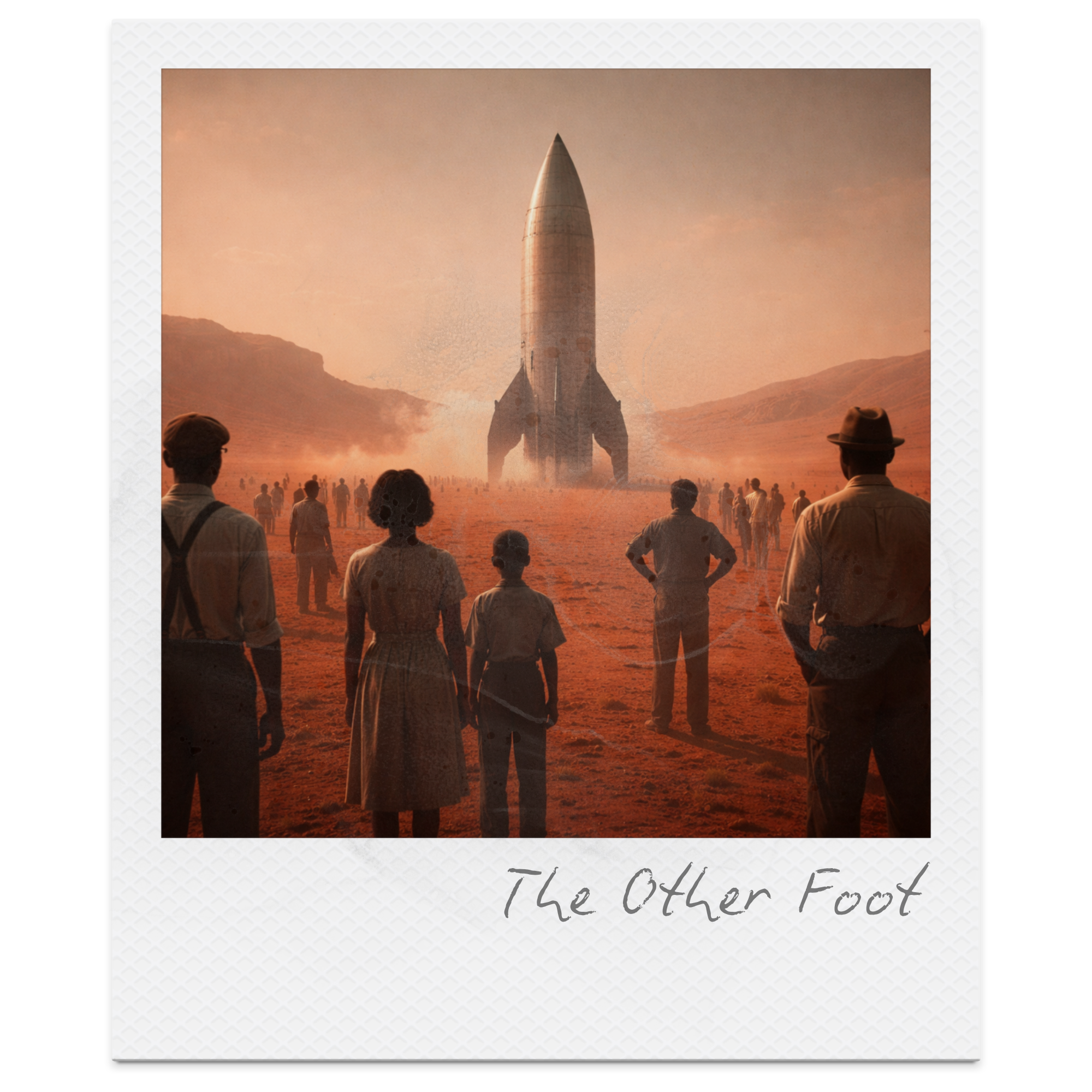
The Man by Ray Bradbury: Summary, Themes, Symbolism & Analysis
The Man by Ray Bradbury is a thought-provoking work of science fiction and speculative fiction that explores faith, belief, ego, and the limits of human understanding. Through the arrival of Captain Hart and his crew on a distant planet, Bradbury contrasts rigid scientific rationalism with quiet, unwavering spiritual conviction, revealing how the desire for recognition and control can blind individuals to deeper truths. The story unfolds as a subtle but powerful confrontation between skepticism and belief, where what cannot be measured or proven is dismissed, even when it stands directly before them.
On a deeper level, the story examines humanity’s search for meaning in a universe that often feels empty or indifferent. Bradbury suggests that while people may travel across galaxies in pursuit of answers, they can still fail to recognise what they are truly seeking when it appears in an unexpected form. This tension between restlessness and inner peace, certainty and humility, makes the story especially resonant in both philosophical and classroom discussions. For more explorations of Bradbury’s work, visit the Ray Bradbury Hub, or browse a wider range of texts in the Literature Library.

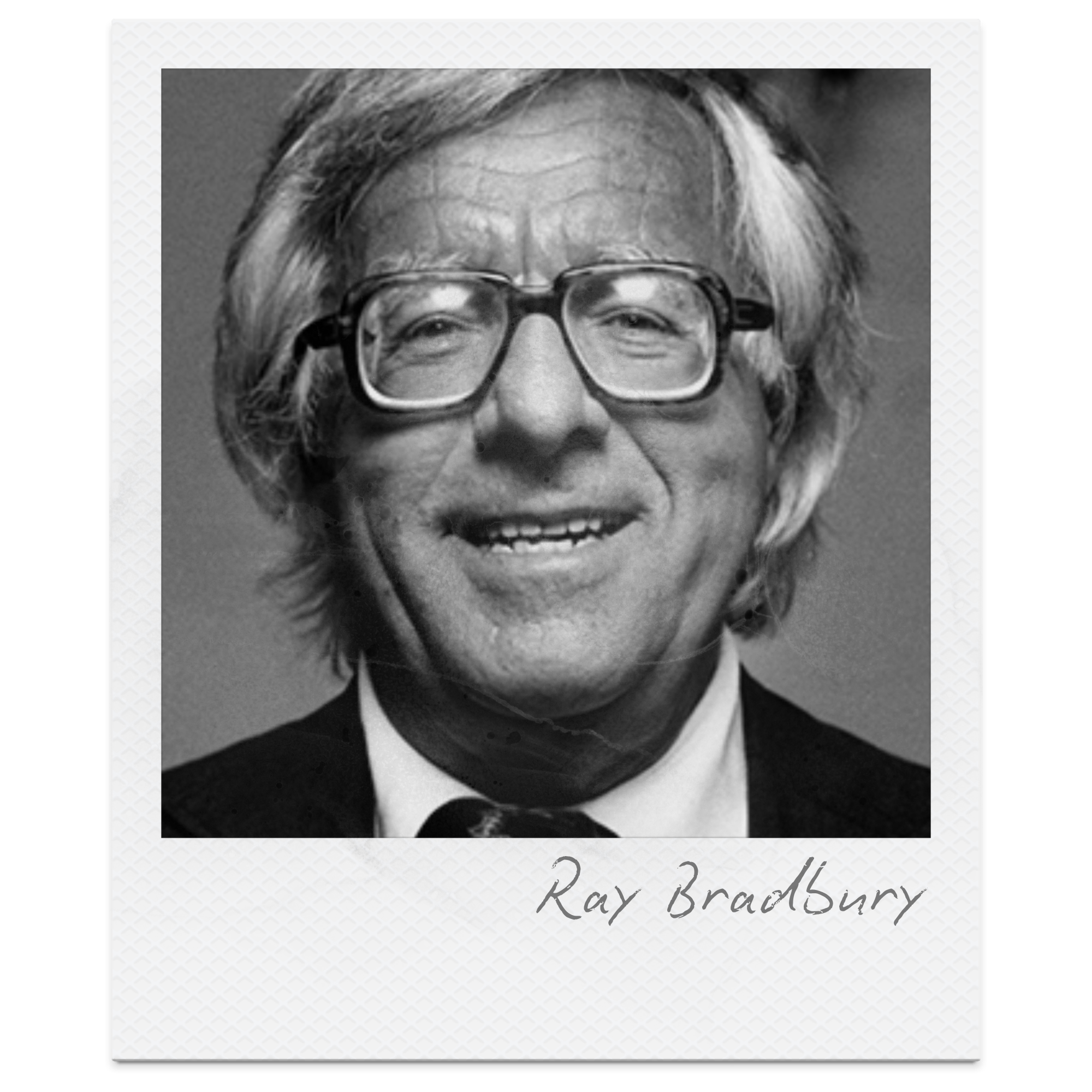
Context of The Man
Written during the mid-twentieth century, The Man reflects Ray Bradbury’s ongoing interest in the tension between science, spirituality, and human belief systems. As a writer often associated with science fiction, Bradbury used futuristic settings not to celebrate technological progress, but to question what humanity might lose in its pursuit of knowledge and control. Emerging in a post-war context marked by rapid scientific advancement and growing secularism, the story engages with a world increasingly shaped by rational thought, empirical proof, and skepticism, while quietly reintroducing the possibility of faith and transcendence. For a broader exploration of these ideas across Bradbury’s work, see the Ray Bradbury Context Post.
This context directly shapes the meaning of the story. Captain Hart represents a mindset grounded in authority, logic, and measurable evidence, reflecting a culture that values proof above all else. In contrast, the inhabitants of the planet embody a quieter, more intuitive understanding of truth, rooted in experience, belief, and acceptance. By placing these opposing perspectives side by side, Bradbury explores the idea that the modern search for certainty may actually prevent people from recognising deeper forms of meaning. The story suggests that what humanity seeks—peace, purpose, and understanding—cannot always be found through exploration or conquest, but may instead require a willingness to believe without complete certainty.
The Man: At a Glance
Form: Short story (science fiction / speculative fiction)
Mood: Reflective, tense, quietly unsettling
Central tension: Faith vs skepticism — the struggle between belief in the unseen and the demand for proof
Core themes: Faith and belief, ego and pride, the limits of scientific rationalism, the search for meaning, missed opportunity and spiritual blindness
One-sentence meaning: Humanity may travel across the universe searching for truth, yet still fail to recognise it when it appears—because it does not fit their expectations.
Quick Summary of The Man
Captain Hart and his crew land on a distant planet expecting recognition and celebration for their historic space journey, but instead find the local population strangely indifferent to their arrival. Confused and irritated, Hart sends Lieutenant Martin into the nearby city to investigate, only to learn that a mysterious and extraordinary visitor had appeared the day before—someone who healed the sick, comforted the poor, and inspired deep faith and reverence among the people.
As Martin becomes increasingly convinced of the visitor’s significance, Hart remains rooted in skepticism and ego, insisting that the events must be a deception or the work of a rival. Even when confronted with multiple testimonies and apparent evidence of miracles, Hart dismisses them, unable to accept anything that cannot be logically explained or scientifically proven. Meanwhile, Martin recognises that they have just missed something profound—an encounter humanity has long sought.
When news arrives confirming that no other expedition could have reached the planet before them, Hart begins to realise the truth, but instead of accepting it, he reacts with desperation. Determined not to miss the mysterious figure again, he leaves to pursue him across the stars, convinced he will eventually catch up. Martin, however, chooses to remain, understanding that the peace and meaning Hart seeks are already present—if one is willing to believe.
Title of The Man
In many of his works, Ray Bradbury uses titles to do more than simply label a story; they establish tone, suggest deeper meanings, and often introduce a central tension or ambiguity. In The Man, the simplicity of the title immediately invites curiosity. It is deliberately vague, offering no clear identity or context, which encourages the reader to question who this figure is and why he matters.
At first, the title seems almost dismissive—“the man” could refer to anyone, reducing the figure to something ordinary or insignificant. This aligns with Captain Hart’s perspective, as he treats the mysterious visitor as irrelevant, unworthy of attention, or even a potential fraud. However, as the story develops, this expectation is overturned. The unnamed figure becomes associated with compassion, wisdom, and healing, suggesting that his lack of a specific name allows him to transcend any single identity.
The ambiguity of the title is therefore deeply symbolic. By refusing to name the figure, Bradbury allows him to become universal, a presence that could exist across cultures and worlds. This also introduces a clear allusion, as the description of the man echoes religious figures associated with peace, sacrifice, and spiritual renewal. The restraint of the title reinforces the story’s central conflict between belief and doubt.
By the end of the story, the title takes on a strong ironic resonance. What appears ordinary is revealed to be extraordinary, and what is dismissed becomes the very thing humanity has been searching for. In this way, The Man reflects the story’s deeper message—that truth and meaning are often overlooked because they do not appear in expected or recognisable forms.
Structure of The Man
In The Man, Ray Bradbury uses a carefully controlled structure to shape tension, delay revelation, and deepen the story’s philosophical impact. The narrative unfolds through a gradual shift from certainty to doubt, and finally to a fractured realisation, mirroring Captain Hart’s internal struggle. By structuring the story around withheld truth, contrast, and an ultimately unresolved pursuit, Bradbury ensures that the meaning emerges slowly rather than being immediately clear.
Opening (Exposition)
The story begins with Captain Hart’s arrival on the planet, immediately establishing his expectations of recognition and control. The lack of response from the inhabitants creates early tension, as Hart’s ego clashes with the quiet indifference of the setting. This opening positions the reader alongside Hart’s confusion, while subtly hinting that something more significant has already occurred.
Rising Action
As Martin returns from the city and describes the mysterious visitor, the narrative builds through conflicting perspectives. Hart’s insistence on logic and proof is set against Martin’s growing sense of belief and understanding, creating a sustained tension between skepticism and faith. Bradbury withholds clear confirmation, allowing uncertainty to drive the story forward.
Turning Point / Climax
The structural climax occurs when news arrives that no other expedition could have reached the planet before them. This moment collapses Hart’s rational explanations and forces him to confront the possibility that the event was genuine. However, instead of resolving the tension, this revelation intensifies it, pushing Hart into desperation rather than acceptance.
Falling Action
Following the revelation, Hart’s response drives the falling action. Rather than reflecting or changing, he chooses to pursue the figure across the universe. This decision highlights his inability to achieve self-awareness, reinforcing the story’s critique of restlessness and misplaced ambition.
Ending (Resolution)
The ending is deliberately open and cyclical. Hart leaves to continue his search, destined to remain perpetually behind, while Martin stays behind, recognising that what Hart seeks has already been found. This structural contrast creates a powerful irony, where the character in motion gains nothing, and the character who remains achieves understanding. The unresolved ending reinforces the idea that truth cannot be pursued through force or control, but must be recognised when it is present.
Through this progression, Bradbury creates a structure that mirrors the story’s central message: the more desperately one seeks meaning externally, the more likely one is to miss it entirely.
Setting of The Man
In The Man, Ray Bradbury uses setting not merely as a backdrop, but as a symbolic landscape that reflects the story’s central conflict between restlessness and peace, ego and humility, and skepticism and belief. The contrast between the open meadow, the silent city, and the wider cosmos creates a layered environment in which meaning is shaped as much by atmosphere as by action.
The story opens in the “glittering meadow”, a space that immediately feels both beautiful and unsettling. The description suggests openness and possibility, yet it is quickly disrupted by Captain Hart’s decision to burn the grass: “The grass started to burn.” This moment introduces a symbolic tension between destruction and harmony, as Hart imposes his will on an environment that exists in quiet balance. The meadow becomes a reflection of his mindset—impatient, intrusive, and unable to coexist with stillness.
In contrast, the city is presented as a place of calm, order, and spiritual presence. When Hart observes that “the city was quiet and beautiful and a great peace lay over it,” the setting itself becomes a form of meaning. This is not a world defined by technological advancement or spectacle, but by an almost intangible sense of peace and completeness. The lack of urgency or excitement surrounding the rocket’s arrival reinforces the idea that the inhabitants are grounded in something deeper than curiosity or ambition.
Bradbury also uses the contrast between spaces to highlight the divide between Hart and the inhabitants. The rocket, positioned outside the city, represents human intrusion, progress, and restless movement, while the city represents stillness, community, and belief. Even the act of entering the city becomes symbolic, as Hart moves physically closer to understanding, yet remains emotionally and intellectually distant.
The wider setting of space itself reinforces the story’s central idea of endless searching. Hart’s plan to travel from planet to planet—believing he will eventually arrive at the right moment—mirrors the vast emptiness of the universe. The mayor’s reflection that Hart will always arrive just too late suggests a kind of cosmic futility, where movement does not guarantee discovery. The physical journey through space becomes a metaphor for a deeper spiritual disconnection.
Through these layered settings, Bradbury creates a world where environment and meaning are inseparable. The peaceful city already contains the truth and fulfilment Hart seeks, yet because it lacks spectacle or proof, he fails to recognise it. The setting therefore reinforces the story’s central message: that what we are searching for is often already present, but can only be understood through stillness rather than pursuit.
Narrative Voice in The Man
In The Man, Ray Bradbury uses a controlled third-person narrative voice to shape the reader’s understanding of events, characters, and themes. The narration maintains a degree of distance, but is closely aligned with Captain Hart’s perspective for much of the story, allowing readers to experience his frustration, skepticism, and growing instability. This positioning is crucial, as it places the reader inside a mindset that initially seems rational, but gradually reveals its limitations.
The narrative perspective is largely selective and limited, filtering events through Hart’s interpretations. His language is often sharp, dismissive, and impatient, reinforcing his identity as a man driven by authority and ego. For example, his reaction to the people’s indifference—viewing them as “ignorant fools”—shapes the reader’s early perception of the setting. However, because the narration does not fully validate his viewpoint, a subtle tension emerges between what Hart believes and what the reader begins to suspect.
At the same time, Bradbury introduces an alternative perspective through Martin, whose responses carry a quieter, more reflective tone. While the narrative does not fully shift into Martin’s viewpoint, his reactions—particularly his emotional response to the city and its people—create a contrast that challenges Hart’s authority. This interplay between perspectives generates ambiguity, encouraging the reader to question which interpretation is more reliable.
The tone of the narration also evolves across the story. What begins as mildly ironic becomes increasingly uneasy and introspective, especially as Hart’s certainty begins to fracture. By the time the truth becomes unavoidable, the narrative voice emphasises his desperation and disorientation, rather than offering clear resolution. This shift in tone reinforces the idea that understanding is not achieved through explanation, but through a change in perception—something Hart ultimately resists.
Importantly, the narrative voice never explicitly confirms the identity of the mysterious figure. This deliberate restraint preserves the story’s central ambiguity, allowing it to operate on both literal and symbolic levels. The reader is left to interpret the significance of the events, mirroring the choices faced by the characters themselves: to accept, to doubt, or to continue searching.
Through this carefully balanced narrative voice, Bradbury creates a reading experience that is both guiding and unsettling. The perspective invites the reader into Hart’s worldview, only to expose its flaws, encouraging a deeper reflection on belief, perception, and the limits of certainty.
e Man, Ray Bradbury is less concerned with plot than with provoking a deep intellectual and emotional response. The story’s purpose lies in its exploration of faith, ego, and the human need for certainty, asking what happens when people are confronted with something that cannot be measured, explained, or controlled. Rather than offering answers, Bradbury creates a narrative that unsettles the reader’s assumptions about truth and belief.
At its core, the story functions as a warning about the limits of scientific rationalism when it becomes rigid or arrogant. Captain Hart embodies a mindset that values only what can be proven, and as a result, he is unable to recognise meaning even when it is directly before him. This creates a powerful sense of dramatic irony, as the reader increasingly understands what Hart refuses to accept. The story suggests that an overreliance on logic can lead not to clarity, but to a form of blindness.
Emotionally, the impact of the story is shaped by a growing sense of frustration and loss. As Hart rejects the possibility of belief, the reader becomes aware that something profound has already been missed. Martin’s reaction—his quiet acceptance and emotional response—intensifies this feeling, highlighting the contrast between those who are open to meaning and those who are not. The result is a lingering sense of missed opportunity, where the most important moment occurs just out of reach.
The ending deepens this impact by refusing resolution. Hart’s decision to continue searching creates a powerful after-effect, as the reader recognises the futility of his journey. The idea that he will always arrive just too late transforms his mission into something almost tragic, driven not by hope, but by restlessness and denial. This unresolved pursuit leaves the reader with a sense of unease, encouraging reflection on how often people overlook meaning in their own lives.
Ultimately, the story’s impact lies in its ability to provoke self-questioning. It asks whether truth must always be proven, whether belief requires evidence, and whether the constant search for something greater can prevent people from recognising what is already present. This lingering ambiguity ensures that The Man remains not just a story, but an experience that continues to resonate long after it ends.
Characters in The Man
In The Man, Ray Bradbury presents characters who function not only as individuals, but as symbolic embodiments of belief systems, attitudes, and ways of understanding the world. Through sharp contrasts in dialogue, behaviour, and response, Bradbury explores the divide between skepticism and faith, ego and humility, and restless searching and quiet acceptance.
Captain Hart
Captain Hart represents scientific rationalism taken to its extreme, shaped by ego, authority, and the need for control. From the outset, his language reveals his frustration and entitlement, dismissing the inhabitants as “ignorant fools” when they fail to respond to his arrival. This immediate hostility positions him as someone who expects recognition and cannot tolerate indifference.
Throughout the story, Hart’s reliance on proof and evidence defines his worldview. When presented with accounts of healing, he rejects them outright, insisting, “I didn’t see the boy’s withered arm. I see only his arm whole and well. That’s no proof.” His refusal to accept anything beyond measurable fact highlights a fundamental limitation: he cannot engage with experiences that require belief rather than verification.
Even when confronted with overwhelming testimony, Hart attempts to rationalise events, attributing them to deception: “Some charlatan wanders through whispering sweet nothings…” This reveals his inability to relinquish control over interpretation. By the end, his desperation becomes clear as he declares, “I’ll go on to another world… and another and another,” transforming his search into an endless pursuit. Hart ultimately embodies restlessness, pride, and spiritual blindness, unable to recognise the very truth he seeks.
Lieutenant Martin
Martin acts as a counterpoint to Hart, representing openness, humility, and the capacity for belief. Initially positioned as subordinate, his perspective gradually gains moral and emotional authority as the story unfolds. His response to the city is immediate and visceral, describing the visitor as “good, intelligent, compassionate, and infinitely wise,” signalling his readiness to accept meaning beyond empirical proof.
Unlike Hart, Martin values experience and human connection over evidence. His growing conviction is reflected in his defence of the inhabitants: “They’ve got something good and decent… a little simple faith.” This line highlights his recognition that belief itself can be powerful and transformative, even without tangible proof.
Martin’s emotional response—“You’re crying like a baby,” Hart observes—marks a significant contrast with Hart’s detachment. Rather than weakness, this moment represents authentic engagement with something meaningful. His decision to remain behind demonstrates his understanding that what Hart seeks through movement can only be found through stillness and acceptance. Martin embodies the possibility of spiritual awareness and quiet fulfilment.
The Mayor
The mayor represents calm authority grounded in faith and understanding. His tone is consistently measured and patient, even when confronted with Hart’s aggression. When asked for proof, he simply states, “My word is my proof,” revealing a worldview that does not rely on external validation but on trust and lived experience.
He also articulates the story’s central insight with clarity and compassion. Observing Hart’s behaviour, he explains, “You want to believe so much now that you’re interfering with yourself.” This line exposes the paradox at the heart of Hart’s character: his desire for meaning is undermined by his inability to surrender control.
The mayor’s role is not to convince, but to witness and guide, offering perspective without force. His presence reinforces the idea that truth does not need to be proven to exist, and that understanding requires a willingness to accept rather than dominate.
The People of the City
The inhabitants function as a collective embodiment of faith, peace, and shared belief. Their descriptions of the visitor are poetic and expansive, such as when one woman describes his eyes as “the color of the sun, the color of the sea… the color of the night.” This language reflects a worldview that values feeling and symbolism over precision.
Their calm indifference to the rocket highlights their prioritisation of meaning over spectacle. Unlike Hart, they do not seek validation or recognition; instead, they exist within a state of quiet certainty. As a collective, they represent a society that has already found what others are still searching for.
The Mysterious Visitor (“The Man”)
Although never directly seen by the reader, the figure at the centre of the story functions as a powerful symbolic presence. Described through actions rather than appearance—healing the sick, comforting the poor, and challenging hypocrisy—he embodies ideals of compassion, wisdom, and spiritual renewal.
His lack of a name reinforces his universality, suggesting that he transcends any single identity or culture. As Martin explains, “He didn’t have a name. He doesn’t need one.” This absence of specificity allows the figure to operate as both a literal character and a broader symbol of faith, hope, and meaning.
Ultimately, the visitor’s significance lies in his absence. By arriving just before the crew and leaving before they can see him, he becomes a representation of missed understanding, reinforcing the idea that truth is not always accessible to those who demand proof.
Key Themes in The Man
In The Man, Ray Bradbury explores a range of interconnected themes through contrast, dialogue, and symbolic action, using the conflict between characters to reveal deeper tensions in how humans understand truth and meaning. The story develops its ideas through belief versus skepticism, movement versus stillness, and the consequences of failing to recognise significance when it appears.
Faith and Belief
One of the central themes is the power of faith and belief as a way of understanding the world. The inhabitants of the city accept the visitor’s presence without demanding proof, demonstrating a quiet confidence in their experience. When the mayor states, “My word is my proof,” it highlights a worldview grounded in trust and lived reality, rather than external validation.
In contrast, Captain Hart’s inability to believe reveals the limitations of a purely rational mindset. Martin’s defence of the people—“They’ve got something good and decent… a little simple faith”—suggests that belief itself has value, even without empirical evidence. Bradbury presents faith not as naïve, but as a form of insight and openness that allows individuals to recognise deeper truths.
Ego and Pride
Hart’s character embodies the destructive influence of ego and pride. From the beginning, he expects recognition for his achievements, reacting with anger when the inhabitants fail to acknowledge him. His dismissal of them as “ignorant fools” reveals a need for superiority and control.
This pride prevents him from engaging meaningfully with what he encounters. Even when faced with the possibility of something extraordinary, he interprets it as a challenge to his authority, insisting, “Some charlatan wanders through…” His ego transforms a moment of potential understanding into a personal conflict, ultimately isolating him from the truth.
The Limits of Scientific Rationalism
The story critiques the limitations of scientific rationalism when it is applied too rigidly. Hart demands evidence, proof, and verification, rejecting anything that cannot be measured. His statement, “I didn’t see the boy’s withered arm… That’s no proof,” reflects a mindset that equates truth solely with observable data.
Bradbury does not dismiss science itself, but rather questions what happens when it becomes the only acceptable framework for understanding. The story suggests that some experiences—particularly those related to meaning, faith, and human connection—cannot be reduced to empirical evidence. Hart’s failure lies not in valuing logic, but in refusing to acknowledge its limits.
The Search for Meaning
The idea of a continuous search for meaning runs throughout the story. Hart explicitly reflects on this when he questions why humanity travels through space: “Always on the go. Always searching.” This restlessness suggests a deeper dissatisfaction, a sense that something essential is missing.
However, Bradbury challenges the assumption that meaning must be found through exploration or progress. Martin’s decision to stay behind reflects an alternative approach—one that recognises that meaning may already exist in the present moment. The story contrasts external searching with internal recognition, suggesting that the former can prevent the latter.
Missed Opportunity and Spiritual Blindness
Perhaps the most powerful theme is missed opportunity and spiritual blindness. The crew arrives just after the visitor has left, but the true tragedy lies in Hart’s inability to understand what this means. Even when the truth becomes undeniable, he responds by pursuing the figure across the universe, declaring, “I’ll go on to another world… and another and another.”
This decision transforms his journey into a form of endless failure, where he is always close, but never present. The mayor’s prediction that Hart will always arrive just too late reinforces this idea of perpetual near-miss, suggesting that his blindness is not physical, but intellectual and spiritual.
Bradbury implies that the opportunity was not truly lost—it was simply unrecognised. Hart’s inability to accept what cannot be proven ensures that he will continue searching indefinitely, never realising that the meaning he seeks was already within reach.
Symbolism in The Man
In The Man, Ray Bradbury uses symbolism to deepen the story’s exploration of faith, meaning, and human limitation. Objects, spaces, and recurring ideas take on layered significance, allowing the narrative to operate beyond its literal events. These symbols evolve across the story, revealing how different ways of seeing the world shape what is understood—and what is missed.
The Rocket
The rocket symbolises human progress, ambition, and restless searching. It represents technological achievement and the desire to conquer distance and space, yet its arrival is met with indifference. This reaction undermines its perceived importance, suggesting that advancement without understanding is ultimately empty.
Positioned outside the city, the rocket also reflects separation—a physical and symbolic distance between those who are constantly moving and those who have already found peace and meaning. While Hart sees the rocket as a triumph, the story reveals it as a symbol of disconnection and misplaced priorities.
The City
The city represents spiritual fulfilment, harmony, and quiet certainty. Described as “quiet and beautiful” with “a great peace” over it, the setting becomes a symbol of a world that is complete without external validation. Unlike the rocket, the city does not seek attention or recognition; its value lies in its internal stability and shared belief.
It also functions as a symbolic contrast to Earth and to Hart’s mindset. Where Hart embodies noise, urgency, and control, the city embodies stillness, acceptance, and understanding. The fact that the truth exists within the city—but goes unrecognised by Hart—reinforces its role as a symbol of meaning already present but overlooked.
The Fire in the Meadow
The moment when Hart allows the grass to burn—“The grass started to burn”—serves as a symbol of destruction driven by impatience and ego. The fire disrupts the natural calm of the meadow, reflecting Hart’s inability to tolerate stillness or uncertainty.
Symbolically, the fire represents the way human interference can damage what is already balanced and meaningful. It also foreshadows Hart’s later actions, particularly his willingness to impose force and control rather than seek understanding. The burning meadow becomes an early sign of his destructive mindset.
The Mysterious Visitor (“The Man”)
The unnamed visitor is the story’s most powerful symbol, representing faith, compassion, and universal truth. His actions—healing the sick, comforting the poor, and challenging hypocrisy—align him with figures of spiritual authority and renewal, while his lack of a name allows him to transcend any single identity.
As Martin explains, “He didn’t have a name. He doesn’t need one,” reinforcing the idea that the figure exists beyond cultural or linguistic boundaries. The visitor becomes a symbol not only of belief, but of the possibility of meaning itself—something that cannot be fully defined, only experienced.
Importantly, his absence is just as significant as his presence. By leaving before the crew arrives, he becomes a symbol of missed understanding, suggesting that truth cannot be grasped through force or pursuit.
The Endless Journey
Hart’s decision to continue searching across the universe symbolises perpetual dissatisfaction and spiritual emptiness. His belief that he will eventually catch up—arriving “a minute late… a second late”—transforms his journey into a metaphor for human futility when driven by the wrong mindset.
This journey reflects the idea that the more one seeks meaning externally, the more elusive it becomes. Rather than bringing him closer to understanding, Hart’s movement ensures he remains trapped in a cycle of near-discovery and continual loss. The journey itself becomes a symbol of what happens when belief is replaced by relentless pursuit.
Through these symbols, Bradbury reinforces the story’s central message: that meaning is not something to be chased across the universe, but something that must be recognised when it appears.
Key Techniques in The Man
In The Man, Ray Bradbury uses a carefully selected range of language and structural techniques to create emotional intensity, reinforce symbolic meaning, and develop the story’s central tensions. These techniques work together to highlight the contrast between belief and skepticism, while shaping the reader’s response to both characters and ideas.
◆ Contrast — Bradbury repeatedly contrasts Hart and Martin, movement and stillness, and technology and faith to emphasise opposing worldviews. This sharp division allows the reader to clearly see the limitations of Hart’s perspective while recognising the value of Martin’s openness.
◆ Symbolic Language — Objects and settings are infused with deeper meaning, such as the rocket representing restless ambition and the city symbolising peace and fulfilment. This layering of meaning allows the story to operate on both a literal and philosophical level.
◆ Dialogue — Much of the story’s tension is driven through direct speech, particularly Hart’s interrogative, forceful language. His repeated demands for proof contrast with the calm, measured responses of the inhabitants, reinforcing the clash between certainty and belief.
◆ Irony — The story is structured around dramatic irony, as the reader increasingly understands the significance of the visitor while Hart remains blind to it. His determination to search the universe for something he has already encountered creates a powerful sense of tragic irony.
◆ Repetition — Bradbury uses repeated ideas of searching, arriving too late, and continual movement to reinforce the theme of missed opportunity. Hart’s insistence that he will find the man “on another world… and another and another” emphasises the futility of his quest.
◆ Allusion — The unnamed visitor carries strong religious and philosophical allusions, particularly to figures associated with healing, compassion, and spiritual teaching. These references deepen the story’s thematic focus without explicitly naming the figure.
◆ Tone Shift — The narrative moves from irritation and mild humour to unease and desperation, mirroring Hart’s psychological decline. This gradual shift in tone intensifies the emotional impact and highlights the consequences of his refusal to change.
◆ Foreshadowing — Early moments, such as Hart’s impatience and destructive behaviour—“The grass started to burn”—hint at his later inability to respond constructively to what he encounters. These details prepare the reader for his eventual failure.
◆ Ambiguity — Bradbury deliberately avoids confirming the identity of the visitor, maintaining interpretive openness. This ambiguity encourages readers to engage more deeply with the story’s ideas, rather than accepting a single fixed meaning.
◆ Structural Irony — The narrative arc itself reinforces meaning, as the character who travels the furthest understands the least, while the one who stays behind achieves clarity. This inversion strengthens the story’s critique of restlessness and misplaced purpose.
Important Quotes from The Man
In The Man, Ray Bradbury uses carefully chosen dialogue and description to reveal character, reinforce themes, and deepen the story’s emotional and philosophical impact. The following quotations highlight key moments of conflict, belief, and realisation.
Quotes on Faith and Belief
“My word is my proof.”
◆ Reveals a worldview grounded in trust and lived experience, rather than empirical evidence
◆ Highlights the contrast between faith-based understanding and Hart’s demand for verification
◆ Suggests that truth can exist without external validation
◆ Reinforces the theme of belief as a valid form of knowledge
“They’ve got something good and decent… a little simple faith.”
◆ Shows Martin’s recognition of the value of faith and moral clarity
◆ Contrasts sharply with Hart’s dismissive attitude
◆ Suggests that belief is not naïve, but powerful and sustaining
◆ Links to the idea that meaning is found through openness rather than control
Quotes on Ego and Skepticism
“Ignorant fools.”
◆ Immediately establishes Hart’s arrogance and superiority complex
◆ Reflects his inability to understand perspectives outside his own
◆ Reinforces the theme of ego as a barrier to truth
◆ Positions him in conflict with the inhabitants from the outset
“I didn’t see the boy’s withered arm… That’s no proof.”
◆ Demonstrates Hart’s strict reliance on observable evidence
◆ Highlights the limits of scientific rationalism when applied rigidly
◆ Shows his refusal to accept testimony or experience as valid
◆ Reinforces his intellectual blindness despite apparent intelligence
Quotes on the Mysterious Visitor
“He didn’t have a name. He doesn’t need one.”
◆ Emphasises the universality of the figure
◆ Suggests that the visitor transcends identity, culture, and language
◆ Reinforces symbolic and allusive interpretations
◆ Links to the idea that meaning cannot always be defined or contained
“He healed the sick and comforted the poor.”
◆ Establishes the figure as one of compassion and moral authority
◆ Echoes religious and spiritual allusions without naming them directly
◆ Highlights the contrast between action and recognition—he does not seek attention
◆ Reinforces the theme of quiet significance over spectacle
Quotes on Missed Opportunity and the Search for Meaning
“Always on the go. Always searching.”
◆ Reflects the broader human condition of restlessness and dissatisfaction
◆ Suggests that constant movement may be driven by a lack of internal fulfilment
◆ Links to the theme of searching for meaning in the wrong places
◆ Foreshadows Hart’s eventual endless pursuit
“I’ll go on to another world… and another and another.”
◆ Reveals Hart’s transformation from skepticism to desperate obsession
◆ Highlights the futility of his search
◆ Reinforces the idea of perpetual near-miss and missed opportunity
◆ Shows that he still fails to understand the true nature of what he seeks
Quotes on Ending and Impact
“He will always be an hour late… or a minute late… or a second late.”
◆ Captures the central idea of endless failure and near-discovery
◆ Creates a sense of tragic inevitability
◆ Reinforces the theme of spiritual blindness
◆ Suggests that the failure is not circumstantial, but internal
“Each finds him in his own way.”
◆ Summarises the story’s central philosophical message
◆ Suggests that meaning and truth are subjective and personal
◆ Reinforces the importance of individual perception and belief
◆ Leaves the story open to multiple interpretations
These quotations collectively reveal how Bradbury builds a narrative that is both simple in form and profound in implication, encouraging readers to reflect on how they interpret truth, belief, and meaning.
Psychological Interpretation: Control, Bias, and Emotional Resistance
From a psychological perspective, the story can be read as an exploration of cognitive bias and emotional resistance. Captain Hart’s refusal to accept the possibility of the visitor’s significance reflects a deep need for control and certainty. His insistence on proof—despite overwhelming testimony—suggests that his skepticism is not purely rational, but rooted in a fear of losing intellectual authority.
Martin, by contrast, demonstrates a willingness to accept ambiguity and engage emotionally with what he encounters. His response highlights the idea that understanding may require vulnerability and openness, rather than rigid adherence to logic. In this reading, the “man” represents a kind of psychological awakening—something Hart cannot reach because he is unable to relinquish control.
Religious / Spiritual Interpretation: Faith, Redemption, and Universality
One of the most compelling readings is a religious or spiritual interpretation, in which the mysterious visitor functions as a Christ-like figure. His actions—healing the sick, comforting the poor, and challenging hypocrisy—strongly echo traditional representations of spiritual figures associated with compassion, sacrifice, and renewal.
The fact that he is unnamed—“He didn’t have a name. He doesn’t need one”—reinforces his universality, suggesting that he transcends any single belief system. The story becomes a meditation on faith, exploring how belief operates differently across individuals. Hart’s failure to recognise the figure reflects a broader critique of a world disconnected from spiritual awareness, while Martin represents the possibility of recognition and acceptance.
Existential Interpretation: Meaning, Absence, and the Human Condition
From an existential perspective, the story explores the idea that meaning is not externally guaranteed, but must be recognised or created. The visitor’s absence becomes as significant as his presence, suggesting that truth is always slightly out of reach for those who seek it through external validation alone.
Hart’s endless journey—moving from planet to planet in pursuit of meaning—reflects a fundamentally existential struggle. His belief that he will eventually “catch up” reveals a refusal to accept uncertainty, while the mayor’s suggestion that he will always arrive too late highlights the possibility that meaning cannot be pursued in this way. In this reading, the story becomes a reflection on human restlessness and the illusion of progress.
Political Interpretation: Power, Authority, and Colonial Mindset
The story can also be read through a political lens, particularly in its portrayal of authority and control. Hart arrives expecting recognition and dominance, treating the inhabitants as inferior when they fail to respond as expected. His language—“ignorant fools”—reveals a mindset shaped by hierarchy and entitlement.
This reflects a broader colonial attitude, where exploration is tied to control, exploitation, and the imposition of one’s own values. The inhabitants’ calm resistance to this mindset challenges Hart’s authority, suggesting that power structures are not universally accepted. In this interpretation, the story critiques the assumption that technological advancement equates to moral or intellectual superiority.
Contemporary Interpretation: Relevance, Skepticism, and Modern Belief
A contemporary interpretation works strongly here, particularly in relation to modern attitudes toward truth, evidence, and belief. In a world shaped by scientific advancement, digital information, and competing narratives, the tension between skepticism and faith remains highly relevant.
Hart’s insistence on proof mirrors modern tendencies to dismiss anything that cannot be verified, while the inhabitants’ acceptance reflects alternative ways of understanding truth through experience and trust. The story also resonates with contemporary discussions about meaning in a technologically driven world, where progress does not necessarily lead to fulfilment.
In this reading, The Man becomes a reflection on how modern individuals navigate uncertainty, belief, and the search for purpose, making its themes feel strikingly current despite its science fiction setting.
Why The Man Still Matters
In The Man, Ray Bradbury presents ideas that remain strikingly relevant in a modern world shaped by technology, skepticism, and constant searching. The story continues to resonate because it addresses a timeless human tension: the desire for certainty and proof versus the need for meaning, belief, and inner peace.
Today, the theme of scientific rationalism and its limits feels especially significant. In an age driven by data, evidence, and verification, Hart’s mindset is instantly recognisable. While this approach has led to extraordinary progress, Bradbury raises an important question: what happens when people dismiss anything that cannot be measured? The story suggests that an overreliance on proof can lead to a kind of intellectual and emotional blindness, where deeper forms of understanding are overlooked.
The story also speaks directly to modern experiences of restlessness and dissatisfaction. Hart’s need to keep moving—“always on the go. Always searching”—mirrors contemporary culture, where productivity, achievement, and constant forward motion are often prioritised over reflection. His endless journey across the universe reflects a familiar pattern: the belief that fulfilment lies somewhere ahead, rather than in the present moment.
At the same time, the contrast between Hart and Martin highlights an enduring question about how people engage with meaning. Martin’s willingness to stay, observe, and accept reflects a different approach—one grounded in presence, humility, and openness. This contrast remains relevant in a world where individuals are often pulled between external success and internal fulfilment.
The story also resonates in discussions about belief and interpretation. In a landscape shaped by competing narratives, misinformation, and differing worldviews, the question of what counts as truth is more complex than ever. Bradbury does not offer a single answer, but instead encourages readers to reflect on how their own assumptions shape what they accept or reject.
Ultimately, The Man endures because it challenges a deeply ingrained habit: the belief that meaning must be pursued, captured, or proven. Instead, it suggests that what people are searching for—peace, understanding, and purpose—may already be present, but requires a shift in perception to be recognised.
Teaching Ideas for The Man
This is one of those stories that works brilliantly when you slow it down and let students sit in the ambiguity. It’s ideal for pushing them beyond surface-level comprehension into interpretation, debate, and evaluation, especially around belief, truth, and perspective.
1. Discussion Questions
Use these to open up the room rather than close it down:
◆ Why are the people completely uninterested in the rocket? What does that tell us about what they value?
◆ Is Hart actually being reasonable at the start, or is he flawed from the beginning?
◆ Why does Martin respond so differently — what shifts for him?
◆ Who do you think “the man” is, and does it matter if we never get a clear answer?
◆ Is Bradbury criticising science, or something else?
◆ Why does Hart leave even after realising what he’s missed?
◆ What does it mean to always arrive “too late”?
2. Model Paragraph Task (Analysis + Development)
This works really well if you’re trying to push them into proper analytical writing rather than feature spotting.
Focus: How does Bradbury present the limitations of scientific rationalism?
Model Paragraph:
Bradbury presents the limitations of scientific rationalism through Captain Hart, whose rigid demand for proof prevents him from recognising deeper meaning. When Hart dismisses the healed boy by stating, “I didn’t see the boy’s withered arm… That’s no proof,” the blunt, declarative tone reflects his narrow definition of truth, where only direct observation is valid. This insistence on evidence positions him in clear contrast with the inhabitants, who accept the event without needing verification. Bradbury uses this contrast to suggest that an overreliance on logic can become a form of intellectual blindness, as Hart is unable to engage with experiences that fall outside his framework. As a result, he misses something profoundly significant, not because it is hidden, but because he is unwilling to see it.
Get students to:
◆ Identify what the paragraph is doing (argument, evidence, method, effect)
◆ Write 2–3 questions this paragraph could answer
◆ Mark it using the success criteria below
◆ Then write their own paragraph on a different theme
Success Criteria (keep it tight and usable):
◆ Clear, conceptual argument (not just retelling)
◆ Embedded quotation used naturally
◆ Focus on a method (e.g. tone, contrast, dialogue)
◆ Explanation of effect (what does it show?)
◆ Clear link to a bigger idea/theme
Development:
Once they’ve written theirs, get them to:
◆ Zoom in on a single word from their quote
◆ Add a sentence offering an alternative interpretation
◆ Strengthen the final line so it clearly answers the question
3. Essay Angles
Good for essays or extended responses:
◆ “The Man is ultimately a story about missed opportunity.” How far do you agree?
◆ How does Bradbury present the conflict between belief and skepticism?
◆ Explore how the idea of searching for meaning is presented.
◆ To what extent is Captain Hart a tragic figure?
◆ How does Bradbury use contrast to shape the reader’s understanding?
4. Symbolism Focus
This is a really nice way to get them thinking more conceptually.
Pick one symbol (e.g. the rocket, the city, the journey) and track it across the story:
◆ Where does it appear?
◆ What does it represent at first?
◆ Does that meaning shift?
◆ How does it link to a theme?
Works well as a paired task or short written response.
5. Creative Writing Extension
This is where it links nicely into your wider writing work — you can point them straight to the Creative Writing Archive if you want to extend it further.
A few options that work well:
◆ Write a first-person account from someone in the city who met the visitor
◆ Rewrite the ending years later from Hart’s perspective — has anything changed?
◆ Imagine the next planet Hart visits — does he get closer to understanding, or not?
◆ Write the scene where Hart actually meets the man — what happens?
The key here is to keep it tied to theme and perspective, not just plot. Get them thinking: what are you saying about belief, truth, or meaning through this?
Go Deeper into The Man
This story becomes even richer when students place it alongside other texts that explore belief, control, human nature, and the search for meaning. It works particularly well as part of a Bradbury cluster, but also opens up strong cross-text comparisons.
You can also check out the Best Bradbury for the Classroom and Using Black Mirror to Teach Bradbury to build a wider thematic unit.
◆ Dark They Were, and Golden-Eyed by Ray Bradbury — both stories explore transformation and the limits of human control, but where The Man focuses on missed spiritual understanding, this text explores the inevitability of change and loss of identity
◆ The Other Foot by Ray Bradbury — a strong comparison for moral choice and perspective, as both texts challenge characters to confront their assumptions, though The Man is more philosophical while this story is more directly political
◆ The Pedestrian by Ray Bradbury — links through isolation and non-conformity, with both protagonists standing apart from dominant ways of thinking, though in opposite ways
◆ The Veldt by Ray Bradbury — useful for contrasting human dependence on technology with the more abstract critique of rationalism in The Man
◆The Last Night of the World by Ray Bradbury — offers a quieter, more introspective comparison, exploring how individuals respond to profound truth with acceptance rather than resistance
◆ There Will Come Soft Rains by Ray Bradbury — connects through the idea that human systems and achievements are ultimately insignificant, reinforcing the limits of progress without meaning
◆ An Inspector Calls by J. B. Priestley — a strong classroom link for moral responsibility and awakening, where characters are forced to confront uncomfortable truths about themselves
◆ 1984 by George Orwell — useful for exploring control over truth and belief, though Orwell presents enforced ideology, while Bradbury explores internal resistance to belief
◆ Parable of the Sower by Octavia E. Butler — offers a modern comparison for faith, survival, and the creation of meaning in uncertain worlds
Together, these comparisons help students explore how different writers approach truth, belief, control, and the human search for meaning across genres and contexts.
Final Thoughts
In The Man, Ray Bradbury crafts a deceptively simple narrative that unfolds into a powerful exploration of faith, ego, and the human search for meaning. Through the contrast between Captain Hart and Martin, the story exposes the limitations of a worldview rooted entirely in control and certainty, suggesting that truth cannot always be proven, only recognised. The quiet power of the story lies in what is not shown—the absence of the mysterious figure becomes more significant than any direct encounter could be.
What lingers most is the sense of missed understanding. Hart’s endless journey across the stars is not heroic, but tragic, driven by the very mindset that prevents him from finding what he seeks. In contrast, Martin’s decision to remain highlights an alternative path—one grounded in stillness, humility, and belief. The story leaves readers with an unsettling question: how often do we overlook meaning because it does not appear in the form we expect? For more explorations of Bradbury’s work, visit the Ray Bradbury Hub, or browse related texts in the Literature Library.
Choose Your Next Text