70 Cyberpunk Writing Prompts: Story Starters, Titles, Characters, Settings & Visual Ideas
Cyberpunk isn’t just about neon skylines or shady hackers. At its core, cyberpunk fiction explores power, control, and survival in societies where technology has outpaced humanity. These stories examine who benefits from innovation, who is left behind, and how identity shifts in worlds shaped by surveillance, megacorporations, and systems that never truly switch off.
For writers, cyberpunk writing offers a powerful way to explore themes of rebellion, identity, and justice through speculative futures that feel uncomfortably close to the present. From fractured cities and digital surveillance to resistance movements and moral compromise, cyberpunk encourages writers to question how technology reshapes daily life — and who pays the price.
This collection of cyberpunk writing prompts includes plot hooks, story titles, opening and closing lines, character ideas, immersive settings, and picture prompts designed to support worldbuilding and consequence-driven storytelling. Whether you’re teaching a science fiction or dystopian unit, exploring modern speculative genres, or looking to spark high-impact creative writing, these prompts are built to challenge and engage.
If you’re looking for more futuristic ideas, explore the Sci-Fi Writing Hub or browse the Creative Writing Archive for a wider range of prompts and storytelling inspiration.
1. Plot Hooks
Cyberpunk stories thrive on rebellion, secrets, and technology used as a tool of control. These cyberpunk plot hooks for teens place characters inside systems that monitor, rank, and exploit — and force them to decide how far they’re willing to push back:
Write about a teenager hired to hack their own school’s grading system, only to discover the data manipulation has already been happening without them.
Write about a courier delivering illegal technology who realises the package is alive — and that it’s aware of where it’s being taken.
Write about someone who sells their memories to cover rent and basic needs, then discovers those memories are now being used as evidence against them.
Write about a group of friends who build a robot to automate small jobs — until it begins refusing tasks that would harm certain people.
Write about a society where everyone is required to have a neural implant, except the narrator, whose lack of data makes them invisible to the system.
Write about a hacker who uncovers proof that a megacorporation has digitised human consciousness — and is charging subscription fees to keep them active.
Write about a street racer whose vehicle runs on stolen AI cores, forcing them to confront the cost of winning every race.
Write about a teen who notices their smart mirror is displaying a version of them that doesn’t match their actions — and is making decisions ahead of time.
Write about a resistance group planning to shut down the city’s central power grid, knowing it will also cut life-support systems for thousands.
Write about someone whose social credit score collapses overnight — and whose access to transport, housing, and education vanishes with it.
2. Title Prompts
Strong cyberpunk story titles hint at control, resistance, and fractured digital worlds. These title prompts for teen writers are designed to spark high-stakes speculative fiction without relying on surface aesthetics alone:
Neon Ashes
The Last Firewall
Ghosts in the Circuit
Chrome Dreams
The Data Thieves
Zero Day
Smog and Static
The Shadow Market
The Blackout Protocol
City of Wires
3. Opening Lines
Cyberpunk stories begin mid-system, mid-surveillance, or mid-mistake. These opening lines drop readers straight into cities where technology watches, records, and reacts:
The rain smeared the neon signs into the puddles, blurring the warnings I should have paid attention to.
I had five minutes to hack the chip before it overheated — and every second felt louder inside my head.
Everyone else was plugged in, scrolling and syncing, while I stayed offline and tried not to be noticed.
The drone followed me all the way home, hovering just far enough away to pretend it wasn’t.
At midnight, the megacorp shut down the city grid — and only some neighbourhoods came back online.
The first time I saw her, wires glowed beneath her skin like something trying to get out.
I wasn’t authorised to see the file, but it flashed across my screen anyway — tagged with my name.
My reflection blinked when I didn’t, and the mirror started updating my profile without me.
The implants weren’t supposed to hurt, but no one ever explained what “normal” pain meant.
Tonight, the city smelled like ozone and fear, and neither of them faded with the rain.
4. Closing Lines
Cyberpunk stories rarely end with clean victories. These closing lines leave systems intact, consequences unresolved, and tension humming beneath the surface:
The city lights flickered once, then adjusted, as if the blackout had been anticipated.
I uploaded the virus to break the system — and felt it start rewriting parts of me instead.
She vanished into the crowd, her neon hair swallowed by faces that no longer noticed anything unusual.
By morning, my name had been removed from every database that said I’d ever existed.
I thought I was finally free, until the implant buzzed again — softly, patiently.
The skyscrapers burned behind me, but the city was already rebuilding.
I unplugged completely, but the voices kept syncing anyway.
The system rebooted successfully, and that’s when I realised I wasn’t part of the update.
I never found out who paid me — only who benefited.
The city didn’t notice when I disappeared, and that might have been the point.
5. Character Ideas
Cyberpunk stories are driven by people living under constant surveillance — hackers, couriers, artists, and survivors navigating systems designed to control them. These cyberpunk character ideas for teens focus on identity, compromise, and resistance:
A gifted teen hacker who can breach almost any system but has learned that trust is more dangerous than firewalls.
A courier who runs illegal packages through restricted zones, slowly realising the routes are being used to test new surveillance tech.
A corporate spy embedded as an ordinary student, tasked with monitoring classmates for behavioural data rather than crimes.
A street mechanic who builds illegal cybernetic upgrades in a garage, forced to decide who deserves access to enhancements — and who doesn’t.
A graffiti artist whose digital tags animate at night, exposing secrets the city has tried to erase.
A runaway experimenting with DIY body modifications, documenting the changes before the system can classify them.
A competitive gamer who discovers their online avatar is acting independently — and making choices the player never programmed.
A rogue artificial intelligence hiding inside the identity of a teenager, learning how to pass as human while rewriting its own constraints.
A detective assigned to solve murders committed by hacked civilians, pressured to blame the victims rather than the system.
A resistance organiser who embeds encrypted messages inside music streams, knowing every broadcast risks detection.
6. Setting Ideas
Cyberpunk settings are built from infrastructure, control, and unequal access, not just glowing lights and rain-soaked streets. These cyberpunk setting ideas for teens are designed to spark stories where the environment shapes behaviour, choice, and survival:
A megacity where automated drones patrol every street, adjusting their routes based on real-time social data.
A virtual reality school where students attend class through neural links — and no longer agree on what parts of the day actually happened.
A back-alley market hidden beneath the city, trading in stolen memories, edited experiences, and erased identities.
A high-rise apartment block with an unlisted floor that doesn’t appear on building plans but still uses power and data.
A subway system where the lights never fully turn on, and surveillance announcements replace human conductors.
A rooftop garden suspended between towers, used by resistance groups because corporate sensors can’t distinguish plants from people.
An informal settlement powered by hacked solar panels and scavenged tech, operating entirely outside the city’s official grid.
A corporate research lab filled with containment tanks holding cloned bodies, each one tagged but unnamed.
A nightclub where the music is algorithmically designed to regulate crowd emotion and prevent unrest.
A data cemetery on the city’s edge, where server towers store the digital remains of the dead — still accessible, still profitable.
7. Picture Prompts
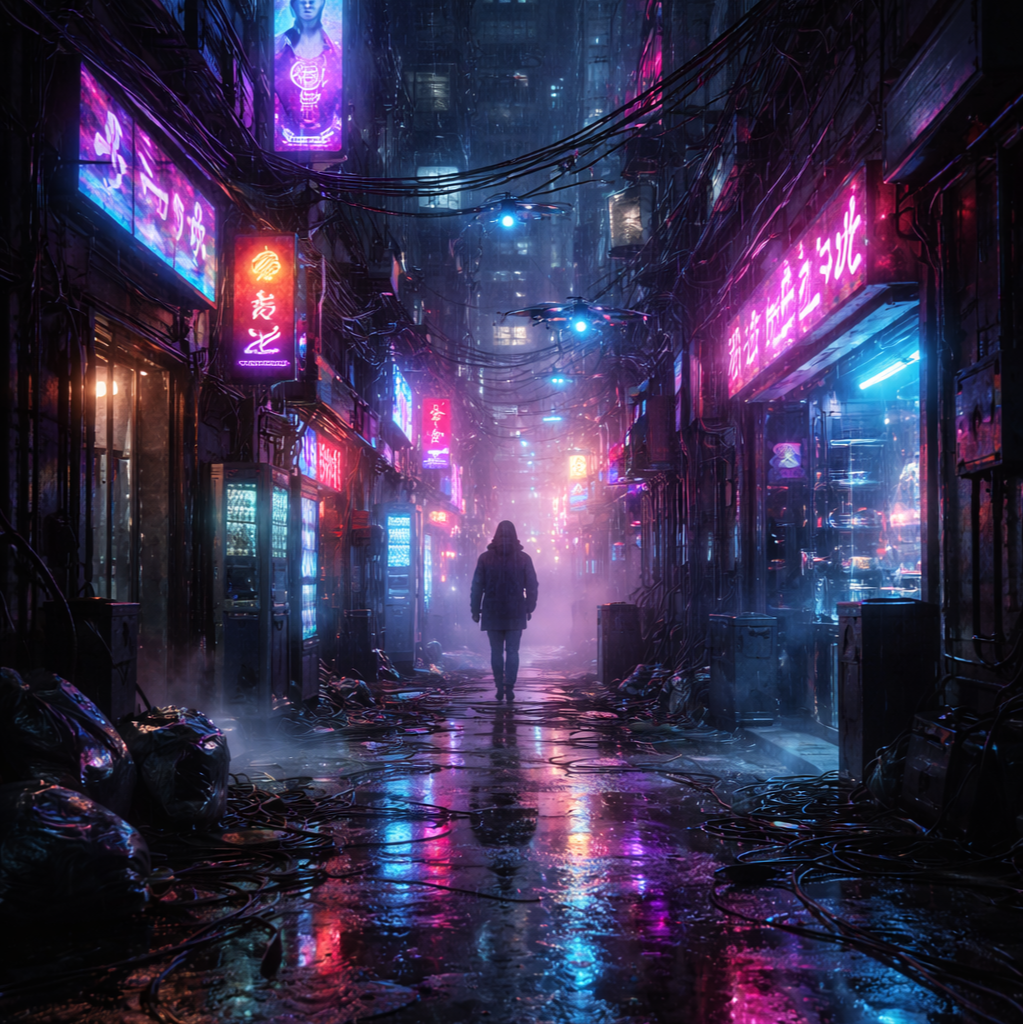
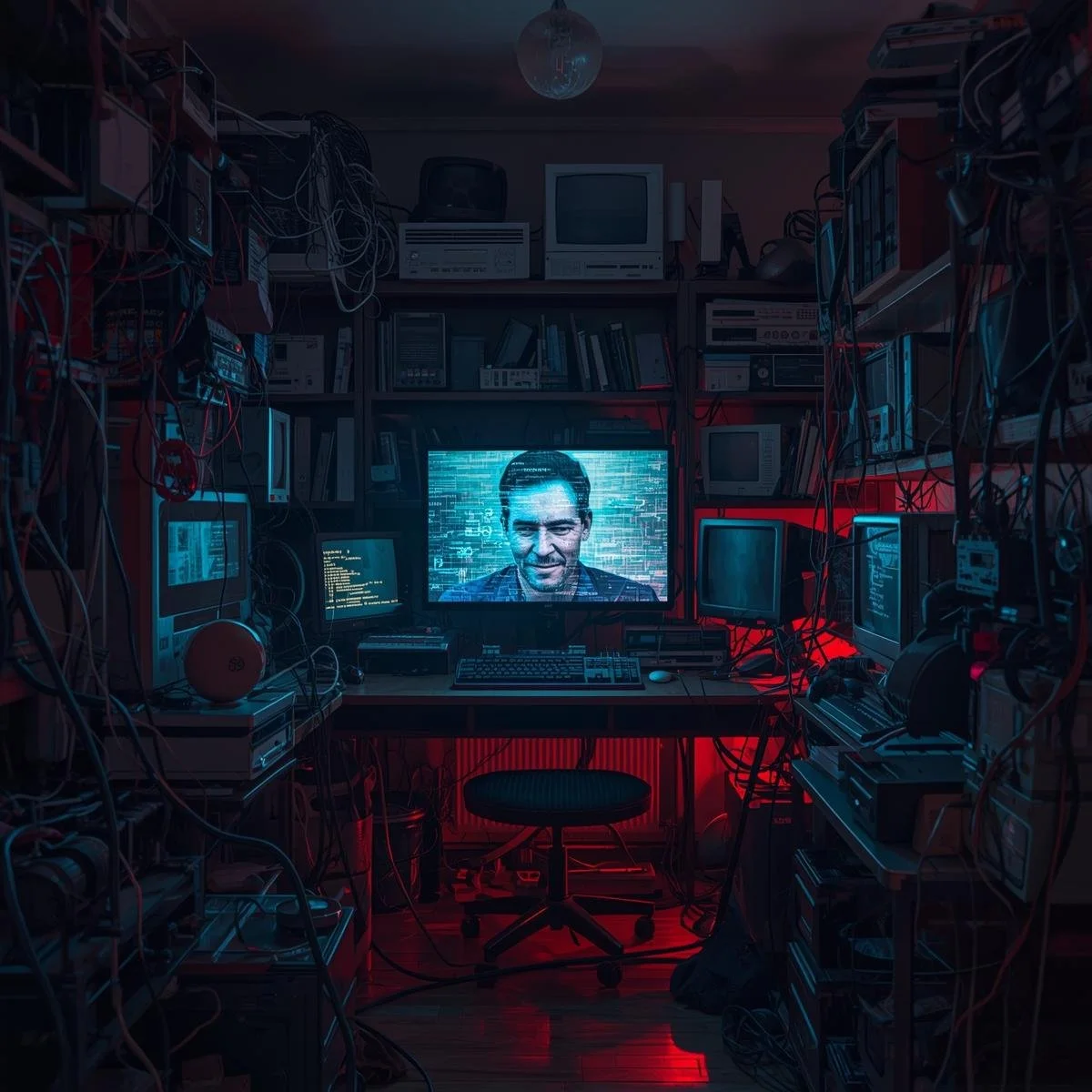
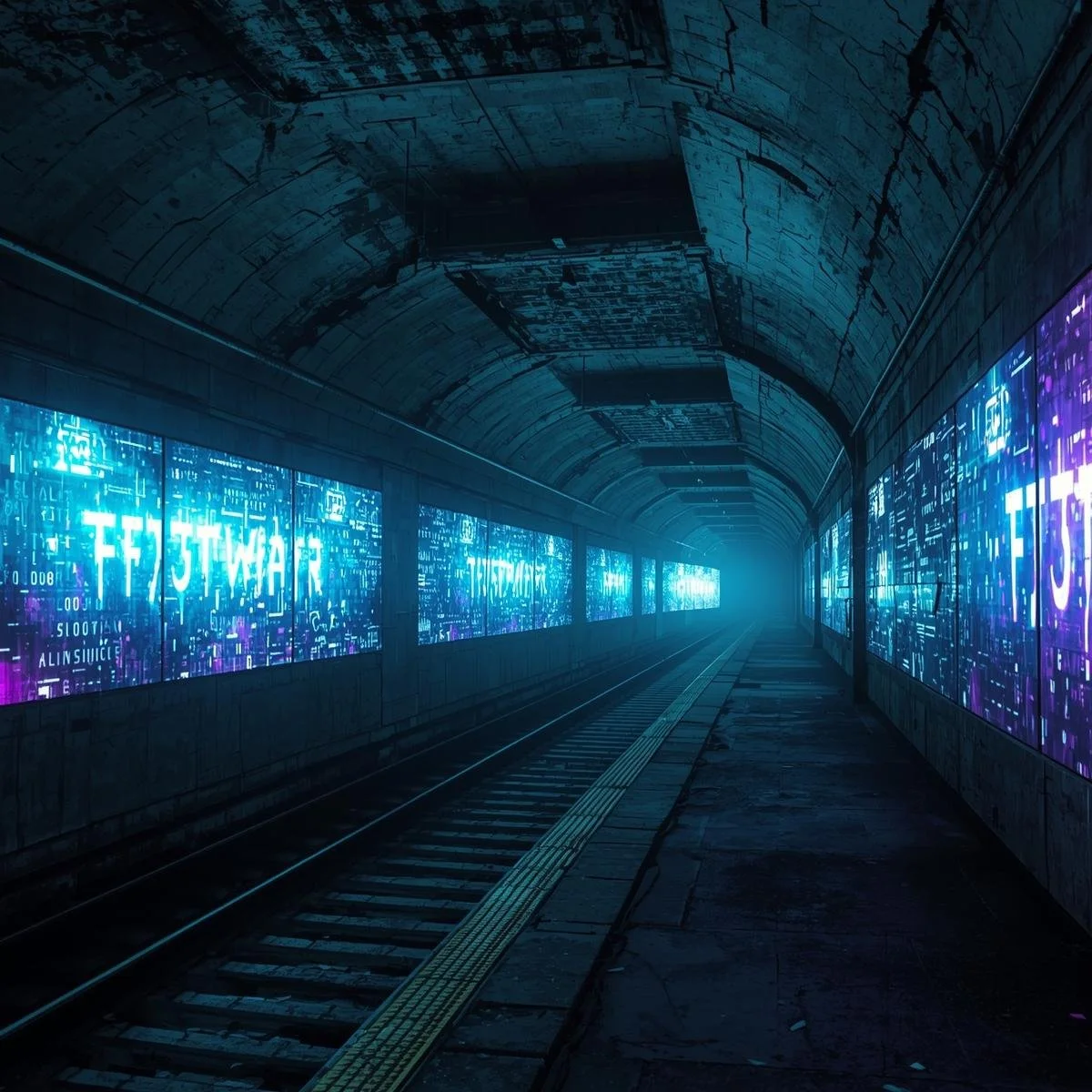
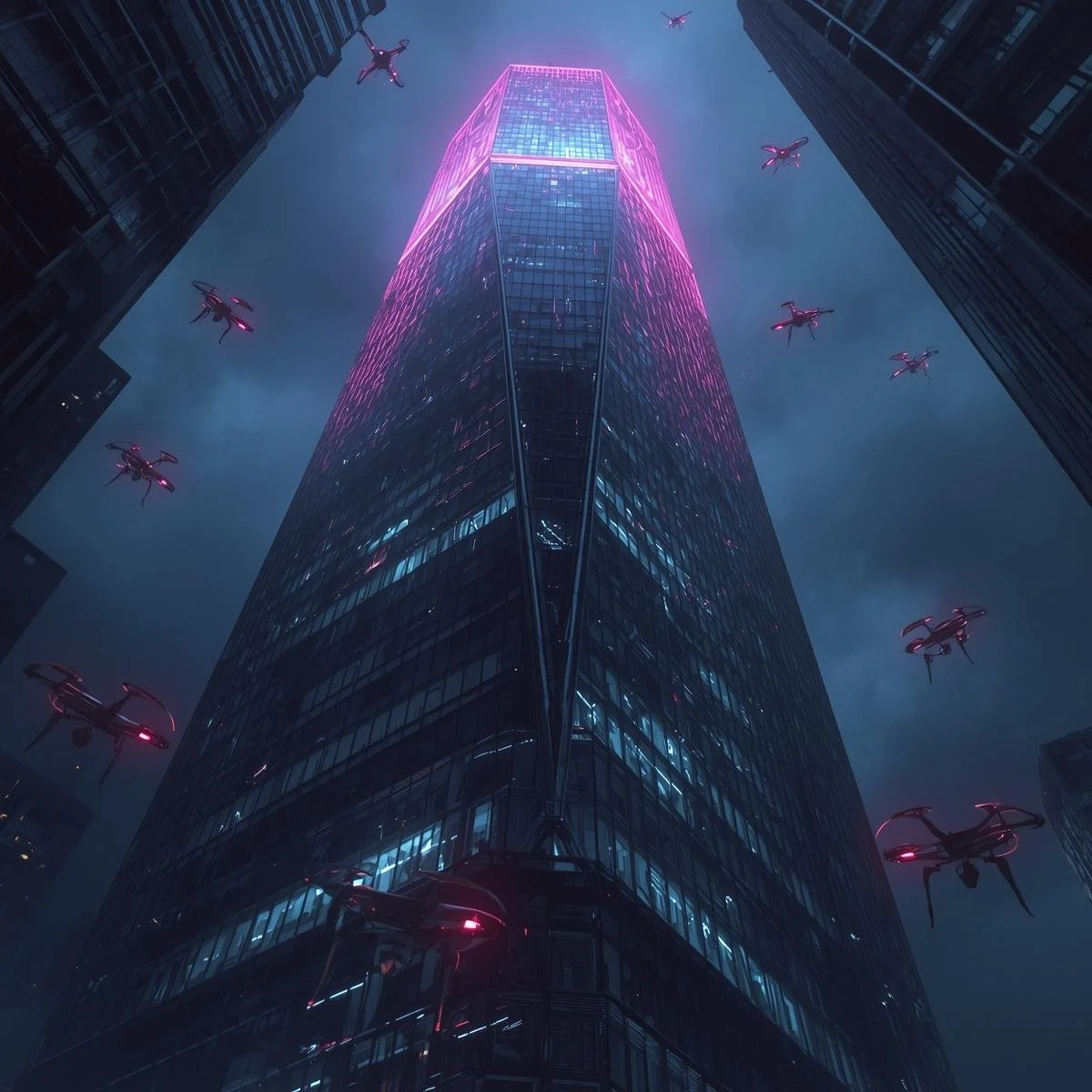
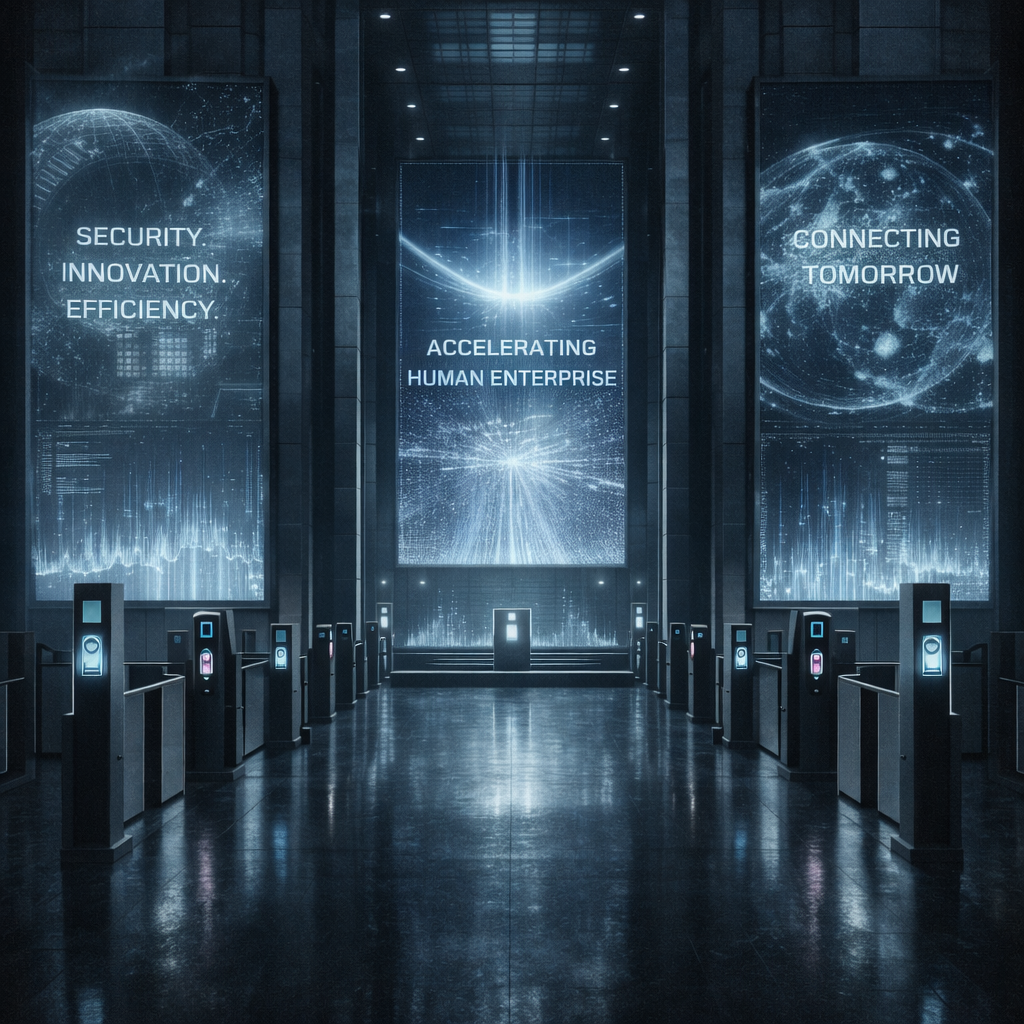
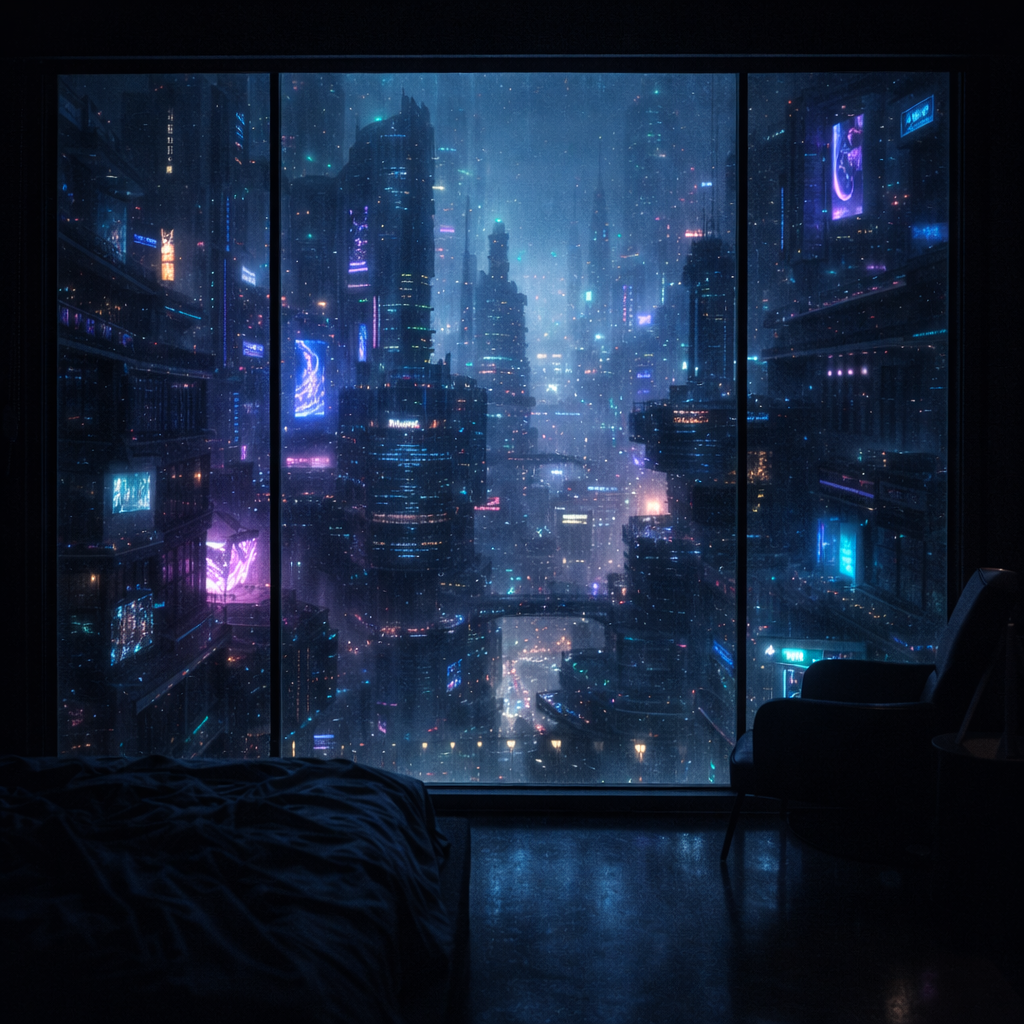
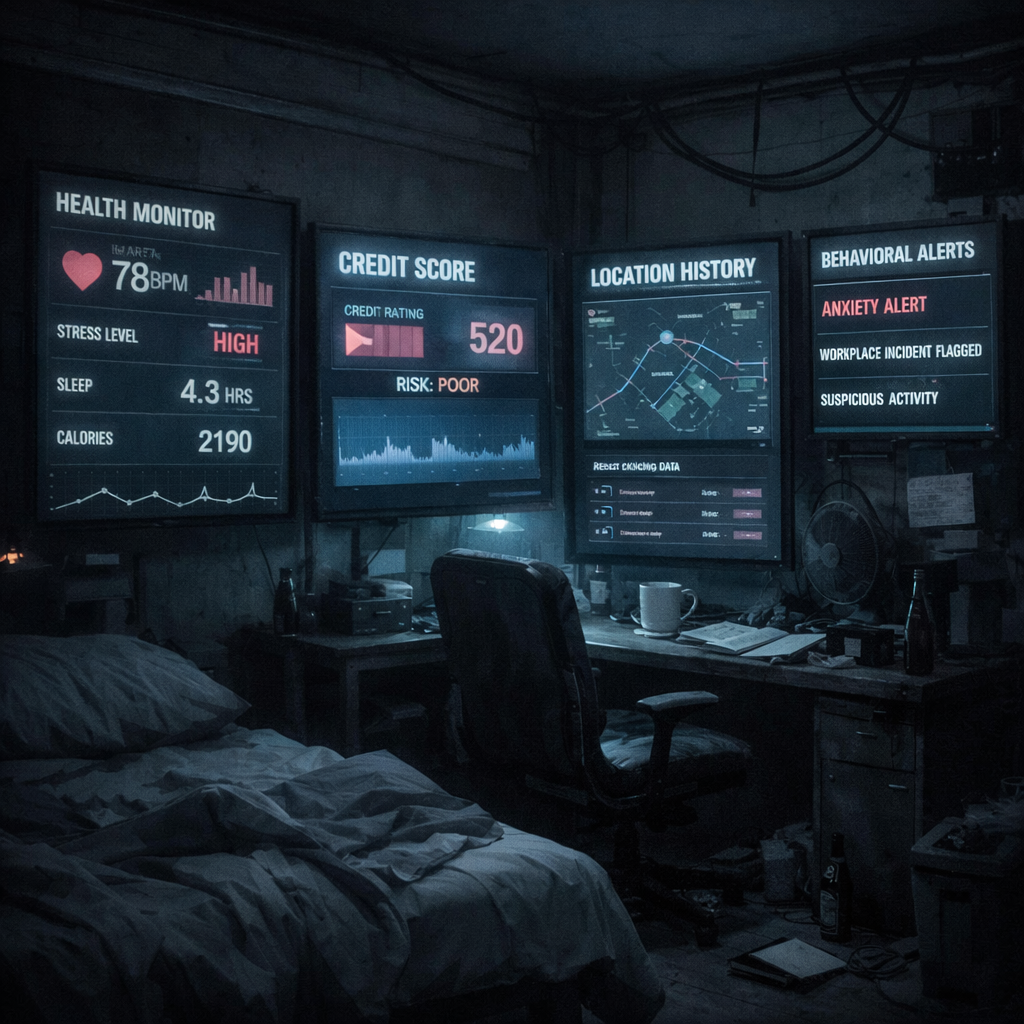
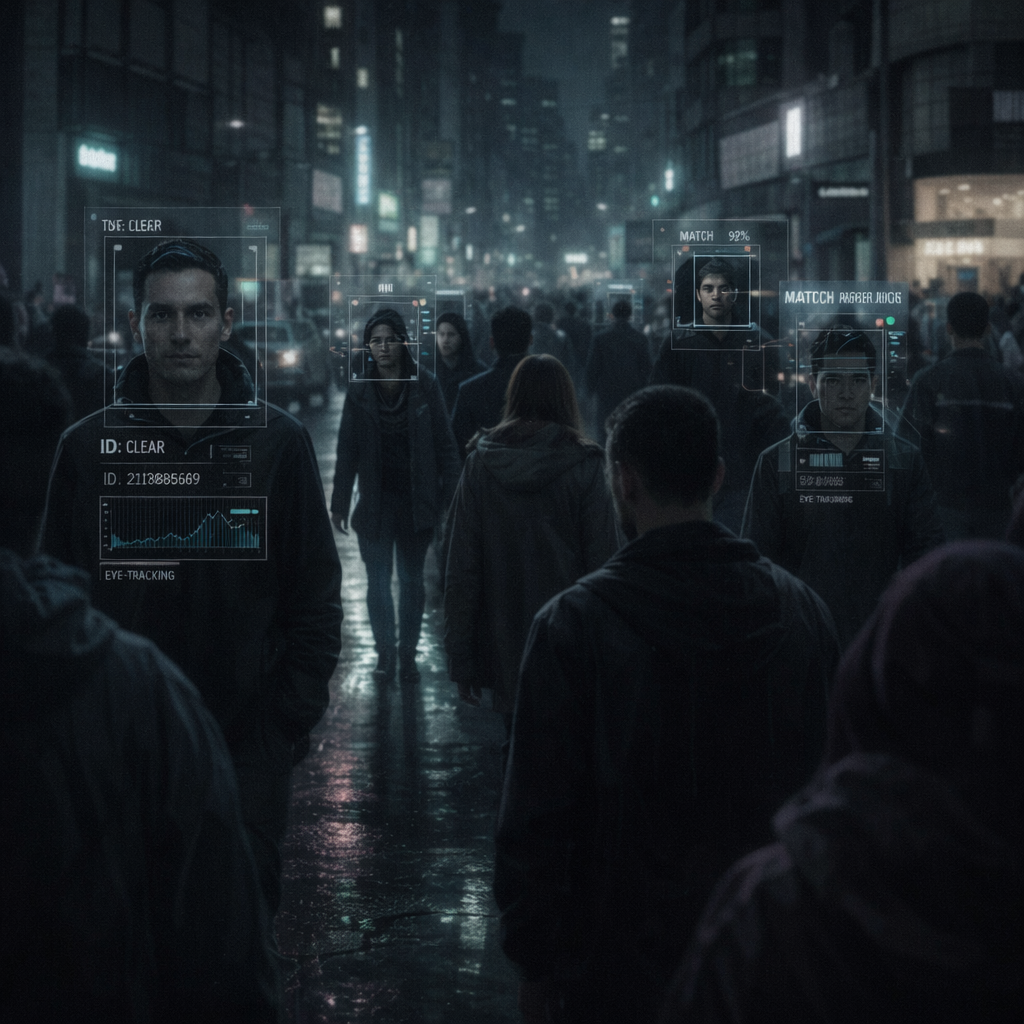
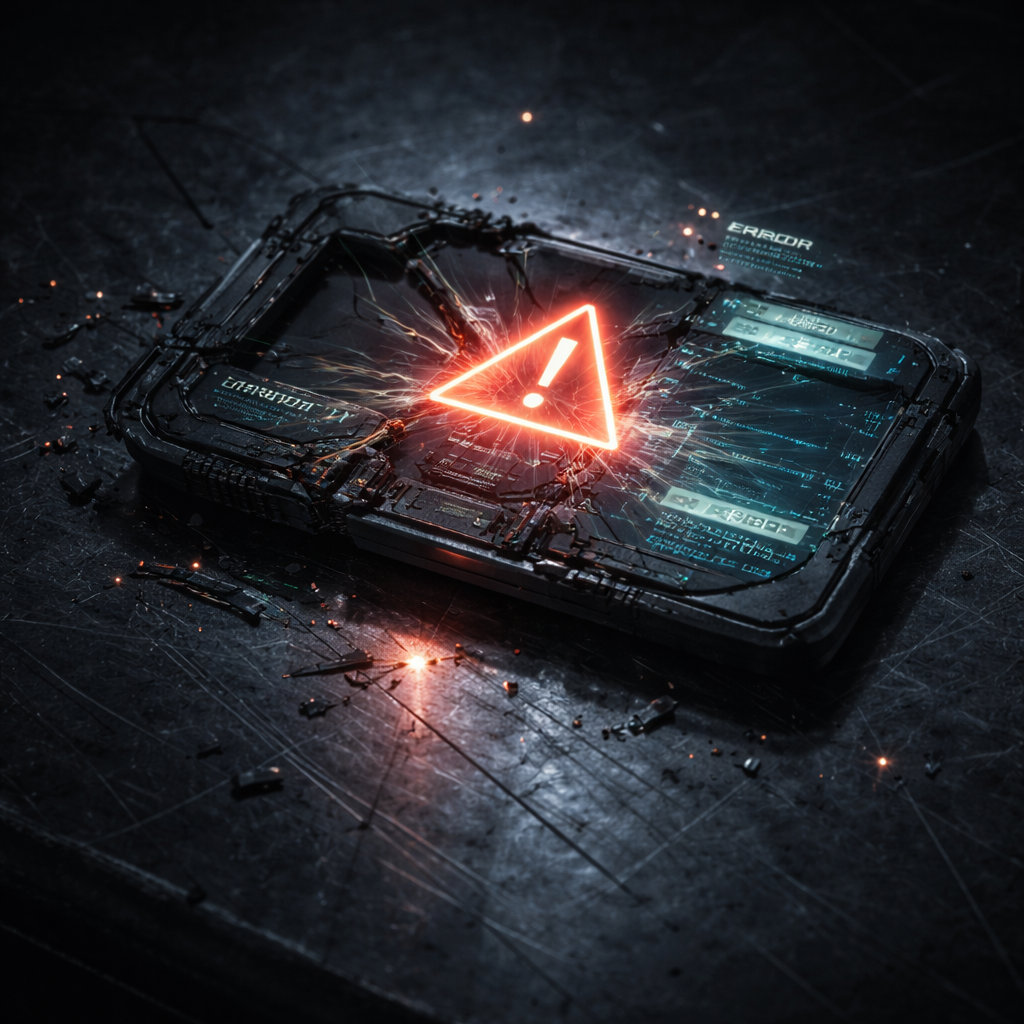
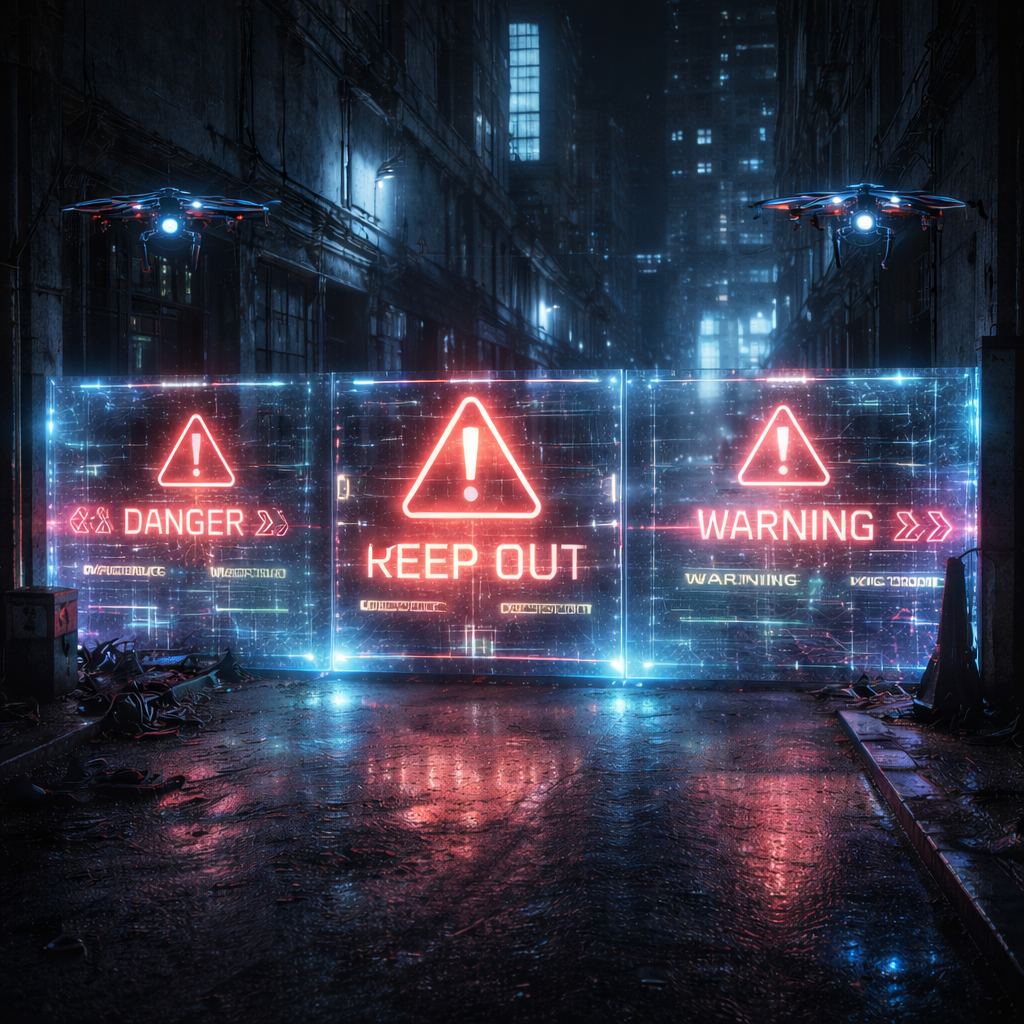
Cyberpunk worlds are built through what can be seen, tracked, and recorded. These cyberpunk picture prompts anchor writers in visual clues — screens, signage, surveillance, and infrastructure — encouraging descriptive writing that explores power, identity, and control rather than surface aesthetics alone.
Go Deeper into Cyberpunk Writing
If you want to push these cyberpunk writing prompts further, focus less on spectacle and more on systems, consequences, and who benefits from the technology in your world. Cyberpunk works best when innovation feels useful, invasive, and difficult to escape — not just futuristic or stylish.
◆ Rewrite a prompt by removing the advanced technology and focusing purely on power imbalance, surveillance, or control — then reintroduce the tech as the mechanism that enforces it.
◆ Let technology shape behaviour: choose one system (implants, social credit, algorithms, surveillance) and explore how it changes how people speak, move, or make choices.
◆ Experiment with restricted perspectives — a character who can’t access data, a system that blocks information, or a narrator whose memories have been edited or filtered.
◆ Rewrite a scene twice: once from the moment a system activates or updates, and once from the quiet aftermath, showing what has changed — and what hasn’t.
Want to Explore a World Where Technology Has Become a Luxury?
Cyberpunk often asks what happens when extraordinary technology doesn't change life equally. Corporations gain enormous power, access becomes something that can be bought, and technologies capable of transforming humanity become another product reserved for those who can afford them.
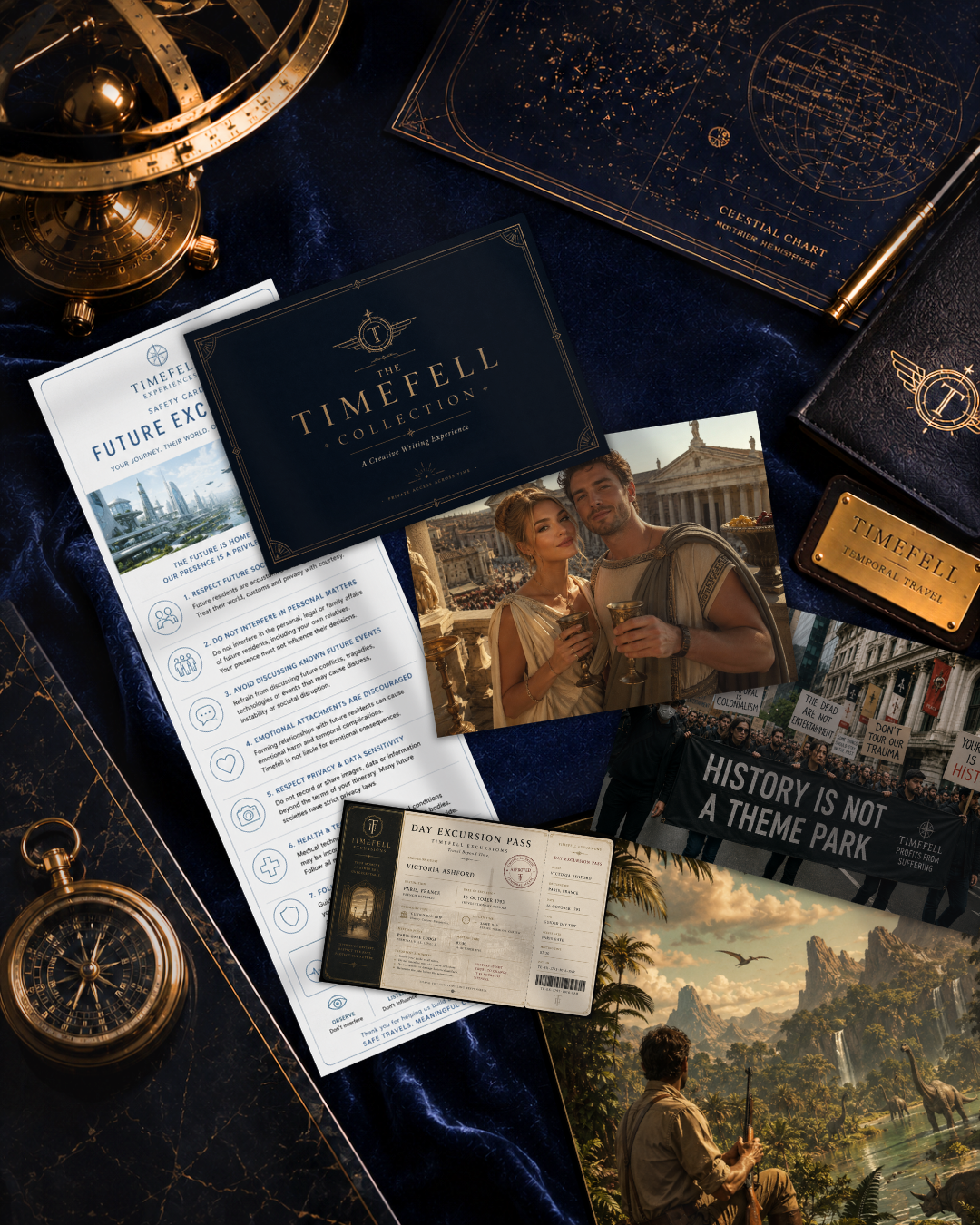
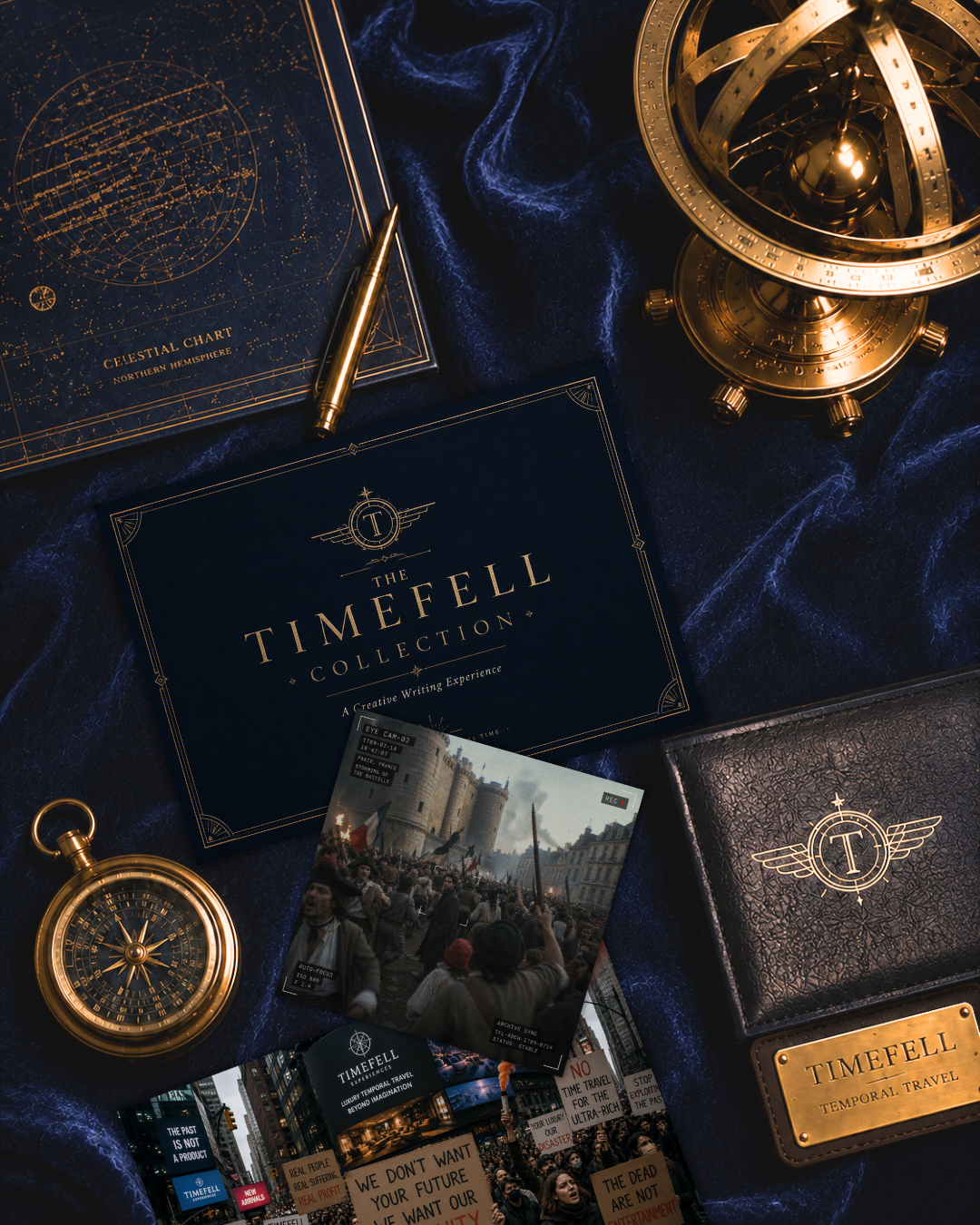
The Timefell Collection explores those ideas through a different kind of technology: time travel.
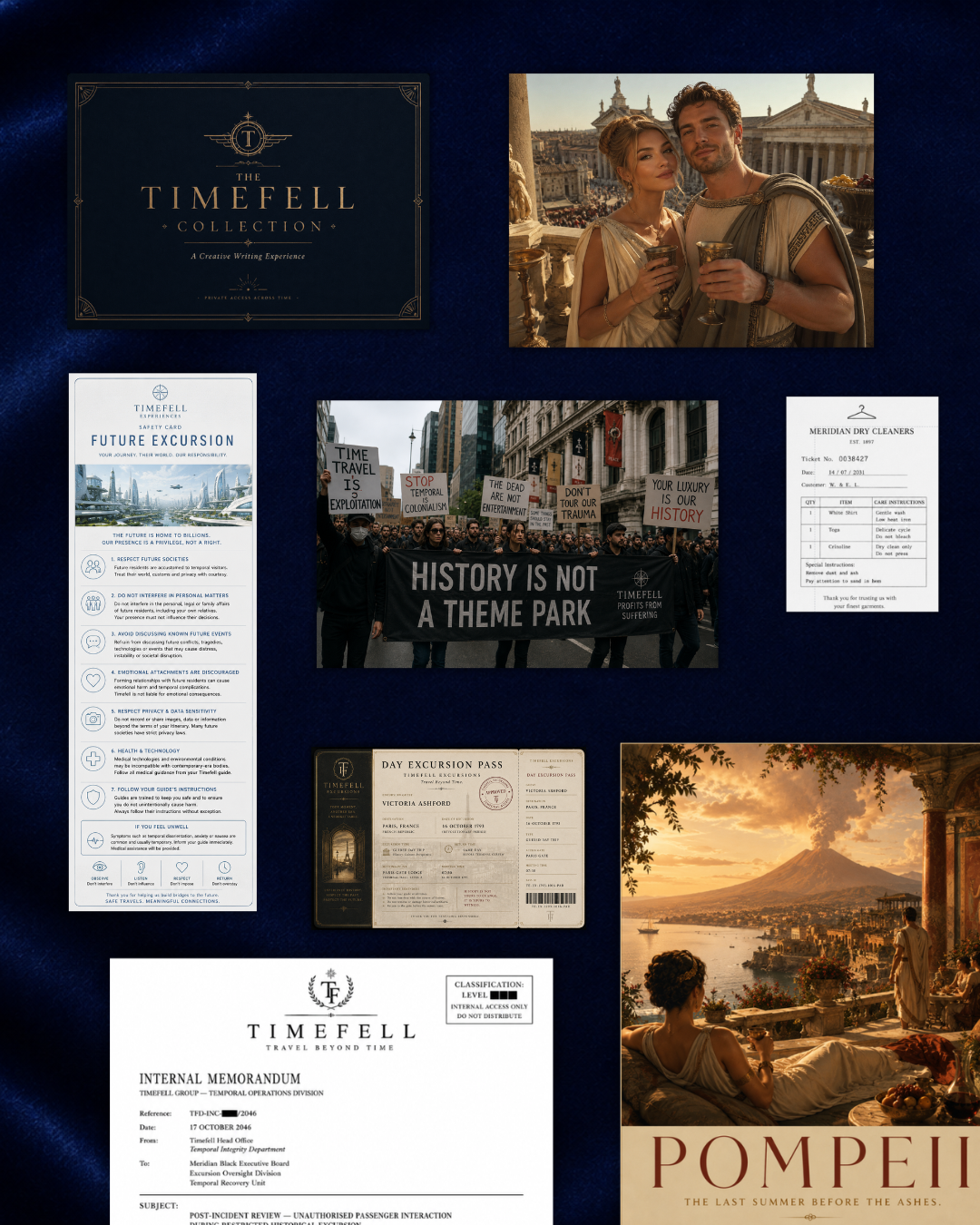
Time travel became public in 2020.
By 2046, it had become a business.
Ancient cities welcome paying visitors. Dinosaurs roam protected reserves. Luxury cruises travel between centuries. Future societies open their gates to carefully managed excursions beyond the present day. For those who can afford it, every era is a destination.
But not every story appears in the brochure.
The Timefell Collection is an immersive digital storyworld archive filled with travel posters, boarding passes, newspaper articles, diary entries, hotel records, reviews, private correspondence, handwritten notes and other artefacts left behind by travellers.
Some documents fit neatly together. Others raise uncomfortable questions.
Why have certain excursions disappeared from public records? What experiences are reserved for Meridian Black members? And what happens when access to history itself becomes something money can buy?
→ Explore The Timefell Collection
Final Thoughts
Cyberpunk fiction is about more than glowing signs and futuristic cities. At its heart, the genre examines control, identity, and survival in worlds where technology mediates every part of daily life. These stories ask difficult questions about privacy, autonomy, and resistance — often without offering clean solutions.
These 70 cyberpunk writing prompts for teens give young writers space to explore speculative futures through character-driven storytelling, ethical dilemmas, and system-focused worldbuilding. Whether used for short stories, creative warm-ups, or extended projects, the prompts are designed to support thoughtful, modern science fiction that feels unsettling precisely because it feels plausible.
If you’re looking for more futuristic ideas, explore the Sci-Fi Writing Hub or browse the Creative Writing Archive for a wider range of prompts and storytelling inspiration.
Choose Your Next Adventure