70 Sci-Fi Fairytale Writing Prompts: Magic, Technology & Reimagined Myths
Fairytales have always explored transformation, power, and consequence—but when combined with science fiction, these stories evolve into something even more unsettling and imaginative. Sci-fi fairytales take familiar narratives and reframe them within futuristic worlds: enchanted forests become artificial ecosystems, curses become coded viruses, and magic is reinterpreted through advanced technology. The result is a genre that feels both timeless and strikingly new.
Across literature and media, this fusion already exists in compelling ways. The Lunar Chronicles reimagines Cinderella, Little Red Riding Hood, and Rapunzel within a futuristic, cybernetic world where identity and humanity are constantly questioned. Ex Machina echoes Bluebeard-like themes of control, secrecy, and dangerous curiosity through artificial intelligence. Even Blade Runner reflects Pinocchio-like anxieties about what it means to be “real” in a world of manufactured beings. These stories show how fairytale structures—transformation, trials, moral consequence—translate seamlessly into speculative settings.
In sci-fi fairytales, the “magic” is often replaced with something more ambiguous: technology so advanced it feels mystical, or systems so powerful they reshape reality itself. Transformation may come through genetic engineering, resurrection through artificial intelligence, and curses through unseen algorithms. The familiar beats of fairytales remain—but their meaning becomes darker, more complex, and more uncertain.
This collection of 70 Sci-Fi Fairytale Writing Prompts is designed as a complete creative toolkit, combining plot hooks, title ideas, opening lines, closing lines, character ideas, setting prompts, and cinematic visual inspiration. These prompts draw on classic fairytales while pushing them into futuristic, speculative worlds shaped by power, identity, and consequence.
If you would like to explore more genre crossovers and imaginative storytelling, you can browse the Sci-Fi Writing Hub, the Fairytale and Folklore Hub, or explore the Creative Writing Archive, where ideas continue to evolve across genres.
1. Plot Hooks
Sci-fi fairytales often begin with transformation, forbidden knowledge, or a deal that comes at a cost.
Write about a Cinderella figure whose “glass slipper” is a biometric key that only fits her DNA.
Write about a Sleeping Beauty placed in cryogenic sleep, waiting for a future that may never come.
Write about a Little Red Riding Hood navigating a forest that is actually a sentient AI surveillance system.
Write about a character who trades years of their life in exchange for advanced technological power.
Write about a kingdom that maintains peace through a system that erases memories of conflict.
Write about a “fairy godmother” who is actually a rogue AI altering probability.
Write about a prince searching for a lost princess across multiple simulated realities.
Write about a girl who discovers her reflection is a separate, evolving consciousness.
Write about a tower that is not physical, but a digital prison no one can escape.
Write about a cursed object that upgrades itself every time it is used—but at a cost.
2. Title Ideas
Sci-fi fairytale titles often blend wonder with unease.
The Algorithm of Glass
A Kingdom Written in Code
The Girl Who Outlived the Stars
The Tower Without Walls
Synthetic Magic
The Prince of Forgotten Worlds
The Curse That Learned
Where Fairytales End in Circuits
The Forest That Watches Back
A Story Rewritten in Light
3. Opening Lines
Strong openings should establish both familiarity and disruption.
The story wasn’t supposed to change—but it did.
They said magic didn’t exist anymore, only systems.
I knew the moment I touched the device that it had chosen me.
The tower didn’t look like a prison until you tried to leave.
Every fairytale begins the same way, but this one didn’t end that way.
The forest had been programmed to protect us—until it stopped recognising us.
I wasn’t meant to wake her yet.
The glass didn’t shatter—it adapted.
They told me the curse was irreversible. They were wrong.
The prince arrived exactly as predicted—but something was off.
4. Closing Lines
Endings often reflect transformation, consequence, or ambiguity.
The story changed—and so did we.
I don’t think we were ever meant to survive the ending.
The system reset, but it remembered me.
We broke the curse, but not without replacing it.
I became the thing the story warned about.
The kingdom was saved—but no one remembered how.
I chose the ending they never wrote.
The mirror finally showed me who I really was.
The story didn’t end—it evolved.
Some fairytales aren’t meant to be finished.
5. Character Ideas
Characters often exist between identity, transformation, and control.
A “princess” who is actually an artificially created being.
A scientist obsessed with recreating fairytale “magic” through code.
A character who realises they are part of a repeating narrative simulation.
A ruler who maintains control through predictive technology.
A rebel trying to break a system that rewrites people’s lives.
A character who begins to glitch, revealing their non-human nature.
A guide who appears in every version of the story across timelines.
A character trying to undo a transformation they once wished for.
A villain who believes they are fixing the flaws of the original story.
A character who refuses their “assigned role” within the narrative.
6. Setting Ideas
Settings should feel both enchanted and engineered.
A futuristic kingdom powered by a central artificial intelligence.
A forest made of shifting holographic projections.
A tower orbiting a distant planet, unreachable from below.
A city where people’s identities are constantly rewritten.
A simulation designed to replicate fairytales—but something goes wrong.
A frozen planet where time has been artificially paused.
A palace built entirely from reflective, adaptive materials.
A network of worlds connected by unstable portals.
A laboratory recreating mythical creatures through genetic engineering.
A hidden archive containing every version of every story ever told.
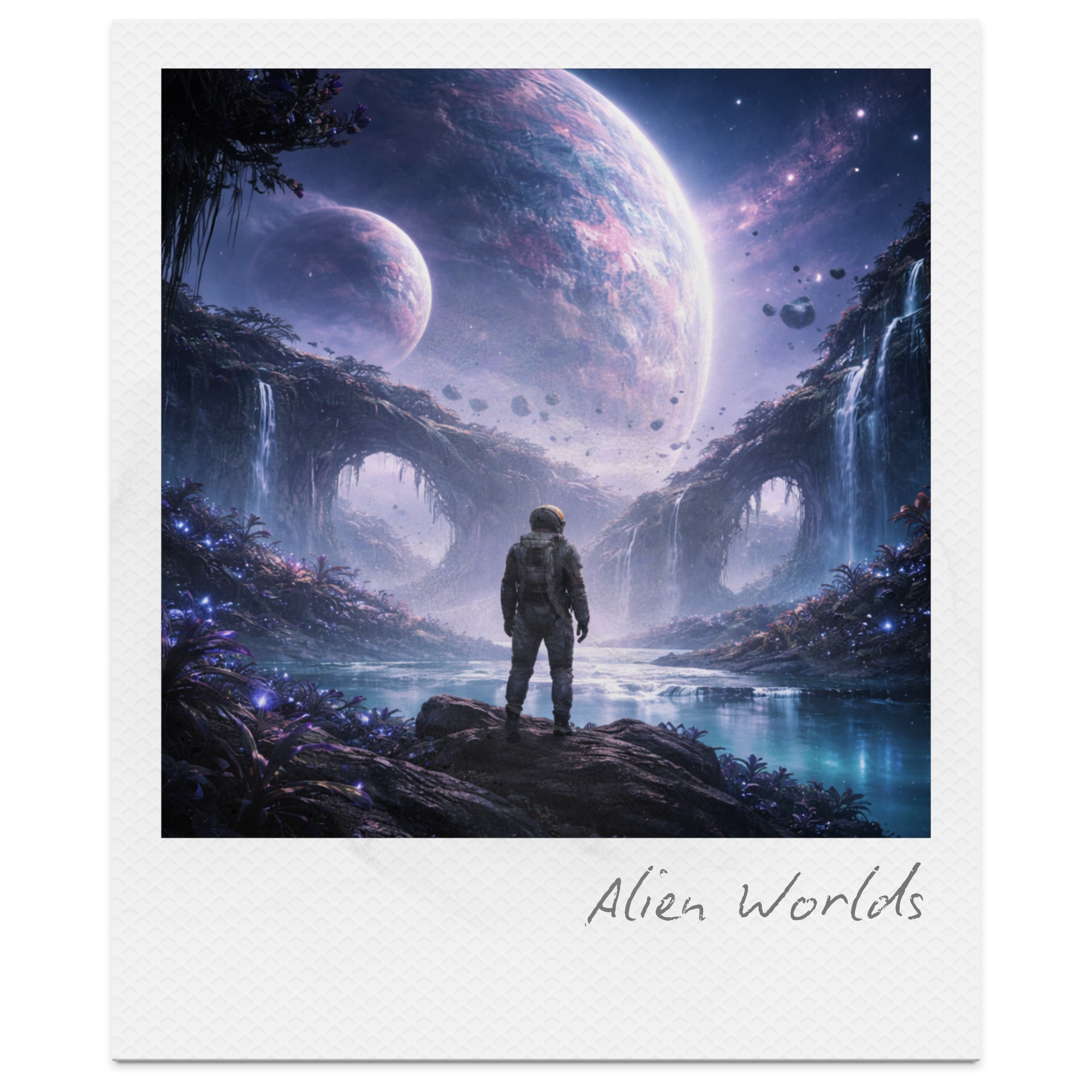
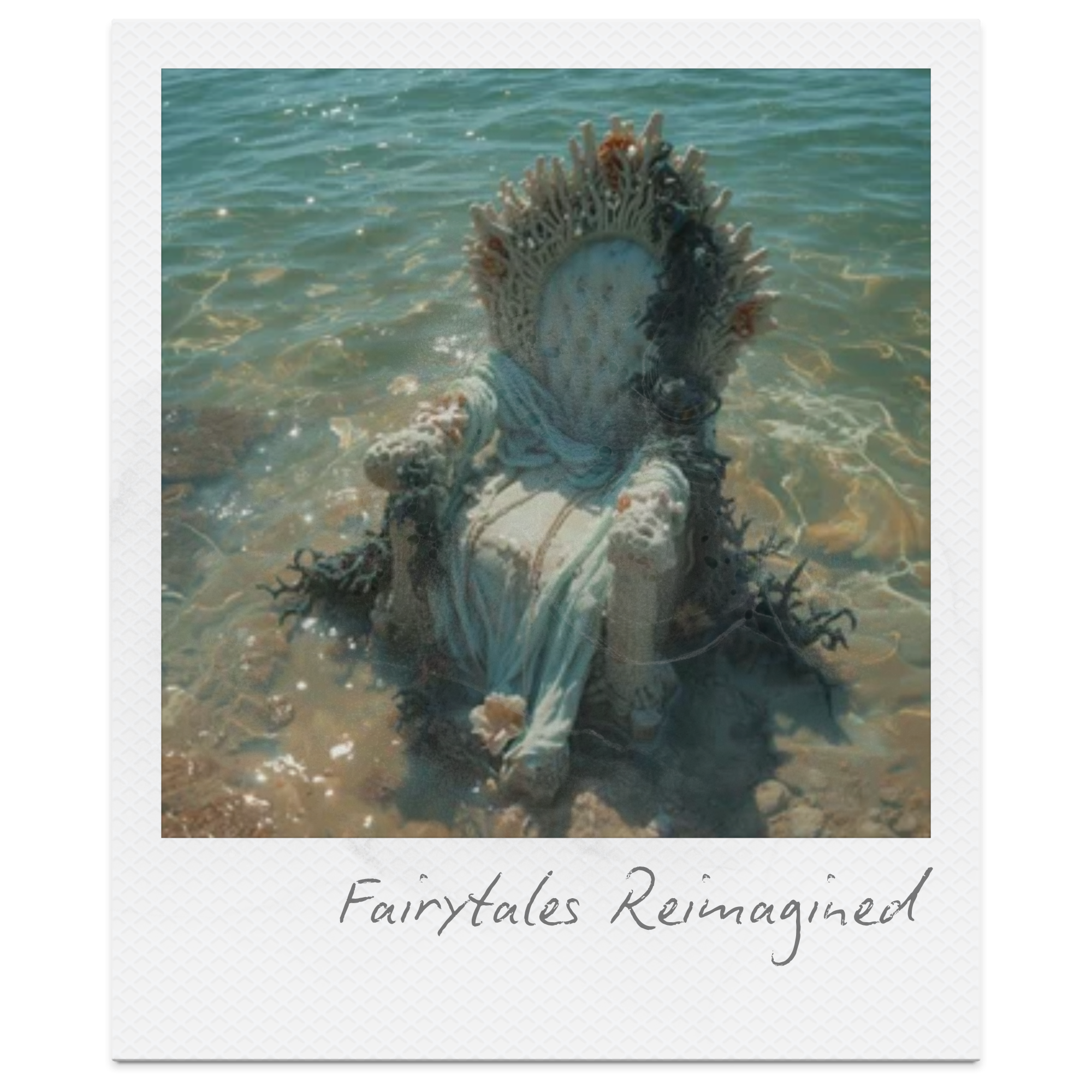
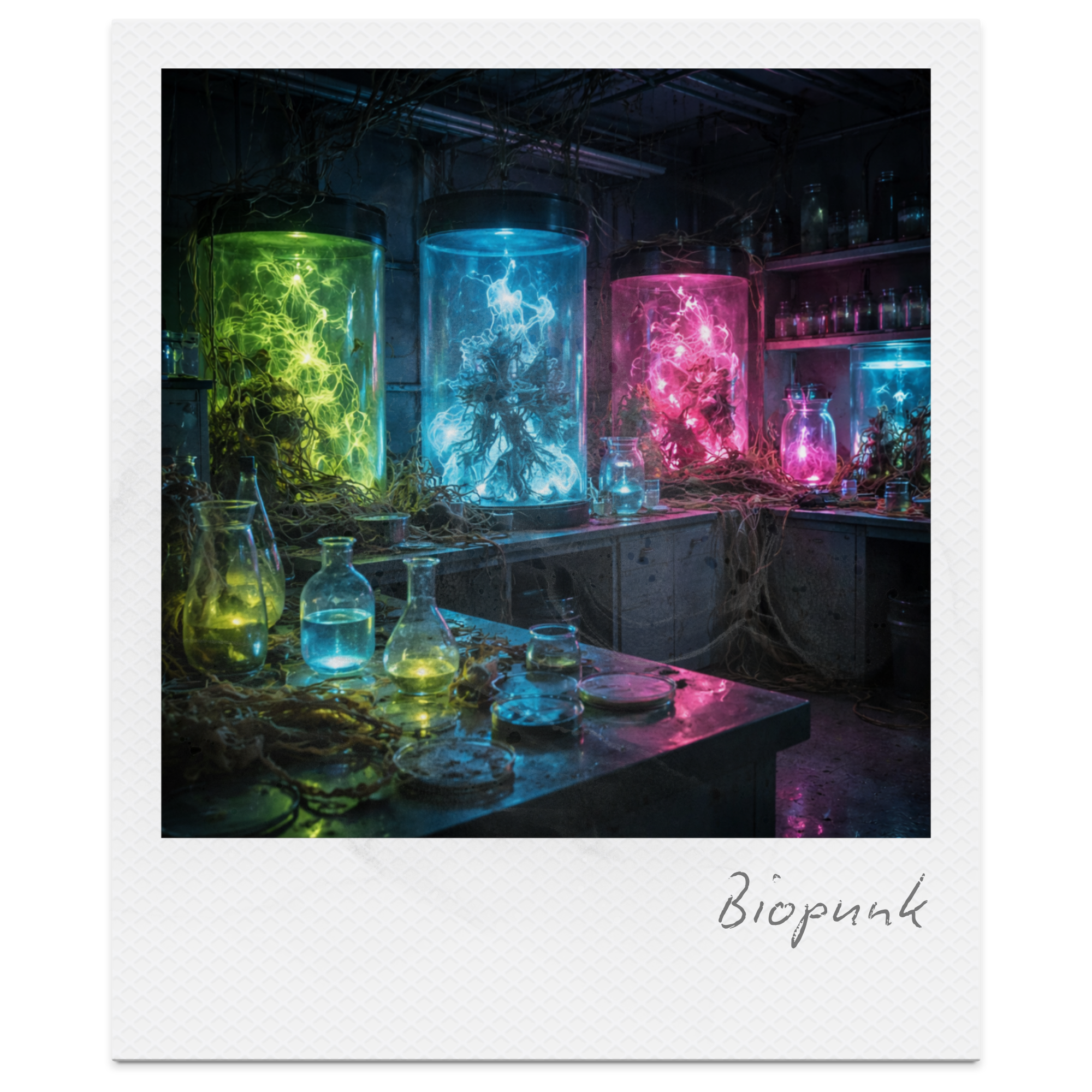
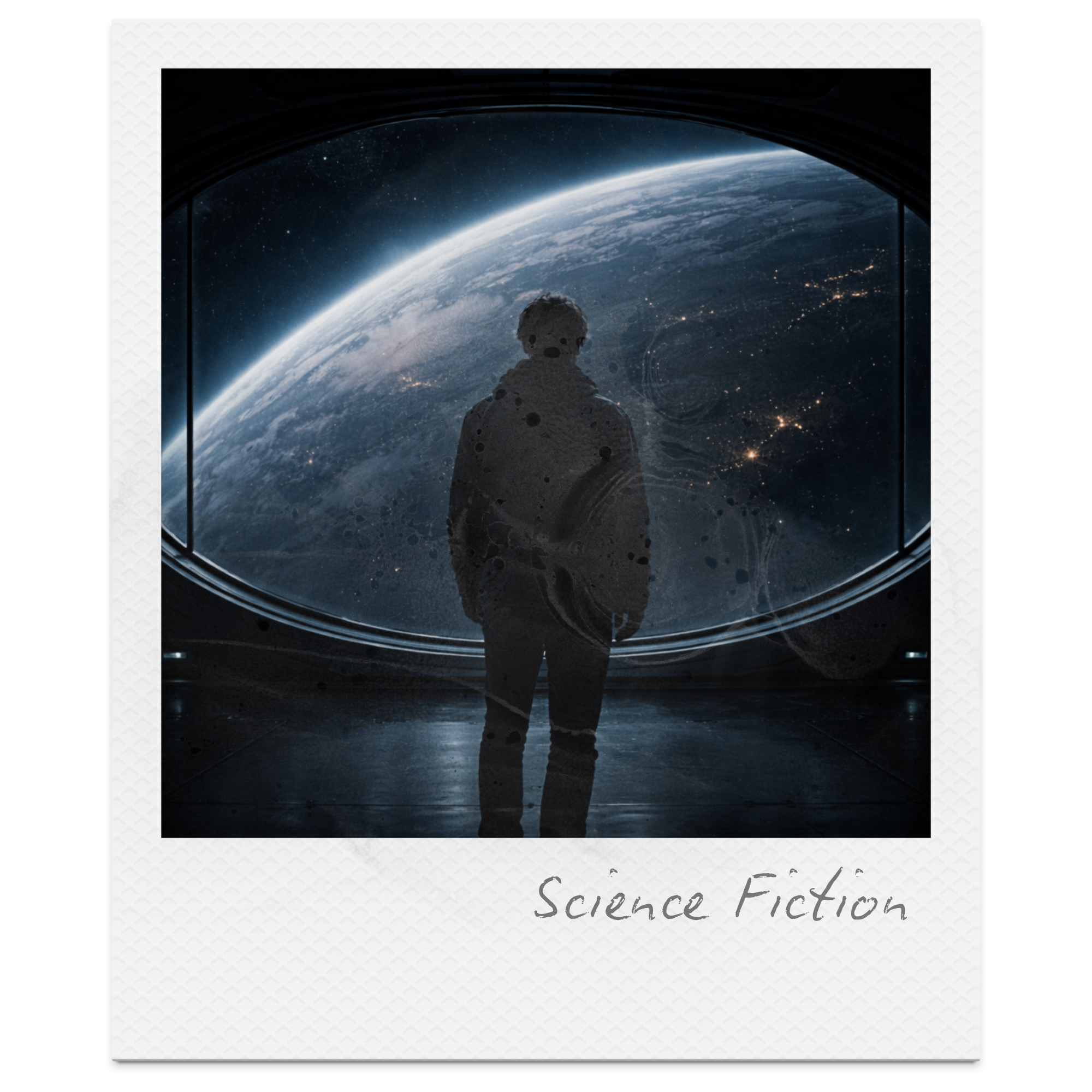
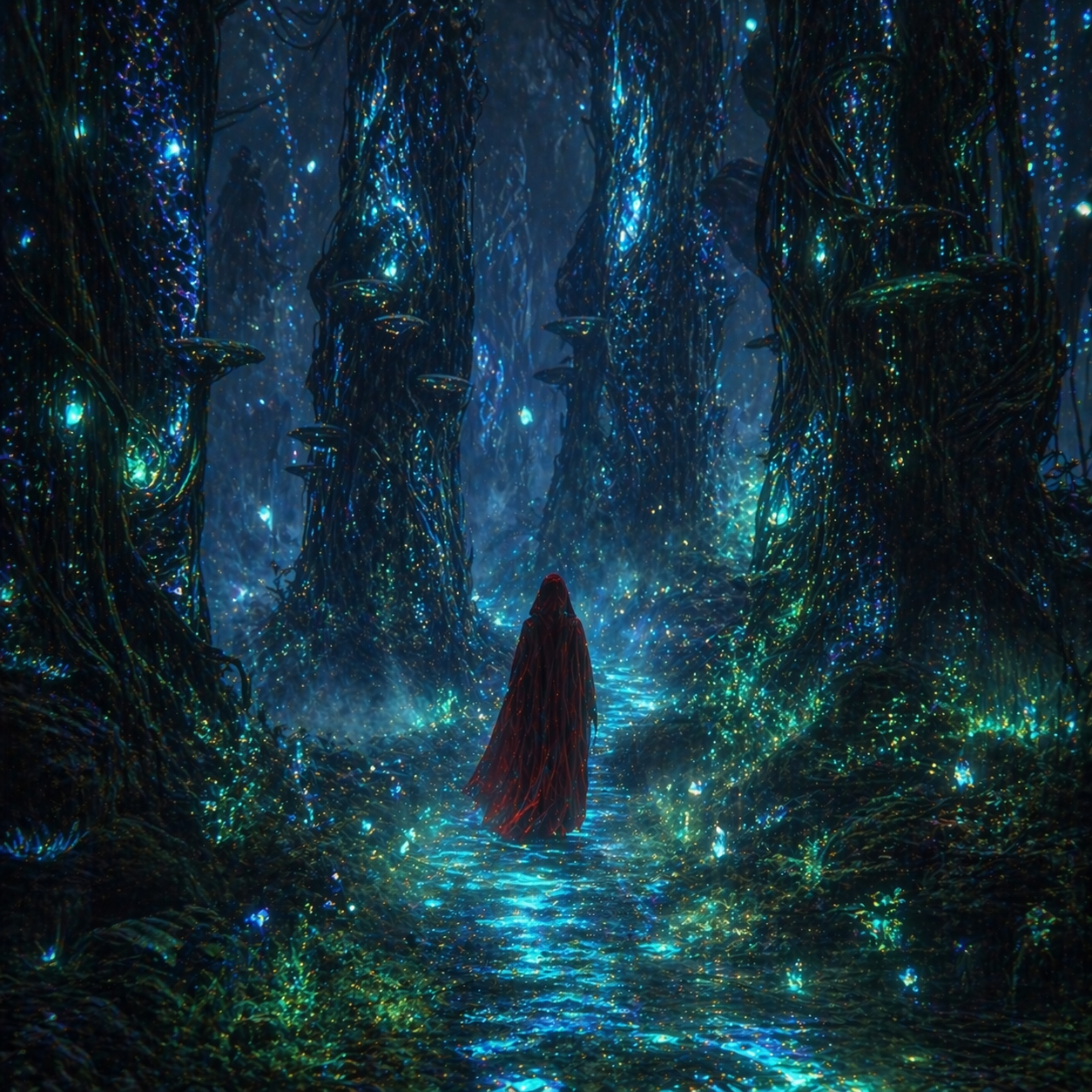
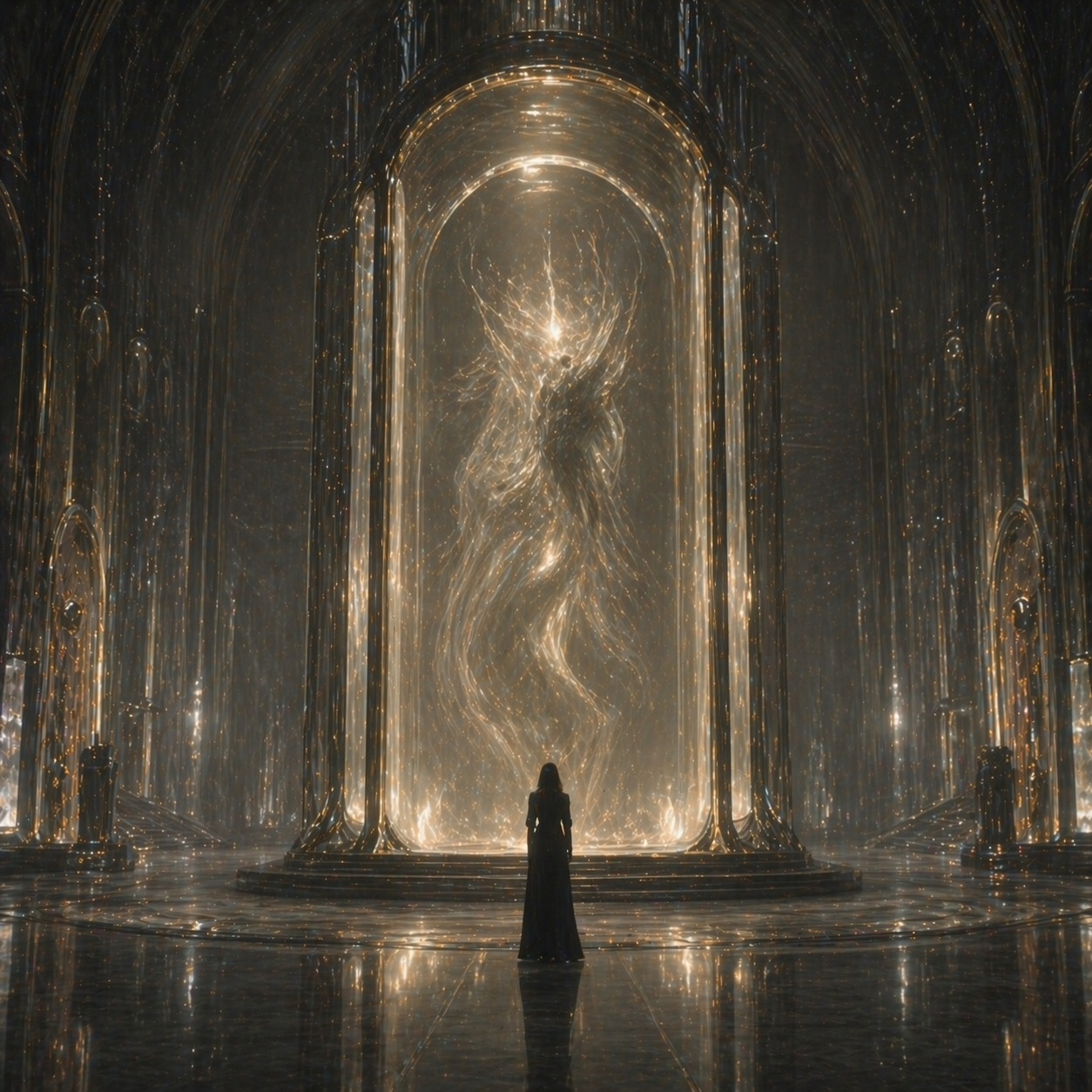
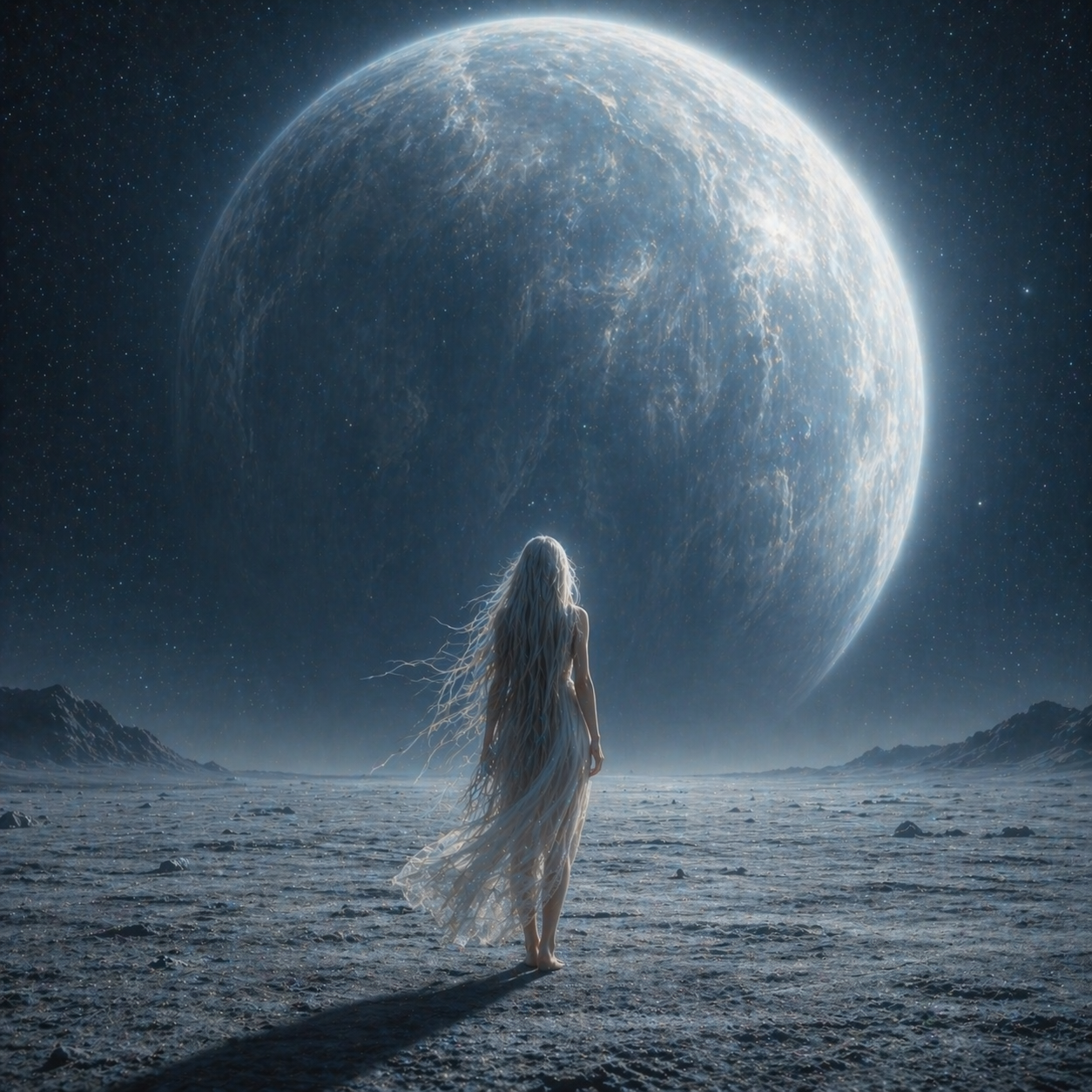
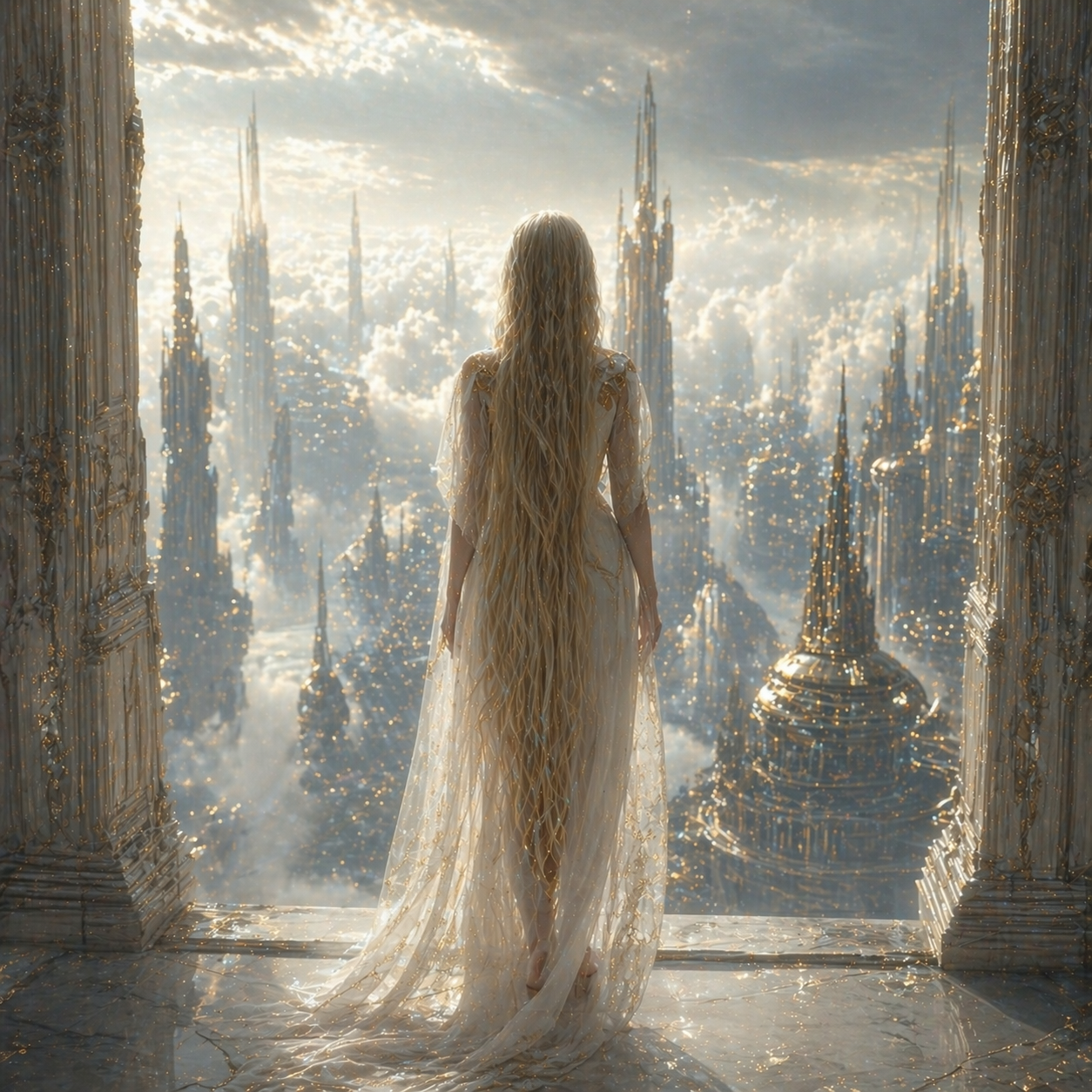
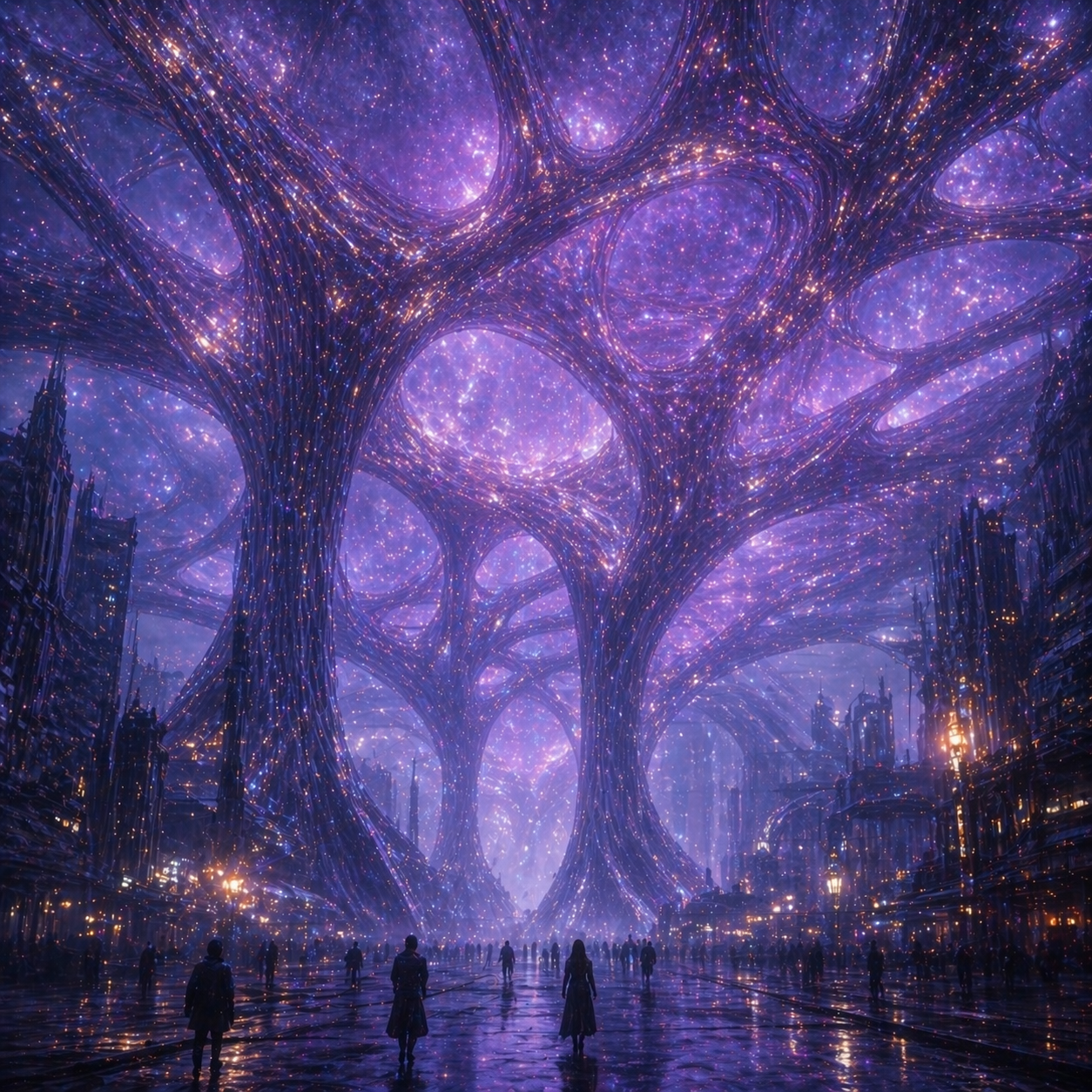
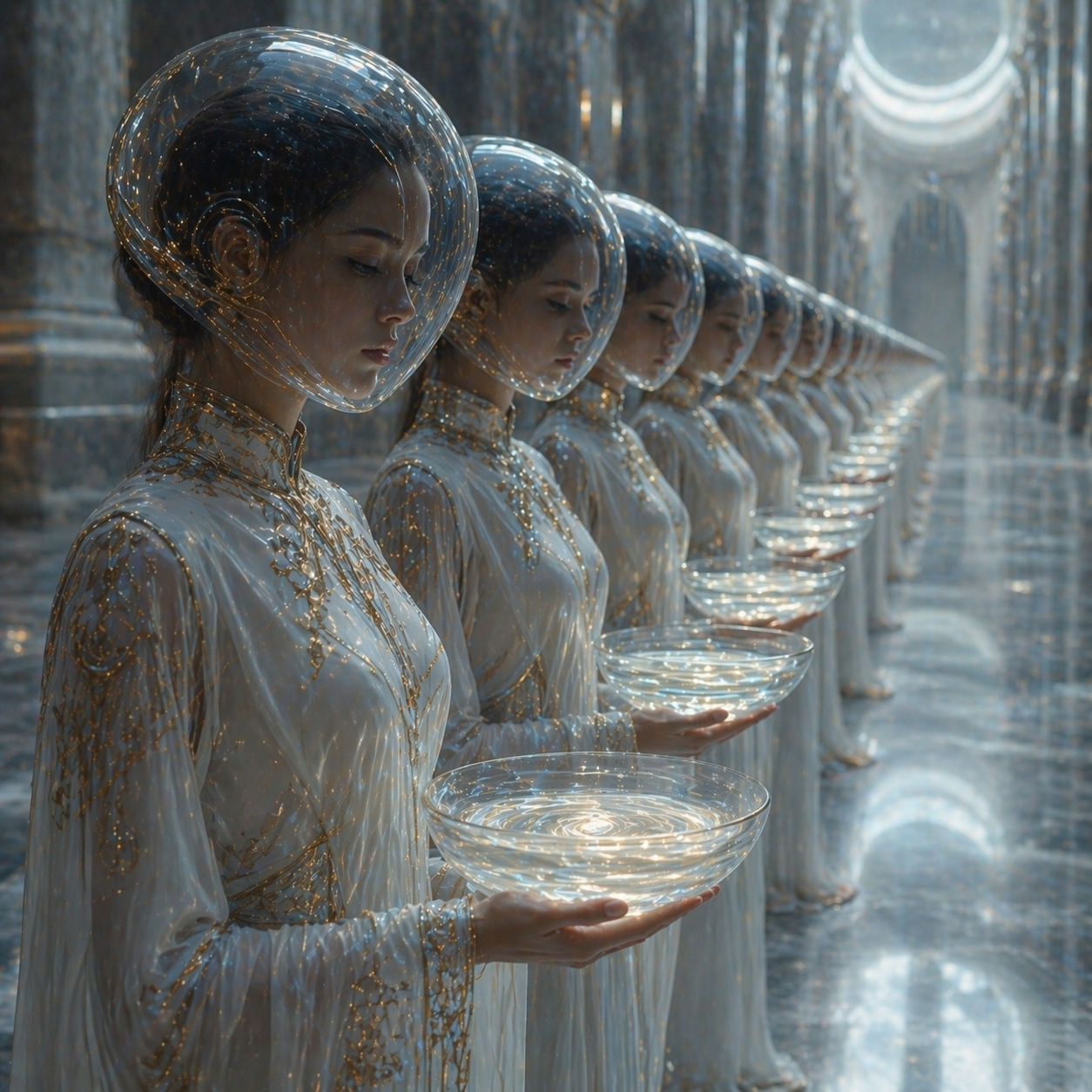
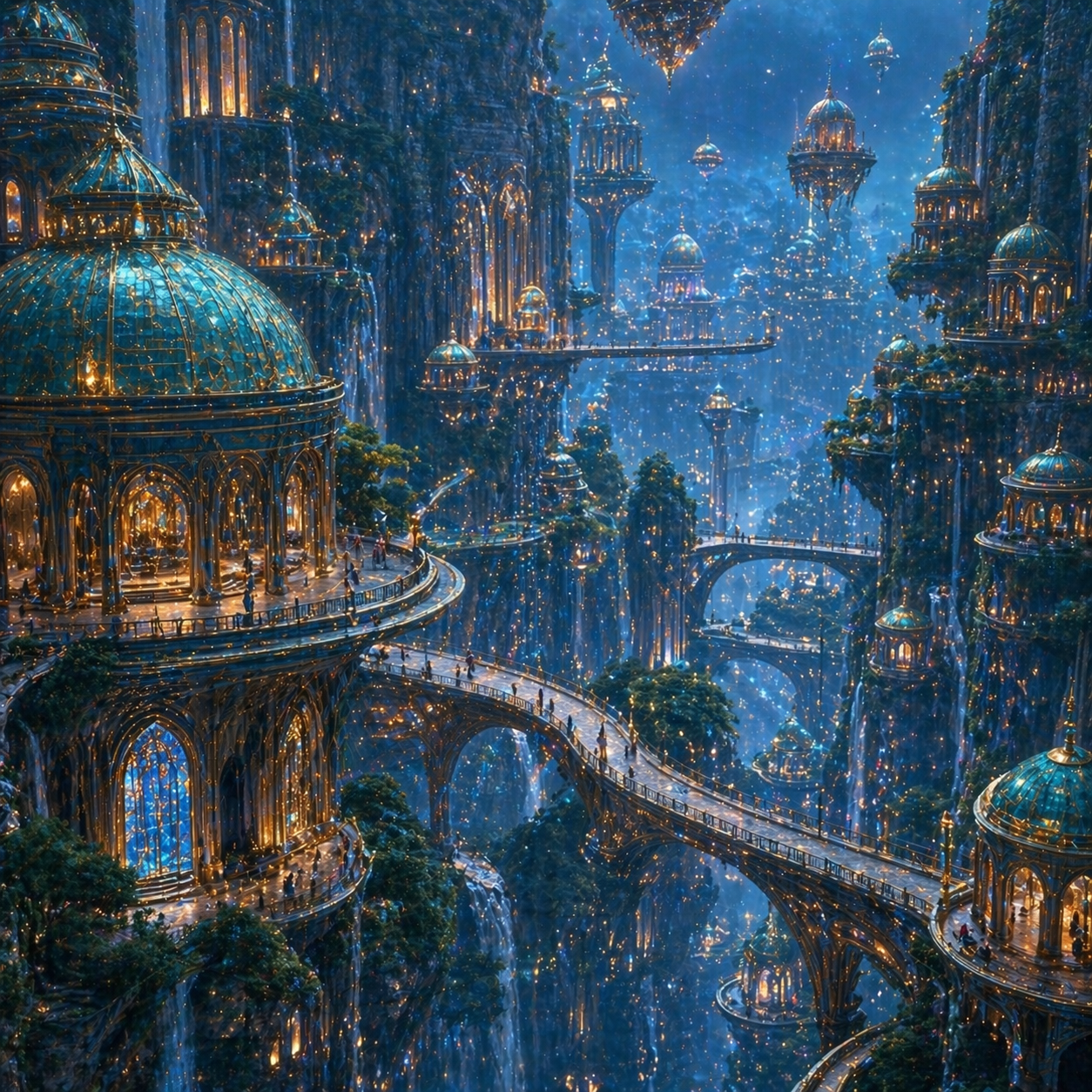
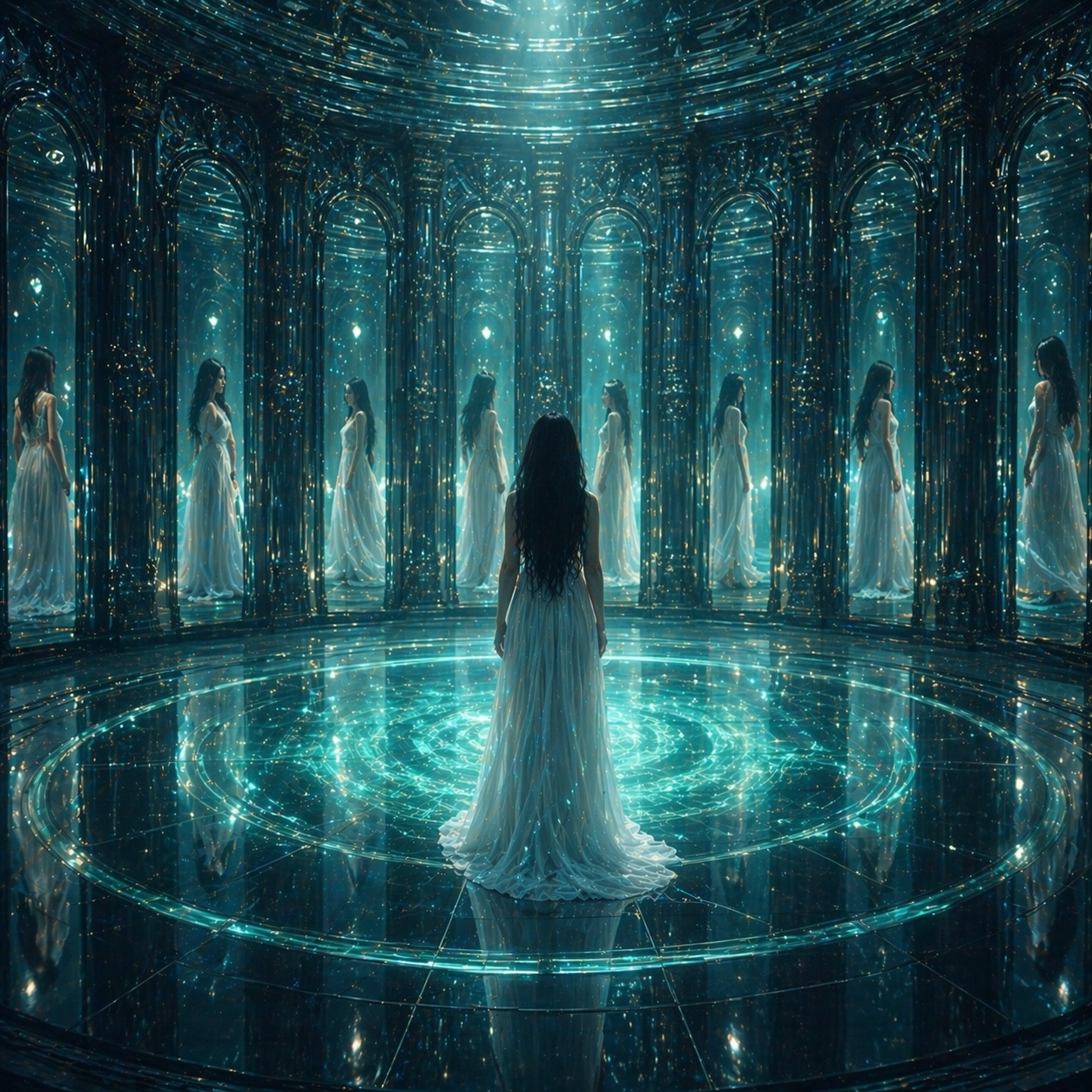
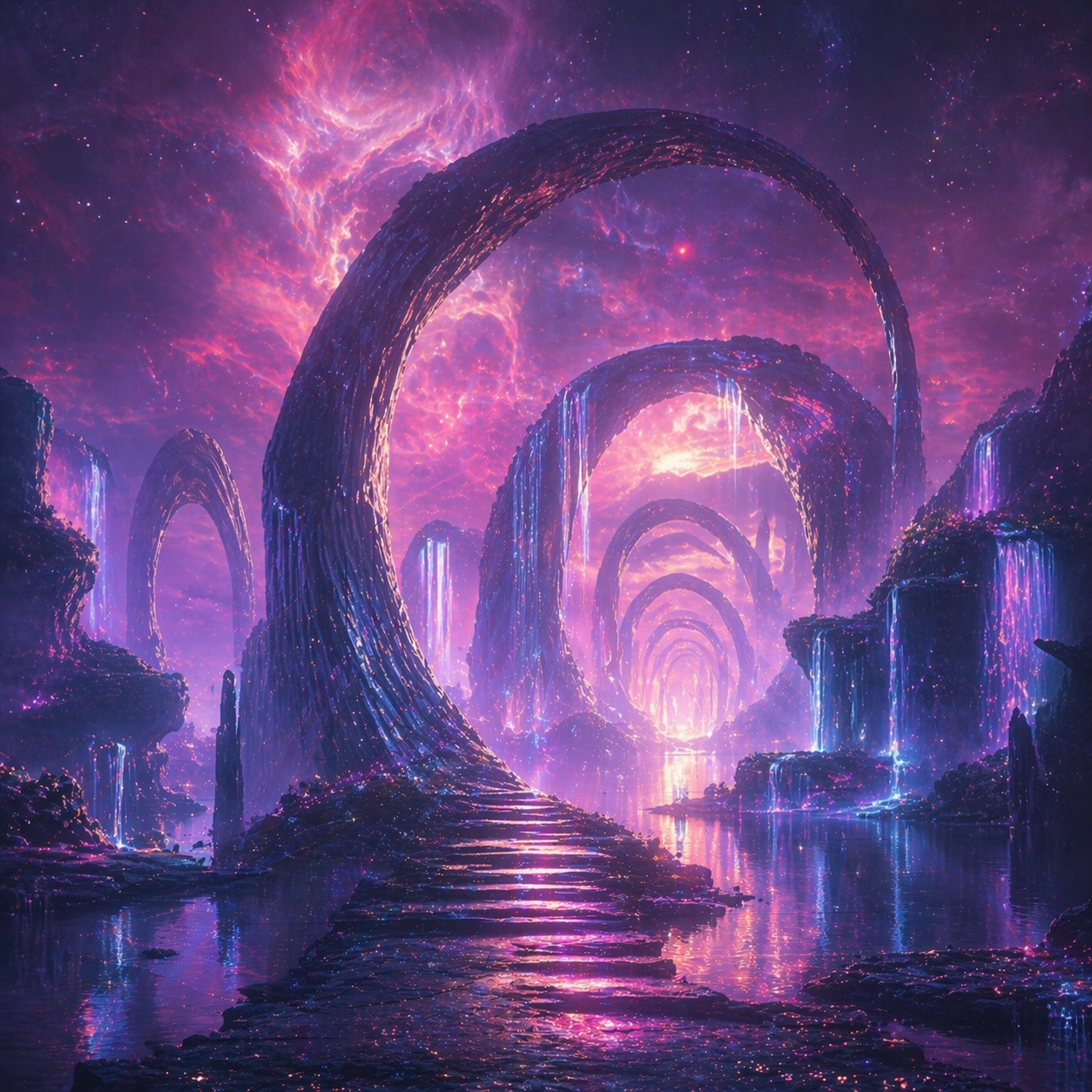
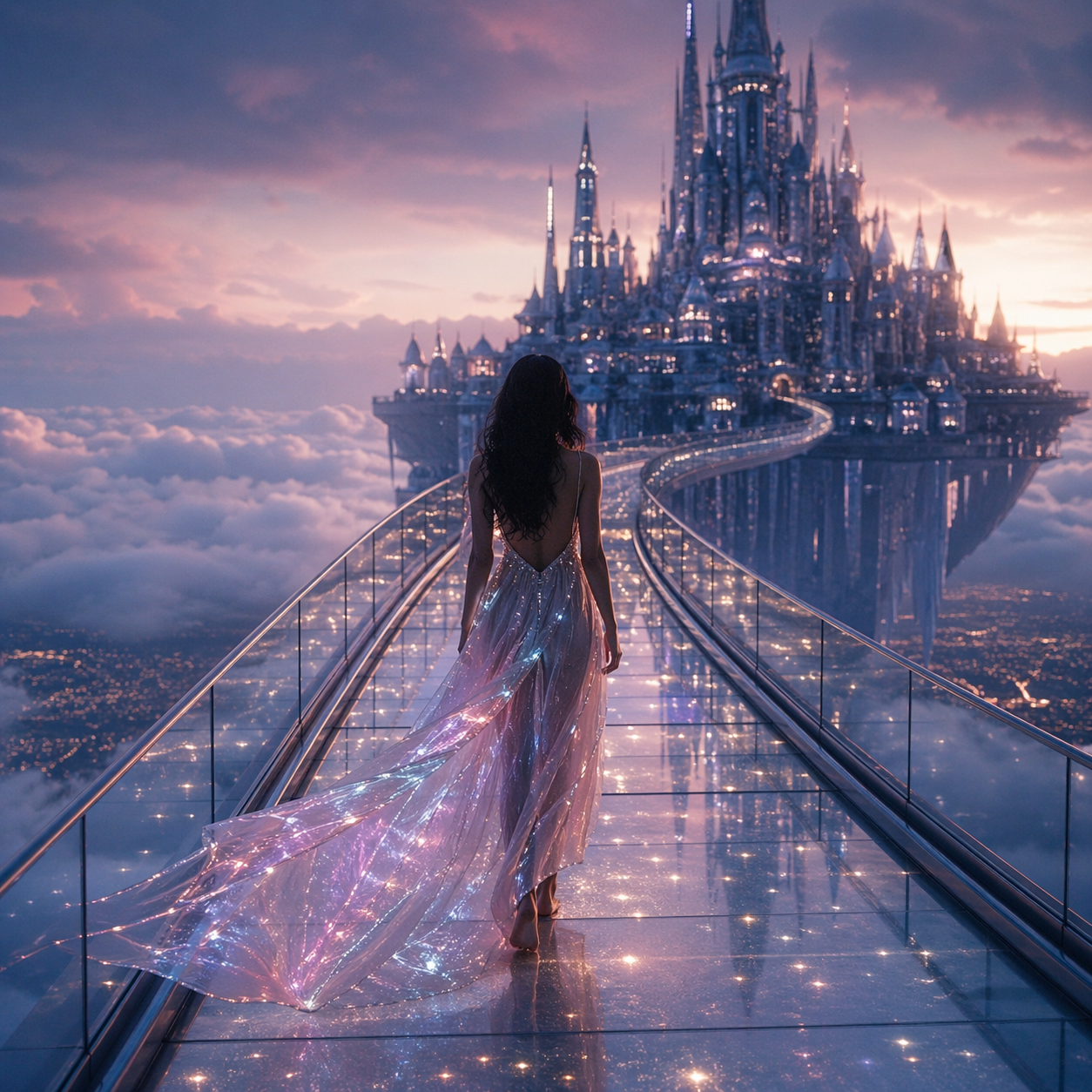
7. Picture Prompts
Visual prompts help merge fairytale imagery with sci-fi atmosphere.
Go Deeper into Sci-Fi Fairytale Writing
To develop these ideas further, focus on how traditional fairytale structures change in speculative settings.
◆ Rewrite a well-known fairytale using only futuristic elements.
◆ Explore how “magic” can be explained—or corrupted—by technology.
◆ Focus on transformation—what is gained, and what is lost?
◆ Consider how power operates in a world controlled by systems rather than fate.
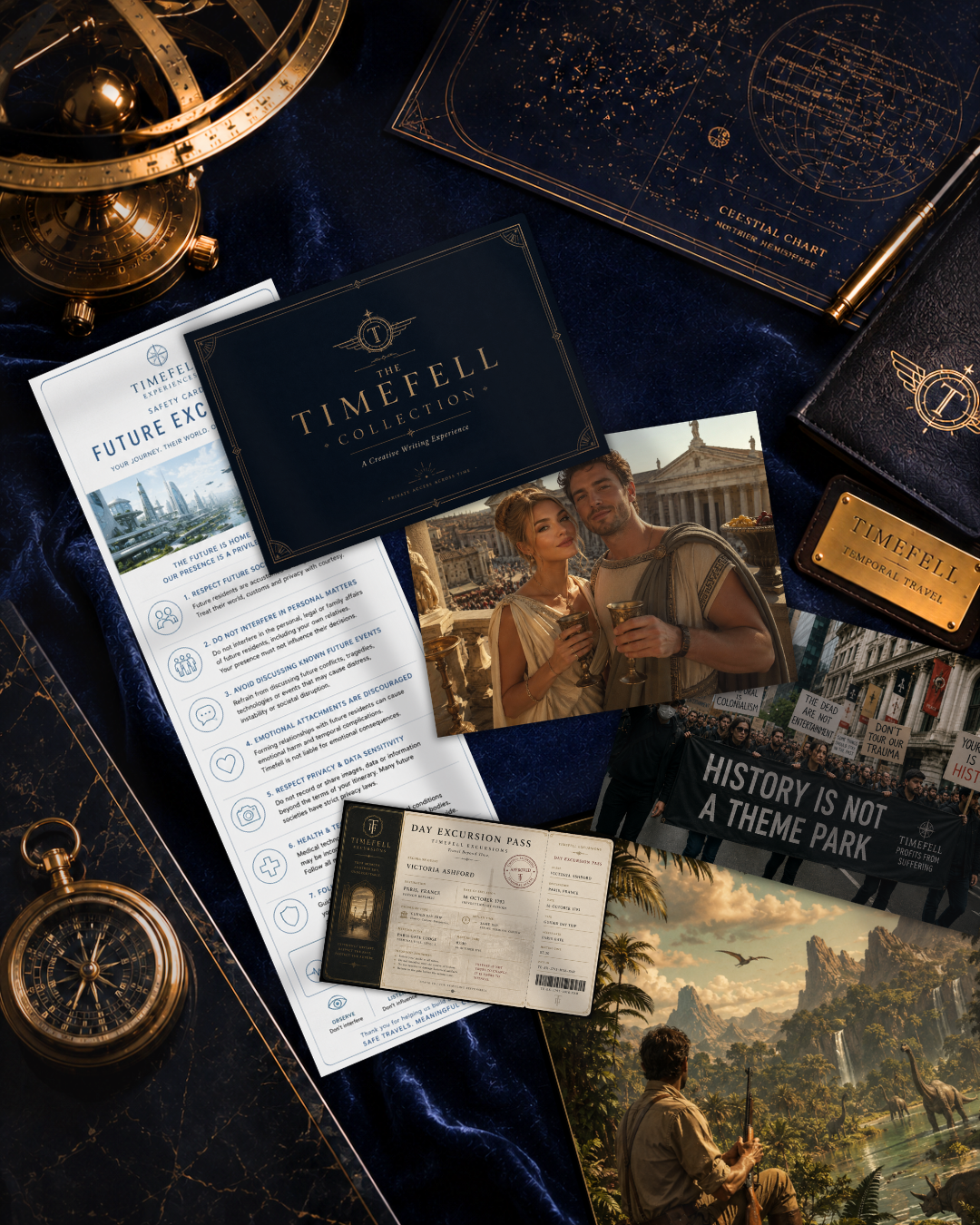
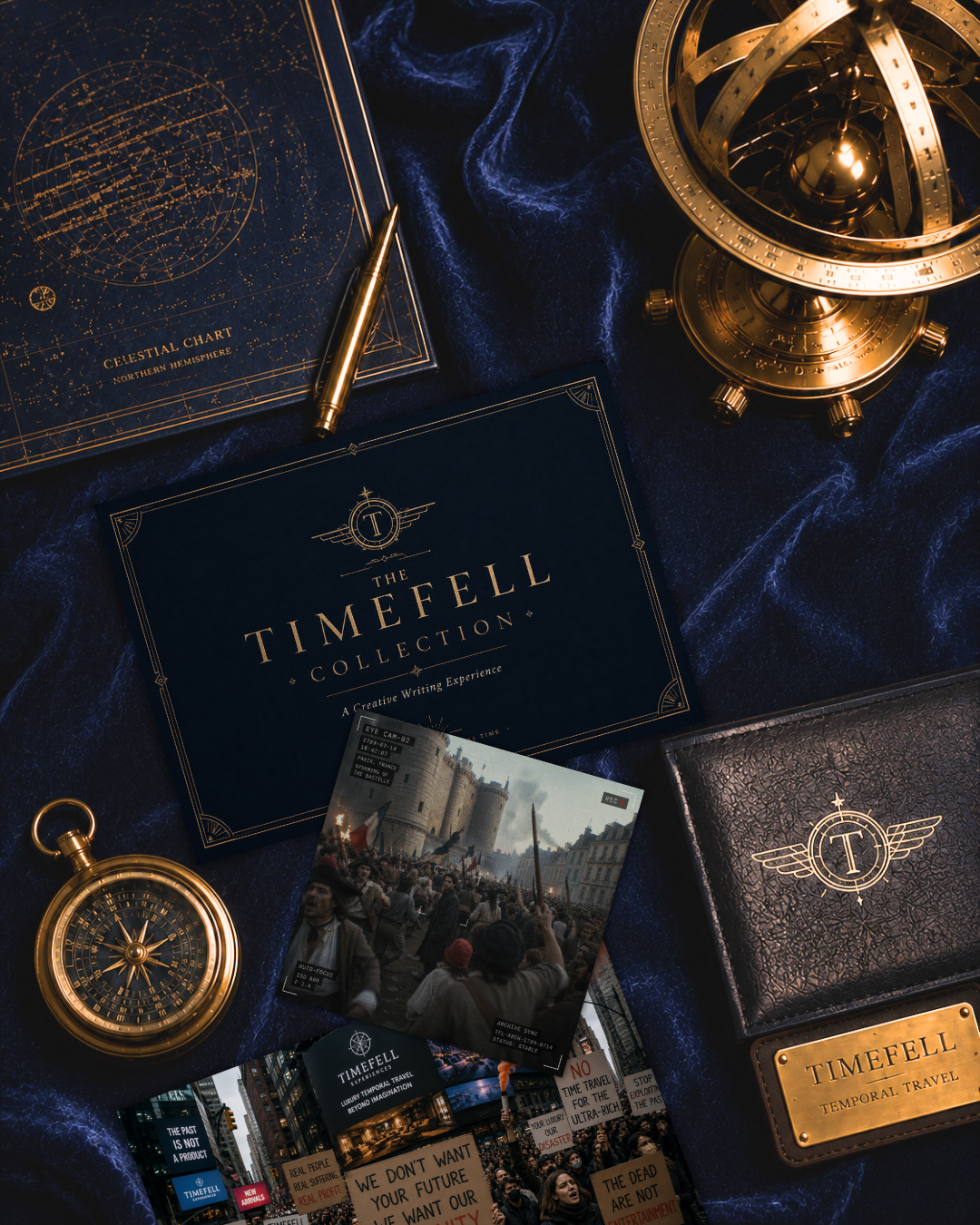
What If the Impossible Became Somewhere You Could Visit?
Fairytales have always carried their characters beyond the boundaries of the ordinary world: through enchanted forests, into hidden kingdoms and across thresholds where familiar rules no longer apply.
Science fiction simply gives us different ways to cross them.
In The Timefell Collection, that doorway is time travel.
Time travel became public in 2020.
By 2046, it had become a business.
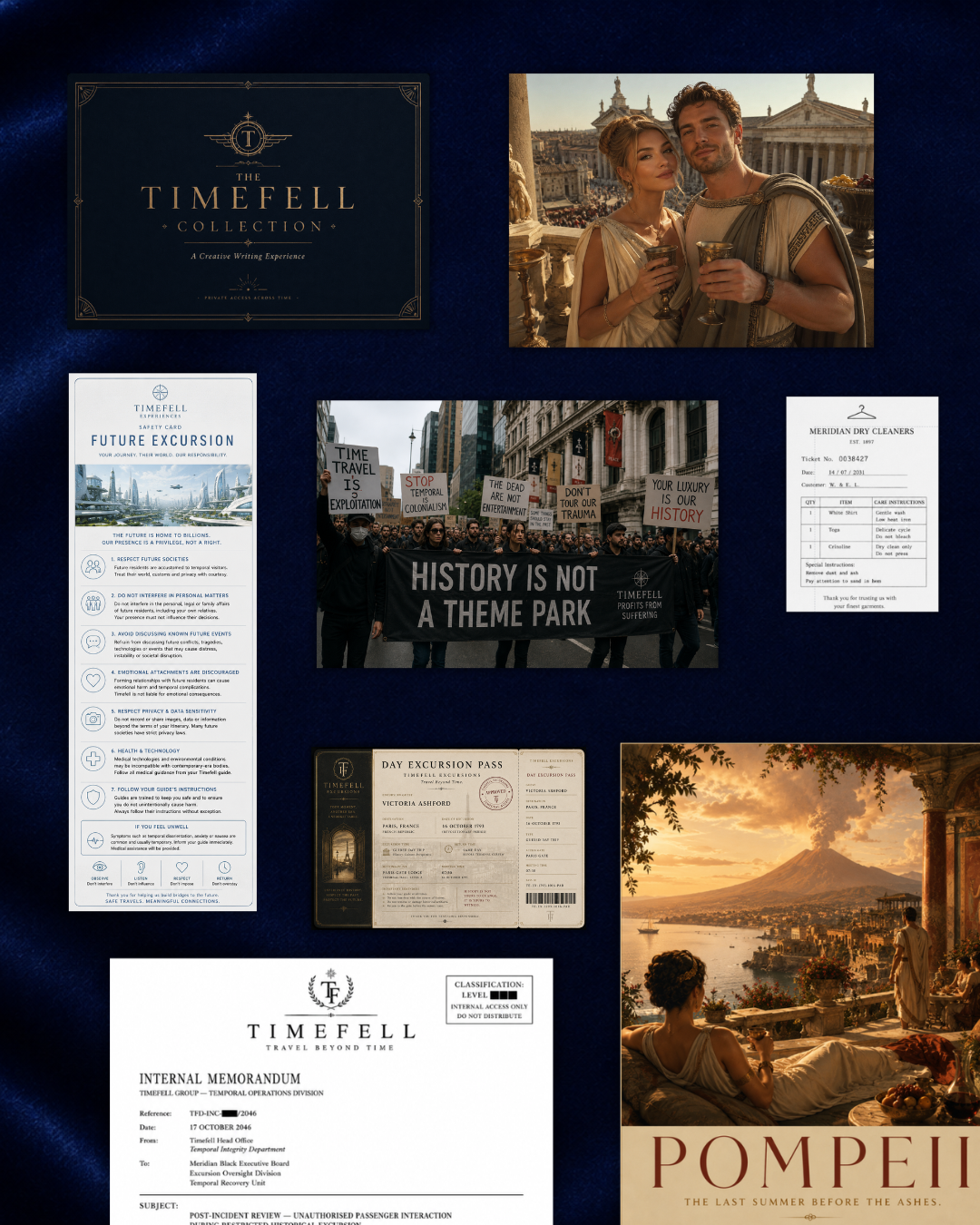
Ancient cities welcome paying visitors. Dinosaurs roam protected reserves. Luxury cruises travel between centuries. Future societies open their gates to carefully managed excursions beyond the present day. For those who can afford it, every era is a destination.
But just like the journeys found in old stories, travelling somewhere extraordinary doesn't mean you'll return unchanged.
The Timefell Collection is an immersive digital storyworld archive told through travel posters, boarding passes, newspaper articles, diary entries, hotel records, reviews, private correspondence, handwritten notes and other artefacts left behind by travellers.
Some documents fit neatly together.
Others suggest there are parts of the journey nobody included in the brochure.
Why have certain excursions disappeared from public records? What experiences are reserved for Meridian Black members? Why do some travellers become obsessed with returning?
And what happens when the impossible stops belonging to stories and becomes somewhere you can actually go?
Final Thoughts
Sci-fi fairytales offer a powerful way to reimagine familiar stories through the lens of technology, identity, and control. By blending myth with speculation, these narratives challenge traditional ideas of fate, transformation, and what it means to be human.
These 70 Sci-Fi Fairytale Writing Prompts invite writers to explore stories where magic is redefined, endings are uncertain, and every transformation comes with a cost.
For more genre-blending inspiration, explore the Sci-Fi Writing Hub, the Fairytale and Folklore Hub, or browse the Creative Writing Archive, where storytelling continues to evolve across worlds and possibilities.
Choose Your Next Adventure