70 Alien Worlds Writing Prompts: Strange Planets, Unknown Civilisations & Distant Realities
Alien worlds are some of the most expansive and imaginative settings in science fiction, where the boundaries of reality are stretched and redefined. These environments are not just different from Earth — they operate by entirely new rules, shaped by unfamiliar ecosystems, physics, cultures, and histories. In sci-fi storytelling, alien planets often act as mirrors, reflecting human fears, desires, and limitations through something entirely “other.”
Across literature, alien worlds have been used to explore everything from isolation and survival to power, colonisation, and identity. In Dune, the desert planet Arrakis becomes a harsh, political ecosystem where survival depends on adaptation. The War of the Worlds flips perspective, bringing alien invasion to Earth and forcing humanity into the role of the vulnerable. Meanwhile, The Left Hand of Darkness uses an alien world to challenge ideas of gender, culture, and human perception. These stories demonstrate how alien settings allow writers to explore complex ideas through distance and difference.
In alien world narratives, the setting itself becomes a central force. Strange landscapes, unfamiliar skies, and entirely new lifeforms create tension, wonder, and unpredictability. These worlds often feel both beautiful and dangerous, where discovery and risk are inseparable. The unknown is not just a backdrop — it actively shapes the story.
This collection of 70 Alien Worlds Writing Prompts is designed as a complete creative toolkit, combining plot hooks, title ideas, opening lines, closing lines, character ideas, setting prompts, and cinematic visual inspiration. These prompts explore themes of discovery, survival, otherness, and the limits of human understanding.
If you would like to explore more speculative storytelling, you can browse the Creative Writing Archive or explore the Sci-Fi Writing Hub, where futuristic ideas, advanced technology, and unknown worlds shape every story.
1. Plot Hooks
Alien world stories often begin with arrival — a moment where the familiar is left behind and the unknown begins.
Write about a crew landing on a planet where the environment reacts to their thoughts.
Write about a world where the sky changes colour depending on who is watching it.
Write about explorers who discover ruins that appear to have been built by humans — but millions of years ago.
Write about a planet where time moves differently depending on location.
Write about a character stranded on a world where the wildlife mimics human voices.
Write about a civilisation that welcomes humans — but refuses to let them leave.
Write about a mission to colonise a planet that begins to reject human life.
Write about a character who realises the planet itself is alive.
Write about a world where gravity shifts unpredictably, reshaping the landscape.
Write about a signal from another planet that appears to be responding to future events.
2. Title Ideas
Alien world titles often evoke scale, mystery, and the unknown.
Beneath an Unfamiliar Sky
The Planet That Watched Back
Where Gravity Breaks
The Last Map of Nowhere
A World Not Meant for Us
Echoes Beyond the Stars
The Silence Between Suns
What We Found There
The Shape of Another World
Where No Earth Exists
3. Opening Lines
Strong openings establish disorientation and wonder immediately.
The sky was the wrong colour, and it never stayed the same for long.
We knew it wasn’t safe the moment the ground moved beneath us.
No one had prepared us for how alive the planet would feel.
The map ended long before we reached the surface.
The first sign of life wasn’t what we expected.
It wasn’t the creatures that scared us — it was the silence between them.
We shouldn’t have been able to breathe here.
The stars looked different from the surface — closer, somehow.
Nothing about this world made sense, except the fact that we didn’t belong.
The signal stopped the moment we arrived.
4. Closing Lines
Endings often reinforce how alien worlds change those who encounter them.
We came to explore — but we were the ones being studied.
I don’t think I ever really left that world behind.
The planet is still out there, waiting for someone else to find it.
We survived — but not in the way we expected.
Some discoveries are not meant to be understood.
I realised too late that we had never been in control.
The stars look different now, even from Earth.
We didn’t bring anything back — except the truth.
That world didn’t change. We did.
I think it knew we were coming all along.
5. Character Ideas
Characters in alien world stories are often defined by curiosity, adaptability, and vulnerability.
A scientist determined to understand alien ecosystems.
A pilot stranded far from home.
A colonist questioning whether humanity should expand at all.
A translator trying to communicate with an entirely unknown species.
A survivor of a failed mission.
A character who feels more at home on the alien planet than on Earth.
A leader responsible for keeping a fragile colony alive.
A sceptic who refuses to believe the planet is dangerous.
An explorer obsessed with discovering new worlds.
A character who begins to physically change after exposure to the planet.
6. Setting Ideas
Alien settings should feel immersive, strange, and governed by unfamiliar rules.
A planet covered in bioluminescent forests that glow in shifting patterns.
A world where floating landmasses drift through the sky.
A desert planet where storms reveal hidden cities beneath the الرمال.
A frozen world with lifeforms hidden beneath the ice.
A planet where the oceans are made of something other than water.
A landscape shaped by constant seismic activity.
A world orbiting multiple suns, creating extreme day-night cycles.
A planet where plant life behaves like predators.
A civilisation built inside a massive living organism.
A world where the environment changes based on emotional energy.
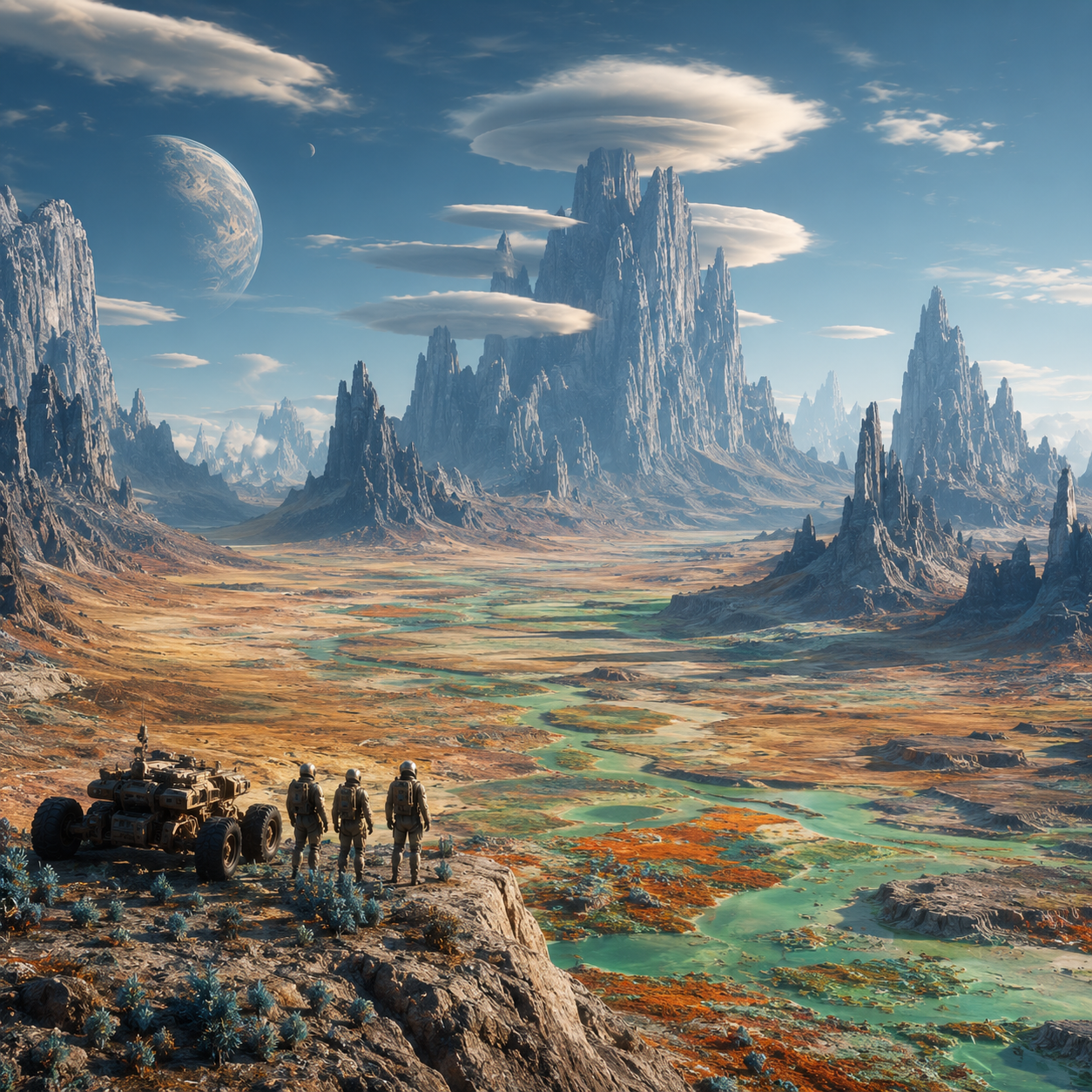
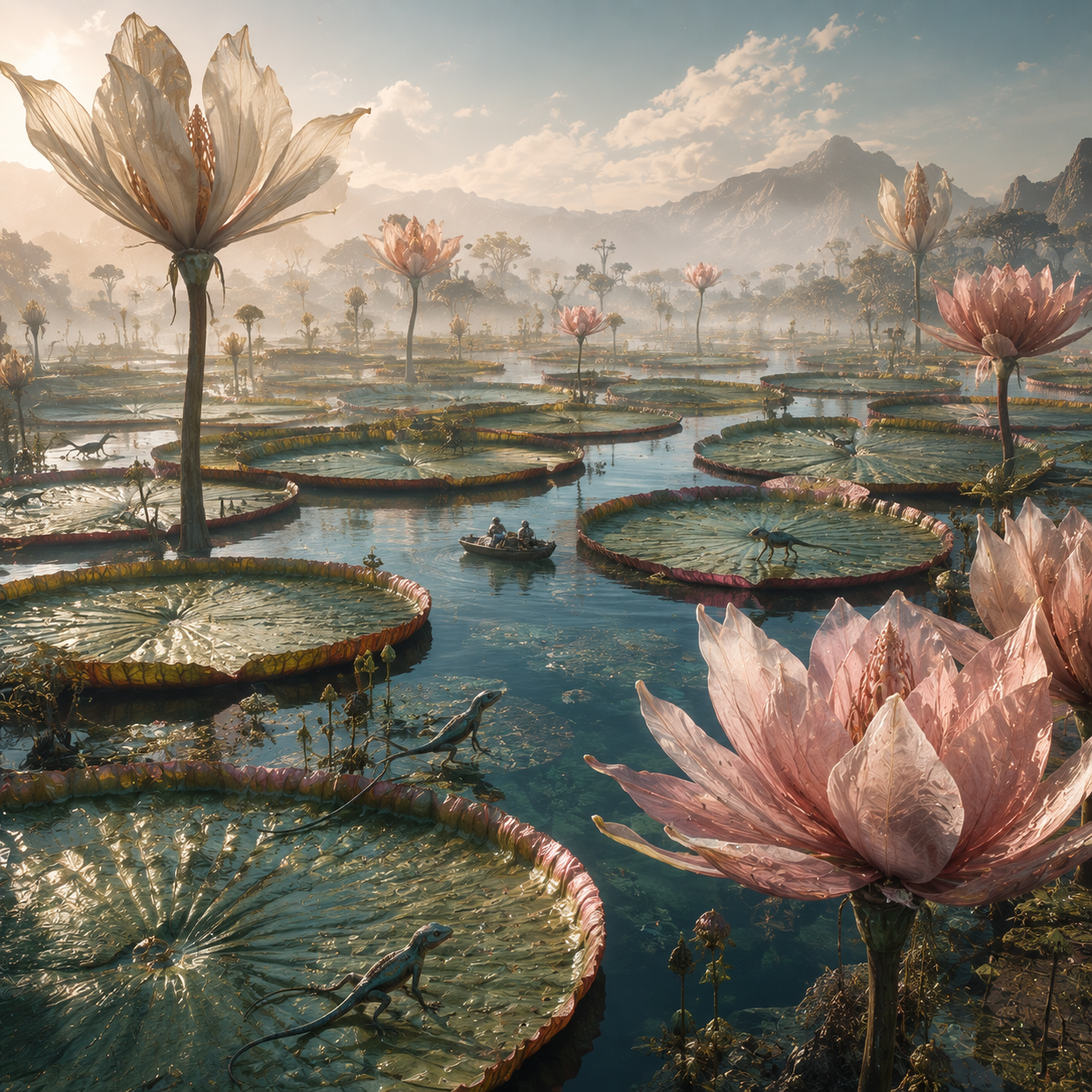
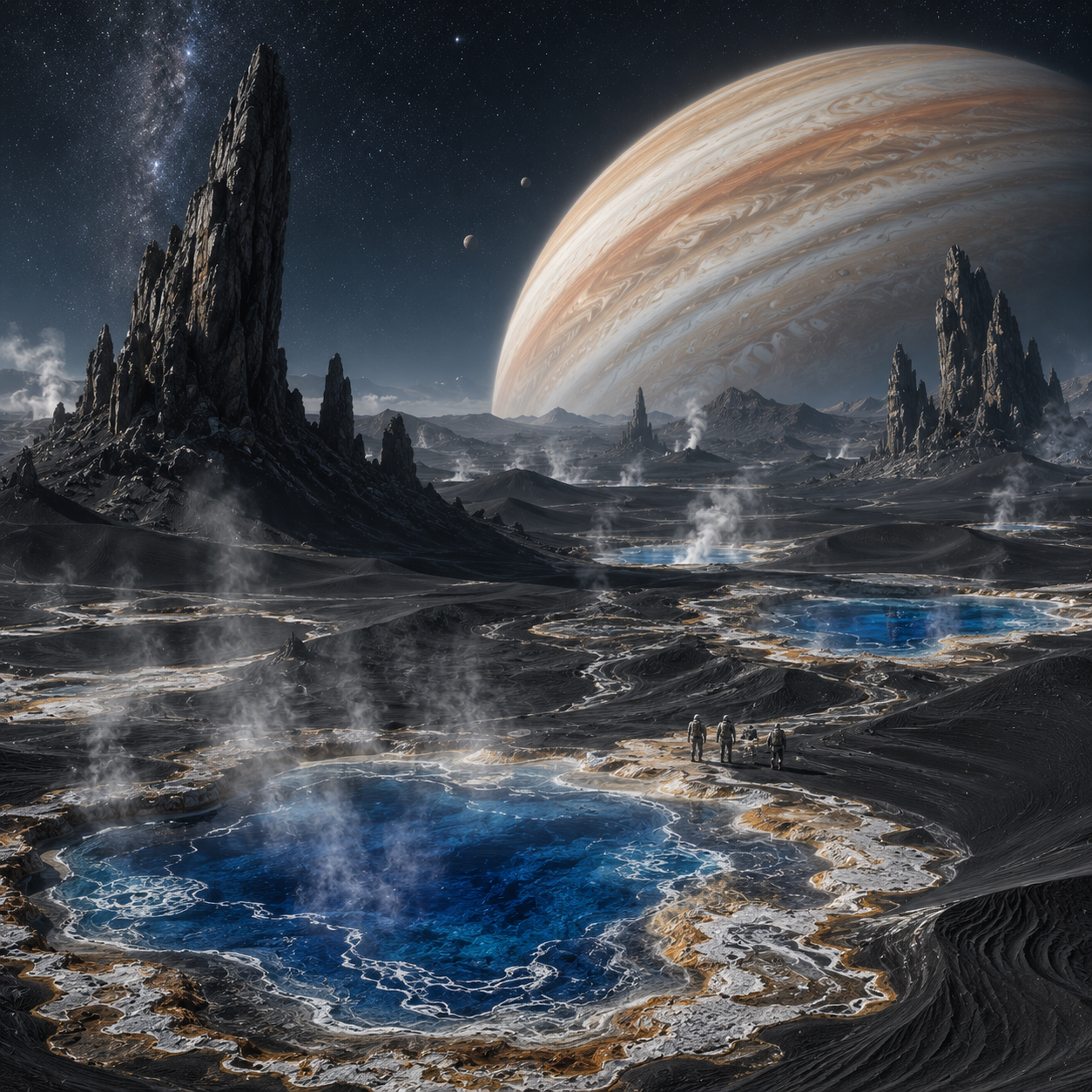
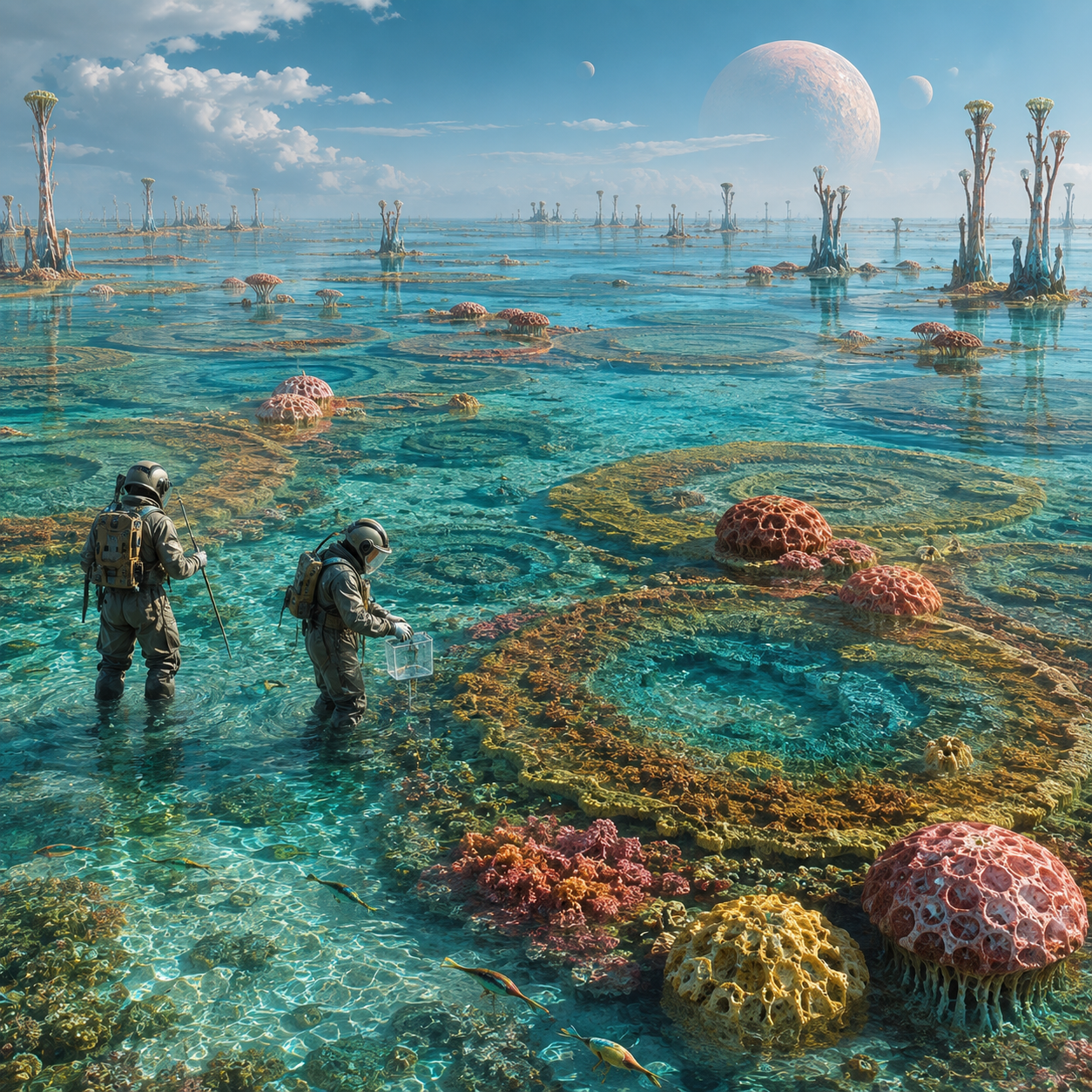
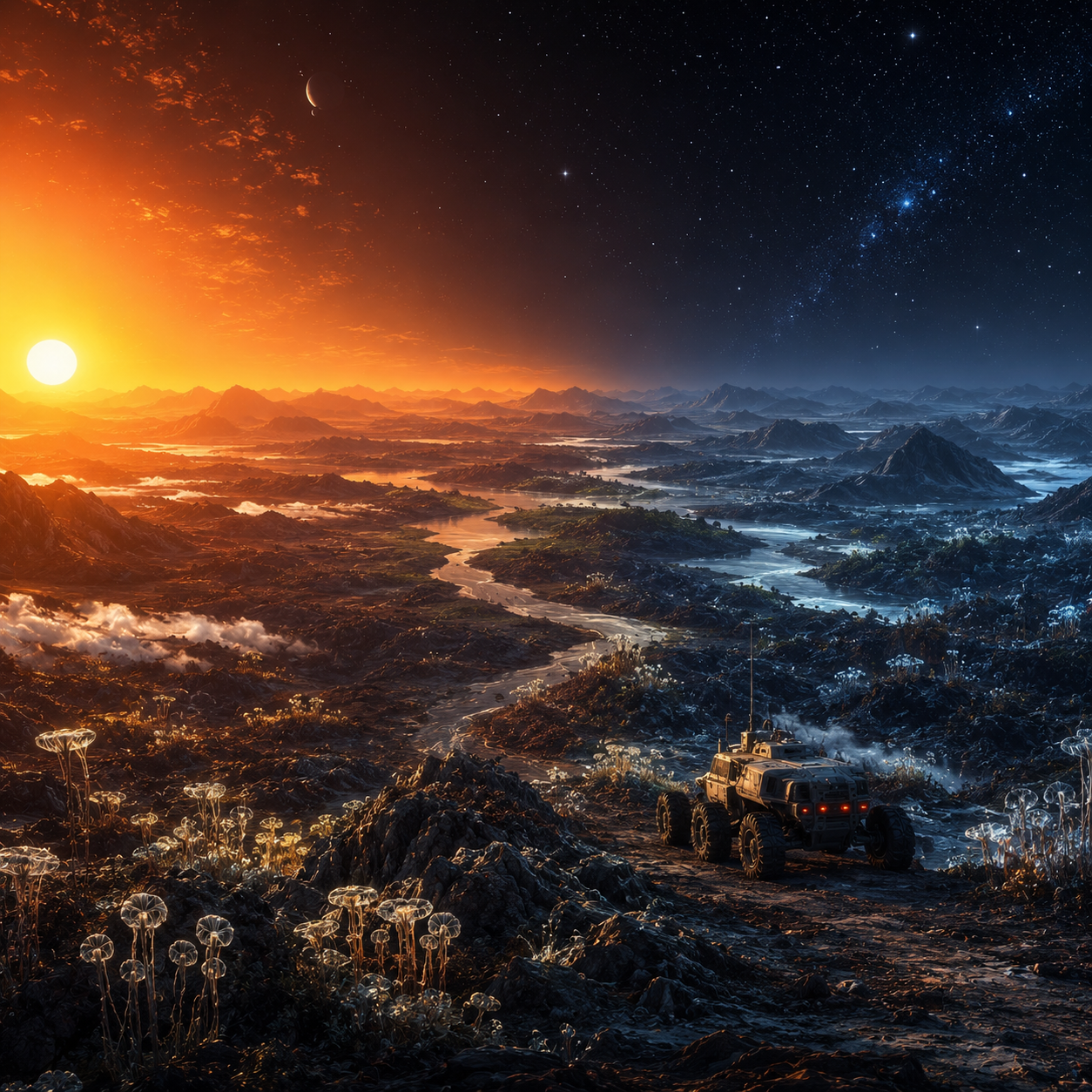
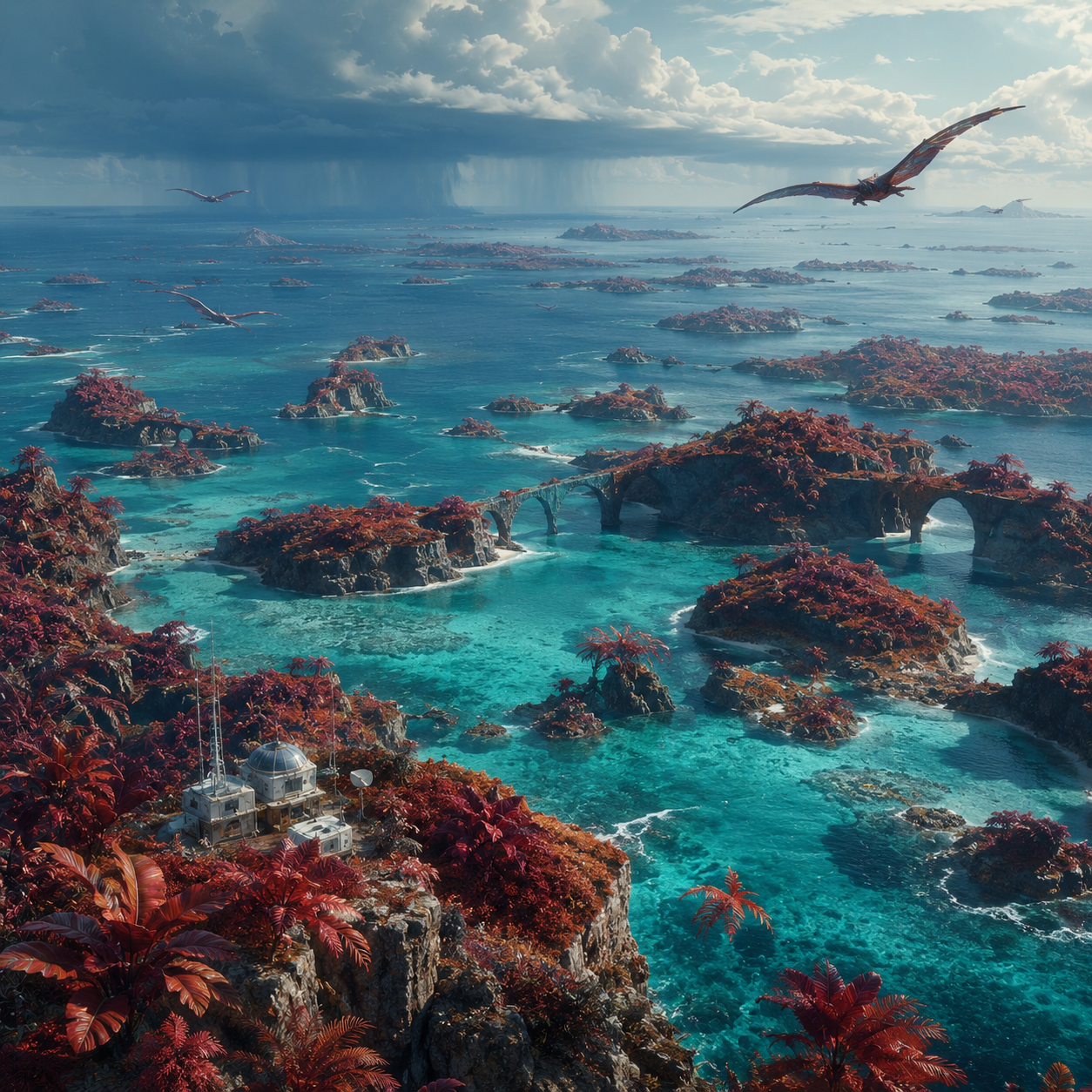
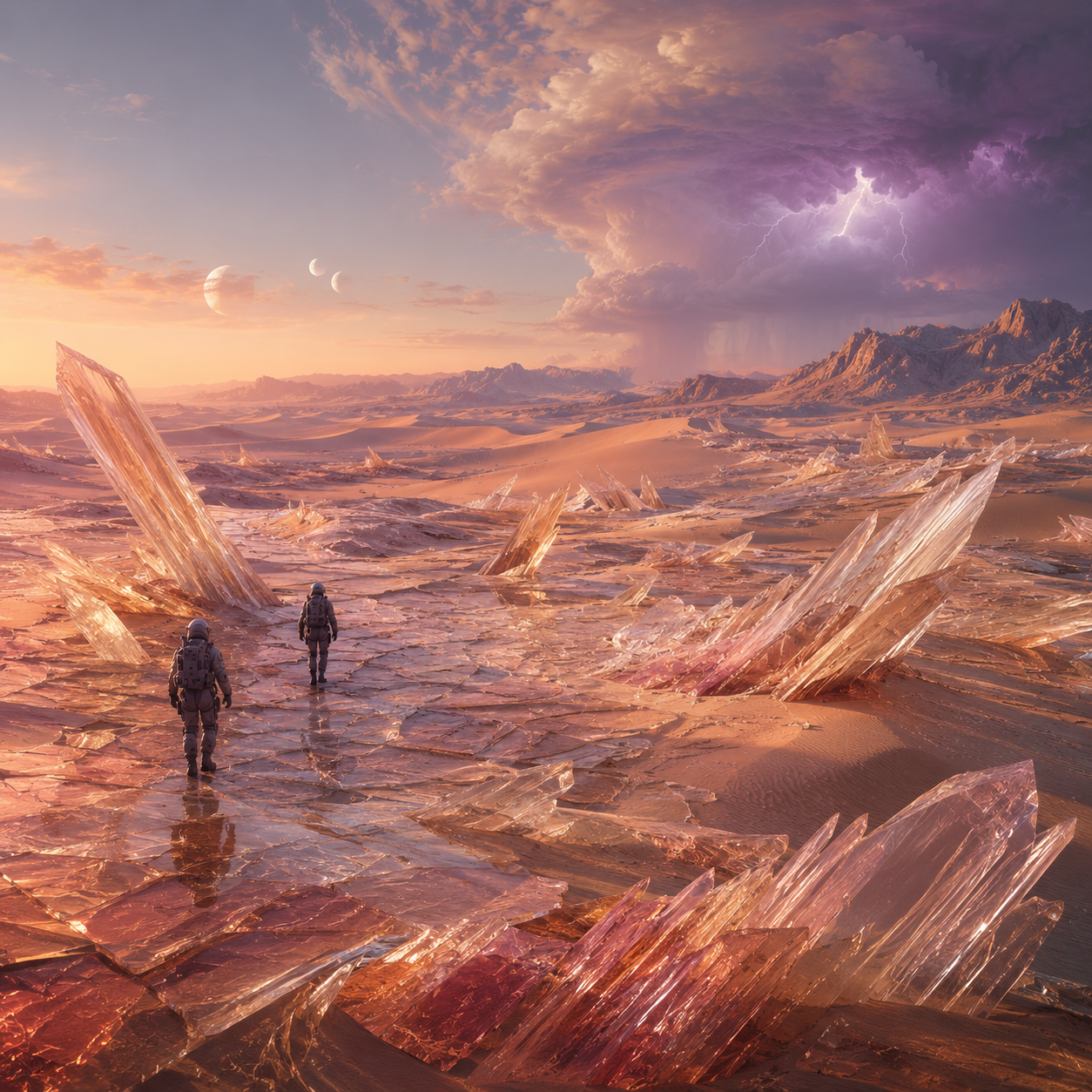
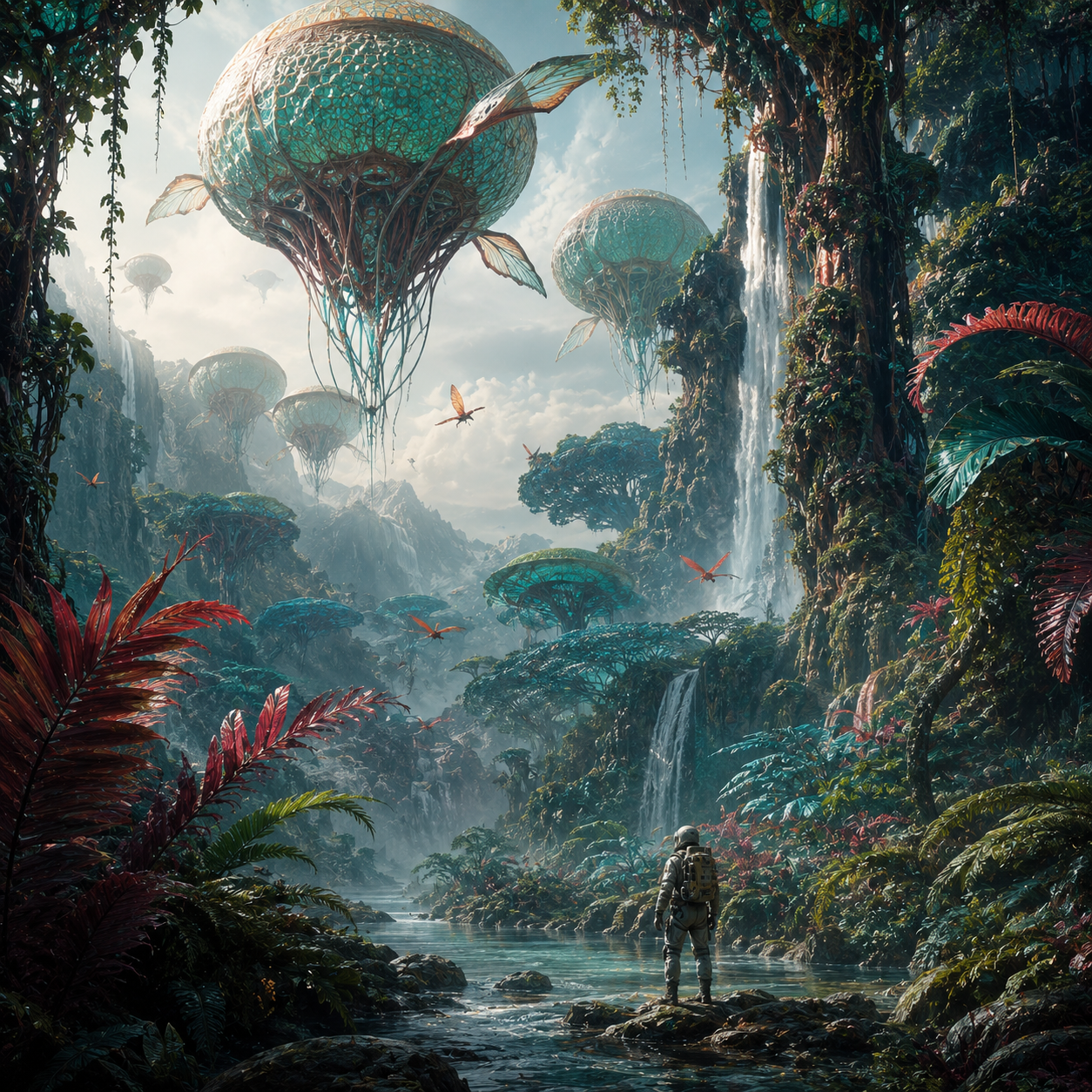
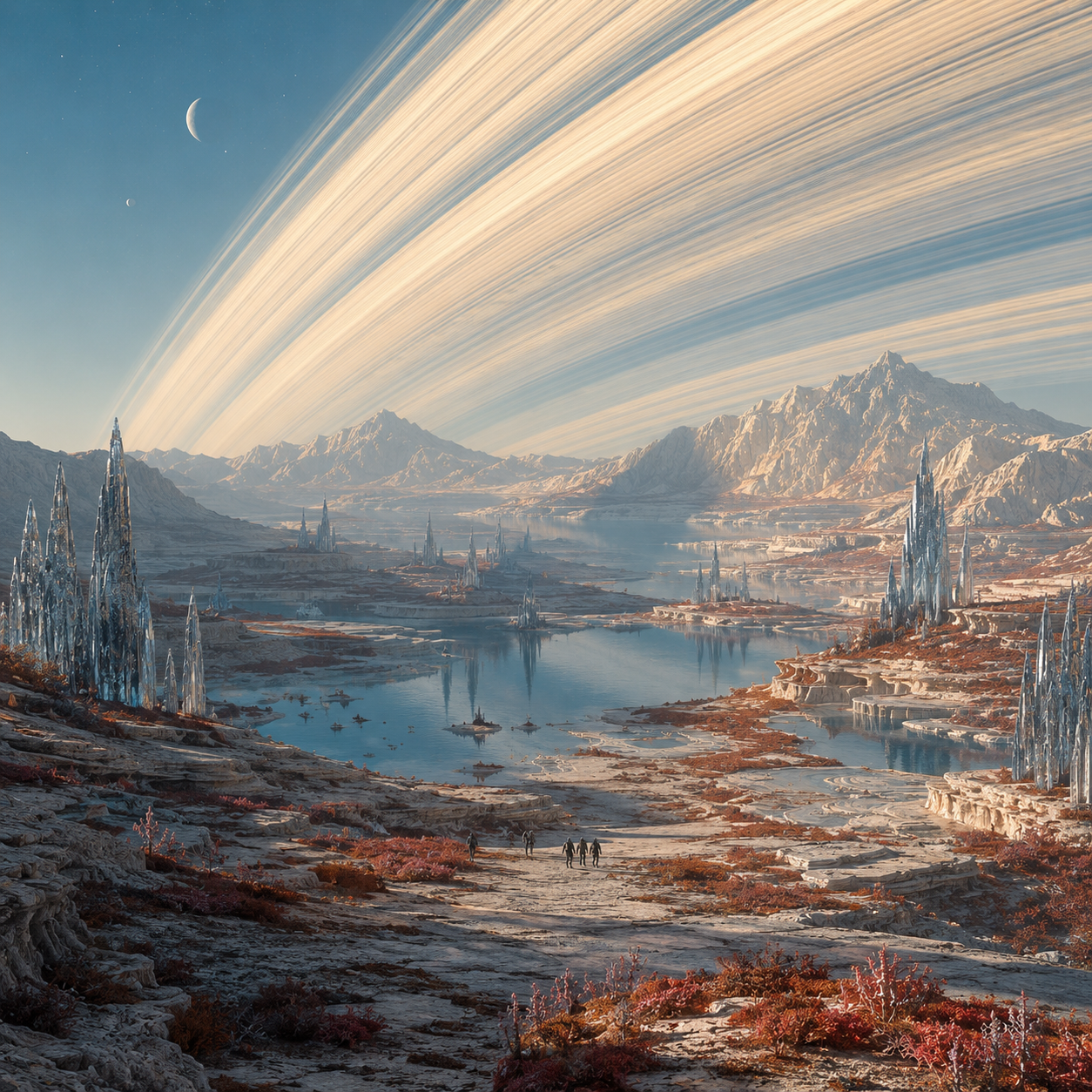
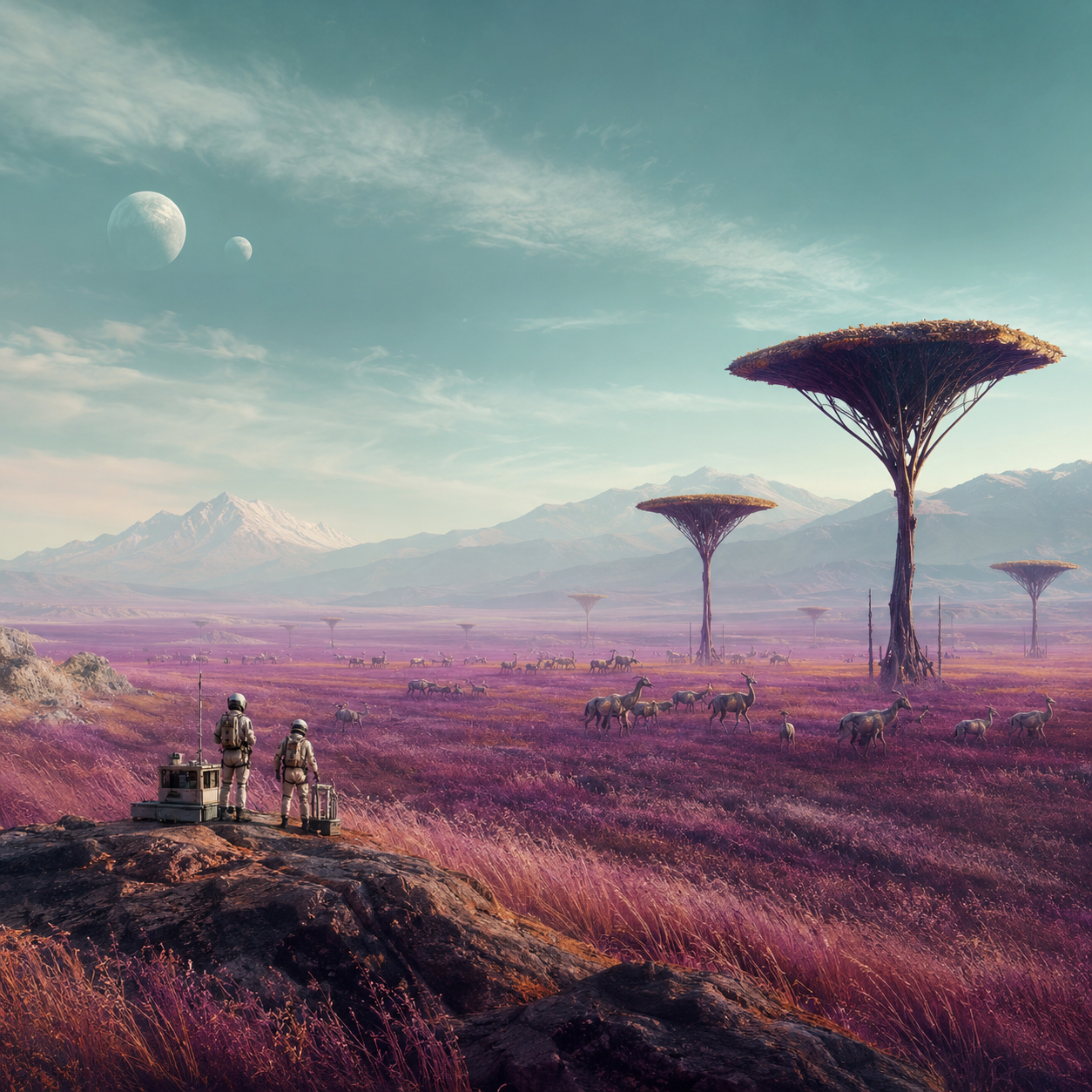
7. Picture Prompts
Visual prompts are especially powerful for alien worlds because atmosphere, scale, and strangeness create immediate immersion.
Go Deeper into Alien World Writing
To develop these ideas further, focus on how unfamiliar environments shape behaviour, perception, and survival.
◆ Write a scene where a character realises the rules of the planet are different from Earth.
◆ Explore how communication works between humans and alien life.
◆ Focus on sensory detail — what does an alien world smell, sound, and feel like?
◆ Consider how the environment influences culture, conflict, and identity.
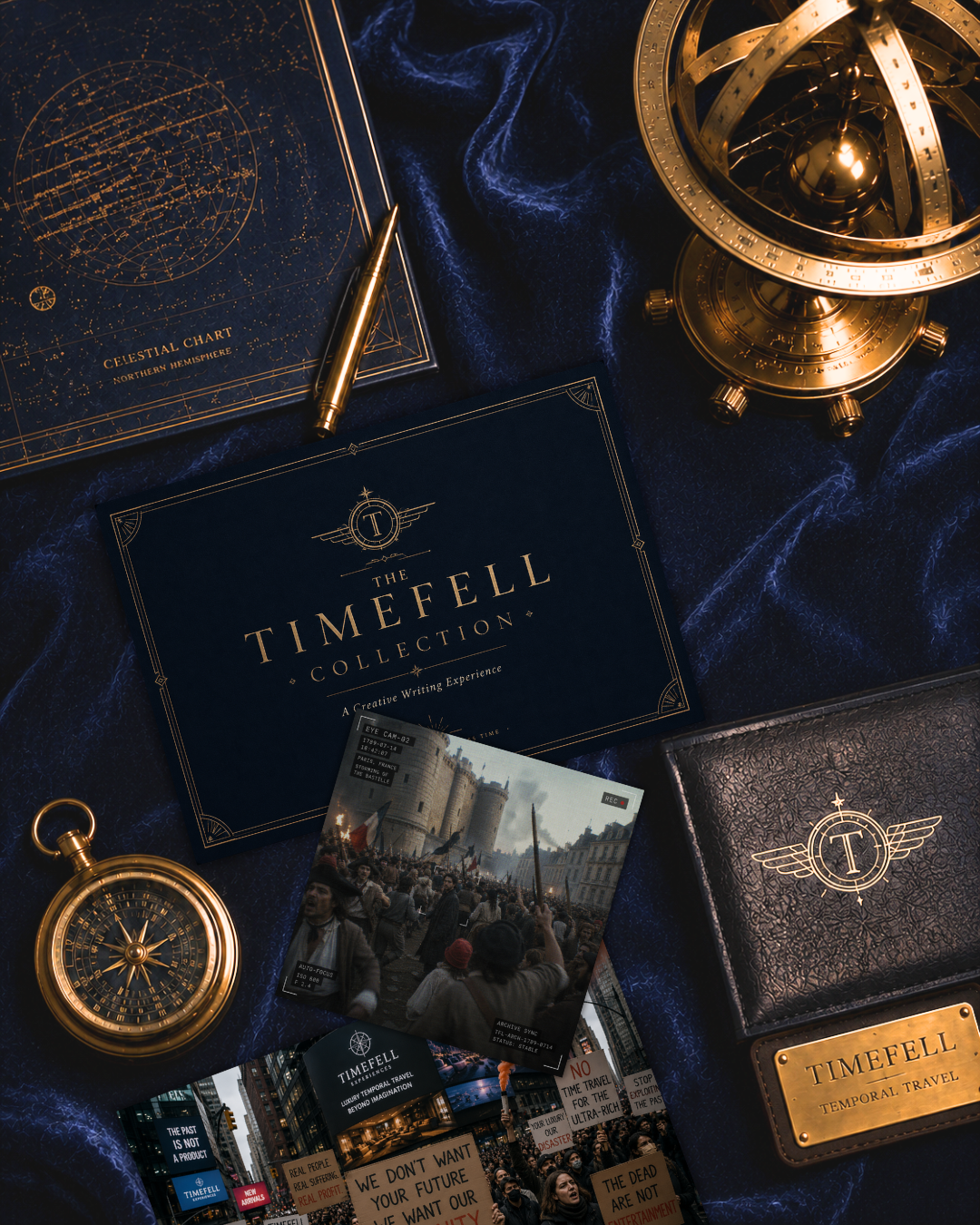
What If the Strangest World Wasn't on Another Planet?
Alien-world stories invite us to imagine places completely unlike our own: unfamiliar landscapes, strange ecosystems, unknown societies and environments governed by rules humanity has never encountered before.
But you don't necessarily have to leave Earth to discover an alien world.
Travel far enough into the past and you'll find landscapes inhabited by creatures no human has ever seen alive.
Travel far enough into the future and who knows what Earth — or humanity — might have become?
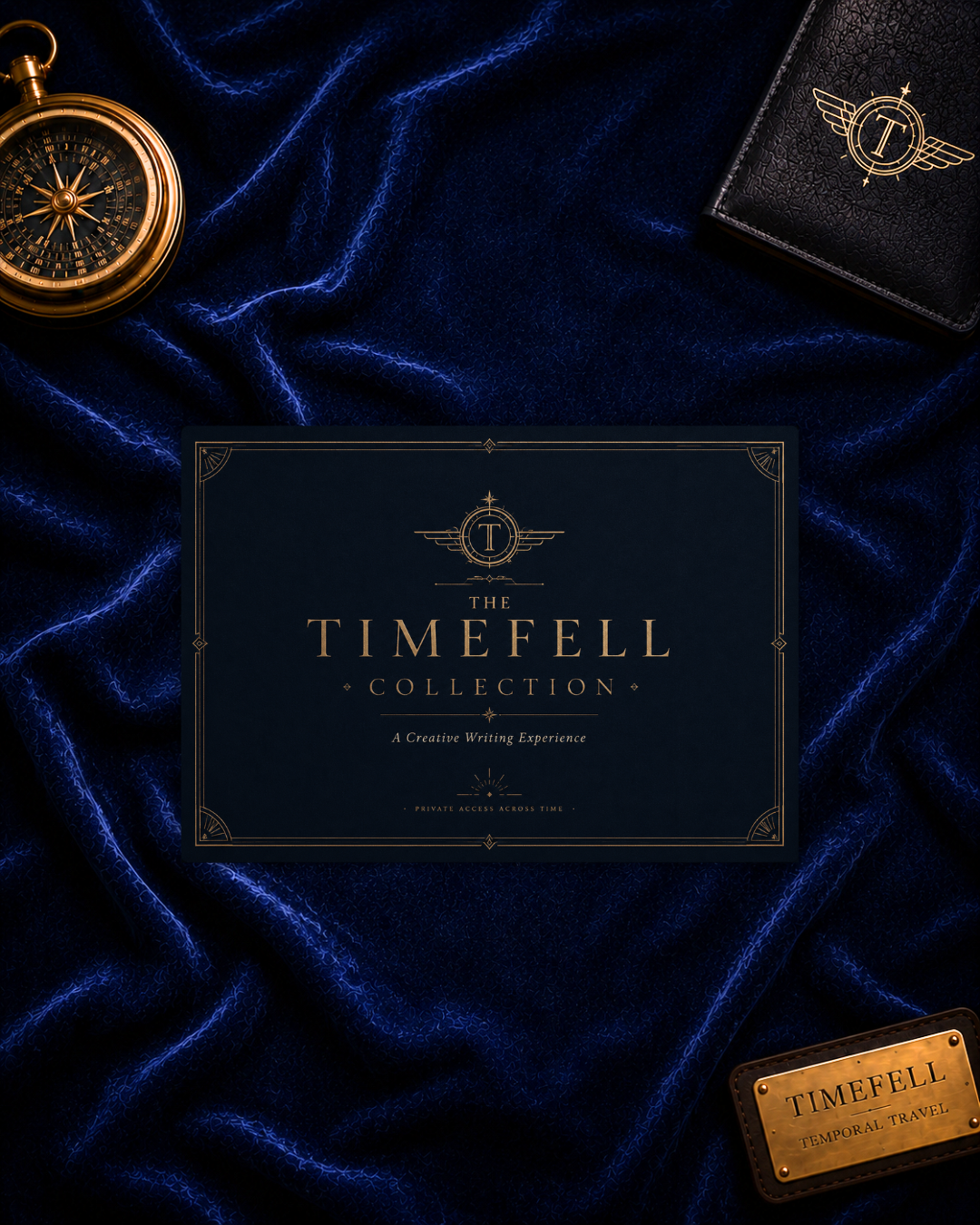
Welcome to The Timefell Collection.
Time travel became public in 2020.
By 2046, it had become a business.
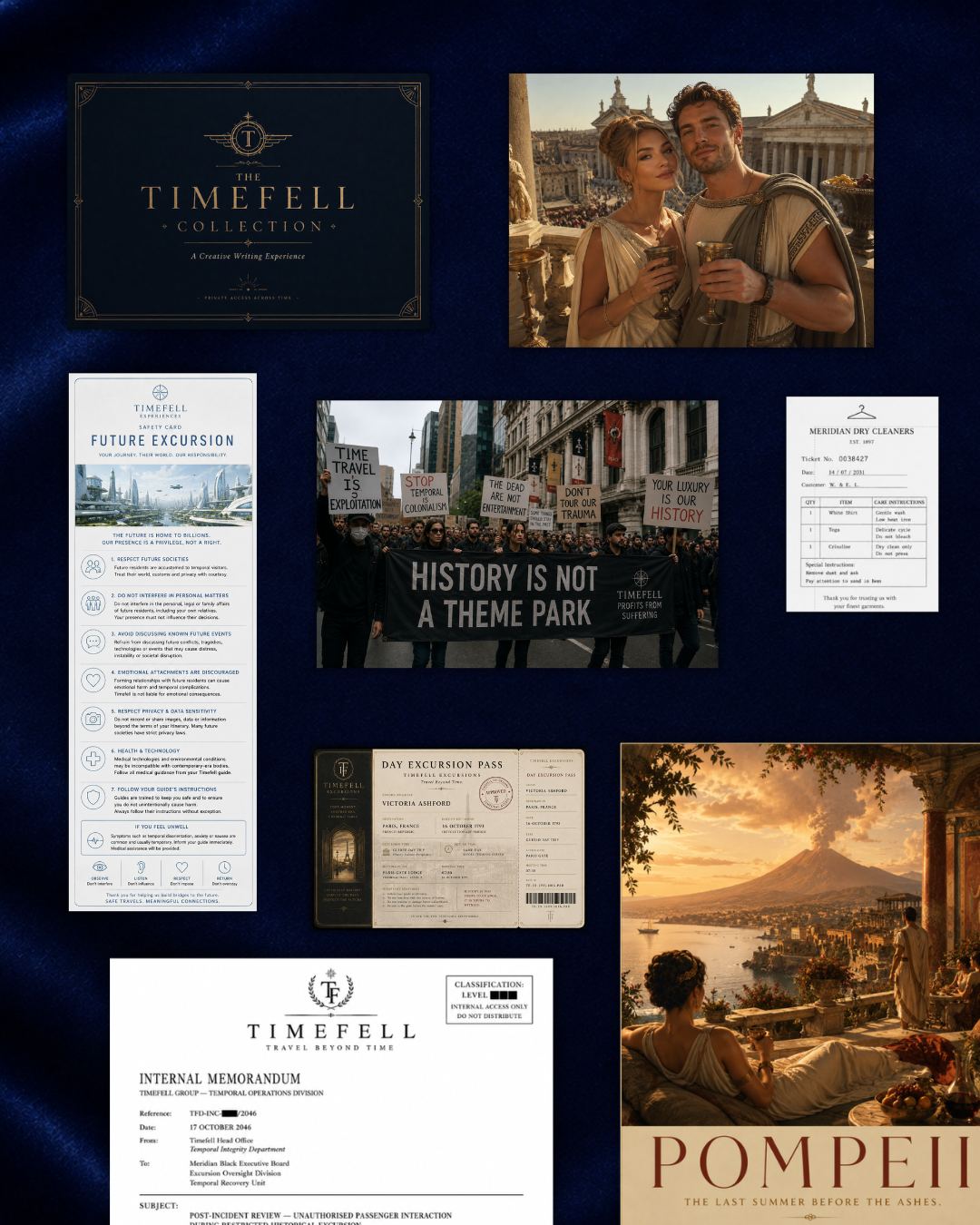
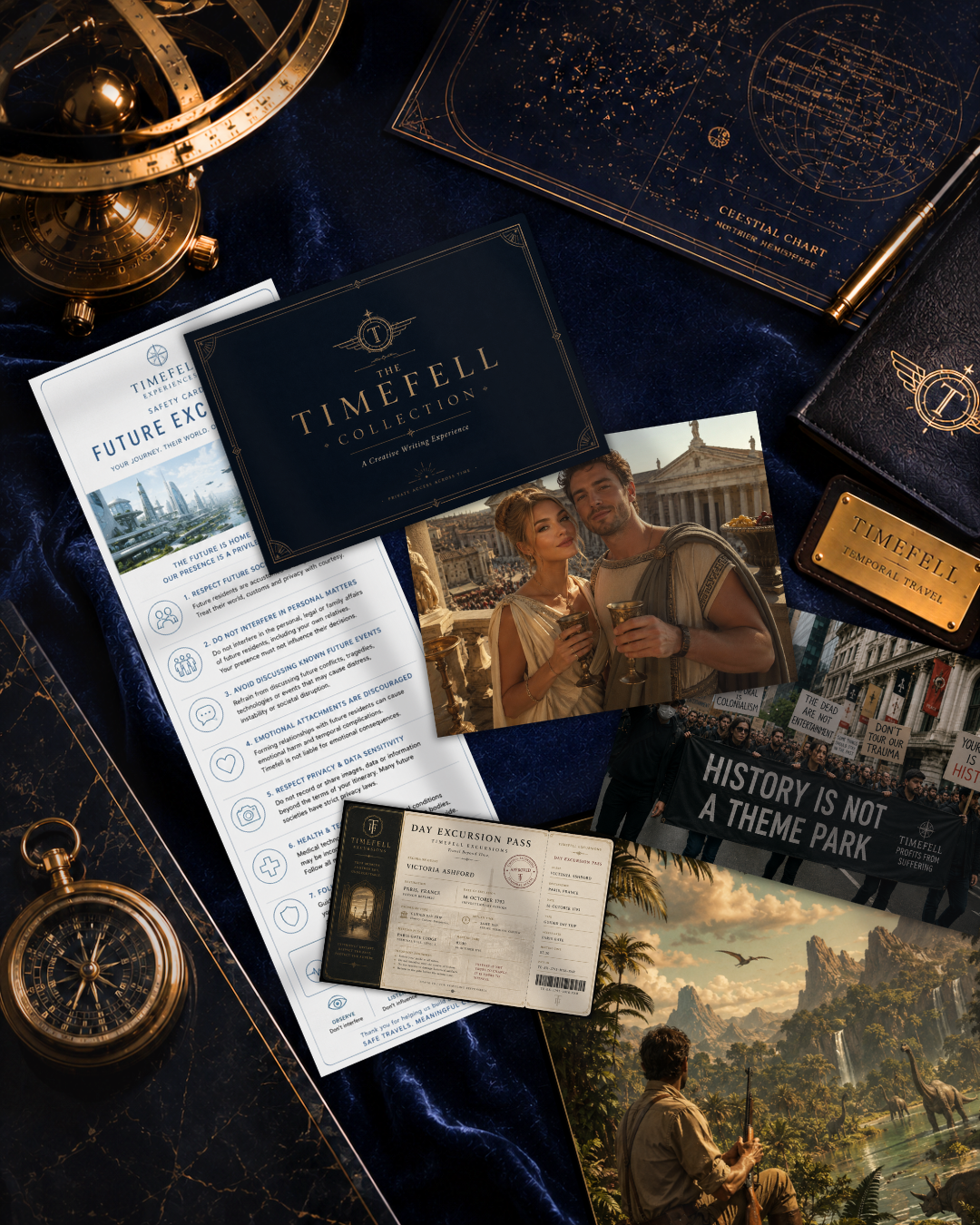
Ancient cities welcome paying visitors. Dinosaurs roam protected reserves. Luxury cruises travel between centuries. Future societies open their gates to carefully managed excursions beyond the present day.
For those who can afford it, every era is a destination.
The Timefell Collection is an immersive digital storyworld archive filled with travel posters, boarding passes, newspaper articles, diary entries, hotel records, reviews, private correspondence, handwritten notes and other artefacts left behind by travellers.
Explore worlds separated from our own by millions of years. Follow travellers encountering places they previously knew only through history books, fossils and speculation. Or use the archive as inspiration for your own stories about exploration, discovery and the strange worlds waiting beyond everything familiar.
Because an alien world doesn't always have to orbit another star.
Sometimes you just have to travel far enough from the present.
→ Explore The Timefell Collection
Final Thoughts
Alien worlds offer limitless possibilities for storytelling, allowing writers to explore ideas that go far beyond the constraints of reality. By placing characters in unfamiliar environments, these settings force them to adapt, question, and transform in ways that would not be possible on Earth.
These 70 Alien Worlds Writing Prompts invite writers to explore stories shaped by discovery, difference, and the vast unknown.
For more speculative ideas and immersive storytelling, explore the Sci-Fi Writing Hub or browse the Creative Writing Archive, where new worlds and creative possibilities continue to expand.
Choose Your Next Adventure