70 Creative Writing Prompts Inspired by Romeo and Juliet: Plot Hooks, Opening Lines, Characters & Visual Ideas
Some stories don’t begin with love. They begin with conflict — the kind that turns affection into rebellion and choice into risk.
William Shakespeare’s Romeo and Juliet endures not because it is a simple love story, but because it explores how desire, impulsiveness, and social pressure collide. The play asks what happens when private feeling comes into direct conflict with public loyalty, and how quickly love can become dangerous when it must be hidden. It is a tragedy shaped as much by secrecy, timing, and miscommunication as by fate itself.
This collection of 70 creative writing prompts inspired by Romeo and Juliet draws on the play’s emotional logic rather than its plot. The prompts invite teen writers to explore forbidden relationships, youthful intensity, family expectation, and irreversible consequences through original fiction and poetry — focusing on voice, atmosphere, and moral tension rather than retelling.
Designed for classroom use, writing clubs, creative warm-ups, journaling, or longer YA projects, these prompts work across age groups and abilities. They can be used as short starters or extended pieces, supporting stories that sit at the intersection of romance, conflict, and choice under pressure.
If you’d like to explore more creative writing prompts inspired by literature, genre, or aesthetic-led themes, you can browse the full Creative Writing Archive to discover new ways to shape your next story.
You can also explore our Literature-Inspired Creative Writing Prompts Hub to discover more creative prompts based on novels, poems and short stories.
1. Plot Hooks
These plot hooks are inspired by the central ideas of Romeo and Juliet: forbidden love, secrecy, impulsiveness, and the weight of family and social expectation. Rather than retelling the play, each prompt invites writers to imagine characters caught between what they feel and what they are allowed to want.
Write about two people who must hide their relationship to stay safe.
Write about a character who falls in love too quickly — and knows it.
Write about a secret that becomes more important than honesty.
Write about a relationship that exists only in stolen moments.
Write about a character who chooses love over loyalty.
Write about a decision made in a single emotional moment that cannot be undone.
Write about someone who believes love is worth any consequence.
Write about a young person pressured to choose between duty and desire.
Write about a relationship shaped by timing rather than intention.
Write about a choice that feels right — and dangerous — at the same time.
2. Title Ideas
Titles inspired by Romeo and Juliet often suggest urgency, distance, or conflict without revealing everything directly.
Before We Were Discovered
What We Chose in Secret
The Night Everything Changed
Love Learned in Hiding
Between Loyalty and Desire
When We Stopped Waiting
A Promise Made Too Quickly
What the Walls Overheard
After the Message Never Arrived
The Cost of Loving You
3. Opening Lines
Opening lines inspired by Romeo and Juliet often suggest that something important has already begun — and that it may not end safely.
We weren’t supposed to talk to each other.
I knew it was a mistake the moment I didn’t walk away.
Everything happened faster than I expected.
We learned how to hide before we learned how to love.
They warned me — I just didn’t listen.
It started as a glance and became a risk.
I never planned to choose this.
Some secrets feel like freedom at first.
I didn’t think about consequences until it was too late.
Love made everything feel urgent.
4. Closing Lines
Closing lines inspired by Romeo and Juliet often focus on consequence, loss, or irreversibility, rather than neat resolution.
I understood too late what the choice had cost us.
Some moments change everything — even when they’re brief.
Love didn’t fail us, but time did.
We never meant for it to end this way.
The secret outlived us.
What we felt was real — even if it didn’t last.
I learned that wanting something doesn’t make it safe.
The silence that followed was permanent.
Nothing returned to how it was before.
We loved fiercely — and paid for it.
5. Character Ideas
Characters inspired by Romeo and Juliet are often shaped by emotion, pressure, and youthful intensity, rather than long-term planning.
Two young people forced to keep their relationship hidden.
A character torn between family loyalty and personal desire.
Someone who believes love should be acted on immediately.
A person who mistakes intensity for certainty.
A character pressured into a future they didn’t choose.
Someone who believes secrecy makes love stronger.
A narrator reflecting on a moment that changed everything.
A young person learning that silence can be dangerous.
A character who realises too late that timing matters.
Someone who must live with the consequences of a rushed decision.
6. Setting Ideas
Settings inspired by Romeo and Juliet often feel divided, watched, or emotionally charged — reflecting the conflict between public and private lives.
A place where two groups are not meant to mix.
A private space hidden within a hostile environment.
A city shaped by long-standing conflict.
A setting where reputation matters more than truth.
A quiet place used only for secret meetings.
A public space that feels unsafe after dark.
A location associated with both love and danger.
A setting where overheard conversations matter.
A place where time feels rushed.
A location that becomes a turning point.
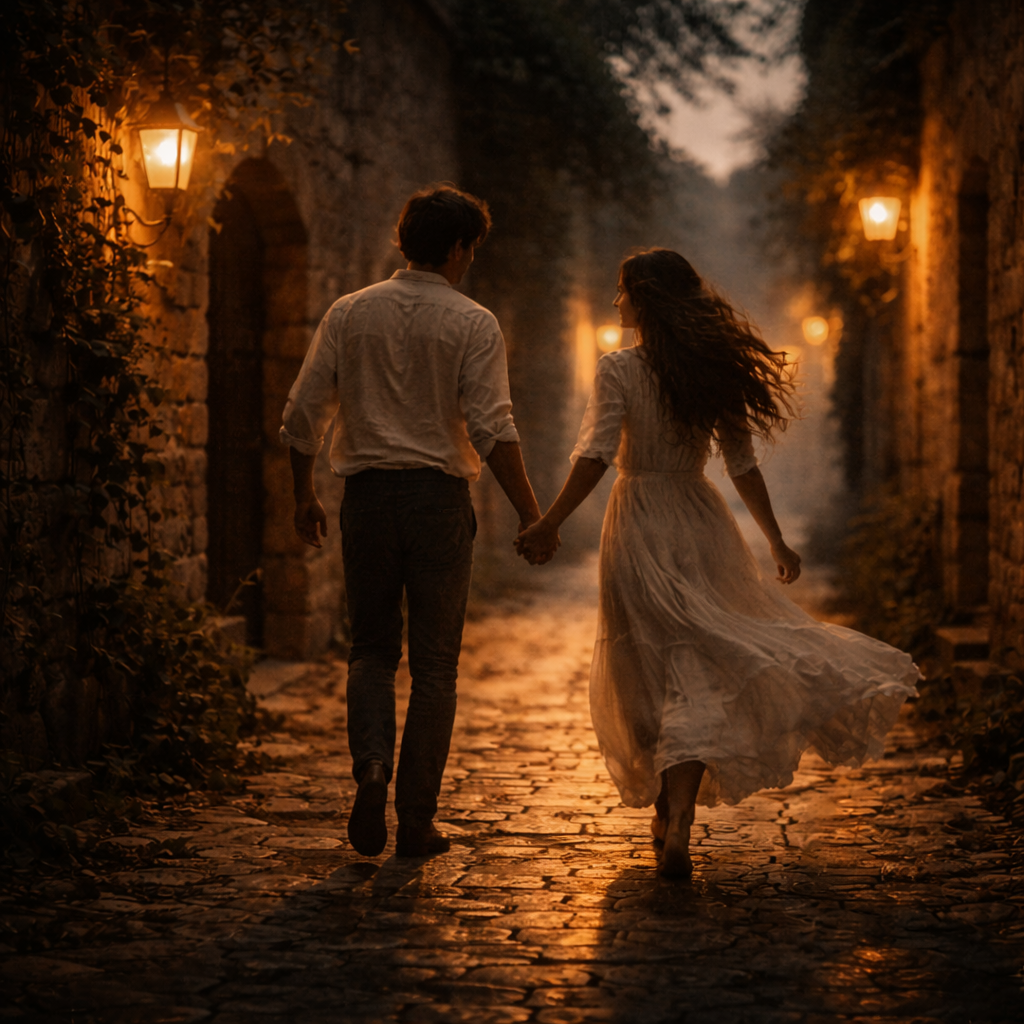
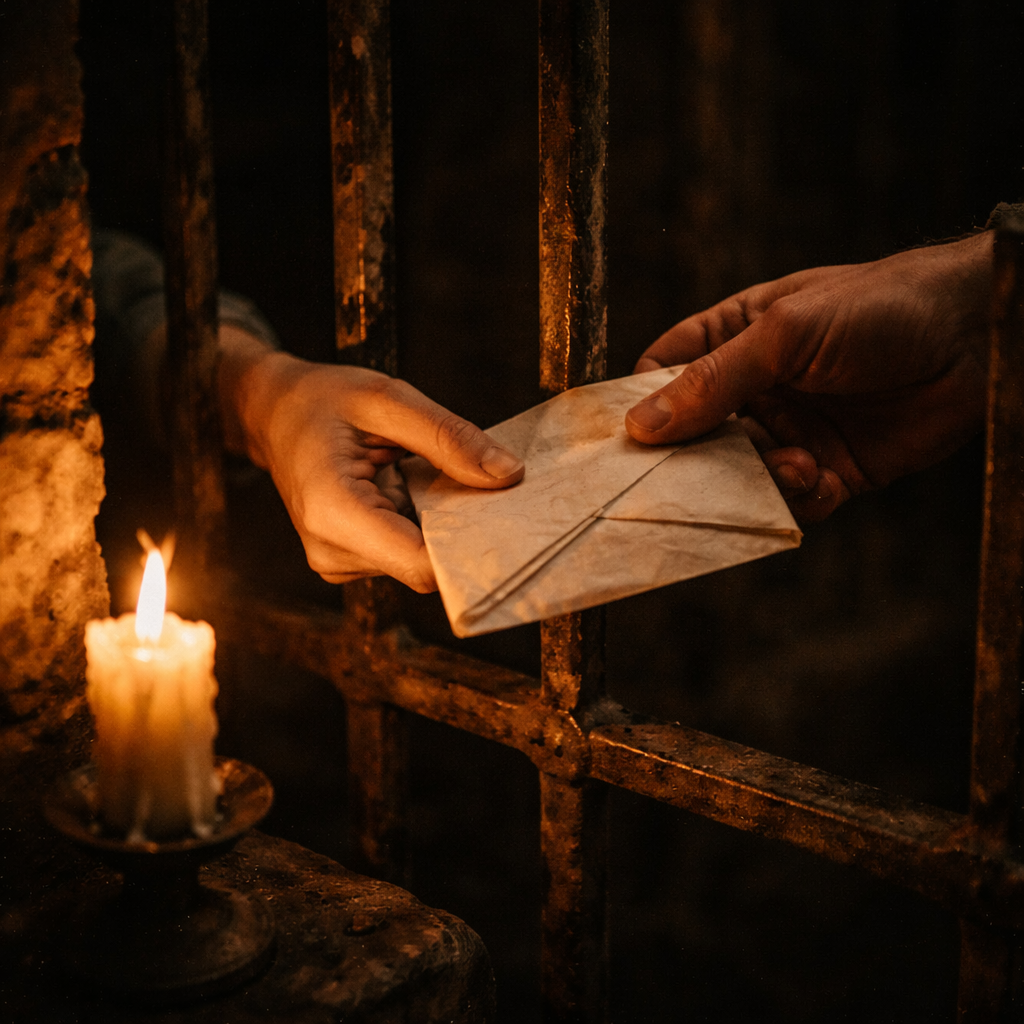
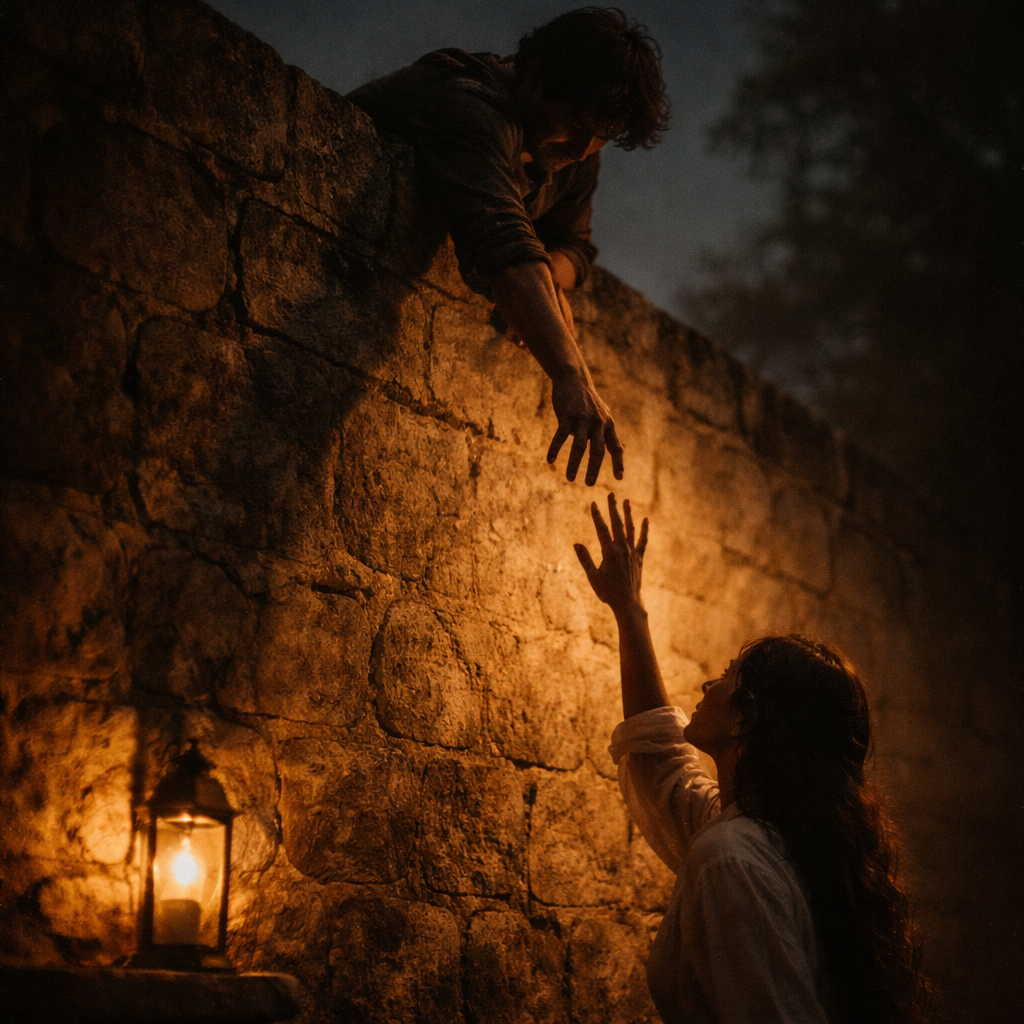
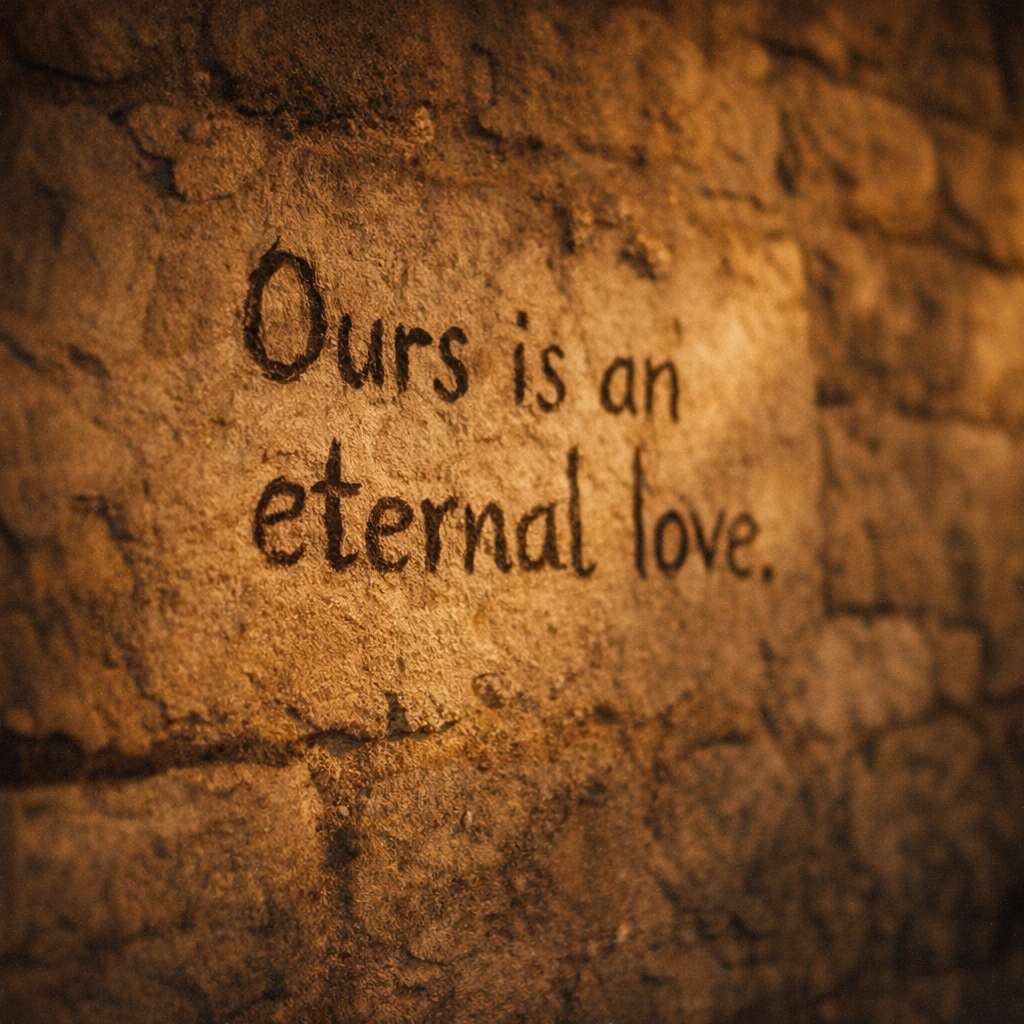
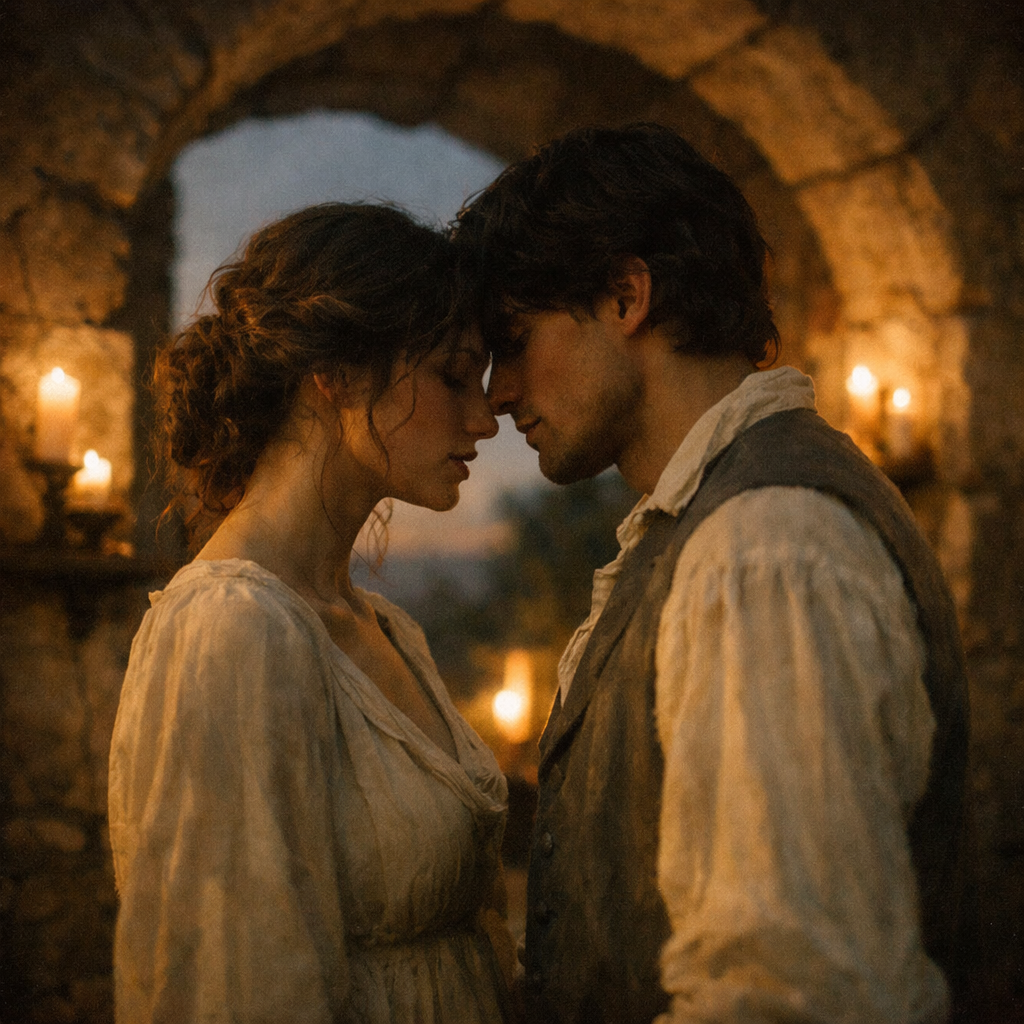
7. Picture Prompts
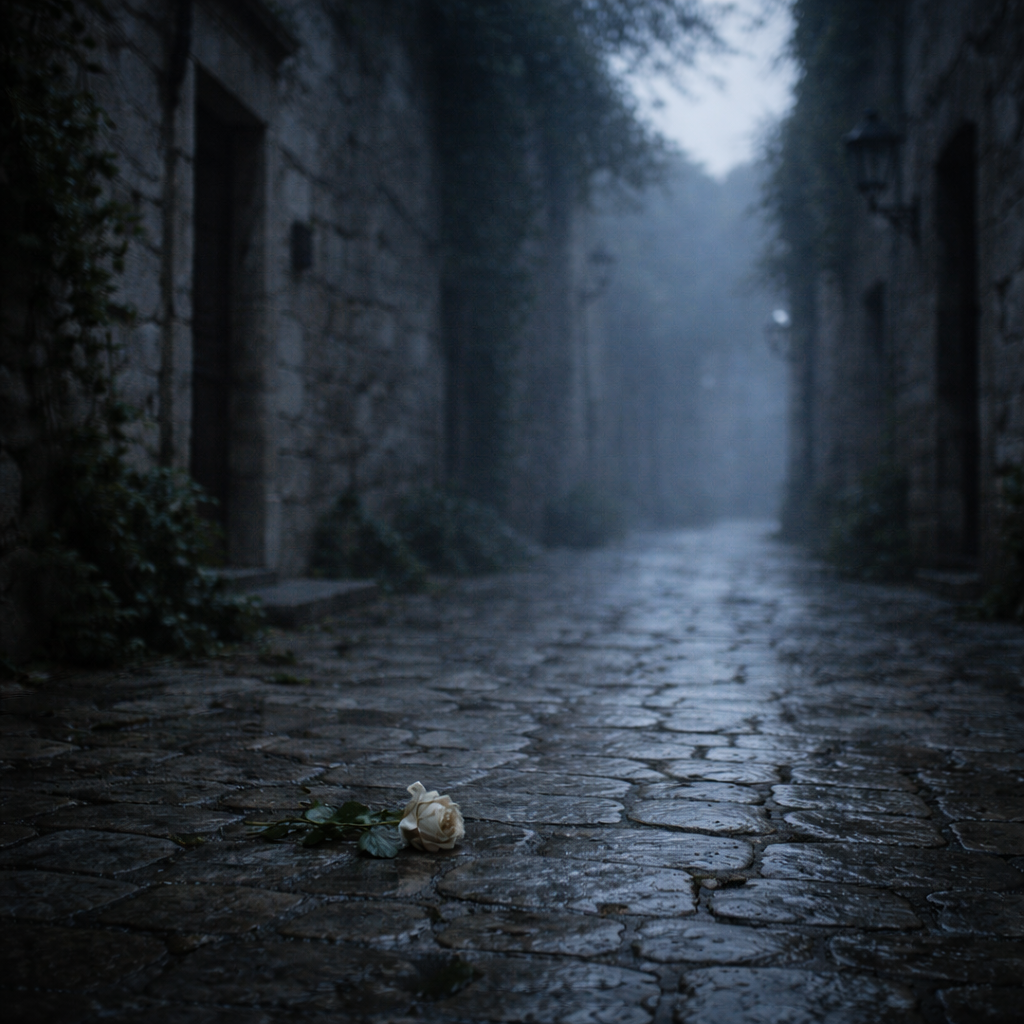
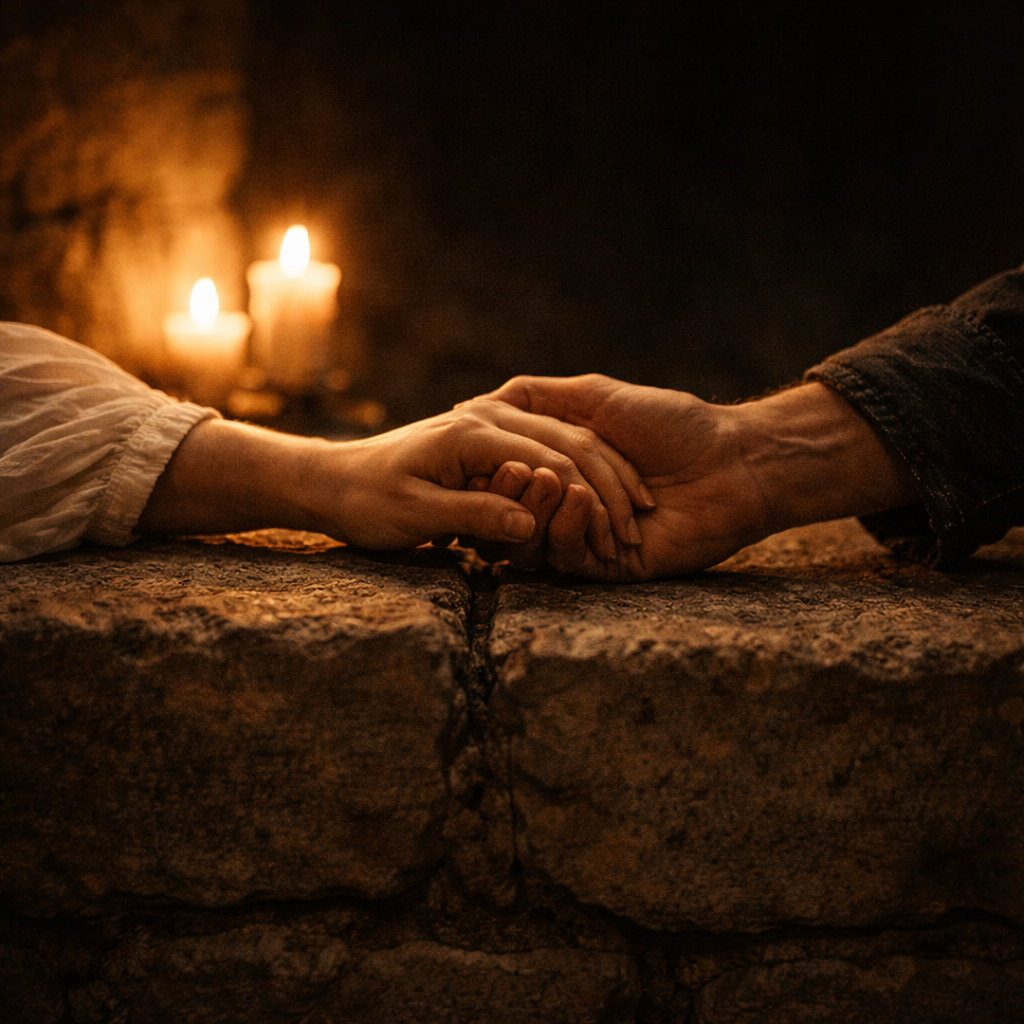
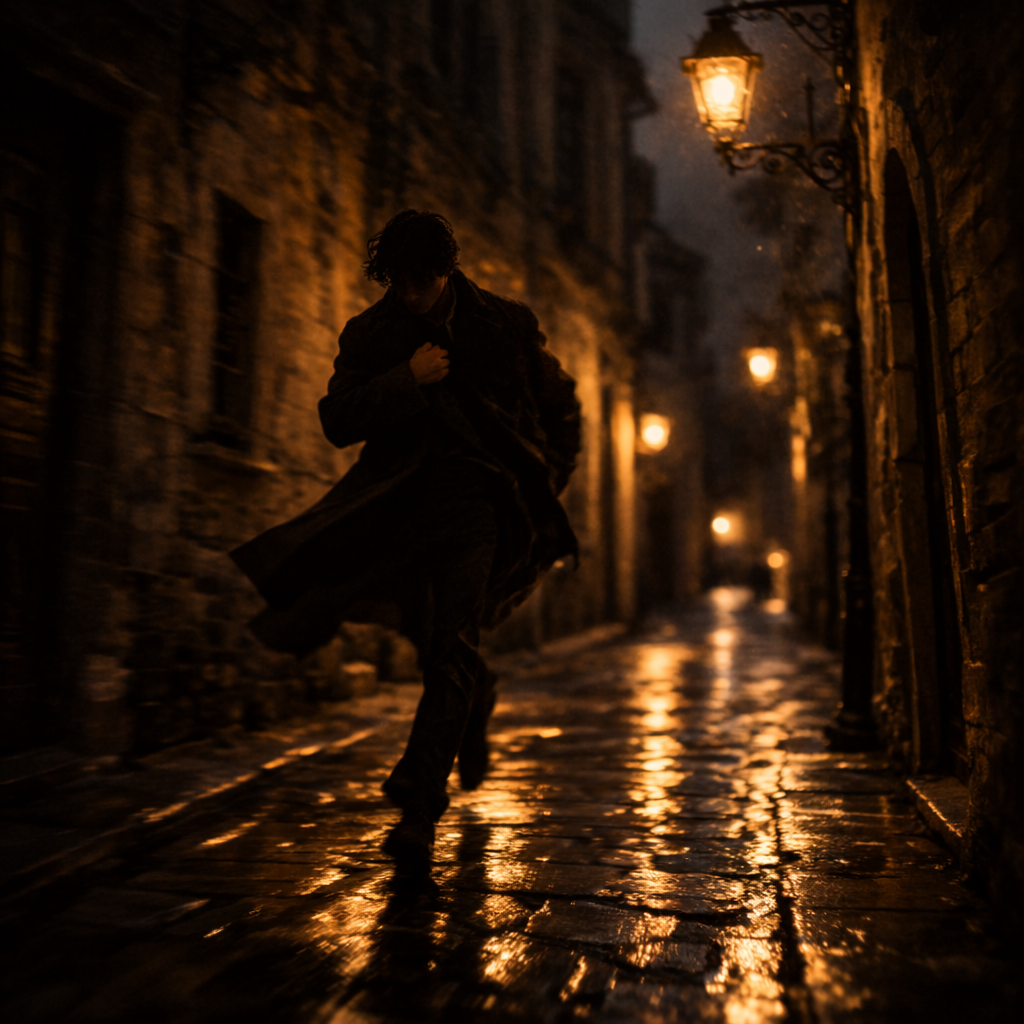
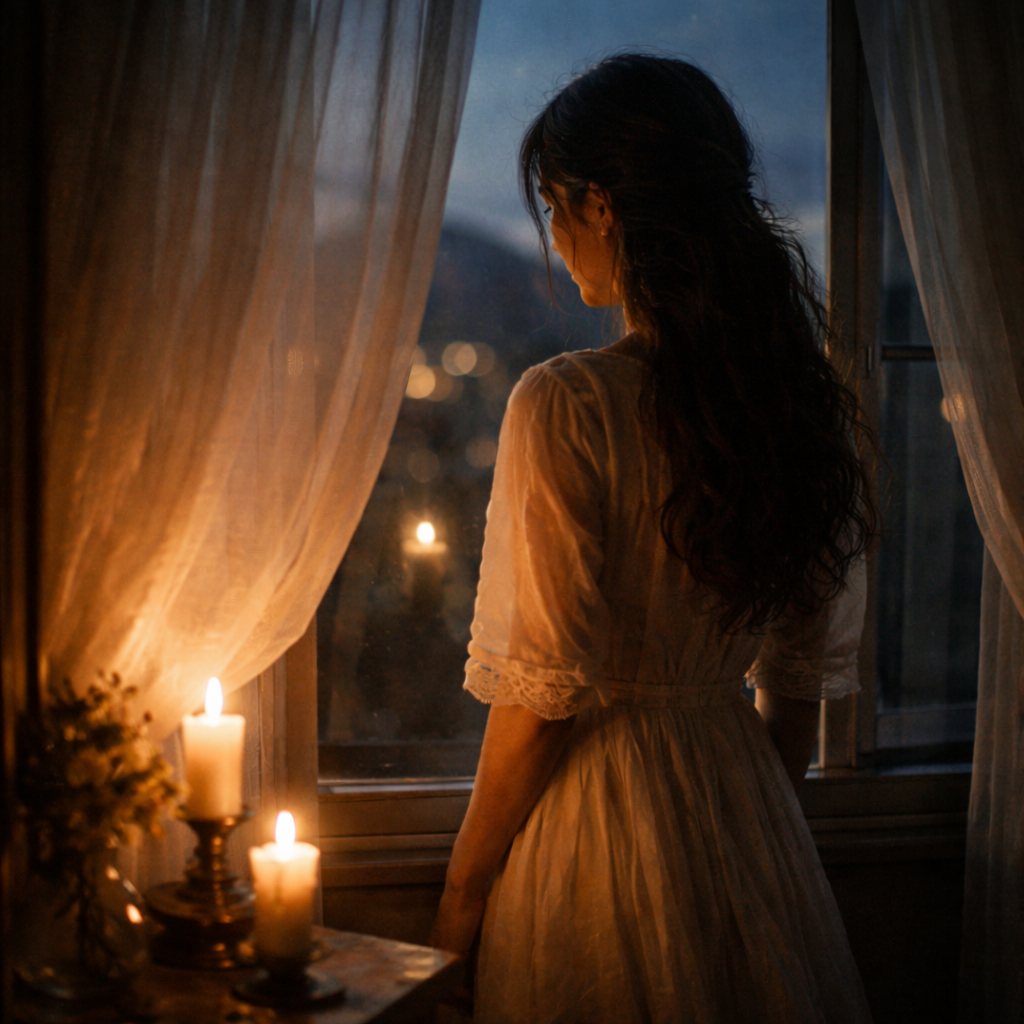
Visual prompts inspired by Romeo and Juliet focus on contrast and tension rather than romance alone.
Effective images often include balconies, doorways, lamplit streets, hidden corners, divided spaces, or figures seen from a distance. Visual separation — light versus shadow, inside versus outside — helps writers explore how setting reflects secrecy, desire, and risk.
Writers can use each image as a starting point for descriptive writing, inner monologues, or short narratives that explore how love is shaped — and threatened — by circumstance.

Go Deeper into Romeo and Juliet–Inspired Writing
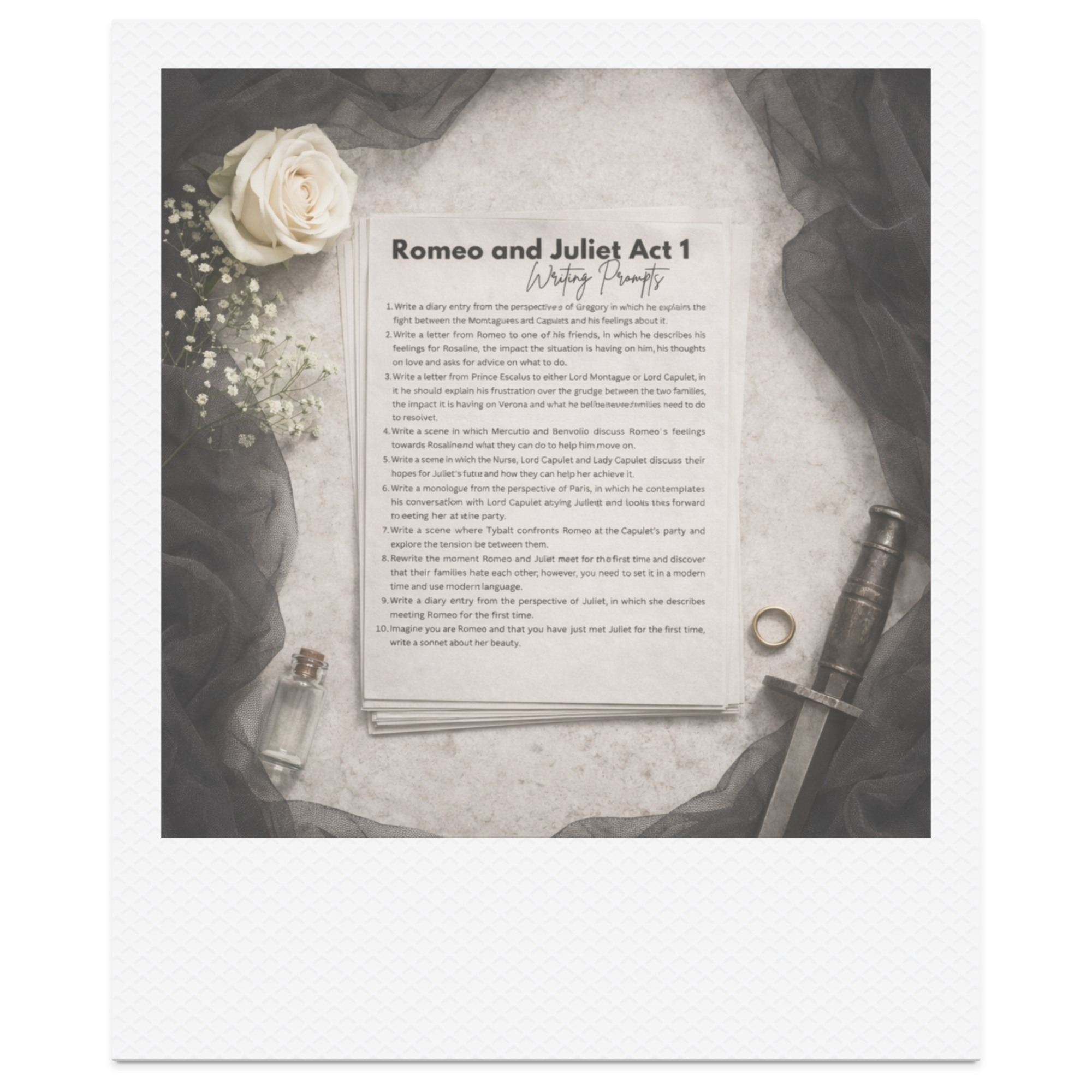
These prompts are designed to help students explore the emotional tension, themes, and structure of Romeo and Juliet through original creative writing. Rather than retelling the play, they encourage writers to think carefully about choice, timing, loyalty, and consequence.
For classroom teaching, creative writing is especially effective when paired with text-rooted tasks that return students directly to Shakespeare’s play. Structured prompts linked closely to each act help students develop confidence with voice, perspective, and interpretation, while deepening their understanding of character development and tragic structure.
◆ Act-based prompts exploring impulsiveness, conflict, and escalation
◆ First-person writing from key character perspectives
◆ Diary entries, letters, and secret messages
◆ Narrative expansions of off-stage moments
◆ Setting-based descriptions rooted in Verona
◆ Writing tasks focused on choice, timing, and tragic consequence
These prompts keep students firmly anchored to the play while still allowing space for creativity, empathy, and personal response.
Used together, atmosphere-led prompts and act-specific creative tasks create a balanced approach: one builds confidence and imagination, while the other strengthens close reading, character understanding, and structural awareness.
Final Thoughts
Creative writing inspired by Romeo and Juliet gives young writers the opportunity to explore love under pressure, youthful impulsiveness, and the consequences of secrecy through original storytelling. By focusing on emotion, atmosphere, and moral tension rather than retelling the play, these prompts make Shakespeare’s ideas accessible without simplifying them.
Working with inspired prompts allows students to engage with complex themes such as choice, loyalty, fate, and responsibility without needing advanced literary knowledge. Instead, writers are encouraged to experiment with voice, perspective, and setting, developing confidence in expressive writing while remaining connected to the tragic heart of the play.
Used alongside closely linked, act-based creative tasks, atmosphere-led prompts help students recognise how writers shape meaning through structure, contrast, and what is left unsaid. Together, these approaches support both creative confidence and deeper literary understanding, making them suitable for classrooms, writing clubs, and independent practice across a range of age groups.
You can also explore our Literature-Inspired Creative Writing Prompts Hub to discover more creative prompts based on novels, poems and short stories.
