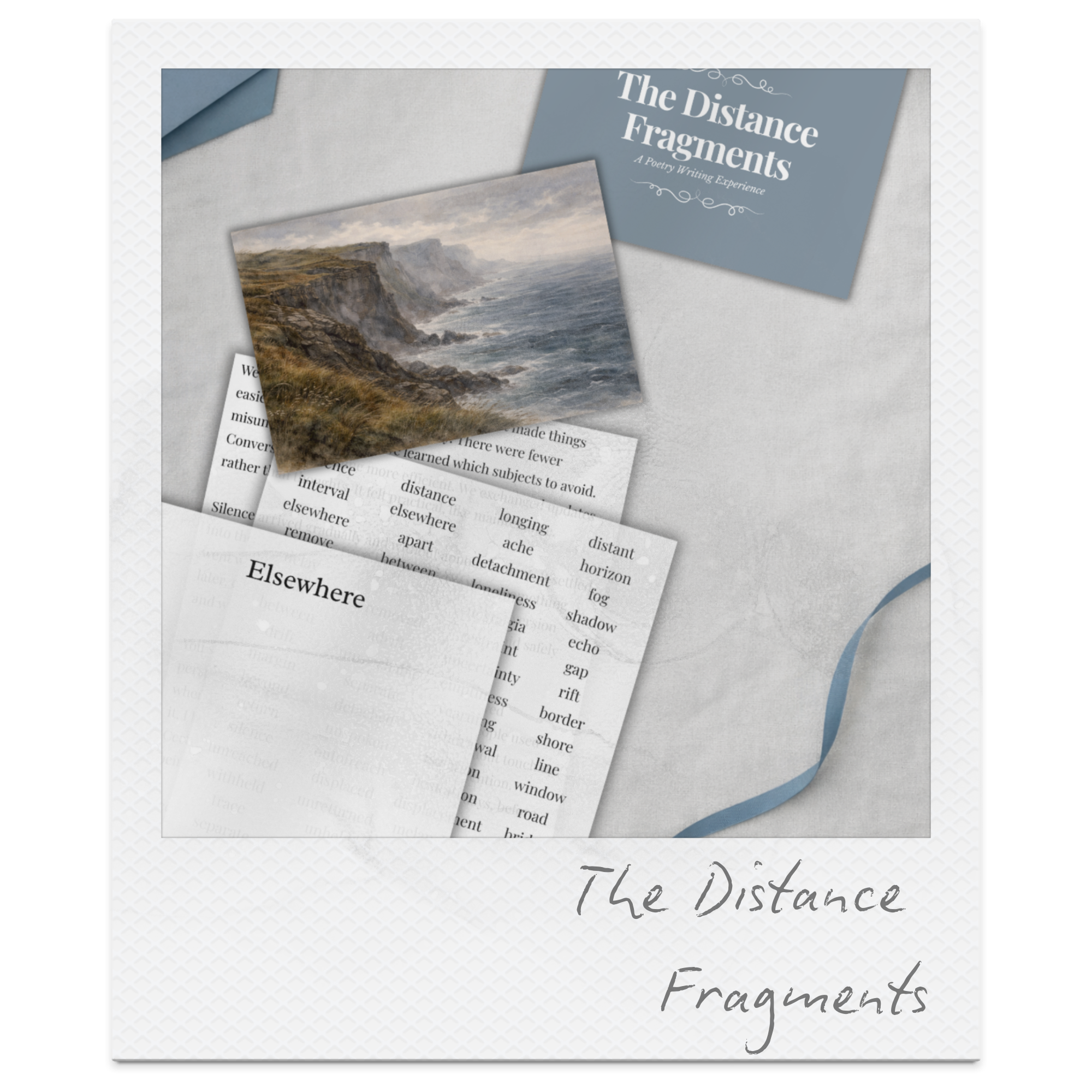
10 Childhood Poetry Prompts for Teens & Adults: Memory, Distance, and the Unreliable Past
Childhood poetry isn’t about preserving innocence or retelling happy memories. At its strongest, it is reflective, restrained, and emotionally layered — shaped by distance, distortion, and the gap between experience and understanding. Rather than offering a faithful record of the past, childhood poems often explore how memory shifts over time, revealing what was misunderstood, overlooked, or only recognised much later.
These childhood poetry prompts for teens and adults are designed to support thoughtful, craft-focused writing in classrooms, writing groups, and independent practice. Each prompt encourages writers to move beyond anecdote and nostalgia, working instead with memory in poetry, voice, and image to examine how childhood is remembered, revised, or quietly reinterpreted. Alongside the prompts, you’ll find suggested opening lines, writing techniques, and ekphrastic poetry images to help writers overcome the blank page and begin with atmosphere rather than explanation.
Whether you’re teaching poetry, revisiting personal memory, or exploring how early experiences shape identity, these prompts approach childhood with care and intention. The focus is not on reliving the past, but on examining how it lingers — incomplete, unreliable, and emotionally charged — in the present.
For even more inspiration, explore the Poetry Writing Hub or visit the Creative Writing Archive, where hundreds of additional prompts, picture prompts, story ideas, character collections, and writing resources are waiting to be discovered.
Short on time?
Scroll down for the 10 childhood poetry prompts, or keep reading for writing techniques and examples to support reflective, memory-based poetry.
How to Approach Childhood Poetry
Writing childhood poetry isn’t about recording the past as it happened. Memory in poetry is selective, shaped by repetition, distance, and later understanding. The most effective childhood poems recognise this, treating memory not as fact but as material — something to be examined, questioned, and reshaped through language.
Start by grounding the poem in something specific. A place, an object, a repeated action, or a sensory detail often carries more emotional weight than a full narrative. Childhood memory in poetry tends to surface in fragments: the feel of a uniform, the sound of a voice from another room, the way a space once felt larger or smaller than it does now.
Perspective matters. Many childhood poems are written from an adult voice looking back, but tension often lies in what the child did not yet understand. Allow both viewpoints to exist without correcting one with the other. The poem gains power when it resists explanation and lets hindsight sit quietly alongside innocence.
Pay attention to line breaks and pacing. Short lines can reflect the immediacy or simplicity of childhood perception, while enjambment can interrupt memory, mirroring uncertainty or the intrusion of later awareness. White space can suggest absence, forgetting, or emotional distance — all central to writing poetry about childhood.
Resist nostalgia and resolution. Childhood poetry writing does not need to soften the past or arrive at clarity. Often, its strength lies in admitting uncertainty — in ending with what remains unresolved, misremembered, or only partially understood.
Above all, write with restraint. Let the poem observe rather than explain. Poetry about childhood works best when meaning emerges slowly, through implication rather than declaration.
Techniques to Try in Childhood Poetry
Childhood poetry relies on reflection rather than intensity. These techniques focus on how memory, perspective, and distance shape meaning, helping writers move beyond simple recollection into poems that feel layered, intentional, and emotionally precise.
Try one or two techniques at a time, paying attention to how form, voice, and structure interact with memory in poetry.
◆ Retrospective Voice
Write from a later perspective, allowing an adult voice to frame childhood experience without rewriting it. This creates tension between what the child felt at the time and what the speaker understands now. In childhood poetry writing, restraint is key — the adult voice should observe, not instruct or explain.
◆ Fragmented Memory Structure
Childhood memories often surface in fragments rather than complete scenes. Structure the poem around disconnected images, moments, or sensations instead of a linear narrative. This approach mirrors how childhood memory in poetry actually works, allowing gaps and silences to carry meaning.
◆ Repetition as Routine
Use repetition to reflect habits, schedules, or repeated experiences — school days, family rituals, phrases often heard. In poetry about childhood, repetition suggests normality rather than obsession, allowing the poem to build emotional weight quietly through accumulation.
◆ Perspective Shift
Move subtly between viewpoints: child and adult, observer and participant, inside and outside the moment. Even a small shift in pronouns or tense can highlight distance and growth without needing explanation. This technique works particularly well when writing poetry about childhood that involves misunderstanding or delayed recognition.
◆ Concrete Detail Over Interpretation
Anchor the poem in physical detail — clothing, furniture, rooms, objects — and resist explaining what they mean. In childhood poetry, objects often hold emotional residue long after their original significance has faded.
◆ Understatement and Emotional Restraint
Avoid heightened language or overt emotion. Childhood poems often resonate more when they remain calm on the surface, allowing readers to sense what lies beneath. Childhood poetry writing benefits from quiet precision rather than emotional declaration.
◆ Temporal Distance
Signal the passage of time subtly, without dates or exposition. Changes in scale, perspective, or language can suggest growing older and looking back. This helps establish poetry about memory and childhood as reflective rather than confessional.
◆ Unreliable Memory
Acknowledge uncertainty. Let the poem question itself, contradict details, or admit gaps. This mirrors the nature of memory in poetry, where recollection is shaped by repetition, storytelling, and revision rather than fact.
◆ Ordinary Endings
End the poem on something small: an object returned to a drawer, a sound fading, a routine continuing. In childhood poetry, understated endings often feel more truthful than moments of clarity or revelation.
Read for Inspiration: Childhood in Poetry
Reading poems that explore childhood in poetry can help writers understand how early experience, authority, habit, and perception shape voice and meaning. The poems below focus on childhood itself — how the world is first encountered, misunderstood, or navigated — rather than on memory as a later abstraction.
Read these poems closely for perspective, tone, and restraint. Notice how childhood is often presented through observation and detail rather than explanation.
◆ Seamus Heaney – “Follower”
A poem that explores childhood identity through admiration and distance. Heaney presents the speaker as a child observing parental authority, strength, and skill, allowing meaning to emerge through physical detail rather than emotional declaration. The poem is a strong model for poetry about childhood rooted in relationship and perspective.
◆ Louis MacNeice – “Prayer Before Birth”
Though written before birth, the poem powerfully captures childhood vulnerability and exposure to adult systems of power. Its direct address and anxious tone make it a striking example of how childhood poetry can engage with fear, protection, and authority without sentimentality.
◆ Philip Larkin – “I Remember, I Remember”
Larkin resists romanticising childhood, instead presenting it as emotionally ordinary and shaped by environment rather than nostalgia. The poem offers a useful counterpoint to idealised childhood writing and is valuable for discussing realism in childhood poetry.
◆ Ted Hughes – “Pike”
While not exclusively about childhood, Pike is frequently taught through the lens of childhood perception and fear. The poem captures the intensity of early encounters with power, danger, and the natural world, making it an effective model for writing poetry about childhood experience rather than reflection.
◆ Carol Ann Duffy – “Before You Were Mine”
This poem examines childhood indirectly, focusing on the speaker’s relationship to a parent’s past. It demonstrates how childhood poetry can explore identity and belonging through proximity rather than direct narration.
◆ W. H. Auden – “The Witnesses”
Auden presents childhood suffering not through sentiment, but through observation and detachment. The poem offers a powerful example of how poetry about childhood can address vulnerability and injustice without emotional excess.
Choose one or two poems to read closely before writing. Pay attention to how childhood is shaped through voice, power relationships, and detail — and where the poem deliberately withholds explanation.
Childhood in poetry is often defined not by innocence, but by limitation: what the speaker can see, understand, or control.
Childhood Poetry Writing Prompts
The prompts below are designed to help writers explore childhood in poetry through observation, limitation, and perspective rather than anecdote. Each prompt focuses on a single moment, object, or misunderstanding, allowing meaning to emerge through imagery, voice, and form.
You can work through the prompts in order or select one that resonates. Focus on crafting a moment rather than telling a complete story.
Childhood Poetry Prompt 1: The Rule You Didn’t Understand
Write a poem about a rule from childhood that was enforced but never explained. Focus on behaviour and consequence rather than motive.
Possible opening line:
I followed it without knowing what it protected.
Craft focus:
Understatement and concrete detail. Let the rule’s presence be felt through action, not commentary.
Childhood Poetry Prompt 2: The Room You Were Sent To
Write about a space associated with waiting, punishment, or removal — a bedroom, corridor, stairwell, or corner.
Possible opening line:
I learned how long five minutes could stretch.
Craft focus:
White space and pacing. Use line breaks to slow the poem and mirror waiting.
Childhood Poetry Prompt 3: Something You Were Proud Of
Write about an achievement, possession, or identity that once felt essential but no longer holds the same meaning.
Possible opening line:
I thought this would follow me forever.
Craft focus:
Perspective shift. Allow the adult voice to frame the childhood belief without correcting it.
Childhood Poetry Prompt 4: The First Time an Adult Was Wrong
Write about a moment when authority failed quietly — a mistake, contradiction, or silence that unsettled trust.
Possible opening line:
They didn’t notice when it stopped working.
Craft focus:
Observation over explanation. Let the moment stand without judgement.
Childhood Poetry Prompt 5: A Sound That Marked the Day
Write a poem built around a repeated sound from childhood — a bell, footsteps, a voice, or a signal.
Possible opening line:
I knew the day by this sound.
Craft focus:
Repetition as routine. Let sound structure the poem rather than imagery alone.
Childhood Poetry Prompt 6: Speaking to Your Younger Self
Address a younger version of yourself without offering advice, reassurance, or warning.
Possible opening line:
I won’t tell you what happens.
Craft focus:
Second-person address with restraint. Keep tone observational rather than consoling.
Childhood Poetry Prompt 7: Being Left Out
Write about exclusion that felt small or ordinary at the time but remains emotionally present.
Possible opening line:
No one said I couldn’t come.
Craft focus:
Understatement. Avoid dramatic language; let absence do the work.
Childhood Poetry Prompt 8: Something You Believed Without Question
Write about an idea, belief, or explanation you accepted as truth during childhood.
Possible opening line:
I never questioned it.
Craft focus:
Unreliable perspective. Allow belief and later awareness to exist side by side.
Childhood Poetry Prompt 9: The Object That Remained
Choose an object from childhood that still exists, unchanged or forgotten.
Possible opening line:
It survived everything else.
Craft focus:
Concrete imagery. Let the object accumulate meaning without explanation.
Childhood Poetry Prompt 10: The Memory That Isn’t Fully Yours
Write about a moment shaped by family stories, photographs, or repetition — something remembered without certainty.
Possible opening line:
I remember it because I was told to.
Craft focus:
Fragmentation and uncertainty. Allow gaps, contradictions, or doubt to remain unresolved.
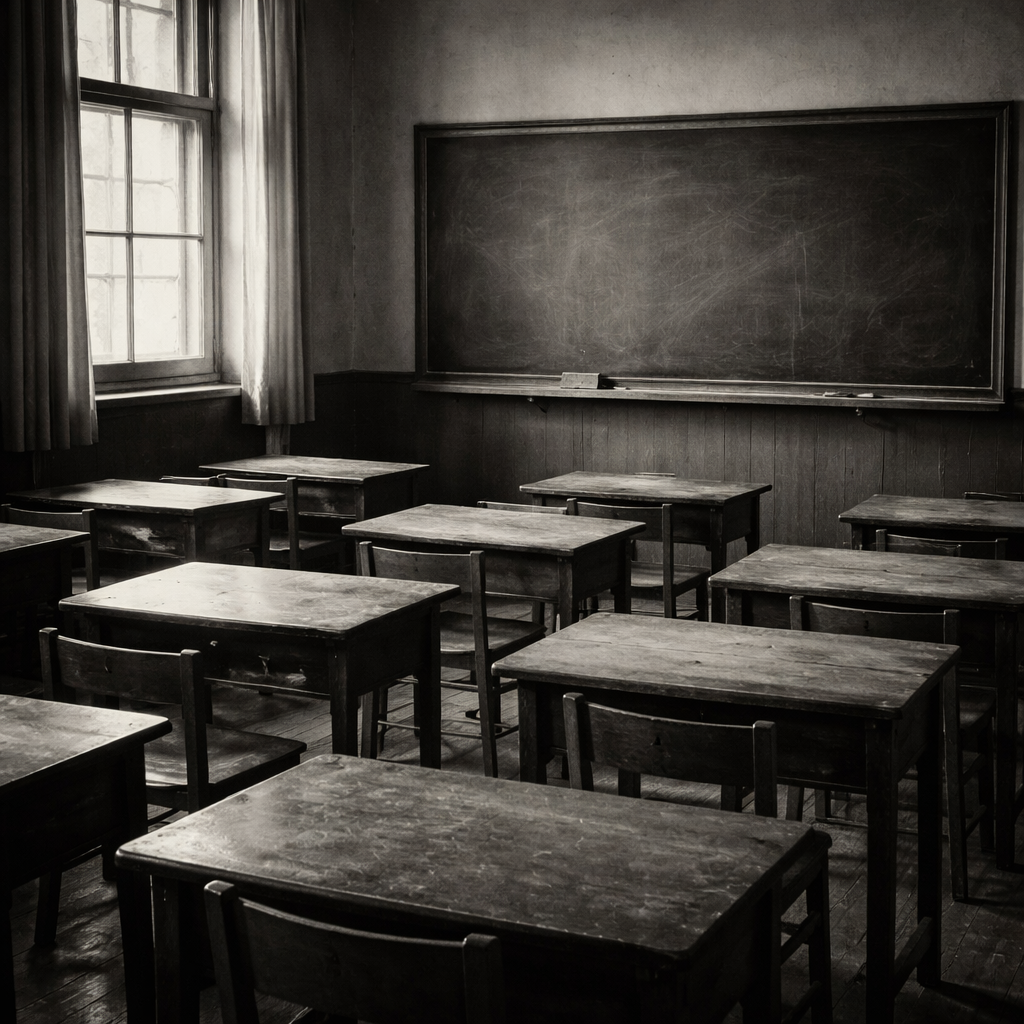
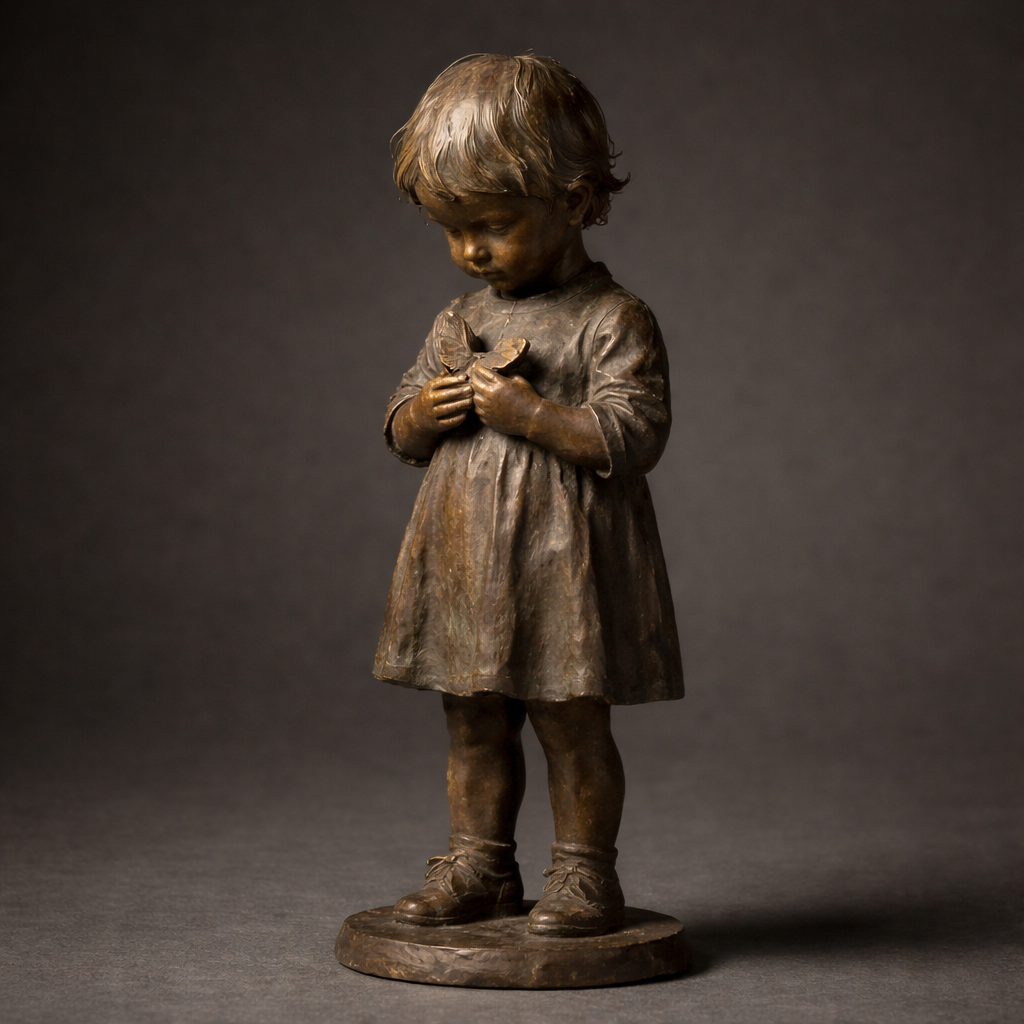
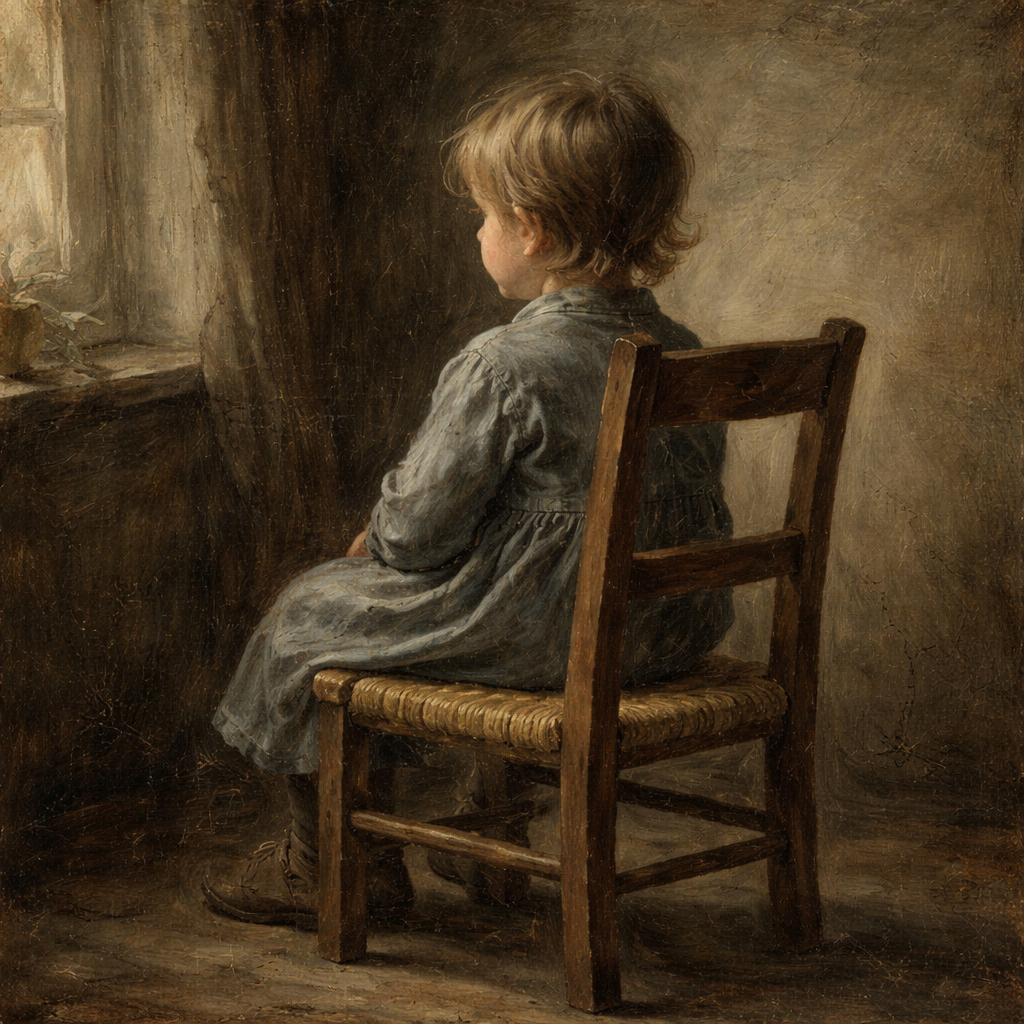
Ekphrastic Poetry: Writing Childhood From Images
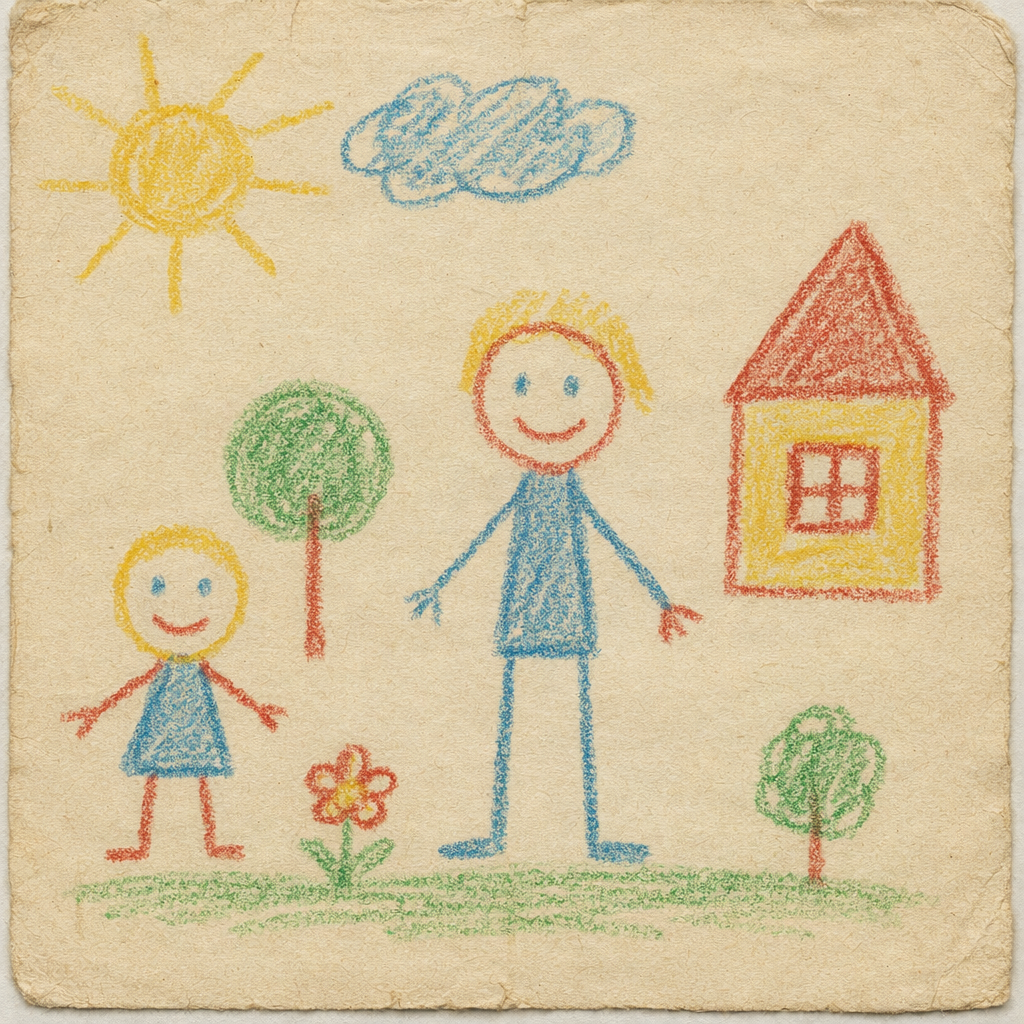
Ekphrastic poetry uses visual images as a starting point for writing, shifting the focus away from recollection and towards observation, atmosphere, and emotional residue. When applied to childhood poetry, ekphrastic writing helps create distance, allowing writers to approach early experience indirectly rather than through confession.
Images connected to childhood — photographs, rooms, objects, landscapes — often carry meaning that feels incomplete or unresolved. Rather than describing what the image shows, effective ekphrastic childhood poetry explores what the image suggests, withholds, or fails to explain.
When working with childhood images, try one or more of the following approaches:
◆ Focus on a single overlooked detail
A crease in clothing, an object half out of frame, a shadow, or an expression that doesn’t match the moment. Let the poem grow from what is easily missed.
◆ Write from just outside the frame
Imagine what happened immediately before or after the image was captured. Avoid narrative explanation; let implication do the work.
◆ Explore emotional distance rather than action
Ask what the image cannot show — fear, confusion, obedience, pride, or uncertainty — and allow these feelings to surface quietly.
◆ Let the image contradict memory
Use the visual prompt to challenge what you think you remember. In poetry about childhood, contradiction often reveals more than accuracy.
◆ Use silence and white space
Allow pauses, short lines, or gaps on the page to mirror what the image cannot articulate. Stillness can carry as much meaning as detail.
There is no requirement to describe the image directly. In ekphrastic poetry, the image is not the subject of the poem — it is the entry point. The poem begins where the image stops offering answers.

Go Deeper into Childhood Writing
If these childhood poetry prompts resonated, you may want to explore longer or more reflective forms of writing that draw on early experience without relying on full recollection or confession. Childhood writing often deepens when it moves between poetry and narrative, allowing moments, objects, and partial understanding to shape meaning.
One effective way to extend this work is through personal narrative writing prompts, which encourage writers to examine formative experiences with distance and intention rather than immediacy. Like childhood poetry, strong personal narratives focus on selection rather than completeness — choosing a single moment, misunderstanding, or detail and allowing it to carry significance.
You might try:
◆ Expanding a poem into a short personal narrative built around one object or place
◆ Writing the same childhood moment in both poetic and narrative forms to explore perspective
◆ Using restraint and omission to suggest meaning rather than explain it
◆ Focusing on reflection rather than retelling, allowing insight to emerge gradually
Approached thoughtfully, personal narrative writing offers a natural companion to childhood poetry, supporting writers in developing voice, structure, and reflective control across forms.
Final Thoughts
Childhood poetry doesn’t aim to preserve the past or recover it intact. It returns to it carefully — through fragments, small observations, and moments that were not fully understood at the time.
You don’t need to remember everything. You don’t need to explain what once felt confusing or unresolved. Often, the most effective poetry about childhood allows uncertainty to remain, trusting implication over clarity.
Write less than you think you should.
Stop before the poem resolves itself.
Let the silence carry meaning.
If an image, a sound, or a detail lingers after you’ve finished writing, don’t rush to clarify it. That lingering uncertainty is often where childhood poetry writing continues to work — quietly, and with depth.
For even more inspiration, explore the Poetry Writing Hub or visit the Creative Writing Archive, where hundreds of additional prompts, picture prompts, story ideas, character collections, and writing resources are waiting to be discovered.
Choose Your Next Theme