100 Small Town Names for Horror Stories (With Meanings, Symbolism & Story Ideas)
Small towns are a cornerstone of horror fiction. Beneath their quiet streets, close-knit communities, and familiar traditions often lurk dark secrets, buried histories, strange disappearances, and unsettling local legends. The contrast between ordinary life and hidden horror creates a powerful sense of unease that keeps readers turning pages.
A strong horror town name can do more than identify a setting—it can hint at forgotten tragedies, supernatural influences, local folklore, environmental dangers, or the psychological themes at the heart of a story. A place called Blackwater immediately suggests corruption, drowning, and hidden depths. A town called Hollowmere evokes isolation, mystery, and the feeling that something ancient may be watching from beneath the water.
This collection of 100 horror town names includes eerie coastal settlements, isolated forest communities, forgotten mining towns, abandoned villages, and places shaped by strange traditions and unsettling histories. Alongside each name, you'll find symbolism and story inspiration to help you build compelling horror settings filled with atmosphere, tension, and secrets waiting to be uncovered.
If you're looking for more horror inspiration, explore the Horror Writing Hub for horror writing prompts, horror subgenres, character ideas, setting inspiration, and story development resources. You can also browse the Creative Writing Archive for hundreds of creative writing prompts across horror, fantasy, mystery, romance, sci-fi, gothic fiction, fairytale retellings, and many other genres.
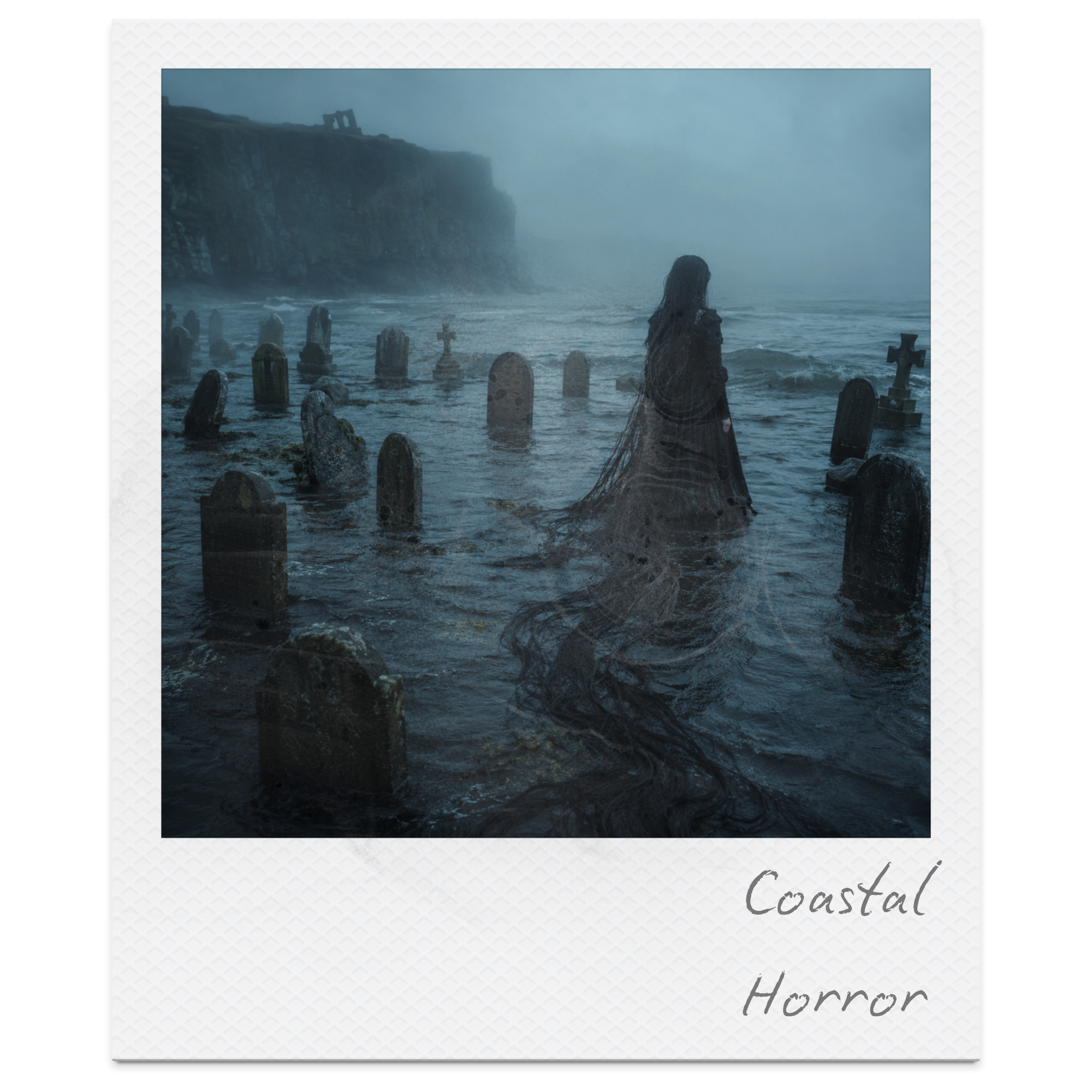
1. Coastal Towns & Fishing Communities
The sea has always been fertile ground for horror stories. Coastal towns often evoke isolation, hidden dangers, old superstitions, and the unsettling feeling that something vast and unknowable lies just beyond the horizon.
1. Blackwater
The name Blackwater immediately evokes hidden depths, uncertainty, and things concealed beneath the surface. Built beside a marshland estuary, the town has a long history of disappearances that locals rarely discuss with outsiders. Some believe the water keeps secrets better than the people who live beside it.
2. Grey Harbour
Grey skies, grey seas, and grey memories define this weather-beaten fishing town. Older residents still talk about a trawler that vanished during calm weather fifty years ago without ever sending a distress call. Every family in town seems connected to the story somehow.
3. Saltmere
The combination of salt and still water creates an atmosphere of preservation, memory, and slow decay. Locals avoid swimming in the lake at the edge of town despite there being no obvious danger. Nobody can remember who started the warning, but everyone obeys it.
4. Crow Point
Crows have long been associated with death, prophecy, and unwelcome truths. Large flocks gather along the cliffs overlooking the harbour, often settling near specific houses for days at a time. Residents have learned not to ask what the birds might know.
5. Bracken Cove
Bracken often symbolises concealment and forgotten places reclaimed by nature. The town's coastline is dotted with hidden coves and abandoned boathouses that appear untouched by time. Locals become noticeably nervous whenever visitors begin exploring them.
6. Low Tide
The name suggests revelation, exposing things normally hidden from view. Every year, unusually low tides reveal remnants of an older settlement buried beneath the sand. The ruins seem to grow larger with each passing decade.
7. Drift Bay
Driftwood, shipwreck debris, and strange objects frequently wash ashore along this isolated coastline. Residents are accustomed to finding things that should not be there. They are less comfortable discussing where those objects might have come from.
8. Widow's Reach
The town takes its name from generations of families lost to the sea. Stories of missing fishermen have become part of local folklore, passed down through families for centuries. Nobody knows why so many disappearances occur in the same stretch of water.
9. Northhaven
The name suggests refuge and safety, making the town's reputation all the more unsettling. Visitors often describe an uncomfortable feeling of being watched while walking near the harbour after dark. The sensation disappears the moment they leave town.
10. Hollow Coast
The word hollow creates a sense of absence and something missing. Residents claim certain stretches of shoreline feel strangely quiet, even during storms. Conversations about the coast's history tend to end abruptly.
2. Forest Towns & Logging Settlements
Forests symbolise mystery, isolation, and humanity's fear of the unknown. These towns sit on the edge of vast woodland landscapes where rumours, disappearances, and old stories often linger longer than facts.
11. Pine Hollow
The name evokes hidden spaces surrounded by dense woodland. The forest surrounding the town is crisscrossed with old logging roads that no longer appear on maps. Some residents insist there are paths that only appear at certain times of year.
12. Ash Creek
Ash often symbolises destruction, endings, and the lingering effects of tragedy. Much of the forest was destroyed by a wildfire decades ago, but nobody agrees on how the fire started. The subject remains strangely sensitive.
13. Black Briar
Briars suggest entrapment, secrecy, and hidden dangers. Locals warn children never to enter a particular section of woodland where several people have vanished over the years. Official investigations have never produced answers.
14. Crow Wood
The forest surrounding the town is famous for its unusually large crow population. Visitors often notice the birds gathering silently in groups, apparently watching people pass. Residents have long since stopped paying attention.
15. Red Pine
The name evokes blood, warning, and violence hidden beneath natural beauty. The town's oldest legends all involve the same stand of red pines at the edge of the forest. Nobody seems willing to visit them alone.
16. Moss Hollow
Moss often symbolises age, neglect, and forgotten history. Entire structures hidden within the forest have gradually disappeared beneath thick layers of vegetation. Some were never recorded on any official map.
17. Hollow Oak
Ancient oak trees often represent memory and endurance. One enormous tree stands in the centre of town and appears in almost every local photograph dating back more than a century. No records exist explaining who planted it.
18. Briar Falls
The town's waterfall attracts tourists throughout the summer months. Locals, however, are more interested in discussing the accidents that seem to occur there with unusual frequency. Many believe the place carries an unfortunate reputation.
19. Wolf Creek
Wolves symbolise predation, instinct, and the fear of being hunted. Although wolves disappeared from the region long ago, residents still report hearing howls from the surrounding forest. Nobody can explain the sound.
20. Raven Hill
Ravens have long been associated with omens, memory, and death. The hill overlooking town is covered with weathered gravestones dating back hundreds of years. Many bear names that no longer appear in historical records.
3. Mining & Industrial Towns
Mining towns naturally lend themselves to horror because they are built on hidden spaces, buried histories, and things brought to the surface that perhaps should have remained underground.
21. Black Vein
The name suggests something dark running beneath the earth itself. The town grew around a once-profitable coal seam that was abruptly abandoned without explanation. Former workers rarely discuss what happened.
22. Ashdown
Ash evokes the aftermath of destruction and the consequences of past actions. Residents still tell stories about a disaster that supposedly occurred beneath the town generations ago. No official records of the event exist.
23. Red Quarry
The colour red immediately suggests danger, violence, and warning. Strange rumours surround the abandoned quarry outside town, where several unexplained deaths occurred over the years. Locals avoid the site after sunset.
24. Coalridge
The town owes its existence to the coal industry that once sustained it. Following the mine's closure, many families left while others stayed behind. Those who remained seem reluctant to discuss the final years of operation.
25. Grey Pit
The name evokes emptiness, depth, and uncertainty. A vast fenced-off excavation sits on the outskirts of town, though nobody can explain why access remains restricted decades later. Security cameras still monitor the site.
26. Iron Hollow
Iron symbolises industry, ambition, and humanity's attempts to reshape the landscape. Workers occasionally report hearing knocking sounds from long-sealed tunnels beneath the town. Engineers insist the noises have a natural explanation.
27. Cinder Creek
The town sits beside a stream discoloured by generations of industrial activity. Despite extensive clean-up efforts, residents remain convinced something is wrong with the water. Many refuse to drink it.
28. Brimstone Hill
The name carries associations with sulphur, judgement, and old fears. Unusual smells occasionally drift through the town without any obvious source. The phenomenon has become part of local folklore.
29. Millstone
Millstones symbolise burdens, repetition, and histories that cannot easily be escaped. The abandoned mill overlooking town has remained untouched for decades despite numerous redevelopment plans. Every proposal seems to fall apart unexpectedly.
30. Copper Hollow
The town's identity is closely tied to the mine that once provided prosperity. During excavation work, workers repeatedly uncovered objects that appeared far older than expected. Many disappeared before experts could examine them.
4. Isolated Villages
Isolation is one of horror's most effective tools. These villages feel disconnected from the outside world, creating opportunities for unusual traditions, tightly guarded secrets, and stories that outsiders struggle to understand.
31. Stillwater
Still water often symbolises calm surfaces hiding something deeper and more dangerous. Visitors frequently remark that the village feels unusually quiet, as though everyone is waiting for something to happen. Long-term residents become uncomfortable whenever conversations drift toward the events of twenty years ago.
32. Elderwick
The name evokes age, tradition, and inherited customs. Village life appears unchanged despite the passing decades, with many families tracing their roots back generations. Newcomers often struggle to understand the community's unwritten rules.
33. White Barrow
Barrows are ancient burial mounds associated with memory, death, and forgotten history. The village takes its name from a grassy hill overlooking the surrounding fields where local children are warned never to play. Nobody can agree where the warning originated.
34. Grey Hollow
Grey suggests uncertainty, ambiguity, and incomplete truths. Roads leading into the village are clearly marked, yet visitors frequently report taking wrong turns while trying to leave. Locals insist this is simply a coincidence.
35. Crowmere
The presence of crows gives the village an atmosphere of constant observation. The birds gather around particular buildings at unusual times of year and seem strangely unafraid of people. Residents barely notice anymore.
36. Mourning Vale
The name immediately evokes grief and collective loss. The village hosts an annual remembrance ceremony for an event nobody is willing to explain to outsiders. Attendance is considered extremely important.
37. Black Thorn
Thorns symbolise hidden danger concealed beneath ordinary appearances. Every house in the village displays the same carved symbol above the doorway. Nobody knows who started the tradition.
38. Hallowfield
The name combines rural familiarity with subtle religious undertones. Several abandoned chapels dot the surrounding countryside despite the village's small population. Most have been locked for decades.
39. Ravenshollow
Ravens have long been associated with prophecy and hidden knowledge. The birds gather in extraordinary numbers each winter, covering rooftops and church spires throughout the village. Residents treat the event as completely normal.
40. Briar Glen
Briars suggest entrapment, secrecy, and difficult journeys. The valley surrounding the village creates a natural sense of isolation from the wider world. Visitors often leave with the feeling that they missed something important.
5. Abandoned & Forgotten Settlements
Abandoned towns tap into fears of decay, loss, and unanswered questions. They invite readers to wonder what happened, why people left, and whether the story is truly over.
41. Lost Creek
The name immediately suggests disappearance and uncertainty. Although the settlement still exists physically, it appears on very few modern maps. Most visitors discover it entirely by accident.
42. Dusthaven
Dust symbolises neglect, age, and forgotten history. Houses remain filled with furniture, photographs, and personal belongings left behind decades ago. It feels as though everyone left in a hurry.
43. Ashfall
The name evokes catastrophe and irreversible change. Stories about why the town was abandoned vary depending on who is telling them. None of the explanations fully account for what happened.
44. Deadwood Crossing
The combination of travel imagery and decay creates immediate unease. A deserted railway crossing still stands at the centre of town despite the tracks having been removed years ago. Locals avoid discussing its history.
45. Silent Pines
Silence is one of horror's most effective tools. Visitors often remark on the absence of birdsong and wildlife throughout the settlement. The quiet becomes increasingly noticeable the longer they stay.
46. Black Hollow
The name suggests darkness, emptiness, and hidden spaces. Most of the buildings remain standing despite decades of abandonment. The town feels strangely preserved rather than ruined.
47. Forgotten Ridge
The name reflects themes of memory, erasure, and loss. Historical records mentioning the settlement are surprisingly difficult to locate. Even local historians struggle to explain why.
48. Grey Crossing
Crossings symbolise boundaries and transitions between places. The town sits at the intersection of several old roads that are rarely used today. Travellers occasionally report stumbling across it unexpectedly.
49. Old Mercy
The name hints at a forgotten story involving compassion, tragedy, or sacrifice. Weathered signs bearing the town's name still stand beside overgrown roads. Nobody seems certain why the settlement was abandoned.
50. Echo Valley
Echoes symbolise memory, repetition, and the persistence of the past. Sounds travel unusually far through the empty streets and surrounding hills. Visitors often find the atmosphere difficult to explain but impossible to forget.
6. Religious Communities & Cult Villages
Religion, tradition, and shared belief can create powerful horror settings. These communities often appear welcoming on the surface while concealing secrets, rituals, and histories that outsiders struggle to understand.
51. Saint's Hollow
The name evokes faith, sacrifice, and the influence of religious authority. The village is centred around a centuries-old church that dominates both the skyline and community life. Visitors quickly notice that almost every conversation eventually returns to the same topic.
52. Redemption
At first glance, the name suggests hope and second chances. The community was founded by a charismatic preacher whose teachings continue to shape local traditions long after his death. Many residents seem uncomfortable discussing the town's origins.
53. Mercy Hill
Mercy often implies forgiveness, compassion, and moral judgement. The town's annual festival attracts visitors from across the region, though few outsiders fully understand its significance. Long-term residents treat the event with unusual seriousness.
54. Shepherd's End
The name suggests guidance, protection, and spiritual leadership. A large stone monument stands at the edge of town, though nobody can clearly explain who commissioned it. Local stories about its purpose change depending on who is telling them.
55. Chapel Cross
The village takes its name from a weathered stone cross standing in the centre of the square. Residents place flowers there throughout the year regardless of season or weather. Nobody seems certain when the tradition began.
56. Hallowbrook
The combination of sacred imagery and flowing water creates an atmosphere of ritual and purification. The stream running through the village is considered important to local customs. Outsiders are politely discouraged from asking too many questions about it.
57. Pilgrim's Rest
The name suggests refuge, devotion, and long journeys. Although the town appears ordinary, visitors frequently report feeling as though they have stepped into a different era. Some choose to leave sooner than planned.
58. White Chapel
White often symbolises purity, innocence, and hidden expectations. The village appears idyllic, with immaculate homes and carefully maintained gardens. Beneath the surface, however, there is a noticeable pressure to conform.
59. Covenant
A covenant implies promises, obligations, and agreements that bind people together. Residents place enormous value on community loyalty and shared traditions. Those who leave rarely return.
60. Saint Briar
The name combines religious imagery with something thorny and potentially dangerous. Local folklore revolves around a long-forgotten miracle that supposedly saved the village centuries ago. Few people can agree on what actually happened.
7. Tourist Towns with Dark Secrets
Tourist destinations often present carefully crafted versions of themselves to outsiders. Horror emerges when visitors begin noticing cracks in the story the town wants to tell.
61. Seabrook
The town markets itself as a charming coastal getaway filled with history and tradition. Visitors arrive expecting picturesque scenery and friendly locals. Some leave wondering why nobody discusses the abandoned hotel overlooking the bay.
62. Willow Bay
The name evokes tranquillity, comfort, and natural beauty. Seasonal tourism keeps the local economy thriving, but residents seem unusually eager for visitors to leave before winter arrives. Few explain why.
63. Maple Falls
The town is famous for its autumn colours and annual harvest festival. Thousands of visitors attend each year without realising how many local traditions revolve around events no longer openly discussed. Some customs seem far older than the festival itself.
64. Cedar Point
The name suggests stability, familiarity, and small-town charm. Tourists often describe the town as welcoming, though many also mention a strange feeling they cannot quite explain. The locals simply smile when asked about it.
65. Harbour View
The town's economy depends almost entirely on tourism. Visitors enjoy scenic views, seafood restaurants, and guided history tours. Certain parts of that history receive noticeably less attention than others.
66. Summerfield
The name creates an image of warmth, nostalgia, and idyllic rural life. Yet almost every family seems connected to the same local tragedy. Nobody appears willing to discuss it in detail.
67. Pine Shore
The town is known for its beaches and woodland walking trails. Visitors occasionally discover old structures hidden among the trees that are not mentioned on tourist maps. Local guides prefer to avoid those areas entirely.
68. Ravenside
The town embraces its spooky reputation and attracts visitors interested in ghost stories and local legends. The challenge is separating the stories invented for tourists from the ones residents genuinely believe. The line is not always clear.
69. Old Wharf
The historic waterfront is the centrepiece of the town's identity. Many buildings date back centuries and have changed little over time. Some locals believe certain parts of the harbour should have been demolished long ago.
70. Fairhaven
The name suggests safety, comfort, and prosperity. Visitors often remark that the town seems almost too perfect. The residents work very hard to keep it that way.
8. Suburban Horror Towns
Suburbs are powerful horror settings because they appear so ordinary. Tree-lined streets, tidy homes, and familiar routines can make hidden secrets feel even more disturbing.
71. Oakridge
The name evokes stability, family life, and traditional values. The neighbourhood appears remarkably normal, yet residents seem unusually interested in one another's routines. Privacy is difficult to maintain.
72. Brookfield
Flowing water and open fields create an image of peaceful suburban living. New residents quickly notice how many local rumours centre around a single house at the end of the street. Nobody agrees on what happened there.
73. Silver Pines
The development was marketed as an ideal place to raise a family. Many homes remain occupied by the same families who moved in decades ago. Some newcomers find that difficult to explain.
74. Ashbury
The name feels familiar, comfortable, and respectable. Residents take great pride in the town's history and community spirit. Certain chapters of that history are rarely mentioned.
75. Meadow Park
Wide streets and green spaces make the suburb appear inviting. Visitors often describe the place as strangely quiet despite its size. Long-time residents barely seem to notice.
76. Crestwood
The neighbourhood sits on a hill overlooking the surrounding area. From a distance, everything appears orderly and predictable. Up close, small details begin to feel increasingly unsettling.
77. Willow Heights
The town's reputation centres on safety and community. Residents are friendly, but newcomers sometimes feel as though they are being evaluated. Fitting in appears more important than anyone admits.
78. Rosewood
The name evokes beauty, tradition, and domestic comfort. Almost every home appears meticulously maintained regardless of the owner's circumstances. The pressure to keep up appearances is impossible to ignore.
79. Green Hollow
The suburb is surrounded by parks and woodland, giving it an isolated atmosphere despite its size. Local children share stories about parts of the woods where adults rarely venture. Parents discourage those conversations.
80. Hawthorne
Named after the flowering trees lining its streets, the town appears idyllic during spring. Beneath the picturesque surface lies a long history of neighbourhood disputes and unexplained incidents. Most residents prefer not to revisit old stories.
9. Mountain & Remote Communities
Mountains naturally create isolation, difficult journeys, and harsh environments. Remote settlements often develop strong identities and long memories, making them ideal settings for horror fiction.
81. Grey Peak
The town sits beneath a mountain that dominates the landscape. Residents measure time through storms, seasons, and local traditions rather than outside events. Visitors often feel cut off from the wider world.
82. Black Ridge
The name evokes danger, boundaries, and looming shadows. A winding road provides the only easy access to the community. Heavy snowfall frequently isolates the town for weeks at a time.
83. Hollow Pass
The settlement grew around a historic mountain route. Travellers have used the pass for centuries, bringing stories from elsewhere. Some stories appear to have stayed behind.
84. Stonehaven
The town's stone buildings and rugged surroundings create a sense of permanence. Families often remain in the area for generations. Outsiders sometimes struggle to feel fully accepted.
85. Pine Crest
The settlement overlooks miles of forest and mountain terrain. Its remoteness is part of its appeal, but it also makes outside help difficult to reach. Residents have learned to rely on one another.
86. Frost Hollow
The name suggests cold, isolation, and difficult winters. Seasonal weather shapes almost every aspect of life in the community. Some local traditions seem designed to endure more than just the climate.
87. Raven Ridge
Ravens frequently circle the cliffs surrounding the town. Local folklore gives the birds an important role in many old stories. Visitors are often surprised by how seriously residents take those tales.
88. White Summit
The town enjoys spectacular mountain views and a thriving tourist season. During winter, however, it becomes a very different place. Many residents seem to prefer it that way.
89. Timber Falls
The settlement was built around the logging industry and remains heavily dependent on the surrounding forest. Old stories about missing workers continue to circulate decades later. No definitive explanation was ever found.
90. North Ridge
The town sits far from major roads and population centres. Generations of families have lived there with little reason to leave. The community remembers everything, including events outsiders have forgotten.
10. Strange & Unsettling Town Names
Some names simply feel wrong in the best possible way. They hint at mysteries, tragedies, or histories that invite readers to ask questions before the story has even begun.
91. Mourning
A town named Mourning immediately raises questions about grief and collective memory. Residents treat the name as perfectly ordinary despite outsiders finding it unsettling. Nobody seems interested in explaining its origins.
92. Hollow Creek
The combination of familiarity and emptiness creates an uneasy atmosphere. Visitors often describe feeling as though something important is missing from the town. Locals rarely disagree.
93. Black Hollow
Darkness and absence combine to create a powerful horror setting. The town appears ordinary at first glance, yet conversations often feel oddly incomplete. Certain subjects are never fully addressed.
94. Lost River
The name evokes disappearance, uncertainty, and forgotten histories. The river that gave the town its name no longer appears on modern maps. Residents insist it still exists.
95. Duskfall
The name creates an image of endings, transitions, and approaching darkness. Even during the day, the town feels strangely subdued. Visitors often find themselves checking the time more frequently than usual.
96. Old Mercy
The name hints at an event long forgotten by most people. Historical records reference the settlement repeatedly but never explain how it received its unusual name. The omission feels deliberate.
97. Grey Mercy
The combination of compassion and uncertainty creates immediate tension. The town's history includes several incidents that locals describe as necessary but regrettable. Details vary depending on who is speaking.
98. Silent Crossing
Crossings represent choices, boundaries, and transitions. The town developed around an old crossroads used for generations. Residents still treat the location with unusual respect.
99. Nocturne
Borrowed from music, the name carries associations with night, melancholy, and reflection. The town embraces its unusual identity and attracts curious visitors. Many leave with more questions than answers.
100. Last Light
The name suggests endings, warnings, and the final moments before darkness. Perched on the edge of a remote coastline, the town feels like the last inhabited place before the world runs out. Residents seem comfortable with that idea.
Go Deeper into Horror Towns
A memorable horror town does far more than provide a backdrop for the story. The best settings feel alive, shaping the characters, influencing local behaviour, and creating a sense that something is fundamentally wrong long before the true horror is revealed. Whether you're writing psychological horror, folk horror, supernatural fiction, gothic horror, or small-town mysteries, the setting itself can become one of the most important characters in the story.
When creating horror towns, consider the following:
◆ Give the town a hidden history. The most compelling horror settings often have an event that continues to influence the present, such as a disappearance, a fire, a murder, a disaster, a scandal, or an unsolved mystery.
◆ Think about what the town refuses to discuss. Silence can be more unsettling than exposition. A community that changes the subject whenever certain topics arise immediately creates intrigue.
◆ Use symbolism within the landscape. Marshes can suggest hidden dangers, forests can represent the unknown, cliffs can evoke isolation, and abandoned buildings can symbolise neglect, decay, or forgotten truths.
◆ Decide what outsiders notice first. A horror town often appears normal on the surface, but small details—empty streets, unusual traditions, excessive friendliness, or visible tension—can hint that something is wrong.
◆ Consider how the town's geography creates vulnerability. Remote villages, mountain communities, islands, and isolated coastal settlements naturally limit escape options and increase tension.
◆ Create local legends that may or may not be true. Rumours, ghost stories, warnings, and urban legends help establish atmosphere even if they never receive a definitive explanation.
◆ Think about what residents accept as normal. Horror often emerges when characters realise that something deeply strange has become ordinary to the people who live there.
◆ Use recurring symbols. Crows, fog, bells, abandoned buildings, specific landmarks, local festivals, or unusual weather patterns can reinforce the town's identity throughout the story.
◆ Give the town contradictions. A place can be beautiful but unsettling, welcoming but secretive, prosperous but deeply unhappy. Contrasts often create stronger horror than obvious darkness.
◆ Consider generational memory. Some horror towns feel trapped by events that occurred decades earlier. Families may inherit stories, fears, grudges, or responsibilities without fully understanding their origins.
◆ Avoid explaining everything. Unanswered questions often linger in readers' minds far longer than complete explanations.
◆ Remember that human behaviour can be just as frightening as supernatural forces. A town's greatest secret may be a monster, but it could just as easily be guilt, denial, prejudice, obsession, or collective complicity.
The strongest horror towns leave readers with the feeling that the story continues long after the final page. Even when the mystery is solved, there should still be corners of the town that feel unexplored, unanswered, and quietly unsettling.
Final Thoughts
Small towns have remained a staple of horror fiction for generations because they combine familiarity with unease. They are places where everybody knows everybody else, where history lingers in old buildings and local traditions, and where secrets can survive for decades hidden beneath the surface of ordinary life. Whether your story focuses on supernatural threats, psychological horror, folk traditions, cult activity, disappearances, or long-buried crimes, the setting itself can become one of the most powerful sources of tension.
The most memorable horror towns feel believable enough that readers can imagine driving through them, walking their streets, or meeting the people who live there. A carefully chosen name, a compelling local history, and a few unsettling details can transform an ordinary location into a place readers will remember long after the story ends.
If you're looking for more horror inspiration, explore the Horror Writing Hub for horror writing prompts, character ideas, horror subgenres, setting inspiration, and story development resources. You can also browse the Creative Writing Archive for hundreds of creative writing prompts across horror, gothic fiction, mystery, fantasy, romance, sci-fi, fairytale retellings, and many other genres.
Choose Your Next Adventure