70 Coastal Fairytale Writing Prompts: Lighthouses, Selkies & Shoreline Magic
The coast is where two worlds meet. One ends at the edge of the land and another begins beneath the waves, leaving beaches, cliffs and harbour villages caught somewhere between the familiar and the unknown. It is perfect fairytale territory: a place where footprints emerge from the sea, lighthouse keepers guard secrets through the fog and something found among the rocks at low tide might change a life forever.
These 70 Coastal Fairytale Writing Prompts explore the magic of the shoreline rather than the ocean itself. You’ll find windswept fishing villages, lonely lighthouses, hidden coves, cliff-top castles, tidal paths, sea caves and cottages overlooking wild water, alongside selkies, coastal witches, smugglers, mysterious strangers and old superstitions passed between generations. The prompts range from whimsical and romantic to folkloric, gothic and quietly unsettling, giving you plenty of different directions for your stories.
Perhaps a lighthouse keeper discovers a child sleeping at the top of the tower after a storm, a princess hides a sealskin beneath the floorboards of a cliffside cottage, or an old harbour tradition suddenly becomes frighteningly real. Your story might begin with a door uncovered in the cliffs, a stranger arriving in a village that has no road leading to it or a ruined chapel becoming accessible for a single hour at the lowest tide of the year.
Use these prompts individually, combine several into the same story or reshape them to fit a fairytale world you are already building. For more magical storytelling inspiration, explore the Fairytale & Folklore Writing Hub for enchanted settings, characters, creatures and story ideas, or browse the Creative Writing Archive for more writing prompts, generators and worldbuilding inspiration across fantasy, folklore and beyond.
Plot Prompts
Coastal fairytales live in the narrow space between ordinary life and the unknown. These plot prompts stay close to shore, exploring isolated villages, dangerous cliffs, tidal secrets and the strange bargains communities make when they have lived beside the sea for generations.
Every house in a fishing village leaves one window open during the first storm of winter. A newcomer closes hers and wakes to find wet footprints crossing the bedroom floor.
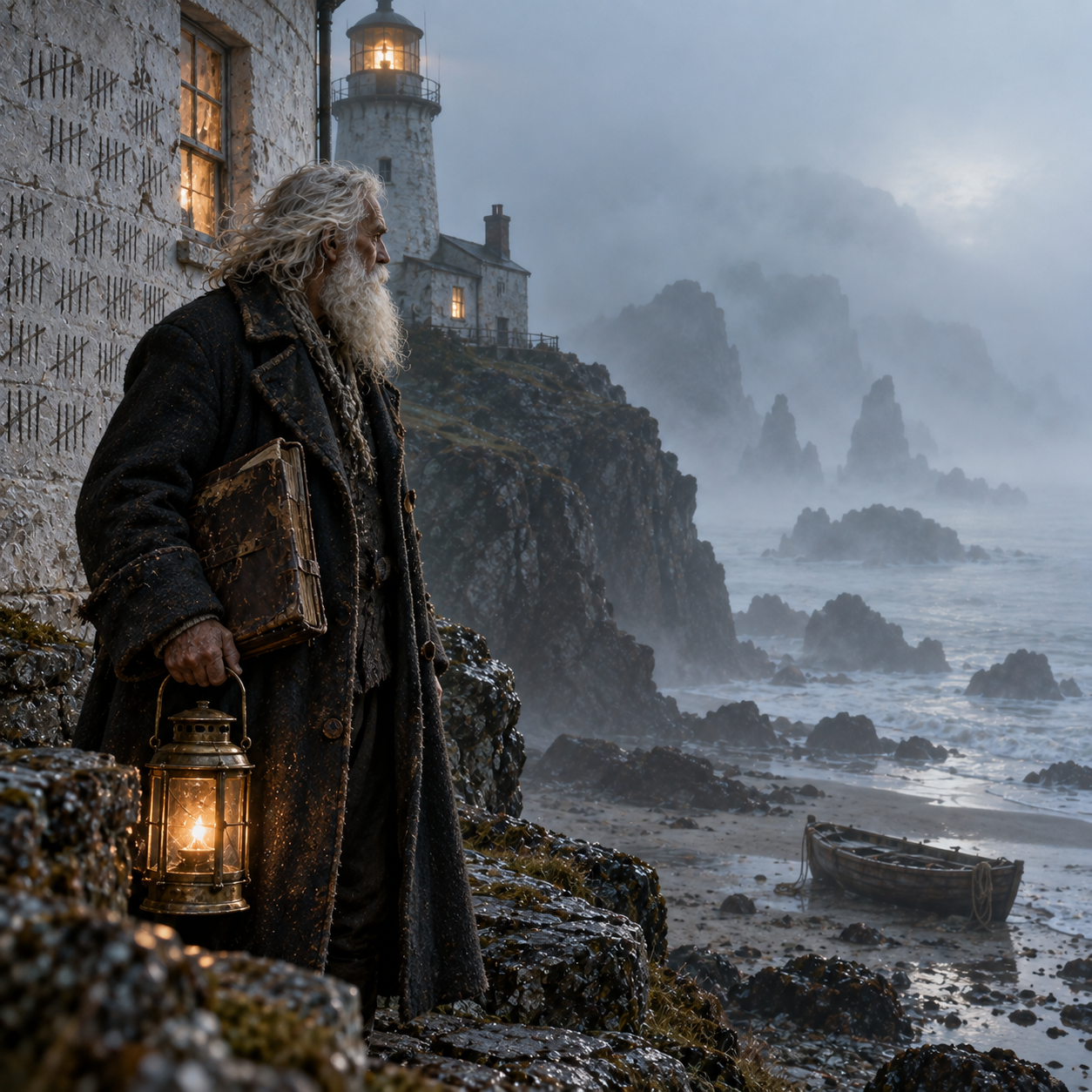
An elderly lighthouse keeper has tended the same lamp for sixty years. One foggy evening, another lighthouse begins flashing back from a stretch of coastline where no tower exists.
A princess fleeing an arranged marriage discovers a sealskin hidden beneath the floorboards of an abandoned cliffside cottage — alongside a portrait of herself painted a hundred years earlier.
Once every seven years, the lowest tide reveals a stone road leading from the beach into the cliffs. This year, a young woman follows it before the water returns.
A coastal village holds an elaborate festival welcoming home sailors who never returned. During this year's celebrations, one of the missing men walks into the harbour.
Nobody remembers who built the little chapel perched above the cliffs, but villagers ring its bell whenever someone is lost at sea. One night, the bell begins ringing by itself.
A girl gathering shells finds a tiny locked door set into the rocks beneath the cliffs. Every morning afterwards, something new has been left outside it.
A wealthy family inherits a beautiful house overlooking the sea and discovers that every previous owner abandoned it during exactly the same week of the year.
The villagers of a remote harbour have always left the first catch of every season on a particular rock. When the new harbourmaster ends the tradition, the fishing boats begin returning empty.
After a violent storm destroys part of the cliffs, the villagers discover a staircase descending into the rock — and dozens of footprints leading out of it.
Title Ideas
Coastal fairytale titles can evoke old folklore, romance, mystery or something much darker. Use these exactly as they are or treat them as sparks for characters, settings and stories of your own.
Saltborn
The Lighthouse Girl
Low Tide
Where the Cliffs Remember
Drift
The Cottage Above the Sea
Saltwater Bride
The Last Light at Blackwater Point
Shorebound
What the Tide Left Behind
Opening Lines
A coastal fairytale can begin with something as small as an unfamiliar footprint in wet sand or as impossible as an entire building appearing overnight. These opening lines bring the strange directly into everyday life beside the shore.
The lighthouse keeper found the girl asleep beside the lamp three hundred feet above the sea.
Everyone in the village knew the tide took things, but nobody had warned Clara that it occasionally brought them back.
On the morning after the storm, there was a second cottage on the cliff.
The old women of Dunmere always said never to marry anyone you met barefoot on the beach.
Someone had left a sealskin hanging from the washing line.
At precisely six minutes past midnight, every bell in the harbour began ringing.
The path down to the cove had been there yesterday, but the path coming back was entirely new.
By sunrise, the sea had placed twelve white roses neatly along the harbour wall.
Nobody had lived in the lighthouse for thirty-two years, which made the light in its upper window difficult to explain.
The stranger arrived with salt in her hair, no shoes on her feet and the key to a cottage that had burned down before she was born.
Closing Lines
These final lines leave just enough unanswered to keep the fairytale alive beyond its ending. Work backwards from one and decide what kind of coastal story could possibly finish there.
At low tide, you can still see the chimney.
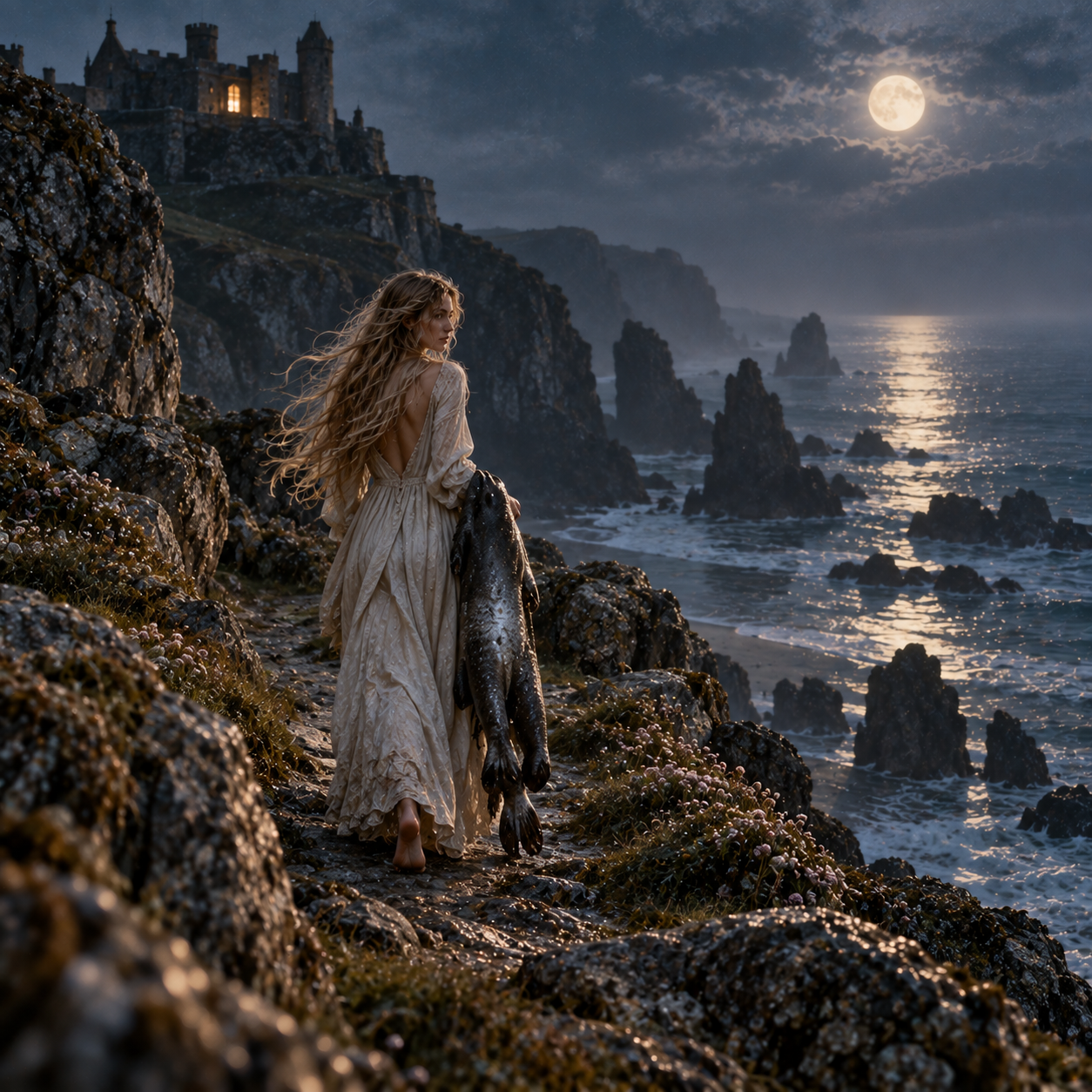
She folded the sealskin beneath her arm and walked towards the shore.
After that, nobody in the village ever closed the western window.
Far across the fog, the second lighthouse answered.
The cottage remained empty, but every morning there was smoke above the chimney.
He left the key beneath the harbour stone, exactly where his grandmother had told him to.
By spring, wildflowers covered the path to the cliff.
They never rang the chapel bell again.
The footprints stopped where the water began.
And every seventh winter, she came home.
Character Ideas
The coast creates people shaped by isolation, weather, tradition and generations spent looking towards the horizon. These characters could become heroes, mysterious strangers, keepers of old secrets or the people who finally discover why certain rules have survived for so long.
An extraordinary elderly lighthouse keeper who has spent fifty years recording every unusual light he sees beyond the cliffs and has finally realised they form a message.
A selkie princess who has lived happily on land for years but secretly walks to the same remote cove every morning to check whether her hidden sealskin is still there.
A teenage fisherman's daughter who knows every cave beneath the cliffs and has recently discovered one that should not exist.
A coastal witch who never casts spells indoors and gathers everything she needs from beaches, hedgerows and tidal pools.
A young harbourmaster determined to modernise a village whose residents still follow dozens of apparently ridiculous maritime superstitions.
An elderly woman who has lived alone in a cliff-top cottage since her husband disappeared and continues setting a second place at dinner every stormy night.
A disgraced prince working anonymously in a fishing village where nobody cares about his title but everyone seems to know who he really is.
A travelling photographer who arrives to document an abandoned coastal settlement and notices the same woman appearing in photographs taken decades apart.
A smuggler who uses forgotten tunnels beneath the cliffs and discovers that one passage leads somewhere far stranger than the hidden beach marked on his map.
A child who can tell whether an object washed ashore has been lost, abandoned or deliberately sent.
Setting Ideas
The shoreline offers far more than beaches. These settings explore the human world built immediately beside the water: villages, cottages, lighthouses, ruins, caves and paths constantly shaped by weather and tide.
A tiny fishing village squeezed between enormous cliffs and the harbour, where every front door is painted with a different protective symbol.
A weather-beaten lighthouse standing on a grassy headland, connected to the mainland by a narrow path that disappears during storms.
A row of crooked fishermen's cottages built directly above a shingle beach, where objects washed ashore are displayed in every window.
A ruined castle clinging to the edge of a cliff, with half its rooms lost to the sea and one remaining staircase leading down into the rock.
A hidden cove accessible only through a narrow sea cave at low tide, containing an abandoned cottage nobody remembers being built.
A colourful harbour town where steep lanes climb between old houses towards a hilltop chapel covered in carvings of unfamiliar sea creatures.
A windswept coastal estate surrounded by wild grass and black rocks, where generations of the same family have watched the sea from one enormous upstairs window.
An isolated inn beside an old cliff road where travellers shelter whenever fog makes the route ahead impossible to see.
A ruined village slowly disappearing over the cliff edge, abandoned except for one cottage whose elderly resident refuses to leave.
A tidal island crowned by an ancient monastery, reachable by a stone causeway for only a few hours each day.
Picture Prompts
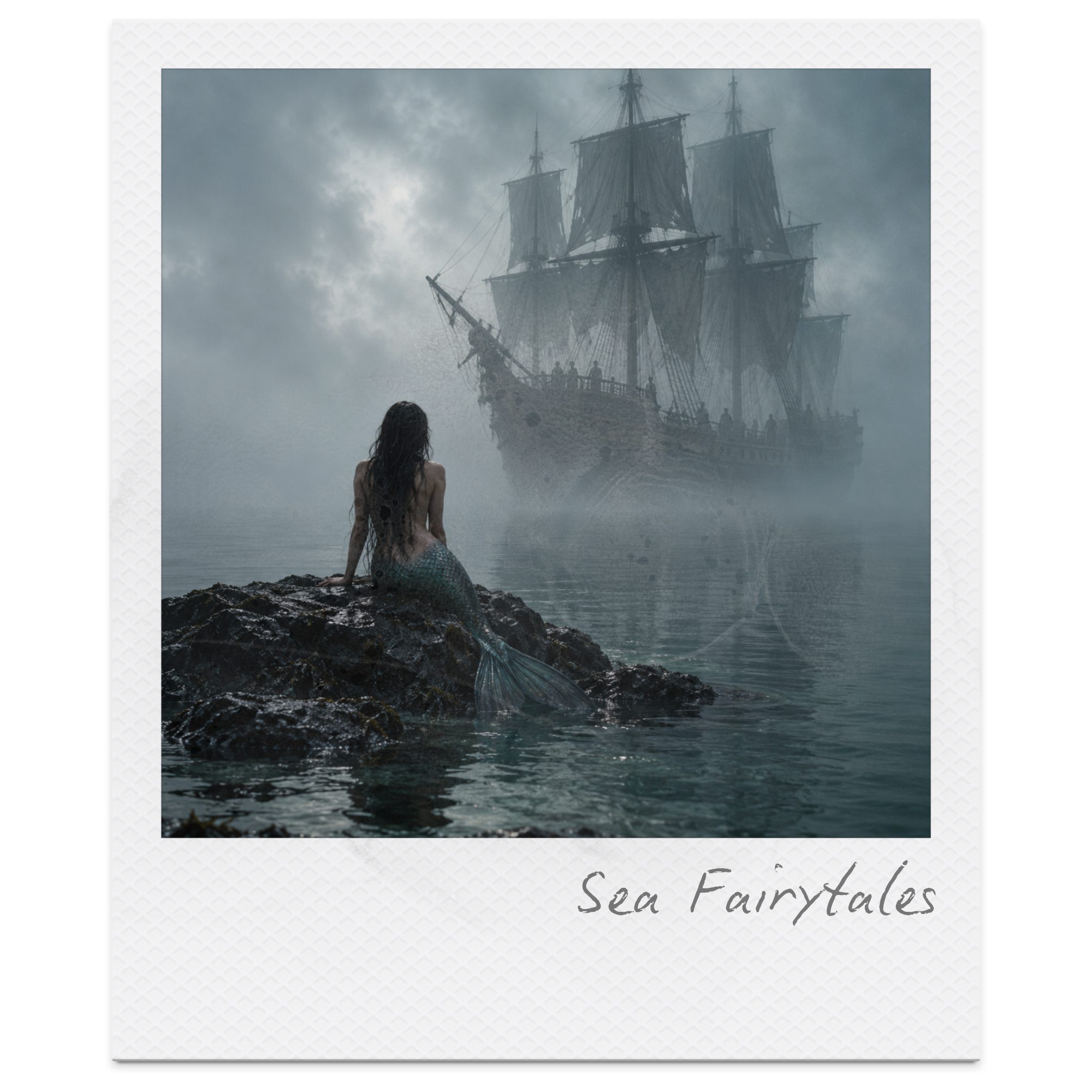
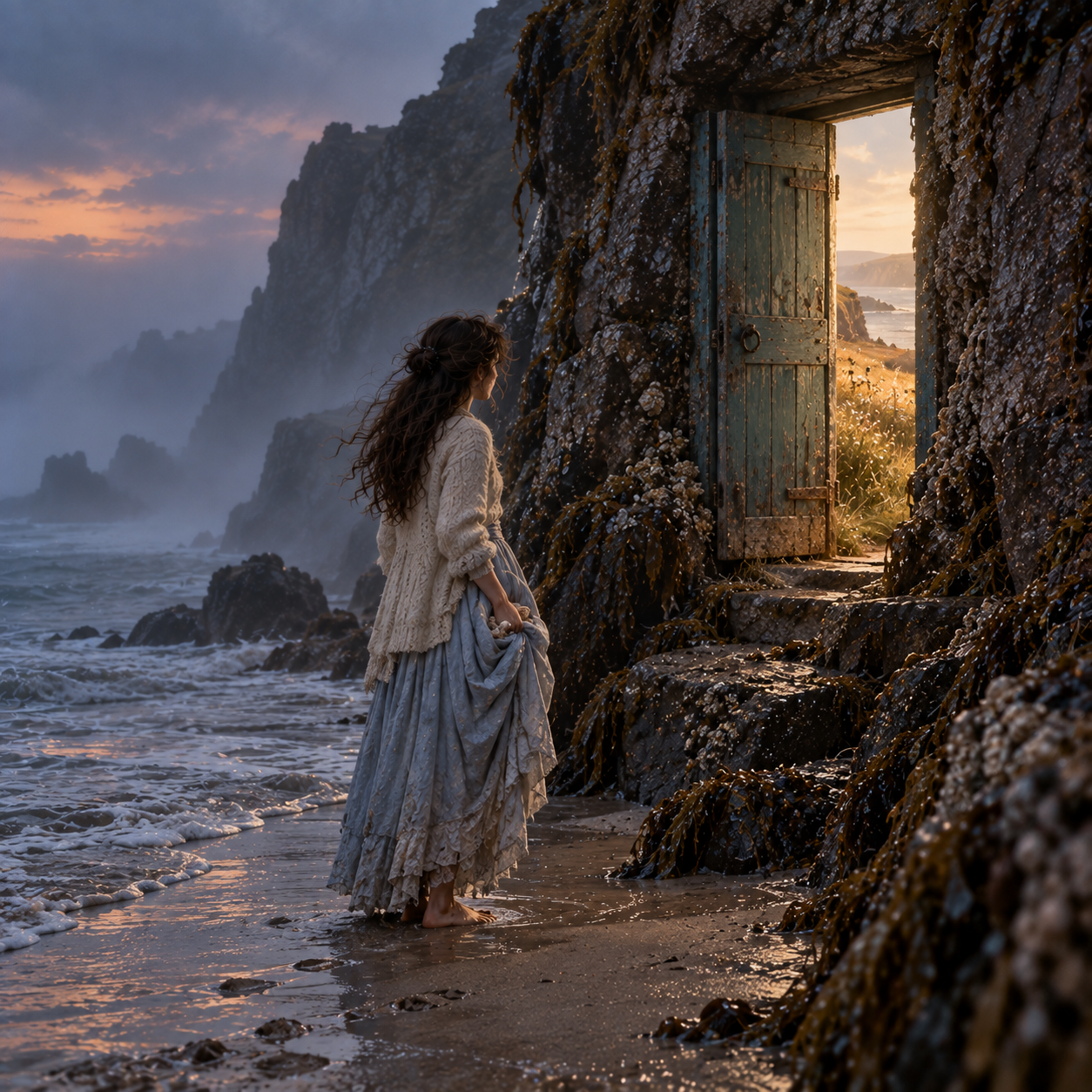
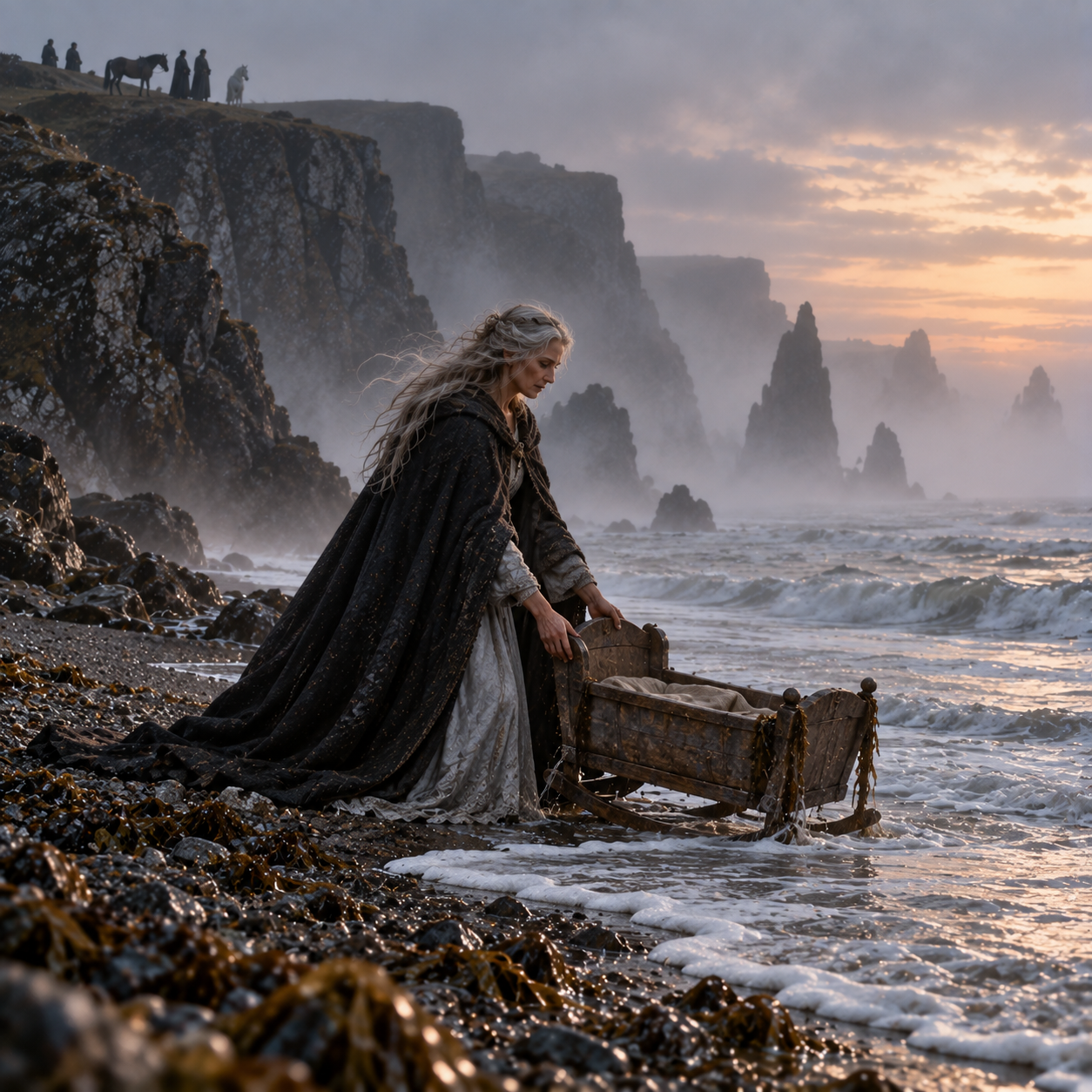
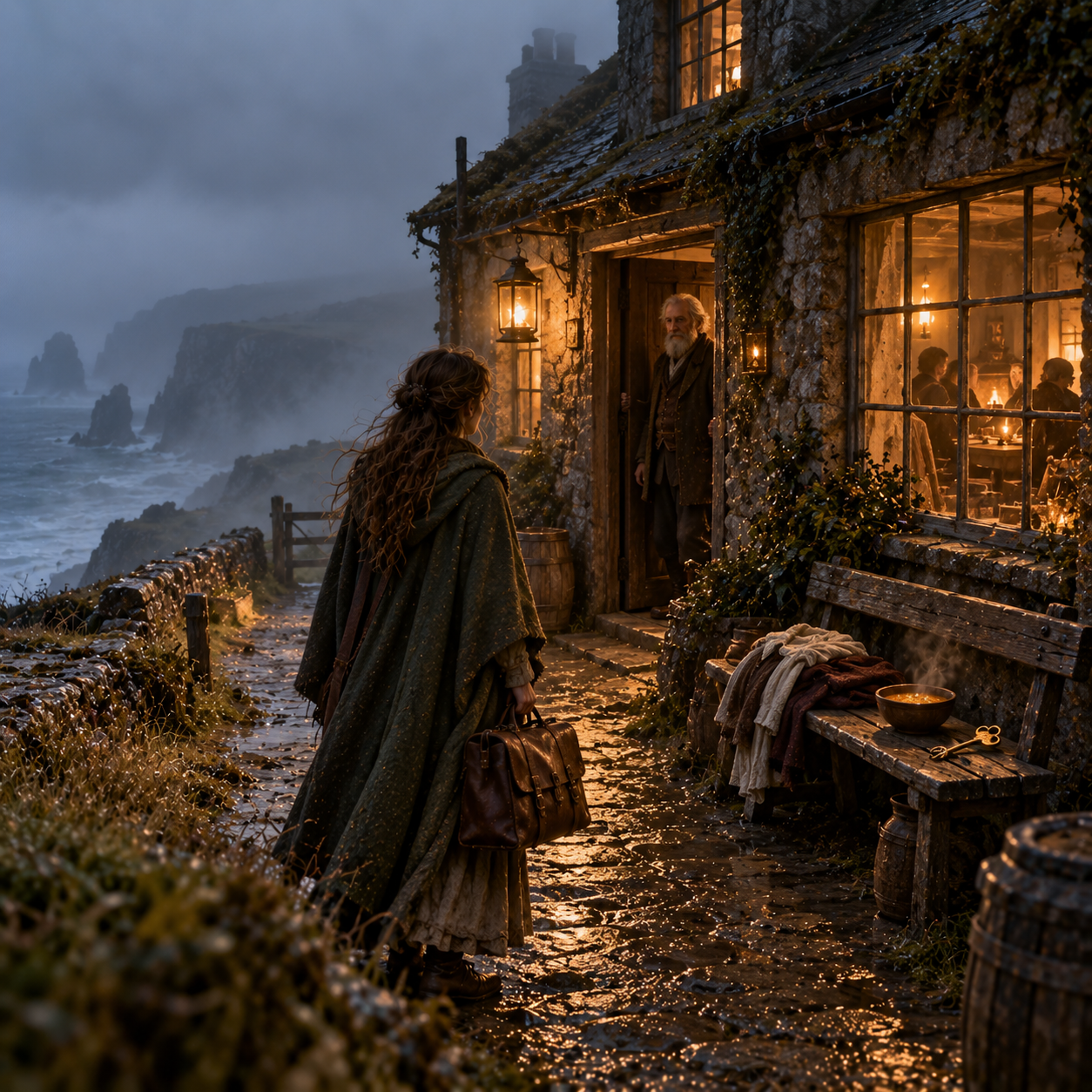
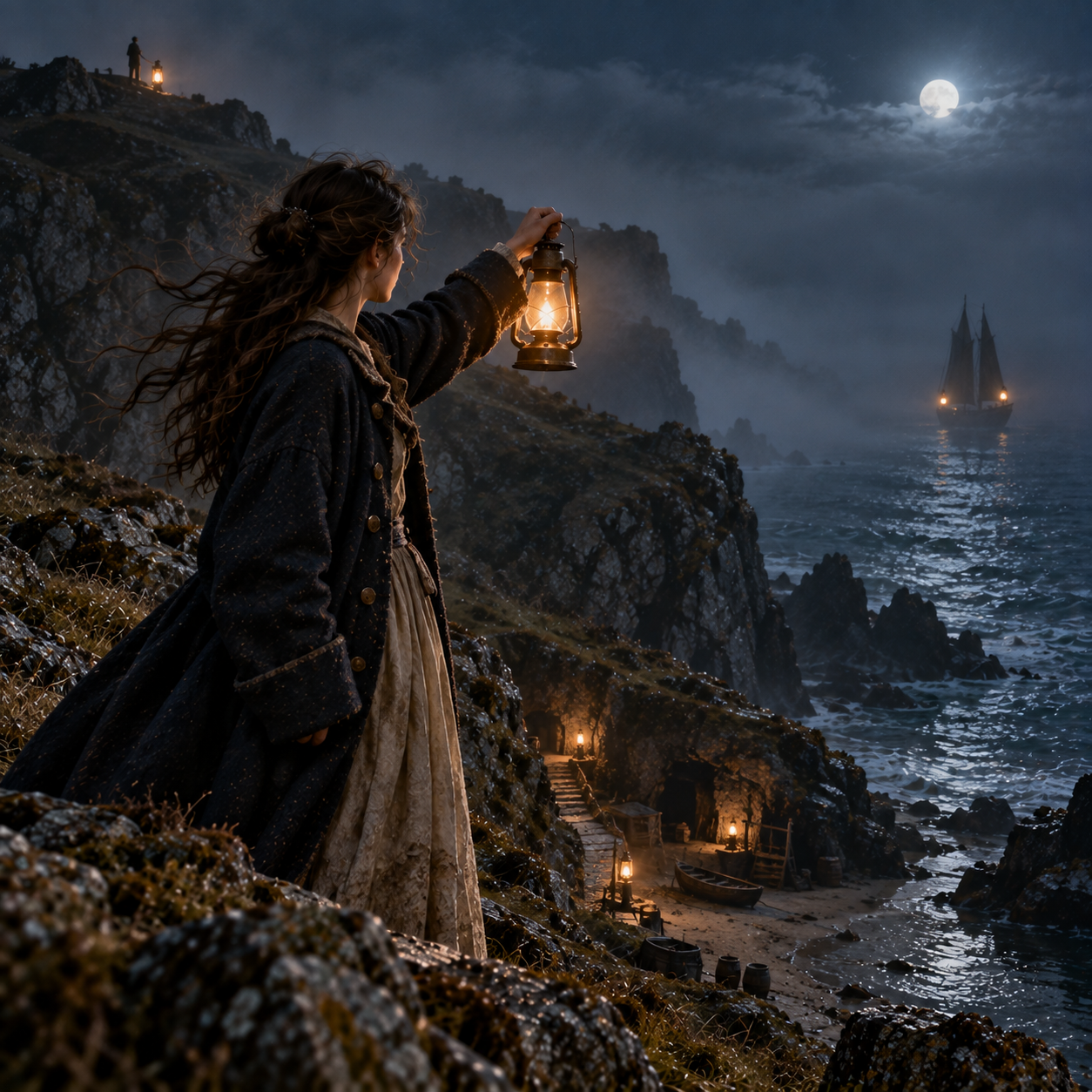
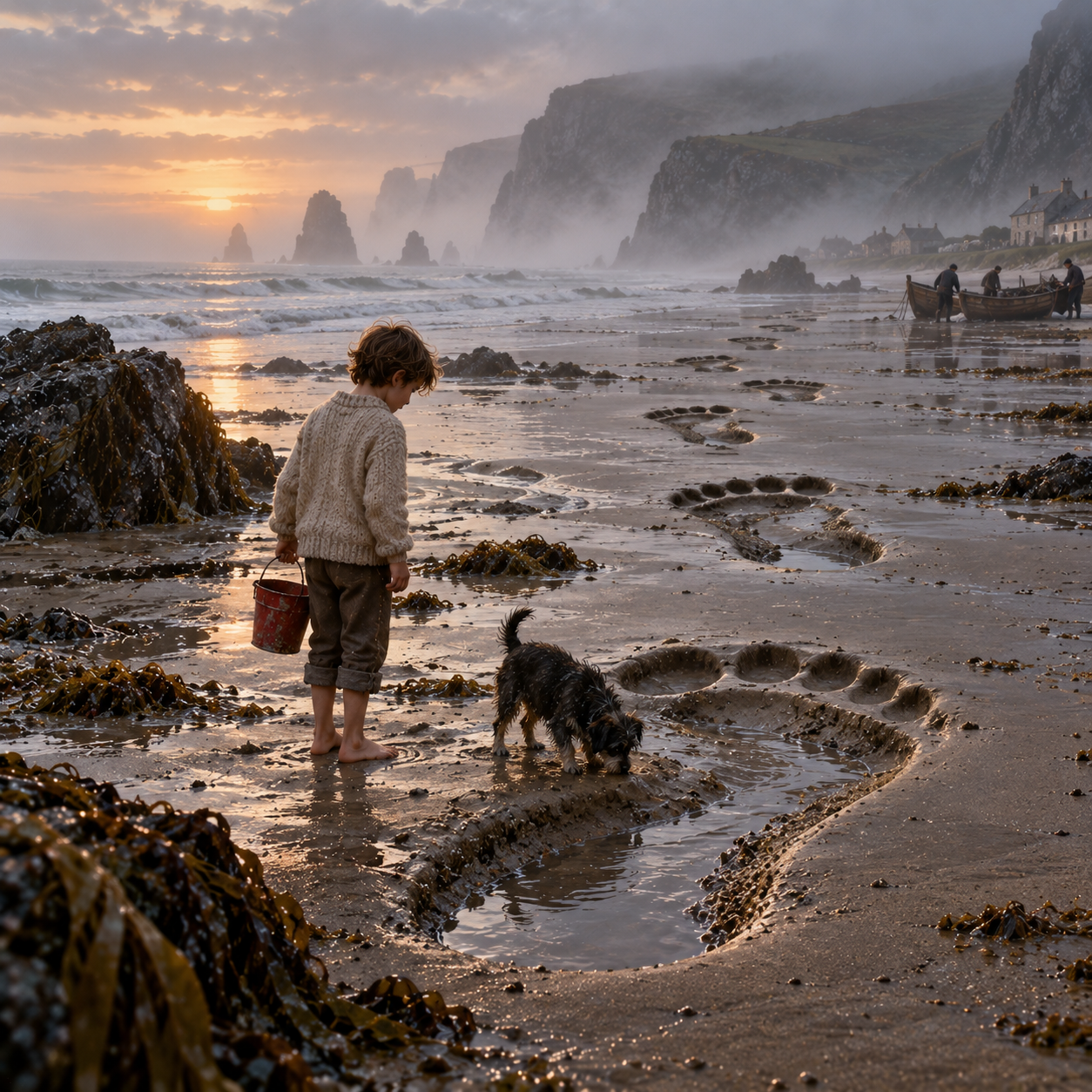
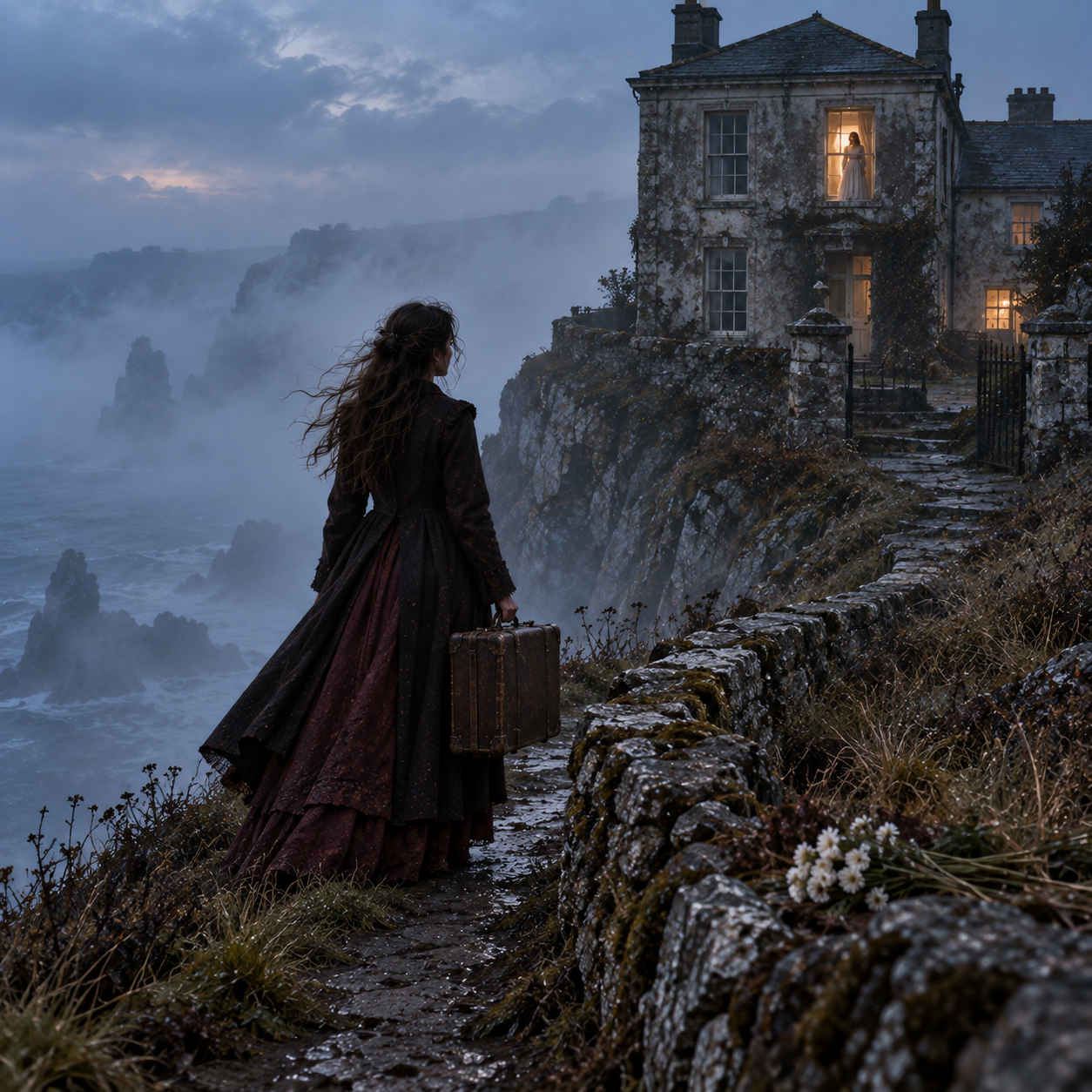
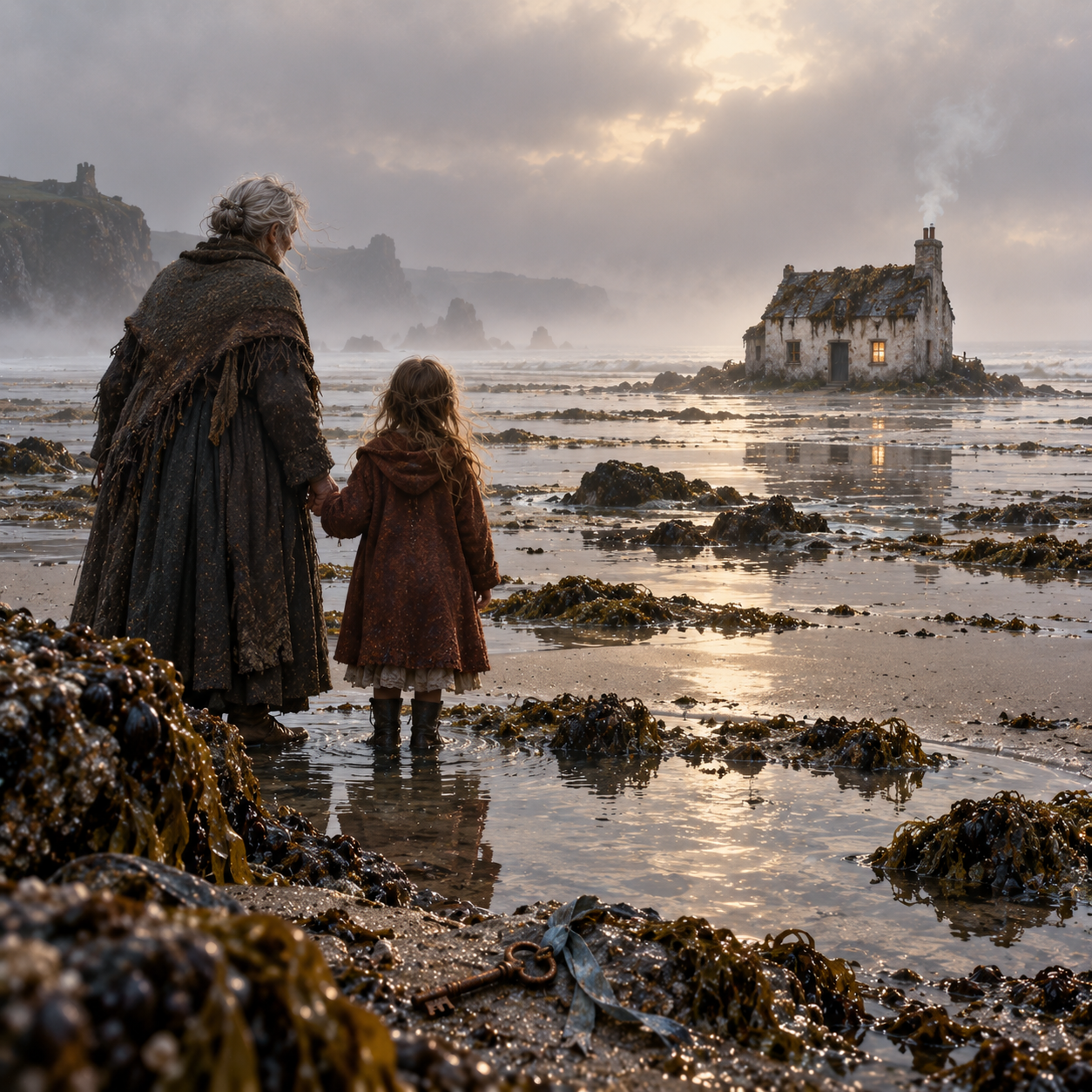
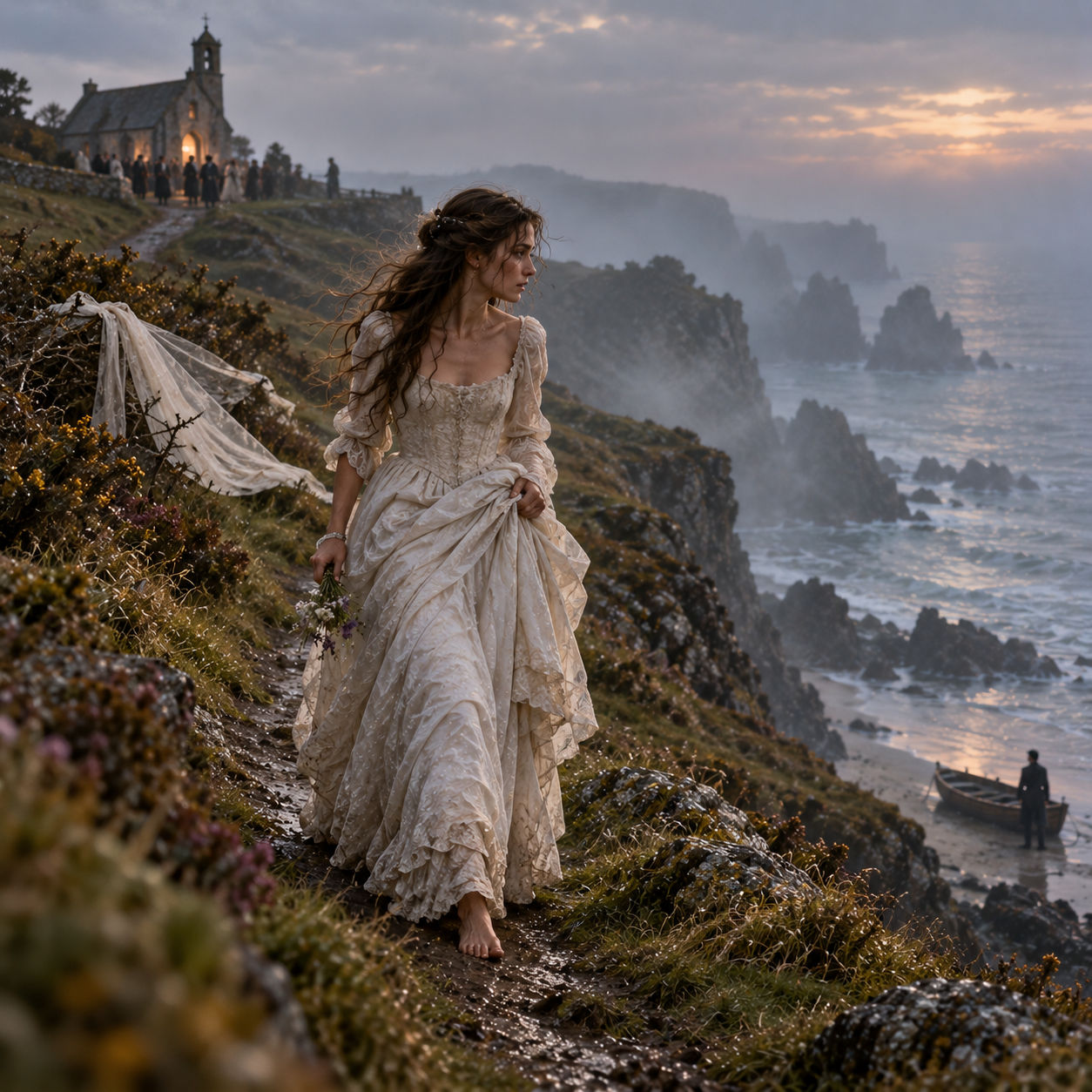
Use these scenes as visual story starters rather than simple illustrations. Look beyond what is visible: decide who these people are, what happened immediately before the image and what discovery, danger or choice is waiting just outside the frame.
Go Deeper into Coastal Fairytale Stories
Coastal fairytales become especially atmospheric when the shoreline feels like more than a backdrop. Think about how generations of living beside an unpredictable sea might shape your characters, their traditions and the stories they tell about the places where land and water meet.
◆ Give the community its own folklore. Create superstitions, warnings and traditions that have survived for generations. Perhaps villagers never whistle near the harbour, leave candles burning during storms or refuse to walk a particular cliff path after dark.
◆ Use the landscape to reveal secrets. Tides, storms and erosion can uncover things deliberately or accidentally hidden: forgotten tunnels, sealed cottages, shipwrecks, old graves, ruined chapels or doors carved into the cliffs.
◆ Make isolation matter. A remote fishing village, lonely lighthouse or cliff-top cottage can feel completely cut off when fog descends or a storm destroys the only road. Consider what happens when your characters cannot simply leave.
◆ Explore the boundary between worlds. Coastal magic can belong neither entirely to land nor sea. Selkies might cross between identities, strange visitors may arrive with the tide and magical places could exist only within caves, tidal pools or stretches of shore briefly exposed by the water.
◆ Build history into the community. Old fishing families, lighthouse keepers, smugglers, ruined estates and abandoned settlements can give the coast generations of secrets. The strange custom everyone follows today might have begun because of something very real centuries earlier.
◆ Let the coast change. Cliffs collapse, paths disappear, tides reshape beaches and storms alter familiar landscapes overnight. Use that instability to reveal something new — or remove something your characters believed would always be there.
Final Thoughts
Coastal fairytales occupy a wonderfully strange space between two worlds. The characters may live firmly on land, but the sea is always there — changing the landscape, bringing unexpected things ashore and hiding places that can only be reached when the tide allows. A familiar harbour, lighthouse or cliff path can become magical with just one detail that does not quite belong.
Use these 70 coastal fairytale writing prompts as starting points and combine them freely. A selkie might seek refuge in the isolated inn, the tunnel beneath a ruined castle could emerge inside a sea cave, or the mysterious tradition practised by an entire fishing village might trace back to a bargain made by one lighthouse keeper centuries earlier.
Coastal stories are particularly good places to leave a little unexplained. Your characters do not necessarily need to discover why the second lighthouse appears in the fog or where the footprints from the water came from. Sometimes knowing that the villagers have been following the same strange rule for three hundred years is enough.
For more enchanted storytelling inspiration, explore the Fairytale & Folklore Writing Hub for magical settings, characters, creatures and story ideas, try the Fairytale Story Sparks Generator for instant inspiration, or browse the Creative Writing Archive for more prompts, generators and worldbuilding resources across fantasy, folklore and beyond.
Choose Your Next Adventure