70 Time Travel Writing Prompts: Parallel Timelines, Temporal Paradoxes & Forgotten Futures
Time travel remains one of the most enduring ideas in speculative fiction because it allows writers to explore both possibility and consequence at the same time. Unlike many science fiction concepts focused purely on technology or space, time travel stories are deeply connected to emotion, memory, regret, and human decision-making. A single altered conversation, delayed train, or missed opportunity can reshape entire futures. In time travel fiction, the smallest actions often carry catastrophic consequences.
Some of the most influential stories in literature and film explore this tension directly. The Time Machine by H. G. Wells helped establish many of the genre’s foundations, while stories such as A Sound of Thunder, Interstellar, Dark, Doctor Who, Back to the Future, and The Time Traveler’s Wife all approach time differently — as scientific theory, emotional tragedy, philosophical paradox, or cosmic horror. Some narratives treat time travel as adventure, while others present it as dangerous, unstable, or psychologically destructive.
Unlike traditional science fiction focused on external exploration, time travel fiction often becomes intensely personal. Characters are frequently confronted by earlier versions of themselves, unresolved grief, alternate futures, or impossible moral choices. Entire timelines may depend on decisions made in moments of panic, love, fear, or desperation. In many stories, time itself begins to feel unstable, with memories changing, identities fragmenting, and reality refusing to remain fixed.
This collection of 70 Time Travel Writing Prompts is designed as a complete creative toolkit, combining plot hooks, title ideas, opening lines, closing lines, character ideas, setting prompts, and cinematic visual inspiration. These prompts explore paradoxes, alternate timelines, collapsing futures, historical interference, memory distortion, futuristic cities, looping timelines, and the emotional consequences of changing the past.
If you would like to explore more speculative fiction concepts, atmospheric storytelling ideas, and genre-based prompt collections, you can also browse the Creative Writing Archive, Historical Fiction Writing Hub and explore the wider Sci-Fi Writing Hub, where time, memory, and imagination continue to collide.
1. Plot Hooks
Time travel stories often begin with accidental discoveries, failed experiments, altered memories, or the growing realisation that history has already started changing.
Write about a character who wakes up to discover nobody remembers the previous version of history except them.
Write about a scientist whose time machine only travels forward, never back.
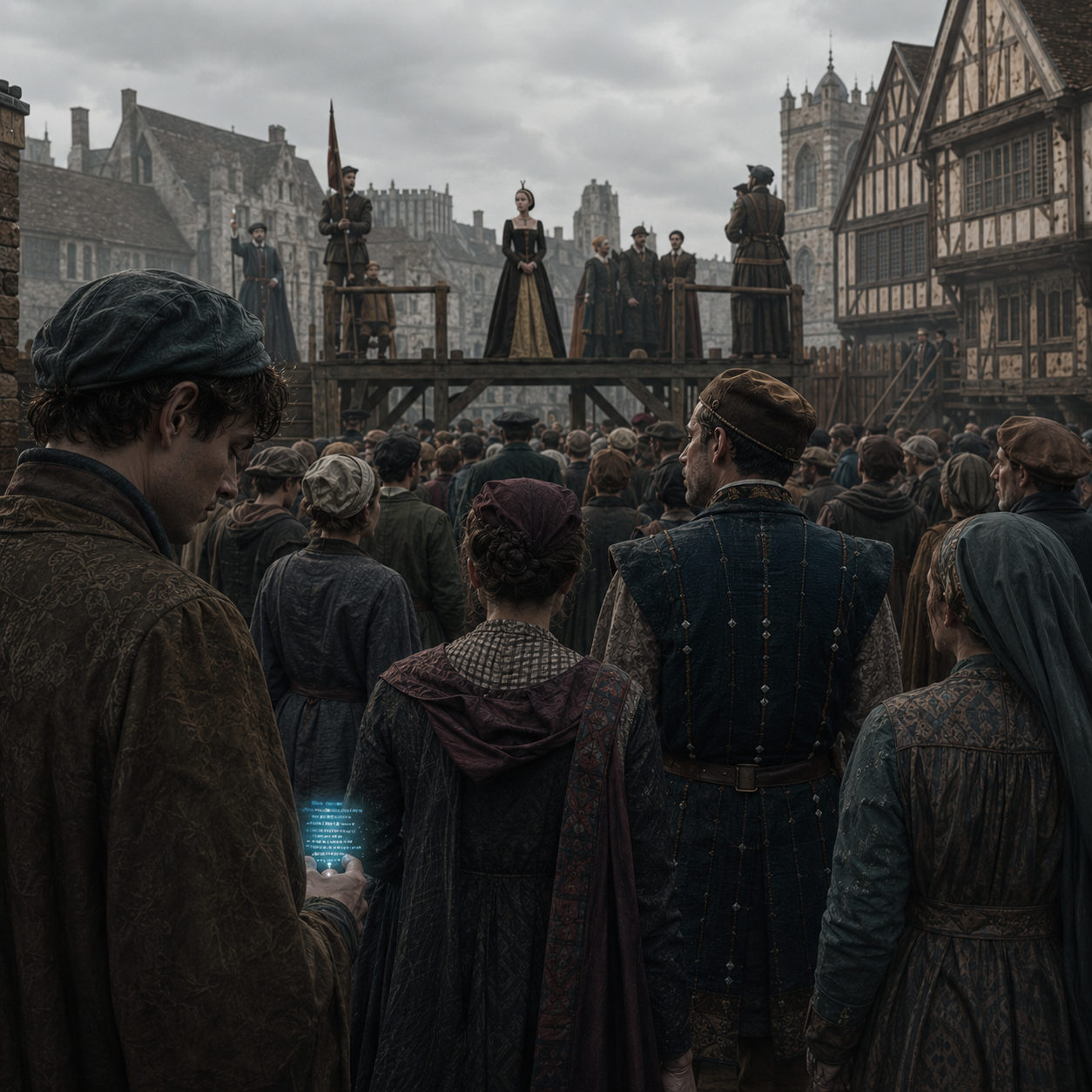
Write about a traveller stranded hundreds of years in the past with knowledge capable of changing history.
Write about a city trapped within the same twenty-four hours.
Write about a historian hired to prevent someone from altering a major historical event.
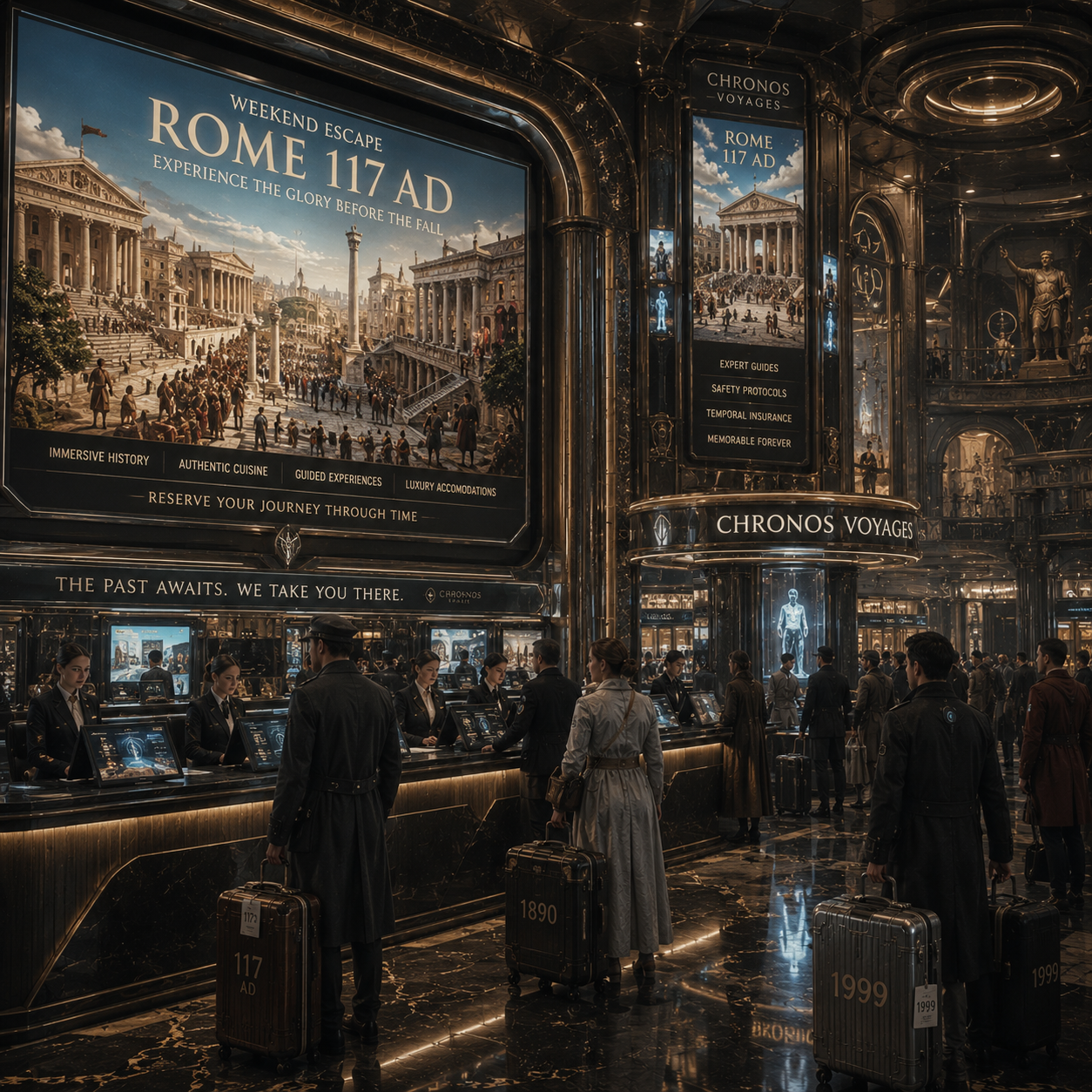
Write about a luxury company offering vacations to historical eras — until tourists begin disappearing from recorded history.
Write about a government department responsible for repairing damaged timelines.
Write about a traveller who accidentally meets an older version of themselves living under another name.
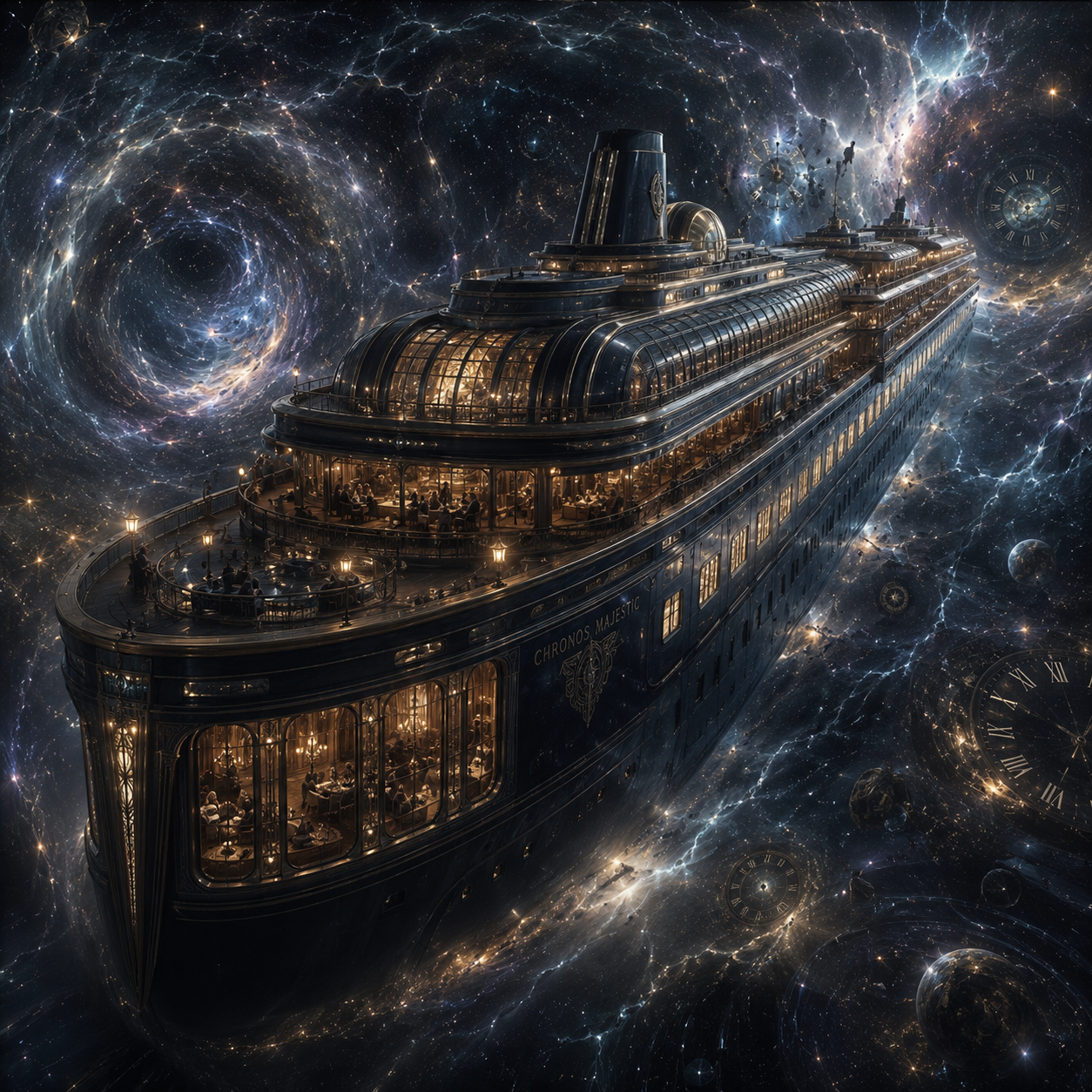
Write about a time-travel cruise liner stranded centuries away from its intended destination.
Write about a character who realises every version of the future ends in the same disaster.
2. Title Ideas
Time travel titles often evoke movement, repetition, memory, inevitability, fractured reality, and the instability of cause and effect.
The Day History Changed Twice
Echoes Across the Timeline
Before the Future Collapsed
A City Outside of Time
The Last Traveller Through Tomorrow
Where Forgotten Futures Wait
The Clock Beneath the Station
Every Version of Yesterday
The Timeline We Buried
Somewhere Beyond Midnight
3. Opening Lines
Time travel openings often establish confusion, unease, or the immediate sense that reality itself has become unstable.
The clocks stopped at exactly 2:17 a.m.
I recognised the stranger because I had already seen him die.
Nobody else remembered the missing year.
The message arrived fifty years before it was sent.
By the time I realised history had changed, it was already too late.
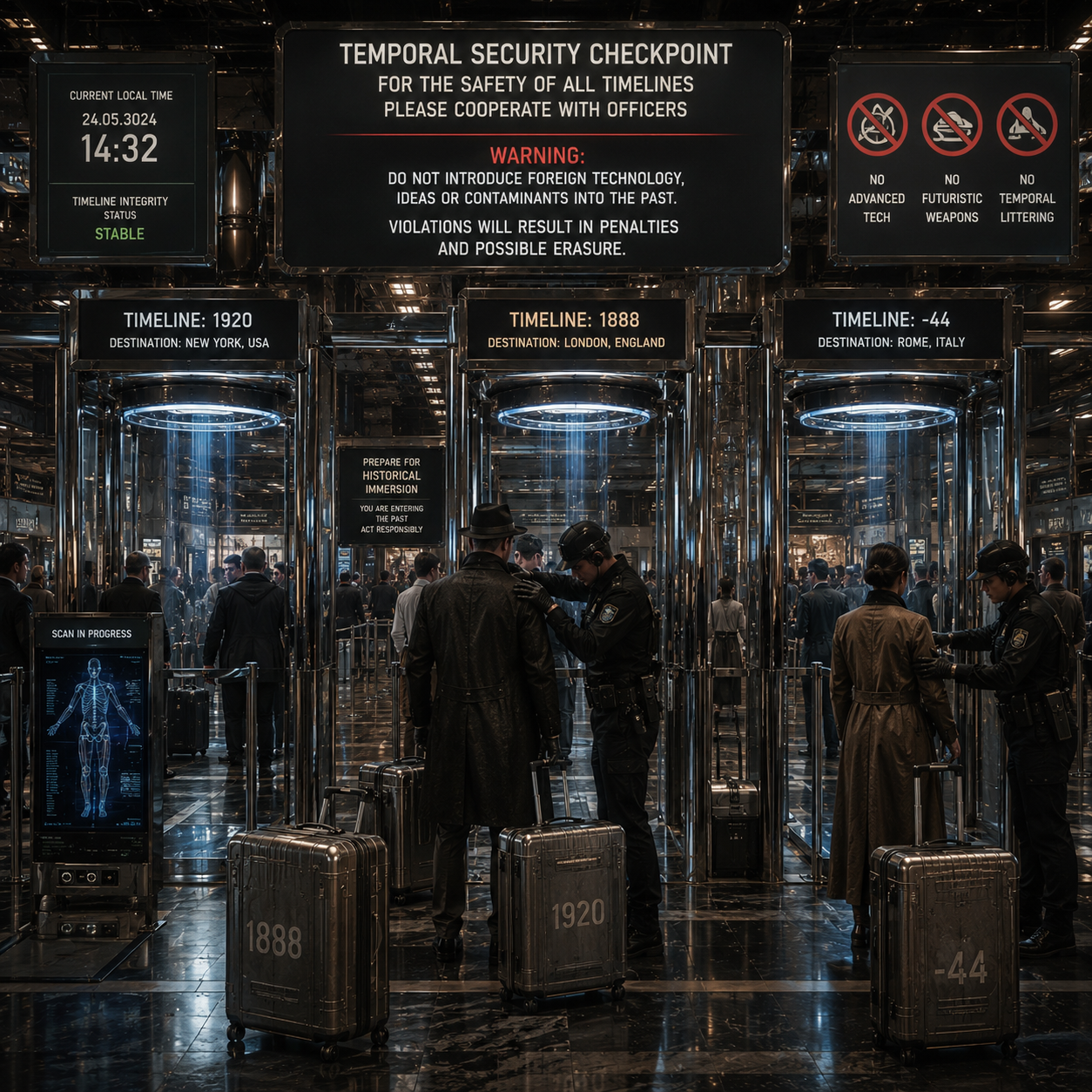
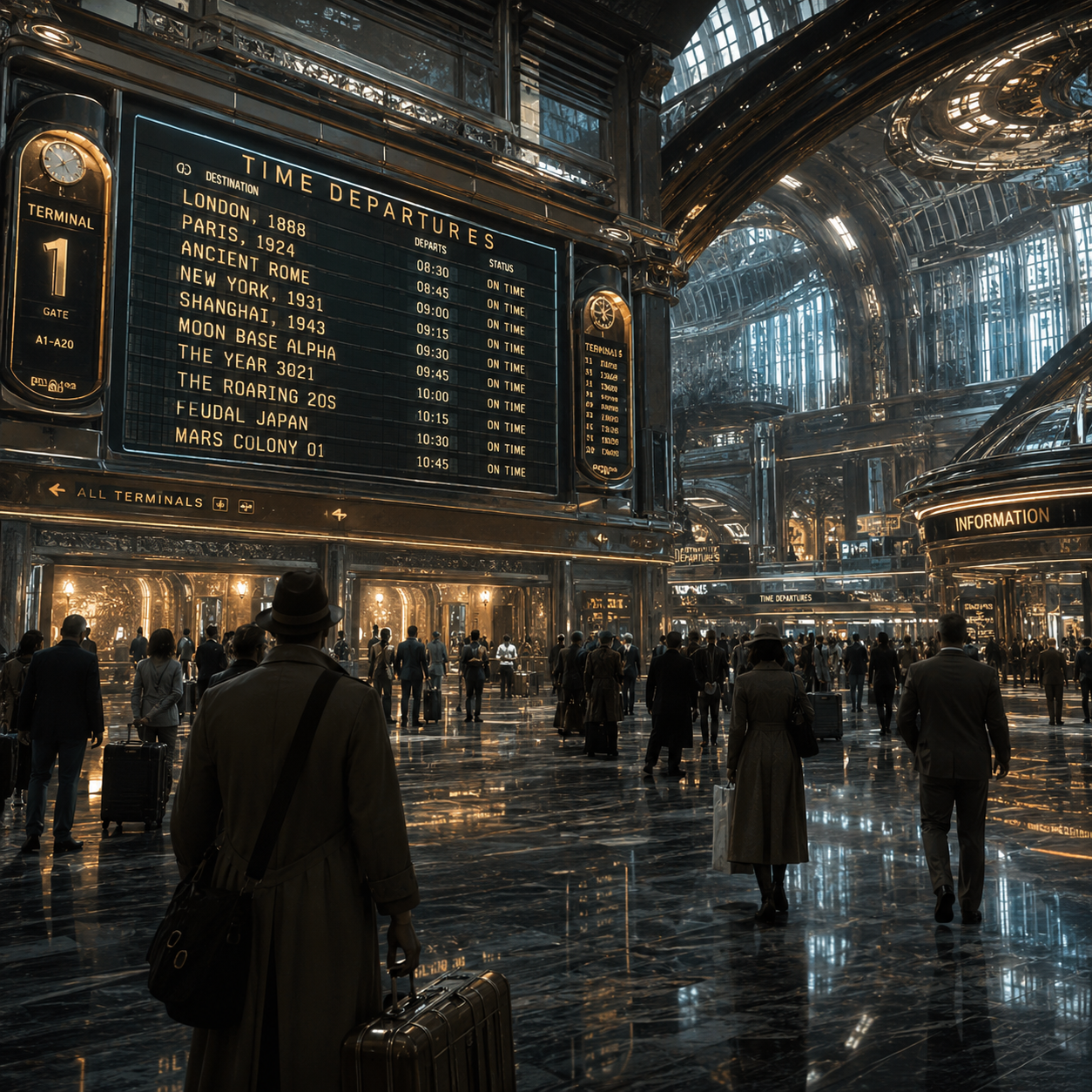
The departures board listed Ancient Rome beside New Tokyo and 1987 Chicago.
Every photograph in the house had begun changing overnight.
They warned us never to meet ourselves in another timeline.
Nobody warned us that time tourists were forbidden from falling in love with people from the past.
Somewhere in the city, time had started repeating itself.
4. Closing Lines
Time travel endings often leave behind ambiguity, emotional loss, or the unsettling possibility that history has not fully repaired itself.
Somewhere beyond the timeline, another version of us still existed.
The future vanished the moment we returned home.
I realised too late that history had already changed me as well.
The clocks finally began moving again.
Even now, I still remember the life nobody else lived.
Behind us, the timeline continued to fracture.
Some moments are never meant to be undone.
The city disappeared from history before sunrise.
I understood then why time travellers rarely stay anywhere for long.
In another version of the future, we never escaped at all.
5. Character Ideas
Characters in time travel fiction are often shaped by regret, obsession, displacement, scientific ambition, and the emotional burden of knowing too much about the future.
A historian addicted to revisiting lost eras.
A scientist hiding evidence that time travel has already damaged reality.
A traveller searching through timelines for someone they lost.
A detective investigating crimes that have not happened yet.
A teenager trapped reliving the same week repeatedly.
A travel guide responsible for escorting tourists safely through dangerous historical events.
A politician attempting to manipulate history for personal gain.
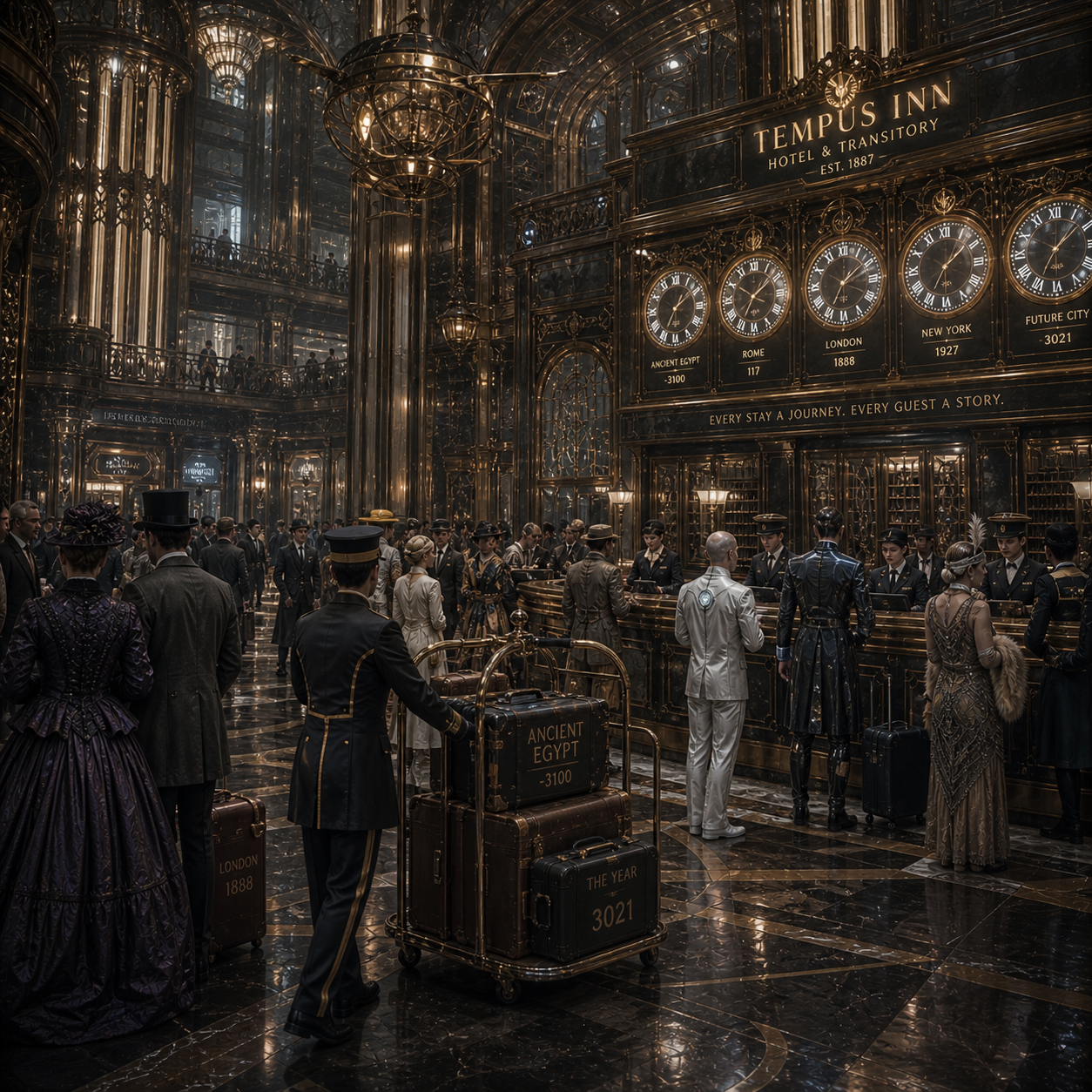
A concierge working aboard a luxury time-travel liner transporting wealthy passengers between eras.
A character who keeps surviving alternate apocalyptic futures.
A librarian preserving books erased from changing timelines.
6. Setting Ideas
Time travel settings are often defined by instability, overlapping histories, forgotten futures, abandoned technology, and locations where time no longer behaves normally.
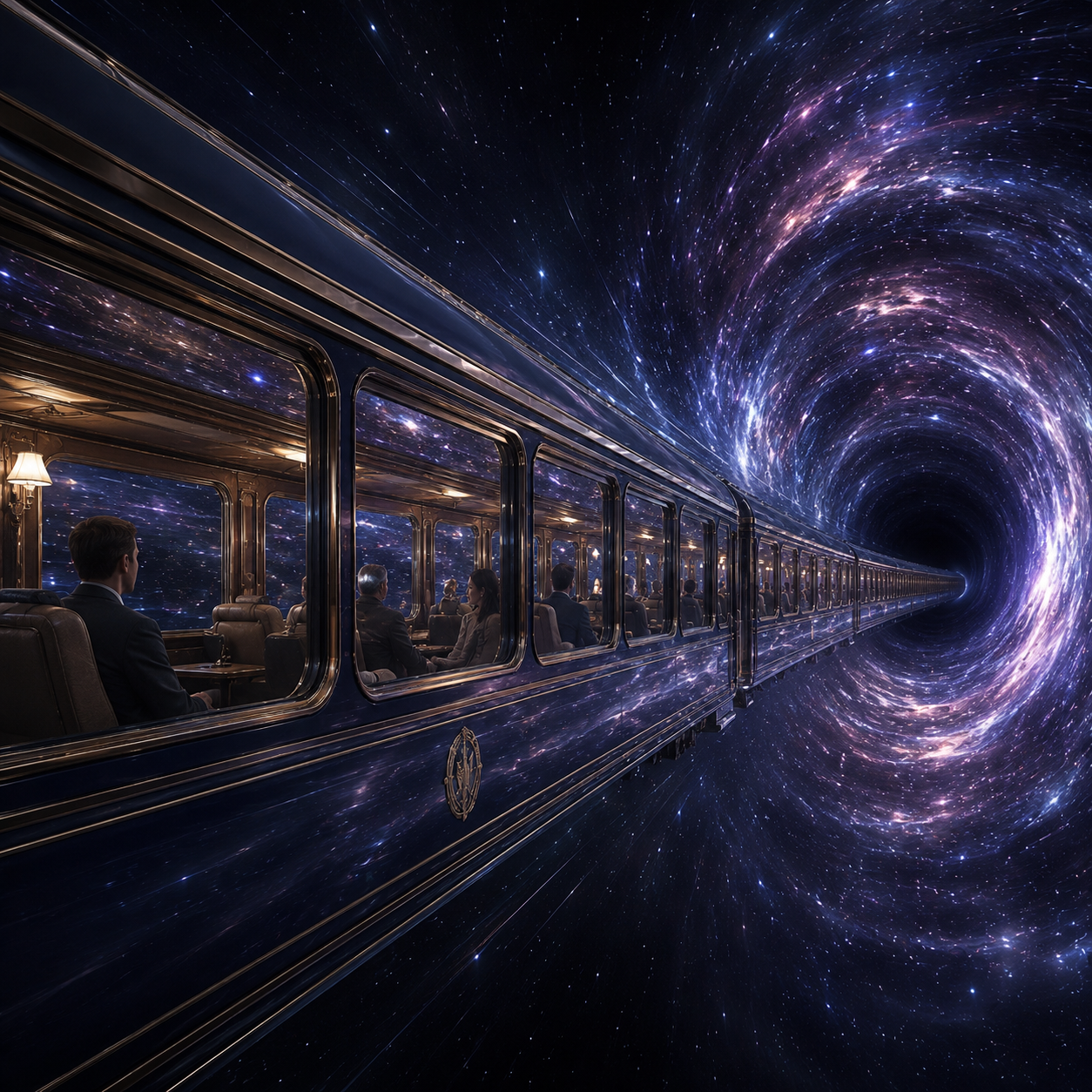
A train station existing simultaneously across multiple centuries.
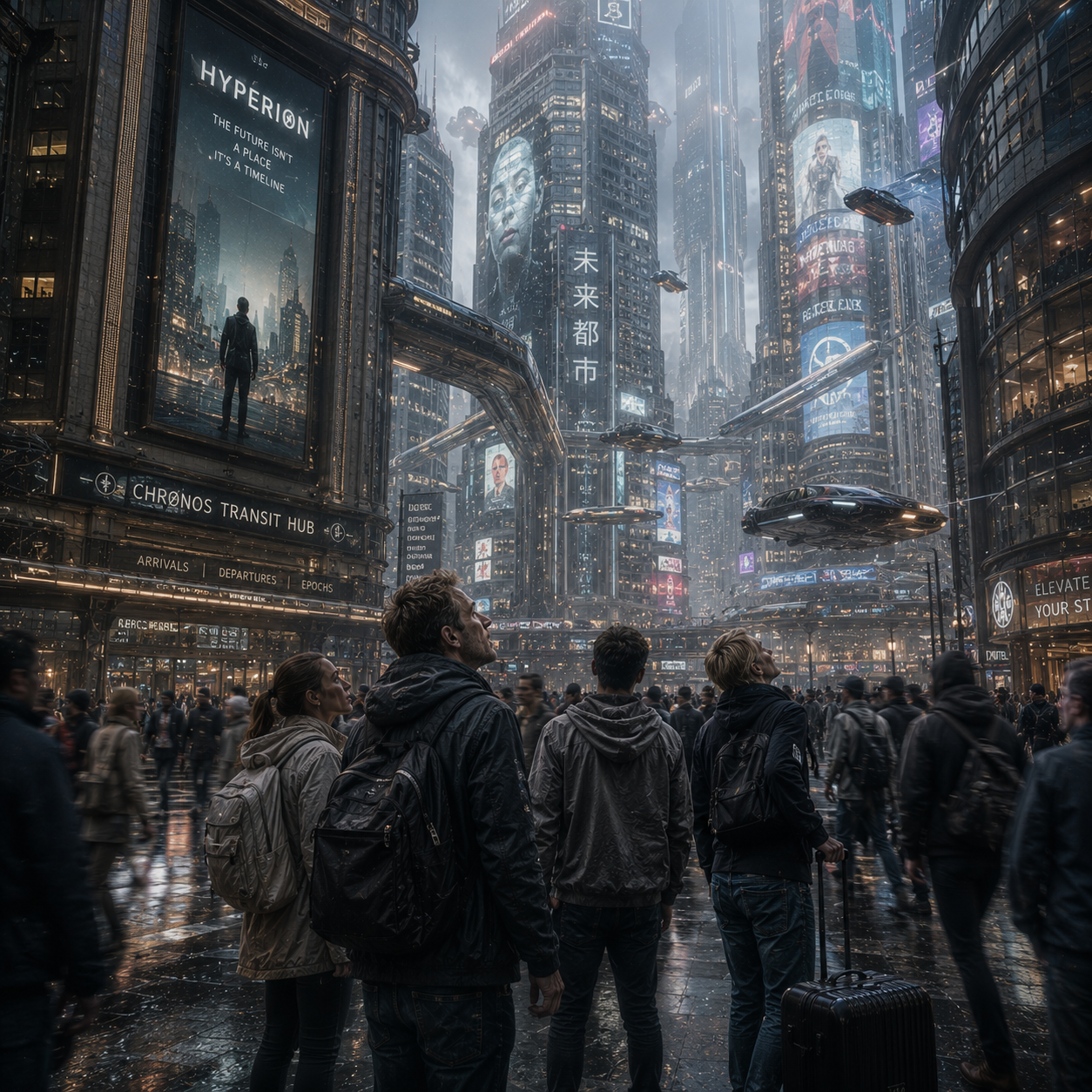
A futuristic city partially erased from history.
An underground archive storing abandoned timelines.
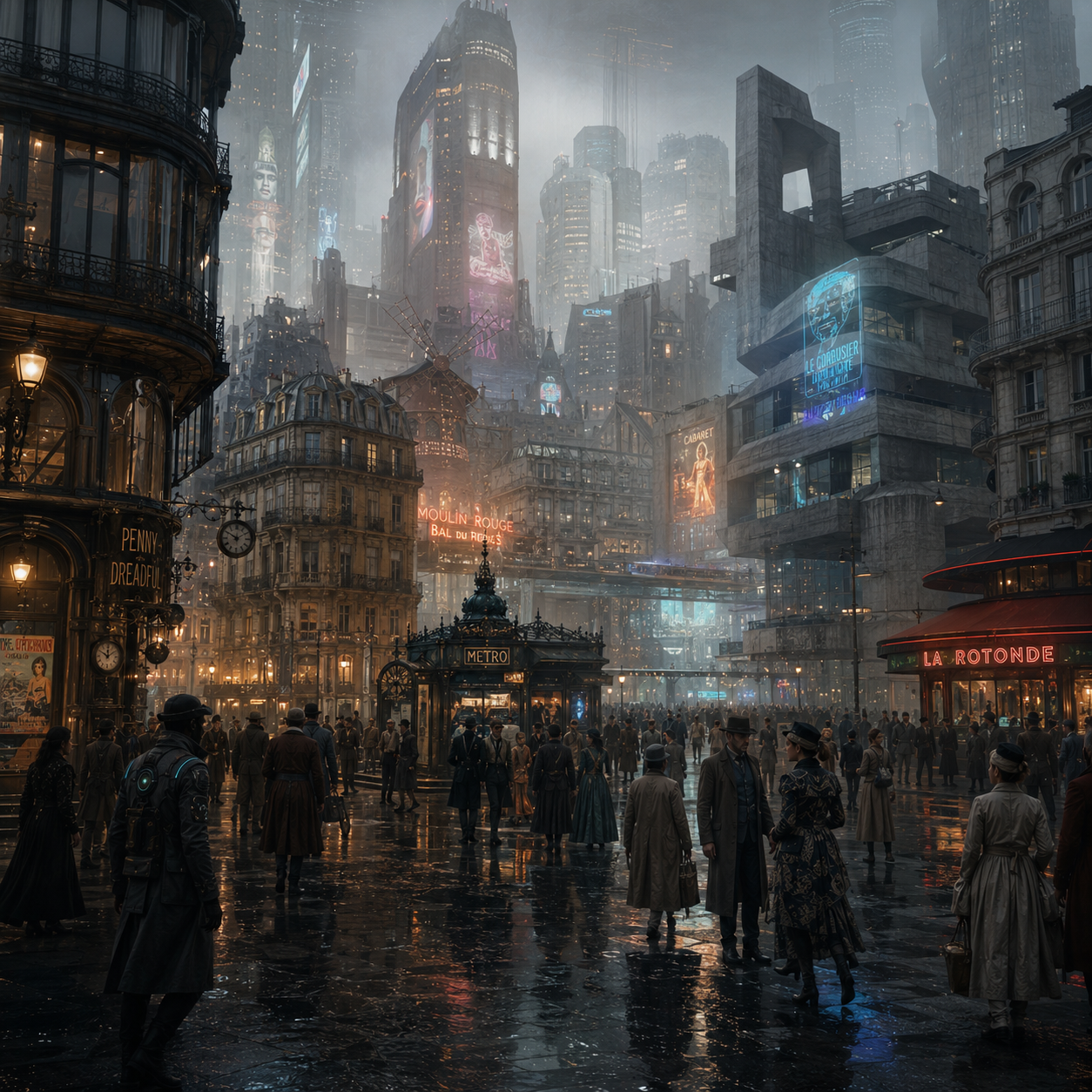
A small town where different decades overlap unexpectedly.
A retrofuturist departure terminal where passengers board flights to different centuries.
A crumbling future metropolis abandoned after temporal collapse.
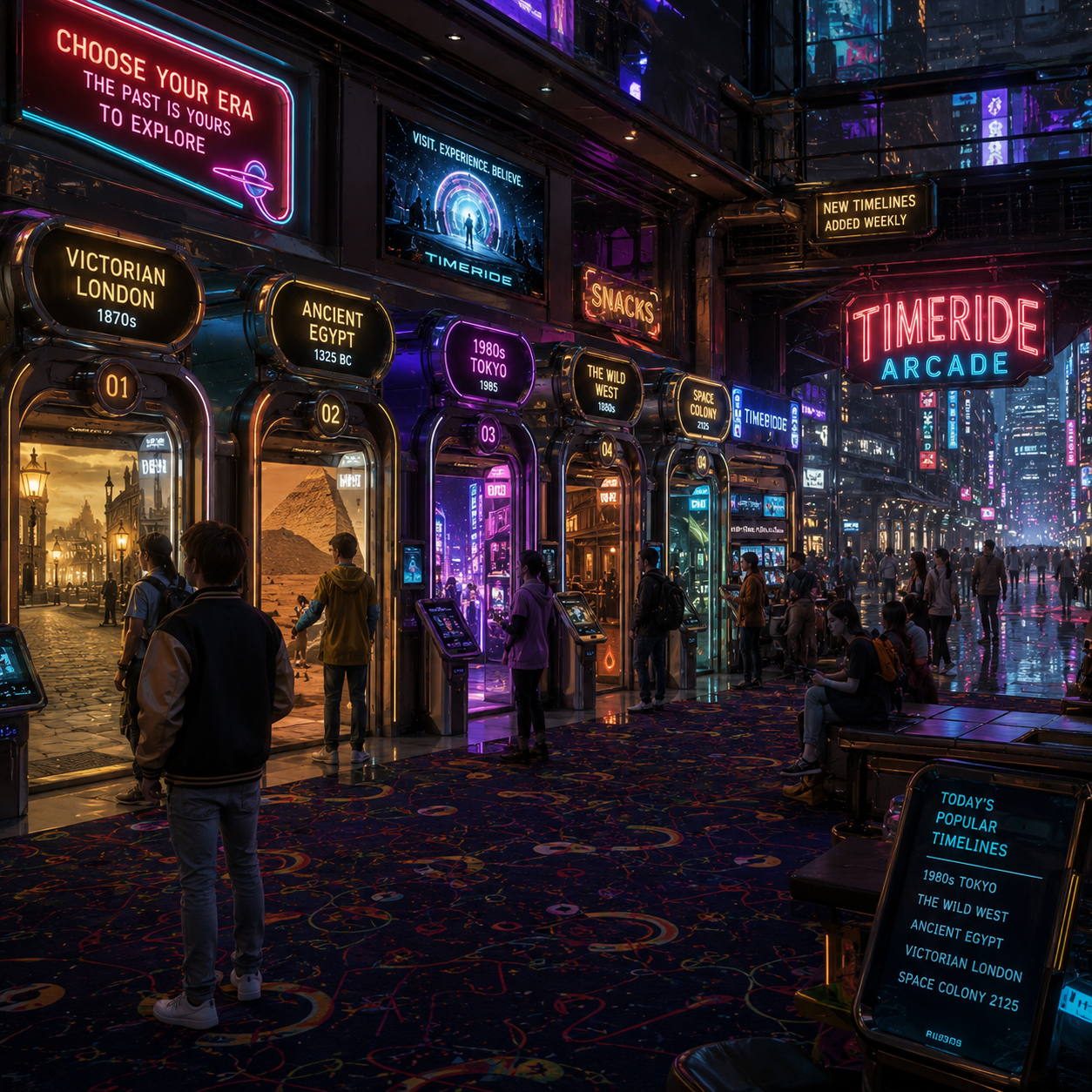
A luxury resort allowing guests to experience carefully controlled historical timelines.
A shopping district where objects from different eras are legally imported and sold.
A library containing books from futures that no longer exist.
A remote island where time moves differently from the outside world.
7. Picture Prompts
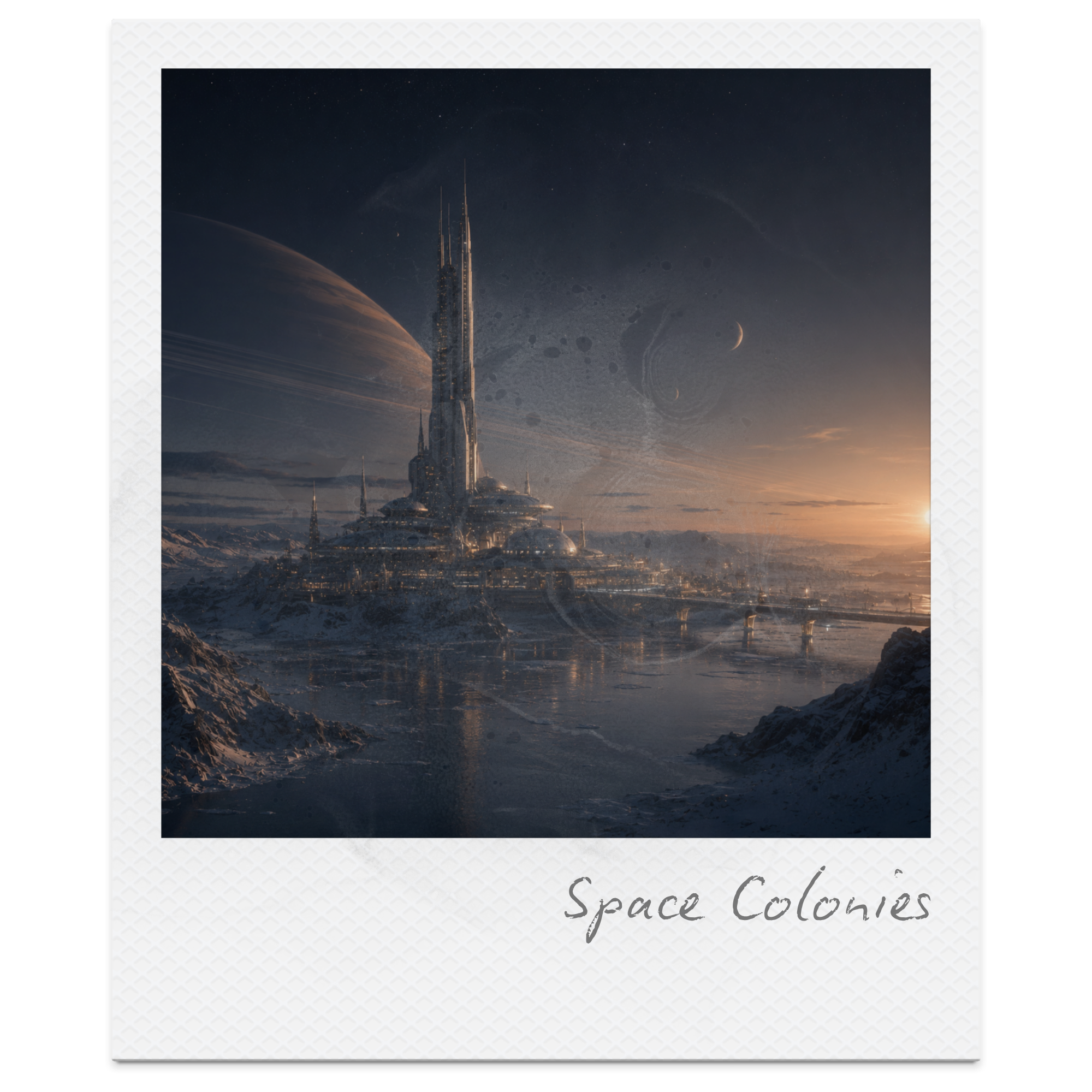
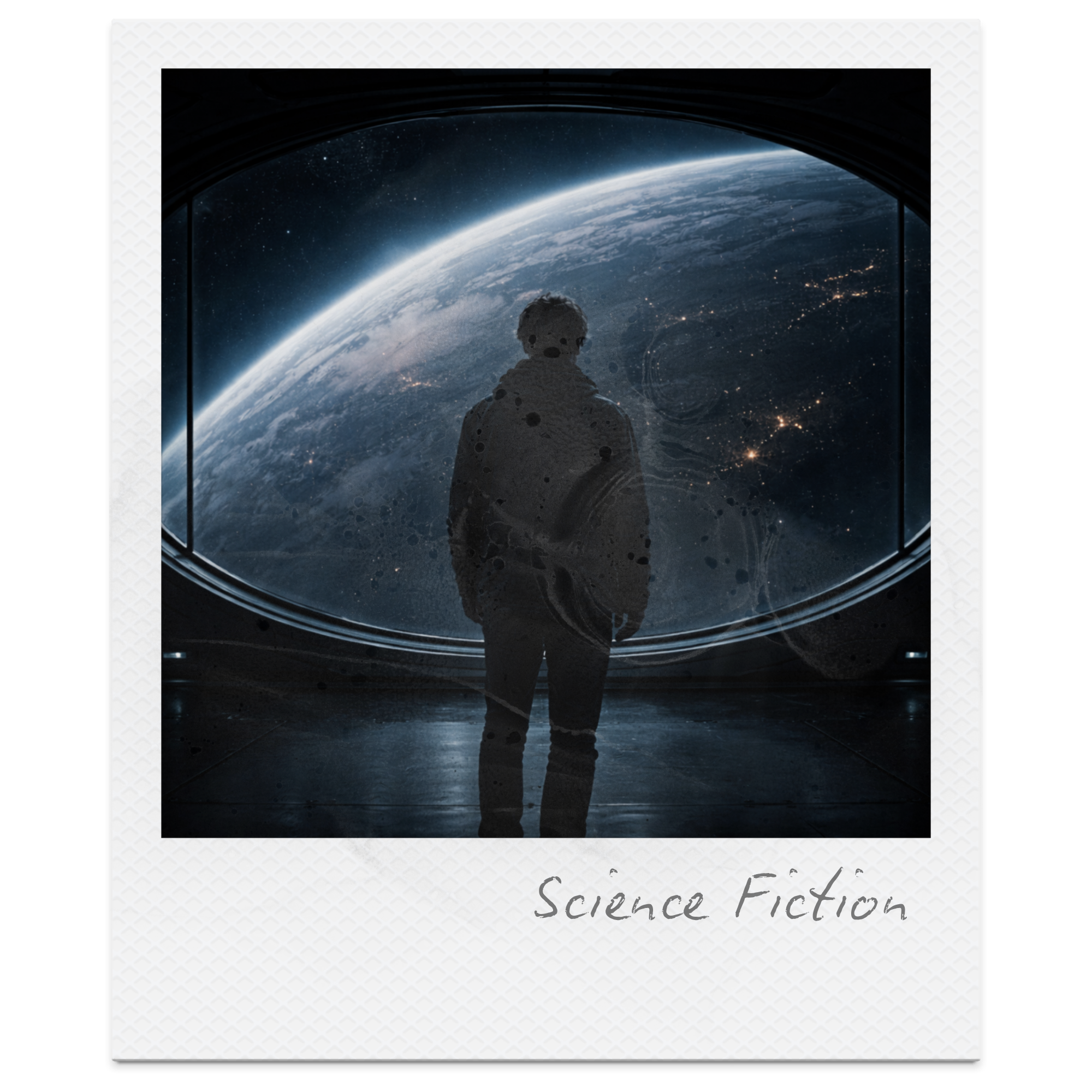
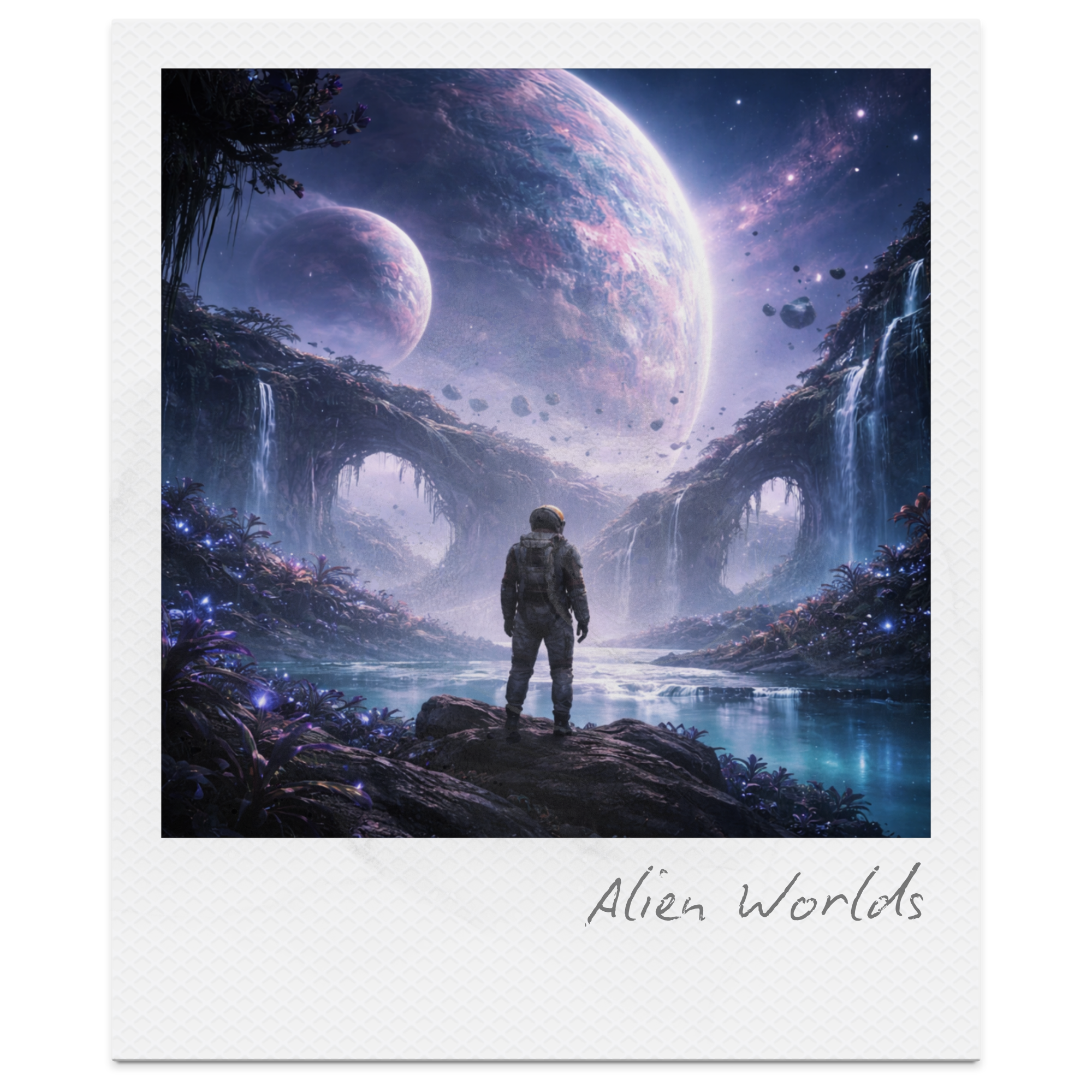
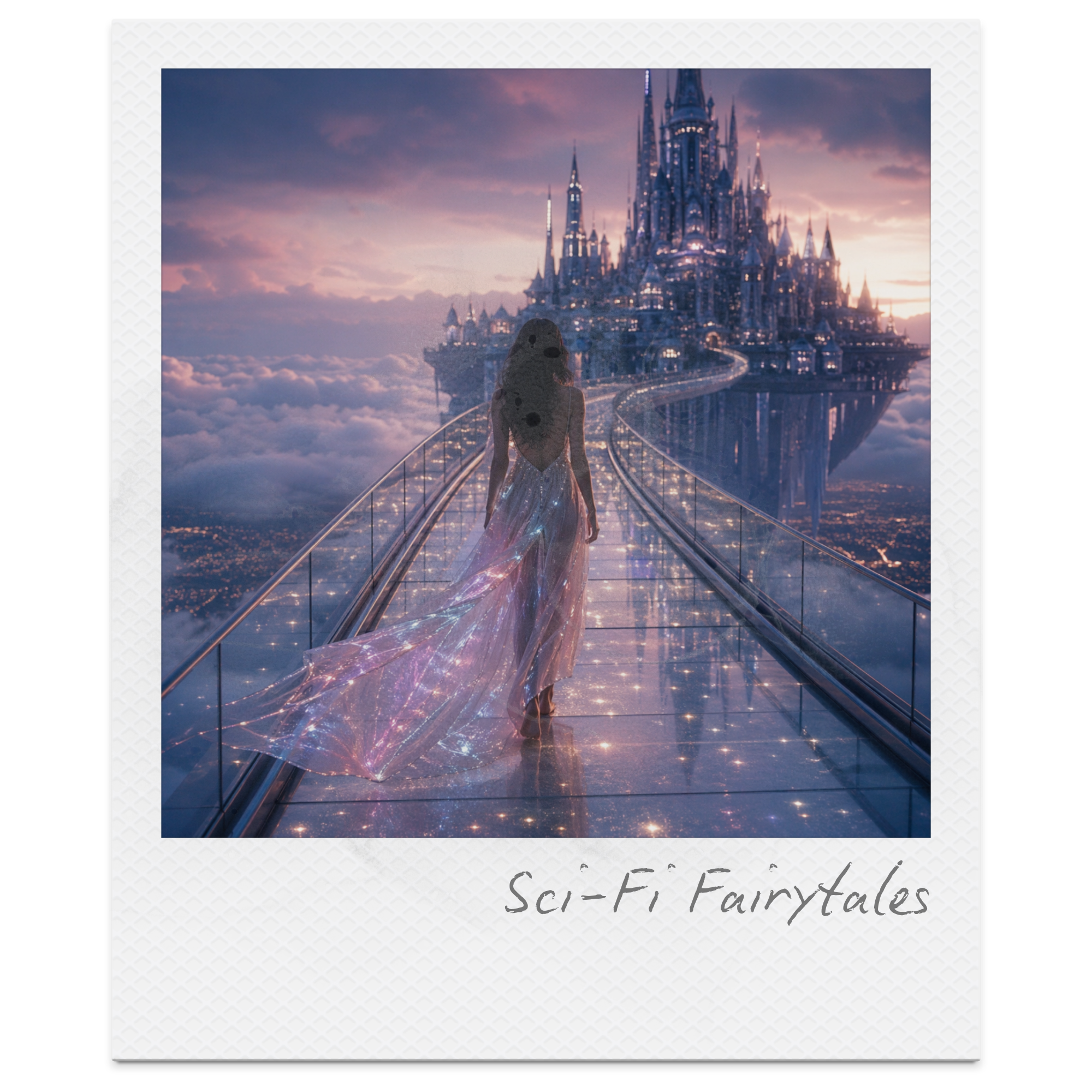
Visual prompts are especially effective for time travel fiction because atmosphere often depends on contrast between eras, environments, and timelines. Broken clocks, futuristic skylines, abandoned stations, overlapping architecture, retro technology, and isolated figures all encourage stories shaped by memory, inevitability, and temporal instability.
Go Deeper into Time Travel Fiction
Time travel fiction becomes more immersive when writers think carefully about causality, emotional consequences, memory, and the psychological strain of existing outside normal time.
◆ Write a scene where two versions of the same character meet unexpectedly.
◆ Explore how society would change if time travel became commercially available.
◆ Describe the emotional cost of remembering timelines that no longer exist.
◆ Write about a character forced to choose between saving history or saving someone they love.
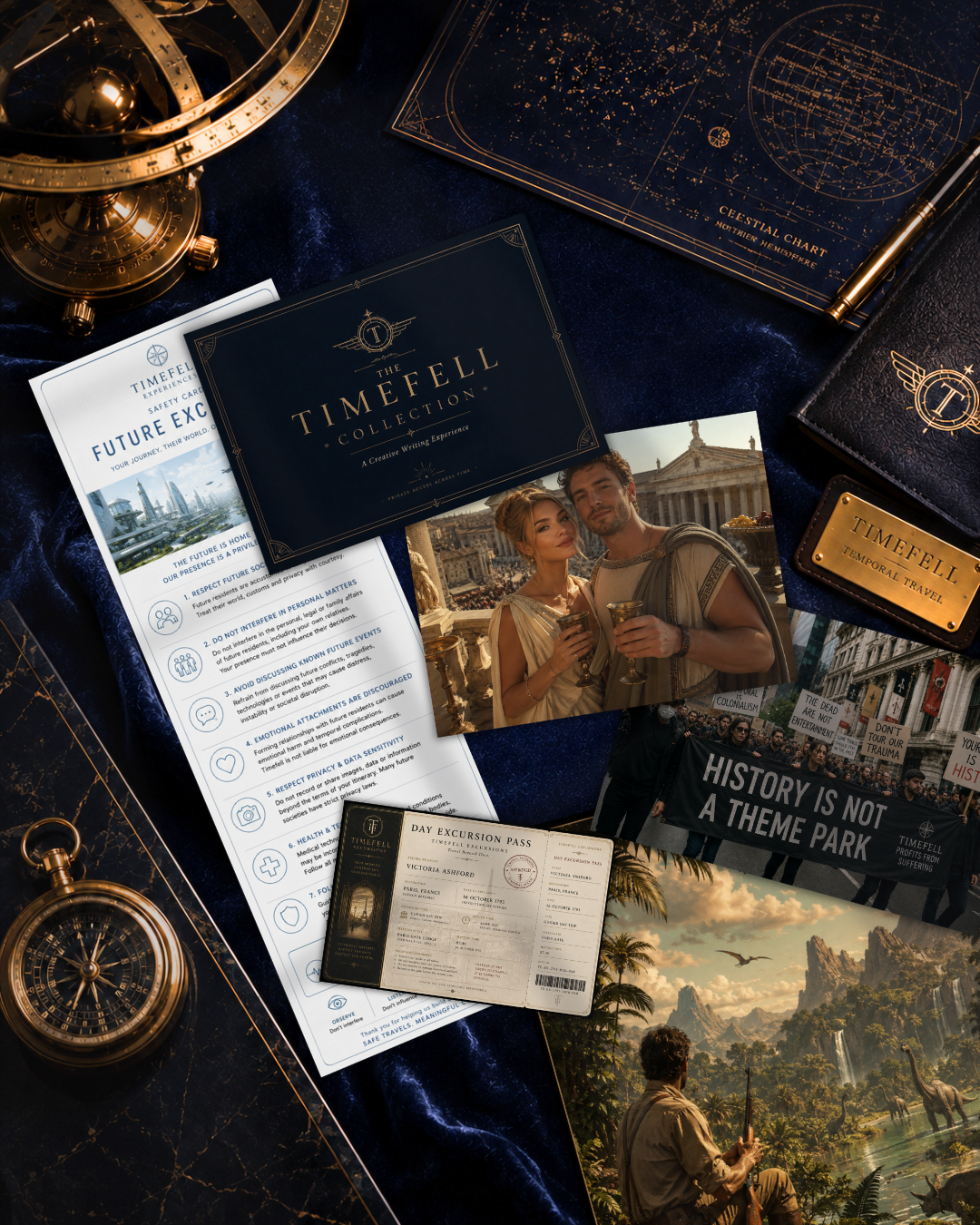
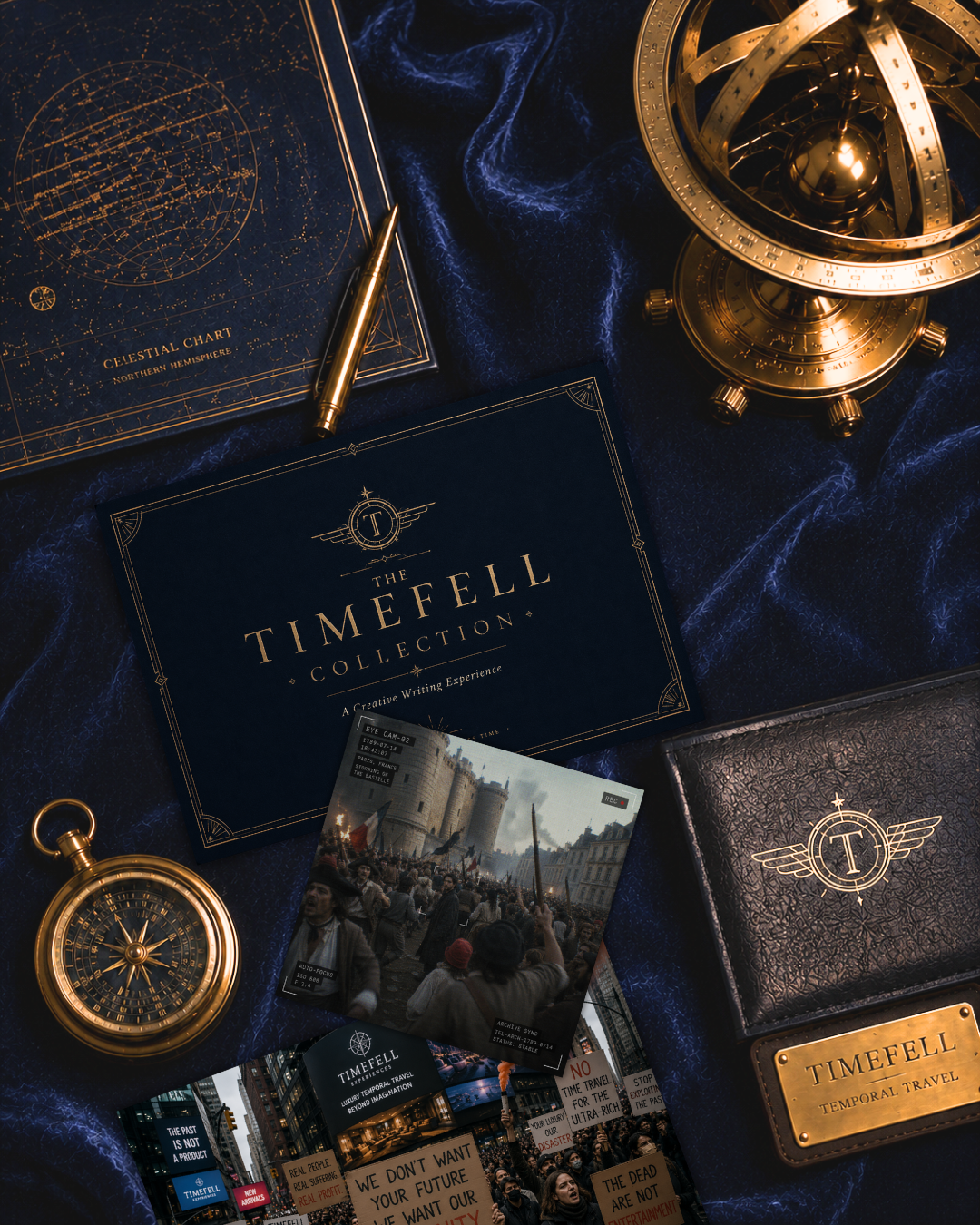
Step Inside a World Built Around Time Travel
Time-travel prompts can begin with a single question.
Where would you go? What would you change? What would happen if you couldn't get back?
But what happens when you take those questions and build an entire world around them?
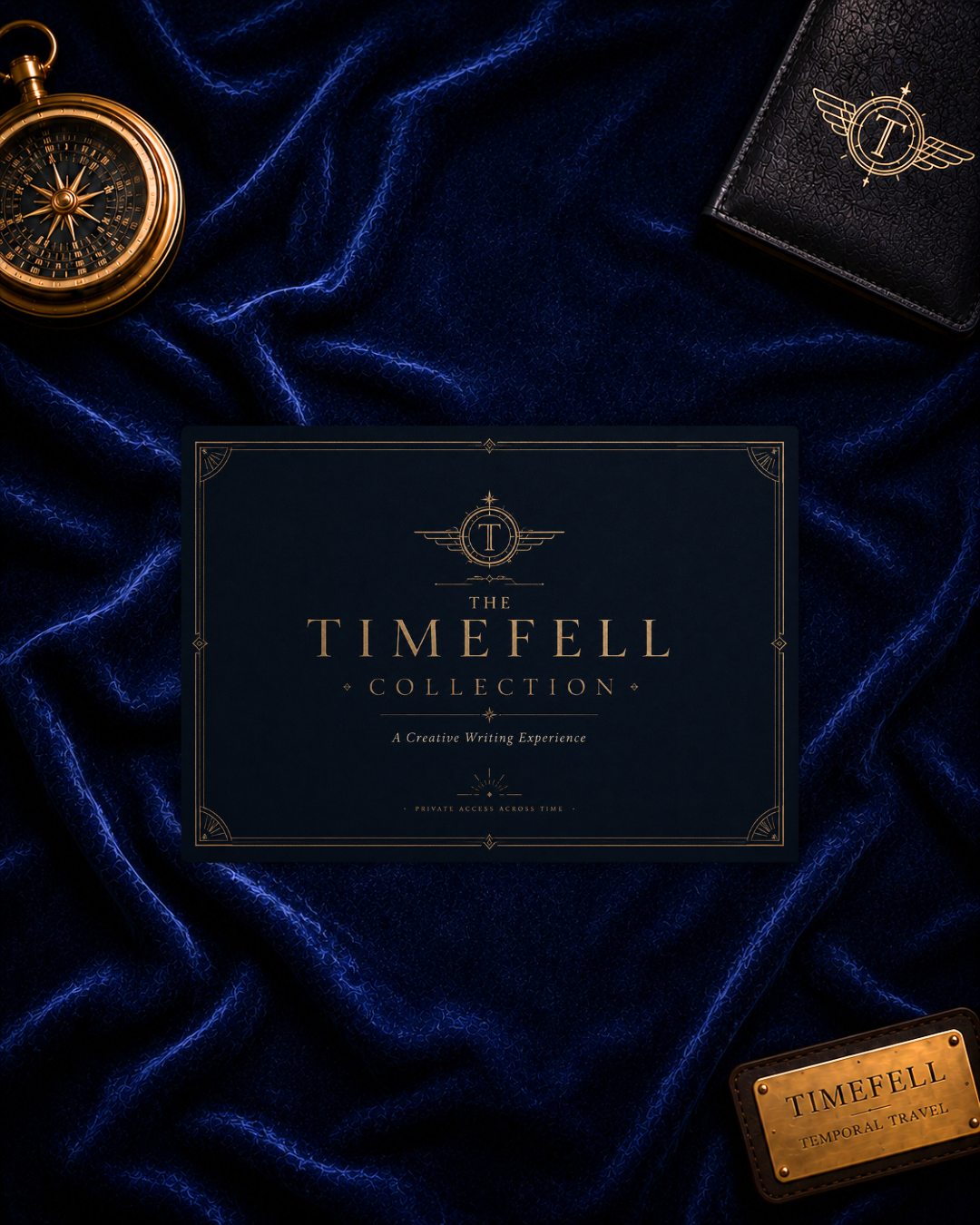
Welcome to The Timefell Collection.
Time travel became public in 2020.
By 2046, it had become a business.
Ancient cities welcome paying visitors. Dinosaurs roam protected reserves. Luxury cruises travel between centuries. Future societies open their gates to carefully managed excursions beyond the present day. Hotels cater to temporal tourists, carefully curated experiences promise encounters with history, and exclusive opportunities are available to those wealthy enough to access them.
For those who can afford it, every era is a destination.
But not every story appears in the brochure.
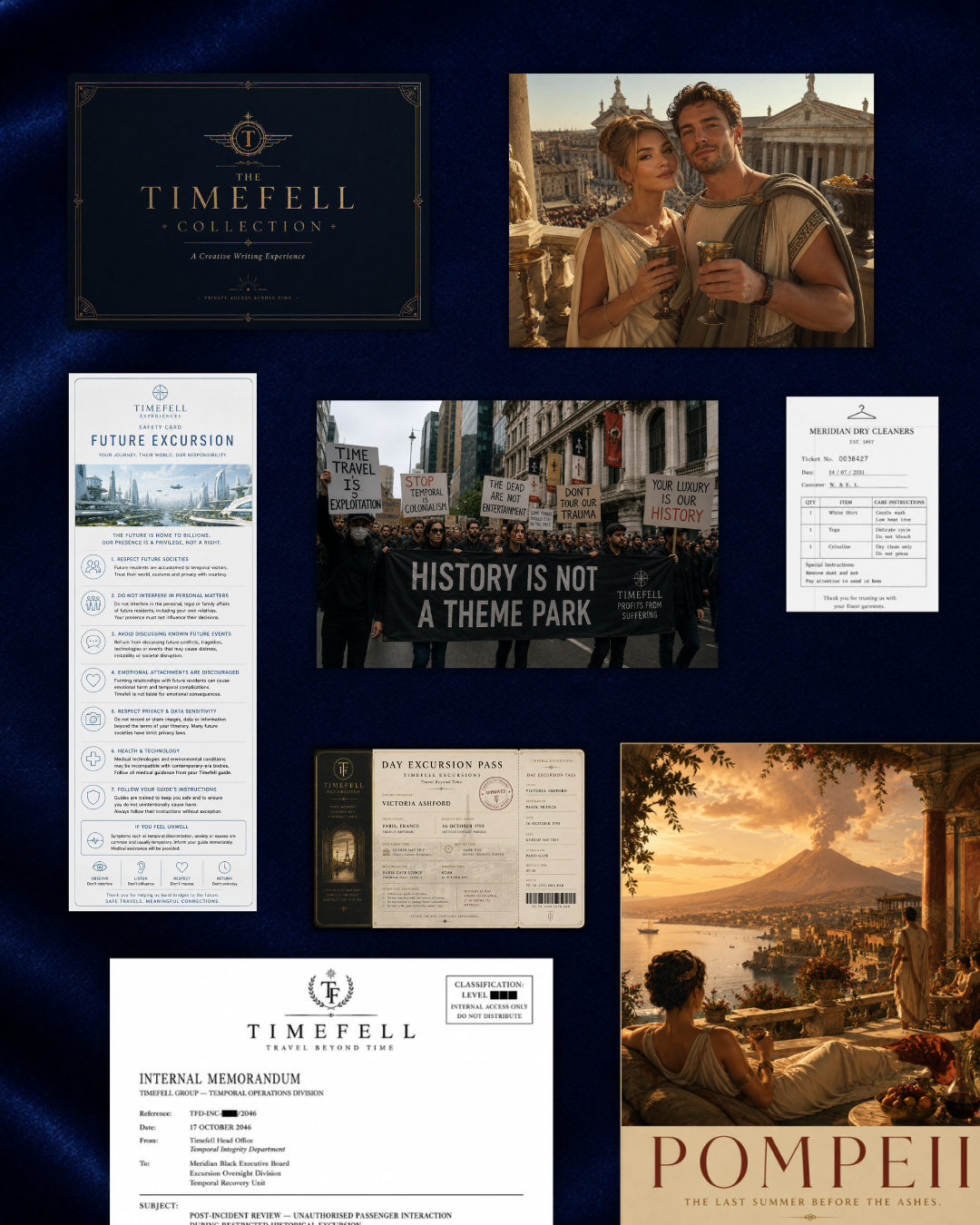
The Timefell Collection is an immersive digital storyworld archive that lets you explore this world through the fragments its travellers left behind. Inside you'll discover travel posters, boarding passes, newspaper articles, diary entries, hotel records, reviews, private correspondence, handwritten notes and other artefacts scattered across different journeys through time.
Some documents fit neatly together.
Others raise uncomfortable questions.
Why have certain excursions disappeared from public records? What experiences are reserved for Meridian Black members? Why do some travellers become obsessed with returning? And what happens when a holiday in another century becomes something much more complicated?
Explore the mysteries already hidden within the collection, follow individual travellers across the archive, or use its documents to inspire entirely new time-travel stories of your own.
You've imagined where you might go.
Now step inside a world where time itself has become a destination.
→ Explore The Timefell Collection
Final Thoughts
Time travel fiction combines science fiction, philosophy, emotion, and psychological tension within stories shaped by consequence and instability. These narratives often ask difficult questions about regret, fate, identity, and whether changing the past truly improves the future. In many stories, time travel does not simply alter events — it alters people themselves, forcing characters to confront alternate lives, impossible choices, and futures they may never be able to escape.
These 70 Time Travel Writing Prompts invite writers to explore collapsing timelines, alternate histories, futuristic cities, paradoxes, looping realities, and emotionally charged journeys across time. Whether used for classroom writing, creative exercises, speculative fiction planning, or larger science fiction projects, these prompts encourage atmospheric storytelling where memory, consequence, and possibility remain deeply intertwined.
If you would like to explore more speculative fiction ideas, imaginative settings, and atmospheric prompt collections, you can browse the Creative Writing Archive or visit the Sci-Fi Writing Hub, where new timelines and story possibilities continue to expand.
Choose Your Next Text