Ray Bradbury Teaching Resources | Short Stories, Novels & Classroom Activities
Explore our growing collection of Ray Bradbury teaching resources, featuring ready-to-use English Literature and English Language Arts (ELA) activities for his celebrated science fiction, dystopian fiction and short stories.
Whether you're teaching Fahrenheit 451, introducing students to the unsettling stories of The Illustrated Man, or exploring Bradbury's imaginative worlds through R Is for Rocket, The Martian Chronicles and The Golden Apples of the Sun, you'll find classroom resources designed to encourage close reading, critical thinking, discussion and independent literary analysis.
Our printable Ray Bradbury worksheets, lesson activities and teaching bundles help students explore the themes that make his writing so enduring: technology, censorship, conformity, imagination, childhood, consumerism, human relationships and the consequences of scientific progress. Resources also support detailed analysis of Bradbury's distinctive use of symbolism, foreshadowing, imagery, characterisation, setting, narrative structure and atmosphere.
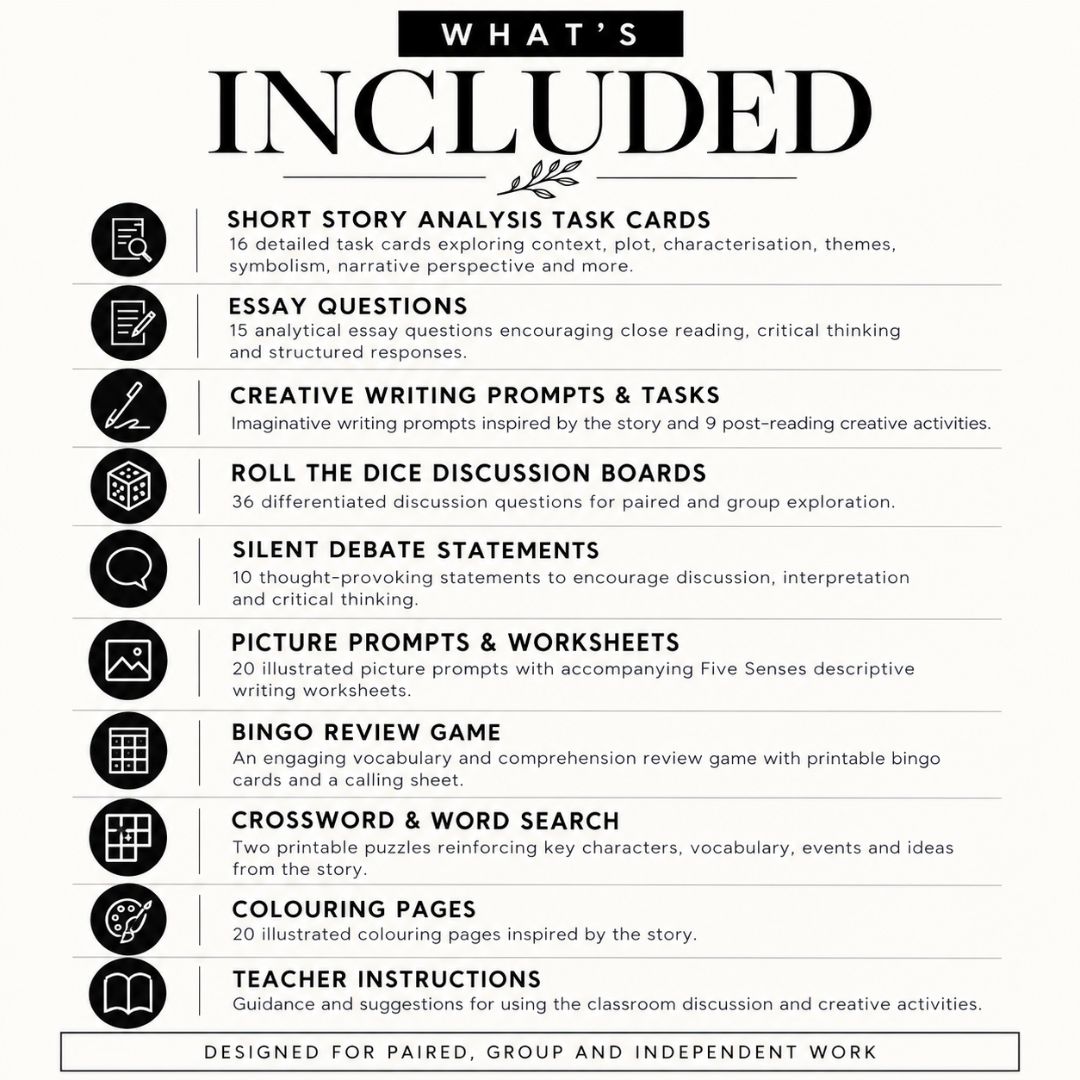
From short story analysis task cards and essay questions to creative writing prompts, discussion games, Silent Debate activities, descriptive writing worksheets and revision puzzles, our resources offer flexible ways to teach Bradbury without spending hours preparing materials from scratch.
Designed for secondary English, ELA and English Literature classrooms, these downloadable teaching materials can be used for whole-class lessons, paired and group activities, independent learning, homework, revision and extended analytical writing.
Looking for literary analysis before planning your lessons? Visit our Ray Bradbury Literature Hub for story summaries, themes, character analysis and literary techniques, or explore our Literature Library for more author studies, poetry resources, short story analysis and classroom inspiration.
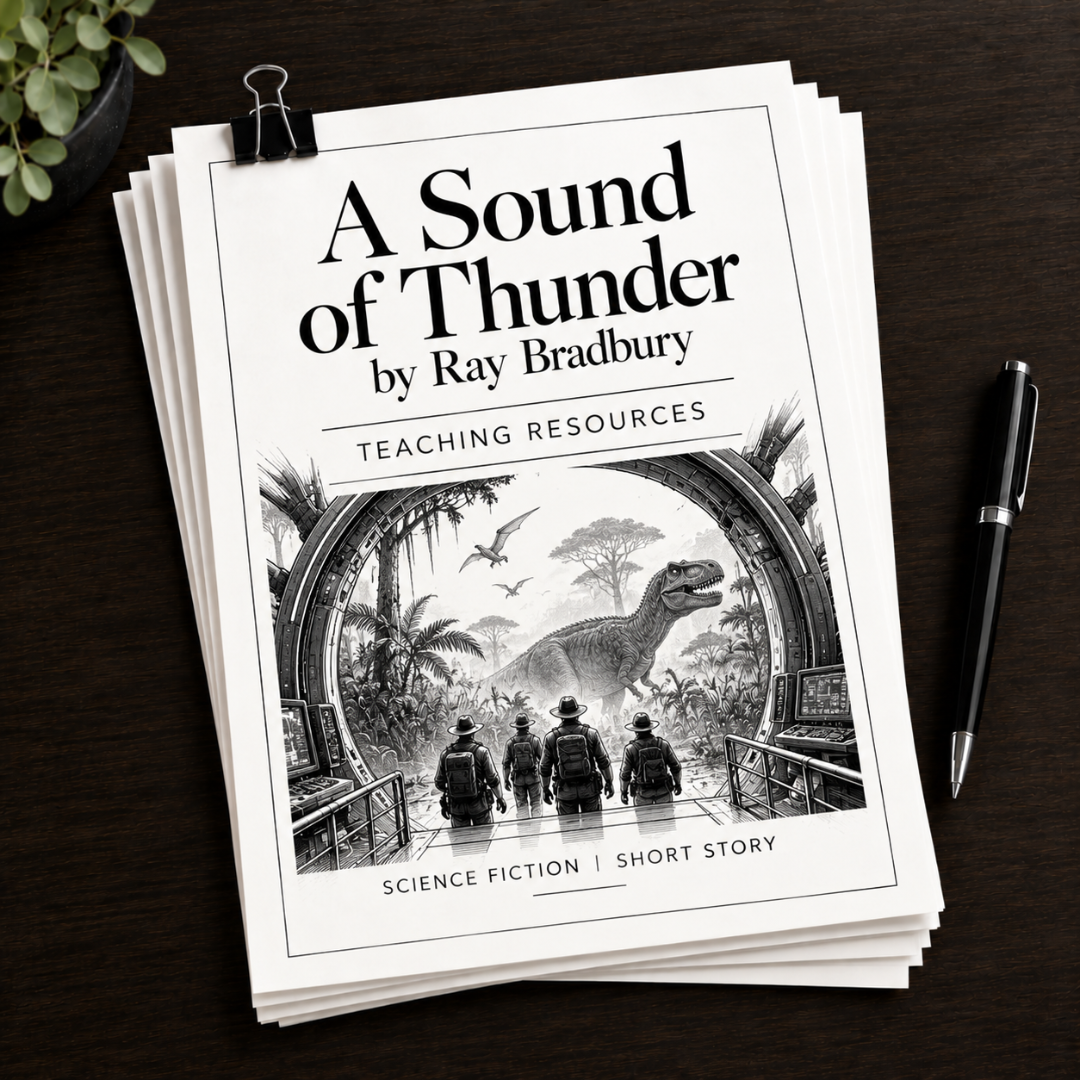
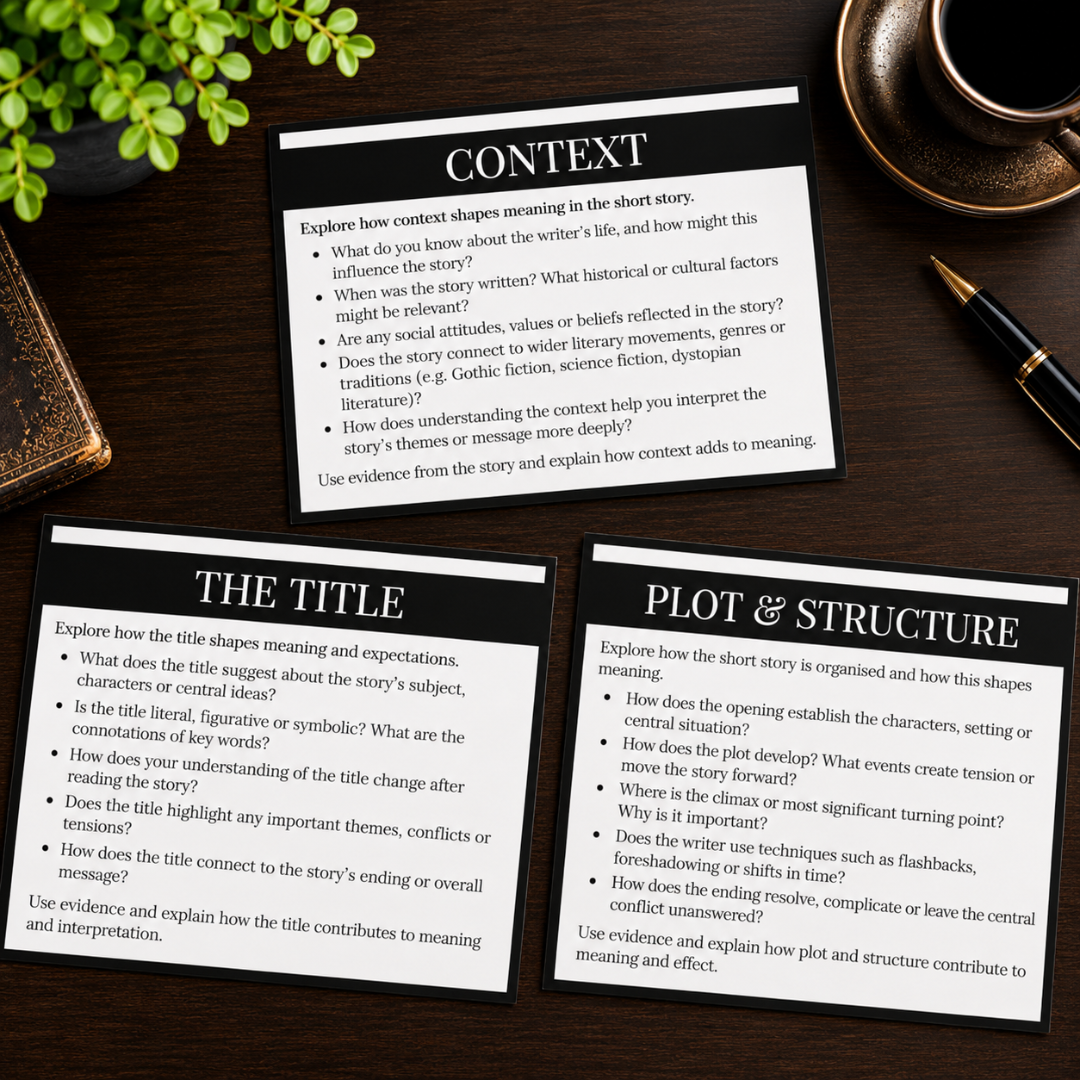
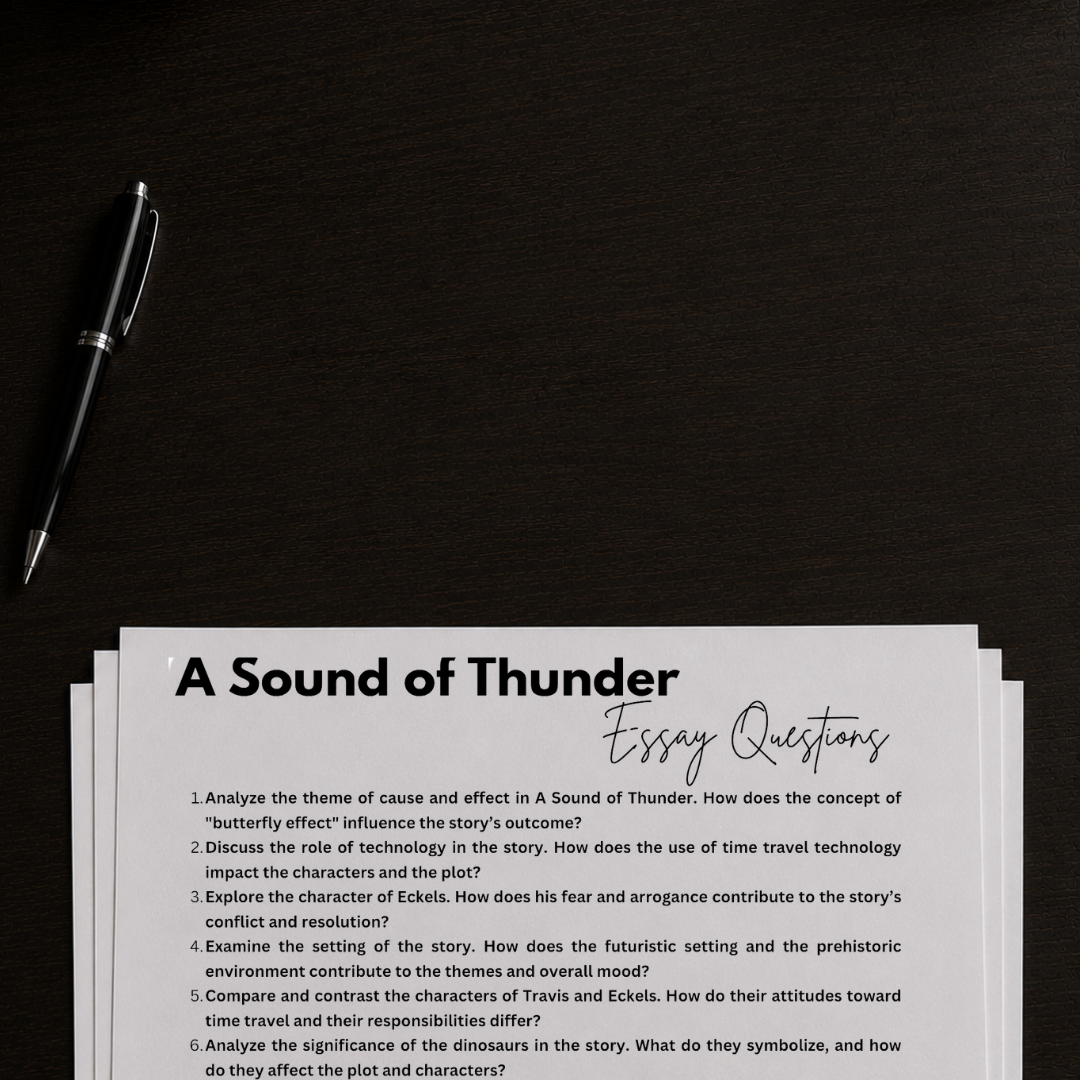



Ray Bradbury Teaching Resources FAQs
-
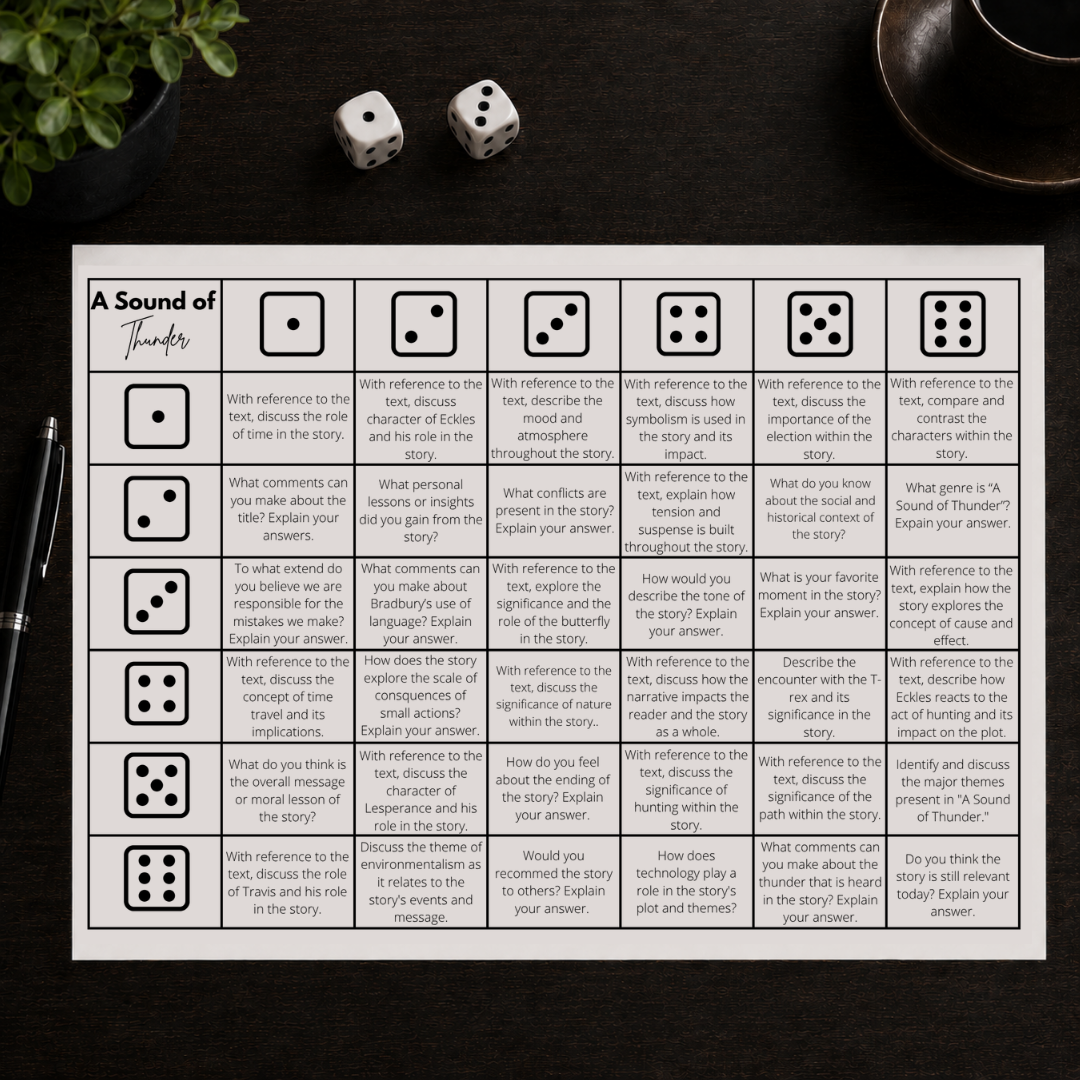
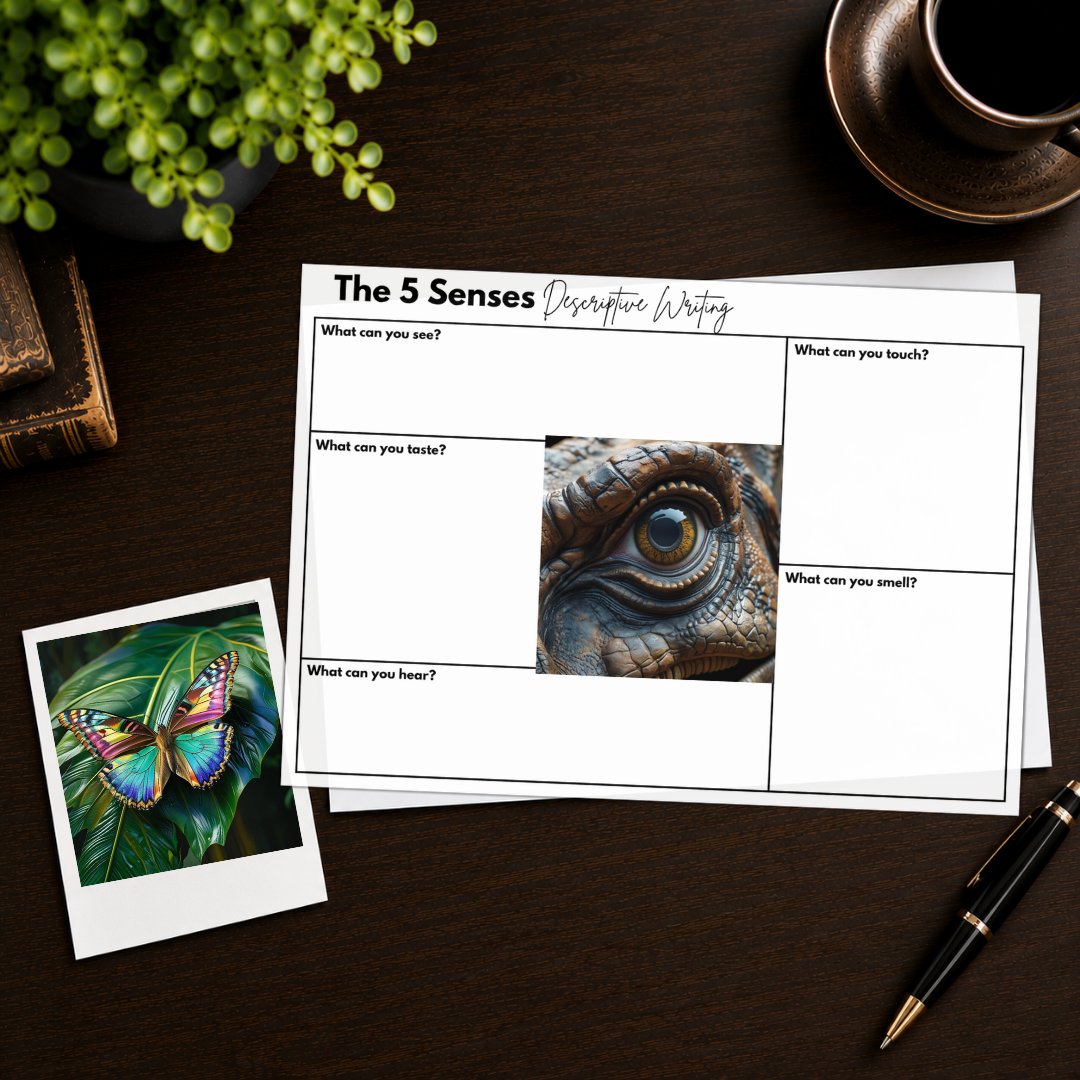
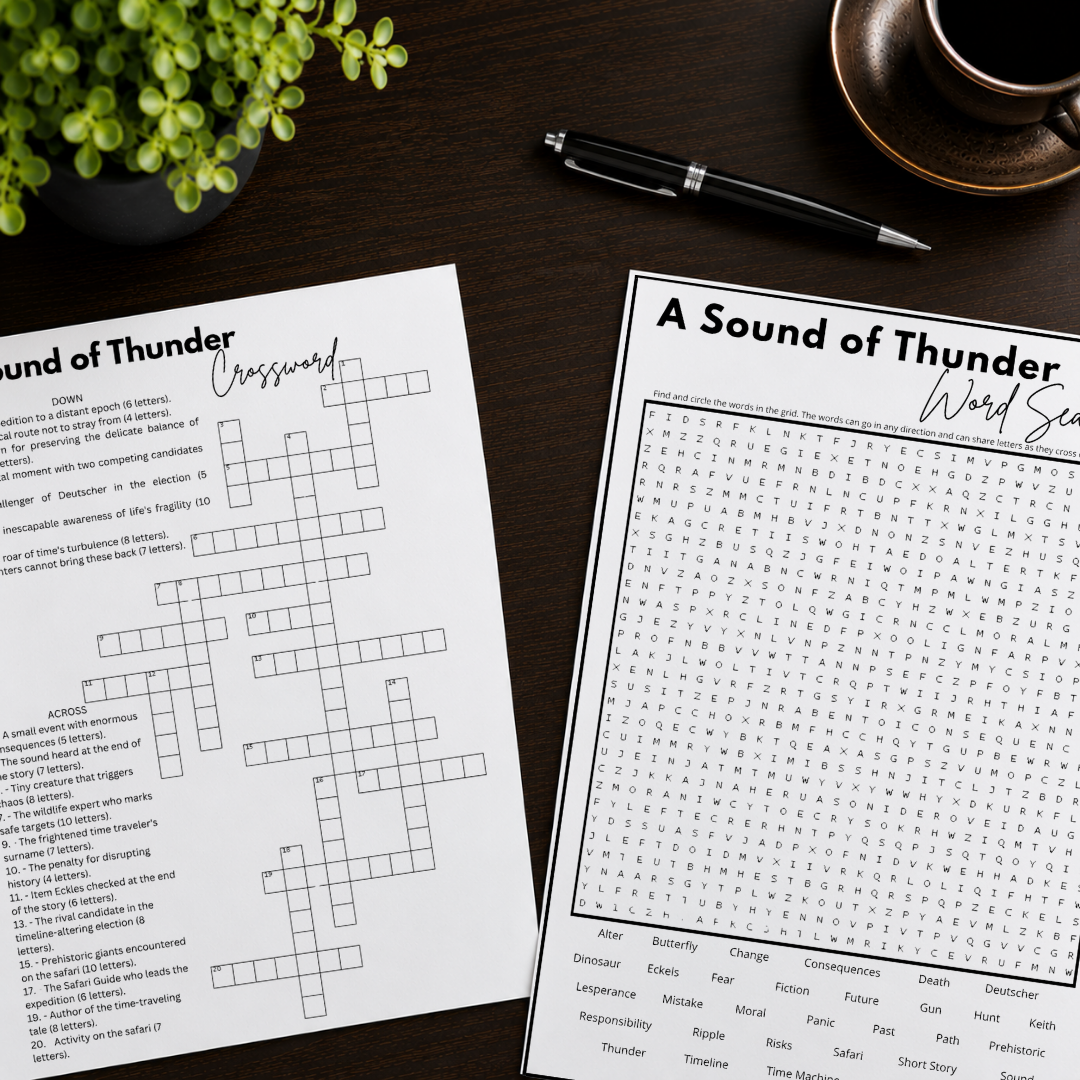
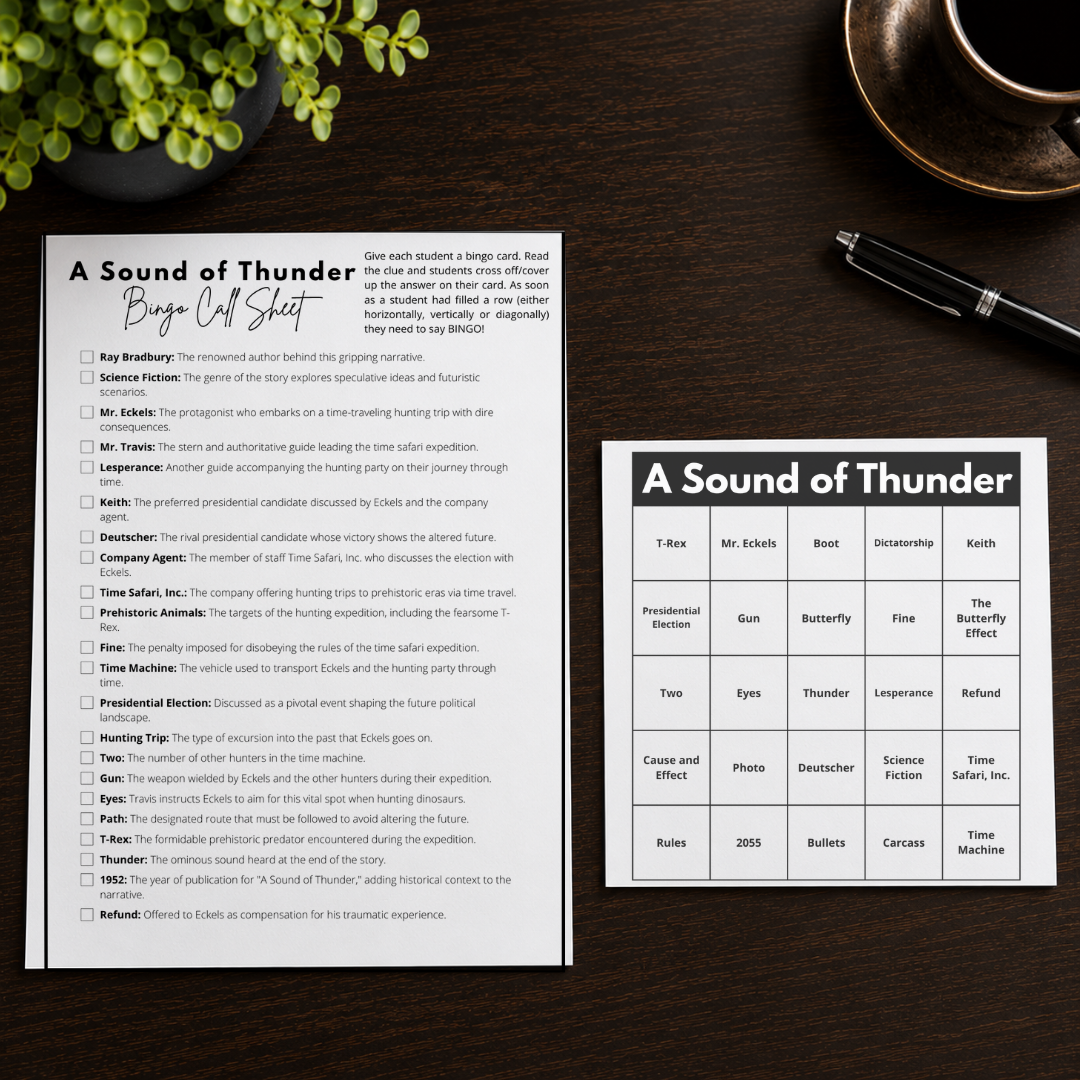
Our growing collection includes printable teaching materials for Ray Bradbury's short stories, with plans to expand across his novels and major story collections. Resources include literary analysis task cards, essay questions, creative writing prompts, classroom discussion activities, Silent Debate statements, Roll the Dice discussion games, picture prompts, descriptive writing worksheets, crossword puzzles, word searches and revision games.
Individual resource bundles provide a variety of activities that teachers can combine into a complete teaching sequence or use alongside their existing lesson plans.
-
Our collection is designed to grow across Bradbury's best-known works, including Fahrenheit 451, The Illustrated Man, The Martian Chronicles, R Is for Rocket, The Golden Apples of the Sun and other collections.
Featured short stories include The Veldt, A Sound of Thunder, There Will Come Soft Rains, All Summer in a Day, The Last Night of the World, The Long Rain, Zero Hour and Marionettes, Inc.
New resources will be added as the collection expands, so teachers can return to find additional activities for the Bradbury texts they are studying.
-
Yes. Our Ray Bradbury resources are designed primarily for secondary English, English Literature and English Language Arts (ELA) teaching. They are particularly useful for students developing close reading, literary interpretation, discussion and analytical writing skills.
Teachers can select activities appropriate to their students' ages, abilities and curriculum requirements, making the materials useful for different secondary year groups and mixed-ability classrooms.
-
Yes. Our growing The Illustrated Man teaching resources include activities for stories such as The Veldt, The Long Rain, The Last Night of the World, Zero Hour and Marionettes, Inc.
These stories offer opportunities to explore Bradbury's treatment of technology, fear, human nature, family relationships, imagination and the future, while developing students' understanding of science fiction and short story techniques.
-
Ray Bradbury's fiction offers opportunities to investigate themes including technology and its consequences, censorship, conformity, individuality, childhood, imagination, family relationships, consumerism, fear, mortality and human connection.
For example, Fahrenheit 451 explores censorship, knowledge and conformity, while The Veldt raises questions about parenting, technological dependence and the dangers of allowing machines to replace human relationships.
Our teaching activities encourage students to investigate these themes through textual evidence, discussion, debate and extended writing.
-
An effective Ray Bradbury teaching sequence can begin with initial reading and comprehension, followed by discussion of the story's setting, characters, conflicts and central ideas.
Students can then investigate Bradbury's use of imagery, symbolism, foreshadowing, dialogue, narrative perspective and atmosphere, developing interpretations supported by evidence from the text.
Discussion games and Silent Debate activities encourage students to consider alternative viewpoints, while essay questions help them develop more sustained analytical responses. Creative writing activities provide opportunities to apply the literary techniques they have studied.
-
Yes. Our teaching bundles contain downloadable PDF resources that can be printed for classroom use.
Depending on the product, resources may include printable task cards, discussion boards, writing activities, picture prompts, worksheets and review games. Check each individual product description for the exact materials included.
-
Absolutely. Many activities can be adapted for independent study, homework, revision and extension work, as well as whole-class teaching.
Essay questions and literary analysis tasks encourage students to develop their own interpretations, while creative writing prompts and review activities provide alternative ways to revisit important characters, themes and literary techniques.
-
No. Many of Bradbury's short stories work effectively as standalone texts, making them useful for shorter literature units, science fiction studies, thematic lessons and creative writing projects.
Teachers can use individual story resources without teaching the complete collection, or combine several stories to explore recurring ideas and techniques across Bradbury's writing.
-
Visit our Ray Bradbury Literature Hub for supporting literary analysis, including story summaries, themes, characters, symbolism and literary techniques.
You can also explore our Literature Library for additional poetry, prose and drama analysis, author studies and resources to support English Literature teaching.