10 Fairytale Poetry Prompts for Teens & Adults: Transformation, Desire, and the Uncanny
Fairytales are often remembered as simple stories — moral, magical, and neatly resolved. But beneath their surface lies something far more complex. They are stories of desire, transformation, power, and consequence, where beauty and danger exist side by side, and where what is gained is often inseparable from what is lost.
These fairytale poetry prompts for teens and adults are designed to explore those darker undercurrents through imagery, voice, and form. Rather than retelling familiar stories, they invite writers to linger in moments — the pause before transformation, the silence after a choice, the tension between hunger and restraint.
Alongside the prompts, you’ll find craft-focused guidance and suggested opening lines to help shape your writing with intention. These prompts are ideal for classroom use, writing groups, and independent practice, encouraging control, atmosphere, and ambiguity rather than narrative retelling.
If you enjoy exploring fairytales, folklore, and myth through writing, you can also visit the Poetry Writing Hub or Fairytale and Folklore Hub to discover prompts organised by trope, character, and theme, or browse the full Creative Writing Archive to explore prompts inspired by literature, genre, and aesthetic traditions.
Short on time?
Scroll down for the 10 fairytale poetry prompts, or keep reading for writing techniques and inspiration.
How to Approach Fairytale Poetry
Writing fairytale-inspired poetry isn’t about retelling the story. It’s about reframing it — focusing on a moment, an image, or a voice that the original narrative leaves unexplored.
Start with something concrete. Fairytales are built on symbolic objects — fruit, mirrors, forests, keys, blood, gold — and these can carry emotional weight without explanation. Let the image do the work.
Consider perspective. Many fairytales silence certain voices: the girl after the rescue, the creature before the curse, the figure left behind. Poetry allows you to inhabit that space.
Think carefully about form. Line breaks, pauses, and repetition can mirror transformation, hesitation, or emotional fracture. Let the structure reflect the tension you’re exploring.
Resist resolution. Fairytales may end neatly — your poem doesn’t have to. Stop at the moment that still holds uncertainty.
Above all, aim for restraint. Let meaning emerge through suggestion rather than explanation.
Techniques to Try in Fairytale Poetry
Fairytale poetry relies on control rather than excess. These techniques help shape atmosphere, tension, and implication, allowing familiar stories to feel unfamiliar again.
◆ Enjambment
Break lines unexpectedly to create tension and forward movement, especially during moments of transformation or hesitation.
◆ Caesura (Pauses Within the Line)
Use punctuation or spacing to interrupt the line. Caesuras can reflect doubt, fracture, or withheld truth.
◆ White Space and Short Lines
Let the page hold silence. Gaps and short lines can suggest absence, distance, or emotional restraint.
◆ Repetition With Variation
Repeat a word or phrase, but shift it slightly each time. This can mirror obsession, temptation, or change.
◆ Concrete Imagery Over Explanation
Focus on objects and physical detail. Let imagery carry meaning instead of explaining it directly.
◆ Second Person Address
Using “you” creates intimacy and discomfort, drawing the reader into the poem’s tension.
◆ Controlled Metaphor
Use one sustained image rather than many competing ones. Let it deepen gradually.
◆ Muted or Monochrome Imagery
Limit colour and sensory range to maintain tone and avoid emotional excess.
◆ Unresolved Endings
End the poem without closure. Let the final line remain open.
Read for Inspiration: Fairytale & Folklore Poetry
◆ Christina Rossetti – Goblin Market explores temptation, desire, and consequence through rich imagery and repetition.
◆ Carol Ann Duffy – Reimagines myth and fairytale through voice and perspective, often focusing on silenced figures.
◆ Anne Sexton – Transformations offers dark, unsettling retellings of traditional stories.
◆ Angela Carter – While prose, The Bloody Chamber blends fairytale and gothic imagery, using symbolism and transformation to explore power and desire.
◆ Margaret Atwood – Uses myth and folklore to examine identity, control, and voice through restrained, precise language.
Choose one or two texts to read before writing. Focus on how they reshape familiar material through voice, structure, and imagery.
Fairytale Poetry Writing Prompts
The prompts below are designed to explore fairytale imagery and themes through atmosphere and suggestion rather than narrative retelling. Focus on a single moment, image, or voice.
Fairytale Poetry Prompt 1: The Key That Doesn’t Fit
Write a poem centred on a key that almost opens something — a door, a chest, a room — but never quite fits. Focus on anticipation, hesitation, and the idea of access denied.
Possible opening line:
It should have turned by now.
Craft focus:
Use repetition with variation and caesura to build tension around the act of trying. Let the object carry meaning without explaining what it unlocks.
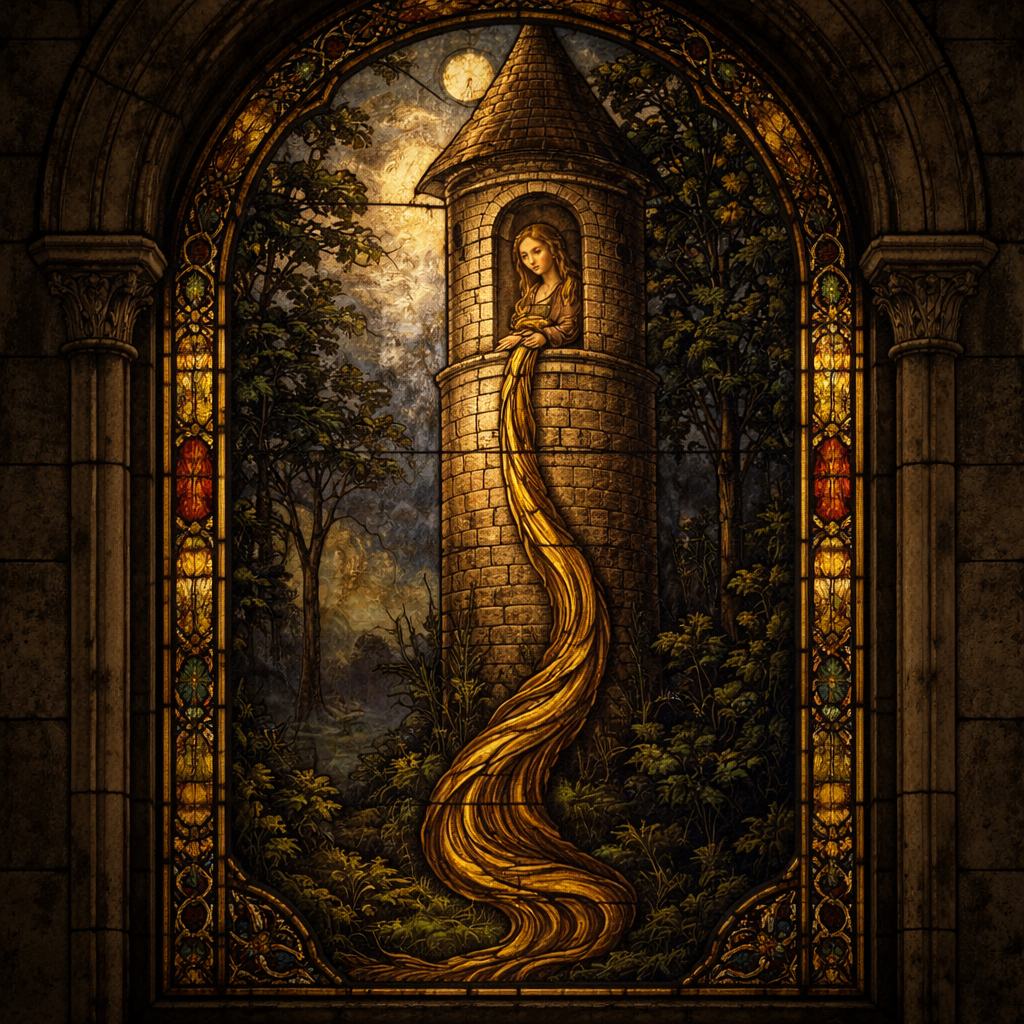
Fairytale Poetry Prompt 2: Rapunzel After the Cutting
Inspired by Rapunzel, write from the moment after her hair has been cut. Focus on absence — what has been lost, and what remains.
Possible opening line:
My hands are lighter now.
Craft focus:
Use short lines and white space to reflect loss and disconnection. Let the body (hands, scalp, weight, air) carry the emotion rather than naming it.
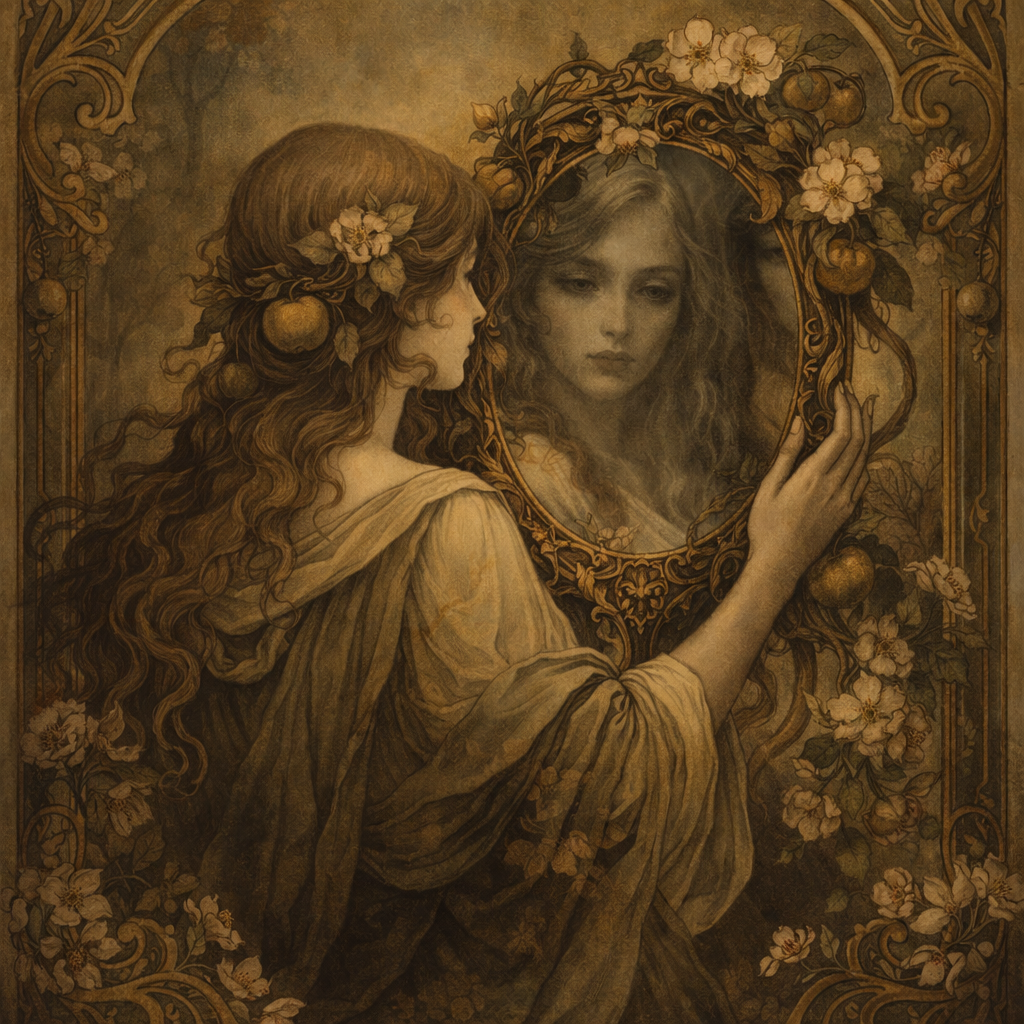
Fairytale Poetry Prompt 3: The Mirror That Won’t Answer
Write about a mirror that no longer responds — or responds incorrectly.
Possible opening line:
It used to speak before I did.
Craft focus:
Use caesura and second person address to create unease.
Fairytale Poetry Prompt 4: The Girl Who Refused to Transform
Write a poem about a character who resists transformation — refusing to become what the story demands.
Possible opening line:
I stayed as I was.
Craft focus:
Use enjambment and controlled metaphor to show tension between expectation and resistance.
Fairytale Poetry Prompt 5: The Forest That Watches Back
Write about a forest that is aware — not hostile, but observant.
Possible opening line:
The trees lean closer when you pass.
Craft focus:
Use concrete imagery and muted sensory detail to build atmosphere.
Fairytale Poetry Prompt 6: The Bargain You Don’t Remember Making
Write a poem about a deal or promise that has already been made, but forgotten.
Possible opening line:
You agreed to this.
Craft focus:
Use repetition with variation and second person address to create tension and uncertainty.
Fairytale Poetry Prompt 7: The Voice Inside the Object
Choose a fairytale object (a key, a shoe, a spindle) and write from its perspective.
Possible opening line:
I was made to fit only one.
Craft focus:
Use controlled metaphor and short lines to sustain a single image.
Fairytale Poetry Prompt 8: The Curse That Feels Like Relief
Write about a curse that brings something the speaker secretly wanted.
Possible opening line:
It wasn’t punishment.
Craft focus:
Use caesura and contrast in imagery to explore contradiction.
Fairytale Poetry Prompt 9: The Ending That Comes Too Early
Write a poem where the “happy ending” arrives before the emotional tension is resolved.
Possible opening line:
They said this was enough.
Craft focus:
Use enjambment and an unresolved ending to disrupt closure.
Fairytale Poetry Prompt 10: The Name You Were Given
Write about a name (or identity) assigned to the speaker — one that doesn’t quite fit.
Possible opening line:
They called me something softer.
Craft focus:
Use repetition and white space to show fracture between identity and expectation.
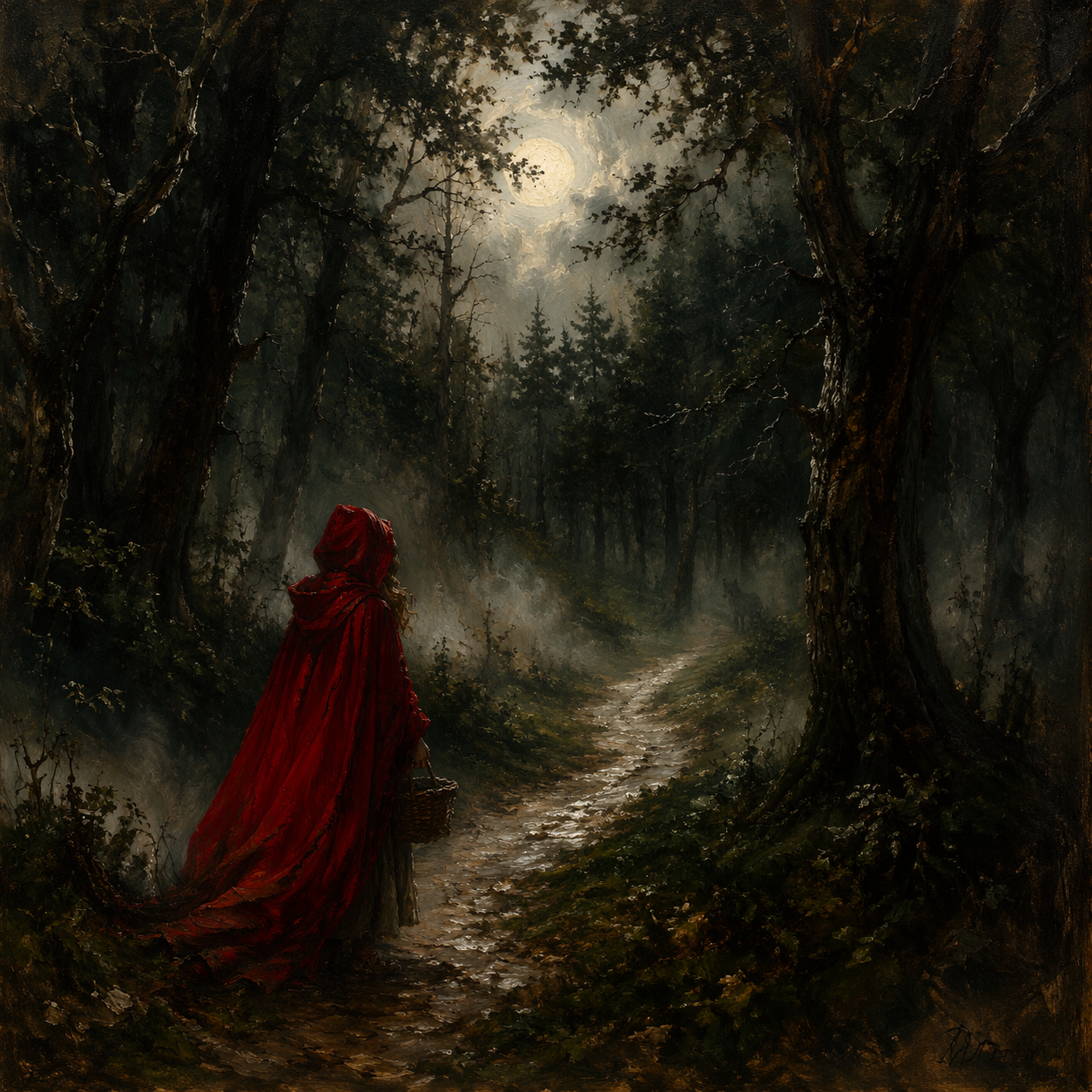
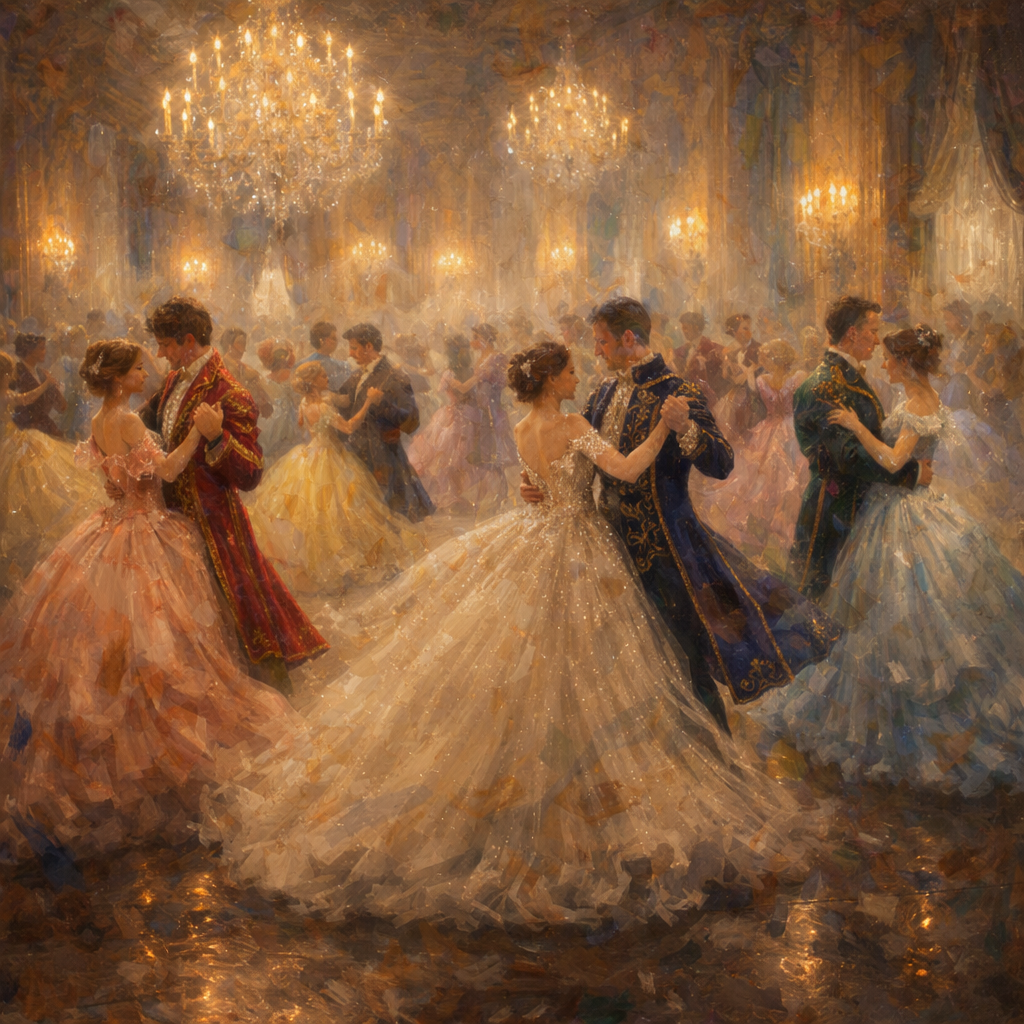
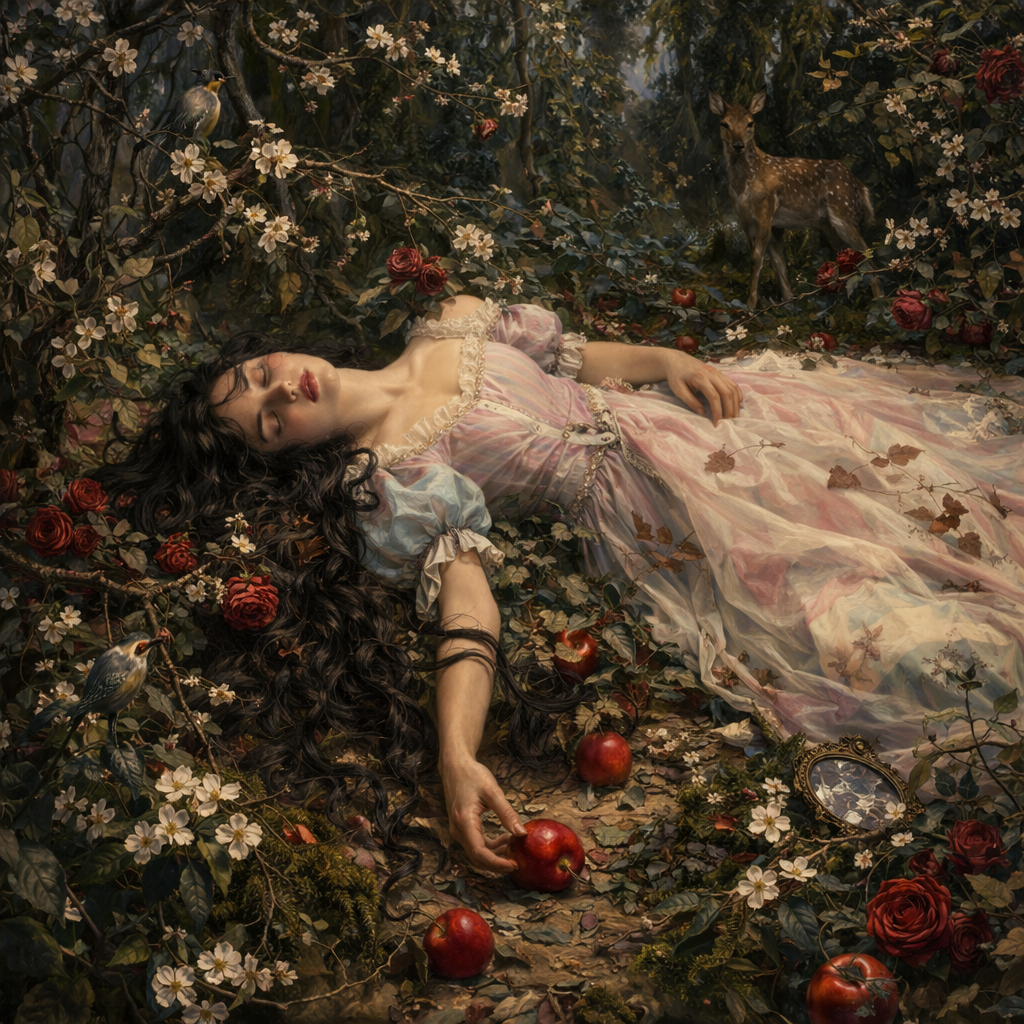
Ekphrastic Poetry: Writing From Images
Ekphrastic poetry uses visual images as a starting point for writing, focusing on atmosphere and interpretation rather than description.
When working with fairytale imagery, try:
◆ Focus on a single symbolic object (a key, mirror, cloak, or crown)
◆ Write the moment before or after transformation
◆ Let the image suggest tension rather than story
◆ Explore what is absent as much as what is present
◆ Use space and structure to mirror stillness or unease
The goal is not to retell the image, but to respond to it.
Go Deeper into Fairytale Poetry Writing
If these prompts resonated, you can extend your work by experimenting with form and perspective:
◆ Rewrite a fairytale moment as a fragment — a letter, a confession, or a record
◆ Shift perspective to a silenced or overlooked character
◆ Let objects carry emotional weight rather than symbolic explanation
◆ Explore transformation as something ongoing rather than complete
Fairytales already operate through image, repetition, and pattern. Poetry allows you to slow those elements down and examine them more closely.
Final Thoughts
Fairytales are not fixed. They shift depending on who tells them, who listens, and what is left unsaid.
Poetry allows you to enter those spaces — to pause the story, to question it, or to remain within a single image until it reveals something unexpected.
Write slowly. Focus on one detail. Let the poem stop before it resolves.
And if something lingers — a line, an object, a silence — let it.
If you enjoy exploring fairytales, folklore, and myth through writing, you can visit the Poetry Writing Hub or Fairytale and Folklore Hub for more structured prompt collections, or browse the full Creative Writing Archive to explore prompts inspired by literature, genre, and aesthetic themes.
Choose Your Next Theme