Fairytale Job Generator: Create a Character & Story Idea
Not every fairytale begins with a princess in a tower or a knight riding towards a dragon. Sometimes it begins with a goose keeper who notices one bird laying silver eggs, a candlemaker whose flames turn blue whenever someone cursed enters the shop, or a ferryman who discovers an extra passenger in his boat after every midnight crossing.
This Fairytale Job Generator creates an ordinary character with the beginnings of an extraordinary story. Generate a fairytale occupation alongside a place they work, a strange twist connected to their trade and a story complication that could turn an everyday job into the start of an adventure.
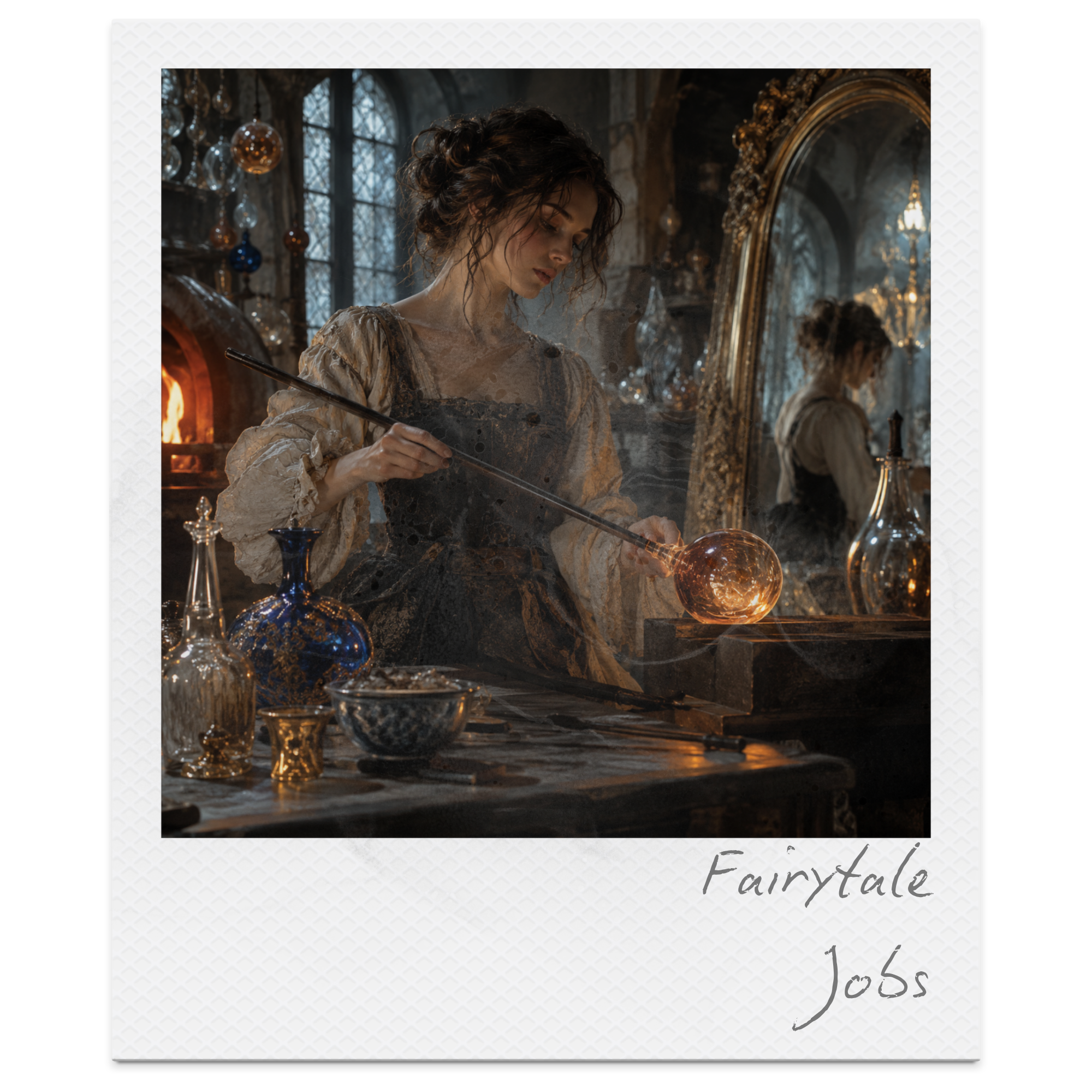
You might discover a glassmaker working beneath the royal palace, a miller whose wheel continues turning when the river freezes, or a seamstress whose embroidered pictures slowly begin to come true. Generate the complete idea at once or refresh individual details until you find a combination that sparks a story.
Use it to create fairytale characters, ordinary heroes and heroines, village inhabitants, palace workers, travelling tradespeople and unexpected protagonists — especially the people usually standing quietly in the background while somebody else is having the adventure.
For more character inspiration, explore 100 Fairytale Occupations & Trades, discover 100 Ordinary Fairytale Heroes & Heroines, visit the Fairytales & Folklore Writing Hub, or browse more interactive tools in the Creative Writing Generator Hub. If you are looking for prompts for another genre, then check out the Creative Writing Archive.
Fairytale Job Generator
Create an ordinary person with a rather less ordinary occupation. Generate a fairytale job, workplace, magical twist and story complication.
How to Use the Fairytale Job Generator
The Fairytale Job Generator creates four connected elements that you can use to build a character, story idea or piece of fairytale worldbuilding:
Fairytale Job – the occupation your character performs, from millers and seamstresses to ferrymen, scribes and palace servants.
Workplace – a setting connected to their occupation and the wider fairytale world.
Fairytale Twist – something strange, magical or unsettling about their work.
Story Complication – a problem that transforms an ordinary working life into the beginning of a story.
Generate all four elements to create a completely new idea, or refresh individual sections to experiment with different combinations.
You do not have to use every detail exactly as it appears. Change the character's age, background, family, ambitions or circumstances, combine several generated ideas, or use a single unusual detail as the starting point for an entirely different story.
What Jobs Do People Have in Fairytales?
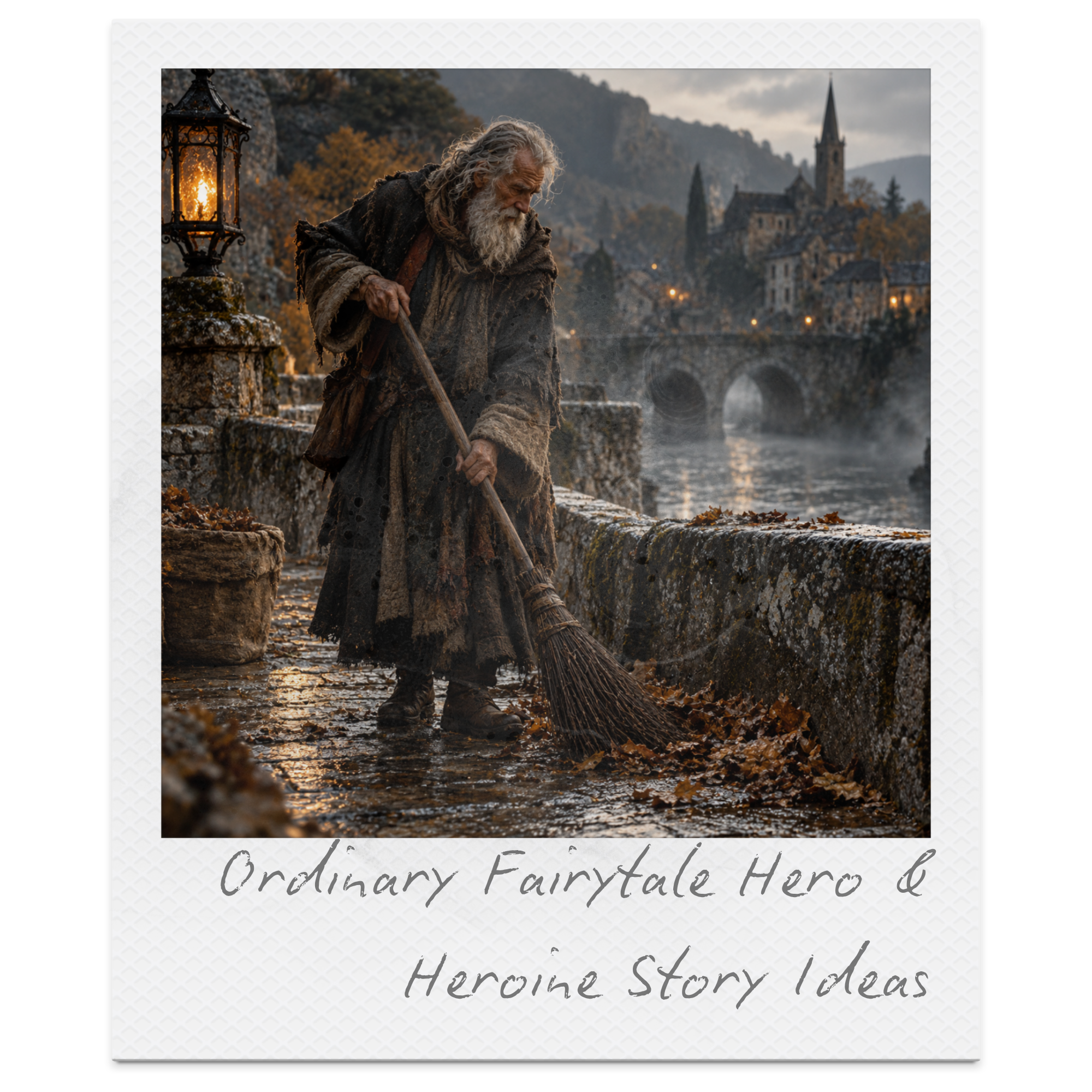
Fairytales are filled with kings, queens, princes, princesses and witches, but most people living within their worlds would never step inside a throne room.
They bake bread, mend shoes, tend animals, cut timber, carry water, grow crops, make candles, wash clothes and sell goods at the market. Someone must shoe the prince's horse before he leaves on his quest. Someone sews the gown worn to the royal ball. Someone keeps the fire burning in the castle kitchens while everyone else is asleep.
These apparently ordinary occupations can make particularly interesting starting points for stories because they place characters at the edges of extraordinary events.
A palace servant might overhear a conversation never intended for them. A shepherd could discover something living among the flock. A ferryman may carry a mysterious stranger across the river. A seamstress could be asked to repair a dress stained with blood. A gardener might notice that one particular grave grows flowers in the middle of winter.
The character does not need to begin the story with power, wealth or magical abilities. Sometimes their occupation is exactly what places them in the right place to notice that something is wrong.
Turning an Ordinary Job into a Fairytale Story
One of the simplest ways to create a fairytale premise is to take something completely ordinary and introduce one impossible detail.
The basic idea can be reduced to:
Ordinary occupation + unusual rule + problem = fairytale story
The occupation gives the character a believable place within the world. The unusual rule introduces the fairytale element. The problem gives the character a reason to act.
The Candlemaker
Every candle she makes burns blue when someone under a curse enters the room. She has always considered the ability useful but unremarkable until every candle in her shop suddenly turns blue when the king's carriage passes outside.
The Miller
Each morning, the miller discovers that somebody has used his mill during the night. The doors remain locked, nothing has been stolen and sacks of perfectly white flour have been left behind. Then somebody in the village bakes bread with it.
The Goose Keeper
One goose in the royal flock lays a silver egg whenever somebody inside the palace breaks a promise. Usually there are only one or two each week. One morning, the goose lays thirty-seven.
The Seamstress
Anything the seamstress embroiders eventually happens. She has learned to decorate dresses only with harmless flowers and birds, until a wealthy stranger orders a wedding gown covered in tiny black thorns.
The Ferryman
The ferryman counts his passengers before every crossing. He counts them again when they reach the opposite bank. For seven nights in a row, there has been one more passenger when the boat arrives.
The Baker
The baker inherited a sourdough starter that has been passed through her family for generations. One morning, words begin appearing in the surface of the dough — and the first message contains tomorrow's date.
The Blacksmith
The blacksmith can tell who a weapon will eventually kill the moment he finishes making it. When he completes a ceremonial sword for the young prince, he sees his own name.
The Gardener
The royal gardener knows that every plant in the palace grounds has been carefully chosen. That is why he is alarmed when a tree he has never seen before appears overnight beside the queen's window.
The Laundress
The palace laundress knows far more about the royal family than they realise. She knows who has been riding through muddy fields, who has been crying and who has blood on their clothes. Then she receives a shirt belonging to someone who died three years ago.
The Bell Ringer
The village bell is rung for births, marriages, deaths and danger. One night it begins ringing by itself. The bell ringer climbs the tower to stop it and discovers that the rope has been cut.
Who Becomes the Hero?
An ordinary occupation does not have to be background decoration. It can determine exactly why your character becomes important.
A character's work gives them skills, knowledge, relationships and access that somebody else might not have.
A beekeeper understands the behaviour of the royal hives well enough to notice that the bees suddenly refuse to approach the queen. A locksmith knows that the supposedly sealed tower has recently been opened. A stablehand recognises the horse that returned without its rider. A cook notices that somebody has replaced one ingredient in the king's supper.
Their social position can be just as useful.
People often speak freely around servants. Merchants travel between towns and hear rumours from distant places. Ferrymen meet strangers. Midwives enter homes at moments when families are vulnerable. Grave diggers know who has been buried — and perhaps who has not.
An apparently insignificant character can therefore know something that the most powerful people in the kingdom do not.
The question is not always "Why would this person become the hero?"
Sometimes the more interesting question is:
"What could only this person have noticed?"
10 Fairytale Job Story Ideas
1. The Palace Scullery Maid
A scullery maid discovers a tiny golden crown inside the belly of a fish being prepared for the king's supper. When she secretly tries it on, every animal in the palace bows to her.
2. The Village Shoemaker
A shoemaker is asked to make a pair of boots for a traveller who insists they must never leave footprints. The following morning, royal guards arrive searching for someone who crossed the palace gardens without leaving a single mark.
3. The Shepherd
Every evening, a shepherd counts one hundred sheep. One evening there are one hundred and one. The unfamiliar lamb has golden eyes, understands human speech and refuses to leave his side.
4. The Travelling Merchant
A merchant buys a locked wooden box from an old woman who warns him never to sell it. In every town he visits afterwards, somebody offers him twice what the previous person offered — although none of them will explain what is inside.
5. The Village Healer
A healer discovers that one particular herb can cure any illness, but each time she uses it, the plant disappears from another part of the kingdom. When the princess becomes desperately ill, only one plant remains.
6. The Royal Archivist
While cataloguing old documents, an archivist discovers records relating to a princess whose name has been carefully removed from every history of the kingdom. Then he finds a portrait of her — and she looks exactly like the current queen.
7. The Ferryman
A ferryman is forbidden to cross the river after sunset. One winter evening, a child appears on the opposite bank and begs him to come across. The child knows his name.
8. The Night Watchman
Every night at midnight, the watchman sees a light appear in the window of an abandoned house. When he finally enters, he discovers a family sitting around the dinner table exactly as they were on the night they disappeared twenty years earlier.
9. The Royal Gardener
The king orders his gardener to destroy a strange white rose growing in a forgotten corner of the palace grounds. Each time the gardener cuts it down, two more appear — and their roots seem to be growing towards the royal crypt.
10. The Clockmaker
A clockmaker is commissioned to build a magnificent clock for the palace. Once completed, it keeps perfect time except for one minute every night when all thirteen hands point towards the same locked room.
10 Questions to Develop Your Fairytale Character
Once you have generated a job, workplace and twist, use these questions to develop the character behind them.
Why does your character have this particular job? Did they choose it, inherit it, learn it from a parent or have no other way to survive?
What are they exceptionally good at? Consider a small occupational skill that could become unexpectedly important later.
What do they know because of their work? Their job might expose them to secrets, rumours, unusual places or powerful people.
Who depends upon them? Think about customers, employers, relatives, apprentices, animals or an entire community.
What do they want beyond their ordinary life? They might dream of adventure, wealth, freedom, love, recognition or simply a quieter existence.
What object is essential to their trade? A needle, hammer, key, basket, knife, bell, lantern or ledger could eventually become important to the story.
What rule must they never break? Perhaps the mill must stop before midnight, the final loaf must always be left outside or the northern gate must never be unlocked during winter.
What strange thing have they noticed that everyone else ignores? Small observations are excellent ways to begin fairytale mysteries.
What would happen if they stopped doing their job? Consider who would notice, what would fail and whether their work secretly maintains something much larger than they realise.
What could force them to leave their ordinary life behind? A disappearance, royal command, curse, discovery, betrayal or impossible visitor could transform a worker into the hero of the tale.
Go Deeper into Your Fairytale Character
A generated occupation can give you the beginning of a character, but their everyday life can reveal much more about the world around them.
◆ Think about status. Is their occupation respected, ignored, feared or considered beneath the attention of wealthier characters?
◆ Give them specialist knowledge. Someone who has performed the same work for years should understand things an outsider would miss.
◆ Connect their work to the wider world. Consider where their materials come from, who buys what they make and what would happen if those supplies disappeared.
◆ Create occupational traditions. Trades might have their own superstitions, rituals, sayings, apprenticeships, festivals or forbidden practices.
◆ Introduce a fairytale rule. Decide whether something unusual has always been part of the occupation or whether your character is witnessing it for the first time.
◆ Make the ordinary detail matter. The smallest part of someone's daily routine can eventually become the clue, skill or object that allows them to survive the extraordinary events ahead.
Final Thoughts
Fairytale worlds become much richer when they contain people whose lives continue beyond castles, curses and royal quests. Bakers wake before sunrise, shepherds watch lonely hillsides, merchants carry rumours between villages and servants notice the secrets powerful people assume nobody can see.
Your character's occupation can be more than a background detail. It can determine what they know, where they go, who they meet and why they are the one person capable of recognising that something strange is beginning.
Use the Fairytale Job Generator whenever you need an unexpected protagonist, a new inhabitant for your world or simply a reason to begin a story somewhere other than a throne room.
For more inspiration, explore the Fairytales & Folklore Writing Hub, discover a new idea in Fairytale Story Sparks, browse interactive tools in the Creative Writing Generator Hub, or continue exploring the Creative Writing Archive.
Choose Your Next Adventure