Body Horror Generator: Create Disturbing Diseases & Transformations
Body horror takes the familiar human body and makes it strange. Infection spreads beneath the skin, bones change shape, parasites make themselves at home, new organs appear where they should not exist, and a seemingly harmless first symptom becomes the beginning of something much worse.
This Body Horror Generator creates fictional diseases for horror stories, unsettling characters and grotesque transformations. Each result gives you a disease name, how it is caught, its first symptoms, how the condition progresses, the physical transformation it causes, its final stage, a possible treatment or cure, and one particularly disturbing detail.
Use the generator for body horror writing prompts, outbreak stories, medical horror, biological horror, weird fiction, dystopian experiments or simply when you need something horrible to happen to a character's body.
Body horror can range from subtle physical wrongness to complete transformation. You might begin with an itch that will not disappear, a strange mark beneath the skin or a tooth that suddenly feels loose — and end with something the character could never have imagined when the symptoms first appeared.
If you’re building a larger horror story, explore the Horror Writing Hub for more ideas and resources, or head to the Horror Story Sparks when you want a quick premise to develop. You can also find more interactive writing tools in the Creative Writing Generator Hub, while the Creative Writing Archive brings together prompts, ideas, worldbuilding resources and writing inspiration from across Ink & Insights.
Generate a disease below and see what your character has just caught.
BODY HORROR GENERATOR
Create a Fictional Disease
Generate a disturbing fictional disease complete with its name, transmission, first symptoms, progression, physical transformation, final stage, possible treatment and one deeply unsettling detail.
The Hollowing
How to Use the Body Horror Generator
The generator is designed to give you the bones of a complete body horror concept rather than a single disconnected prompt. Generate a disease and you will receive its name, method of transmission, first symptoms, progression, physical transformation, final stage, possible treatment and one additional disturbing detail.
You could use the entire result as the foundation for a story, or take only the element that interests you.
A strange first symptom might inspire a character.
A method of transmission could become the starting point for an outbreak.
A transformation might suggest the creature your protagonist eventually becomes.
A treatment could create an impossible decision: what would your character sacrifice to remain human?
You can also generate several diseases and combine your favourite elements. Body horror becomes particularly interesting when the physical transformation is connected to the character, setting or central conflict rather than existing simply to shock the reader.
What Is Body Horror?
Body horror is a branch of horror concerned with the violation, transformation, deterioration or loss of control of the human body.
The fear often comes from something familiar becoming unfamiliar. Skin, teeth, bones, organs, pregnancy, illness, ageing, appetite and physical sensation can all become sources of horror because they are normally understood as parts of ourselves.
A body horror story might involve:
◆ Disease and infection
◆ Parasites and infestation
◆ Mutation
◆ Unwanted transformation
◆ Biological experimentation
◆ Strange growths or new organs
◆ Loss of control over bodily functions
◆ Fusion between human and non-human forms
◆ The body becoming unfamiliar to its owner
◆ A character discovering that their transformation may be irreversible
The transformation does not have to be spectacular. Sometimes a fingernail growing strangely or a character noticing that their reflection no longer looks quite right can be more disturbing than an immediate grotesque mutation.
Types of Body Horror
Disease and Infection
Disease horror begins with the frightening possibility that something is already inside the body.
The first symptom might seem insignificant: an unexplained rash, a strange taste, an unusual ache or a mark that was not there yesterday. The tension comes from escalation. Each new symptom confirms that whatever is happening is not going away.
Your fictional disease also creates larger story questions. Where did it originate? Is it contagious? Who knows about it? Is somebody hiding the outbreak? Can the infected person trust the people attempting to treat them?
Parasites and Infestation
Parasite horror introduces another living thing into the body.
The character may know immediately that they have been infected, or they might discover it slowly through movement beneath the skin, unexplained hunger, missing memories or changes in behaviour.
The parasite does not necessarily have to kill its host. It might need them alive.
That can be considerably worse.
Mutation and Transformation
Transformation horror asks what happens when the character's body begins becoming something else.
Bones might alter. Skin might change texture. New structures could appear. Existing features might disappear.
The strongest transformations usually have stages. Give the reader enough time to understand each change before introducing the next one.
This also allows the character to realise where the transformation is heading long before they can stop it.
Medical and Experimental Horror
Hospitals, laboratories, clinics and research facilities offer particularly effective settings for body horror because they are places where the body is examined, measured and altered.
An experimental treatment might have unexpected consequences. A surgeon could discover something impossible during an ordinary procedure. A medical trial might work exactly as intended — before researchers realise what their definition of success has overlooked.
Medical body horror can also explore who has authority over a person's body and what happens when institutions value discovery more than the individual experiencing it.
Botanical and Fungal Horror
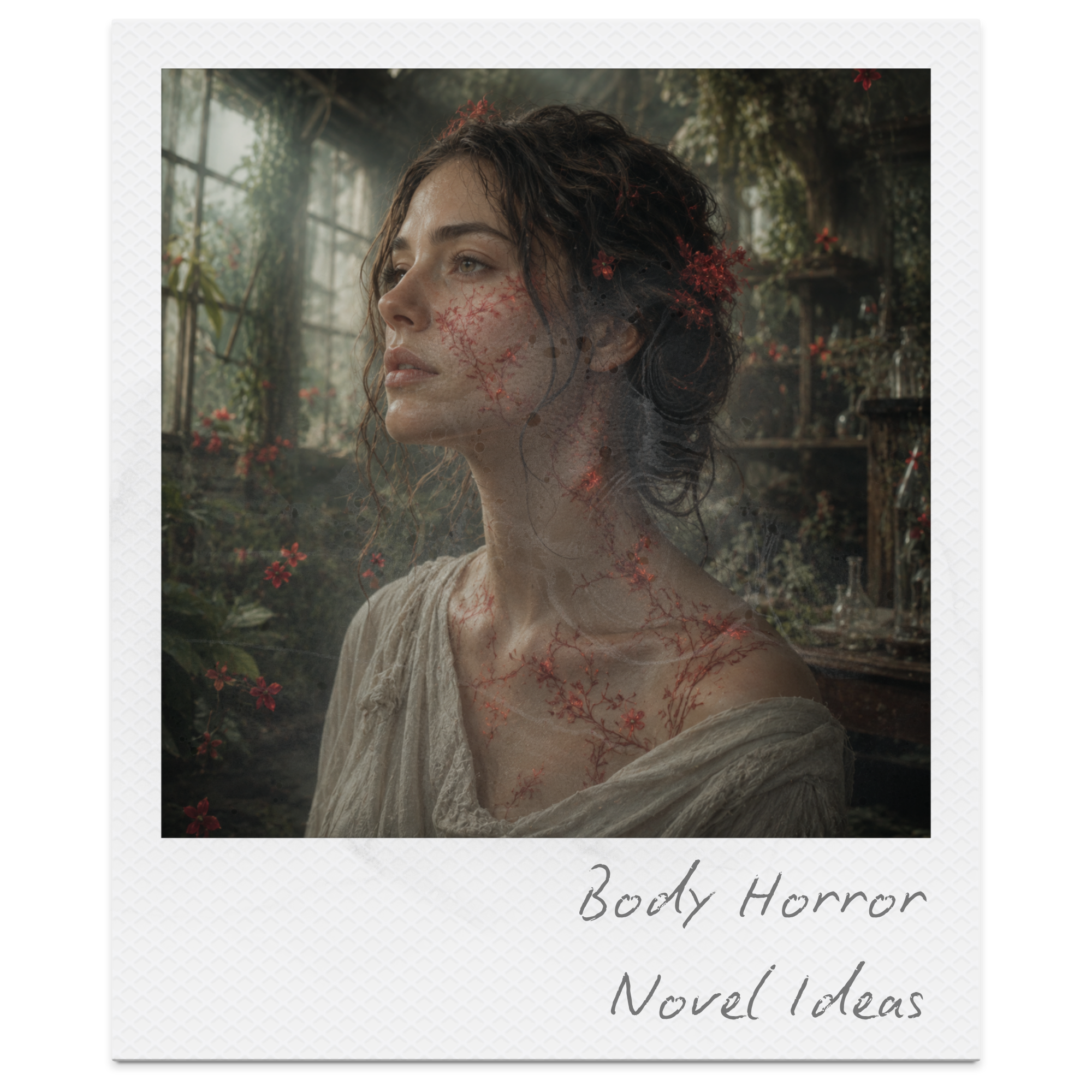
Roots beneath skin. Spores inside lungs. Flowers growing where wounds should be.
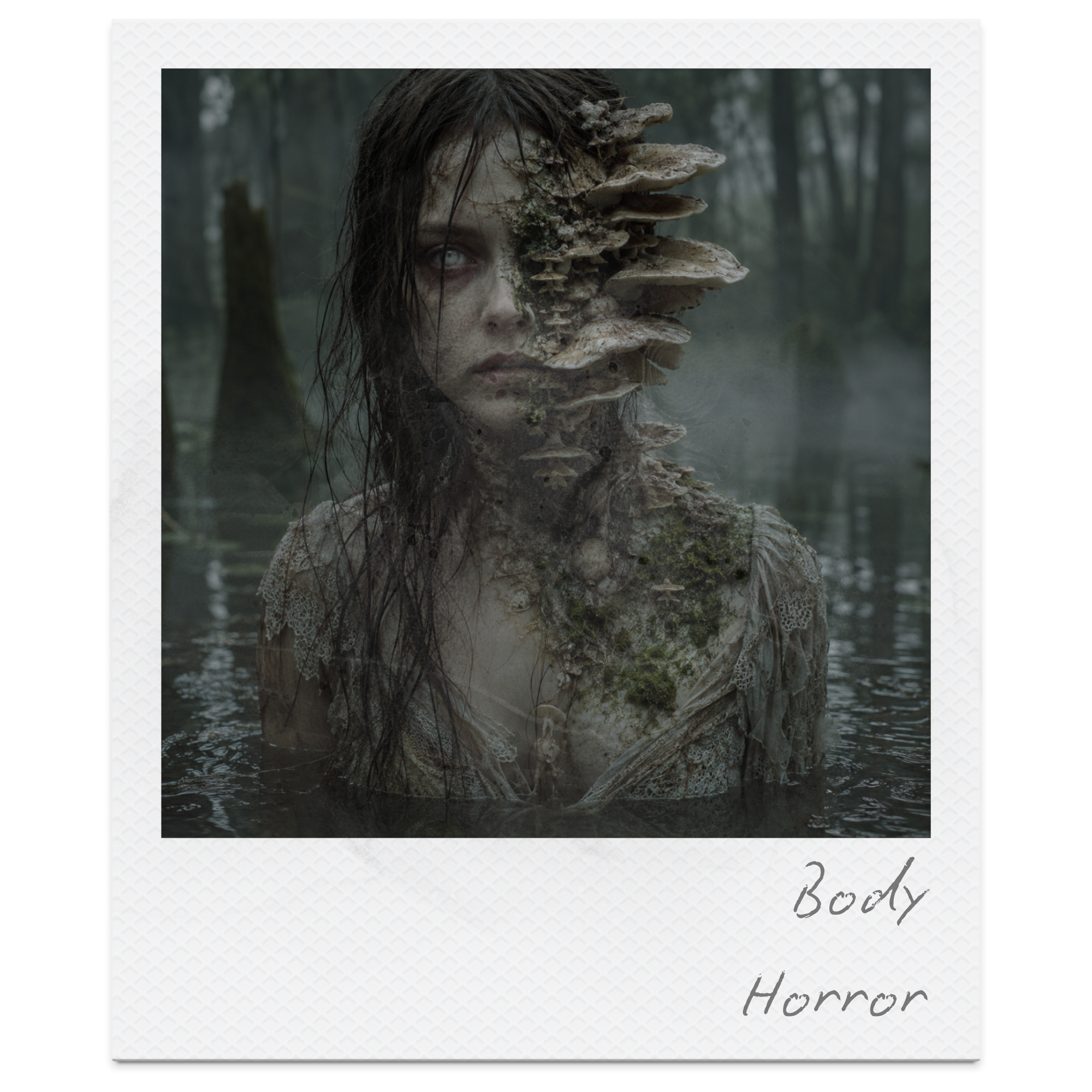
Plant and fungal body horror works particularly well because growth is normally associated with life and beauty. Changing the context makes something natural feel deeply unnatural.
The infected person might even become useful to whatever is growing inside them: shelter, food, transport or fertile ground.
Technological Body Horror
Body horror does not have to be entirely biological.
Implants, prosthetics, medical devices, machines and technology can blur the boundary between a person's body and something external.
Perhaps an implant begins changing the tissue around it. Perhaps a replacement limb starts behaving independently. Perhaps technology designed to improve the human body gradually decides that the original body is the problem.
How to Write Effective Body Horror
Start Small
Do not begin with the character's entire body transforming unless the story specifically requires it.
Begin with something they can dismiss.
An itch.
A loose tooth.
A bruise.
A strange pulse beneath the skin.
A patch of numbness.
Then make it happen again.
The character's growing awareness that these small details belong to something much larger creates anticipation before the true horror arrives.
Make the Body Feel Unfamiliar
One of the most unsettling ideas in body horror is losing ownership of your own body.
A hand moves unexpectedly.
A wound heals incorrectly.
The character becomes hungry for something they have never wanted before.
Their heartbeat develops an unfamiliar rhythm.
They look in the mirror and recognise themselves — almost.
The body remains theirs, but it no longer seems entirely under their control.
Use Sensory Detail
Body horror becomes more immediate when readers can imagine how the transformation feels.
Think beyond appearance.
What can the character hear inside their body?
What texture has their skin developed?
Does the transformation smell?
Is it painful, numb, itchy, tight, wet, brittle, cold or strangely pleasant?
Sometimes the most disturbing choice is allowing the transformation to feel good.
Give the Transformation Rules
Even the strangest fictional disease becomes more convincing when it behaves consistently.
Decide:
◆ How is it transmitted?
◆ How quickly does it progress?
◆ What is the first unmistakable symptom?
◆ Does every infected person transform in the same way?
◆ When does the person become contagious?
◆ Can progression be slowed?
◆ Is there a cure?
◆ What happens if treatment fails?
◆ What does the disease ultimately want or accomplish?
The reader does not necessarily need to know every rule, but the writer should.
Make the Horror Personal
Ask why this transformation is particularly frightening for this character.
A singer losing control of their throat creates a different story from a soldier losing control of their hands.
A character obsessed with beauty might respond differently to visible transformation than someone whose changes remain completely hidden.
The physical horror can expose an existing fear: ageing, illness, identity, pregnancy, mortality, disability, contamination, intimacy or simply the terrifying knowledge that we cannot completely control what happens inside our own bodies.
Edinburgh, 1828.
The anatomy schools are expanding.
The demand for bodies is growing.
And the dead are not resting peacefully.
Across the city, churchyards are watched through the night. Coffins are reinforced. Graves are guarded. Rumours spread between mourners, surgeons, students, and those willing to make a profit from the recently buried.
Somewhere between the cemetery and the lecture hall, a quiet trade flourishes.
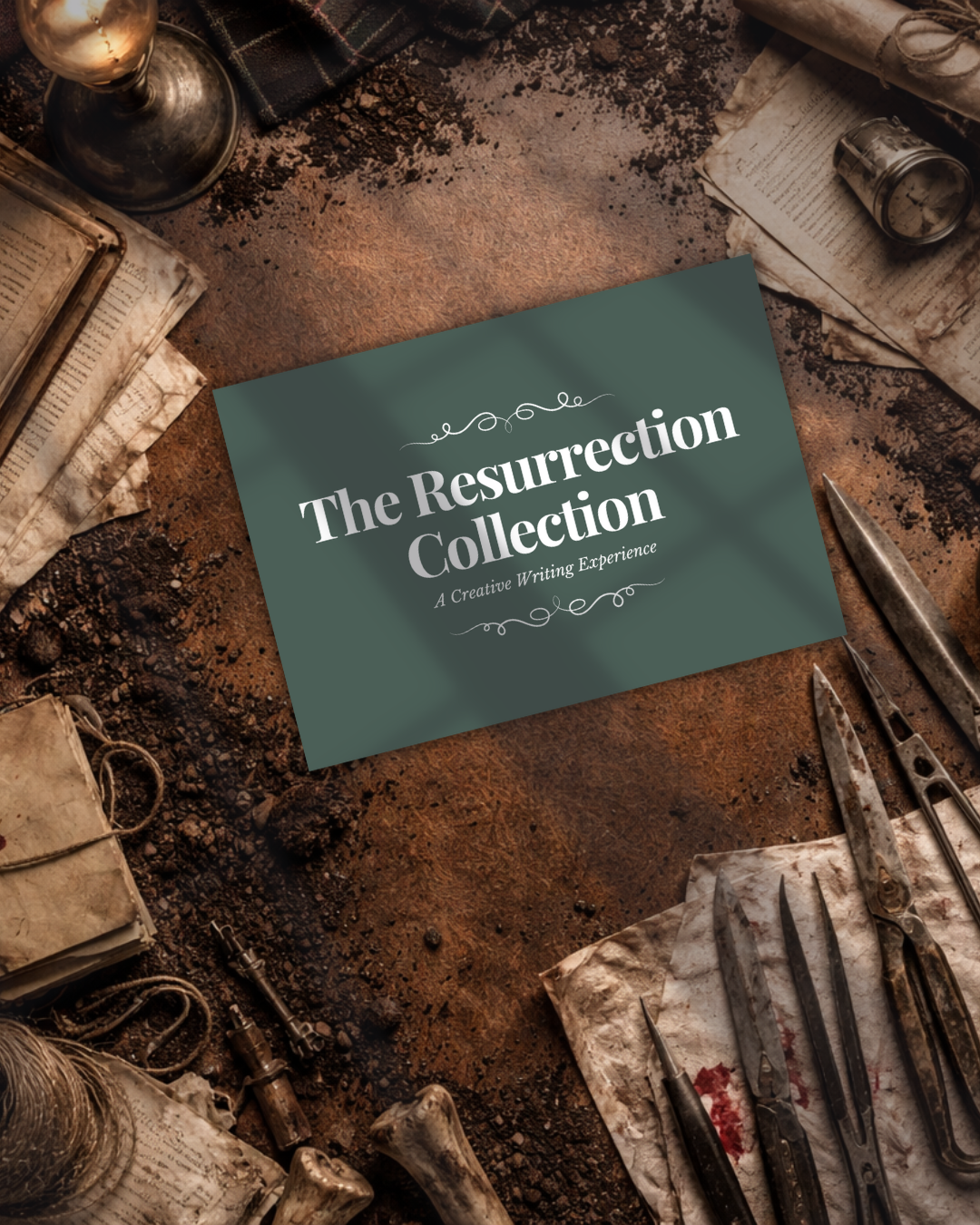
The Resurrection Collection is an immersive archive inspired by the real history of body snatching, anatomical study, and institutional silence in nineteenth-century Edinburgh. Inside you'll discover letters, diaries, advertisements, ledgers, archive records, paintings, newspaper reports, and personal accounts that reveal fragments of a story hidden beneath the city's pursuit of knowledge.
Some documents appear trustworthy.
Others raise uncomfortable questions.
Who supplied the bodies?
Who looked the other way?
And how many people knew more than they were willing to admit?
There is no official explanation.
No single narrative.
Only evidence.
What's Inside?
◆ 50+ printable documents and artefacts inspired by the world of nineteenth-century Edinburgh
◆ Letters, diaries, ledgers, advertisements, archive records, textbook extracts, silhouettes, paintings, and more
◆ A document-based experience designed for exploration, interpretation, and storytelling
◆ Instant digital download in PDF format
Who Is It For?
Perfect for:
◆ Writers and worldbuilders
◆ History enthusiasts
◆ Mystery lovers and curious minds
◆ Teachers and students
◆ Anyone fascinated by gothic realism, historical crime, and hidden stories
What Makes This Different?
This isn't a guided story or a puzzle with a solution.
It's an archive.
The documents don't agree. Some voices are missing. Others speak too clearly.
Every piece reveals part of a larger story, but none reveal the whole truth.
What happened depends on what you trust, what you question, and what connections you choose to make.
Every reader uncovers a different version of events.
Take Your Horror Writing Further: The Resurrection Collection
If the darker meeting point between bodies, medicine, death and horror is where your imagination naturally goes, you can take that atmosphere much further with The Resurrection Collection.
Set in Edinburgh in 1828, the collection is an immersive fictional archive inspired by the real history surrounding body snatching, anatomical study and institutional silence in nineteenth-century Edinburgh.
Inside are more than 50 printable documents and artefacts, including letters, diaries, ledgers, advertisements, archive records, textbook extracts, silhouettes and paintings. Rather than giving you one fixed story, the collection presents fragments of evidence and lets you decide what happened, who can be trusted and what might be missing from the record.
For horror writers, it is particularly useful inspiration for stories involving anatomy, medical institutions, graveyards, body snatching, historical crime, unethical research and the uncomfortable boundary between scientific curiosity and human remains.
Explore The Resurrection Collection to enter the archive and see what you uncover.
Turning a Generated Disease Into a Story
Once you have generated a disease you like, do not stop at the symptoms. Ask what happens because the disease exists.
Imagine your generator gives you an infection caught through contaminated water. The first symptom is a faint movement beneath the ribs. Eventually, translucent structures begin appearing beneath the skin.
Now ask:
◆ Who becomes infected first?
◆ When do they realise something is seriously wrong?
◆ Who do they tell?
◆ Who refuses to believe them?
◆ Is the infection already spreading?
◆ Does someone benefit from keeping the disease secret?
◆ What does the character stand to lose if anyone discovers they are infected?
◆ How far would they go for a cure?
◆ What happens if the transformation is not actually fatal?
That last question can be particularly useful.
Death is not necessarily the worst possible final stage.
Body Horror Writing Prompts
If you want to turn your generated disease into a story immediately, try one of these starting points:
A doctor discovers that every patient admitted during the last week has developed the same tiny mark beneath their tongue.
Someone wakes after surgery and notices that the scar is moving.
An isolated village has lived with a strange inherited disease for generations — and considers outsiders to be the unhealthy ones.
A new treatment successfully regenerates damaged tissue, but the body does not always remember what shape it was supposed to regenerate.
A character discovers that the parasite inside them is protecting them from something worse.
Everyone infected with a mysterious illness experiences the same dream on the night before their first visible transformation.
A woman begins finding pieces of something in her bed each morning and eventually realises they came from her.
A medical researcher deliberately infects themselves because they believe they have discovered the cure.
The transformation is horrifying, but removing it would kill the host.
A survivor discovers that being cured does not mean the disease has completely left their body.
Questions to Develop Your Body Horror Disease
Once you have generated a result, use these questions to develop it further:
◆ Where did the disease originate?
◆ Who was the first known victim?
◆ How long is the incubation period?
◆ Can someone spread it before symptoms appear?
◆ Which symptom is easiest to hide?
◆ Which symptom makes infection impossible to conceal?
◆ Does the transformation hurt?
◆ Does the infected person remain completely conscious?
◆ Does the disease affect behaviour as well as the body?
◆ Is the transformation accidental, defensive or purposeful?
◆ Can animals become infected?
◆ Does the disease behave differently in different people?
◆ Who is trying to find a cure?
◆ Who might want the disease to spread?
◆ What happens to people who survive it?
◆ Can somebody appear cured while remaining contagious?
◆ What does society do with the infected?
◆ What rumour about the disease is completely wrong?
◆ What terrifying rumour turns out to be true?
◆ What is worse than dying from it?
Body Horror Generator FAQs
What is a body horror generator?
A body horror generator is a creative writing tool designed to generate ideas involving disturbing physical transformations, fictional diseases, parasites, mutations and other forms of bodily horror. This generator creates several connected elements so you can develop the result into a larger story.
Can I use the generator for body horror writing prompts?
Yes. Generate a fictional disease and use the complete result as a body horror writing prompt, or take an individual element — such as the first symptom, transformation or final stage — and build your own story around it.
What makes something body horror?
Body horror focuses on fear associated with the body changing, deteriorating, being invaded or behaving in ways the character cannot control. Mutation, infection, parasites, medical experimentation and unwanted transformation are common approaches, but body horror can also be extremely subtle.
Does body horror have to be graphic?
No. Body horror can be graphic, but it does not need to be. A subtle bodily change can create intense horror when the character understands that something is wrong but cannot explain or stop it.
How do you make a fictional disease scary?
Give the disease recognisable rules, begin with relatively small symptoms and gradually escalate them. Consider how the infection spreads, what it does to the body, whether the character remains conscious and what makes the disease particularly frightening for the person experiencing it.
Can I use these ideas in my own story?
Yes. The generator is designed to inspire original creative writing. Change, combine and develop the generated elements however you like to create a disease and story that belong to your fictional world.
Go Deeper
◆ Generate the disease first, then use the Horror Story Sparks to give your infected character a larger horror premise.
◆ Explore the Horror Writing Hub for more horror prompts, story ideas, characters, settings and writing resources.
◆ Try another interactive tool from the Creative Writing Generator Hub and combine two unrelated results into a stranger story.
◆ Explore The Resurrection Collection for an immersive archive of bodies, anatomy, nineteenth-century Edinburgh and historical horror inspiration.
◆ Browse the Creative Writing Archive when you want to move beyond horror and explore prompts, worldbuilding ideas and resources across different genres.
Final Thoughts
A good body horror idea begins with a simple question: what if your own body stopped obeying the rules you thought you understood?
Use the body horror generator as a starting point rather than an ending. Take the disease it gives you, decide who contracts it and then make the transformation personal. Work out what your character notices first, what they desperately try to hide and the moment they finally understand what is happening to them.
For more dark story inspiration, continue into the Horror Writing Hub or generate a complete premise with the Horror Story Sparks. You can find more interactive tools inside the Creative Writing Generator Hub, or browse the Creative Writing Archive for prompts, story ideas and worldbuilding resources across Ink & Insights.
And if you want to descend further into the darker history of bodies, anatomy and the people willing to profit from the dead, open The Resurrection Collection and begin examining the evidence.
Choose Your Next Adventure