Fantasy Magic System Generator: Create Unique Magic for Your World
Magic can shape almost every part of a fantasy world. It might decide who rules, which professions exist, how wars are fought, what people fear, which laws are enforced and even how ordinary people understand life, death and the world around them. But creating a magic system often involves far more than deciding what spells your characters can cast.
The Fantasy Magic System Generator below is designed to help you build those foundations. It combines 11 different elements, exploring where magic comes from, who can use it, how it is learned and performed, what it can do, what it costs, the rules that limit it, forbidden practices, society's attitude towards magic, who controls it and a complication that could disrupt the entire system.
With more than one quintillion possible combinations, you can use it to create everything from tightly regulated academic magic and dangerous bloodline powers to strange spirit bargains, forgotten divine magic and systems nobody fully understands.
Click Generate Magic System to create a complete system at random. You don't have to keep everything it gives you: reroll each element individually using the ↻ button until the different pieces begin to fit your world. You might love the source and magical ability but want a harsher cost, a stranger limitation or a completely different attitude from society. Once you've created a combination you want to keep, simply select Copy Magic System to copy the entire result into your story notes.
The most interesting results often come from asking how the different elements affect one another. If magic can manipulate memories but every spell costs the practitioner one of their own memories, what kind of person would willingly become a mage? If healing magic exists but is controlled entirely by the crown, who receives treatment? If resurrection is forbidden, what happened in the past to make that law necessary?
Use the generator as a starting point rather than a finished rulebook. Take the combinations that spark an idea, change anything that doesn't fit and follow the consequences until the magic feels as though it genuinely belongs to your world.
For more help developing the kingdoms, characters and worlds surrounding your magic system, explore the Fantasy Writing Hub for more fantasy prompts, generators and worldbuilding resources, or browse the Creative Writing Archive for story ideas and inspiration across fantasy and other genres.

Generate the foundations of a fantasy magic system, from where magic comes from and who can wield it to its costs, limitations, forbidden practices and place in society. Keep the ideas you like and reroll individual elements until your magic system begins to take shape.
Source of Magic
Where does magic come from?
Who Can Use It
Who has access to magic?
How Magic Is Learned
How do practitioners learn to use it?
How Magic Is Used
How is magical power actually performed?
Primary Ability
What can this magic do?
Cost of Magic
What must the caster sacrifice or endure?
Limitation
What rule can magic not easily overcome?
Forbidden Magic
Which magical practice has been outlawed or condemned?
Society's Attitude
How do ordinary people feel about magic?
Who Controls Magic
Who regulates, teaches or monopolises magical power?
Magic System Complication
What threatens to disrupt the system?
What Makes a Good Fantasy Magic System?
A good fantasy magic system does not necessarily need hundreds of spells, complicated diagrams or an enormous collection of rules. What matters most is that the reader begins to understand what magic makes possible, what prevents it from solving every problem and what consequences come with using it.
Some fantasy stories use tightly defined magic with clear rules, while others keep magic mysterious, unpredictable or only partly understood. Both approaches can work. Even if your characters do not understand exactly how magic operates, however, it helps if you understand enough of its underlying logic to keep it consistent.
Think particularly about the relationship between power and difficulty. If a character can heal any wound, teleport anywhere or see the future whenever they choose, many ordinary story problems disappear. Costs, limitations, training requirements and social consequences give magical power boundaries and create opportunities for characters to make difficult choices.
Magic also becomes much more convincing when it affects the world beyond individual spellcasters. A society that has lived with magic for centuries should have adapted to its existence through its laws, professions, religions, technologies, architecture, warfare and everyday customs.
Your magic system therefore does not need to explain everything. It simply needs to feel as though its possibilities and consequences belong to the same world.
Start With the Source of Your Magic
Before deciding exactly what your characters can do, consider where magical power comes from.
Magic might exist naturally throughout the world, flow from gods or spirits, originate within the caster, gather in particular landscapes or enter reality from somewhere else entirely. Perhaps it is contained within certain materials, inherited through bloodlines or created by something as intangible as memory, emotion, belief or promises.
The source can immediately influence the character of your magic system.
If magic comes from the natural world, damaging the environment might weaken it. If it comes from gods, practitioners may depend upon divine favour. Magic drawn from another realm could become dangerous whenever the barrier between worlds grows thin. Power generated by human emotion might behave very differently during war, grief or mass celebration.
You can also decide how well people actually understand the source. Scholars may have spent centuries studying magic without discovering where it truly originates, while religious and academic institutions could have completely different explanations.
That uncertainty can become part of the worldbuilding itself.
Consider what would happen if the source changed, disappeared, became inaccessible or turned out to be something entirely different from what people believed.
Decide Who Can Use Magic
Who has access to magic can have enormous consequences for your fantasy society.
Perhaps anyone can learn magic with sufficient training. Alternatively, magical ability might be inherited, randomly acquired, granted by supernatural beings or awakened by a particular experience. Some people may possess enormous natural power while others can achieve the same abilities only after decades of study.
Then consider access.
Even if theoretically anyone can become a mage, that does not mean everyone has the opportunity. Magical education might require expensive tuition, rare books, years away from work or sponsorship from an established practitioner. A system that appears equal could therefore be dominated by wealthy families.
How magic is learned matters too. Practitioners might attend academies, apprentice themselves to older mages, inherit secret family knowledge, study ancient texts, communicate with spirits or discover their abilities entirely through experimentation.
Ask yourself:
Is magical ability born, learned, granted or acquired?
How rare are people capable of using it?
How long does training take?
Who has access to magical education?
Can someone practise without formal training?
What happens to people who develop magic unexpectedly?
Can magical knowledge be deliberately withheld?
The answers begin turning magical ability into part of the social structure of your world.
Decide What Magic Can Do
Next, establish the scope of your magic.
A single magic system could encompass dozens of abilities, or practitioners might specialise in very narrow branches. One mage could manipulate fire while another communicates with the dead; alternatively, both abilities might come from entirely separate magical traditions with different rules.
You do not necessarily need to catalogue every possible spell. Instead, establish the broad boundaries.
Can magic affect the physical world? Minds? Memories? Time? Death? Dreams? Weather? Living bodies? Spirits? Probability?
Then decide how practitioners turn magical power into an effect.
Magic might require spoken spells, written symbols, rituals, gestures, music, ingredients, magical tools or intense concentration. Different branches could even use different methods.
The method can also create interesting practical consequences. A mage who needs to speak cannot easily cast while gagged. Someone who requires both hands may struggle while injured. Ritual magic requiring several hours of preparation will be incredibly powerful in the right circumstances but almost useless during an unexpected attack.
Try to make the way magic is performed matter rather than simply functioning as decoration.
Give Your Magic a Cost
Power becomes much more interesting when using it requires something in return.
A magical cost is the price paid for performing magic. It might be immediate and physical — exhaustion, pain, blood or injury — or something much stranger.
Magic could consume memories, shorten a practitioner's lifespan, require rare ingredients, create debts to supernatural beings or gradually change the caster into something no longer entirely human.
The cost does not always have to be dramatic. A healer who becomes exhausted after treating someone still faces an important limitation if fifty wounded soldiers arrive at once.
Consider whether the cost increases alongside the power of the spell. Perhaps lighting a candle requires almost nothing, while resurrecting someone would take decades from the caster's life.
You can also ask who actually pays.
What if magical healing transfers an injury to somebody else? What if the caster's power damages the surrounding environment? What if generations of apparently harmless magic have been accumulating a cost nobody realised existed?
A price becomes especially powerful in storytelling when characters must decide whether using magic is worth paying it.
Create Rules and Limitations
Costs and limitations are related, but they are not quite the same.
A cost is what using magic takes from you. A limitation is something magic cannot do, or a condition under which it cannot work.
A spell might cost the caster several days of exhaustion while also being unable to cross running water. Healing magic might require blood as its cost but have a limitation preventing it from restoring someone who has died.
Limitations prevent magic from becoming an automatic solution to every problem.
Your magic might:
require physical contact with its target;
work only within a particular distance;
become weaker at certain times;
fail against particular materials;
require preparation;
depend upon knowing someone's true name;
be incapable of creating life;
reveal possible futures without ever showing a certain one.
Good limitations can also encourage characters to become inventive. Once readers understand a magical rule, watching someone find an unexpected way to work within that rule can be extremely satisfying.
You can create loopholes, but try not to introduce a new exception every time your protagonist needs one. Rules feel meaningful when characters must genuinely deal with their consequences.
Decide What Magic Is Forbidden
If magic has existed for generations, people will almost certainly have developed opinions about how it should and should not be used.
Some practices might be forbidden because they are genuinely dangerous. Others may be considered immoral, religiously unacceptable or politically threatening.
Necromancy might be prohibited because previous attempts at resurrection caused a catastrophe. Memory manipulation could require consent. Magical impersonation might be treated as a serious crime. Opening portals between worlds could have been banned under an ancient international treaty.
But laws are created by people, which means forbidden does not necessarily mean evil.
A government might outlaw magic that threatens its authority. A religious institution could suppress a rival magical tradition. Powerful families might prevent ordinary people learning abilities they want to monopolise.
Ask not only what magic is forbidden, but why it became forbidden and who benefits from that rule.
Then consider who still practises it.
There might be illegal teachers, underground magical communities, black-market spellbooks, hidden religious traditions or respectable institutions quietly breaking their own laws.
Forbidden magic becomes particularly interesting when your characters discover that they actually need it.
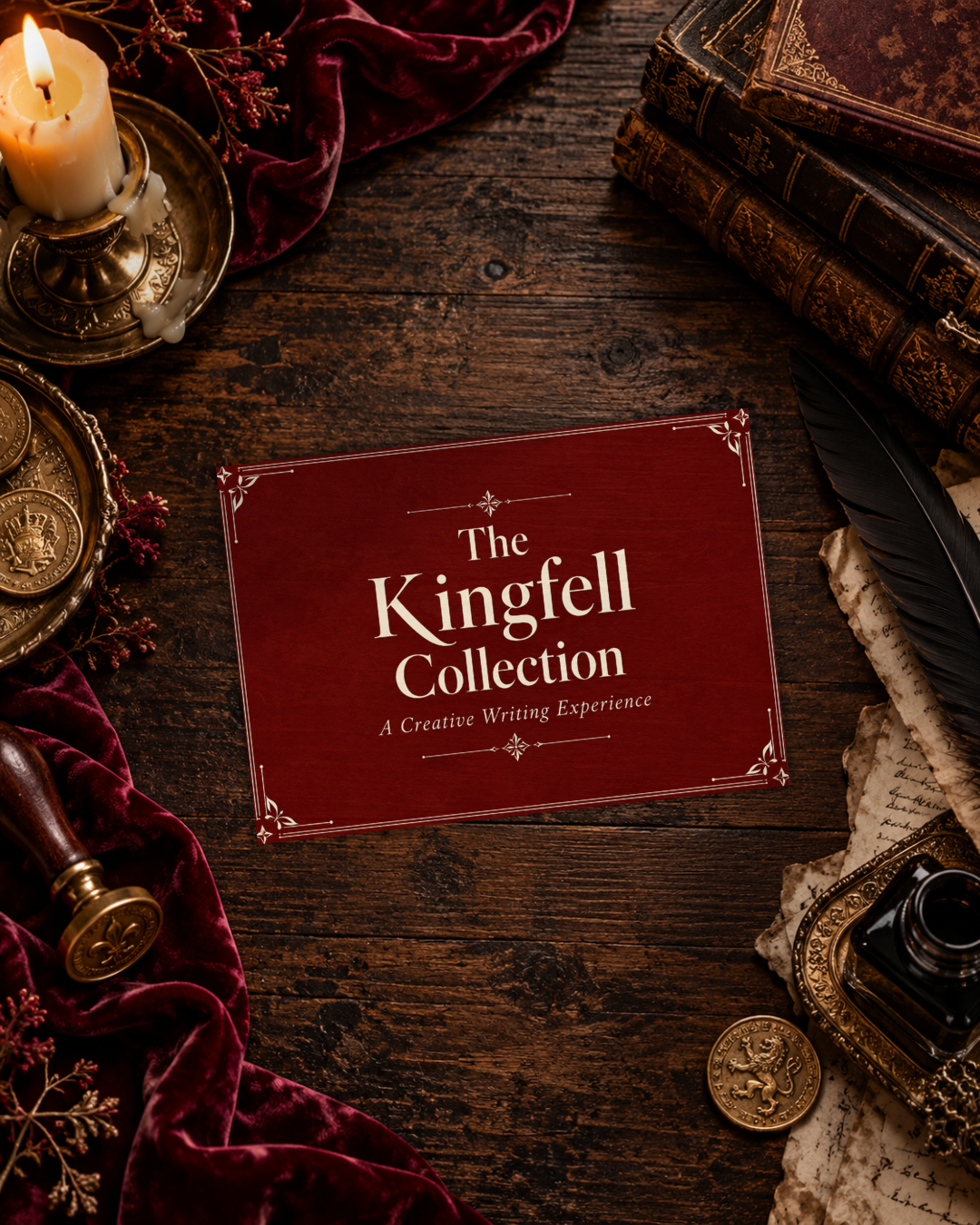
The King is dead.
His daughter is eight years old.
And the kingdom is beginning to fracture.
When King Edmund Mortimer dies, his young daughter Matilda inherits the throne of Kingfell. Too young to rule, she is placed under the protection of Sir Thomas Marshal, Lord Protector of the Realm.
Five Great Houses watch the crown.
Some pledge their loyalty.
Others have ambitions of their own.
Then Queen Matilda disappears from Stonebrige Keep.
No body is found.
No explanation is given.
And a kingdom already divided descends into suspicion, accusations and civil war.
The Kingfell Collection is an immersive fantasy archive filled with royal proclamations, noble family histories, portraits, handwritten letters, secret correspondence, witness testimonies, childhood drawings, religious texts, prophecies, maps and other surviving artefacts from a kingdom on the brink of collapse.
Some documents support the official accounts.
Others contradict them.
Who truly controlled the kingdom after Edmund's death?
What secrets were the Five Great Houses trying to protect?
Why was an innocent lord condemned for treason?
What part did the Seven Lights, forbidden beliefs and ancient prophecies play in the kingdom's downfall?
And what really happened to the little queen?
There is no official explanation.
No final answer.
No single truth.
Only fragments of a lost kingdom, waiting for someone to piece them together.
What's Inside?
◆ 40+ Printable documents and artefacts from the fictional Kingdom of Kingfell
◆ Heraldry, histories, portraits and political secrets of the Five Great Houses
◆ Royal proclamations, letters, diaries, testimonies, warrants, financial records and other historical documents
◆ Queen Matilda's personal writings, childhood drawings and mysterious keepsakes
◆ Fantasy maps, religious texts, folklore, prophecies and worldbuilding materials
◆ A printable prompt card to inspire exploration and storytelling
◆ An exploration guide with ideas for creative writing and classroom use
◆ Instant digital download in PDF format
Who Is It For?
Perfect for:
◆ Fantasy writers and worldbuilders
◆ Novelists, short-story writers and screenwriters
◆ Mystery lovers and historical fantasy enthusiasts
◆ Teachers looking for imaginative creative writing inspiration
◆ Journalers, roleplayers and curious minds
◆ Fans of fictional archives, political intrigue and found-document storytelling
What Makes This Different?
This isn't a fantasy story with a predetermined ending.
It's an archive.
Every document offers another glimpse into Kingfell's history, but no single account reveals the whole truth.
Study the royal proclamations.
Examine the noble houses.
Read the little queen's diary.
Follow the rumours, question the witnesses and consider the secrets hidden between the lines.
Perhaps Matilda was murdered.
Perhaps she escaped.
Perhaps someone helped her disappear.
Or perhaps the truth is stranger than anyone imagined.
You decide what happened.
Use the archive to inspire a short story, develop a novel, build a fantasy world or investigate a mystery with your students.
Follow the evidence.
Question the history.
Create your own version of events.
What truths will you unravel? What story will you write?
Digital download: 44-page PDF collection. Some pages contain multiple individual artefacts. No physical product will be shipped.
Forbidden Magic, Witchcraft and the Darker Side of Fantasy Worldbuilding
Who decides which forms of magic are acceptable? What happens when religious authorities condemn practices they cannot explain? And how might an accusation of witchcraft destroy an innocent person's life — or conceal something far more sinister?
A compelling fantasy magic system doesn't simply determine what characters can do. It shapes the laws, beliefs, fears and power structures of an entire society.
If you're fascinated by the darker consequences of magic, The Kingfell Collection invites you to explore a fictional kingdom where superstition, religious authority and accusations of witchcraft form part of a much larger history.
Discover Kingfell: A Dark Fantasy Archive of Secrets and Superstition
The Kingfell Collection is an original, beautifully illustrated storyworld archive from Ink & Insights, designed for fantasy writers, worldbuilders and lovers of historical mysteries.
Rather than presenting a conventional fantasy story, Kingfell reveals its past through fictional historical documents, records and artefacts.
Explore witchcraft examinations, powerful noble families, religious traditions and the mysterious disappearance of eight-year-old Queen Matilda. Discover how accusations, conflicting accounts and long-buried secrets can shape the history of an entire kingdom.
For writers developing their own magical worlds, Kingfell offers inspiration for:
Forbidden magic and persecution — explore how fear and accusations can become instruments of social control.
Religion and supernatural belief — consider how faith, superstition and authority influence a kingdom's understanding of the unexplained.
Magical laws and political power — imagine who benefits when certain practices are condemned.
Historical mysteries — discover how surviving documents can raise more questions than they answer.
Kingfell isn't a magic system generator. It's something different: an immersive example of how belief, fear and power can become woven into a fictional world's history.
Uncover Your First Kingfell Secret — Free Sample
Every accusation has a story. Every surviving document offers a clue.
If you're curious about Kingfell, begin with a free sample from the archive, delivered directly to your inbox.
Experience the collection's atmospheric illustrations and historical artefacts, discover a fragment of the kingdom's mysterious past and see how fictional evidence can inspire stories of forbidden knowledge, persecution and dangerous secrets.
It's an opportunity to explore the world of Kingfell before deciding whether to investigate the complete collection.
Enter your email below to receive your free Kingfell sample and begin uncovering its hidden history.

Think About How Magic Changes Society
Magic should not exist separately from the world around it.
If people have lived alongside magic for hundreds or thousands of years, societies will have adapted to what it can do.
Consider its effect on areas such as:
Medicine: What happens to physicians if magical healing exists?
Warfare: How do armies defend themselves against magical attacks?
Crime: What crimes become possible because of magic?
Justice: Can magic detect lies, reveal memories or identify killers?
Education: Where do practitioners learn, and who pays for it?
Religion: Is magic considered divine, unnatural or something else entirely?
Trade: Are magical ingredients, artefacts or services valuable commodities?
Travel: Do portals, flying magic or enchanted ships change distances?
Architecture: Are buildings designed to resist particular forms of magic?
Work: Which professions exist only because magic exists?
Even relatively small abilities can have enormous consequences when thousands of people use them over centuries.
This is also where who controls magic becomes important.
A monarchy might license every practitioner. Temples could control magical education. Guilds might guard valuable techniques as professional secrets. Wealthy families could monopolise magical resources, while illegal practitioners operate beyond their control.
Or perhaps nobody controls magic at all.
Think about the difference between having magical ability and having magical power within society. A poor village healer and the monarch's court sorcerer may possess identical abilities but experience completely different lives.
Add a Complication
Once your magic system makes sense, break something.
A complication introduces change into an established system and immediately creates potential conflict.
Perhaps magic is disappearing. Someone has discovered how to avoid its traditional cost. Children are developing abilities nobody has seen before. A forbidden form of magic turns out to be harmless, while a supposedly safe practice is slowly destroying the world.
The complication generated by the tool can become a historical event happening during your story rather than another permanent rule.
Ask yourself: What would most destabilise this particular magic system?
If magical power belongs exclusively to noble bloodlines, discovering that anyone can learn it could threaten the entire class system.
If an empire depends upon magical portals, those portals suddenly failing could isolate provinces overnight.
If practitioners are controlled because everyone believes uncontrolled magic causes catastrophe, proving that belief false could trigger political upheaval.
If magic requires a rare mineral, discovering the world's remaining deposits are nearly exhausted could lead to wars.
You have created the rules. Now consider what happens when your characters are forced to live through the moment those rules begin to change.
10 Questions to Develop Your Generated Magic System
Once you have a combination you like from the generator, use these questions to connect the individual elements and explore their consequences.
Why does magic work this way?
Consider whether there is an underlying reason connecting its source, abilities, costs and limitations — even if nobody within the world knows the answer.What prevents the most powerful magic users from becoming unstoppable?
Is it the cost of magic, its limitations, other practitioners, laws, scarce resources or something else?Who benefits most from the way magic currently works?
Think about governments, religious institutions, wealthy families, magical guilds, businesses and particular social groups.Who is disadvantaged by the magic system?
Consider people without magical ability, unlicensed practitioners, poorer communities or those affected by the consequences of magic.What is the one thing magic can never accomplish?
Giving your system a meaningful boundary can create problems that no amount of magical power can easily solve.How has magic changed ordinary life?
Look beyond adventurers and court mages. What difference does magic make to farmers, shopkeepers, children, craftspeople, travellers and families?What historical event most changed how people view magic?
A magical war, disaster, famous miracle, persecution, discovery or revolution could still shape modern attitudes.What happens when someone breaks the rules surrounding magic?
Consider both the physical rules of magic and the laws or traditions created by society.What does your protagonist believe about magic that might be wrong?
Characters raised inside a magical society will inherit its assumptions, prejudices and incomplete explanations.What single change to magic would cause the greatest disruption to your world?
Remove a limitation, change who can use it, eliminate its cost, reveal its true source or allow an impossible new ability — then follow the consequences.
Go Deeper Into Fantasy Magic System Worldbuilding
Once you have established the basic mechanics of your magic system, start looking at the consequences that have developed around them. This is often where a magic system stops feeling like a collection of powers and starts feeling like something that has genuinely existed inside a world for centuries.
◆ Follow each magical ability to its logical conclusion. If people can communicate instantly across enormous distances, messengers may become unnecessary. If memories can be extracted, they might be used as evidence in court. If weather can be controlled, farming, warfare and even international politics could depend upon magical practitioners. Keep asking: if this were possible, what would people do with it?
◆ Create magical professions beyond the obvious mage. Magic could produce specialist healers, magical architects, curse investigators, enchanted-object merchants, magical historians, spirit negotiators, battlefield wardsmiths or inspectors responsible for checking illegal enchantments. Ordinary professions may also incorporate small amounts of magic into their work.
◆ Think about magical inequality. Who can afford magical services? Who receives the best training? Who owns magical resources? A society where theoretically anyone can learn magic may still be deeply unequal if only wealthy families can afford ten years of education.
◆ Allow different cultures to understand magic differently. One kingdom might study magic academically while another treats the same power as sacred. A third may consider it dangerous and restrict its use. They could even use completely different terminology for abilities that ultimately come from the same source.
◆ Give magic a history. Magical knowledge should change over time. Techniques can be discovered, forgotten, banned, improved or misunderstood. Ancient practitioners might have known things modern mages cannot reproduce, while modern magical research could make abilities once reserved for exceptional individuals available to ordinary people.
◆ Look for loopholes in your own rules. If magic cannot directly kill someone, can a practitioner magically collapse the bridge beneath them? If magic requires consent, what legally counts as consent? If a spell follows exact wording, generations of practitioners may have become extraordinarily careful about language. Your characters will not be the first people to notice obvious loopholes.
◆ Consider magical crime and black markets. Wherever something powerful is regulated, someone will attempt to obtain it illegally. Forbidden spellbooks, counterfeit magical licences, stolen artefacts, smuggled ingredients and unregistered practitioners can reveal how the system operates outside respectable institutions.
◆ Let people disagree about how magic works. Scholars, priests and practitioners do not need to share one perfectly accurate explanation. Competing theories make the world feel larger, particularly if the true nature of magic remains uncertain. Something taught as established fact could later prove to be cultural belief rather than magical law.
◆ Make magic personal to your characters. Your protagonist does not experience a "magic system"; they experience what magic means within their own life. They might resent an ability they inherited, desperately want power they cannot possess, fear the cost of using it or discover that the institution that trained them has concealed important truths.
◆ Remember that magic does not need to be completely understood. Rules and consistency do not require removing every mystery. Your characters can understand how to perform magic without knowing why magic exists, just as people can use natural forces without understanding every aspect of the universe. Leaving some unanswered questions can make the world feel older and larger than the story itself.
Final Thoughts
A memorable fantasy magic system is about more than deciding which powers look exciting. Think about where magic comes from, who can access it, what it costs, where its boundaries lie and how generations of people have adapted their lives around its existence.
Use the generator to find combinations you would not necessarily have chosen yourself, reroll the elements that do not fit and then follow the consequences of the ideas you keep. Sometimes an unexpected combination between a power, cost and limitation is all you need to uncover an entirely new story.
For more help developing the characters, kingdoms and worlds surrounding your magic, explore the Fantasy Writing Hub, or browse the Creative Writing Archive for more fantasy prompts, generators, story ideas and worldbuilding inspiration.
Choose Your Next Adventure