Free Fantasy Kingdom Generator: Create Names, Rulers, Magic, Kingdoms & Story Ideas
Creating a fantasy kingdom means imagining far more than a castle, a crown and a name on a map. The most memorable realms have their own landscapes, rulers, systems of power, cultures, beliefs, magic, resources, defences and secrets — all connected by a history that makes the kingdom feel as though it existed long before your story began.
But building all of that from scratch can be daunting, especially when you have a character or story idea and simply need somewhere interesting for it to happen.
This Fantasy Kingdom Generator creates an entire realm at the click of a button. Generate a kingdom name alongside its fantasy genre, terrain, capital city, ruler, government, magic system, culture, beliefs, wealth and trade, defences, landmark, current threat, ancient secret and story hook. If you're looking for inspiration before you begin, explore our 100 Fantasy Kingdom Names With Meanings & Story Ideas for ancient, noble, dark, magical and enchanted kingdom names to inspire your worldbuilding.
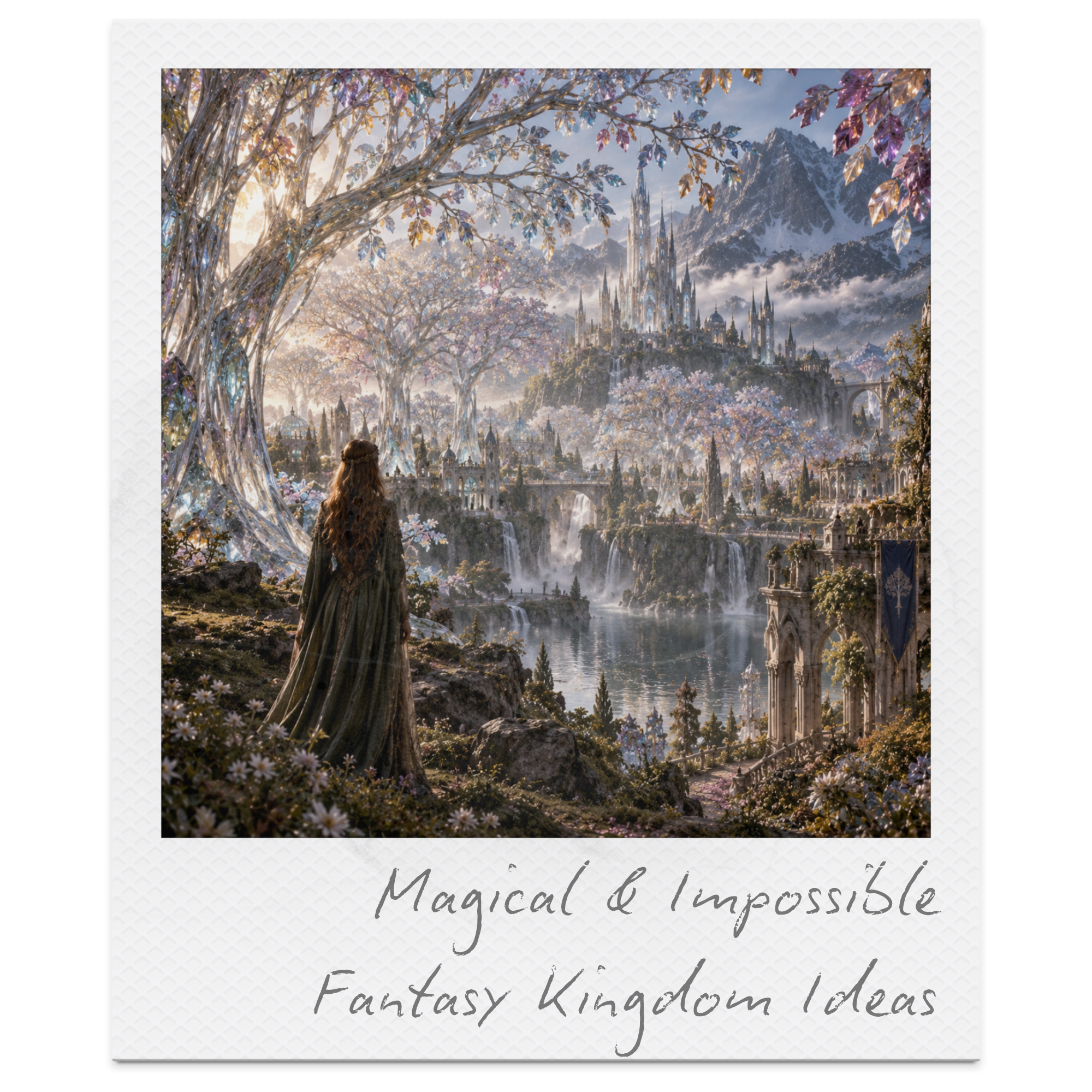
You might discover a fairytale kingdom hidden among crystal forests, a grimdark realm ruled by a child king, an Arctic monarchy whose magic is disappearing, or a maritime kingdom on the verge of civil war.
Each result is designed to give you the foundations of a world and the beginnings of a story.
Use the generator once and build upon whatever appears, keep generating until a kingdom captures your imagination, or mix your favourite details from several results to create something entirely your own. Change anything that doesn't fit. Turn a ruler into a villain, make the ancient secret the central mystery of your novel, connect the kingdom's magic to its landscape, or ask what happens when its greatest threat finally reaches the capital.
Whether you're planning a fantasy novel, short story, romantasy, fairytale, roleplaying campaign or simply experimenting with worldbuilding, consider your generated kingdom a starting point rather than a finished world.
Your realm is waiting.
Generate a kingdom below and see what story it gives you.

Fantasy Kingdom Generator
Build a new fantasy realm at the click of a button.
—
—
—
—
—
—
—
—
—
—
—
—
—
—
What Does the Fantasy Kingdom Generator Create?
Every click creates a new fantasy kingdom by combining different elements of worldbuilding, politics, culture, magic and storytelling. Rather than giving you a single kingdom name or setting, the generator creates the foundations of a realm you can immediately begin exploring.
Some combinations will fit together naturally. Others might seem contradictory at first — and those can often produce the most interesting stories. If your peaceful fairytale kingdom is protected by mercenaries of questionable loyalty, for example, you already have something worth investigating.
Here is everything your generated kingdom includes.
Fantasy Kingdom Name
Every realm begins with a randomly generated kingdom name, combining different beginnings and endings to create names such as Glassmere, Ravenhold, Winterwyn, Emberreach or Silvercourt.
Keep the name exactly as it appears, generate another, or use it as inspiration for your own naming conventions. You could even decide that the generated name is only the kingdom's modern name and invent an older name from a forgotten language or previous civilisation.
Fantasy Genre
Your result gives the kingdom a fantasy genre to help establish its overall direction. Possibilities range from High Fantasy, Epic Fantasy and Sword & Sorcery to Dark Fantasy, Gothic Fantasy, Folklore Fantasy, Fairytale Fantasy, Maritime Fantasy, Political Fantasy and Cozy Fantasy.
You don't have to treat the genre as a restriction. Instead, use it to ask what kind of stories might naturally unfold within this particular realm.
Terrain
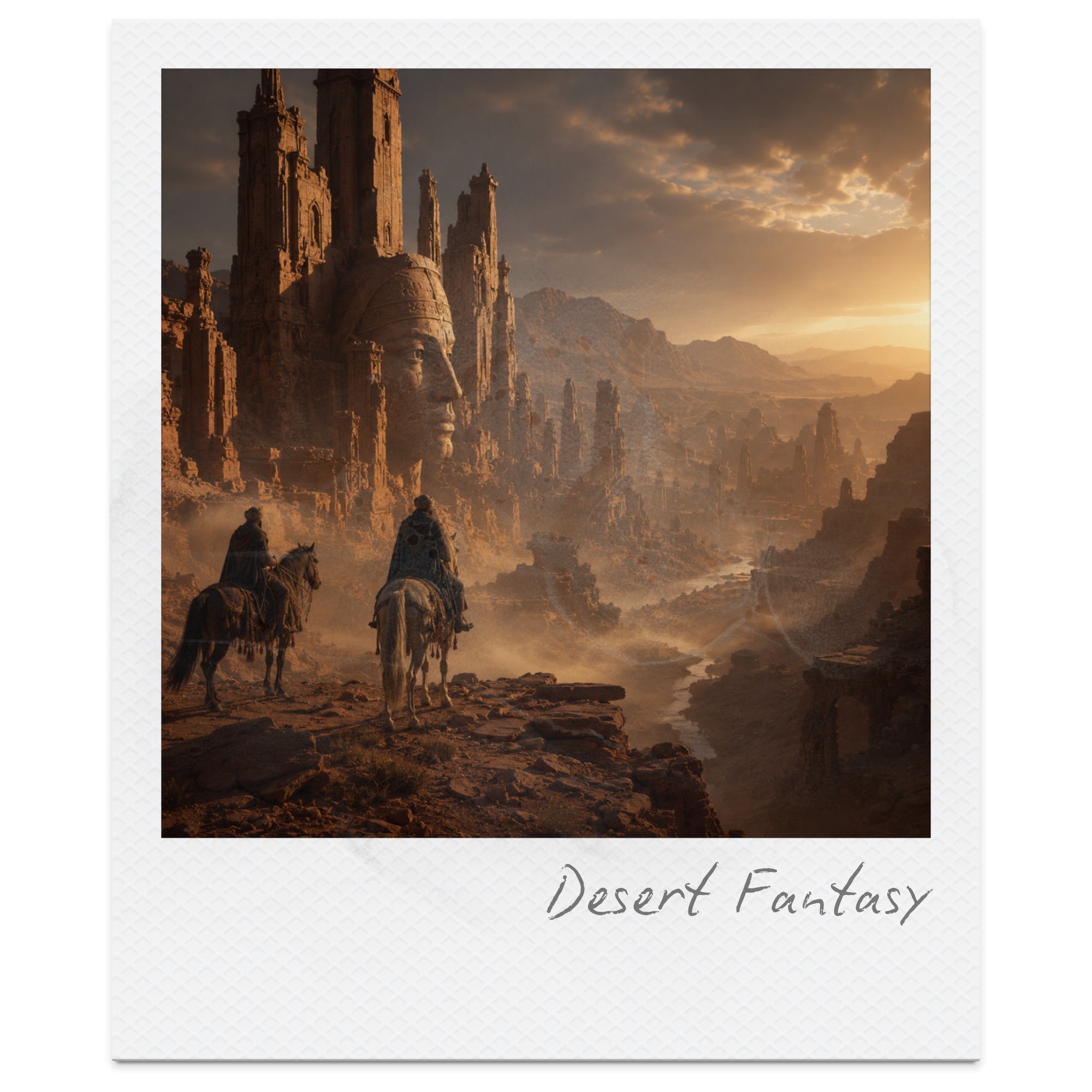
Mountains, forests, deserts, islands, frozen coasts, jungles, moorlands, river deltas, underground caverns and stranger landscapes can completely change how a kingdom develops.
The generated terrain gives your realm its physical foundations. Think about how the landscape influences settlement, travel, food, clothing, architecture, warfare, trade and even the stories its people tell about themselves.
Capital
Every kingdom needs a centre of power — although that doesn't necessarily mean a conventional castle surrounded by city walls.
Your generated capital might be carved into a mountain, spread across interconnected islands, concealed within an ancient forest or constructed around an apparently bottomless lake. Consider why the capital was established there and what advantages — or dangers — its location creates.
Ruler
Who currently holds power?
The generator can place everyone from a sixteen-year-old queen or child king to an ancient monarch, warrior ruler, masked queen or pair of twin sovereigns upon the throne.
A ruler can shape an entire kingdom, but the more interesting question may be whether they are actually capable of controlling it.
Government
A crown does not necessarily mean absolute power.
Your kingdom might be governed through an absolute monarchy, federation, regency, elected monarchy, council of noble families, dual monarchy or travelling royal court. The government determines where power truly lies — and who might want more of it.
Consider not only who officially rules, but who has enough influence to challenge them.
Magic
Magic can affect almost every aspect of a fantasy society, particularly when it has clear rules, limitations or consequences.
Your kingdom's magic might be mined from underground veins, inherited through bloodlines, drawn from rivers, controlled by a secret order, powered by memory or slowly disappearing altogether.
Once you have your result, think beyond what the magic can do. Ask who controls it, who benefits from it, what it costs and what would happen if it suddenly stopped working.
Culture
Culture turns a collection of cities and landscapes into a society.
Your generated tradition might influence marriage, death, hospitality, names, clothing, storytelling, ceremonies or coming of age. Use it as the beginning of a much larger culture rather than its only defining feature.
Ask where the tradition originated, whether everyone follows it and how outsiders react to it.
Belief
What does your kingdom believe about the world?
Its people might worship nature gods, honour their ancestors, revere legendary mortal heroes, believe the land itself is conscious or live according to an ancient prophecy.
Belief can influence everything from festivals and architecture to political legitimacy, morality and conflict — especially when different groups interpret the same beliefs differently.
Wealth & Trade
Kingdoms need resources.
Your realm could become wealthy through magical crystals, silver, horses, medicinal plants, enchanted glass, pearls, timber, wine, dyes, obsidian, salt or fertile farmland.
Think about who controls that wealth, who depends upon it and what happens if the supply disappears. A valuable resource can create prosperity, inequality, alliances, smuggling, exploitation and war.
Defence
How has the kingdom survived?
Its borders might be protected by mountain fortresses, enchanted forests, ancient walls, a powerful navy, private noble armies, magical barriers or mercenaries whose loyalty cannot necessarily be trusted.
Defences also reveal what a kingdom fears. Ask why they were created, what threat they were intended to stop and whether they would still work if that threat returned.
Landmark
Every generated realm contains one extraordinary place that can become part of its history, mythology or story.
You might discover transparent forests, drowned cities, ancient standing stones, ruined temples, colossal trees, mysterious towers or bridges made from the bones of extinct creatures.
Your landmark could remain atmospheric background — or become the location around which your entire plot revolves.
Current Threat
A world becomes particularly useful for storytelling when something within it is already beginning to go wrong.
Your kingdom therefore receives a current threat. War might be approaching, the harvest could be failing, protective magic may be weakening, a monarch could have died without an heir or an independence movement might be pushing the realm towards civil war.
This is the problem facing the kingdom right now, whether your protagonist realises it or not.
Ancient Secret
Every kingdom has a past, and the official version does not necessarily tell the whole truth.
The generator gives your realm an ancient secret capable of changing how its history is understood. Perhaps the royal family has no legitimate claim to the throne. Perhaps the kingdom's monsters are actually protecting it. Perhaps its magic comes from something imprisoned beneath the land.
Decide who knows the truth, who has worked to conceal it and what would happen if the secret became public.
Story Hook
Finally, the generator gives you a story hook — an event that can turn your newly created kingdom into the beginning of a plot.
An heir might disappear, a forgotten door could open beneath the palace, an extinct form of magic might return or a stranger could arrive at a coronation carrying evidence that changes everything.
You can use the hook exactly as generated, alter it to fit your characters or simply ask the most useful question in storytelling:
What happens next?
How to Use the Fantasy Kingdom Generator
There is no single right way to use the generator. You can create a complete random kingdom and challenge yourself to make every element work together, or treat each result as a collection of ideas to change, combine and develop.
Here are a few ways to begin.
Generate a Complete Kingdom
Click Generate a Kingdom and use the entire result as the foundation for a new world.
The interesting part is working out why all those elements exist together. If your kingdom has an elected monarch, disappearing magic, a culture obsessed with ancestry and an ancient secret concerning the royal bloodline, start looking for connections between them.
Random combinations can create relationships you might never have deliberately planned.
Keep Generating Until Something Sparks
You don't have to use the first kingdom you create.
Generate several realms and pay attention to the details that immediately make you want to know more. Perhaps you don't care about the capital but love the ruler. Perhaps one ancient secret completely changes a story you've already been planning.
When something makes you think “but why?”, you've probably found an idea worth keeping.
Mix and Match Your Favourite Results
You can also build a kingdom across several generations.
Keep the terrain from one result, the ruler from another and the magic system from a third. Take a threat you love and combine it with an ancient secret that makes that threat considerably more complicated.
The generator is there to give you possibilities, not rules.
Embrace Strange Combinations
Don't immediately discard a result because two elements appear to contradict each other.
Those contradictions can create some of the strongest worldbuilding questions.
A Cozy Fantasy kingdom facing an approaching invasion raises questions about how an ordinarily peaceful society responds to war. A ruthless king ruling a realm where hospitality is sacred creates tension between ruler and culture. A kingdom where magic is illegal but essential to survival already contains hypocrisy, danger and potential rebellion.
Instead of changing the contradiction, try explaining it.
Change Whatever Doesn't Fit
Once an idea belongs to your story, you can do whatever you want with it.
Change the ruler's age. Move the capital. Replace the resource. Turn the ancient secret into a widely believed conspiracy that happens to be false. Make the generated threat something that happened fifty years ago and explore the consequences it left behind.
Even one generated detail can be enough to begin an entirely different kingdom.
Connect the Elements
As your kingdom develops, start asking how one feature affects another.
If magical minerals provide most of the kingdom's wealth, who owns the mines? If the royal family controls them, how powerful does that make the crown? If magic is disappearing, what happens to the economy? If a neighbouring empire depends upon those minerals, would it intervene?
This is where a randomly generated realm starts becoming a believable world.
Try connecting landscape to resources, resources to wealth, wealth to power, power to conflict and conflict to story.
Use the Story Hook — or Ignore It
Every generated kingdom includes a story hook, but you don't have to make it your main plot.
It could become the premise of your novel, a historical event, a subplot, something happening elsewhere in the kingdom or simply inspiration for a completely different idea.
Alternatively, ignore it and look at the kingdom you've created.
What is the most interesting thing that could happen here?
That's your real story hook.
Turn Your Generated Kingdom Into a Story
A fantasy kingdom becomes much more interesting when its worldbuilding begins to create problems for the people who live there.
Your generated result already gives you several potential sources of conflict: a ruler with their own circumstances, a particular system of government, a current threat, an ancient secret and a story hook. Instead of treating these as separate ideas, look for ways they could collide.
Imagine generating a kingdom with:
Ruler: A sixteen-year-old queen unexpectedly placed upon the throne
Government: An hereditary monarchy restrained by seven powerful noble houses
Magic: Magic is inherited through certain ancient bloodlines
Current Threat: Two rival claimants have produced convincing evidence that they are the rightful heir
Ancient Secret: The royal bloodline has no legitimate claim to the throne
Suddenly, this isn't simply a description of a fantasy kingdom.
It's a political crisis.
The young queen has inherited a throne she may have no right to occupy. Seven noble houses have enough power to exploit her vulnerability. Magic provides a way of testing or challenging claims of ancestry. Two potential heirs are already threatening her position — and somewhere in the kingdom, someone knows that none of them may be legitimate at all.
That's the beginning of a story.
Find Your Protagonist
Your protagonist does not have to be the generated ruler.
In fact, one of the easiest ways to find a story is to ask:
Who would be most affected by what is happening in this kingdom?
It might be:
◆ The royal heir who discovers the truth about their ancestry.
◆ A soldier ordered to defend a government they no longer trust.
◆ A smuggler illegally transporting the kingdom's most valuable magical resource.
◆ A historian who uncovers evidence contradicting the official version of the past.
◆ A priest whose religious beliefs are threatened by an ancient discovery.
◆ A merchant whose livelihood depends upon a failing trade route.
◆ A courtier caught between rival claimants.
◆ A magic user living in a kingdom where their abilities are forbidden.
◆ An ordinary villager living beside the landmark everyone else considers legendary.
◆ A foreign traveller who notices something the kingdom's inhabitants have learned not to question.
Sometimes the most interesting perspective on a kingdom comes from someone standing nowhere near its throne.
Decide What Your Character Wants
Once you have a protagonist, give them something they want before the larger story disrupts their life.
They might want to marry someone their family disapproves of, inherit a business, join the royal guard, escape their village, restore their family's reputation, learn magic, become a scholar, find a missing sibling or simply live quietly.
Then introduce the generated threat, secret or story hook.
The resulting plot comes from the collision between what your character wanted and what the kingdom now demands from them.
Make the Threat Personal
A civil war is enormous. A failing harvest affects millions. A weakening magical barrier could endanger an entire country.
But stories usually become compelling when enormous events have specific personal consequences.
Instead of simply writing about an approaching invasion, ask whose home lies directly in the invading army's path.
Instead of writing about disappearing magic, give your protagonist a younger sibling whose life depends upon magical healing.
Instead of declaring that the monarch has died without an heir, make your protagonist the person entrusted with a document proving that an heir actually exists.
Move from kingdom-sized problem to character-sized consequence.
Let the Ancient Secret Change the Story
Your ancient secret should not simply be interesting information hidden in a history book.
Ask what changes if somebody discovers it.
Who loses power?
Who gains it?
Which laws, traditions, religions or political claims suddenly become questionable?
Who would kill to prevent the truth becoming known?
The best secrets don't merely reveal something about the past. They destabilise the present.
The King is dead.
His daughter is eight years old.
And the kingdom is beginning to fracture.
When King Edmund Mortimer dies, his young daughter Matilda inherits the throne of Kingfell. Too young to rule, she is placed under the protection of Sir Thomas Marshal, Lord Protector of the Realm.
Five Great Houses watch the crown.
Some pledge their loyalty.
Others have ambitions of their own.
Then Queen Matilda disappears from Stonebrige Keep.
No body is found.
No explanation is given.
And a kingdom already divided descends into suspicion, accusations and civil war.
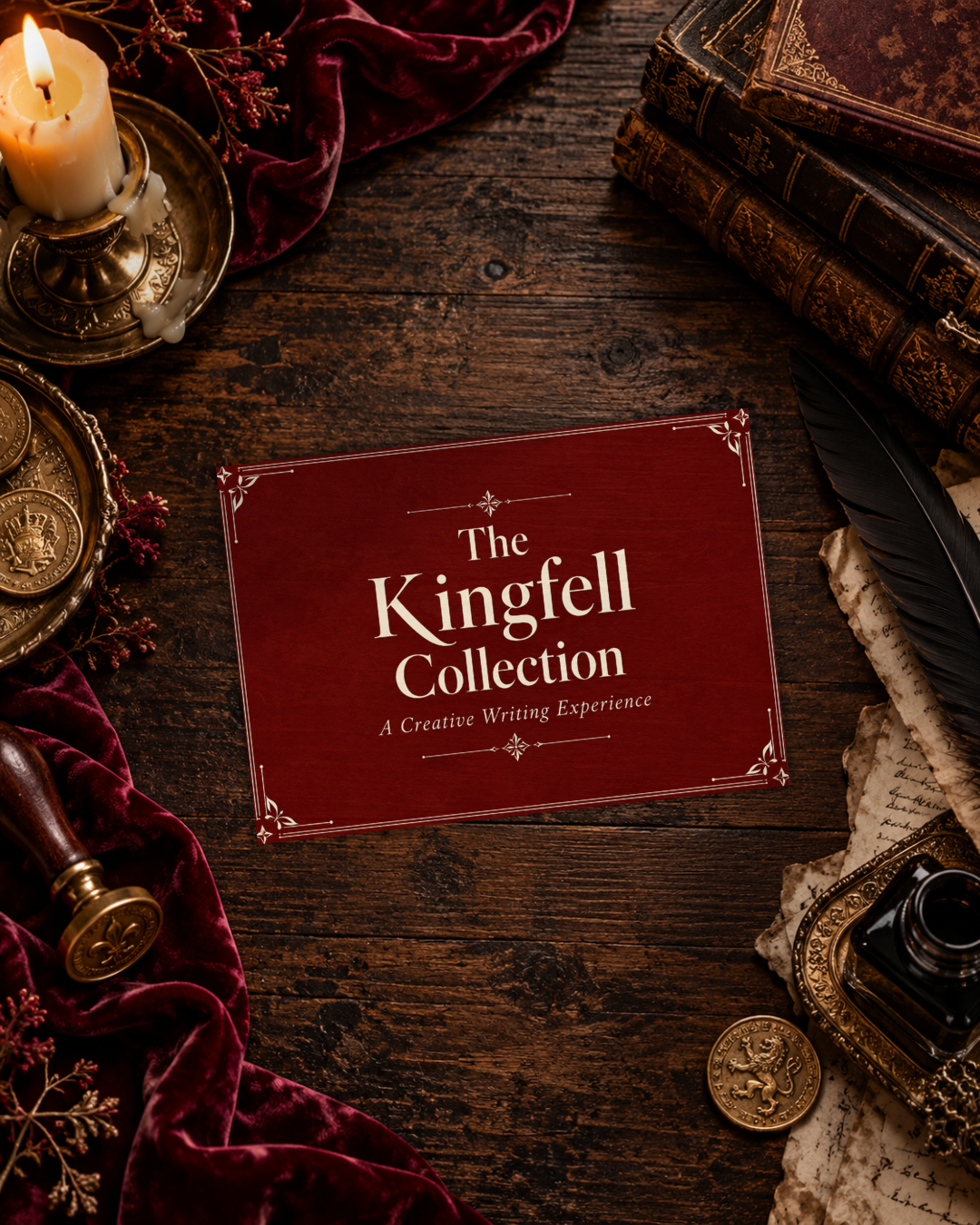
The Kingfell Collection is an immersive fantasy archive filled with royal proclamations, noble family histories, portraits, handwritten letters, secret correspondence, witness testimonies, childhood drawings, religious texts, prophecies, maps and other surviving artefacts from a kingdom on the brink of collapse.
Some documents support the official accounts.
Others contradict them.
Who truly controlled the kingdom after Edmund's death?
What secrets were the Five Great Houses trying to protect?
Why was an innocent lord condemned for treason?
What part did the Seven Lights, forbidden beliefs and ancient prophecies play in the kingdom's downfall?
And what really happened to the little queen?
There is no official explanation.
No final answer.
No single truth.
Only fragments of a lost kingdom, waiting for someone to piece them together.
What's Inside?
◆ 40+ Printable documents and artefacts from the fictional Kingdom of Kingfell
◆ Heraldry, histories, portraits and political secrets of the Five Great Houses
◆ Royal proclamations, letters, diaries, testimonies, warrants, financial records and other historical documents
◆ Queen Matilda's personal writings, childhood drawings and mysterious keepsakes
◆ Fantasy maps, religious texts, folklore, prophecies and worldbuilding materials
◆ A printable prompt card to inspire exploration and storytelling
◆ An exploration guide with ideas for creative writing and classroom use
◆ Instant digital download in PDF format
Who Is It For?
Perfect for:
◆ Fantasy writers and worldbuilders
◆ Novelists, short-story writers and screenwriters
◆ Mystery lovers and historical fantasy enthusiasts
◆ Teachers looking for imaginative creative writing inspiration
◆ Journalers, roleplayers and curious minds
◆ Fans of fictional archives, political intrigue and found-document storytelling
What Makes This Different?
This isn't a fantasy story with a predetermined ending.
It's an archive.
Every document offers another glimpse into Kingfell's history, but no single account reveals the whole truth.
Study the royal proclamations.
Examine the noble houses.
Read the little queen's diary.
Follow the rumours, question the witnesses and consider the secrets hidden between the lines.
Perhaps Matilda was murdered.
Perhaps she escaped.
Perhaps someone helped her disappear.
Or perhaps the truth is stranger than anyone imagined.
You decide what happened.
Use the archive to inspire a short story, develop a novel, build a fantasy world or investigate a mystery with your students.
Follow the evidence.
Question the history.
Create your own version of events.
What truths will you unravel? What story will you write?
Digital download: 44-page PDF collection. Some pages contain multiple individual artefacts. No physical product will be shipped.
From a Generated Kingdom to a Living, Breathing World
Your fantasy kingdom now has a ruler, a government, a history and perhaps a dangerous secret. But what would happen if you could step inside that world and examine the evidence of everything that had happened there?
Imagine discovering an old royal proclamation announcing a disputed succession. A private letter revealing an alliance between rival noble houses. A family tree that raises more questions than it answers. Or an ancient prophecy that casts doubt upon everything the kingdom believes about its past.
This is the inspiration behind The Kingfell Collection, an immersive fantasy Storyworld Archive from Ink & Insights.
Set within a richly imagined medieval kingdom, Kingfell invites you to investigate the mysterious disappearance of eight-year-old Queen Matilda Mortimer and the political turmoil surrounding her reign.
Across 44 beautifully illustrated pages, you'll discover fictional historical documents, royal records, correspondence, portraits, prophecies and other artefacts that gradually reveal the kingdom's complicated history.
Rather than telling you what happened, Kingfell gives you the evidence and invites you to imagine the story.
For fantasy writers and worldbuilders, it's an opportunity to explore how fictional documents can bring depth to royal dynasties, political conflicts, ancient mysteries and the histories that shape an entire kingdom.
Explore the complete 44-page Kingfell Collection for just £5, or discover the kingdom for yourself with seven complimentary illustrated artefacts.
Explore Kingfell for Free — Seven Fantasy Artefacts Await
Before you create your next fantasy kingdom, why not explore one filled with royal secrets, rival noble houses and unanswered questions?
Sign up to receive seven beautifully illustrated artefacts from The Kingfell Collection, delivered directly to your inbox. Examine the surviving records, uncover connections and discover new inspiration for your own fantasy stories.

Build a Story Around the Kingdom's Current Threat
If you don't yet have a plot, the generated Current Threat is one of the easiest places to begin.
Think of it as the pressure already building inside your world before the first chapter starts.
Political Threats
Civil war, rival heirs, rebellious provinces and ambitious noble houses naturally lend themselves to stories involving court intrigue, succession, betrayal, espionage and shifting alliances.
Your protagonist might be directly involved in the struggle for power — or simply trying to survive it.
External Threats
An army gathering beyond the frontier or dangerous creatures returning to the border can create war stories, quests, military fantasy and political fantasy.
But don't automatically assume the kingdom is right.
Perhaps the neighbouring empire has a legitimate grievance. Perhaps the creatures are fleeing something worse. Perhaps the supposedly defensive fortress was originally built to keep the kingdom's own population trapped inside.
Magical Threats
Weakening barriers, disappearing magic and diseases affecting magic users allow the rules of your world to become part of the conflict.
Ask what your society has built upon magic.
If magic suddenly disappears, what stops working?
Transport? Medicine? Agriculture? Defence? Communication? The monarchy itself?
A magical crisis can quickly become an economic, political and social one.
Environmental Threats
Failed harvests and disappearing rivers create immediate consequences for ordinary people.
Food prices rise. Migration begins. Trade changes. Governments ration resources. Wealthy regions protect what they have. Neighbouring kingdoms see weakness.
The original problem might be environmental, but the story can become political, mysterious, magical or deeply personal.
Develop the Ancient Secret
Every generated kingdom contains something its official history has forgotten, distorted or deliberately concealed.
Once you have your secret, ask:
◆ Who knows? Is the truth known by the monarch, a secret order, one elderly historian or nobody at all?
◆ Who hid it? Was the deception created centuries ago, or is somebody actively maintaining it?
◆ Why was it hidden? To protect the crown? Prevent war? Preserve a religion? Conceal a crime? Keep something imprisoned?
◆ What evidence remains? A ruined city, forbidden manuscript, royal tomb, folk song, magical artefact or contradictory family history?
◆ Who benefits from the lie? Someone usually does.
◆ Who suffers because of it? The consequences of an old deception may still shape people's lives.
◆ What happens when the truth emerges? Does it destroy a dynasty, begin a war, free something dangerous or reveal that the supposed villains of history were actually its victims?
You can also decide that your generated ancient secret is not entirely true.
Perhaps the conspiracy is itself another layer of misinformation.
Fantasy histories can be messy. Different cultures may preserve different versions of the same event, and nobody living in the present necessarily has access to the complete truth.
Explore Your Fantasy Kingdom by Genre
The same generated kingdom can produce completely different stories depending on the fantasy genre you choose.
You can follow the genre produced by the generator or replace it with one that better suits the story you want to tell.
High Fantasy
Expand outward.
Develop neighbouring kingdoms, ancient histories, powerful magical systems, legendary figures and conflicts capable of reshaping the realm.
A local political dispute might eventually reveal a threat affecting the entire continent.
Dark Fantasy
Look at the cost of your kingdom's power.
Perhaps its prosperity depends upon something horrific. Its magical protection demands sacrifice. Its revered monarch has survived for centuries by stealing years from others.
Take something impressive about the kingdom and ask what terrible thing makes it possible.
Fairytale Fantasy
Emphasise strange rules, symbolism, promises, curses, transformations and impossible places.
The kingdom might prosper only while its ruler keeps a particular promise. Nobody may enter the forest after sunset. Every royal child could receive a gift from an unknown visitor on their seventh birthday.
Fairytale logic doesn't always need to be realistic — but it should feel meaningful.
Folklore Fantasy
Turn towards local traditions, oral history, landscape and belief.
The official religion might say one thing while villagers quietly leave offerings beside ancient wells. The royal history books may dismiss creatures that everyone living near the mountains knows are real.
Let different regions of the kingdom develop their own stories and customs.
Gothic Fantasy
Look for secrets, inheritance, isolation, decay and the return of the past.
A ruined palace, disputed bloodline, ancient family crime or ruler hiding something behind a silver mask could become central to the story.
In Gothic Fantasy, the kingdom's past should rarely remain safely buried.
Romantic Fantasy
Ask how the kingdom complicates a relationship.
Perhaps two characters belong to rival houses, opposing kingdoms, different magical bloodlines or incompatible religious traditions.
Political marriages, forbidden relationships, dangerous alliances and divided loyalties can turn worldbuilding directly into romantic conflict.
Political Fantasy
Move power to the centre of the story.
Who makes laws? Who controls money? Who commands soldiers? Who selects the ruler? Who can remove them?
Then create characters with different answers to the question of what the kingdom should become.
Cozy Fantasy
A kingdom does not need to be facing extinction for a story to matter.
Focus on one corner of the generated realm: a village beside an enchanted forest, an inn on the royal road, a bakery in the capital or a tiny shop selling magical objects.
The enormous politics of the kingdom can remain in the background while your characters build a smaller life within it.
Grimdark Fantasy
Question every institution.
Perhaps the crown is corrupt, the rebels are equally brutal, the religious order has political motives and the approaching enemy isn't much worse than the people supposedly defending the kingdom.
Your characters may have to choose not between good and evil, but between competing versions of survival.
Maritime Fantasy
If your kingdom has islands, harbours, reefs, rivers or valuable overseas trade, move the story towards the water.
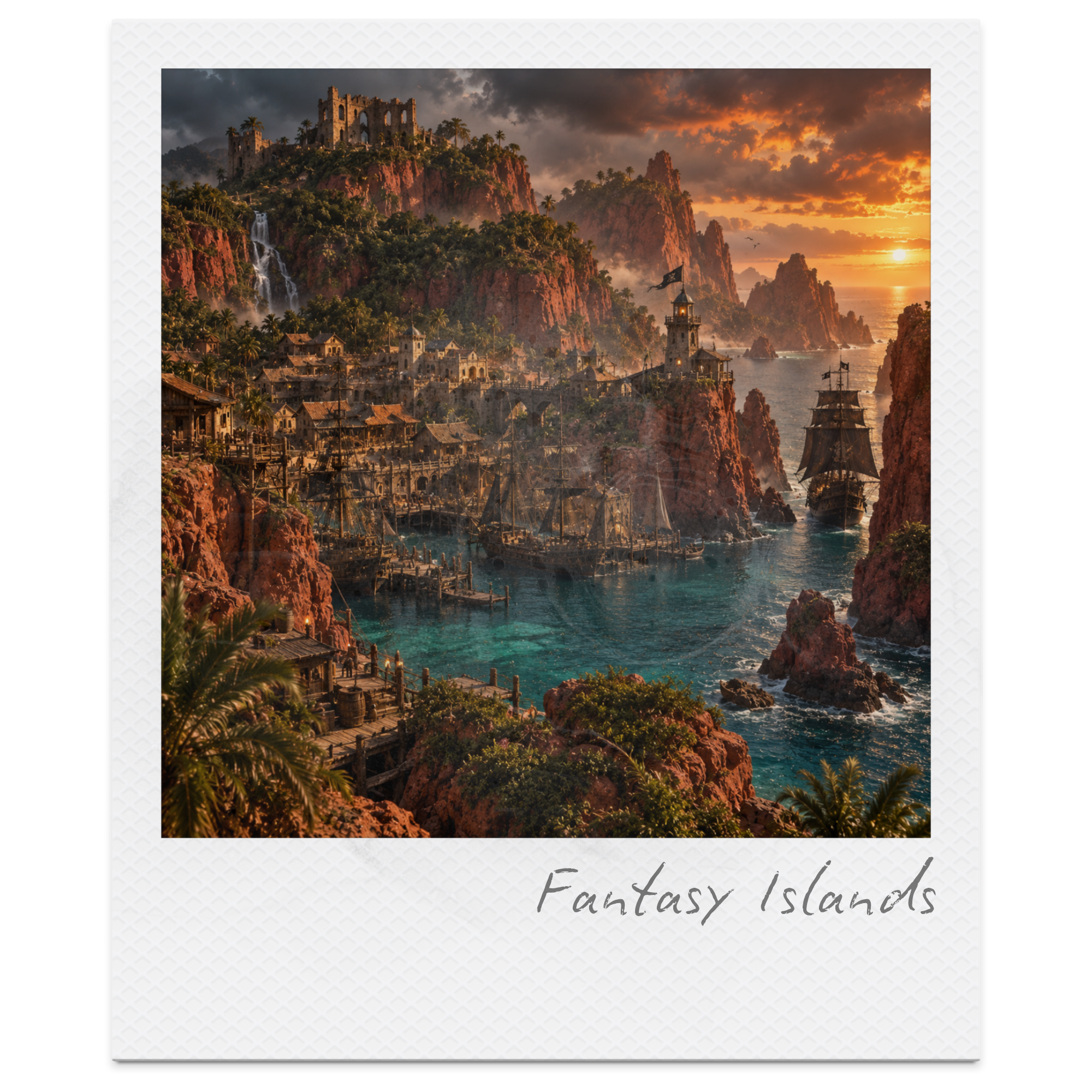
Develop naval power, merchant families, pirates, fishing communities, sea monsters, contested shipping routes and distant territories.
Control of the sea might matter more than control of the throne.
Go Beyond the Generator: Develop Your Fantasy Kingdom
Once the generator has given you the foundations, the next stage is deciding what exists between the generated details.
You don't need to build everything before you begin writing. Concentrate on the parts of the kingdom your characters will actually encounter.
Map the Kingdom
Start with your generated terrain and capital, then sketch the basic geography surrounding them.
Where are the major settlements? Where are resources found? Which roads connect important cities? Where are the borders? Which areas remain largely unexplored?
Then ask how geography affects power.
A mountain pass can make one otherwise insignificant town strategically essential. A navigable river can create an enormously wealthy trading city. A remote island might develop traditions found nowhere else in the kingdom.
Create Regions and Settlements
A kingdom should rarely feel culturally identical from one border to another.
Create provinces, counties, islands, territories, valleys or other regions with their own landscapes, industries, accents, traditions and relationships with the central government.
Some might be fiercely loyal to the crown. Others may barely consider themselves part of the kingdom.
Expand the Capital
Think about what happens beyond the palace.
Where do ordinary people live? Where are goods traded? Which districts are wealthy? Where are travellers housed? Where are criminals imprisoned? Where do religious ceremonies take place?
A capital can become a worldbuilding project of its own.
Develop the Royal Court
If your story involves the monarchy, surround the ruler with people who want things.
Create heirs, siblings, advisers, generals, ambassadors, servants, nobles, religious leaders, scholars, rivals and favourites.
Then decide who actually has influence.
The person sitting on the throne isn't always the most powerful person in the room.
Create Laws
Laws reveal what a society values — and fears.
What is forbidden? What crimes receive the harshest punishments? Who is allowed to own land? Can anyone practise magic? Can the monarch be challenged? Are foreigners treated differently?
You don't need an entire legal code. A handful of laws that directly affect your characters can make the kingdom feel considerably more real.
Give the Kingdom a Past
Ask what existed before the current dynasty.
Kingdoms are created through migration, conquest, alliances, marriages, revolutions, religious changes, natural disasters and the collapse of older civilisations.
Your ancient secret gives you one hidden piece of that history. Now build enough around it that the secret has something to disrupt.
Fantasy Kingdom Worldbuilding Questions
Once you have generated a realm, use these questions to push beyond the initial result.
◆ How old is the kingdom, and how was it founded?
◆ What existed on the land before the kingdom?
◆ Where are its borders, and why are they there?
◆ Which region is wealthiest?
◆ Which region is poorest?
◆ How do people travel between settlements?
◆ What does the capital look, sound and smell like?
◆ How much power does the ruler actually possess?
◆ Who would benefit if the ruler died tomorrow?
◆ How is succession decided?
◆ Which groups are excluded from political power?
◆ How do ordinary people feel about the monarchy?
◆ Who controls magic?
◆ How does magic affect everyday life?
◆ What happens to people who break magical laws?
◆ What resource does the kingdom depend upon most?
◆ Which foreign kingdom is its most important trading partner?
◆ Which neighbouring realm does it fear?
◆ What would happen if its main resource disappeared?
◆ What does the kingdom import because it cannot produce it itself?
◆ Which historical event is still politically sensitive?
◆ What story does every child in the kingdom know?
◆ Which part of the official history is false?
◆ What place are people forbidden to visit?
◆ What creature is associated with the kingdom?
◆ What festival matters most?
◆ What happens when someone dies?
◆ What makes someone an adult?
◆ What behaviour is considered deeply shameful?
◆ Which traditions are beginning to disappear?
◆ What does the kingdom consider beautiful?
◆ What would immediately identify someone as a foreigner?
◆ What is the most dangerous journey within the kingdom?
◆ Where would your protagonist feel safest?
◆ Where would they never willingly go?
◆ What does your protagonist believe about the ruler?
◆ How will the current threat affect them personally?
◆ Who knows the ancient secret?
◆ What would happen if everyone discovered it tomorrow?
◆ And, most importantly: what is about to change?
You don't need to answer every question.
Choose the ones that make you curious. Those are usually the areas of your kingdom worth developing.
Create More Than One Kingdom
Your generated realm doesn't have to exist alone.
Generate a second kingdom and place it beyond the border.
Now compare them.
Perhaps one kingdom possesses enormous magical resources while the other controls the only safe route through the mountains. One may be ruled by an absolute monarch while its neighbour elects its sovereign. One culture might consider magic sacred while the other has outlawed it completely.
Immediately, you have opportunities for trade, diplomacy, rivalry, migration, prejudice, alliances, royal marriages and war.
Generate three, four or five kingdoms and you can begin constructing an entire continent.
The important question then becomes not simply what is each kingdom like?
It becomes:
What do these kingdoms want from one another?
Go Deeper Into Fantasy Kingdom Worldbuilding
If your generated kingdom has sparked something bigger, choose one element and develop it further.
◆ Build the landscape — explore forests, mountains, deserts, islands, frozen realms, jungles, rivers, underground kingdoms and other fantasy environments.
◆ Name the world around it — create names for kingdoms, capitals, cities, villages, regions, rivers, mountains, forests and landmarks.
◆ Develop the monarchy — build royal families, succession systems, court politics, dynasties, heirs, queens and kings.
◆ Design the government — decide where power sits, who can challenge it and how laws are created.
◆ Expand the magic — establish its source, rules, limitations, costs and effect on ordinary life.
◆ Create the culture — develop traditions, clothing, food, marriage, death, celebrations, art and social expectations.
◆ Build belief systems — create gods, myths, religious institutions, sacred places, rituals and competing interpretations.
◆ Follow the money — decide what the kingdom produces, imports, exports and fights to control.
◆ Strengthen the borders — develop armies, fortresses, navies, magical defences and military traditions.
◆ Write its history — create fallen dynasties, wars, disasters, alliances, betrayals and forgotten civilisations.
◆ Create conflict — give different people within the kingdom incompatible goals.
◆ Start the story — choose the character whose life is about to be changed by everything you've created.
You can build as deeply as your story requires. A short story might need only a capital, a ruler and one compelling secret. An epic fantasy series might eventually require centuries of history and an entire continent of interconnected realms.
Worldbuilding is useful when it gives you more stories to tell, not when it prevents you from beginning one.
Final Thoughts
A fantasy kingdom doesn't become memorable because you have answered every possible worldbuilding question. It becomes memorable because its different pieces begin to feel as though they belong to the same place.
A landscape shapes where people settle. Resources create wealth. Wealth creates power. Power creates inequality and competition. History creates loyalties and grudges. Beliefs influence laws. Magic changes what is possible. Rulers make decisions. Ordinary people live with the consequences.
And somewhere inside all of that, a story begins.
Use the Fantasy Kingdom Generator whenever you need a completely new realm, a single unexpected idea or a way out of a worldbuilding rut. Generate once and accept the challenge, click until something catches your imagination, combine several kingdoms or take one tiny detail and transform it beyond recognition.
The generator can give you the kingdom. You decide what happens there.
For even more inspiration, explore the Fantasy Writing Hub for worldbuilding guides, prompts and ideas across every corner of the genre, or browse the Creative Writing Archive to discover hundreds of prompts, story ideas, settings, characters and resources for your next story.
Choose Your Next Adventure