70 Swamp Fantasy Writing Prompts: Misty Wetlands, Sunken Ruins & Hidden Magic
Swamps are landscapes of hidden depths, shifting ground and half-seen pathways, where mist hangs above dark water and solid land can disappear beneath your feet. In fantasy, these environments can become places filled with mystery, danger and unexpected beauty. A ruined palace might slowly sink beneath a marsh, lanterns could appear between the reeds after sunset, or an isolated settlement might stand on wooden walkways above waters nobody dares to enter.
Swamp fantasy can take many forms. Your story might unfold in a colourful wetland kingdom surrounded by enormous water lilies and flowering trees, a gloomy marsh haunted by old legends, a bustling settlement built on stilts, or a vast subtropical swamp where rivers, lagoons and flooded forests create a natural maze. These landscapes can feel eerie and gothic, lush and magical, cosy and secluded, or dangerous enough to become an obstacle characters must learn to survive.
Wetlands can also shape entire fantasy societies. Boats might replace roads, seasonal floods could determine when communities travel or trade, and rare herbs gathered from marshes might become valuable medicines or magical ingredients. People living deep within the wetlands could build floating markets, raise homes above the water or develop detailed knowledge of channels that outsiders cannot navigate. Magic might be connected to mist, mud, reeds, insects, amphibians, stagnant pools or strange gases glowing above the water at night.
And beneath the surface, swamps are perfect places for secrets to survive. Ancient roads can vanish beneath peat, abandoned villages can disappear into flooded forests, bodies and artefacts might remain preserved for centuries, and ruins swallowed by vegetation can wait almost completely undisturbed. Something dismissed as a local superstition might simply be something outsiders have never stayed long enough to understand.
Whether you're planning a dark fantasy, a gothic mystery, a folklore-inspired adventure, a swamp romantasy or a story set within a strange and beautiful wetland kingdom, these 70 Swamp Fantasy Writing Prompts are designed to help you explore what might be hiding among the reeds, waterways and mist.
Inside, you'll find plot prompts, title ideas, opening lines, closing lines, character ideas, setting ideas and picture prompts, offering plenty of starting points for stories shaped by mysterious wetlands and the people who call them home.
For more inspiration, explore the Fantasy Writing Hub for magical worlds, characters and worldbuilding ideas, or browse the Creative Writing Archive for hundreds of prompts, story ideas and writing resources.
1. Plot Prompts
Swamps create natural obstacles, hiding places and boundaries, making them perfect landscapes for stories of discovery, survival and secrets. Use these plot prompts to explore settlements surrounded by water, forgotten ruins, dangerous journeys and mysteries buried beneath the wetlands.
Every year, a swamp kingdom marks safe routes through the wetlands with hundreds of painted wooden posts. One morning, the people discover that every marker has been moved during the night.
A young herbalist searching for a rare medicinal flower finds the remains of a stone road beneath the shallow water. When she follows it deeper into the swamp, she discovers milestones counting down towards a city erased from every surviving map.
A royal messenger must cross an enormous wetland before seasonal floods make the journey impossible. Halfway through, his guide deliberately abandons the recognised route and claims the message must never reach the capital.
An isolated village has survived for generations by building its homes on enormous wooden platforms above the marsh. During an unusually dry summer, the water recedes and reveals hundreds of rooftops beneath them.
A wealthy kingdom begins draining a vast swamp to create new farmland. Workers soon uncover an ancient boundary wall, and the neighbouring wetland communities insist it was built to keep something inside rather than people out.
For centuries, travellers have reported mysterious lights floating above one particular stretch of marsh after dark. When the lights suddenly begin appearing closer to nearby villages each night, a sceptical scholar is sent to investigate.
Two rival families control the only reliable routes through a sprawling swamp and have become wealthy guiding merchants between distant cities. When a completely new channel appears overnight, both families race to discover where it leads.
A ruined palace has been sinking slowly into the wetlands for hundreds of years. During a severe drought, its lowest floors become accessible for the first time, revealing evidence that the royal family never abandoned it.
A young ruler inherits a swamp province considered poor and useless by the rest of the kingdom. She soon discovers that the wetlands contain a natural resource valuable enough to make the region powerful — and dangerous enough that her predecessor deliberately kept it secret.
Once every generation, seasonal floods connect a remote marsh to a mysterious inland lake for exactly seven days. This year, dozens of unfamiliar boats arrive from the lake before the waters separate again.
2. Title Ideas
Swamp fantasy titles can suggest secrecy, isolation, danger or the strange beauty of wetlands. These range from simple atmospheric names to longer titles hinting at drowned places, hidden paths and stories waiting beneath the water.
Mire
Boglight
The Reed Crown
Beneath Blackwater
The Drowned Road
A Kingdom Among the Reeds
Where the Cypress Shadows Fall
Seven Lanterns in the Marsh
The Girl Who Found the Sunken Palace
When the Water Rose Above the Old Bell Tower
3. Opening Lines
A swamp fantasy story can begin with something appearing, disappearing or changing within a landscape people thought they understood. Use these opening lines to begin stories among flooded forests, misty waterways, isolated villages and mysterious marshes.
The road had been underwater for three hundred years when Mara found the first milestone.
Nobody in the village worried about the lights until one of them knocked on the door.
By sunrise, the swamp had swallowed another house.
The boat arrived without passengers, but someone had left fresh flowers on every seat.
Everyone knew there were ruins beneath the marsh; nobody knew they still had windows glowing after dark.
The king's soldiers entered the wetlands on Tuesday, and by Friday their horses had returned without them.
My grandmother could navigate every channel in the swamp except the one that appeared behind our house that morning.
For the first time in living memory, the frogs had stopped singing.
The old woman at the ferry charged every traveller a silver coin, except me.
When the summer drought revealed the church steeple, the bells began ringing beneath the mud.
4. Closing Lines
Swamp fantasy endings can leave characters escaping the wetlands, choosing to remain within them or realising that the landscape still holds secrets they will never completely understand. Use these lines to imagine the stories that might come before them.
By morning, the reeds had grown across the path behind them.
She watched the palace disappear beneath the dark water and finally understood why nobody had tried to save it.
The last lantern faded into the mist, taking the old road with it.
When the rains returned, the swamp carefully buried its secrets again.
He pushed the boat away from the jetty and realised, for the first time, that he was sailing towards home.
They never drained another acre of the wetlands.
Somewhere beyond the reeds, the missing bell rang once.
She planted the final seed beside the water and watched the first white flower open.
The villagers rebuilt the bridge, although nobody ever crossed to the other side again.
Long after the lights of the village disappeared behind her, another lantern began following the boat.
5. Character Ideas
Wetland communities can produce characters with unusual knowledge, occupations and relationships with the landscape around them. Use these ideas for protagonists, guides, rivals and mysterious figures whose lives depend upon understanding the waterways, plants, wildlife and changing seasons of the swamp.
A young ferryman who knows hundreds of routes through the wetlands but has recently discovered a narrow channel that appears only when he travels alone.
An elderly herbalist who cultivates medicinal plants on floating gardens and refuses to reveal where she gathers one particularly valuable species.
A royal surveyor sent to map and drain a supposedly useless marsh who gradually becomes convinced that destroying it would threaten every settlement downstream.
A travelling storyteller who moves between isolated wetland communities collecting legends and notices that villages hundreds of miles apart all tell the same story about a woman carrying a green lantern.
A professional guide famous for never losing a traveller in the swamp who secretly relies on advice whispered by something living beneath his boat.
The daughter of a wealthy merchant family who abandons city life to restore an enormous ruined house slowly sinking into the marsh.
A quiet ranger responsible for maintaining boardwalks, bridges and navigation markers across a wetland larger than some kingdoms.
A disgraced court magician who lives alone in a colourful stilt house and earns a living creating charms against insects, fever, storms and getting lost.
A teenager who searches the mud exposed during the dry season for coins, jewellery and artefacts — and has just uncovered a crown belonging to a dynasty nobody remembers.
A boatbuilder whose vessels are considered the finest in the wetlands because she chooses timber from trees that supposedly tell her who each boat is meant to carry.
6. Setting Ideas
Swamps can support distinctive settlements, economies and cultures shaped by water, seasonal flooding and difficult terrain. Use these settings to imagine fantasy worlds where canals replace roads, buildings rise above the marsh and entire communities adapt to landscapes that are constantly changing.
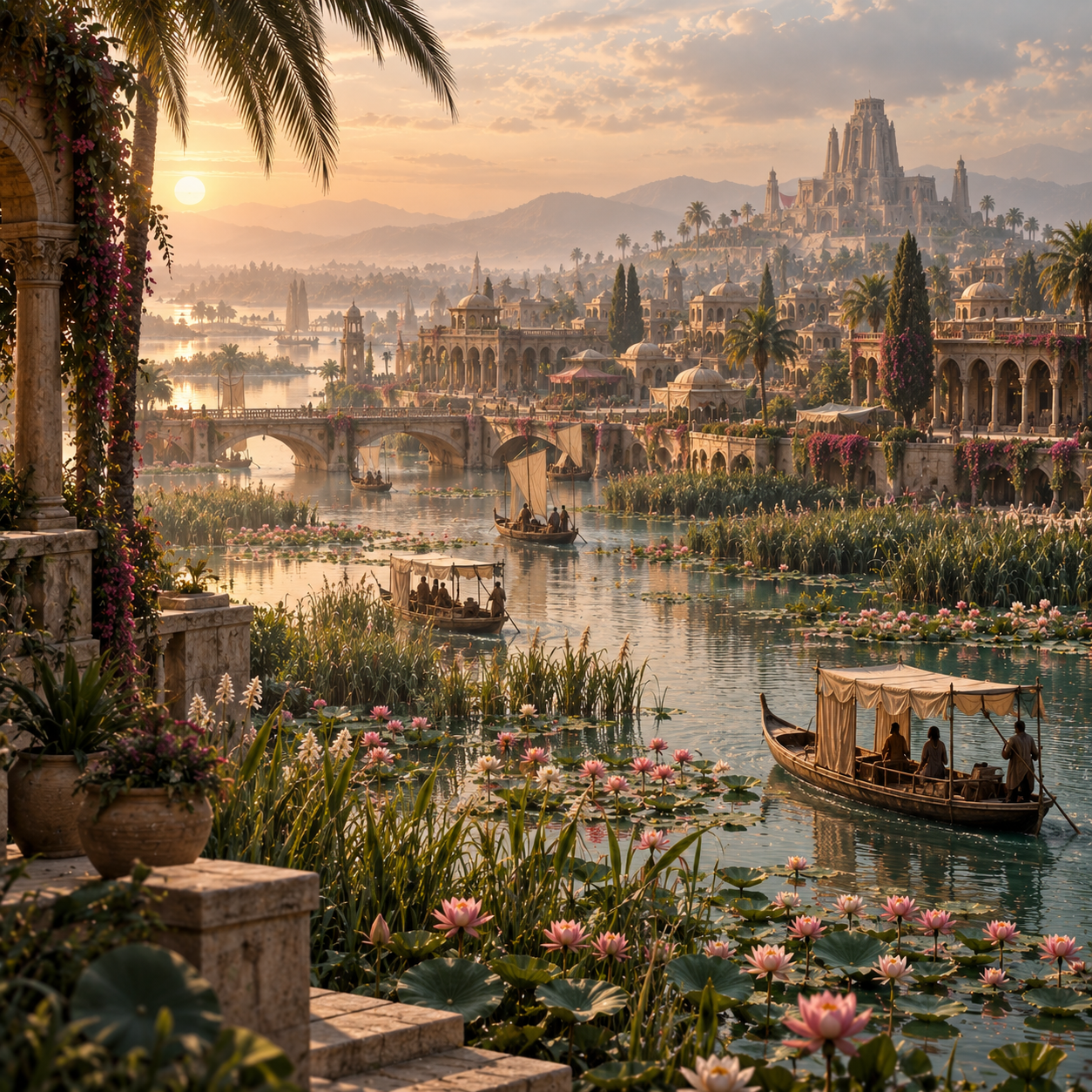
A colourful city built across hundreds of small islands and wooden platforms, where narrow canals serve as streets and brightly painted boats crowd floating markets from sunrise until nightfall.
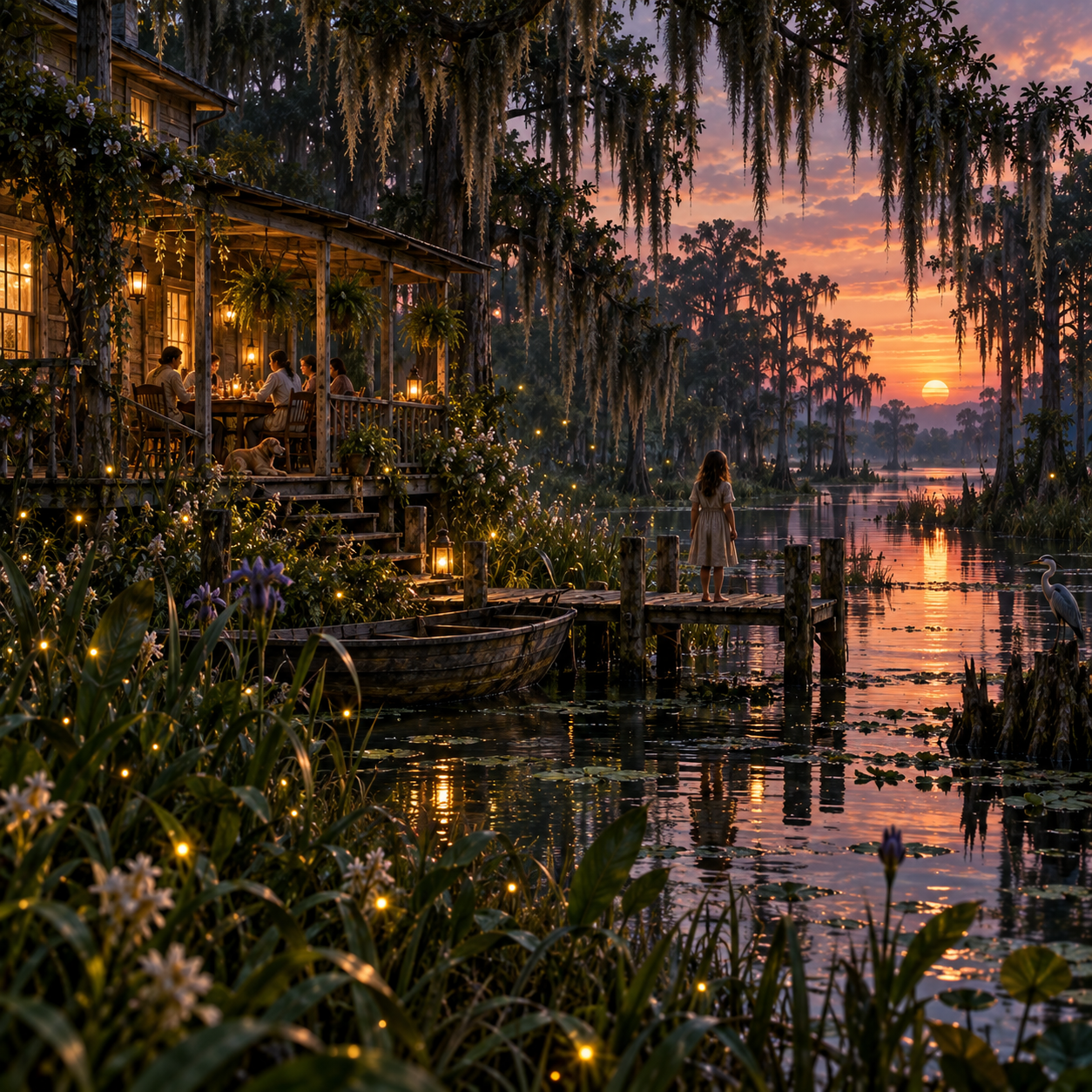
A vast cypress swamp where enormous trees rise directly from dark water and villages are built around their trunks, connected by suspended walkways high above the flooded forest.
A ruined royal capital slowly sinking into a marsh, where poorer families now inhabit the upper floors of abandoned palaces while boats travel through former streets below.
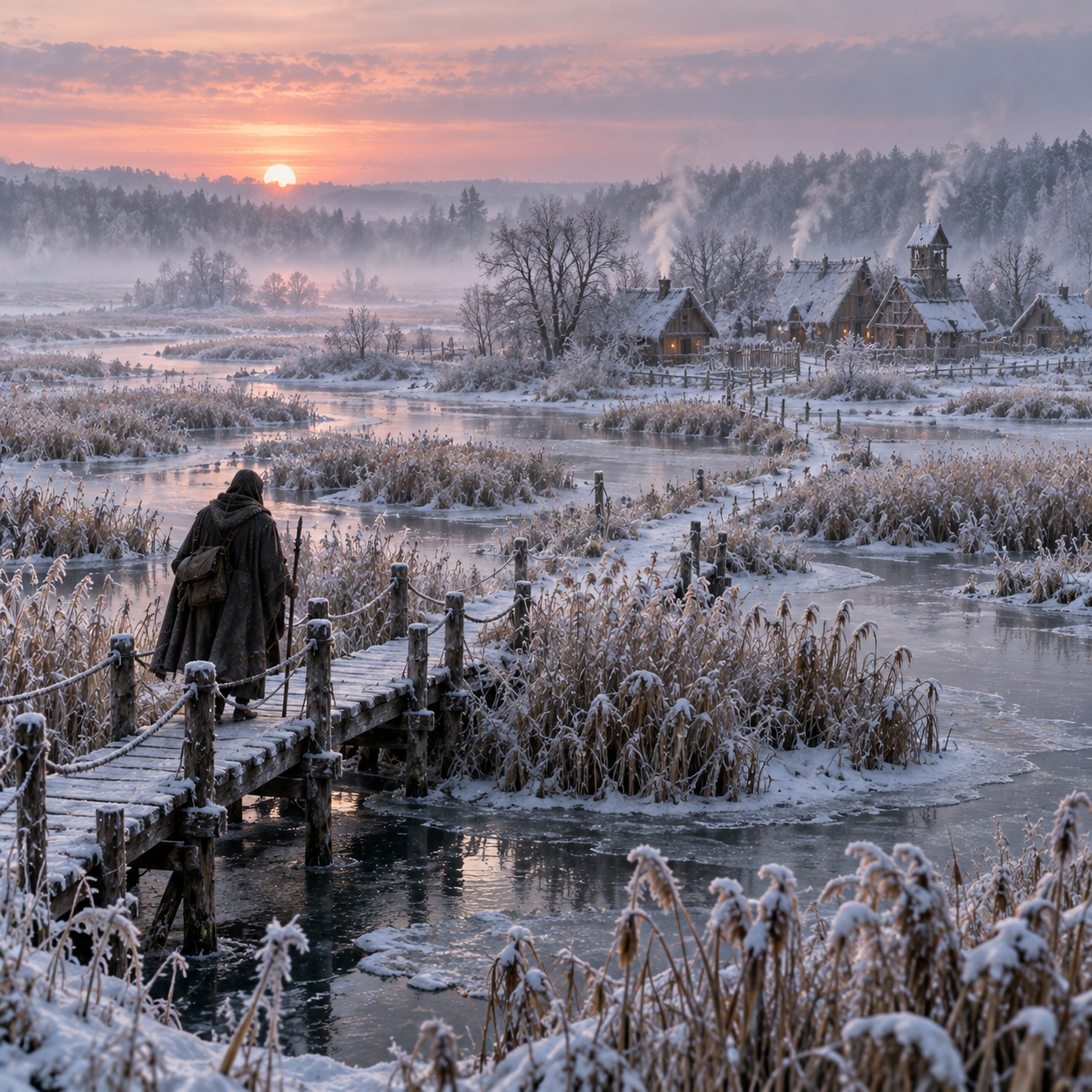
A broad wetland covered in pale reeds and silver pools where thick morning mist regularly hides entire settlements until midday.
A warm subtropical marsh filled with flowering water plants, brightly coloured birds and enormous moss-covered trees, surrounding a secluded monastery reached only by a winding river journey.
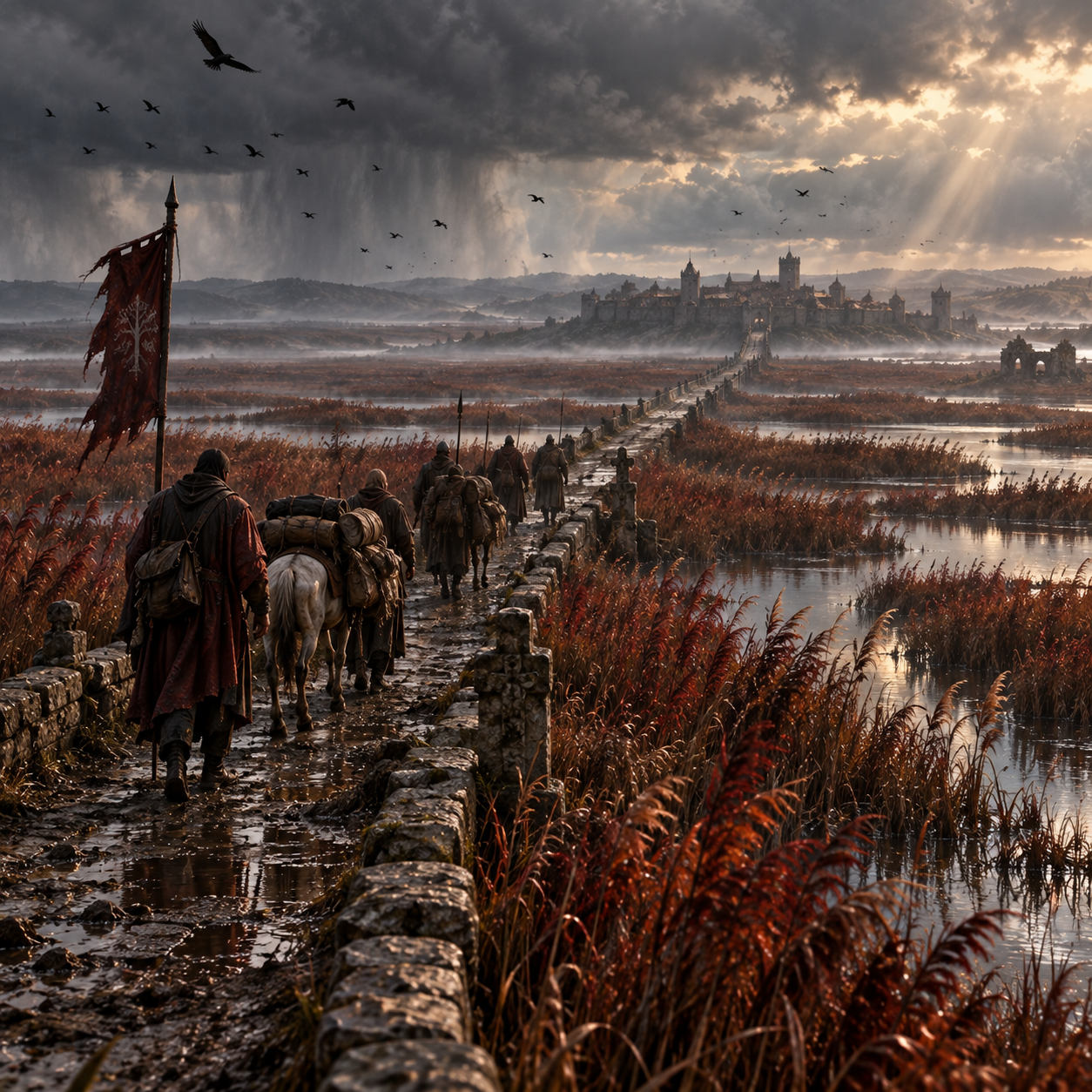
A peatland kingdom where ancient wooden roads have been preserved beneath the bog and occasionally emerge during unusually dry summers, revealing routes towards forgotten settlements.
A prosperous trading town built where three navigable rivers meet within an enormous swamp, its floating warehouses filled with herbs, dyes, timber, spices and rare plants gathered from the wetlands.
A region of shallow green lagoons and reed-covered islands where homes are designed to float upward whenever seasonal floods raise the water level.
A mysterious wetland formed around the ruins of an enormous ancient dam, with broken towers and sections of stone wall emerging from the water among trees and lilies.
A beautiful marshland where thousands of tiny lights appear among the reeds every evening, attracting travellers to inns and viewing platforms even though locals refuse to approach the water after sunset.
7. Picture Prompts
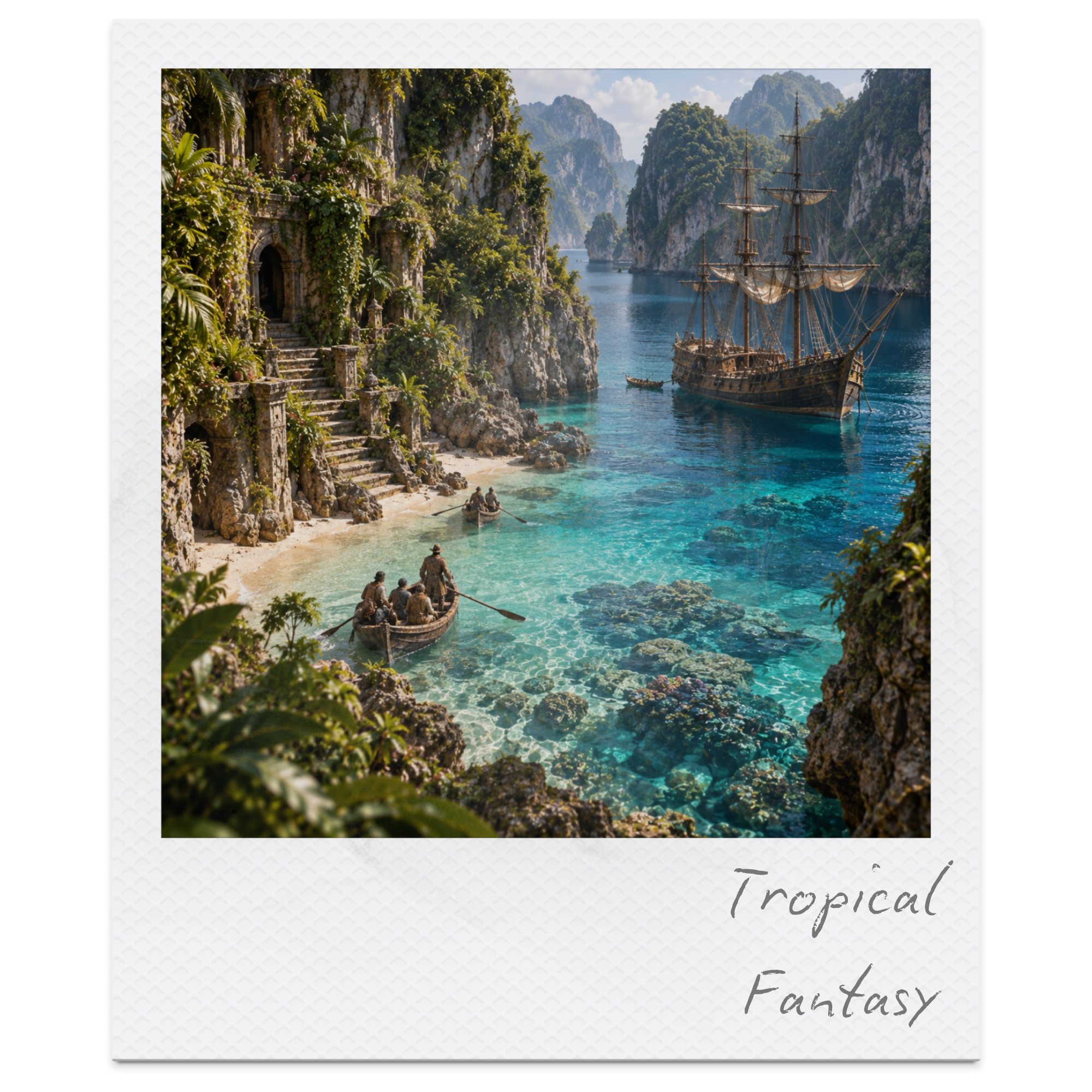
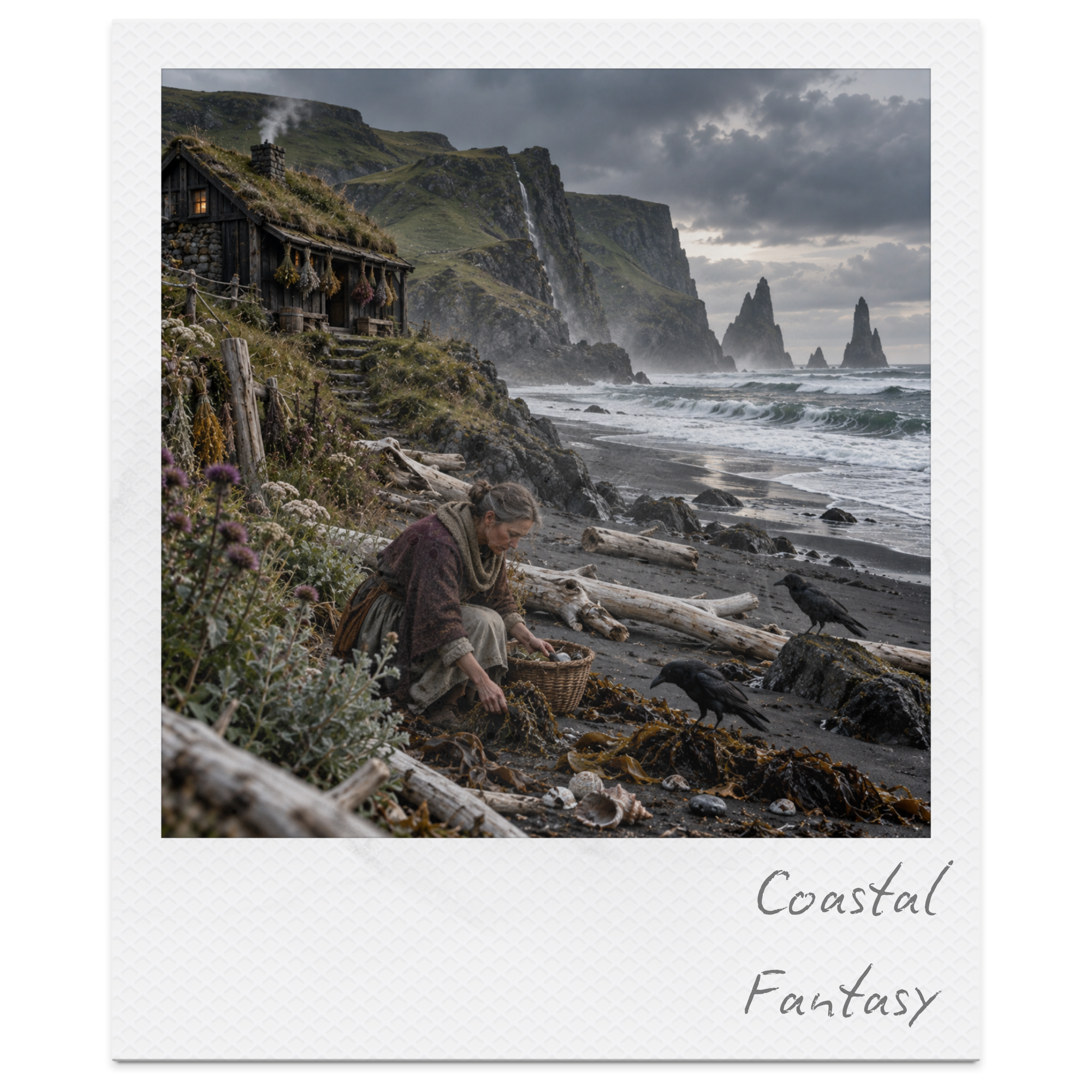
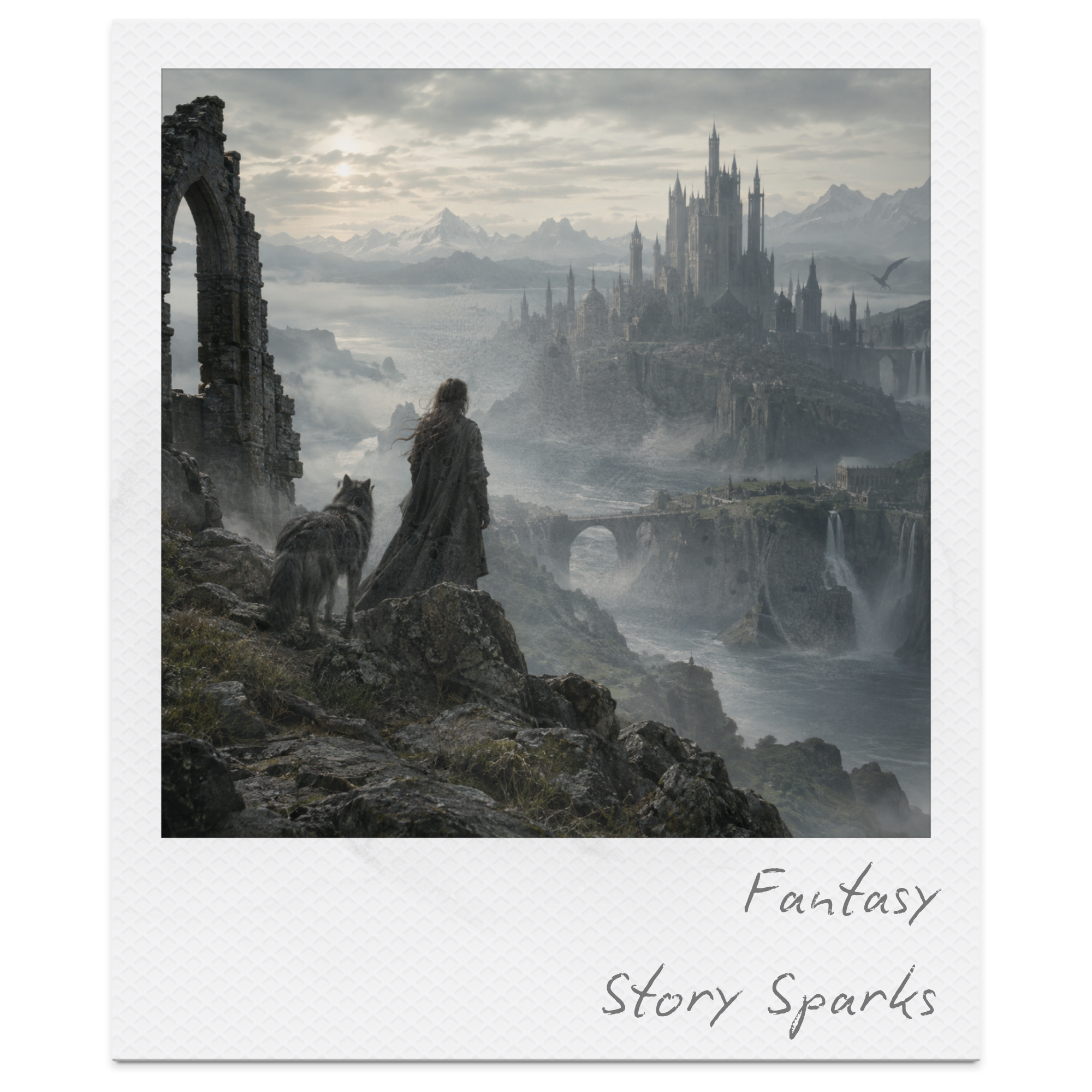
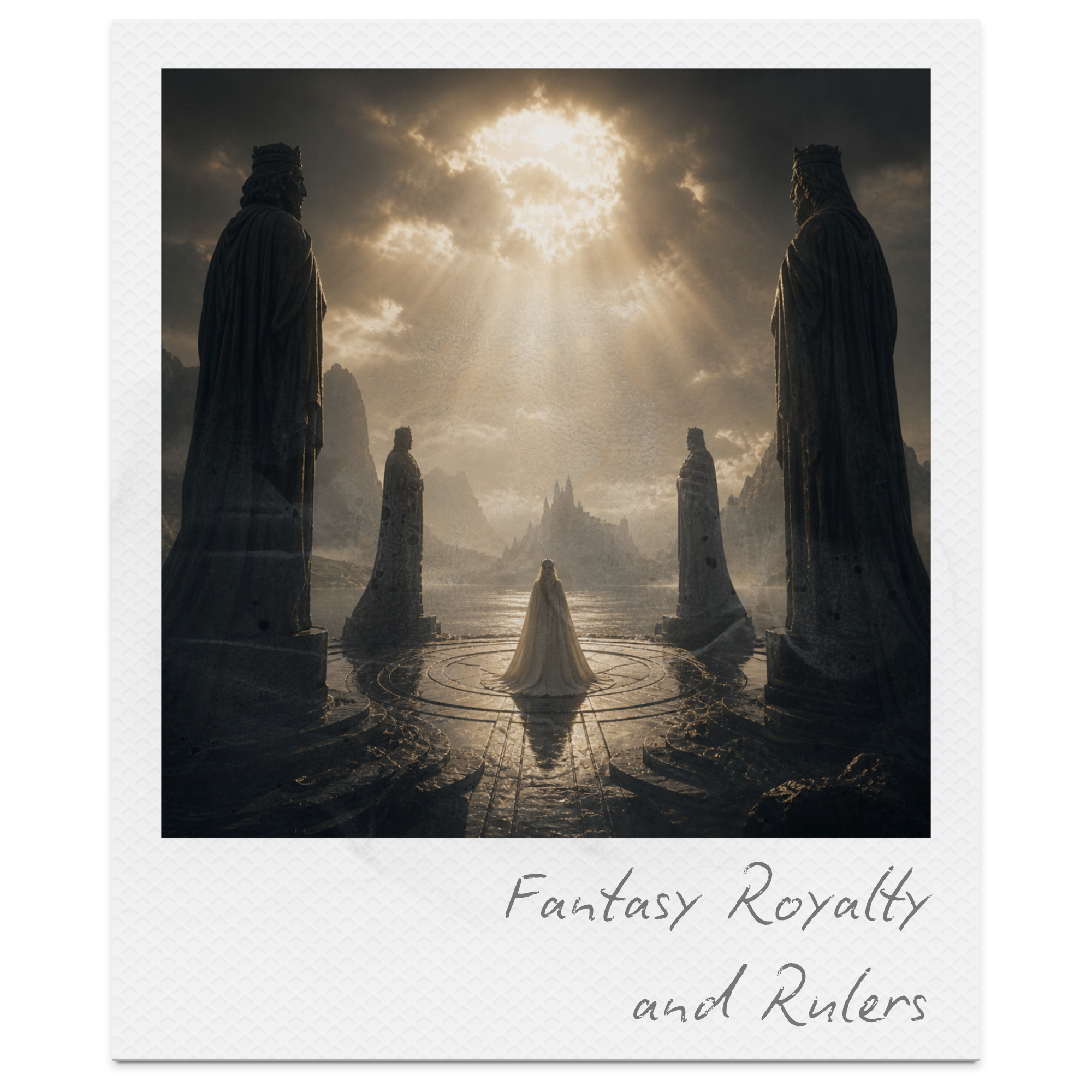
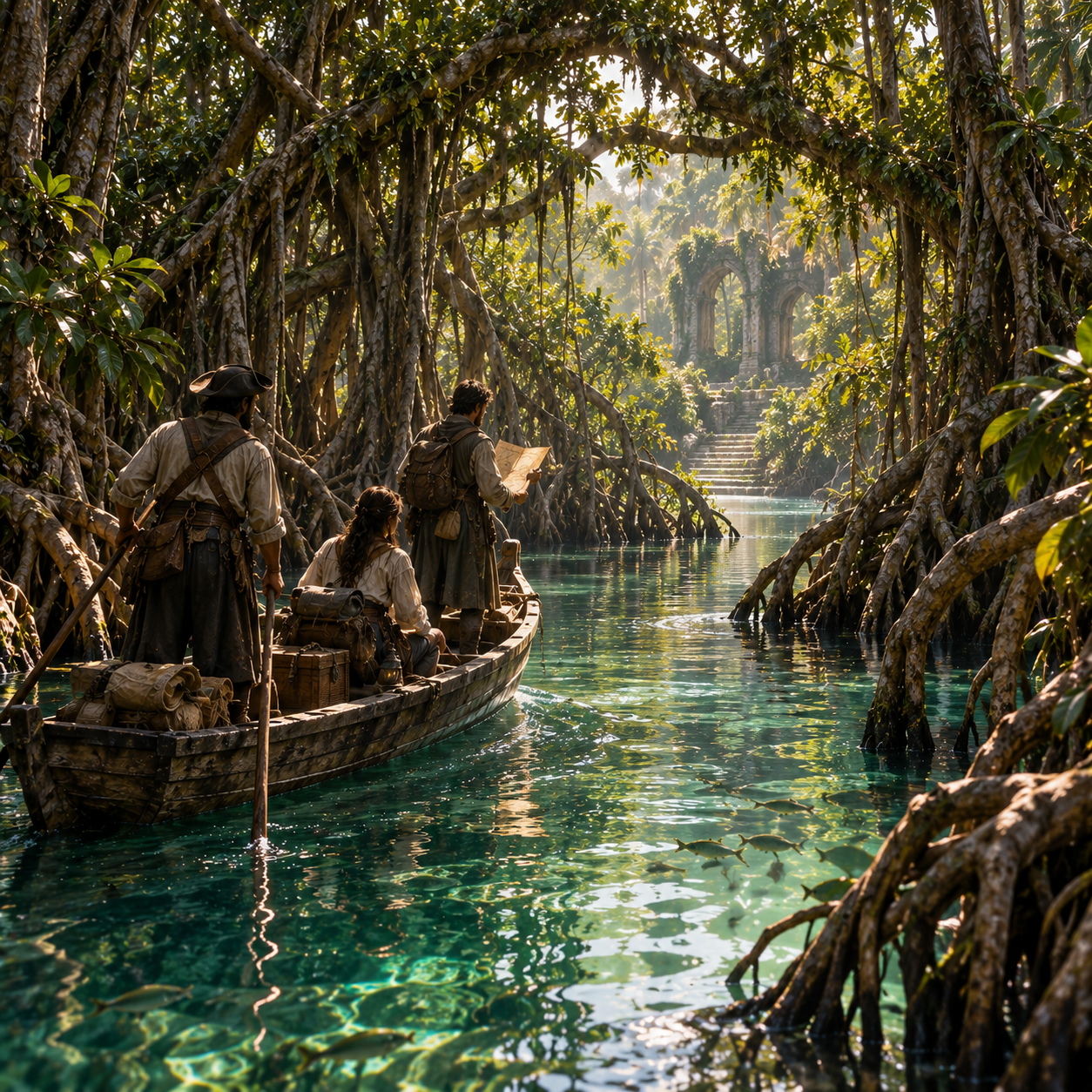
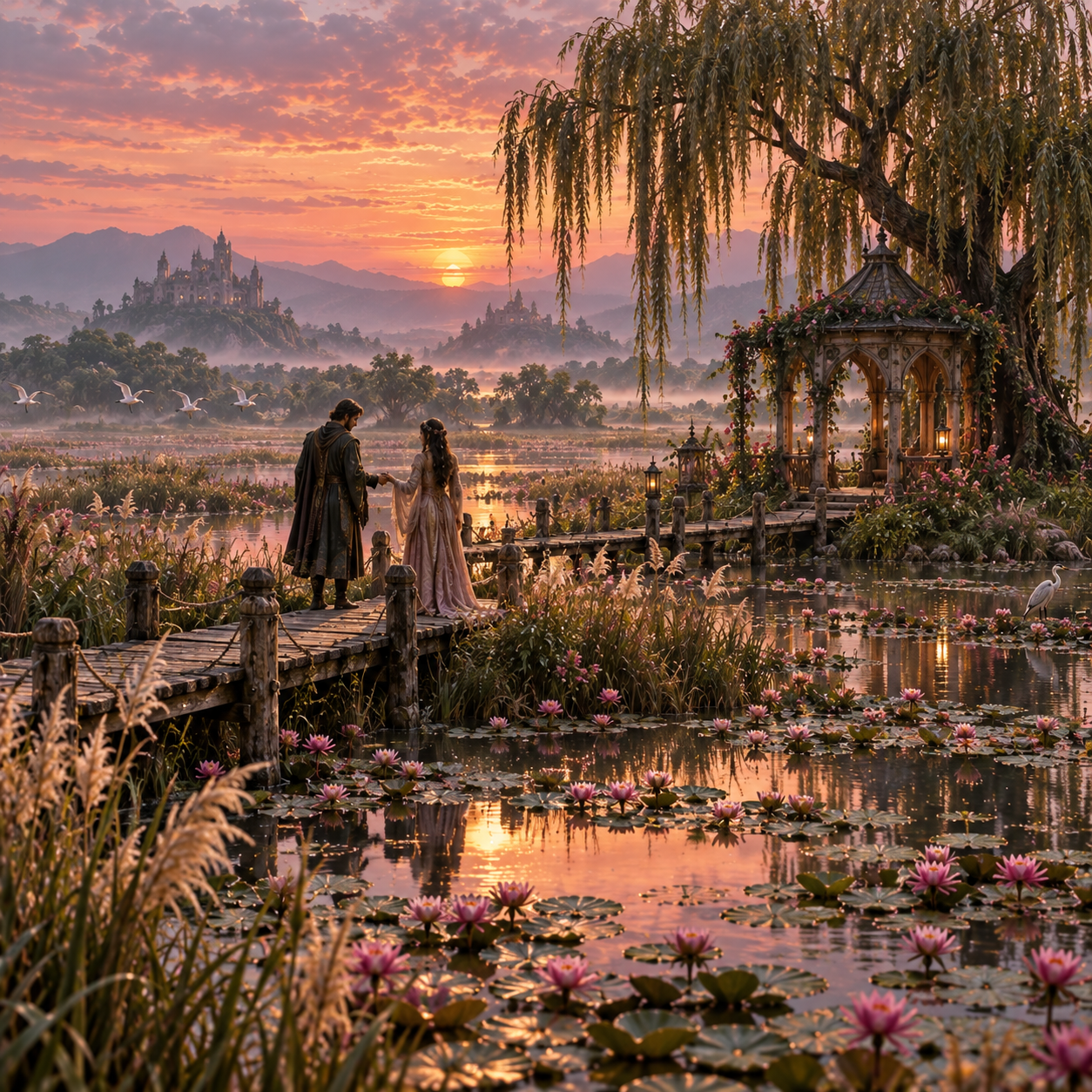
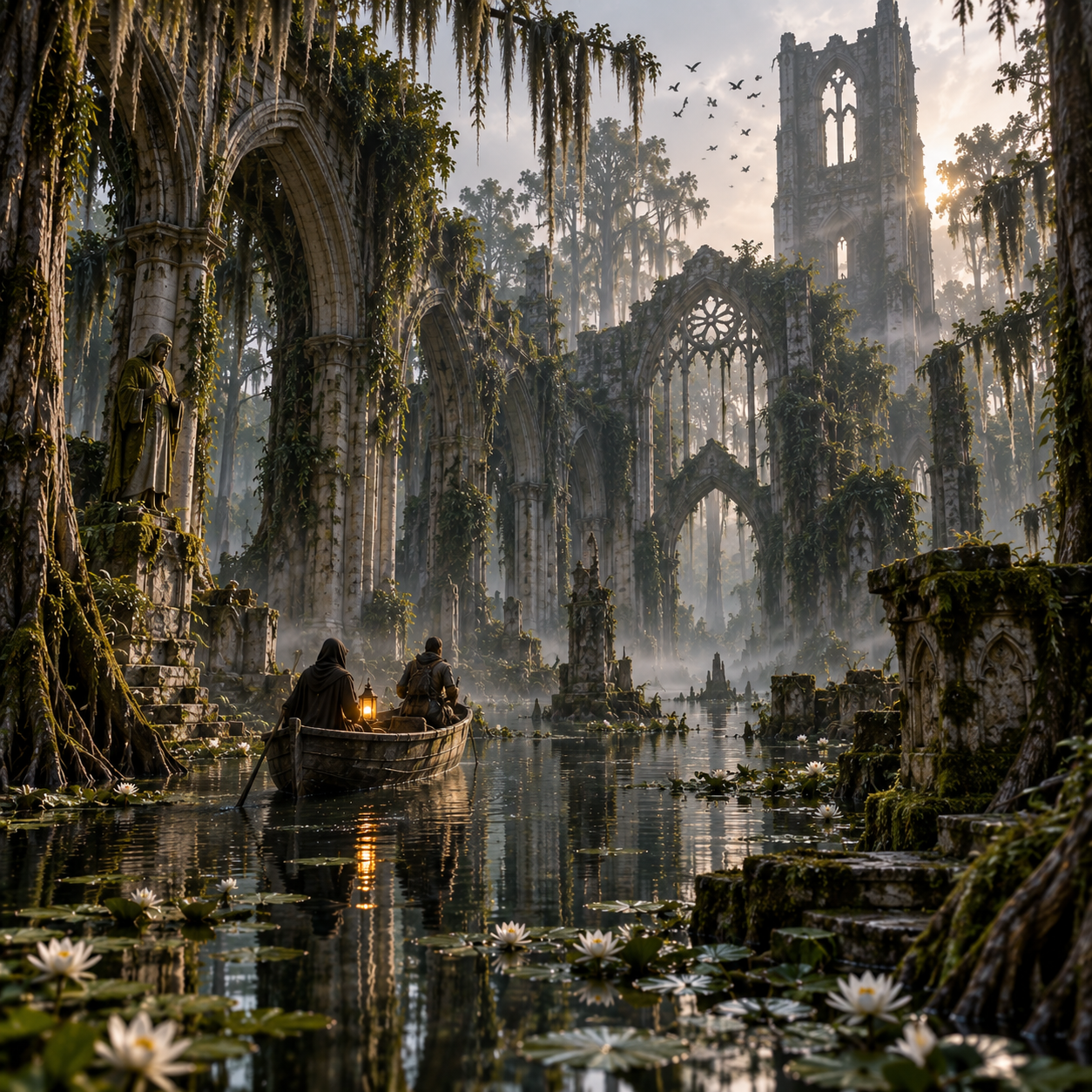
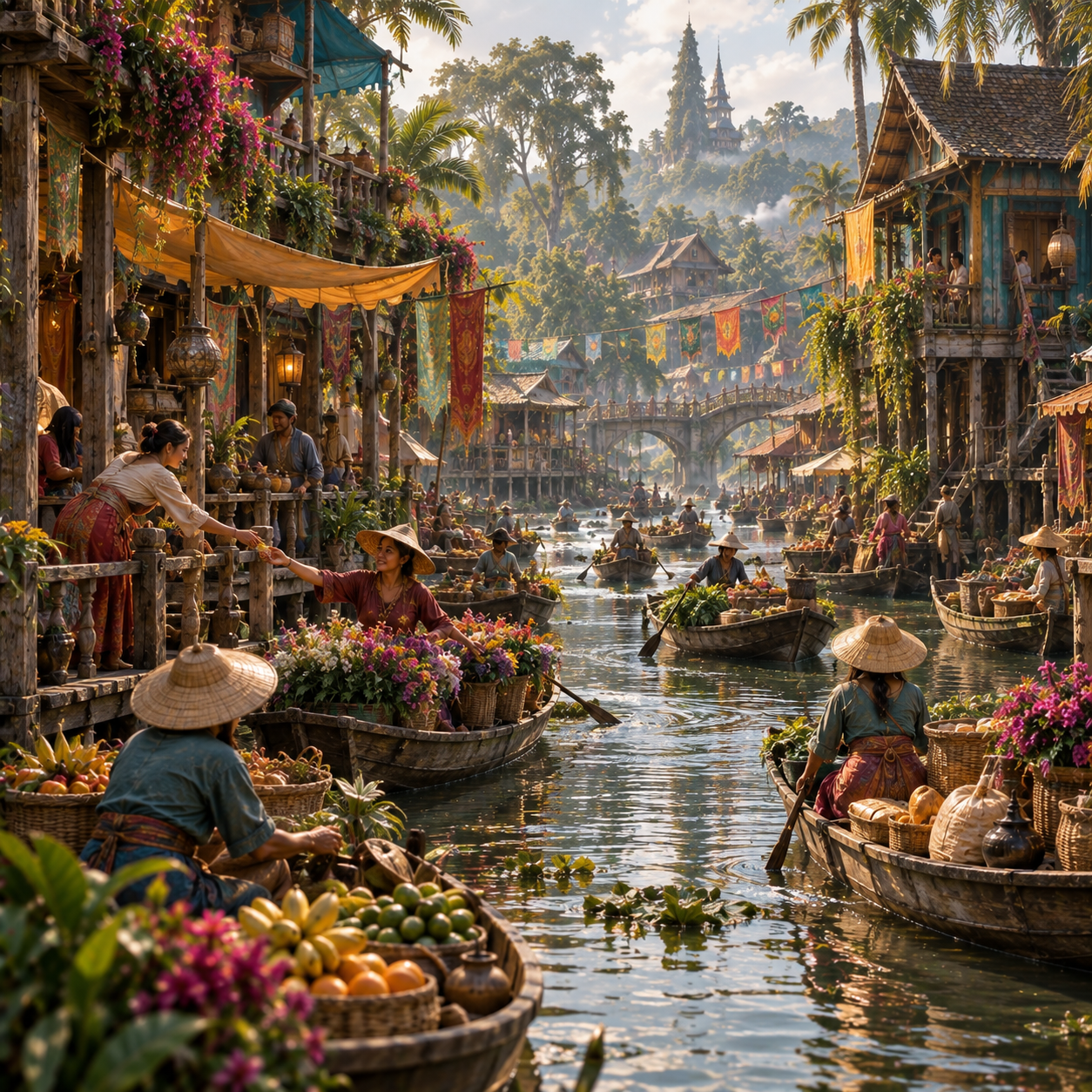
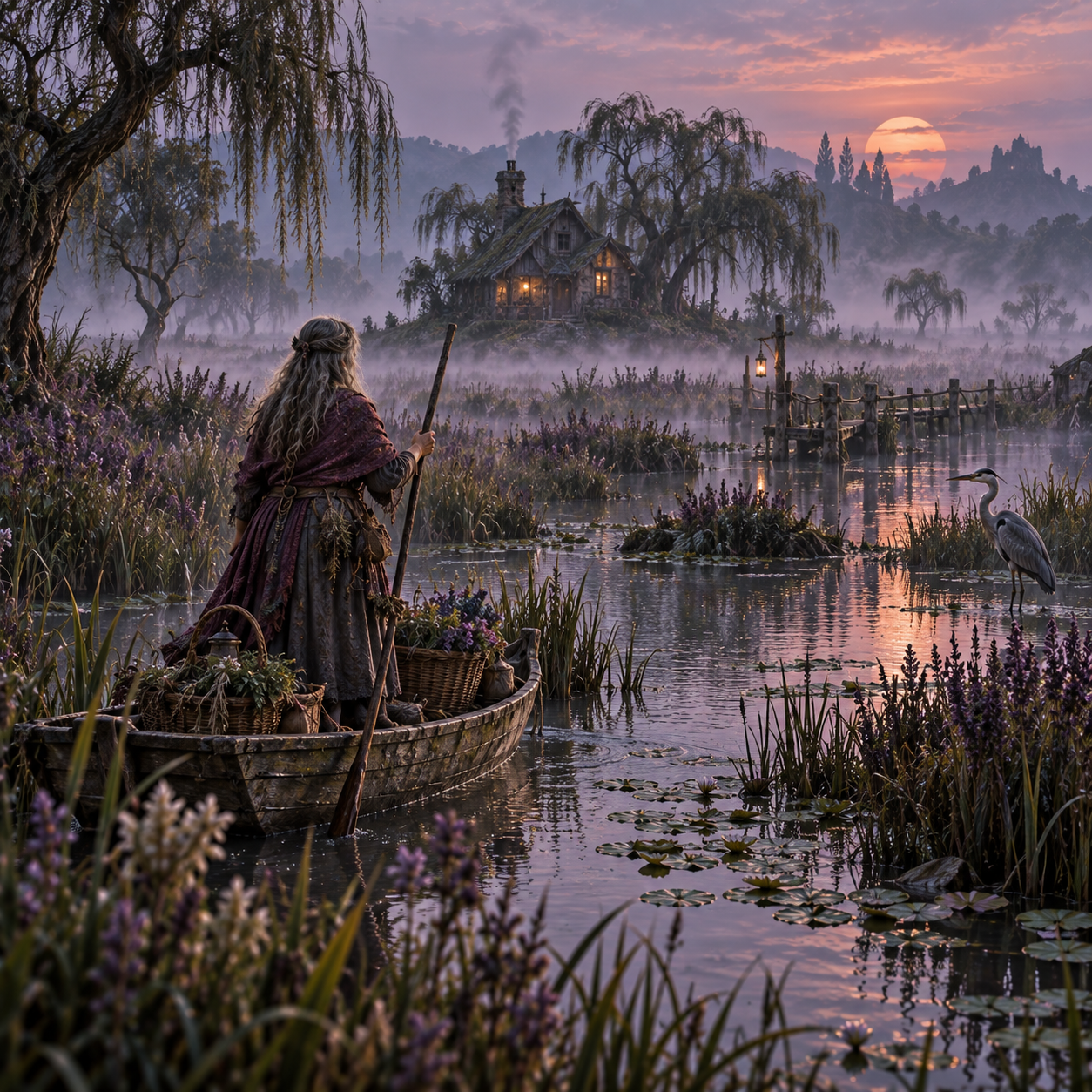
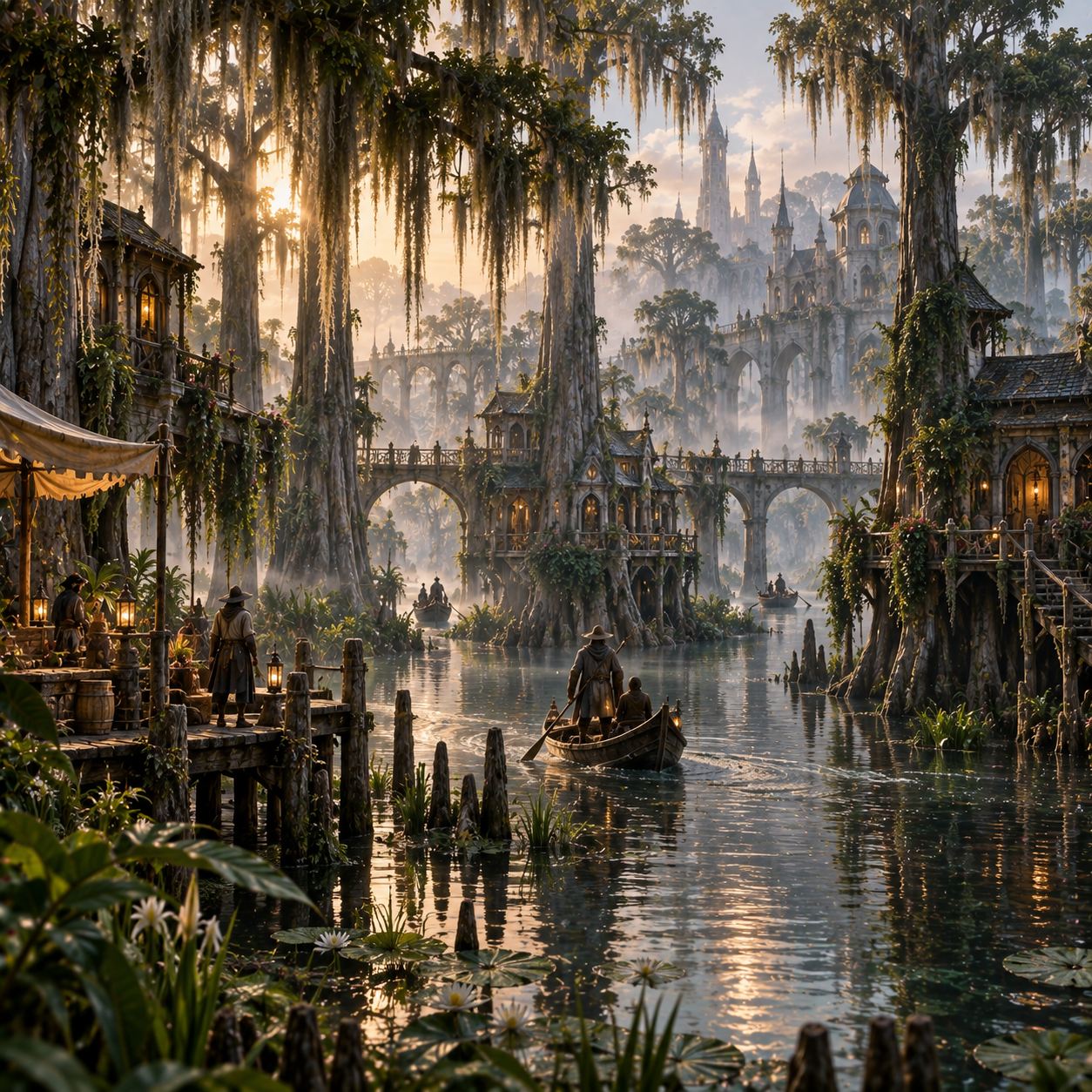
Picture prompts can transform an atmospheric wetland scene into the beginning of a story. Imagine each image in detail, then consider who the characters are, what has just happened and what hidden story might explain the unusual thing they can see.
Go Deeper into Swamp Fantasy
Swamp fantasy becomes more immersive when the wetlands influence how people travel, build, trade and understand the world around them. Think about how seasonal floods, difficult terrain, unusual wildlife and valuable natural resources might shape communities that have learned to thrive in places outsiders consider dangerous or uninhabitable.
◆ Explore how people travel through a landscape where roads disappear, waterways change and familiar routes become inaccessible during different seasons.
◆ Create a wetland resource — a medicinal plant, magical herb, rare dye, unusual timber or valuable mineral — that gives the region unexpected importance.
◆ Consider how generations of living among mist, flooded forests and isolated waterways might influence local folklore, superstitions, festivals and burial traditions.
◆ Design something hidden beneath the swamp, such as a drowned settlement, ancient road, forgotten palace or civilisation preserved beneath layers of mud and peat.
Final Thoughts
Swamp fantasy offers a landscape where almost anything can remain hidden. Mist can conceal entire settlements, flooded forests can turn simple journeys into adventures, ancient ruins can disappear beneath dark water, and communities can develop around waterways that outsiders struggle to navigate.
These 70 Swamp Fantasy Writing Prompts explore the wetlands from many different directions, from colourful floating markets and secluded stilt villages to sunken palaces, mysterious lights, dangerous journeys and forgotten roads emerging from the mud. Whether you're creating a gothic marshland mystery, a folklore-inspired adventure, a dark fantasy, a swamp romantasy or a magical kingdom built among reeds and waterways, the landscape itself can become one of the most important parts of the story.
For even more inspiration, explore the Fantasy Writing Hub for magical worlds, characters and worldbuilding ideas, or browse the Creative Writing Archive for hundreds of prompts, story ideas and writing resources.
Choose Your Next Adventure