Notes from the Inkpot
Writing, teaching, creating - one ink-stained idea at a time.



50 Figurative Language Examples for Death and Decay: Metaphors, Similes & Personification
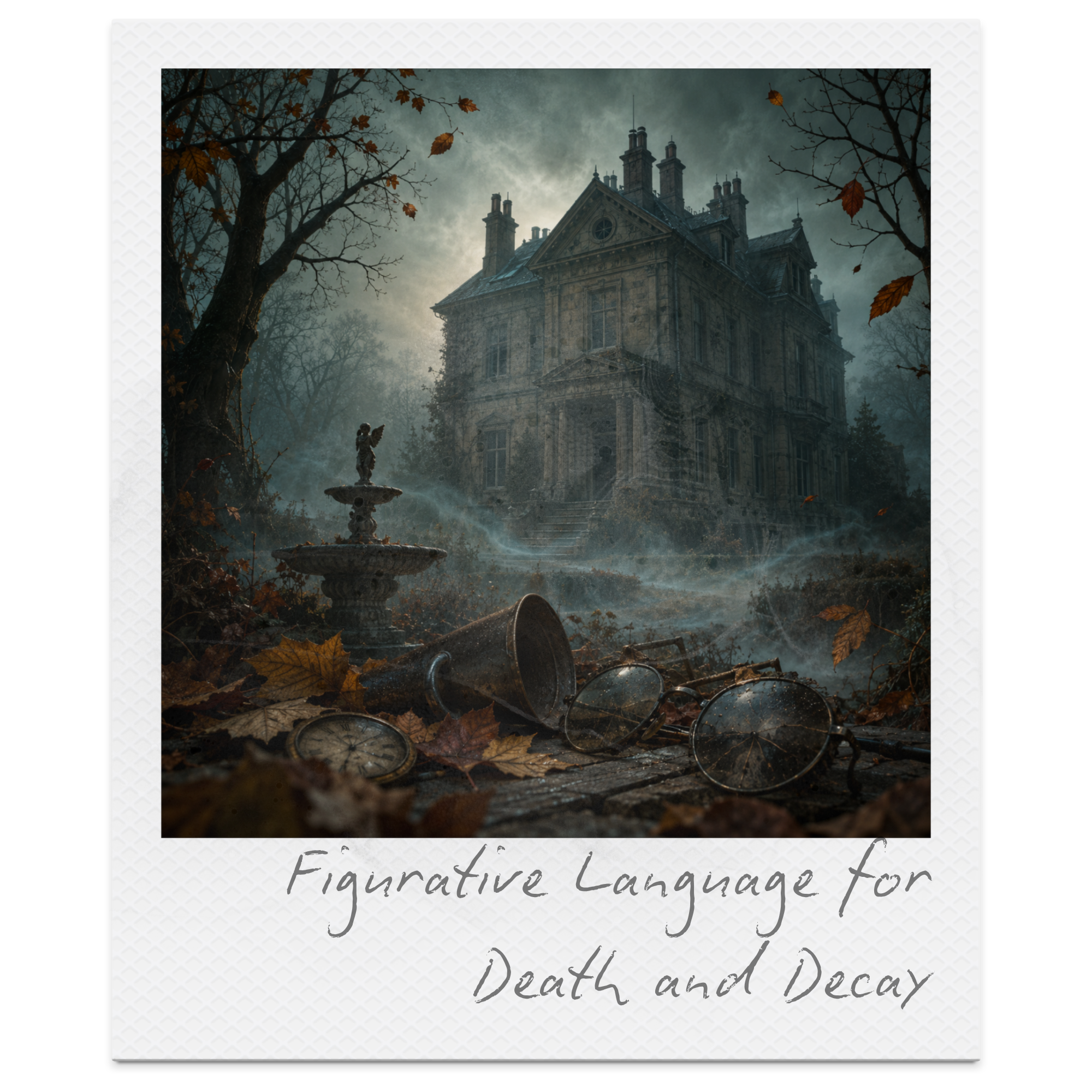
Explore 50 evocative figurative language examples for death and decay, including haunting metaphors, atmospheric similes, personification, symbolism and extended imagery. Discover how to describe crumbling Gothic mansions, dying gardens, forgotten graveyards, fading memories and the inevitable passage of time through original, richly developed descriptions. Learn how to create powerful imagery that conveys grief, mortality, deterioration and loss, with practical writing techniques, common mistakes to avoid and detailed examples explaining why each comparison works. Featuring five creative writing exercises and further Gothic and descriptive writing inspiration, this comprehensive guide will help you transform ordinary scenes of decay into unforgettable literary moments.

70 Fantasy Horror Writing Prompts: Dark Magic, Corruption, and Unseen Forces
Fantasy horror exists where imagination turns against itself—where magic is no longer a source of wonder, but something unstable, corrupting, and deeply unsettling. In these worlds, power comes with consequences, knowledge reveals more than it should, and reality itself begins to shift under pressure. From cursed landscapes to ancient forces lurking beneath the surface, fantasy horror explores what happens when the unknown cannot be controlled. This collection of 70 Fantasy Horror Writing Prompts is designed to help you build dark, immersive worlds shaped by tension, atmosphere, and psychological unease. Whether you are exploring corrupted magic, hidden systems, or the quiet dread of something watching from beyond, these prompts offer a complete toolkit to develop stories that feel rich, cinematic, and haunting long after they end.

There Will Come Soft Rains by Ray Bradbury: Summary, Themes, Meaning & Analysis
There Will Come Soft Rains by Ray Bradbury is a haunting work of science fiction that explores a world where technology continues after human extinction. Set in an automated house that carries out its daily routines—cooking, cleaning, and organising—Bradbury presents a chilling vision of mechanisation without purpose, where systems persist despite the complete absence of human life. Through its eerie atmosphere and powerful imagery, the story examines isolation, environmental destruction, and the illusion of control. As the house continues its routines in a devastated world, Bradbury raises unsettling questions about what remains when humanity is gone, and whether progress without responsibility ultimately leads to emptiness and collapse.

70 Abandoned Places Writing Prompts: Ruins, Empty Spaces & Forgotten Worlds
Abandoned places are some of the most powerful settings in horror, where absence becomes presence and silence carries its own kind of threat. These spaces are defined not just by what remains, but by what is missing — people, purpose, and the sense of safety that once existed there. In stories set in empty towns, derelict buildings, and forgotten landscapes, the past lingers in unsettling ways, creating tension through atmosphere alone. Nothing is ever entirely gone; it simply waits to be discovered. This collection of 70 Abandoned Places Writing Prompts explores ruins, empty spaces, and forgotten worlds through plot hooks, opening lines, character ideas, and cinematic inspiration. From decaying hospitals and deserted streets to isolated houses that feel anything but empty, these prompts are designed to help you build tension, atmosphere, and unease — where every space holds a story, and every silence suggests something more.