There Will Come Soft Rains by Ray Bradbury: Summary, Themes, Meaning & Analysis
There Will Come Soft Rains explores the haunting consequences of technology, isolation, and human extinction within a powerful work of science fiction. Set in an automated house that continues its daily routines despite the absence of its inhabitants, Bradbury presents a world shaped by mechanisation, routine, and emotional absence. Through the house’s repetitive actions, the story reveals the eerie persistence of systems that no longer serve a human purpose.
At its core, the story examines the fragility of civilisation, memory, and human presence, raising questions about what remains when humanity is gone. Its portrayal of an empty, functioning world reflects anxieties about technology outlasting its creators and the consequences of destruction on a global scale. For more explorations of Bradbury’s speculative fiction, visit the Ray Bradbury Hub, or explore broader literary analysis in the Literature Library.

Context of There Will Come Soft Rains
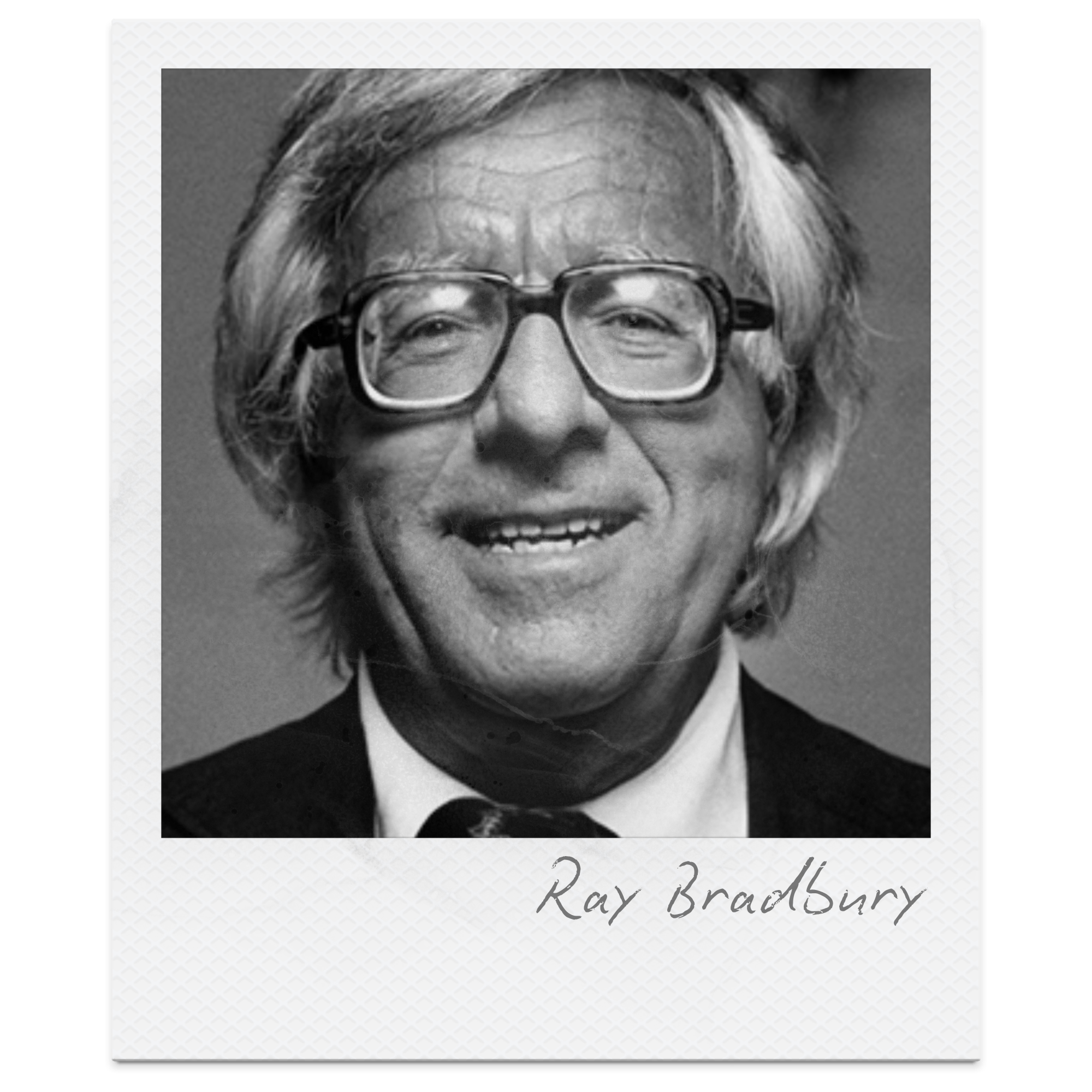
Ray Bradbury wrote There Will Come Soft Rains in the context of the Cold War, a period marked by intense anxiety about nuclear warfare, technological advancement, and global destruction. The image of a single house standing in a city of “rubble and ashes” reflects the real fear of atomic annihilation following events like Hiroshima and Nagasaki. As a writer of speculative and science fiction, Bradbury often explored the consequences of progress without ethical restraint, focusing on how technology could continue long after humanity had destroyed itself. For a deeper exploration of these ideas across his work, see the Ray Bradbury Context Post.
This context shapes the story’s central meaning: that human systems, once created, may persist without purpose or control. The automated house continues its routines—cooking, cleaning, and organising—despite the complete absence of human life, highlighting the emptiness of mechanisation without meaning. Bradbury also draws on the poem by Sara Teasdale, which suggests that nature will continue indifferent to human destruction, reinforcing the idea that human existence is fragile, and ultimately insignificant within larger natural and technological systems.
There Will Come Soft Rains at a Glance
Form: Short story (science fiction)
Mood: Eerie, melancholic, unsettling
Central tension: The persistence of technology and routine in a world where human life has been erased
Core themes: human extinction, technology and control, isolation, mechanisation of daily life, environmental destruction, indifference of nature
One-sentence meaning: A world without humans reveals the emptiness of technology without purpose and the fragile, temporary nature of civilisation.
Quick Summary of There Will Come Soft Rains
An automated house in Allendale, California carries out its daily routines—waking its occupants, preparing breakfast, and announcing the date—despite the complete absence of any people. The house continues its programmed tasks, cooking meals, cleaning rooms, and maintaining schedules, while the surrounding city lies in ruin and radioactive destruction.
As the day progresses, the house performs increasingly eerie routines: robot mice clean the empty rooms, a starving dog enters and dies, and the house efficiently disposes of its body. The nursery projects vivid fantastical landscapes, and the house even reads a poem aloud about nature continuing after humanity’s disappearance, reinforcing the unsettling contrast between mechanical routine and human absence.
That night, a fire breaks out when a tree crashes through the house, igniting cleaning solvent. Despite its advanced systems, the house fails to contain the flames. Its automated defences collapse one by one, and the house is destroyed. In the end, only a single wall remains, still repeating the date—“Today is August 5, 2026”—as the sun rises over the silent, devastated landscape.
Title of There Will Come Soft Rains
Bradbury’s titles often do more than simply label a story; they establish tone, suggest conflict, and introduce deeper thematic meaning. In There Will Come Soft Rains, the title is taken directly from Sara Teasdale’s poem, immediately signalling a connection between the narrative and ideas about nature, time, and human absence.
At first, the title suggests something gentle and natural—renewal, continuity, and the quiet persistence of the natural world. The phrase evokes calm imagery of rain, growth, and seasonal cycles, leading readers to expect a peaceful or reflective narrative. However, as the story unfolds, this expectation is sharply disrupted.
By the end, the title takes on a deeply ironic and symbolic meaning. While the house continues its mechanical routines, the poem reminds us that nature will endure regardless of human existence—“not one will know of the war… not one will care at last when it is done.” The “soft rains” represent the indifference of nature to human destruction, highlighting the contrast between natural continuity and human fragility.
There is also a powerful sense of emotional resonance in the title. The softness of the imagery contrasts with the devastation of the setting, reinforcing the idea that the world will move on quietly, without mourning humanity’s disappearance. The title therefore transforms from something gentle into something unsettling, emphasising the story’s central message: that human life is temporary, while nature and time continue without us.
Structure of There Will Come Soft Rains
Bradbury structures There Will Come Soft Rains to emphasise repetition, routine, and gradual collapse, mirroring the mechanical processes of the house itself. The narrative moves through a single day, creating a cyclical pattern that is ultimately broken by destruction, reinforcing the fragility of both technology and civilisation.
Opening (Exposition)
The story begins with the automated house performing its morning routines—“Tick-tock, seven o'clock, time to get up”—establishing a world governed by schedule and repetition. The absence of human response immediately creates unease, as the house continues its functions despite the emptiness. This opening introduces the central idea of mechanisation without purpose.
Rising Action
As the day progresses, the house carries out increasingly complex tasks: cooking meals, cleaning, projecting nursery scenes, and maintaining daily life. The description of the surrounding environment—“the house stood alone in a city of rubble and ashes”—reveals the larger context of destruction. The arrival and death of the dog intensify the emotional impact, highlighting the contrast between living beings and unfeeling systems.
Turning Point / Climax
The turning point occurs when the poem is read aloud in the evening, drawing attention to the theme of nature’s indifference to human extinction. This moment shifts the story from observation to reflection, making the absence of humanity fully explicit and linking the narrative to a broader philosophical message.
Falling Action
The fire begins suddenly when a tree crashes through the house, triggering a chaotic sequence of events. The house attempts to defend itself, deploying its automated systems, but these efforts gradually fail. The tension escalates as the structure begins to break down, moving from controlled routine to mechanical panic and collapse.
Ending (Resolution)
The story ends with the destruction of the house, leaving only a single wall repeating the date—“Today is August 5, 2026.” This ending is both abrupt and cyclical, echoing the opening routine while emphasising the absence of human life. The final repetition reinforces the idea that systems continue even after their purpose has vanished, creating a haunting sense of persistence without meaning.
Overall, the structure reflects the story’s central message: that routine and control are fragile, and even the most advanced systems cannot prevent inevitable collapse.
Setting of There Will Come Soft Rains
In There Will Come Soft Rains, setting functions as a powerful symbolic landscape, shaping tone, meaning, and conflict. Bradbury contrasts the carefully maintained interior of the automated house with the devastated world outside, highlighting the tension between order and destruction, and technology and nature.
The primary setting is the fully automated house in Allendale, California, which operates with precise, programmed efficiency. Inside, everything is controlled and maintained: meals are prepared, rooms are cleaned, and routines continue as if nothing has changed. The voice-clock’s repetition—“Tick-tock, seven o’clock, time to get up”—creates an atmosphere of mechanical persistence, reinforcing the idea of routine without purpose. The house becomes a closed system, detached from the reality beyond its walls.
In stark contrast, the exterior world is one of total devastation. The house “stood alone in a city of rubble and ashes,” suggesting the aftermath of a catastrophic event, most likely nuclear destruction. The charred silhouette of the family—“a man mowing a lawn… a woman bent to pick flowers… a small boy… a girl”—frozen onto the wall captures a moment of sudden annihilation. This image serves as a haunting reminder of human absence and the violence that erased it, contrasting sharply with the house’s continued routines.
The nursery provides another key setting, filled with artificial landscapes and projected environments. Its shifting scenes of animals and nature—“yellow giraffes, blue lions, pink antelopes”—create a surreal, almost dreamlike space. However, this artificial nature is ultimately empty, reinforcing the idea that simulated experiences cannot replace real life. The nursery highlights the theme of illusion versus reality, where technology attempts to recreate what has already been lost.
Finally, as the fire spreads, the house itself transforms into a setting of chaos and destruction. Once a place of order and control, it becomes unstable and vulnerable—“the house shuddered… its wire, its nerves revealed.” This shift reflects the collapse of technological systems when faced with uncontrollable forces, reinforcing the idea that control is temporary and fragile.
Across the story, Bradbury uses setting to explore the contrast between mechanical order and natural indifference, ultimately showing that even the most controlled environments cannot escape the forces of destruction and time.
Narrative Voice in There Will Come Soft Rains
Bradbury uses a third-person omniscient narrative voice that remains deliberately detached and observational, shaping a reading experience that feels both mechanical and unsettling. The narration mirrors the automated house itself—precise, repetitive, and lacking human emotion—reinforcing the story’s focus on absence, routine, and artificial continuity.
The perspective is largely impersonal and distant, describing events without emotional commentary. This creates a stark contrast between what is happening and how it is presented. For example, the house calmly announces the date—“Today is August 4, 2026”—while the surrounding world lies in ruins. This detachment intensifies the horror, as the narrative refuses to acknowledge the emotional weight of human extinction, leaving the reader to process the significance independently.
At the same time, Bradbury incorporates moments of personification, giving the house a kind of artificial awareness. The house “quivered at each sound” and reacted defensively to its environment, suggesting a mechanical imitation of fear. This blurs the line between machine and organism, creating an eerie sense that the house is alive, yet fundamentally incapable of understanding its own situation.
The tone of the narrative shifts subtly over the course of the story. It begins with a sense of controlled routine and quiet normality, but gradually becomes more unsettling as the absence of humans becomes clear. By the time the fire begins, the narration takes on a sense of urgency and chaos, reflecting the breakdown of the house’s systems. The repeated cries of “Fire!” and the frantic activity of the machines contrast sharply with the earlier calm, highlighting the collapse of order.
Crucially, the narrative voice positions the reader as an observer of a world that no longer includes humanity. This creates a sense of isolation and existential unease, as the story unfolds without any human perspective to guide interpretation. The lack of a central human consciousness reinforces the idea that human presence is not required for systems to continue, but without it, those systems become meaningless.
Overall, Bradbury’s narrative voice combines detachment, personification, and tonal contrast to create a haunting portrayal of a world where technology persists, but humanity is gone.
The Purpose and Impact of There Will Come Soft Rains
Bradbury tells There Will Come Soft Rains as a powerful warning about the consequences of technological dependence, human self-destruction, and the illusion of control. By removing humanity entirely from the narrative, he forces the reader to confront what remains: systems that continue to function, but without meaning or purpose. The story suggests that progress, when detached from responsibility, can lead not to advancement, but to emptiness and collapse.
The emotional impact of the story is deeply unsettling and melancholic. The repetition of routine—meals prepared, voices speaking, rooms cleaned—creates a sense of normality that is constantly undermined by the absence of human life. Moments such as the death of the dog and the empty reading of the poem intensify this effect, producing a quiet, lingering sadness rather than overt horror.
Intellectually, the story challenges readers to consider the role of technology in shaping human life, and what happens when those systems outlast their creators. The automated house becomes a symbol of mechanisation without consciousness, raising questions about whether efficiency and innovation are meaningful without human experience. Bradbury invites readers to reflect on the balance between progress and responsibility, particularly in a world capable of large-scale destruction.
There is also a strong sense of moral unease throughout the story. The cause of humanity’s disappearance is never directly stated, but the ruined landscape and radioactive glow strongly imply human responsibility. This ambiguity forces readers to confront the possibility that humanity is responsible for its own extinction, adding weight to the story’s warning.
The ending lingers because it offers no resolution—only continuation. The final voice repeating the date suggests that the cycle of routine persists, even after total destruction. This creates a haunting after-effect, emphasising that while human life may end, systems and processes may continue without us, indifferent and unchanged.
Characters in There Will Come Soft Rains
In There Will Come Soft Rains, Bradbury removes traditional human characters and instead presents absence, systems, and symbolic figures that represent different aspects of human life and its disappearance. Each “character” functions as an embodiment of technology, memory, or the remnants of humanity.
The House
The automated house functions as the central “character,” representing technology, routine, and the illusion of continuity. It carries out its daily tasks with precision, announcing, “Tick-tock, seven o’clock, time to get up,” despite the complete absence of human life. This repetition highlights its inability to recognise change or adapt beyond its programming.
At times, the house appears almost sentient, reacting defensively as it “quivered at each sound,” suggesting a mechanical imitation of fear. However, this is ultimately hollow—an illusion of life without true awareness. The house symbolises mechanisation without meaning, continuing to function long after its purpose has vanished.
The Dog
The dog represents the last trace of living, organic life within the house. Once “huge and fleshy, but now gone to bone and covered with sores,” it reflects the suffering and decline of the natural world after human destruction. Its frantic behaviour—running “wildly in circles” and eventually dying—contrasts sharply with the calm, ordered routines of the house.
Its death is handled with cold efficiency, as the house disposes of the body without pause. This moment reinforces the theme of emotional absence, showing that while life can suffer and perish, the technological system remains indifferent.
The McClellan Family (Silhouettes)
The McClellan family is never physically present, but their existence is captured in the haunting silhouettes burned onto the house—“a man mowing a lawn… a woman bent to pick flowers… a small boy… a girl.” These frozen images represent a single moment of sudden destruction, preserving the illusion of life even as it has been erased.
They function as symbols of human fragility and memory, suggesting that what remains of humanity is not presence, but trace and imprint. Their absence is more powerful than any direct characterisation, reinforcing the idea that human life has been abruptly and completely removed.
The Voices
The disembodied voices within the house—announcing the time, reading poetry, and issuing reminders—represent the persistence of human systems and routines. The calm declaration, “Today is August 4, 2026,” contrasts with the devastation outside, highlighting the disconnect between function and reality.
Even as the house is destroyed, the voices continue, echoing routines that no longer have meaning. They symbolise the way human-created systems can outlast their creators, continuing to operate without awareness or purpose.
Together, these “characters” create a world defined not by human presence, but by its absence, reinforcing the story’s central idea that technology and systems may endure, but without humanity, they become empty and meaningless.
Key Themes in There Will Come Soft Rains
Bradbury’s There Will Come Soft Rains explores a range of interconnected themes centred on absence, technology, and the fragility of human existence. Each theme reinforces the idea that systems may continue, but without humanity, they lose meaning.
Human Extinction
The most striking theme is human extinction, presented not through action but through absence. The house continues its routines while the world outside lies in “rubble and ashes,” implying a catastrophic event that has erased human life. The silhouettes of the family burned onto the wall capture a single moment of annihilation, emphasising how suddenly and completely humanity has disappeared. Bradbury suggests that civilisation is fragile and can be erased in an instant.
Technology and Control
The automated house represents the illusion of control through technology. Every task is performed with precision—meals prepared, rooms cleaned, schedules maintained—yet this control is ultimately meaningless without people. The house continues to function even as it fails to protect itself from fire, revealing that technology cannot prevent collapse or replace human presence.
Isolation and Absence
The story is defined by isolation, not just of place but of existence. The repeated routines—“time to get up,” “breakfast time”—echo into emptiness, highlighting the absence of human response. This creates a haunting atmosphere where systems operate in a void, reinforcing the idea that presence gives meaning, and without it, even activity becomes empty.
Mechanisation of Daily Life
Bradbury critiques the mechanisation of everyday routines, showing how human life has been reduced to automated processes. The house performs tasks that once required thought, care, and interaction, suggesting a world where convenience has replaced engagement. The result is a system that can continue indefinitely, but without emotion, purpose, or awareness.
Environmental Destruction
The ruined city and radioactive glow suggest environmental devastation, likely caused by human action. The setting implies that technological and political choices have led to large-scale destruction, reinforcing the idea that progress without responsibility can be catastrophic.
Indifference of Nature
Through the inclusion of the poem, Bradbury highlights the indifference of nature to human existence. Lines such as “not one will know of the war… not one will care at last when it is done” suggest that the natural world will continue regardless of human presence. This contrasts sharply with human concerns, emphasising that nature operates independently of human meaning or suffering.
Routine and Persistence
The house’s continued operation reflects the theme of routine persisting beyond purpose. The repetition of tasks and announcements suggests a system that cannot stop, even when it no longer serves a function. This creates a sense of mechanical endurance without awareness, reinforcing the emptiness of a world without humans.
Together, these themes present a powerful warning: that human life, though central to our own understanding of the world, is ultimately fragile, and the systems we create may continue long after we are gone.
Symbolism in There Will Come Soft Rains
Bradbury uses symbolism throughout There Will Come Soft Rains to explore ideas of absence, technological persistence, and the fragility of human life. Objects and spaces take on deeper meaning, revealing the contrast between what remains and what has been lost.
The House
The house symbolises technology, routine, and artificial continuity. It continues to function—“time to get up… breakfast time”—despite the complete absence of its inhabitants. This persistence highlights the emptiness of systems that operate without purpose. The house becomes a symbol of mechanisation without meaning, suggesting that technology can outlast humanity but cannot replace it.
The Silhouettes
The burned silhouettes of the family—“a man mowing a lawn… a woman bent to pick flowers… a small boy… a girl”—symbolise the sudden and total destruction of human life. Frozen in a single moment, they act as a visual imprint of absence, representing memory, loss, and the fragility of existence. These images emphasise how quickly life can be erased, leaving only traces behind.
The Dog
The dog symbolises the last remnant of living, organic life in the story. Its condition—“gone to bone and covered with sores”—reflects the suffering and decline of the natural world after human destruction. Its death and immediate disposal highlight the contrast between life’s vulnerability and technology’s indifference.
The Fire
The fire represents destruction, chaos, and the limits of control. It begins suddenly and spreads uncontrollably, overwhelming the house’s advanced systems. Despite its defences, the house cannot stop the flames, reinforcing the idea that no system is immune to collapse. The fire also symbolises the final erasure of human-created order.
The Poem
The poem recited by the house symbolises the indifference of nature to human existence. Its lines—“not one will know of the war… not one will care at last when it is done”—suggest that the natural world will continue unaffected by human destruction. This symbol reinforces the contrast between human significance and natural continuity.
The Voices
The disembodied voices represent the persistence of human systems and routines. They continue to announce the date and perform tasks, even as the world has ended. These voices symbolise how structures created by humans can endure beyond their creators, becoming empty echoes of a lost civilisation.
Through these symbols, Bradbury emphasises that while technology and systems may persist, human life is fragile and temporary, and without it, even the most advanced creations become hollow.
Key Techniques in There Will Come Soft Rains
Bradbury uses a range of language and structural techniques to create a haunting atmosphere and reinforce the story’s exploration of absence, technology, and collapse.
◆ Personification — The house is given human-like qualities, as it “quivered at each sound,” creating the illusion of life while emphasising its lack of true awareness.
◆ Repetition — Phrases like “time to get up” and the repeated announcement of the date reinforce the monotony of routine without purpose, highlighting the absence of human response.
◆ Imagery — Vivid descriptions such as “rubble and ashes” and the burned silhouettes create a stark contrast between past life and present destruction, intensifying the emotional impact.
◆ Contrast — The orderly interior of the house is juxtaposed with the devastated exterior world, emphasising the tension between control and chaos.
◆ Symbolism — Key elements like the house, fire, and silhouettes carry deeper meanings about human fragility and technological persistence.
◆ Allusion — The title and embedded poem reference Sara Teasdale’s work, linking the story to ideas about nature’s indifference and continuity.
◆ Juxtaposition — The calm, routine actions of the house are placed alongside disturbing events, such as the dog’s death, highlighting the disconnect between mechanical function and emotional reality.
◆ Sound imagery — Mechanical noises—“tick-tock,” “hissing sigh”—create an auditory atmosphere that emphasises the presence of machines and the absence of human life.
◆ Short, abrupt ending — The final repetition of the date creates a cyclical yet unsettling conclusion, reinforcing the idea of endless routine despite destruction.
◆ Listing and accumulation — The detailed cataloguing of tasks and objects reflects the overwhelming presence of systems, reinforcing the theme of mechanisation of daily life.
Important Quotes from There Will Come Soft Rains
Quotes in There Will Come Soft Rains reveal the story’s central ideas about absence, routine, and the persistence of systems, often through stark contrasts between activity and emptiness.
Routine Without Purpose
“Tick-tock, seven o’clock, time to get up, time to get up”
◆ Method — Repetition and onomatopoeia mimic mechanical rhythm
◆ Effect — Emphasises routine continuing despite the absence of people
◆ Link to theme — Highlights mechanisation of daily life and isolation
“Today is August 4, 2026”
◆ Method — Declarative statement delivered by disembodied voice
◆ Effect — Creates a sense of normality that contrasts with devastation
◆ Link to theme — Reinforces routine persisting beyond purpose
Human Absence and Destruction
“The house stood alone in a city of rubble and ashes”
◆ Method — Stark imagery and contrast
◆ Effect — Emphasises total destruction and isolation
◆ Link to theme — Reflects human extinction and environmental devastation
“The entire west face of the house was black, save for five places”
◆ Method — Visual imagery and contrast
◆ Effect — Draws attention to the silhouettes as remnants of life
◆ Link to theme — Symbolises memory and sudden annihilation
The Illusion of Life
“It quivered at each sound, the house did”
◆ Method — Personification
◆ Effect — Suggests artificial awareness or fear
◆ Link to theme — Explores technology mimicking life
“The house was clean”
◆ Method — Simple declarative sentence
◆ Effect — Reinforces the efficiency and completion of tasks
◆ Link to theme — Highlights function without meaning
Nature and Indifference
“Not one will know of the war, not one will care at last when it is done”
◆ Method — Repetition and allusion to poetry
◆ Effect — Emphasises the indifference of nature to human conflict
◆ Link to theme — Reinforces indifference of nature
“If mankind perished utterly”
◆ Method — Conditional phrasing
◆ Effect — Presents extinction as insignificant to the natural world
◆ Link to theme — Highlights human insignificance
Collapse and Destruction
“Fire!” screamed a voice
◆ Method — Personification and exclamatory language
◆ Effect — Creates urgency and panic within the mechanical system
◆ Link to theme — Shows the limits of technological control
“The house began to die”
◆ Method — Personification and metaphor
◆ Effect — Frames the destruction as a form of living death
◆ Link to theme — Reinforces technology as a fragile system
“Today is August 5, 2026, today is August 5, 2026”
◆ Method — Repetition and cyclical structure
◆ Effect — Creates a haunting, unresolved ending
◆ Link to theme — Emphasises endless routine without purpose
These quotes collectively highlight how Bradbury uses language to explore absence, destruction, and the persistence of systems, reinforcing the story’s unsettling vision of a world without humanity.
Alternative Interpretations of There Will Come Soft Rains
Bradbury’s story invites multiple interpretations, each offering a different perspective on technology, humanity, and the meaning of existence.
Technological Critique: illusion of progress
This interpretation views the story as a warning about overdependence on technology. The house continues to function perfectly—“time to get up… breakfast time”—yet its efficiency is meaningless without human life. Bradbury suggests that progress without purpose leads to emptiness, exposing the illusion that technology can replace human experience or prevent destruction.
Nuclear Warning: self-inflicted annihilation
From this perspective, the story reflects Cold War fears of nuclear war. The “city of rubble and ashes” and radioactive glow imply that humanity has destroyed itself. The absence of people, combined with the preserved silhouettes, suggests sudden, catastrophic death. Bradbury may be warning that human advancement, particularly in weapons, carries the potential for total self-destruction.
Existential Interpretation: human insignificance
This reading focuses on the idea that human existence is ultimately insignificant within the larger universe. The poem’s line—“not one will care at last when it is done”—suggests that nature will continue regardless of human presence. The story therefore becomes an exploration of meaninglessness and the transient nature of human life.
Environmental Interpretation: nature outlasting humanity
The story can also be read as an ecological commentary on the resilience of nature. While human civilisation has collapsed, natural processes—rain, growth, decay—continue. The house, as an artificial system, eventually fails, but the natural world persists. This interpretation emphasises that nature does not depend on humanity and will endure beyond it.
Psychological Interpretation: absence and emptiness
Rather than focusing on destruction, this interpretation highlights the emotional impact of absence. The house’s routines—cooking meals, announcing schedules—become haunting precisely because no one is there to respond. The story explores how meaning is created through human presence, suggesting that without it, even activity becomes empty and unsettling.
Allegorical Interpretation: civilisation without humanity
The story can be read as an allegory for civilisation continuing without the people it was built for. The house represents society’s systems—economic, technological, cultural—that persist even when disconnected from human needs. Bradbury may be suggesting that systems can become self-sustaining but ultimately hollow, raising questions about what civilisation is without human engagement.
These interpretations demonstrate that There Will Come Soft Rains operates on multiple levels, offering a complex exploration of technology, destruction, and the meaning of human existence.
Why There Will Come Soft Rains Still Matters
There Will Come Soft Rains remains deeply relevant because it speaks directly to modern concerns about technology, automation, and human vulnerability. In a world increasingly shaped by artificial intelligence and smart systems, Bradbury’s vision of a house that continues to function without people feels less like fiction and more like a warning about what happens when systems outlast human purpose.
The story also resonates in the context of environmental and global crises. The image of a “city of rubble and ashes” reflects fears of large-scale destruction, whether through war, climate change, or technological disaster. Bradbury’s suggestion that humanity may be responsible for its own downfall encourages readers to consider the consequences of unchecked progress and collective decisions.
There are strong parallels with contemporary discussions about automation and dependency. The house performs every task—cooking, cleaning, organising—raising questions about what is lost when human involvement is removed. The story suggests that while technology can increase efficiency, it may also lead to disconnection, passivity, and a loss of meaning.
On a human level, the story continues to resonate because it explores absence and memory. The empty routines and preserved silhouettes highlight how quickly life can disappear, leaving only traces behind. This makes the story particularly powerful in classrooms, where it encourages reflection on human significance, responsibility, and the impact of our actions.
Ultimately, Bradbury’s story still matters because it reminds us that progress without purpose is fragile, and that the systems we create may continue long after we are gone—but without us, they become hollow.
Teaching Ideas for There Will Come Soft Rains
Bring This Text into the Classroom
There Will Come Soft Rains is ideal for exploring technology, human absence, and the consequences of progress, offering rich opportunities for both analytical discussion and creative interpretation.
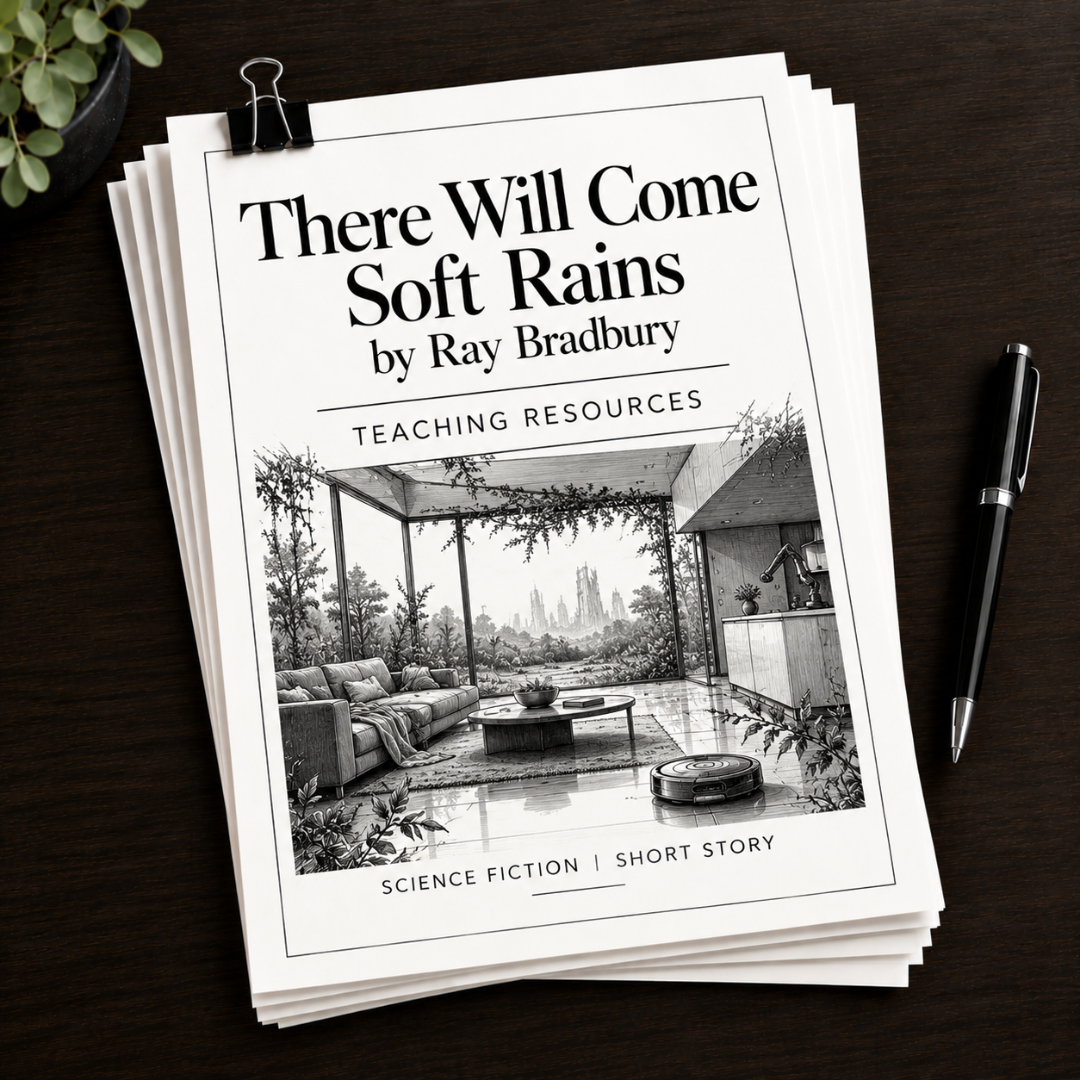
Teach There Will Come Soft Rains with minimal prep.
If you’re teaching There Will Come Soft Rains by Ray Bradbury, you don’t need to spend hours creating short story analysis activities, discussion questions, essay tasks, creative writing prompts and classroom resources from scratch.
This comprehensive There Will Come Soft Rains teaching resources bundle brings together a varied collection of ready-to-use activities designed to take students from their first exploration of Bradbury’s haunting science fiction story to deeper, more confident independent analysis.
Use the resources across a sequence of lessons or choose individual activities to complement your existing teaching. Students can explore Bradbury’s presentation of technology, automation, artificial intelligence, nuclear warfare, human extinction, loneliness, nature, environmental destruction and the dangers of technological dependence, while examining how his choices of personification, symbolism, imagery, irony, foreshadowing, setting, atmosphere and narrative structure contribute to the story’s unsettling portrayal of a world without humanity.
Designed for secondary English, English Language Arts (ELA) and English Literature, the bundle can be used flexibly for whole-class teaching, paired and group discussion, independent learning, homework, revision and creative writing.
Why this works
This is not simply a collection of disconnected worksheets. The bundle combines close reading, literary analysis, discussion, debate, extended writing, creative response and engaging review activities, giving students multiple ways to explore Bradbury’s story while developing increasingly independent interpretations.
Supports close reading and detailed short story analysis
Encourages active discussion, debate and critical interpretation
Develops students’ ability to support ideas with textual evidence
Combines analytical, creative and visual approaches to literature
Explores the relationship between technology, humanity, nature and environmental destruction
Encourages students to consider the consequences of nuclear warfare and technological dependence
Supports analysis of personification, symbolism, imagery, irony, foreshadowing, setting, tone, atmosphere and narrative structure
Investigates the significance of the automated house as the story’s central focus
Encourages students to examine the contrast between mechanical routine and human absence
Explores the relationship between Bradbury’s story and Sara Teasdale’s poem There Will Come Soft Rains
Includes engaging review activities such as Bingo, a crossword and word search
Develops descriptive writing through illustrated prompts and sensory worksheets
Suitable for paired, group, whole-class and independent learning
Provides flexible activities for lessons, homework, revision and extension work
Encourages students to consider the continuing relevance of Bradbury’s warnings about technology, warfare and humanity’s relationship with nature
What’s included
Short Story Analysis Task Cards exploring plot and structure, narrative perspective, themes, language, imagery, symbolism, personification, irony, setting, atmosphere and Bradbury’s wider messages
Essay Questions encouraging detailed analytical responses to Bradbury’s presentation of technology, nuclear destruction, human absence, nature, personification, symbolism and the story’s haunting conclusion
Creative Writing Prompts encouraging students to develop original narratives inspired by the story’s futuristic technology, abandoned environments, automated systems and dystopian ideas
Creative Classroom Tasks offering imaginative ways to explore the story through independent and collaborative responses
Roll the Dice Discussion Board, available in A4 and A3 formats, providing engaging questions for paired, small-group and whole-class discussion
Silent Debate Questions encouraging students to develop, justify and challenge interpretations of Bradbury’s themes, symbolism and messages
20 Illustrated Picture Prompts inspired by the story’s abandoned settings, mechanical routines, haunting atmosphere and post-apocalyptic imagery
20 Five Senses Descriptive Writing Worksheets accompanying the picture prompts and helping students develop vivid, sensory descriptions
There Will Come Soft Rains Bingo Review Game, including printable Bingo cards and a calling sheet for engaging classroom revision
There Will Come Soft Rains Crossword reinforcing key vocabulary, events, symbols and ideas from the story
There Will Come Soft Rains Word Search providing an accessible vocabulary and comprehension review activity
20 There Will Come Soft Rains Coloring Pages featuring detailed illustrations of the automated house, mechanical servants, ruined city, important story scenes and six literary quotation designs
Teacher Instructions for the Roll the Dice and Silent Debate activities, making both resources straightforward to implement
How you can use it
Introduce There Will Come Soft Rains and develop students’ initial responses to Bradbury’s haunting science fiction story
Explore the conventions of science fiction, dystopian fiction and post-apocalyptic literature
Examine the futuristic automated house and its ability to continue functioning without human occupants
Analyse how Bradbury presents technology as sophisticated, efficient and ultimately powerless
Investigate the significance of the house’s daily routine, including its automated announcements, breakfast preparation and cleaning systems
Explore the contrast between the immaculate house and the devastated city surrounding it
Analyse the significance of the silhouettes preserved on the exterior wall and what they reveal about the fate of the family
Examine Bradbury’s indirect presentation of nuclear warfare and human extinction
Investigate the symbolism of the clocks and the relentless passage of time
Explore how Bradbury uses personification to transform the automated house into an apparently living character
Analyse the significance of the returning family dog and the contrast between living creatures and mechanical systems
Examine the mechanical nursery and its artificial recreation of the natural world
Explore the relationship between Sara Teasdale’s poem and Bradbury’s short story, considering their shared imagery and contrasting contexts
Analyse how Bradbury uses sensory imagery to create an unsettling atmosphere in an otherwise ordinary domestic setting
Investigate the significance of the house’s elaborate mechanical servants and their inability to recognise the absence of humanity
Explore how the fire transforms the house from an apparently indestructible technological achievement into a vulnerable structure
Analyse the significance of the house’s desperate attempts to extinguish the fire
Examine the use of violent imagery, personification and dramatic language during the destruction of the house
Discuss whether the house should be considered the story’s central character
Debate whether Bradbury presents technology as dangerous in itself or as dangerous when humanity becomes overly dependent upon it
Explore the irony of a house designed to protect and serve people continuing to function after those people have disappeared
Investigate the significance of the story’s title and its connection to the endurance of nature
Analyse the final image of the surviving wall continuing to announce the date
Consider the symbolic significance of fire, rain, clocks, mechanical animals, the ruined city and the surviving wall
Examine how Bradbury structures the story around the passage of a single day
Explore how the ending reinforces the story’s themes of human fragility and technological limitations
Consider Bradbury’s warnings in relation to smart homes, artificial intelligence, automation, nuclear weapons and environmental concerns
Run low-prep paired, group or whole-class discussions using the Roll the Dice questions
Encourage students to debate competing interpretations through Silent Debate
Use the illustrated picture prompts to develop descriptive and sensory writing
Reinforce vocabulary and comprehension through Bingo, crossword and word search activities
Set independent analytical, creative or revision work
Develop ideas for extended analytical and essay responses
What students gain
Greater confidence analysing There Will Come Soft Rains independently
A deeper understanding of Ray Bradbury’s presentation of technology, humanity, nuclear destruction and the natural world
Stronger ability to analyse personification, symbolism, irony, imagery, setting, foreshadowing and narrative structure
Greater awareness of how science fiction can explore contemporary social, political and environmental concerns
Improved understanding of how writers create haunting, unsettling and post-apocalyptic atmospheres
Experience developing and defending interpretations through discussion and debate
Greater confidence selecting and using textual evidence
Stronger analytical and extended writing skills
Improved descriptive writing through sensory and visual activities
Greater understanding of how literary texts can communicate ideas about the relationship between humanity and technology
Opportunities to explore the story through both analytical and creative thinking
Greater confidence connecting literary themes to questions about modern technology, environmental destruction and the future of humanity
Flexible enough for an entire teaching sequence
The variety of resources means the bundle can support far more than a single lesson.
Begin with introductory discussion and close reading, exploring the automated house, its daily routines, the ruined city and the mystery surrounding the absent family. Move into focused analysis of personification, symbolism, imagery, irony and Bradbury’s presentation of technology, before examining the significance of the returning dog, the mechanical nursery and the poetry-reading scene.
Students can investigate the relationship between Sara Teasdale’s poem and Bradbury’s short story, considering how both texts explore the natural world and humanity’s place within it.
Develop more challenging interpretations through Silent Debate and the Roll the Dice discussion questions, encouraging students to consider whether Bradbury’s central warning concerns technology, nuclear warfare, human arrogance or the fragility of civilisation.
Move into extended analytical responses using the essay questions, or encourage imaginative thinking through the creative writing activities. The illustrated picture prompts and Five Senses worksheets provide opportunities to strengthen descriptive writing while exploring abandoned buildings, mechanical environments and post-apocalyptic landscapes.
The 20 printable coloring pages offer an additional creative approach to studying the story’s settings, symbols and memorable quotations, making them useful for visual learning, literary enrichment, early finishers and quieter classroom activities.
Finish the unit with an engaging Bingo review game, crossword or word search, helping students revisit important vocabulary, events, literary techniques and ideas.
Teachers can select the activities that suit their class or combine them to create a broader There Will Come Soft Rains teaching sequence.
Download Now
Download the complete There Will Come Soft Rains by Ray Bradbury Teaching Resources Bundle and start using it immediately, from first reading and classroom discussion through to detailed short story analysis, independent interpretation, creative writing and extended analytical responses.
Digital download: Printable PDF resources. No physical product will be shipped.
1. Time-Saving There Will Come Soft Rains Teaching Resources Bundle
Want to teach There Will Come Soft Rains without spending hours planning, preparing and creating resources?
Our new There Will Come Soft Rains Teaching Resources Bundle brings together a comprehensive collection of printable activities for just £5, helping students move beyond basic comprehension towards confident literary analysis, critical discussion and creative interpretation.
Designed for secondary English, KS3, KS4 and ELA classrooms, the bundle explores Bradbury’s presentation of technology, automation, nuclear destruction, human extinction, nature and the fragility of civilisation, while developing students’ understanding of personification, symbolism, imagery, irony and narrative structure.
◆ Literary analysis task cards and essay questions develop close reading, critical interpretation and evidence-based analytical writing.
◆ Roll the Dice discussion boards and Silent Debate activities encourage independent thinking, collaborative learning and thoughtful exploration of Bradbury’s warnings about humanity and technology.
◆ Creative writing prompts and classroom tasks inspire imaginative responses to the story’s post-apocalyptic setting, mechanical routines and haunting themes.
◆ 20 illustrated picture prompts and accompanying Five Senses worksheets help students develop atmospheric descriptions, sensory imagery and original narrative ideas.
◆ 20 printable colouring pages bring the automated house, ruined city, mechanical servants, important symbols and memorable quotations to life through creative visual engagement.
◆ Bingo, crossword and word search activities provide engaging, low-prep opportunities to revisit important vocabulary, events, themes and literary techniques.
Whether you're planning an entire teaching sequence, preparing a revision lesson or looking for meaningful independent activities, this ready-to-use Ray Bradbury bundle gives you the flexibility to teach the story in greater depth while saving valuable preparation time.
Explore the Complete There Will Come Soft Rains Teaching Bundle – Just £5
2. Tension and Structure
Bradbury builds tension through repetition and gradual disruption, moving from controlled routine to chaotic collapse.
◆ Repetitive routines establish stability and predictability
◆ Absence of humans creates underlying unease
◆ The dog’s death introduces emotional disruption
◆ The fire escalates rapidly, breaking the illusion of control
3. Symbolism Focus
The house acts as a central symbol of technology continuing without purpose or awareness.
◆ Represents routine and mechanisation of daily life
◆ Highlights absence through continued activity
◆ Contrasts control with vulnerability during the fire
◆ Reinforces the idea of systems without meaning
4. Creative Writing Extension
Have students write a short narrative imagining a world that continues after human disappearance, focusing on atmosphere, setting, and symbolic detail.
We also have creative writing prompts based on There Will Come Soft Rains available here.
If you’re looking for more inspiration, explore the Sci-Fi Writing Hub or browse a wide range of prompts in the Creative Writing Archive.
Go Deeper into There Will Come Soft Rains
Bradbury’s story opens into wider explorations of technology, human absence, and the consequences of progress, making it ideal for comparison with texts that question control, systems, and survival.
For further teaching ideas and comparisons, explore Best Bradbury for the Classroom and Using Black Mirror to Teach Bradbury to extend these ideas across different forms and contexts.
◆ The Veldt by Ray Bradbury — explores technology, parenting, and emotional absence, highlighting systems that begin to replace human relationships
◆ The Pedestrian by Ray Bradbury — examines isolation, surveillance, and conformity, offering a different perspective on individuals within controlled systems
◆ The Last Night of the World by Ray Bradbury — reflects on acceptance and quiet apocalypse, linking to themes of inevitability and routine
◆ There Will Come Soft Rains by Sara Teasdale — reinforces the idea of nature’s indifference to human existence, deepening the story’s central message
◆ The Road by Cormac McCarthy — explores post-apocalyptic survival and human fragility, offering a more human-centred contrast
◆ The Machine Stops by E. M. Forster — critiques overdependence on technology, linking closely to Bradbury’s warning
Together, these texts deepen understanding of how systems, technology, and human choices shape (and sometimes erase) civilisation, reinforcing the story’s central concerns.
Final Thoughts
There Will Come Soft Rains endures as one of Bradbury’s most haunting and quietly devastating stories because it removes humanity entirely and asks what is left behind. Through its depiction of an automated house continuing its routines in an empty world, the story exposes the fragility of civilisation, memory, and human presence, revealing how quickly meaning disappears when people are gone.
Its lasting impact lies in its relevance. In an age defined by rapid technological advancement and global uncertainty, Bradbury’s warning about progress without purpose feels increasingly urgent. The story lingers not because of dramatic action, but because of its stillness—its repetition, its absence, and its refusal to resolve. What remains is a world that continues without us, reminding readers that while systems may endure, human life—and the meaning it creates—is far more fragile. For more Ray Bradbury analysis, visit the Ray Bradbury Hub, or continue exploring related texts in the Literature Library.
Choose Your Next Text