Notes from the Inkpot
Writing, teaching, creating - one ink-stained idea at a time.




May by Christina Rossetti: Summary, Themes, Symbolism & Analysis
Christina Rossetti’s May reflects on the fleeting nature of youth and happiness through the lens of memory. The speaker recalls a bright spring day but admits they cannot fully explain what happened during that moment. Instead of describing the event itself, the poem focuses on the surrounding natural imagery—flowers not yet blooming, eggs waiting to hatch, and birds still paired with their mates. These details evoke a world poised at the beginning of growth, symbolising a time of youthful possibility and emotional promise. However, the second stanza reveals that the moment has already passed. The speaker reflects that the experience disappeared “with sunny May,” suggesting that joy and vitality fade as naturally as the seasons change. The poem ends with a stark contrast between the warmth of remembered spring and the speaker’s present state of being “old, and cold, and gray.” Through this movement from vivid recollection to reflective distance, Rossetti captures the bittersweet awareness that life’s sweetest moments often become most powerful only after they have already slipped away.
Christina Rossetti Essay Questions for Key Poems: Remember, After Death, Goblin Market & More
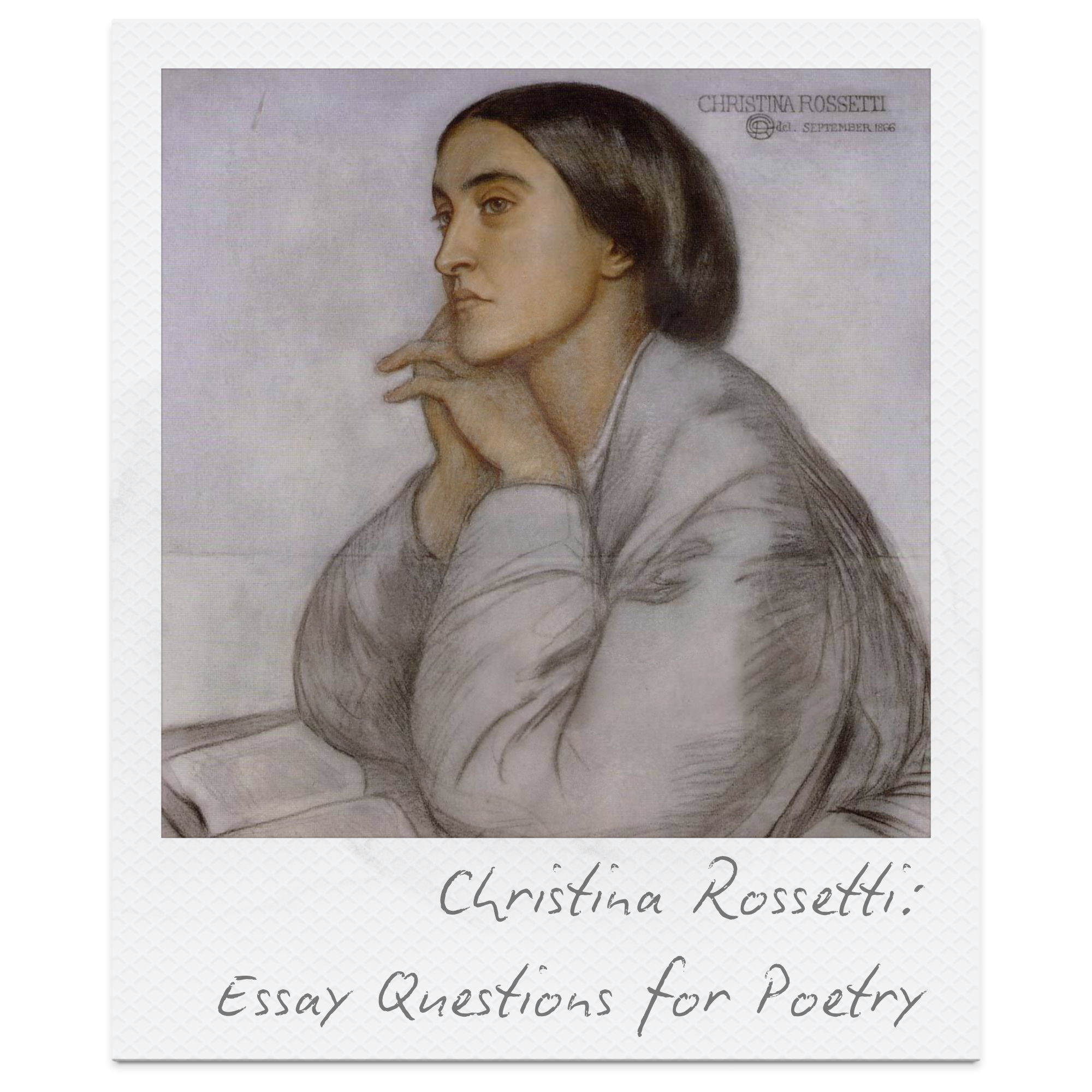
This collection of Christina Rossetti essay questions is designed to help students explore the themes, imagery, and ideas that shape Rossetti’s poetry. The questions cover a wide range of poems, encouraging close reading and thoughtful interpretation of topics such as love, faith, memory, temptation, and spiritual struggle. Each section focuses on a specific poem and offers prompts suitable for class discussion, essay planning, and exam preparation. The questions are suitable for GCSE, IGCSE, A Level, and IB literature courses, and can be adapted for different levels of study. Teachers can use them for essay practice, revision activities, silent debates, or shared writing tasks, helping students develop stronger analytical responses to Rossetti’s work while gaining confidence in literary essay writing.