Ruin by Jacob Polley: Summary, Themes & Analysis
Ruin by Jacob Polley is a powerful meditation on time, impermanence, human achievement, memory, and the enduring power of nature. Through vivid imagery, allusion, symbolism, and richly textured language, Polley reimagines an ancient Anglo-Saxon poem to explore how even the greatest civilisations eventually decay. Moving between past splendour and present desolation, the poem invites readers to reflect on the fragility of human ambition and the ways in which history survives only in fragments, questions, and imagination. If you are studying or teaching Songs of Ourselves Volume 3 for CIE IGCSE Literature in English (0475) Paper 1 (2028–2030), explore every poem in depth in the Songs of Ourselves Volume 3 Hub, or discover a wider range of texts in the Literature Library.

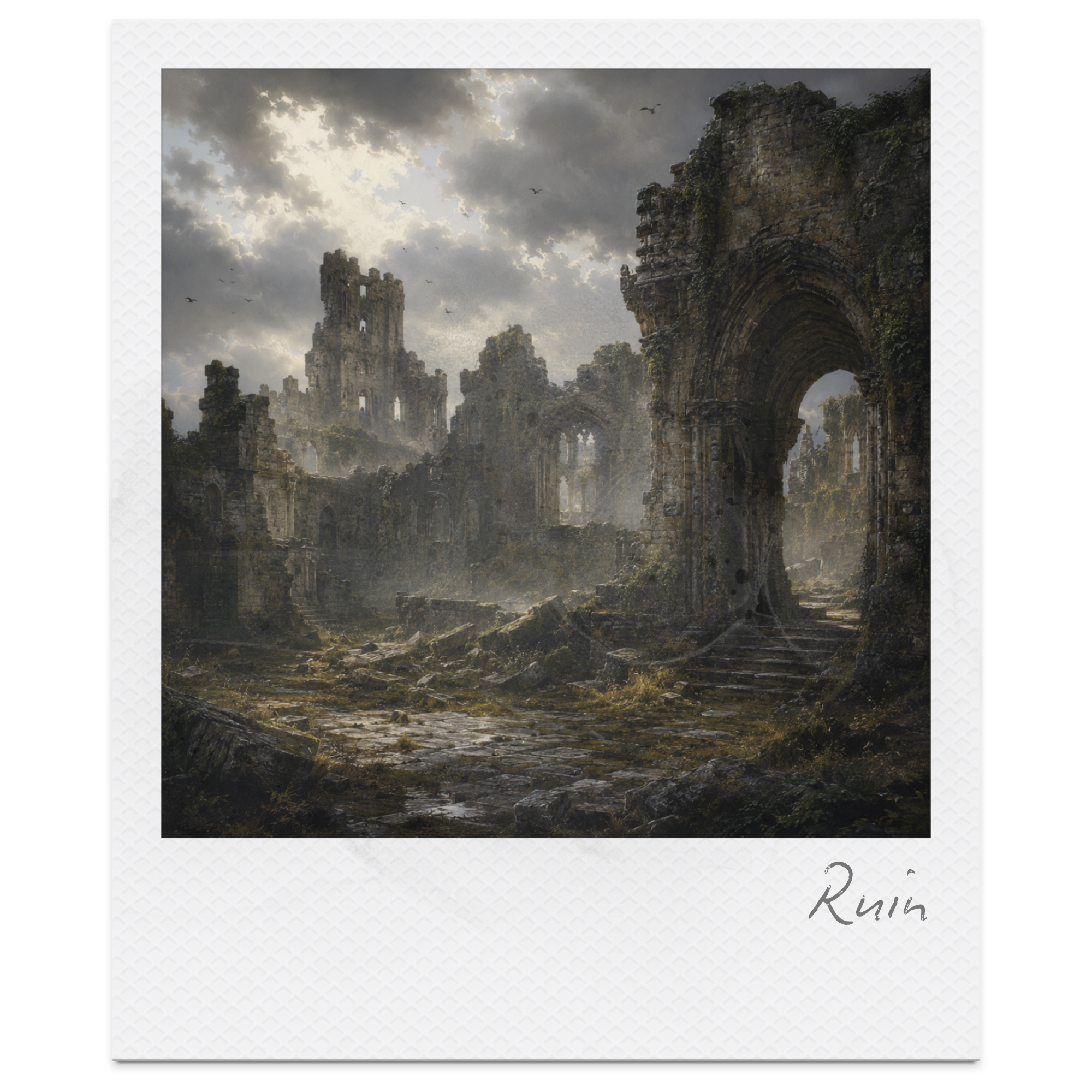
Context of Ruin
Jacob Polley (born 1975) is a contemporary British poet whose work frequently explores history, landscape, memory, and the traces that the past leaves behind in the present. Known for his rich, image-filled language and fascination with Britain's literary and historical inheritance, Polley often revisits older texts and traditions, using them to ask fresh questions about identity, time, and human experience. His poetry combines modern perspectives with echoes of earlier voices, creating conversations across centuries.
Published in 2012 as part of his collection The Havocs, Ruin is subtitled "after the Anglo-Saxon," signalling that it is not a direct translation but a creative reimagining of the Old English elegy The Ruin, preserved in the Exeter Book. The original poem reflects on the remains of a once-great Roman city—widely believed to be Bath—contrasting its former splendour with its present decay. Polley retains this central idea while reshaping it in a contemporary poetic voice.
Like the Anglo-Saxon poem, Ruin belongs to the long literary tradition of the elegy, reflecting on the passage of time and the inevitable decline of even the greatest civilisations. However, rather than simply mourning the past, Polley expands the original by using vivid modern language and fragmented images to emphasise how history survives only in traces, fragments, and acts of imagination. His version highlights not only physical destruction but also the disappearance of individual lives, skills, and communities.
Understanding this dialogue between past and present is central to interpreting the poem. Polley invites modern readers to experience the same sense of wonder felt by the Anglo-Saxon poet while also recognising that every civilisation—even one that appears permanent—is vulnerable to time, disease, war, and nature. In doing so, Ruin becomes both a tribute to the original poem and a timeless meditation on the fragility of human achievement.
Ruin: At a Glance
Form: A free verse narrative elegy, inspired by the Old English poem The Ruin, using flowing syntax and dense imagery to move between the remnants of the present and the imagined grandeur of the past.
Mood: Reflective, elegiac, awe-filled, and increasingly melancholic.
Central tension: The poem contrasts the enduring achievements of human civilisation with the inevitable forces of time, decay, disease, and nature, questioning whether anything humanity creates can truly last.
Core themes: Time, impermanence, memory, history, human achievement, civilisation, loss, nature, and the transience of power.
One-sentence meaning: Through vivid imagery, allusion, symbolism, and a fragmented movement between past and present, Jacob Polley reflects on the rise and fall of civilisation, suggesting that although human lives and empires inevitably disappear, their stories continue to survive in the ruins they leave behind.
Quick Summary of Ruin
The poem begins by describing the remains of a once-magnificent settlement, where crumbling walls, ruined towers, and scattered bricks hint at extraordinary craftsmanship now destroyed by time. As the speaker contemplates the abandoned site, they imagine the skilled builders, labourers, and craftspeople who once created it, reflecting on how their knowledge and achievements have disappeared with successive generations. Although the physical structures have endured for a time, even they have gradually been worn down by weather, neglect, and the passing of history.
As the poem develops, the speaker reconstructs the city's former vitality, imagining bustling halls, decorated buildings, warm baths, flowing water, and communities filled with celebration and prosperity. However, this vision is abruptly interrupted by the arrival of plague, which destroys both the people and their civilisation. The poem then returns to the silent ruins of the present, where birds occupy the abandoned spaces once filled with human life. In its closing lines, Polley reflects on the contrast between the city's former grandeur and its present desolation, suggesting that while human lives, power, and achievements are ultimately temporary, the ruins themselves continue to preserve fragments of memory and invite future generations to imagine the world that has been lost.
Title, Form, Structure, and Metre
Jacob Polley uses title, form, structure, and rhythmic movement to reinforce the poem's exploration of time, impermanence, and the rise and fall of civilisation. While inspired by an Old English elegy, Polley adopts a modern poetic form whose flowing syntax and shifting focus mirror the fragmented nature of history itself.
Title
The title, Ruin, is deliberately simple yet rich in meaning. At its most literal, it refers to the remains of a once-great settlement whose buildings have been broken down by time. However, the singular noun also encourages readers to think beyond one physical location. "Ruin" comes to represent the inevitable fate of all human achievement, reminding us that no civilisation, however powerful or sophisticated, is permanent.
The title also echoes the Old English poem that inspired Polley's work. By retaining its name, Polley immediately places his poem within a literary tradition stretching back over a thousand years. At the same time, his modern retelling demonstrates that questions about history, memory, and impermanence remain just as relevant today, suggesting that every generation encounters its own ruins and asks the same questions about those who came before.
Form and Structure
Ruin is written in free verse, allowing Polley to move fluidly between description, reflection, and imagined reconstruction. Without the constraints of a fixed rhyme scheme or regular stanza pattern, the poem unfolds like an act of archaeological discovery, with memories of the past emerging gradually from the fragments that remain.
Although presented as one continuous stanza, the poem contains several distinct movements. It begins by observing the physical ruins before shifting to imagine the skilled builders who once created them. The focus then expands into a vivid reconstruction of the city's former prosperity before reaching a dramatic turning point with the declaration:
"What happened?"
This brief question functions as the poem's volta, interrupting the nostalgic reconstruction of the past. The answer follows almost immediately through the references to plague, transforming the poem from celebration into elegy. The final section returns to the present-day ruins, inviting readers to compare what survives with everything that has been lost.
Polley's structure repeatedly moves between present observation and imagined history, demonstrating how ruins inspire acts of reconstruction as much as remembrance. Rather than presenting history in chronological order, the poem mirrors the way people experience archaeological sites—piecing together stories from incomplete evidence.
The ending offers no restoration or resolution. Instead, the quiet statement "But all such days are gone" provides a restrained yet powerful conclusion, reinforcing the inevitability of decline while leaving readers to contemplate the cyclical rise and fall of civilisations.
Rhyme Scheme and Poetic Pattern
The poem contains no regular rhyme scheme, reflecting the broken and fragmented landscape it describes. Rather than creating predictable musical patterns, Polley relies on alliteration, assonance, consonance, and repeated sound clusters to generate rhythm and cohesion.
Old English poetry traditionally depended on alliterative verse rather than end rhyme, and Polley deliberately echoes this heritage through phrases such as "strange smiths, skilled in stone,""mindless and muddled," and "builders are broken down, bone by bone." These repeated consonant sounds create subtle links with the Anglo-Saxon original while giving the poem a distinctive, almost incantatory quality.
Metre and Rhythmic Movement
Polley does not employ a fixed metrical pattern, instead allowing the rhythm to shift according to the poem's changing focus. Many lines are long and heavily enjambed, carrying readers rapidly through detailed descriptions of architecture, craftsmanship, and destruction. This flowing movement reflects both the speaker's wandering gaze across the ruins and the accumulation of historical detail.
At key moments, however, Polley deliberately interrupts this movement. The isolated question "What happened?" forms a dramatic rhythmic pause, forcing readers to stop before confronting the devastation caused by plague. Likewise, the short concluding sentence "But all such days are gone." slows the poem's pace, replacing the earlier richness of description with quiet finality.
Rather than using regular metre to create order, Polley allows rhythmic variation, long cumulative syntax, and strategic pauses to mirror the poem's central concerns. The movement between expansive description and abrupt interruption reflects the rise, flourishing, and eventual collapse of civilisation itself, making the poem's structure an integral part of its meaning.
The Speaker in Ruin
The speaker in Ruin is an observant and reflective voice who stands before the remains of a once-great civilisation, attempting to reconstruct its history from the fragments that survive. Although the speaker is not identified as Jacob Polley, the voice combines the roles of historian, archaeologist, and storyteller, moving between careful observation of the present ruins and imaginative recreation of the lives once lived there. This shifting perspective allows the poem to bridge the gap between physical evidence and human memory, demonstrating how history is pieced together through both fact and imagination.
The speaker's tone develops throughout the poem. It begins with wonder and admiration for the extraordinary craftsmanship evident in the surviving walls and buildings, before becoming increasingly elegiac as attention turns to the disappearance of the people who created them. The rhetorical question "What happened?" marks a significant emotional shift, introducing shock and sorrow as the speaker confronts the devastating effects of plague and the collapse of the settlement. By the poem's conclusion, the voice becomes quietly philosophical, reflecting not only on the fate of one forgotten city but on the impermanence of all human achievement. Through this thoughtful and questioning perspective, Polley encourages readers to recognise that while civilisations inevitably decline, the traces they leave behind continue to inspire curiosity, remembrance, and acts of imaginative reconstruction.
Line-by-Line Analysis of Ruin
Jacob Polley structures Ruin as a continuous meditation rather than dividing it into separate stanzas, allowing ideas, memories, and images to flow into one another like an unfolding act of archaeological discovery. Through vivid imagery, allusion, symbolism, and shifting perspectives between the present and the imagined past, the poem gradually reconstructs a lost civilisation before confronting its inevitable destruction. Analysing the poem in carefully chosen sections reveals how Polley builds his exploration of time, memory, human achievement, and impermanence, showing how fragments of the past continue to shape our understanding of history.
Lines 1–5: Wondering at a Lost Civilisation
The poem opens with a tone of immediate wonder and admiration as the speaker encounters the remains of an extraordinary civilisation. The exclamation "What walls and gables, wonders still of workmanship" echoes the language of the original Anglo-Saxon poem, immediately emphasising both the impressive scale of the ruins and the remarkable skill of those who created them. The repeated alliteration of "w" sounds gives the opening a resonant, almost ceremonial quality, while the noun "workmanship" shifts attention away from rulers or warriors towards the anonymous craftsmen whose labour shaped the city.
The following line, "Whoever's stronghold this was, havoc's jumbled it," introduces one of the poem's central contrasts between human achievement and destruction. The uncertainty of "Whoever's" suggests that the identity of the builders has already been lost to history, while the personification of "havoc" presents destruction as an active force that has violently dismantled what people once believed would endure. The harsh verb "jumbled" implies chaotic ruin rather than gradual decay, creating an immediate sense of irreparable loss.
Polley intensifies this destruction through the cumulative description "beyond all mending, uprooting towers, rusting together tools." The sequence of participles creates relentless momentum, illustrating multiple forms of decay occurring simultaneously. Towers that once symbolised strength have been "uprooted," while abandoned tools have fused together through corrosion. These images suggest that not only buildings but also the knowledge and industries that created them have disappeared.
Attention then shifts from destruction back to creation with the phrase "What was built by strange smiths, skilled in stone." The alliteration of "strange smiths, skilled in stone" deliberately echoes the sound patterns of Old English poetry, paying homage to the poem's Anglo-Saxon origins. The adjective "strange" carries a double meaning: the builders seem unfamiliar because they belong to a distant past, yet their craftsmanship remains extraordinary. Rather than presenting them as mythical figures, Polley emphasises their expertise, celebrating the ingenuity of ordinary workers whose achievements have outlasted their names.
The section concludes with the powerful image of buildings "burst, underdug, eaten down by age," before ending with "weird bricks / litter this wasteground." The three violent verbs chart different forms of destruction—sudden collapse, gradual undermining, and slow erosion—demonstrating that civilisation is vulnerable to many forces over time. Meanwhile, the adjective "weird" recalls its Old English meaning of fate or destiny as well as its modern sense of strangeness, subtly linking the ruined city to the inevitable fate awaiting every civilisation. The ordinary noun "bricks", scattered across a "wasteground," reduces magnificent architecture to broken fragments, establishing the poem's central meditation on the impermanence of even humanity's greatest achievements.
Lines 6–12: Forgotten Builders and the Endurance of Stone
Having established the ruined landscape, Polley shifts his attention from the buildings themselves to the people who created them. The rhetorical question "And what of the wrights / and hammer-men, the mortar-mixers and heavers / of slab?" broadens the poem's focus beyond kings and warriors to celebrate the skilled labourers whose work made civilisation possible. The listing of specialised trades creates a vivid impression of a thriving community built upon cooperation and craftsmanship, while the use of compound nouns deliberately echoes the vocabulary of Old English poetry, strengthening the poem's connection with its Anglo-Saxon source.
The question itself is significant because it remains unanswered. Rather than simply wondering who built the city, the speaker asks what became of them. This shift from architecture to humanity reminds readers that every monument represents countless individual lives that history has largely forgotten. Polley therefore transforms anonymous workers into the emotional centre of the poem, suggesting that ordinary people are just as worthy of remembrance as rulers.
The phrase "A long time laid off, fast in the earth" introduces a powerful double meaning. On one level, "laid off" refers to workers whose labour has ended because civilisation itself has collapsed. More profoundly, it functions as a euphemism for death, while "fast in the earth" evokes burial and permanence beneath the ground. The builders who once shaped the city have themselves become part of the landscape, reinforcing the poem's meditation on mortality and the cyclical relationship between humanity and the earth.
Polley deepens the sense of historical loss through the repetition "while their sons passed, and the sons of their sons / knew no like work." This emphasis on successive generations highlights not only the disappearance of individuals but also the extinction of knowledge and craftsmanship. The phrase "knew no like work" suggests that the remarkable skills required to build such structures have vanished completely, making the ruins evidence not only of physical destruction but of forgotten human achievement.
The poem then introduces an important contrast through the conjunction "But":
"But these walls withstood / mosses and snows, the fall of kings, peace's / indifferent wear by rain and rubbing kine."
While the builders have disappeared, the walls have survived centuries of natural and political change. The verb "withstood" emphasises resilience, while the long list of destructive forces broadens the poem's timescale enormously. The walls have endured weather, dynastic change, and even the slow erosion of peaceful everyday life. Particularly striking is the phrase "peace's indifferent wear," which personifies peace as something quietly destructive. Rather than depicting only dramatic catastrophes, Polley reminds readers that ordinary time can be just as powerful as war in eroding even the strongest human achievements.
The final image of "rain and rubbing kine" reinforces this quiet inevitability. The gentle, repetitive action of cattle brushing against ancient walls contrasts sharply with the city's former grandeur, illustrating how nature and everyday life continue long after civilisations have vanished. Polley therefore suggests that history is not erased only by spectacular disasters but also by the patient, indifferent passage of time, making the survival of the ruins themselves all the more remarkable.
Lines 13–18: Reconstructing a Flourishing City
Having reflected on the anonymous builders, the speaker begins to imaginatively reconstruct the civilisation they created. Through vivid imagery, allusion, and sensory detail, Polley transforms the silent ruins into a place once filled with colour, movement, and communal life. This section demonstrates how ruins invite acts of imagination, allowing fragments of the present to revive visions of the past.
The declaration "Magogs raised them" introduces a striking allusion. In medieval and British legend, Gog and Magog were legendary giants associated with immense strength and the founding of ancient cities. By suggesting that "Magogs" built the walls, Polley captures the awe inspired by such extraordinary architecture. The reference is not intended literally; instead, it conveys how later generations struggled to comprehend the engineering achievements of the past, imagining that only giants could have created them. The following statement, "Their wit matched their might," balances physical power with intelligence, celebrating the builders' ingenuity as well as their labour. Civilisation, Polley suggests, is founded not simply on strength but on creativity, craftsmanship, and knowledge.
The poem then shifts from architecture to the people who once inhabited it. "Their great halls gawped" employs vivid personification, making the buildings themselves appear alive. The unusual verb "gawped" evokes wide-open mouths, suggesting both the vast scale of the halls and the sense that the ruins continue silently witnessing history. Even in decay, the buildings retain a powerful presence.
Polley enriches this imagined reconstruction through the decorative details of "Their tile floors gleamed / with muscle girls and monster fish." These images almost certainly refer to elaborate Roman mosaics, whose mythological and human figures decorated public buildings and bathhouses. The juxtaposition of "muscle girls" and "monster fish" creates a vivid sense of artistic richness while reminding readers that this civilisation valued beauty alongside practicality. Through this imagery, the speaker moves beyond ruined stone to recover something of the city's imagination and culture.
The lines "Here / springs were housed, and happiness found haven / among men making merry" complete the transformation from ruin to thriving community. The alliteration of "happiness found haven" creates a moment of warmth and harmony, suggesting that the city was once a place of prosperity, comfort, and social connection. The reference to springs recalls the Roman baths that likely inspired the original Anglo-Saxon poem, reinforcing the historical setting while symbolising life, renewal, and abundance.
The section concludes with one of the poem's most striking images: "their shadows merging, / nimble as a change of mind, massive on the inner walls." Here, Polley imagines the flickering shadows of people gathered together in celebration. The simile "nimble as a change of mind" conveys the fleeting movement of firelight and human activity, while the contrasting adjective "massive" reminds readers that these ordinary moments left enduring impressions upon the great halls. The interplay between light and shadow symbolises the fragile nature of human life itself—momentary and constantly shifting—yet capable of leaving lasting traces upon history. Through this richly imagined reconstruction, Polley ensures that the ruins are no longer empty stones but echoes of a once-vibrant civilisation whose humanity briefly lives again in the speaker's imagination.
Lines 19–24: Plague and the Collapse of Civilisation
The poem reaches its dramatic turning point with the abrupt question "What happened?" After the speaker has carefully reconstructed the city's former magnificence, this short rhetorical question interrupts the flowing narrative and forces both speaker and reader to confront the cause of its destruction. Its brevity creates a striking pause in the poem's rhythm, emphasising that even the greatest civilisations can disappear so completely that only questions remain.
The answer is delivered with devastating simplicity: "Ruin already had root. Plague came, within / and without." The metaphor of "Ruin" taking "root" personifies destruction as something organic that begins growing long before collapse becomes visible. Rather than presenting the city's downfall as a single catastrophic event, Polley suggests that decline is gradual and often invisible until it is too late. The phrase "within and without" expands this idea further. Literally, it may refer to disease spreading both inside and outside the city walls, but symbolically it suggests that civilisations are vulnerable to threats from both internal weaknesses and external forces. The collapse is therefore presented as inevitable rather than accidental.
The declaration "No one, however high, whatever wit, / was spared" reinforces the universality of mortality. Through parallelism and repetition, Polley removes distinctions of status, power, and intelligence, demonstrating that plague acts as the great equaliser. Neither political authority ("however high") nor human ingenuity ("whatever wit") can overcome death. This universalising statement broadens the poem beyond one historical city, suggesting that all societies remain vulnerable despite their achievements.
The poem then shifts from describing ruined buildings to imagining the final moments of those who lived there. "Here, wide open to the wind, is where / breath was fought for, where men raved." The repeated word "where" creates an almost documentary quality, anchoring human suffering within the physical landscape before the speaker. The phrase "breath was fought for" vividly conveys the agony of plague through understated but powerful imagery, while "men raved" captures both the delirium of illness and the complete collapse of social order. The city that had previously been filled with "happiness" and "men making merry" has become a place of desperate struggle and death.
Polley concludes this movement with one of the poem's most beautiful contrasts:
"Now birdsong / embroiders space among the rubble of what stood."
The adverb "Now" firmly returns the reader to the present, emphasising the immense passage of time. The delicate metaphor "birdsong embroiders space" suggests that nature has quietly reclaimed the abandoned city, stitching life back into places once dominated by human civilisation. The verb "embroiders" is particularly significant. Embroidery is a slow, careful act of creation, sharply contrasting with the violent destruction described earlier. Nature does not mourn the city or attempt to rebuild it; instead, it creates something entirely new. This image encapsulates one of the poem's central ideas: while human achievements are temporary, the natural world continues with quiet indifference, gradually transforming sites of tragedy into places of unexpected beauty.
Lines 25–29: The Silent Witnesses of the Past
Following the devastation of plague, the speaker returns to the ruins themselves, reflecting on how the surviving fragments continue to preserve traces of the civilisation that has disappeared. Through contrasting imagery, alliteration, and metaphor, Polley suggests that although people perish, the physical remains of their world continue to stimulate memory and imagination.
The line "And the builders are broken down, bone by bone," creates a powerful parallel between people and architecture. Earlier in the poem, the walls and towers had been described as collapsing; now the same language is applied to the builders themselves. The alliterative repetition of "builders," "broken," and "bone by bone" creates a slow, heavy rhythm that mirrors the gradual process of decay. The phrase "bone by bone" emphasises that human mortality is as inevitable as the erosion of stone, reinforcing the poem's central idea that both civilisations and the people who create them ultimately return to the earth.
Polley deepens this image with the bleak description "mindless and muddled together in the bottomless muck." The repeated alliteration of "m" sounds gives the line a thick, heavy quality that reflects the physical weight of the earth itself. The adjective "mindless" suggests not only death but the complete disappearance of individual identity, while "muddled together" implies that distinctions of rank, occupation, and achievement have been erased. In death, all people become equal, absorbed into the same landscape that eventually consumes every civilisation.
Yet the poem refuses to allow complete oblivion. The phrase "Half-recalled by these grim, rain-collecting courts" introduces the idea that the ruins continue to preserve incomplete memories of the past. The compound adjective "rain-collecting" vividly illustrates how nature has reclaimed the abandoned architecture, while "Half-recalled" acknowledges that history can never be fully recovered. Instead, the surviving buildings function as fragments that prompt imagination rather than certainty.
This process of reconstruction continues through the carefully observed details "this unshattered span of arch, this blush of broken slate." The juxtaposition of "unshattered" and "broken" captures the poem's delicate balance between survival and destruction. Some elements have astonishingly endured, while others survive only in fragments. Particularly striking is the metaphor "blush of broken slate." The noun "blush" usually suggests warmth, colour, and life, transforming the shattered stone into something unexpectedly beautiful. Even in decay, the ruins retain an aesthetic power that continues to evoke the civilisation they once supported.
Through these images, Polley shifts the poem away from simple mourning towards a more reflective understanding of history. The ruins cannot fully restore the past, but neither are they empty remains. Instead, they become silent witnesses that preserve scattered traces of human lives, allowing later generations to imagine, however imperfectly, the people and communities that once flourished there.
Lines 30–33: Recovering the City's Lost Prosperity
In the closing movement of the poem, Polley makes one final imaginative journey into the past before returning to the unavoidable reality of loss. Through luxurious imagery, sensory detail, and contrast, he reconstructs the city's prosperity one last time, ensuring that readers remember not simply its destruction but the richness of the civilisation that once existed.
The speaker imagines "those who twisted gold, empearled pins and gazed / on heaps of gems that beat and sparked." This shift from architecture to craftsmanship recalls the poem's earlier celebration of the builders, but now attention turns to artisans and the objects they created. The verbs "twisted" and "empearled" emphasise intricate human skill, while the precious materials symbolise wealth, refinement, and artistic achievement. Rather than describing rulers or military power, Polley celebrates the creativity of ordinary craftspeople, suggesting that civilisation is remembered through its artistry as much as its monuments.
The image of "heaps of gems that beat and sparked" is particularly striking. The personification of the gems makes them appear almost alive, their light pulsing like a heartbeat. This suggests that the city's beauty once possessed energy and vitality, creating a vivid contrast with the lifeless ruins that surround the speaker in the present. Even the language itself seems animated, allowing readers to imagine a civilisation filled with movement, colour, and brilliance.
The simple declaration "Houses were here." is one of the poem's most understated yet powerful moments. After the elaborate descriptions that precede it, the short sentence carries enormous emotional weight. Its plainness reminds readers that beyond the impressive buildings and luxurious objects were ordinary homes where families lived, worked, and built communities. Polley deliberately reduces the city to this universal human truth, encouraging readers to recognise that every lost civilisation was once simply a place where people made their lives.
The final images continue to celebrate the ingenuity of the ancient settlement. "Hot water sprang from wells and the walls held / vaults of steam and banked beds of embers, like precious stones." These details almost certainly evoke the famous Roman baths that inspired both the original Anglo-Saxon poem and Polley's adaptation. The sensory imagery of heat, steam, and glowing embers creates a vivid impression of comfort, prosperity, and sophisticated engineering. The simile "like precious stones" transforms ordinary embers into objects of beauty and value, reinforcing the idea that even practical aspects of civilisation possessed richness and wonder.
The poem ends with two short, emphatic statements: "Frost could get no grip. But all such days are gone." The personification of "Frost" suggests that the city was once capable of resisting even nature through human ingenuity. However, the abrupt conjunction "But" immediately overturns this triumph. The final sentence is deliberately restrained, avoiding dramatic language in favour of quiet certainty. Its simplicity makes it all the more devastating. No matter how advanced, prosperous, or resilient the civilisation once appeared, its achievements have ultimately succumbed to time. By ending in this understated way, Polley leaves readers with the poem's central truth: human greatness is always temporary, but the traces it leaves behind continue to inspire wonder, remembrance, and reflection across generations.
Lines 34–35: The Final Triumph of Time
The poem closes with two short, memorable statements that bring together its central ideas about impermanence, human achievement, and the unstoppable passage of time. After reconstructing the city's former magnificence, Polley ends not with dramatic destruction but with a quiet acknowledgement that every civilisation, however advanced, must eventually disappear.
The line "Frost could get no grip." personifies frost as an attacking force attempting to seize the city. Earlier descriptions of the hot springs, steam, and embers have established a settlement capable of overcoming even the harshest elements. The idiom "get no grip" suggests complete mastery over nature, implying that the city's engineering and ingenuity once created warmth, comfort, and security despite the surrounding climate. This brief statement therefore becomes a symbol of humanity at its most confident, demonstrating civilisation's apparent ability to conquer the natural world.
However, the abrupt conjunction "But" immediately overturns this confidence:
"But all such days are gone."
The simplicity of this final sentence makes it especially powerful. Unlike the rich imagery and elaborate descriptions that dominate the rest of the poem, Polley strips the language back to a plain declarative statement. The adjective "all" broadens the poem's significance beyond one settlement, suggesting that every period of prosperity, achievement, and power is ultimately temporary. Meanwhile, "such days" refers not only to the physical city but also to its community, celebrations, craftsmanship, and happiness. What has been lost is an entire way of life.
The finality of "are gone" offers no hope of restoration. Yet Polley does not end in despair. Throughout the poem, the surviving ruins have allowed both the speaker and the reader to imaginatively recover fragments of the civilisation that once existed. Although the people, buildings, and culture have vanished, their memory endures through the stones that remain and through poetry itself. In this sense, Ruin becomes both an elegy for a lost world and a celebration of literature's ability to preserve human experience across centuries. The poem therefore ends by reminding readers that while civilisations fall, stories survive, allowing each generation to rediscover the lives hidden within the ruins of the past.
Key Quotes and Methods in Ruin
Jacob Polley fills Ruin with memorable images that trace the rise and fall of a forgotten civilisation. Through allusion, imagery, alliteration, personification, and symbolism, these quotations explore the relationship between human achievement, time, and the inevitable forces of decay.
"What walls and gables, wonders still of workmanship."
◆ Technique: Exclamatory opening; alliteration; admiration
◆ Meaning: The surviving architecture still inspires awe despite its ruined state.
◆ Purpose: Polley immediately establishes respect for the civilisation's extraordinary craftsmanship.
◆ Impact: Readers are encouraged to appreciate the scale of what has been lost before learning how it disappeared.
"havoc's jumbled it"
◆ Technique: Personification
◆ Meaning: Destruction is presented as an active force that violently dismantles civilisation.
◆ Purpose: Polley shows that human achievement is vulnerable to powerful forces beyond human control.
◆ Impact: The ruins appear chaotic rather than peacefully abandoned, emphasising the violence of history.
"strange smiths, skilled in stone"
◆ Technique: Alliteration; Old English diction
◆ Meaning: The anonymous builders are celebrated for their remarkable craftsmanship.
◆ Purpose: Polley shifts attention away from rulers towards the ordinary workers whose skill created civilisation.
◆ Impact: Readers admire the forgotten artisans while recognising how history often overlooks them.
"their sons passed, and the sons of their sons / knew no like work"
◆ Technique: Repetition; generational imagery
◆ Meaning: Both the builders and their specialised knowledge disappear over time.
◆ Purpose: Polley highlights the loss of human knowledge as well as physical buildings.
◆ Impact: The quotation reinforces the poem's concern with the fragility of civilisation itself.
"these walls withstood"
◆ Technique: Personification
◆ Meaning: The walls survive centuries of natural and political change.
◆ Purpose: Polley contrasts the endurance of architecture with the mortality of the people who built it.
◆ Impact: Readers recognise that even seemingly permanent structures survive only temporarily.
"Their wit matched their might."
◆ Technique: Parallelism; balanced syntax
◆ Meaning: Intelligence and craftsmanship are presented as equally important as physical strength.
◆ Purpose: Polley celebrates creativity and engineering rather than military power.
◆ Impact: The civilisation is remembered for its ingenuity as much as its monuments.
"What happened?"
◆ Technique: Rhetorical question
◆ Meaning: The speaker confronts the mystery behind the city's destruction.
◆ Purpose: This marks the poem's structural turning point before the revelation of plague.
◆ Impact: Readers pause alongside the speaker, heightening anticipation and emotional impact.
"Plague came, within and without."
◆ Technique: Personification; contrast
◆ Meaning: Disease destroys the civilisation from every direction.
◆ Purpose: Polley presents collapse as both internal and external, suggesting that no society is invulnerable.
◆ Impact: The line broadens the poem into a universal reflection on mortality and historical decline.
"birdsong embroiders space"
◆ Technique: Personification; metaphor
◆ Meaning: Nature gently reclaims the abandoned city.
◆ Purpose: Polley contrasts human destruction with nature's quiet renewal.
◆ Impact: Readers witness both loss and regeneration, reinforcing the cyclical movement of history.
"builders are broken down, bone by bone"
◆ Technique: Alliteration; metaphor
◆ Meaning: Human bodies decay just as buildings do.
◆ Purpose: Polley draws a direct parallel between civilisation and the people who created it.
◆ Impact: The quotation reinforces the poem's meditation on mortality and impermanence.
"Half-recalled"
◆ Technique: Fragmentation; ambiguity
◆ Meaning: History survives only in incomplete memories and physical traces.
◆ Purpose: Polley demonstrates that the past can never be fully recovered.
◆ Impact: Readers become active participants, imagining the missing pieces of the civilisation.
"But all such days are gone."
◆ Technique: Simple declarative statement; contrast
◆ Meaning: Every age of prosperity eventually comes to an end.
◆ Purpose: Polley concludes with a universal reflection on the impermanence of human achievement.
◆ Impact: The restrained final sentence leaves readers contemplating the inevitable passage of time and the enduring significance of remembering the past.
Key Techniques in Ruin
Jacob Polley combines allusion, vivid imagery, personification, alliterative sound patterns, and structural shifts to transform the remains of an ancient settlement into a meditation on time, memory, and the impermanence of civilisation. While inspired by an Anglo-Saxon elegy, the poem uses modern language to show how ruins become places where history, imagination, and the present continually interact.
◆ Extended Symbolism – The ruined city functions as the poem's central symbol. More than a collection of broken buildings, it represents the inevitable decline of all civilisations, reminding readers that even humanity's greatest achievements cannot withstand time indefinitely. At the same time, the ruins symbolise memory, preserving fragments of lives that would otherwise be forgotten.
◆ Allusion – The subtitle "after the Anglo-Saxon" immediately places the poem in conversation with the Old English elegy The Ruin. Polley also alludes to Roman Britain, particularly the city of Bath, through references to hot springs, baths, mosaics, and sophisticated engineering. The mention of "Magogs" draws on British myth, reflecting how later generations mythologised the remarkable builders of the past.
◆ Vivid Visual Imagery – Throughout the poem, Polley creates striking contrasts between splendour and decay. Images such as "tile floors gleamed,""heaps of gems that beat and sparked," and "birdsong embroiders space among the rubble" encourage readers to imagine both the city's former beauty and its present desolation. This interplay of past and present makes the loss feel immediate and emotionally powerful.
◆ Personification – Both civilisation and nature are given human qualities. "Havoc's jumbled it,""birdsong embroiders space," and "Frost could get no grip" present destruction, renewal, and the natural world as active forces. This personification suggests that history is shaped not only by people but also by powerful forces beyond human control.
◆ Alliteration and Sound Patterning – Polley deliberately echoes the sound of Old English alliterative verse through phrases such as "strange smiths, skilled in stone,""builders are broken down, bone by bone," and "mindless and muddled." These repeated consonant sounds create musicality while paying homage to the poem's Anglo-Saxon origins. The alliteration also emphasises key ideas, particularly craftsmanship, mortality, and decay.
◆ Semantic Fields – The poem draws upon several interconnected semantic fields. Vocabulary associated with construction ("walls," "wrights," "hammer-men," "mortar-mixers"), destruction ("havoc," "burst," "broken," "muck"), and nature ("mosses," "snows," "rain," "birdsong," "frost") creates an ongoing dialogue between human creativity and the natural forces that eventually reclaim every civilisation.
◆ Juxtaposition – One of the poem's defining techniques is the constant juxtaposition of past and present. Polley repeatedly places images of magnificent halls, warm baths, and joyful communities beside broken stone, abandoned buildings, and silent ruins. This contrast highlights both the extraordinary achievements of the civilisation and the inevitability of its decline.
◆ Rhetorical Question – The abrupt question "What happened?" forms the poem's structural and emotional turning point. It interrupts the speaker's imaginative reconstruction of the city and introduces the devastating explanation of plague and collapse. The question also mirrors the curiosity that ruins naturally provoke, inviting readers to become investigators of the past.
◆ Enjambment and Cumulative Syntax – Long, flowing sentences frequently cross line breaks, allowing descriptions to accumulate gradually. This continuous movement mirrors the speaker's wandering observations across the archaeological site and reflects the process of uncovering history piece by piece. The rhythm is only interrupted at key moments, making pauses such as "What happened?" especially dramatic.
◆ Contrast Between Human Achievement and Nature – Throughout the poem, Polley contrasts remarkable engineering with the quiet persistence of the natural world. Human beings construct walls, baths, mosaics, and halls, yet rain, moss, plague, birdsong, and frost ultimately reshape the landscape. This contrast reinforces the poem's central message that while civilisations rise and fall, nature continues with quiet indifference.
◆ Elegiac Tone – Inspired by the Anglo-Saxon elegiac tradition, the poem maintains a reflective, mournful tone without becoming sentimental. Rather than simply lamenting the city's destruction, Polley celebrates the ingenuity of its people while acknowledging the universal truth that time eventually overtakes every civilisation. The poem therefore becomes not only an elegy for one lost settlement but also a meditation on the transience of all human endeavour.
How the Writer Creates Meaning and Impact in Ruin
Jacob Polley creates meaning in Ruin by combining imagery, allusion, symbolism, personification, and structural contrast to explore the rise and fall of civilisation. Rather than presenting the ruined city simply as evidence of destruction, he transforms it into a powerful reminder of humanity's creativity, ambition, and vulnerability. The poem continually moves between the surviving remains of the present and the imagined vitality of the past, encouraging readers to reflect on the fragility of even the greatest human achievements.
◆ Language: Celebrating Human Ingenuity While Acknowledging Its Fragility – Polley's diction repeatedly balances admiration with loss. Words such as "workmanship," "skilled," "gleamed," and "happiness" celebrate the sophistication of the civilisation, while verbs including "jumbled," "burst," "eaten down," and "broken" chart its gradual destruction. This contrast reminds readers that remarkable human achievement is always accompanied by the possibility of decline, making the city's eventual collapse all the more poignant.
◆ Imagery: Reconstructing the Lost City – Throughout the poem, Polley uses richly detailed visual imagery to rebuild the civilisation within the reader's imagination. Images of gleaming mosaic floors, springs, great halls, gems, and vaults of steam create an impression of prosperity, warmth, and artistic accomplishment. These descriptions make the later scenes of abandonment more emotionally powerful because readers first experience the city as a thriving place filled with ordinary people rather than simply a collection of ruins.
◆ Symbolism: The Ruins as a Universal Reminder of Impermanence – The ruined settlement functions as an extended symbol for every civilisation that has risen and fallen throughout history. While the poem draws upon Roman Britain and the Anglo-Saxon elegy, Polley deliberately broadens its significance beyond one location. The crumbling walls become symbols of the inevitable decline of all human societies, while the surviving fragments represent the ways memory continues to endure despite physical destruction.
◆ Structure: Moving Between Present and Past – Rather than presenting events chronologically, Polley continually shifts between observing the ruins and imagining the world they once contained. This movement mirrors the experience of standing in an archaeological site, where physical remains invite speculation about the lives that once animated them. The rhetorical question "What happened?" marks the poem's central turning point, interrupting the nostalgic reconstruction of the city before revealing the devastating arrival of plague. This structural shift transforms admiration into mourning while reinforcing the unpredictability of history.
◆ Voice: Blending Observation with Imagination – The speaker acts simultaneously as observer, historian, and storyteller. Careful descriptions of the surviving architecture merge seamlessly with imaginative reconstructions of the city's inhabitants, demonstrating that history is understood through both evidence and interpretation. This shifting perspective encourages readers to participate in reconstructing the past themselves, making the poem an act of remembrance as well as observation.
◆ Sound: Echoing the Anglo-Saxon Tradition – Polley's frequent use of alliteration, consonance, and rhythmic repetition recalls the sound patterns of Old English poetry. Phrases such as "strange smiths, skilled in stone" and "builders are broken down, bone by bone" create a distinctive musicality while paying tribute to the poem's Anglo-Saxon source. These echoes connect modern readers with an ancient literary tradition, reinforcing the idea that questions about mortality and civilisation remain timeless.
◆ Nature as the Ultimate Survivor – One of the poem's most striking contrasts is between human civilisation and the natural world. While buildings collapse and communities disappear, moss, rain, birdsong, and frost continue their quiet, indifferent work. The delicate image of "birdsong embroiders space among the rubble" is particularly significant because it suggests that nature does not mourn humanity's achievements; instead, it patiently creates new forms of beauty. This contrast reinforces the poem's central message that nature ultimately outlasts every civilisation.
◆ The Ending: A Quiet Acceptance of Time's Power – The concluding statement, "But all such days are gone," strips away the rich imagery that has characterised the poem and replaces it with stark simplicity. This restrained ending avoids melodrama, making its emotional impact even greater. Yet the poem does not conclude in despair. By imaginatively reconstructing the city's builders, celebrations, and daily life, Polley demonstrates that although physical civilisations inevitably disappear, memory, storytelling, and poetry preserve something of their humanity. The ruins therefore become more than symbols of loss—they become enduring reminders of human creativity, resilience, and the universal cycle of rise, decline, and remembrance.
Themes in Ruin
In Ruin, Jacob Polley explores how time, memory, and history shape humanity's understanding of the past. Drawing on the Anglo-Saxon elegiac tradition, the poem reflects on the rise and fall of a once-great civilisation, using its surviving ruins to question the permanence of human achievement. Through vivid imagery, allusion, symbolism, and structural contrast, Polley suggests that while empires, communities, and individuals inevitably disappear, the traces they leave behind continue to inspire wonder, remembrance, and reflection.
Time
Time is the poem's most pervasive force, presented as something that quietly but relentlessly transforms every human creation. References to structures being "eaten down by age" and walls that have endured "the fall of kings" demonstrate that time outlasts individuals, dynasties, and even entire civilisations. Rather than depicting destruction as a single dramatic event, Polley shows that centuries of gradual change ultimately prove more powerful than any human achievement.
Impermanence
The poem repeatedly emphasises the temporary nature of human existence. Magnificent buildings, skilled craftsmen, thriving communities, and prosperous societies all eventually collapse into rubble. The final statement, "But all such days are gone," broadens this idea beyond one forgotten city, suggesting that decline is an unavoidable part of the human experience. Polley encourages readers to recognise that permanence is an illusion, no matter how impressive a civilisation may appear.
Memory
Although the city has disappeared, memory continues to survive through the fragments that remain. The ruins become physical reminders of lives that can only be "Half-recalled," requiring the speaker to reconstruct the past through imagination. Polley suggests that memory is inevitably incomplete, yet these surviving traces allow later generations to recover something of the humanity that once filled the abandoned streets and buildings.
History
Rather than presenting history as a fixed record of facts, Polley portrays it as something assembled from surviving evidence and imaginative interpretation. The speaker continually moves between observing the ruins and envisioning the civilisation that created them, demonstrating that the past can never be fully recovered. By adapting an Anglo-Saxon poem, Polley also illustrates how literature itself becomes part of history, preserving voices and perspectives across centuries.
Human Achievement
The poem celebrates the remarkable creativity and skill of ordinary people. Instead of focusing on rulers or military victories, Polley repeatedly honours the anonymous "wrights," "hammer-men," and "strange smiths, skilled in stone." Their craftsmanship transformed raw materials into extraordinary architecture, sophisticated engineering, and works of art. By foregrounding these labourers, Polley suggests that civilisation is built through collective ingenuity rather than individual power.
Civilisation
Throughout the poem, civilisation is portrayed as both magnificent and fragile. The speaker imagines bustling halls, decorated floors, hot baths, precious jewellery, and joyful communities, creating a vivid picture of a flourishing society. However, the arrival of plague demonstrates how quickly even the most advanced civilisation can disappear. Polley therefore presents civilisation as an extraordinary human accomplishment that nevertheless remains vulnerable to forces beyond human control.
Loss
Loss operates on multiple levels throughout the poem. The city itself has vanished, but so too have its builders, its customs, its knowledge, and its stories. Particularly poignant is the observation that "their sons passed, and the sons of their sons / knew no like work," which suggests that specialised skills and cultural traditions have been permanently erased. The poem therefore mourns not only physical destruction but also the disappearance of entire ways of life.
Nature
Nature is presented as an enduring force that quietly outlasts humanity. While people construct cities and monuments, moss, rain, birdsong, and frost gradually reclaim the landscape. The delicate image of "birdsong embroiders space among the rubble" contrasts sharply with earlier scenes of human activity, suggesting that nature does not grieve civilisation's collapse but simply continues its own cycles of renewal. This reinforces the poem's reminder that the natural world ultimately survives beyond even humanity's greatest achievements.
The Transience of Power
The poem questions the permanence of political, social, and material power. The walls have survived "the fall of kings," while plague spares "No one, however high." These details demonstrate that wealth, authority, and status offer no protection against mortality or the passage of time. By ending with the disappearance of an entire civilisation, Polley suggests that all power is temporary, encouraging readers to measure human greatness not by dominance or conquest but by creativity, craftsmanship, and the stories that endure long after empires have fallen.
Alternative Interpretations of Ruin
Although Ruin appears to describe the remains of a forgotten settlement, Jacob Polley deliberately leaves the poem open to multiple interpretations. Through allusion, symbolism, imagery, and structural shifts, the ruined city becomes more than an archaeological site, allowing readers to reflect on civilisation, mortality, nature, and the enduring power of storytelling itself.
Historical Interpretation: A Meditation on the Rise and Fall of Civilisations
From a historical perspective, the poem reflects on the inevitable decline of even the greatest societies. Inspired by the Old English elegy The Ruin, Polley reconstructs the grandeur of a Roman settlement before revealing how plague, time, and decay erased its achievements. The repeated emphasis on skilled builders, magnificent halls, and sophisticated engineering celebrates human accomplishment, while the eventual collapse reminds readers that every civilisation—regardless of its wealth or power—is ultimately temporary. The poem therefore becomes a warning against assuming that any empire is permanent.
Existential Interpretation: Humanity's Impermanence
An existential reading shifts the focus from the city to the human condition itself. The builders, craftsmen, and ordinary people who once filled the settlement have disappeared "bone by bone," suggesting that individual lives, like civilisations, are fleeting. Even extraordinary intelligence and achievement cannot overcome mortality, as "No one, however high, whatever wit, / was spared." In this interpretation, the ruins symbolise humanity's search for permanence in a world governed by time, encouraging readers to confront the inevitability of death while recognising the value of human creativity despite its temporary nature.
Ecocritical Interpretation: Nature's Quiet Endurance
From an ecocritical perspective, the poem presents nature as the true enduring force. While human beings construct walls, baths, mosaics, and halls, rain, moss, birdsong, and frost gradually reclaim the abandoned city. The image of "birdsong embroiders space among the rubble" is particularly significant because nature does not violently conquer civilisation; instead, it patiently replaces it with new forms of life. Rather than presenting nature as humanity's enemy, Polley suggests that the natural world simply continues its own cycles, indifferent to the rise and fall of human societies.
Metapoetic Interpretation: Poetry Preserving What History Cannot
The poem can also be read as a reflection on the purpose of poetry itself. By writing "after the Anglo-Saxon," Polley enters into a conversation with a poet who lived more than a thousand years earlier, demonstrating that literature can preserve voices long after cities have disappeared. Although the civilisation survives only "Half-recalled," the poem reconstructs its builders, halls, celebrations, and daily life through imagination. In this interpretation, Ruin argues that while physical monuments eventually crumble, poetry possesses the unique ability to carry memory across generations, ensuring that forgotten people continue to live through stories long after history has faded.
Exam-Ready Insight for Ruin
Strong responses to Ruin recognise that Jacob Polley is doing far more than describing an abandoned settlement. By reimagining an Anglo-Saxon elegy, he uses the physical remains of a lost civilisation to explore time, memory, human achievement, and the inevitability of decline. The strongest essays move beyond identifying techniques, explaining how Polley's language and structure encourage readers to imagine the city's former life before confronting the reality that all civilisations, regardless of their power or sophistication, eventually disappear.
What Strong Responses Do
◆ Develop a clear interpretation of the ruins as an extended symbol for the transience of human civilisation rather than simply a description of an archaeological site.
◆ Analyse Polley's methods closely, particularly his use of imagery, symbolism, allusion, personification, and alliterative sound patterns inherited from Old English poetry.
◆ Explore the poem's structural movement, showing how it shifts between present-day observation, imaginative reconstruction, catastrophic collapse, and reflective conclusion.
◆ Comment on the contrast between humanity and nature, explaining how birdsong, rain, moss, and frost continue long after human civilisation has disappeared.
◆ Discuss the significance of adaptation, recognising that Polley's subtitle "after the Anglo-Saxon" creates a dialogue between ancient and modern writers, demonstrating that literature itself preserves the past.
◆ Use precise quotations and analyse individual words and images in detail, always linking methods to their effects on the reader.
Common Mistakes to Avoid
◆ Treating the poem as simply describing an old ruined building.
◆ Retelling the imagined history of the city without analysing Polley's methods.
◆ Ignoring the significance of the Anglo-Saxon source poem.
◆ Focusing only on destruction without recognising the poem's admiration for human creativity and craftsmanship.
◆ Listing literary techniques without explaining how they contribute to the poem's wider ideas about memory, history, and impermanence.
Strong Thesis Statement
In Ruin, Jacob Polley uses vivid imagery, symbolism, allusion, and structural contrasts between past and present to celebrate the achievements of civilisation while demonstrating that time, nature, and mortality ultimately reduce even the greatest human accomplishments to fragments remembered only through history and poetry.
Model Analytical Paragraph
Polley presents the achievements of civilisation as both extraordinary and ultimately fragile through his contrasting descriptions of construction and decay. Early in the poem, the speaker admires the "strange smiths, skilled in stone," where the alliteration echoes the sound of Old English verse while drawing attention to the remarkable craftsmanship of ordinary workers rather than kings or warriors. The adjective "skilled" celebrates human ingenuity, suggesting that civilisation is built through knowledge, cooperation, and creativity. However, this admiration is immediately undermined by the later description of buildings being "burst, underdug, eaten down by age." The cumulative sequence of verbs presents destruction as gradual yet unstoppable, showing how time patiently dismantles even the strongest structures. This contrast reaches its emotional climax when the speaker concludes, "But all such days are gone." The simplicity of this final statement, following the poem's rich imagery and elaborate reconstruction of the city, creates a quiet sense of inevitability rather than dramatic tragedy. By moving from magnificent achievement to understated loss, Polley encourages readers to recognise that while human civilisations inevitably decline, their stories continue to survive through memory, imagination, and poetry itself, allowing each generation to rediscover the lives hidden within the ruins of the past.
Teaching Ideas for Ruin
These classroom activities help students explore how Jacob Polley uses imagery, symbolism, allusion, and structure to examine time, history, memory, and the rise and fall of civilisation. Each task develops the close analytical skills needed for success in CIE IGCSE Literature in English (0475) while encouraging students to think critically about how writers create meaning.
1. Collaborative Analytical Paragraph
Working in pairs, students select one quotation that best captures the poem's presentation of civilisation or decay. They should produce a detailed analytical paragraph explaining how Polley uses language and structure to explore the relationship between human achievement and the passage of time.
Which words are most significant, and why?
How does the quotation develop the poem's central ideas?
What effect does Polley create for the reader?
2. Structured Group Close Analysis
Divide the class into groups and assign each group one section of the poem's line-by-line analysis. Students should identify the key literary methods used in their section before explaining how it contributes to the poem's overall movement from admiration to loss. Each group then teaches their findings to the rest of the class, allowing students to build a complete understanding of the poem's progression.
How does your section develop the speaker's perspective?
Which methods are most important?
How does this part prepare readers for the poem's conclusion?
3. Symbol and Image Mapping
Ask students to create a visual map of the poem's most significant symbols and recurring images, including the walls, builders, birdsong, plague, hot springs, and ruins. Students should explain how each image develops throughout the poem and contributes to its exploration of history, memory, and impermanence. This activity encourages students to recognise that individual symbols work together to create the poem's wider meaning rather than functioning in isolation.
Which symbol best represents the poem's central message?
How do the images of construction and destruction interact?
Does the meaning of any symbol change as the poem progresses?
4. Creative Writing Task
Invite students to visit a historical site, examine a photograph of ancient ruins, or imagine discovering the remains of a forgotten civilisation. They should write a descriptive piece or poem that begins with careful observation before gradually reconstructing the lives of the people who once lived there. Encourage them to use sensory imagery, symbolism, and contrasting descriptions of past and present to mirror Polley's approach. For more creative writing inspiration and classroom activities, visit the Creative Writing Archive.
Describe a ruined place without immediately revealing its history.
Imagine the daily life of the people who once inhabited an abandoned settlement.
Write from the perspective of an ancient building that has witnessed centuries of change.
Go Deeper into Ruin
If you found Ruin fascinating, exploring other texts that examine the passage of time, the fall of civilisations, memory, and human impermanence will deepen your understanding of Polley's ideas. These poems and literary works similarly explore how places preserve traces of the past, encouraging readers to reflect on the relationship between history, nature, and human achievement.
◆ The Ruin – Anonymous (Exeter Book) – The essential comparison. Polley's poem is a creative reimagining of this Old English elegy, and comparing the two reveals how he modernises the original while preserving its central concerns with ruined cities, lost civilisations, and the passage of time. Students can explore how each poet uses imagery, alliteration, and reflection to mourn what has been lost.
◆ Ozymandias – Percy Bysshe Shelley – Both poems examine the inevitable collapse of once-powerful civilisations. Shelley's ruined statue symbolises the futility of political power and human pride, while Polley focuses on an entire community and its anonymous builders. Together, the poems suggest that even the greatest monuments and empires cannot escape the effects of time.
◆ MCMXIV – Philip Larkin – Like Ruin, Larkin reflects on a world that has disappeared forever. While Polley imagines an ancient settlement destroyed by time and plague, Larkin mourns the loss of pre-First World War Britain. Both poets contrast an idealised past with the knowledge that history has irreversibly changed society.
◆ Nothing's Changed – Tatamkhulu Afrika – Both poems explore how places preserve the marks of history, although in very different contexts. Afrika examines a South Africa still scarred by apartheid, while Polley reflects on the remains of a vanished civilisation. Both demonstrate that landscapes become repositories of memory, carrying evidence of past lives and historical events.
◆ The Border Builder – Carol Rumens – Both poems examine humanity's desire to leave a lasting mark upon the landscape. Rumens questions the permanence and purpose of borders, while Polley reflects on monumental architecture that has nevertheless fallen into ruin. Together, they encourage readers to consider whether any human construction can truly withstand time.
◆ My Last Duchess – Robert Browning – Although dramatically different in form, both poems examine what survives after death. Browning's Duke attempts to preserve power and control through art, while Polley's civilisation survives only through fragments of architecture and memory. Comparing the two highlights different ideas about legacy, remembrance, and the limits of human influence.
◆ Tithonus – Alfred, Lord Tennyson – Both poems reflect on humanity's relationship with time, but from contrasting perspectives. Tennyson imagines the curse of endless life, while Polley explores the inevitability of decline and death. Together, they invite readers to consider whether mortality gives human achievement its value and meaning.
◆ Beowulf (Anonymous) – As another cornerstone of Old English literature, Beowulf shares many of the concerns found in both the original The Ruin and Polley's adaptation. Themes of fame, legacy, the passing of generations, and the collapse of great halls resonate throughout both works. Comparing them helps students understand the Anglo-Saxon worldview and the literary traditions that Polley consciously revives in Ruin.
Final Thoughts
Jacob Polley's Ruin transforms the remains of an ancient settlement into a profound reflection on time, memory, and the impermanence of human civilisation. Through vivid imagery, allusion, symbolism, and echoes of the Anglo-Saxon elegiac tradition, Polley celebrates the ingenuity of the builders while acknowledging that even the greatest achievements cannot escape decay. The poem continually balances admiration with loss, reconstructing a thriving community before quietly revealing how history, disease, and nature have reduced it to scattered fragments.
Yet Ruin is not simply a poem about destruction. It is equally a poem about remembrance. The surviving walls, broken stones, and abandoned spaces continue to provoke curiosity, allowing later generations to imagine the lives that once filled them. By adapting an Old English poem over a thousand years after it was first composed, Polley also demonstrates that literature itself resists oblivion. While buildings collapse and empires disappear, stories continue to preserve traces of the people who came before us.
Ultimately, Ruin suggests that although human power is temporary, human creativity has a remarkable capacity to endure. Every ruined wall, forgotten craft, and half-remembered story becomes an invitation to reconnect with the past, reminding readers that history survives not only in monuments but also in memory, imagination, and poetry.
If you're revising Songs of Ourselves Volume 3, explore the Songs of Ourselves Volume 3 Hub for detailed analyses of every poem in the anthology. You can also visit the Literature Library for more summaries, close readings, comparison guides, and exam-focused resources.
Choose Your Next Text