Two extraordinary genres. 60 imaginative writing challenges. Endless possibilities for storytelling.
Journey into extraordinary futures, unfamiliar worlds and societies on the brink of collapse with Beyond Tomorrow, a comprehensive creative writing bundle combining 30 Science Fiction Daily Writing Prompts and 30 Dystopian Daily Writing Prompts.
From distant planets, artificial intelligence and mysterious technological discoveries to oppressive governments, forbidden memories and resistance movements, these 60 illustrated prompts encourage students and independent writers to explore the possibilities, dangers and consequences of imagined futures.
Each prompt provides an imaginative starting point alongside structured writing guidance, helping writers develop compelling characters, build believable fictional worlds, experiment with narrative techniques and explore the conventions of speculative fiction.
Designed for flexibility, this collection is ideal for English lessons, creative writing workshops, daily classroom starters, homework, independent writing and homeschooling.
What's Included in Beyond Tomorrow?
Your bundle contains two complete creative writing collections:
1. Science Fiction Daily Writing Prompts — 30 Activities
Explore the extraordinary possibilities of science, technology and the unknown.
These imaginative prompts invite writers to experiment with:
Space exploration, distant planets and alien civilisations
Artificial intelligence and futuristic technologies
Time travel and alternative realities
Scientific discoveries and unexpected consequences
Humanity's relationship with technology
Speculative worldbuilding and imagined futures
Whether students are writing about an extraordinary discovery or imagining life in a distant galaxy, these prompts encourage curiosity, originality and creative experimentation.
2. Dystopian Daily Writing Prompts — 30 Activities
Imagine societies where the rules have changed, freedom is threatened and ordinary people face extraordinary choices.
These thought-provoking prompts encourage writers to explore:
Surveillance states and authoritarian governments
Rebellion, resistance and the struggle for freedom
Environmental collapse and survival
Censorship, propaganda and social control
Technological oppression and ethical dilemmas
Identity, conformity and individual responsibility
Students can use these scenarios to create compelling narratives while considering the relationship between individuals, society and power.
What Does Each Daily Writing Prompt Include?
Across both collections, students can explore a variety of creative starting points and structured activities designed to develop their storytelling skills.
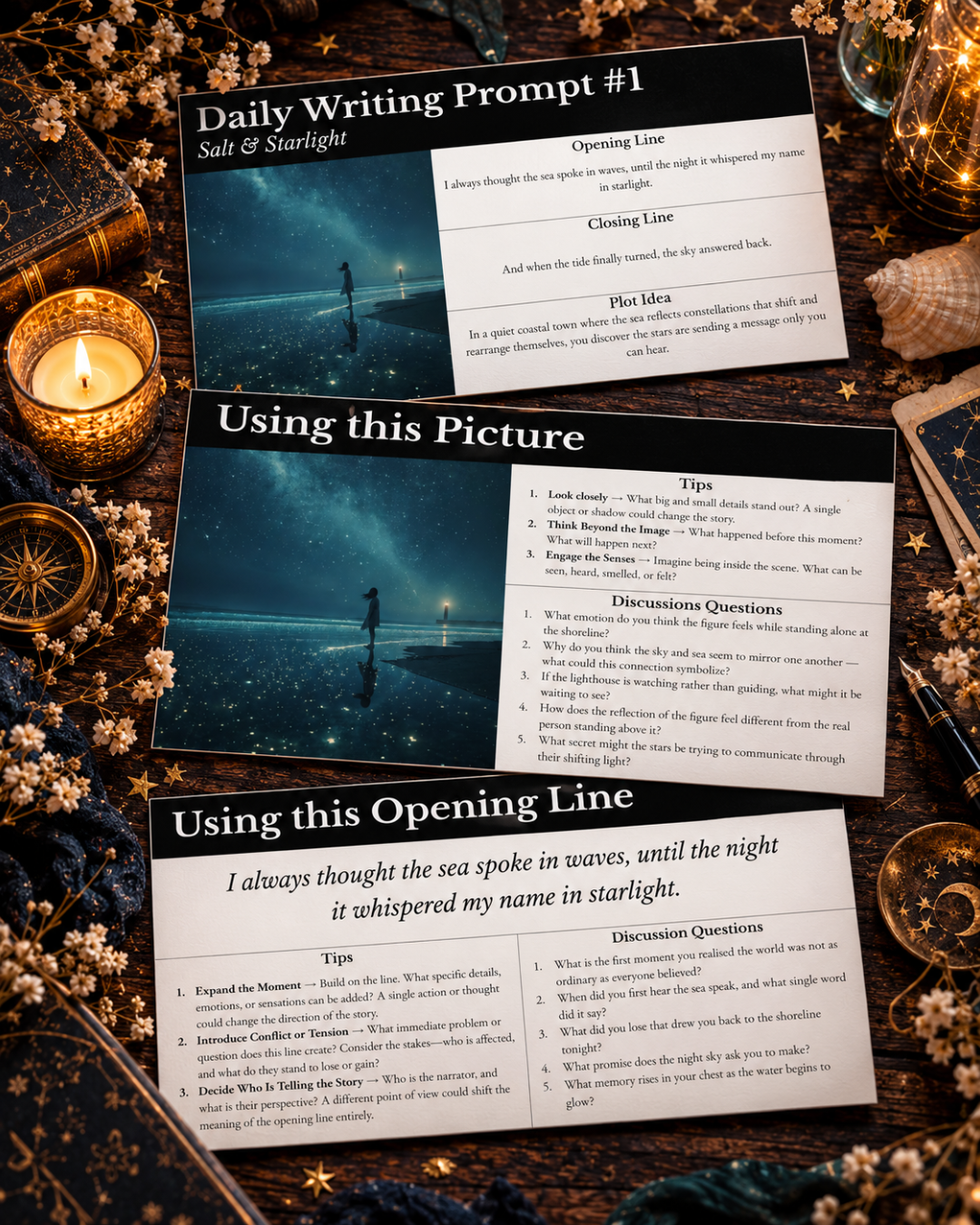
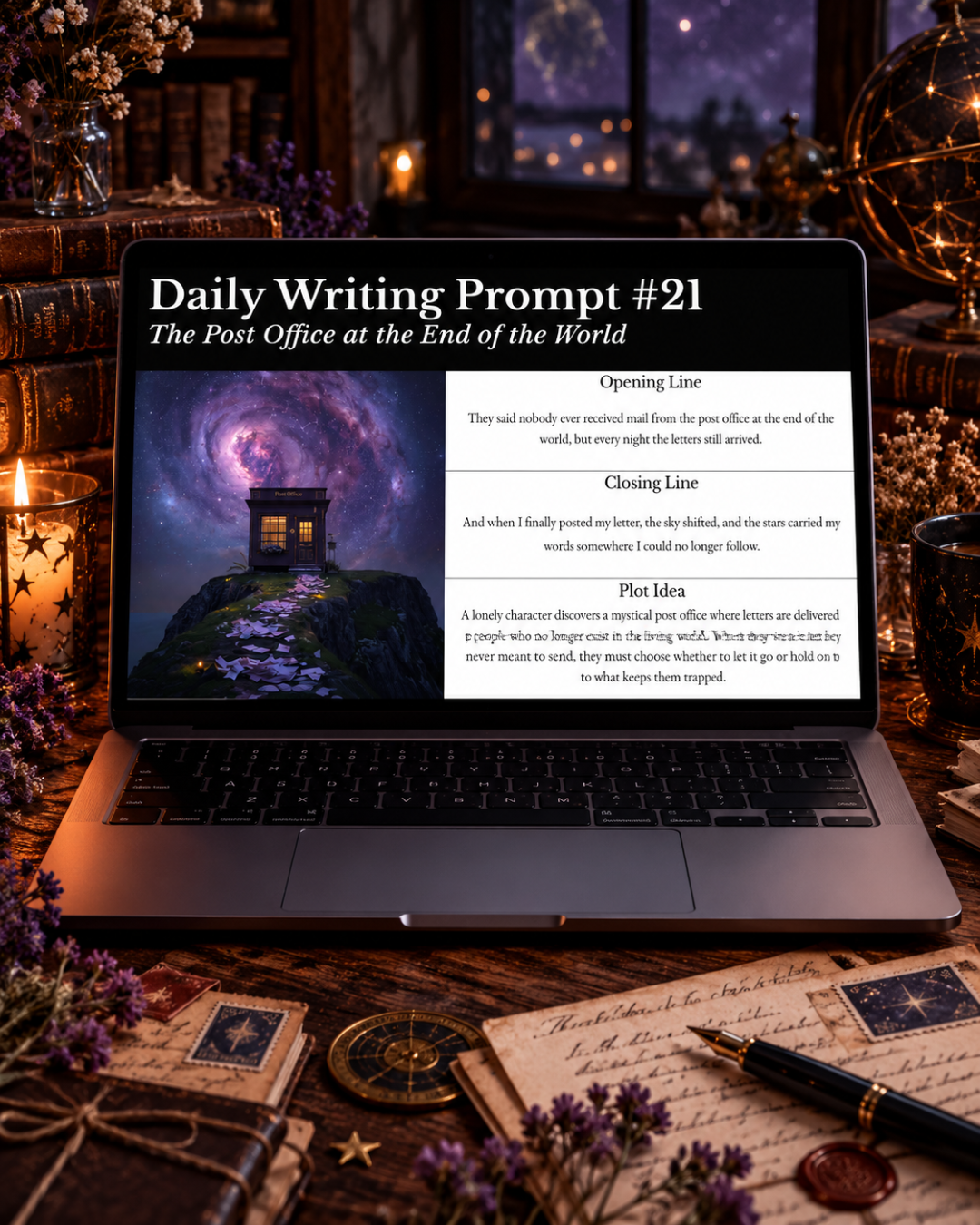
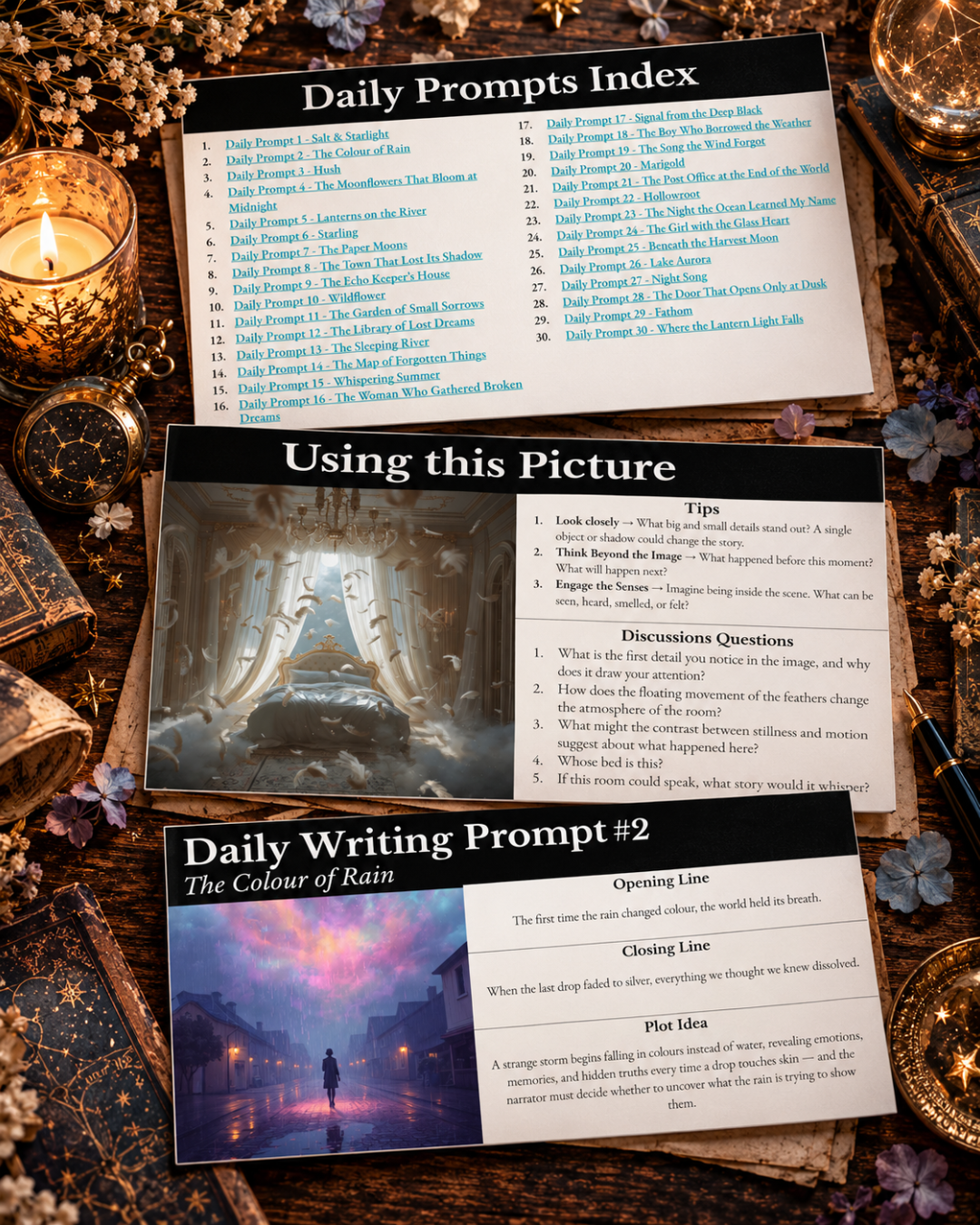
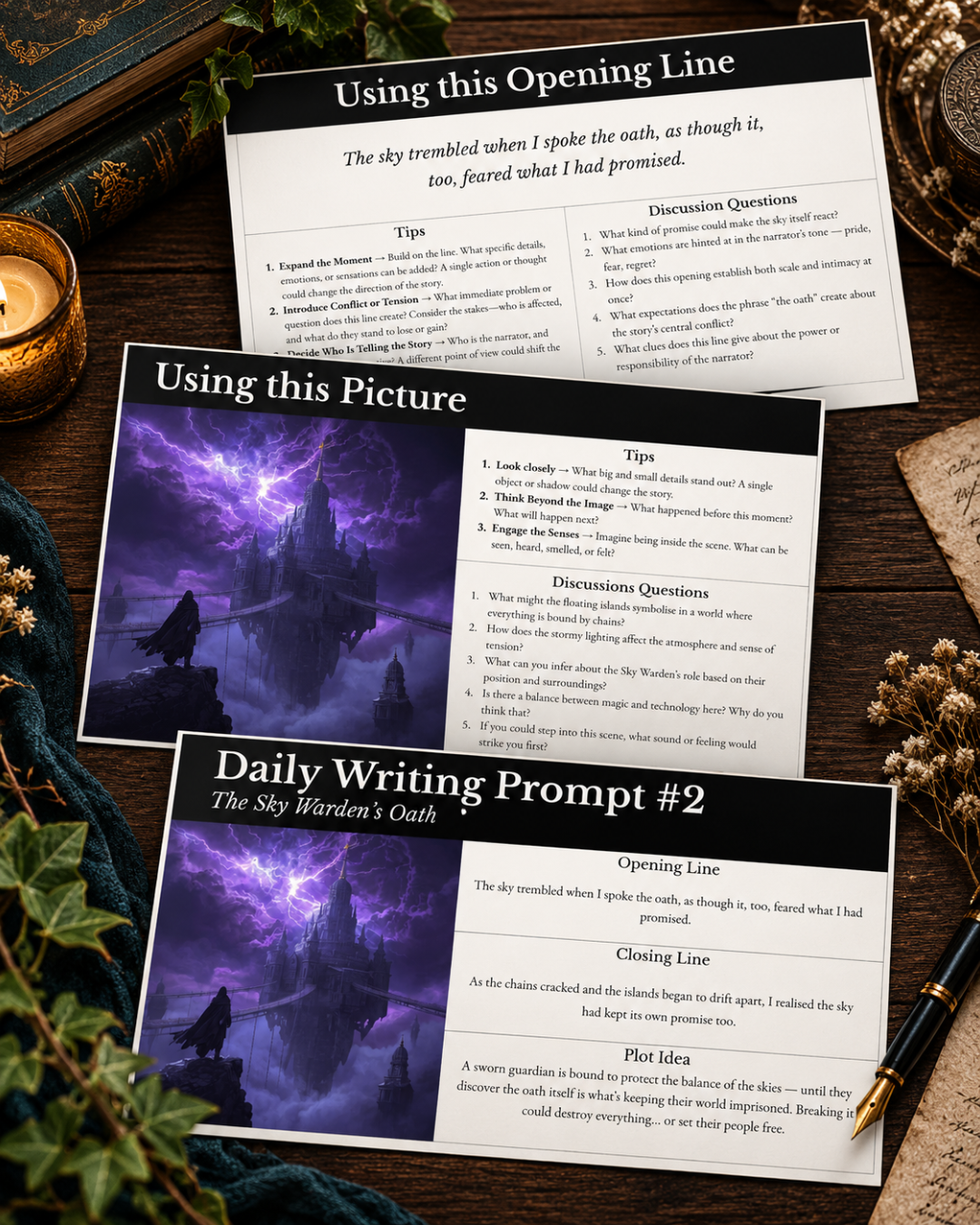
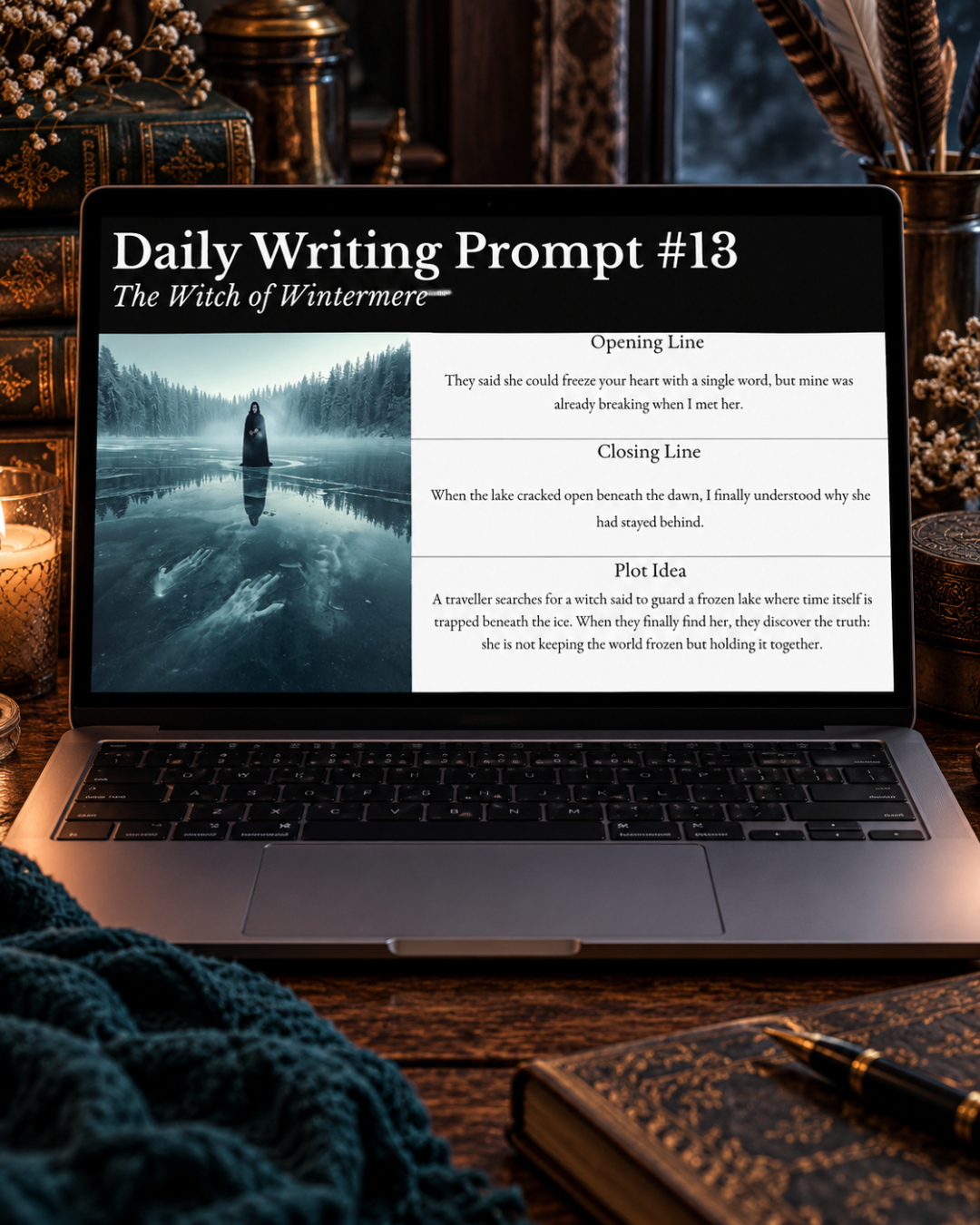
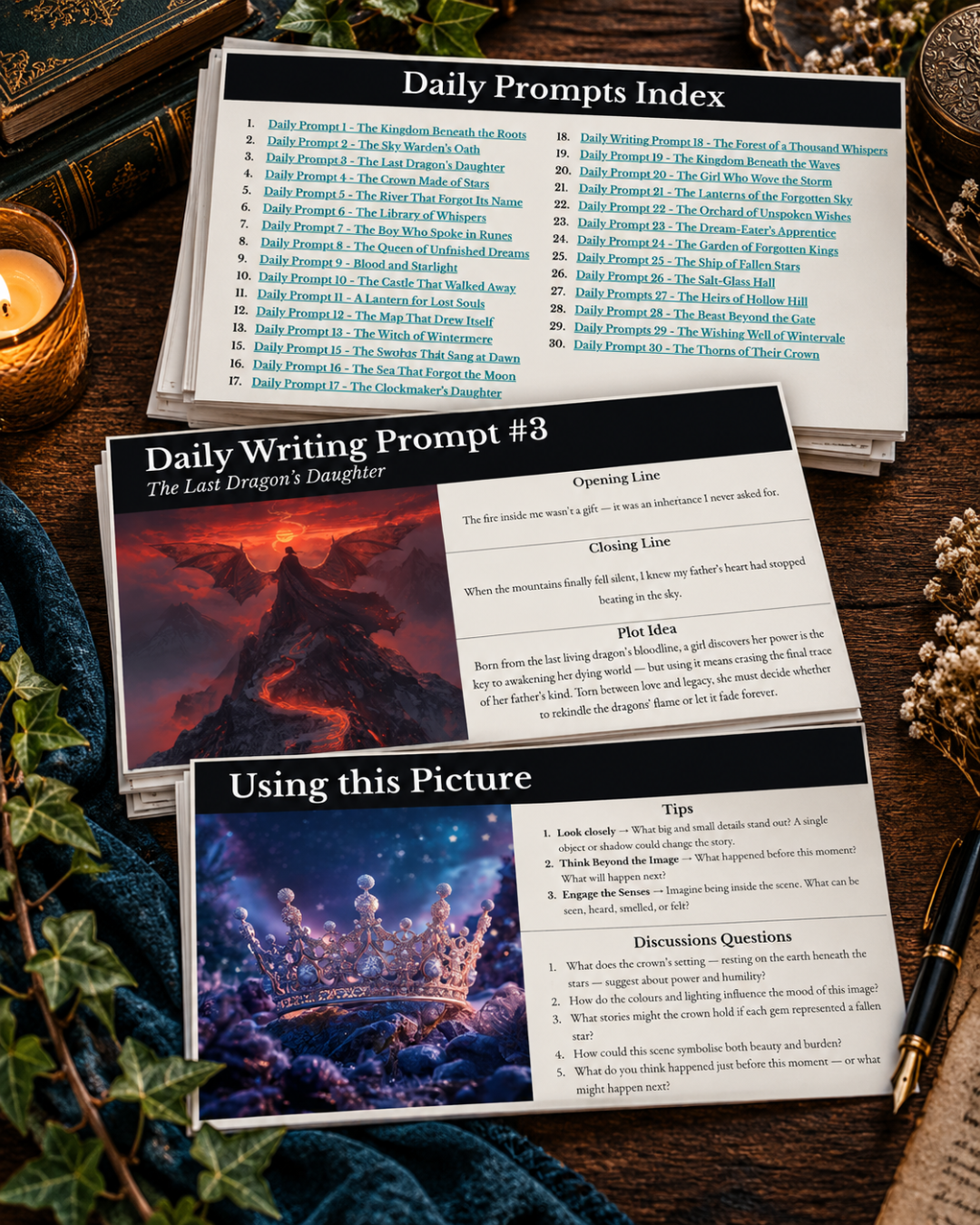
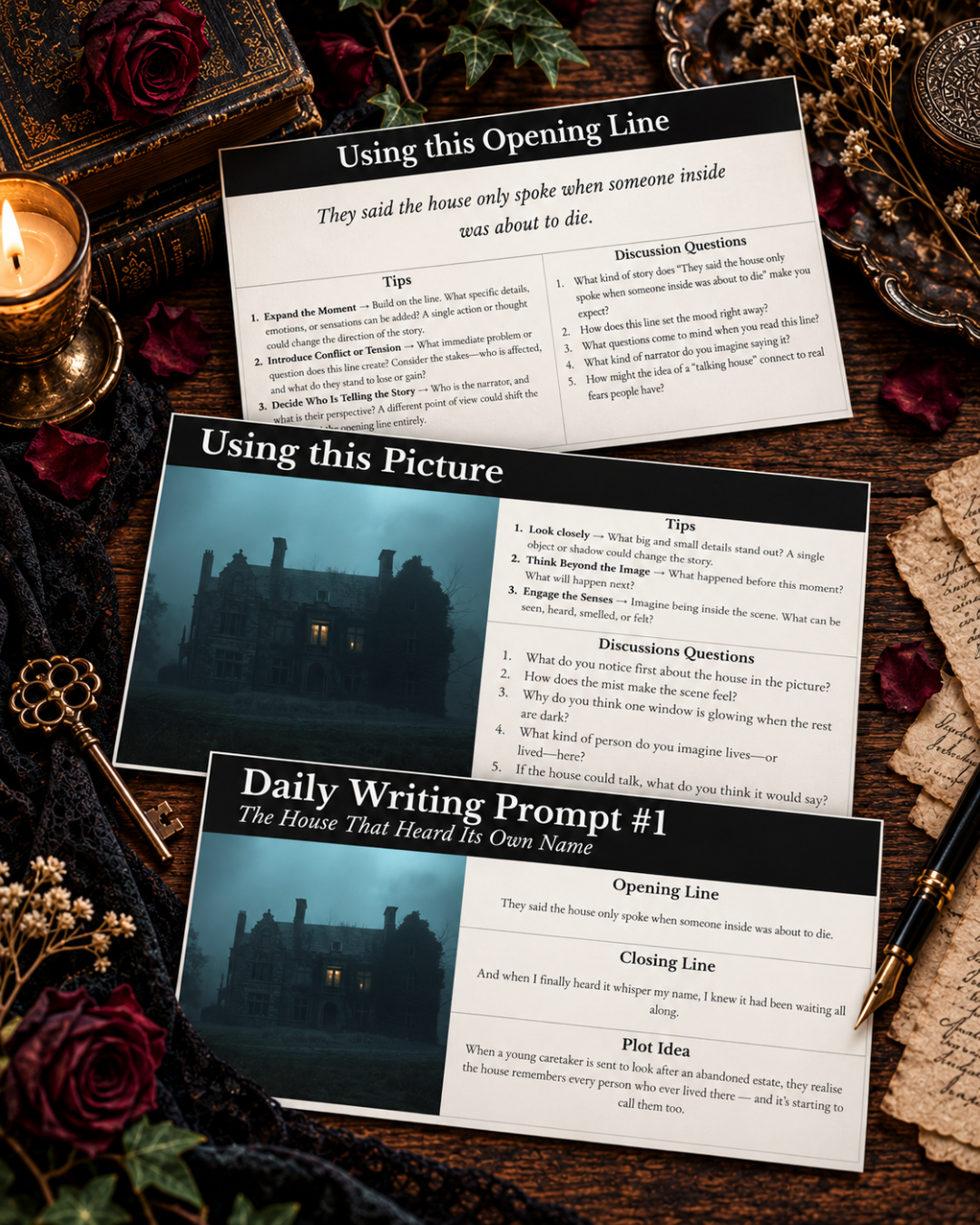
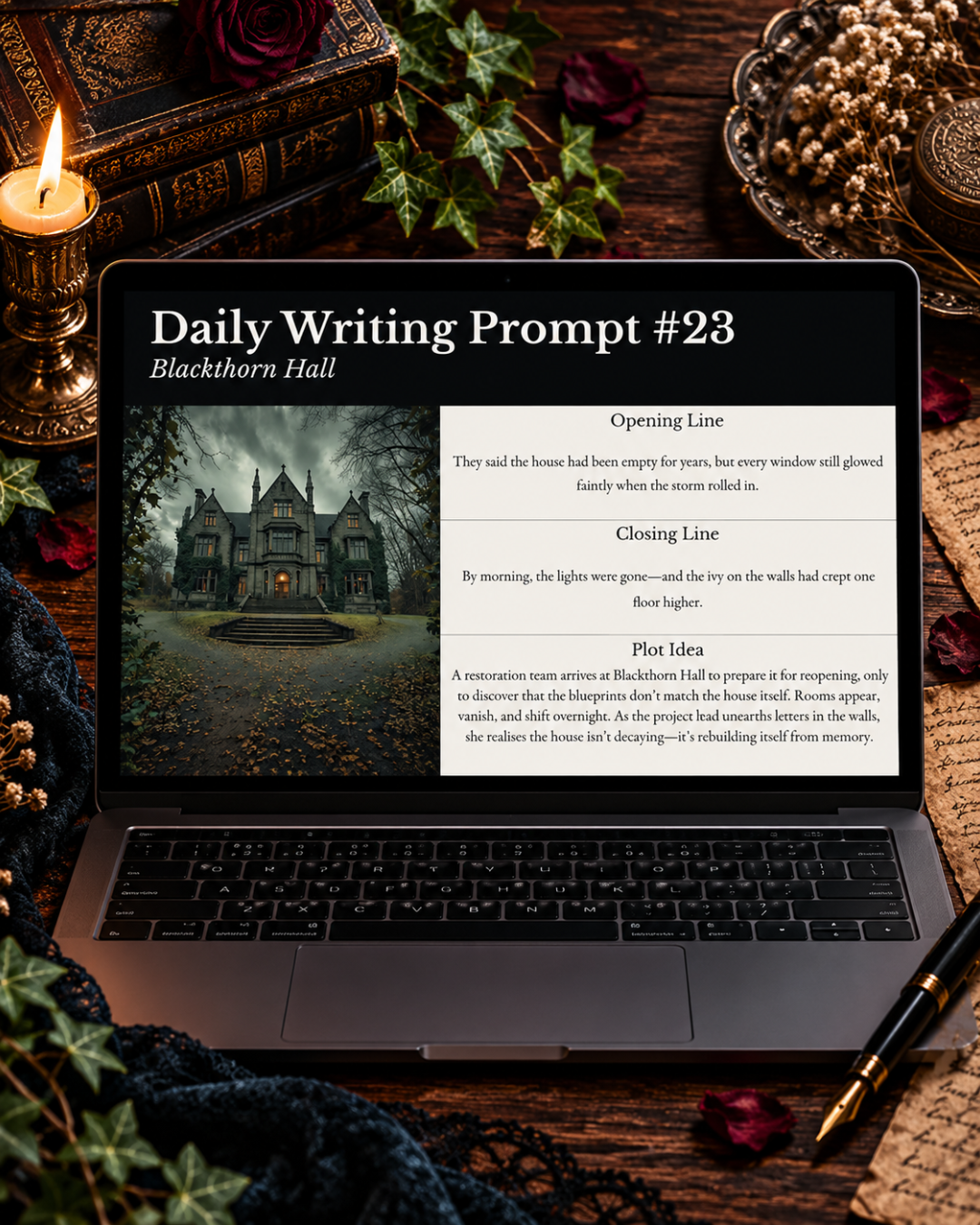
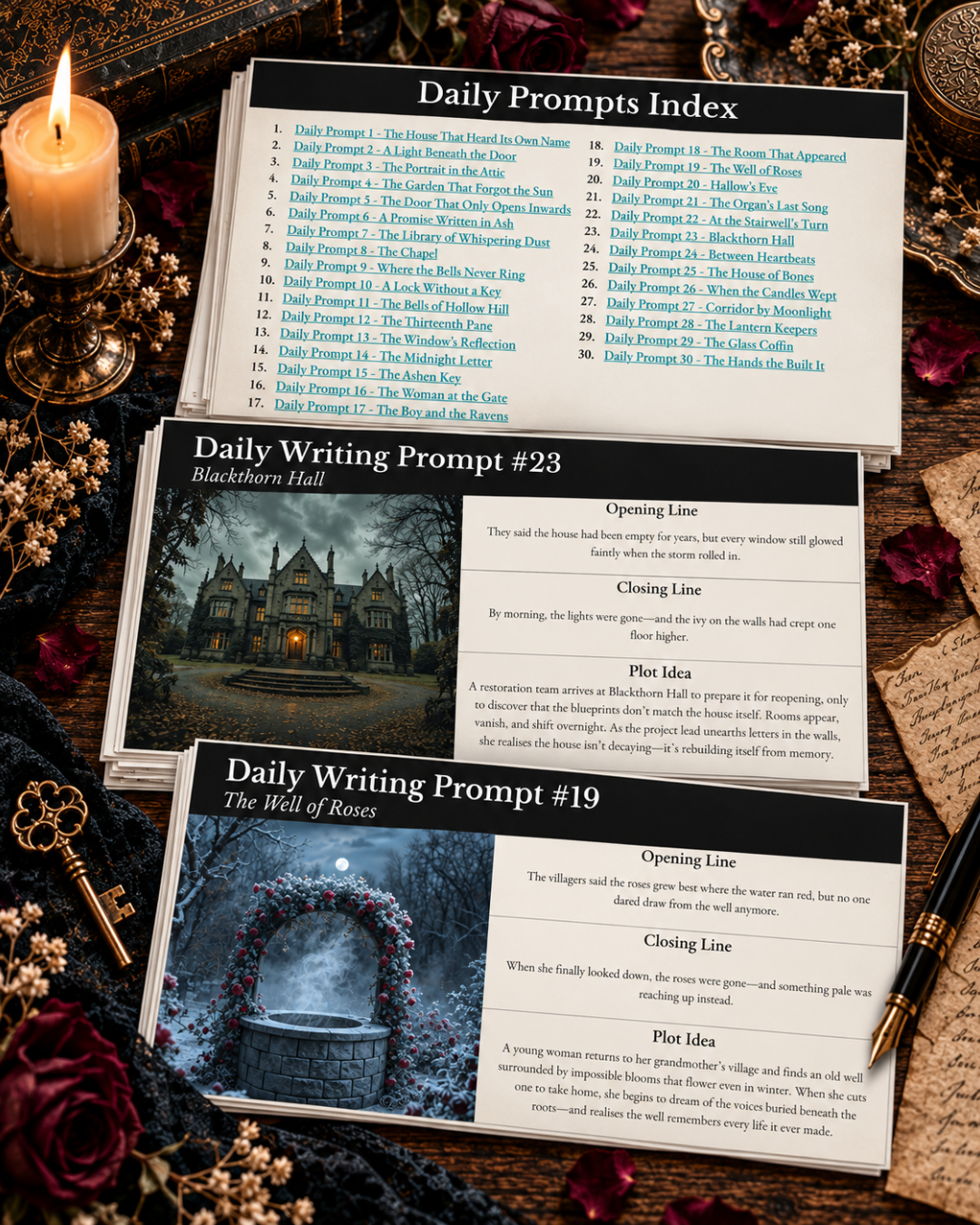
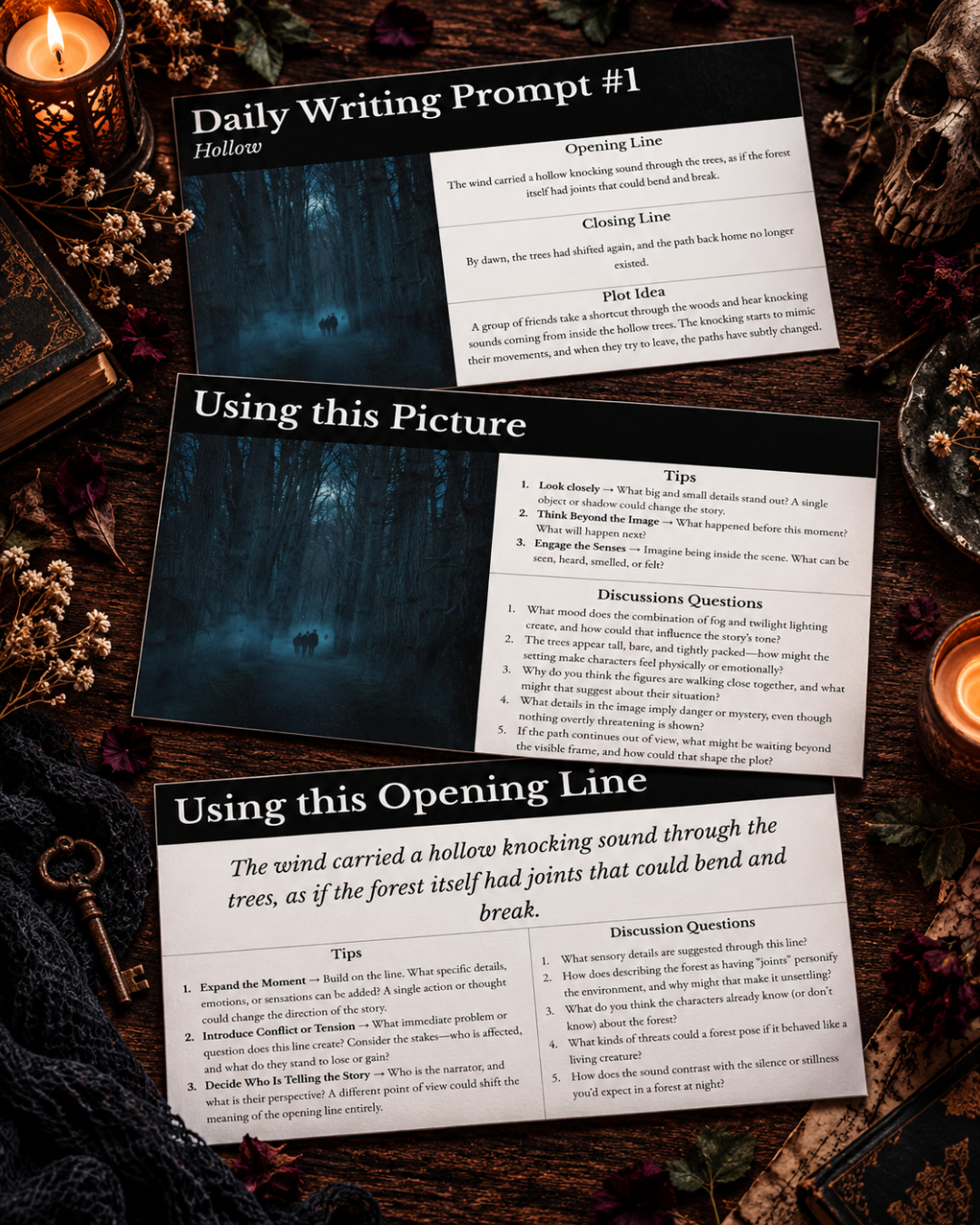
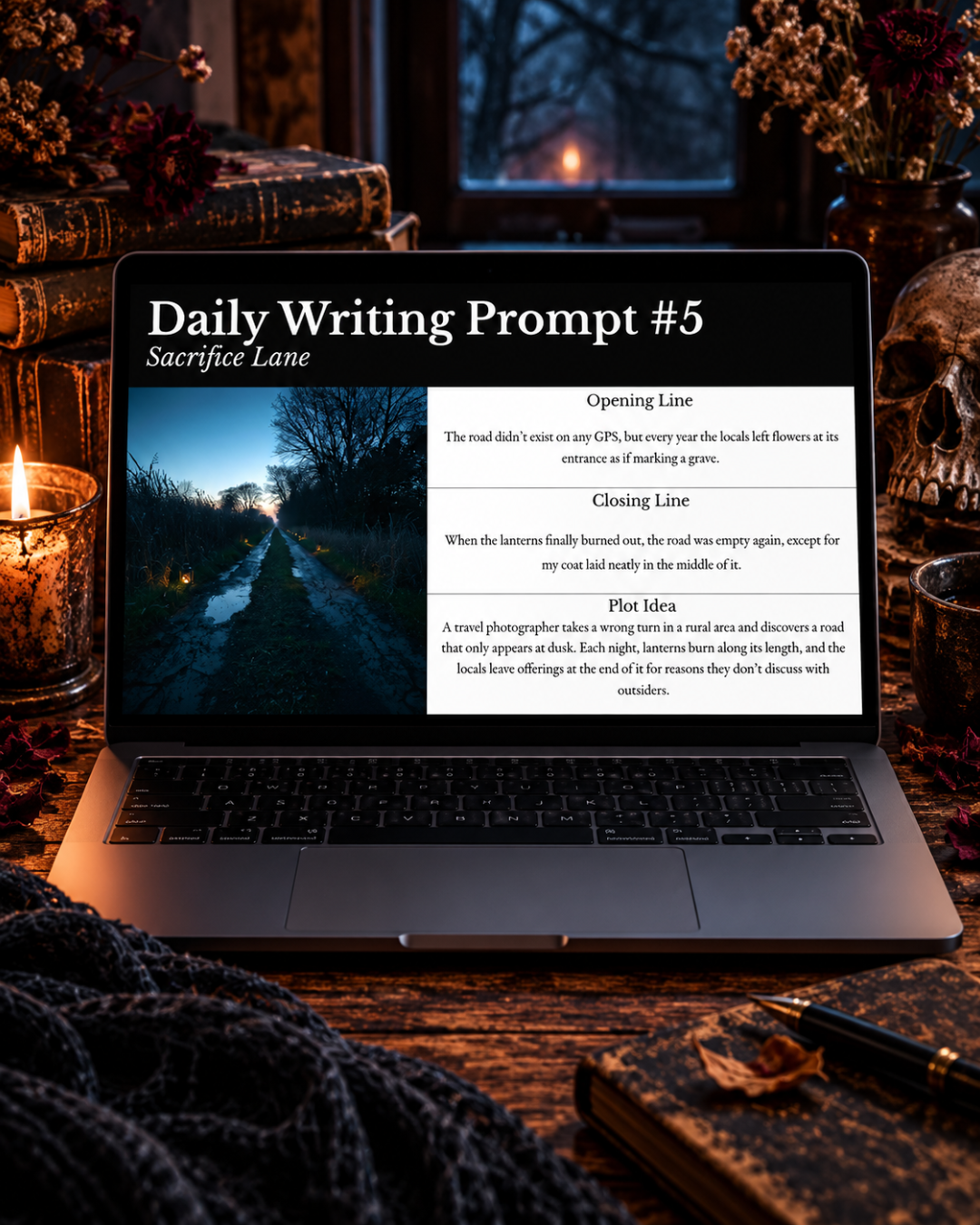
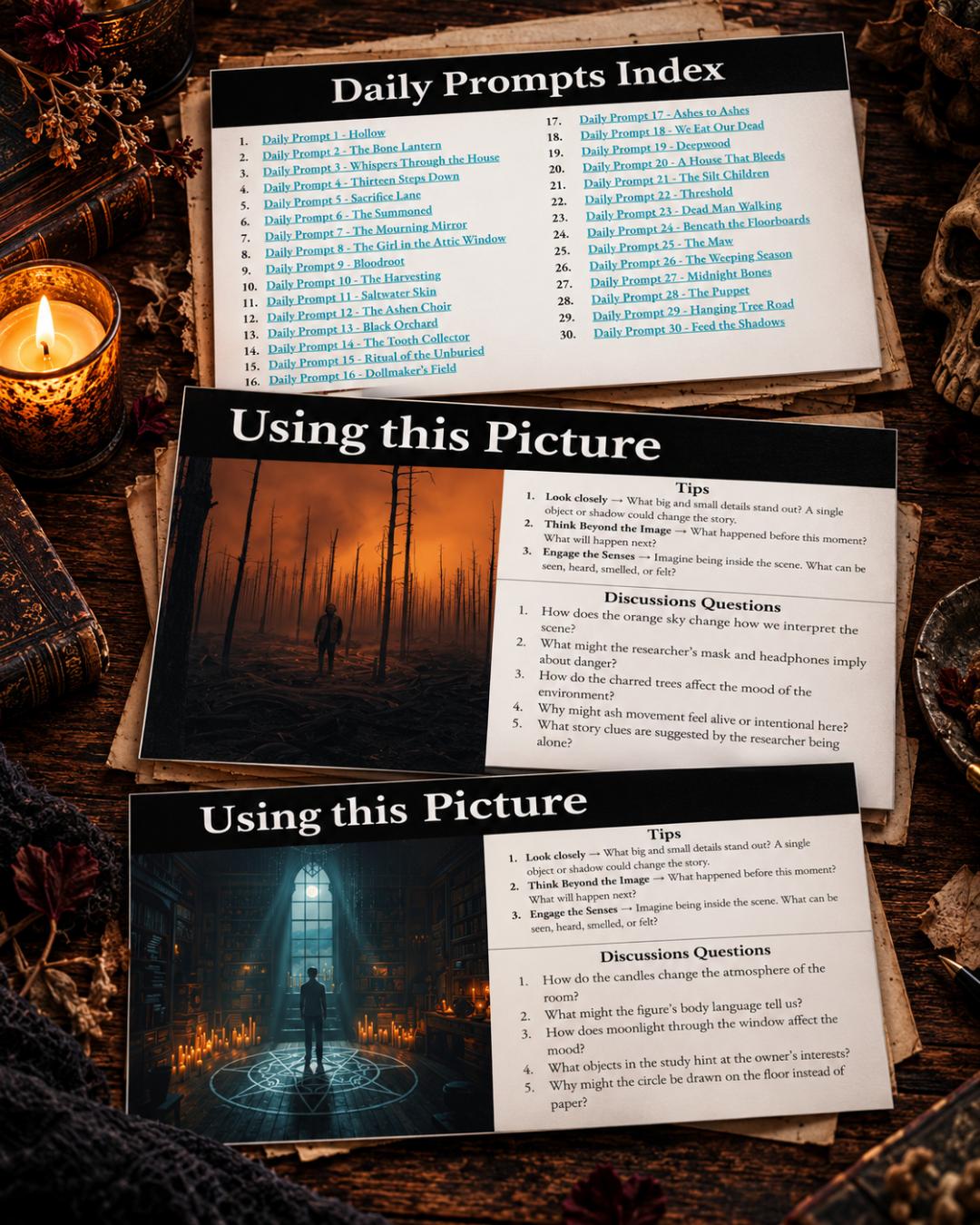
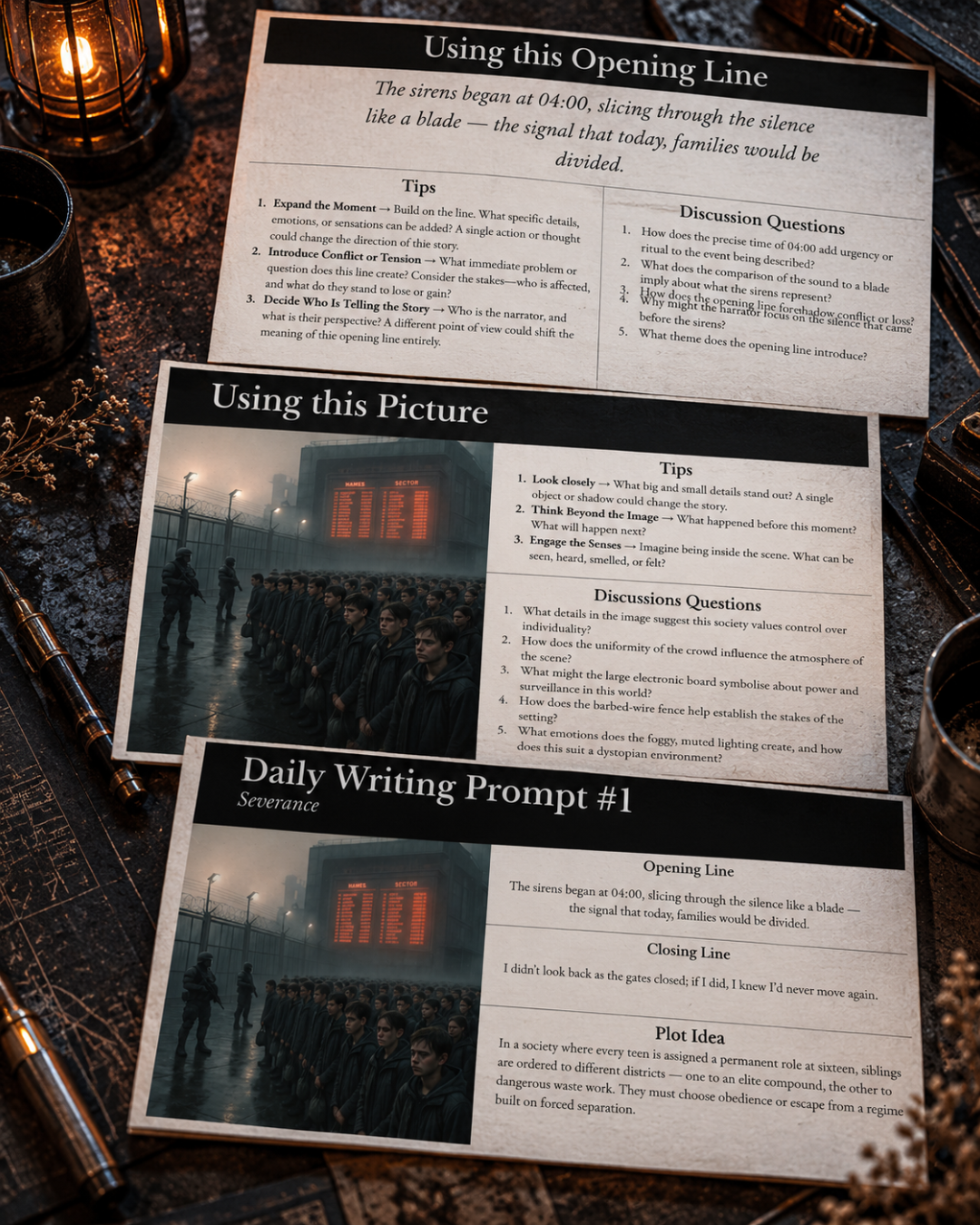
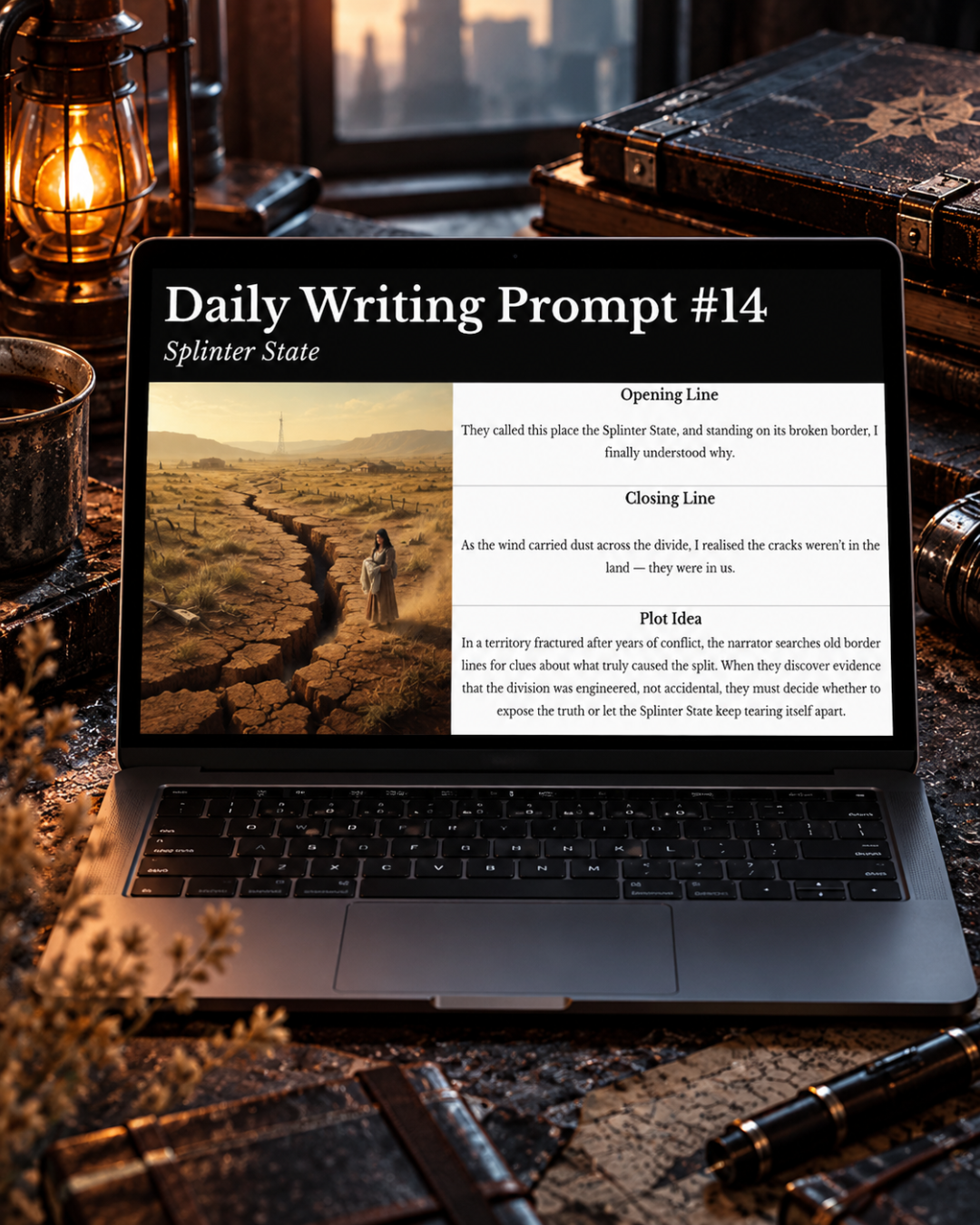
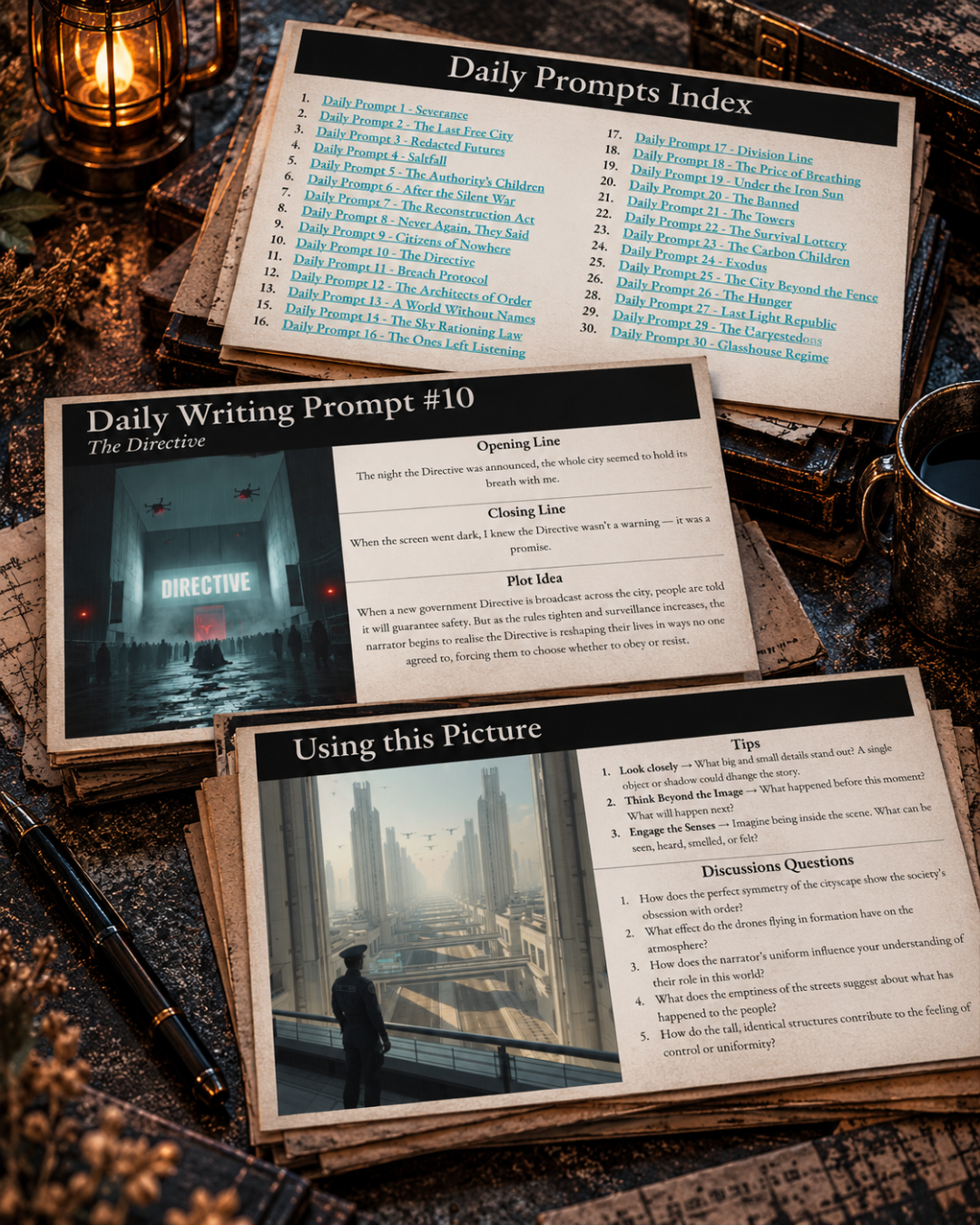
Illustrated Writing Prompts: Atmospheric science fiction and dystopian illustrations that encourage visual interpretation, descriptive writing and imaginative storytelling.
Opening Lines: Engaging story starters that help students overcome the challenge of beginning a narrative.
Closing Lines: Thought-provoking final sentences that encourage students to experiment with narrative structure and develop meaningful endings.
Plot Ideas: Original scenarios and conflicts that provide inspiration without restricting individual creativity.
Picture-Based Writing Activities: Guided questions that encourage observation, inference, sensory description and imaginative interpretation.
Writing Tips and Discussion Questions: Structured guidance to help students explore narrative possibilities, develop their ideas and make deliberate storytelling choices.
With 60 different prompts, teachers can introduce a new creative writing challenge each day or select individual activities to complement existing lessons.
Scaffolding Creative Writing in the Classroom
Creative writing can be challenging for students who struggle to generate ideas, organise their thoughts or develop a compelling narrative.
Beyond Tomorrow provides flexible scaffolding that teachers can adapt to different abilities, confidence levels and learning needs.
Students who require additional support can use the supplied illustrations, opening lines, plot ideas and guided questions to develop their stories step by step.
More confident writers can use the same materials as inspiration for independent storytelling, experimenting with complex worldbuilding, moral dilemmas, alternative perspectives and unexpected narrative developments.
The activities can help teachers develop:
Differentiated learning: Offer varying levels of support without requiring completely separate writing tasks.
Descriptive writing: Encourage sensory imagery, atmospheric settings and detailed descriptions of unfamiliar worlds.
Narrative structure: Explore compelling openings, rising tension, character conflict and effective endings.
Worldbuilding: Develop believable fictional societies, technologies, environments and social structures.
Genre awareness: Examine the conventions of science fiction and dystopian fiction through practical writing activities.
Critical thinking: Explore questions about freedom, power, technological advancement, ethics and humanity's future.
Speaking and listening: Encourage discussion, interpretation and collaborative storytelling.
Writing confidence: Provide accessible starting points for reluctant writers while challenging more experienced students.
Rather than prescribing a single correct story, each prompt encourages students to discover their own interpretations and develop original narratives.
Explore the Relationship Between Science Fiction and Dystopian Fiction
Science fiction and dystopian fiction are closely connected, making them particularly effective genres to explore together.
Science fiction encourages writers to imagine what might become possible through scientific discovery, technological advancement and human exploration.
Dystopian fiction invites writers to consider what might happen when those possibilities are misused, when societies become oppressive or when the consequences of progress threaten individual freedom.
Together, these collections provide opportunities to explore contrasting visions of the future.
Students might imagine a revolutionary invention in a science fiction story before considering how the same technology could be used for surveillance or social control in a dystopian narrative.
Alternatively, they might explore how a seemingly perfect futuristic society conceals unexpected inequalities, restrictions or dangers.
This makes Beyond Tomorrow particularly useful for teaching speculative fiction, genre conventions, worldbuilding and critical thinking.
Flexible Activities for Teachers and Independent Writers
Use these 60 science fiction and dystopian writing prompts for:
Daily creative writing practice and morning starters
English and literacy lessons
Science fiction and dystopian literature units
Descriptive writing and worldbuilding activities
Short story writing and narrative development
Creative writing clubs and workshops
Classroom discussion and collaborative storytelling
Homework, extension tasks and independent learning
Homeschooling and personal writing challenges
Cross-curricular exploration of science, technology, ethics and society
Each prompt can be completed as a short writing activity, expanded into a longer narrative or revisited to experiment with different storytelling techniques.
Although initially designed with classroom teaching in mind, the activities are equally suitable for independent writers looking to establish a daily writing habit, overcome creative blocks or explore new genres.
What You'll Receive
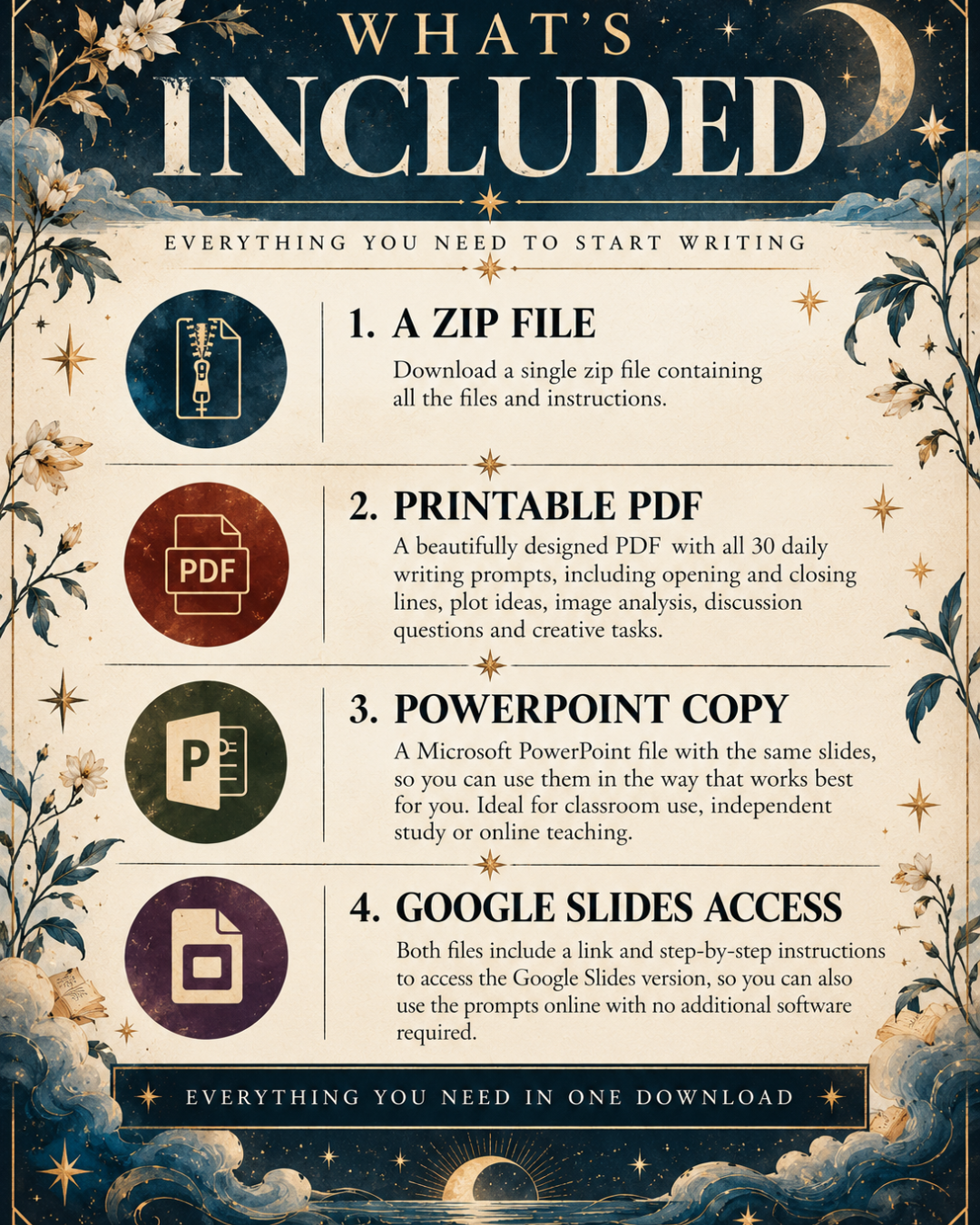
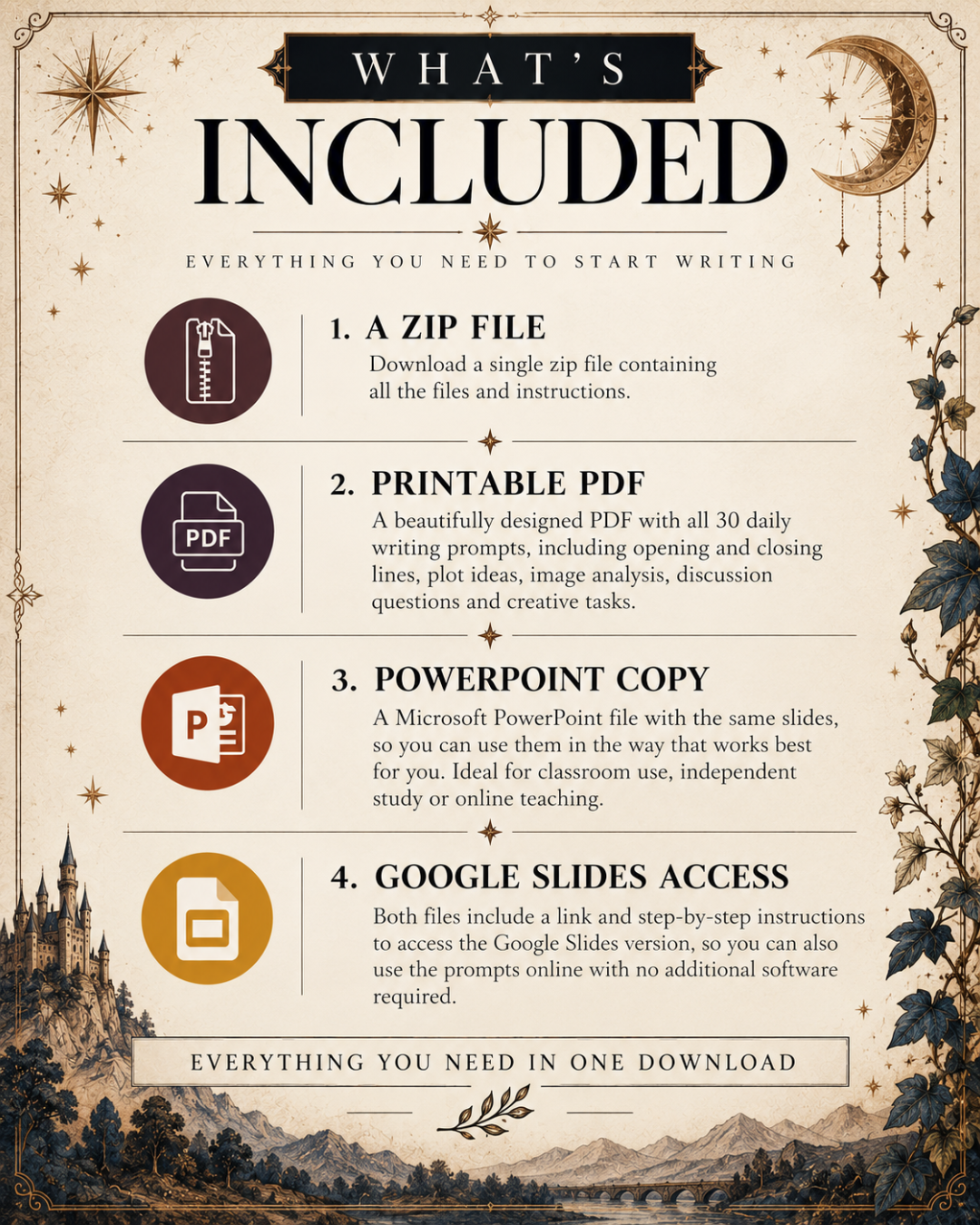
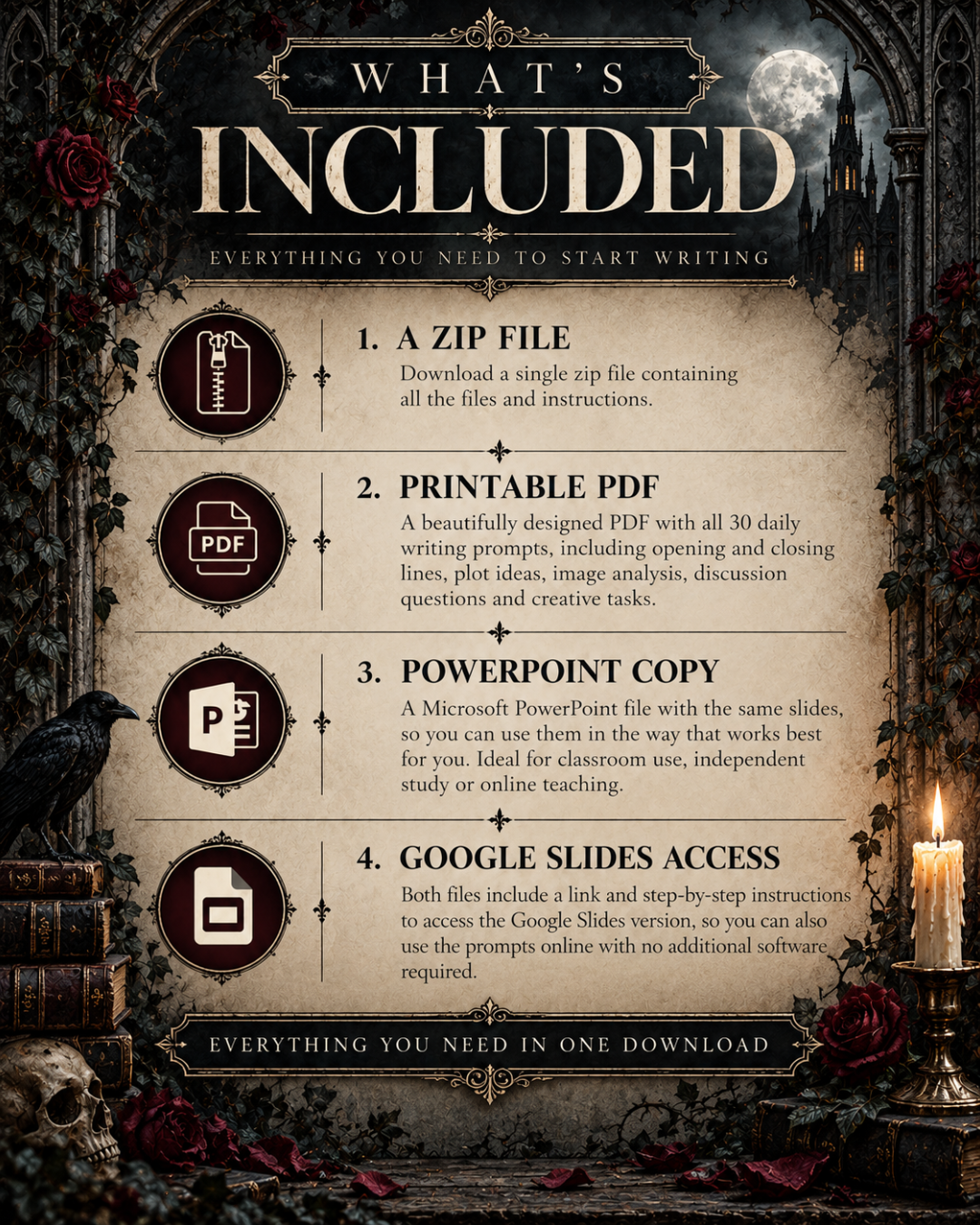
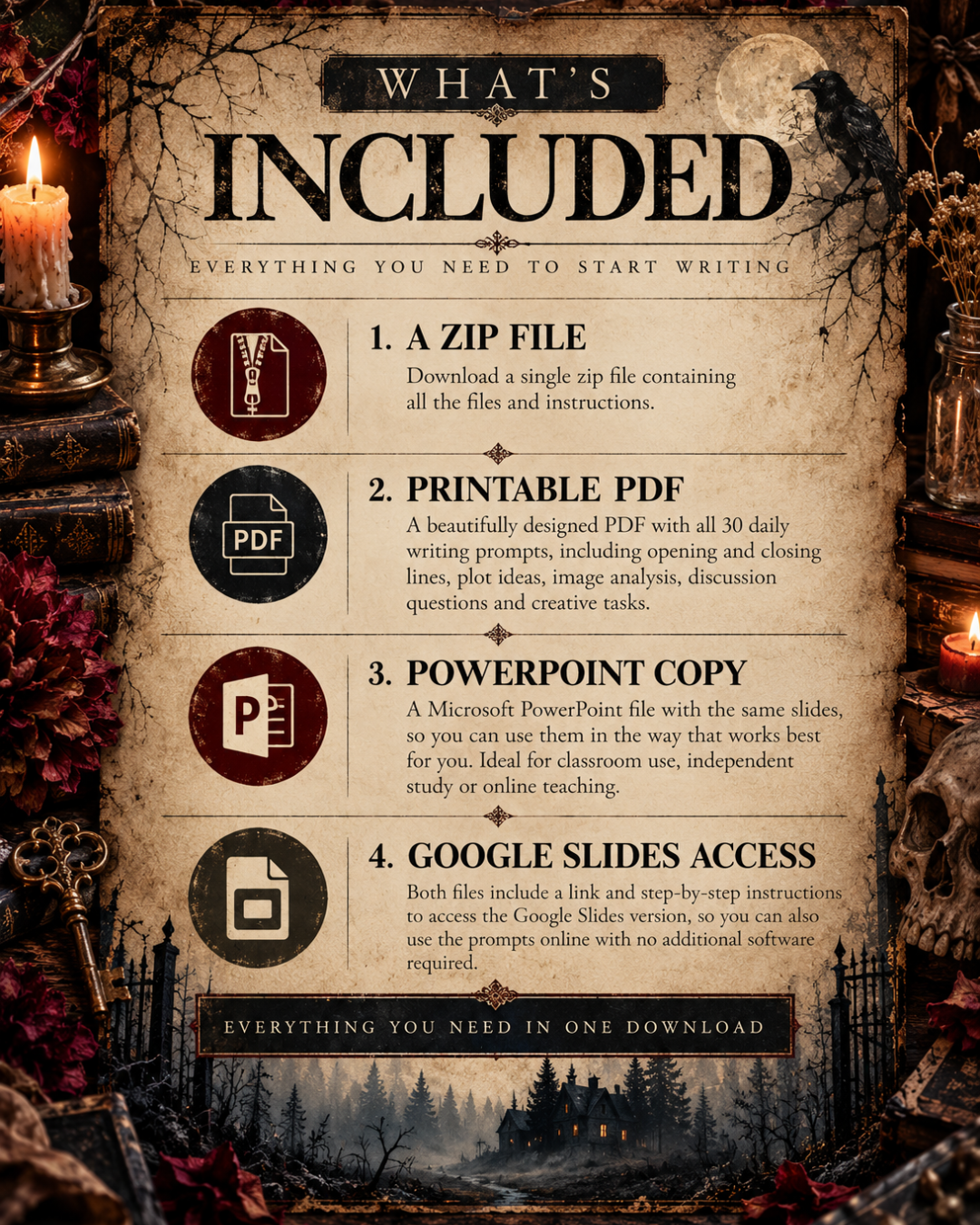
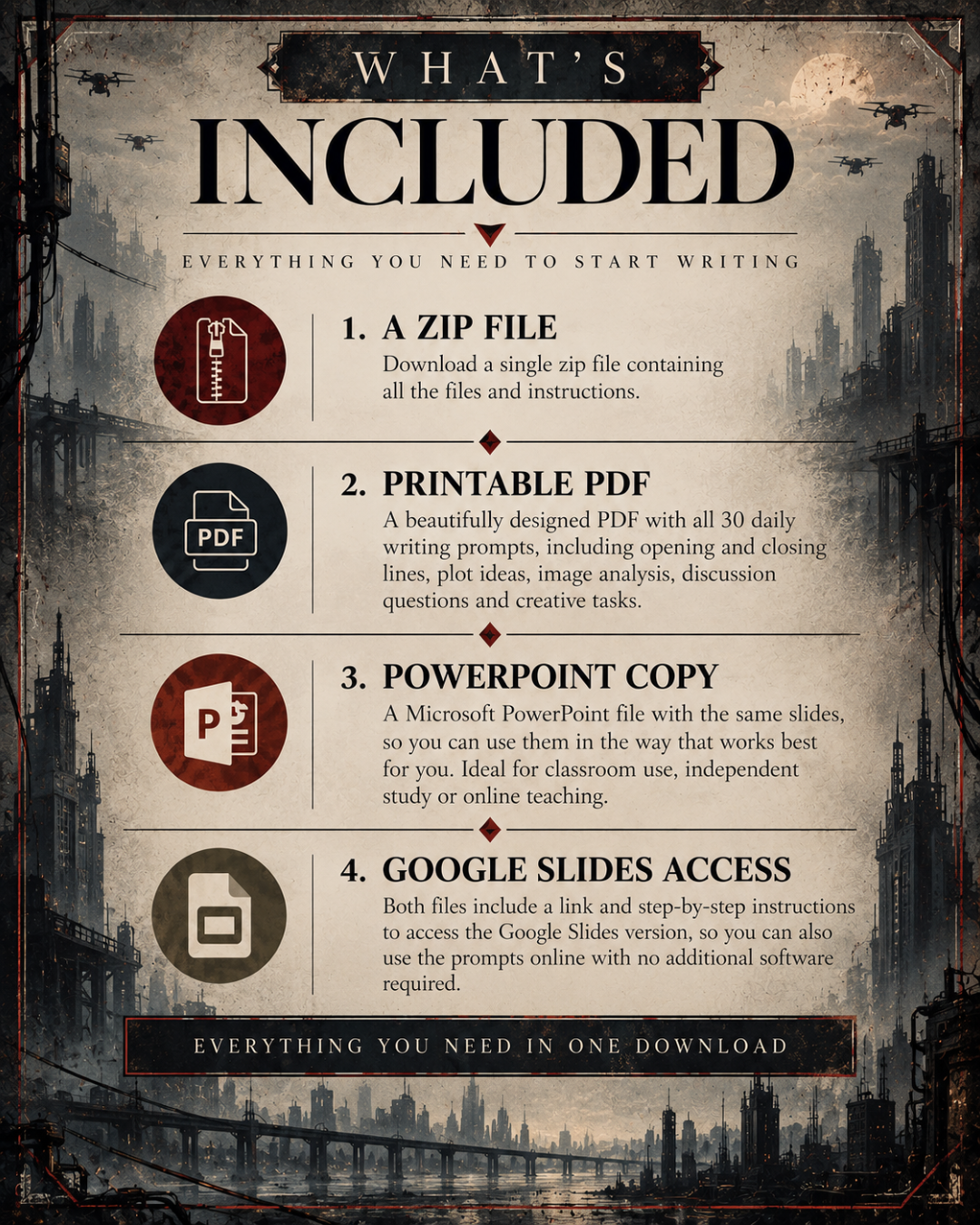
Your purchase includes both complete Daily Writing Prompts collections, supplied as digital resources.
Science Fiction Daily Writing Prompts
30 illustrated science fiction writing prompts
PDF version
Microsoft PowerPoint version
Links and instructions for Google Slides access
Dystopian Daily Writing Prompts
30 illustrated dystopian writing prompts
PDF version
Microsoft PowerPoint version
Links and instructions for Google Slides access
Both collections include accompanying writing guidance, creative activities and discussion questions.
60 daily writing prompts in total, covering two complementary genres.
All materials are digital downloads. No physical product will be shipped.
Why Choose the Beyond Tomorrow Bundle?
By combining two complementary genres, Beyond Tomorrow offers greater variety and flexibility than either collection alone.
Teachers can alternate between science fiction and dystopian activities, explore similarities and differences between the genres or create longer writing projects that connect imagined technologies with their potential consequences.
Independent writers can experiment with different speculative storytelling styles, develop new ideas and build a consistent creative writing practice.
Whether you're introducing students to speculative fiction, helping reluctant writers discover their confidence or encouraging experienced storytellers to imagine extraordinary futures, Beyond Tomorrow provides inspiration for countless original stories.
Imagine the future. Question the possibilities. Write what happens next.
Your next story is waiting...
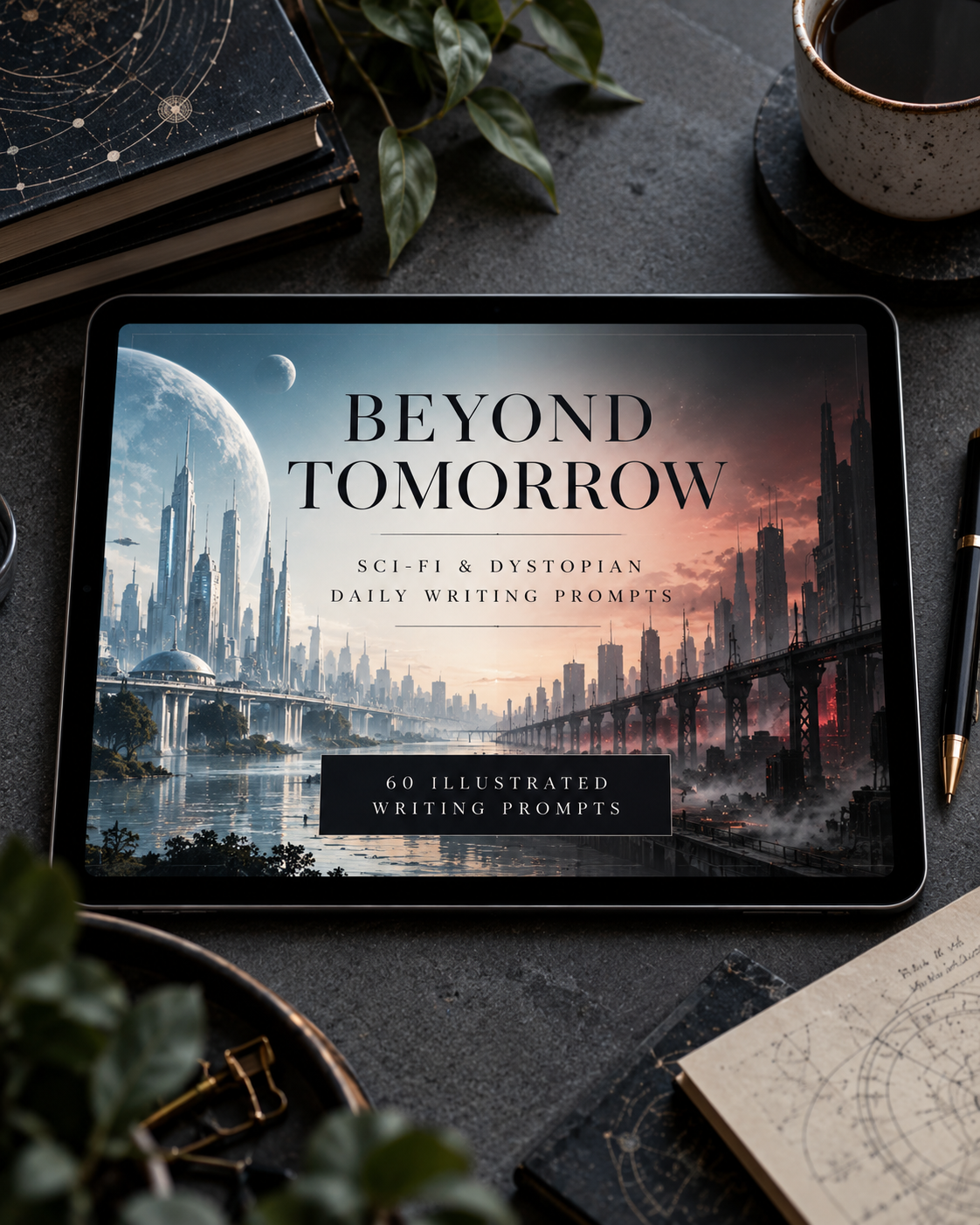 Image 1 of 7
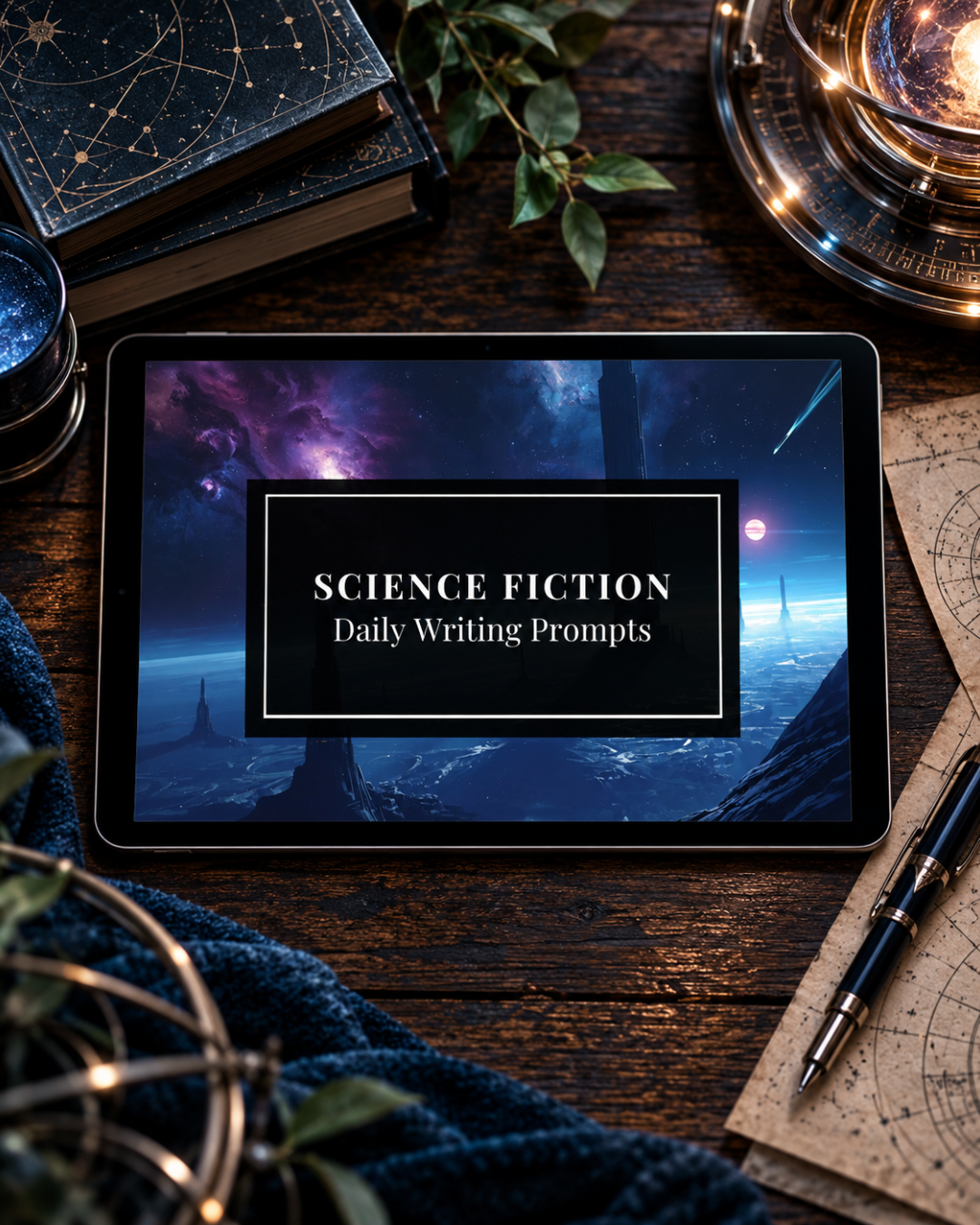 Image 2 of 7
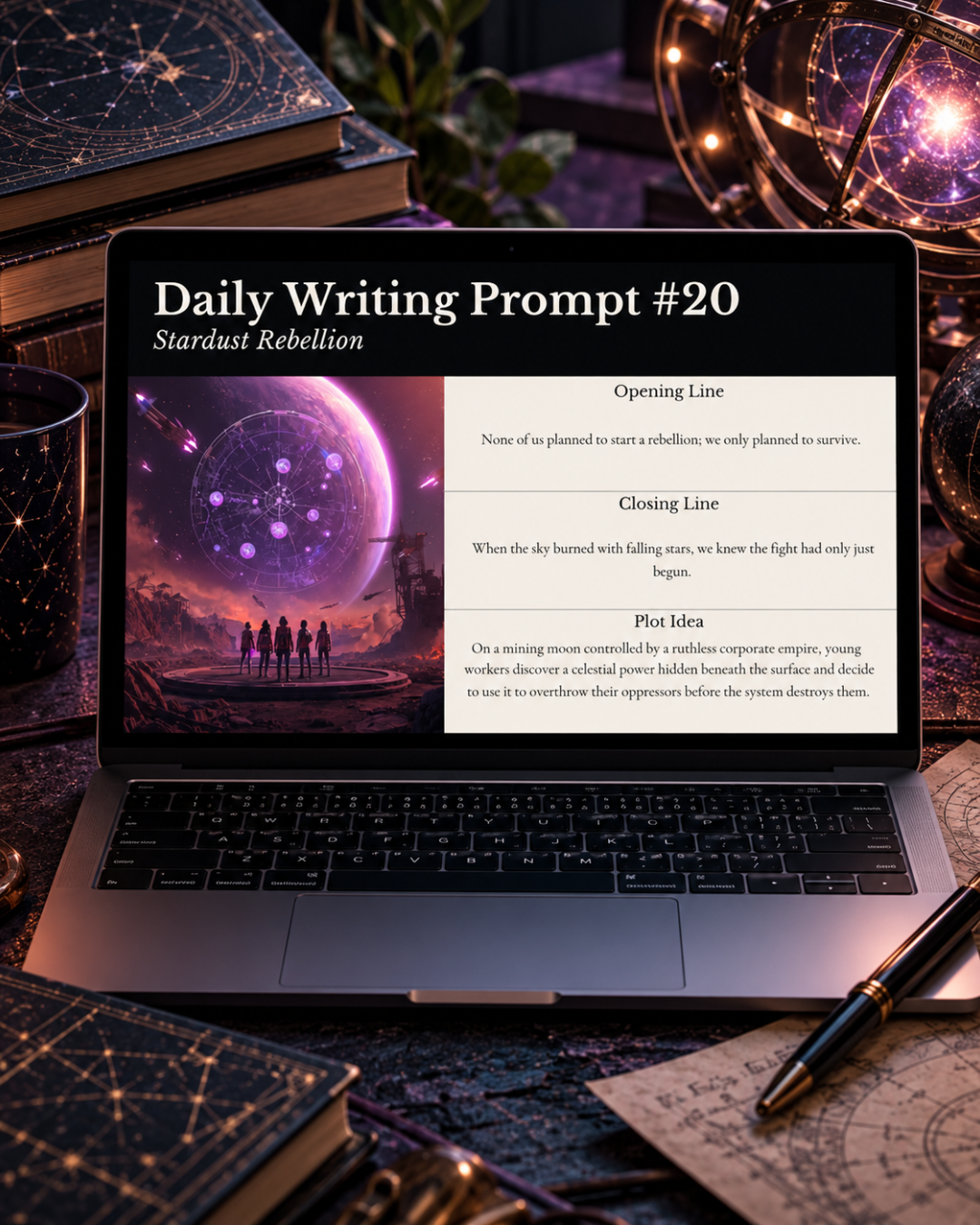 Image 3 of 7
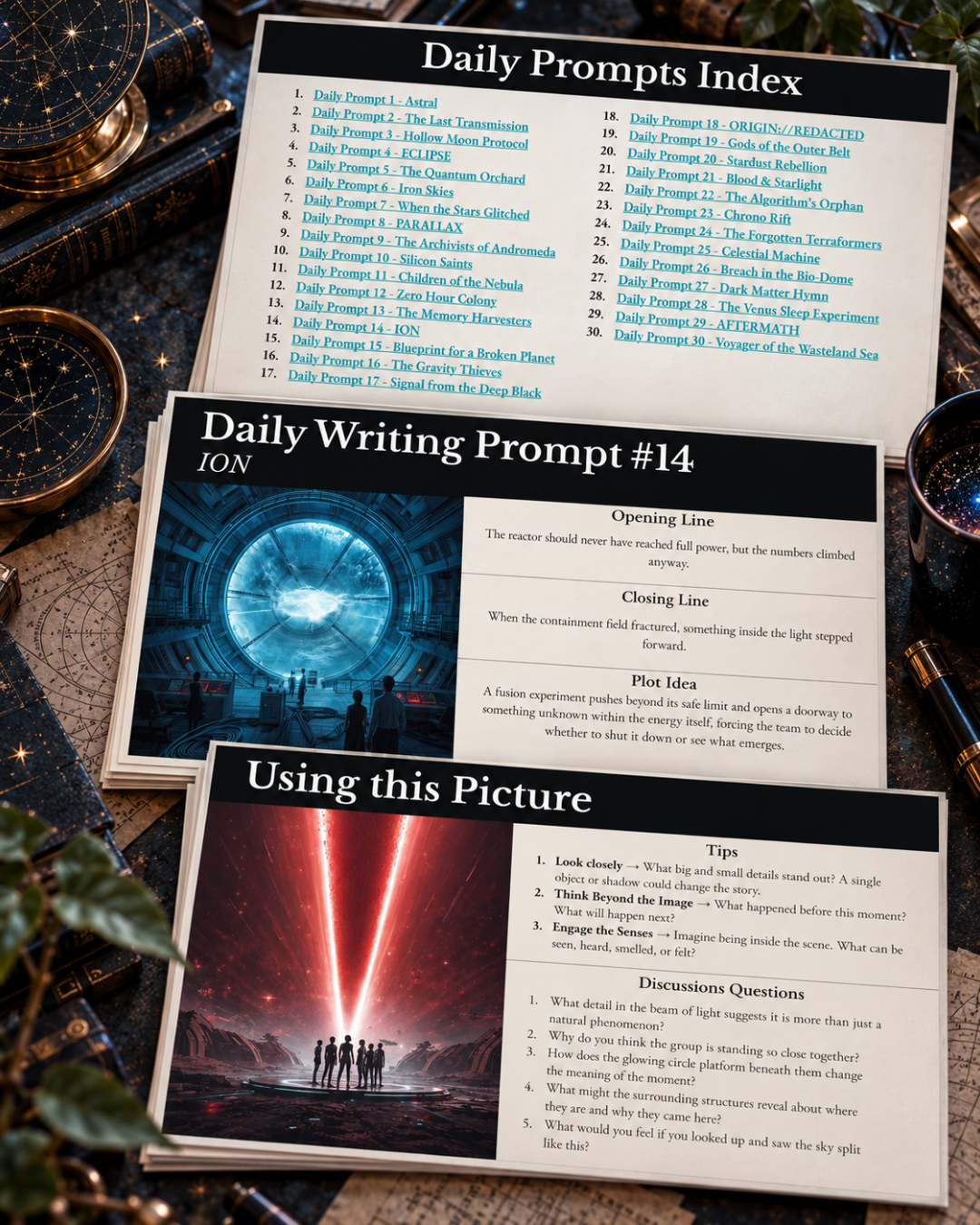 Image 4 of 7
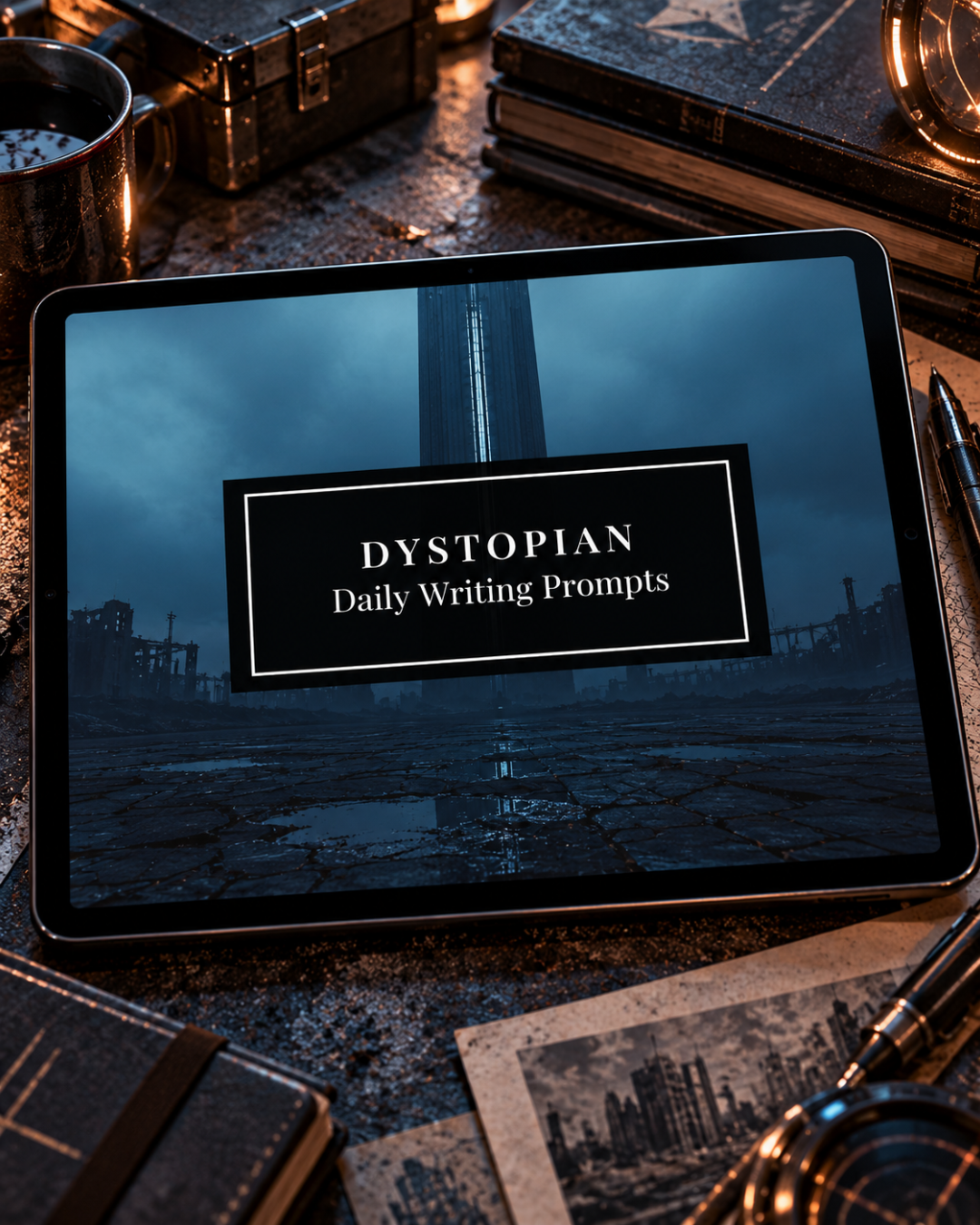 Image 5 of 7
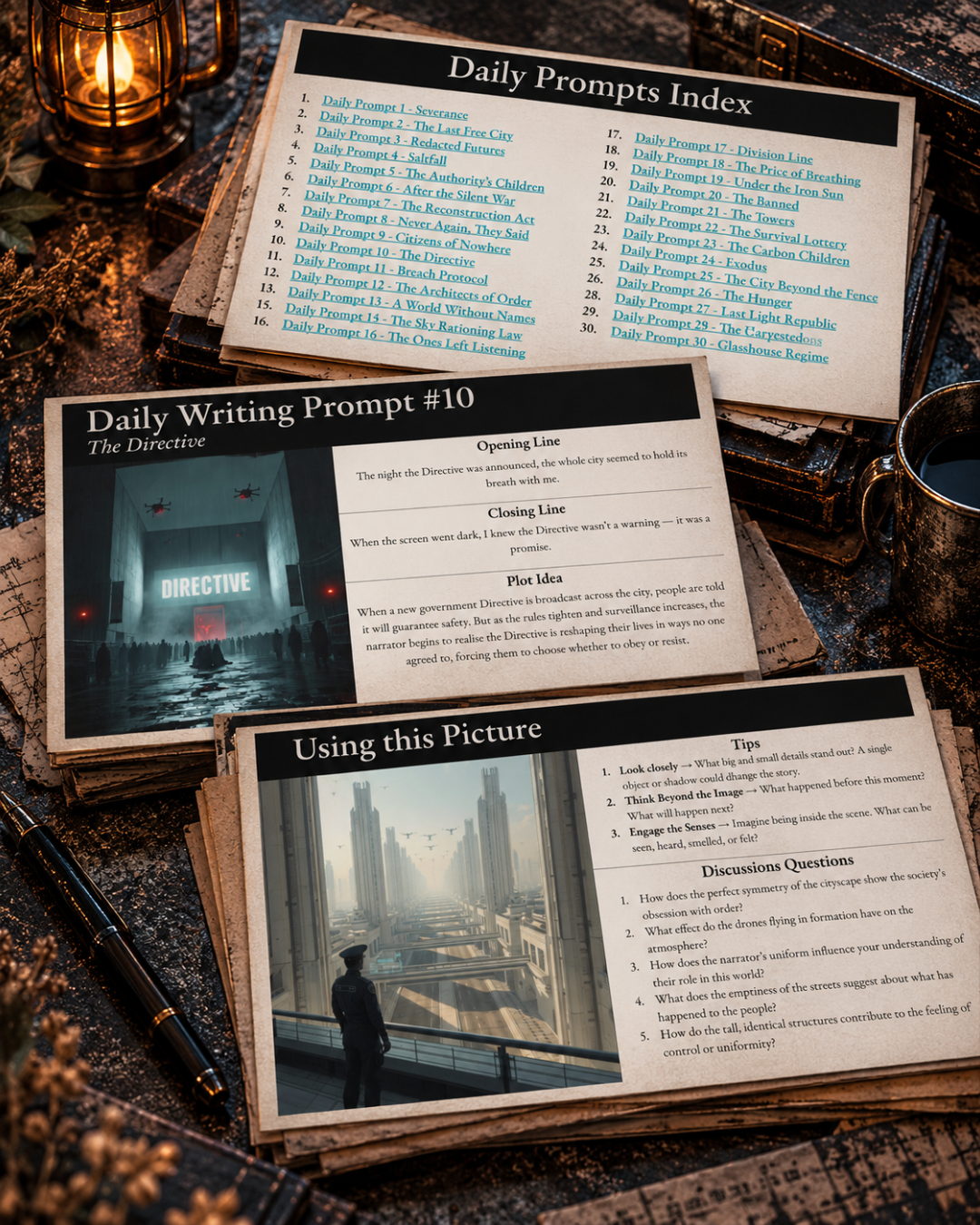 Image 6 of 7
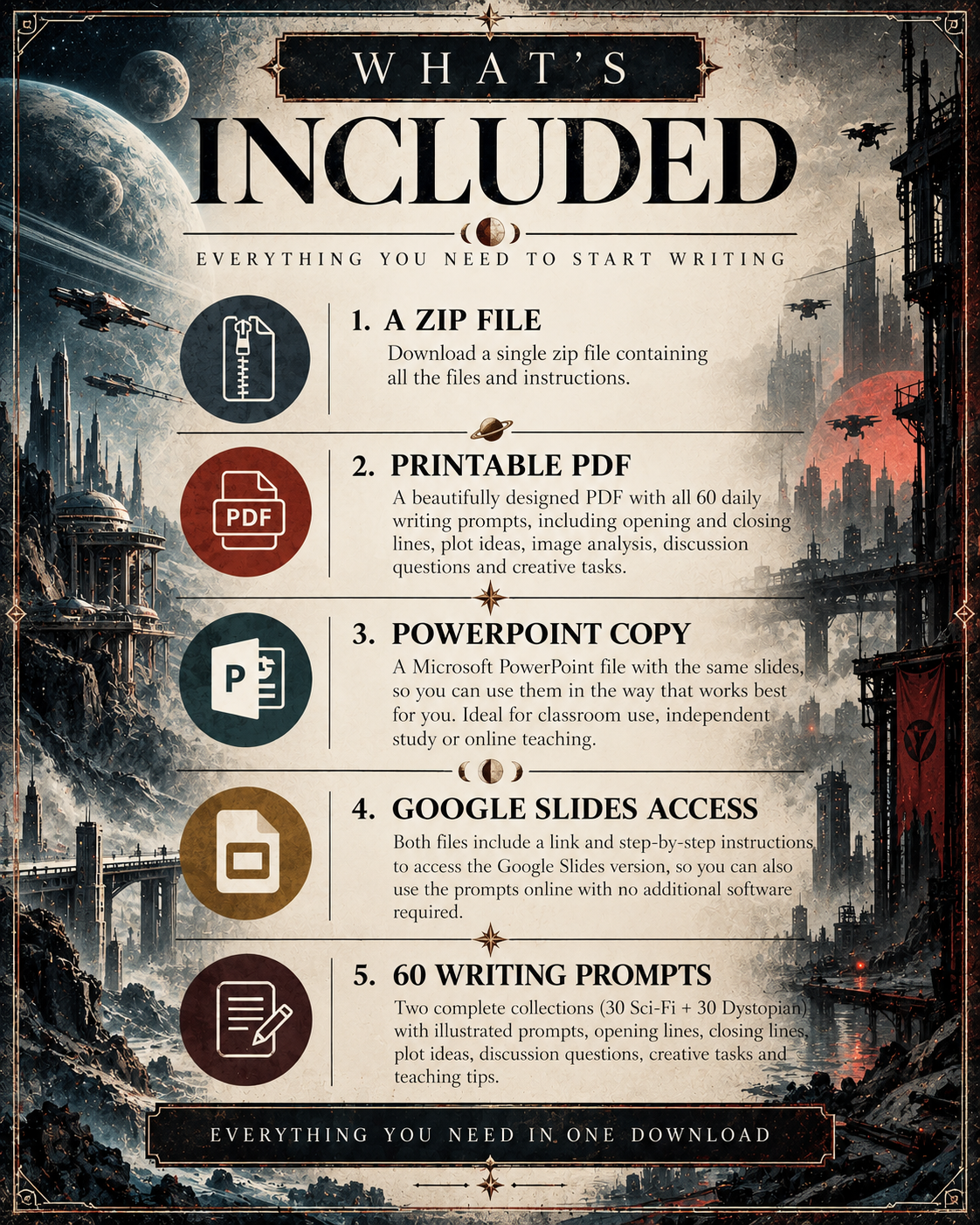 Image 7 of 7