Teach The Last Night of the World with minimal prep.
If you’re teaching The Last Night of the World by Ray Bradbury, you don’t need to spend hours creating short story analysis activities, discussion questions, essay tasks, creative writing prompts and classroom resources from scratch.
This comprehensive The Last Night of the World teaching resources bundle brings together a varied collection of ready-to-use activities designed to take students from their first exploration of Bradbury’s thought-provoking science fiction story to deeper, more confident independent analysis.
Use the resources across a sequence of lessons or choose individual activities to complement your existing teaching. Students can explore Bradbury’s presentation of mortality, acceptance, love, family relationships, the end of the world, human nature, routine, existential uncertainty and the meaning of ordinary life, while examining how his choices of symbolism, imagery, dialogue, characterisation, setting, atmosphere, irony and narrative structure contribute to the story’s quietly unsettling conclusion.
Designed for secondary English, English Language Arts (ELA) and English Literature, the bundle can be used flexibly for whole-class teaching, paired and group discussion, independent learning, homework, revision and creative writing.
Why this works
This is not simply a collection of disconnected worksheets. The bundle combines close reading, literary analysis, discussion, debate, extended writing, creative response and engaging review activities, giving students multiple ways to explore Bradbury’s story while developing increasingly independent interpretations.
Supports close reading and detailed short story analysis
Encourages active discussion, debate and critical interpretation
Develops students’ ability to support ideas with textual evidence
Combines analytical, creative and visual approaches to literature
Explores the relationship between mortality, acceptance, love and everyday human experience
Encourages students to question assumptions about fear, uncertainty and the meaning of life
Supports analysis of characterisation, setting, symbolism, imagery, dialogue, irony, tone, atmosphere and narrative structure
Includes engaging review activities such as Bingo, a crossword and word search
Develops descriptive writing through illustrated prompts and sensory worksheets
Suitable for paired, group, whole-class and independent learning
Provides flexible activities for lessons, homework, revision and extension work
Encourages students to consider the continuing relevance of Bradbury’s reflections on mortality, human connection and the value of ordinary moments
What’s included
16 Short Story Analysis Task Cards exploring context, plot and structure, title, narrative perspective, plot summary, themes, imagery and symbolism, language devices, characterisation, word choices, conflict and turning points, tone, setting, mood and personal response
15 Essay Questions encouraging detailed analytical responses to Bradbury’s presentation of mortality, acceptance, love, family relationships, human nature, symbolism, characterisation and the story’s understated conclusion
10 Creative Writing Prompts encouraging students to develop original narratives inspired by the story’s existential, emotional and speculative ideas
9 Creative Classroom Tasks offering imaginative ways to explore the story through independent and collaborative responses
36-question Roll the Dice Discussion Board providing differentiated questions for paired, small-group and whole-class discussion
10 Silent Debate Statements encouraging students to develop, justify and challenge interpretations of Bradbury’s themes, characters and messages
20 Illustrated Picture Prompts inspired by the story’s setting, atmosphere, characters and speculative fiction ideas
20 Five Senses Descriptive Writing Worksheets accompanying the picture prompts and helping students develop vivid, sensory descriptions
The Last Night of the World Bingo Review Game, including printable Bingo cards and a calling sheet for engaging classroom revision
The Last Night of the World Crossword reinforcing key vocabulary, characters, events and ideas from the story
The Last Night of the World Word Search providing an accessible vocabulary and comprehension review activity
The Last Night of the World Colouring Pages offering a creative, visual way to engage with the story and its imagery
Teacher Instructions for the Roll the Dice and Silent Debate activities, making both resources straightforward to implement
How you can use it
Introduce The Last Night of the World and develop students’ initial responses to Bradbury’s thought-provoking story
Explore the conventions of science fiction, speculative fiction and existential literature
Examine the ordinary family home and how Bradbury uses a familiar domestic setting to explore an extraordinary situation
Analyse the significance of the couple’s calm conversation about the approaching end of the world
Explore how Bradbury presents the husband and wife as ordinary people confronting an extraordinary truth
Investigate the mysterious shared dreams and their role in establishing the certainty of the world’s ending
Analyse the contrast between the enormity of the impending apocalypse and the couple’s peaceful acceptance
Explore how Bradbury uses dialogue to reveal character, develop ideas and establish atmosphere
Examine the significance of routine, domestic comfort and family relationships in the characters’ final evening
Investigate how understatement and irony challenge conventional expectations of apocalyptic fiction
Analyse the presentation of mortality, acceptance, uncertainty and human connection
Explore the relationship between ordinary life, personal meaning and the inevitability of death
Discuss why the characters choose to continue their familiar evening routines rather than react with panic
Examine the significance of the sleeping children and the parents’ decisions during their final night
Debate whether the couple’s acceptance represents courage, resignation, emotional detachment or wisdom
Explore how the ending challenges expectations about catastrophe, fear and the end of civilisation
Consider Bradbury’s reflections on love, mortality, acceptance and the importance of everyday experiences
Run low-prep paired, group or whole-class discussions using the Roll the Dice questions
Encourage students to debate competing interpretations through Silent Debate
Use the illustrated picture prompts to develop descriptive and sensory writing
Reinforce vocabulary and comprehension through Bingo, crossword and word search activities
Set independent analytical, creative or revision work
Develop ideas for extended analytical and essay responses
What students gain
Greater confidence analysing The Last Night of the World independently
A deeper understanding of Ray Bradbury’s presentation of mortality, acceptance, love and human behaviour
Stronger ability to analyse symbolism, imagery, irony, dialogue, setting, characterisation and narrative structure
Greater awareness of how science fiction can explore philosophical and existential questions
Improved understanding of how writers create atmosphere, emotional impact and understated tension
Experience developing and defending interpretations through discussion and debate
Greater confidence selecting and using textual evidence
Stronger analytical and extended writing skills
Improved descriptive writing through sensory and visual activities
Opportunities to explore the story through both analytical and creative thinking
Greater confidence connecting literary themes to questions about mortality, human connection and the meaning of life
Flexible enough for an entire teaching sequence
The variety of resources means the bundle can support far more than a single lesson.
Begin with introductory discussion and close reading, move into focused analysis of the husband and wife, their shared understanding of the world’s ending, the domestic setting and Bradbury’s use of dialogue, symbolism and understatement, then challenge students through Silent Debate and differentiated discussion questions.
Develop extended responses through the essay questions, encourage imaginative thinking through the creative writing activities, or use the picture prompts and Five Senses worksheets to strengthen descriptive writing.
Finish the unit with an engaging Bingo review game, crossword or word search, helping students revisit important vocabulary, characters, events and ideas.
Teachers can select the activities that suit their class or combine them to create a broader The Last Night of the World teaching sequence.
Download Now
Download the complete The Last Night of the World by Ray Bradbury Teaching Resources Bundle and start using it immediately, from first reading and classroom discussion through to detailed short story analysis, independent interpretation, creative writing and extended analytical responses.
Digital download: Printable PDF resources. No physical product will be shipped.
Teach The Last Night of the World with minimal prep.
If you’re teaching The Last Night of the World by Ray Bradbury, you don’t need to spend hours creating short story analysis activities, discussion questions, essay tasks, creative writing prompts and classroom resources from scratch.
This comprehensive The Last Night of the World teaching resources bundle brings together a varied collection of ready-to-use activities designed to take students from their first exploration of Bradbury’s thought-provoking science fiction story to deeper, more confident independent analysis.
Use the resources across a sequence of lessons or choose individual activities to complement your existing teaching. Students can explore Bradbury’s presentation of mortality, acceptance, love, family relationships, the end of the world, human nature, routine, existential uncertainty and the meaning of ordinary life, while examining how his choices of symbolism, imagery, dialogue, characterisation, setting, atmosphere, irony and narrative structure contribute to the story’s quietly unsettling conclusion.
Designed for secondary English, English Language Arts (ELA) and English Literature, the bundle can be used flexibly for whole-class teaching, paired and group discussion, independent learning, homework, revision and creative writing.
Why this works
This is not simply a collection of disconnected worksheets. The bundle combines close reading, literary analysis, discussion, debate, extended writing, creative response and engaging review activities, giving students multiple ways to explore Bradbury’s story while developing increasingly independent interpretations.
Supports close reading and detailed short story analysis
Encourages active discussion, debate and critical interpretation
Develops students’ ability to support ideas with textual evidence
Combines analytical, creative and visual approaches to literature
Explores the relationship between mortality, acceptance, love and everyday human experience
Encourages students to question assumptions about fear, uncertainty and the meaning of life
Supports analysis of characterisation, setting, symbolism, imagery, dialogue, irony, tone, atmosphere and narrative structure
Includes engaging review activities such as Bingo, a crossword and word search
Develops descriptive writing through illustrated prompts and sensory worksheets
Suitable for paired, group, whole-class and independent learning
Provides flexible activities for lessons, homework, revision and extension work
Encourages students to consider the continuing relevance of Bradbury’s reflections on mortality, human connection and the value of ordinary moments
What’s included
16 Short Story Analysis Task Cards exploring context, plot and structure, title, narrative perspective, plot summary, themes, imagery and symbolism, language devices, characterisation, word choices, conflict and turning points, tone, setting, mood and personal response
15 Essay Questions encouraging detailed analytical responses to Bradbury’s presentation of mortality, acceptance, love, family relationships, human nature, symbolism, characterisation and the story’s understated conclusion
10 Creative Writing Prompts encouraging students to develop original narratives inspired by the story’s existential, emotional and speculative ideas
9 Creative Classroom Tasks offering imaginative ways to explore the story through independent and collaborative responses
36-question Roll the Dice Discussion Board providing differentiated questions for paired, small-group and whole-class discussion
10 Silent Debate Statements encouraging students to develop, justify and challenge interpretations of Bradbury’s themes, characters and messages
20 Illustrated Picture Prompts inspired by the story’s setting, atmosphere, characters and speculative fiction ideas
20 Five Senses Descriptive Writing Worksheets accompanying the picture prompts and helping students develop vivid, sensory descriptions
The Last Night of the World Bingo Review Game, including printable Bingo cards and a calling sheet for engaging classroom revision
The Last Night of the World Crossword reinforcing key vocabulary, characters, events and ideas from the story
The Last Night of the World Word Search providing an accessible vocabulary and comprehension review activity
The Last Night of the World Colouring Pages offering a creative, visual way to engage with the story and its imagery
Teacher Instructions for the Roll the Dice and Silent Debate activities, making both resources straightforward to implement
How you can use it
Introduce The Last Night of the World and develop students’ initial responses to Bradbury’s thought-provoking story
Explore the conventions of science fiction, speculative fiction and existential literature
Examine the ordinary family home and how Bradbury uses a familiar domestic setting to explore an extraordinary situation
Analyse the significance of the couple’s calm conversation about the approaching end of the world
Explore how Bradbury presents the husband and wife as ordinary people confronting an extraordinary truth
Investigate the mysterious shared dreams and their role in establishing the certainty of the world’s ending
Analyse the contrast between the enormity of the impending apocalypse and the couple’s peaceful acceptance
Explore how Bradbury uses dialogue to reveal character, develop ideas and establish atmosphere
Examine the significance of routine, domestic comfort and family relationships in the characters’ final evening
Investigate how understatement and irony challenge conventional expectations of apocalyptic fiction
Analyse the presentation of mortality, acceptance, uncertainty and human connection
Explore the relationship between ordinary life, personal meaning and the inevitability of death
Discuss why the characters choose to continue their familiar evening routines rather than react with panic
Examine the significance of the sleeping children and the parents’ decisions during their final night
Debate whether the couple’s acceptance represents courage, resignation, emotional detachment or wisdom
Explore how the ending challenges expectations about catastrophe, fear and the end of civilisation
Consider Bradbury’s reflections on love, mortality, acceptance and the importance of everyday experiences
Run low-prep paired, group or whole-class discussions using the Roll the Dice questions
Encourage students to debate competing interpretations through Silent Debate
Use the illustrated picture prompts to develop descriptive and sensory writing
Reinforce vocabulary and comprehension through Bingo, crossword and word search activities
Set independent analytical, creative or revision work
Develop ideas for extended analytical and essay responses
What students gain
Greater confidence analysing The Last Night of the World independently
A deeper understanding of Ray Bradbury’s presentation of mortality, acceptance, love and human behaviour
Stronger ability to analyse symbolism, imagery, irony, dialogue, setting, characterisation and narrative structure
Greater awareness of how science fiction can explore philosophical and existential questions
Improved understanding of how writers create atmosphere, emotional impact and understated tension
Experience developing and defending interpretations through discussion and debate
Greater confidence selecting and using textual evidence
Stronger analytical and extended writing skills
Improved descriptive writing through sensory and visual activities
Opportunities to explore the story through both analytical and creative thinking
Greater confidence connecting literary themes to questions about mortality, human connection and the meaning of life
Flexible enough for an entire teaching sequence
The variety of resources means the bundle can support far more than a single lesson.
Begin with introductory discussion and close reading, move into focused analysis of the husband and wife, their shared understanding of the world’s ending, the domestic setting and Bradbury’s use of dialogue, symbolism and understatement, then challenge students through Silent Debate and differentiated discussion questions.
Develop extended responses through the essay questions, encourage imaginative thinking through the creative writing activities, or use the picture prompts and Five Senses worksheets to strengthen descriptive writing.
Finish the unit with an engaging Bingo review game, crossword or word search, helping students revisit important vocabulary, characters, events and ideas.
Teachers can select the activities that suit their class or combine them to create a broader The Last Night of the World teaching sequence.
Download Now
Download the complete The Last Night of the World by Ray Bradbury Teaching Resources Bundle and start using it immediately, from first reading and classroom discussion through to detailed short story analysis, independent interpretation, creative writing and extended analytical responses.
Digital download: Printable PDF resources. No physical product will be shipped.
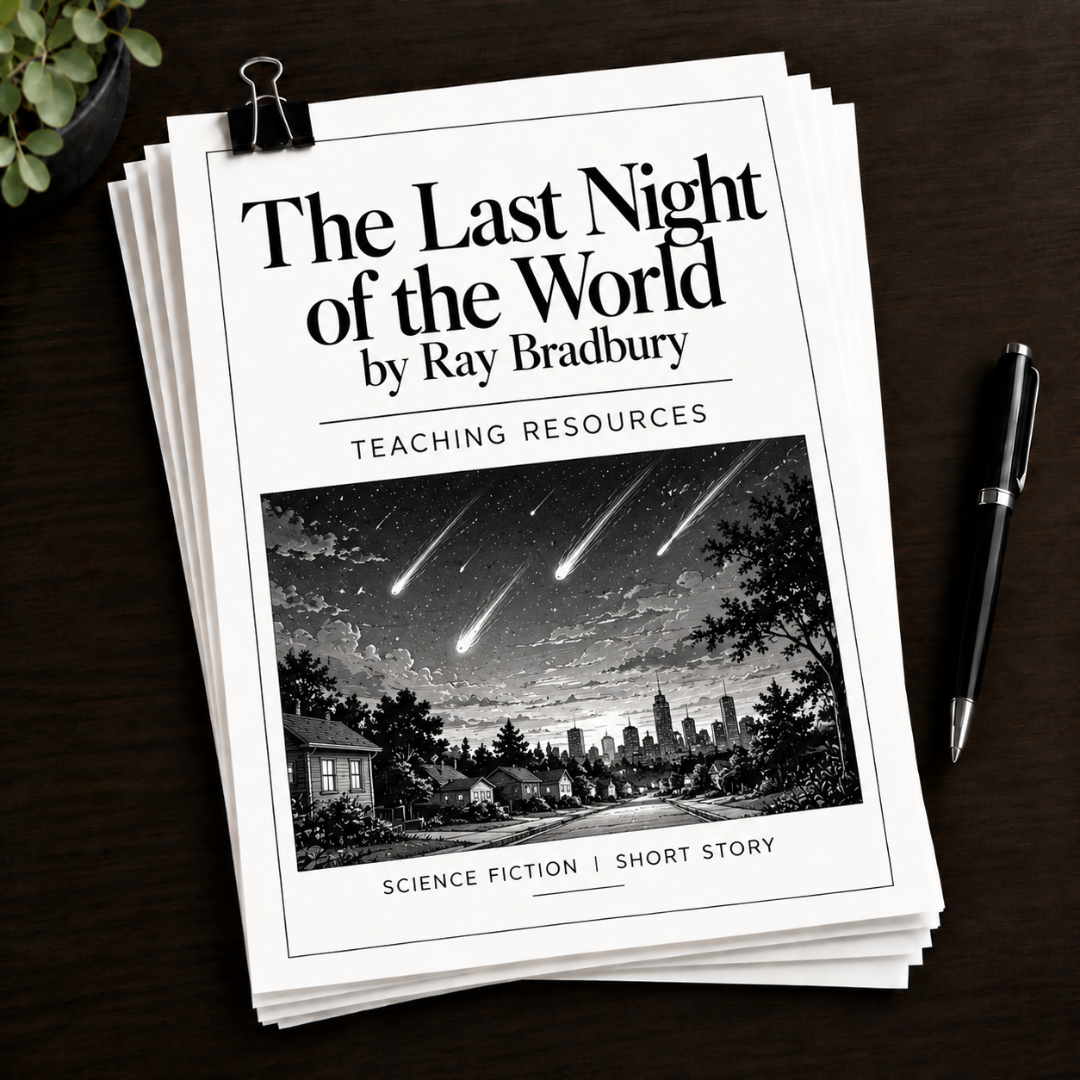 Image 1 of 12
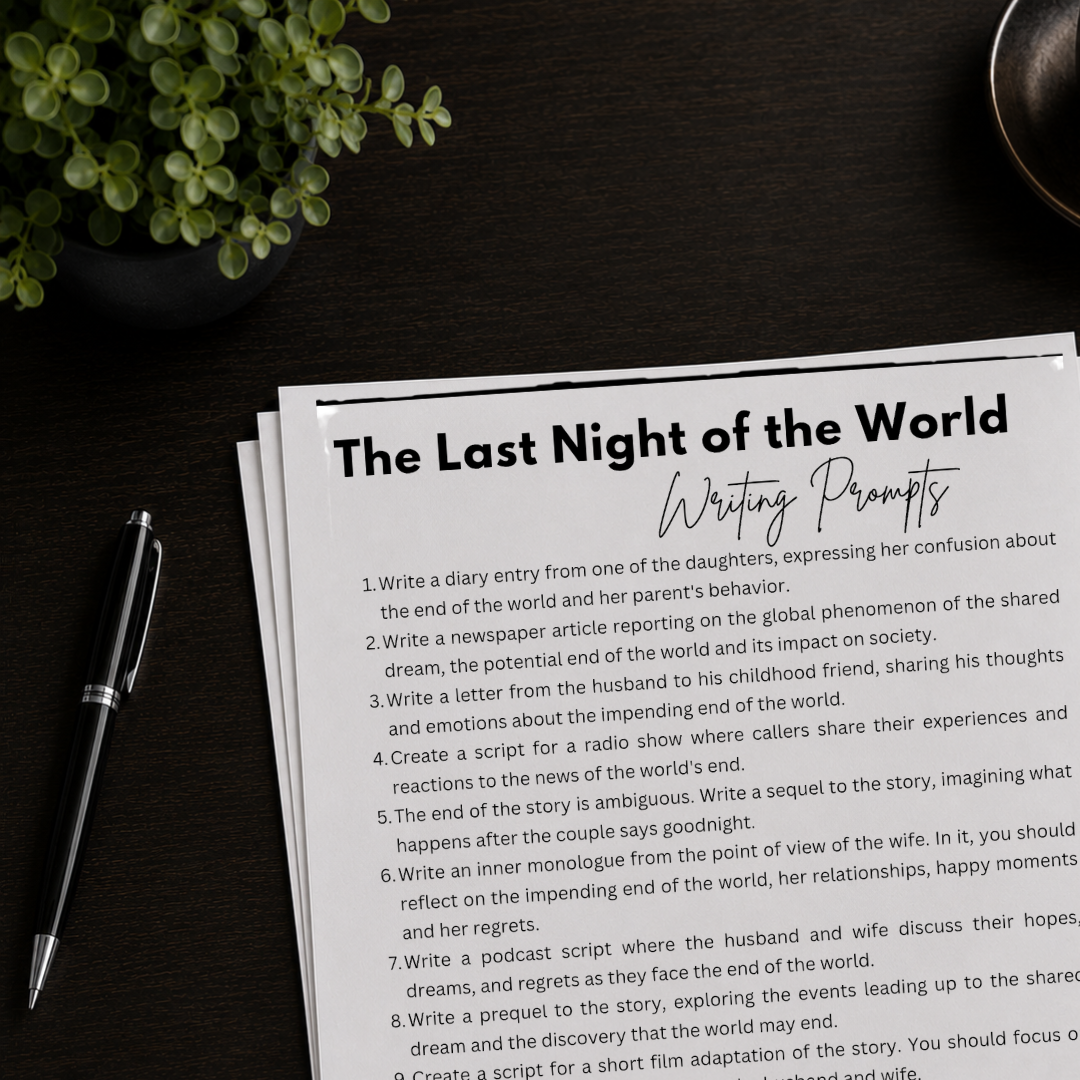 Image 2 of 12
 Image 3 of 12
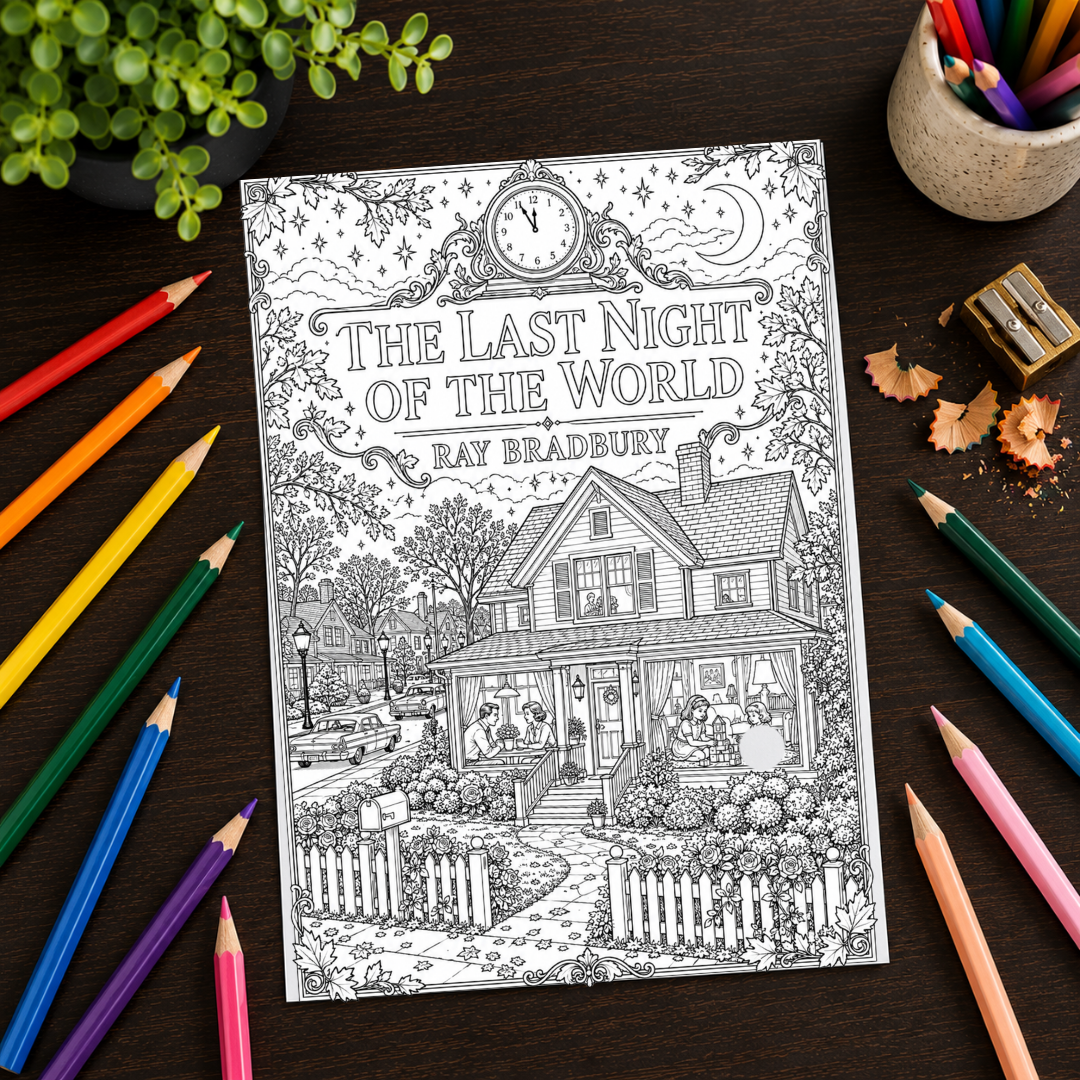 Image 4 of 12
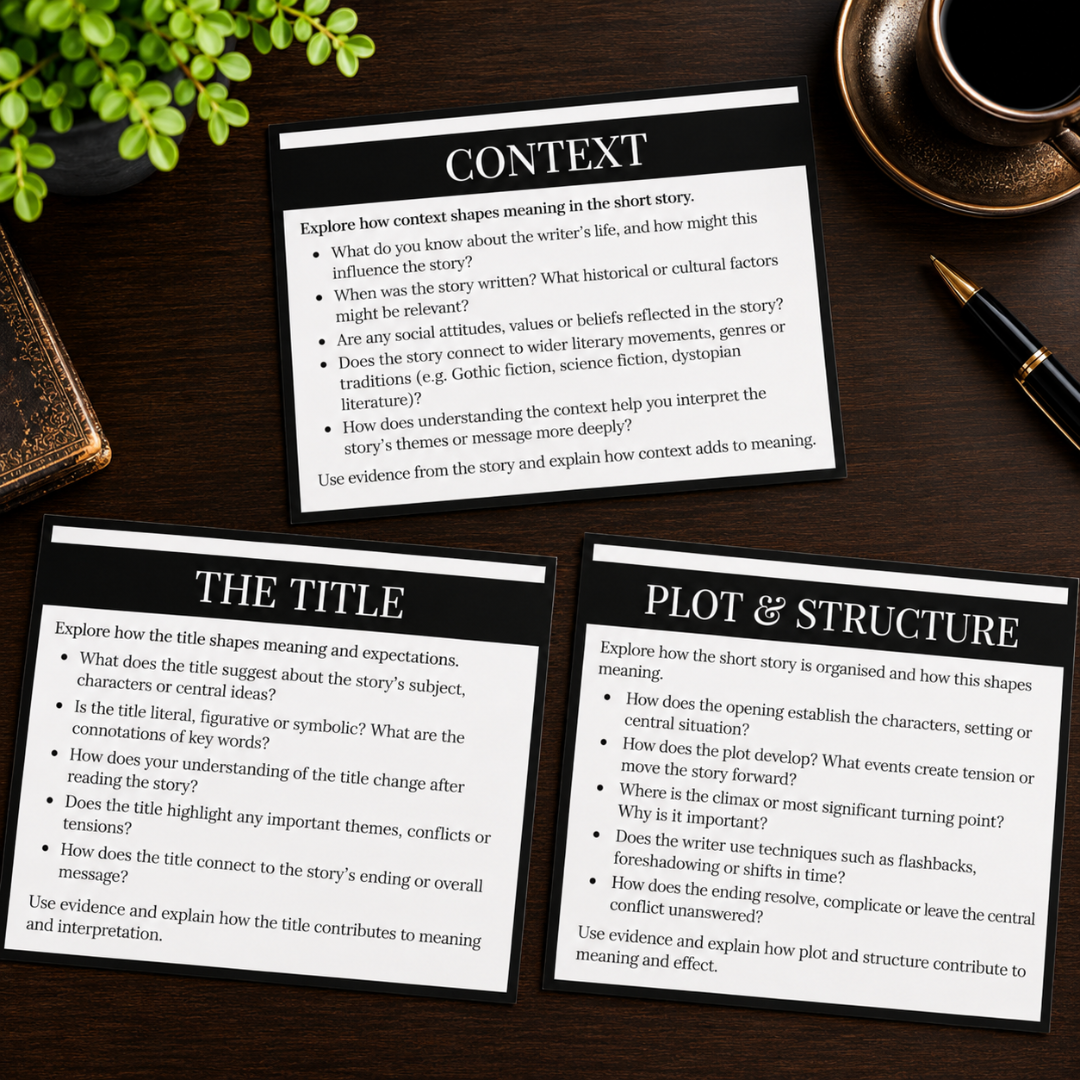 Image 5 of 12
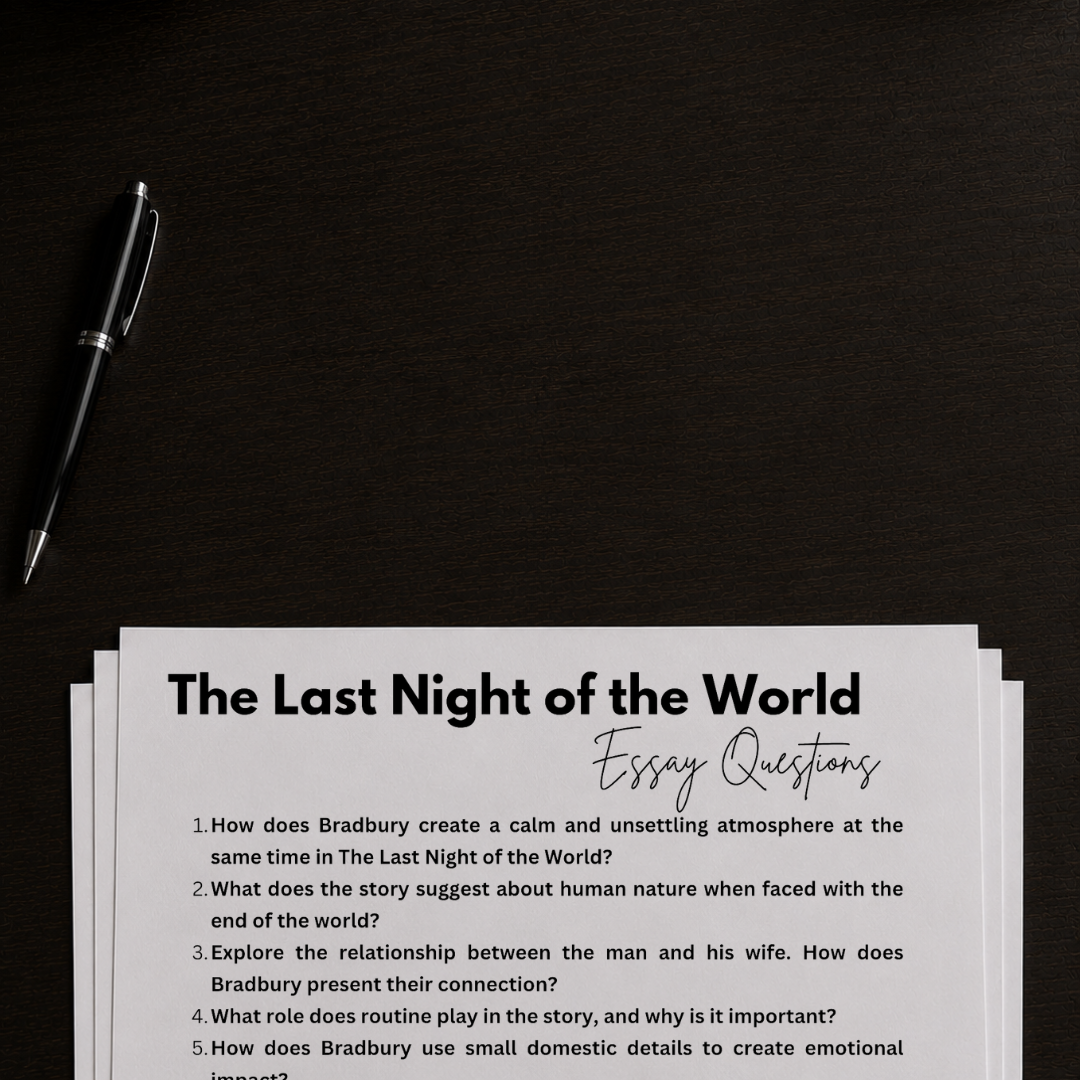 Image 6 of 12
 Image 7 of 12
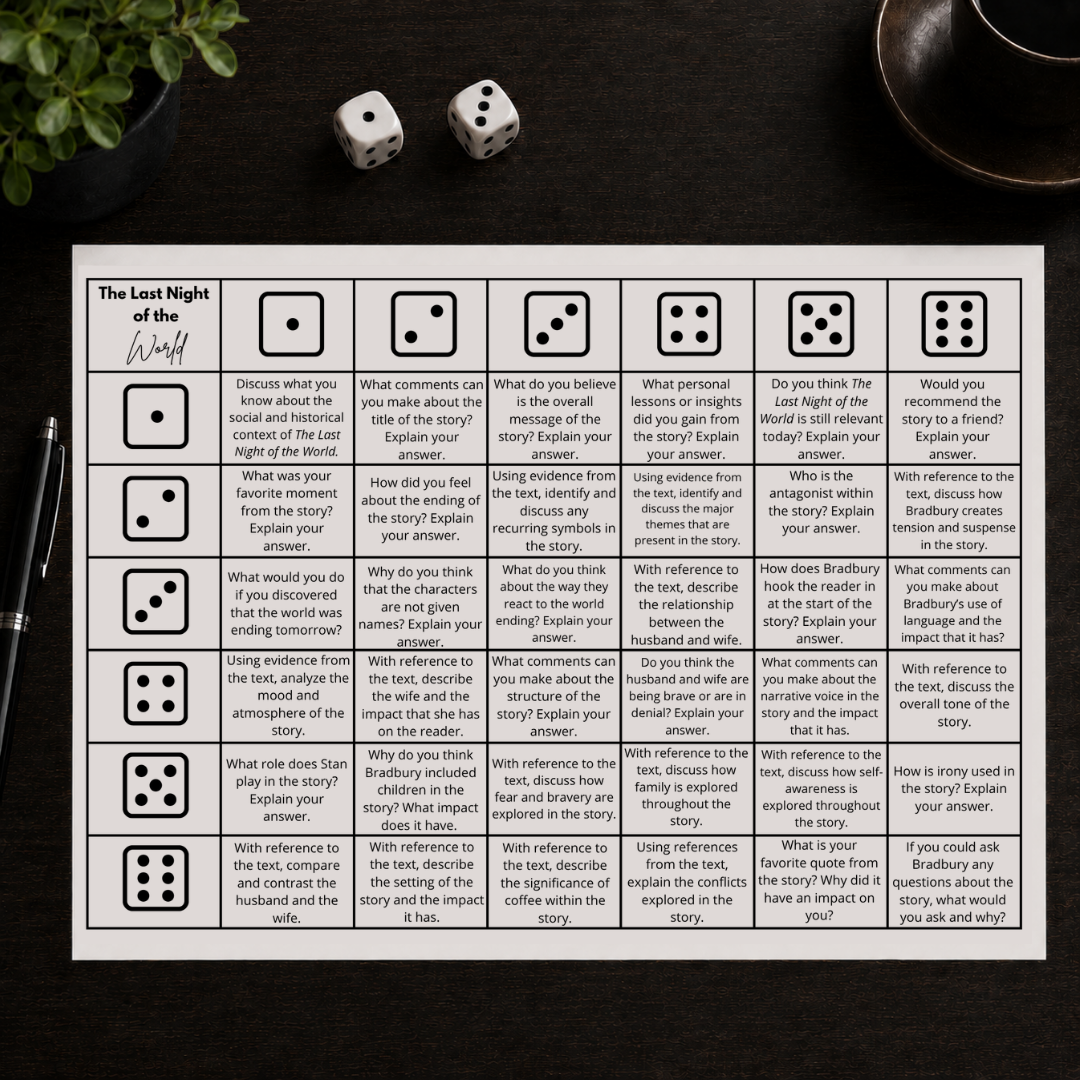 Image 8 of 12
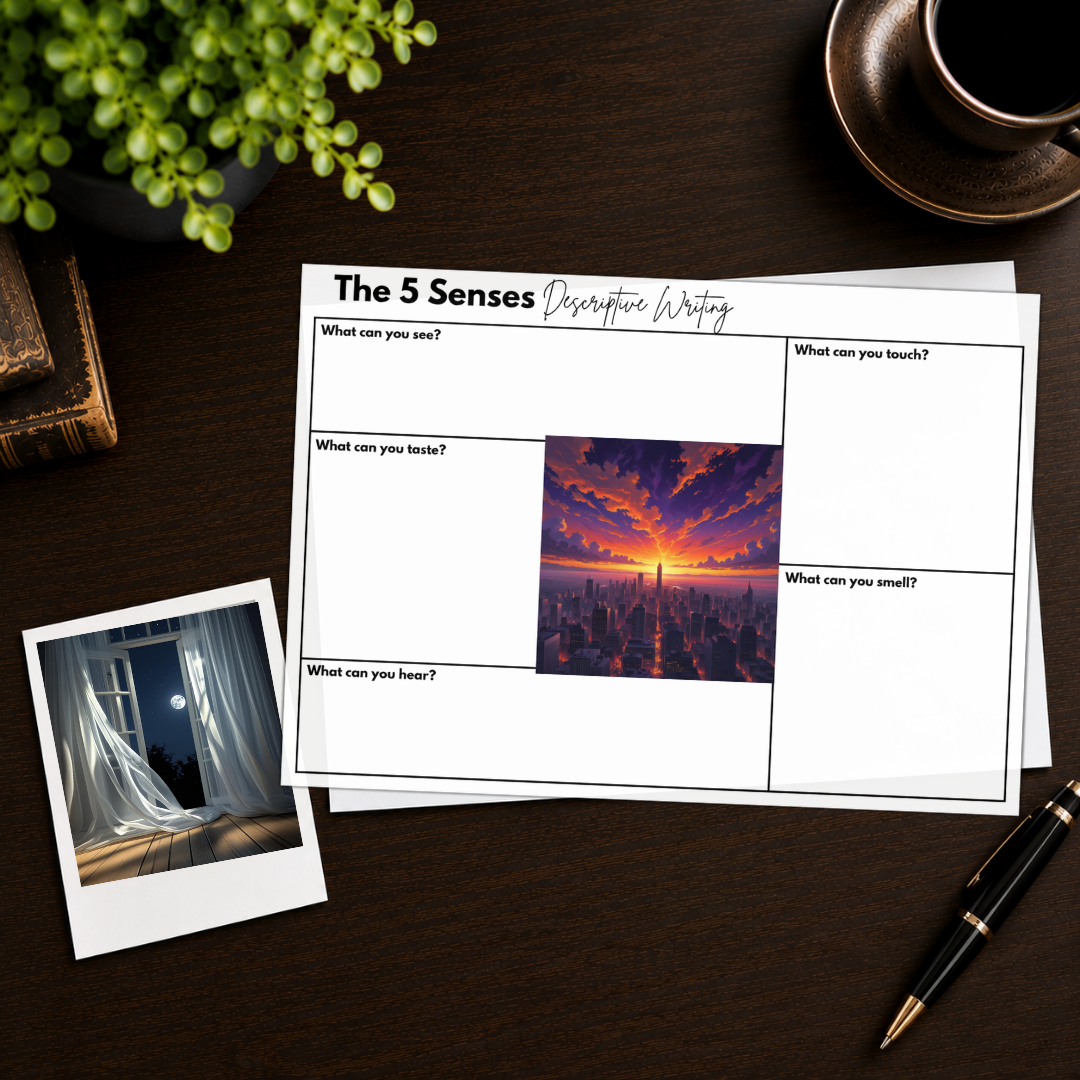 Image 9 of 12
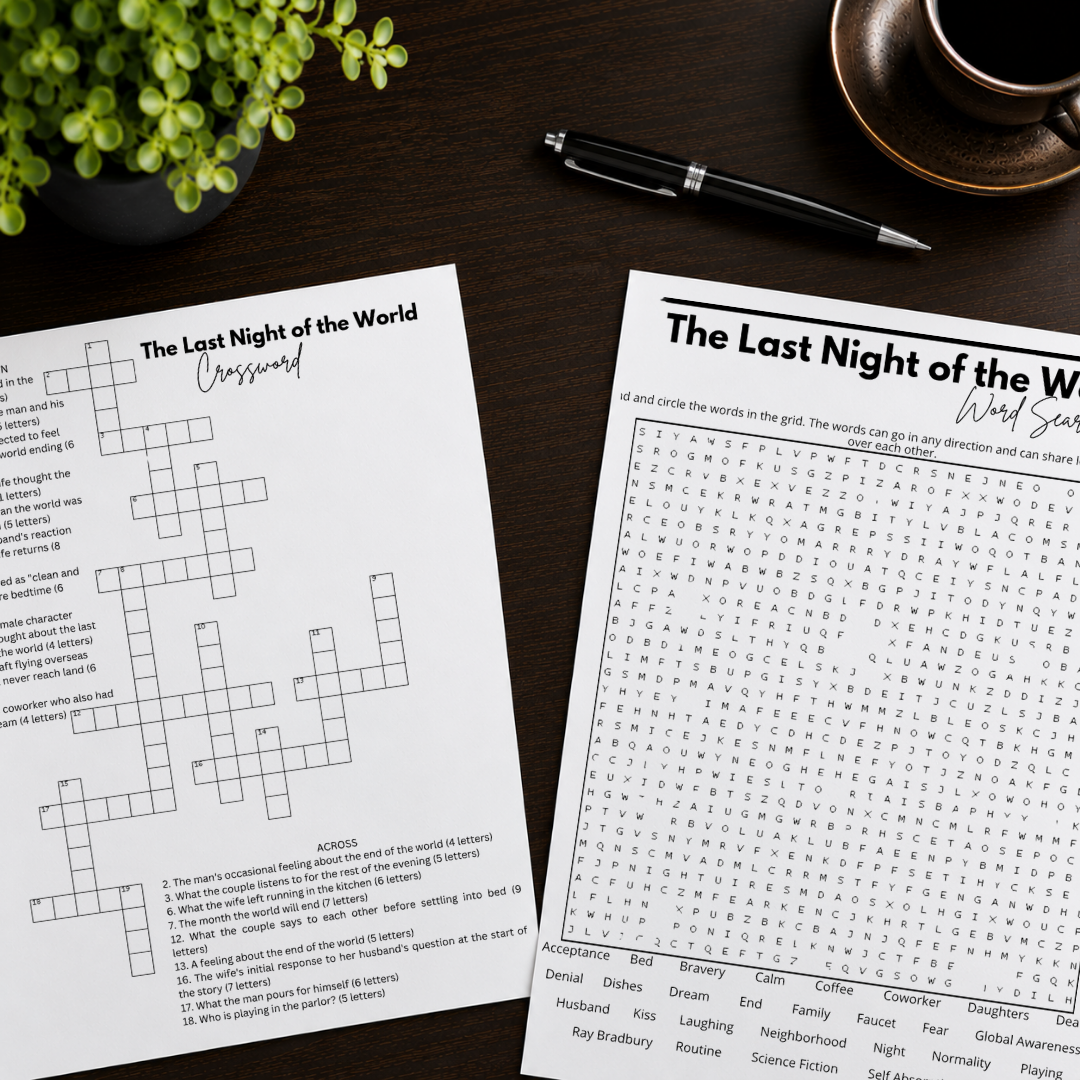 Image 10 of 12
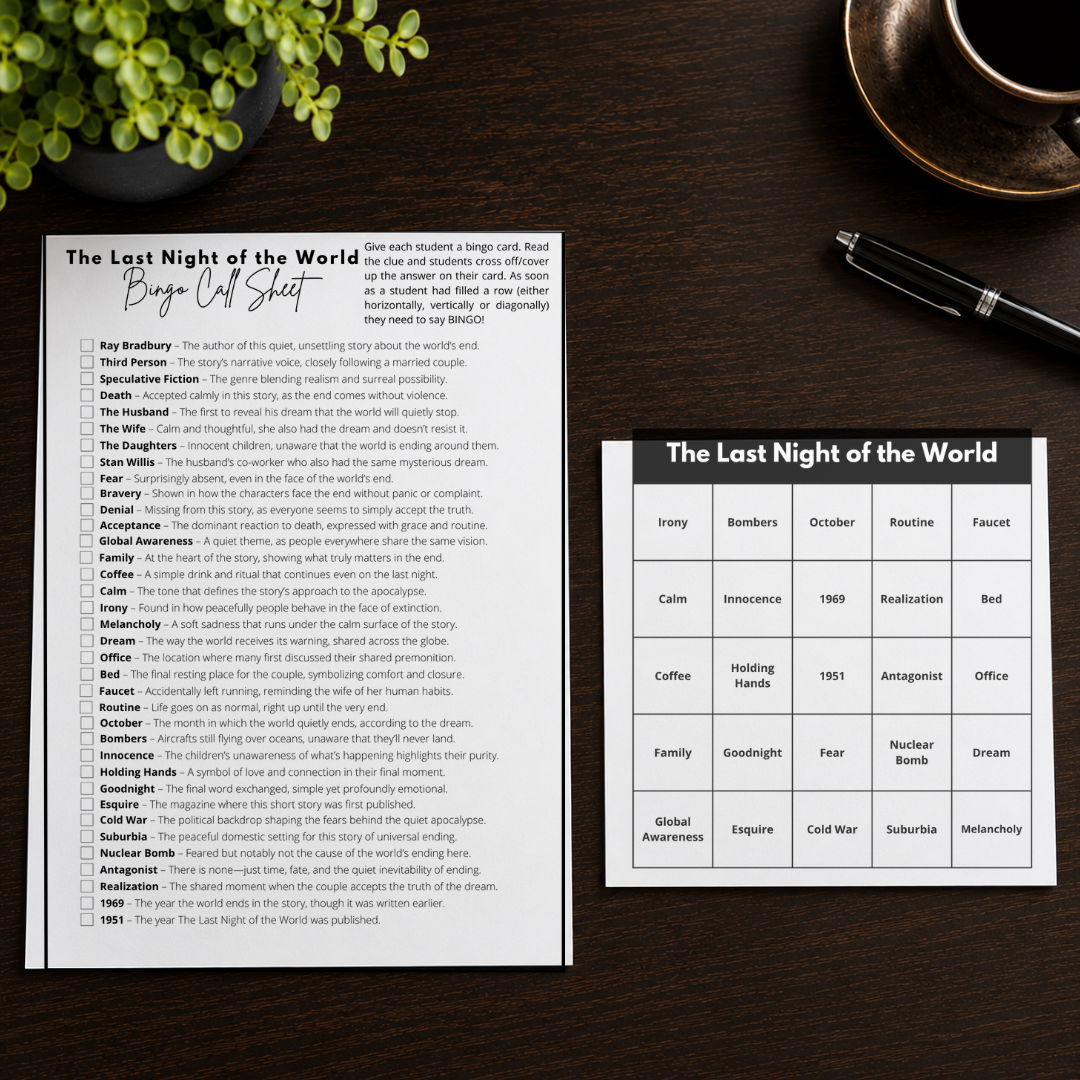 Image 11 of 12
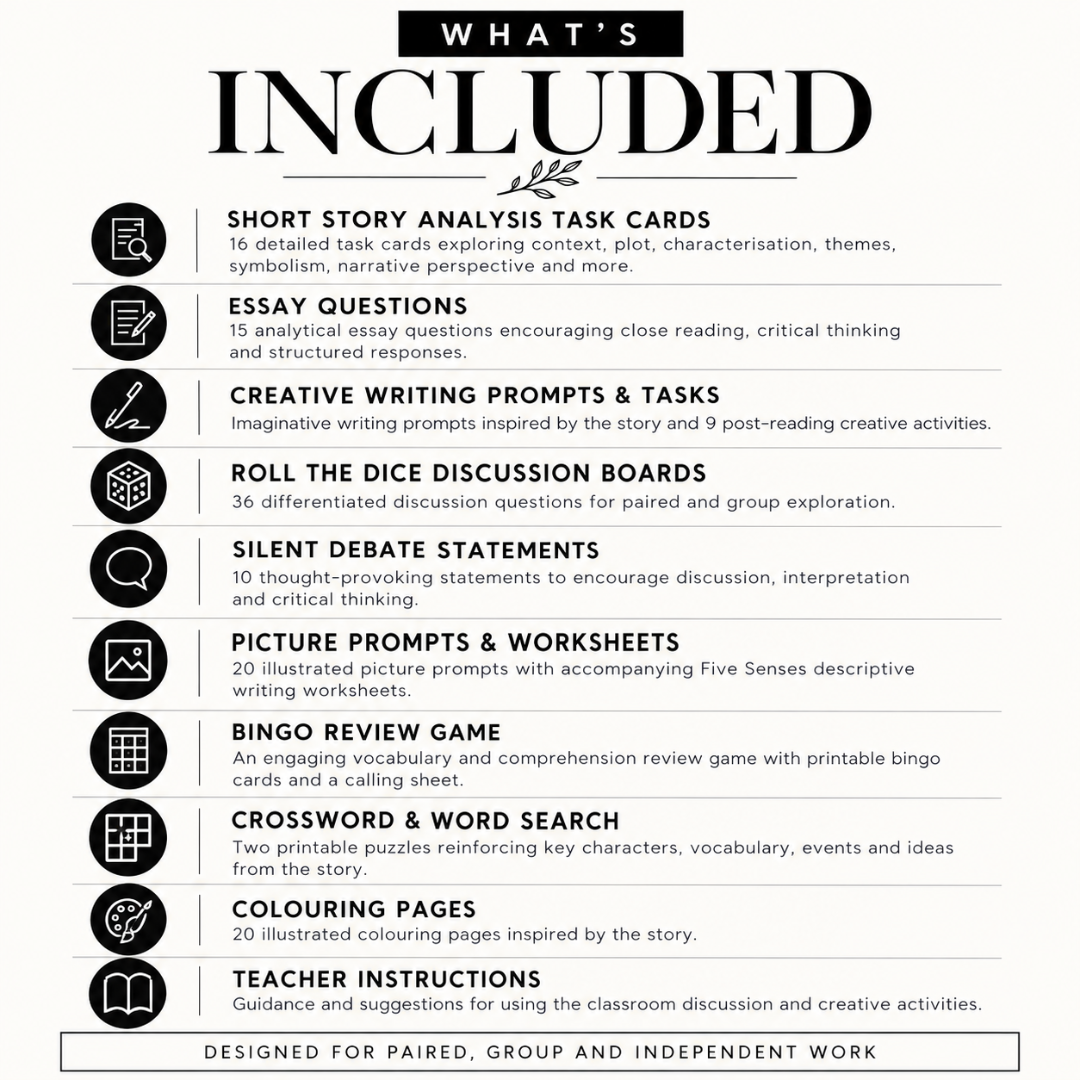 Image 12 of 12