Teach For the Fallen with minimal prep.
If you’re teaching For the Fallen by Laurence Binyon, you don’t need to spend hours creating discussion questions, poetry analysis activities, essay tasks and creative responses from scratch.
This complete For the Fallen teaching resource bundle brings together a varied collection of ready-to-use activities designed to take students from their first exploration of the poem to deeper, more confident independent analysis.
Use the resources across a sequence of lessons or choose individual activities to complement your existing teaching. Students can explore Binyon’s presentation of war, sacrifice, loss, grief, remembrance, honour and collective memory, while examining how his choices of imagery, symbolism, repetition, form, structure, rhythm and tone shape the poem’s enduring presentation of the fallen.
Designed for secondary English and English Literature, the bundle can be used flexibly for whole-class teaching, paired and group discussion, independent learning, homework, revision and analytical writing.
Why this works
This is not simply a collection of disconnected worksheets. The bundle combines close analysis, discussion, debate, extended writing and creative response, giving students multiple ways to engage with the poem while developing increasingly independent interpretations.
Supports close reading and detailed poetry analysis
Encourages active discussion, debate and interpretation
Develops students’ ability to support ideas with textual evidence
Combines analytical and creative approaches to poetry
Suitable for paired, group, whole-class and independent learning
Provides flexible activities for lessons, homework and revision
Explores Binyon’s use of imagery, symbolism, personification, repetition, contrast, rhythm, structure and tone
Encourages students to consider the relationship between the poem and its First World War and remembrance context
What’s included
Poetry Analysis Task Cards exploring context, form and structure, title, speaker, themes, imagery, language devices, sound techniques, lexical choices, shifts, tone, setting, mood and personal response
36-question Roll the Dice Discussion Board exploring remembrance, sacrifice, loss, youth, grief, absence, imagery, repetition, structure, tone and Binyon’s overall message
10 Silent Debate statements designed to encourage students to form, justify and challenge interpretations of the poem
15 essay questions covering key areas of analysis including remembrance, sacrifice, youth, absence, collective grief, imagery, repetition, stars, light, form, structure and tone
10 creative writing prompts including documentary scripts, letters, descriptive writing, poetry, monologues, short stories, speeches, journalism and diary writing
9 creative classroom tasks, including a stained glass window design, podcast script, illustrated poem, playscript, documentary storyboard and script, inner monologue, symbolism photography, newspaper article and museum exhibit
Teacher instructions for the Roll the Dice and Silent Debate activities, making both activities quick and straightforward to implement
How you can use it
Introduce For the Fallen and develop students’ initial responses
Explore the social and historical context of the First World War
Analyse Binyon’s presentation of soldiers who died during the conflict
Explore the poem’s presentation of sacrifice, honour, grief and collective remembrance
Examine themes including war, death, loss, youth, absence, memory and remembrance
Analyse imagery, symbolism, personification, repetition, contrast and elevated language
Investigate the significance of “They shall grow not old, as we that are left grow old”
Explore the enduring significance of “At the going down of the sun and in the morning / We will remember them”
Examine Binyon’s use of stars, light, home and everyday life to explore memory and absence
Explore form, rhythm, rhyme, structure and tone
Run low-prep paired, group or whole-class discussions
Encourage students to debate competing interpretations rather than search for a single “correct” reading
Set independent analytical, creative or revision work
Develop ideas for extended analytical and essay responses
What students gain
Greater confidence analysing For the Fallen independently
A deeper understanding of Laurence Binyon’s presentation of sacrifice, loss and remembrance
Stronger ability to analyse language, imagery, symbolism, form and structure
Experience developing and defending interpretations
Improved discussion and analytical writing skills
Greater confidence selecting and using textual evidence
Opportunities to approach the poem through both analytical and creative thinking
A more developed understanding of how historical and cultural context can shape poetic meaning
Flexible enough for an entire teaching sequence
The variety of resources means the bundle can support far more than a single lesson. Begin with discussion and personal response, move into focused analysis of imagery, symbolism, repetition and structure, challenge students through Silent Debate, develop extended responses through the essay questions, or finish the unit with one of the creative tasks.
Teachers can select the activities that suit their class or combine them to create a broader For the Fallen teaching sequence.
Download Now
Download the complete For the Fallen by Laurence Binyon Teaching Resources Bundle and start using it immediately, from first reading and classroom discussion through to detailed poetry analysis, independent interpretation and extended writing.
Teach For the Fallen with minimal prep.
If you’re teaching For the Fallen by Laurence Binyon, you don’t need to spend hours creating discussion questions, poetry analysis activities, essay tasks and creative responses from scratch.
This complete For the Fallen teaching resource bundle brings together a varied collection of ready-to-use activities designed to take students from their first exploration of the poem to deeper, more confident independent analysis.
Use the resources across a sequence of lessons or choose individual activities to complement your existing teaching. Students can explore Binyon’s presentation of war, sacrifice, loss, grief, remembrance, honour and collective memory, while examining how his choices of imagery, symbolism, repetition, form, structure, rhythm and tone shape the poem’s enduring presentation of the fallen.
Designed for secondary English and English Literature, the bundle can be used flexibly for whole-class teaching, paired and group discussion, independent learning, homework, revision and analytical writing.
Why this works
This is not simply a collection of disconnected worksheets. The bundle combines close analysis, discussion, debate, extended writing and creative response, giving students multiple ways to engage with the poem while developing increasingly independent interpretations.
Supports close reading and detailed poetry analysis
Encourages active discussion, debate and interpretation
Develops students’ ability to support ideas with textual evidence
Combines analytical and creative approaches to poetry
Suitable for paired, group, whole-class and independent learning
Provides flexible activities for lessons, homework and revision
Explores Binyon’s use of imagery, symbolism, personification, repetition, contrast, rhythm, structure and tone
Encourages students to consider the relationship between the poem and its First World War and remembrance context
What’s included
Poetry Analysis Task Cards exploring context, form and structure, title, speaker, themes, imagery, language devices, sound techniques, lexical choices, shifts, tone, setting, mood and personal response
36-question Roll the Dice Discussion Board exploring remembrance, sacrifice, loss, youth, grief, absence, imagery, repetition, structure, tone and Binyon’s overall message
10 Silent Debate statements designed to encourage students to form, justify and challenge interpretations of the poem
15 essay questions covering key areas of analysis including remembrance, sacrifice, youth, absence, collective grief, imagery, repetition, stars, light, form, structure and tone
10 creative writing prompts including documentary scripts, letters, descriptive writing, poetry, monologues, short stories, speeches, journalism and diary writing
9 creative classroom tasks, including a stained glass window design, podcast script, illustrated poem, playscript, documentary storyboard and script, inner monologue, symbolism photography, newspaper article and museum exhibit
Teacher instructions for the Roll the Dice and Silent Debate activities, making both activities quick and straightforward to implement
How you can use it
Introduce For the Fallen and develop students’ initial responses
Explore the social and historical context of the First World War
Analyse Binyon’s presentation of soldiers who died during the conflict
Explore the poem’s presentation of sacrifice, honour, grief and collective remembrance
Examine themes including war, death, loss, youth, absence, memory and remembrance
Analyse imagery, symbolism, personification, repetition, contrast and elevated language
Investigate the significance of “They shall grow not old, as we that are left grow old”
Explore the enduring significance of “At the going down of the sun and in the morning / We will remember them”
Examine Binyon’s use of stars, light, home and everyday life to explore memory and absence
Explore form, rhythm, rhyme, structure and tone
Run low-prep paired, group or whole-class discussions
Encourage students to debate competing interpretations rather than search for a single “correct” reading
Set independent analytical, creative or revision work
Develop ideas for extended analytical and essay responses
What students gain
Greater confidence analysing For the Fallen independently
A deeper understanding of Laurence Binyon’s presentation of sacrifice, loss and remembrance
Stronger ability to analyse language, imagery, symbolism, form and structure
Experience developing and defending interpretations
Improved discussion and analytical writing skills
Greater confidence selecting and using textual evidence
Opportunities to approach the poem through both analytical and creative thinking
A more developed understanding of how historical and cultural context can shape poetic meaning
Flexible enough for an entire teaching sequence
The variety of resources means the bundle can support far more than a single lesson. Begin with discussion and personal response, move into focused analysis of imagery, symbolism, repetition and structure, challenge students through Silent Debate, develop extended responses through the essay questions, or finish the unit with one of the creative tasks.
Teachers can select the activities that suit their class or combine them to create a broader For the Fallen teaching sequence.
Download Now
Download the complete For the Fallen by Laurence Binyon Teaching Resources Bundle and start using it immediately, from first reading and classroom discussion through to detailed poetry analysis, independent interpretation and extended writing.
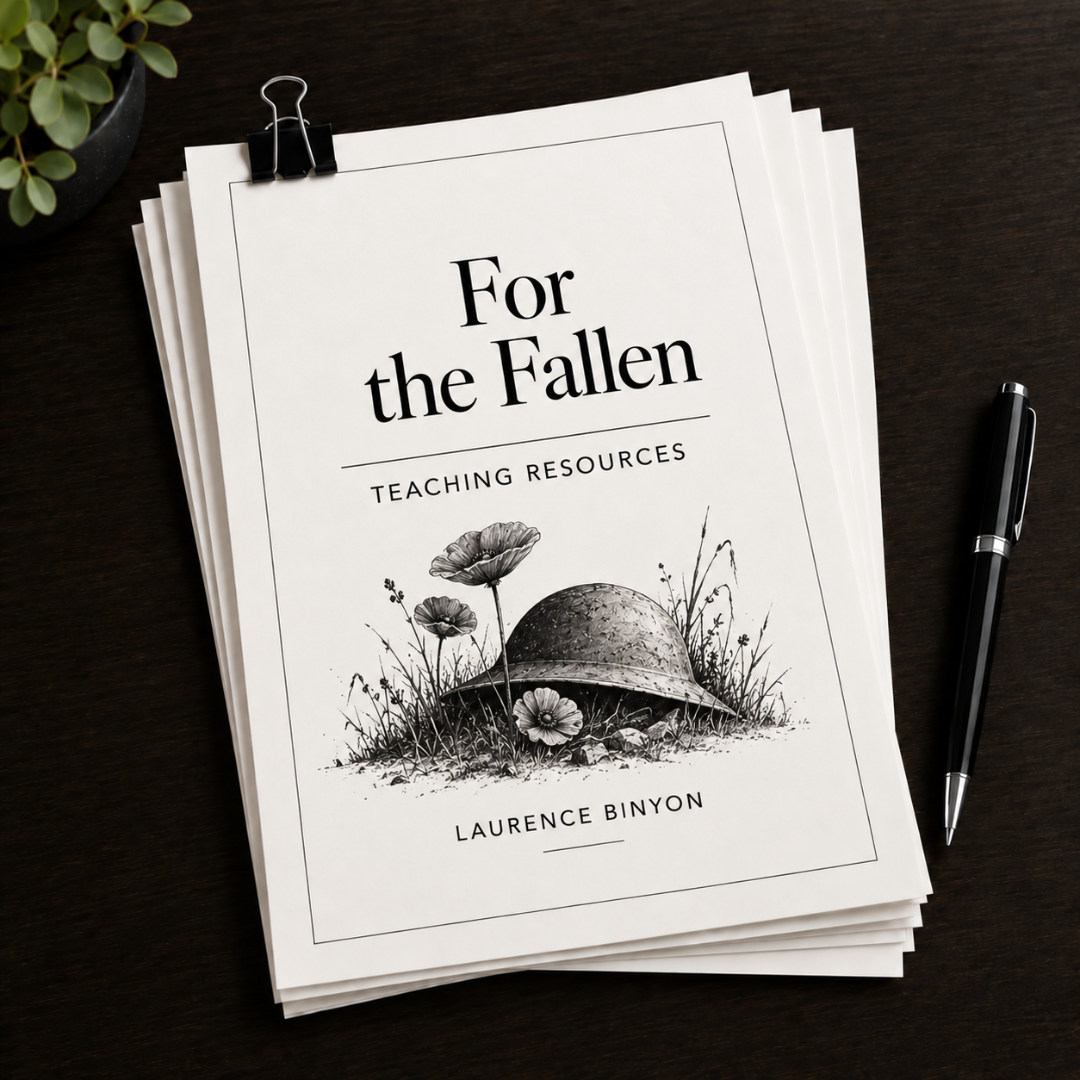 Image 1 of 8
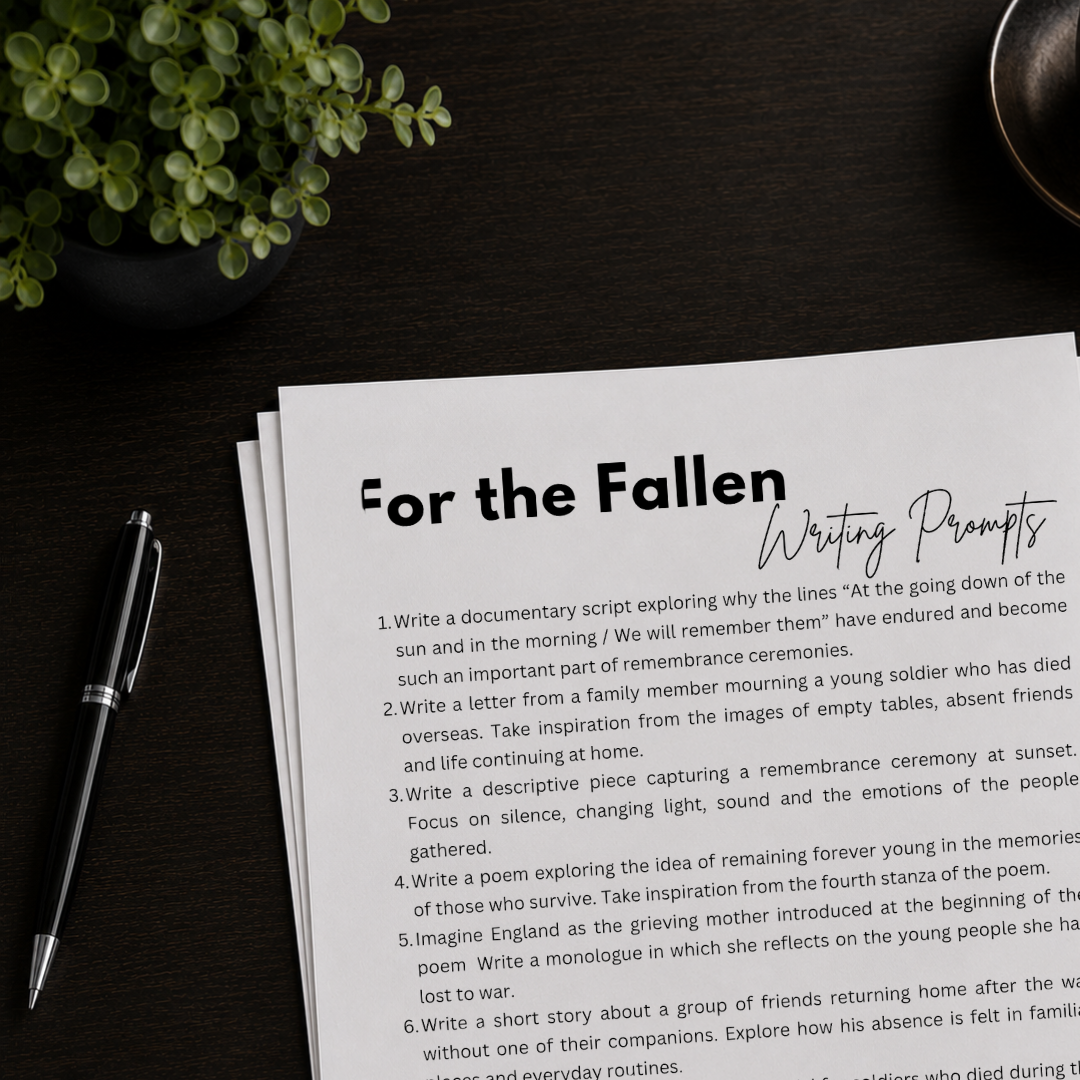 Image 2 of 8
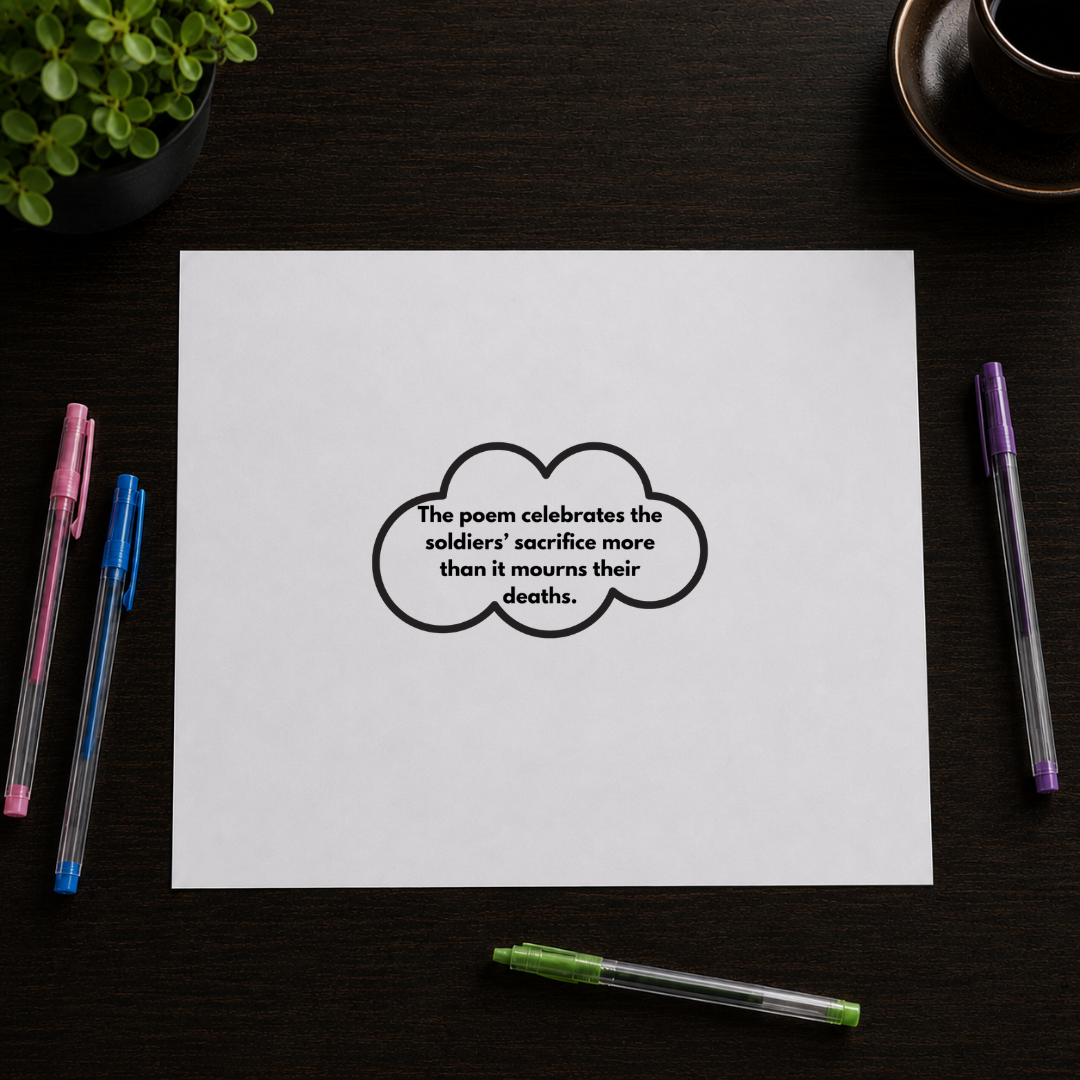 Image 3 of 8
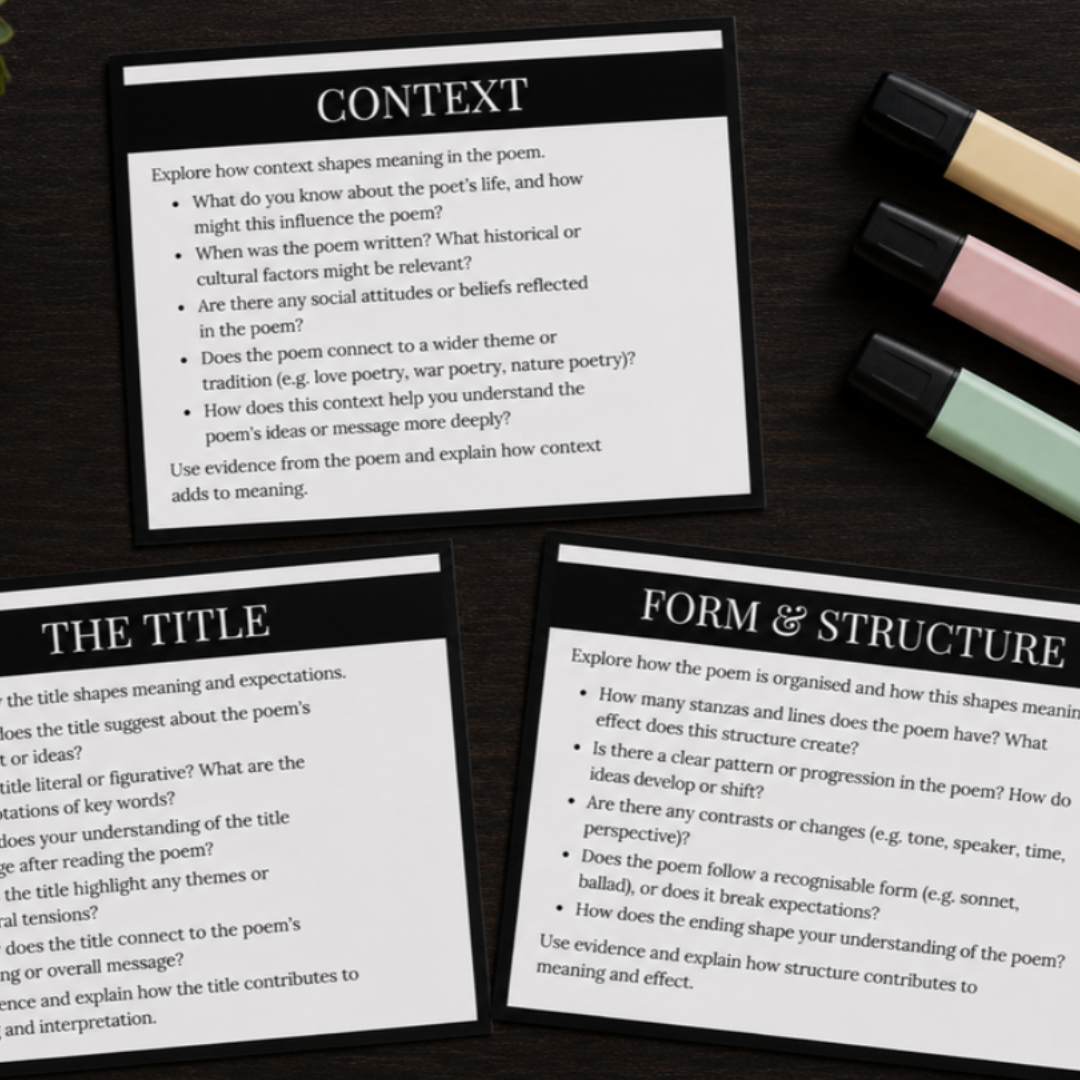 Image 4 of 8
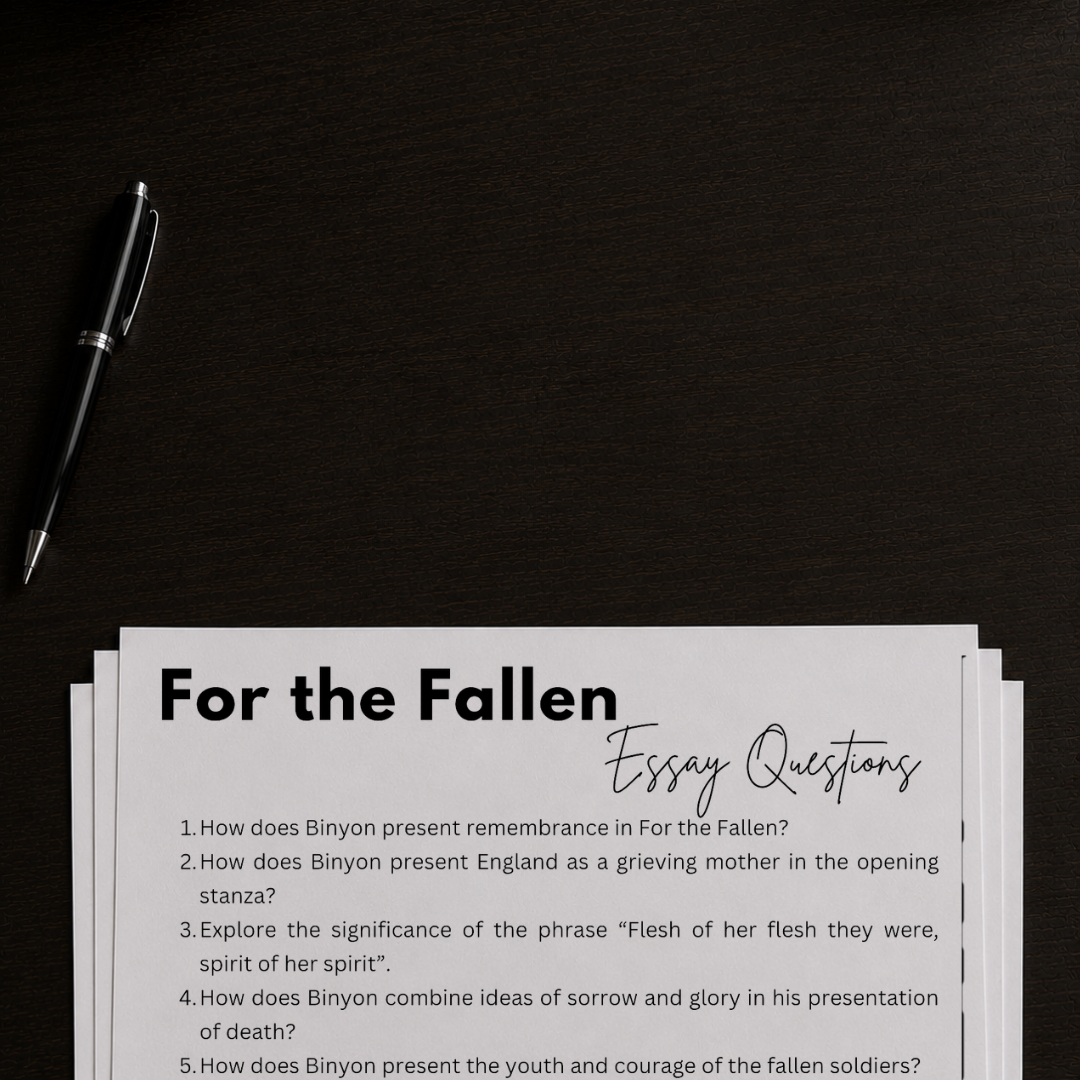 Image 5 of 8
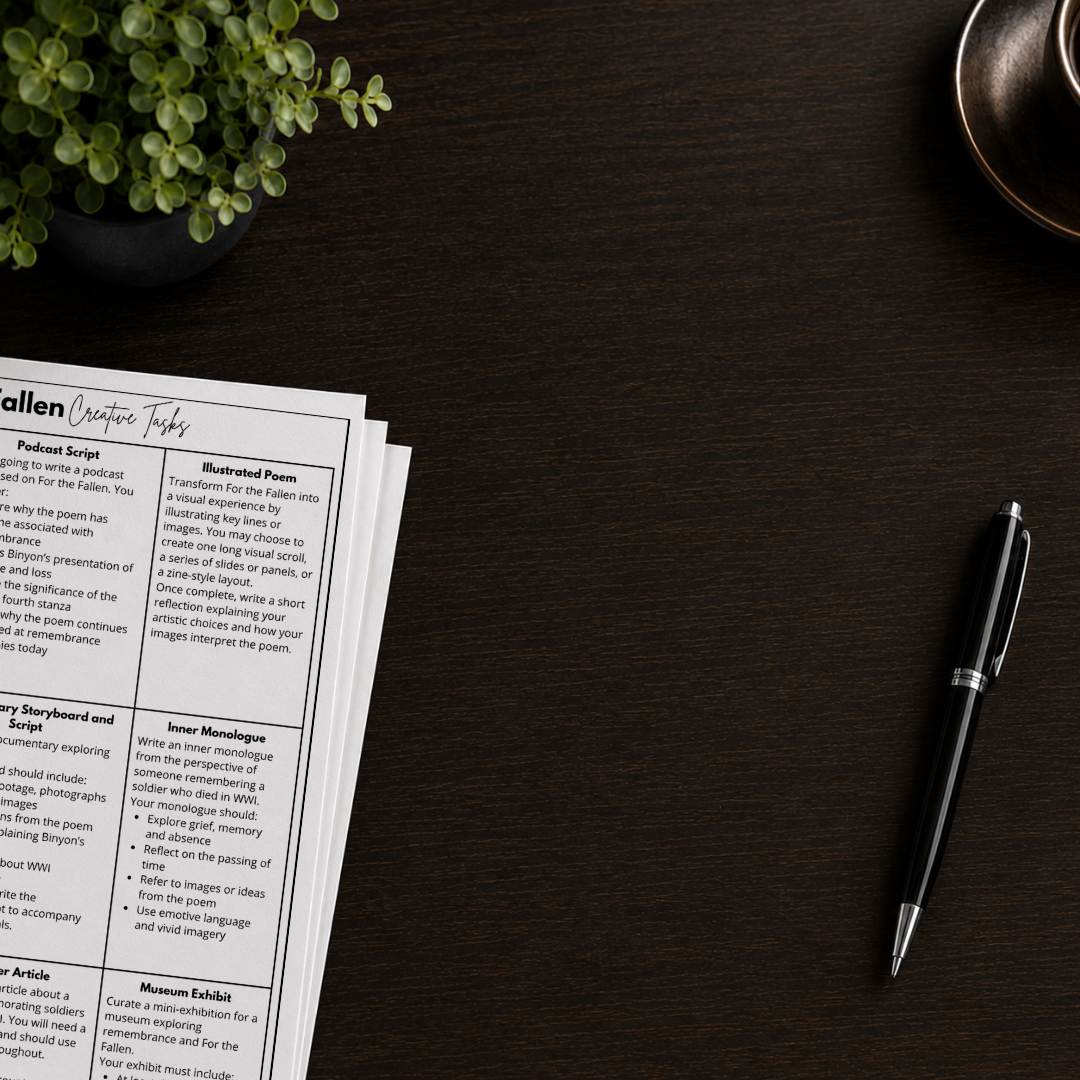 Image 6 of 8
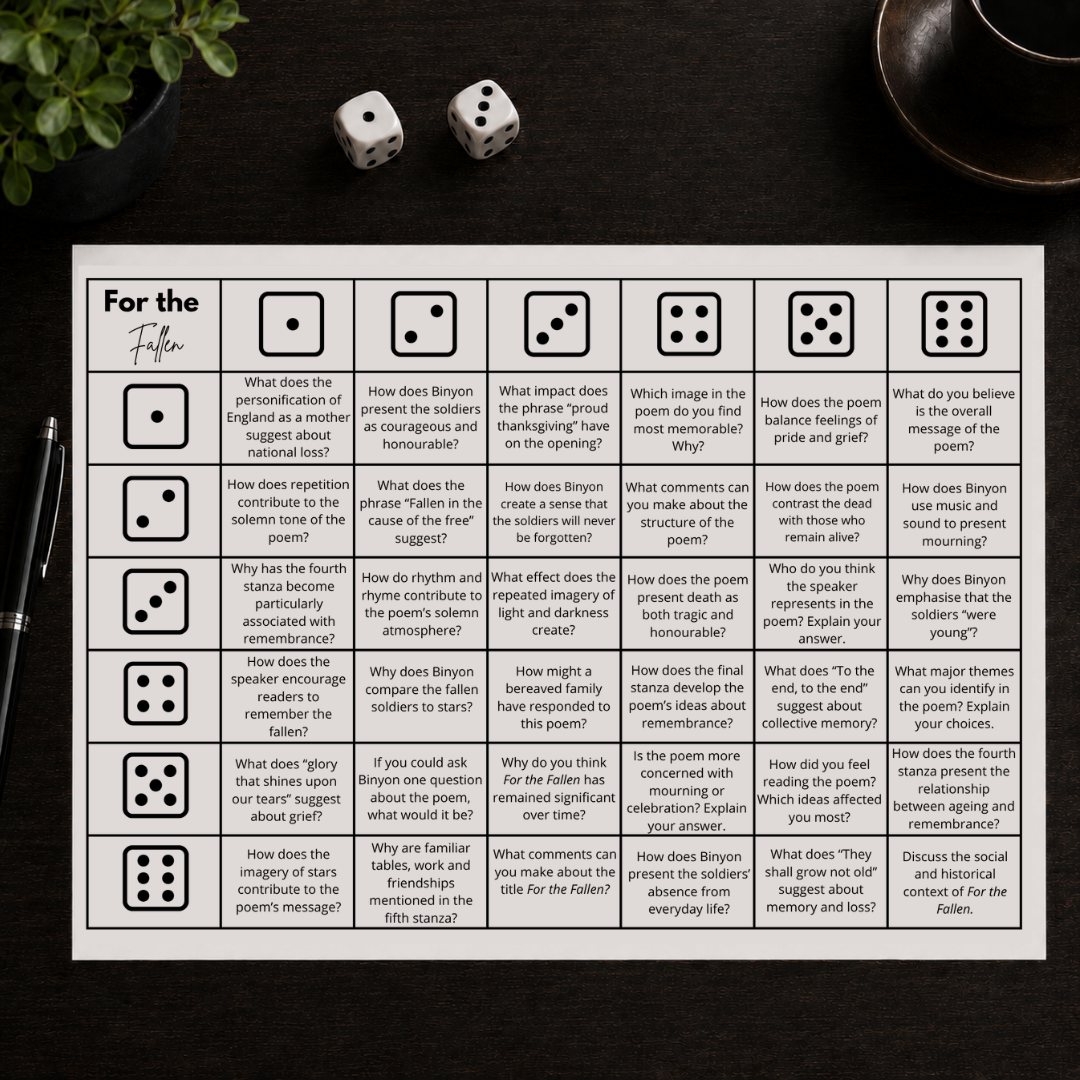 Image 7 of 8
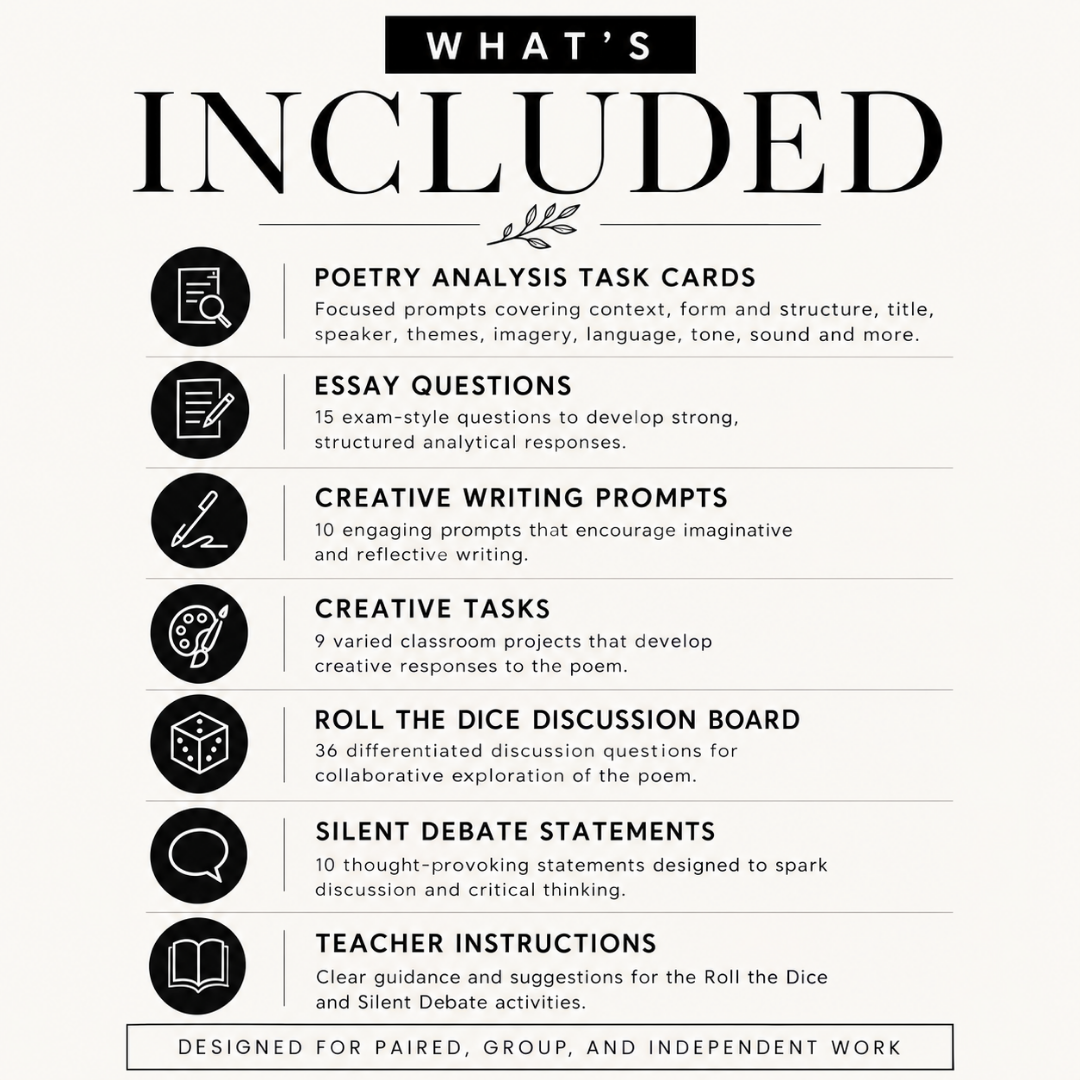 Image 8 of 8