 Image 1 of 8
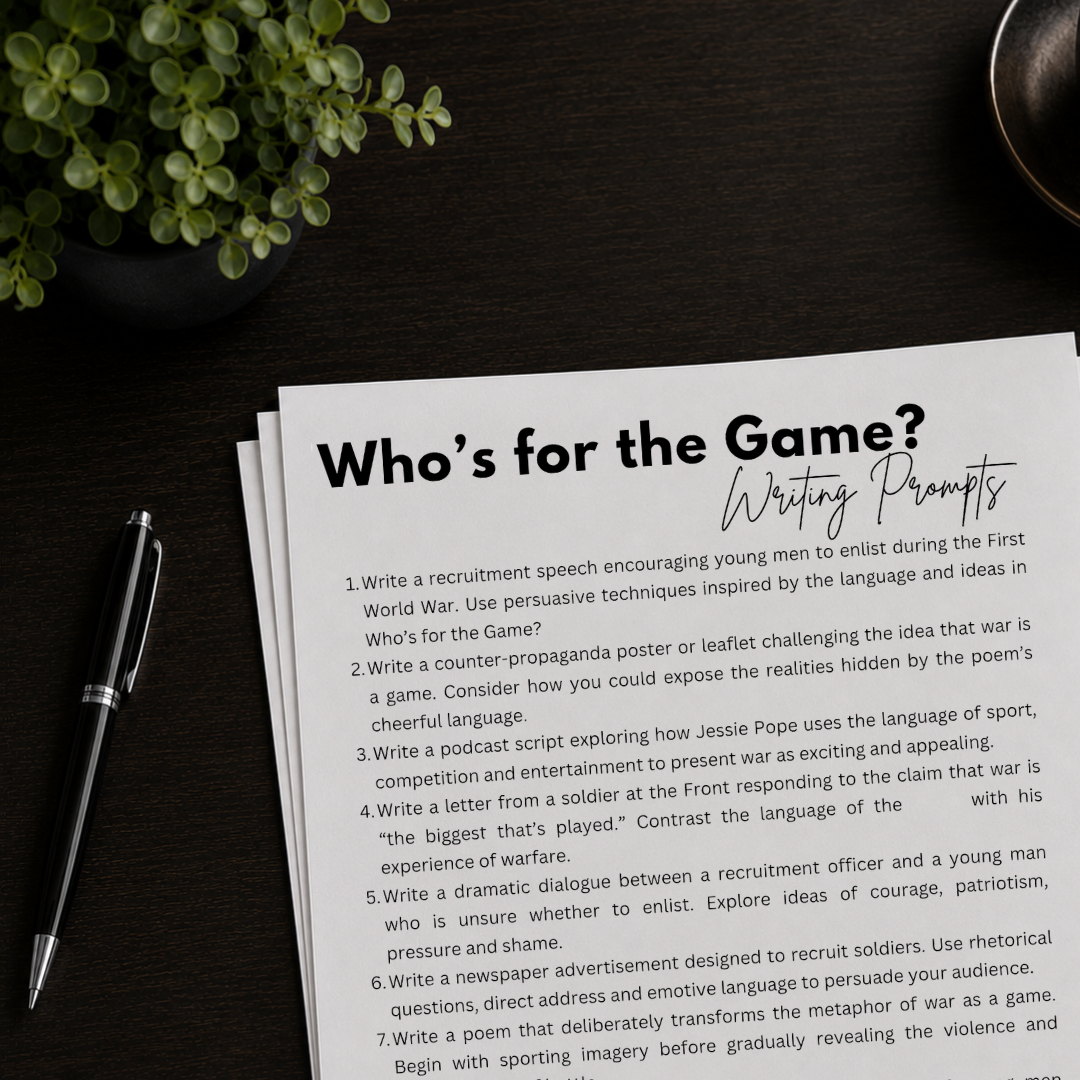 Image 2 of 8
 Image 3 of 8
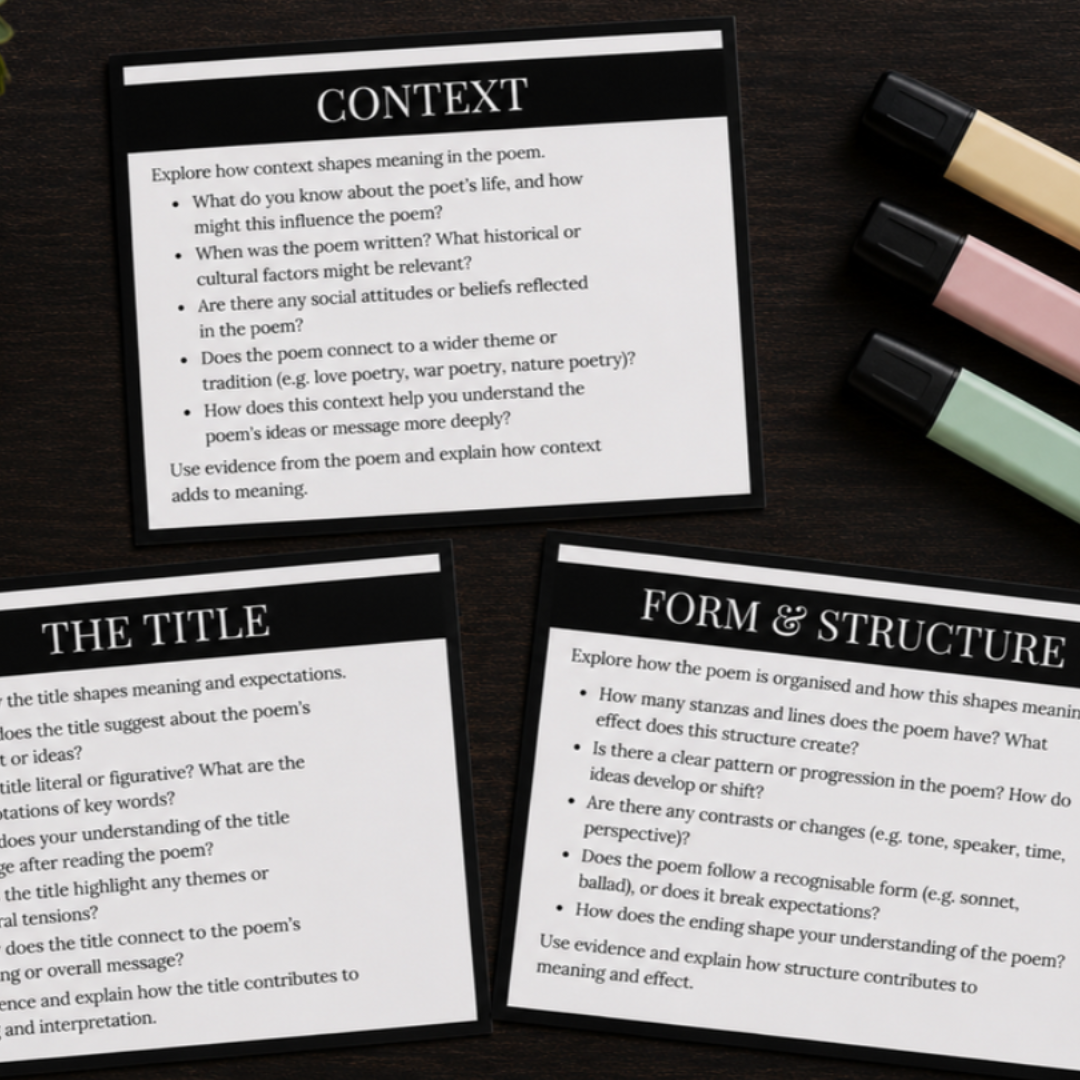 Image 4 of 8
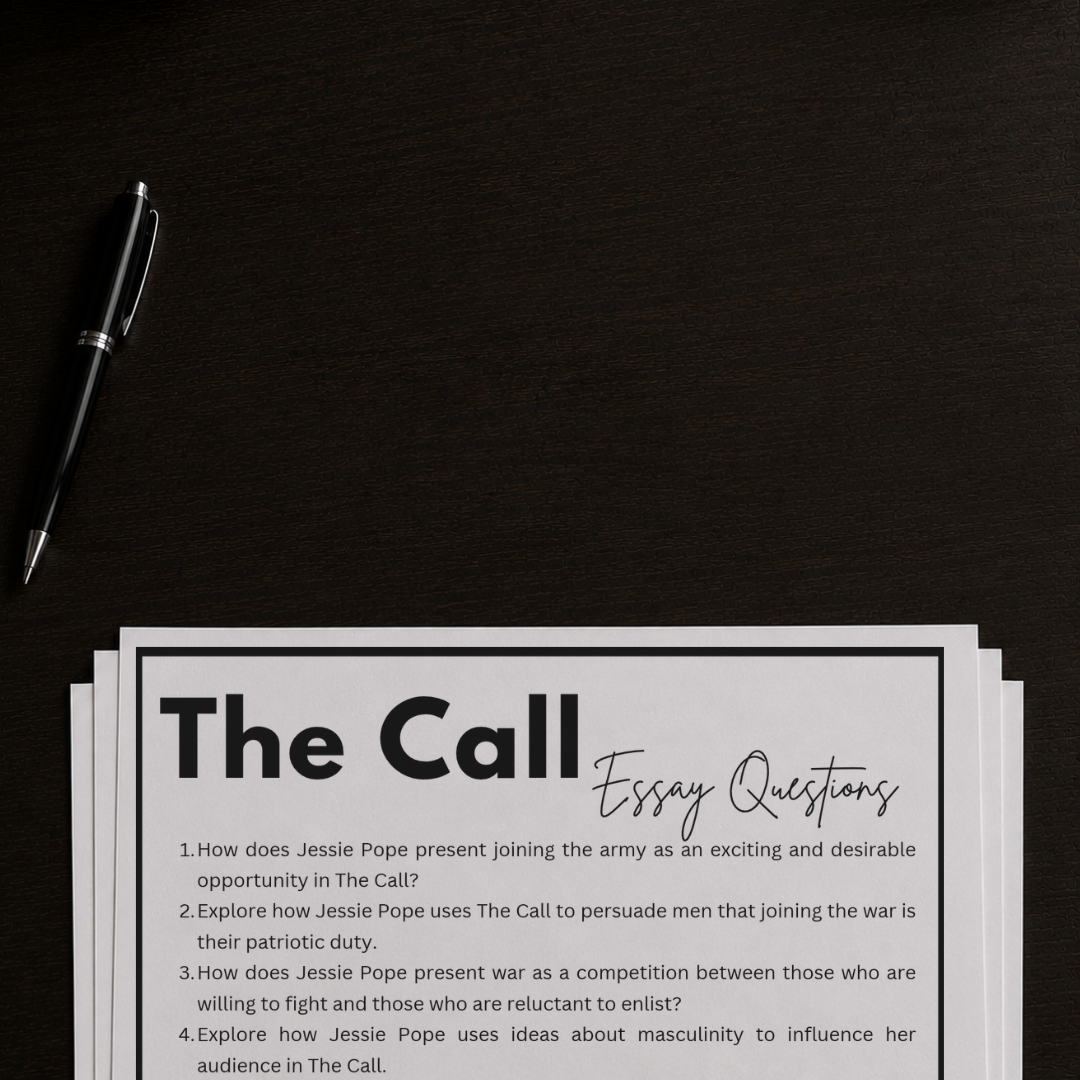 Image 5 of 8
 Image 6 of 8
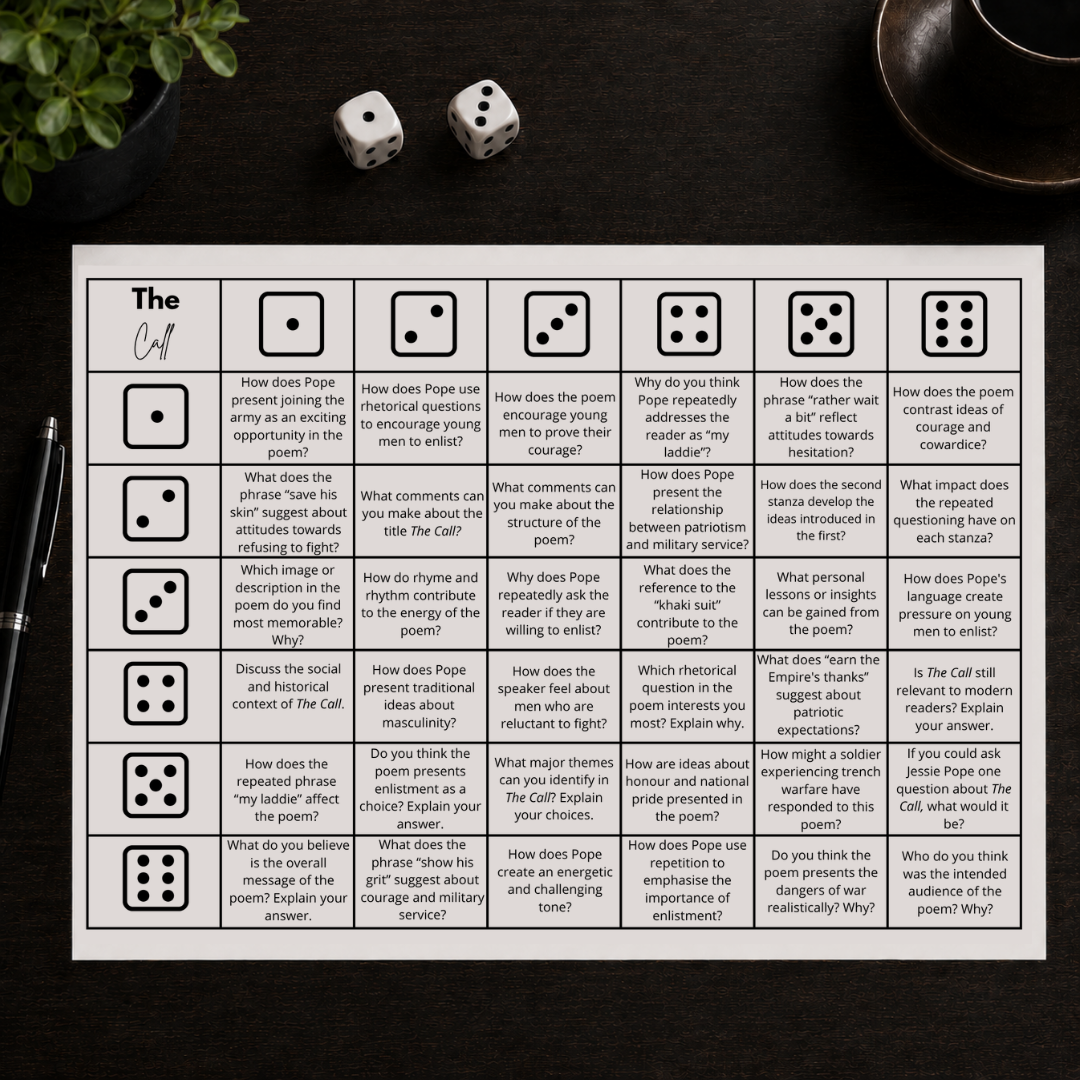 Image 7 of 8
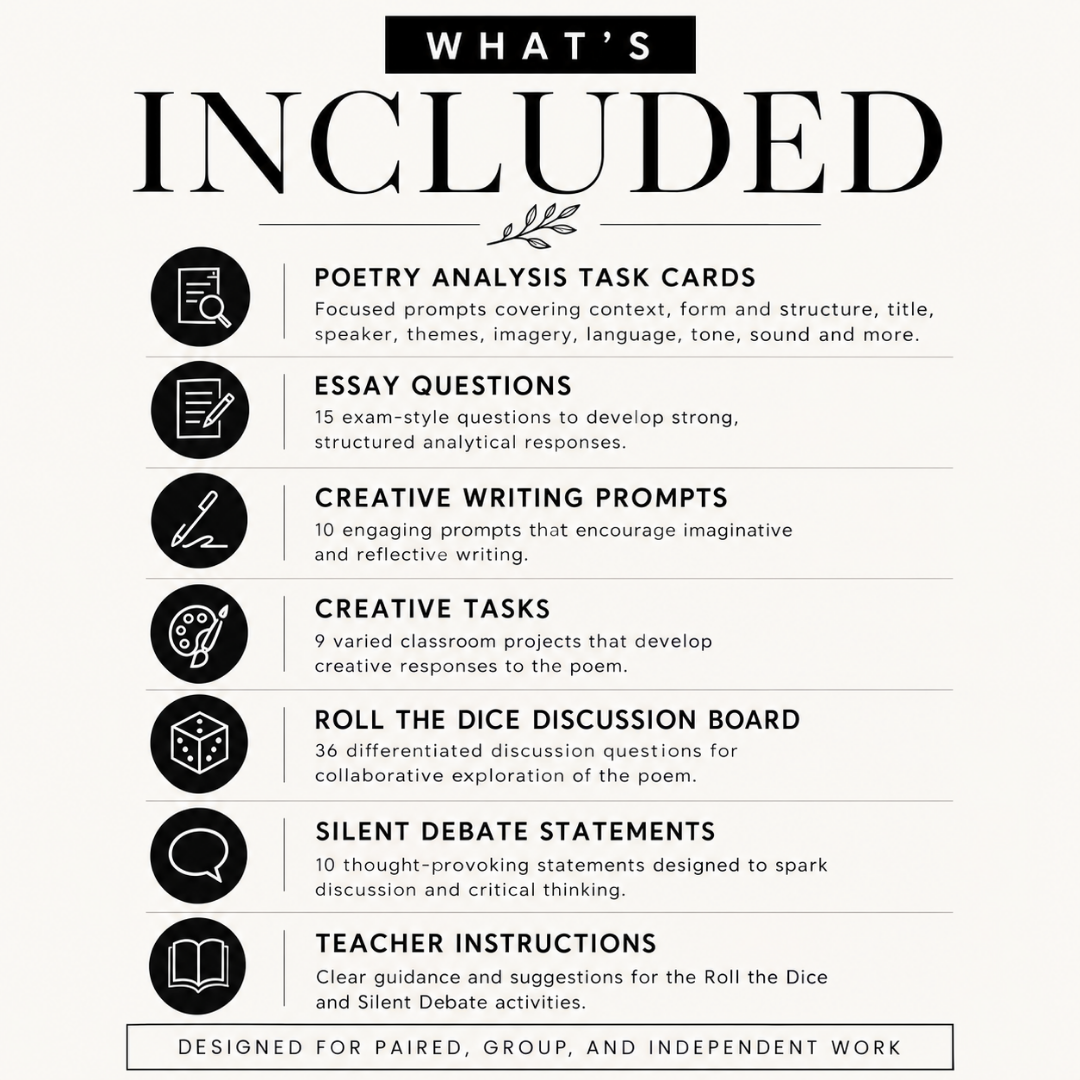 Image 8 of 8
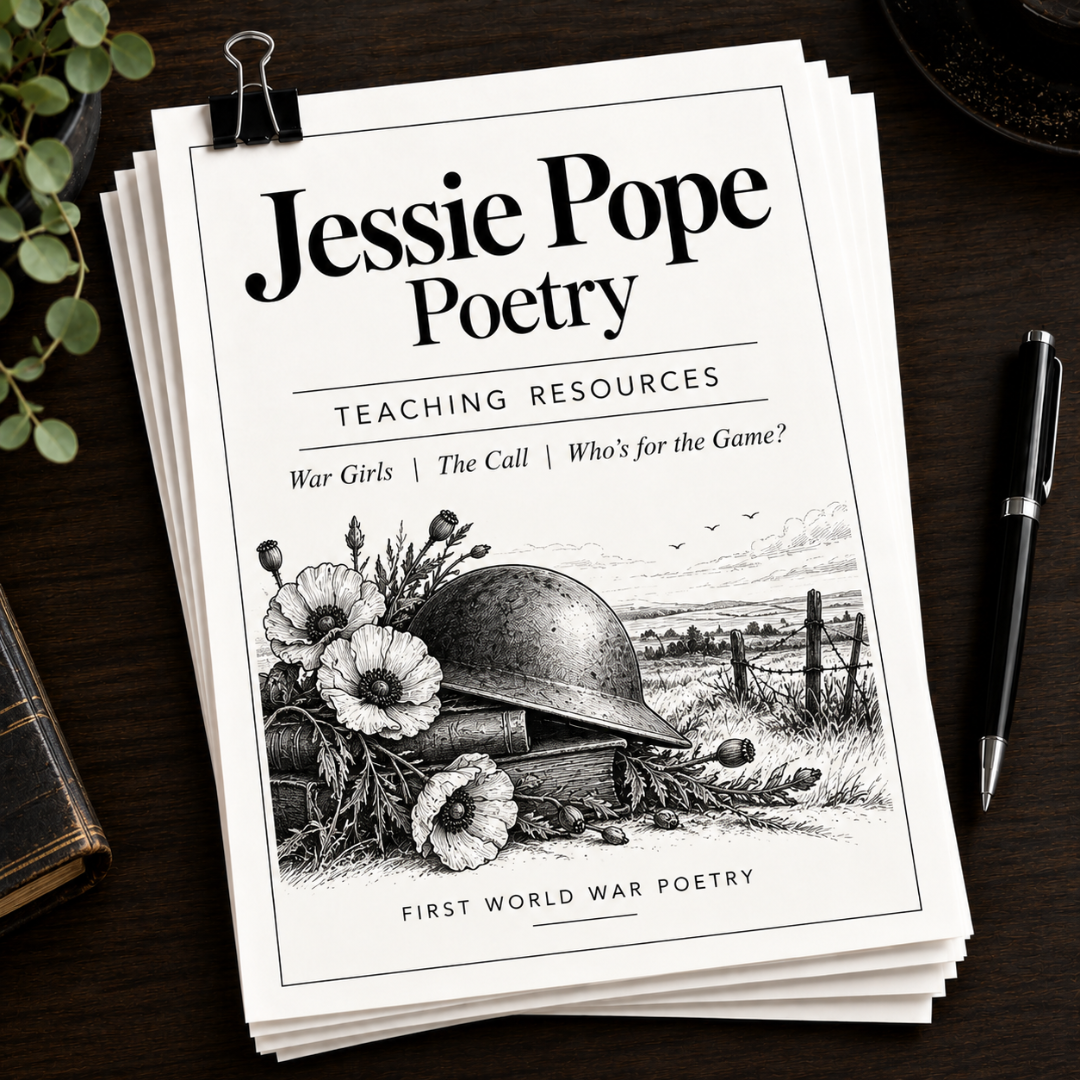
Jessie Pope Poetry Teaching Resources Bundle | WW1 Poetry
Teach three of Jessie Pope's First World War poems with minimal prep.
If you're teaching War Girls, The Call or Who's for the Game? by Jessie Pope, you don't need to spend hours creating discussion questions, poetry analysis activities, essay tasks and creative responses from scratch.
This comprehensive Jessie Pope Poetry Teaching Resources Bundle brings together ready-to-use teaching activities for three of Pope's First World War poems, helping students explore how poetry reflects, reinforces and challenges attitudes towards patriotism, military recruitment, propaganda, masculinity, femininity, gender expectations, courage and national duty.
The collection includes resources for:
War Girls – exploring women's changing roles during the First World War, wartime employment, independence, gender expectations and the relationship between women's contributions and traditional ideas about femininity.
The Call – examining military recruitment, patriotic duty, masculinity, courage, cowardice, social pressure and the persuasive techniques used to encourage young men to enlist.
Who's for the Game? – investigating the presentation of war as a sporting competition, the appeal to patriotism and masculine courage, and the use of persuasive language to make military service appear exciting and desirable.
Together, these three poems offer an opportunity to examine Jessie Pope's distinctive approach to wartime poetry, including how she uses energetic rhythms, repetition, direct address, rhetorical questions, familiar language and patriotic appeals to influence her readers.
Designed for secondary English and English Literature, the bundle can be used flexibly across a complete Jessie Pope teaching sequence or as individual resources within a wider First World War poetry unit.
Why this works
This is more than a collection of disconnected worksheets. The bundle combines close analysis, discussion, debate, extended writing, historical exploration and creative response, allowing students to develop their understanding of each poem individually before making meaningful comparisons across Pope's wartime writing.
Provides ready-to-use resources for three Jessie Pope poems
Supports close reading and detailed poetry analysis
Encourages active discussion, debate and independent interpretation
Develops students' ability to support arguments with textual evidence
Combines analytical and creative approaches to poetry
Encourages comparisons between poems, themes and persuasive techniques
Explores the relationship between poetry, propaganda and public attitudes during the First World War
Examines contrasting expectations of men and women during wartime
Supports analysis of rhetorical questions, direct address, repetition, imagery, rhyme, rhythm, structure and tone
Suitable for paired, group, whole-class and independent learning
Provides flexible activities for lessons, homework, revision and enrichment
Saves planning time while offering varied opportunities for student engagement
What's included
The bundle brings together the teaching resources for War Girls, The Call and Who's for the Game?, providing a varied selection of activities for each poem.
Poetry Analysis Task Cards
Explore the poems through focused analytical questions covering:
Historical and literary context
Titles and speakers
Themes and central messages
Language, imagery and poetic devices
Rhetorical questions and persuasive techniques
Rhyme, rhythm and sound
Form and structure
Tone, mood and shifts
Personal interpretation and evaluation
Roll the Dice Discussion Boards
Interactive discussion boards featuring 36 questions per poem, designed to encourage students to explore language, themes, historical context and alternative interpretations.
Use these activities for paired discussion, small-group work, revision or whole-class exploration.
Silent Debate Activities
Thought-provoking statements designed to encourage students to develop, justify and challenge interpretations using evidence from the poems.
Students can explore competing viewpoints about patriotism, gender expectations, recruitment propaganda, courage and the presentation of military service.
Essay Questions
A varied collection of analytical essay questions supporting close reading, literary interpretation and extended writing.
Questions explore themes, language, poetic methods, historical context and the effectiveness of Pope's persuasive techniques.
Creative Writing Prompts
Imaginative writing opportunities inspired by the poems' historical settings, themes and perspectives.
Activities encourage students to experiment with historical fiction, persuasive writing, diary entries, letters, dramatic writing and alternative viewpoints.
Creative Classroom Tasks
Engaging activities combining visual design, creative interpretation, historical exploration and critical thinking.
Tasks include recruitment posters, podcast scripts, illustrated poetry, playscripts, documentary storyboards, diary entries, visual collages and newspaper writing.
Teacher Instructions
Guidance for implementing the Roll the Dice and Silent Debate activities, making them straightforward to incorporate into existing lessons.
How you can use it
Introduce Jessie Pope and her role as a First World War poet
Explore the historical context of British recruitment campaigns, wartime propaganda and patriotic expectations
Analyse how Who's for the Game? uses sporting imagery to present military service as an exciting challenge
Examine the significance of competition, teamwork and masculine courage in Who's for the Game?
Investigate how The Call uses repeated rhetorical questions to challenge young men to enlist
Explore the effects of direct address through the repeated phrase “my laddie”
Analyse how The Call presents courage, hesitation and the fear of being judged
Examine the significance of the references to the Empire, victory and military glory
Explore how War Girls celebrates women undertaking responsibilities traditionally associated with men
Analyse the significance of “No longer caged and penned up” and its implications for women's pre-war experiences
Investigate how War Girls presents independence, capability and changing social expectations
Examine the relationship between wartime employment and traditional expectations of femininity
Compare how men and women are represented across Pope's three poems
Explore how Pope uses rhetorical questions, repetition, rhyme and rhythm to make her messages memorable
Compare the speakers' attitudes towards patriotism, national duty and participation in the war
Examine how the poems encourage readers to associate wartime participation with personal worth and social approval
Investigate the relationship between persuasive language and recruitment propaganda
Explore how historical context influences the interpretation of Pope's poetry
Debate whether Pope's poems celebrate individual courage or reinforce social expectations
Consider how the poems present the war while largely avoiding its violence, suffering and destruction
Compare Pope's optimistic representations of wartime participation with the experiences presented by other First World War poets
Make connections with Wilfred Owen and Siegfried Sassoon, particularly their contrasting presentations of war, patriotism and military service
Run low-prep paired, group and whole-class discussions
Encourage students to debate competing interpretations rather than search for a single “correct” reading
Develop comparative analytical responses across the three poems
Set independent analytical, creative or revision work
Build a complete Jessie Pope teaching sequence using a combination of the included activities
What students gain
Greater confidence analysing War Girls, The Call and Who's for the Game? independently
A deeper understanding of Jessie Pope's poetry and its First World War context
Stronger ability to analyse rhetorical questions, direct address, repetition, imagery, rhyme, rhythm, form and structure
Greater awareness of how poetry can persuade, influence and reinforce public attitudes
Improved understanding of patriotism, propaganda, recruitment and national duty
A deeper appreciation of changing gender roles and social expectations during the First World War
Greater confidence comparing themes, language and perspectives across multiple poems
Increased awareness of the relationship between historical context, poetic methods and meaning
Experience developing, defending and challenging literary interpretations
Improved discussion, analytical writing and comparative essay skills
Greater confidence selecting and using textual evidence
Opportunities to approach poetry through both analytical and creative thinking
Flexible enough for an entire teaching sequence
The variety of resources means this bundle can support far more than a single lesson.
Begin by introducing Jessie Pope and the historical context of First World War recruitment and propaganda, before exploring each poem individually.
Use Who's for the Game? to investigate how sporting imagery and competitive language encourage enlistment. Move to The Call to examine rhetorical questions, direct address and the social pressures surrounding military service. Explore War Girls to consider how the war created new opportunities for women while challenging traditional expectations about gender.
Once students have developed their understanding of each poem, use the discussion boards, Silent Debate statements and essay questions to encourage comparative analysis of Pope's language, themes, tone and persuasive methods.
The creative writing prompts and classroom tasks provide opportunities to consolidate learning through imaginative interpretation, visual projects and historical exploration.
Teachers can select individual activities to complement existing lessons or combine them to create a broader Jessie Pope First World War poetry teaching sequence.
The resources are also particularly useful when studying Pope alongside Wilfred Owen, Siegfried Sassoon and other First World War poets, encouraging students to consider how different writers represented military service, patriotic duty, gender expectations and the realities of conflict.
Download Now
Download the complete Jessie Pope Poetry Teaching Resources Bundle and explore three of her First World War poems through engaging discussion, detailed literary analysis, creative writing and classroom activities.
From first reading and historical context to independent interpretation, comparative analysis and extended writing, this collection provides flexible resources to support a varied and engaging poetry teaching sequence.
Digital download: Printable PDF resources. No physical product will be shipped.
Teach three of Jessie Pope's First World War poems with minimal prep.
If you're teaching War Girls, The Call or Who's for the Game? by Jessie Pope, you don't need to spend hours creating discussion questions, poetry analysis activities, essay tasks and creative responses from scratch.
This comprehensive Jessie Pope Poetry Teaching Resources Bundle brings together ready-to-use teaching activities for three of Pope's First World War poems, helping students explore how poetry reflects, reinforces and challenges attitudes towards patriotism, military recruitment, propaganda, masculinity, femininity, gender expectations, courage and national duty.
The collection includes resources for:
War Girls – exploring women's changing roles during the First World War, wartime employment, independence, gender expectations and the relationship between women's contributions and traditional ideas about femininity.
The Call – examining military recruitment, patriotic duty, masculinity, courage, cowardice, social pressure and the persuasive techniques used to encourage young men to enlist.
Who's for the Game? – investigating the presentation of war as a sporting competition, the appeal to patriotism and masculine courage, and the use of persuasive language to make military service appear exciting and desirable.
Together, these three poems offer an opportunity to examine Jessie Pope's distinctive approach to wartime poetry, including how she uses energetic rhythms, repetition, direct address, rhetorical questions, familiar language and patriotic appeals to influence her readers.
Designed for secondary English and English Literature, the bundle can be used flexibly across a complete Jessie Pope teaching sequence or as individual resources within a wider First World War poetry unit.
Why this works
This is more than a collection of disconnected worksheets. The bundle combines close analysis, discussion, debate, extended writing, historical exploration and creative response, allowing students to develop their understanding of each poem individually before making meaningful comparisons across Pope's wartime writing.
Provides ready-to-use resources for three Jessie Pope poems
Supports close reading and detailed poetry analysis
Encourages active discussion, debate and independent interpretation
Develops students' ability to support arguments with textual evidence
Combines analytical and creative approaches to poetry
Encourages comparisons between poems, themes and persuasive techniques
Explores the relationship between poetry, propaganda and public attitudes during the First World War
Examines contrasting expectations of men and women during wartime
Supports analysis of rhetorical questions, direct address, repetition, imagery, rhyme, rhythm, structure and tone
Suitable for paired, group, whole-class and independent learning
Provides flexible activities for lessons, homework, revision and enrichment
Saves planning time while offering varied opportunities for student engagement
What's included
The bundle brings together the teaching resources for War Girls, The Call and Who's for the Game?, providing a varied selection of activities for each poem.
Poetry Analysis Task Cards
Explore the poems through focused analytical questions covering:
Historical and literary context
Titles and speakers
Themes and central messages
Language, imagery and poetic devices
Rhetorical questions and persuasive techniques
Rhyme, rhythm and sound
Form and structure
Tone, mood and shifts
Personal interpretation and evaluation
Roll the Dice Discussion Boards
Interactive discussion boards featuring 36 questions per poem, designed to encourage students to explore language, themes, historical context and alternative interpretations.
Use these activities for paired discussion, small-group work, revision or whole-class exploration.
Silent Debate Activities
Thought-provoking statements designed to encourage students to develop, justify and challenge interpretations using evidence from the poems.
Students can explore competing viewpoints about patriotism, gender expectations, recruitment propaganda, courage and the presentation of military service.
Essay Questions
A varied collection of analytical essay questions supporting close reading, literary interpretation and extended writing.
Questions explore themes, language, poetic methods, historical context and the effectiveness of Pope's persuasive techniques.
Creative Writing Prompts
Imaginative writing opportunities inspired by the poems' historical settings, themes and perspectives.
Activities encourage students to experiment with historical fiction, persuasive writing, diary entries, letters, dramatic writing and alternative viewpoints.
Creative Classroom Tasks
Engaging activities combining visual design, creative interpretation, historical exploration and critical thinking.
Tasks include recruitment posters, podcast scripts, illustrated poetry, playscripts, documentary storyboards, diary entries, visual collages and newspaper writing.
Teacher Instructions
Guidance for implementing the Roll the Dice and Silent Debate activities, making them straightforward to incorporate into existing lessons.
How you can use it
Introduce Jessie Pope and her role as a First World War poet
Explore the historical context of British recruitment campaigns, wartime propaganda and patriotic expectations
Analyse how Who's for the Game? uses sporting imagery to present military service as an exciting challenge
Examine the significance of competition, teamwork and masculine courage in Who's for the Game?
Investigate how The Call uses repeated rhetorical questions to challenge young men to enlist
Explore the effects of direct address through the repeated phrase “my laddie”
Analyse how The Call presents courage, hesitation and the fear of being judged
Examine the significance of the references to the Empire, victory and military glory
Explore how War Girls celebrates women undertaking responsibilities traditionally associated with men
Analyse the significance of “No longer caged and penned up” and its implications for women's pre-war experiences
Investigate how War Girls presents independence, capability and changing social expectations
Examine the relationship between wartime employment and traditional expectations of femininity
Compare how men and women are represented across Pope's three poems
Explore how Pope uses rhetorical questions, repetition, rhyme and rhythm to make her messages memorable
Compare the speakers' attitudes towards patriotism, national duty and participation in the war
Examine how the poems encourage readers to associate wartime participation with personal worth and social approval
Investigate the relationship between persuasive language and recruitment propaganda
Explore how historical context influences the interpretation of Pope's poetry
Debate whether Pope's poems celebrate individual courage or reinforce social expectations
Consider how the poems present the war while largely avoiding its violence, suffering and destruction
Compare Pope's optimistic representations of wartime participation with the experiences presented by other First World War poets
Make connections with Wilfred Owen and Siegfried Sassoon, particularly their contrasting presentations of war, patriotism and military service
Run low-prep paired, group and whole-class discussions
Encourage students to debate competing interpretations rather than search for a single “correct” reading
Develop comparative analytical responses across the three poems
Set independent analytical, creative or revision work
Build a complete Jessie Pope teaching sequence using a combination of the included activities
What students gain
Greater confidence analysing War Girls, The Call and Who's for the Game? independently
A deeper understanding of Jessie Pope's poetry and its First World War context
Stronger ability to analyse rhetorical questions, direct address, repetition, imagery, rhyme, rhythm, form and structure
Greater awareness of how poetry can persuade, influence and reinforce public attitudes
Improved understanding of patriotism, propaganda, recruitment and national duty
A deeper appreciation of changing gender roles and social expectations during the First World War
Greater confidence comparing themes, language and perspectives across multiple poems
Increased awareness of the relationship between historical context, poetic methods and meaning
Experience developing, defending and challenging literary interpretations
Improved discussion, analytical writing and comparative essay skills
Greater confidence selecting and using textual evidence
Opportunities to approach poetry through both analytical and creative thinking
Flexible enough for an entire teaching sequence
The variety of resources means this bundle can support far more than a single lesson.
Begin by introducing Jessie Pope and the historical context of First World War recruitment and propaganda, before exploring each poem individually.
Use Who's for the Game? to investigate how sporting imagery and competitive language encourage enlistment. Move to The Call to examine rhetorical questions, direct address and the social pressures surrounding military service. Explore War Girls to consider how the war created new opportunities for women while challenging traditional expectations about gender.
Once students have developed their understanding of each poem, use the discussion boards, Silent Debate statements and essay questions to encourage comparative analysis of Pope's language, themes, tone and persuasive methods.
The creative writing prompts and classroom tasks provide opportunities to consolidate learning through imaginative interpretation, visual projects and historical exploration.
Teachers can select individual activities to complement existing lessons or combine them to create a broader Jessie Pope First World War poetry teaching sequence.
The resources are also particularly useful when studying Pope alongside Wilfred Owen, Siegfried Sassoon and other First World War poets, encouraging students to consider how different writers represented military service, patriotic duty, gender expectations and the realities of conflict.
Download Now
Download the complete Jessie Pope Poetry Teaching Resources Bundle and explore three of her First World War poems through engaging discussion, detailed literary analysis, creative writing and classroom activities.
From first reading and historical context to independent interpretation, comparative analysis and extended writing, this collection provides flexible resources to support a varied and engaging poetry teaching sequence.
Digital download: Printable PDF resources. No physical product will be shipped.