70 Dystopian Fantasy Writing Prompts: Dark Worlds, Forbidden Magic & Rebellion
What happens when the oppressive systems of dystopian fiction collide with the impossible worlds of fantasy?
Perhaps magic is legal only for the ruling classes. Dragons are tracked by the government. Every spell must be registered. Children are tested at birth and assigned to magical castes. An immortal queen has ruled for so long that nobody remembers what existed before her. Or perhaps magic itself has become the tool of surveillance, allowing authorities to enter dreams, read memories or detect the first signs of rebellion.
Dystopian fantasy brings together two genres that are particularly good at asking what if? Fantasy gives us magic, mythical creatures, invented kingdoms and impossible powers; dystopian fiction asks who controls those things, who benefits from them and what happens when a society decides that individual freedom is less important than order, safety or survival. A magical ability that would be extraordinary in another fantasy story can become something completely different when possessing it means being registered, recruited or arrested.
You can see similar tensions throughout speculative fiction. The Power by Naomi Alderman explores how a new physical ability can transform existing structures of power, while N. K. Jemisin's The Fifth Season imagines a society that simultaneously depends upon and oppresses people capable of controlling seismic energy. Fantasy worlds give writers countless ways to explore hierarchy and control without simply recreating a modern surveillance state with different clothes.
These 70 Dystopian Fantasy Writing Prompts are designed to help you build worlds where magic and power are inseparable. You'll find plot hooks, title ideas, opening lines, closing lines, characters, settings and picture prompts, with ideas ranging from enchanted authoritarian kingdoms and magical caste systems to outlawed creatures, controlled prophecy, forbidden spells and rebellions hiding in places the regime has forgotten to watch.
Explore more dark speculative inspiration in the Dystopian Writing Hub, discover magical worlds, characters and ideas in the Fantasy Writing Hub, or browse the Creative Writing Archive for hundreds more prompts and story ideas across different genres.
1. Plot Prompts
Dystopian fantasy takes familiar fantasy elements — magic, kingdoms, mythical creatures, prophecies and enchanted objects — and places them inside societies shaped by control, inequality and restricted freedom. These prompts explore what happens when magic becomes something governments can regulate, exploit or fear.
Write about a kingdom where every child is tested for magic at the age of five, and those with the rarest abilities are taken from their families.
Write about a society where only members of the ruling class are legally permitted to cast spells.
Write about a city where every magical creature must be registered with the government and wear an enchanted mark identifying what it is.
Write about a kingdom protected by an enormous enchanted wall, until someone discovers that the people living beyond it have been told exactly the same stories about those inside.
Write about a world where citizens must surrender a portion of their dreams each month to provide the magic that keeps the kingdom functioning.
Write about a society where prophecy has been outlawed because the last prediction almost destroyed the government.
Write about a kingdom where dragons have been hunted almost to extinction because the ruling family cannot control them.
Write about a city where every spell is recorded, and casting unregistered magic automatically alerts the authorities.
Write about a country ruled by an immortal monarch who has supposedly remained unchanged for hundreds of years, until someone discovers portraits showing subtle differences between each century.
Write about a society where everyone is assigned a magical ability at birth, except for one child who develops a power that does not officially exist.
2. Dystopian Fantasy Title Prompts
Titles can provide the first glimpse of a dystopian fantasy world, hinting at its rulers, forbidden magic, social divisions or hidden history before the story has even begun. Choose one of these titles and imagine the society behind it.
The Last Unregistered Witch
A Kingdom Without Dreams
The Ministry of Magic and Obedience
When the Dragons Stopped Burning
The Queen's Thirteenth Life
Beyond the Thorn Wall
The Book They Could Not Burn
Children of the Forbidden Moon
The City Beneath the Crown
Before They Outlawed Magic
3. Dystopian Fantasy Opening Lines
A strong opening line can introduce a strange rule, unsettling detail or unanswered question immediately. Use these first lines as the beginning of a dystopian fantasy story and discover what kind of world exists beyond them.
The first time Mara used magic, her mother told her never to do it again.
Everyone in the kingdom knew there were no dragons left.
On her sixteenth birthday, Elian received a letter informing her which spells she would be permitted to use for the rest of her life.
The Queen had been twenty-seven years old for as long as anyone could remember.
At midnight, every mirror in the city displayed the same government message.
Nobody questioned why the palace needed three hundred children's dreams every night.
The forest beyond the wall was forbidden, which was why Tomas was surprised to find a freshly baked loaf of bread sitting beneath one of its trees.
The Ministry arrived for her brother before his wings had finished growing.
Every citizen was born with the King's mark somewhere on their body, except me.
The executioner raised his sword, and the condemned witch whispered a spell that made the entire crowd remember.
4. Dystopian Fantasy Closing Lines
Closing-line prompts ask you to work backwards. Imagine the story that could end with each sentence: what has been discovered, lost, overthrown or misunderstood by the time your character reaches these final words?
For the first time in three hundred years, the gates of the kingdom remained open after sunset.
Only then did she understand why the dragons had allowed themselves to be captured.
He struck his name from the register and watched the magic return.
Beyond the fallen wall, thousands of people were waiting to welcome them home.
The crown rolled across the floor, still whispering orders to a kingdom that could no longer hear it.
Tomorrow, every child in the city would be allowed to dream for themselves.
She opened the forbidden book and found the first page completely blank.
The Queen was dead; unfortunately, immortality was not.
One by one, the government marks disappeared from their skin.
And somewhere beneath the ruined palace, the last forbidden spell began to wake.
5. Dystopian Fantasy Character Prompts
Dystopian fantasy characters are shaped by the systems surrounding them. They might benefit from an oppressive magical society, enforce its rules, quietly resist it or discover that something they have always accepted is not what it seems.
Write about a government witch whose job is to detect illegal magic, but who has secretly hidden her own forbidden ability for years.
Write about the child of an immortal ruler who has spent their entire life waiting to inherit a throne that may never become vacant.
Write about a dragon keeper responsible for guarding creatures the government claims are too dangerous to live freely.
Write about a young oracle who deliberately gives false prophecies because the government uses her predictions to arrest people before they commit crimes.
Write about a palace servant who cannot perform magic but knows more about the kingdom's magical systems than the people who control them.
Write about a government official responsible for assigning magical careers who discovers that their own child has been classified as useless.
Write about a member of the ruling magical class who genuinely believes restricting ordinary citizens' powers keeps everyone safe.
Write about a librarian responsible for destroying forbidden spellbooks who has secretly memorised hundreds of the spells inside them.
Write about a rebel whose magical ability allows them to erase memories, forcing them to decide whether resistance justifies doing the same thing as the regime.
Write about an elderly woman who remembers what the kingdom was like before magic became controlled — and has spent decades pretending she does not.
6. Dystopian Fantasy Setting Prompts
A setting can reveal the rules of a dystopian society without directly explaining them. Think about what people are allowed to do in each place, who controls it, what has been hidden there and what would happen if someone crossed a boundary they were never supposed to cross.
Describe a capital city where enormous enchanted eyes float above every street, watching for illegal magic.
Describe a government academy where magically gifted children are trained for the roles selected for them at birth.
Describe a forest surrounded by warning signs claiming the creatures inside are deadly, even though nobody has been permitted to enter for generations.
Describe a wealthy district where magic flows freely through fountains, gardens and homes while poorer neighbourhoods receive only a few hours of magical power each day.
Describe an enormous underground archive containing every spell the government has ever outlawed.
Describe a village populated entirely by magical creatures that have officially been declared extinct.
Describe a palace built around a gigantic sleeping dragon whose magic powers the entire kingdom.
Describe a marketplace where citizens secretly trade forbidden charms, memories, prophecies and pieces of unregistered magic.
Describe a border crossing where travellers must surrender enchanted objects, familiars and portions of their memories before they are allowed to leave the country.
Describe an abandoned city where every building remains perfectly preserved because a spell prevents anything — including the people trapped inside — from ageing.
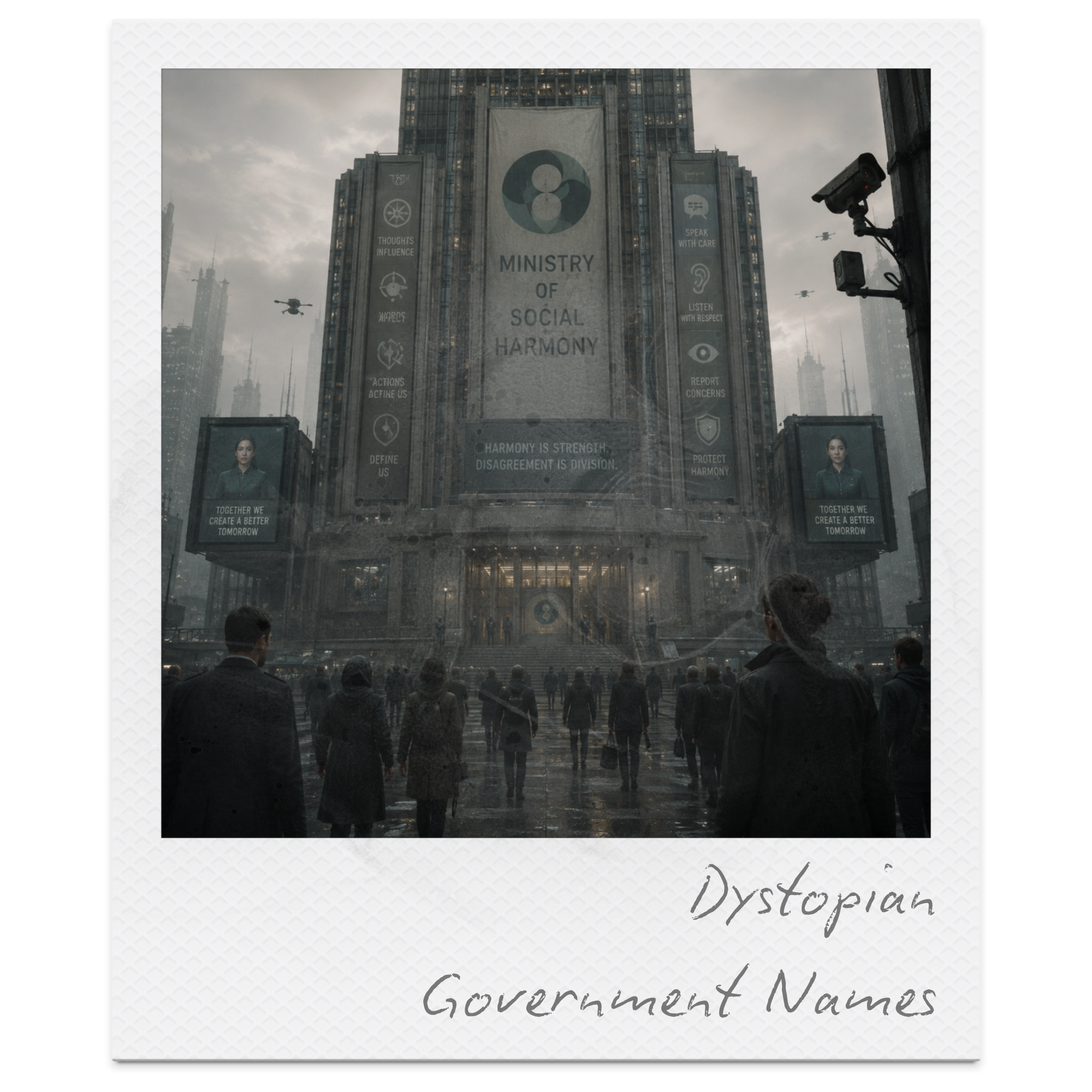
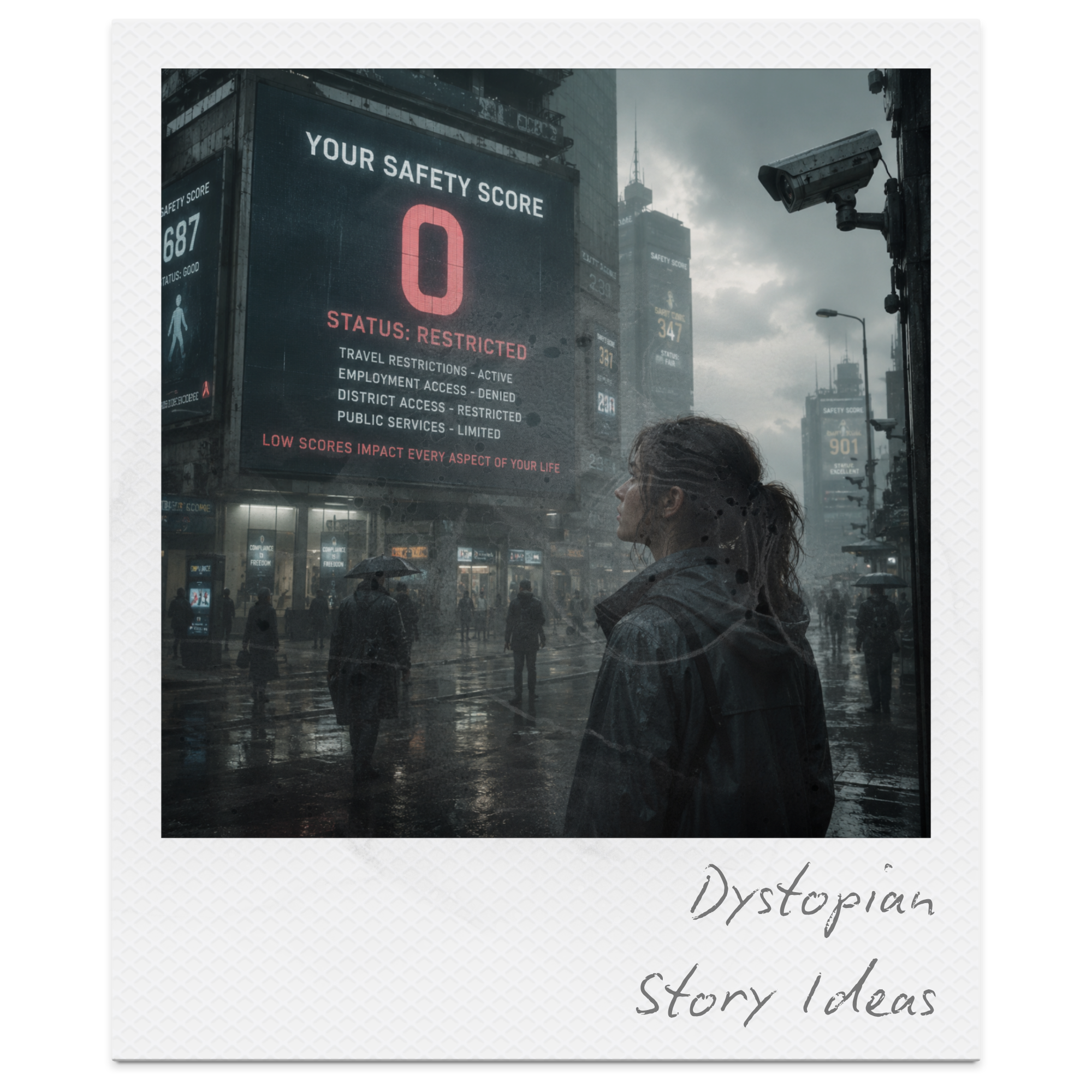
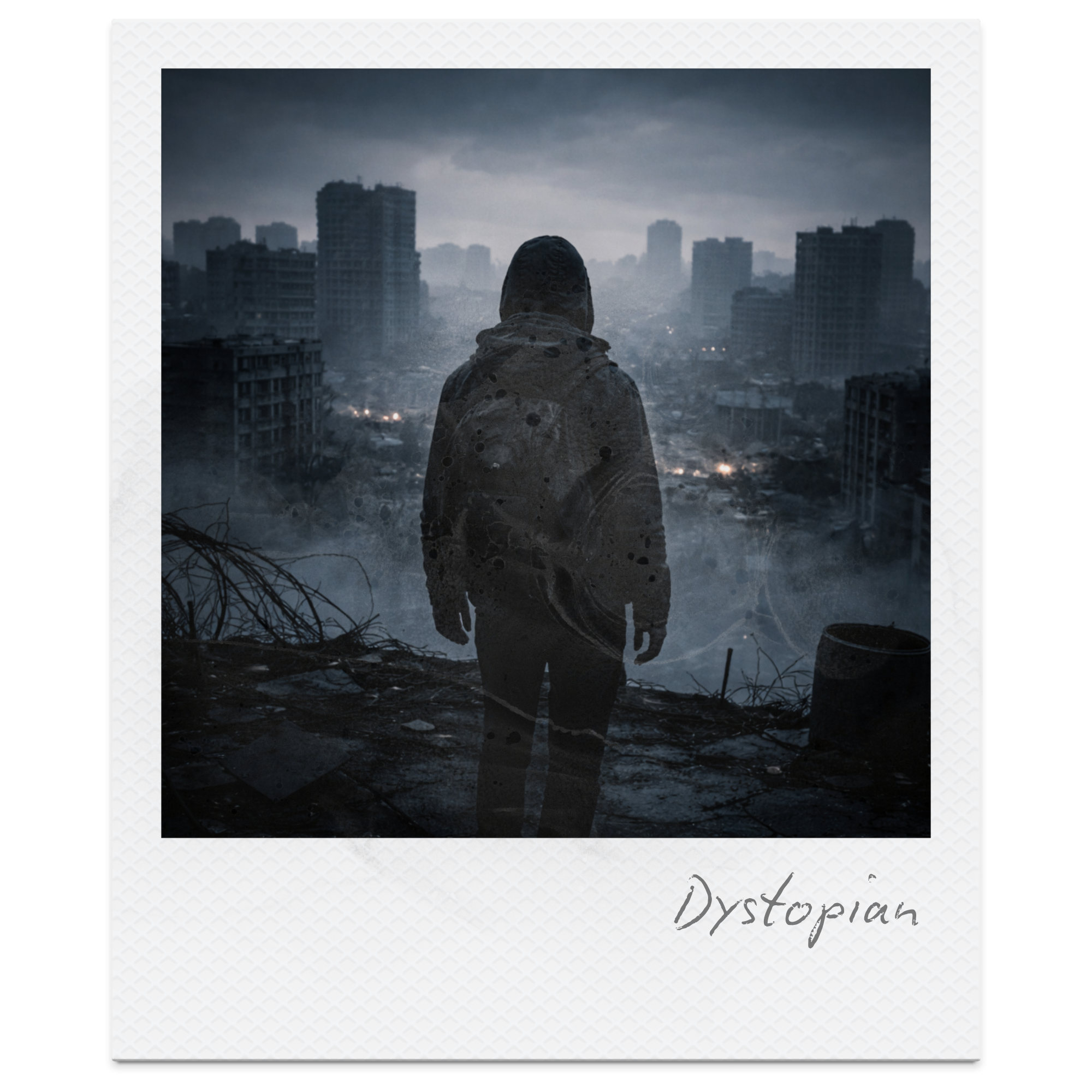
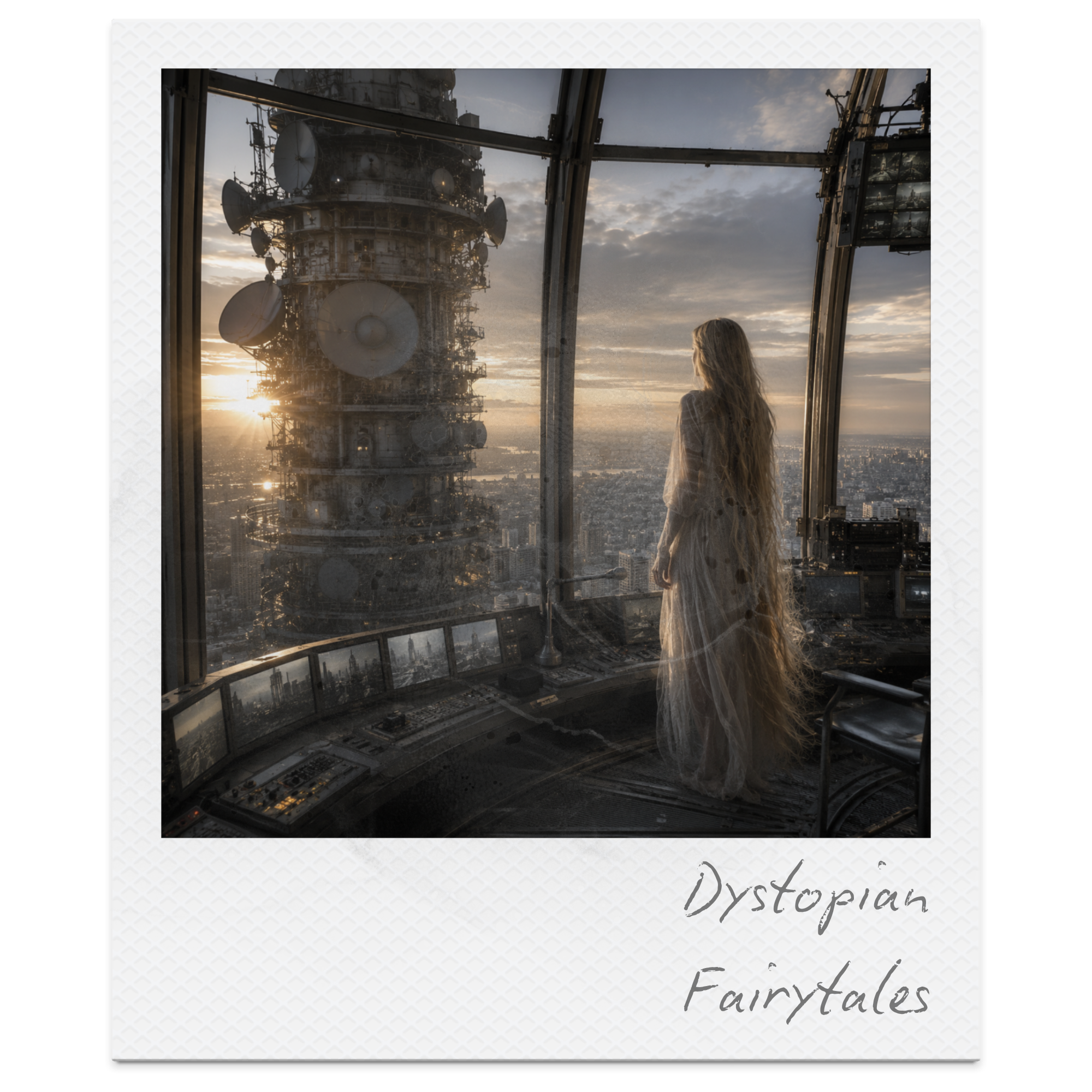
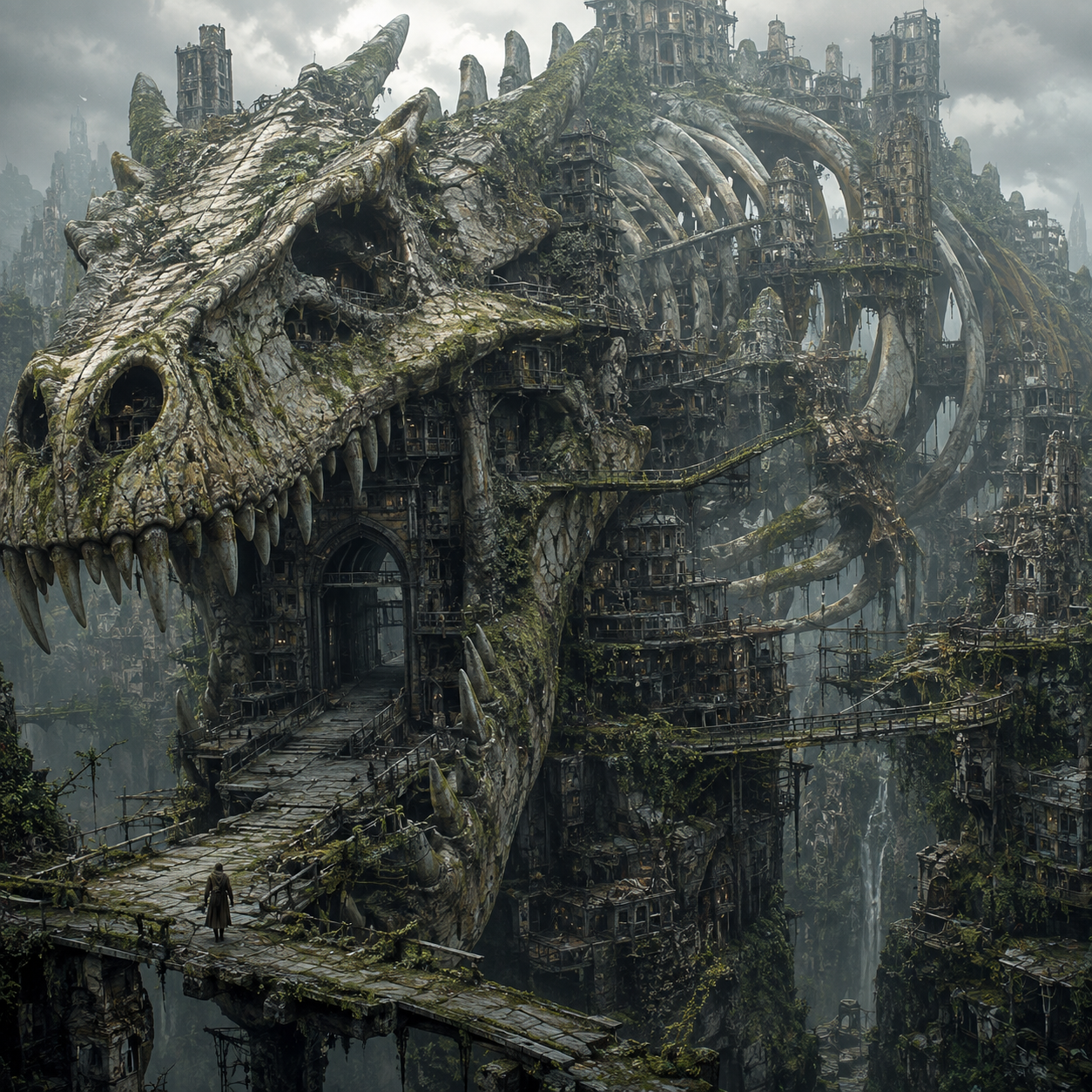
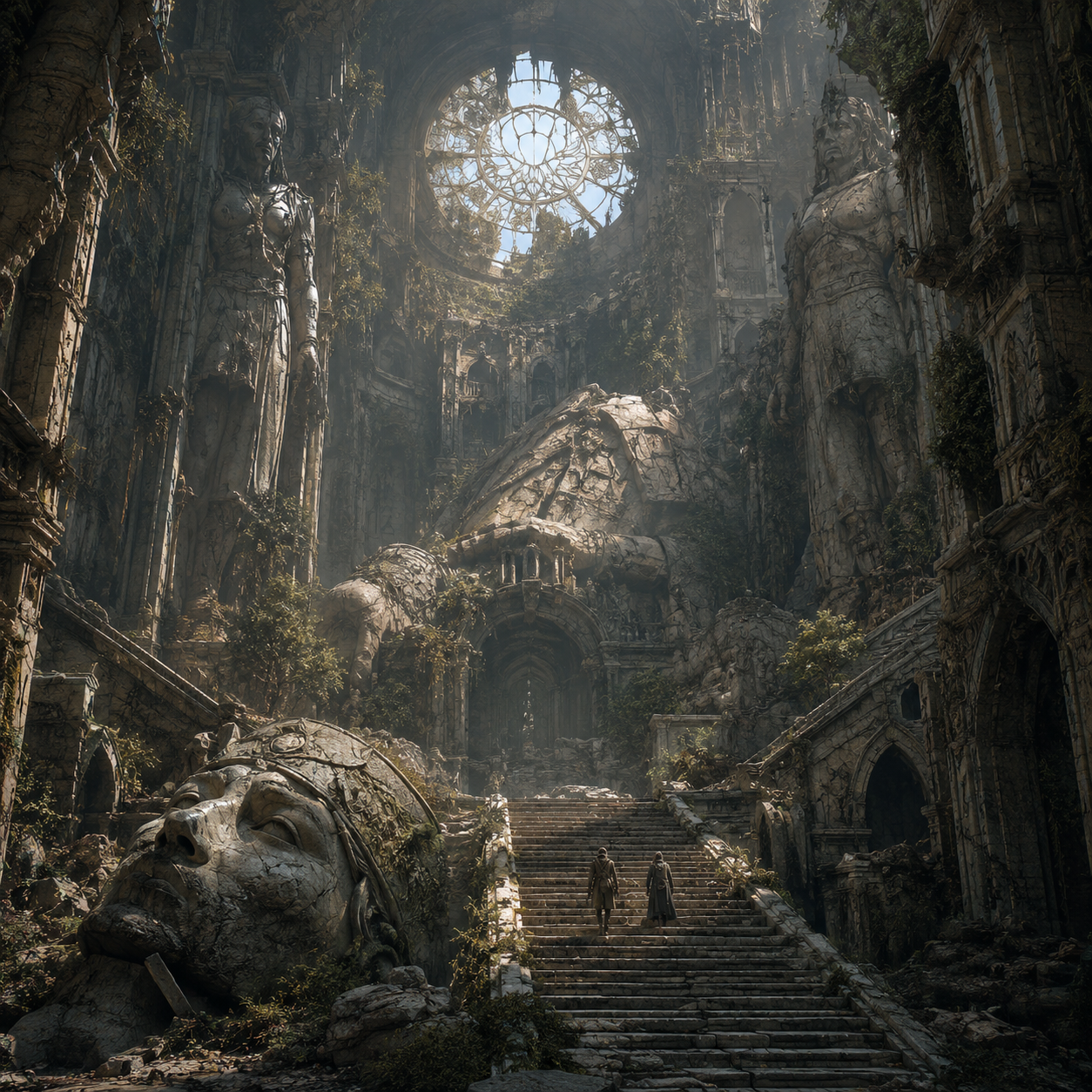
7. Dystopian Fantasy Picture Prompts
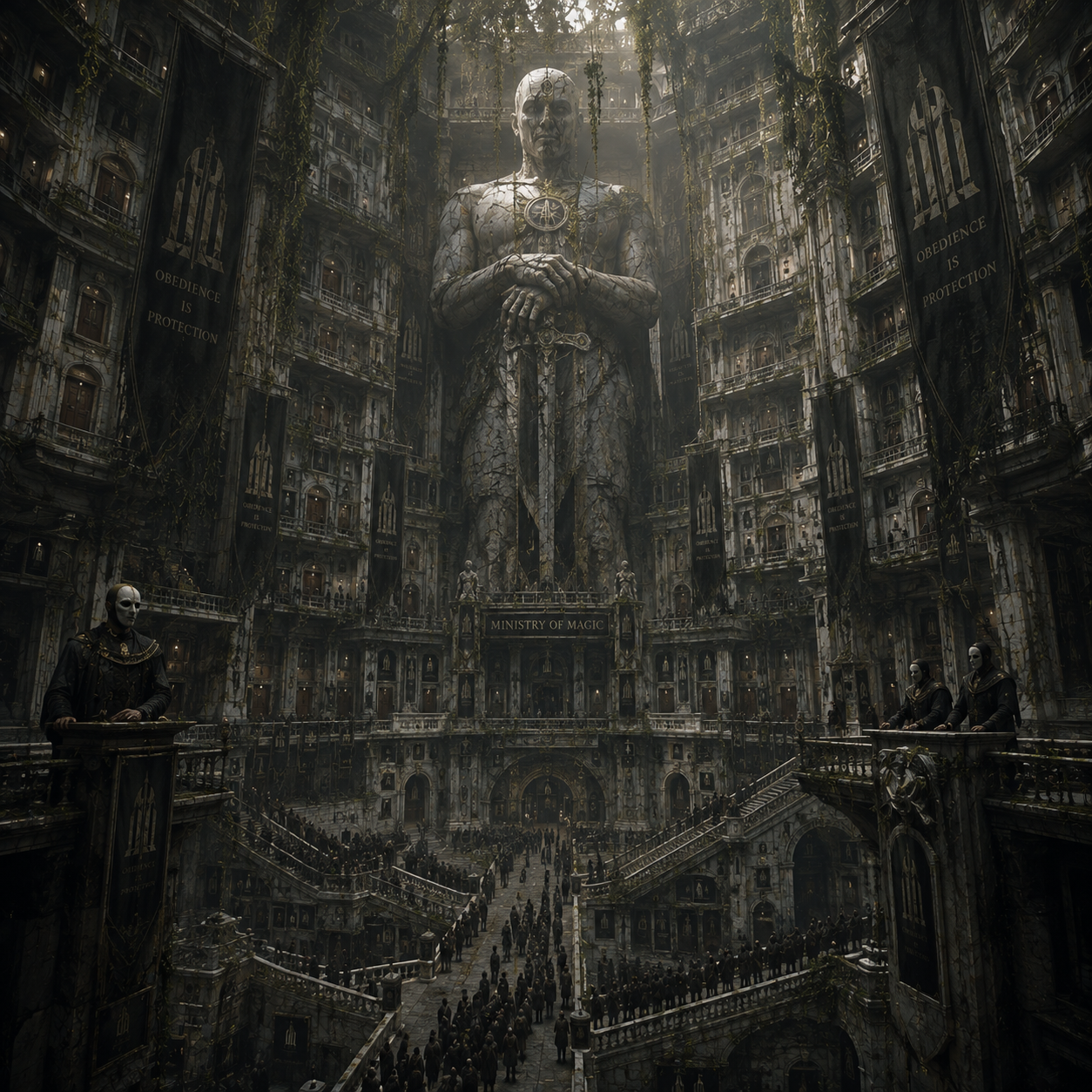
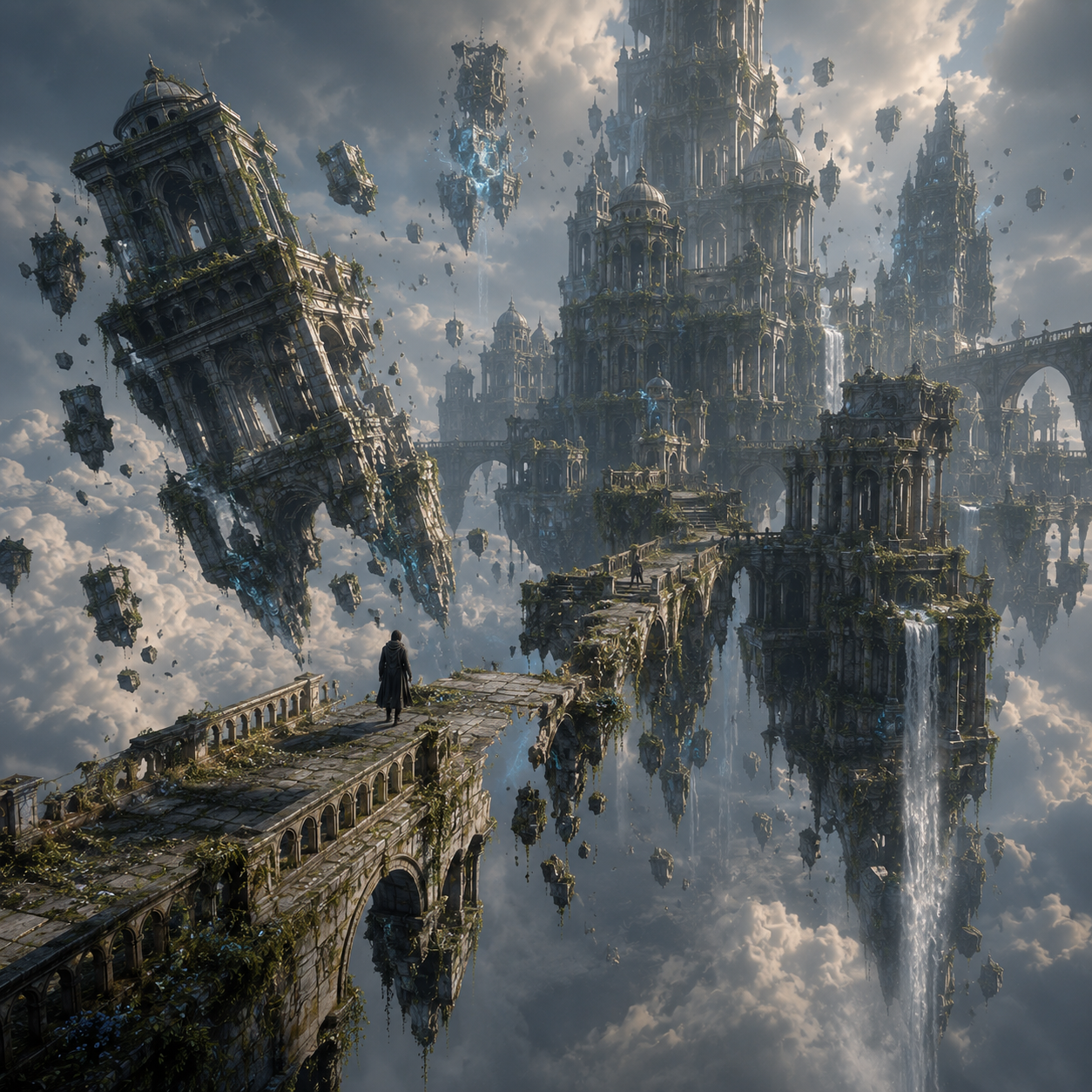
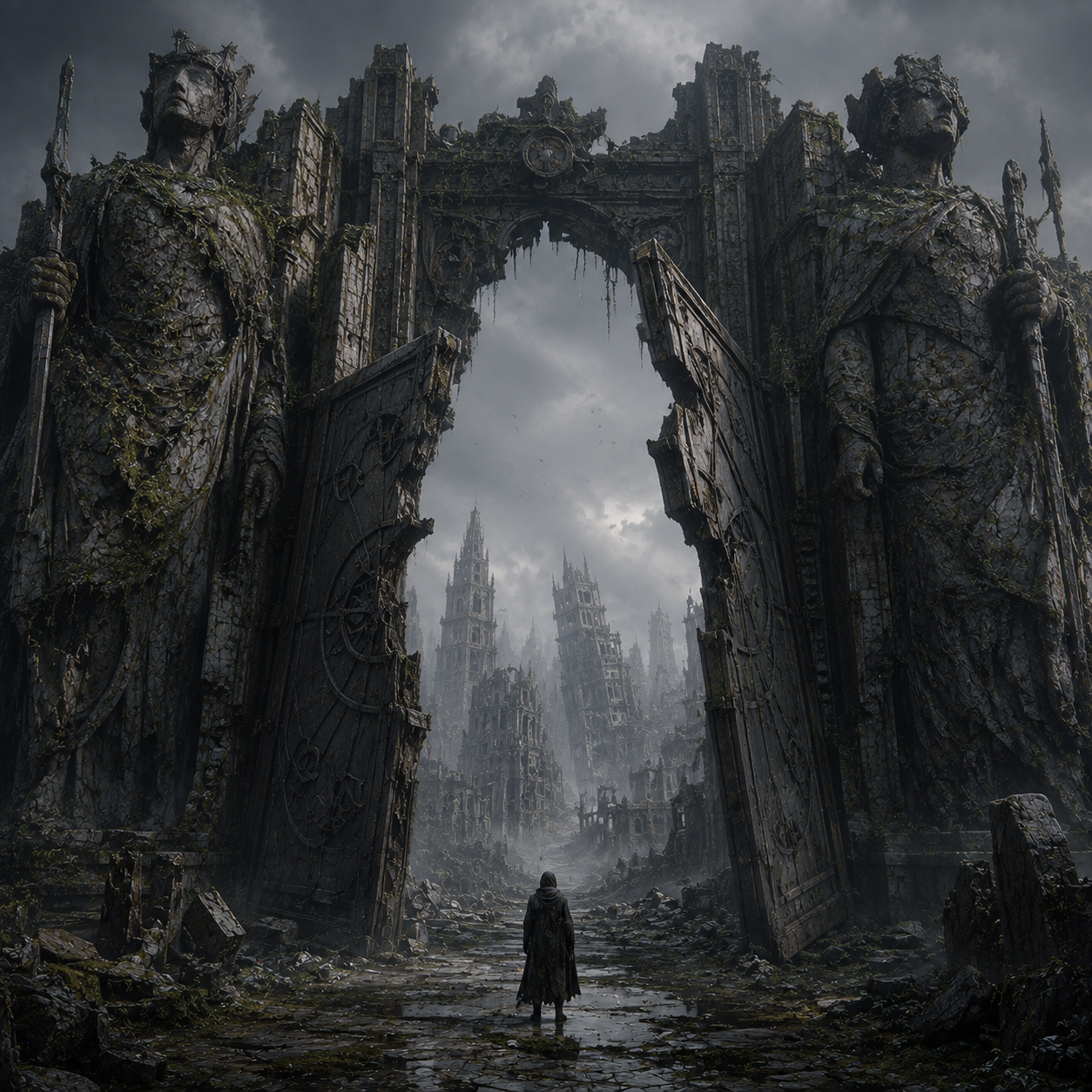
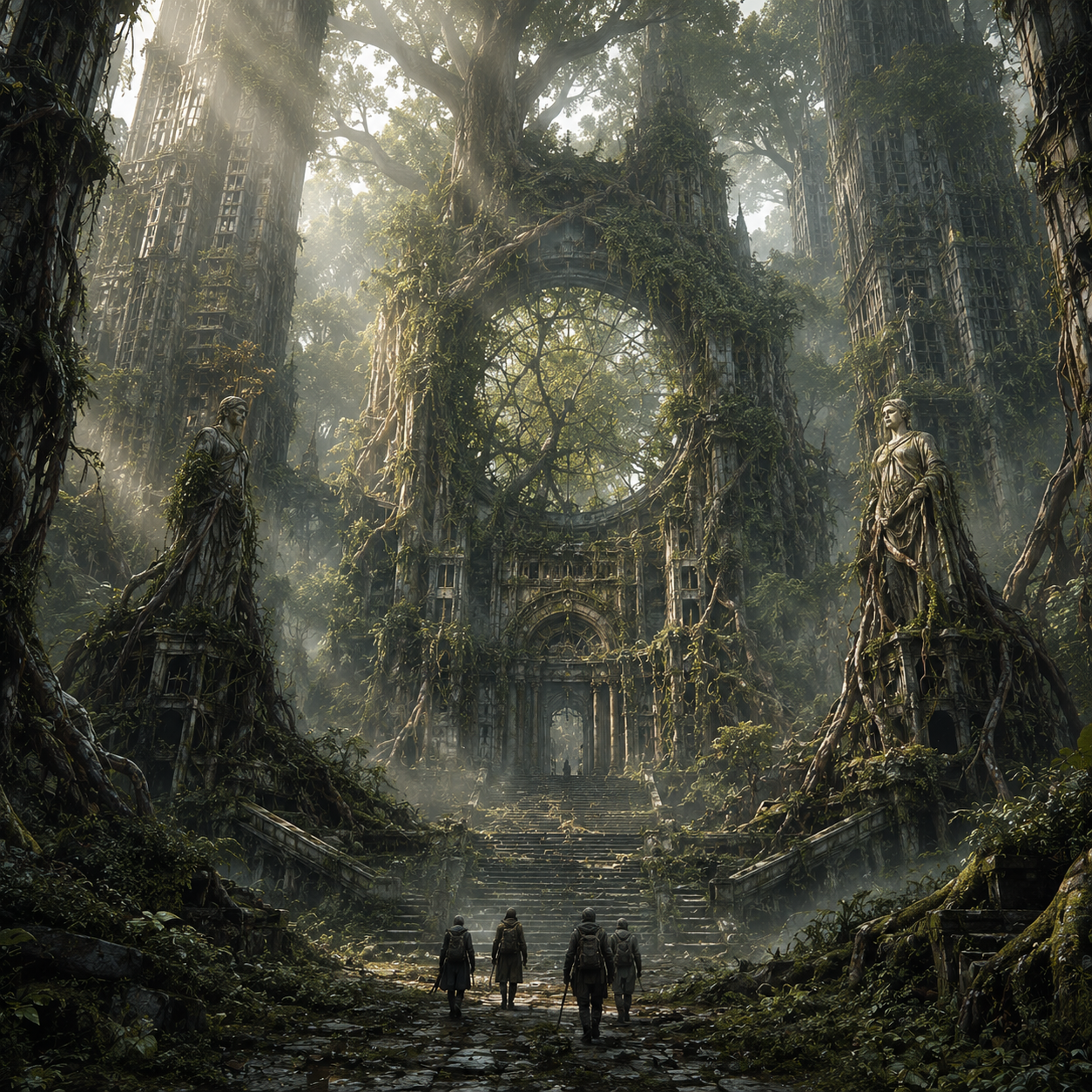
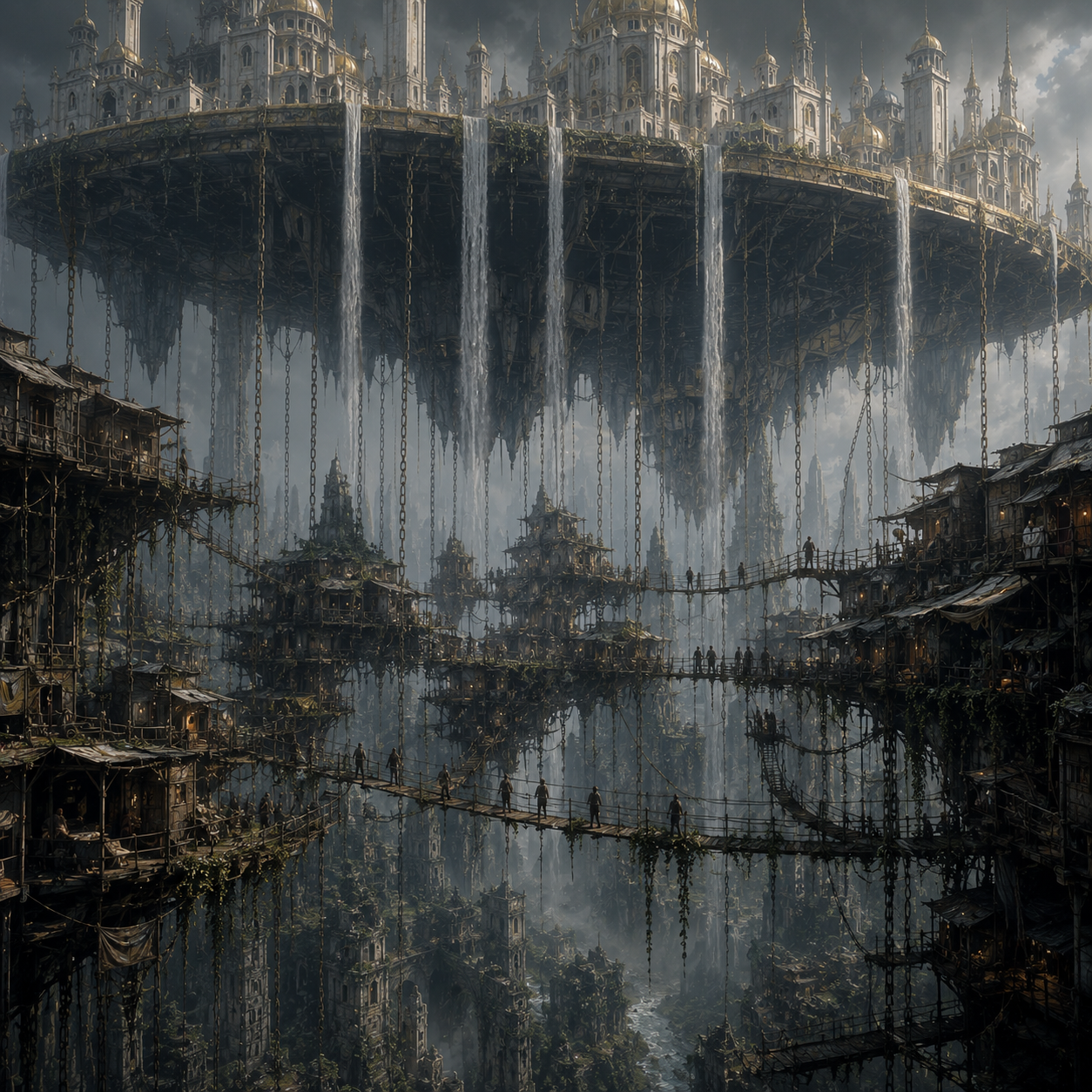
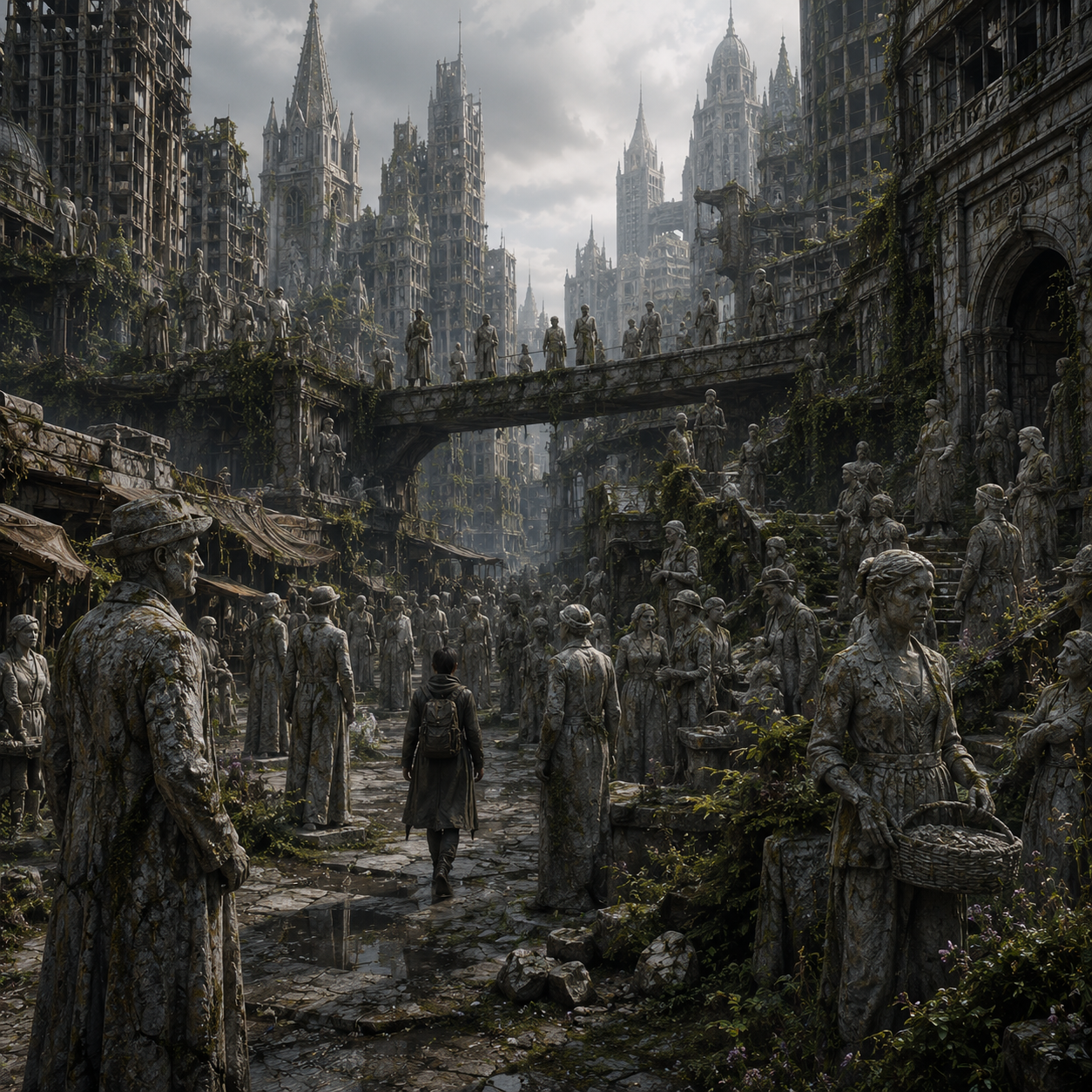
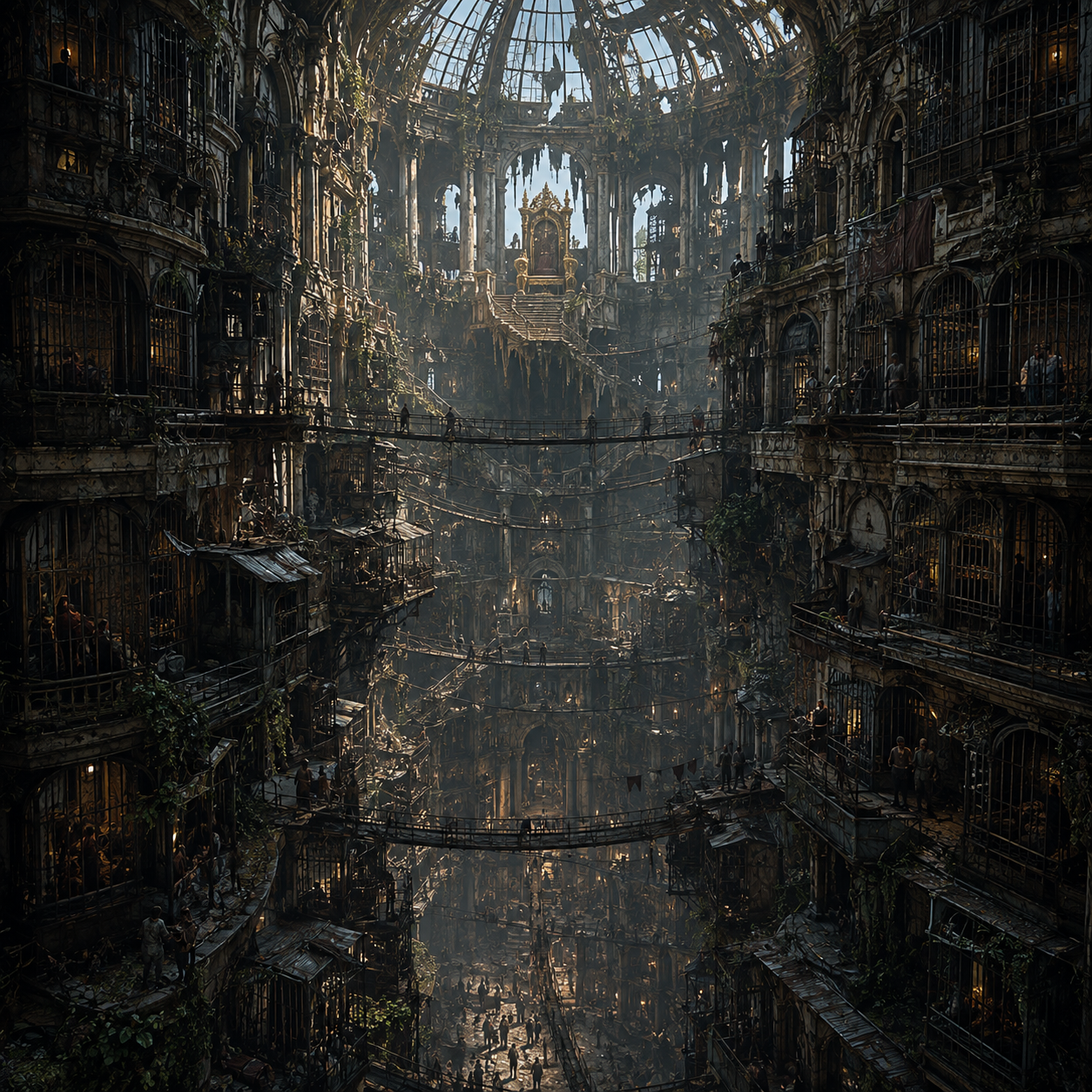
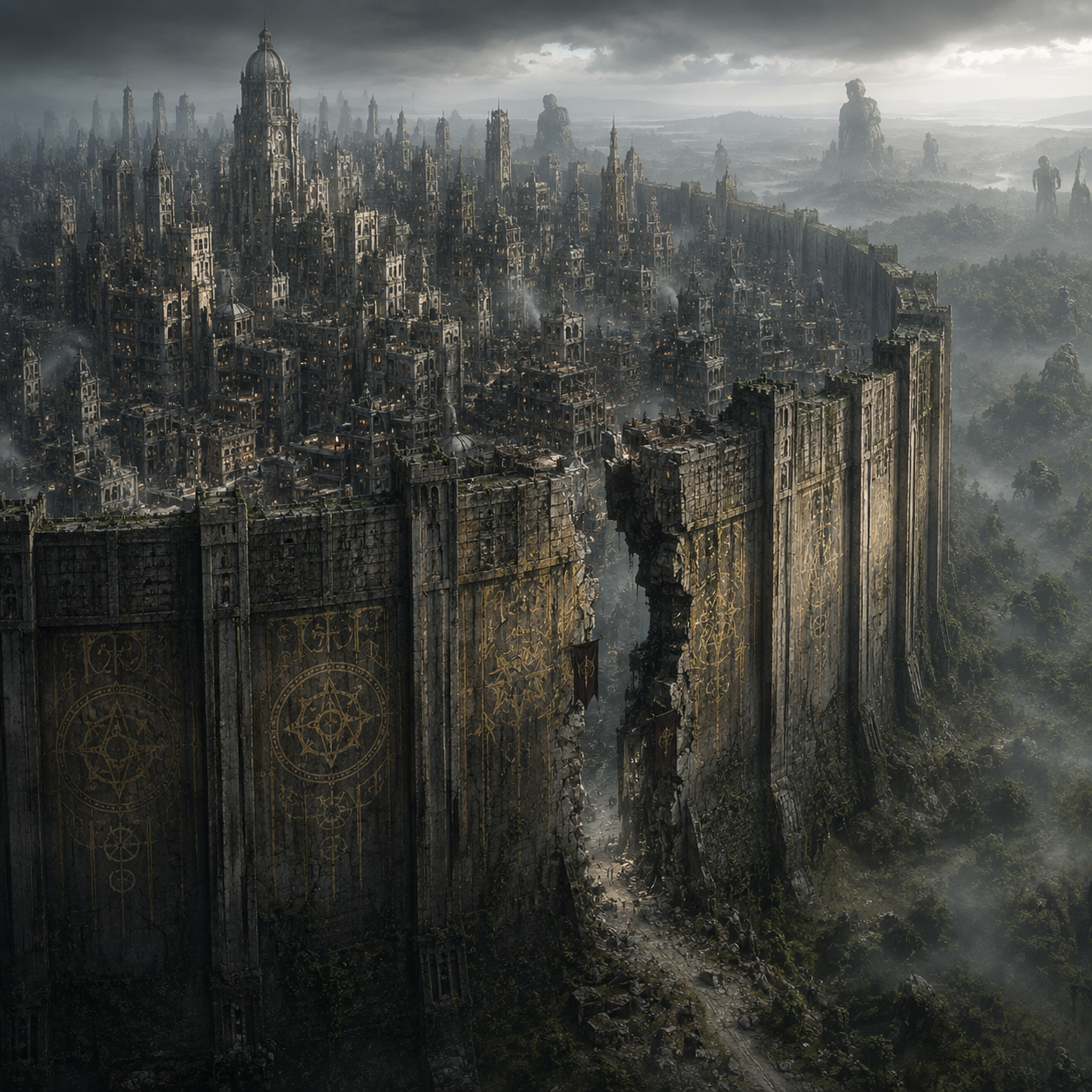
Sometimes a single image can suggest an entire dystopian world. Look closely at what appears ordinary, what feels controlled and what single detail suggests that something is wrong. Use each picture as the starting point for a story: decide what happened immediately before the scene, what will happen next and what the people living within this world have been taught not to question.
Go Deeper into Writing Dystopian Fantasy
Dystopian fantasy becomes particularly interesting when the magic and the system of control are inseparable. Rather than creating an oppressive kingdom and adding magic afterwards, think about how the existence of magic would change laws, social classes, education, religion, warfare and everyday life. If some people can read minds, raise the dead or see the future, society would almost certainly develop rules around those abilities — and those rules might begin for perfectly understandable reasons.
◆ Decide who is allowed to use magic. Perhaps everyone possesses magic but only licensed citizens can legally practise it. Certain abilities might be reserved for the ruling class, while others are considered too dangerous to exist at all. Think about what happens to someone who develops the wrong power — and who decided which kinds of magic were acceptable in the first place.
◆ Give magical restrictions a believable history. A ban on dragons becomes more convincing if dragons once destroyed entire cities. Prophecy might be illegal because competing predictions caused a civil war. Necromancy could have been outlawed after the dead began revealing government secrets. Let your society have reasons for its rules, even when those rules have become oppressive.
◆ Use fantasy to reinvent surveillance and control. You do not need cameras and computer databases when mirrors can watch people, familiars can report their owners, enchanted tattoos can record spells or government seers can search for future crimes. Think about familiar dystopian ideas and ask how they would work in a world built around magic instead of modern technology.
◆ Create inequality around magical resources. Magic itself might be abundant, but access to it does not have to be equal. Wealthy districts could have enchanted heating, instant healing and magical transport while poorer citizens queue for basic potions. Powerful families might own dragons, magical forests or sources of enchanted water. Who controls the things that make magic possible?
◆ Think about the people who benefit from the system. A government mage may genuinely believe licensing prevents magical disasters. Wealthy families might consider their privileges necessary because they have spent generations training to control dangerous abilities. Ordinary citizens could support harsh restrictions because they remember what happened when magic was unregulated. Your world becomes more convincing when not everyone considers the system obviously evil.
◆ Let folklore and fantasy traditions become political. Fairies might be forbidden from entering human cities. Witches could be required to surrender their grimoires. Dragons may be protected, imprisoned or weaponised. Ancient forests might have been divided into government-controlled territories. Take familiar fantasy elements and ask what happens when bureaucracy, law and political power begin deciding where they belong.
◆ Give rebellion its own magic. Resistance does not have to mean armies attacking palaces. Rebels might preserve spells the government erased from history, hide unregistered magical children, smuggle enchanted objects across borders or teach people how to remove government marks from their skin. A tiny magical act can become enormously significant when the regime has spent generations ensuring nobody can perform it.
◆ Question what happens if the system disappears. If the revolution succeeds, does everyone immediately regain access to magic? What happens to dangerous spells that were genuinely restricted for good reason? Who owns magical resources previously controlled by the Crown? What happens when imprisoned dragons are released? Destroying an oppressive magical system can create entirely new problems for the people trying to replace it.
Most importantly, allow the fantasy elements to reveal something about the dystopia itself. A forbidden spell, chained dragon or government-controlled prophecy should not exist simply because it looks interesting. Ask who controls it, who fears it, who benefits from it and what would change if ordinary people suddenly gained access to it. That is where fantasy worldbuilding can become dystopian storytelling.
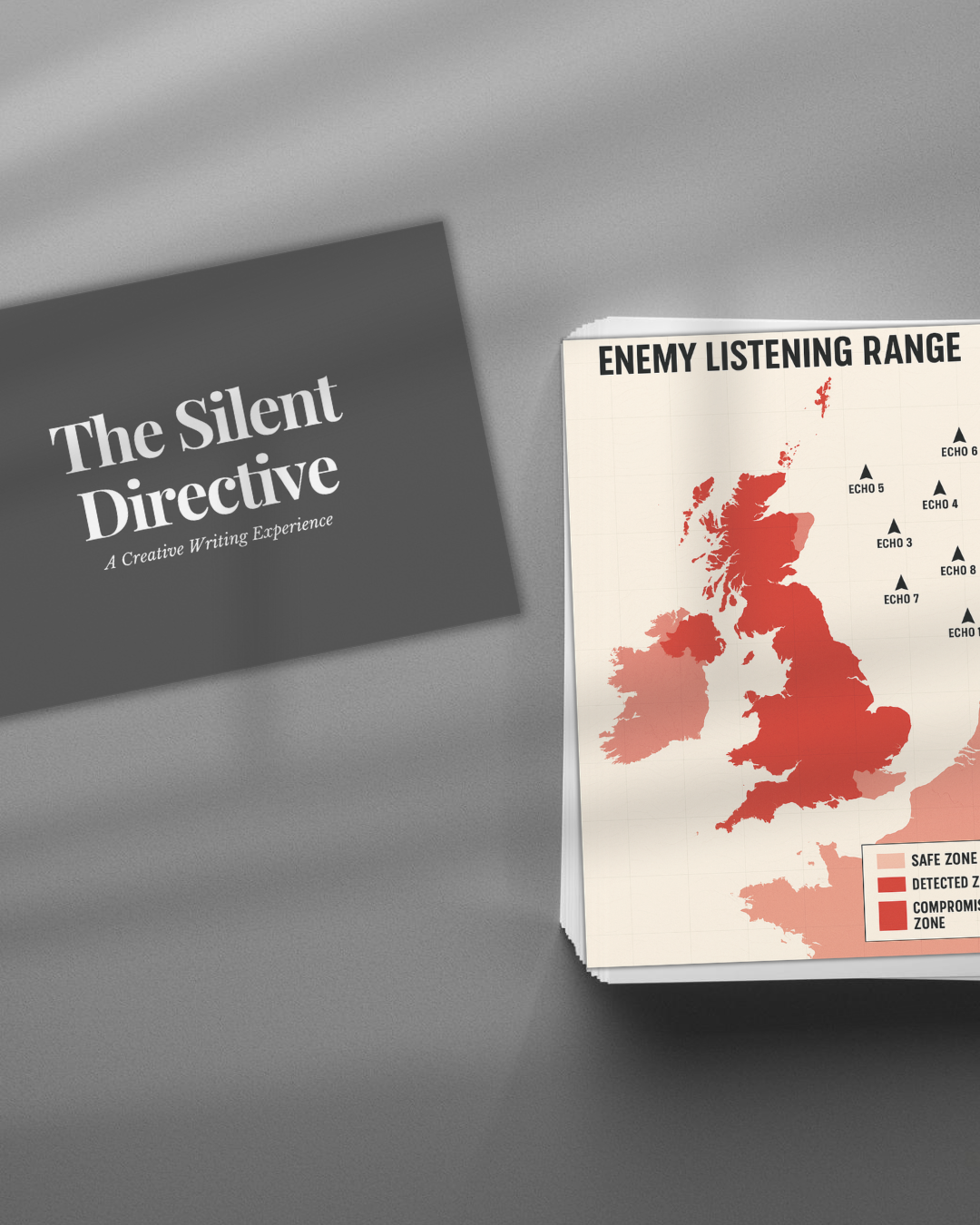
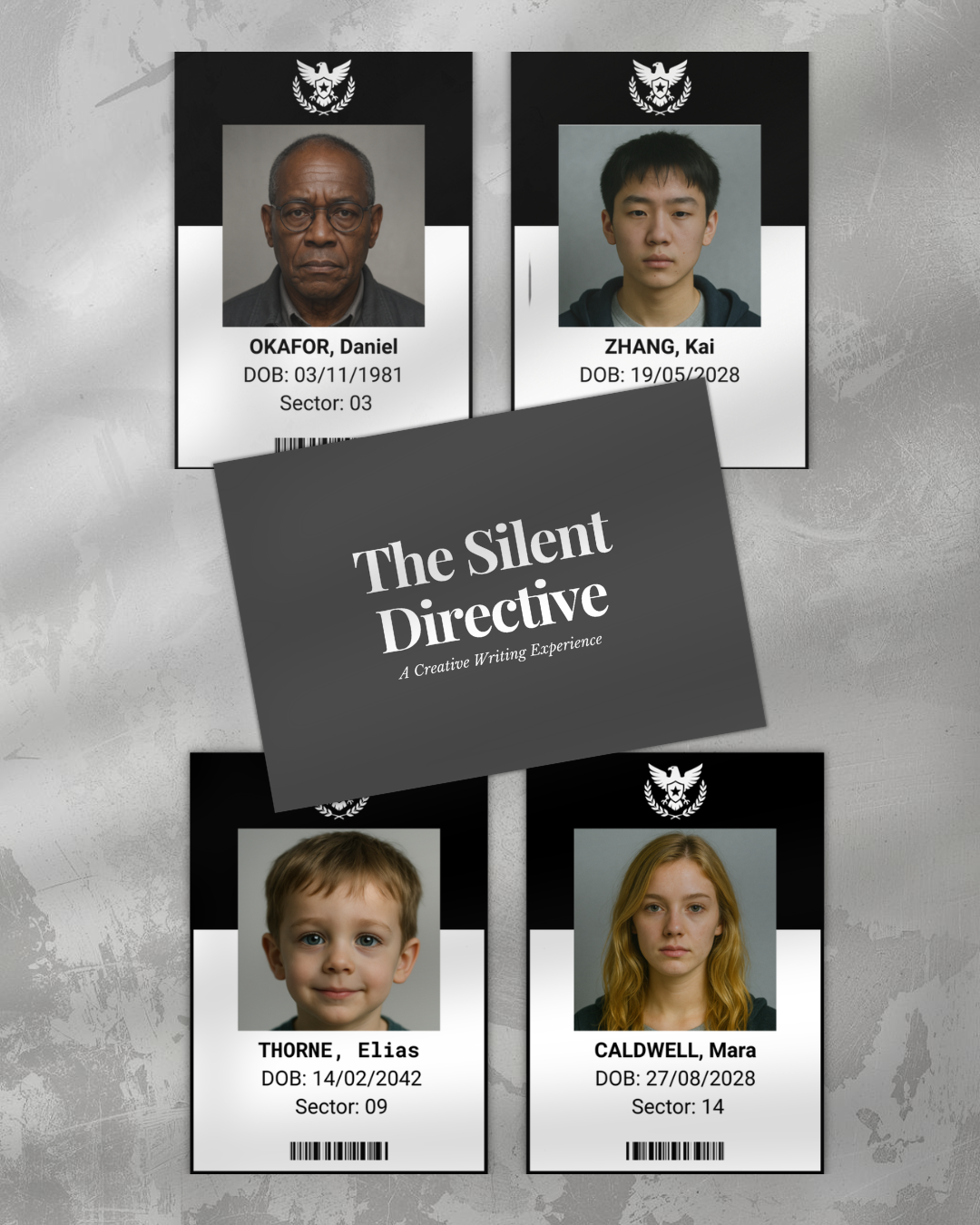
Explore the World of The Silent Directive
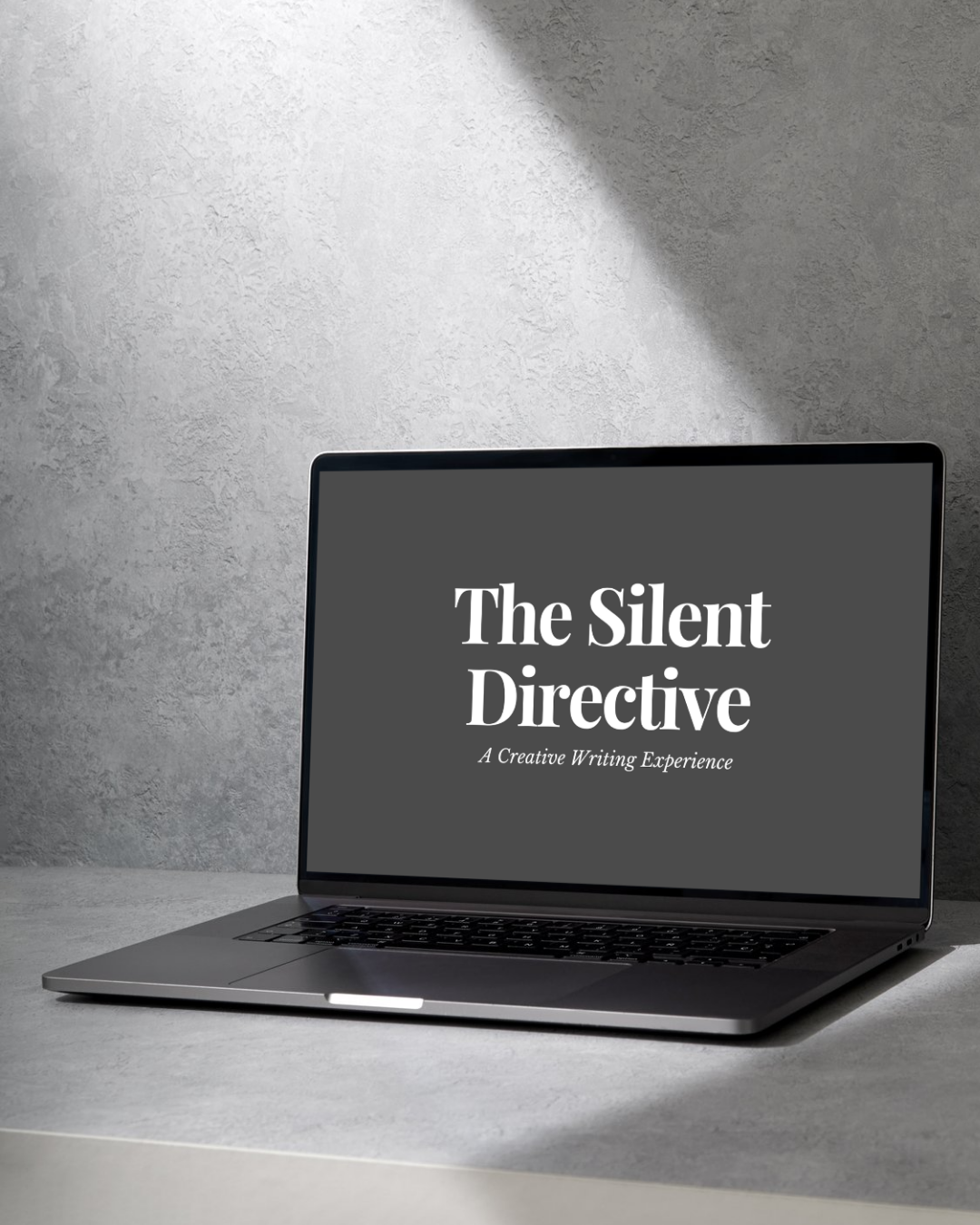
If you want to explore how systems of control can shape an entire fictional society, The Silent Directive takes you inside a dystopian world built from the documents its government would rather you never saw.
One Nation. One Law. One Voice.
In this world, silence is survival.
To speak is to disappear.
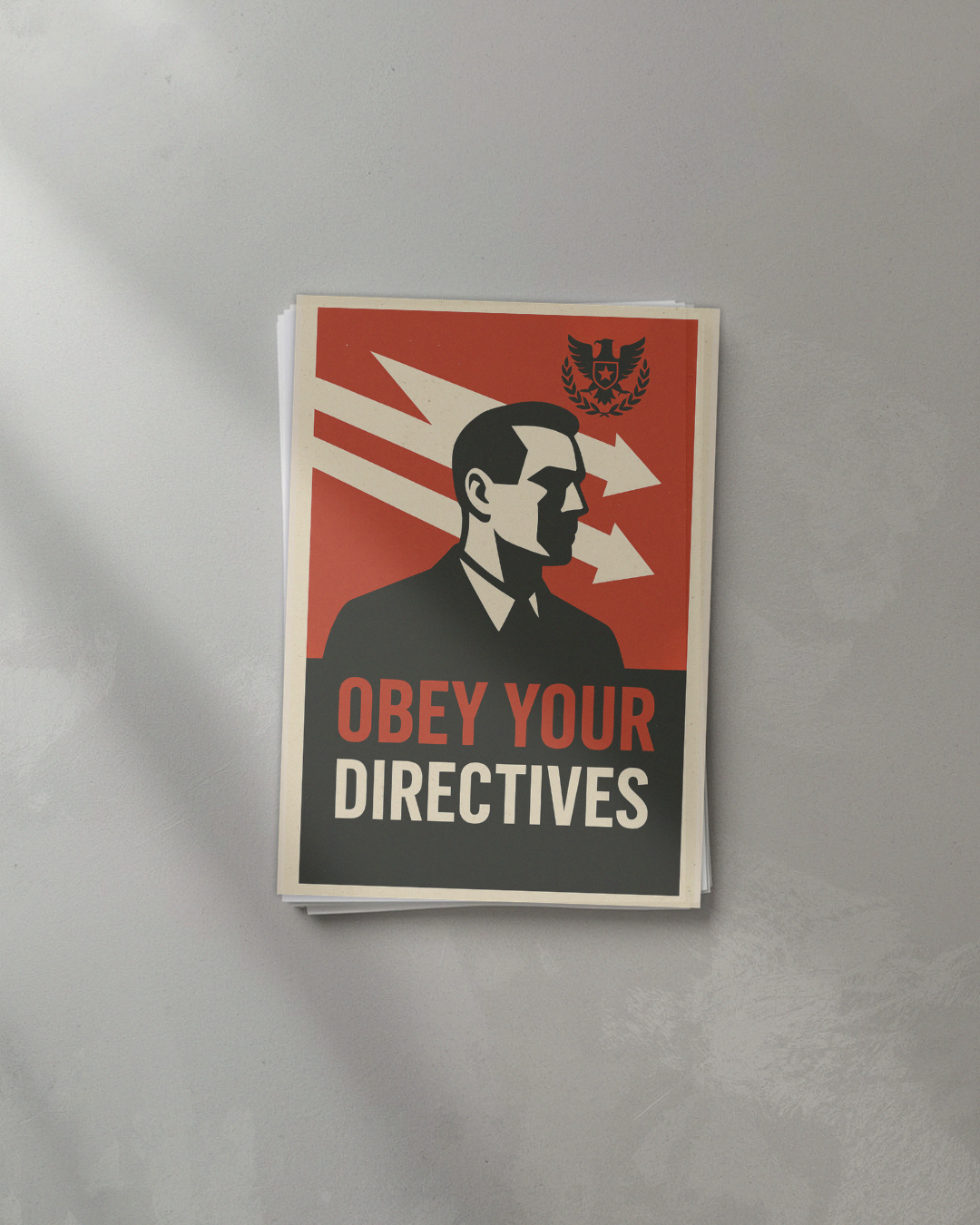
The Silent Directive is an immersive dystopian archive inspired by authoritarian regimes, censorship, surveillance, propaganda and resistance. Instead of telling you exactly what happened, it gives you 50+ printable documents and artefacts from within the world — classified files, confiscated and smuggled letters, propaganda posters, photographs, newspaper reports, testimonies and government records.
Some documents repeat the official narrative.
Others contradict it.
Records have been altered. Information has been censored. Names have disappeared entirely.
There is no answer sheet revealing which version is true. Instead, you become the investigator, comparing documents, noticing inconsistencies and deciding which voices you believe as the larger story begins to emerge.
Although The Silent Directive is not a fantasy world, it can be particularly useful when building one. Consider how its propaganda, surveillance, bureaucracy and censorship could be transformed through magic. What would a confiscated letter look like in a kingdom where messages can be enchanted? How would a magical government alter historical records? What might appear in a classified file about an unregistered witch, dragon or prophet?
◆ 50+ printable dystopian documents and artefacts
◆ Propaganda, classified files, photographs, letters, reports and testimonies
◆ A printable prompt card for further storytelling and exploration
◆ Instant digital PDF download
Explore The Silent Directive → instant download
Who can be trusted? Who is watching? And what happened to the people whose names were removed from the record?
The answers were never meant to survive.
Final Thoughts
Dystopian fantasy allows you to take the familiar ingredients of fantasy — magic, kingdoms, witches, dragons, prophecies, enchanted objects and mythical creatures — and ask who controls them. A magical power that might be a gift in another story can become dangerous when it must be registered. A prophecy can become a political weapon. An immortal ruler can turn an ordinary monarchy into a regime that has remained unchanged for centuries.
Use these 70 Dystopian Fantasy Writing Prompts as complete starting points, combine several to create a larger world, or take one small detail and develop the society surrounding it. A kingdom with government-controlled dragons might also ration spells, outlaw prophecy and employ magical familiars to watch its citizens. The more the fantasy elements connect to the rules and inequalities of the world, the more distinctive your dystopia can become.
For even more inspiration, explore the Dystopian Writing Hub for dystopian story ideas, characters, societies and worldbuilding inspiration, discover more magical prompts and ideas in the Fantasy Writing Hub, or browse the Creative Writing Archive for hundreds more creative writing prompts across different genres.
Choose Your Next Adventure