Edinburgh, 1828.
The dead were not always permitted to rest in peace.
As the demand for human bodies grew in Edinburgh's anatomical schools, a shadowy trade flourished among graveyards, burial grounds and the narrow closes of the Old Town.
Graves were disturbed.
Bodies disappeared.
Anatomists paid handsomely for specimens whose origins were seldom questioned.
And some of those who entered the anatomy rooms may never have belonged there at all.
A gold mourning ring containing a lock of dark hair, recovered from the possessions of an Edinburgh anatomy lecturer.
A fragment of Blackwood family tartan, believed to have come from the workshop of disgraced coffin makers implicated in the resurrection trade.
A gravekeeper's lantern fitted with an unusual green glass panel, possibly used to signal when a churchyard was safe to enter.
A silver pocket watch stopped at 3:17, concealing a bloodstained fragment of linen.
A glass specimen jar containing a preserved human hand, with a mysterious red thread tied around its little finger.
A pair of tiny coffin shoes, never worn, containing a lock of golden hair and the name of a six-year-old girl.
A plaster death mask of an unidentified young woman, bearing a chilling inscription:
She was breathing.
And a fragment of coffin lid, its inner surface covered in scratches suggesting that someone had desperately tried to escape.
Some objects were recovered from burial grounds.
Others passed through the hands of undertakers, anatomists and private collectors.
A few were discovered in places where they had no reasonable business being.
And not every person associated with these curiosities can be accounted for.
The Resurrection Collection: The Cabinet of Macabre Curiosities is an immersive, beautifully illustrated catalogue of disturbing artefacts, forgotten possessions and mysterious discoveries inspired by Edinburgh's notorious nineteenth-century resurrection trade.
Drawing upon the history of body snatching, Georgian burial customs, anatomical medicine, the darker corners of Edinburgh's Old Town and the unsettling possibilities of Gothic fiction, this fictional archive brings together thirteen macabre curiosities, detailed collector's records, atmospheric archival illustrations and fragments of histories that refuse to remain buried.
Each artefact offers a glimpse into a forgotten life.
Or perhaps a forgotten crime.
Why was a piece of Blackwood tartan recovered from a disgraced coffin-making workshop?
Who carried the gravekeeper's lantern, and what did its unusual green glass signify?
What was concealed inside the anatomist's whisky bottle?
Who was the woman whose hand was preserved in a specimen jar?
Why were a child's coffin shoes kept among an undertaker's possessions?
And who carved the words She was breathing into the back of a death mask?
There are no definitive explanations.
No complete records.
No certainty that every person declared dead had truly died.
Only curious possessions, disturbing discoveries and fragments of Edinburgh's darkest histories waiting to be investigated.
What's Inside?
◆ 13 beautifully illustrated macabre curiosities, each with its own mysterious history, unsettling details and circumstances of acquisition
◆ The collector's introductory letter, introducing a private collection of objects associated with Edinburgh's resurrection trade and anatomical history
◆ Detailed artefact catalogue pages featuring atmospheric hand-drawn illustrations, historical-style descriptions, provenance records and curious observations
◆ Unsettling historical objects, including mourning jewellery, burial relics, grave-robbing equipment, anatomical specimens, medical instruments and mysterious personal possessions
◆ Three illustrated curiosity collections, featuring weathered coffin plates, rusting undertaker's fittings and delicate mourning relics
◆ Atmospheric archival-style illustrations, depicting Edinburgh's graveyards, anatomical theatres, coffin workshops, resurrection men and unidentified individuals
◆ An illustrated collector's inventory, documenting additional anatomical curiosities, mysterious possessions and objects associated with the resurrection trade
◆ Creative writing activities and exploration guidance to inspire historical fiction, Gothic horror, dark mysteries and imaginative investigations
◆ Instant digital download in printable PDF format
Who Is It For?
Perfect for:
◆ Historical fiction writers fascinated by nineteenth-century Edinburgh and its darker history
◆ Gothic horror writers and dark fiction enthusiasts
◆ Lovers of macabre history, grave-robbing mysteries and unusual historical discoveries
◆ Novelists, short-story writers and creative storytellers
◆ Teachers looking for atmospheric visual writing prompts and imaginative historical fiction resources
◆ Fans of anatomical museums, Victorian and Georgian curiosities, and historical mysteries
◆ Mystery and thriller writers seeking unusual clues, suspicious characters and forgotten crimes
◆ Worldbuilders, journalers and solo roleplayers
◆ Lovers of antique collections, cabinets of curiosities and mysterious artefacts
◆ Anyone who enjoys uncovering the disturbing stories hidden inside ordinary-looking possessions
What Makes This Different?
This isn't a traditional collection of writing prompts.
It's a cabinet of objects recovered from a world in which the boundaries between medicine, commerce, death and criminality were dangerously blurred.
Every curiosity suggests a former owner, a questionable transaction, a forgotten incident or a mystery that was never satisfactorily resolved.
But the surviving records are incomplete, the provenance is frequently uncertain, and several objects contain details that raise more questions than they answer.
Examine the Blackwood mourning plaid and consider what happened inside the workshop of the disgraced coffin makers.
Investigate the gravekeeper's lantern and imagine the secret arrangements that might have existed between watchmen and resurrection men.
Study the anatomist's pocket watch and the bloodstained linen concealed inside its case.
Explore the specimen jar and imagine the identity of the woman whose hand was preserved.
Inspect the child's coffin shoes and consider why they were never worn.
Examine the plaster death mask and its terrible inscription.
Study the scratched coffin lid and decide whether its occupant was buried alive, transported while still breathing or the victim of something even more sinister.
Perhaps the lantern was simply an ordinary gravekeeper's possession.
Perhaps the watch belonged to an innocent medical gentleman.
Perhaps the child's shoes were never intended for a burial.
Perhaps the scratches inside the coffin were made long after its original occupant had been removed.
Or perhaps the resurrection trade concealed crimes far more disturbing than the theft of the dead.
You decide what these curiosities mean.
Use the collection to inspire a historical Gothic short story, develop a murder mystery set in Georgian Edinburgh, create a fictional anatomist or resurrection man, or imagine the lives of those whose possessions survived long after their disappearance.
Follow the provenance.
Examine the evidence.
Question the surviving accounts.
Explore the shadowy closes, crowded anatomy rooms and neglected burial grounds of nineteenth-century Edinburgh.
Imagine the secrets that were buried alongside the dead.
And consider what might happen when those secrets are unearthed.
The dead cannot tell their stories. But what if some of them were never dead at all?
Digital download: An illustrated 21-page PDF collection designed in A4 landscape format, featuring thirteen individual macabre curiosities and additional archival material. No physical product will be shipped.
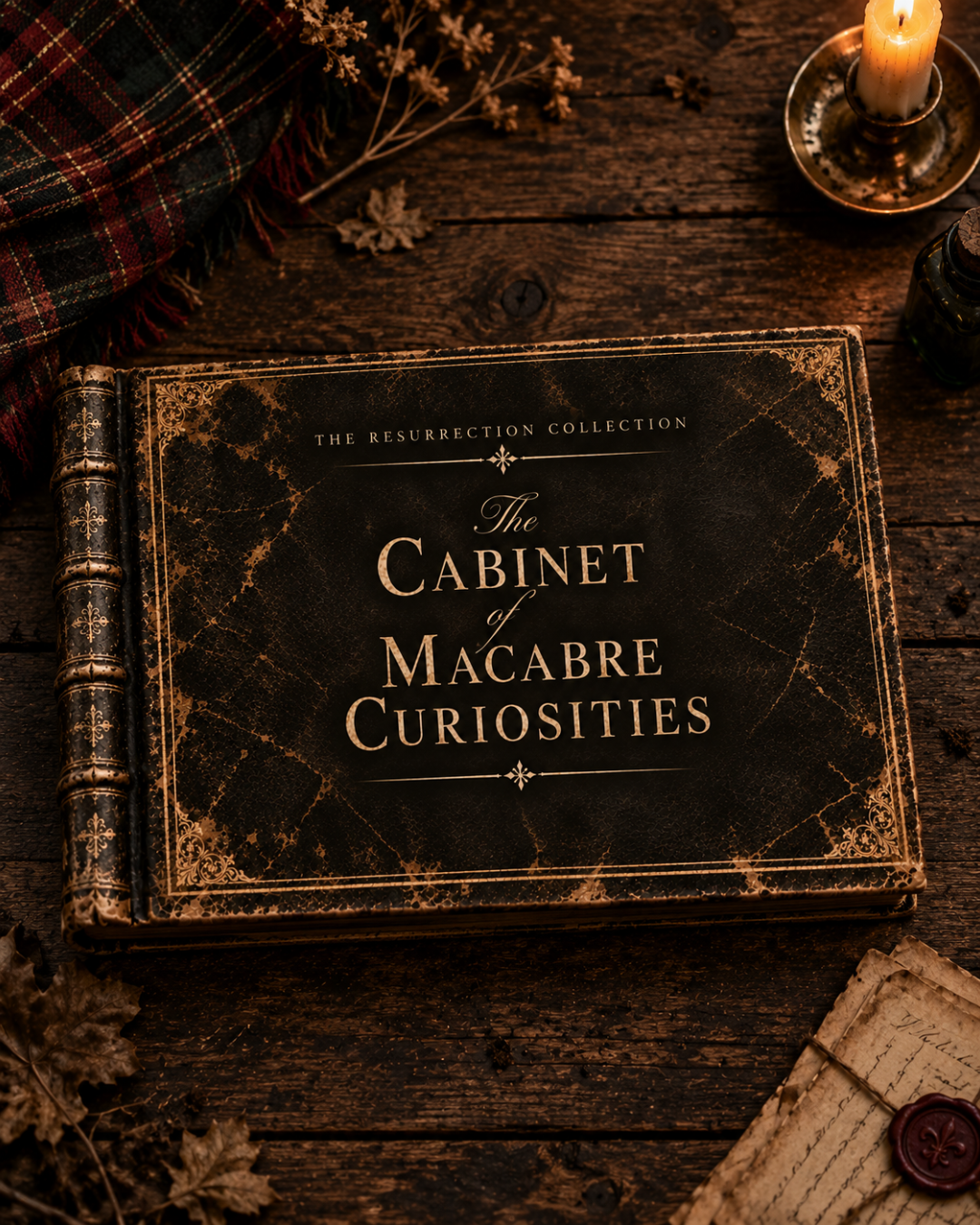 Image 1 of 6
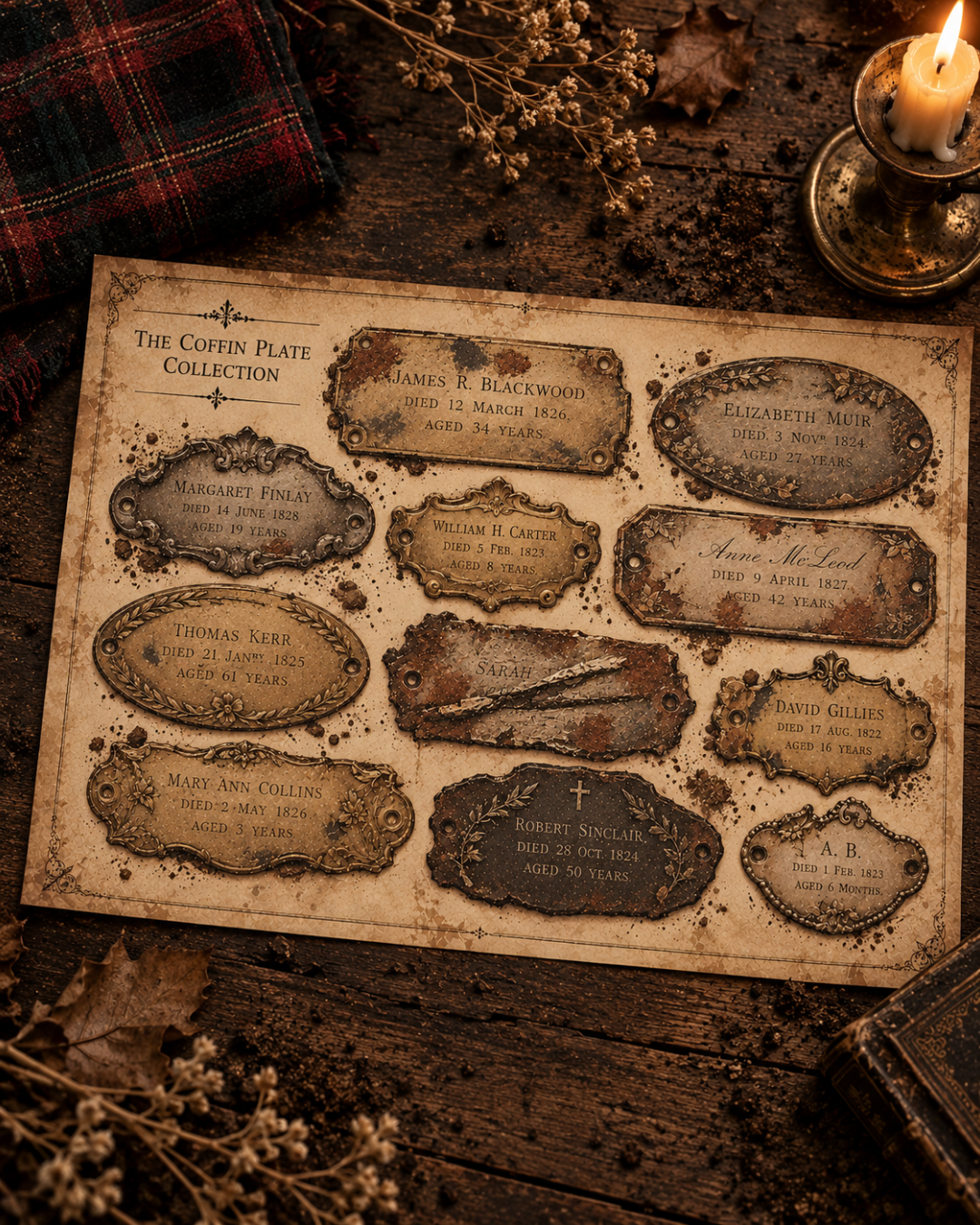 Image 2 of 6
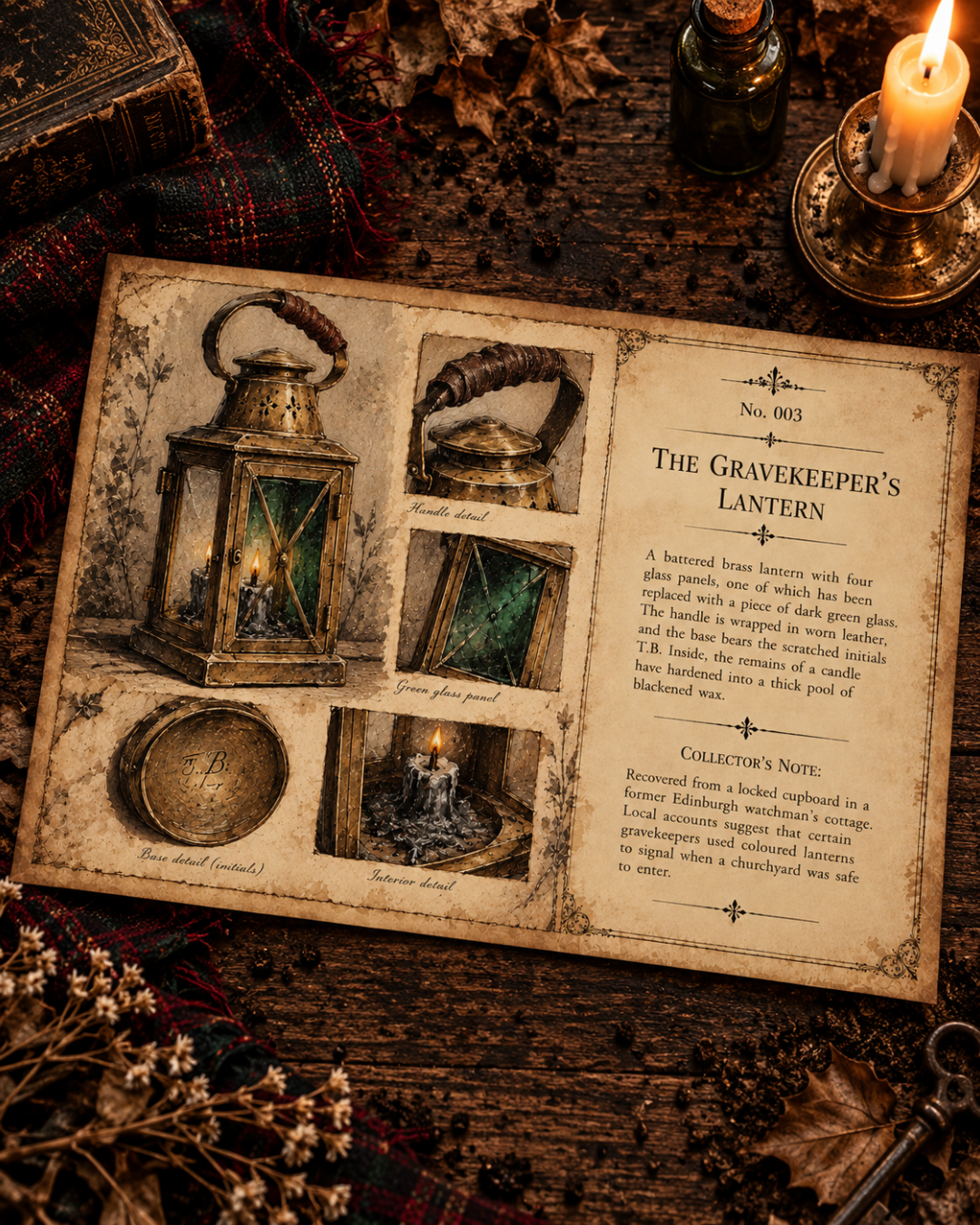 Image 3 of 6
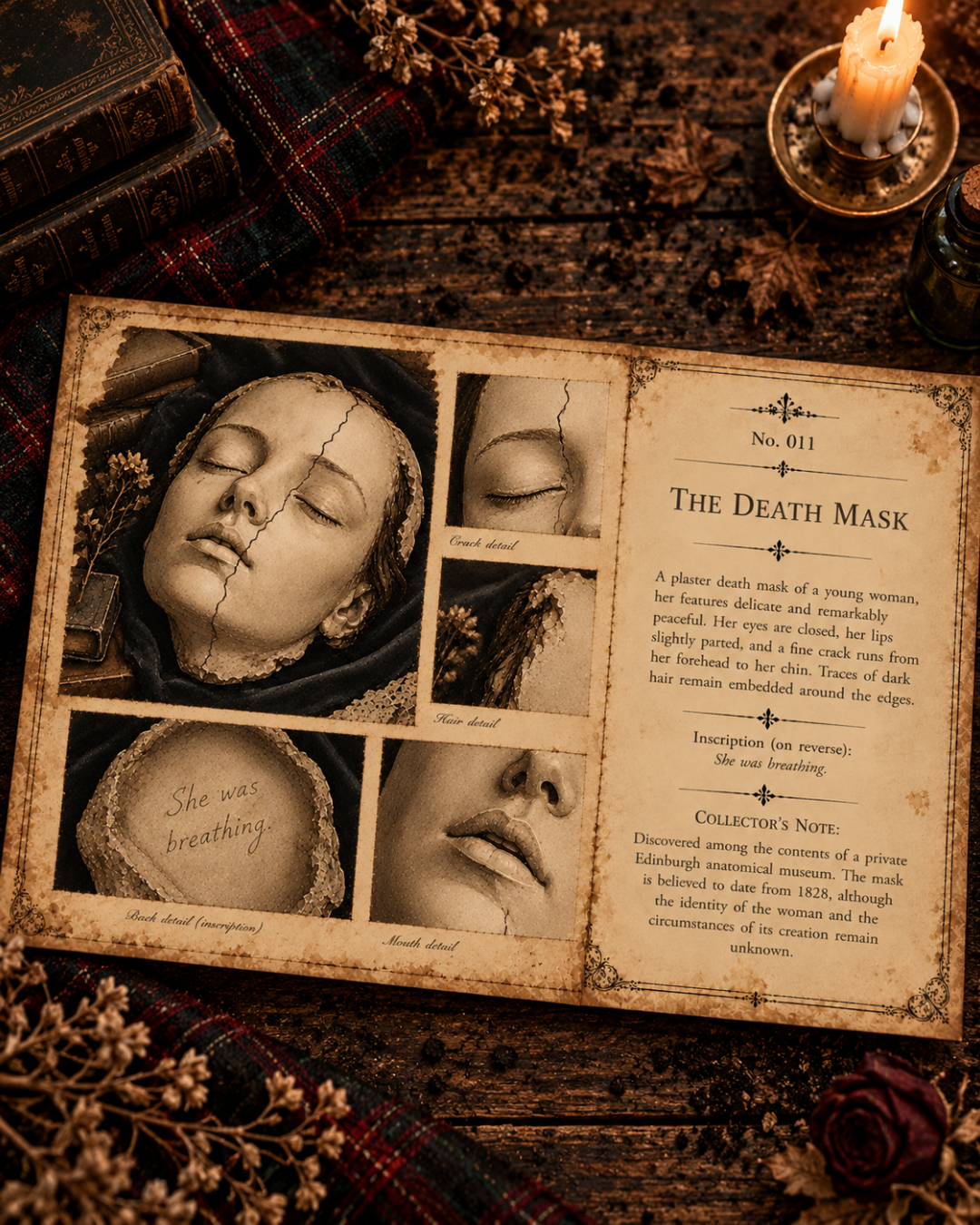 Image 4 of 6
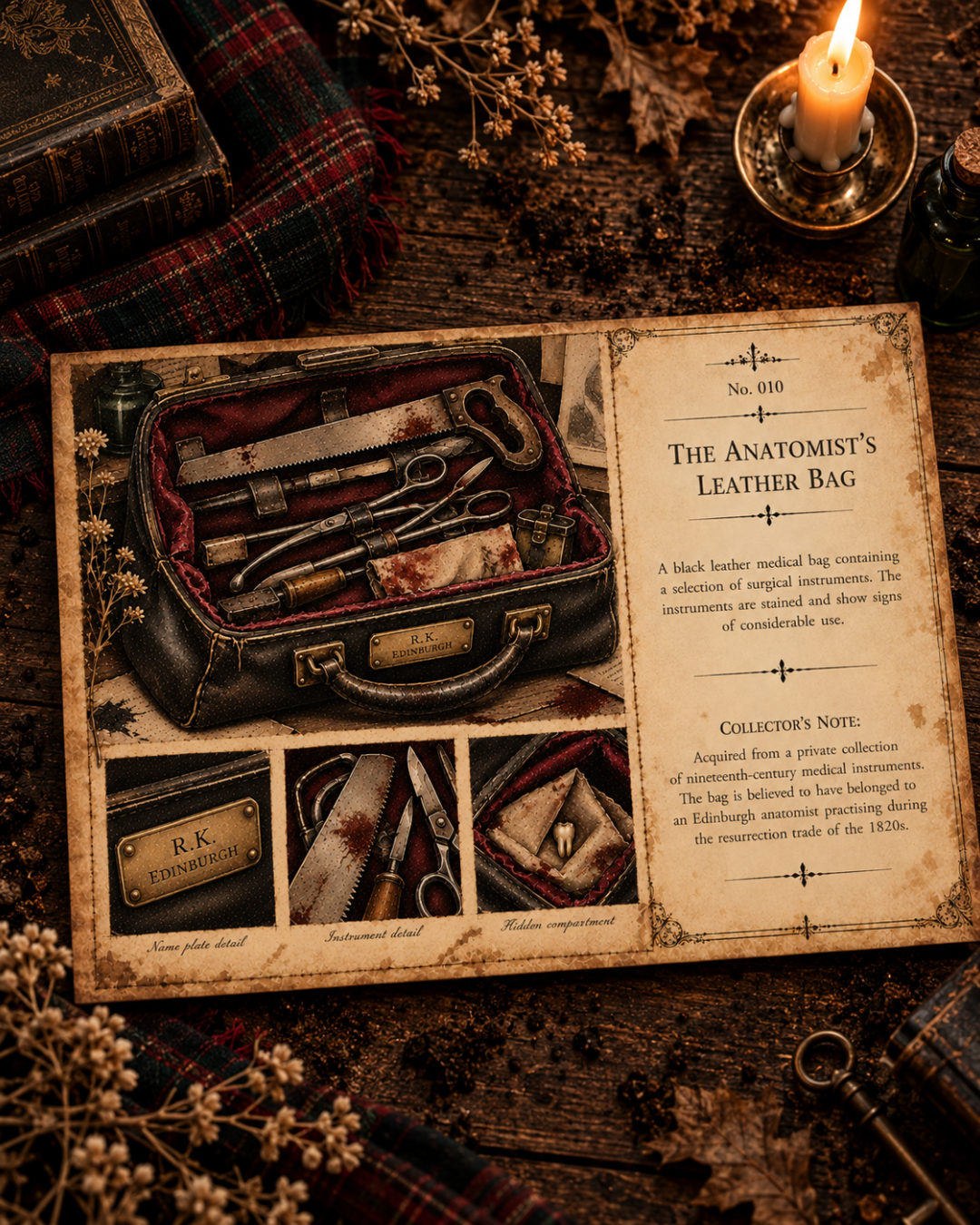 Image 5 of 6
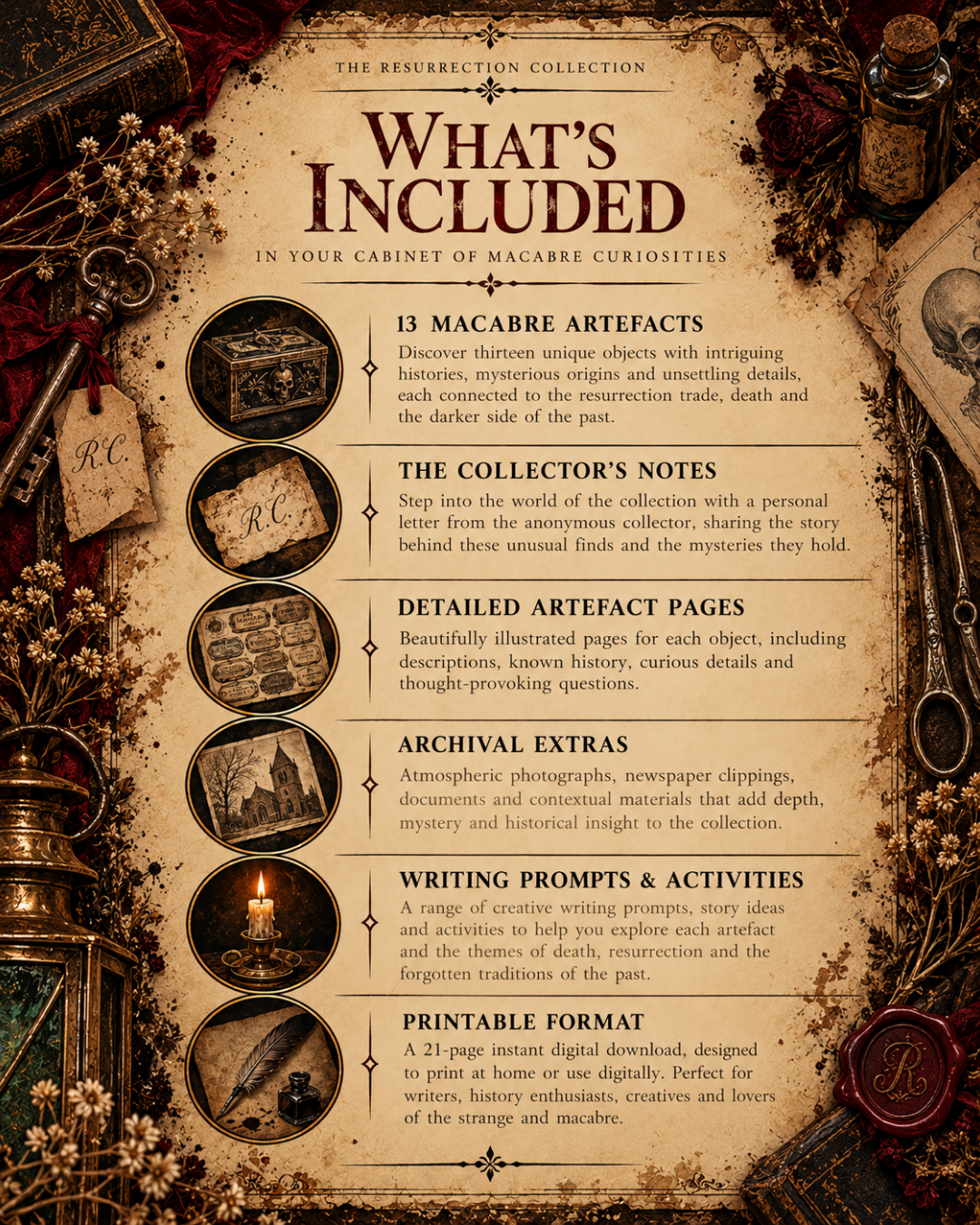 Image 6 of 6