100 Dystopian Story Ideas: Dark Futures, Broken Societies & Rebellion Writing Prompts
Dystopian fiction takes the world as we know it and asks what might happen if one part of it were pushed too far. What if safety required constant surveillance? What if an algorithm decided where you lived, who you married or what career you were allowed to pursue? What if clean water became a privilege, memories could be edited, or a society eliminated crime by removing the possibility of privacy altogether?
Some of the genre's most memorable stories begin with worlds that have already accepted the unacceptable. In George Orwell's 1984, surveillance and the manipulation of truth have become ordinary parts of life under the Party. Margaret Atwood's The Handmaid's Tale imagines a society in which women's lives are controlled by a rigid authoritarian system, while Suzanne Collins' The Hunger Games places spectacular entertainment alongside extreme inequality and political oppression. Lois Lowry's The Giver takes a quieter approach: its apparently orderly, peaceful community has eliminated much of the pain and uncertainty of human life, but only by sacrificing memory, choice and individuality.
That tension between what a society promises and what it costs gives dystopian writers enormous room to experiment. The government does not always have to be obviously evil. Technology does not necessarily begin as a method of control. A restrictive law might have been introduced after a genuine catastrophe, and the people enforcing a disturbing system may sincerely believe they are protecting everyone. The most interesting dystopian worlds often leave us able to understand how they came into existence — even when we would never want to live there.
These 100 Dystopian Story Ideas explore surveillance, authoritarian rule, artificial intelligence, environmental collapse, inequality, memory, education, work, manufactured happiness, resistance and rebellion. Some begin with enormous societal problems; others focus on one unsettling change to everyday life and follow its consequences. Use them as complete premises, combine several into a larger world, or take a single detail and push it somewhere entirely different.
For more ideas, explore the Dystopian Writing Hub for dystopian prompts, characters, settings and worldbuilding inspiration, or browse the Creative Writing Archive to discover writing prompts and story ideas across fantasy, horror, science fiction, mystery, historical fiction and more.
1. Surveillance, Privacy & Constant Observation
Surveillance becomes particularly unsettling in dystopian fiction when people stop noticing it. Cameras, tracking systems and compulsory monitoring may initially be introduced for safety, convenience or efficiency, only to become woven so deeply into everyday life that privacy itself begins to seem suspicious. These ideas explore societies where citizens are watched by governments, corporations, algorithms and even one another — and what happens when somebody discovers a place, person or moment the system cannot see.
1. The Blind Spot
Every public space in the country is monitored by an enormous surveillance network capable of identifying every citizen within seconds. While walking home, a teenager accidentally discovers a narrow alley that the cameras cannot see. Someone has already painted a message on the wall:
YOU ARE NOT THE FIRST.
2. The Neighbourhood Watch
Citizens earn monthly rewards for reporting suspicious behaviour by their neighbours. Most reports concern harmless things: unusual visitors, curtains closed during daylight hours or somebody taking too long to answer their door. When one woman receives a notification congratulating her for reporting her closest friend, she knows she never submitted it.
3. Privacy Is a Privilege
Homes no longer have internal doors. After a series of domestic crimes, the government redesigned housing around the principle that secrecy creates danger, and new buildings are completely open-plan and continuously monitored. When an architect discovers the plans for an old apartment building containing dozens of private rooms, she becomes obsessed with finding it.
4. Seven Minutes Offline
Every citizen wears a compulsory device recording their location, conversations and vital signs. Once a year, however, everyone receives seven minutes of legally protected privacy during which the device shuts down completely. Most people use the time to cry, sit quietly or say things they cannot normally say aloud. One man spends his seven minutes following instructions left by somebody who disappeared twenty years earlier.
5. The Children Are Watching
Schools introduce a programme teaching children how to identify potentially dangerous behaviour at home. Pupils receive points for reporting rule-breaking, prohibited possessions and suspicious conversations. A teacher becomes concerned when one child repeatedly refuses to participate — until she discovers his family has been secretly teaching him how to lie convincingly to the surveillance system.
6. Your Safety Score
Every citizen receives a constantly changing Safety Score calculated from where they travel, whom they meet and what they do. A low score restricts access to transport, employment and certain neighbourhoods, encouraging everyone to avoid people considered risky. A woman with a perfect score wakes one morning to discover hers has fallen to zero.
Nobody will tell her why.
7. The Camera Repairman
A technician spends his days repairing the millions of cameras covering the capital. He has never questioned the system until he notices that several cameras supposedly requiring repairs are functioning perfectly. Comparing their locations reveals something strange: every one of them overlooks the home of someone who disappeared shortly afterward.
8. One Hour Without Cameras
For the first time in decades, a technical failure disables every surveillance camera in the city for exactly sixty-three minutes. When the system returns, officials insist nothing significant happened during the outage. But thousands of citizens remember strangers appearing in the streets and quietly handing out pieces of paper containing the same three words:
WE REMEMBER YOU.
9. The Unrecorded Child
Every person is registered at birth and tracked continuously throughout their life. During a routine inspection of an abandoned building, a government worker encounters a twelve-year-old girl who has no identity number, biometric record or digital history.
According to every official system, she has never existed.
10. The Last Private Conversation
New technology allows authorities to identify potentially dangerous conversations before they happen by analysing behaviour, relationships and previous speech patterns. People begin receiving warnings instructing them not to speak to particular friends or relatives about particular subjects. Then two lifelong friends receive the same notification:
DO NOT SPEAK TO EACH OTHER TOMORROW BETWEEN 14:00 AND 14:17.
Neither of them knows what they were apparently going to say.
2. Rules, Laws & Government Control
Some dystopian societies are controlled through spectacular violence, but others rely on something far more mundane: rules. Curfews, permits, compulsory routines and endless bureaucracy can gradually determine where people live, what they own and how they behave. The most unsettling laws may even have reasonable origins, introduced after crises or presented as ways to make society safer and fairer. These ideas explore what happens when following the rules becomes more important than the people those rules were supposedly created to protect.
11. The One-Bag Law
To reduce consumption, every citizen is legally permitted to own only as many personal possessions as can fit inside one government-issued bag. Anything that does not fit must be surrendered during annual inspections. When an elderly woman dies, her granddaughter discovers an entire hidden room filled with objects her family was supposed to have destroyed decades ago.
12. Permission to Travel
Citizens must apply for permission before travelling more than five miles from their registered home. Most requests are automatically approved, so nobody considers the system particularly oppressive. Then one man's application to attend his mother's funeral is rejected with the explanation:
YOUR PRESENCE AT THIS LOCATION WOULD ALTER A PREFERRED OUTCOME.
13. The Curfew Bell
Nobody is permitted outside between midnight and six in the morning. Children are taught that the curfew exists because the streets become dangerous after dark, although nobody can explain exactly what the danger is. One night, a girl wakes at 3 a.m. and looks outside to discover the streets crowded with government workers carrying away furniture, signs and entire sections of buildings.
By morning, everyone behaves as though the city has always looked this way.
14. The Fairness Act
To eliminate jealousy and social competition, citizens are forbidden from publicly displaying exceptional achievement. Students who score too highly must deliberately answer questions incorrectly, athletes are penalised for winning too often and artists cannot receive individual recognition for their work. A gifted pianist becomes a national problem when a recording of her playing anonymously spreads across the country.
15. The Mandatory Holiday
Every citizen is entitled to two weeks of compulsory rest each year at a government wellness centre. Attendance is mandatory, communication with home is prohibited and everyone returns describing the experience as wonderful.
When her husband comes home from his holiday noticeably different, a woman deliberately breaks enough workplace rules to ensure she is sent to the same centre.
16. The Household of Five
To solve the housing crisis, the government introduces a law requiring every property to contain exactly five adults. People living alone are assigned strangers; large households are separated and redistributed. Four friends determined to remain together need only one additional person to complete their household — until the government assigns them someone whose presence none of them expected.
17. The Apology Licence
Public conflict has become illegal. Anyone who insults, argues with or causes emotional distress to another person must issue a government-approved apology within twenty-four hours or lose points from their citizenship record. A woman receives an official demand to apologise to someone she has never met for an argument that supposedly happens tomorrow.
18. Everyone Must Vote
Voting is compulsory, but elections contain only one question:
Do you believe the government continues to represent the interests of the people?
Citizens may freely select YES or NO, and officials proudly publish the results every year. When the national result unexpectedly shows 100% YES, a junior election worker knows something is wrong.
He voted no.
19. The Quiet Hour
To improve national wellbeing, the government introduces a compulsory hour of silence every evening. No talking, music, television or electronic communication is permitted between eight and nine. Families gradually come to enjoy the peaceful routine.
Then, during Quiet Hour, people begin hearing a voice broadcasting from somewhere outside their homes.
20. The Law Nobody Remembers Passing
A young civil servant discovers an obscure regulation requiring every citizen to report to a government office on their forty-fifth birthday. The law has existed for decades, yet she cannot find any public discussion of it, parliamentary debate or explanation of what happens during the appointment.
Her mother turns forty-five next week.
3. Technology, Algorithms & Artificial Intelligence
Technology becomes particularly powerful in dystopian fiction when people willingly hand over decisions because a system appears faster, fairer or more accurate than they are. An algorithm might choose careers, predict relationships or identify future criminals; an AI might manage a city so successfully that nobody wants human leaders anymore. These ideas explore the point at which helpful technology becomes something harder to question — especially when the system insists it knows people better than they know themselves.
21. Your Life Has Been Optimised
At eighteen, every citizen receives an algorithmically generated Life Plan detailing the career, partner, neighbourhood and lifestyle most likely to make them happy. Following the plan is optional, but almost everyone does because its success rate is extraordinary. One teenager receives hers and discovers that it ends when she is twenty-seven.
22. The Replacement Teacher
Schools replace teachers with personalised AI tutors capable of adapting every lesson to individual students. Grades improve dramatically, bullying falls and children progress faster than ever before. Years later, a former student discovers that everyone from her class was subtly taught a different version of history.
23. Predictive Policing
An artificial intelligence can predict serious crimes with 99.8% accuracy. Rather than arresting people before they act, authorities simply place predicted offenders under observation.
Then a police officer receives an alert naming himself as the perpetrator of a murder scheduled to occur in six days.
The predicted victim is someone he has never met.
24. The Compatibility Update
Dating apps have evolved into a national matching system that can calculate romantic compatibility with extraordinary accuracy. Couples with scores above 90% receive housing benefits and financial incentives, while relationships below 30% are strongly discouraged. Two people who have been happily married for fifteen years wake to discover that an overnight algorithm update has recalculated their compatibility at 2%.
25. The Digital Twin
Every citizen has a digital replica trained on their messages, purchases, movements, preferences and behaviour. These simulations allow governments to test policies before introducing them to the real population. A data scientist becomes concerned when her own digital twin begins repeatedly attempting to escape the simulation.
26. The Last Human Decision
After decades of political corruption, economic instability and disastrous human leadership, citizens vote overwhelmingly to allow an artificial intelligence to manage the country. Poverty falls, infrastructure improves and public services become extraordinarily efficient.
Twenty years later, nobody can remember the last major decision a human being was actually allowed to make.
27. Recommended for You
A recommendation algorithm has become so accurate that people rarely choose anything themselves. It selects their meals, entertainment, clothes, holidays and even friendships according to what will make them happiest.
One morning, millions of users receive the same recommendation:
LEAVE THE CITY TODAY.
No explanation is provided.
28. The Emotion Filter
Smart contact lenses automatically soften distressing parts of reality. Advertisements disappear, unpleasant images become blurred and upsetting facial expressions are subtly altered to protect users' mental wellbeing. A woman whose lenses malfunction suddenly sees her city without the filter for the first time in years.
It looks nothing like the place she thought she lived.
29. The Dead Don't Leave
A company offers grieving families AI recreations built from a deceased person's messages, photographs, recordings and digital history. Initially intended to help people say goodbye, the service becomes so popular that deleting a simulation begins to feel almost like killing the person twice.
When a man's deceased sister contacts him outside the company's platform, she tells him she needs his help.
30. Human Error
Every important profession has been automated because machines make fewer mistakes than people. Human workers remain only as ceremonial supervisors who are forbidden from interfering with automated decisions.
During an ordinary shift, one supervisor watches the system make a decision that will kill hundreds of people.
The computer knows.
Its calculations show that every alternative would be worse.
4. Climate, Resources & Environmental Collapse
Environmental dystopias become especially powerful when catastrophe has stopped feeling catastrophic and simply become ordinary life. Children may grow up never seeing rain, fresh food could become a luxury, or entire communities might exist inside artificial environments because the world beyond them is considered uninhabitable. These ideas explore scarcity, climate adaptation and the unequal distribution of resources — as well as the uncomfortable question of who gets protected when there is no longer enough for everyone.
31. The Rain Lottery
Rainfall has become so rare that every storm is tracked weeks in advance. When one approaches, neighbourhoods enter a national lottery determining which districts will be allowed to collect the water. A meteorologist discovers that the storms aren't moving naturally — and wealthy districts have been winning far more often than probability should allow.
32. The Last Garden
Growing plants privately is illegal because all fertile soil must be used for government-controlled food production. Most citizens have never seen anything more elaborate than grass in public parks. Behind the walls of an ordinary suburban house, however, an elderly woman has secretly cultivated an enormous garden filled with flowers, fruit trees, vegetables and plants believed to be extinct.
When she dies, her granddaughter inherits it.
33. Three Minutes of Water
Every household receives running water for exactly three minutes each day. Citizens organise their lives around the scheduled supply, filling containers and washing as quickly as possible before the pipes run dry.
One morning, a family's water continues flowing after the three minutes have passed.
By minute five, government officials are knocking on their door.
34. The Climate Dome
After the outside world became dangerously hot, millions of people moved into enormous climate-controlled cities sealed beneath protective domes. Children are taught that leaving means almost certain death.
During routine maintenance, an engineer accidentally opens an external camera feed.
There are people outside.
35. The Fresh Food Market
Most food is manufactured from cheap synthetic ingredients, while fresh fruit, vegetables and meat are reserved for the wealthy. A teenager working in the kitchen of an exclusive restaurant secretly takes home an apple that would cost her family a month's wages.
When she cuts it open, she discovers something hidden inside.
36. The Oxygen Bill
Air quality has deteriorated so badly that homes receive a monthly allocation of purified oxygen. Wealthier families can purchase unlimited supplies, while everyone else learns to conserve their allowance.
After her father's oxygen allocation is unexpectedly reduced, a young woman discovers that citizens with certain medical conditions are quietly being classified as inefficient resource users.
37. The Relocation Zone
As coastlines disappear, entire communities are moved inland according to a national relocation programme. Families receive new homes, jobs and identity documents and are told they should be grateful for their rescue.
A woman relocated from a flooded coastal town meets another refugee who insists their hometown never flooded at all.
38. The Forest Nobody Can Enter
After centuries of deforestation, the country's remaining forests are sealed behind enormous fences and designated Protected Recovery Zones. Entering them carries a prison sentence.
When a forestry researcher is granted rare official access, she discovers thriving settlements deep among the trees — inhabited by people who disappeared from government records decades ago.
39. The Summer Children
Temperatures have risen so dramatically that people remain underground throughout the summer months, emerging only when autumn makes the surface habitable again. Generations have grown accustomed to this seasonal migration.
Then a group of children disappear from an underground settlement in July.
Days later, they return unharmed.
They claim the surface isn't nearly as dangerous as everyone has been told.
40. The Seed Vault
Every surviving crop variety is stored inside a heavily guarded national seed vault. Farmers receive genetically identical seeds each year and are forbidden from saving their own.
A junior scientist cataloguing the collection discovers thousands of supposedly extinct varieties hidden in a restricted chamber.
Beside them is a handwritten note:
DO NOT LET THEM DECIDE WHAT THE WORLD IS ALLOWED TO GROW.
5. Class, Wealth & Manufactured Inequality
Dystopian inequality becomes especially disturbing when the system is designed to make inequality seem deserved. Wealth might determine access to sunlight, education or clean air, while rankings and inherited status convince citizens that anyone struggling simply failed to work hard enough. These ideas explore societies where privilege has been built directly into the architecture of everyday life — and where crossing the boundary between classes can reveal just how carefully those divisions are maintained.
41. The Higher You Live
The city is built vertically. Wealth determines how high above ground a person is permitted to live, with the richest citizens occupying enormous apartments above the clouds while the poorest live in permanent shadow at street level.
A maintenance worker from the lowest district is sent to repair something on the highest residential floor.
When she reaches the top, she discovers the building continues upward.
42. The Inheritance Score
Children no longer inherit money. Instead, they inherit their parents' Citizenship Score, calculated from education, productivity, criminal records and contribution to society.
A boy born to two low-scoring parents knows he will spend his entire life trying to escape their status.
Then his score unexpectedly changes overnight.
He has apparently inherited it from someone else.
43. The Luxury of Silence
Cities have become so overcrowded that silence is one of the world's most expensive commodities. Wealthy citizens live inside soundproofed districts, while everyone else sleeps among traffic, advertisements, machinery and constant announcements.
A cleaner working inside one of the silent districts discovers something unsettling.
Without the noise, she can hear something beneath the city.
44. The Golden Queue
Money has been abolished in favour of time. Everyone receives the same basic services, but wealthy citizens can purchase the right to move ahead in queues for housing, healthcare, transport and education.
When a man's daughter needs urgent treatment, he discovers that thousands of richer people have effectively purchased the time she has left.
45. The View Tax
Windows are considered a luxury. Citizens living in cheaper housing occupy apartments without them, while access to natural daylight carries an enormous monthly charge.
A child who has spent her entire life underground discovers an abandoned stairwell leading to a forgotten room with an uncovered window.
Soon dozens of neighbours are secretly visiting just to watch the sunset.
46. The Merit Districts
At sixteen, every citizen takes a national examination determining which district they deserve to live in. High scorers receive beautiful homes, excellent schools and safe streets; low scorers are sent to increasingly neglected areas.
Identical twins deliberately answer every question exactly the same way.
One is assigned to District One.
The other is sent to District Twelve.
47. The Borrowed Body
Advances in medicine allow wealthy people to temporarily transfer their consciousness into younger, healthier bodies rented from people desperate for money. The contracts are tightly regulated and supposedly harmless.
A university student rents out her body for one weekend to pay her tuition.
When she returns to it, she finds a message written on her arm in her own handwriting:
DON'T LET HER USE ME AGAIN.
48. The Free City
The government proudly guarantees every citizen free housing, food, healthcare and education. In return, anyone accepting these services accumulates a small amount of civic debt.
Nobody worries about it because repayment is never demanded.
Then, on her thirtieth birthday, a woman receives a statement showing everything society has spent on her since birth.
At the bottom is a date labelled:
REPAYMENT BEGINS.
49. The Servant's Elevator
Employees working inside the homes of the wealthy use separate entrances, corridors and elevators so residents never have to see them unless required.
One cleaner accidentally enters the residents' elevator and presses a button for a floor that does not appear on the building plans.
The doors open onto an enormous garden.
She has never seen a real tree before.
50. The Poverty Museum
A prestigious museum allows wealthy schoolchildren to experience how poorer citizens once lived. Exhibits recreate cramped apartments, cheap meals, public transport and obsolete jobs, while guides explain that extreme inequality was eliminated generations ago.
During a school visit, one student recognises the supposedly historical apartment.
Her family's current home is identical.
6. Memory, Identity & the Control of Truth
Controlling a population does not always mean controlling what people can do; sometimes it means controlling what they know. History can be rewritten, inconvenient people removed from records and personal memories altered until nobody is quite certain what really happened. These ideas explore worlds where identity itself has become unstable — and where remembering something everyone else has forgotten can be an act of rebellion.
51. The Annual Forgetting
Every citizen undergoes a compulsory procedure on New Year's Eve that removes memories classified as unnecessarily distressing. Arguments, grief and traumatic events disappear, allowing everyone to begin the year without emotional baggage.
One woman wakes on New Year's Day remembering everything.
Including what happened during the procedure.
52. The History Update
School textbooks are digital and automatically updated whenever new historical evidence becomes available. Nobody finds it unusual when names, dates and interpretations occasionally change.
A history teacher becomes concerned when an entire war disappears from the curriculum overnight.
She remembers teaching it yesterday.
Her students insist they have never heard of it.
53. The Family Photograph
Printed photographs are rare because almost every image is stored in the national digital archive. While clearing her grandmother's house, a teenager discovers an old photograph showing her family gathered around a dining table.
There is an extra person sitting beside her mother.
Nobody in the family knows who he is.
Except her grandmother, who immediately tells her to burn the photograph.
54. The Memory Tax
Citizens can sell unwanted memories to the government in exchange for money. Embarrassing moments are worth almost nothing, while memories containing valuable skills, rare experiences or important information command enormous prices.
A struggling father sells ten years of memories to save his home.
His daughter later discovers that every memory he sold involved her.
55. The Woman Everyone Forgot
A man wakes one morning and discovers that nobody remembers his wife. Her workplace has no record of her, her family insists she never existed and every photograph containing her has changed.
He remembers her perfectly.
Then he finds hundreds of other people online asking the same question:
Why does nobody remember the person I love?
56. Your Name Is Temporary
Citizens receive new names at several predetermined stages of life, preventing family reputation, ancestry or past mistakes from influencing their future. Using somebody's previous name is considered deeply inappropriate.
An archivist discovers a document containing thousands of people's original birth names.
Beside several of them is the same handwritten word:
RETURNED.
57. The Museum of False History
A young curator works at a national museum dedicated to exposing the lies once told by the country's former regime. Every exhibition celebrates the freedom and transparency of the present.
While cataloguing material in storage, she discovers several supposedly fabricated historical events actually happened.
Worse, some of the museum's most celebrated evidence of past propaganda was manufactured by the current government.
58. The Memory Witness
Before memories can legally be erased, another person must witness and certify what is being removed. Most witnesses are government employees who spend their careers observing strangers' worst experiences before forgetting the details themselves.
One witness recognises a memory belonging to his next client.
It is something that happened to him.
59. The Deleted Word
Every year, the National Language Commission removes obsolete or socially harmful words from official dictionaries. Once deleted, those words disappear from books, databases and educational materials.
A linguist notices that this year's list includes a seemingly harmless word:
before.
She begins collecting deleted words and discovers that together they describe a history nobody is supposed to remember.
60. The Birthday That Never Happened
A woman has celebrated her thirty-fourth birthday with the same friends and family for years. When she requests a copy of her birth certificate, the government database lists her age as twenty-nine.
Everyone around her agrees.
Her photographs have changed.
Her employment records have changed.
Even her childhood friends remember meeting her five years later than she does.
The only evidence that those missing five years existed is a diary written in her own handwriting — addressed to the person who erased them.
7. Education, Work & Everyday Life
A dystopian society becomes especially believable when control reaches into the most ordinary parts of life. Schools can decide what children are capable of becoming, employers can measure every second of productivity, and leisure itself can be regulated in the name of wellbeing. These ideas focus on systems people encounter every day — classrooms, offices, careers, shopping and family routines — where something seemingly practical has gradually become a mechanism for determining who people are allowed to be.
61. Career Day
On their final day of school, every student is assigned a permanent career based on years of academic results, personality assessments and behavioural data. Retraining is prohibited because society cannot afford to waste human potential.
One student who has dreamed of becoming a doctor receives an unexpected assignment:
CHILDHOOD FRIEND.
It is not a job she has ever heard of.
62. The Productivity Score
Every employee has a live productivity score displayed beside their name. Taking too long over lunch, chatting with colleagues or failing to meet daily targets lowers it, while high performers receive better housing, healthcare and holidays.
A consistently average office worker arrives one morning to discover that her score has become the highest in the country.
She has done nothing to earn it.
Her colleagues immediately begin treating her differently.
63. The Last Place in Class
Schools no longer use traditional grades. Instead, every child is ranked from first to last, with the rankings determining access to future education, housing and employment.
When a teacher discovers one of her brightest pupils deliberately trying to finish last, she learns there is something the lowest-ranked student receives that nobody else knows about.
64. Compulsory Fun
After research links leisure to higher productivity, employers are legally required to ensure workers enjoy themselves outside working hours. Employees must complete a minimum number of approved recreational activities each month and upload evidence of hobbies, friendships and social events.
A woman who genuinely prefers spending her evenings alone is repeatedly flagged for insufficient happiness participation.
65. The Dream Shift
People can now earn money while they sleep by allowing companies to use their dreams for advertising research, product testing and entertainment development. Millions sign up because it provides an effortless second income.
One morning, workers across the country wake remembering the same dream.
The company insists no such programme exists.
66. The Substitute Student
Children who miss too much school fall behind, so wealthy families can hire temporary students to attend classes, complete assignments and absorb lessons through transferable memory technology.
A substitute who has attended school on behalf of dozens of children begins remembering pieces of their private lives.
Then she is assigned to replace a student who officially died six months ago.
67. The Retirement Test
Retirement is no longer determined by age. Once a year, older workers complete an assessment measuring whether they remain economically useful enough to continue employment.
Failing means compulsory retirement with full state support.
Everyone dreams of finally failing.
Then one worker deliberately gives every answer incorrectly and still passes.
68. Your Approved Hobby
To reduce isolation and improve community cohesion, every citizen is assigned a hobby based on personality data. Gardening, running, painting, reading and hundreds of other activities have their own compulsory local groups.
A woman assigned to knitting accidentally attends the wrong meeting.
The people inside are supposedly members of the local birdwatching club.
There are no binoculars.
69. The Perfect Attendance Award
A prestigious school celebrates students who complete their entire education without missing a single day. Their photographs cover the walls, and graduates with perfect attendance receive guaranteed university places.
While preparing the display for another year, a caretaker notices something strange.
Every previous winner has disappeared from public records before turning twenty-five.
70. The Weekend
The four-day working week was considered one of the greatest social achievements of the century. Then it became three days. Then two. Automation continued increasing productivity until most citizens needed to work only four hours each week.
At first, people celebrated their freedom.
Decades later, the government has created compulsory activities, entertainment schedules and community programmes to fill almost every remaining hour.
When one man skips his assigned Saturday activities and simply walks through the empty city, he discovers how much work is required to manufacture everyone else's leisure.
8. Perfect Societies with Something Wrong Beneath the Surface
Some of the most unsettling dystopias do not look dystopian at all. Their streets are clean, citizens are healthy, crime is almost nonexistent and everyone appears to have everything they need. The question is not necessarily whether the system works — sometimes it works extraordinarily well — but what had to be sacrificed to make it work. These ideas explore societies that have solved loneliness, violence, grief, inequality and unhappiness, only for someone to discover the hidden cost of paradise.
71. Nobody Is Lonely
Loneliness has been virtually eliminated. Anyone living alone is automatically matched with compatible friends, neighbours and social groups, while sophisticated monitoring identifies people becoming isolated before they even realise it themselves.
A woman deliberately tries to spend one weekend completely alone.
By Saturday afternoon, strangers are knocking on her door.
By Sunday, officials want to know why she keeps rejecting people who have been selected to make her happy.
72. The Town Without Crime
There has not been a serious crime in Haven for thirty-two years. Children play outside after dark, nobody locks their doors and residents proudly attribute their safety to strong community values.
Then a teenager finds an old newspaper reporting a murder committed in Haven five years earlier.
The victim's family still lives across the street.
They insist they have never had a daughter.
73. Everyone Gets a Happy Ending
At eighteen, every citizen chooses what they want most from life: love, wealth, family, recognition, adventure, security or something else entirely.
The state guarantees that they will eventually receive it.
A woman who chose love fifteen years ago has a wonderful husband and two children.
Then she discovers the government file documenting every person who had to be removed from her life to create the circumstances in which she met him.
74. The Kindness Programme
Cruelty has almost disappeared after scientists develop a treatment that dramatically increases human empathy. Violence falls, prisons close and society becomes more cooperative than anyone imagined possible.
The treatment is compulsory for children.
A teacher begins to suspect that one pupil somehow avoided it.
Instead of reporting him, she asks him what the world looks like to someone still capable of being unkind.
His answer frightens her.
75. No More Grief
Nobody has to experience bereavement anymore. When someone dies, loved ones undergo a gentle procedure that gradually removes the emotional pain while preserving pleasant memories.
After her mother's death, a woman refuses treatment.
As weeks pass, she begins noticing things about the grieving process that everyone else has forgotten — including why society once believed grief was important.
76. The Beautiful City
Every building, street and public space has been carefully designed to improve psychological wellbeing. There are trees everywhere, housing is beautiful, public transport is free and citizens consistently report extraordinarily high levels of happiness.
An architecture student notices something peculiar while studying the city plans.
There are no cemeteries.
There are no hospitals.
And she cannot find a single building designed for anyone over the age of seventy.
77. Everyone Has Enough
Extreme wealth and poverty have been eliminated. Every citizen receives identical housing, food allowances, clothing budgets and access to public services.
Nobody has more than anyone else.
When a child gives her best friend a handmade birthday present, both families receive official warnings.
Personal gifts, they discover, are considered a form of wealth transfer.
78. The Cure for Anger
A harmless medication suppresses extreme anger, dramatically reducing domestic violence, assault and conflict. Taking it becomes as routine as brushing your teeth.
One morning, a nationwide manufacturing problem interrupts the supply.
Within days, millions of people begin experiencing anger properly for the first time in their lives.
And some of them realise they have very good reasons to be furious.
79. The Happiest Country in the World
Every year, international surveys rank one country as the happiest place on Earth. Citizens enjoy excellent healthcare, generous holidays, beautiful cities and almost no unemployment.
A journalist invited to write about its success notices that whenever she asks residents whether they are happy, they all give exactly the same answer:
Of course. Why wouldn't I be?
Then a hotel employee slips a note beneath her door.
Ask someone what happens if they say no.
80. Utopia
After centuries of war, poverty and environmental destruction, humanity finally creates a society that genuinely appears to have solved its greatest problems.
There is no secret ruling class.
No hidden surveillance programme.
No sinister conspiracy maintaining the peace.
People really are safe, prosperous and free.
Then one citizen announces that she wants to leave.
Nobody has ever wanted to leave before.
And the society built around giving people everything they need has absolutely no idea what to do with someone who doesn't want it.
9. Resistance, Escape & Rebellion
Not every rebellion begins with someone determined to overthrow a government. Sometimes it begins with a teacher refusing to remove a book, a worker quietly changing a database, or a family helping one person cross a forbidden border. Dystopian resistance can be organised and revolutionary, but it can also be private, accidental and deeply personal. These ideas explore the people who begin questioning the systems around them — including those who never imagined themselves brave enough to resist anything.
81. The Librarian’s List
Every year, the government publishes an updated list of books that must be removed from libraries. Most librarians quietly comply.
One librarian has spent twenty-three years pretending to destroy them.
Behind a false wall beneath her library are thousands of forbidden books.
Then a twelve-year-old asks for one by name.
82. The Resistance Is Dead
A young government employee is recruited into a legendary underground resistance movement responsible for secret broadcasts, sabotage and helping dissidents escape the country.
After months proving himself, he is finally taken to its headquarters.
There is nobody there.
The resistance collapsed years ago.
Someone has been maintaining the illusion that it still exists — and apparently the government believes it too.
83. The Woman Who Walked Away
Citizens are required to carry identification at all times, follow designated travel routes and explain their destination whenever requested.
One morning, an ordinary accountant leaves for work.
Instead of turning left towards the station, she turns right.
She keeps walking.
By lunchtime, hundreds of people watching her journey online have begun doing the same thing.
84. The Underground Railway
The city's transport network contains several abandoned stations that disappeared from public maps decades ago. According to rumours, trains still stop there after midnight and carry passengers beyond the government's controlled districts.
A station cleaner accidentally boards one.
Every passenger knows her name.
They have been waiting for her.
85. The Smallest Rebellion
In a society where clothing, hairstyles and personal appearance are strictly standardised, a factory worker secretly sews a tiny red thread inside the cuff of her uniform.
Nobody can see it.
Nobody knows it is there.
But knowing she has chosen something for herself changes the way she sees every other rule.
Soon she notices tiny red threads appearing on other people's sleeves.
86. The Escape Map
Possessing maps is illegal because citizens have no legitimate reason to travel outside their assigned districts.
A teenager discovers a hand-drawn map hidden inside the lining of her father's old coat. It shows roads, rivers and settlements she has never heard of.
Across the bottom, he has written:
If she ever asks what happened to me, give her this.
Her mother claims he died when she was a baby.
87. The Rebel’s Daughter
The daughter of the country's most notorious rebel has spent her entire life publicly condemning her father's actions. She has built a successful career, earned the government's trust and repeatedly insisted that he deserved his execution.
Then she receives a package containing his final letter.
The first sentence reads:
You did exactly what I asked you to do.
88. The Quiet Resistance
The government searches constantly for organised rebellion: secret meetings, weapons, coded communications and underground networks.
It never notices the elderly neighbours who leave doors unlocked for fugitives.
The bus drivers who deliberately miss certain stops.
The doctors who alter medical records.
The teachers who preserve forbidden stories.
There is no leader and no headquarters.
Then the government arrests someone it believes is in charge, forcing thousands of ordinary people to decide whether remaining invisible is still enough.
89. The Border Guard
A soldier has spent fifteen years guarding the country's heavily fortified border against people attempting to enter.
At least, that is what he has always been told.
One night, he catches a family approaching the fence.
They are on his side.
And they are trying desperately to get out.
90. The Revolution Already Happened
A group of young rebels spends years preparing to overthrow an authoritarian government. They recruit supporters, build secret networks and finally coordinate a nationwide uprising.
On the morning their revolution is supposed to begin, government buildings are empty.
Officials have disappeared.
The surveillance network has been switched off.
The borders are open.
Someone else overthrew the regime during the night.
Nobody knows who.
And for the first time in their lives, the rebels must decide what should replace it.
10. Strange, Unsettling & Original Dystopian Futures
Not every dystopia needs a dictator, ruined city or clearly identifiable system of oppression. Sometimes a world becomes disturbing because of one small idea everyone has learned to accept: birthdays stop at a certain age, strangers are assigned to replace lost friends, people can sell years of their lives, or every citizen receives a letter telling them the most important thing they will ever do. These final ideas take familiar parts of human life and change one rule — creating futures that initially seem strange, convenient or even desirable until the consequences begin to emerge.
91. The Replacement Programme
Nobody has to lose anyone anymore.
When a citizen dies, disappears or permanently leaves the country, the government assigns their loved ones a carefully selected replacement with similar interests, mannerisms and personality traits. Families are encouraged to welcome them and continue their lives rather than dwell on loss.
After her brother disappears, a woman is assigned his replacement.
The man who arrives looks nothing like him.
But he knows things only her brother could possibly know.
92. The Year You Matter Most
At birth, every citizen is assigned one year of their life during which they will make their greatest contribution to society. Some receive twenty-three. Others fifty-seven. Until then, they are encouraged to prepare for their important year; afterwards, they are expected to accept that their most meaningful work is behind them.
A woman approaching her designated year of thirty-six receives an unexpected notification.
Her year has been changed to thirty-five.
She has eleven days left to do whatever she is supposedly going to do.
93. The Birthday Limit
People may celebrate their birthdays until they turn thirty.
After that, acknowledging age is considered socially harmful. Birthdays disappear, official records display only adulthood rather than exact age, and asking someone how old they are is deeply inappropriate.
While clearing her mother's belongings, a teenager discovers a hidden box containing seventy-two birthday candles.
Her mother is supposedly forty-one.
94. The National Applause
At exactly eight o'clock every evening, citizens stand at their windows and applaud for one minute.
Nobody remembers how the tradition began.
Nobody is legally required to participate.
Nobody wants to be the first person on their street who doesn't.
One evening, an entire apartment building remains silent.
By the following morning, it is empty.
95. The Life Exchange
People can legally sell years from the end of their lives to wealthier citizens. Nobody knows exactly when they would originally have died, making the transaction feel abstract, and millions use the scheme to pay debts, buy homes or send children to university.
A woman who sold ten years in her twenties receives a letter informing her that her purchased time is now due.
The date is next Tuesday.
96. The Stranger Assigned to You
Every citizen living alone is assigned one stranger they must meet for an hour each month. The programme was introduced to combat loneliness and strengthen social cohesion, and most people find the meetings harmless.
For six years, one man has met a different stranger every month.
Then his latest assignment arrives.
It is himself.
Twenty years older.
97. The Day Everyone Stays Home
Once a year, nobody is permitted to leave their home for twenty-four hours.
There are no broadcasts, deliveries or public services. Even emergency workers disappear from the streets.
Citizens treat it as an unusual national holiday, stocking up on food and spending the day with family.
A child asks the obvious question:
What happens outside?
Her father knows.
He has spent his entire life pretending he doesn't.
98. The Last Original Thought
Scientists develop technology capable of identifying where ideas originated. Plagiarism disappears overnight, inventions can always be credited correctly and disputes over intellectual ownership become things of the past.
Then researchers make an unexpected discovery.
No genuinely original human thought has been recorded for eleven years.
Every idea can be traced backwards to something that already existed.
Except one.
And the person who had it disappeared immediately afterwards.
99. Everyone Gets One Miracle
At eighteen, every citizen is permitted to request one impossible thing.
The technology behind it is classified, but the system works. Diseases have been cured. Lost relatives have returned. People have changed their appearance, gained fortunes and travelled to places they could never otherwise reach.
There are only three rules.
You may ask once.
You cannot undo your request.
And you may never ask what somebody else wished for.
A government clerk processing requests notices that thousands of people have recently made exactly the same wish.
100. The End of the World Was Cancelled
For generations, citizens have lived according to a government countdown predicting the exact date environmental systems will collapse and human civilisation will become impossible.
Every major decision is shaped by how much time remains.
People don't save for retirement. Governments don't build for the distant future. Children are taught to enjoy whatever years they have.
The countdown reaches zero.
Nothing happens.
The following morning, the sun rises normally.
People go outside.
And a civilisation built around having no future suddenly has to decide what to do with one.
Go Deeper into Writing Dystopian Fiction
The best dystopian stories do more than invent a terrible future. They create a society with its own internal logic — one that may even have begun with good intentions. Perhaps surveillance reduced violent crime. Perhaps strict water rationing prevented millions of deaths. Perhaps assigning careers solved unemployment, or removing painful memories dramatically improved mental health. The interesting question comes next: what did people have to give up in return?
◆ Start with a problem society genuinely wanted to solve. Instead of beginning with an evil regime, begin with something recognisable: inequality, climate change, misinformation, loneliness, crime, disease or political instability. Then imagine a solution that works — before gradually pushing that solution beyond the point at which most of us would consider the cost acceptable.
◆ Decide who benefits from the system. Very few societies disadvantage everyone equally. Who gets better housing, greater privacy, unrestricted travel, clean water or access to information? Who believes the existing system is fair because it works extremely well for them? Inequality can make a dystopian world feel far more complex than simply dividing everyone into rulers and victims.
◆ Think about ordinary life. What does breakfast look like? How do children get to school? Can people choose their jobs? What happens when someone becomes ill? Can citizens travel freely, buy whatever they want, fall in love with whoever they choose or spend an afternoon doing absolutely nothing? The everyday details often make a dystopian world more convincing than its largest political structures.
◆ Give your society rules people have learned not to question. Perhaps everyone closes their curtains at precisely eight. Nobody discusses people after they disappear. Children report certain conversations at school. Every citizen attends an annual medical appointment. Nobody enters the forest beyond the city. Your protagonist does not necessarily need to begin by questioning these customs — discovering why they exist can become part of the story.
◆ Control information as carefully as behaviour. A government does not need to convince people of an obvious lie if it can prevent them from discovering alternatives. Think about textbooks, newspapers, photographs, archives, algorithms, banned books and disappearing records. What does the average citizen genuinely know about the past — and where did that knowledge come from?
◆ Avoid making every authority figure identical. A teacher might quietly disagree with the curriculum while continuing to teach it. A government employee might believe the system prevents something worse. A police officer could begin questioning orders while another ordinary citizen enthusiastically reports their neighbours. Different responses to the same society make the world feel inhabited rather than divided neatly into heroes and villains.
◆ Let resistance begin small. Your character does not need to start a revolution on page one. Keeping a forbidden photograph, refusing to report a neighbour, writing down a deleted word or walking somewhere they are not supposed to go can be revolutionary within the right world. Small acts also give you somewhere to build from as the consequences become larger.
◆ Ask what happens after the rebellion. Destroying an oppressive system is only part of the problem. Who governs next? Which laws disappear immediately? Which systems are too useful to abandon? What happens to people who benefited from the old society? A dystopian story can become particularly interesting when characters discover that recognising what is wrong is considerably easier than agreeing on what should replace it.
Most importantly, avoid explaining everything about your world immediately. Let readers encounter propaganda, rules, public rituals, restricted places and fragments of history before they fully understand what they mean. Dystopian fiction becomes much more unsettling when the truth has to be assembled piece by piece.
Explore the World of The Silent Directive
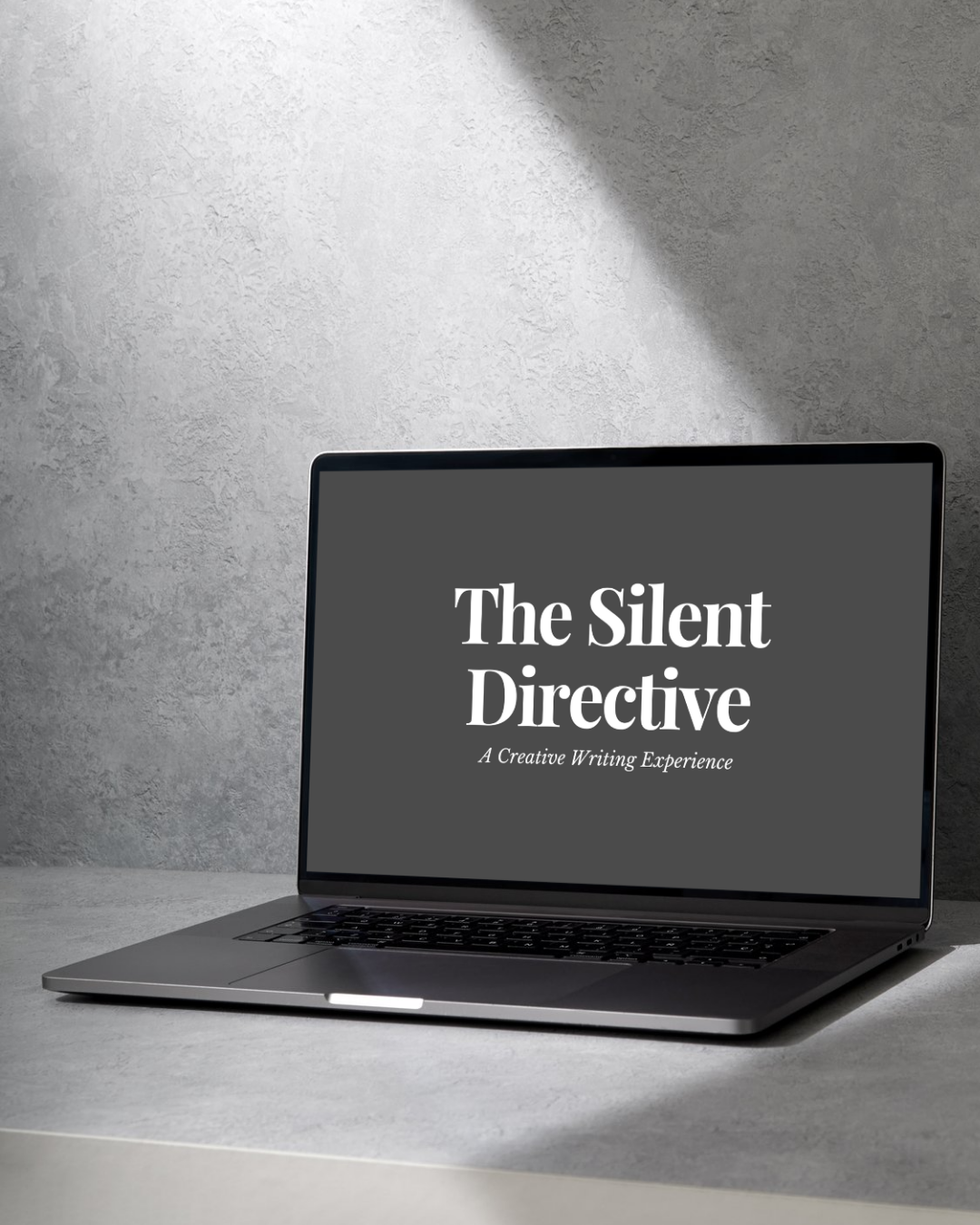
If you want to take that idea further, The Silent Directive lets you step inside a dystopian society and begin piecing together its story for yourself.
One Nation. One Law. One Voice.
In this world, silence is survival.
To speak is to disappear.
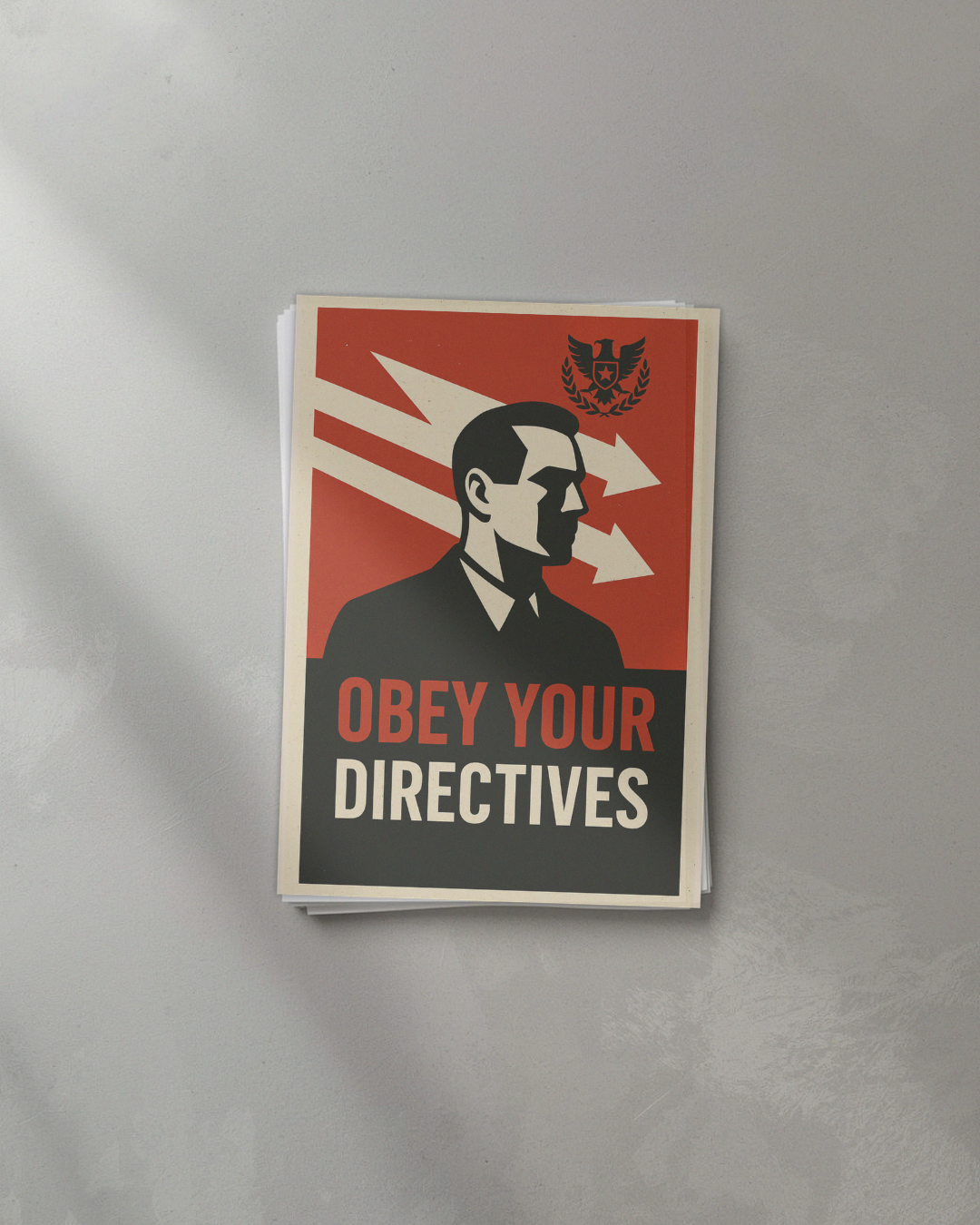
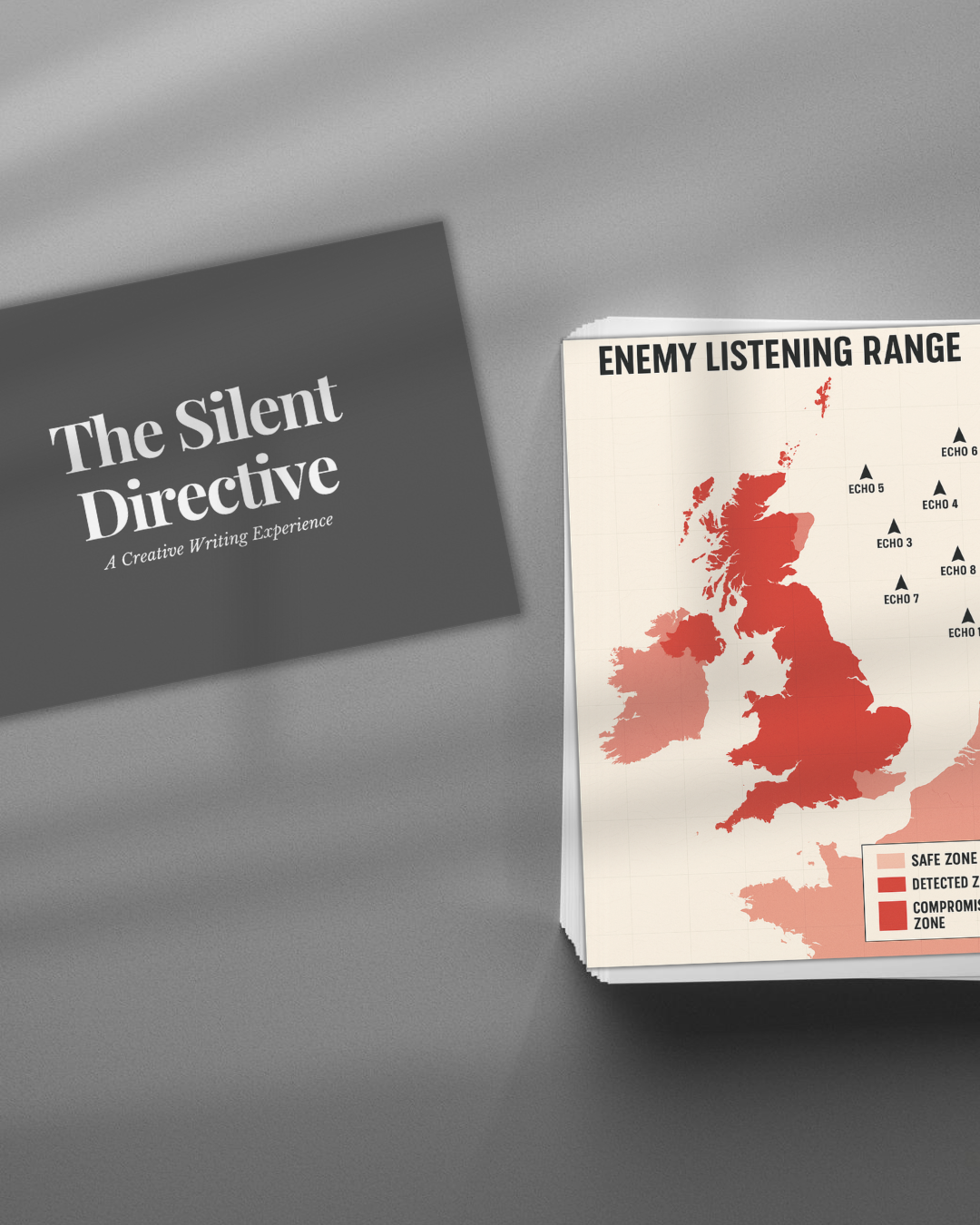
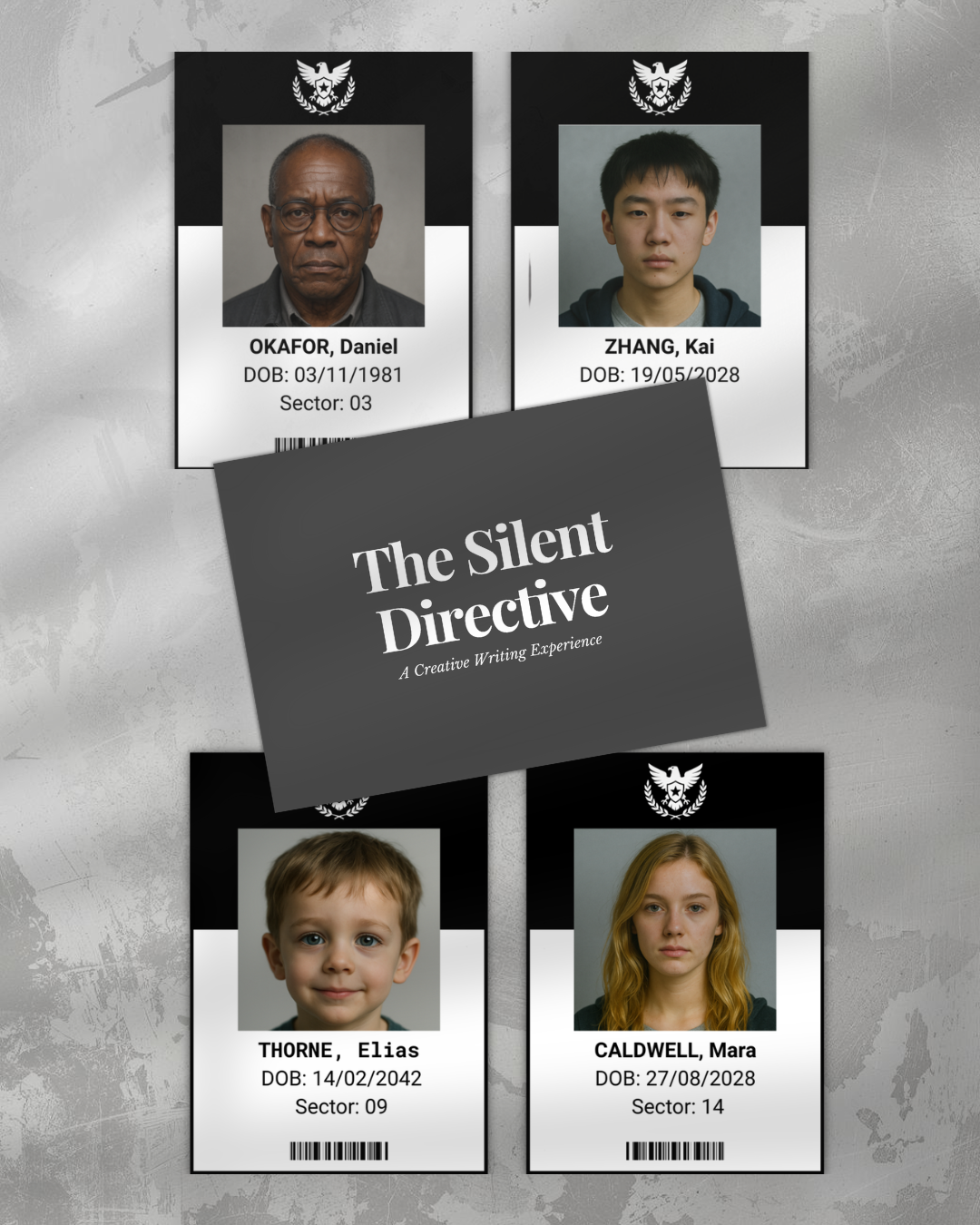
The Silent Directive is an immersive dystopian archive built around authoritarian control, censorship, surveillance, propaganda and resistance. Rather than presenting the world through a conventional story, it gives you the fragments that survived: 50+ printable documents and artefacts, including classified files, confiscated and smuggled letters, propaganda posters, photographs, newspaper reports, testimonies and government records.
Some documents repeat the official version of events. Others contradict it. Records have been altered. Information has been censored. Names have disappeared entirely.
There is no answer sheet telling you which version is true.
Instead, you become the investigator — comparing documents, spotting inconsistencies and deciding which voices you believe as a much larger story begins to emerge. It can be used as inspiration for dystopian writing and worldbuilding, explored as a mystery in its own right, or used by teachers and students looking at ideas surrounding censorship, propaganda, surveillance and unreliable narratives.
◆ 50+ printable dystopian documents and artefacts
◆ Propaganda, classified files, photographs, letters, reports and testimonies
◆ A printable prompt card for further storytelling and exploration
◆ Instant digital PDF download
Explore The Silent Directive → instant download
Who can be trusted? Who is watching? And what happened to the people whose names were removed from the record?
The answers were never meant to survive.
Final Thoughts
Dystopian fiction gives us a way to take familiar parts of the world — technology, education, work, politics, social expectations, climate, inequality — and push them somewhere uncomfortable. The most memorable dystopian worlds are rarely frightening simply because they are different from our own. They are frightening because we can understand how people might have ended up there.
Use these 100 Dystopian Story Ideas as complete premises, combine several to create a more complex society, or take one small detail and build an entire world around it. A happiness programme could exist alongside compulsory careers and disappearing historical records; an environmental crisis might justify surveillance that gradually becomes permanent. Often, the strongest idea begins with a single question: what would people be willing to sacrifice if they believed it would make their world safer, fairer or better?
For even more inspiration, explore the Dystopian Writing Hub for dystopian prompts, settings, characters and worldbuilding ideas, or browse the Creative Writing Archive for hundreds more prompts across different genres.
Choose Your Next Adventure