70 Autumn Ghost Story Writing Prompts: Hauntings, Mist & Melancholy Tales
There is something naturally ghostly about autumn. The world begins to retreat: leaves fall from the trees, daylight disappears earlier, mist settles across fields and familiar landscapes slowly empty themselves of colour. Summer feels suddenly distant, winter waits just beyond the horizon, and for a few fleeting months we exist somewhere between what has been and what is still to come. It is little wonder that folklore has so often imagined the changing season as a time when the veil between the living and the dead grows thin.
That sense of transition makes autumn the perfect setting for ghost stories. A haunting can emerge from the landscape almost unnoticed: footsteps following someone along a rain-soaked woodland path, a figure standing beneath an increasingly bare tree, lights appearing inside a country house thought to be empty or the same passenger waiting at a mist-covered railway station each morning. Autumn lends itself particularly well to quieter supernatural fiction, where ghosts are intertwined with memory, grief, absence and the passing of time rather than appearing simply to frighten us.
Literature has long drawn upon this atmosphere. M. R. James filled seemingly ordinary landscapes, churches and old buildings with things better left undisturbed, while Edith Wharton's ghost stories often allowed psychological unease and the supernatural to blur together. In Henry James' The Turn of the Screw, isolation and uncertainty leave us questioning exactly what has been witnessed, while Susan Hill's The Woman in Black uses mist, marshland, an isolated house and a tragic past to create a haunting that seems inseparable from its landscape. These stories endure because they understand that sometimes the most unsettling apparition is simply someone who should no longer be there.
Below you'll find 70 Autumn Ghost Story Writing Prompts, moving through plot ideas, story titles, opening and closing lines, characters, settings and cinematic picture prompts. Expect rain-darkened manor houses, deserted seaside towns, forgotten graves beneath fallen leaves, phantom railway passengers, misty woodland paths and spirits carrying stories that have never quite reached their ending. Some hauntings will be unmistakably supernatural; others will leave enough uncertainty for you to decide whether the dead really returned at all.
For more eerie and unexplained inspiration, explore the Paranormal Writing Hub, or wander through the Creative Writing Archive for hundreds of prompts, characters, settings, story ideas and picture prompts across every genre.
1. Plot Prompts
Autumn ghost stories are often stories about what remains. A person has gone, a house has emptied, a season is ending—but something refuses to disappear with it. Let these hauntings emerge slowly through memory, landscape and small disturbances that become harder to explain as the days grow shorter.
A woman returns to her childhood home to clear it after her mother's death and begins finding muddy footprints leading from the autumn garden to a bedroom nobody has entered in years.
Every evening in October, a widower sees his late wife walking their old woodland route several minutes ahead of him. Each night, she ventures a little farther from the path.
An ageing seaside hotel closes for the season, but the owner continues hearing a guest ringing the service bell from a room that has been locked since the 1970s.
A railway passenger notices the same woman waiting beside an isolated stretch of track every morning. As autumn progresses, she appears closer to the train.
While renovating an abandoned cottage, a couple discover decades of autumn leaves pressed beneath the floorboards, each labelled with the name of someone who later disappeared.
Every November, freshly gathered leaves appear on the grave of a child who died more than a century ago. When the cemetery caretaker removes them, someone begins knocking on his cottage door after dark.
A photographer spends autumn documenting villages due to be flooded for a new reservoir. In every photograph of one particular village, the streets are crowded with people nobody remembers seeing.
After inheriting her grandmother's house, a woman begins hearing someone humming upstairs whenever rain strikes the windows. It is the same lullaby her grandmother used to sing—but the voice belongs to a child.
A teacher discovers an old class photograph while clearing a cupboard before half-term. One of the children is standing beneath the same tree she passes every evening on her journey home.
Each autumn, an elderly man receives a postcard from the Scottish village where his younger brother disappeared fifty years ago. This year, the message simply says: Come before the leaves are gone.
2. Story Title Ideas
Autumn ghost story titles can be understated, melancholy and slightly mysterious. Rather than revealing the haunting immediately, let the title suggest absence, fading memories, changing landscapes or something quietly returning with the season.
After the Leaves Fell
The October Passenger
Where the Mist Remains
The Last Guest
A Light in November
The House Beyond the Trees
Someone Walking Ahead
Before the First Frost
The Sound of Leaves
What Autumn Kept
3. Opening Lines
Autumn ghost stories often begin with something small enough to dismiss: an unfamiliar sound, a figure glimpsed through rain, a light in a supposedly empty room. Let the season establish the unease before the supernatural ever fully reveals itself.
The woman beneath the oak tree was there every morning, regardless of the weather.
We heard my father walking through the leaves three weeks after we buried him.
The hotel should have been empty by the first of October.
Someone had lit a fire in the drawing room while I was away.
By November, I had grown accustomed to seeing the little boy beside the railway tracks.
My grandmother's house always smelled of woodsmoke when she was alive, and somehow it still did.
The first letter arrived with a dead leaf folded carefully inside.
Nobody in the village could remember when the woman had started standing beside the lake.
The bells from the ruined church began ringing on the first foggy morning of autumn.
I knew the footsteps weren't mine because they continued whenever I stopped walking.
4. Closing Lines
A ghost story doesn't always need to solve its haunting. Autumn endings can feel particularly bittersweet: the apparition disappears, the leaves are swept away and life continues, while one small detail suggests that the past has never completely released its hold.
By morning, the path was empty except for two sets of footprints beneath the leaves.
Winter arrived, and I never saw my mother in the garden again.
The following October, Room Twelve was occupied once more.
Perhaps she had never been waiting for the train at all.
We sold the house in November, but sometimes I still wake to the sound of her humming.
When the final leaf fell, the footsteps stopped.
Nobody believed what I had seen until the photograph arrived.
I left the gate unlocked that autumn, just in case he ever found his way home.
The grave was empty, though the leaves above it remained perfectly undisturbed.
Some things disappear with the season; others simply learn how to wait.
5. Character Ideas
The ghosts of autumn needn't be terrifying apparitions. They can be remembered parents, forgotten children, former residents and strangers whose stories have become tangled with particular places. Sometimes the living characters should be equally haunted—by grief, guilt, nostalgia or the uncomfortable feeling that they have encountered someone before.
A retired railway worker who recognises a passenger nobody else can see.
A woman returning to sell the remote cottage where she spent every autumn with her grandmother.
The elderly owner of a seaside hotel who insists one particular guest never checked out.
A cemetery gardener who knows exactly who leaves flowers and autumn leaves on the oldest graves but refuses to tell anyone.
A child who regularly talks to a woman sitting beneath a tree at the edge of the school playground.
A photographer documenting abandoned country houses who repeatedly captures the same family in their windows.
A widower who begins taking increasingly long walks after glimpsing his late wife among the trees.
The final resident of a village gradually being abandoned before winter.
A bookseller who discovers handwritten messages appearing inside second-hand books whenever the weather turns cold.
A young woman whose memories of childhood autumns begin changing after she returns to the village where she grew up.
6. Setting Ideas
Autumn transforms ordinary places into natural ghost story settings. Empty beaches, rain-darkened houses, woodland paths and forgotten railway platforms become liminal spaces where the past seems unusually close to the present.
A once-grand country house surrounded by copper beech trees, closed every winter and increasingly difficult to maintain.
A deserted seaside promenade after the summer visitors have gone, where one hotel remains inexplicably illuminated.
An isolated railway halt surrounded by fields and woodland, used by only a handful of passengers each day.
A ruined medieval church deep within an autumn forest where distant bells can sometimes be heard through the mist.
A narrow woodland path almost completely hidden beneath fallen leaves, leading towards the remains of an abandoned cottage.
An old cemetery on the edge of a village where generations of one family are buried beneath enormous yew trees.
A remote farmhouse overlooking harvested fields where lights occasionally move through the empty stubble after midnight.
A rain-soaked university town filled with old libraries, stone courtyards and narrow lanes disappearing into evening fog.
A Victorian glasshouse in an abandoned estate garden, filled with dead vines, cracked panes and plants nobody remembers planting.
A small Scottish island where the final ferry of the tourist season has departed, leaving only permanent residents—and someone who was supposed to have left with it.
7. Picture Prompts
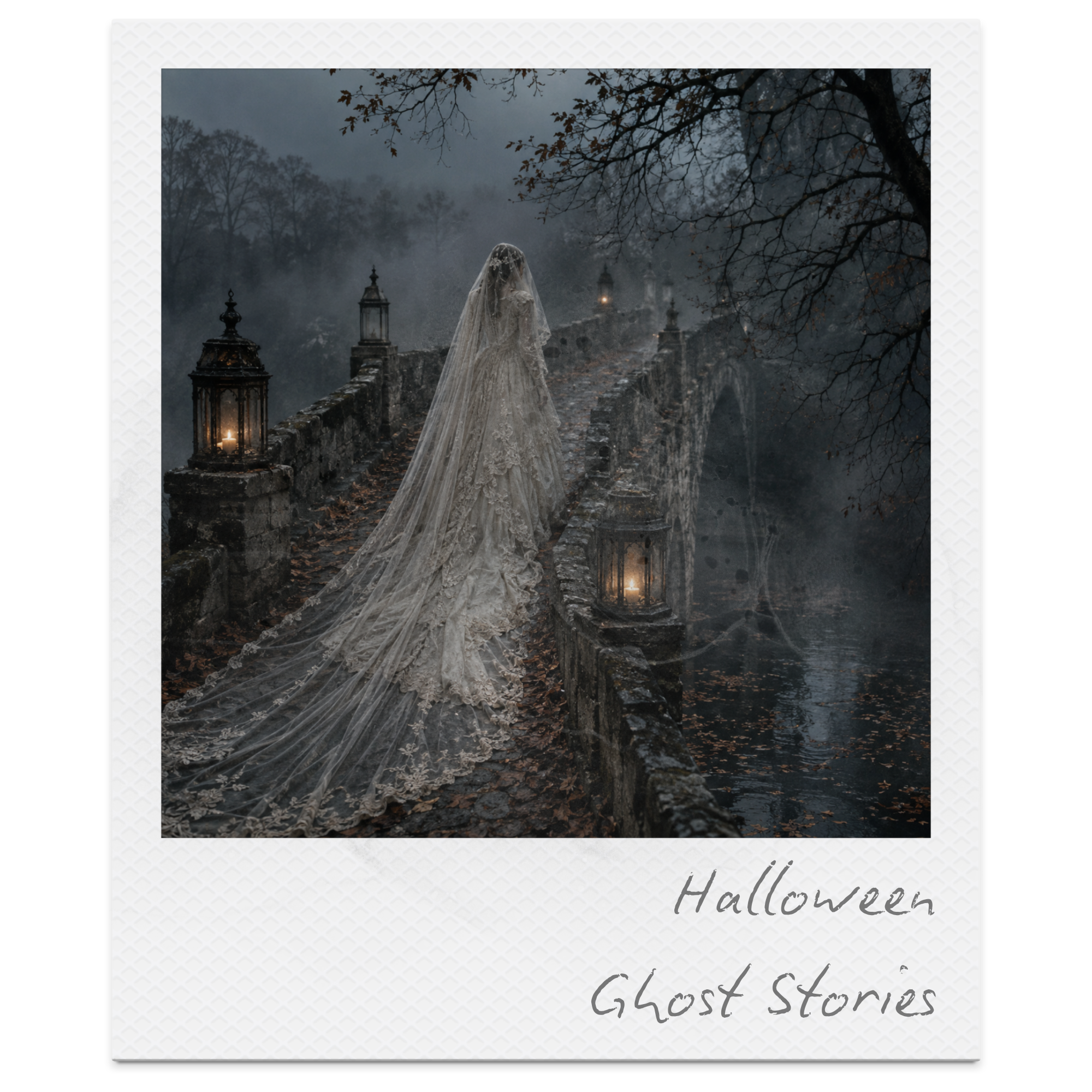
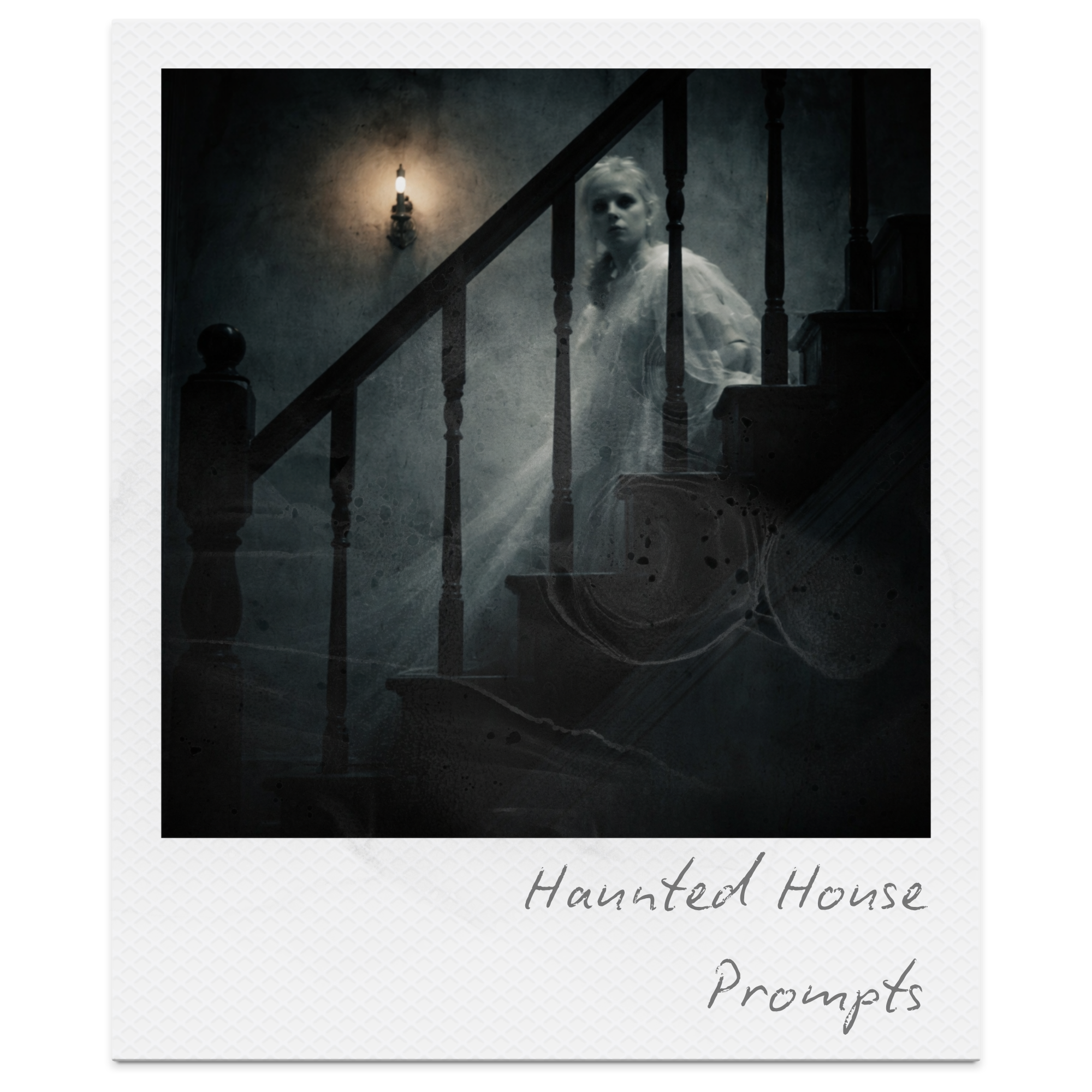
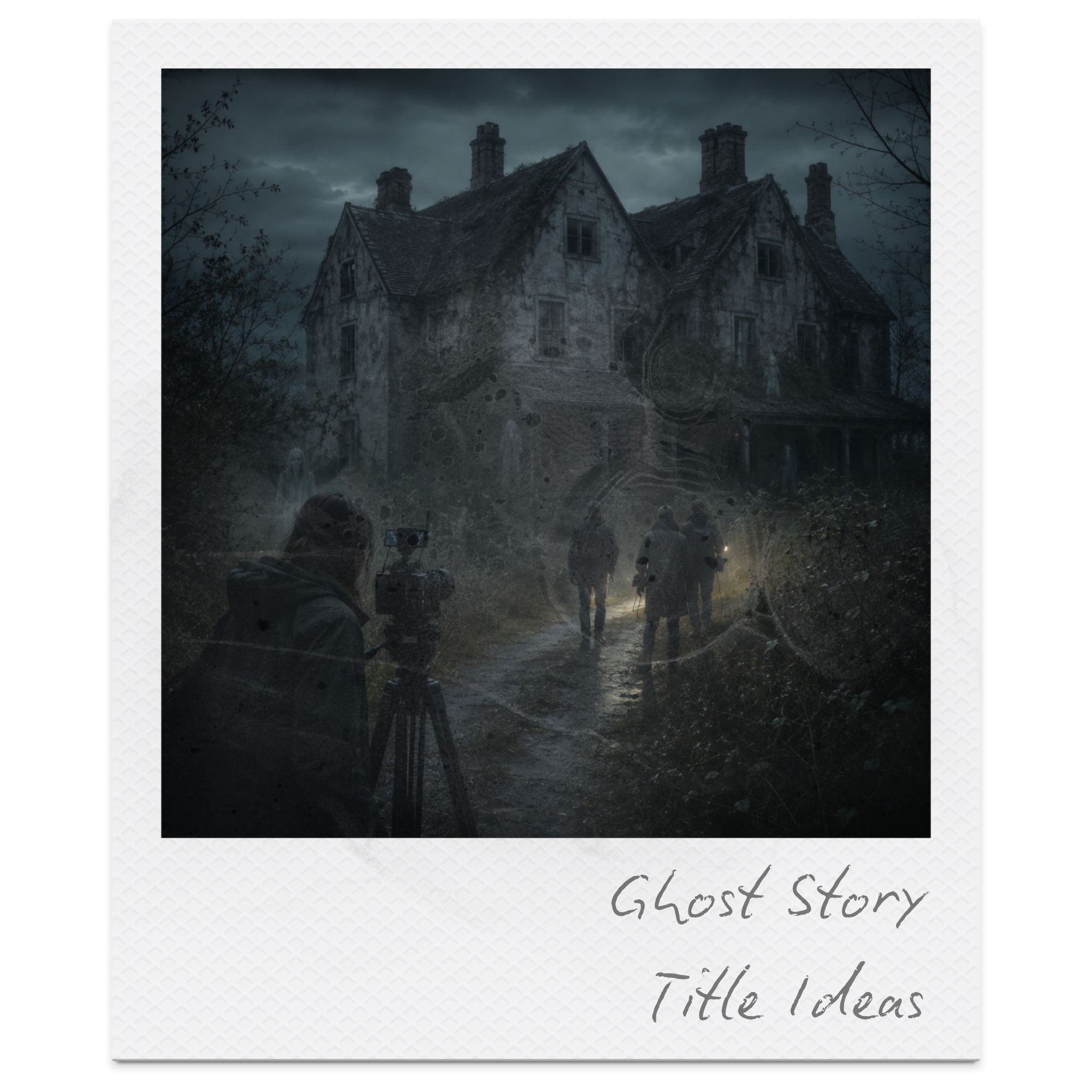
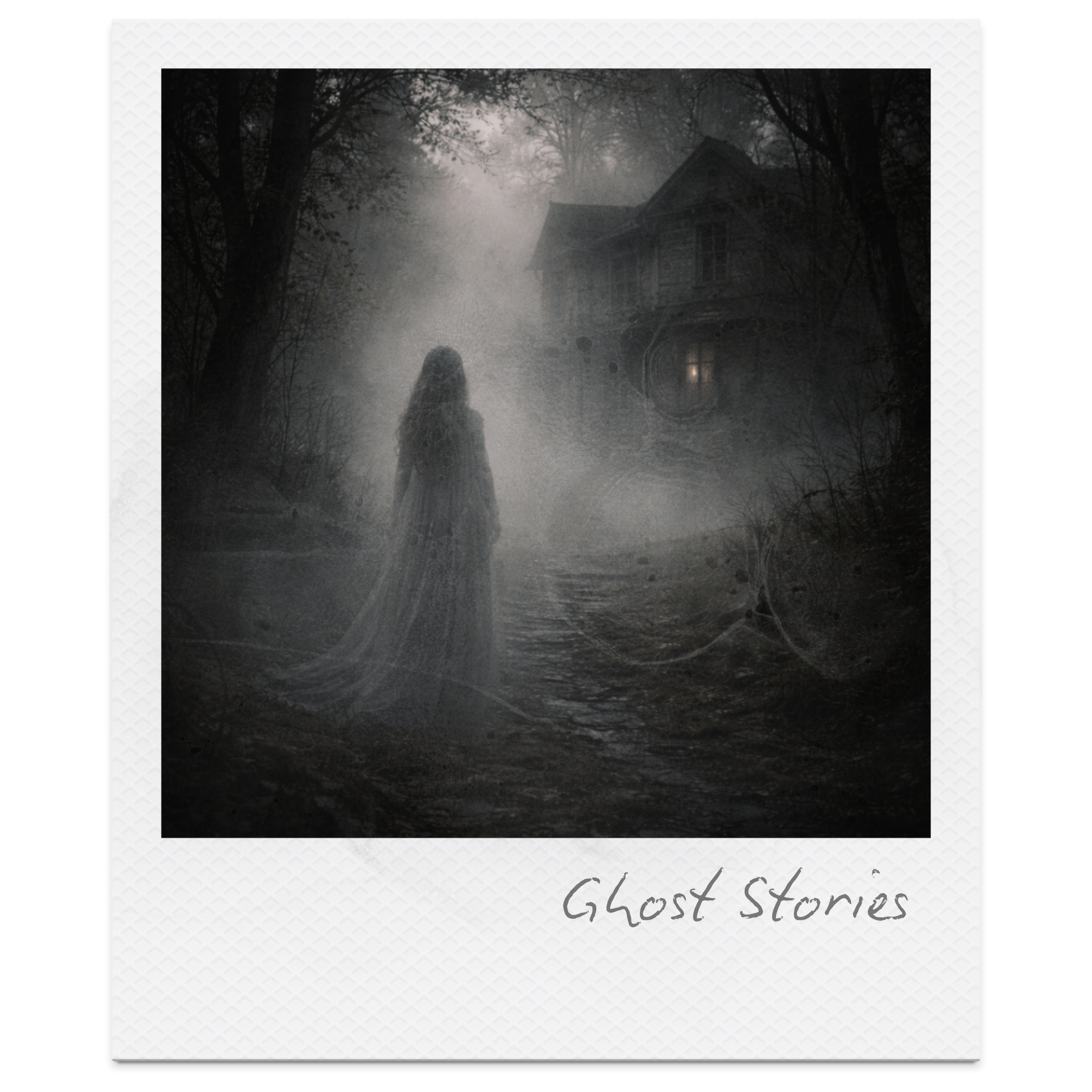
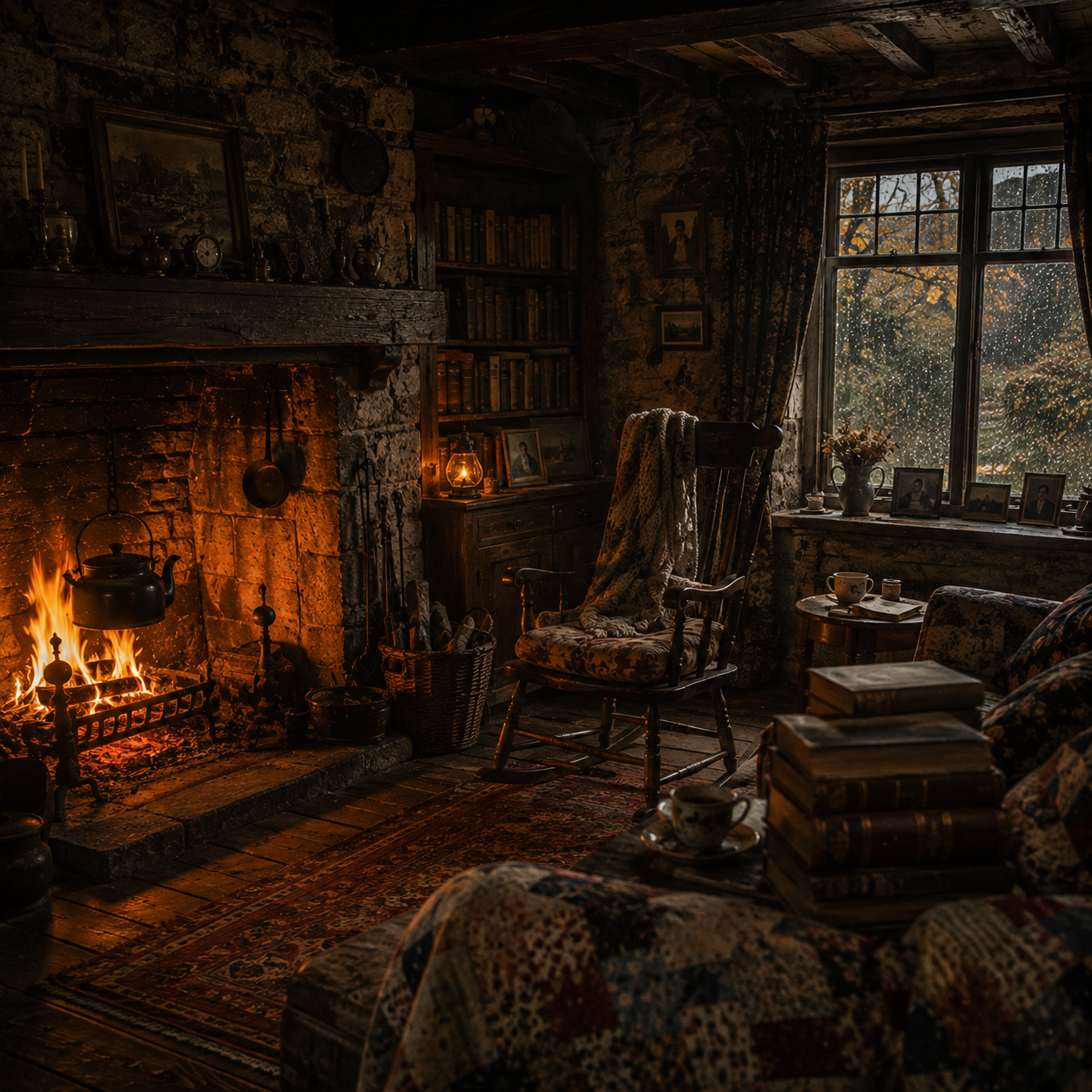
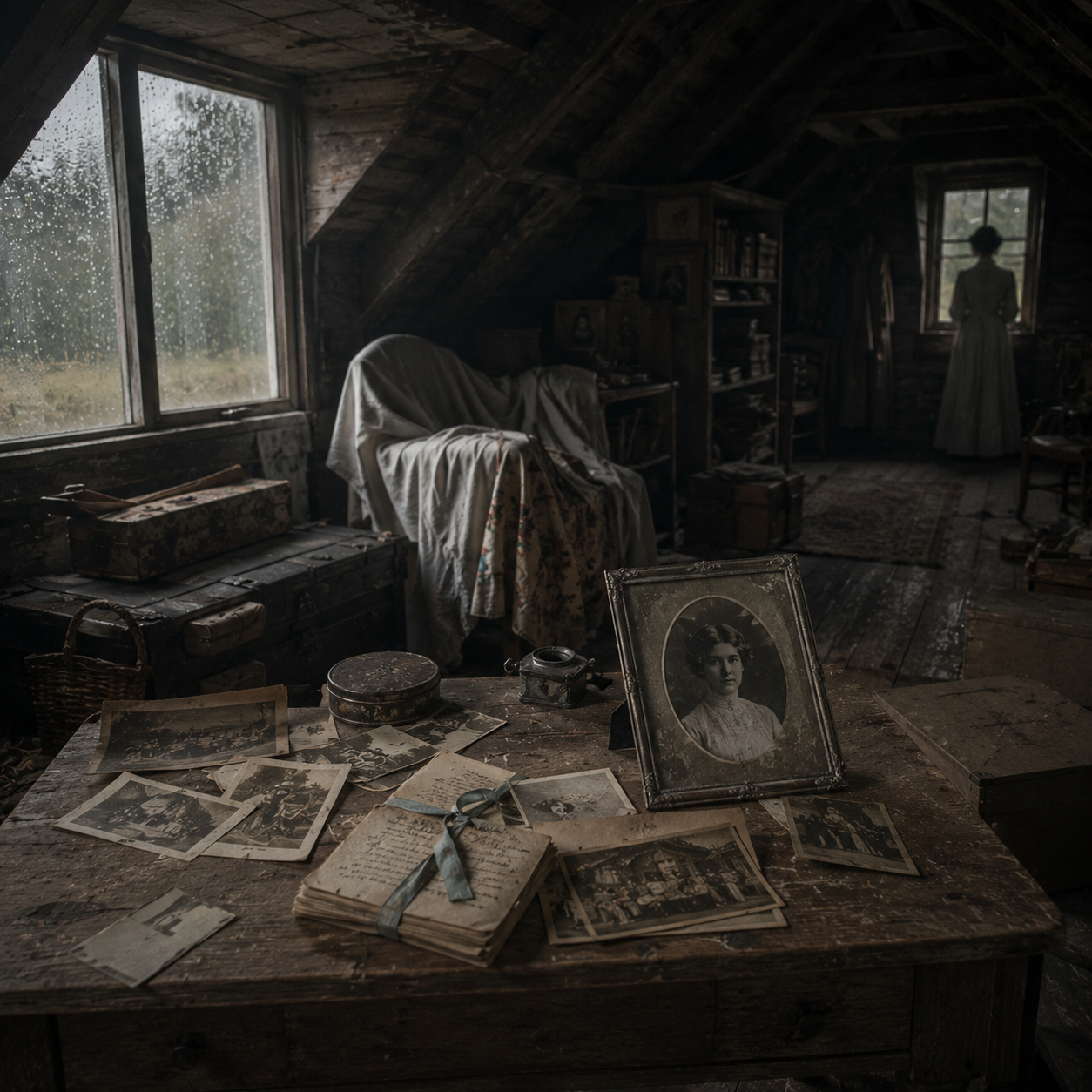
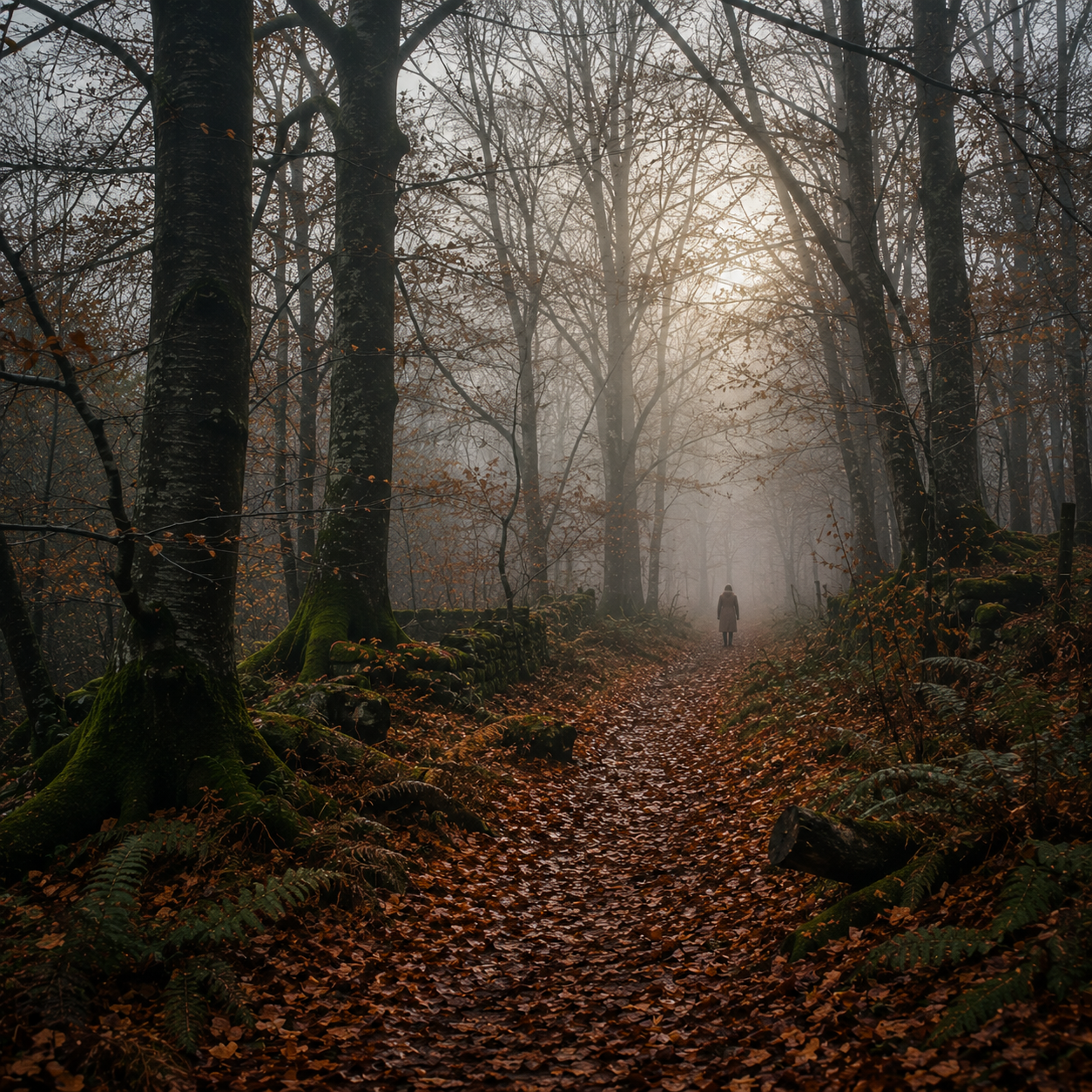
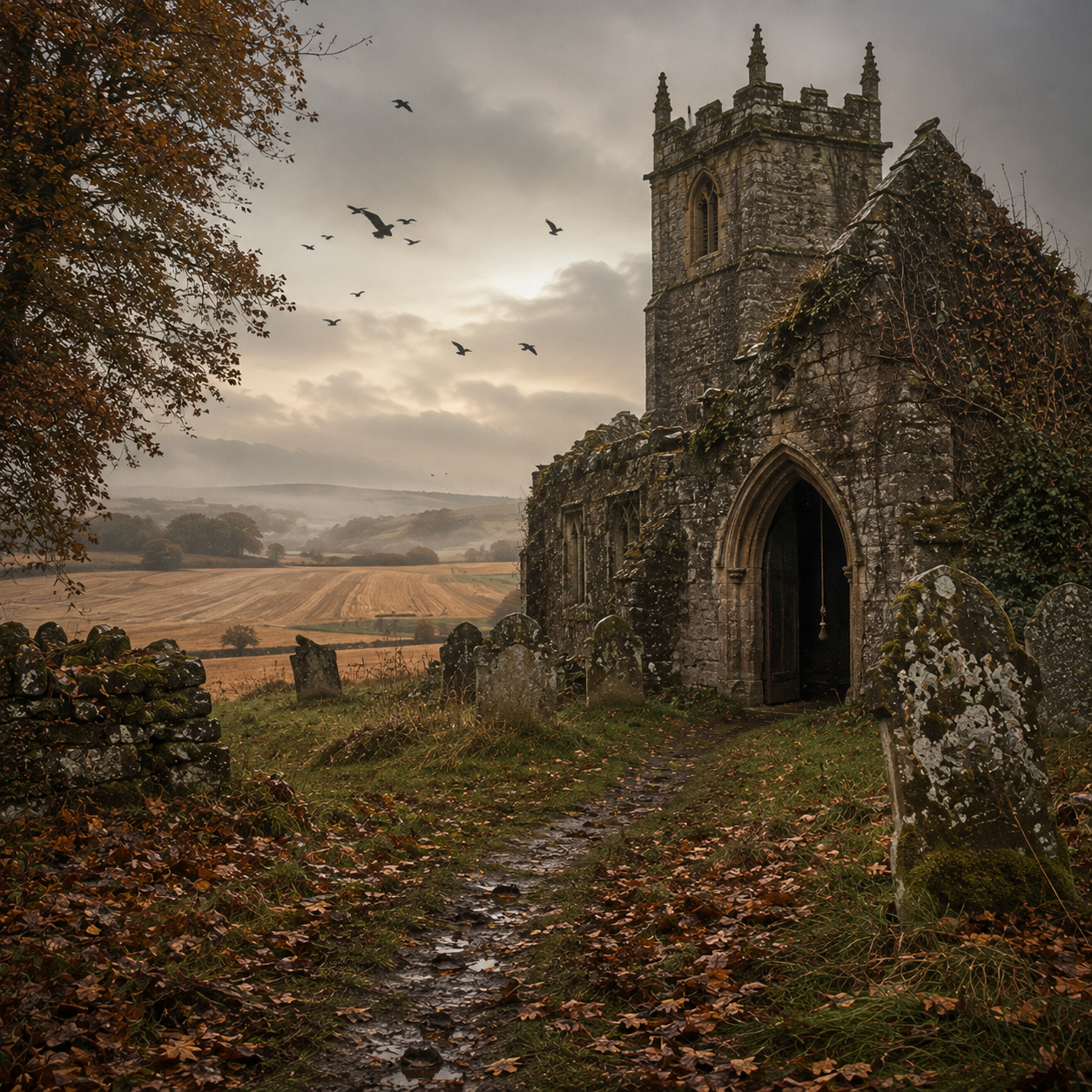
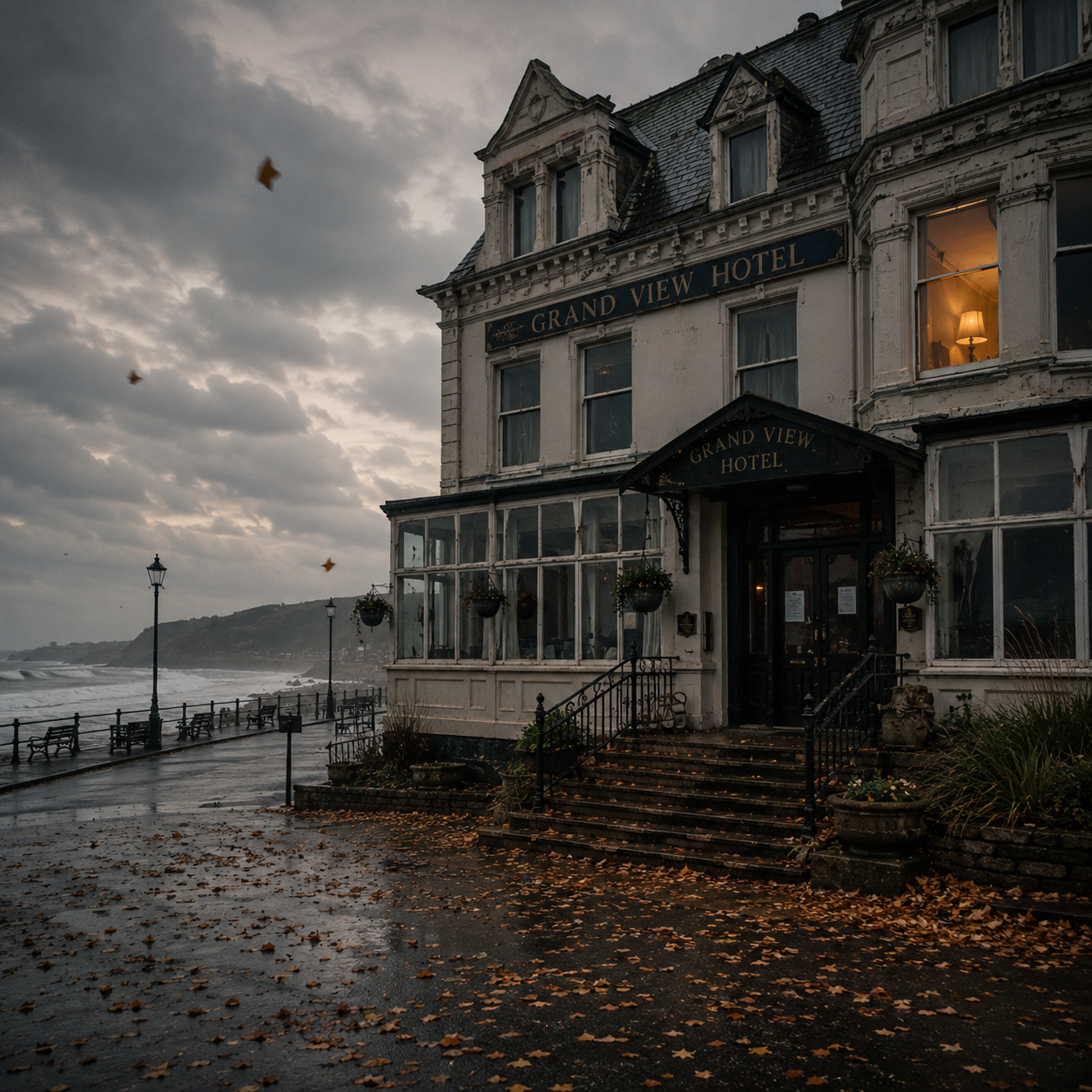
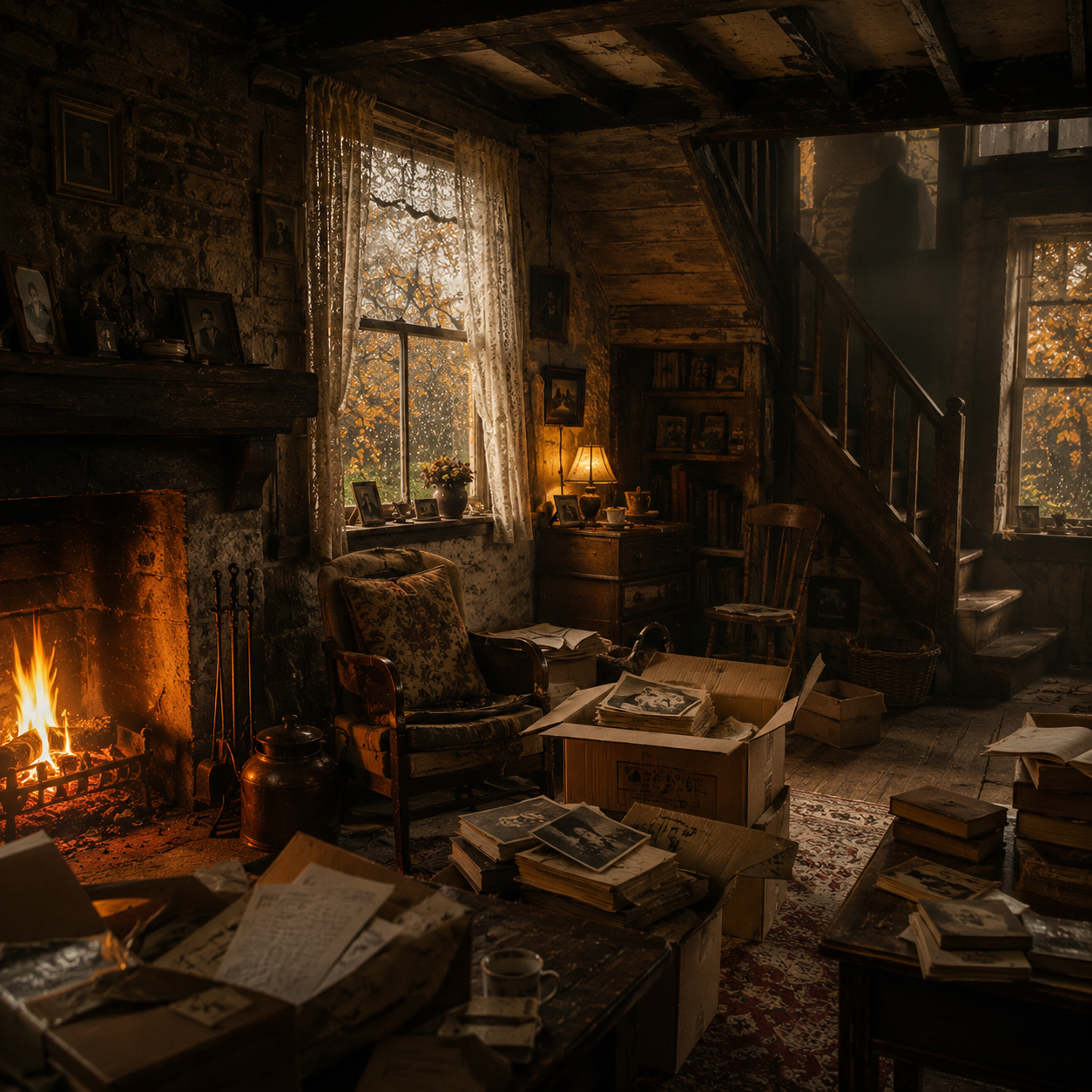
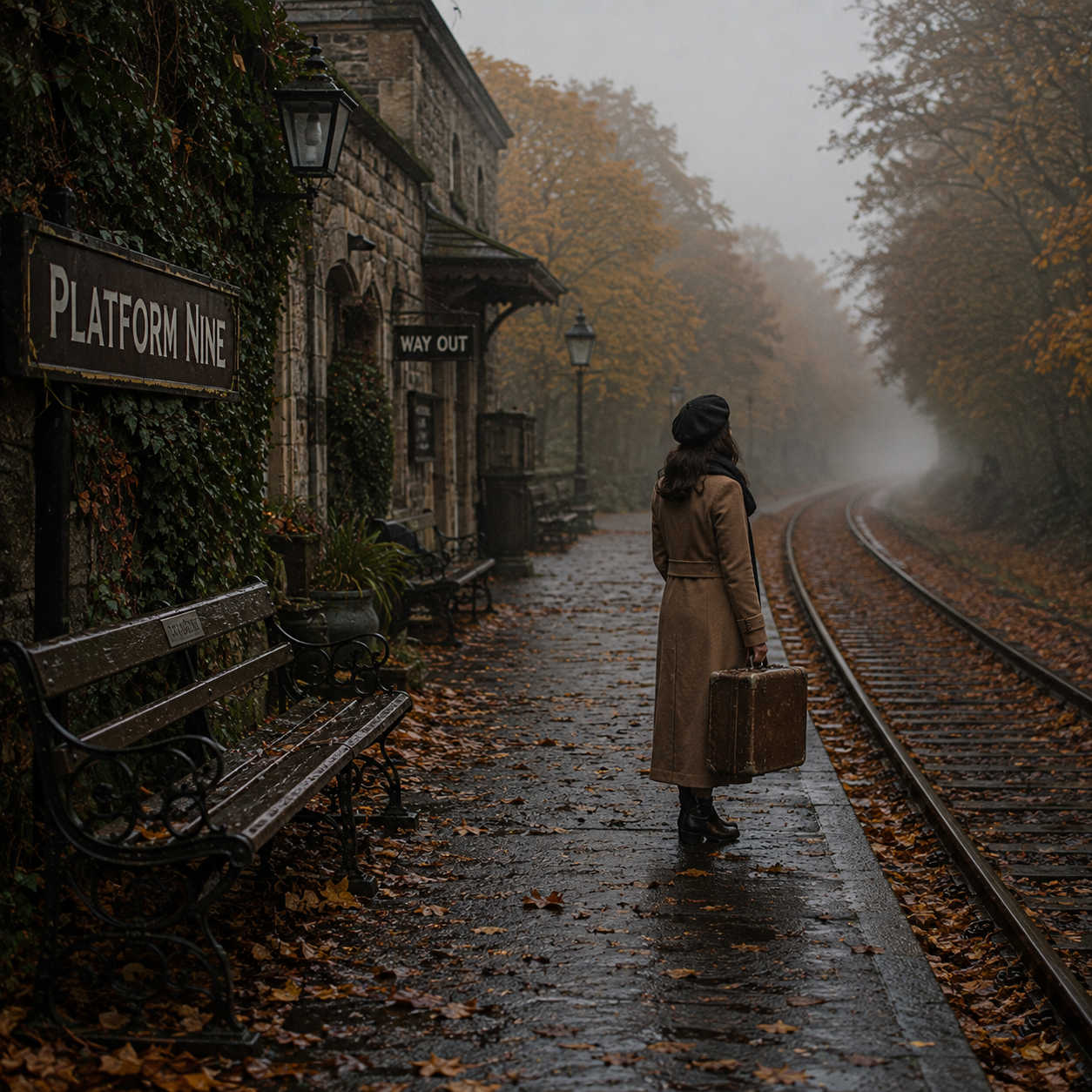
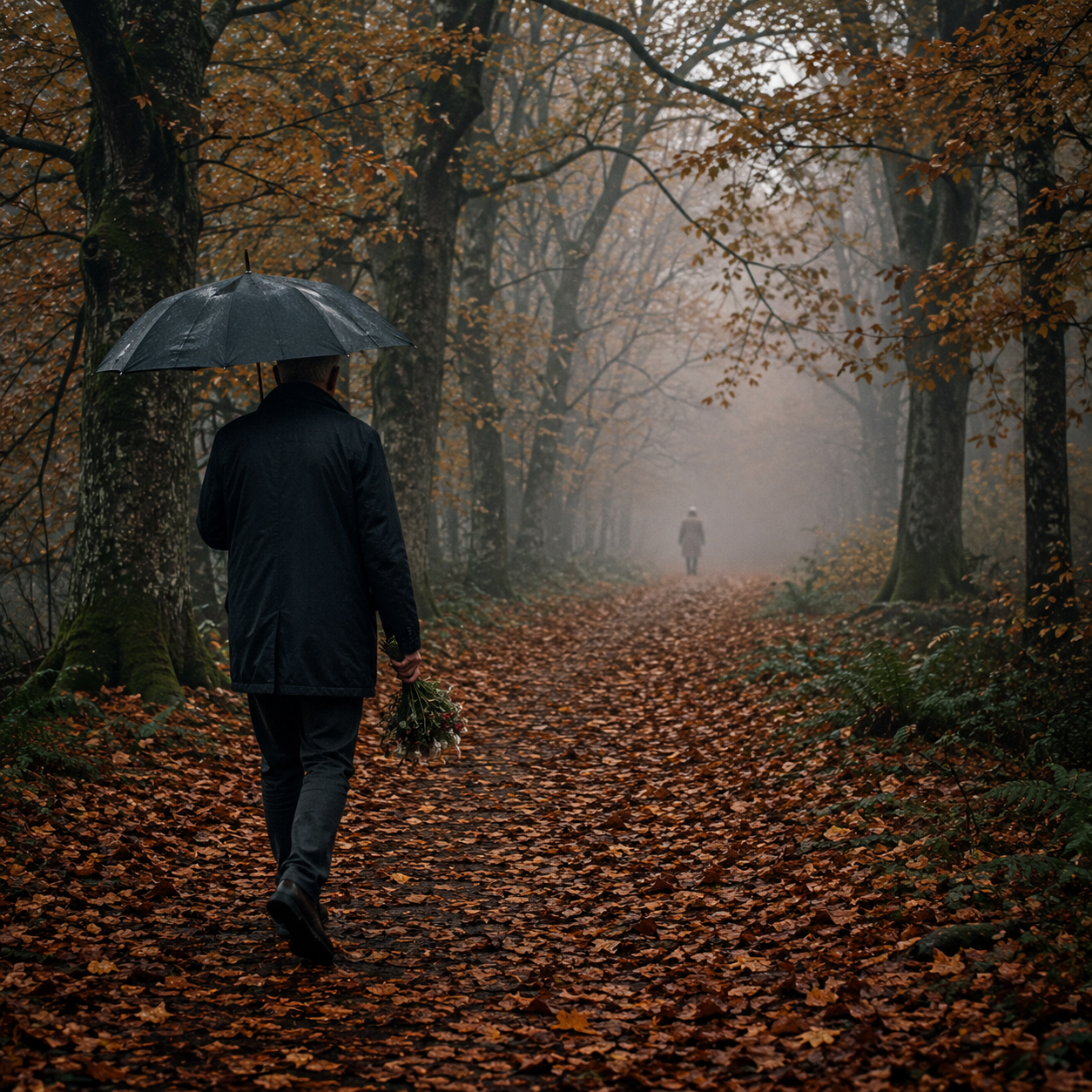
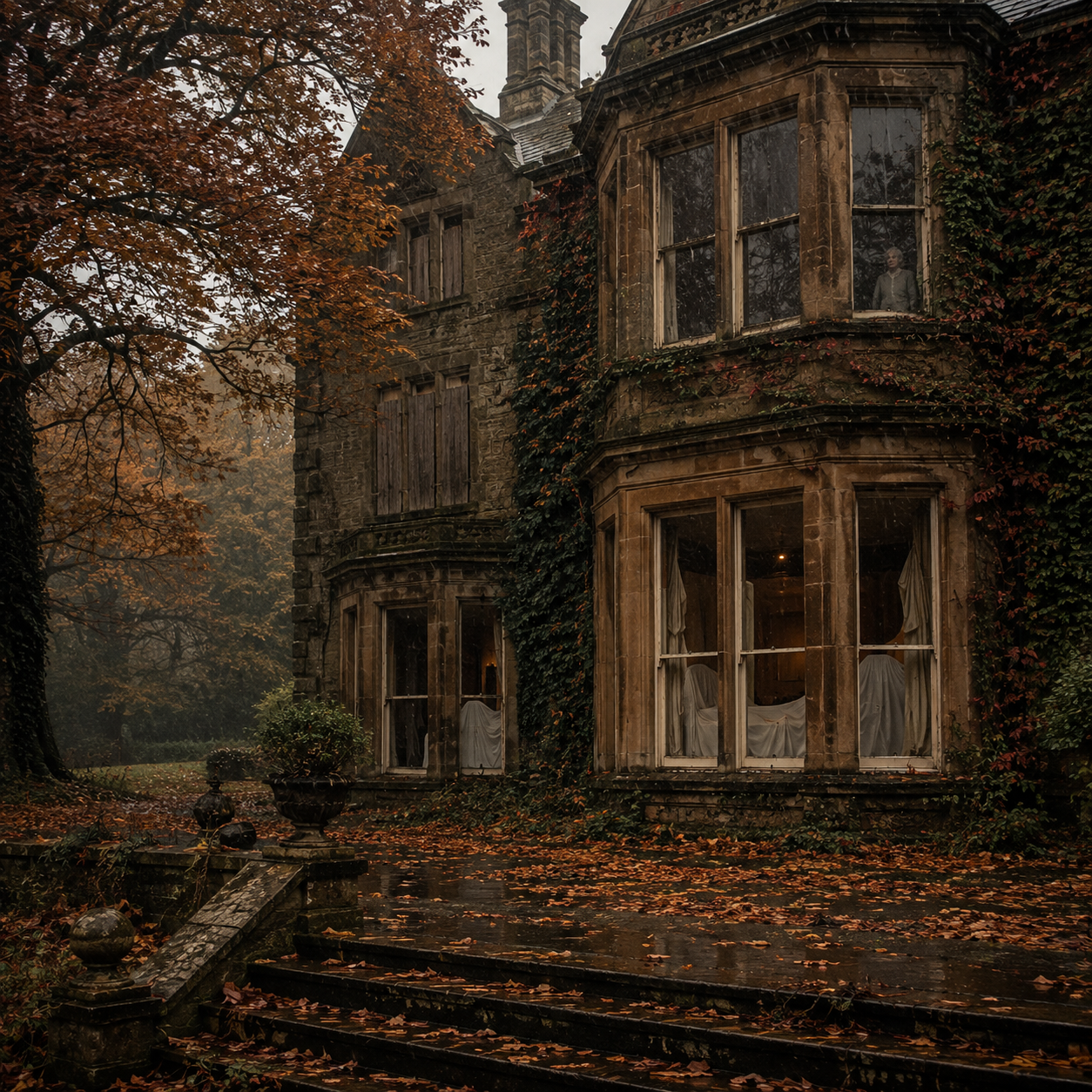
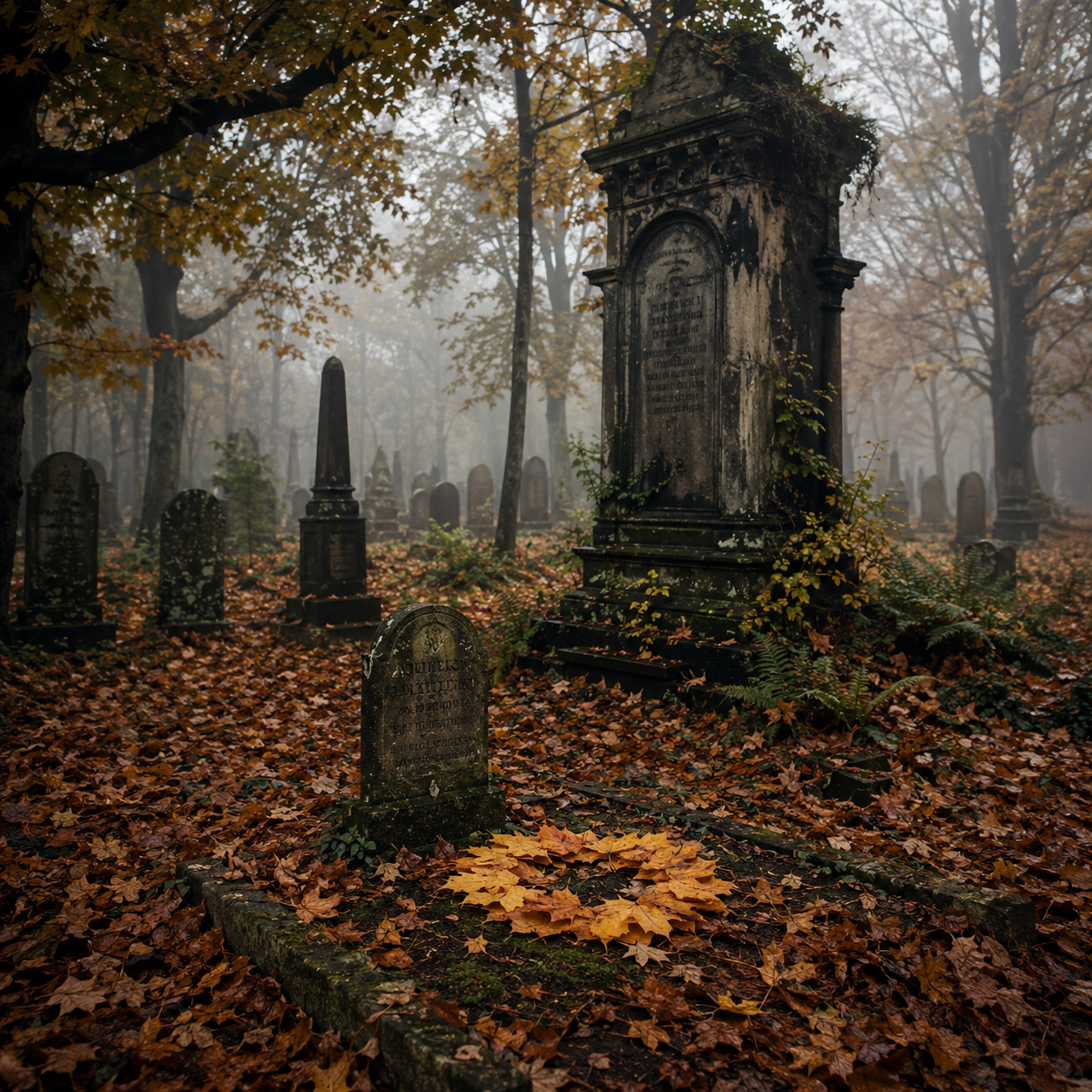
Autumn seems almost designed for ghost stories. The soft rustle of falling leaves can sound remarkably like whispers from somewhere beyond the living world, while mist obscures familiar landscapes and earlier sunsets leave houses, woodland and empty roads suspended in darkness for longer each day. For these picture prompts, imagine hauntings that are beautiful before they are frightening. A solitary figure beneath a copper beech tree. Candlelight glowing from an abandoned manor. A woman waiting on an empty railway platform as leaves gather around her feet. An old seaside hotel standing illuminated against a deserted November promenade. A child's pale silhouette disappearing between rain-darkened trees.
Go Deeper into Autumn Ghost Story Writing
Autumn ghost stories are often most powerful when the haunting feels inseparable from the season itself. The world is already changing around your characters: gardens are dying back, houses are being closed for winter, trees are becoming bare and places that felt lively only weeks earlier suddenly stand empty. Against that backdrop, the appearance of something—or someone—from the past can feel strangely natural.
◆ Let absence create the haunting. Before introducing a ghost, establish what is missing. An empty chair beside the fire, a bedroom that hasn't been opened since childhood, a familiar walking route now taken alone or an abandoned hotel after its final guests have departed can carry enormous emotional weight. The apparition matters because somebody notices the space where another person used to be.
◆ Allow autumn to change alongside the story. Don't keep your landscape permanently golden. Begin with the first leaves turning, move through rain and heavy leaf fall, then towards bare branches and the first frost. As the season deteriorates, the haunting might become clearer—or begin disappearing with it.
◆ Use sound before sight. Ghosts don't always need to appear. Footsteps through leaves, branches tapping against glass, a distant railway whistle, humming from another floor or church bells travelling through fog can make the reader aware of a presence long before your protagonist sees anything.
◆ Make memory unreliable. Returning to somewhere from childhood provides wonderful territory for ghost fiction. Was that bedroom always at the end of the corridor? Did Grandmother really forbid anyone from entering the orchard? Was there another child in those family photographs? Nostalgia becomes unsettling when the past doesn't quite match the evidence.
◆ Give ordinary objects histories. Old photographs, handwritten letters, pressed leaves, railway tickets, mourning jewellery, newspaper cuttings and forgotten belongings can connect the living to people they never knew. One unexplained object can open an entire history beneath the present-day story.
◆ Let the landscape remember. A haunting doesn't have to belong to a house. It might cling to a woodland path, railway line, beach, lake, bridge or harvested field. Perhaps the ghost follows exactly the same route each autumn because something happened there long ago.
◆ Write grief and haunting together. Sometimes your protagonist desperately wants the ghost to be real. A widower following his wife's figure into the woods or a daughter listening for her mother's footsteps upstairs creates a very different tension from someone trying to escape a frightening apparition. The danger might lie in becoming unwilling to let the dead disappear.
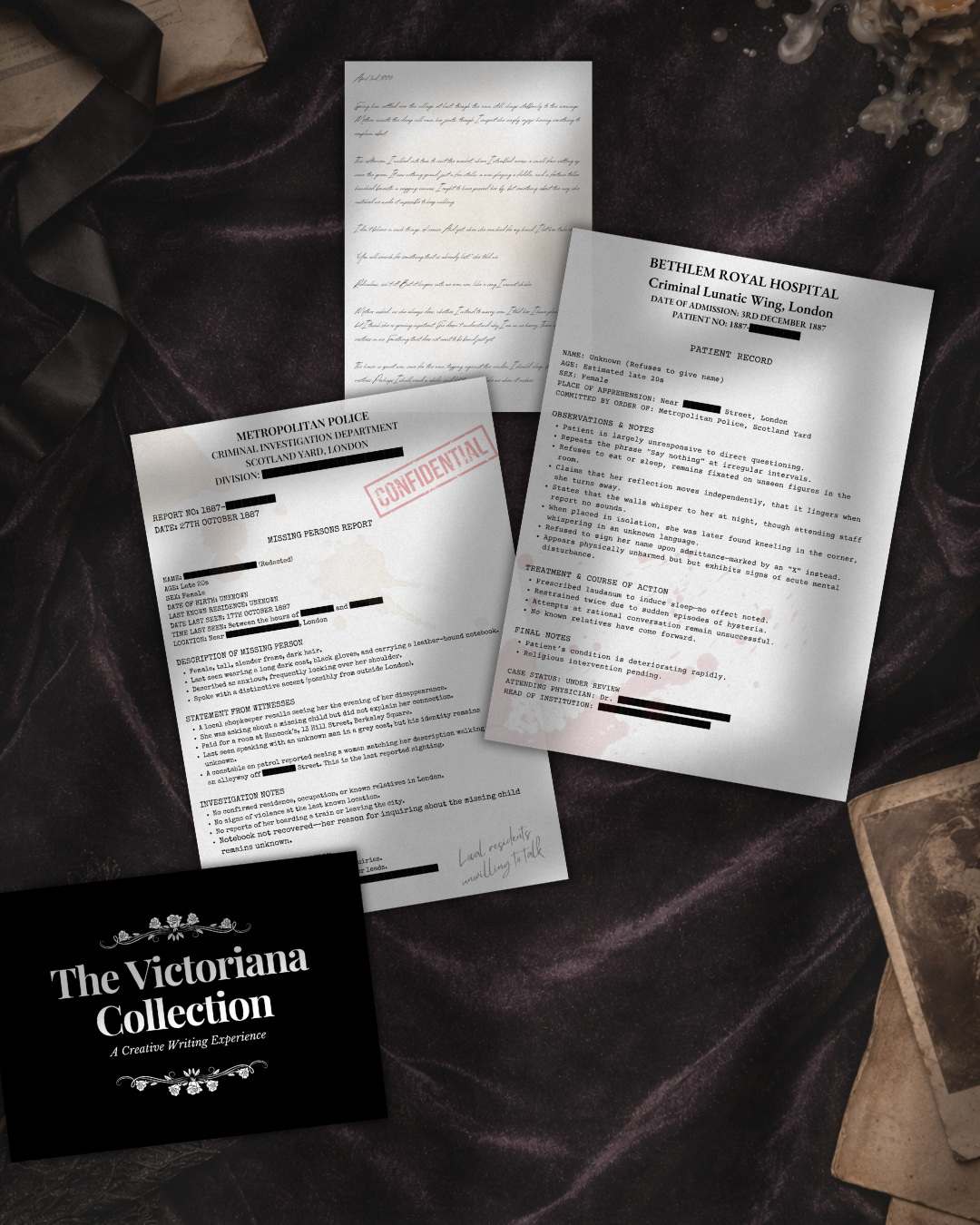
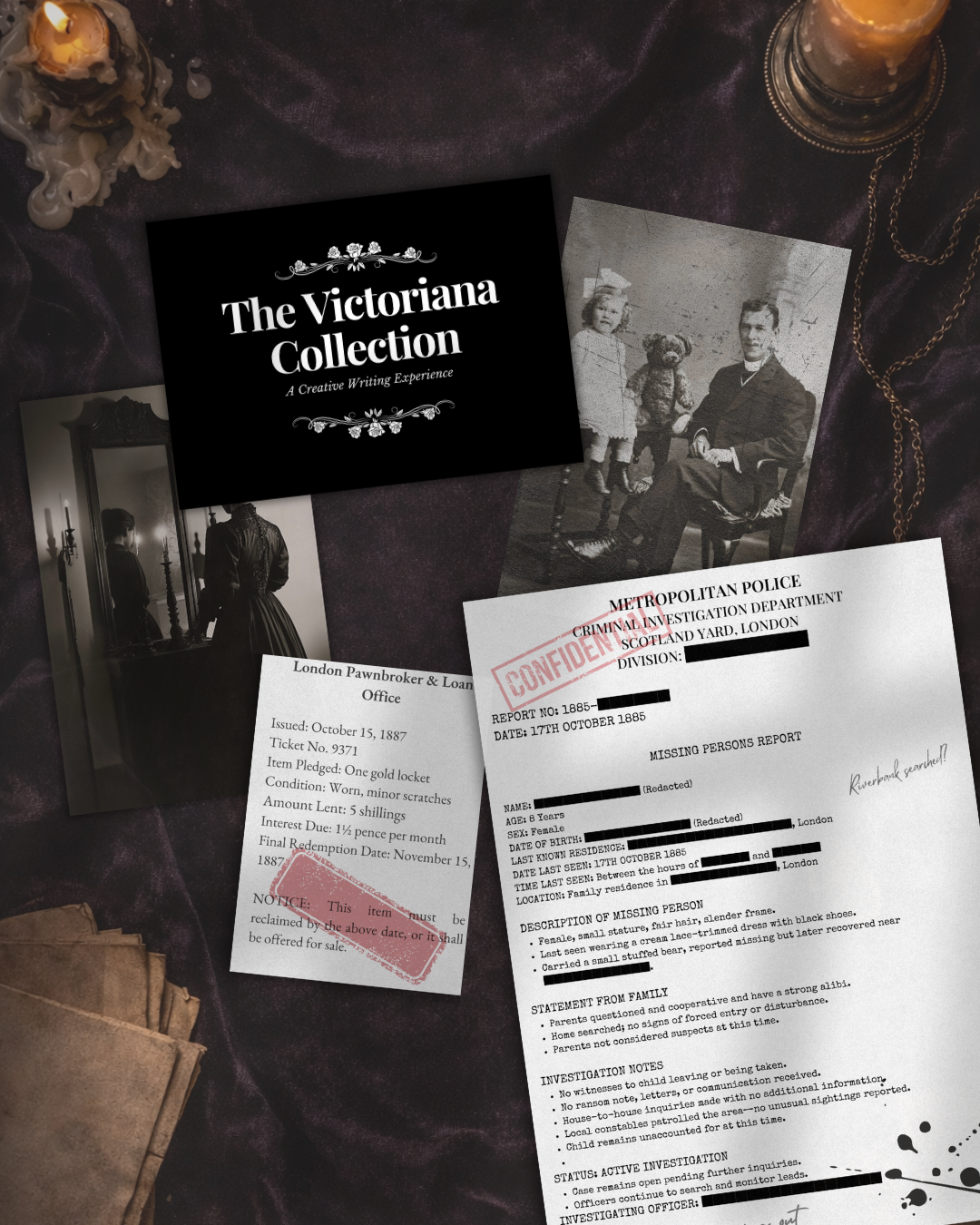
◆ Resist explaining every contradiction. Perhaps a photograph shows someone who supposedly died years earlier. A missing persons report gives a different date from a family letter. Someone remembers a disappearance differently from everyone else. Ghost stories become richer when the evidence creates possibilities rather than providing a single neat answer.


Follow the Fragments into The Victoriana Collection
If you enjoy ghost stories built from forgotten histories, unexplained disappearances and fragments of evidence, The Victoriana Collection offers another way to step inside that kind of story.
Inspired by gothic fiction, Victorian spiritualism and mysteries that refuse to stay buried, the collection contains more than 50 printable documents and artefacts: letters, diary entries, photographs, missing persons reports, newspaper clippings, spiritualist notes, personal mementoes and other pieces of a story scattered across time.
A child's drawing. A letter never sent. Names scratched from the backs of photographs. Documents that seem perfectly ordinary until they are placed beside something that contradicts them.
There is no final solution waiting to tell you what happened.
Instead, you uncover the story yourself—deciding which details matter, which accounts you believe and what might exist in the spaces between the surviving evidence. For writers, it can become a source of inspiration for characters, hauntings, mysteries and histories of your own; for curious readers, it is an archive designed simply to be explored.
Some stories disappear when the people who lived them are gone.
Others leave something behind.
Final Thoughts
Autumn ghost stories occupy a strange space between endings and beginnings. The year has not yet reached winter, but summer has already disappeared. Trees shed what they no longer need, familiar landscapes change almost daily and darkness arrives a little earlier each evening. It is a season that seems to understand absence, which makes it the perfect home for stories about people and places unable to completely release the past.
Your haunting doesn't need to announce itself. Let it arrive with the weather. A figure becomes visible when the mist settles. Footsteps return when the leaves begin to fall. An empty house smells suddenly of woodsmoke. Someone long gone appears on the same woodland path they once walked every October. Sometimes the smallest impossibility can carry an entire ghost story.
And don't be afraid to let your ghosts be sad rather than frightening. Write about longing, memory, unfinished conversations and the peculiar ways people remain present after they have gone. Leave questions unanswered and allow your reader to wonder whether something supernatural truly occurred—or whether grief and memory simply made the boundary between past and present feel unusually thin.
If you're looking for somewhere to wander next, explore the Paranormal Writing Hub for more ghosts, hauntings and supernatural inspiration, or browse the Creative Writing Archive for hundreds of prompts, characters, settings, story ideas and picture prompts across every genre.
Choose Your Next Adventure