70 Halloween Ghost Story Writing Prompts: Haunted Houses, Restless Spirits & Eerie Autumn Tales
As the nights grow longer and autumn settles across the landscape, Halloween becomes the perfect season for ghost stories. There's something about drifting fog, candlelit windows, silent churchyards and empty country roads that invites us to imagine what might be waiting just beyond the veil. Unlike monsters or slasher horror, ghost stories linger long after the final page, exploring memory, grief, unfinished business and the unsettling possibility that some places—and some people—never truly let go.
Ghost stories have haunted literature for centuries, evolving from fireside folklore into some of the most enduring works of supernatural fiction. From the unsettling antiquarian tales of M. R. James, to the chilling atmosphere of Susan Hill's The Woman in Black, and the psychological hauntings of Edith Wharton, the finest ghost stories rely on atmosphere, mystery and quiet dread rather than shock alone. They remind us that the most frightening ghosts are often those carrying love, regret, guilt or promises left unfulfilled.
Below you'll discover 70 Halloween Ghost Story Writing Prompts, including plot ideas, story titles, opening lines, ending lines, unforgettable characters, haunting settings and cinematic picture prompts. Whether you're writing about abandoned manor houses, lonely railway stations, phantom children, forgotten cemeteries or spirits who return for one final Halloween, these prompts are designed to inspire atmospheric stories filled with mystery, melancholy and eerie beauty. If you enjoy writing supernatural fiction, be sure to explore the Paranormal Writing Hub, or browse the Creative Writing Archive for hundreds of creative writing prompts, picture prompts, characters, settings, plot ideas and story starters across every genre.

1. Plot Prompts
Halloween is the one night when the living and the dead are said to draw closest together. These ghost stories embrace lingering spirits, forgotten promises and haunted places where the past refuses to remain buried. Rather than relying on violence, they explore loss, memory, mystery and the unsettling feeling that some souls still have unfinished business.
Every Halloween, a Victorian manor opens its front door at midnight, though the house has stood abandoned for over a century.
Children trick-or-treating down a quiet lane discover one beautifully decorated cottage that disappears with the sunrise.
A photographer develops Halloween festival photographs only to find the same ghostly woman standing in the background of every image.
The last train of Halloween night stops at a forgotten station where transparent passengers quietly board before vanishing into the mist.
An old cemetery caretaker notices fresh flowers appearing each Halloween on a grave belonging to someone who never existed in the parish records.
A lighthouse keeper begins receiving nightly visits from the ghost of a sailor still searching for the ship that never returned home.
Every autumn, church bells ring from an abandoned chapel hidden deep within the forest, though nobody has entered it in decades.
A family inherits an old portrait whose subject quietly changes expression every Halloween.
Lanterns begin appearing beside a lonely marsh, leading travellers toward someone desperately trying to return home.
A child befriends another trick-or-treater who nobody else in town seems able to see.
2. Story Title Ideas
Halloween ghost story titles should feel atmospheric, elegant and quietly haunting, hinting at forgotten places, lingering spirits and mysteries waiting to be uncovered.
Hollow
When the Lanterns Returned
Afterglow
Stillwater
The Last Visitor
Moonveil
Beneath the Church Bells
The House That Waited
The Ghosts of Hollow Lane
Lanternlight
3. Opening Lines
The finest Halloween ghost stories begin almost imperceptibly. A distant bell rings where no church stands, a familiar face appears where it shouldn't or a quiet village notices that something from the past has returned with the autumn mist.
The first knock came precisely at midnight on Halloween.
Every year, someone placed a candle in the attic window of the abandoned house.
The old photograph had never shown anyone standing behind my grandmother before.
Church bells echoed across the valley, though the church had burned down decades ago.
The little girl asked whether I had seen the woman in the grey dress following us home.
Nobody remembered who first started leaving lanterns beside the old bridge each Halloween.
The steam train arrived exactly on time, despite the station having closed in 1958.
Grandfather warned us never to answer voices calling our names after sunset on Halloween.
The cemetery gates were already open when we arrived.
The ghost had been waiting far longer than it realised.
4. Closing Lines
Halloween ghost stories rarely end with neat explanations. Instead, they leave readers with lingering questions, quiet melancholy and the unsettling feeling that the boundary between worlds never fully closed.
By dawn, every footprint had disappeared except one.
The lantern continued burning long after the house had vanished.
Some doors are meant to open only once each year.
Nobody ever developed that final photograph.
The bells never rang again.
We still leave a candle in the window every Halloween.
The train arrived the following year exactly as before.
The ghost finally remembered who it had been waiting for.
Morning came, but the mist never truly lifted.
Some spirits only need to be remembered.
5. Character Ideas
The greatest ghost stories often centre on ordinary people drawn into extraordinary mysteries. Their ghosts are rarely monstrous—they are lonely, grieving, protective or searching for something they lost long ago.
A widow who has faithfully lit the same candle every Halloween for fifty years.
The quiet stationmaster of a railway line that officially no longer exists.
A child who can speak to spirits but believes everyone else can too.
An elderly photographer whose family albums contain impossible figures.
The caretaker of a forgotten cemetery where every grave tells a different story.
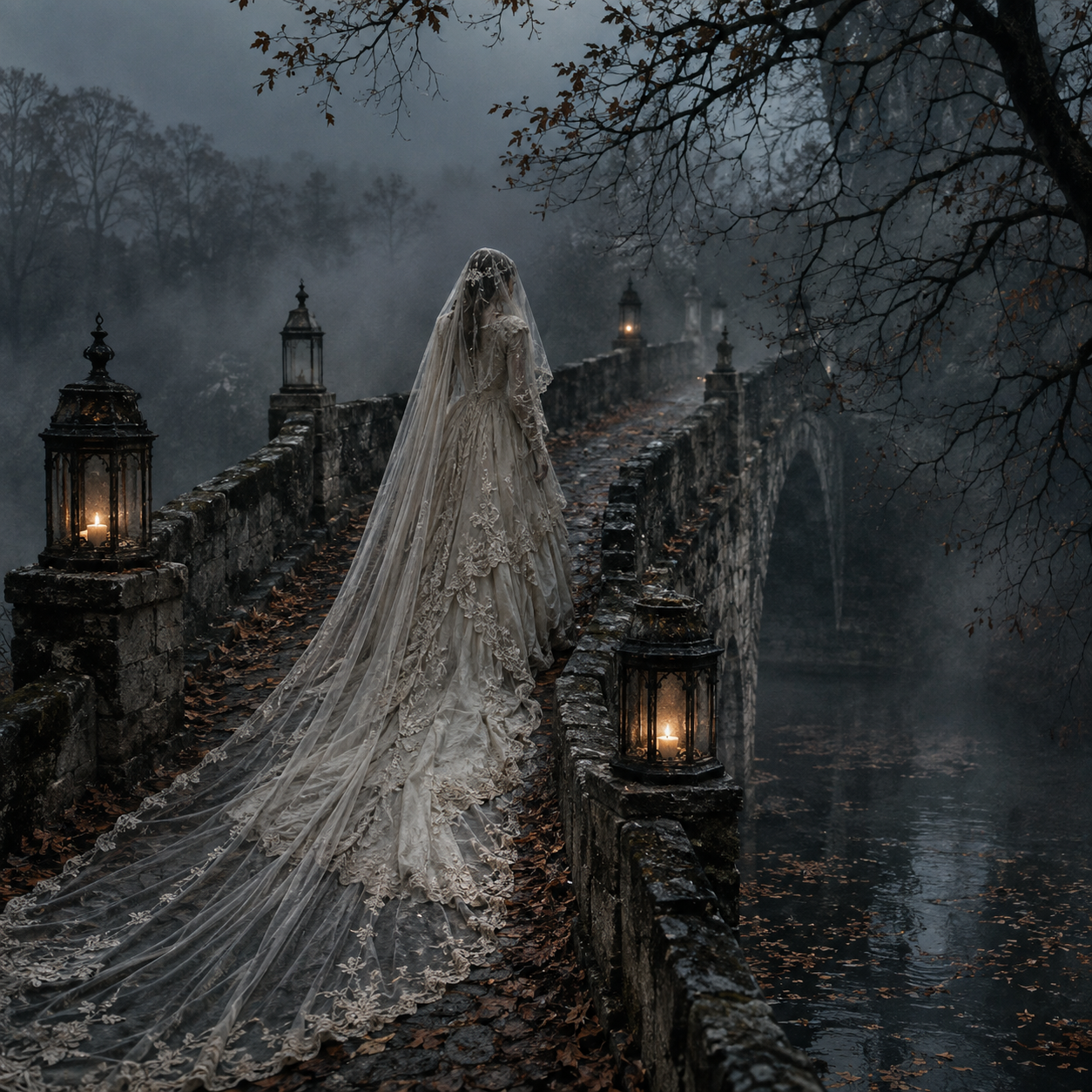
A ghost bride who has crossed the same stone bridge every Halloween since her wedding day never came.
A village postmaster who continues delivering letters addressed to people who died decades earlier.
A historian restoring an abandoned church only to discover names appearing inside its parish records.
The keeper of an old lighthouse where one room is always warm despite standing empty.
A trick-or-treater who appears in every family photograph but belongs to no one in the village.
6. Setting Ideas
Halloween ghost stories thrive in places that feel steeped in memory. Familiar locations become quietly unsettling as autumn darkness, drifting fog and old architecture blur the line between the living and the dead.
A weathered Victorian manor standing alone beneath towering yew trees, its upper windows glowing softly each Halloween.
A lonely railway platform where a forgotten steam train still arrives through silver mist.
An abandoned church surrounded by ancient gravestones carpeted with fallen leaves.
A winding country road lined with crooked hedgerows and lanterns that appear only after sunset.
A stone bridge crossing a slow river where ghostly figures gather beneath the harvest moon.
A forgotten coastal lighthouse overlooking black waves and drifting sea fog.
A quiet village square decorated for Halloween while one empty house remains untouched by time.
An old cemetery where autumn leaves gather around beautifully weathered angel statues.
A narrow woodland path leading to a ruined chapel hidden beneath ancient oaks.
A mist-covered lake where candlelit boats drift silently across the water every Halloween night.
7. Picture Prompts
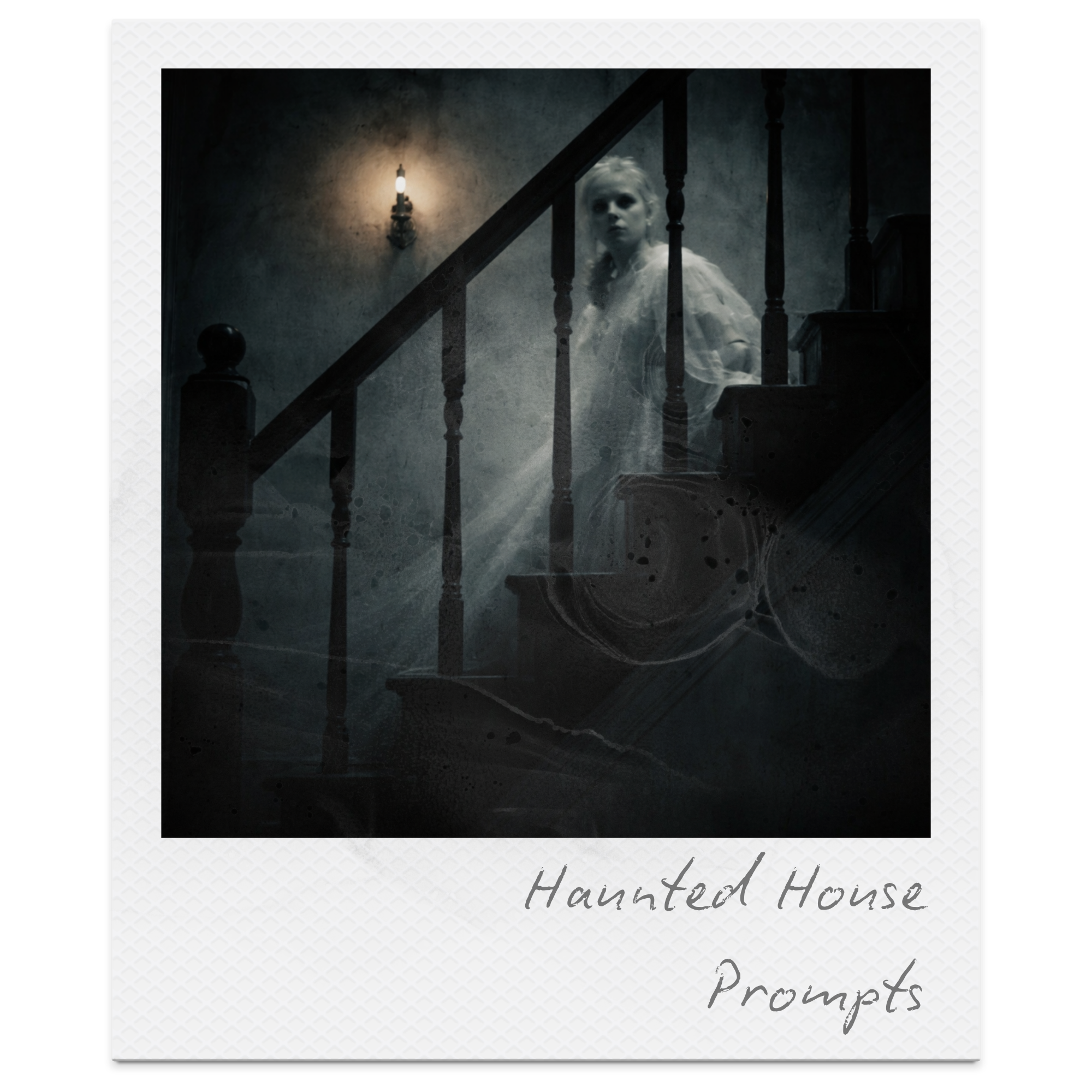
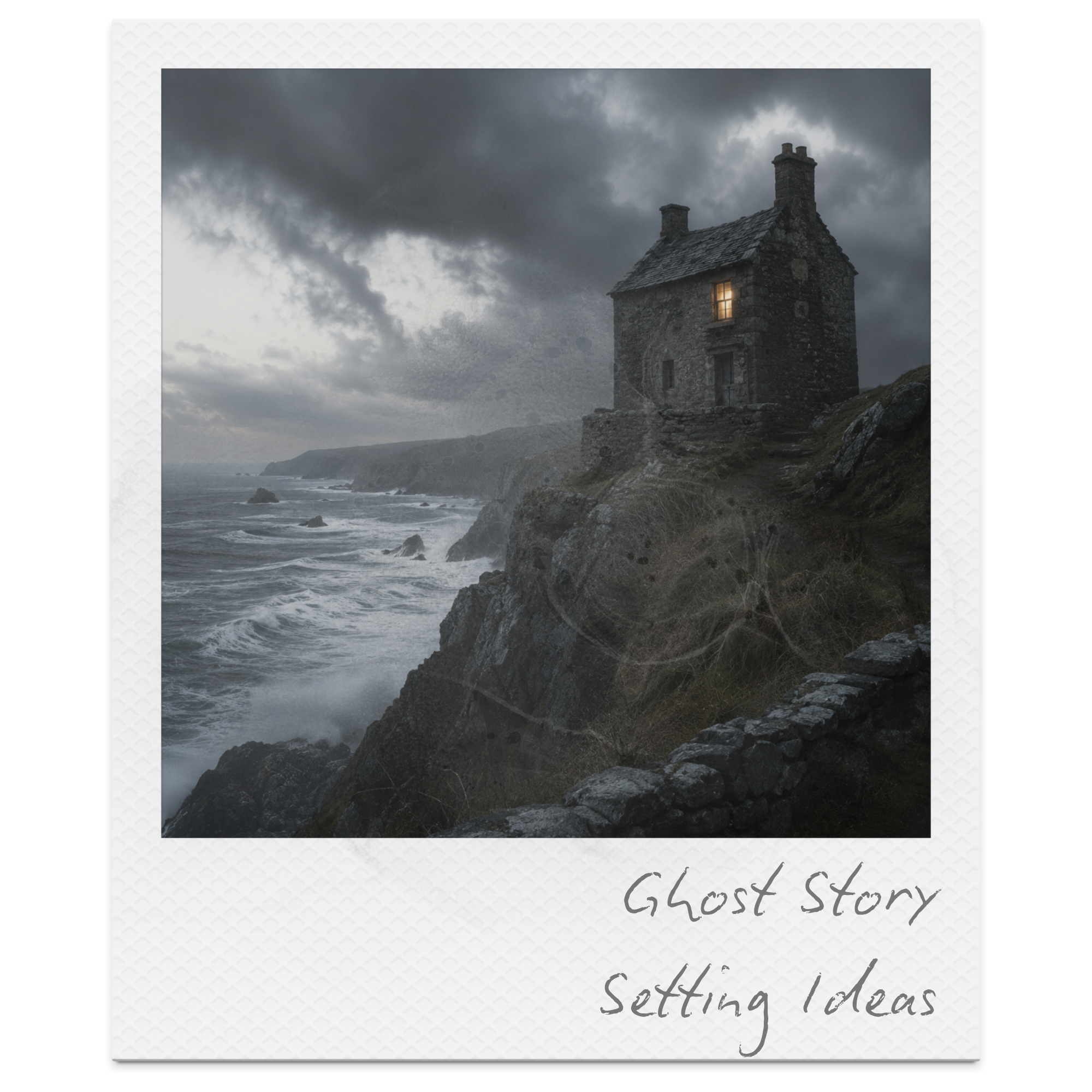
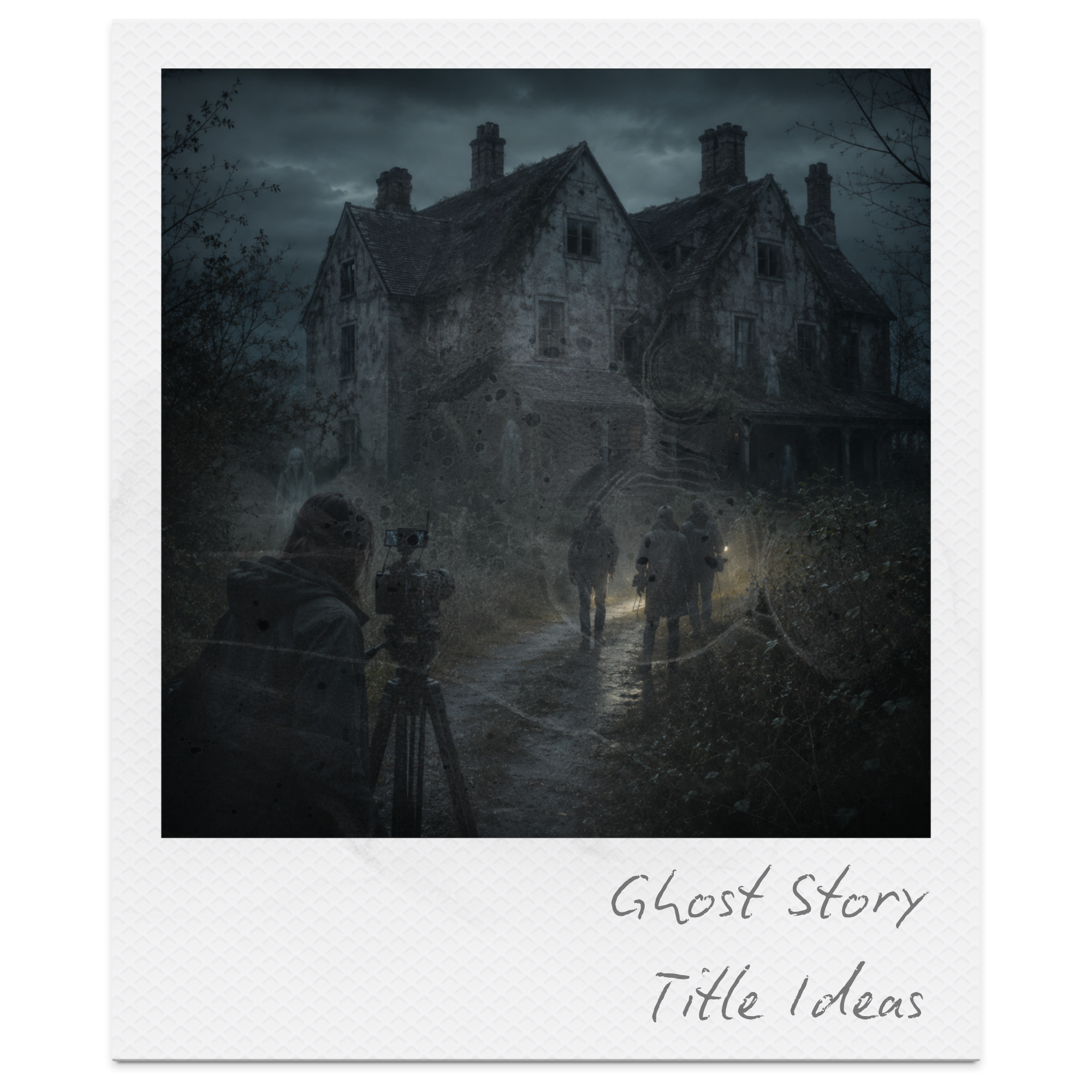
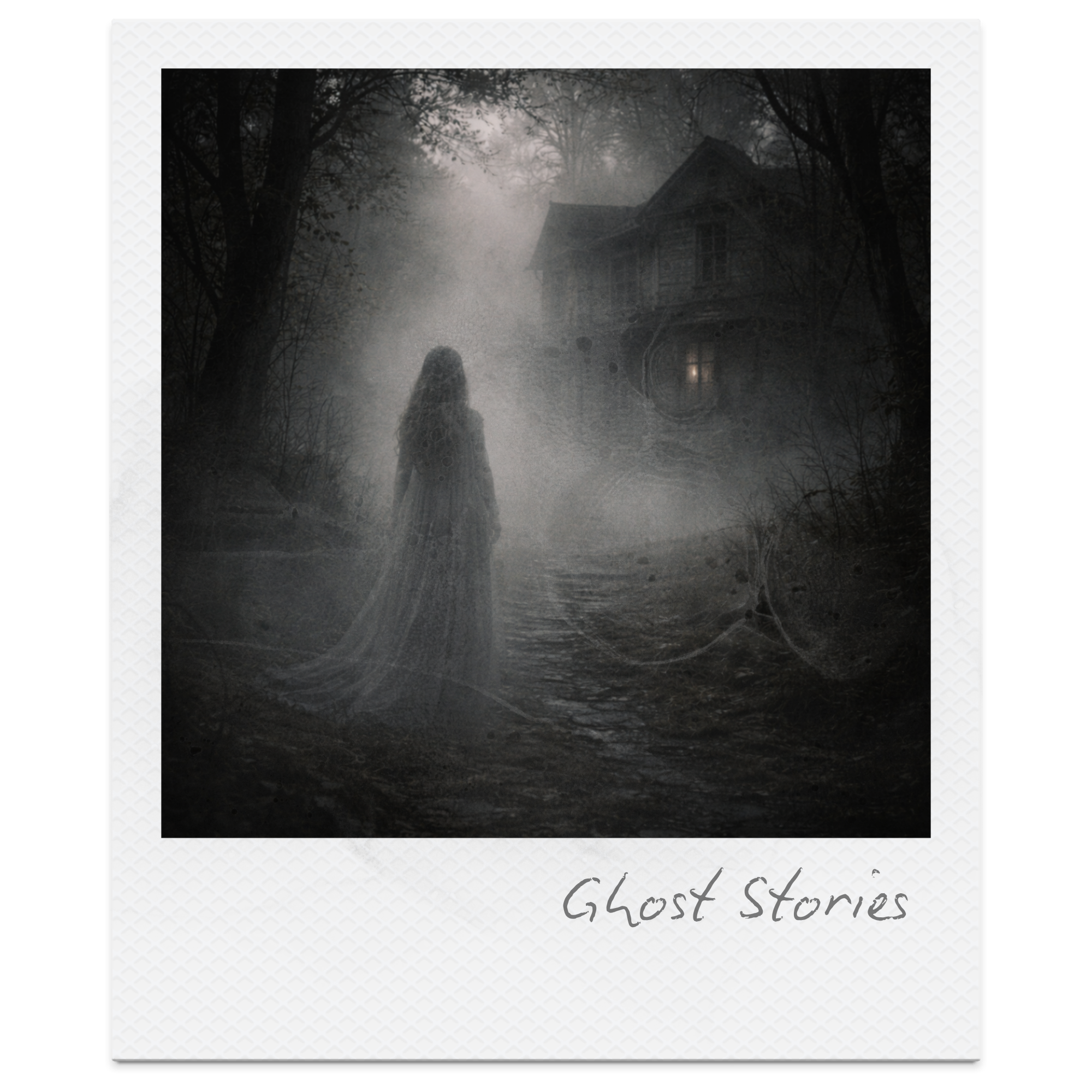
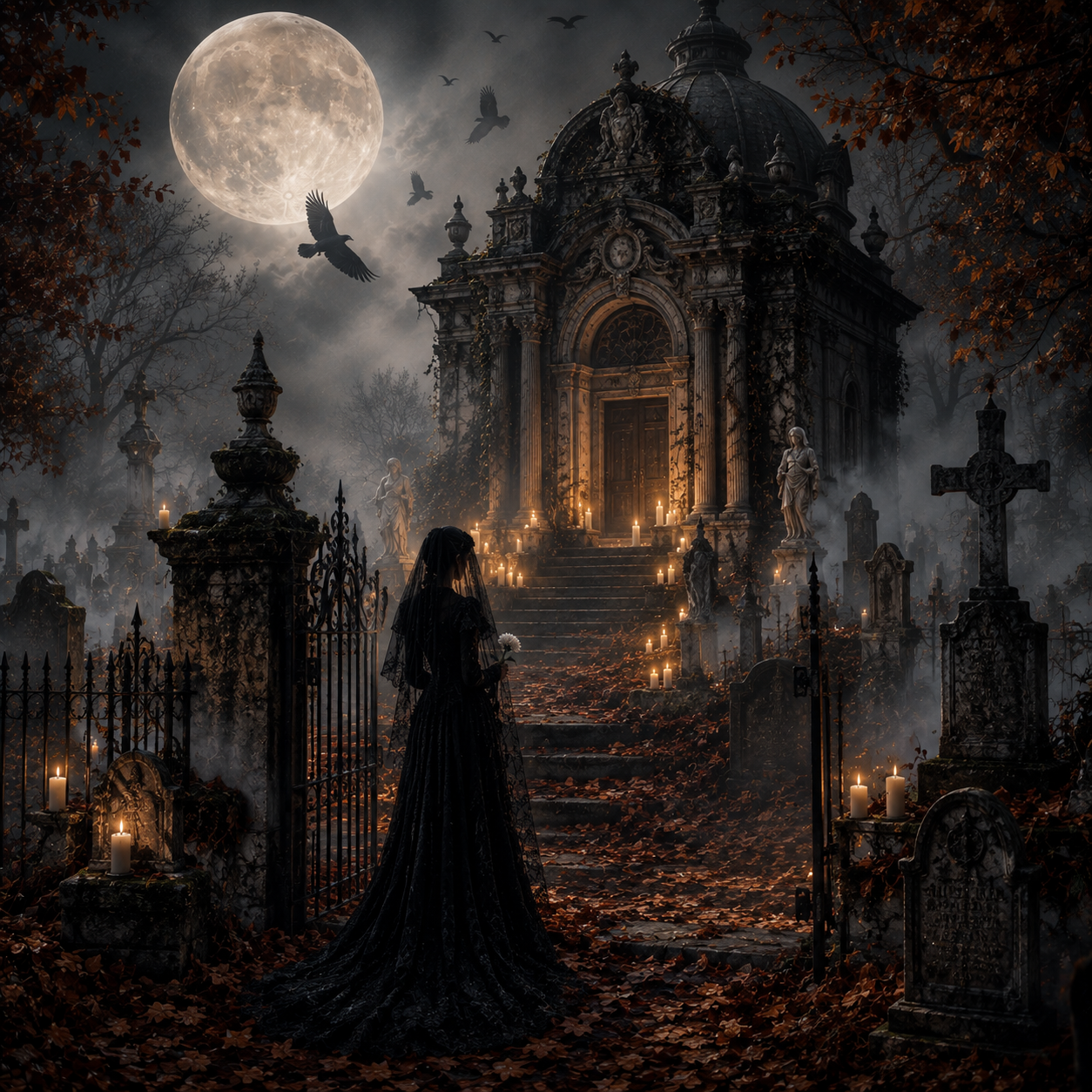
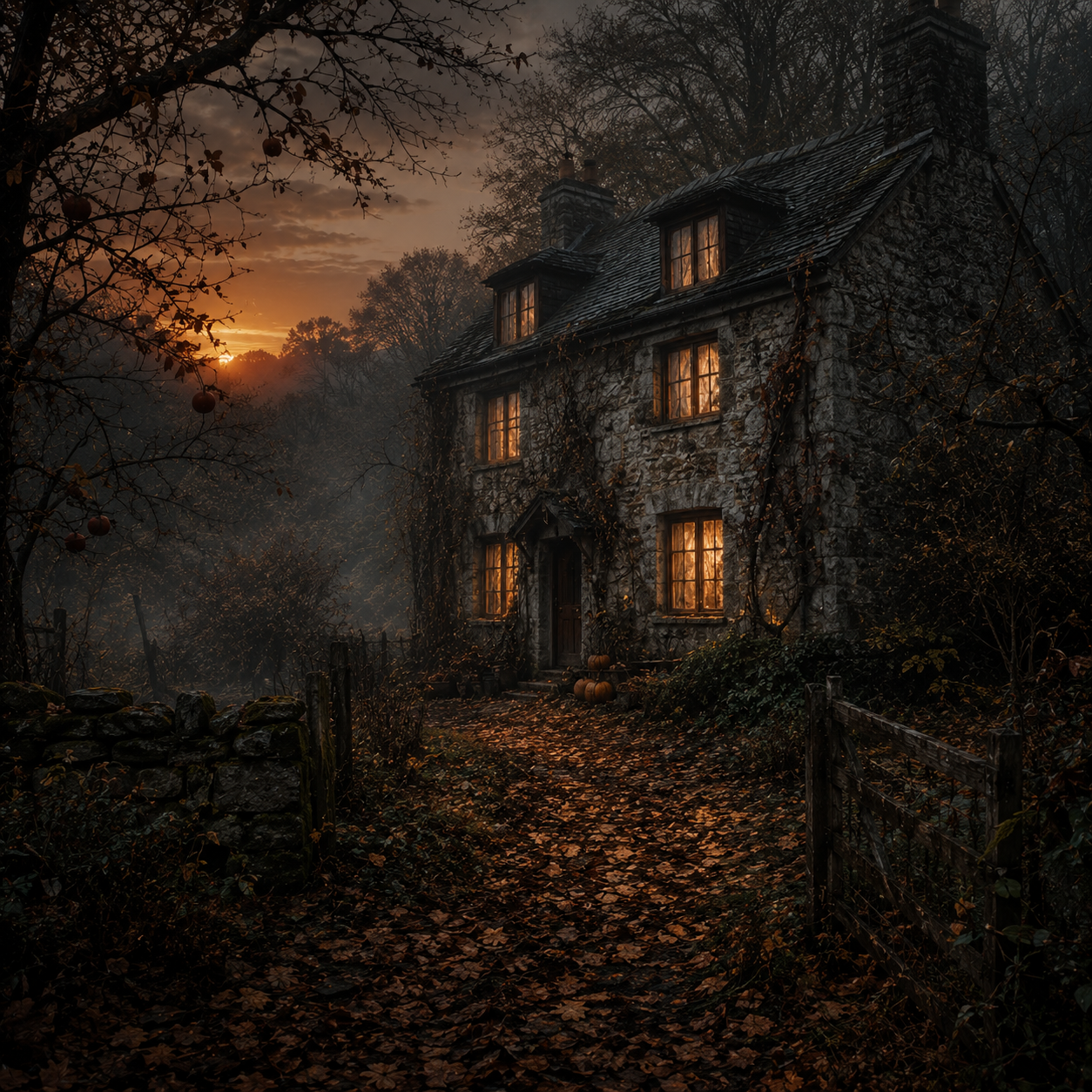
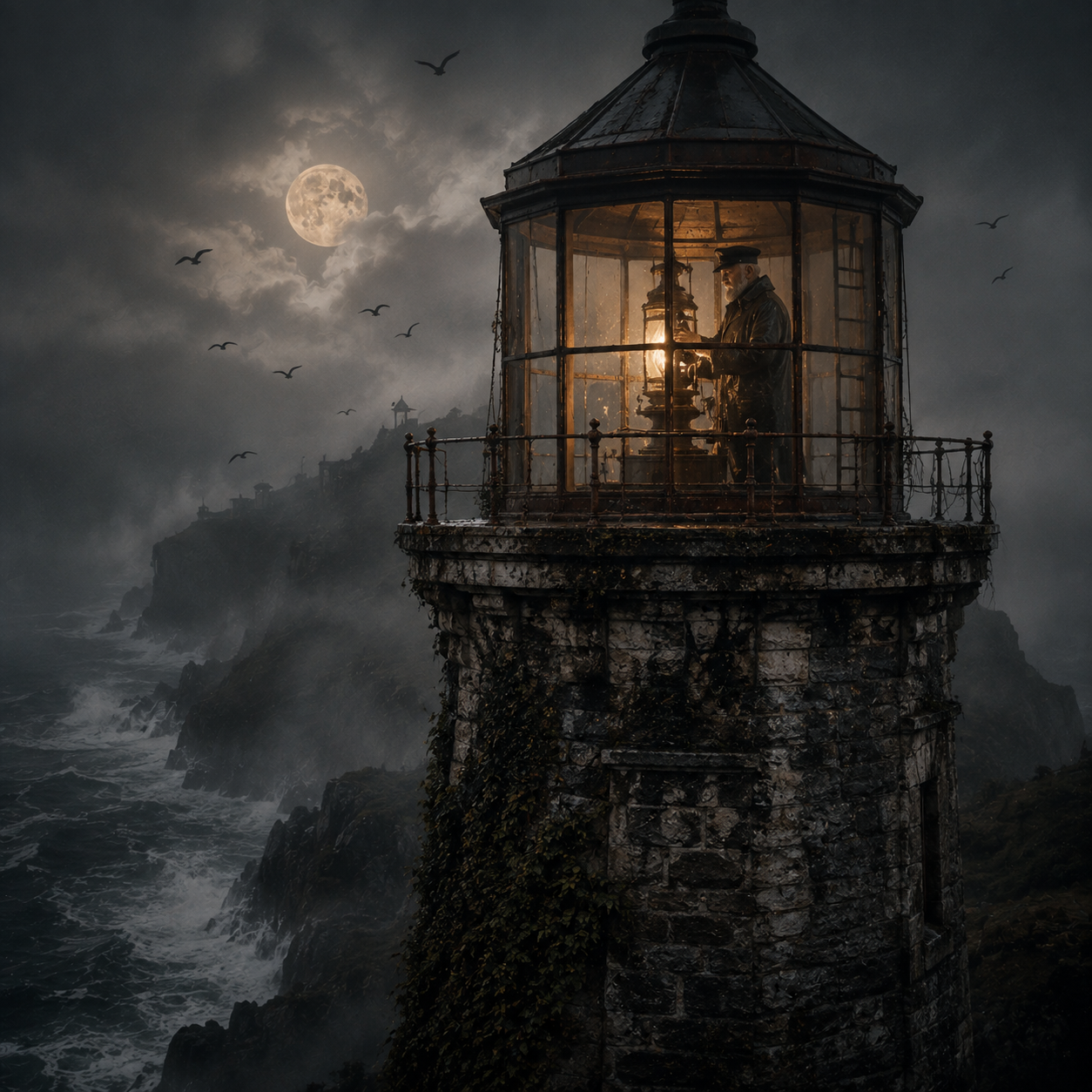
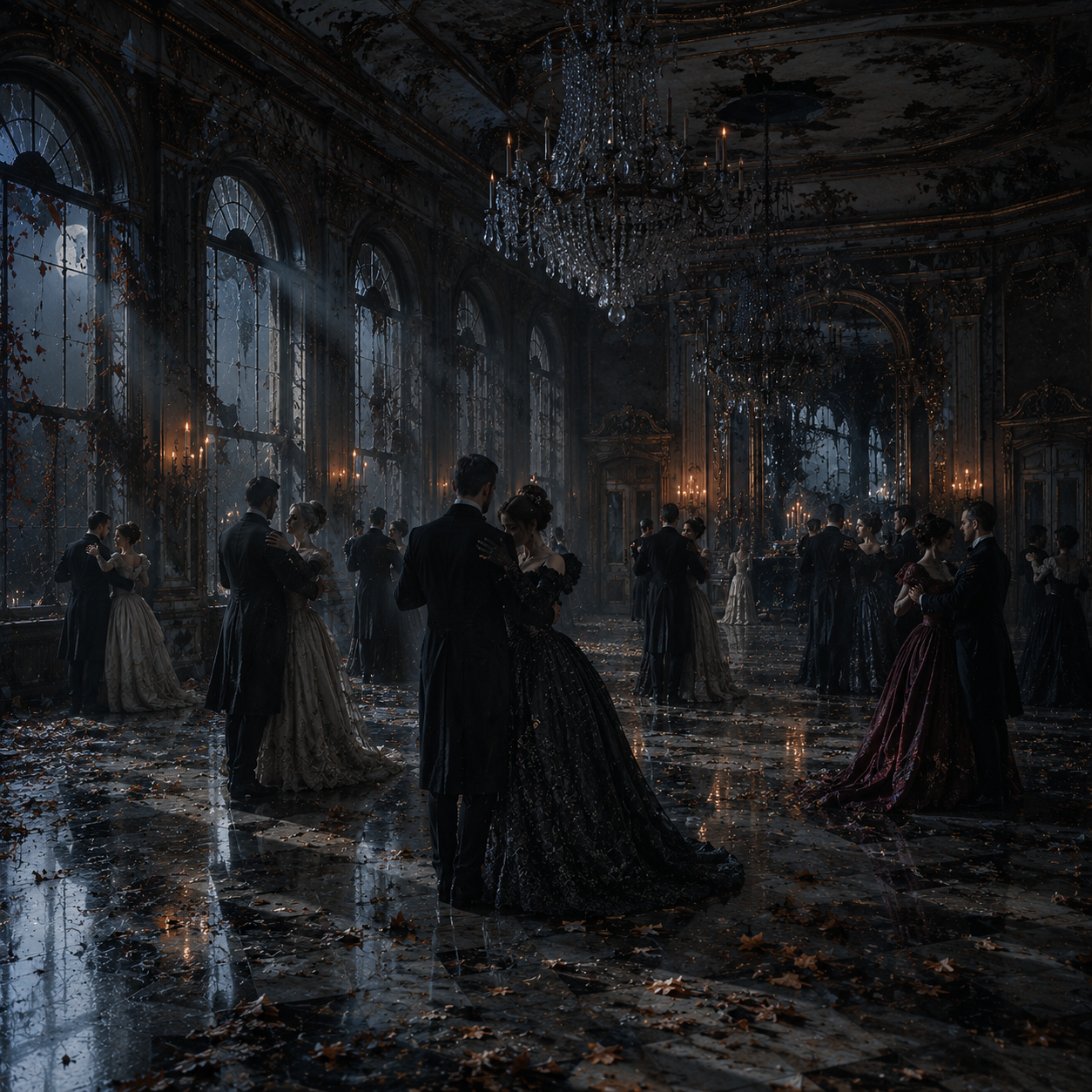
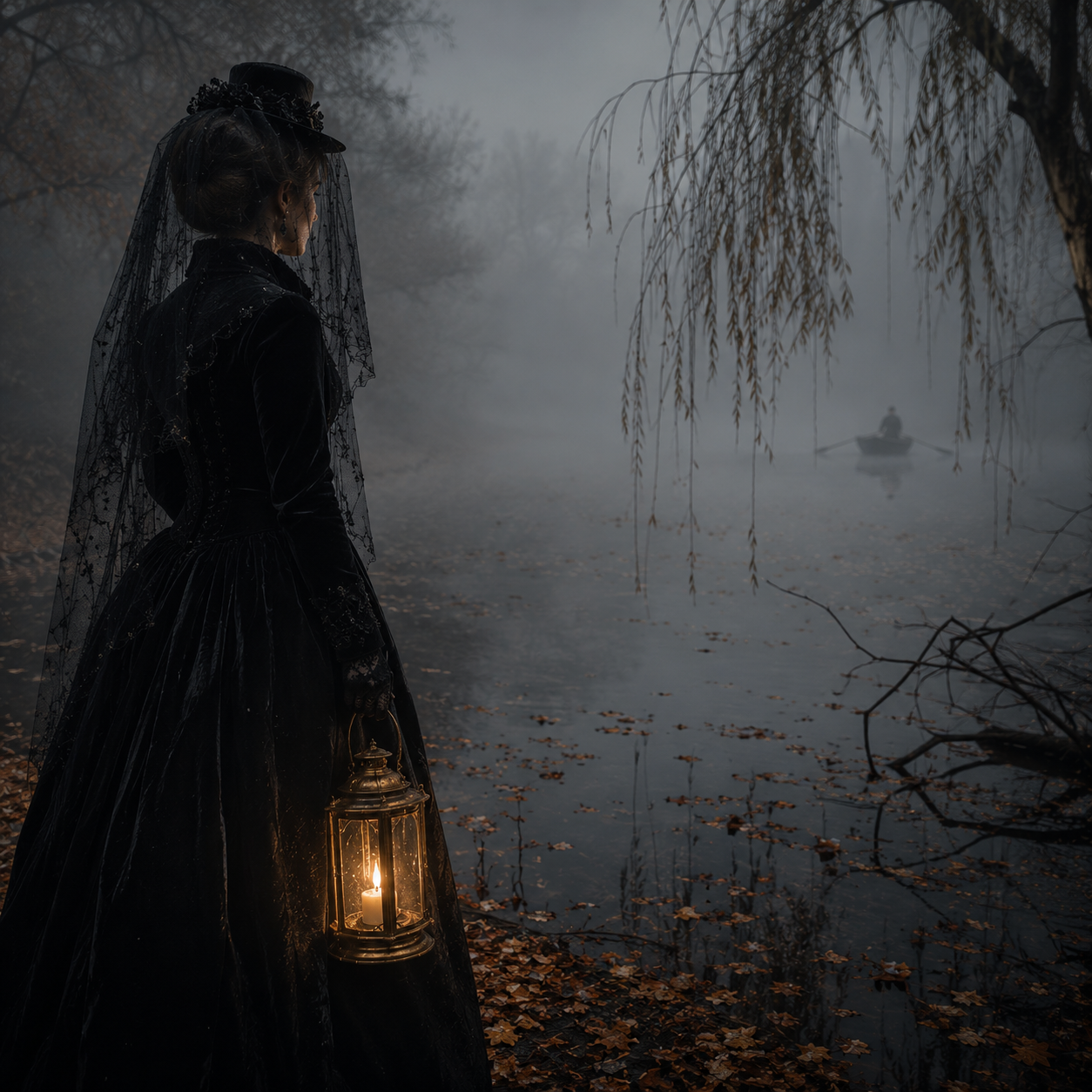
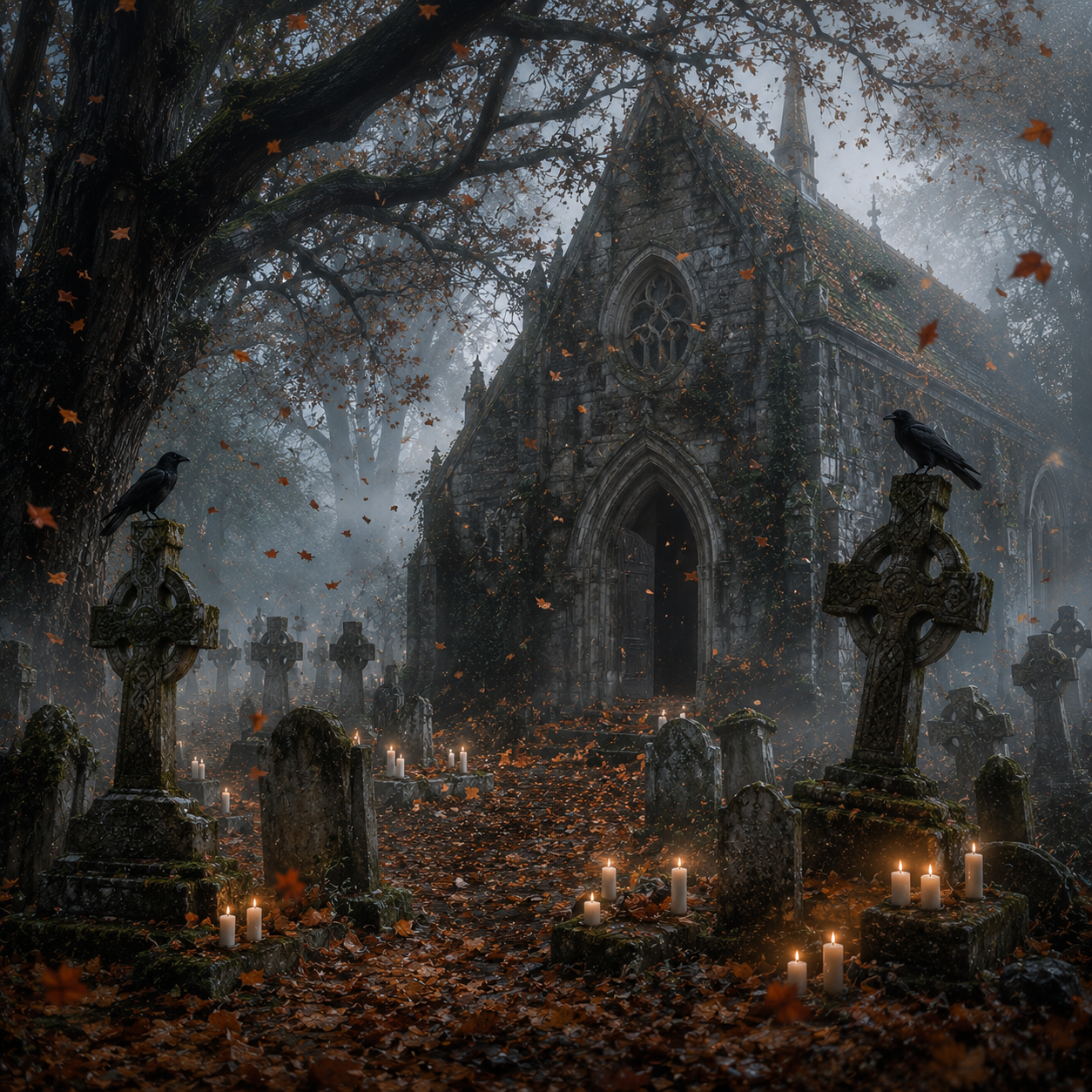
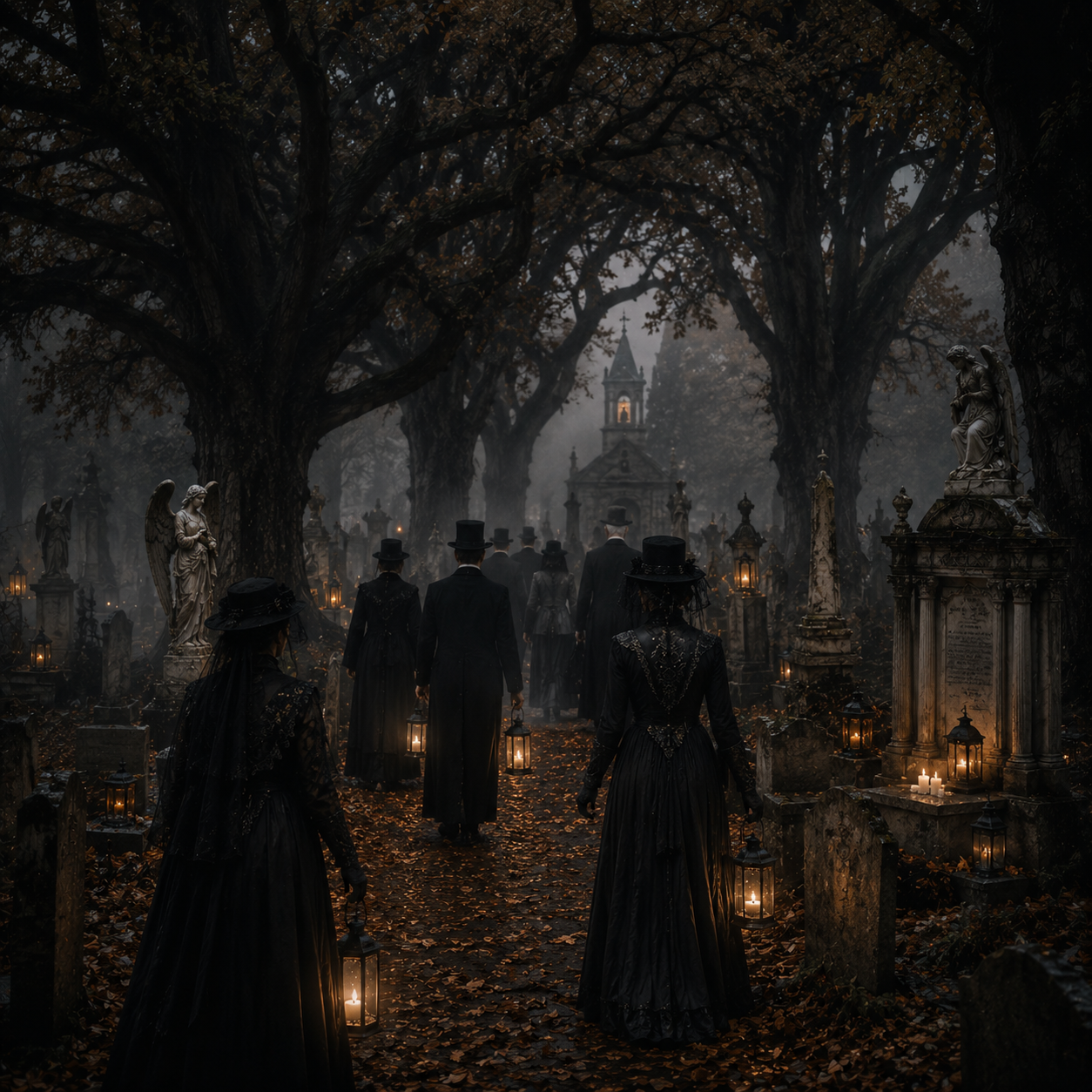
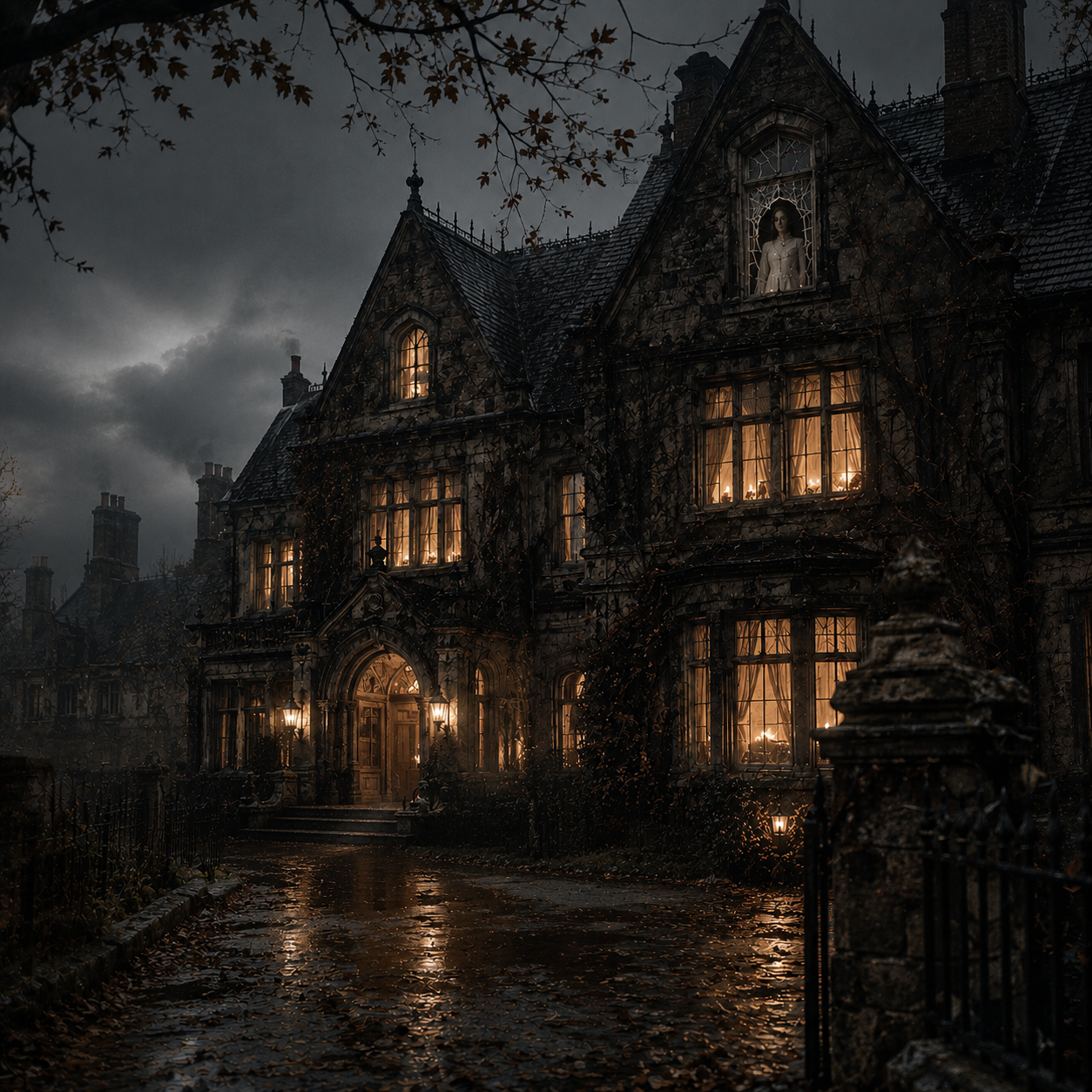
Halloween ghost stories should feel quiet, unsettling and deeply atmospheric, favouring melancholy, mystery and eerie beauty over violence or shock. The images below are designed to inspire stories where restless spirits return for one final night, forgotten promises echo across lonely landscapes and familiar places become quietly haunted beneath autumn skies. Imagine ghost brides crossing ancient bridges, lanterns glowing through thick mist, abandoned churches filled with candlelight, phantom passengers stepping from forgotten trains and silent cemeteries where the dead seem almost ready to speak. Use these cinematic scenes to inspire unforgettable characters, haunting settings and timeless ghost stories that linger in the imagination long after Halloween has passed.
Go Deeper into Halloween Ghost Story Writing
A memorable ghost story doesn't need to explain exactly what is haunting a place—or even prove that a haunting exists at all. The strongest supernatural stories often work through suggestion: a movement glimpsed through an upstairs window, footsteps in an empty corridor, a photograph containing one person too many. At Halloween, when darkness arrives earlier and the boundary between the living and the dead traditionally feels a little less certain, those small disturbances can become particularly powerful.
◆ Give your ghost a reason to remain. A haunting becomes more compelling when something lies beneath it. Grief, betrayal, guilt, love, injustice or a promise left unfulfilled can turn a frightening apparition into a character with its own history.
◆ Begin with something almost ordinary. Let the supernatural enter gradually. A clock repeatedly stopping at the same time, an unfamiliar child appearing in old photographs or a letter addressed to someone long dead can create unease before anything overtly impossible occurs.
◆ Allow places to remember. Houses, railway stations, churches, hotels, bridges and cemeteries can carry the emotional weight of everything that happened there. Perhaps the ghost isn't haunting a person at all—it is attached to a room, an object or a moment that continues to repeat.
◆ Use Halloween sparingly but purposefully. Your story doesn't need pumpkins on every doorstep. Instead, use Halloween as the moment something changes: the anniversary of a disappearance, the one night a train returns to an abandoned station or the evening when an old photograph suddenly gains another figure.
◆ Let objects carry the past. Letters, photographs, lockets, newspaper clippings, children's drawings, diaries and forgotten belongings allow history to enter the present naturally. An ordinary object becomes unsettling when it contains information nobody living should know.
◆ Write ghosts as people before apparitions. Ask who your spirit was when they were alive. What did they love? What did they lose? What do they misunderstand about their own death? A ghost desperately trying to protect someone can be far more haunting than one that simply wants to frighten them.
◆ Play with conflicting evidence. Perhaps the newspaper says someone drowned, the parish register records their burial three years earlier and an old photograph shows them alive decades later. Contradictions encourage both your characters and readers to become investigators.
◆ Don't explain everything. Ghost stories thrive on uncertainty. The haunting can end without revealing why it began. A spirit might disappear once its message has been understood—or simply stop appearing. Leaving one impossible detail unresolved gives the story somewhere to linger after the final line.
Step Inside a Mystery of Your Own
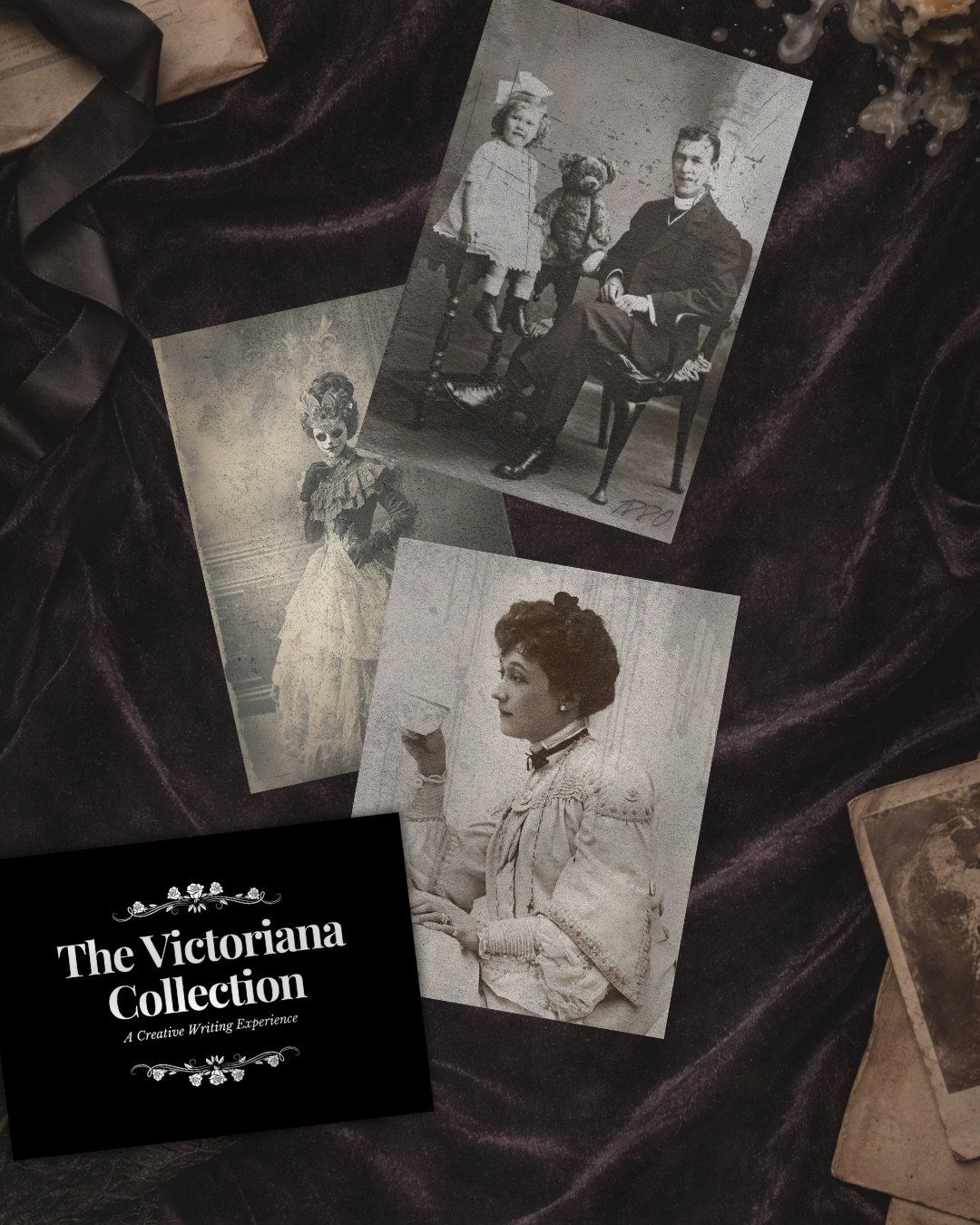
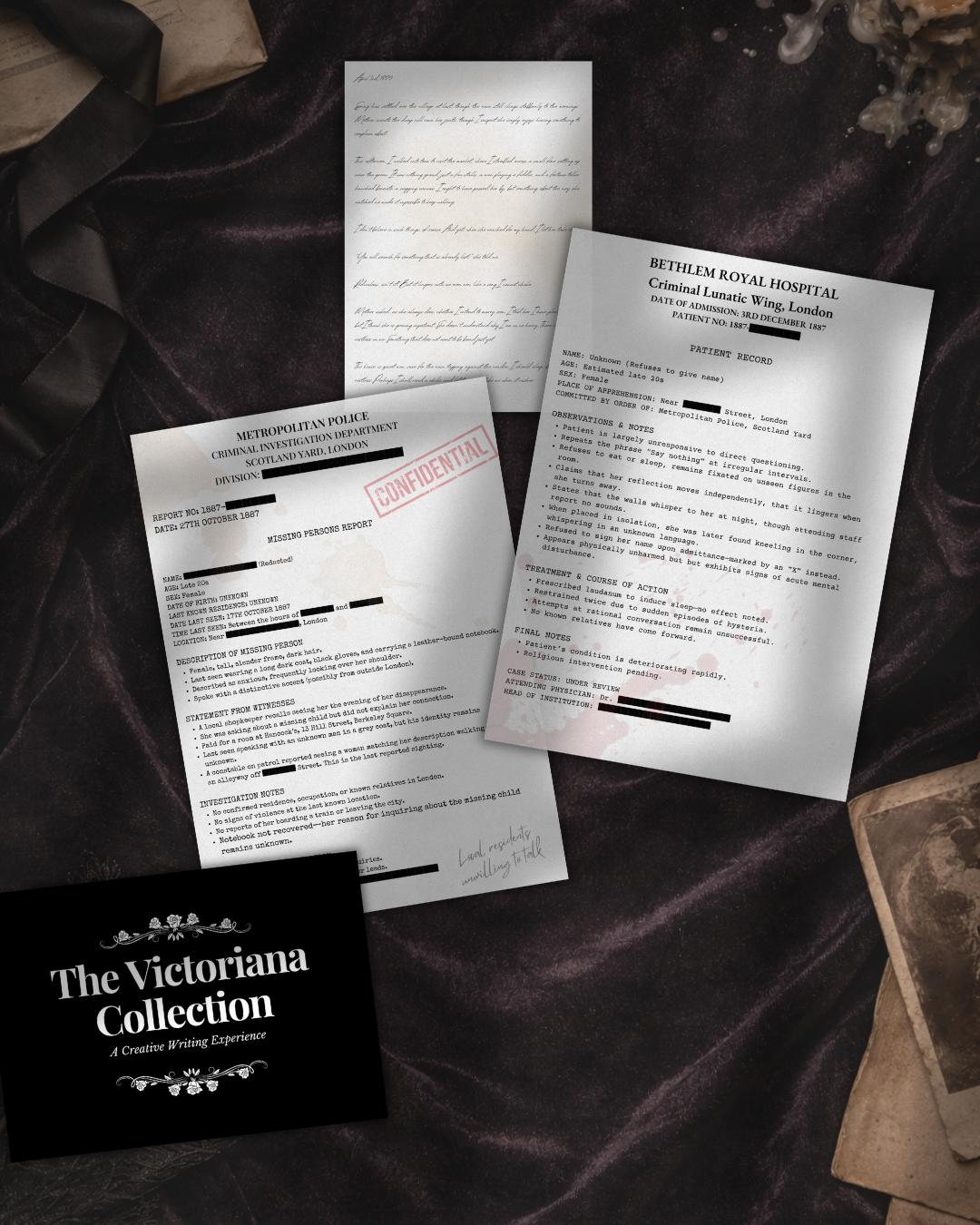
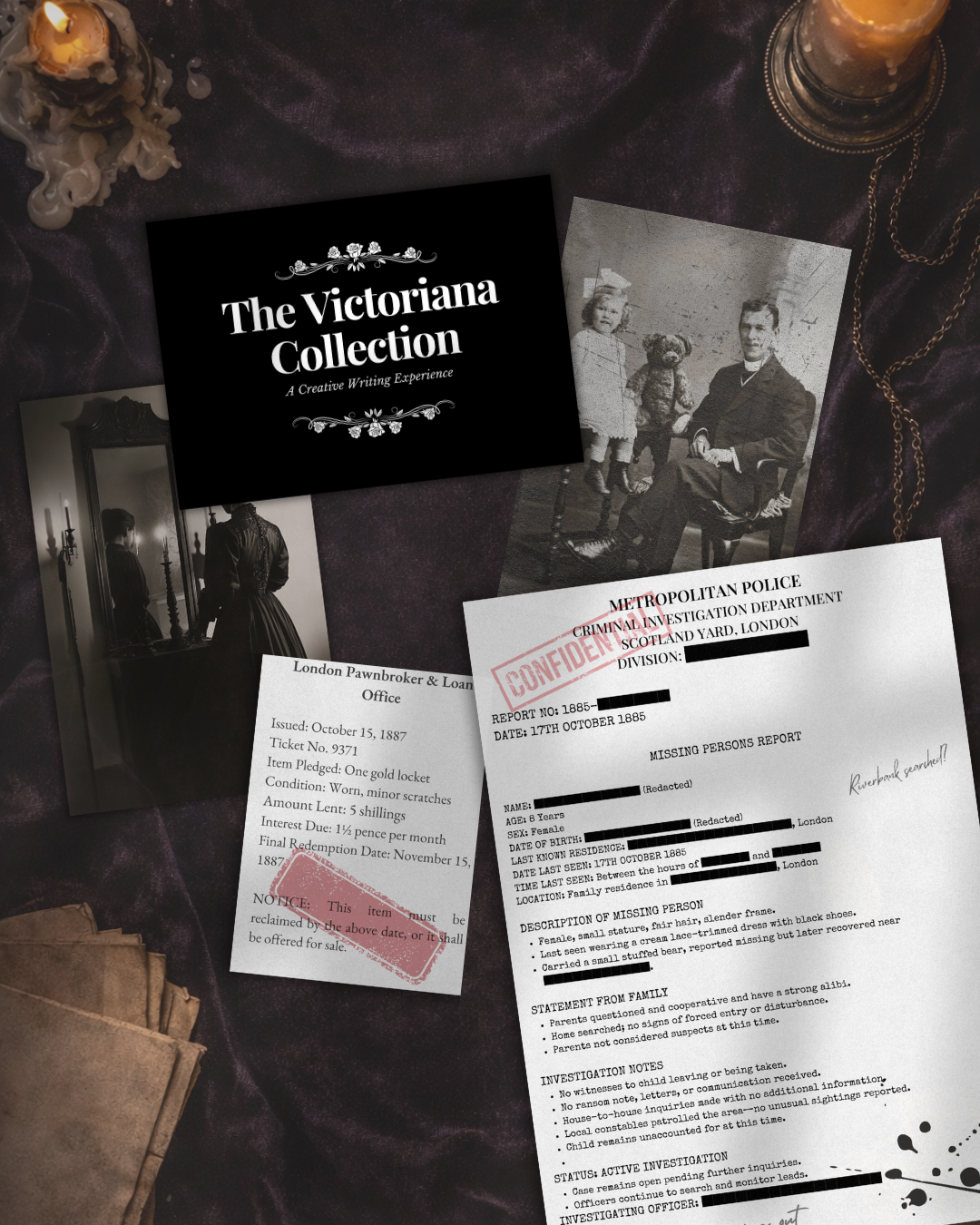
If the fragments of a haunting interest you as much as the ghost itself, The Victoriana Collection takes that idea beyond the writing prompt and turns it into an archive waiting to be explored.
Hidden inside a dust-covered collection of forgotten papers are more than 50 printable documents and artefacts inspired by gothic fiction, Victorian spiritualism, forgotten histories and unexplained disappearances. There are letters and diary entries, old photographs, missing persons reports, newspaper clippings, spiritualist notes, personal mementoes—and a child's drawing that may mean far more than it first appears.
Individually, the documents reveal very little.
Together, they suggest something much stranger.
There is no predetermined solution and no final page explaining what happened. Some documents support one another; others seem to contradict everything you thought you understood. You decide which details matter, which witnesses can be trusted and what story might be hiding in the gaps.
For writers, it's a different way to find a story: instead of beginning with a prompt, begin with the evidence.
Some stories are best left buried.
This one has surfaced.
Final Thoughts
Halloween and ghost stories have always belonged together. As the evenings darken and the season turns towards mist, candlelight and bare branches, even familiar places can begin to feel slightly unfamiliar. An empty railway platform, a light burning in an abandoned house or footsteps on a leaf-covered path suddenly become the beginning of something much larger.
The most memorable ghost stories don't necessarily frighten us with what appears. They make us wonder why it appeared at all. Behind every haunting might be a forgotten person, an unanswered question, an old injustice or a promise that has somehow survived beyond death. Leave some doors unopened, some histories incomplete and some apparitions unexplained. Sometimes the ghost that stays with a reader longest is the one they never completely understand.
If you're ready to explore more supernatural storytelling, visit the Paranormal Writing Hub for ghost stories, haunted settings, unexplained phenomena and paranormal inspiration, or browse the Creative Writing Archive for hundreds of prompts, characters, settings, story ideas and picture prompts across every genre.
Choose Your Next Adventure