70 Fairytale Witch Writing Prompts: Dark Magic, Curses & Original Fairytale Stories
Witches have been lurking at the edges of classic fairy tales for centuries, waiting in impossible cottages, behind castle walls and deep inside forests where sensible characters know they should never wander. The Brothers Grimm gave us some of the most famous examples: the cannibalistic witch of Hansel and Gretel, the enchantress who imprisons Rapunzel and the murderous queen of Snow White, whose knowledge of magic helps transform jealousy into something far more dangerous. Beyond the Grimms’ fairy tales, magical women appear throughout traditional stories and folklore around the world, from the unsettling Baba Yaga of Slavic tales to enchantresses, sorceresses, healers and mysterious old women whose help often comes with conditions.
But a fairytale witch does not have to be an old woman waiting to curse a princess. She might be the beautiful adviser standing beside the throne, a child discovering that magic runs in her family, a village healer blamed whenever something goes wrong, or the owner of a cottage that deliberately lures lost travellers from the path. She might genuinely be wicked — or she might only appear wicked because the story has always been told by the people who feared her. Dark fairy tales, twisted fairy tales and modern fairy tales give us even more room to question who the witch really is, what she wants and why everyone has been warned to stay away from her.
These 70 Fairytale Witch Writing Prompts are designed to inspire original stories filled with curses, bargains, transformations, strange magic and witches who are far more complicated than they first appear. Across plot prompts, titles, opening and closing lines, characters, settings and picture prompts, you can create everything from traditional forest witches to entirely new magical figures of your own. Explore more enchanted characters and story inspiration in the Fairytales & Folklore Hub, find quick combinations of characters, settings and conflicts through Fairytale Story Sparks, or browse the Creative Writing Archive for even more ideas across fantasy, folklore, gothic, horror and beyond.
1. Plot Prompts
Witches in traditional fairy tales rarely use magic without consequences. They make bargains, cast curses, offer suspicious gifts and live beyond the boundaries of ordinary society. These plot prompts take inspiration from the darker traditions of classic and Grimms’ fairy tales, while leaving plenty of room to create witches, magic systems and conflicts entirely of your own.
Every winter, a village leaves a basket of food at the edge of the forest for the witch who lives there. One year, the basket is returned unopened with a note warning them to leave before the first snow.
A princess has been told since childhood that an evil witch cursed her at birth. When she finally finds the woman responsible, the witch insists that the “curse” is the only thing keeping the princess alive.
A witch builds a beautiful cottage that changes its appearance depending on whoever is lost in the forest. One evening, it transforms into a place from the witch’s own childhood.
The king employs a secret court witch to place curses on his enemies. When he orders her to curse a neighbouring kingdom’s newborn heir, she decides to turn her magic against him instead.
A young witch inherits her grandmother’s spell book and discovers that every curse inside has a name written beside it. The final name is her own.
For one night each year, anyone may knock on the forest witch’s door and ask for a single spell. This year, the queen arrives carrying something the witch thought had been lost decades ago.
A witch becomes infamous for transforming cruel people into animals. When a frightened wolf appears at her cottage claiming to be an innocent prince, she cannot remember casting the spell.
Two children escape from a witch’s impossible cottage and return home as heroes. Years later, one of them begins to suspect that they have remembered what happened in the forest completely wrong.
A village burns the home of the woman they believe has been cursing their crops. The following spring, they discover what her magic had actually been keeping away.
A witch agrees to remove a princess’s curse in exchange for one seemingly worthless thing: the princess must give her every mirror in the palace.
2. Story Title Ideas
The titles of dark fairy tales often make ordinary things feel threatening: a cottage, a mirror, a forest path or something waiting behind a locked door. Use these titles as inspiration for twisted fairy tales, modern stories or completely original tales about witches and the strange magic surrounding them.
The Witch at the Thirteenth Window
A Cottage Made for Lost Girls
The Queen’s Secret Witch
What the Witch Buried
The House Beyond the Black Trees
Seven Curses for a Princess
The Witch Who Could Not Burn
A Spoonful of Night
The Last Spell in the Book
Never Knock Three Times
3. Opening Lines
A fairytale witch can change the direction of a story from the moment she appears. These opening lines begin with curses, rumours, impossible discoveries and encounters that immediately raise questions about the witch at the centre of the tale.
Everyone in the village knew there was a witch in the forest, but nobody agreed on what she looked like.
On my sixteenth birthday, the queen finally told me why witches were forbidden from entering the palace.
The cottage had not been there yesterday.
“Before you burn me,” said the witch, “you might want to ask what happens when I die.”
My grandmother left me three things: her cottage, her black cat and a list of people I was never to curse.
The princess arrived at my door just before midnight carrying a dead bird in both hands.
We had been walking through the forest for three days when my brother noticed that the trees were following us.
Nobody knew the king kept a witch beneath the palace until the night she escaped.
The old woman offered me an apple, so naturally I refused it.
There are seven rules for entering a witch’s house, and I had already broken four before she came home.
4. Closing Lines
The best fairytale endings can make a reader reconsider everything that came before them. Use one of these closing lines as the destination for your story and work backwards to discover the curse, bargain or terrible misunderstanding that brought your characters there.
Only then did we understand that the witch had never been trapped inside the forest; we had.
I closed my grandmother’s spell book and added one final name to the list.
The princess wore the crown for sixty years, but she never looked into another mirror.
By morning, the cottage was gone, and in its place stood a single apple tree.
“You wanted a monster,” she said, stepping into the flames, “so I became one.”
The curse was broken, the prince was human again, and neither of us mentioned what he had done as a wolf.
Years later, children would tell stories about the wicked witch who lived beyond the village, and I never once corrected them.
The queen had spent her entire life hunting witches without realising she had been raised by one.
We buried the wand beneath the blackthorn tree and agreed that some kinds of magic should remain forgotten.
And from that day forward, whenever travellers asked why our village had no witches, we told them the same lie.
5. Character Ideas
The witches of classic fairy tales are often remembered as villains, but an original witch can occupy almost any role in a story. She might be frightening, compassionate, vain, lonely, ambitious or morally impossible to categorise. Start with the archetype, then decide which parts of the old stories you want to preserve — and which you want to turn upside down.
The Cottage Witch — an elderly witch whose home rearranges itself to provide whatever a visitor most desperately wants, although she refuses to explain what the house expects in return.
The King’s Witch — a beautifully dressed court sorceress officially employed as the queen’s companion while secretly handling every magical problem the royal family wants hidden.
The Child Witch — a nine-year-old girl capable of casting extraordinarily powerful curses whenever she loses her temper, forcing her extremely nervous family to teach her impeccable manners.
The Orchard Witch — a solitary woman who grows magical fruit capable of revealing secrets, restoring memories and occasionally transforming anyone foolish enough to steal it.
The Witch Without Magic — a notorious forest witch who lost her powers years ago but has maintained her terrifying reputation through cleverness, theatricality and the fact that nobody has dared test her.
The Beautiful Witch — an elegant young woman welcomed into the royal court because nobody believes someone who looks like her could possibly be the witch mentioned in an old prophecy.
The Witch of Lost Children — a frightening woman who collects children wandering alone in the forest, not to harm them but because something far worse hunts anyone still outside after sunset.
The Curse Collector — a travelling witch who removes curses from other people and stores them inside small glass bottles, until somebody breaks into her wagon and releases them all.
The Royal Witch — a princess born with forbidden magic who has spent her entire life concealing it from a dynasty responsible for hunting witches throughout the kingdom.
The Last Witch — an ancient woman believed to be the final witch in existence who knows perfectly well that hundreds of others survived; she simply promised never to reveal where they went.
6. Setting Ideas
From the forest cottage of Hansel and Gretel to the isolated homes of witches and enchantresses across fairy tales from around the world, setting often tells us that a character has crossed from the ordinary world into somewhere governed by different rules. Give your witch a place that reveals something about her magic — or deliberately creates the wrong impression.
The Walking Cottage — a crooked wooden house that moves deeper into the forest whenever strangers come too close, leaving enormous footprints in the moss behind it.
The Witch’s Orchard — a walled orchard where every tree grows a different enchanted fruit and one locked gate leads to a section nobody has entered for a hundred years.
The Blackthorn Village — an isolated settlement where every family secretly practises a different kind of magic while maintaining the elaborate fiction that witches do not exist.
The House of Ovens — an enormous abandoned bakery deep in the forest containing dozens of cold ovens, each opening onto somewhere completely different.
The Queen’s Hidden Tower — a narrow tower concealed inside the palace walls where generations of royal witches have secretly studied magic while their own family publicly condemned it.
The Cottage Beneath the Roots — a witch’s home hidden underneath an ancient tree, with rooms winding deeper underground than the tree could possibly reach.
The Market of Curses — a travelling night market where witches buy and sell spells, memories, enchanted objects, unusual ingredients and curses other people have paid them to remove.
The Burned Forest — a blackened woodland destroyed during an ancient witch hunt where flowers have suddenly begun growing again around the ruins of one cottage.
The House at the Crossroads — a tiny cottage that can only be reached by travellers who have an important decision to make, although nobody knows whether the witch inside helps people choose correctly.
The Witch Queen’s Garden — a magnificent palace garden filled with plants collected from enchanted kingdoms, including one forbidden greenhouse that remains locked even when the queen herself enters.
7. Picture Prompts
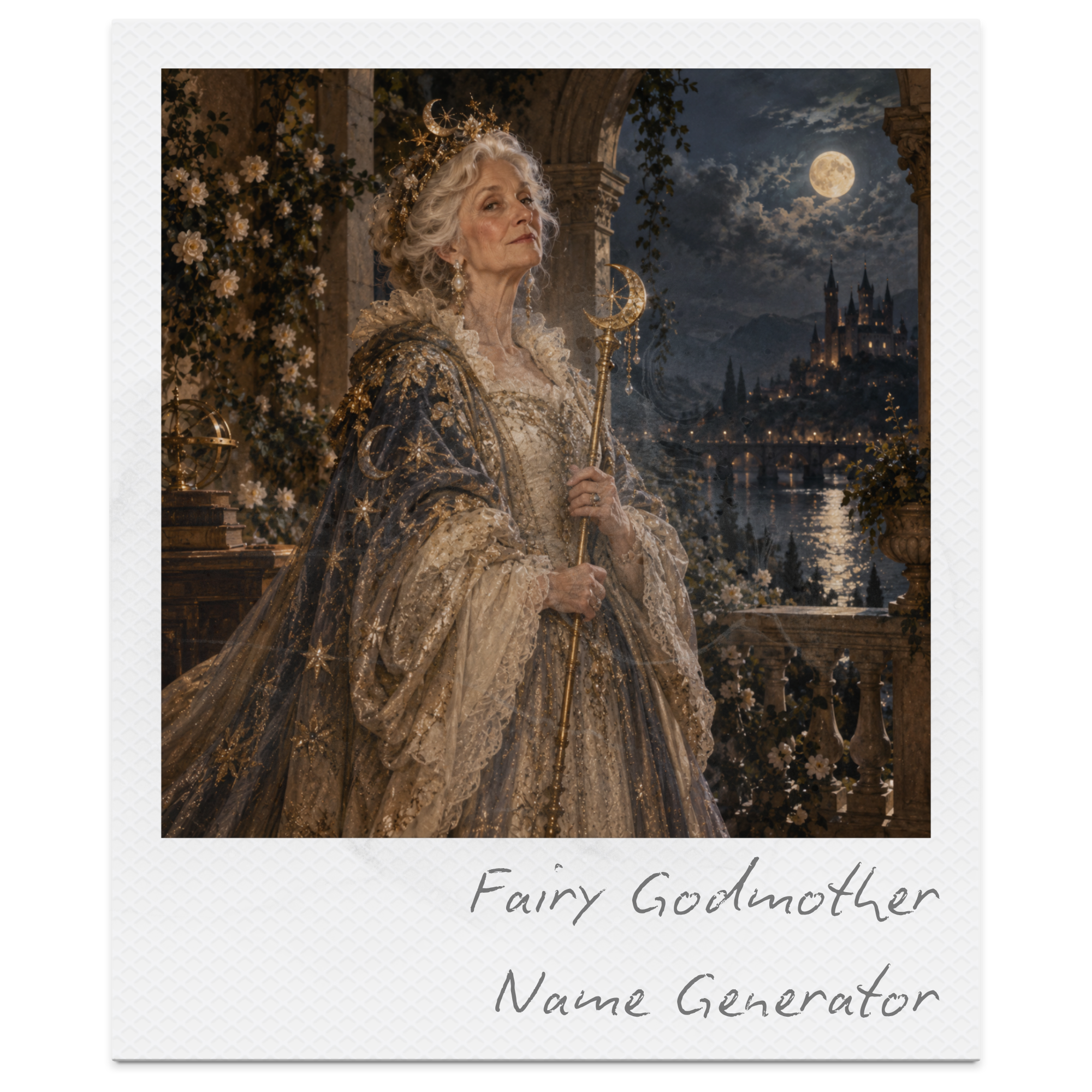
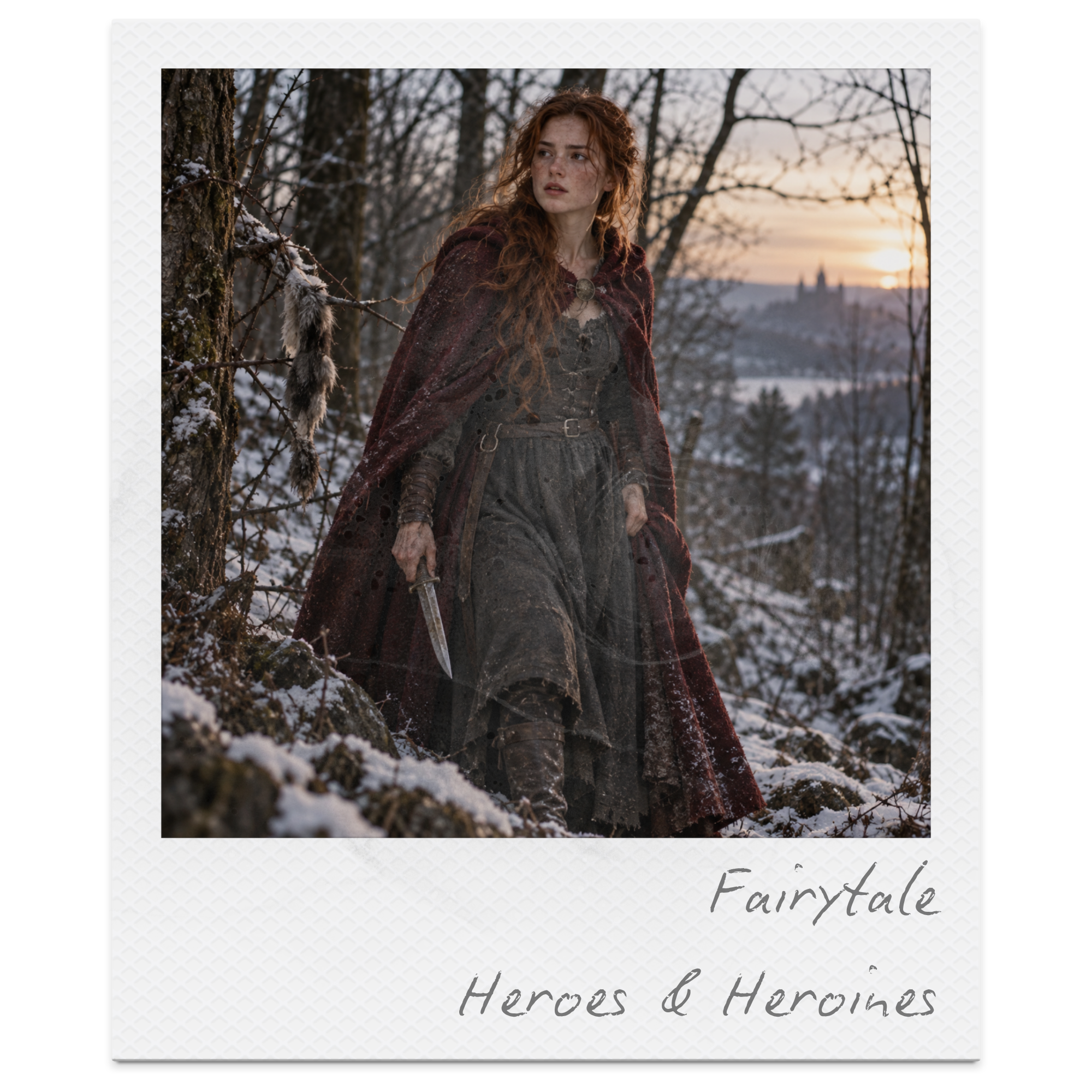
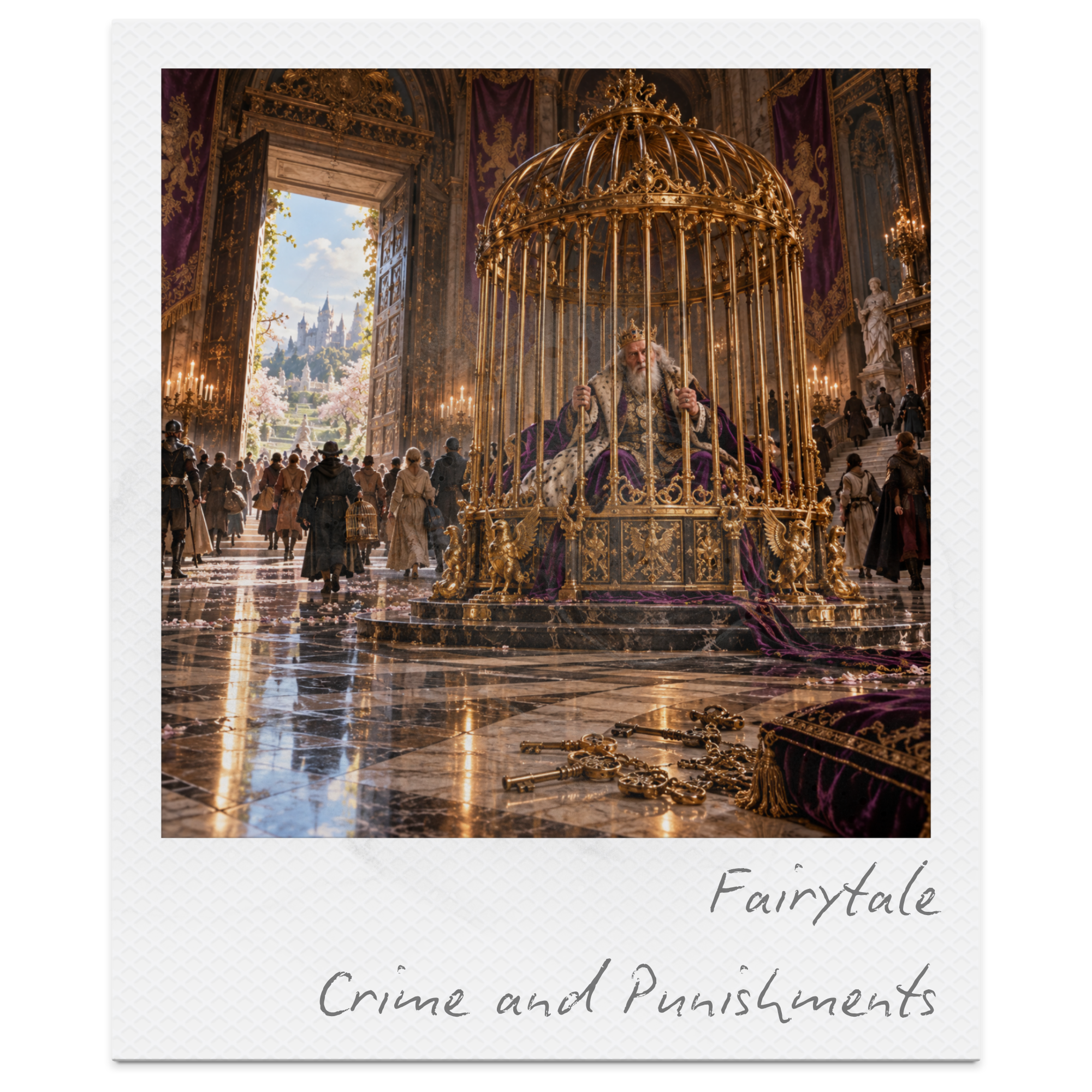
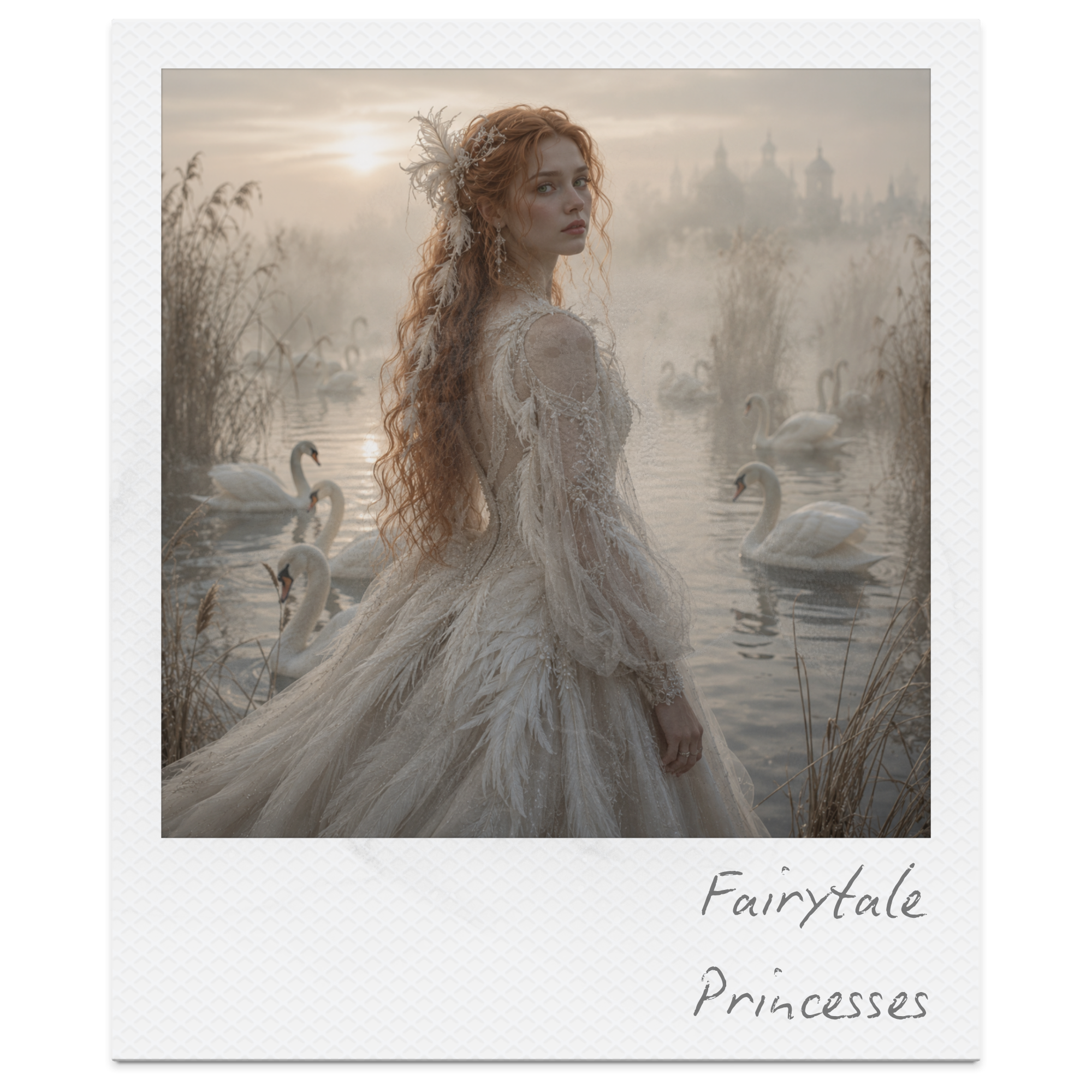
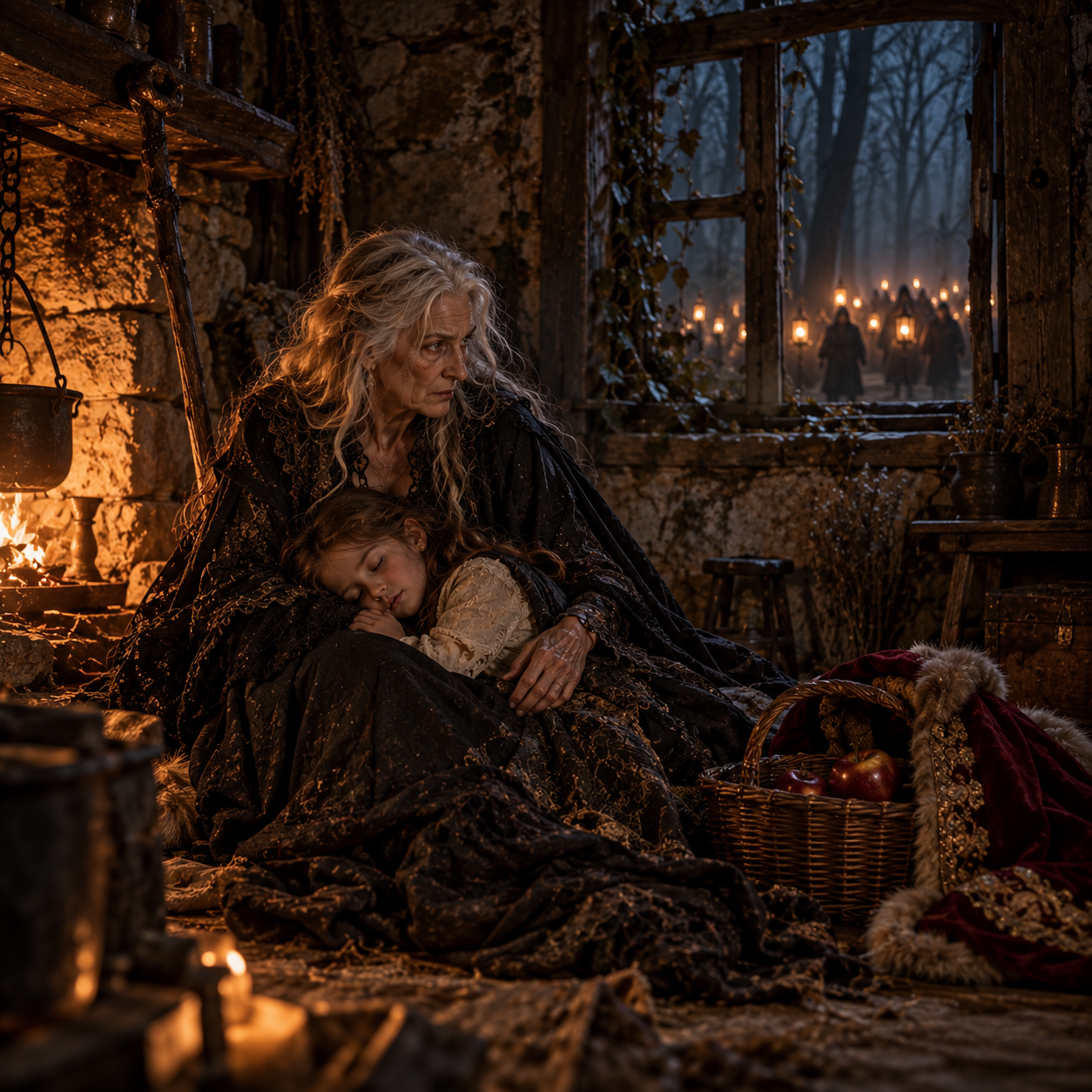
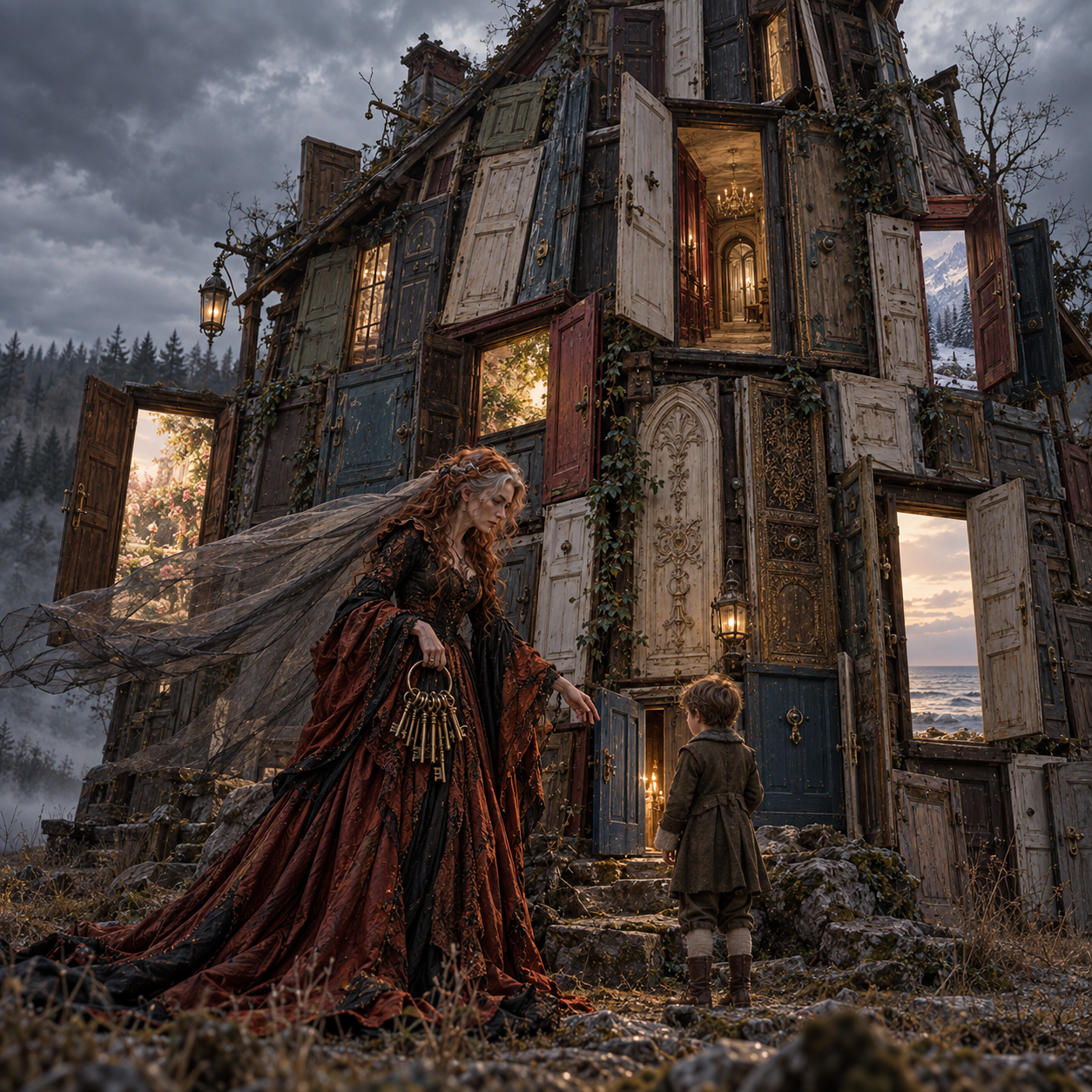
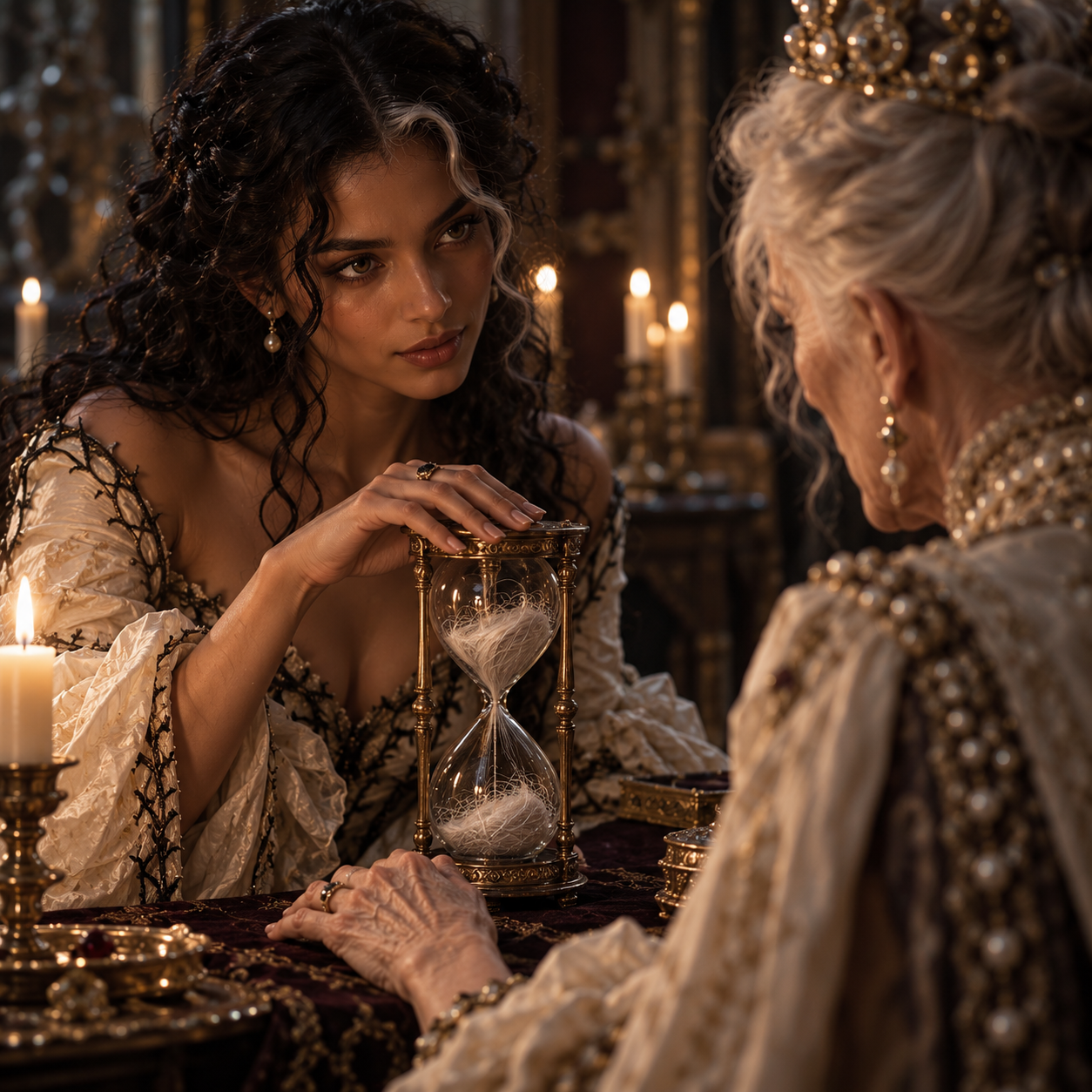
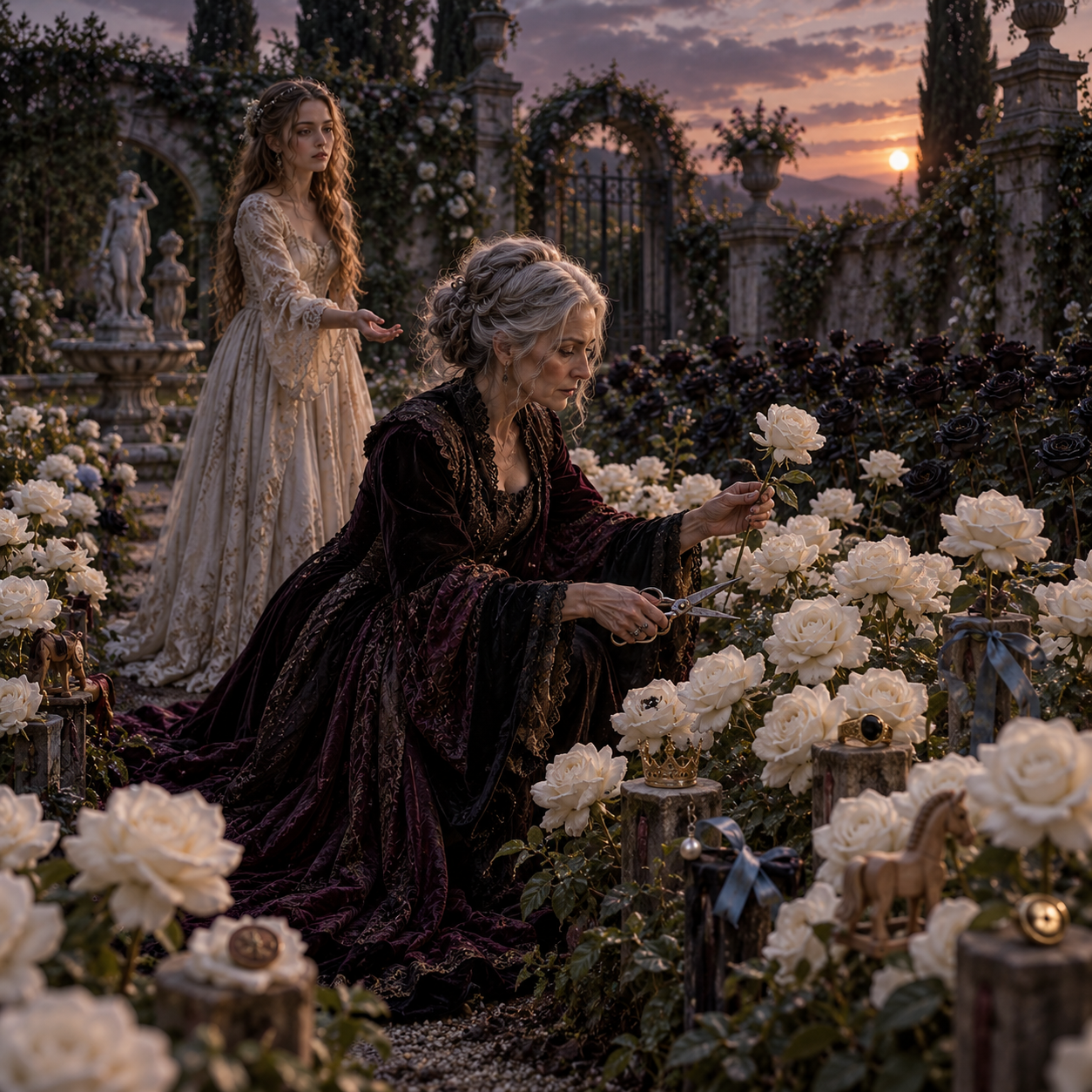
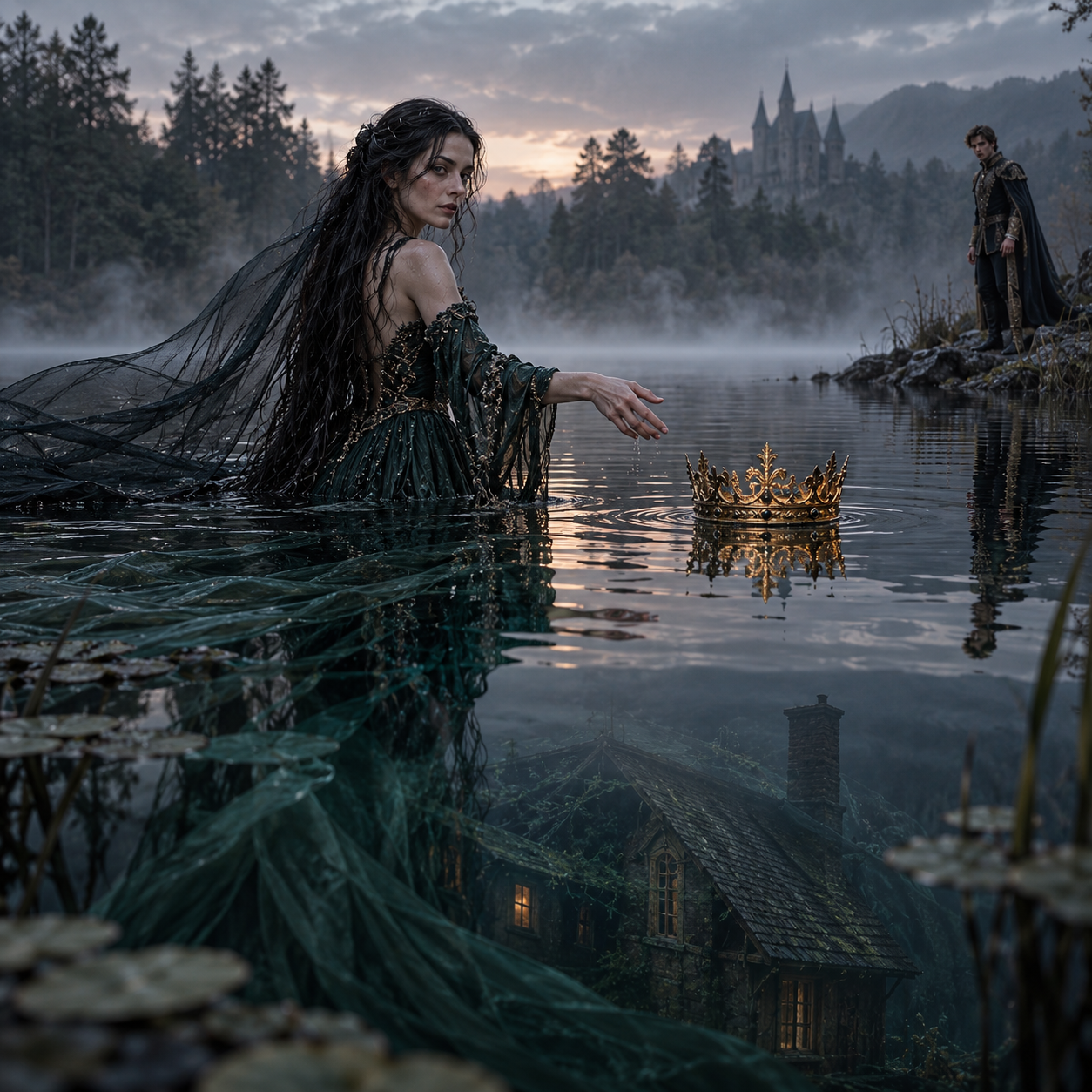
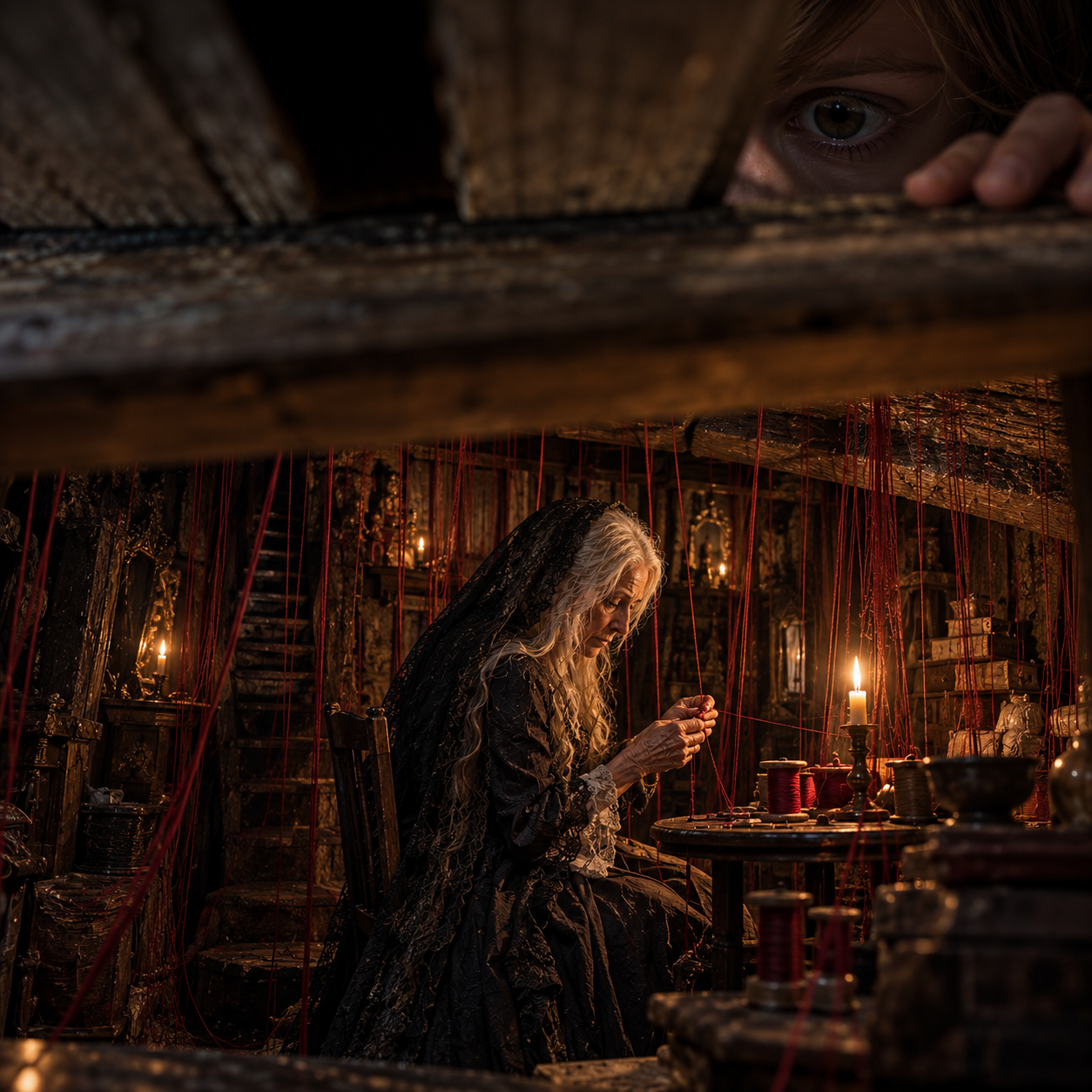
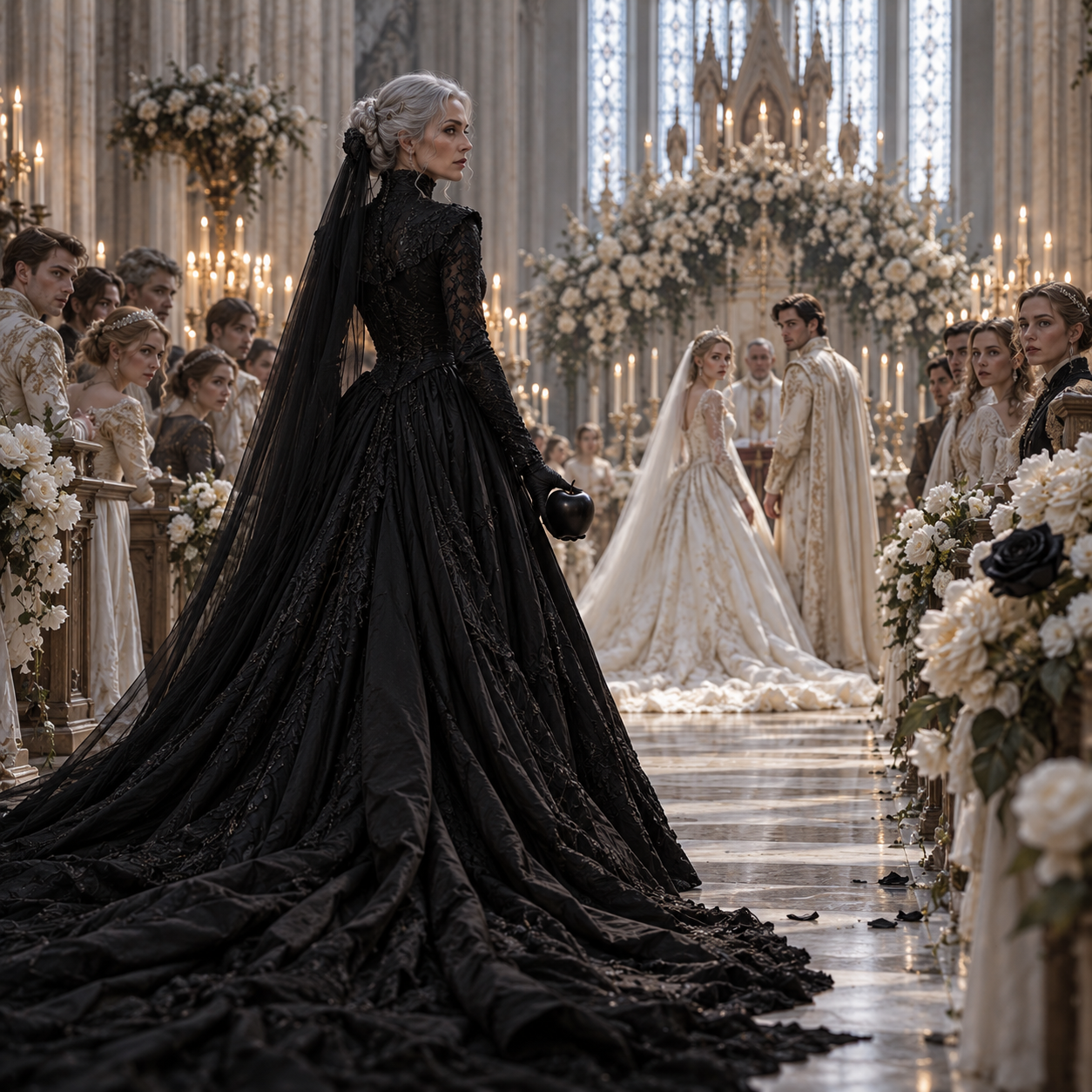
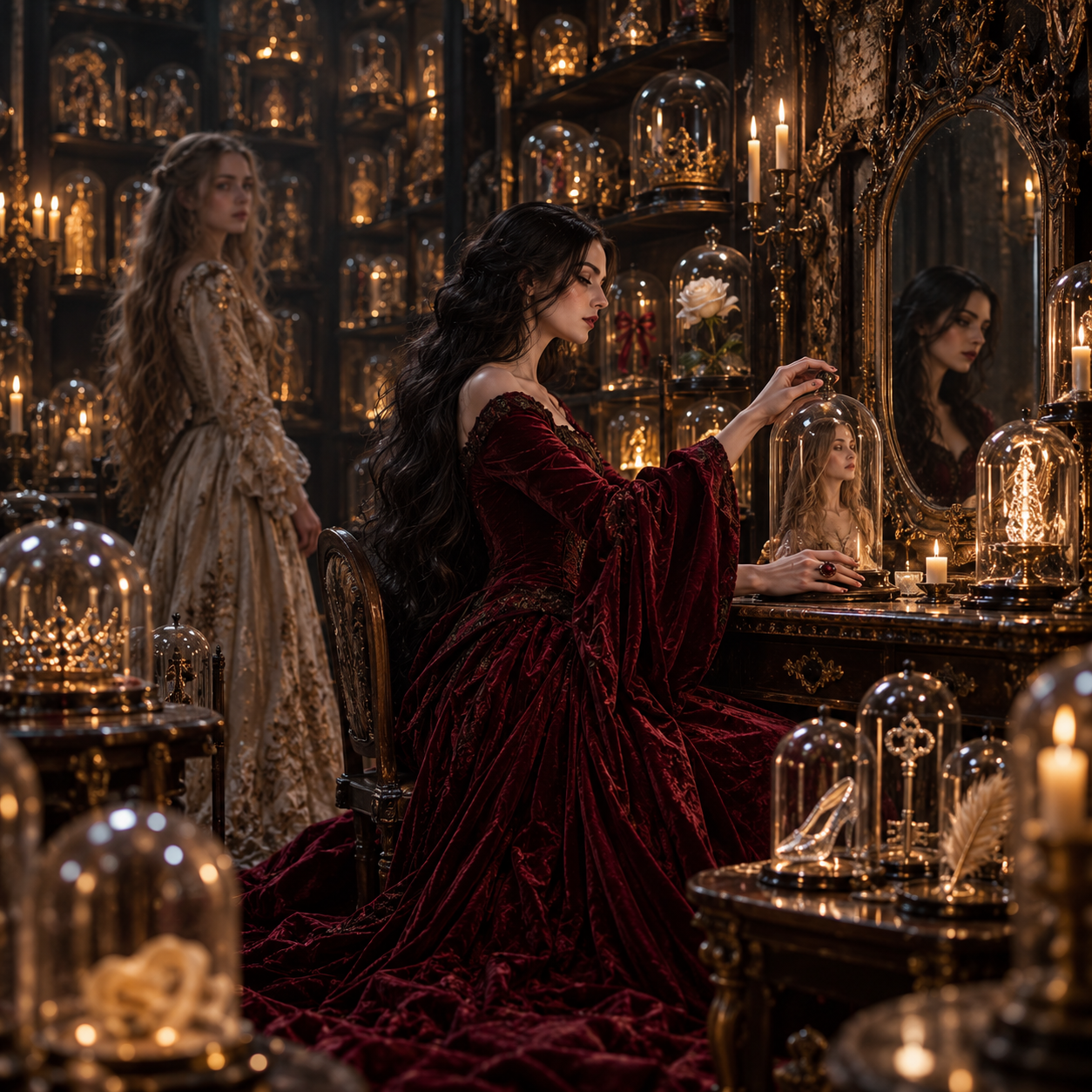
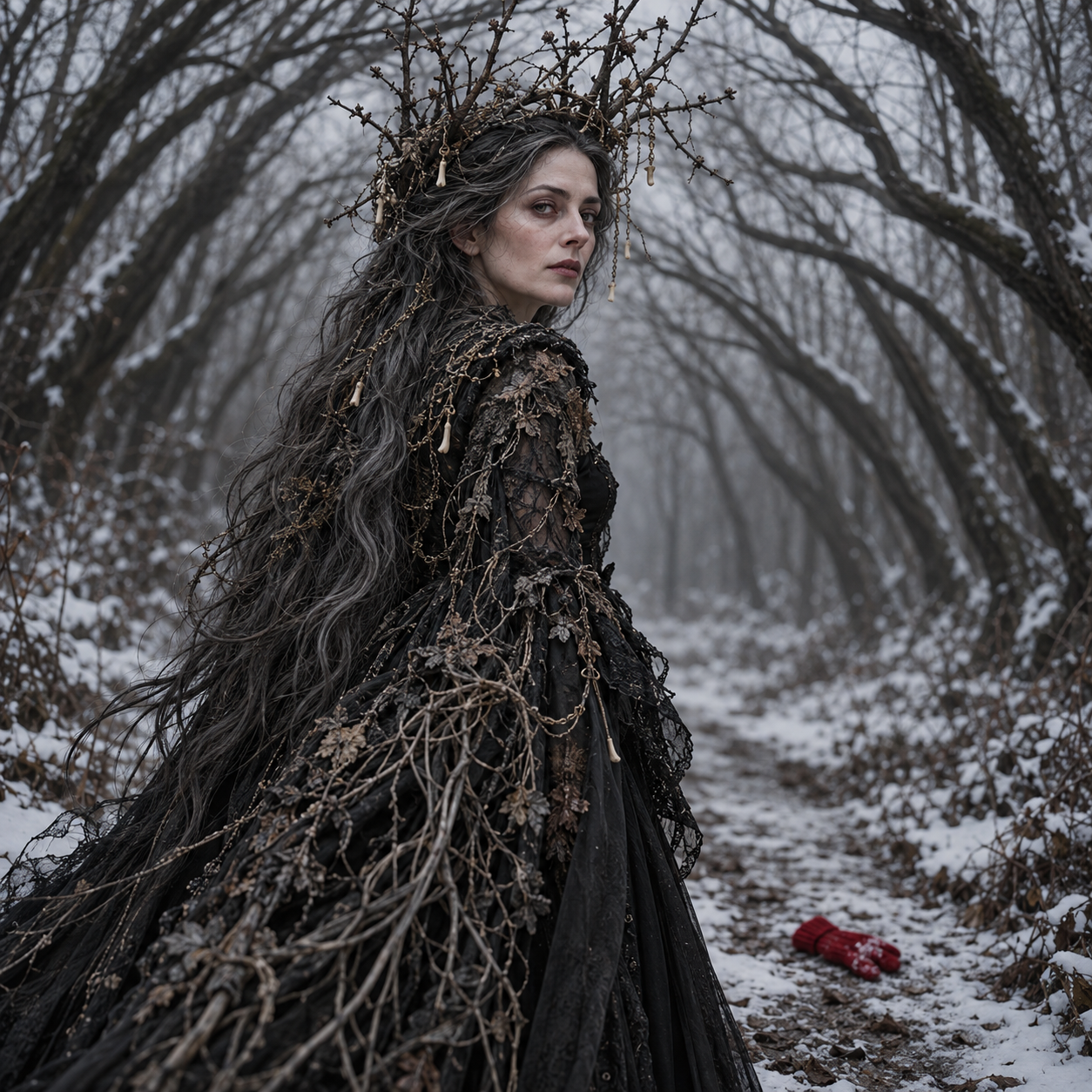
A fairytale picture prompt should feel like a single frame from a story that has already begun. Look beyond the obvious signs of witchcraft and search for the detail that raises a question: the child standing confidently outside the frightening cottage, the queen secretly visiting the forest, the beautiful stranger holding something she should not possess, or the supposedly wicked witch protecting someone from an unseen danger. Decide what happened immediately before the scene, what will happen when the characters leave it, and whether the image is showing you the truth — or simply the version of the story everyone has been taught to believe.

Go Deeper into Writing Fairytale Witch Stories
A memorable fairytale witch needs more than a cauldron, a cottage and a convenient curse. Think about where her magic comes from, why other characters fear her and whether the stories told about her are actually true.
◆ Decide what makes someone a witch. Is witchcraft inherited, learned, gifted, stolen or earned? Your answer can shape everything from family relationships to how witches are treated by the wider world.
◆ Give her magic rules. Perhaps every curse requires an exchange, transformations cannot last beyond sunrise, or a witch can only enchant something that belongs to her. Restrictions often create more interesting stories than unlimited power.
◆ Think about who calls her wicked. Fairytales are full of characters labelled good or evil. Ask who created your witch’s reputation and whether another character would tell the same story differently.
Some secrets take root in silence.
Others spread like poison.
Deep within a rural village, rumours linger long after the fires have burned out. Sermons warn of hidden evil. Names disappear from records. Warnings are passed between neighbours in hurried handwriting. Some people speak openly. Others refuse to speak at all.
The Hemlock Collection is an immersive archive inspired by folklore, witchcraft accusations, superstition, and the quiet fears that thrive within isolated communities. Inside you'll discover newspaper clippings, witness statements, sermons, photographs, warnings, personal writings, and other forgotten fragments that hint at a story buried beneath years of suspicion and silence.
Some documents point toward guilt.
Others suggest something far stranger.
Who should be believed?
Who is protecting the truth?
And what happened in Hemlock that people still refuse to discuss?
There are no answers waiting at the end.
Only fragments of a poisoned past.
What's Inside?
◆ 50+ printable documents and artefacts from the world of Hemlock
◆ Sermons, newspaper clippings, witness accounts, photographs, warnings, personal writings, and more
◆ A printable prompt card to inspire exploration and storytelling
◆ Instant digital download in PDF format
Who Is It For?
Perfect for:
◆ Writers and worldbuilders
◆ Lovers of folklore and folk horror
◆ Mystery enthusiasts
◆ Teachers and students
◆ Anyone drawn to uncanny stories, superstition, and hidden histories
What Makes This Different?
This isn't a guided story or a mystery with a solution.
It's an archive.
Every document reveals part of a larger story, but none reveal the whole truth.
The evidence is incomplete. The witnesses disagree. Some voices are missing entirely.
What happened in Hemlock depends on what you choose to trust.
Every reader uncovers a different story.
◆ Make the cottage tell a story. A witch’s home can reveal her personality before she ever appears. Forget the standard crooked cottage and experiment with abandoned palaces, underground houses, moving homes, beautiful shops or places deliberately designed to attract particular visitors.
◆ Give the curse a purpose. A curse might punish, protect, conceal, teach, imprison or prevent something worse from happening. Knowing why it was cast makes breaking it much more complicated.
◆ Use temptation as well as fear. The most dangerous witch may be the one offering something your protagonist desperately wants. Beauty, freedom, revenge, love, knowledge or power can make walking away much harder than escaping a monster.
◆ Explore what witchcraft costs. Magic might consume memories, years of life, physical objects, relationships or something less tangible. The cost does not need to be obvious when the spell is first cast.
◆ Let the witch want something ordinary. A character capable of extraordinary magic might still want companionship, recognition, a child, a home, forgiveness or simply to be left alone. Giving her a deeply human desire can make even the strangest witch feel real.
Every year, the fire burns.
Every year, someone is chosen.
For generations, the people of Ashwick have gathered to celebrate the Longlight Festival. Visitors see wildflowers, music, bonfires, and ancient traditions passed carefully from one generation to the next.
But every village has its secrets.
And some traditions survive for a reason.
The Kindling Collection is an immersive archive inspired by folk horror, ritual, superstition, and isolated communities bound by traditions nobody dares question. Inside you'll discover letters, diary entries, photographs, festival posters, warnings, drawings, church documents, and other forgotten fragments connected to Ashwick and the Longlight Festival.
Some documents describe a harmless celebration.
Others hint at something far darker.
Why do some villagers refuse to discuss the festival?
Why do certain names disappear from the records?
And why does every warning seem to arrive too late?
The truth has been buried beneath generations of stories.
What's Inside?
◆ 50+ printable documents and artefacts from the world of Ashwick
◆ Letters, diary entries, drawings, festival posters, photographs, orders of service, warnings, and more
◆ A printable prompt card to inspire exploration and storytelling
◆ Instant digital download in PDF format
Who Is It For?
Perfect for:
◆ Writers and worldbuilders
◆ Fans of folk horror and rural gothic fiction
◆ Mystery lovers and curious minds
◆ Teachers and students
◆ Anyone fascinated by folklore, ritual, and hidden histories
What Makes This Different?
This isn't a guided story or a mystery with a solution.
It's an archive.
The documents don't agree. Some details repeat. Others contradict one another entirely.
Every piece reveals part of a larger story, but none reveal the whole truth.
What happened in Ashwick depends on what you believe, what you dismiss, and what connections you choose to make.
Every reader uncovers a different story.
And every year, the fire still burns.
Turn Your Witch Story into Something Bigger
If these prompts have sparked something darker, you can take your story beyond the traditional fairytale and explore the places where witchcraft, folklore, superstition and folk horror begin to overlap. Think about what happens when rumours of witches spread through an isolated community, when old beliefs are treated as fact, or when traditions continue long after everyone has forgotten why they began. A supposed curse might become an explanation for every misfortune, an innocent ritual might conceal something much older, or fear of witchcraft might prove more dangerous than any magic itself.
This is also a chance to move away from kingdoms and enchanted forests and into stories that feel unsettlingly close to the real world. Explore accusations and suspicion, inherited folklore, village traditions, seasonal rituals, strange warnings and communities determined to protect their secrets. The Hemlock Collection and The Kindling Collection both offer immersive starting points for exploring this darker territory, helping you turn the atmosphere and ideas behind a fairytale witch into something stranger, more layered and rooted in folklore.
◆ The Hemlock Collection – an immersive collection of 50+ printable documents and artefacts inspired by witchcraft accusations, folklore, superstition and the secrets of an isolated rural community. Piece together witness statements, sermons, newspaper clippings, warnings and personal writings — then decide for yourself what really happened in Hemlock.
◆ The Kindling Collection – explore the darker side of folklore through an isolated village, an ancient festival and traditions nobody dares question. With 50+ letters, diary entries, photographs, festival documents, warnings and other artefacts, the collection offers a starting point for stories about ritual, community, secrecy and folk horror.
Final Thoughts
Fairytale witches endure because they can represent so many different things at once: danger beyond the familiar path, forbidden knowledge, temptation, independence, revenge or simply a kind of power that other characters do not understand. You can begin with the recognisable witch of traditional fairy tales, then change one element — her motivation, her magic, her reputation or the person telling the story — and discover something entirely new.
If you want to explore the darker territory surrounding witches, superstition and communities shaped by fear, The Hemlock Collection and The Kindling Collection take those ideas beyond the fairytale. From accusations of witchcraft and unsettling folklore to ritual, secrecy and isolated communities, both collections can provide inspiration for turning a single witch prompt into a much larger piece of atmospheric writing.
Your witch can also become part of a much bigger enchanted world. Explore the Fairytales & Folklore Hub for more fairytale characters, magical beings, settings and story inspiration, or head to Fairytale Story Sparks when you want to combine unexpected characters, conflicts and fairytale elements into a new idea.
And if you are ready to leave the witch’s cottage behind altogether, browse the Creative Writing Archive for more prompts across fantasy, folklore, gothic, horror, romance and beyond. The witch might be where your story begins — but she certainly does not have to be where it ends.
Choose Your Next Adventure