70 Fairy Godmother Writing Prompts: Magical Helpers, Wishes & Original Fairytale Stories
Fairy godmothers are among the most recognisable magical helpers in classic fairy tales, but there is far more you can do with them than recreate Cinderella’s transformation before the ball. Charles Perrault’s Cinderella gives us the familiar pumpkin carriage, magnificent gown and midnight deadline, while the Brothers Grimm’s Aschenputtel replaces the fairy godmother entirely with help connected to the heroine’s dead mother, a hazel tree and birds. Sleeping Beauty offers another variation, with fairies arriving at a royal christening to bestow magical gifts — and showing just how dramatically one supernatural intervention can shape an entire life.
That makes the fairy godmother a particularly interesting character to borrow from traditional fairy tales and reinvent. Perhaps your godmother protects a family rather than an individual, grants one peculiar gift to every child born in a kingdom, or discovers that the person she has been ordered to help is actually the villain of the story. She could be ancient and formidable, young and disastrously inexperienced, genuinely benevolent or convinced that she knows what will make someone happy without ever bothering to ask them. A fairy godmother can begin a story rather than solve it, creating new complications, bargains, transformations and choices for your characters to face.
These 70 fairy godmother writing prompts are designed to inspire original fairytale stories, rather than simply retelling Cinderella. Across plot ideas, titles, opening and closing lines, characters, settings and picture prompts, you can experiment with magical helpers, unexpected wishes and your own versions of familiar fairytale traditions. For more inspiration, explore the Fairytales & Folklore Hub, discover new ideas through Fairytale Story Sparks, or browse the Creative Writing Archive for more prompts, characters and settings.
1. Plot Prompts
In classic fairy tales, magical helpers tend to appear when ordinary solutions have failed — but that does not mean they always make life easier. These fairy godmother plot prompts take inspiration from traditional and original fairy tales, using wishes, transformations, bargains and unexpected interventions as starting points for entirely new stories.
A fairy godmother has secretly protected the same royal family for three hundred years. When the newest princess is born, she refuses to offer the child a single gift.
Every fairy godmother is assigned one person to help during her lifetime. An ambitious young fairy discovers that hers is the kingdom’s most notorious thief.
A woman received everything she once wished for — a palace, wealth and a royal marriage — only for her fairy godmother to return twenty years later and announce that the magic was never permanent.
In a kingdom where every princess traditionally receives a fairy godmother, one baby is inexplicably assigned three. Each has seen a different version of the child’s future, and each is determined to make hers come true.
A fairy godmother arrives to help a kitchen maid attend the royal ball, only to discover that the maid has absolutely no interest in the prince. She wants access to something hidden inside the palace.
A newly qualified fairy godmother accidentally grants a child’s angry wish that her entire family would disappear. She has until midnight to work out how to bring them back.
For generations, people have told stories about a mysterious old woman who appears to those in desperate need. One winter, a girl follows her after the magic is finished and discovers where all the fairy godmothers go.
A fairy godmother grants wishes only to people she believes deserve them. Then she meets someone whose wish could save thousands of lives — but granting it would break the oldest law of fairy magic.
A princess raised on traditional fairy tales has spent her entire childhood waiting for a fairy godmother to rescue her. On the night before her arranged marriage, one finally appears and tells her, “I’m not here to save you. I’m here to teach you how to save yourself.”
A fairy godmother has spent centuries creating happy endings for other people. When she is finally offered one wish of her own, she asks to become mortal — without realising that every person she has ever helped will remember exactly who she is.
2. Story Title Ideas
A strong fairytale title can suggest magic, mystery or danger before the story has even begun. These fairy godmother story titles range from the whimsical to the darker and stranger, making them suitable for modern fairy tales, twisted tales and original stories inspired by classic fairytale traditions.
The Godmother’s Last Wish
Three Wishes Before Midnight
The Girl the Fairies Forgot
A Godmother for the Wicked
The Woman with the Silver Wand
When the Pumpkin Stayed a Pumpkin
The Thirteenth Godmother
A Little Magic for the Queen
The Godmother Who Came Too Late
What the Fairy Asked in Return
3. Opening Lines
Fairy tales often begin with certainty — a kingdom, a child, a wish — before introducing the impossible. Use these opening lines as the first sentence of a short fairy tale, the beginning of a longer fantasy story, or simply as inspiration for discovering what happens next.
My fairy godmother arrived seventeen years late and seemed rather annoyed that I had managed without her.
Everyone in the kingdom knew that a fairy’s gift could never be returned.
The old woman appeared beside my cradle three days after my mother buried the king.
“You have until midnight,” she said, “but I imagine you’ve heard that part before.”
The first thing my fairy godmother ever gave me was a sword.
There were twelve fairies at my sister’s christening and thirteen at mine.
I had always assumed fairy godmothers wore beautiful gowns, which made the muddy woman climbing through my bedroom window something of a disappointment.
Nobody had seen a fairy in a hundred years when one walked into the palace kitchen and asked for me.
The princess wished for beauty, the prince wished for courage, and I wished that neither of them would get what they wanted.
On the morning of my wedding, I found a silver wand lying across my pillow.
4. Closing Lines
A final line can transform the meaning of an entire fairytale. Some endings promise happily ever after; others reveal the hidden cost of the magic that made that happiness possible. Choose one of these closing lines first and work backwards to discover the story that leads to it.
And that was how I learned that midnight had never been a deadline, but a warning.
She left the wand on the table and walked into the mortal world without looking back.
For the first time in three hundred years, the kingdom would have to make its own happy ending.
The pumpkin remained a pumpkin, and somehow that made everything better.
Only when my daughter was born did I finally understand why the fairy had chosen me.
The palace doors closed behind her, but somewhere in the forest, another child had just made a wish.
“Keep it,” said my godmother. “You’ll need the magic more than I will.”
We never discovered whether she had been a fairy at all.
By sunrise, every spell had vanished except the one I had never asked her to cast.
And if you ever meet an old woman carrying a silver wand, be very careful what you tell her you want.
5. Character Ideas
A fairy godmother does not have to be an elderly woman with a wand. Fairy tales reimagined for new stories can turn the familiar magical helper into almost anyone: a child learning her craft, an ancient political figure, a reluctant protector or even someone who has forgotten that she possesses magic at all.
The Apprentice Godmother — a thirteen-year-old fairy given her first human charge decades earlier than expected, who hides every magical mistake from her formidable grandmother.
The Royal Godmother — an elegant ancient fairy who has advised generations of queens and knows enough family secrets to destroy the monarchy.
The Unwilling Godmother — a fairy who considers humans exhausting and has spent twenty years trying to avoid the princess she was assigned to protect.
The Forgotten Godmother — an elderly village woman who believes she is entirely ordinary until a frightened princess arrives carrying a letter written in her own handwriting a century earlier.
The Godmother of Villains — a perfectly courteous fairy who specialises in helping children everyone else has already decided are wicked.
The Midnight Godmother — a mysterious woman who can perform magic only between sunset and sunrise and disappears wherever she happens to be when dawn arrives.
The Mortal Godmother — a former fairy who surrendered her magic for love and must now protect her goddaughter using nothing but experience, cunning and an impressive collection of secrets.
The Child Godmother — an eight-year-old fairy with immense magical power, excellent manners and absolutely no understanding of why adults make their lives so complicated.
The Godmother of Lost Things — a travelling fairy who can recover anything that has been lost except people, until a young queen asks her to find a missing prince.
The Last Fairy Godmother — the final surviving member of an ancient order who has spent fifty years searching for someone worthy of inheriting her wand.
6. Setting Ideas
The right setting can make a familiar fairytale idea feel entirely new. Move your fairy godmother beyond the ballroom and place her somewhere with its own secrets, rules and history — from enchanted forests and forgotten kingdoms to shops where wishes are quietly traded.
The Godmother’s Cottage — a tiny woodland cottage that appears ordinary outside but contains hundreds of rooms belonging to every person the fairy has ever helped.
The Palace of Unfinished Wishes — an abandoned royal palace where wishes that were granted incorrectly continue to reshape the rooms.
The Midnight Market — a secret market that opens once a month where fairies trade spells, memories, curses and unused wishes.
The Godmother Academy — an ancient school hidden inside a mountain where young fairies learn transformations, etiquette, magical law and the complicated art of creating happy endings.
The Kingdom Without Fairies — a prosperous realm that banished all magical beings a century ago, although every royal child is still mysteriously visited on their eighteenth birthday.
The Silver Forest — a forest from an old fairy tale where every tree marks the place a wish was once granted, and cutting one down reverses the magic.
The Dressmaker’s Shop — a fashionable shop in the capital where wealthy women order magnificent gowns, unaware that the elderly seamstress upstairs is a retired fairy godmother.
The Village at the End of the Road — a remote settlement where people who have escaped unhappy fairy tales begin new lives under the protection of a mysterious woman in the largest house.
The Island of Godmothers — an isolated island where retired fairy godmothers live among gardens filled with pumpkins, glass shoes, enchanted roses and other remnants of stories they refuse to discuss.
The Wishing Tower — a tower containing thousands of handwritten wishes collected across centuries, including one sealed letter that every fairy has been forbidden to open.
7. Picture Prompts
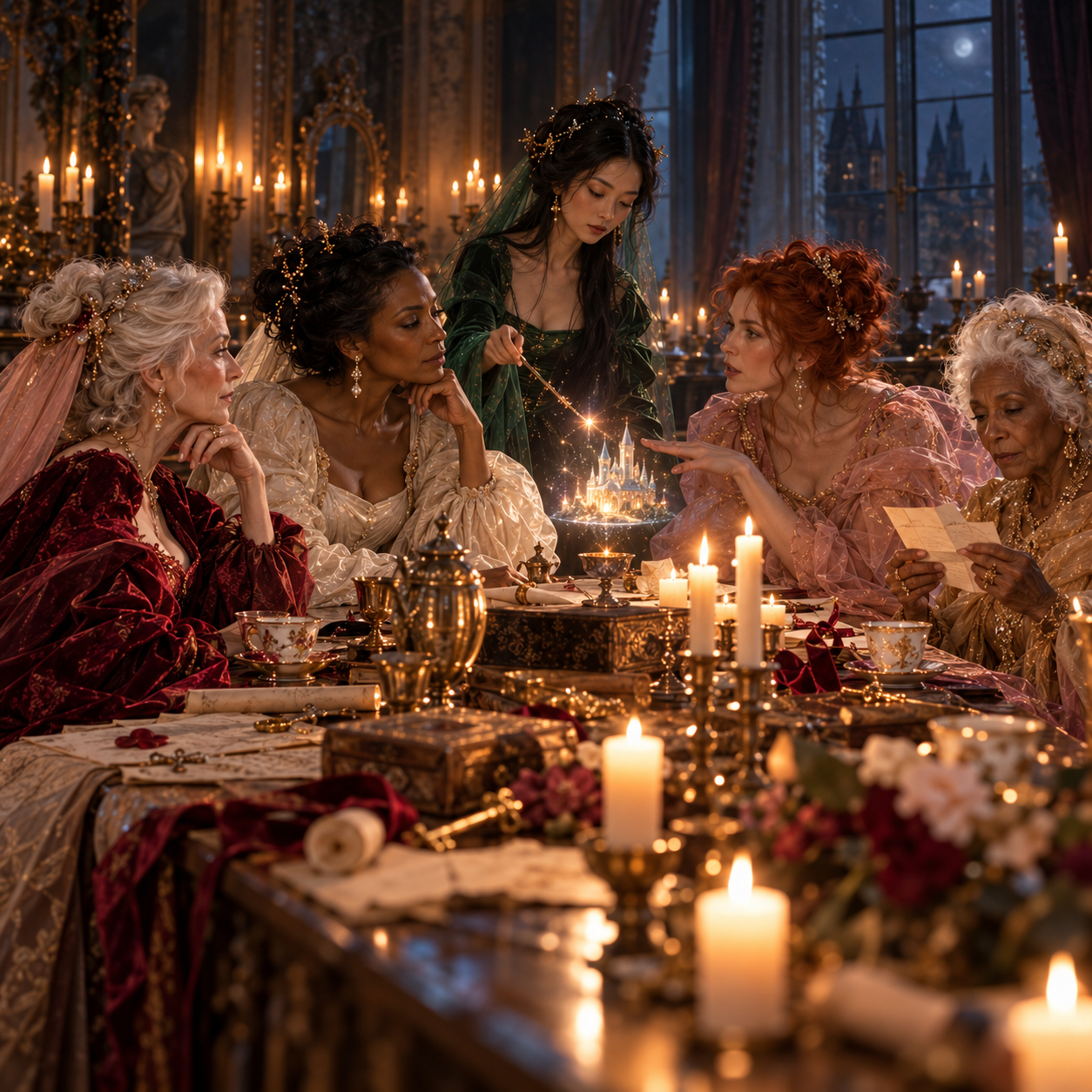
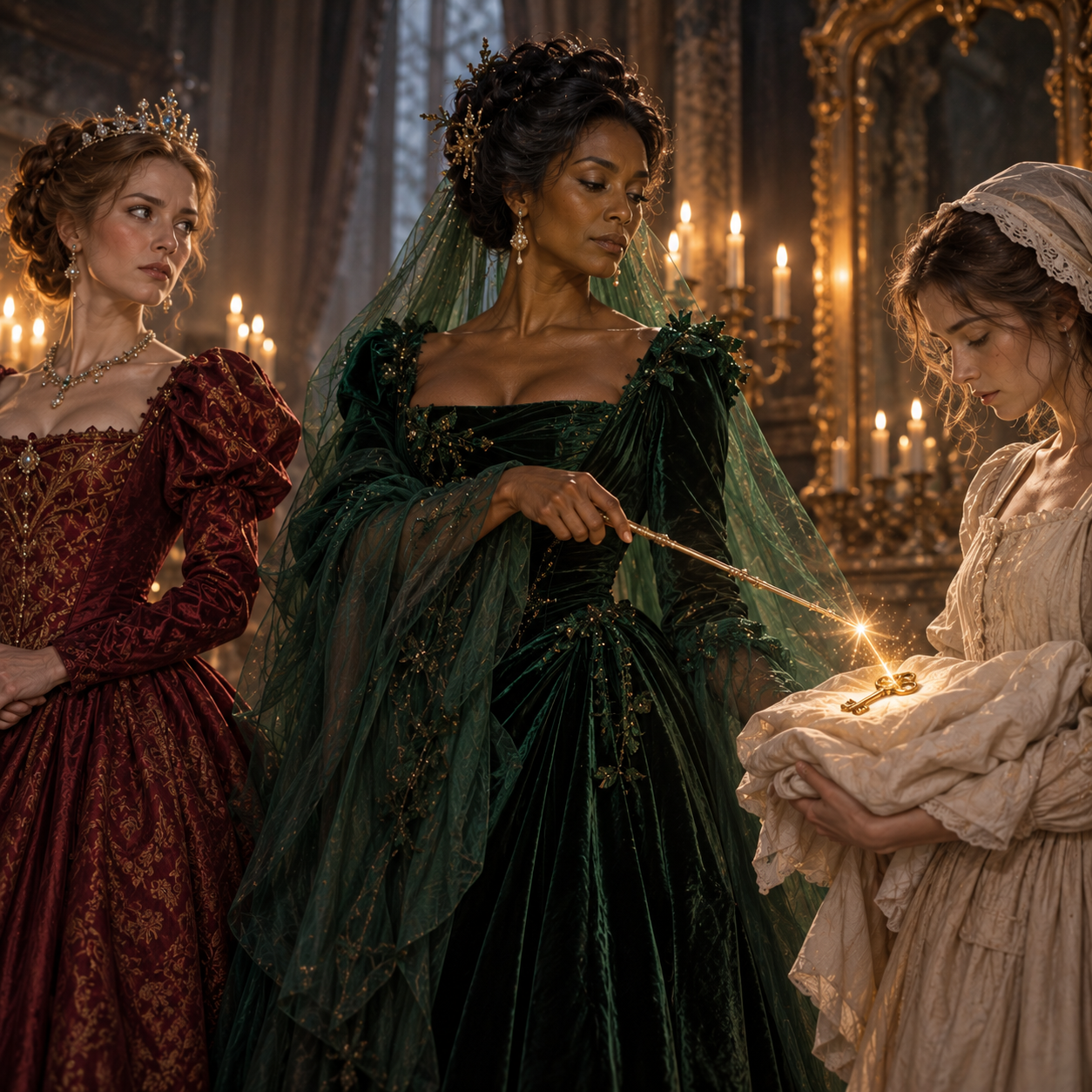
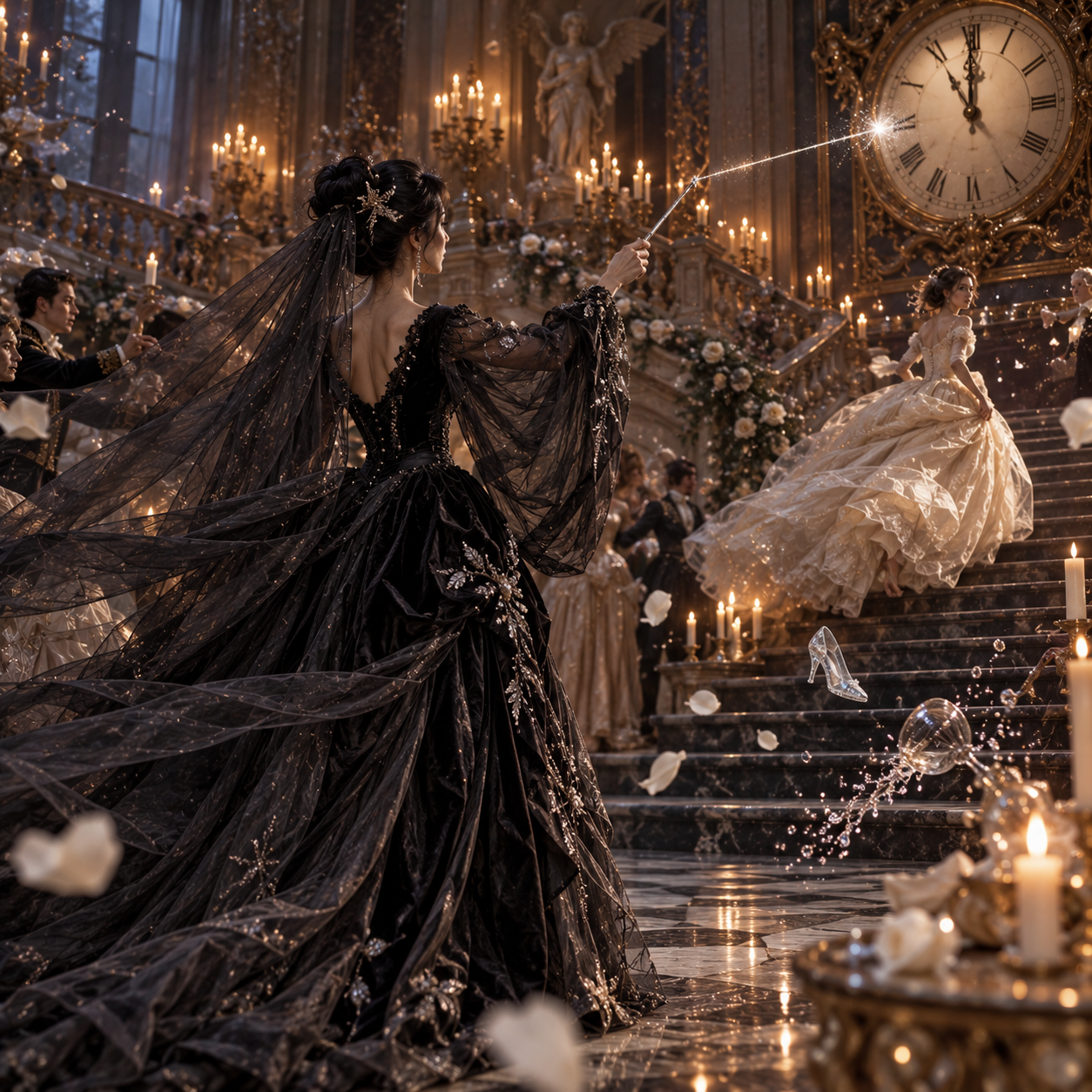
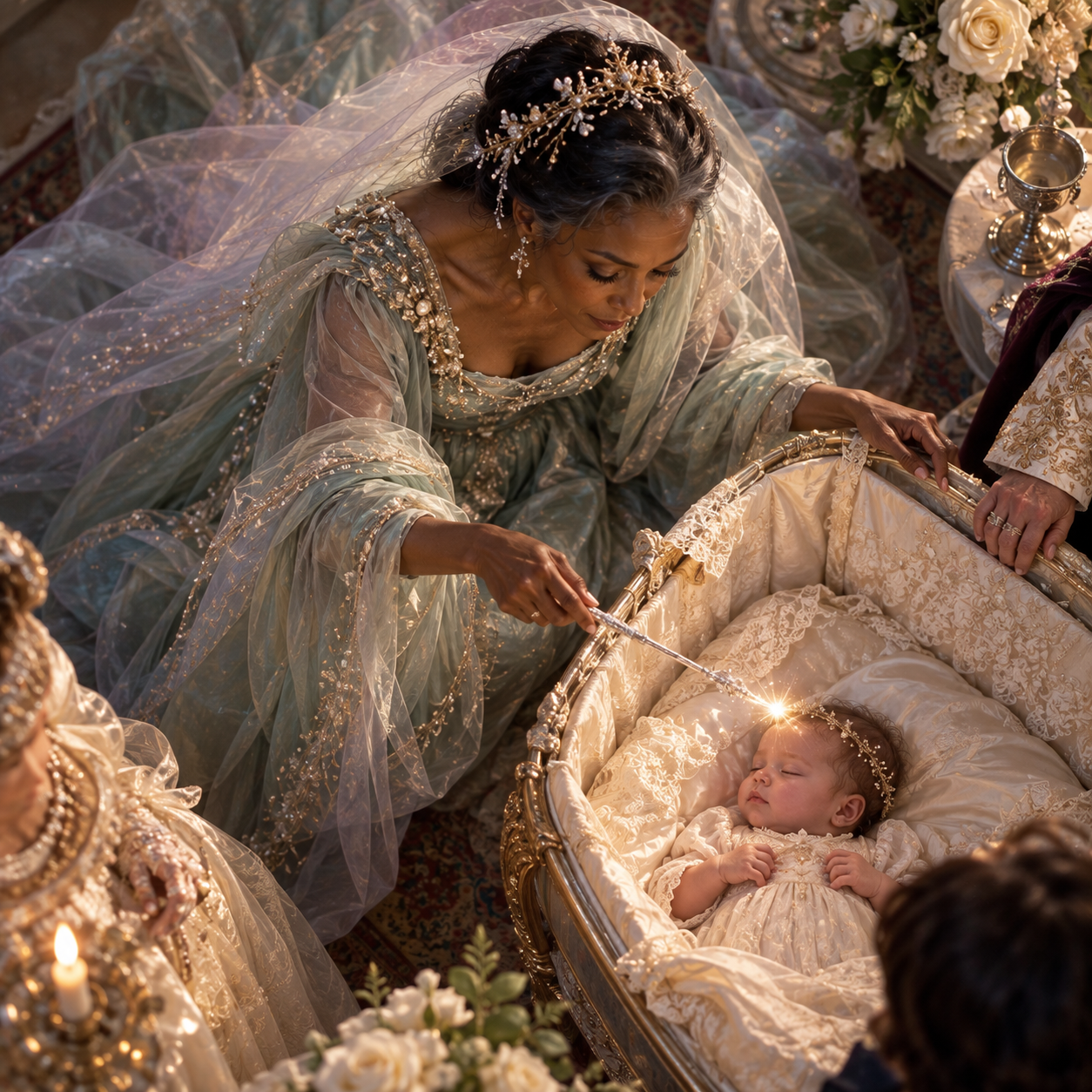
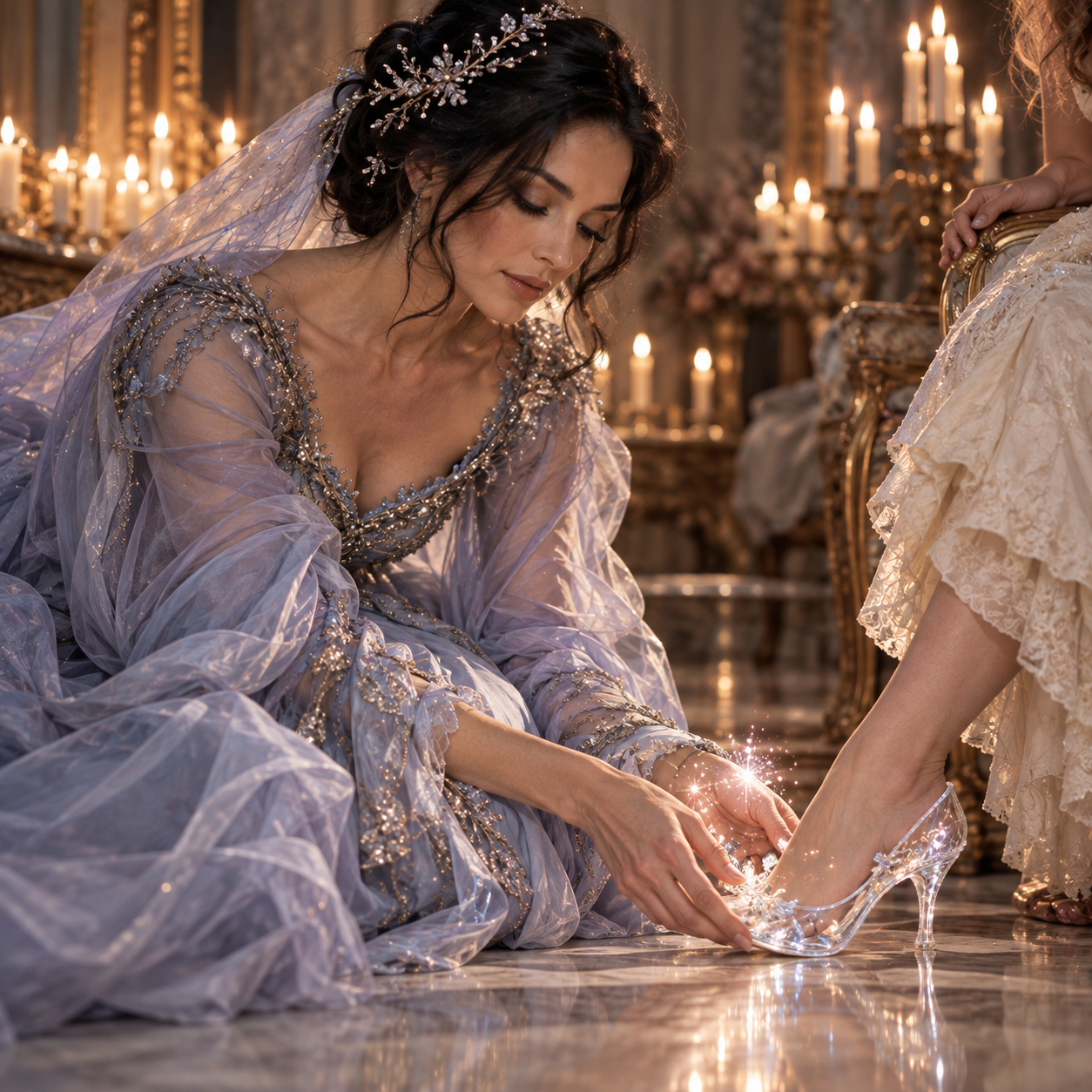
Picture prompts work best when the scene feels like one moment from a much larger fairytale. Rather than simply describing what you can see, ask what happened immediately before the image, what is about to happen next, and which small detail changes the story completely. Use these scenes to spark original fairy tales of your own.





Go Deeper into Writing Fairy Godmother Stories
Fairy godmothers become much more interesting when their magic creates possibilities rather than simply solving problems. Use these ideas to take your fairy godmother story beyond the familiar wand, wish and happily ever after.
◆ Give the magic a limit. Decide what your fairy godmother cannot do. Perhaps she can transform objects but not people, grant opportunities but not love, or perform magic only until midnight.
◆ Ask why she chose this person. Instead of treating the fairy godmother’s arrival as coincidence, give her a reason for appearing. She might owe an old debt, be protecting a bloodline or know something about the protagonist’s future.
◆ Make the gift create a problem. A beautiful gown, enchanted carriage or magical talent becomes more interesting when accepting it changes something else.
◆ Play with the idea of deserving. Does everyone deserve a fairy godmother? Explore what happens when a magical helper is assigned to someone selfish, difficult, morally complicated or supposedly wicked.
◆ Give your godmother a life beyond the protagonist. Think about where she goes after the spell is cast, who taught her magic, whether she has other charges and what she wants for herself.
◆ Use fairytale rules deliberately. Midnight deadlines, promises, transformations, forbidden rooms and magical bargains can make a story feel rooted in traditional fairy tales without requiring you to retell one.
◆ Let the protagonist make the important choice. The fairy godmother can provide the opportunity, but your main character should still decide whether to attend the ball, accept the bargain, enter the forest or walk away.
◆ Subvert the expected happy ending. The prince, palace or transformation does not have to be the reward. Your character may discover that what they originally wished for is not what they actually need.
Final Thoughts
Fairy godmothers may be best known for granting wishes and creating transformations, but they can also be protectors, troublemakers, reluctant mentors, keepers of secrets or the characters who accidentally set an entire story in motion. Take one of these prompts as your starting point, change the rules of the magic and see where your own fairytale leads.
For more enchanted inspiration, explore the Fairytales & Folklore Hub for more characters, settings, magic and traditional storytelling ideas, or head to Fairytale Story Sparks when you want a quick idea to begin your next story.
You can also browse the Creative Writing Archive for hundreds of writing prompts across fantasy, folklore, gothic, romance, horror and more.
Choose Your Next Adventure