Fairytale Hero & Heroine Generator: Create Characters, Quests & Story Ideas
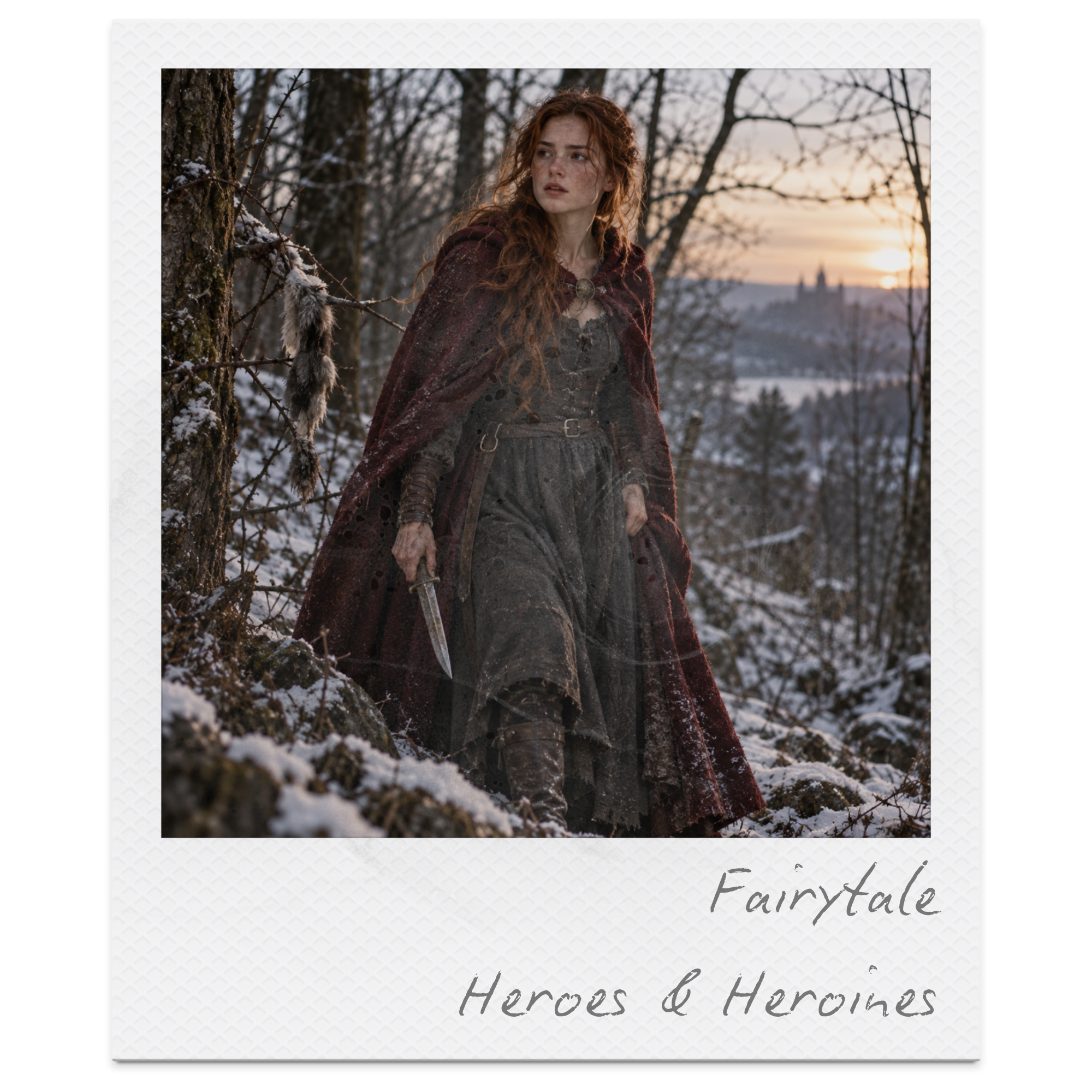
Fairytale heroes and heroines are rarely powerful at the beginning of their stories. They might be overlooked, impoverished, underestimated, youngest-born, trapped by circumstance or sent into the world with very little except their courage and curiosity. Cinderella endures cruelty before her circumstances change; Jack climbs the beanstalk into a world far beyond his own; and Beauty enters the Beast’s castle to save her father. What makes these characters memorable is not perfection, but the tests, choices, dangers and transformations that reveal who they are.
Use the Fairytale Hero & Heroine Generator to create a protagonist for your own enchanted tale. Generate a hero, heroine or surprise character and discover their role, homeland, greatest strength, fatal flaw, special skill, secret, desire, fear and important relationship. You’ll also receive the event that begins their adventure, an impossible choice and a story idea you can develop into an original fairytale.
Once you have your protagonist, explore the Fairytales & Folklore Hub for more inspiration, or let chance decide where their story leads with Fairytale Story Sparks. You can also browse the Creative Writing Archive or Creative Writing Generator Hub for character ideas, enchanted settings, kingdoms, castles, curses, magical objects and hundreds more story prompts.
Fairytale Hero & Heroine Generator
Create a fairytale protagonist complete with a role, homeland, secret, desire, flaw, magical gift and the beginnings of an enchanted adventure.
How to Use the Fairytale Hero & Heroine Generator
Choose Generate a Hero, Generate a Heroine or Surprise Me to create a new fairytale protagonist. Each character comes with a fairytale role, homeland, greatest strength, fatal flaw, special gift, magical object, desire, hidden need, fear, secret, companion and an event that sends them out into the story.
You do not have to use everything the generator gives you. Keep the details that spark an idea, change anything that does not fit, or generate again until an unexpected combination makes you want to know what happens next. A forgotten princess with a talking fox creates a very different tale from a poor tailor carrying a silver key — even if both are eventually sent into the same enchanted forest.
The Impossible Choice is particularly useful for developing the ending. Fairytales often test their protagonists through decisions as much as physical dangers. What a character chooses when they cannot have everything can reveal what they have learned during the story.
How Writers Can Use the Fairytale Hero & Heroine Generator
The generator can provide the starting point for a complete fairytale, but it can also be used when you already have a setting, plot or character and need one missing piece.
Start a Brand-New Fairytale
Generate a complete character and treat the result as your story brief. Where does the protagonist begin? What forces them to leave home? Which generated detail becomes important later?
Try opening the story on the morning before The Adventure Begins. This gives you a chance to establish the protagonist's ordinary life before something strange disrupts it.
Turn the Fatal Flaw into a Fairytale Test
Use the protagonist's flaw to design the obstacles they encounter.
A character who cannot resist opening locked doors should eventually find a door they have been explicitly forbidden to open. Someone who trusts beautiful things too easily might meet a magnificent stranger concealing dangerous intentions. A hero who believes every problem can be solved alone may be given a task that is impossible without accepting help.
The trial then becomes part of the character arc rather than a random obstacle.
Build a Story Around the Magical Object
Take the generated magical object and make it central to the plot. Ask where it came from, who created it, what it can do and why the protagonist has it.
Most importantly, give it a rule.
Perhaps the silver key opens any door, but only once. The mirror reveals the truth, but never the whole truth. The shoes can carry their wearer anywhere, but cannot take them home.
Restrictions make magical objects much more interesting than unlimited powers.
Generate Two Characters
Create a hero and then a heroine and place them in the same tale.
They could be allies, rivals, siblings, strangers travelling towards the same destination or two people who have been given opposing versions of the same quest. You could even give both characters the same magical object and ask why each believes it belongs to them.
Rewrite the Character You Generate
Treat the result as raw material rather than an instruction.
Change the age. Reverse the social position. Remove the magic. Make the companion secretly dangerous. Turn the apparent villain into the helper. Give the protagonist the opposite personality from the one you would normally write.
Sometimes the most interesting idea begins with deciding what you do not want to keep.
Use the Impossible Choice as Your Climax
Instead of beginning with a plot, begin with the final decision.
If your protagonist must eventually choose between breaking a fairy bargain and protecting their family, work backwards. What bargain was made? Why can it not simply be ignored? What will happen if it is broken? Why does protecting the family require breaking it?
You now have the foundations of the entire story.
How Teachers Can Use the Generator
The Fairytale Hero & Heroine Generator can be used as a quick creative-writing stimulus or developed into a longer sequence exploring characterisation, narrative structure, genre conventions and decision-making.
Because every student can generate a different protagonist, the same task can produce completely different stories without requiring dozens of separate writing prompts.
Five-Minute Fairytale Starter
Generate a character on the board and give students five minutes to write the opening.
They might describe the protagonist's ordinary life, introduce the magical object or begin at the moment the adventure starts.
Compare the different directions students take from exactly the same character.
Character Motivation Activity
Ask students to focus on What They Want and What They Need.
What is the difference?
The want gives the protagonist an external goal, while the need can suggest an internal change. Students can then identify moments in their story that challenge both.
This can also lead into discussion of character development in fairytales and other narrative fiction.
Fairytale Convention Hunt
Generate a character and ask students to identify the recognisable fairytale conventions within the result.
They might find:
royal characters
enchanted forests
magical objects
talking animals
curses
mysterious strangers
impossible tasks
bargains
transformations
repeated rules or warnings
Students can then decide which conventions they want to use, subvert or remove.
Build Three Fairytale Trials
Using the generated strength, fatal flaw and special gift, students design three trials for the protagonist.
The first might reward the character's strength.
The second might expose their flaw.
The third should require them to demonstrate that they have changed.
This creates a simple structure for a complete fairytale.
Compare Two Protagonists
Generate two characters and ask students which would respond differently to the same situation.
What would each do if an old woman asked them to share their last piece of bread? What if they were warned never to open a particular door? What if a talking fox offered to guide them through the forest?
Students must use the generated character traits as evidence for their predictions.
Fairytale Transformation Challenge
Ask students to change one major element of the generated protagonist while keeping everything else.
Turn the prince into a servant. Make the magical gift a curse. Change the helpful animal into the antagonist. Move the protagonist from the palace to a poor cottage.
Students can then discuss how one alteration changes the direction of the whole story.
Plan Before Writing
Instead of immediately writing a story, students can use the generated character to plan:
Beginning: What is their ordinary life?
Problem: What interrupts it?
Journey: Where must they go?
Trials: What three obstacles test them?
Climax: What impossible choice must they make?
Ending: How have they changed?
This works particularly well for students who find a blank page intimidating but still gives them considerable freedom over the finished story.
What Makes a Good Fairytale Hero or Heroine?
Traditional fairytale protagonists are often deceptively simple. We may first meet them as the youngest son, the miller's daughter, the poor servant, the wandering prince or the forgotten princess. Their circumstances are established quickly because the story is interested in what happens when they are tested.
They are not necessarily the strongest or most powerful person in their world. In many tales, apparently insignificant qualities become more valuable than status or physical strength. Kindness to an old stranger might later earn magical assistance. Sharing food with an animal might create an unexpected ally. Cleverness might accomplish what weapons cannot.
Weaknesses matter too. Curiosity opens forbidden doors. Pride causes characters to reject help. Greed makes bargains irresistible. Careless promises return later with consequences.
This combination of virtue, flaw and consequence gives you a useful foundation for creating your own protagonist.
Give Your Fairytale Hero or Heroine Something to Want
A character needs a reason to move through the story.
The goal might be enormous — break a curse, rescue a kingdom or recover a stolen crown — but it can also begin with something deeply personal. They might want to find a missing sister, escape an unwanted future, return home or discover who their parents really were.
Once you know what they want, ask what stands between them and it.
Then make the road difficult.
A fairytale journey can take your protagonist through forests, castles, mountains, strange kingdoms and impossible places, but each destination should move them closer to — or further from — what they seek.
Give Them Rules, Warnings and Consequences
Fairytales thrive on rules.
Do not leave the path.
Return before midnight.
Never open the seventh door.
Do not tell anyone my name.
You may take anything from the garden except the roses.
A good rule immediately creates anticipation because readers begin wondering whether it will be broken.
Connect the rule to your protagonist. A dangerously curious heroine should be given a forbidden door. A hero obsessed with keeping promises should be forced to make one he later regrets. A character who judges by appearances should meet someone frightening who offers genuine help.
The fairytale world is no longer simply testing whether the protagonist can complete a task. It is testing who they are.
Let the Companion Matter
Talking animals, mysterious old women, enchanted creatures and unexpected travelling companions are more interesting when they affect the story.
A companion might provide knowledge the protagonist lacks, demand something in exchange for help, test their kindness or reveal that they have been disguising their true identity.
They can also create uncertainty.
Is the fox genuinely helping?
Why does the horse know the road?
Who was the mouse before the transformation?
Why does the old woman already know the protagonist's name?
A good companion can become a miniature mystery running alongside the main quest.
Build Towards the Impossible Choice
The most interesting ending may not be defeating the witch, reaching the castle or completing the third task.
It may be the decision that comes afterwards.
If your protagonist began the tale wanting wealth, what happens when keeping the treasure means abandoning someone who helped them? If they desperately wanted to become royalty, what happens when they discover the crown belongs to somebody else? If they have spent the entire story trying to break a curse, what happens when doing so transfers it to someone innocent?
Bring the want, need, flaw and impossible choice together and the ending becomes part of the character's journey.
The question is no longer simply:
Will they succeed?
It becomes:
Who will they choose to be?
Go Deeper into Writing Fairytale Heroes and Heroines
Once you have the foundations of your character, use these extra ideas to make their journey feel more connected, meaningful and unmistakably fairytale.
◆ Give the smallest detail a purpose. If your protagonist carries a silver key, knows how to speak to birds or fears running water, bring that detail back later when it matters.
◆ Make kindness consequential. A meal shared, an animal rescued or a stranger helped can become the reason your hero or heroine receives assistance when they need it most.
◆ Create a rule they will struggle to obey. Match the warning to the character's flaw: curiosity needs a forbidden door; pride needs an offer of help; impatience needs a task that cannot be rushed.
◆ Use three escalating trials. Let the first test a skill, the second expose a weakness and the third force the protagonist to demonstrate how they have changed.
◆ Hide identities. The beggar might be a fairy, the beast an enchanted prince, the servant a lost heir or the helpful stranger the person your protagonist has been searching for.
◆ Let magic have conditions. Wishes, bargains, gifts and enchanted objects become more interesting when they come with rules, limits or unexpected consequences.
◆ Bring the ending back to the beginning. Return to an object, promise, place or choice introduced early in the tale so the ending feels inevitable rather than accidental.
Final Thoughts
A good fairytale hero or heroine does not need to begin powerful. Give them something they desperately want, a flaw that makes the journey harder and a choice that reveals who they have become. Then add a forbidden road, an unusual companion, a dangerous promise or a little impossible magic and see where the tale leads.
For even more inspiration, explore the Fairytales & Folklore Hub for fairytale ideas, characters and worldbuilding, try Fairytale Story Sparks for a new random prompt, or browse the Creative Writing Archive or Creative Writing Generator Hub for hundreds more prompts, generators and writing ideas.
Choose Your Next Adventure