70 Halloween Dystopian Writing Prompts: Dark Futures, Control & Rebellion
Halloween is traditionally a night of masks, transformation and temporarily breaking the rules. In dystopian fiction, those ideas can become something far more unsettling. What if wearing a mask wasn't a costume but a legal requirement? What if Halloween was the only night citizens were permitted to show their faces, speak freely, cross restricted borders or gather without government permission? And what happens when midnight arrives and everyone is expected to surrender those freedoms again?
Halloween dystopian stories can transform familiar traditions into systems of control. Governments might assign costumes according to social class, use masked celebrations to identify potential rebels or deliberately suspend certain restrictions for a single night each year. Citizens could exchange banned books beneath Halloween disguises, families might secretly preserve traditions erased from official history, and resistance groups could take advantage of the one night when surveillance supposedly disappears. The celebration itself can become propaganda, rebellion or an elaborate illusion of freedom designed to make oppression easier to tolerate.
Below you'll discover 70 Halloween Dystopian Writing Prompts, including plot ideas, story titles, opening lines, closing lines, character ideas, dystopian settings and cinematic picture prompts. Expect masked societies, government-controlled celebrations, surveillance, censorship, forbidden traditions, propaganda, secret resistance movements and unsettling futures where Halloween may be the freest — or most dangerous — night of the year.
For more dark speculative inspiration, explore the Dystopian Writing Hub for authoritarian societies, surveillance, rebellion and dystopian worldbuilding, visit the Horror Writing Hubfor darker Halloween story inspiration, or browse the Creative Writing Archive for hundreds of writing prompts and story ideas across every genre.

1. Plot Prompts
Halloween dystopian stories become particularly unsettling when familiar traditions are transformed into tools of control. These prompts explore societies where masks conceal more than costumes, governments temporarily loosen restrictions, celebrations become surveillance exercises and Halloween offers citizens a brief glimpse of freedoms they no longer possess.
Every citizen is legally required to wear an identical white mask whenever they leave home. On Halloween, people are permitted to remove them for twelve hours, and a young woman sees her husband's face for the first time.
For one night every year, the government suspends censorship and allows citizens to say anything without punishment. A teenager uses Halloween to publicly accuse a powerful official of making her father disappear — but when midnight arrives, she discovers the speech protections ended five minutes earlier than advertised.
Halloween is the only night citizens can travel freely between the numbered districts separating rich and poor. Two childhood friends divided during a government relocation programme have met secretly at the same abandoned railway station every Halloween for nine years. This year, one doesn't arrive.
The government announces that all surveillance cameras will be switched off between sunset and midnight on Halloween to give citizens a symbolic evening of privacy. A technician working inside the surveillance ministry discovers they remain operational.
Every citizen receives an officially approved Halloween costume designed to represent their occupation and social status. A factory worker opens her annual package and finds the elaborate gold clothing reserved exclusively for government officials.
Masks were banned decades ago after rebels used them to evade facial recognition. When thousands of identical handmade masks begin appearing on doorsteps on Halloween morning, the government orders citizens to destroy them immediately.
Once a year, citizens can anonymously submit complaints about the government without fear of prosecution. A civil servant discovers that the supposedly anonymous Halloween Confession system has secretly been identifying dissidents for decades.
Halloween is the only night when banned books, music and films can legally be consumed as part of an official celebration of the country's "dangerous past." A student finds handwritten messages hidden inside a government-issued copy of a forbidden novel.
Every Halloween, the government selects one neighbourhood where all laws restricting movement, assembly and expression are temporarily lifted. When her neighbourhood is chosen, a woman discovers residents have spent years secretly preparing for those twelve hours.
Children are taught that compulsory masks protect citizens from a dangerous airborne contaminant. During a Halloween school celebration, a boy finds an old photograph showing thousands of maskless people standing safely together outdoors.
2. Story Title Ideas
Halloween dystopian titles can draw on masks, curfews, midnight deadlines and controlled freedom without sounding like conventional Halloween horror. These titles range from stark single words to longer phrases suggesting societies where one night of apparent freedom conceals something much darker.
Unmasked
Curfew
Permission
Midnight Law
Freedom Night
The White Masks
Until the Sirens Sound
Twelve Hours Without Permission
Tonight You May Speak Freely
Everyone Put Their Masks Back On
3. Opening Lines
A strong Halloween dystopian opening should immediately reveal that something familiar operates differently in this society. A mask, costume, curfew announcement or government broadcast can establish both the world and the conflict within a few sentences.
“At sunset on October thirty-first, we were legally permitted to have faces again.”
“The government promised nothing we said tonight could be used against us.”
“My Halloween costume arrived from the Ministry three days early, and it belonged to someone who had been executed last year.”
“At precisely six o'clock, every surveillance camera in the country supposedly switched itself off.”
“My mother had worn the same white mask for twenty-three years, and tonight I was finally going to see what she looked like.”
“There were 364 days when gathering in groups larger than four was considered conspiracy.”
“The first forbidden book appeared on our doorstep before the Halloween sirens had finished sounding.”
“Everyone knew Freedom Night ended at midnight, but nobody knew what happened to the people who didn't go home.”
“The government called Halloween our annual celebration of individuality, which was why everybody had been issued the same costume.”
“My grandfather remembered when people wore masks for Halloween instead of taking them off.”
4. Closing Lines
Halloween dystopian endings work particularly well when midnight represents a choice: return to obedience, continue resisting or discover that the promised freedom was never real. The final line can leave your character facing the consequences long after Halloween itself has ended.
“Midnight came, but nobody put their masks back on.”
“The cameras had never been switched off.”
“For twelve hours we had remembered what freedom felt like, and that was the government's greatest mistake.”
“The sirens ordered us home; for the first time, nobody moved.”
“By morning, my face appeared on every government screen in the city.”
“They gave us one night to speak freely, and we used it to plan the other 364.”
“I placed the white mask on the pavement and watched a thousand others do the same.”
“Halloween was over, but the border gates remained open.”
“They thought allowing us to pretend we were free would make obedience easier.”
“Next October, we wouldn't be asking permission.”
5. Character Ideas
Characters in Halloween dystopian fiction can occupy very different positions within the system. Consider not only rebels and victims but also officials, technicians and ordinary citizens who genuinely believe the restrictions surrounding them are necessary.
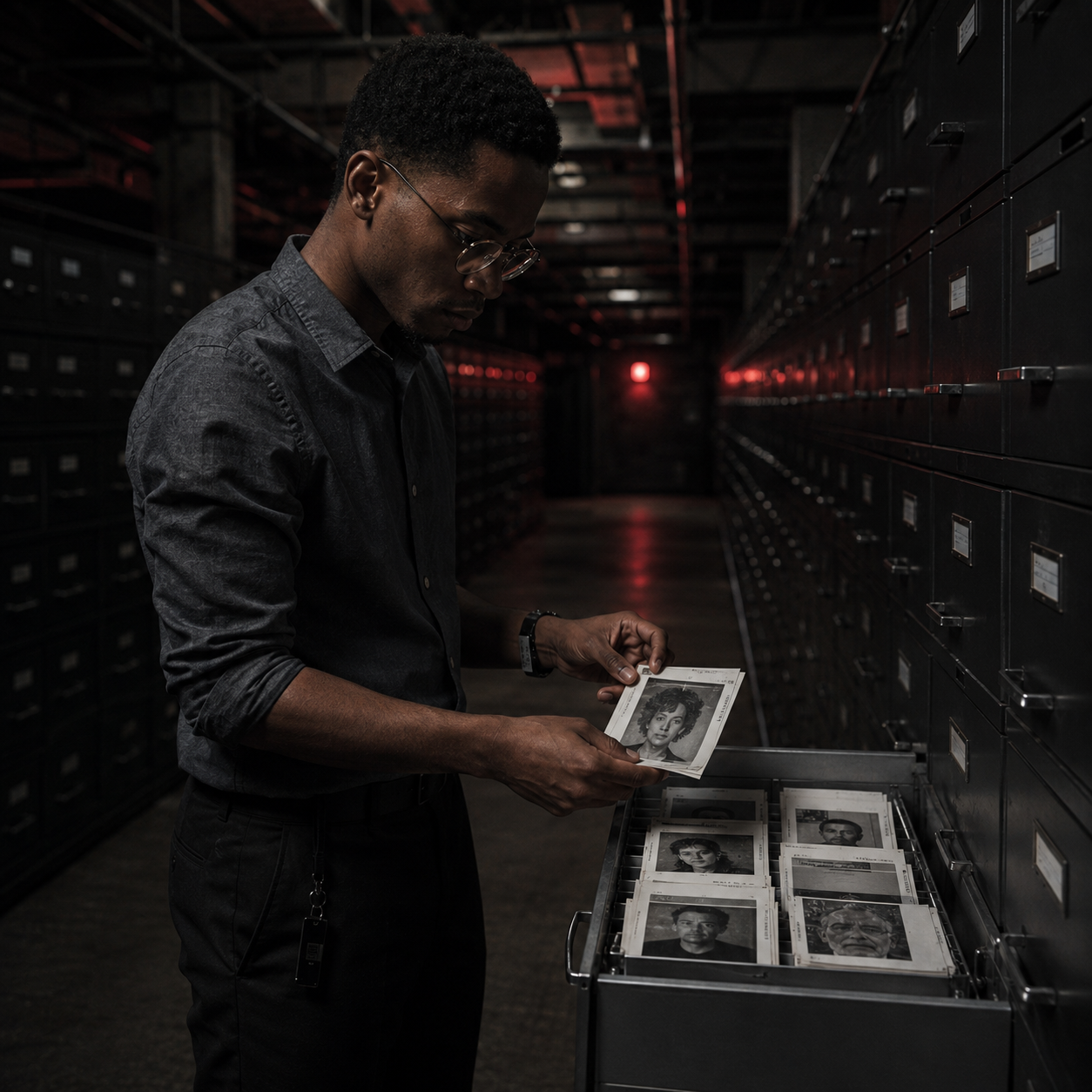
A teenage girl who has never seen another person's uncovered face and secretly collects photographs from before the Mask Laws were introduced.
A government surveillance technician responsible for supposedly shutting down the country's cameras every Halloween who discovers another department continues recording everything.
An elderly woman who remembers Halloween before the authoritarian government existed and quietly teaches neighbourhood children the traditions that have disappeared.
A young propaganda designer responsible for creating posters celebrating Freedom Night who increasingly struggles with the contradiction between the government's language and citizens' everyday lives.
A police officer ordered to ignore normally illegal behaviour during Halloween who witnesses something that completely changes his understanding of the society he protects.
A teenager from an impoverished district who uses the annual suspension of travel restrictions to enter the wealthy government quarter and discovers how differently its residents live.
A costume inspector responsible for deciding whether citizens' Halloween clothing contains prohibited political symbols who deliberately begins approving increasingly rebellious designs.
A government minister's daughter who has always believed the restrictions protect society until she spends Halloween anonymously among ordinary citizens.
A member of an underground resistance who suspects Freedom Night was deliberately created to lure dissidents into revealing themselves.
A child born on Halloween whose parents have spent years telling her that one day she will live in a country where she doesn't need permission to show her face.
6. Setting Ideas
Halloween dystopian settings can take ordinary civic spaces and make them feel controlled, monitored or strangely theatrical. Rather than relying on ruined cities, imagine functioning societies where everything appears orderly — until you notice how carefully people's behaviour has been designed.
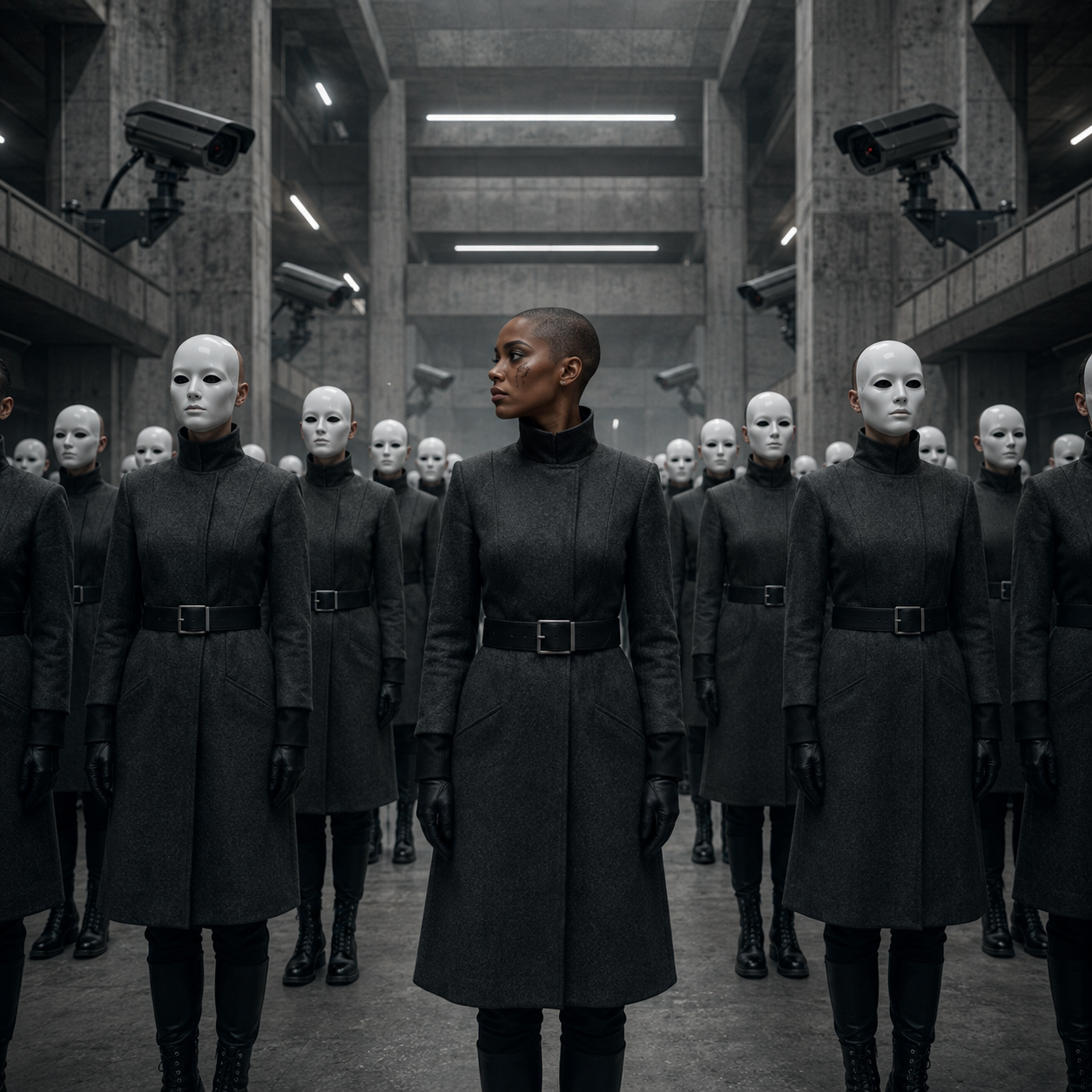
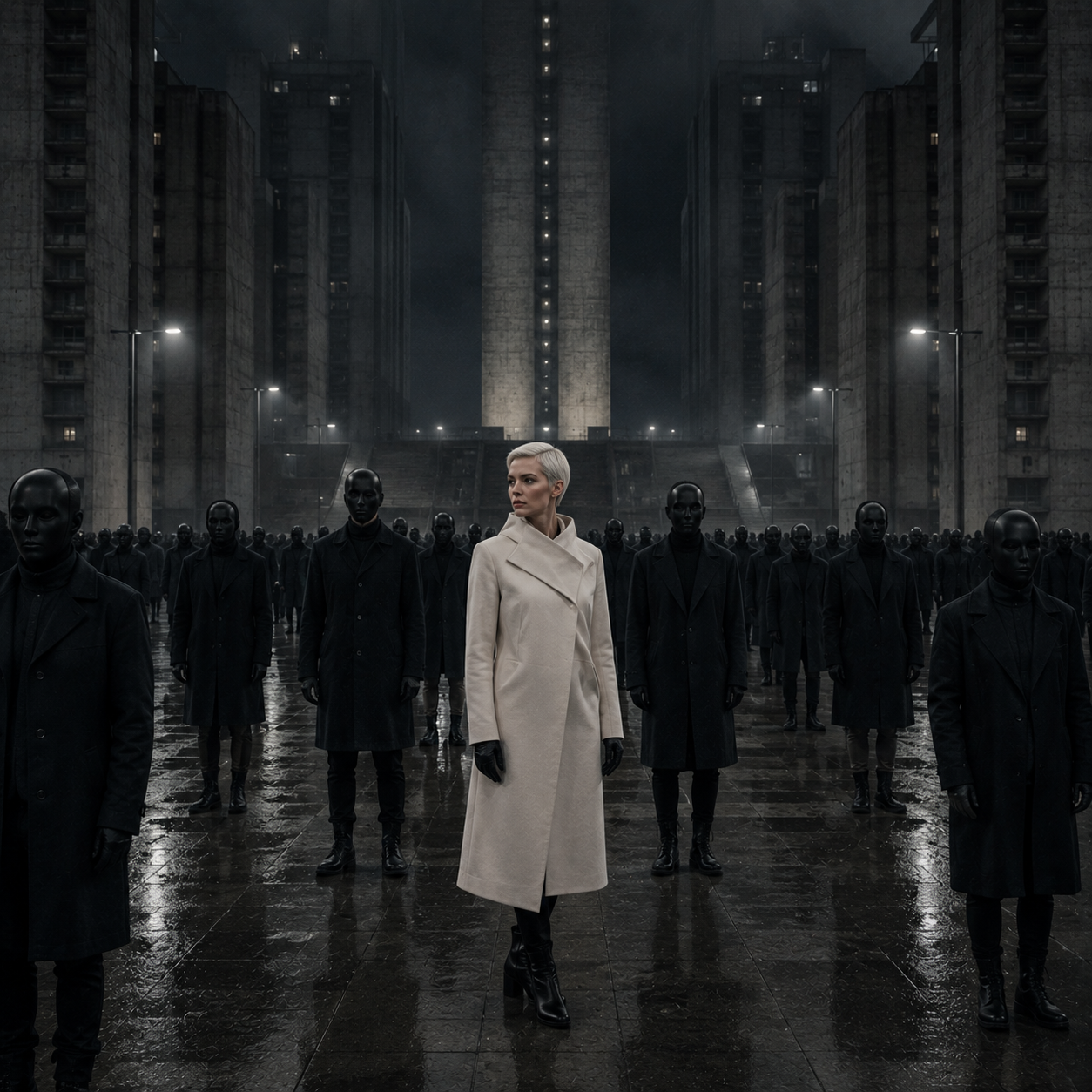
A vast brutalist city where every pedestrian wears an identical pale mask beneath thousands of government surveillance cameras.
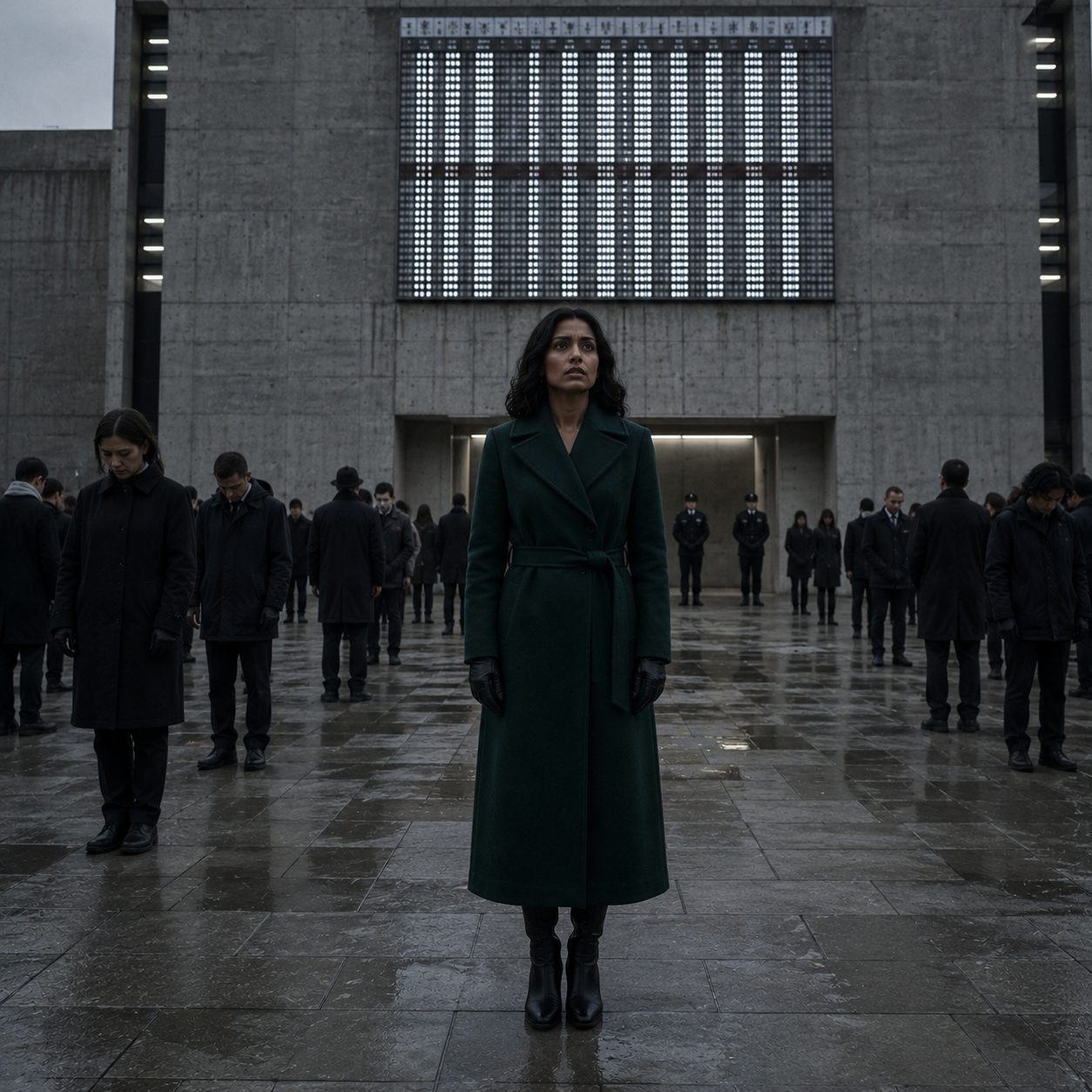
A central public square where citizens gather on Halloween night beneath enormous screens counting down the hours until normal restrictions return.
A heavily guarded border checkpoint between two districts that opens for exactly twelve hours every October 31st.
An underground market operating only on Halloween where citizens exchange banned books, photographs, music, family records and objects from before the current government existed.
A government costume-distribution centre where thousands of identical boxes are stacked according to occupation, age and social ranking.
A silent residential estate moments before the Halloween curfew ends, with discarded masks scattered across pavements and citizens reluctantly returning to their homes.
A Ministry of Celebration headquarters where officials monitor enormous screens showing Halloween festivities across the country while analysing citizen behaviour.
An abandoned pre-government amusement park secretly reopened every Halloween by young people who have reconstructed old celebrations using photographs and memories.
A wealthy government district normally inaccessible to ordinary citizens, filled with private gardens, unrestricted shops and luxuries people elsewhere have been told no longer exist.
A massive railway terminal packed with citizens taking advantage of the one night each year when internal travel permits are temporarily unnecessary.
7. Picture Prompts
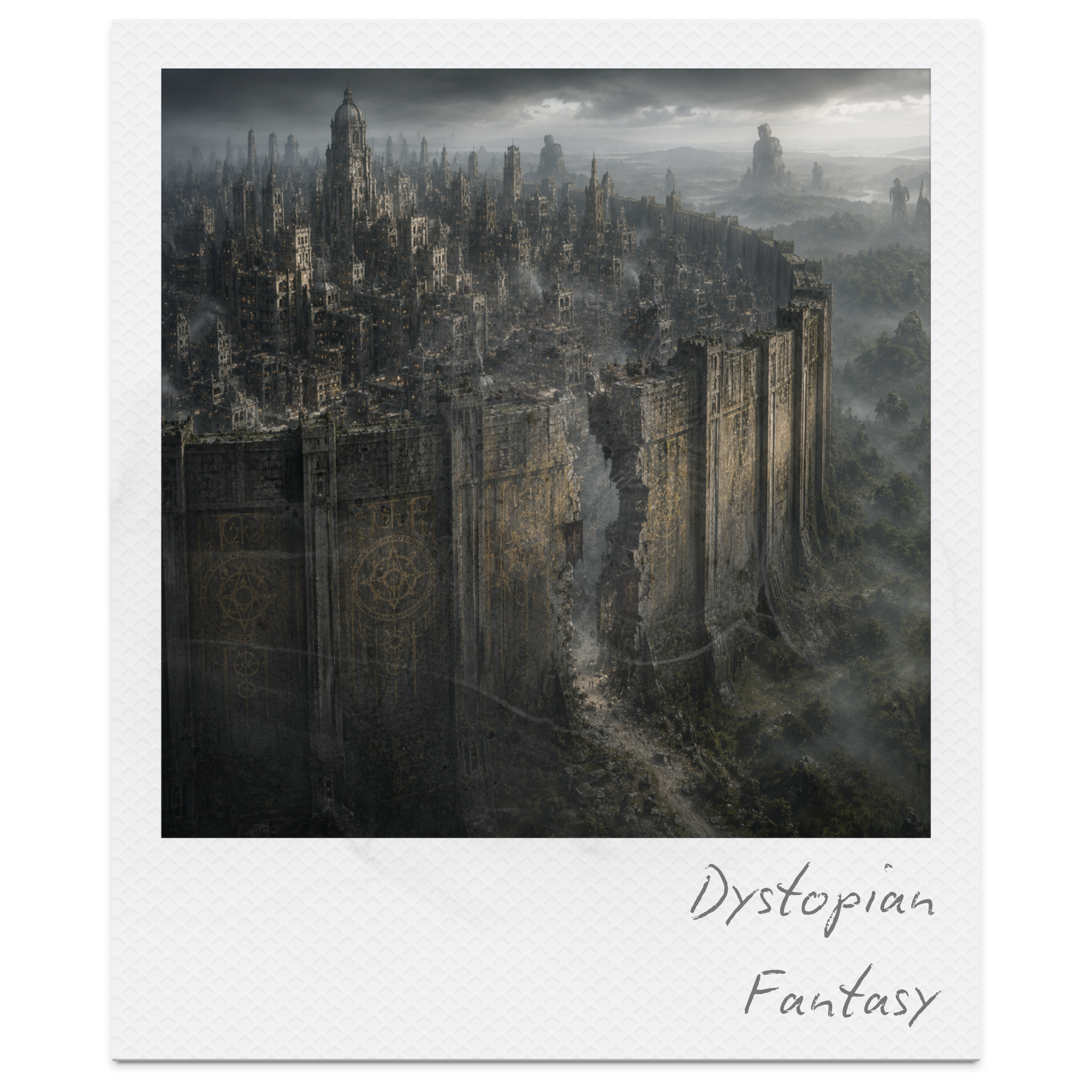
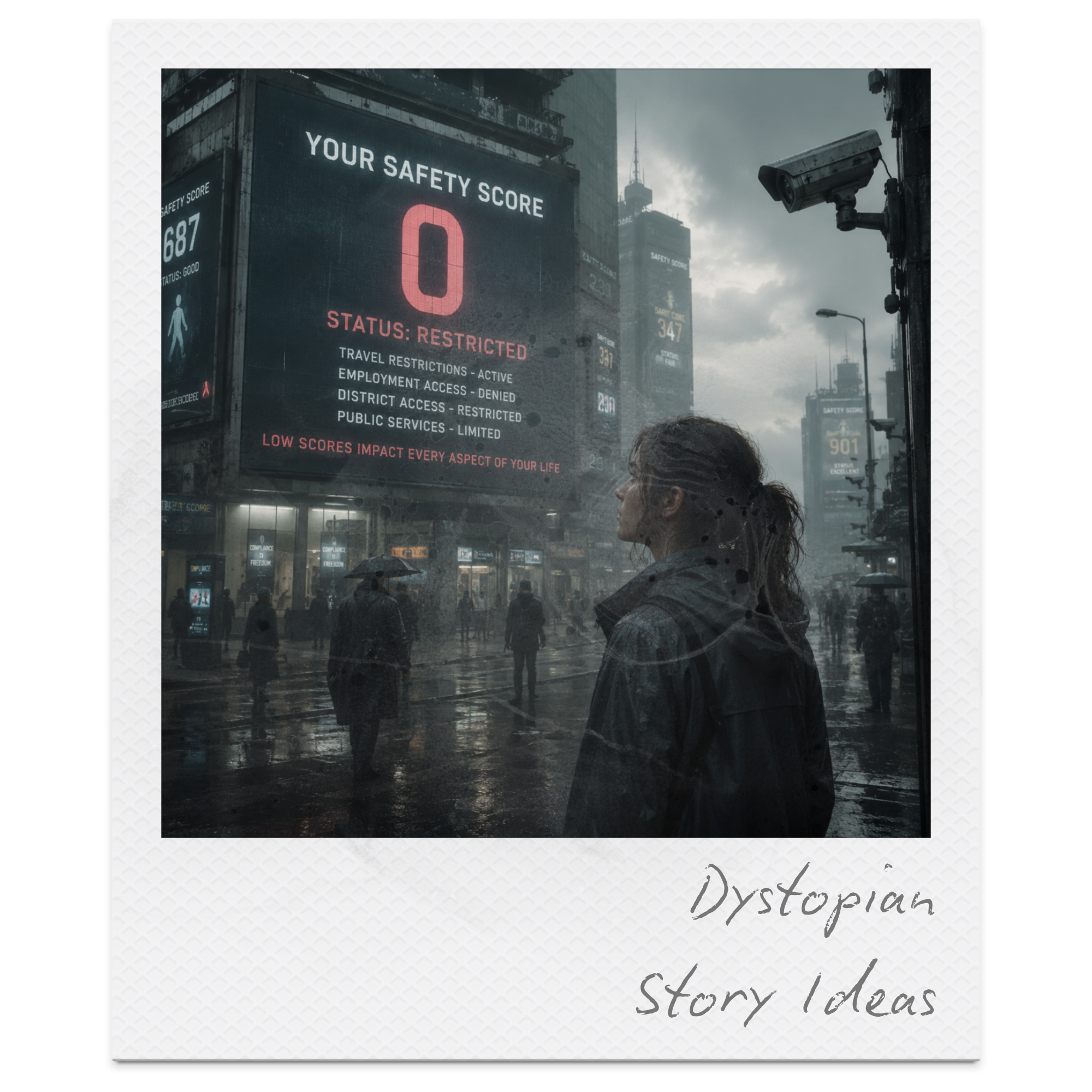
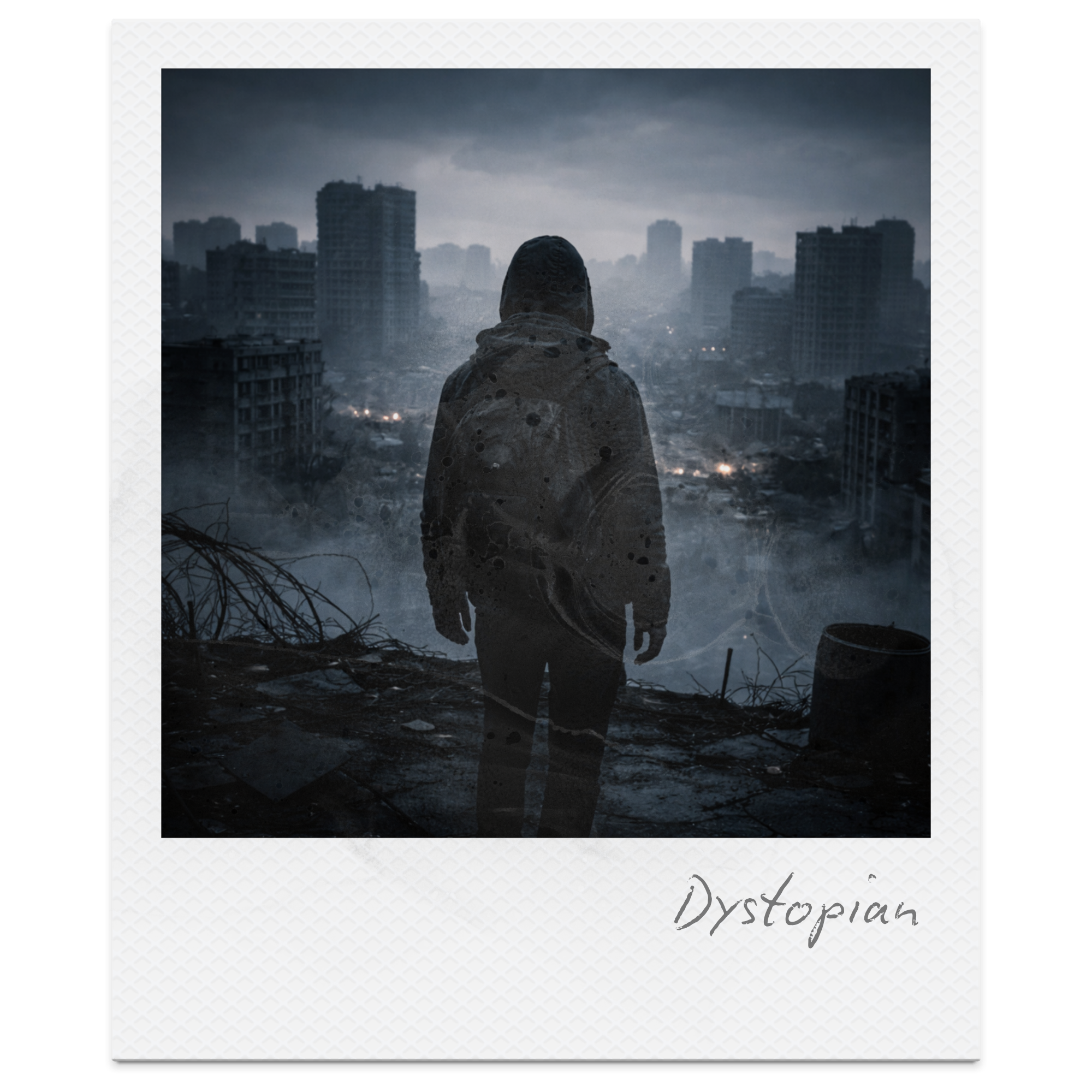
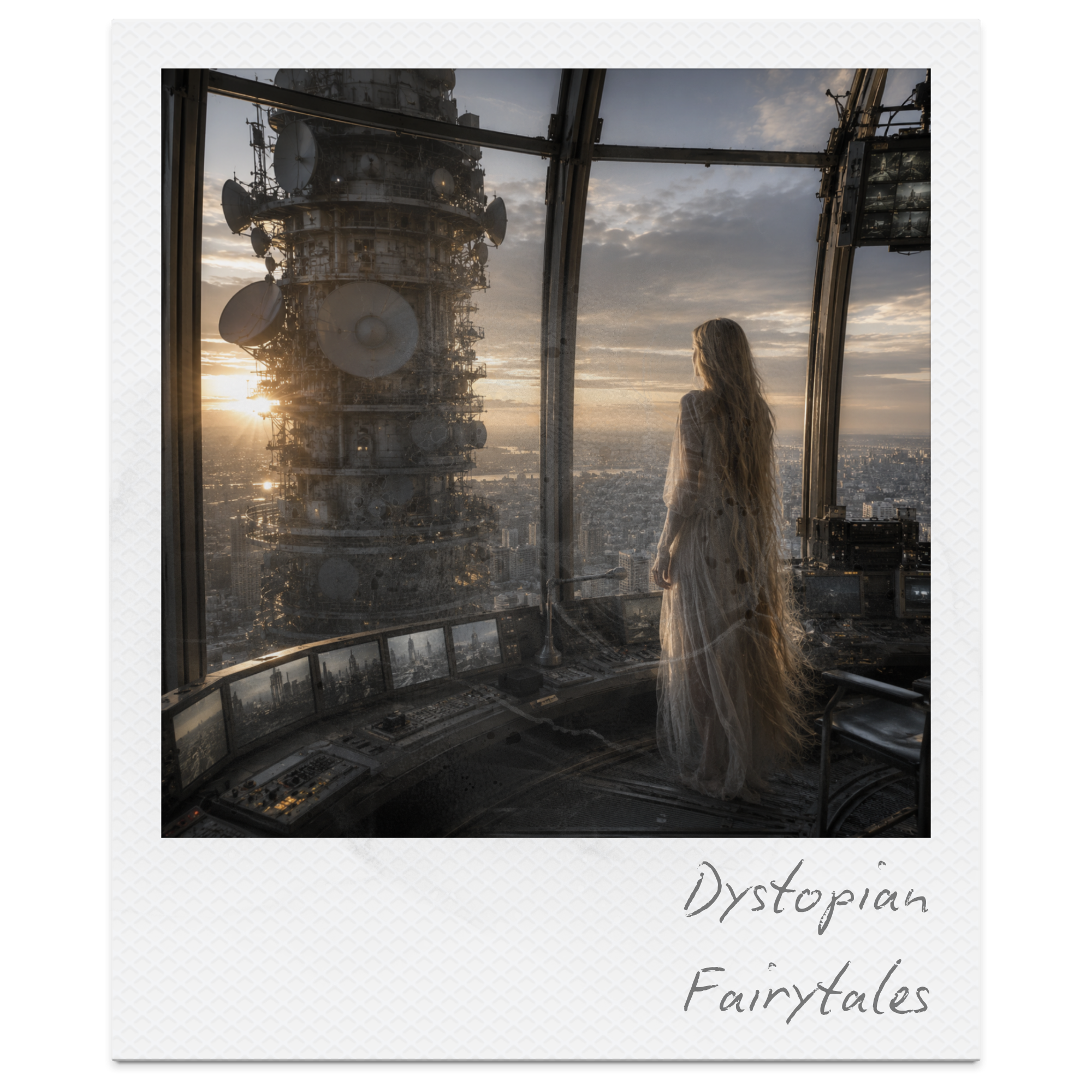
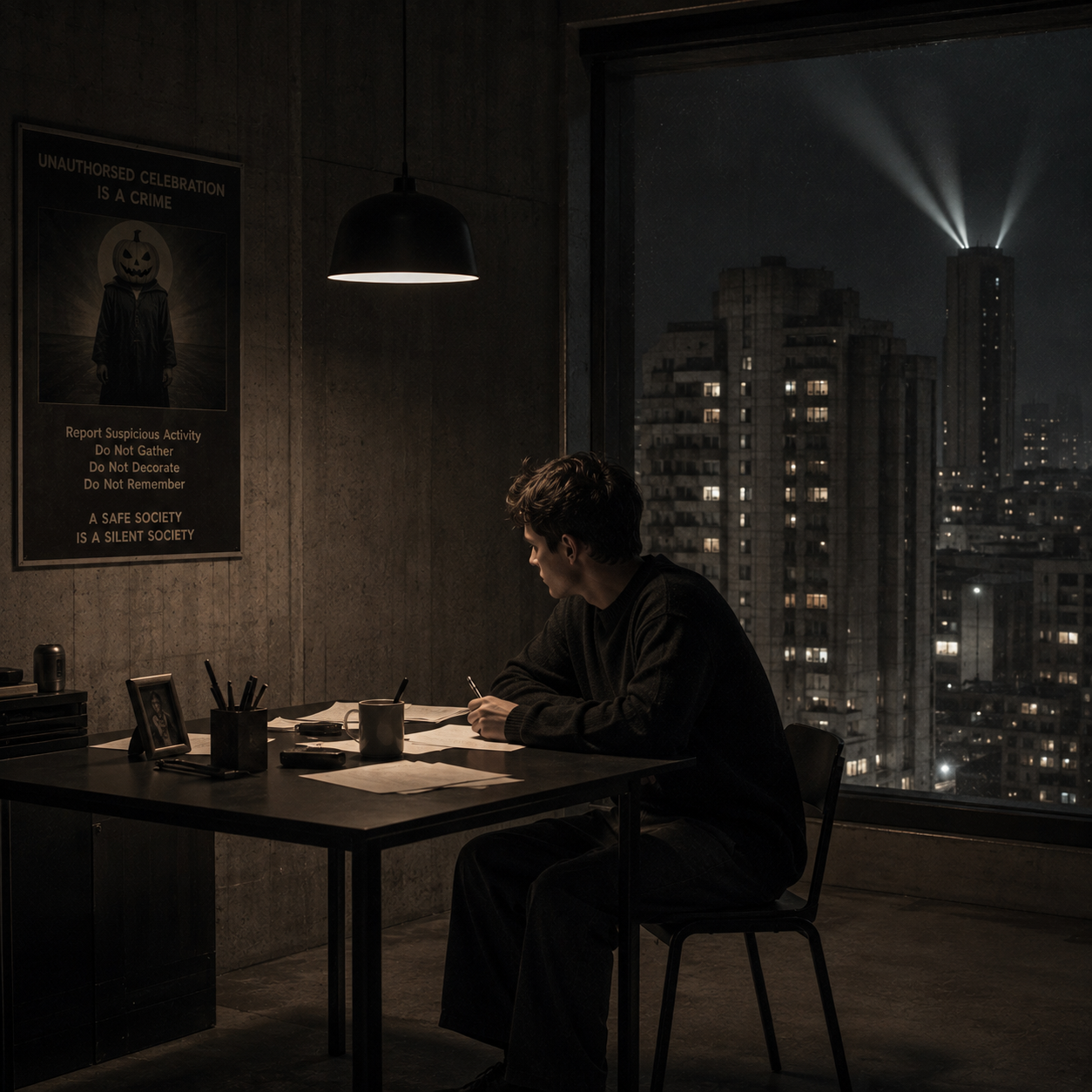
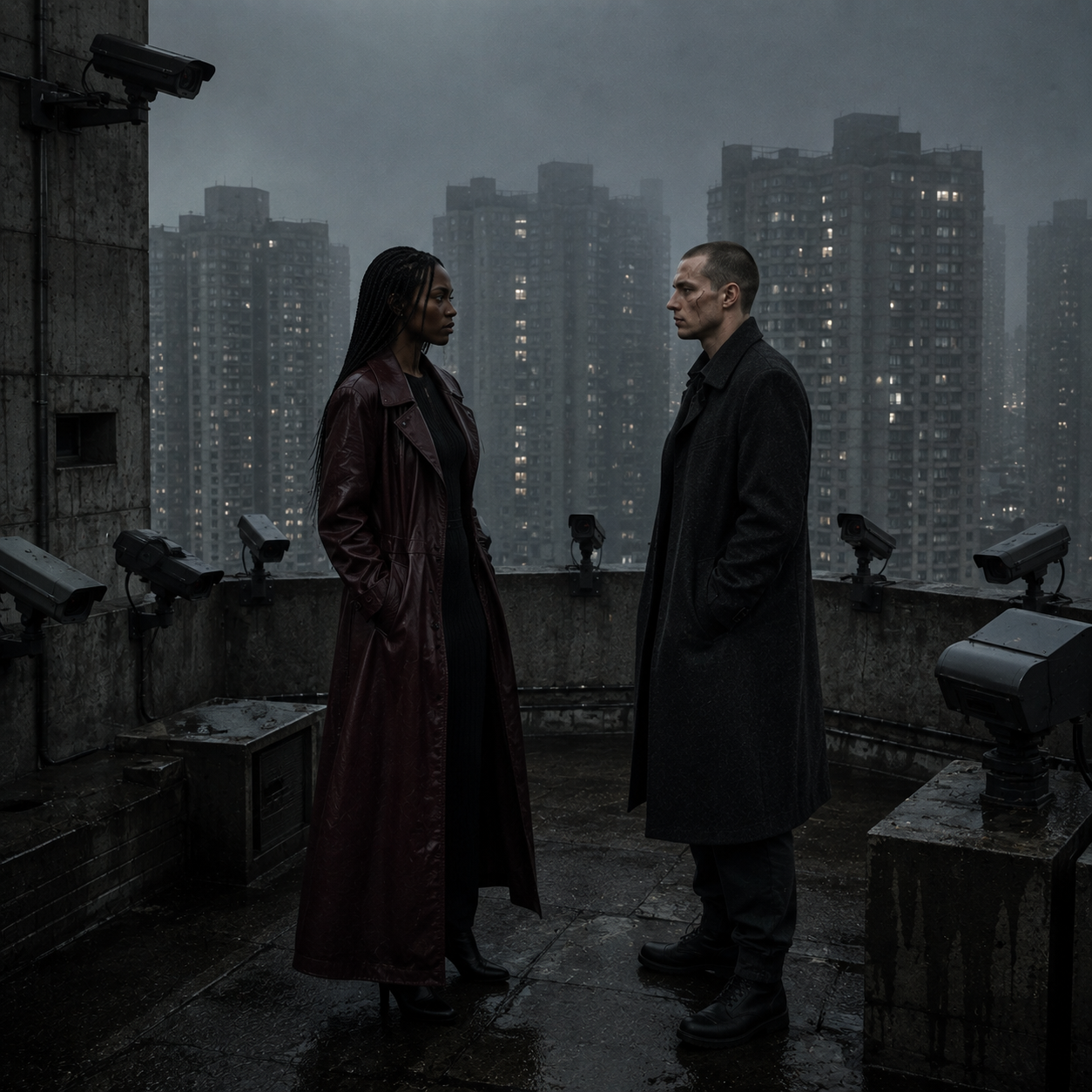
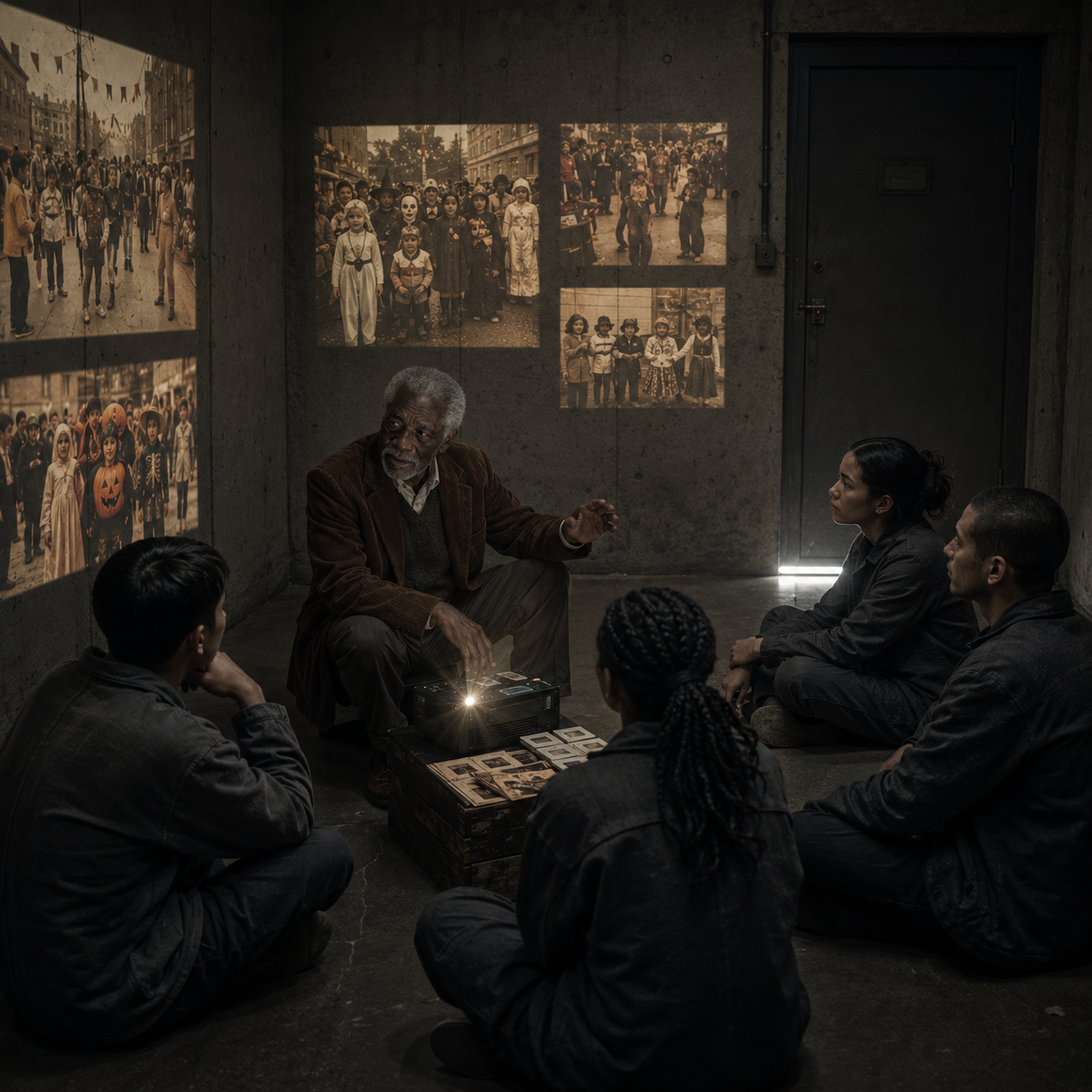
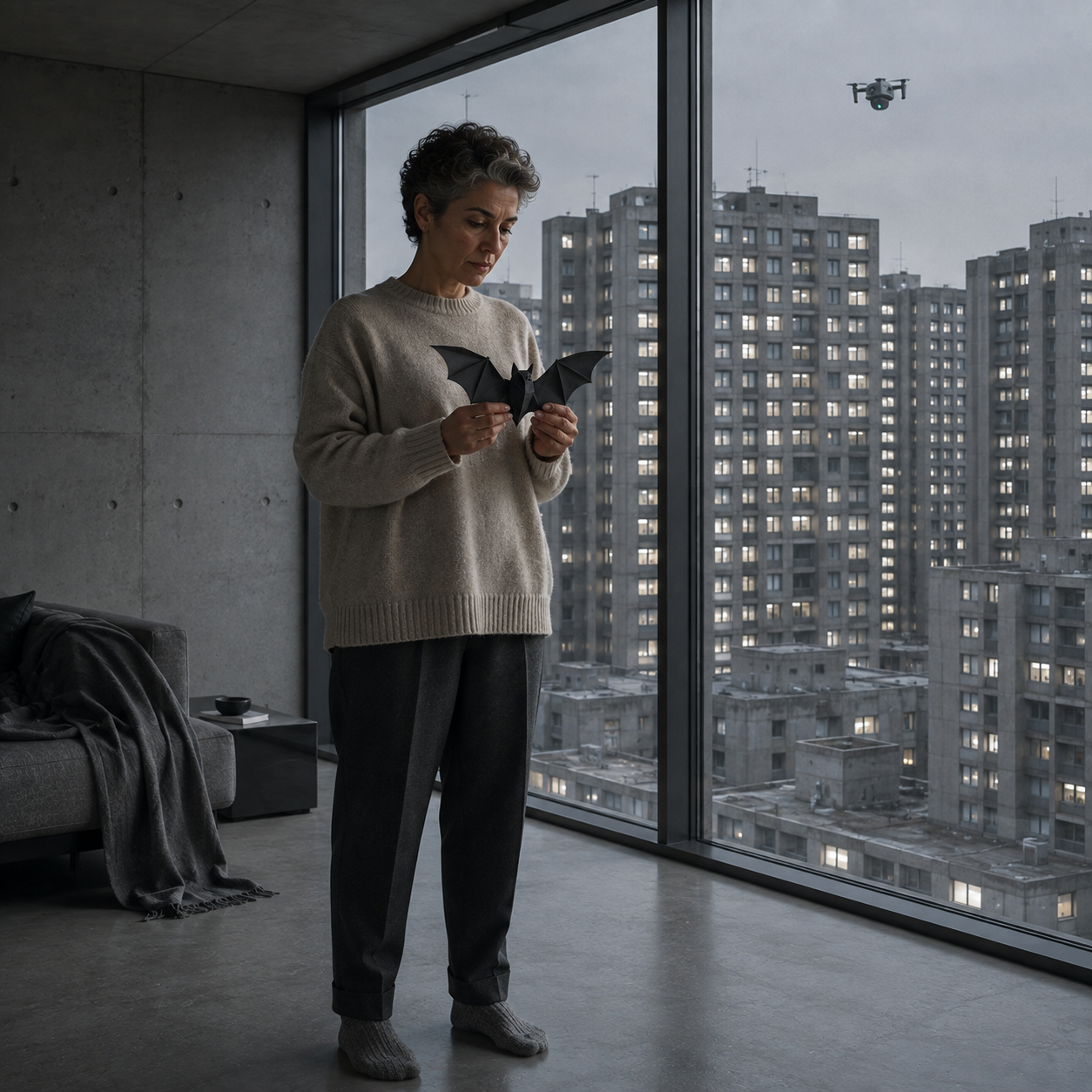
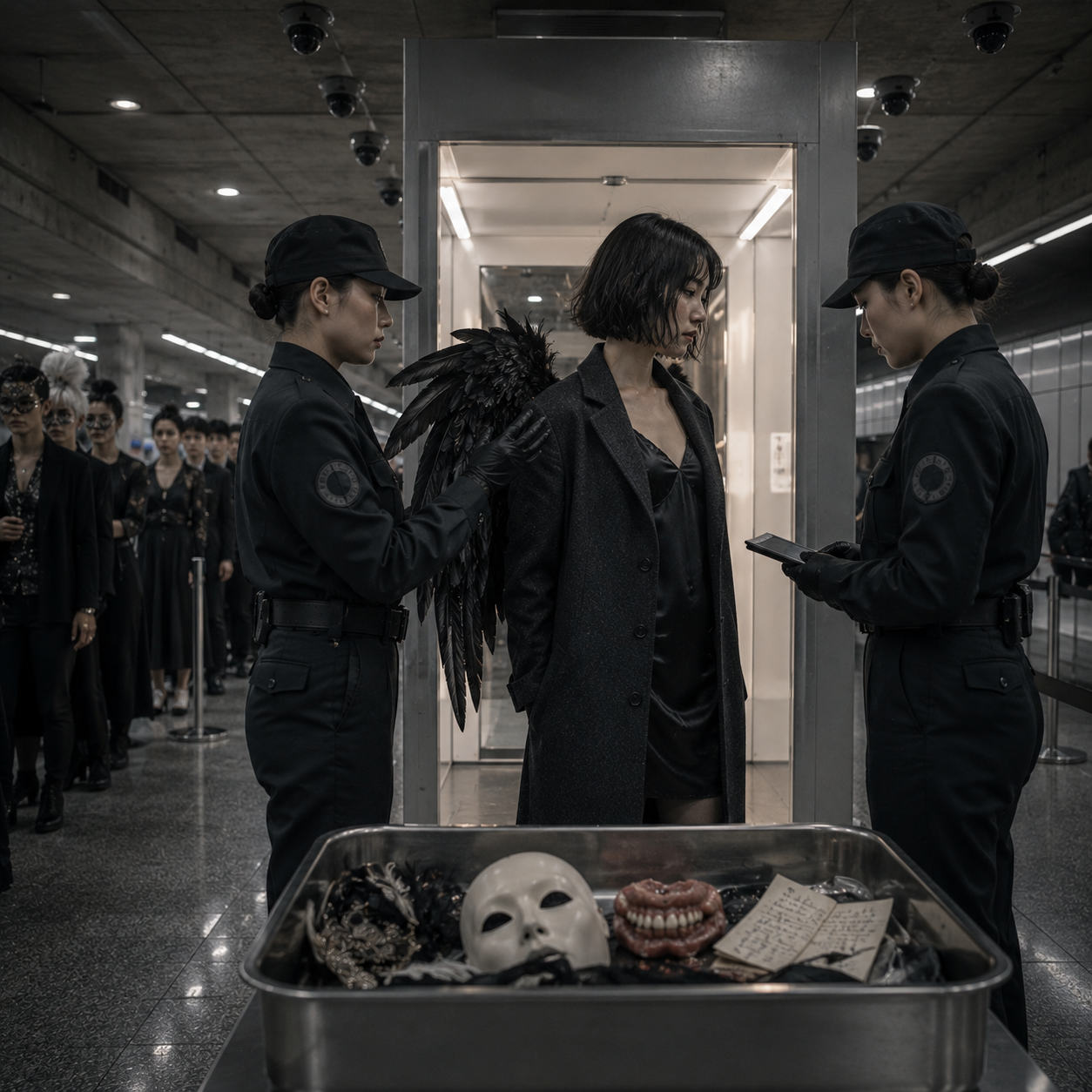
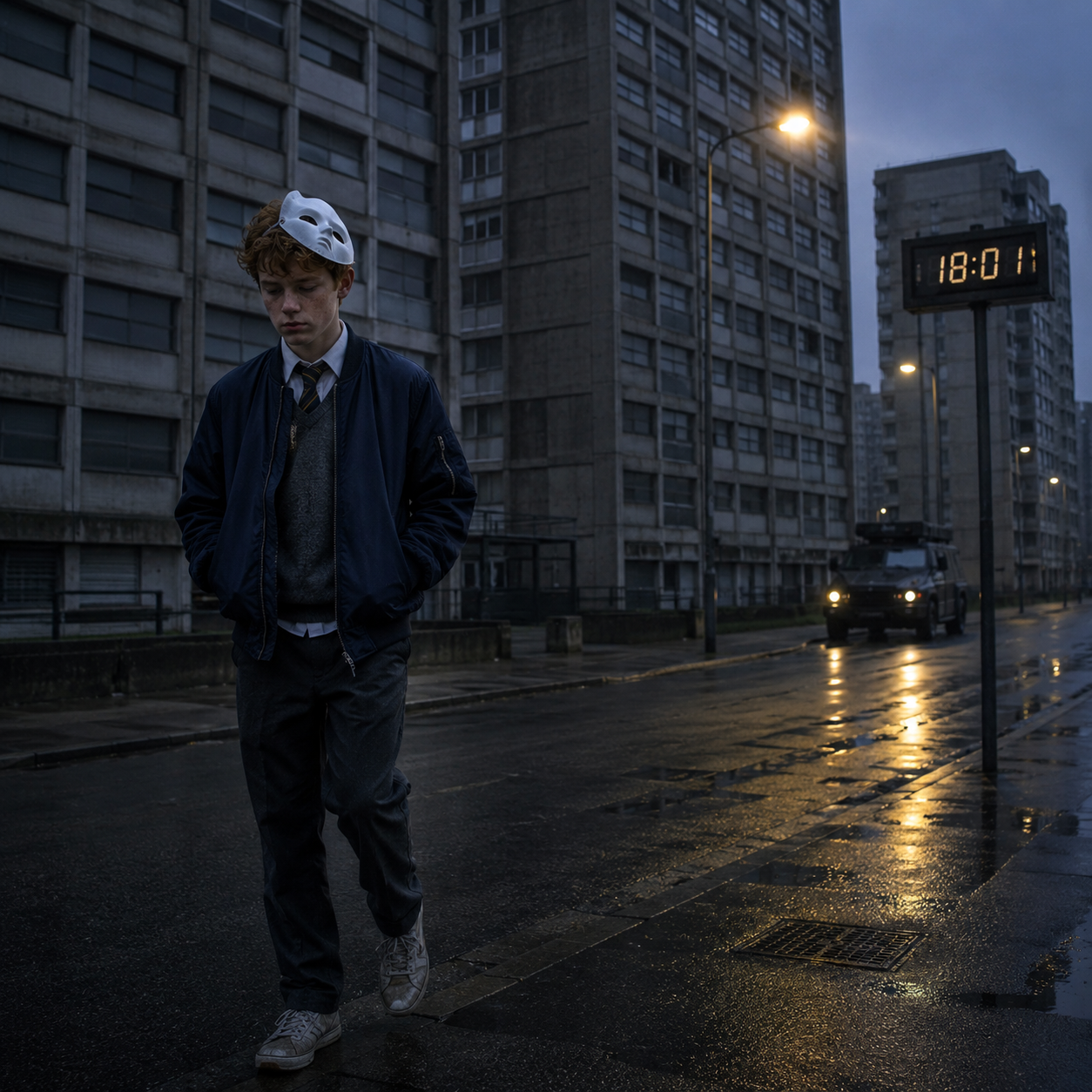
Halloween dystopian stories work best when they feel, controlled and disturbingly plausible rather than conventionally spooky. Think brutalist architecture, identical masks, stark government buildings, fluorescent inspection stations, deserted housing estates, surveillance equipment and carefully regulated public celebrations. Halloween details should feel institutionalised rather than decorative: a confiscated handmade costume, an officially issued mask, discarded disguises after curfew or a public countdown towards midnight. Use each image to suggest a larger system operating beyond the frame — who created these rules, why do citizens obey them, and what might happen when somebody finally refuses?
Go Deeper into Halloween Dystopian Writing
Halloween becomes particularly powerful in dystopian fiction because it is already associated with masks, altered identities, darkness and temporarily behaving differently from everyday life. Instead of treating Halloween as decoration, build it into the laws and traditions of your society. Ask why the government allows the celebration to exist, what purpose it serves and what citizens might discover during the brief moment when the normal rules change.
◆ Decide why Halloween still exists. Authoritarian societies rarely preserve traditions without adapting them to serve a purpose. Halloween might provide controlled entertainment, release social tension, reinforce propaganda or give citizens the illusion that they still possess cultural freedom.
◆ Turn familiar traditions upside down. If citizens normally hide their faces, Halloween could be the night masks come off. If clothing is strictly regulated, costumes might provide temporary anonymity. Trick-or-treating could become government ration distribution, while carved lanterns might secretly mark houses belonging to the resistance.
◆ Give citizens temporary freedom. Rather than suspending every law, decide exactly which restrictions disappear. Perhaps people can travel between districts, criticise the government, gather publicly, access banned media or conceal their identities. Limited freedom can reveal just how controlled everyday life has become.
◆ Ask why the government permits that freedom. There should be a reason. Perhaps allowing twelve hours of rebellion prevents unrest during the rest of the year. Authorities might observe what citizens do when restrictions disappear, identify potential dissidents or deliberately encourage people to reveal beliefs they normally conceal.
◆ Make midnight important. Halloween gives you a natural deadline. At midnight, cameras reactivate, borders close, masks become compulsory or forbidden material must be surrendered. Characters who have experienced freedom must decide whether to return willingly to the lives they had before.
◆ Explore identity through masks. Masks can represent anonymity, conformity, protection or rebellion. A society where everyone must cover their face raises questions about individuality and recognition, while one where masks are prohibited makes hiding your identity an act of resistance. Decide what showing — or concealing — your face means politically.
◆ Show how different generations understand Halloween. Older citizens might remember traditions that younger people have only encountered through government-approved versions. A grandmother remembering children choosing their own costumes can reveal enormous social change without requiring pages of exposition.
◆ Create traditions that have changed meaning. Perhaps an old Halloween procession has become a military parade, neighbourhood celebrations have turned into compulsory civic events or remembrance rituals now honour government-approved heroes. Small distortions of familiar traditions can make your dystopia feel disturbingly believable.
◆ Let ordinary people participate in the system. Control doesn't need to come exclusively from officials. Neighbours might report prohibited costumes, parents could teach children never to remove their masks and teachers may genuinely believe Halloween restrictions keep students safe. A society becomes more convincing when citizens have internalised its rules.
◆ Ask what happens on November 1st. The consequences of Halloween may be more interesting than the celebration itself. Who disappeared overnight? Which conversations were recorded? Who failed to return home before curfew? Who saw something they weren't supposed to see? And after experiencing even a few hours without restrictions, can your characters ever accept their ordinary lives in quite the same way again?
Final Thoughts
Halloween dystopian fiction takes familiar ideas — masks, costumes, curfews, public celebrations and temporarily breaking the rules — and asks what they might become in a society where freedom itself is controlled. Halloween could be the only night citizens are allowed to hide their identities, reveal their faces, cross forbidden borders, access banned information or say what they really think.
The strongest stories aren't simply about oppressive governments. They're about the people who have learned to live within those systems. Some will rebel against them, some will quietly preserve traditions from the past, and others may genuinely believe the restrictions keep everyone safe. Giving citizens one night of apparent freedom creates an especially interesting question: does temporarily removing control make people easier to govern, or does it remind them of everything they've lost?
Use the prompts above individually, combine characters and settings from different sections, or begin by choosing one ordinary Halloween tradition and imagining how an authoritarian society might transform its meaning. A mask can become compulsory. A costume can become contraband. A neighbourhood celebration can become a surveillance operation. And midnight can become the moment when your characters must decide whether they're willing to return to obedience.
For more dark speculative inspiration, explore the Dystopian Writing Hub for authoritarian societies, surveillance, propaganda and rebellion, visit the Horror Writing Hub for darker seasonal ideas, or browse the Creative Writing Archive for hundreds of prompts and story ideas across every genre.
Choose Your Next Adventure