70 Lunarpunk Sci-Fi Writing Prompts: Moon Gardens, Celestial Cities & Bioluminescent Futures
Lunarpunk sci-fi imagines hopeful futures illuminated not by blazing skylines, but by moonlight. Blending sustainable technology with celestial beauty, this emerging science fiction aesthetic explores peaceful societies where nature and innovation exist in harmony beneath glowing moons and star-filled skies. Instead of towering megacities and corporate dystopias, Lunarpunk envisions bioluminescent forests, moon gardens, silver observatories, living architecture and communities shaped by balance, reflection and quiet wonder.
Often considered the moonlit counterpart to Solarpunk, Lunarpunk draws inspiration from environmental stewardship, lunar symbolism, astronomy, mythology and dreamlike landscapes. Its worlds echo the quiet beauty of works such as Avatar, the reflective atmosphere of The Left Hand of Darkness, and the hopeful environmental storytelling found throughout modern ecological science fiction. Rather than asking how technology can dominate nature, Lunarpunk asks how humanity might flourish alongside it, creating futures that feel both magical and entirely believable.
Below you'll discover 70 Lunarpunk Sci-Fi Writing Prompts, including plot ideas, story titles, opening lines, ending lines, unforgettable characters, breathtaking settings and cinematic picture prompts. Whether you're creating a peaceful lunar civilisation, an ecological space opera or a beautifully atmospheric speculative world, these prompts are designed to inspire stories filled with hope, mystery and celestial wonder. For even more futuristic inspiration, explore the Sci-Fi Writing Hub, or browse the Creative Writing Archive for hundreds of writing prompts across every genre.
1. Plot Prompts
Lunarpunk sci-fi imagines hopeful futures where advanced technology works in harmony with nature beneath moonlit skies. These stories celebrate sustainable communities, celestial beauty, living architecture and quiet wonder, proving that science fiction can be both visionary and deeply peaceful.
A gardener tending the Moon's oldest bioluminescent forest discovers one tree blooming with memories from another civilisation.
Every full moon, a floating city lowers its crystal bridges to welcome travellers from the forests below, until one bridge descends somewhere impossible.
A young architect designs living homes grown from luminous trees, only to realise the buildings have begun choosing their own inhabitants.
An observatory studying distant galaxies receives a message encoded within moonlight itself.
Every century, the flowers in a celestial garden bloom simultaneously, revealing a map to a forgotten lunar sanctuary.
A peaceful settlement powered entirely by moonlight begins experiencing nights where darkness never arrives.
Scientists cultivating a forest of glowing vines discover the plants are quietly reshaping the landscape into an enormous constellation.
An explorer following migrating sky whales uncovers a hidden civilisation living inside the branches of an ancient space tree.
A moon priestess responsible for protecting sacred lunar springs notices one reflecting a future that no telescope can observe.
During a rare eclipse, every citizen dreams of the same silver city waiting beyond the stars.
2. Story Title Ideas
Lunarpunk titles should evoke serenity, mystery and celestial beauty, inviting readers into worlds where moonlight, nature and technology exist in perfect balance.
Moonbloom
Silverlight
Eclipse
Moonroot
Luminara
Celestial Garden
Beneath Two Moons
The Moon Orchard
The Silver Sanctuary
Where Moonlight Grows
3. Opening Lines
The best Lunarpunk sci-fi stories begin with quiet moments of wonder. A moonlit garden, a glowing forest or a peaceful observatory can become the doorway to mysteries that stretch across galaxies.
The moonflowers only opened when the stars aligned.
Every building in our city grew from the roots of a single ancient tree.
The observatory had watched the same moon for three hundred years, until it finally blinked.
We harvested moonlight the way our ancestors once harvested wheat.
Nobody remembered who planted the silver forest.
Every evening the sky whales returned to sing above the valley.
The river reflected constellations that didn't exist anywhere in the night sky.
The oldest gardener smiled as the first glowing blossom appeared.
Our city floated silently above the forest, tethered only by living vines.
The eclipse arrived exactly as the prophecy had promised.
4. Closing Lines
Lunarpunk endings should leave readers with hope, renewal and the quiet feeling that humanity has finally learned to live in harmony with the universe.
By sunrise, the forest had welcomed another generation.
The stars shone a little brighter than they had the night before.
Every garden eventually became a constellation.
We never built another city without asking the forest first.
The moon remembered us long after we had forgotten ourselves.
Somewhere beyond the horizon, another sanctuary bloomed beneath a different moon.
The last lantern faded as dawn painted the silver leaves gold.
For the first time in centuries, the sky sang back.
The eclipse passed, but hope remained.
Our future had always been growing quietly beneath the moonlight.
5. Character Ideas
Lunarpunk characters are caretakers, dreamers and explorers who nurture the worlds around them. They believe that technology and nature can flourish together, finding wisdom in both innovation and the rhythms of the natural universe.
A celestial gardener cultivating forests that absorb starlight.
The keeper of an ancient lunar observatory where every telescope grows from living trees.
A botanist studying flowers that bloom only during eclipses.
An architect who designs cities woven into giant crystal-rooted forests.
A moon cartographer mapping invisible pathways that appear only under moonlight.
A guardian responsible for protecting sacred bioluminescent lakes.
A young inventor creating technology powered entirely by living plants.
A storyteller preserving the songs of migrating sky whales.
An explorer searching for the legendary city said to bloom only beneath twin moons.
A healer whose medicines are cultivated in glowing moon gardens.
6. Setting Ideas
Lunarpunk settings blend breathtaking natural beauty with elegant sustainable technology, creating hopeful futures where every city, garden and observatory feels alive beneath the stars.
A peaceful city woven through enormous silver trees whose branches support homes and observatories.
A moon garden where glowing flowers bloom beside crystal rivers beneath three luminous moons.
A vast celestial conservatory cultivating plants collected from hundreds of distant worlds.
A floating sanctuary connected by elegant bridges of living vines and shimmering glass.
A forest of bioluminescent trees surrounding an ancient lunar temple.
A mountain observatory where astronomers study galaxies reflected within enormous moon pools.
A tranquil village illuminated entirely by living lantern plants and glowing crystal pathways.
A breathtaking botanical space station drifting silently through a colourful nebula.
A hidden valley where silver waterfalls nourish gardens that only bloom at night.
A circular city surrounding an ancient tree whose luminous roots power the entire civilisation.
7. Picture Prompts
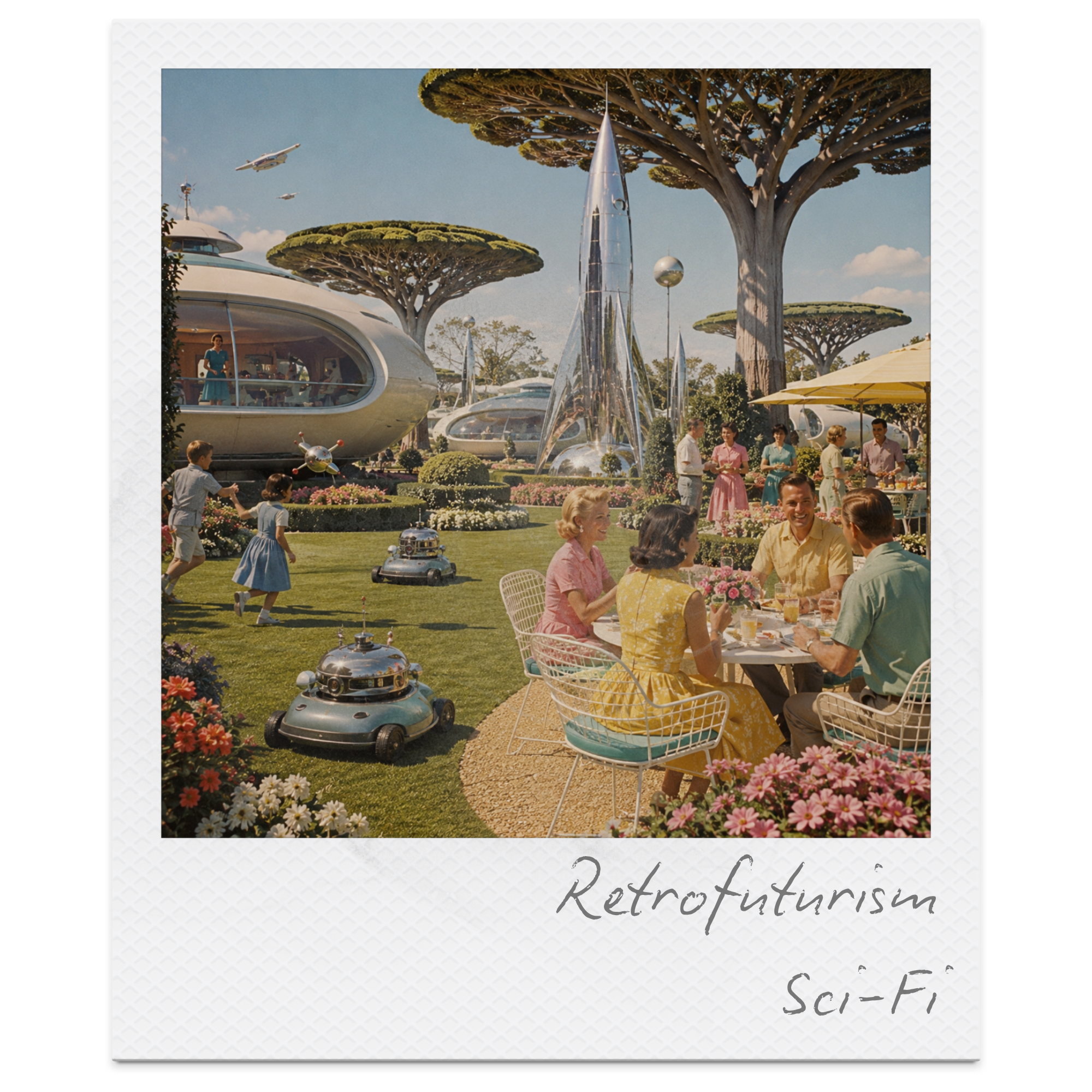
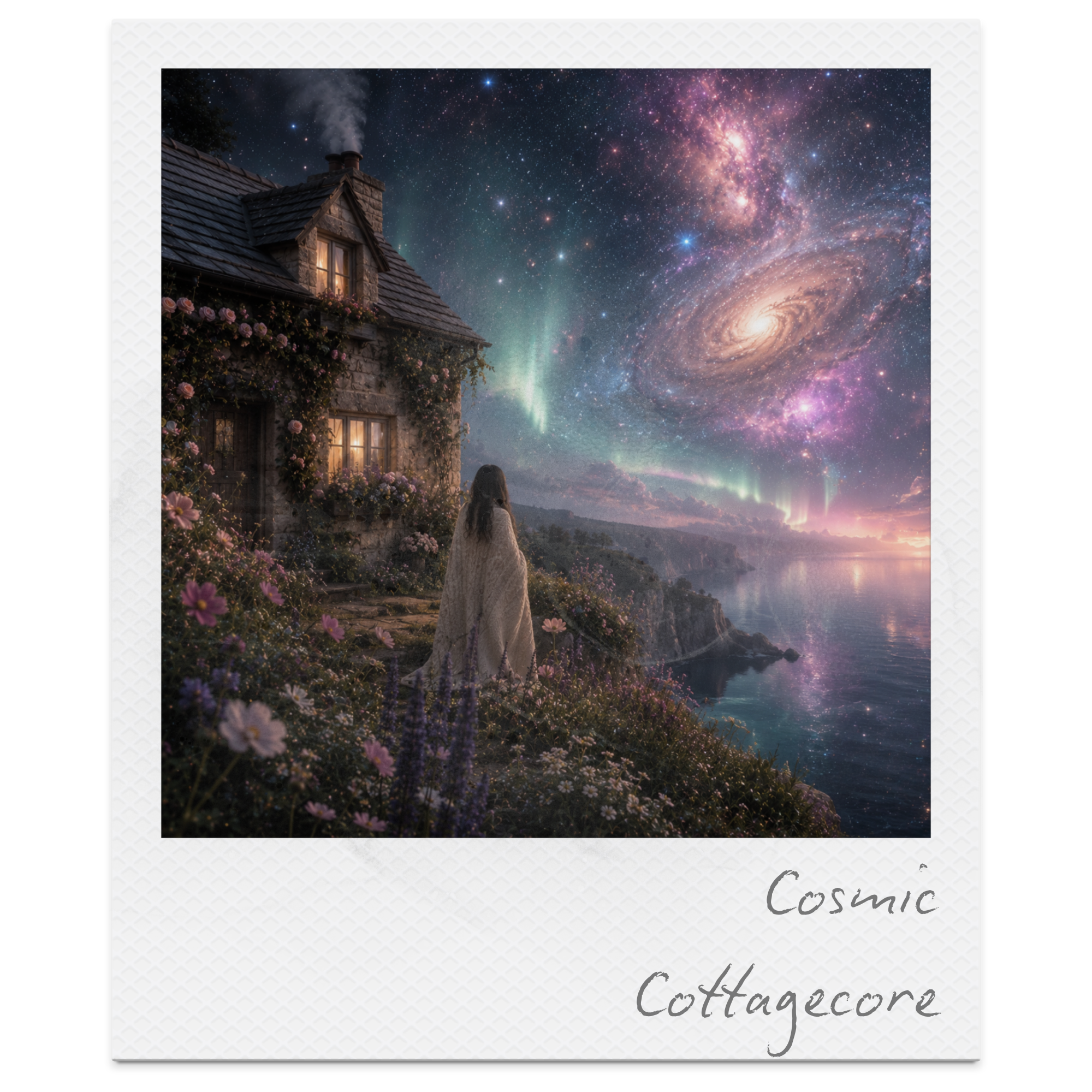
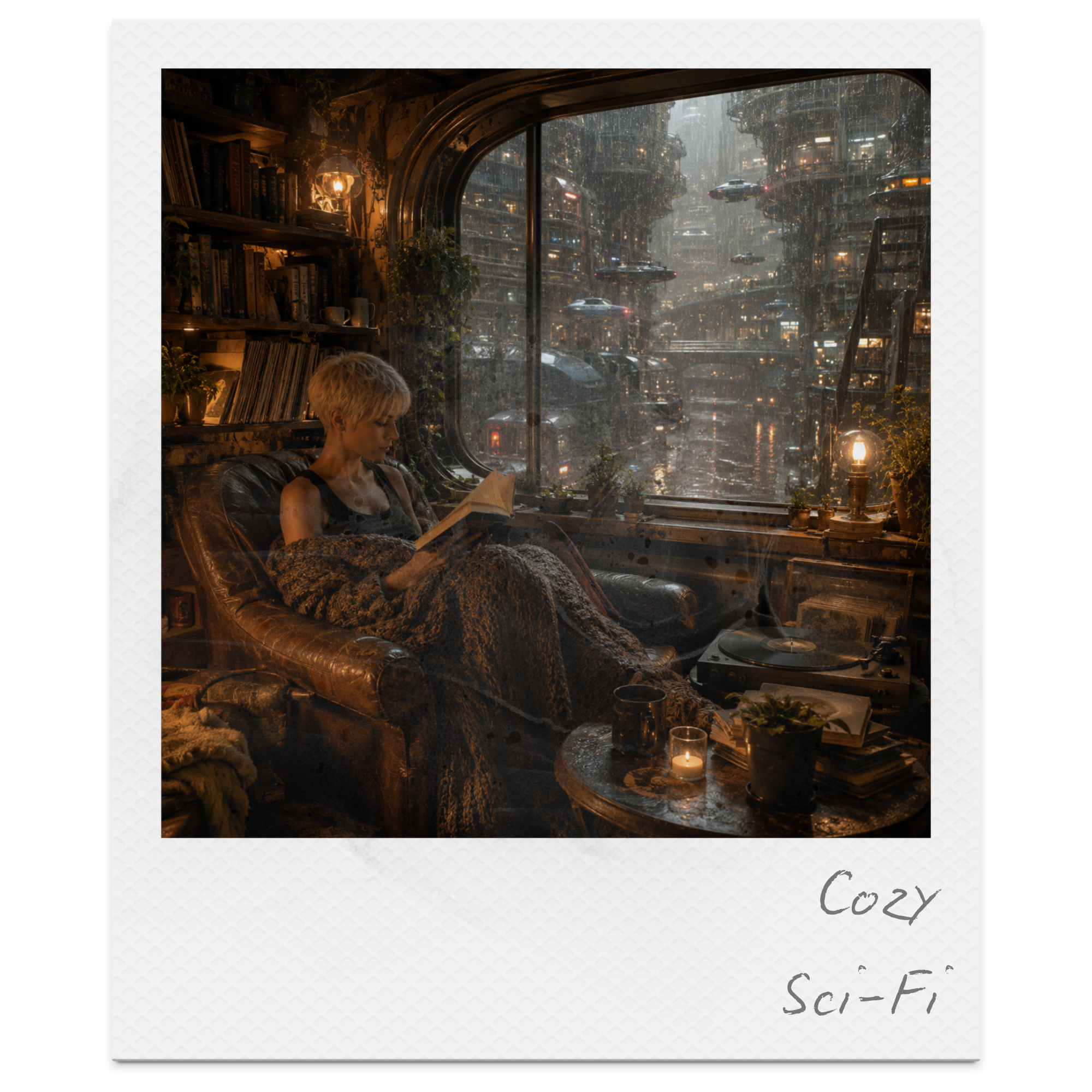
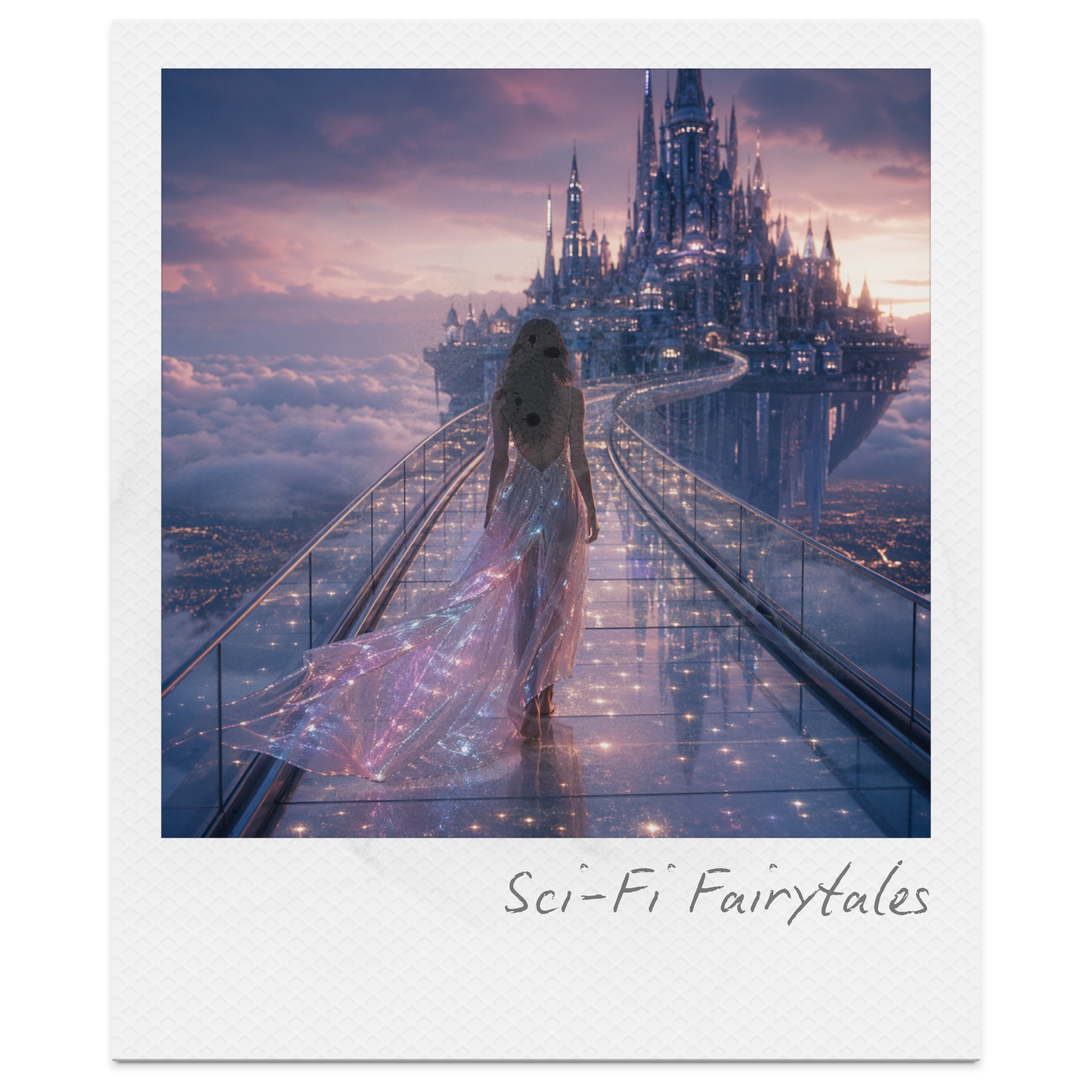
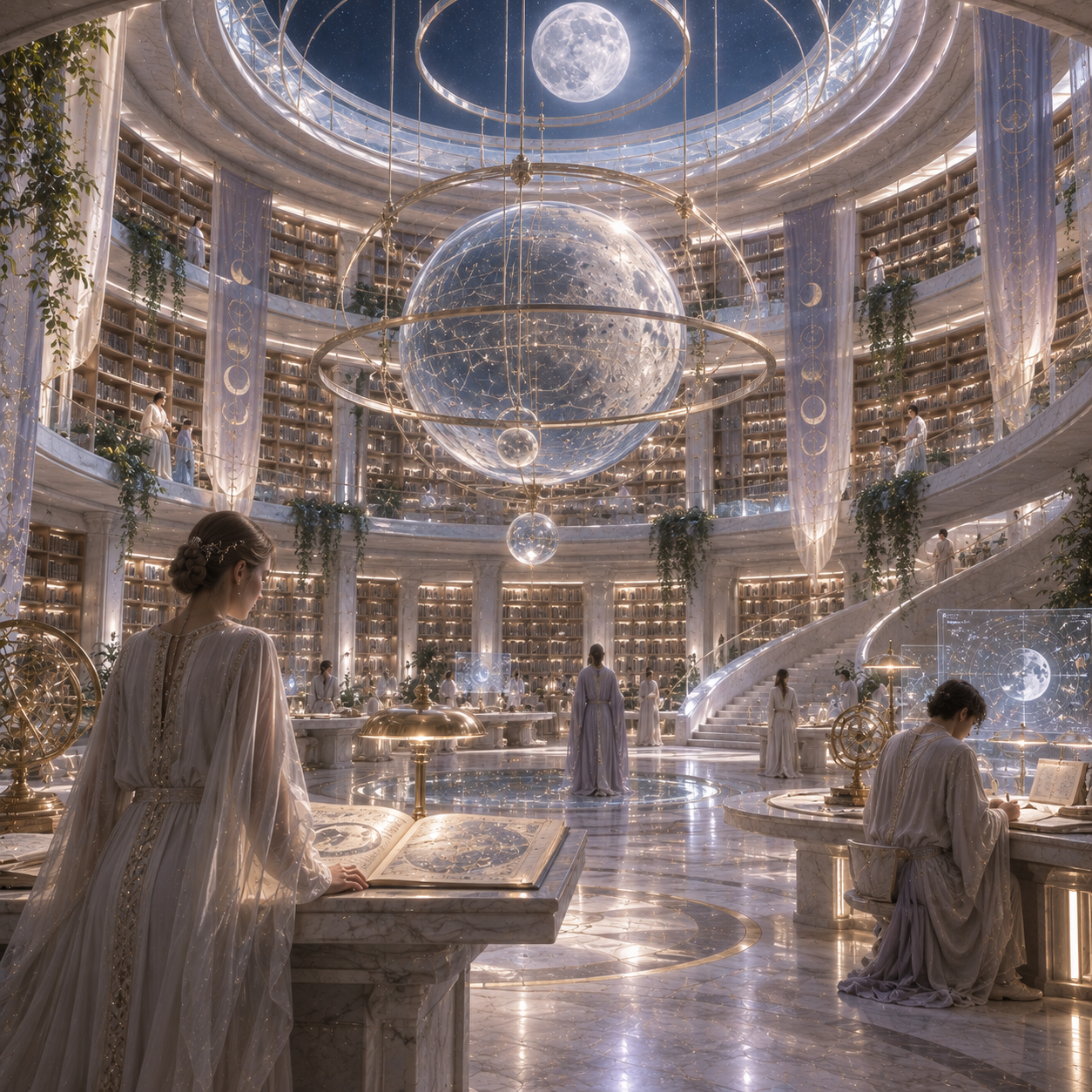
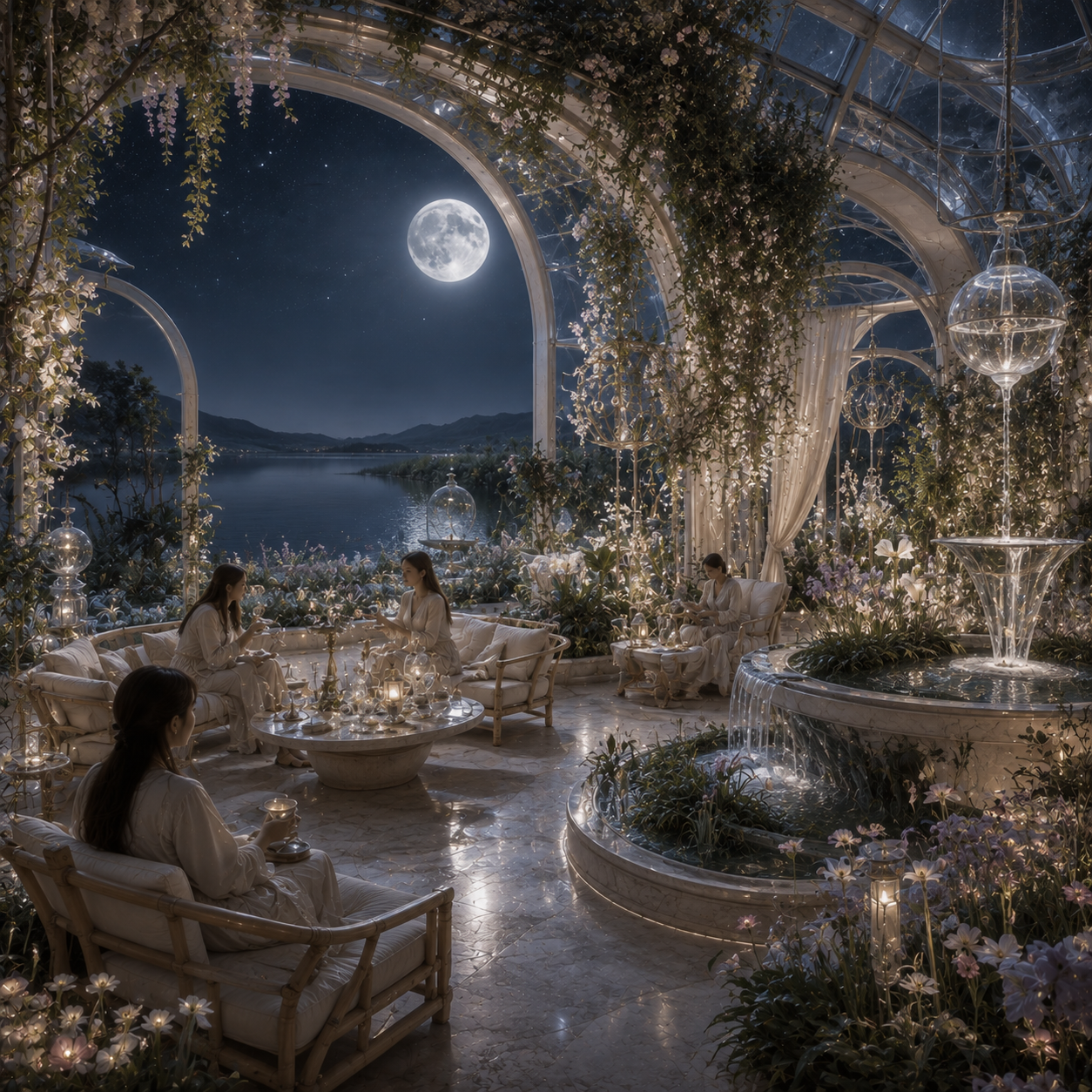
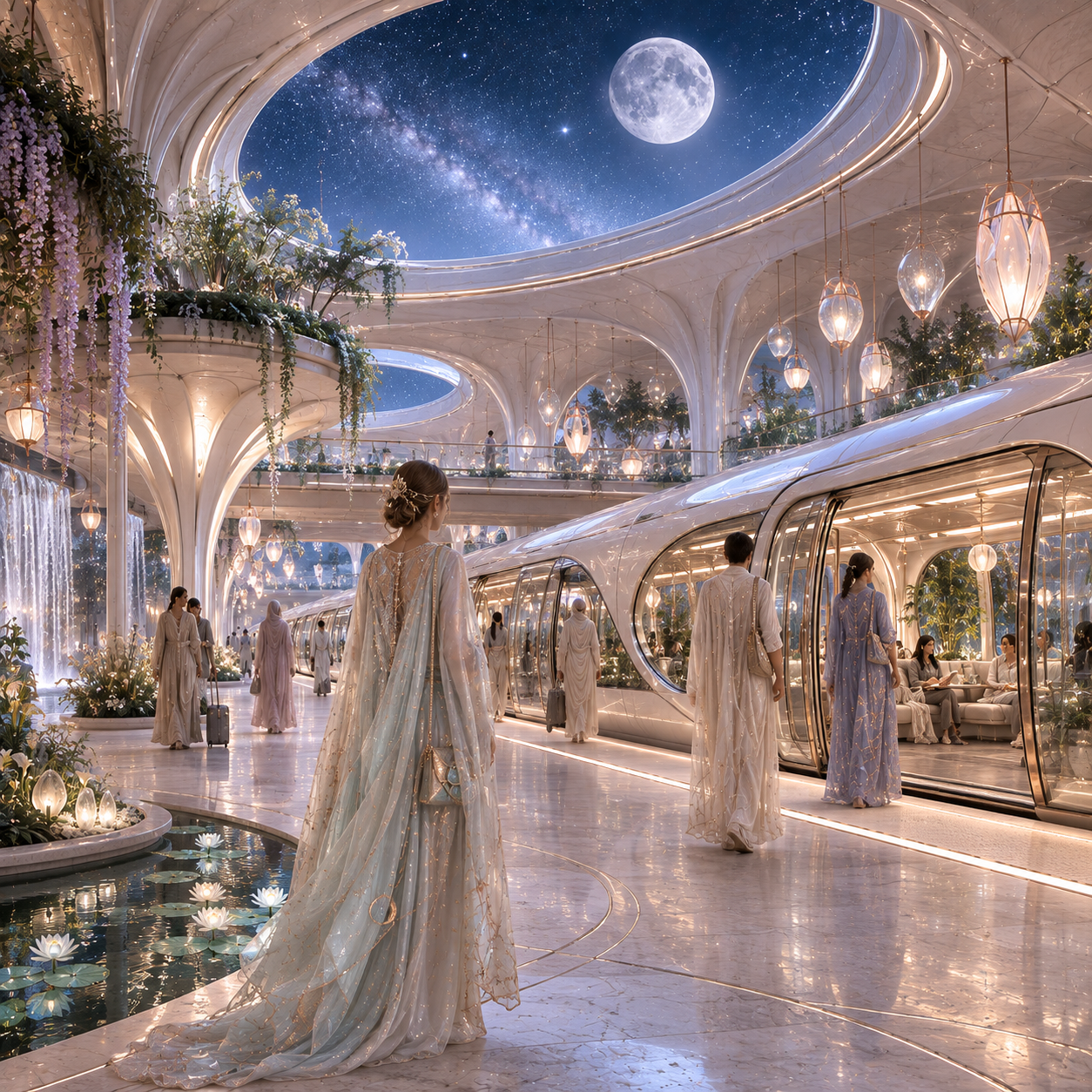
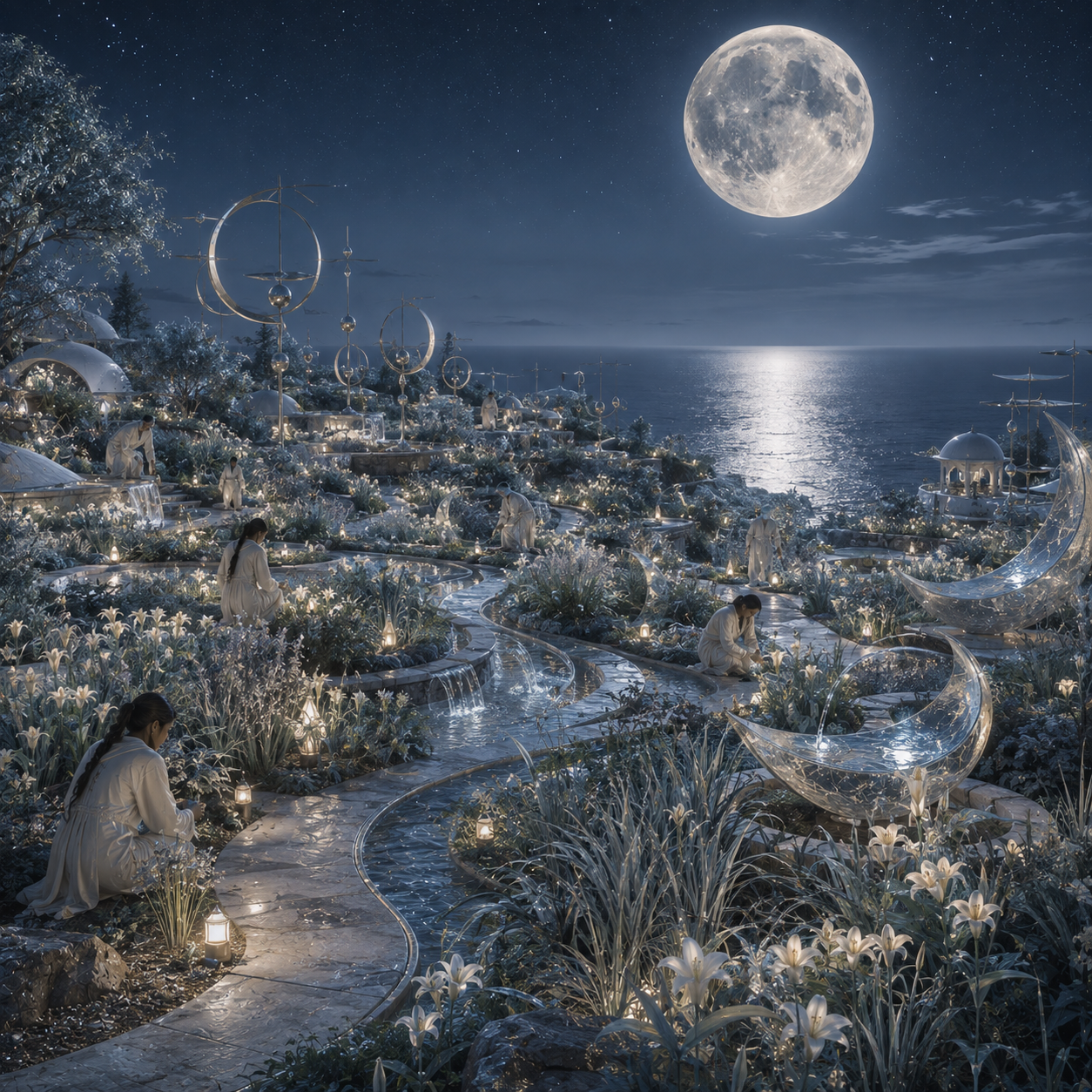
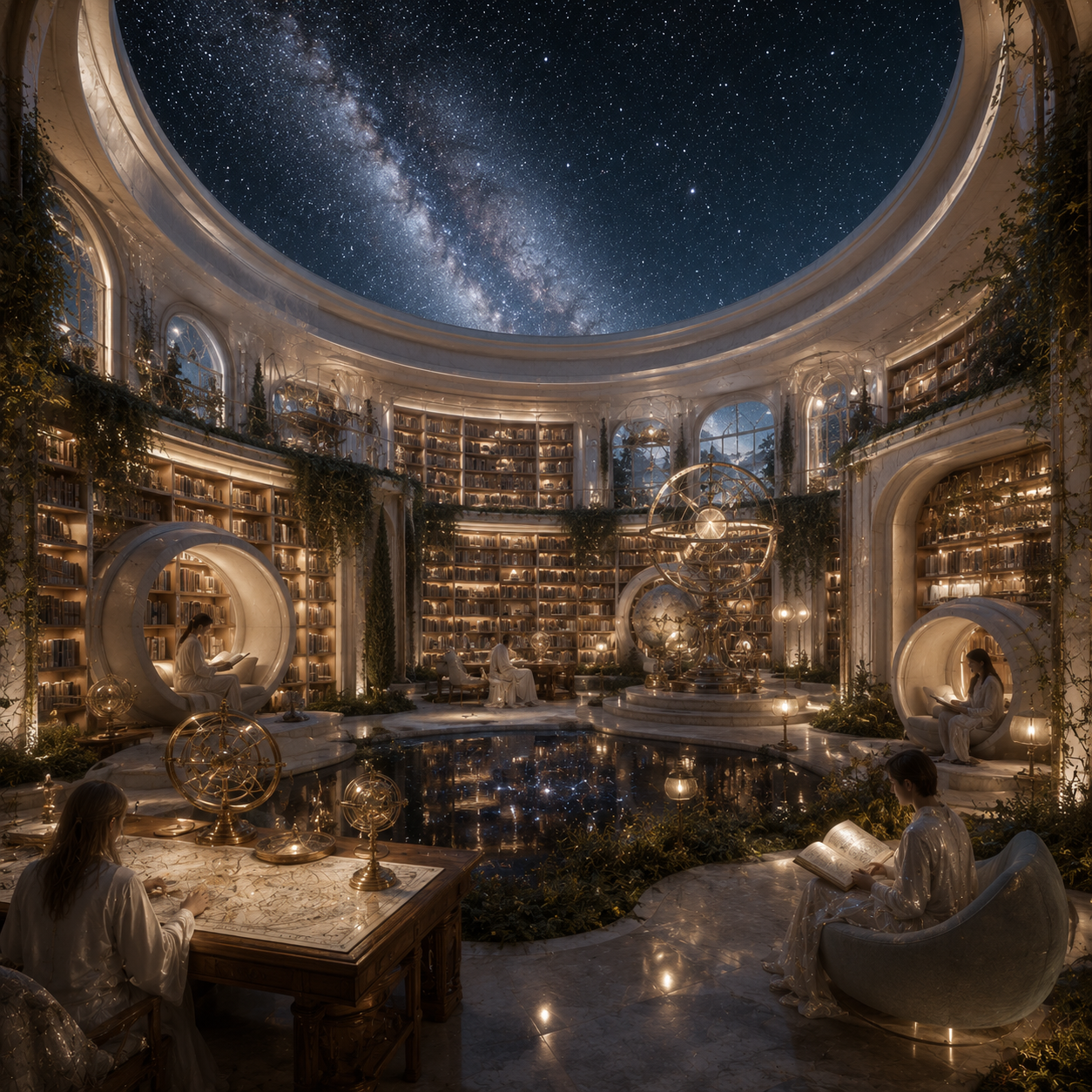
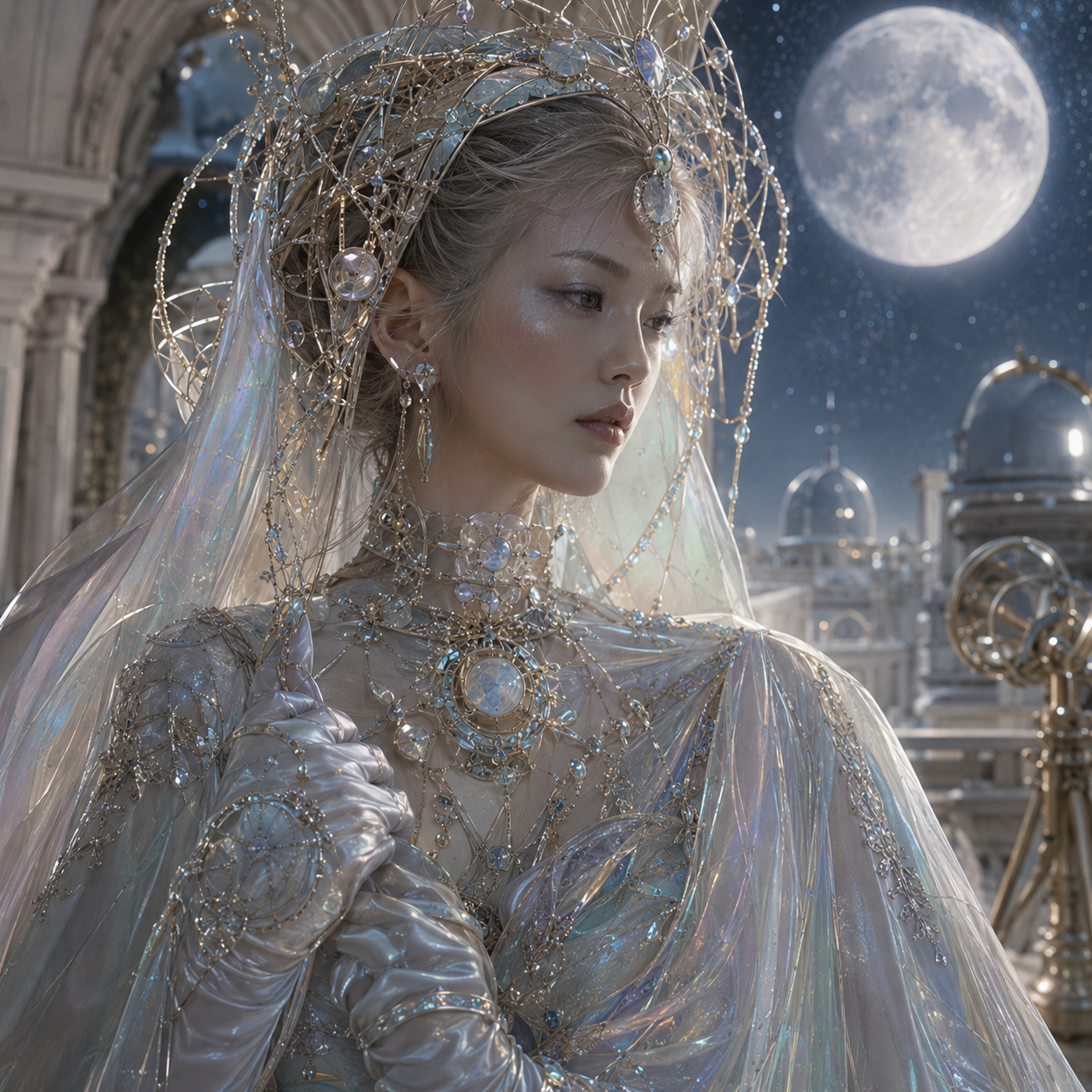
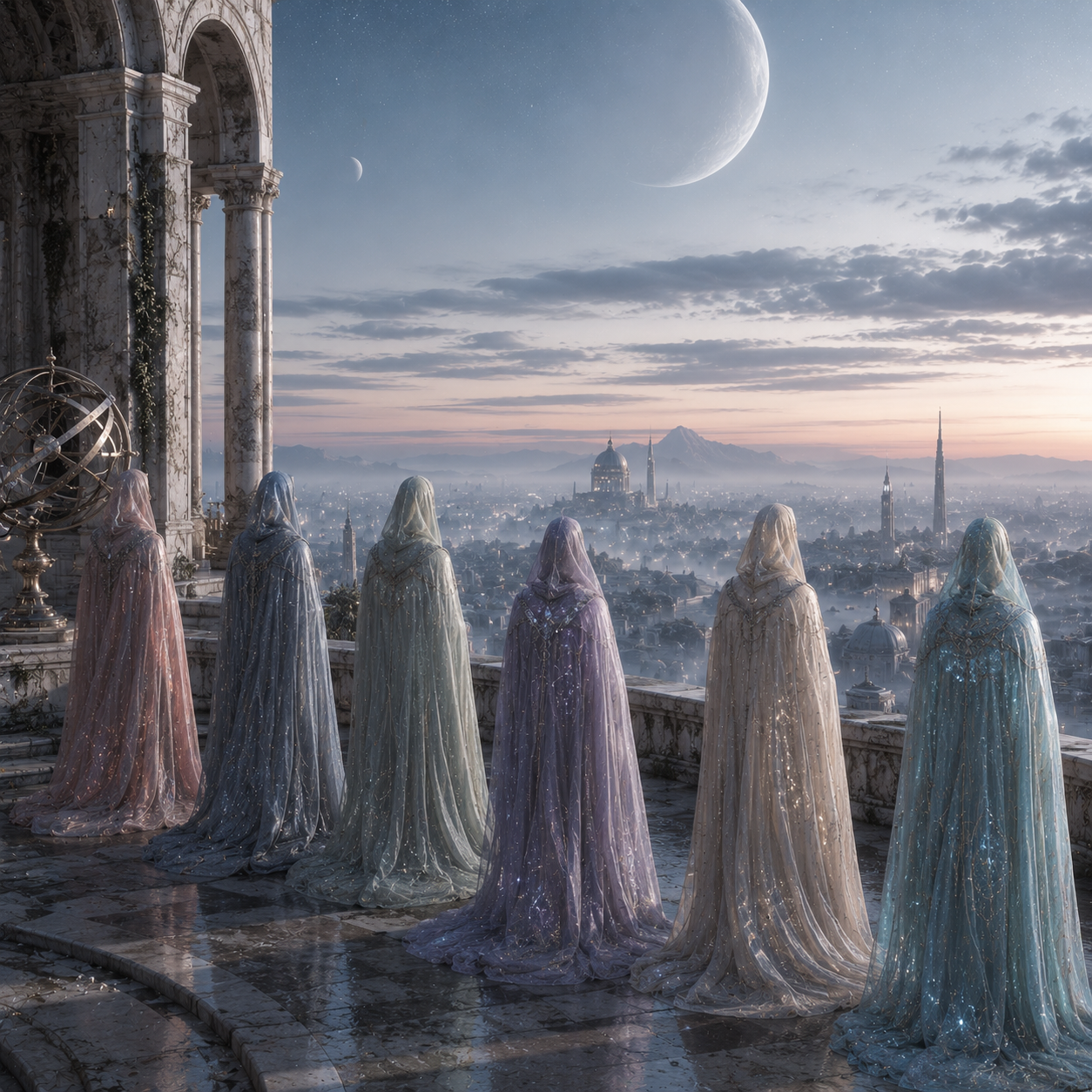
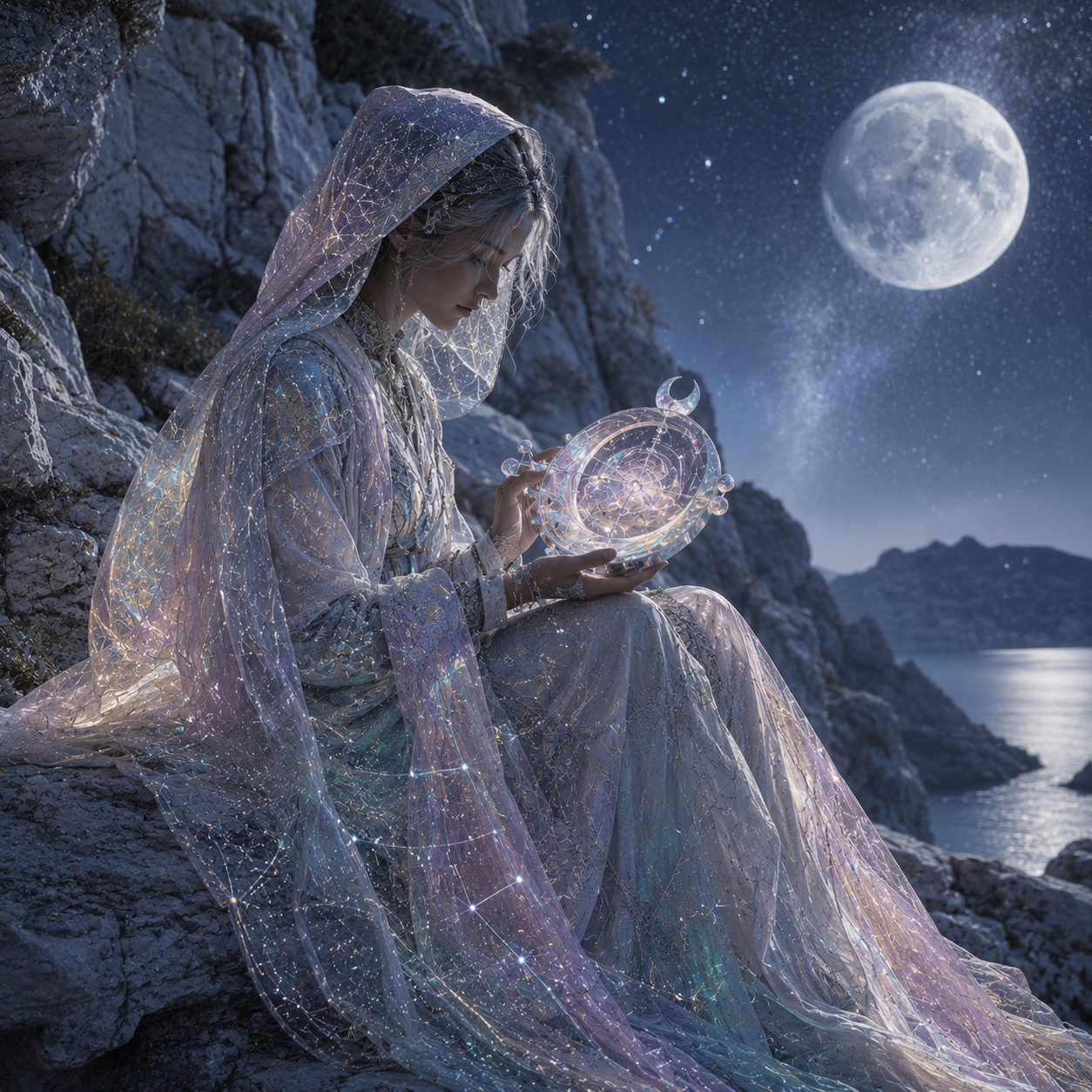
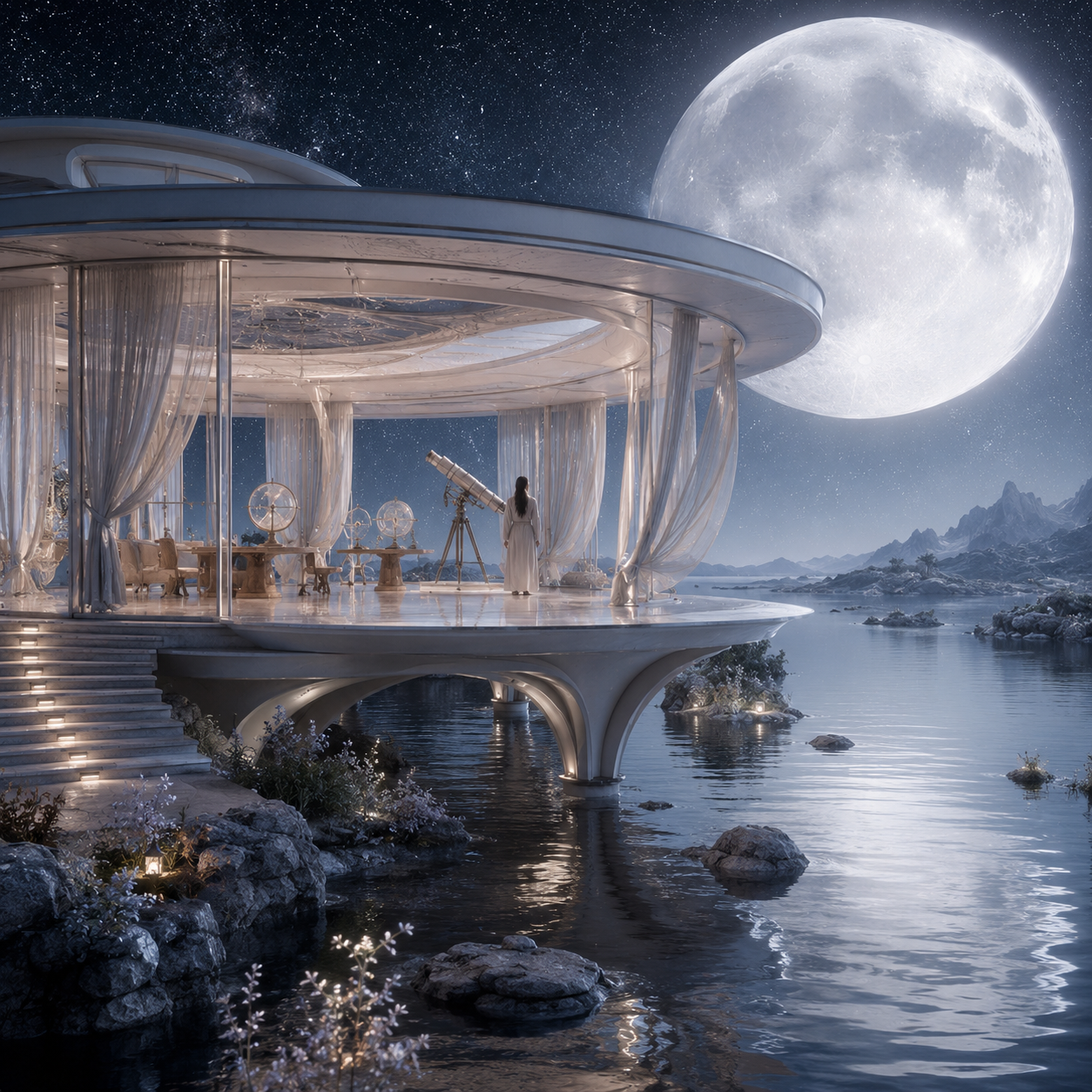
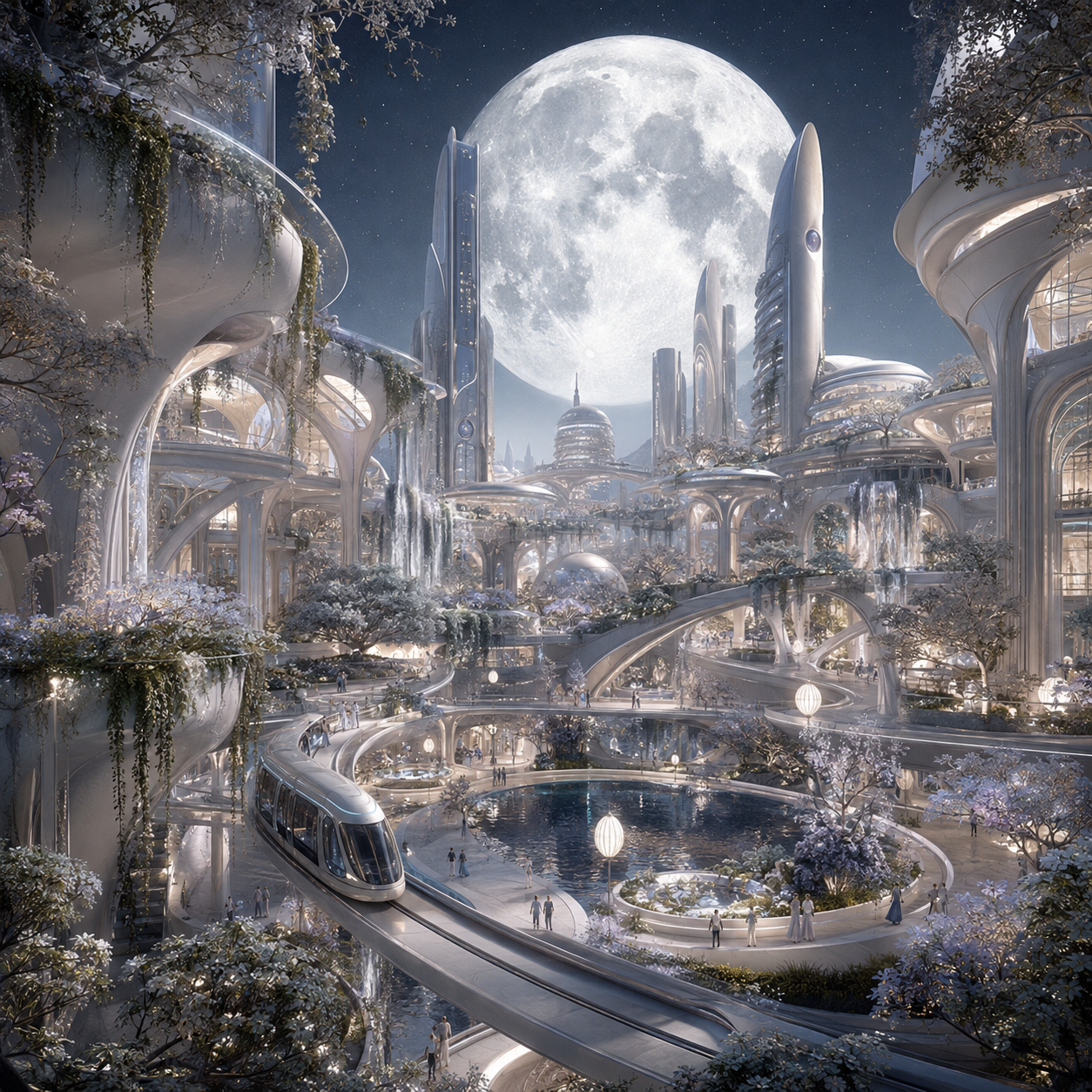
Lunarpunk should feel peaceful, dreamlike and filled with quiet wonder. Every image below is designed to spark a story, capturing a single breathtaking moment within a hopeful future where nature and technology exist in perfect harmony. Perhaps a moonlit sanctuary glows beneath enormous celestial bodies, silver gardens bloom beside crystal rivers, or elegant observatories rise from ancient forests illuminated by bioluminescent light. Use these cinematic scenes to inspire unforgettable characters, tranquil adventures and beautifully imagined science fiction worlds where every moonrise promises a new beginning.
Go Deeper into Lunarpunk Sci-Fi Writing
Lunarpunk imagines futures where progress is measured not by endless expansion, but by balance. Instead of towering megacities and resource depletion, it explores societies where technology supports nature, communities live alongside their environments and innovation quietly improves everyday life. Moonlight, reflection and ecological harmony become symbols of hope, inviting writers to imagine futures that feel both peaceful and deeply inspiring.
◆ Let nature shape your civilisation. Rather than forcing landscapes to adapt to people, imagine communities designed around ancient forests, crystal lakes, mountain observatories or living ecosystems. Buildings might grow alongside trees, rivers could provide energy and gardens may be just as important as laboratories.
◆ Use technology with restraint. Lunarpunk technology should feel elegant rather than overwhelming. Living architecture, bioluminescent lighting, sustainable transport and renewable energy systems create worlds where innovation quietly enhances everyday life instead of dominating it.
◆ Embrace the symbolism of the Moon. The Moon has long represented reflection, intuition, cycles and quiet transformation. Lunar eclipses, moon gardens, celestial observatories and silver landscapes can all become meaningful parts of your world's culture, mythology and traditions.
◆ Build hopeful futures. Conflict still exists in Lunarpunk stories, but it rarely comes from endless war or corporate oppression. Instead, explore challenges such as protecting fragile ecosystems, preserving forgotten knowledge, maintaining harmony between communities or responding to mysterious changes within the natural world.
◆ Create living architecture. Imagine cities grown rather than constructed. Homes woven into enormous trees, bridges formed from living vines, crystal towers nourished by underground roots or observatories blooming like flowers all reinforce the idea that civilisation and nature can flourish together.
◆ Slow the pace. Lunarpunk thrives in quieter moments. A botanist tending glowing flowers, astronomers watching constellations reflected in peaceful lakes or children gathering moonlight beneath ancient trees often feel just as compelling as dramatic action sequences.
◆ Use colour and atmosphere to tell your story. Silver forests, violet skies, glowing rivers, luminous flowers, soft mist and celestial reflections create an instantly recognisable aesthetic. Every setting should feel calm, dreamlike and filled with quiet wonder.
◆ Imagine cultures shaped by sustainability. Festivals celebrating lunar cycles, architecture designed to protect wildlife, technology inspired by natural patterns and communities that value stewardship over consumption all help make your world feel authentic and lived-in.
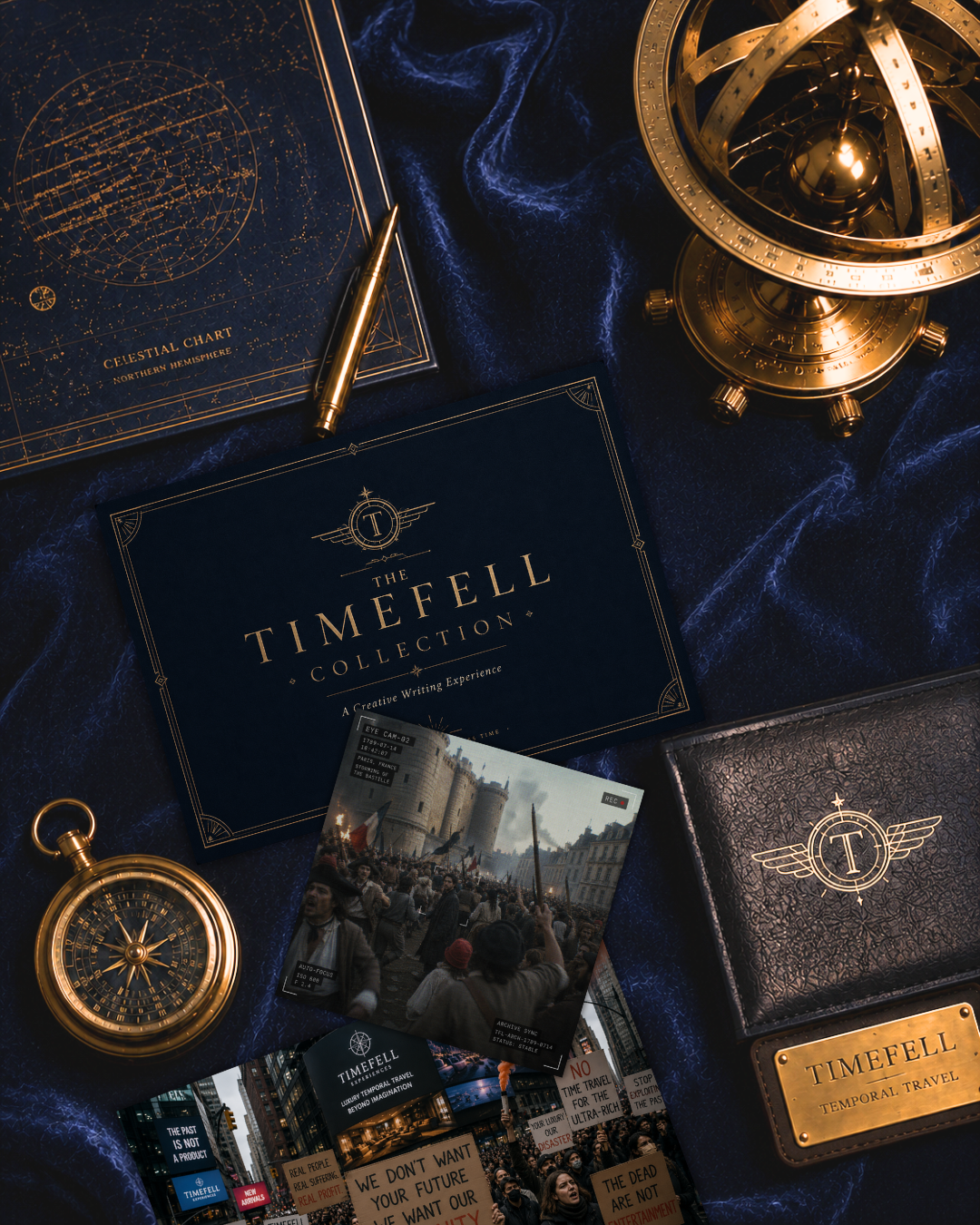
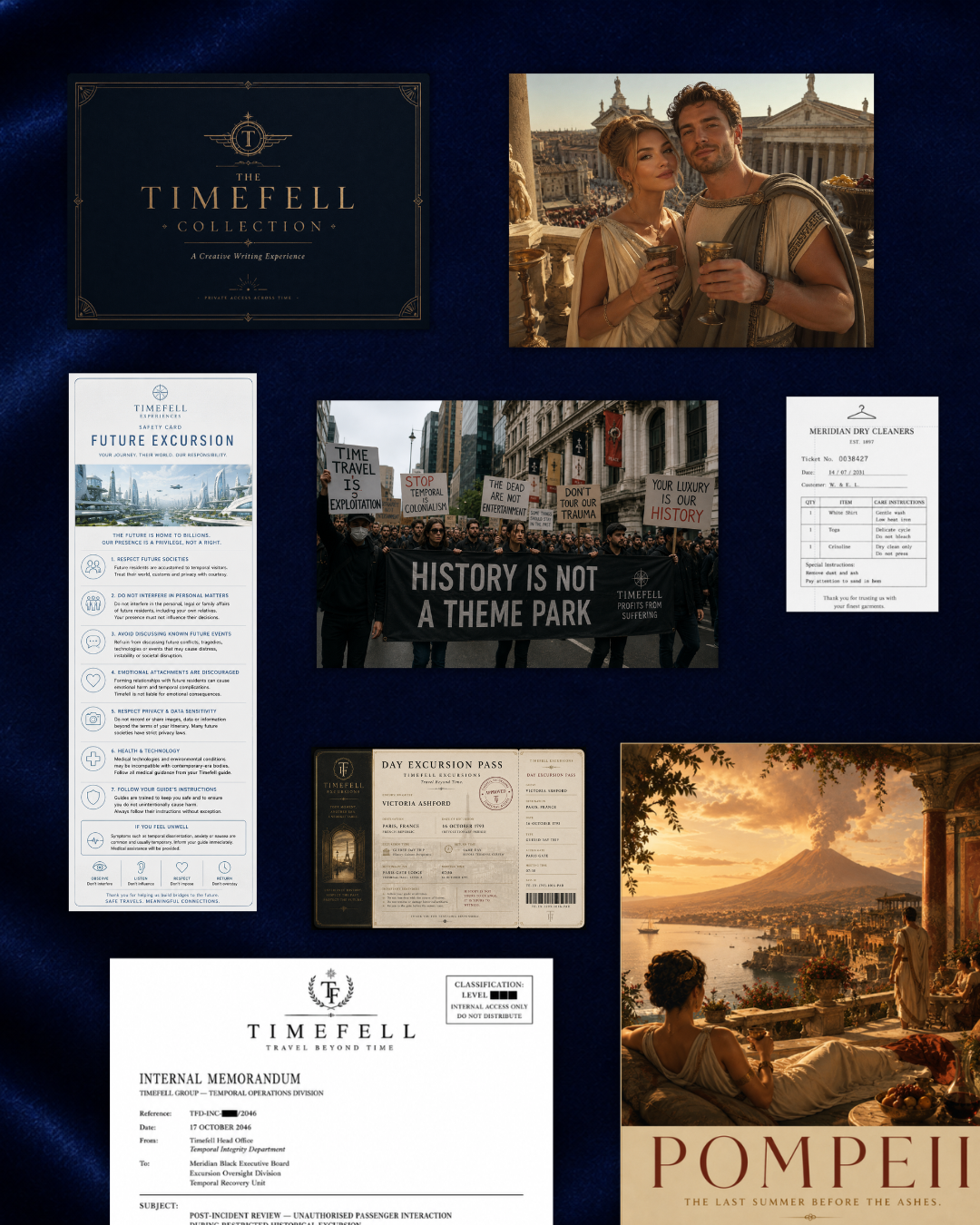

If you'd like to explore this style of immersive speculative worldbuilding, The Timefell CollectionStoryworld Archive offers a different vision of the future through more than 50 interconnected fictional artefacts. Set in a world where time travel has become a commercial tourism industry, the archive invites you to uncover its history through travel posters, boarding passes, newspaper articles, hotel records, diary entries, handwritten notes and private correspondence. Like the best Lunarpunk worlds, it trusts readers to discover meaning through atmosphere, everyday details and the stories hidden between the pages, showing how a believable universe can emerge one carefully crafted document at a time.
Final Thoughts
Lunarpunk sci-fi reminds us that the future doesn't have to be loud to be extraordinary. Instead of sprawling megacities, endless consumption and technological excess, it imagines worlds where innovation exists alongside ancient forests, moonlit gardens and thriving ecosystems. These stories invite us to dream of futures built on compassion, stewardship and curiosity, proving that hope can be just as compelling as conflict.
If these prompts have inspired your next story, explore the Sci-Fi Writing Hub for even more futuristic writing prompts, worldbuilding ideas and science fiction inspiration. You can also browse the Creative Writing Archive to discover hundreds of creative writing prompts, picture prompts, characters, settings, plot ideas and story starters across fantasy, horror, mystery, historical fiction, romance and every other genre.
Choose Your Next Adventure