70 Cozy Sci-Fi Writing Prompts: Space Libraries, Orbital Cafés & Quiet Cosmic Adventures
Science fiction doesn't always have to be about saving the galaxy. Some of the genre's most memorable stories find wonder in quieter moments: sharing tea with an alien neighbour, tending plants aboard a generation ship, repairing old robots in a sleepy lunar village, or discovering forgotten observatories on distant worlds. Cozy sci-fi combines imaginative technology with comforting settings, meaningful relationships and a sense of optimism, proving that the future can be just as inviting as it is extraordinary.
Writers have been exploring these ideas for decades. Becky Chambers' The Long Way to a Small, Angry Planet transforms life aboard a tunnelling spaceship into an intimate story about friendship and belonging, while A Psalm for the Wild-Built imagines a thoughtful conversation between a travelling tea monk and a curious robot. Even classics like Ray Bradbury's The Martian Chronicles and Ursula K. Le Guin's The Left Hand of Darkness remind us that science fiction is often at its strongest when it focuses on people rather than spectacle.
Whether you're writing hopeful adventures, character-driven novellas or imaginative short stories, these 70 Cozy Sci-Fi Writing Prompts will help you create welcoming futures filled with curious discoveries, gentle mysteries and unforgettable worlds.
Looking for more inspiration? Browse the Sci-Fi Writing Hub for even more futuristic prompts and storytelling ideas, or explore the Creative Writing Archive to discover hundreds of prompts across fantasy, horror, mystery, romance and every genre in between.
1. Plot Prompts
Cozy sci-fi explores hopeful futures where wonder is found in everyday life rather than constant conflict. Peaceful space stations, welcoming alien communities, quiet observatories, orbital gardens and interstellar cafés become places where curiosity, friendship and discovery matter just as much as advanced technology. These cozy sci-fi writing prompts will help you imagine comforting futures filled with gentle mysteries, unforgettable characters and beautiful worlds that readers will want to visit.
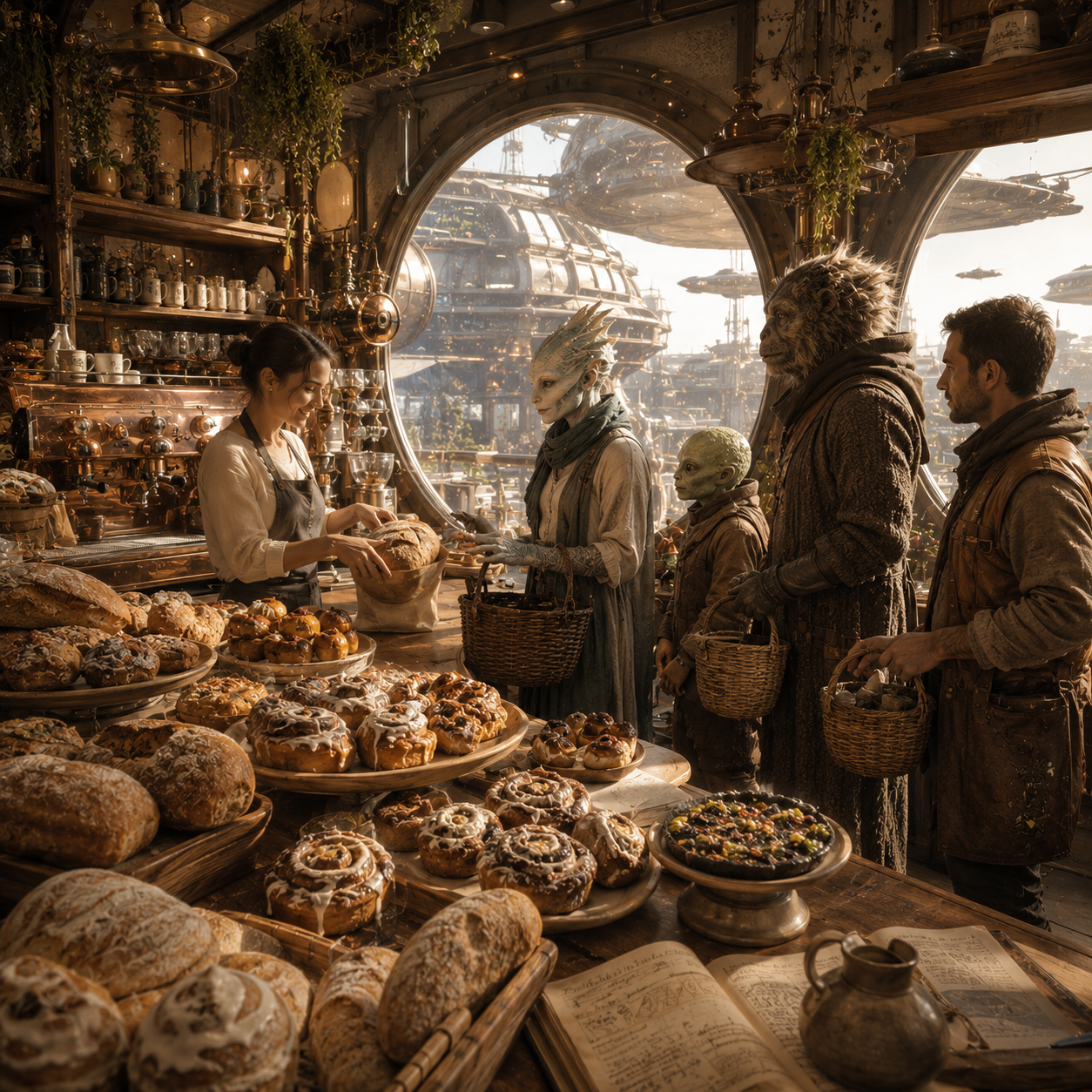
A tiny bakery aboard a peaceful space station becomes famous across the galaxy for serving pastries that somehow remind every visitor of home, no matter which planet they were born on.
Every year, hundreds of retired spacecraft gather around a quiet orbital scrapyard for a festival celebrating the machines that helped shape the Solar System. This year, one vessel arrives with no record of ever existing.
The caretaker of a botanical dome on a distant moon discovers a single flower that blooms only when visitors share memories instead of conversation.
A sleepy village built on the edge of an enormous asteroid welcomes travellers from across the galaxy, but every guest is encouraged to leave behind one story before they depart.
The crew of an interstellar library ship spends decades delivering books to isolated colonies until they discover a world that has somehow written detailed histories of people who haven't arrived yet.
A lonely weather engineer maintaining the climate of a terraformed planet begins exchanging handwritten letters with someone living on the opposite side of the world, despite every map insisting the settlement doesn't exist.
Every evening, an old observatory opens its enormous telescope to anyone curious enough to visit. One night, it reveals a constellation that seems to be quietly rearranging itself into messages.
A family who restores abandoned exploration robots discovers that one machine has spent centuries collecting beautiful but seemingly meaningless souvenirs from forgotten planets.
The owner of a floating teahouse above Saturn's rings notices the same traveller returning every autumn, although their visitor never appears to grow any older.
A peaceful settlement built inside the hollow shell of an ancient spacecraft prepares for its annual Lantern Orbit, a celebration where thousands of glowing lights are released into space—until one lantern returns carrying a message from beyond known space.
2. Story Title Ideas
The best cozy sci-fi titles capture a sense of warmth, wonder and quiet discovery. Rather than promising galaxy-spanning wars or apocalyptic futures, they invite readers into hopeful worlds filled with welcoming communities, beautiful technology and mysteries waiting to unfold.
The Last Café Before Jupiter
The Library Between the Stars
Beneath Saturn's Rings
The Robot Who Watered the Garden
Where the Comets Rest
Tea at the Edge of the Galaxy
The Lanterns of Europa
The Stardust Post Office
The Quiet Orbit Society
The Observatory at Tomorrow's End
3. Opening Lines
Great cozy sci-fi stories begin by inviting readers into a future that already feels lived in. A familiar routine, a curious tradition or an ordinary day interrupted by quiet wonder often creates far more intrigue than immediate danger.
The bakery opened every morning precisely seventeen minutes before sunrise on Mars.
Nobody remembered when the station's garden first began singing, only that it always stopped during meteor showers.
Every Wednesday, the tea robot saved one empty seat beside the window.
The oldest telescope in the colony had never once pointed at the stars by itself—until last night.
The alien florist apologised before handing me flowers that hadn't bloomed for another century.
We measured time on Europa by the colour of the ice rather than the clocks.
Every child in the village knew the abandoned shuttle was haunted, though only by happy memories.
My grandmother claimed the Moon wasn't lonely until humans arrived.
The letter should have taken three months to cross the galaxy, but it arrived before I'd written it.
Every evening, the stars switched on one by one, as though somebody was lighting lanterns across the universe.
4. Closing Lines
Cozy sci-fi endings often leave readers with hope, quiet wonder and the comforting feeling that the universe is far bigger—and kinder—than we first imagined. Rather than answering every question, they leave just enough mystery for readers to keep dreaming.
Long after the last shuttle departed, the café lights still waited for travellers who hadn't yet arrived.
Every spring, another impossible flower bloomed beside the observatory.
Somewhere beyond Saturn's rings, another kettle quietly began to boil.
We never solved the mystery, but somehow the galaxy felt smaller afterwards.
The robot never stopped tending the garden, even after everyone else had gone home.
Years later, children still searched the station for the hidden library.
The final letter simply read, "See you yesterday."
Some constellations aren't meant to be understood—only admired.
Every lantern eventually found its way home.
Looking up at the stars, I realised the universe had been welcoming us all along.
5. Character Ideas
Cozy sci-fi is filled with kind-hearted explorers, thoughtful inventors and ordinary people living extraordinary lives. These characters solve problems through compassion, curiosity and community, proving that hope can be just as compelling as heroism.
A retired astronaut who now runs a tiny bookshop aboard a quiet orbital station.
A cheerful robot gardener determined to grow Earth's extinct flowers on distant planets.
An interstellar postal worker who still insists on delivering handwritten letters.
A young xenobotanist cataloguing edible plants on newly discovered worlds.
An elderly engineer who lovingly restores abandoned exploration droids.
A tea monk travelling between colonies to help strangers solve disagreements over a warm drink.
An alien baker fascinated by recreating recipes from dozens of different worlds.
A museum curator preserving everyday objects from humanity's first settlements beyond Earth.
A stargazing child convinced the constellations are trying to tell stories.
The caretaker of an observatory where visitors come not to study space, but to find perspective.
6. Setting Ideas
The settings of cozy sci-fi feel welcoming despite their extraordinary locations. They combine imaginative technology with familiar comforts, creating places readers would happily spend an afternoon exploring.
A peaceful village built beneath a transparent dome overlooking Saturn's rings.
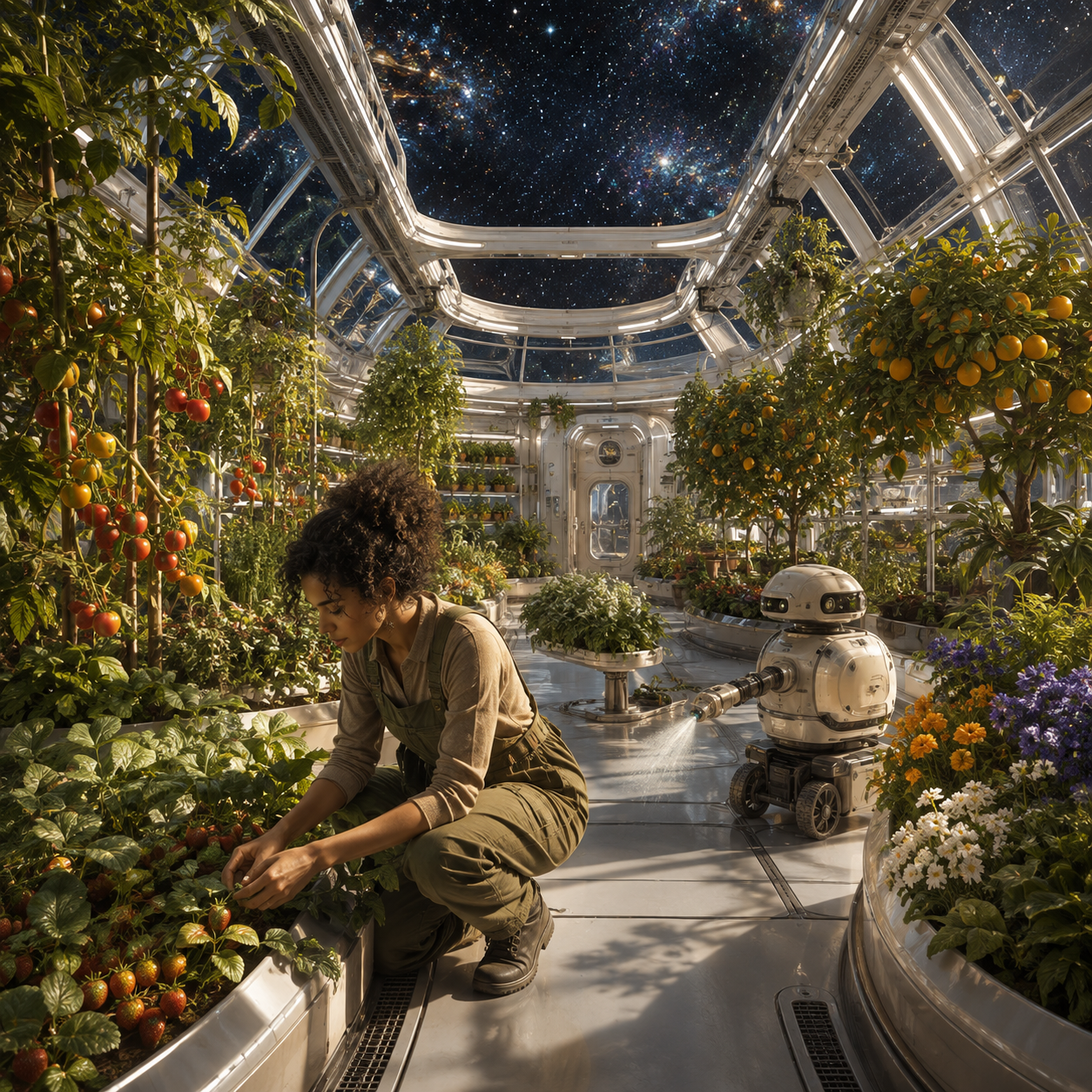
A floating greenhouse drifting slowly through interstellar space.
A tiny café perched on the rim of an ancient lunar crater.
A library ship where every room overlooks a different galaxy.
A mountain observatory on a planet with permanent twilight skies.
A bustling weekend market shared by humans and dozens of alien cultures.
A railway winding through forests growing beneath the surface of a terraformed moon.
A cosy harbour where solar-powered spacecraft arrive like sailing boats.
A botanical sanctuary preserving plants from hundreds of inhabited worlds.
A warm wooden cottage overlooking a frozen methane sea on Titan.
7. Picture Prompts
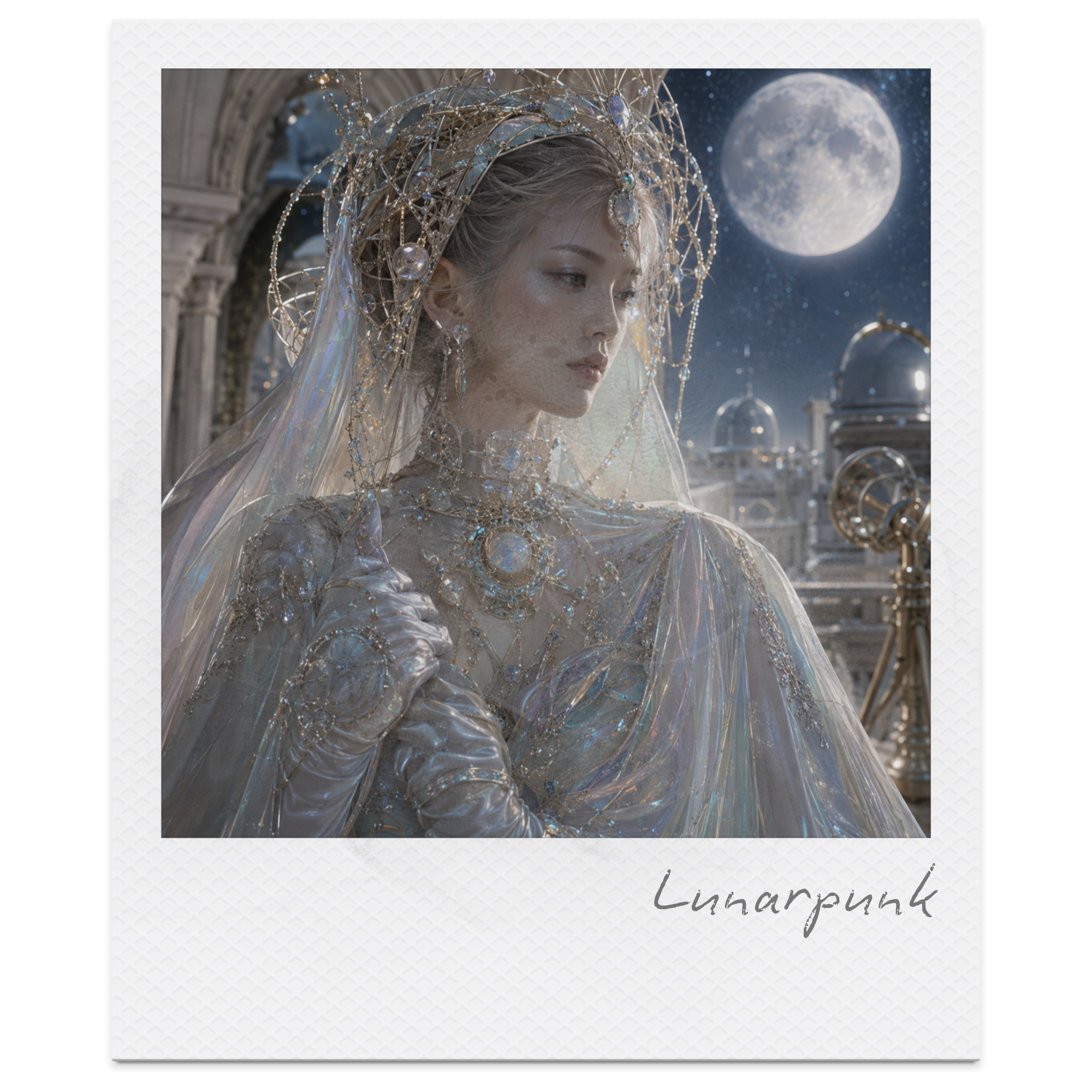
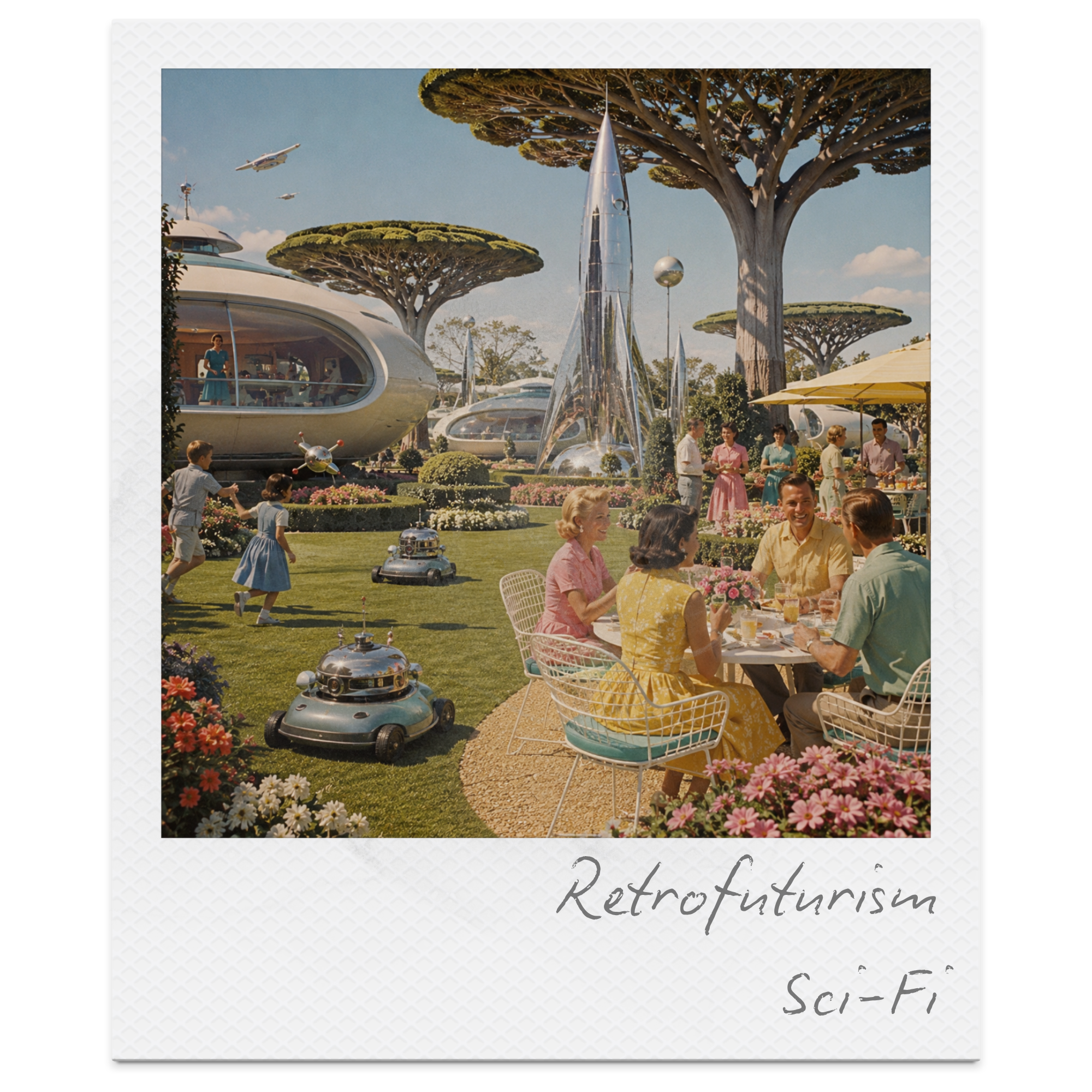
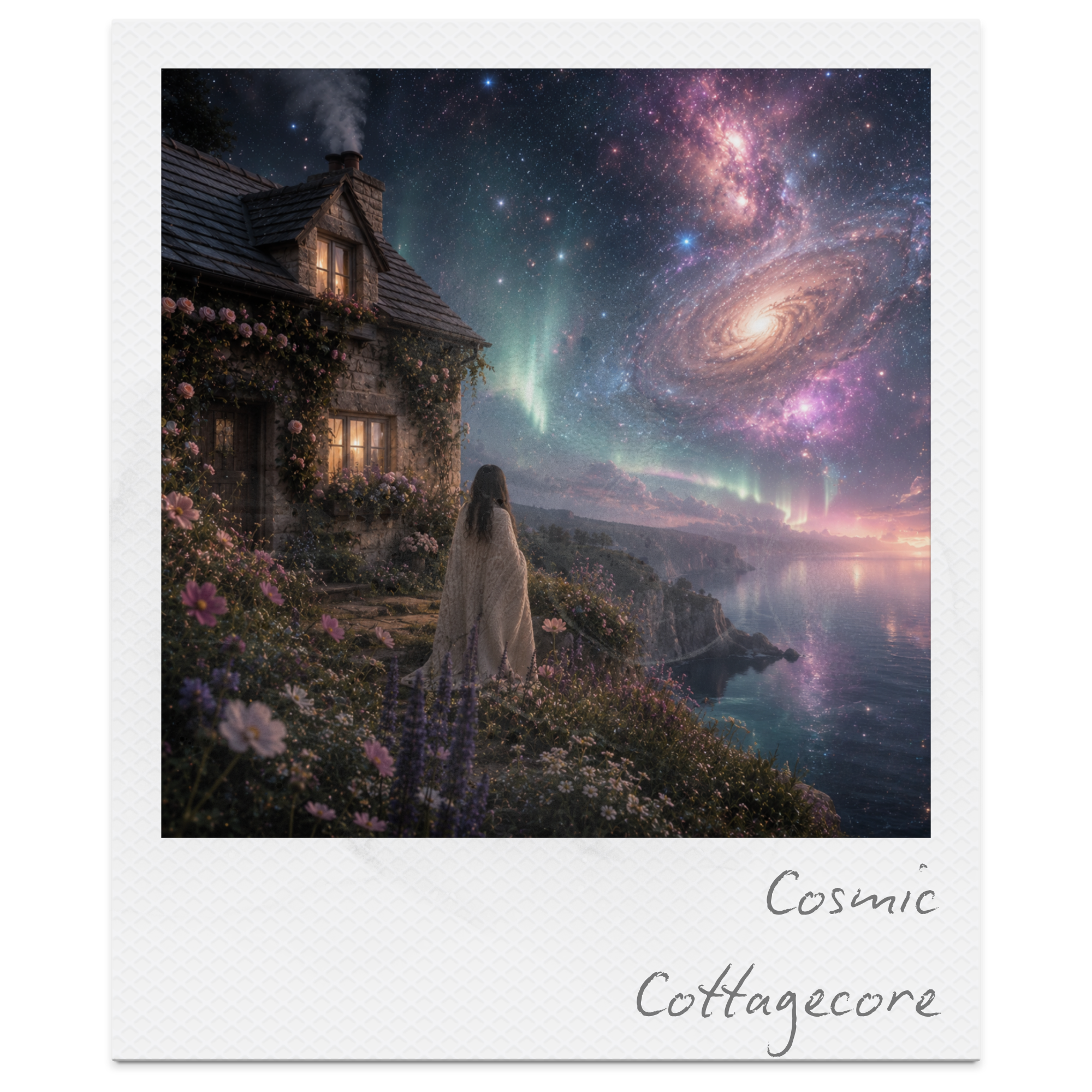
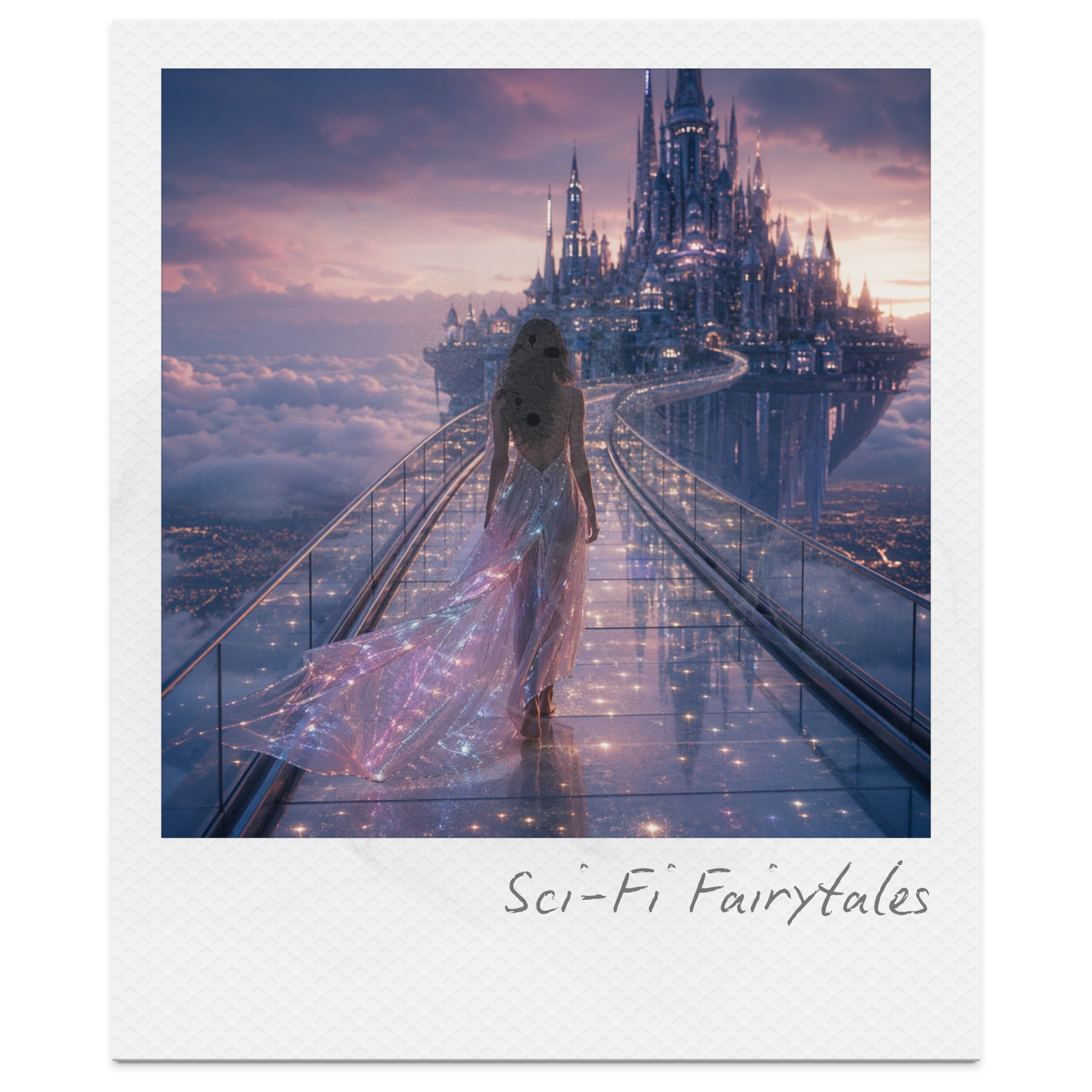
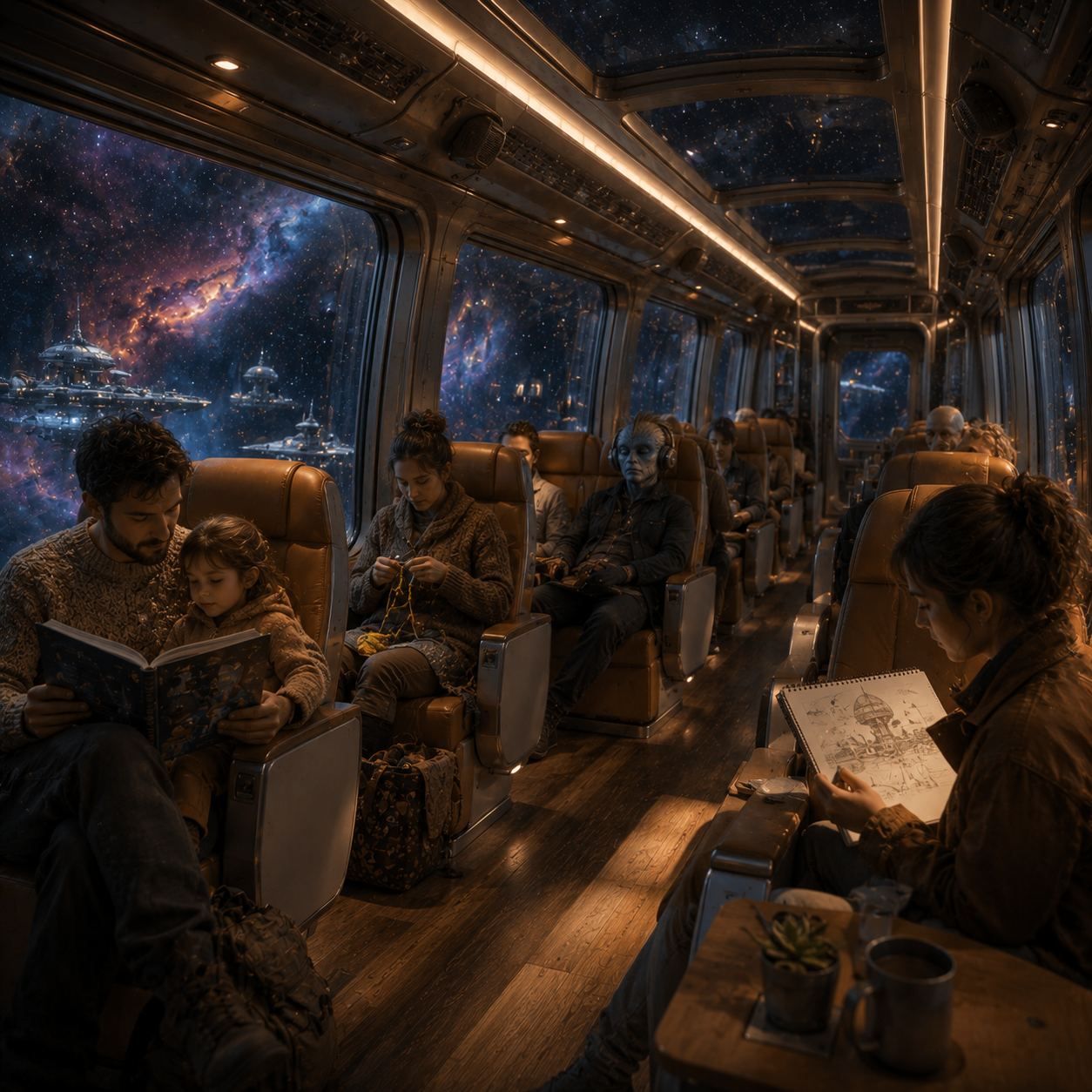
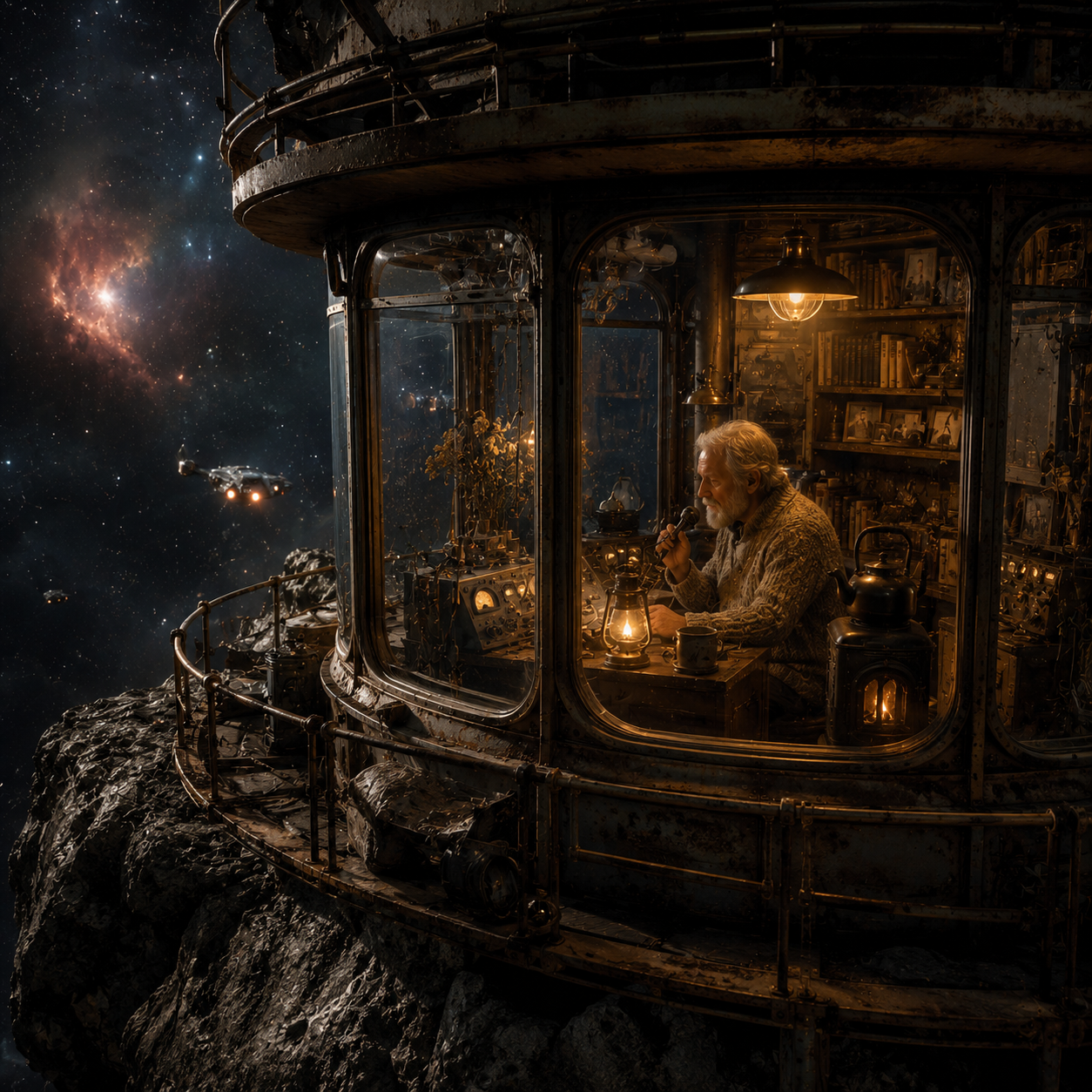
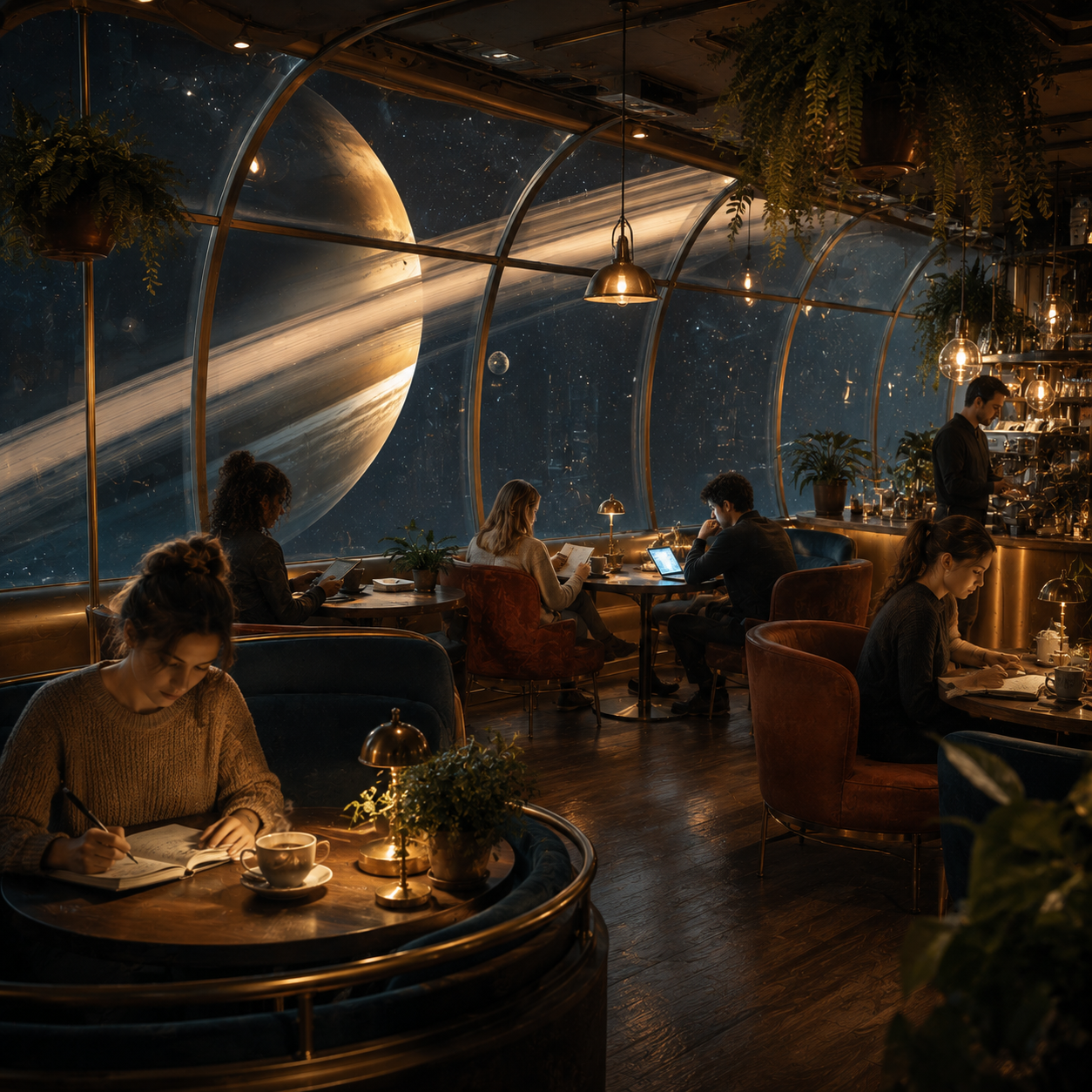
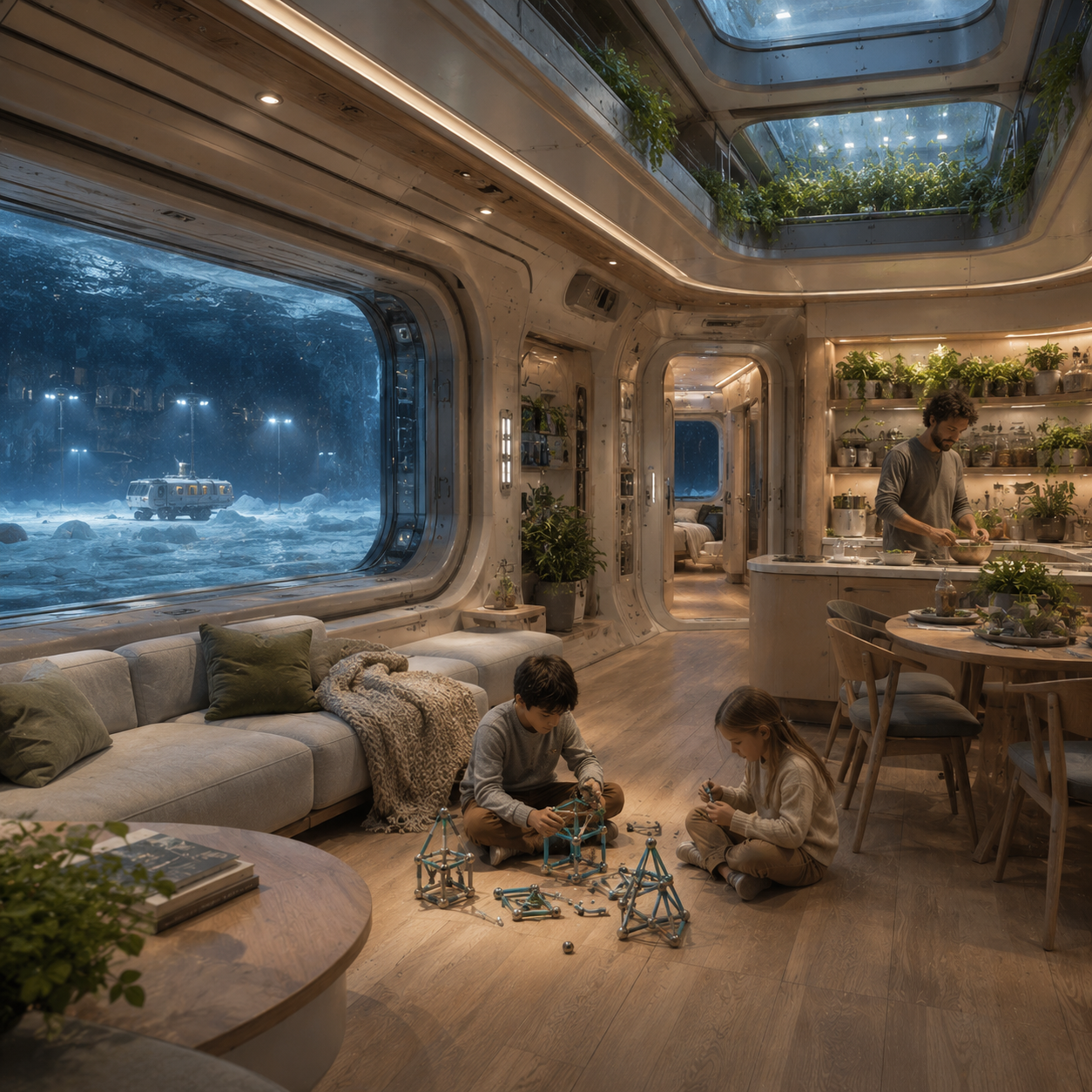
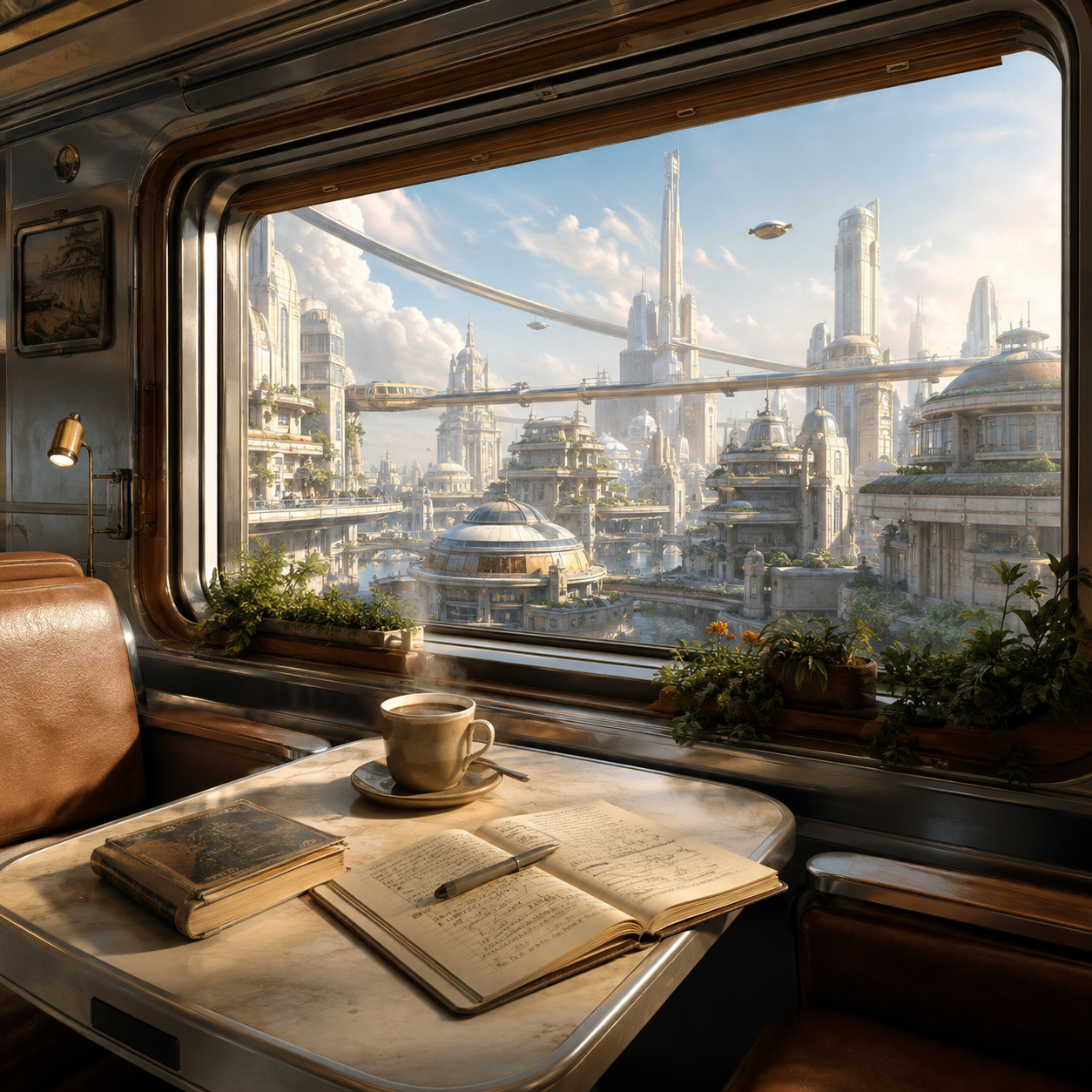
Cozy sci-fi artwork should capture the beauty of hopeful futures rather than dystopian worlds. Imagine warm lighting, elegant spacecraft, peaceful space stations, welcoming alien cultures, lush botanical domes, cosy cafés overlooking distant planets, quiet observatories and breathtaking cosmic landscapes. Every scene should feel cinematic, comforting and filled with the quiet promise that the future can be a place of wonder.



Go Deeper into Cozy Sci-Fi Writing
The most memorable cozy sci-fi stories remind us that the future doesn't have to be defined by conflict. Instead, they invite readers into hopeful worlds where curiosity, kindness and community shape everyday life. Whether your story unfolds aboard a peaceful orbital station, inside a thriving biodome or in a quiet settlement beneath unfamiliar stars, the strongest settings feel lived in long before the main character arrives.
◆ Build a future people would genuinely want to live in. Think beyond futuristic technology and consider how ordinary life has changed. What do people eat? How do they travel? Where do families gather? Readers connect with worlds that feel comfortable enough to imagine calling home.
◆ Show everyday life instead of constant adventure. Cozy sci-fi often finds its most meaningful moments in small interactions—a neighbour dropping by for tea, a mechanic repairing an old exploration drone, or a librarian recommending books to travellers from another planet. Those quieter scenes make the extraordinary feel believable.
◆ Let technology support the story, not overshadow it. Rather than explaining every scientific detail, focus on how inventions change people's relationships, traditions and routines. The emotional impact of technology is usually far more memorable than the mechanics behind it.
◆ Create traditions that make your world feel lived in. Annual meteor festivals, harvest celebrations beneath artificial suns, weekly markets shared by humans and aliens, or community observatory nights all help your setting feel as though generations have lived there before your story begins.
◆ Design places readers want to visit. Cozy sci-fi thrives on beautiful settings. Think botanical gardens beneath glass domes, cafés overlooking Saturn's rings, floating libraries, peaceful research stations, mountain observatories and woodland villages on distant planets. Every location should encourage curiosity rather than fear.
◆ Leave room for gentle mysteries. Not every question needs an answer. A constellation that quietly changes shape, a letter that arrives before it is written or a forgotten station that still appears on old star maps can all spark wonder without turning the story into a thriller.
◆ Focus on people before spectacle. Readers are more likely to remember a heartfelt conversation or a meaningful friendship than another exploding spaceship. The future feels most convincing when it is experienced through ordinary lives rather than extraordinary heroes.
◆ Think about the stories happening beyond the page. Every setting should feel as though hundreds of other lives continue after your chapter ends. Shops still open each morning, spacecraft still arrive in port, festivals still take place and neighbours continue their routines whether your protagonist is watching or not.
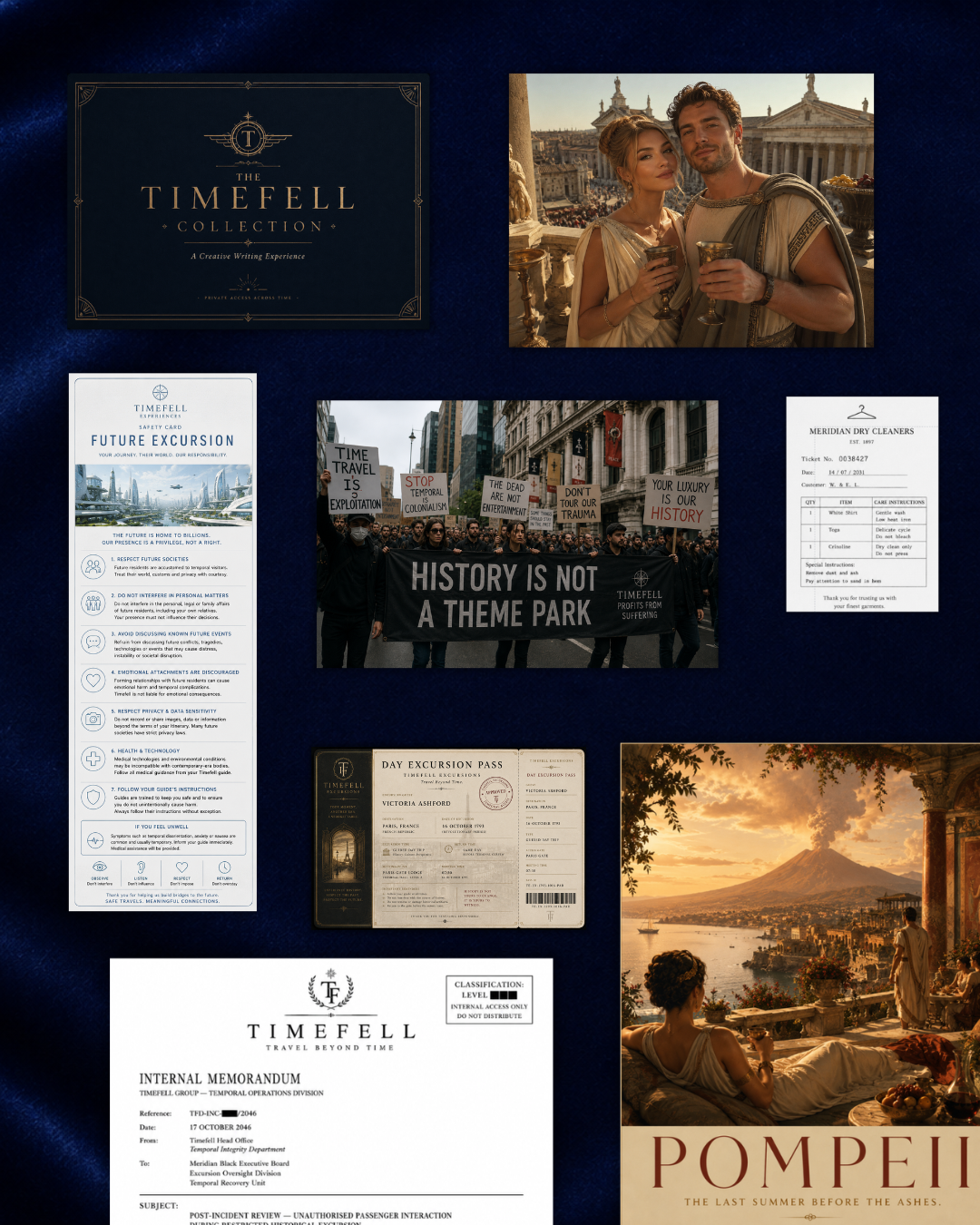
If you'd like to explore this style of immersive worldbuilding even further, The Timefell Collection Storyworld Archive offers a unique example of a science fiction setting revealed entirely through fictional artefacts. Instead of explaining its world through traditional narration, the archive invites you to piece together a future where time travel has become a global tourism industry using more than 50 interconnected documents, including travel posters, boarding passes, hotel records, newspaper articles, diary entries, reviews, private correspondence and handwritten notes. Rather than presenting one definitive story, it encourages writers to make connections, develop theories and discover how small everyday details can create a world that feels vast, believable and alive.


Final Thoughts
Cozy sci-fi reminds us that the future doesn't have to be something to fear—it can be somewhere we'd happily call home. From peaceful space stations and thriving lunar gardens to welcoming alien communities and quiet observatories beneath unfamiliar skies, these stories celebrate hope, curiosity and the simple joy of discovering something new. The greatest adventures aren't always found in galaxy-spanning wars; sometimes they're waiting over a shared meal, inside a forgotten library or beneath a sky filled with unfamiliar stars.
If these prompts have inspired your next story, explore the Sci-Fi Writing Hub for even more science fiction writing prompts, worldbuilding ideas and futuristic inspiration. You can also browse the Creative Writing Archive to discover hundreds of creative writing prompts, picture prompts, characters, settings, plot ideas and story starters across fantasy, horror, mystery, dystopian fiction, historical fiction, romance and every other genre.
Choose Your Next Adventure