70 Retrofuturism Sci-Fi Writing Prompts: Atomic Cities, Rocket Terminals & Vintage Futures
Retrofuturism invites us to see the future through the eyes of the past. Inspired by the bold optimism of the 1950s, 60s and 70s, it imagines a tomorrow filled with gleaming chrome cities, streamlined rocket ships, atomic suburbs, robot assistants and holiday resorts on Mars. Rather than predicting what the future will become, retrofuturism celebrates what earlier generations hoped it might be—a world where scientific progress promised adventure, prosperity and endless possibility.
Its influence can be seen everywhere from the optimistic architecture of World's Fairs and vintage NASA concept art to classics such as The Jetsons, Forbidden Planet, The Jetsons, Tomorrowland, pulp science fiction magazines and the striking illustrations of artists like Syd Mead. Blending mid-century modern design with ambitious visions of space exploration, retrofuturism creates worlds that feel both nostalgic and wonderfully imaginative, where monorails glide between glittering towers, families picnic beneath giant rockets and every journey to the Moon feels like the start of a brighter tomorrow.
Below you'll discover 70 Retrofuturism Writing Prompts, including plot ideas, story titles, opening lines, ending lines, unforgettable characters, iconic settings and cinematic picture prompts. Whether you're creating an optimistic space adventure, a vintage-inspired science fiction novel or a world shaped by yesterday's vision of tomorrow, these prompts are designed to spark your imagination. For even more futuristic inspiration, explore the Sci-Fi Writing Hub, or browse the Creative Writing Archive for hundreds of writing prompts across every genre.
1. Plot Prompts
Retrofuturism celebrates yesterday's vision of tomorrow, imagining optimistic futures filled with chrome architecture, atomic-age innovation, rocket-powered adventures and boundless belief in scientific progress. These retrofuturism writing prompts capture the excitement of vintage space exploration, mid-century design and a future that never was, where every invention promises a brighter world just over the horizon.
A family boards the world's first commercial rocket liner for a weekend holiday on the Moon, only to discover their destination has quietly vanished from every official map.
An engineer unveiling the newest household robot begins receiving maintenance reports from dates decades in the future.
Every morning, commuters ride gleaming monorails through a city of soaring chrome towers, unaware that the skyline subtly changes overnight.
The grand opening of an underwater atomic suburb is interrupted when its perfectly designed future begins replaying the same afternoon again and again.
A luxury hotel orbiting Mars advertises "Tomorrow's Vacation Today," but every guest leaves remembering a different version of history.
An optimistic World's Fair showcases inventions that promise to change humanity forever, yet one pavilion displays technology nobody claims to have built.
A newspaper photographer covering the launch of a revolutionary flying automobile captures someone standing in the crowd who won't be born for another fifty years.
The proud owner of a roadside rocket diner discovers one regular customer arrives from a different decade every Thursday evening.
A cheerful television presenter introduces viewers to the fully automated Home of Tomorrow, where one room refuses to obey the laws of time.
When construction begins on humanity's first permanent city among the clouds of Venus, workers uncover blueprints proving it has already existed.
2. Story Title Ideas
Retrofuturism titles should feel bold, optimistic and timeless, echoing the excitement of vintage science fiction magazines, World's Fairs and Space Age advertisements.
Tomorrow
Liftoff
Skylines
Atomica
Orbit
Rocket City
Tomorrowland Dreams
Chrome Horizons
Atomic Boulevard
Stardust Terminal
3. Opening Lines
The best retrofuturism stories begin with confidence and optimism before introducing a single impossible detail. A routine rocket launch, a gleaming new invention or a cheerful broadcast can quickly hint that this imagined future isn't quite as perfect as it first appears.
The morning rocket to Mars departed precisely on schedule, as it had every day for the past twenty years.
Tomorrow officially arrived at 9:00 a.m. with fireworks, brass bands and the unveiling of the city's newest monorail.
Mother insisted the robot made better pancakes than she ever could.
Every child dreamed of becoming a rocket pilot, but only one had ever returned from Planet Nine.
The television promised we'd all be living on Venus before Christmas.
Chrome reflected the sunrise from every skyscraper in the city.
The World's Fair had saved its greatest invention for the final day.
Nobody questioned why the Moon had its own suburb anymore.
Every Thursday, the flying cars disappeared for exactly seven minutes.
The postcard simply read, "Greetings from Tomorrow."
4. Closing Lines
Retrofuturism endings should leave readers with a sense of wonder, reminding them that the future is as much about hope and imagination as technology itself.
Tomorrow had finally arrived—and it was even brighter than we'd imagined.
Somewhere beyond the clouds, another rocket climbed towards the stars.
The city's neon lights glowed long after the last monorail disappeared into the horizon.
Every generation dreams of tomorrow; ours simply reached it first.
The countdown began again.
We never discovered who built Tomorrow City—but we happily moved in anyway.
Another postcard arrived the following morning, postmarked one hundred years from now.
The robot waved goodbye as our rocket disappeared into the dawn.
Across the galaxy, someone else was still dreaming of the future.
Perhaps the greatest invention had always been hope.
5. Character Ideas
Retrofuturism is populated by optimistic inventors, daring explorers and polished professionals who believe technology can solve almost any problem. These characters embody the excitement and ambition of a future imagined through mid-century eyes.
A charismatic rocket captain leading luxury passenger voyages across the Solar System.
A brilliant inventor unveiling a revolutionary household robot at a futuristic exposition.
An architect designing gleaming chrome cities beneath enormous glass domes.
A cheerful television presenter introducing audiences to the latest "Home of Tomorrow."
A monorail conductor transporting commuters between towering space-age cities.
A fashion designer creating elegant bubble helmets and interplanetary travel wear.
The manager of a luxurious Moon hotel welcoming wealthy tourists from Earth.
A newspaper reporter covering humanity's greatest technological achievements.
A teenage science prodigy determined to build the world's first personal rocket.
A maintenance engineer quietly responsible for keeping an entire futuristic city running behind the scenes.
6. Setting Ideas
Retrofuturism settings celebrate the bold optimism of yesterday's tomorrow, blending streamlined architecture, chrome engineering and atomic-age elegance with limitless visions of space exploration.
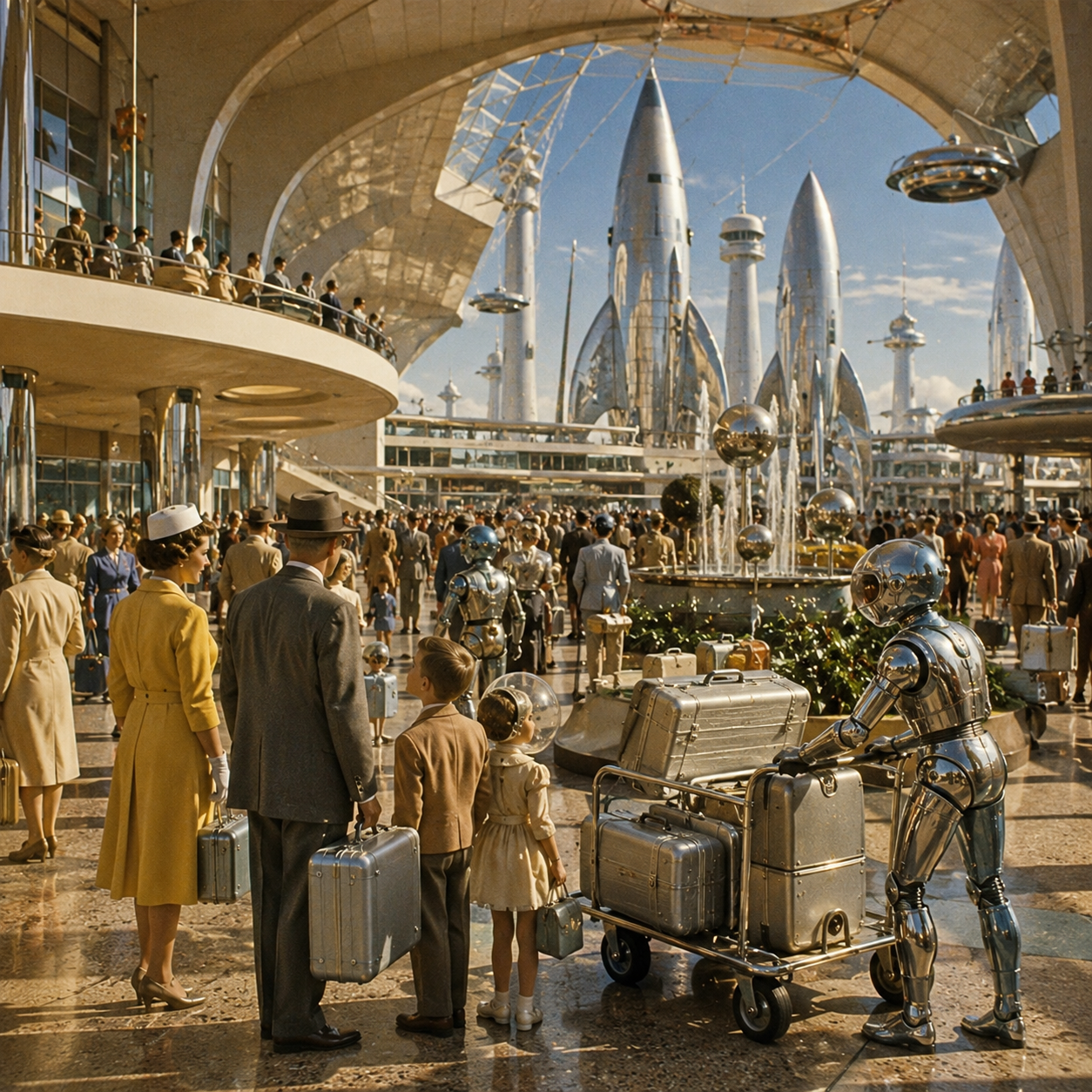
A magnificent chrome rocket terminal where thousands of passengers depart daily for destinations across the Solar System.
An immaculate atomic suburb filled with curved glass houses, flying cars and perfectly manicured gardens.
A luxurious Moon resort where families spend their summer holidays beneath enormous observation domes.
A bustling World's Fair showcasing humanity's most ambitious inventions beneath soaring futuristic pavilions.
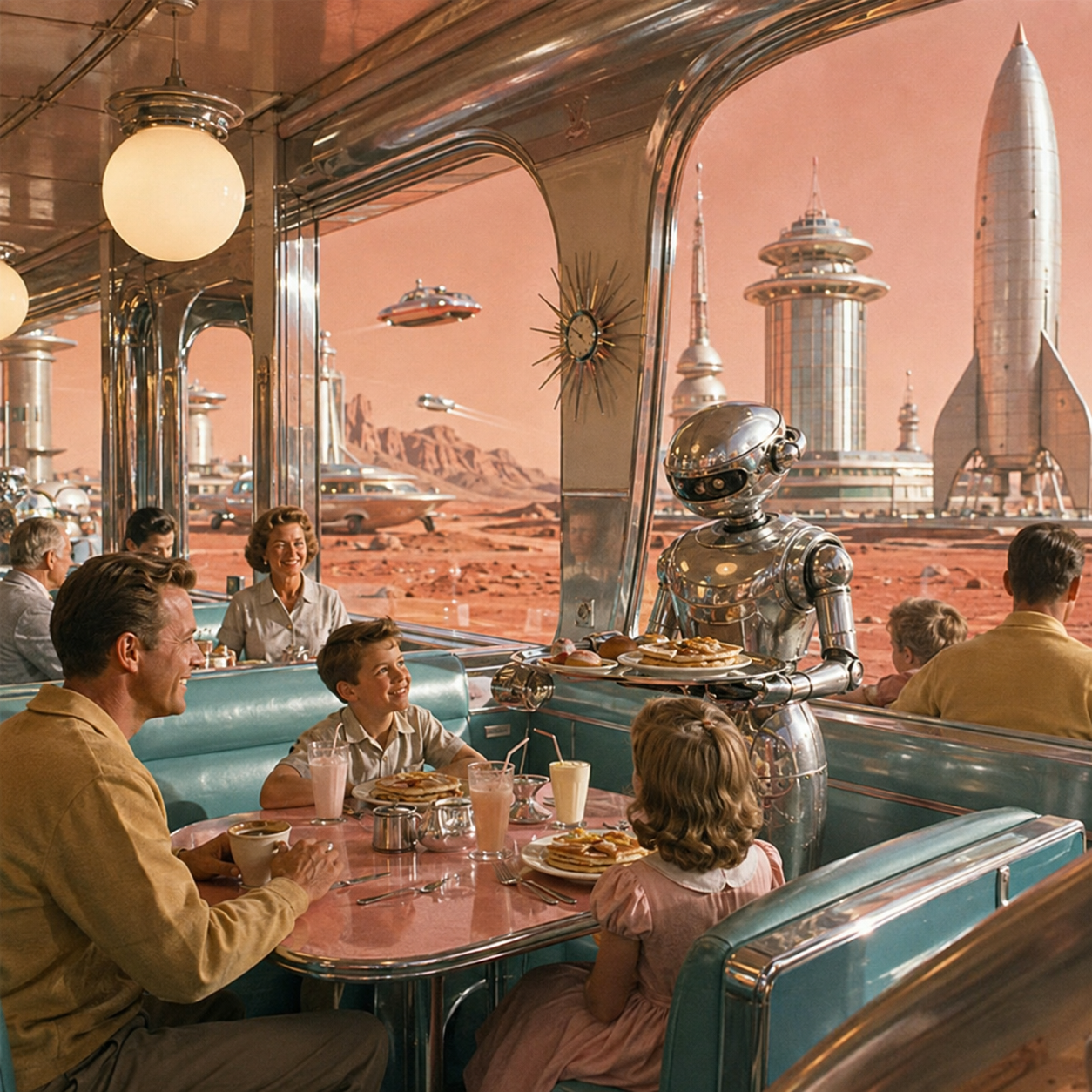
A neon-lit diner overlooking the rust-red plains of Mars, where robot waiters serve travellers fresh from Earth.
A gleaming orbital shopping centre filled with automated boutiques, rooftop gardens and panoramic space views.
A futuristic coastal city where streamlined monorails weave between towering Art Deco skyscrapers.
An elegant observatory perched above the clouds of Venus, welcoming visitors to witness spectacular celestial events.
A rocket-shaped hotel offering luxury accommodation for explorers preparing to journey beyond the Solar System.
A vast underground metropolis built to protect humanity while celebrating the limitless promise of scientific progress.
7. Picture Prompts
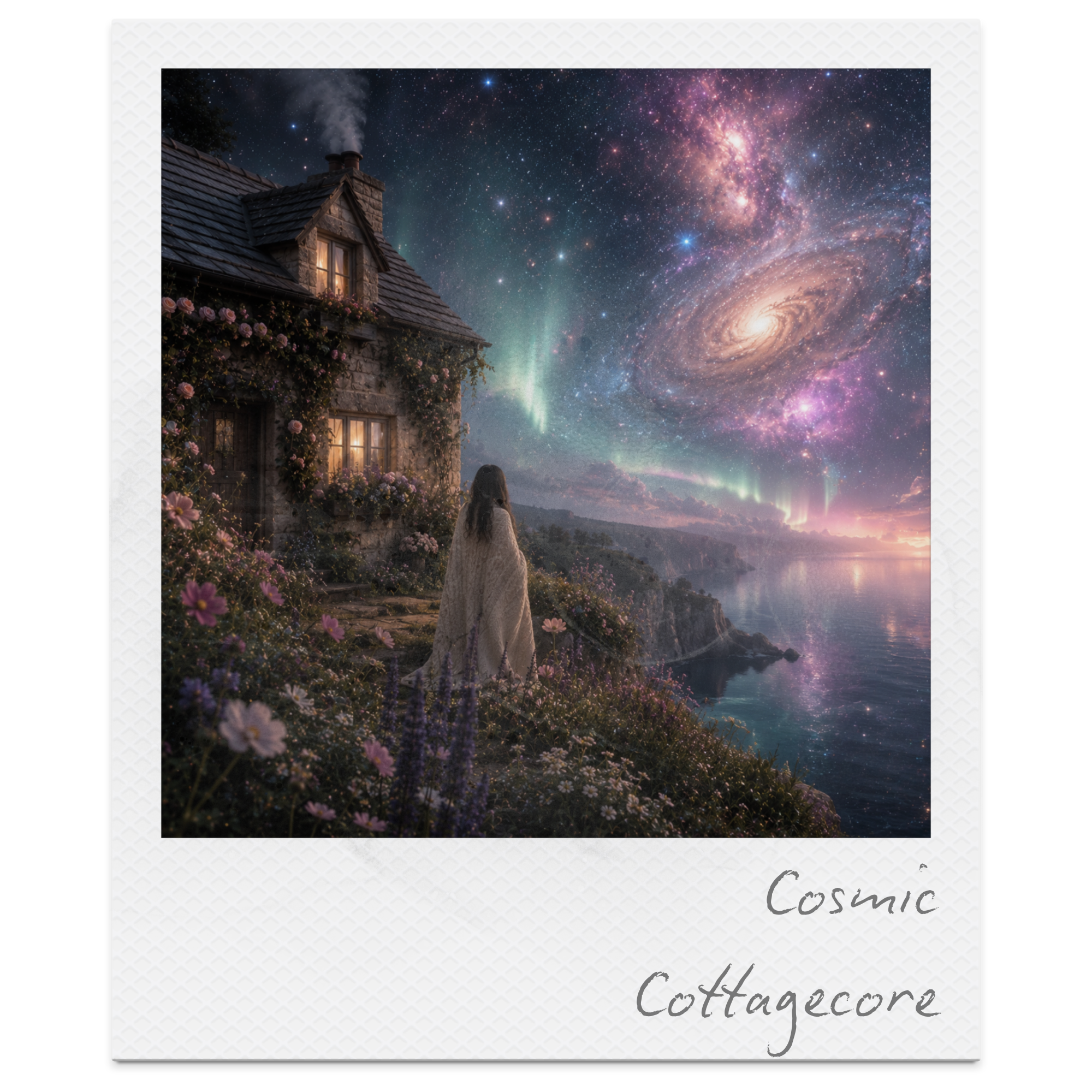
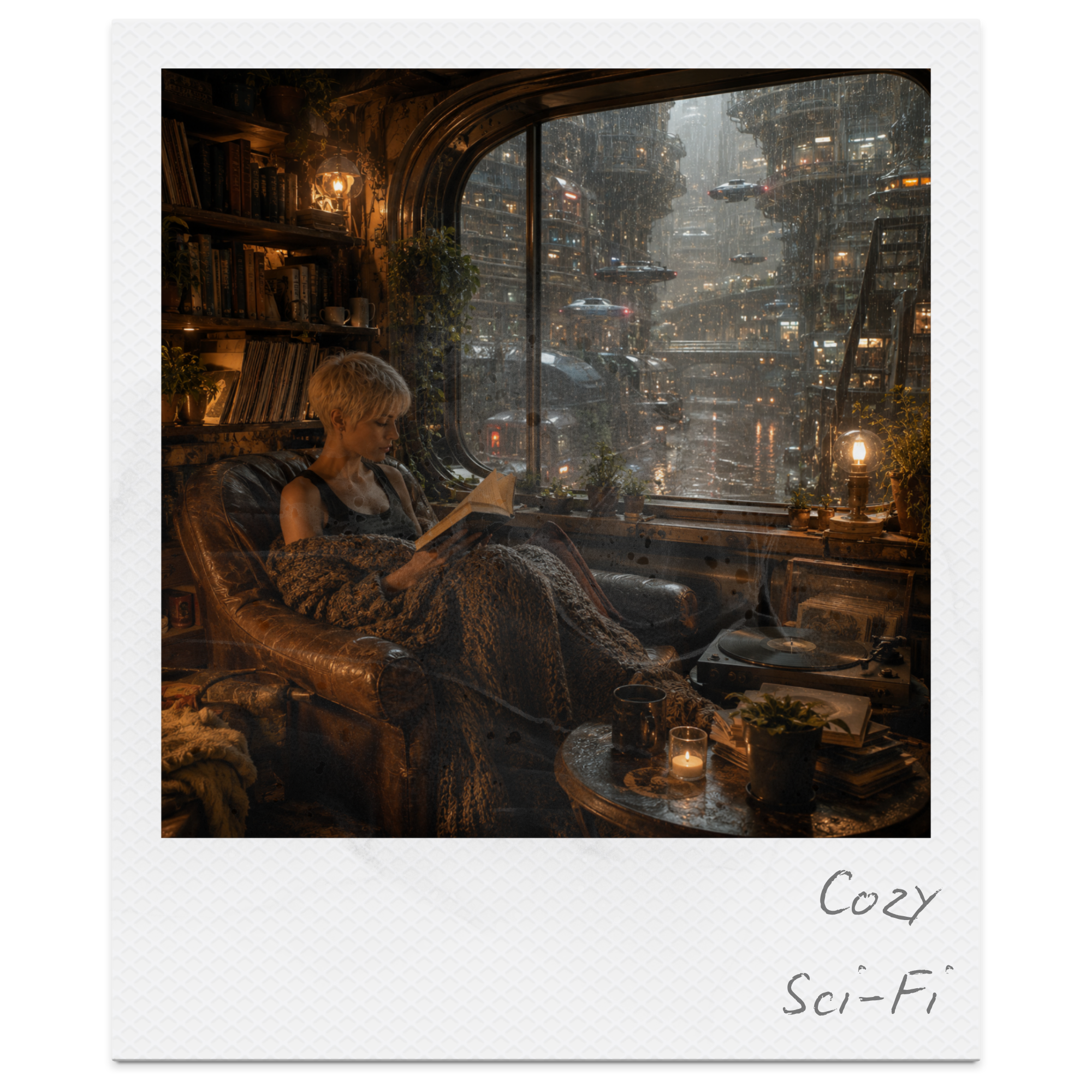
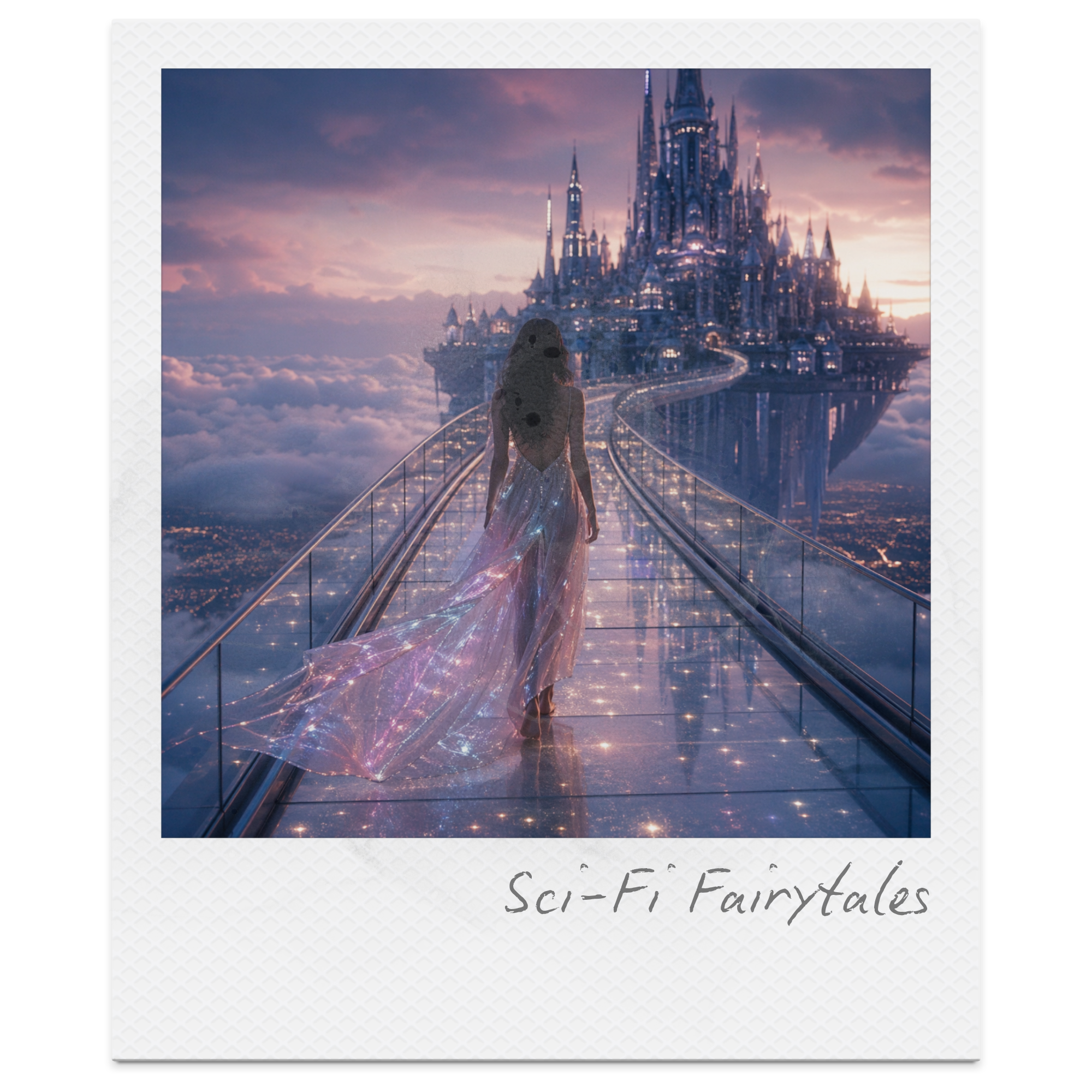
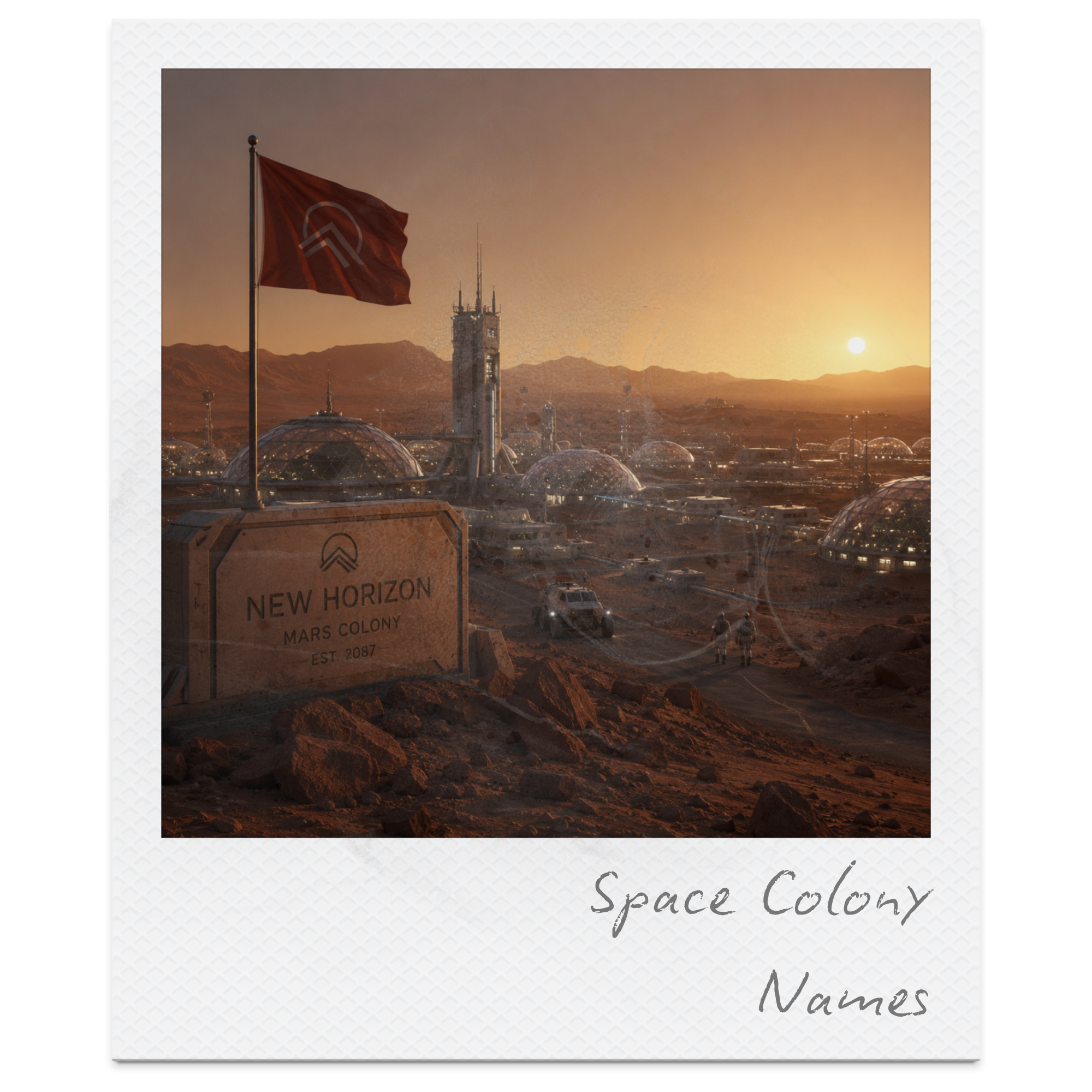
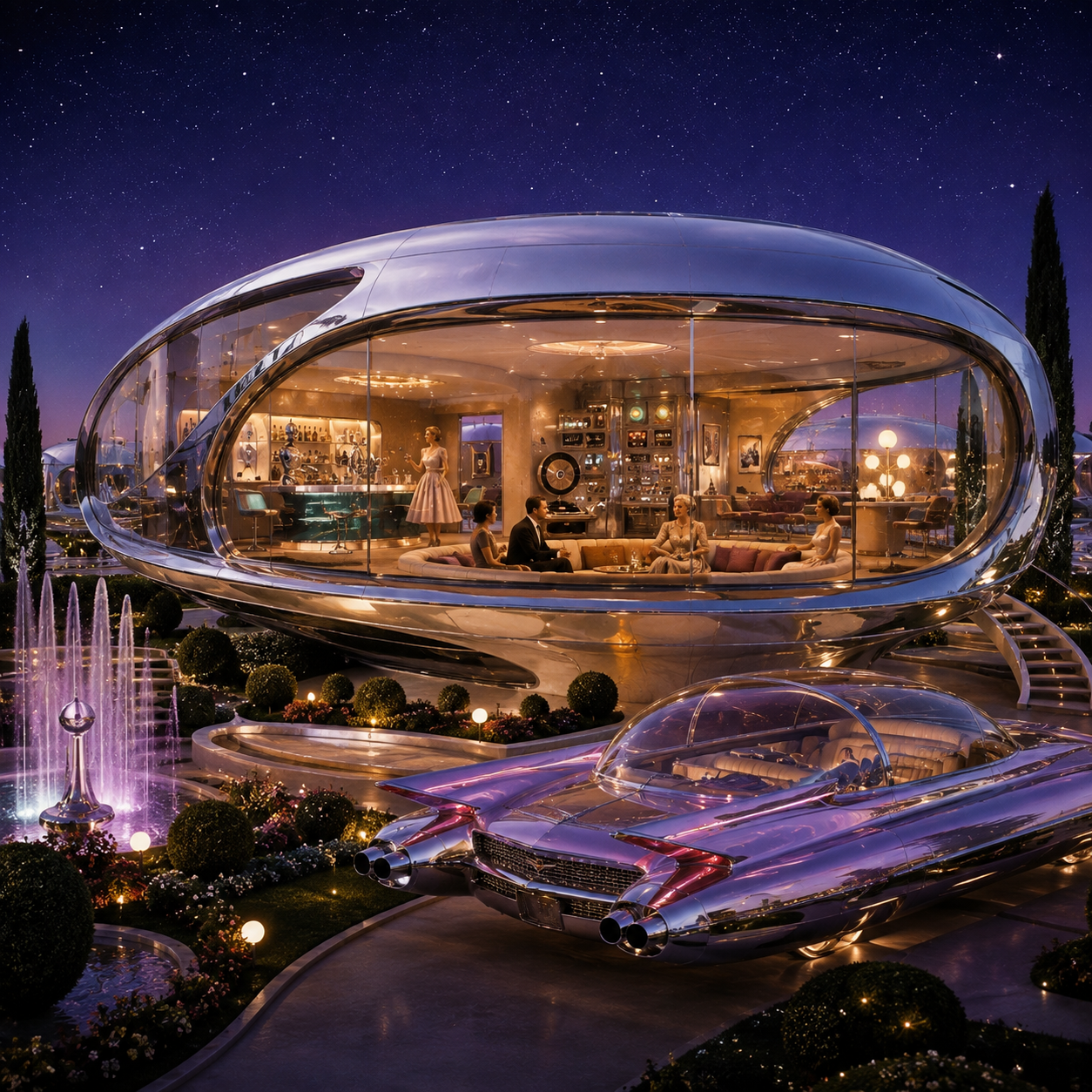
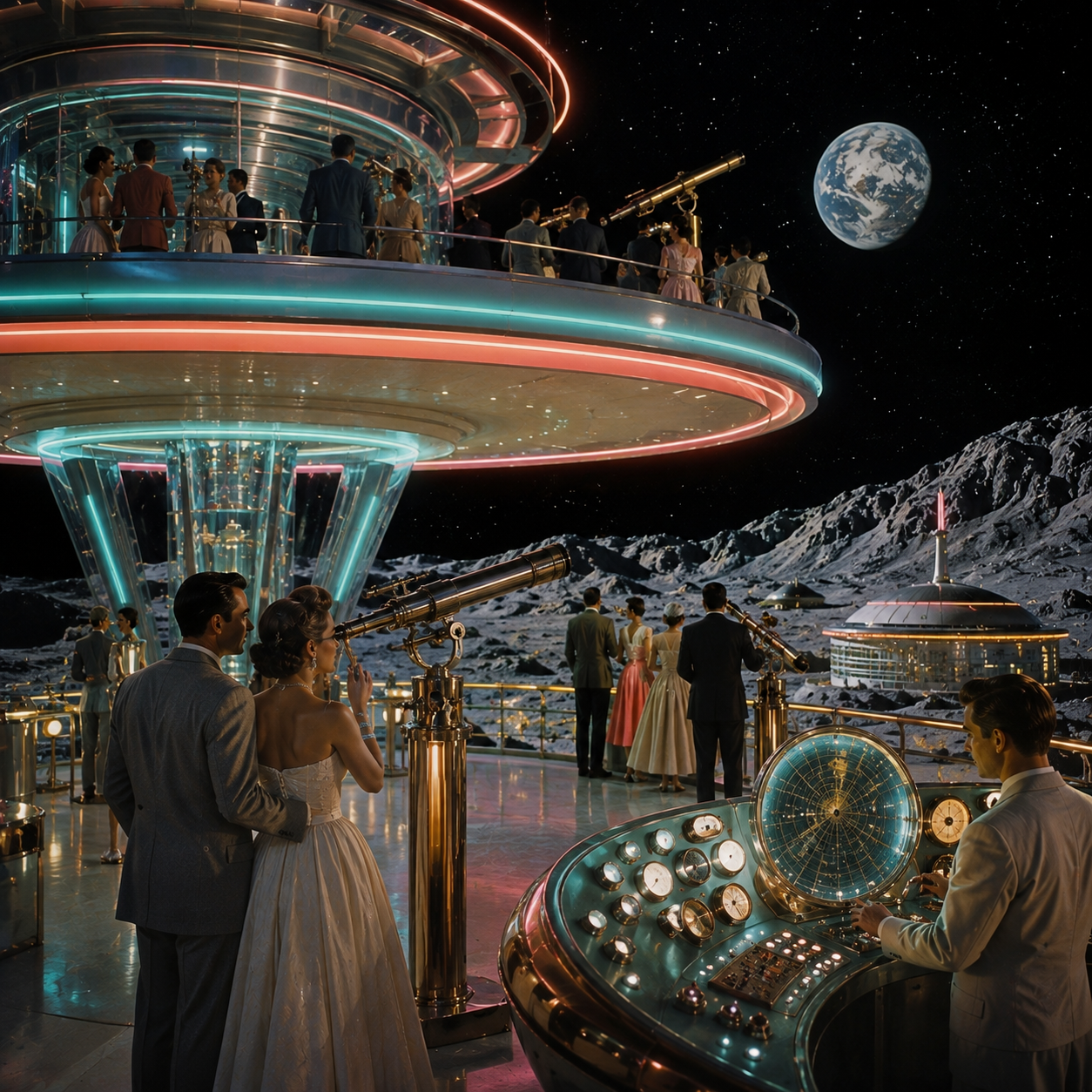
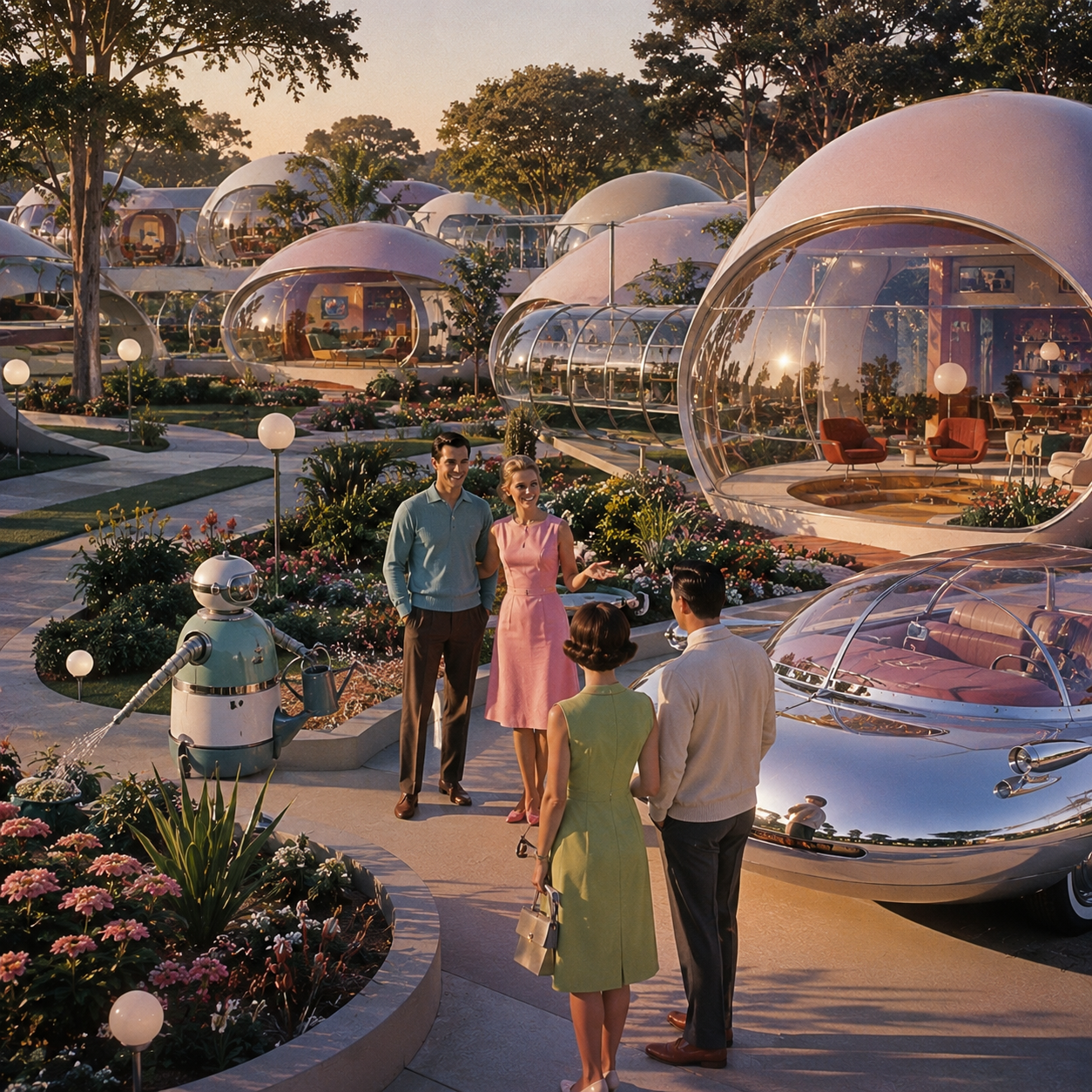
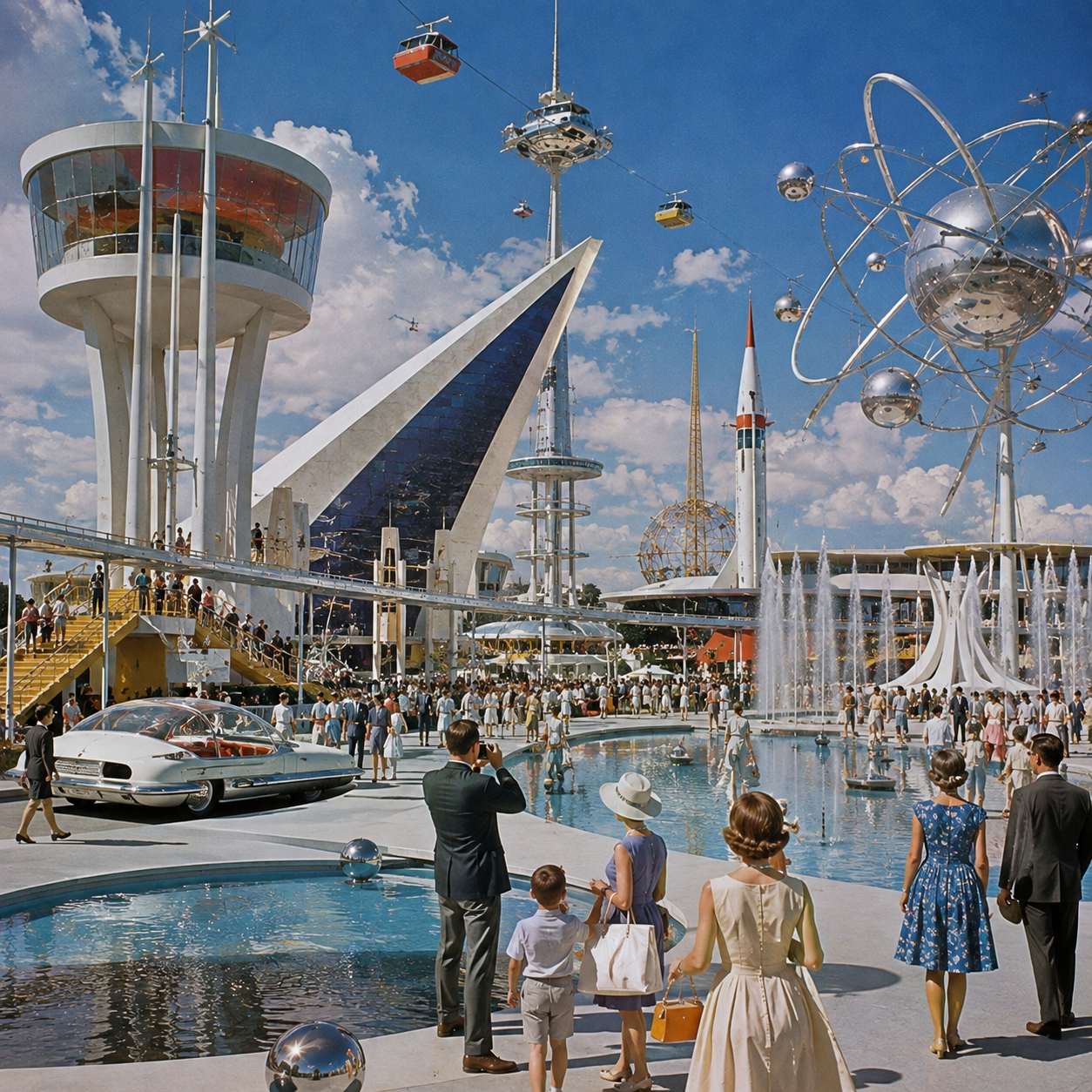
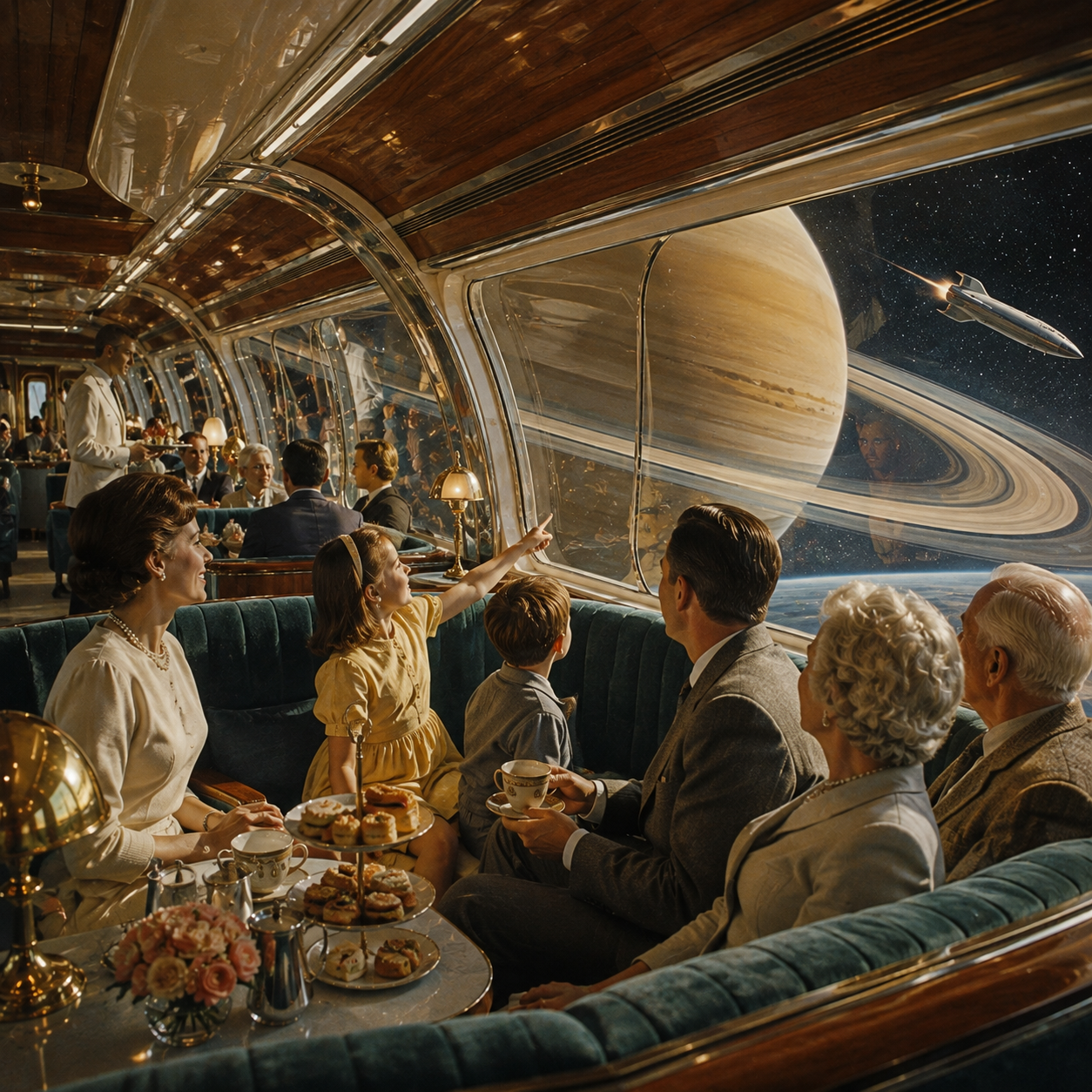
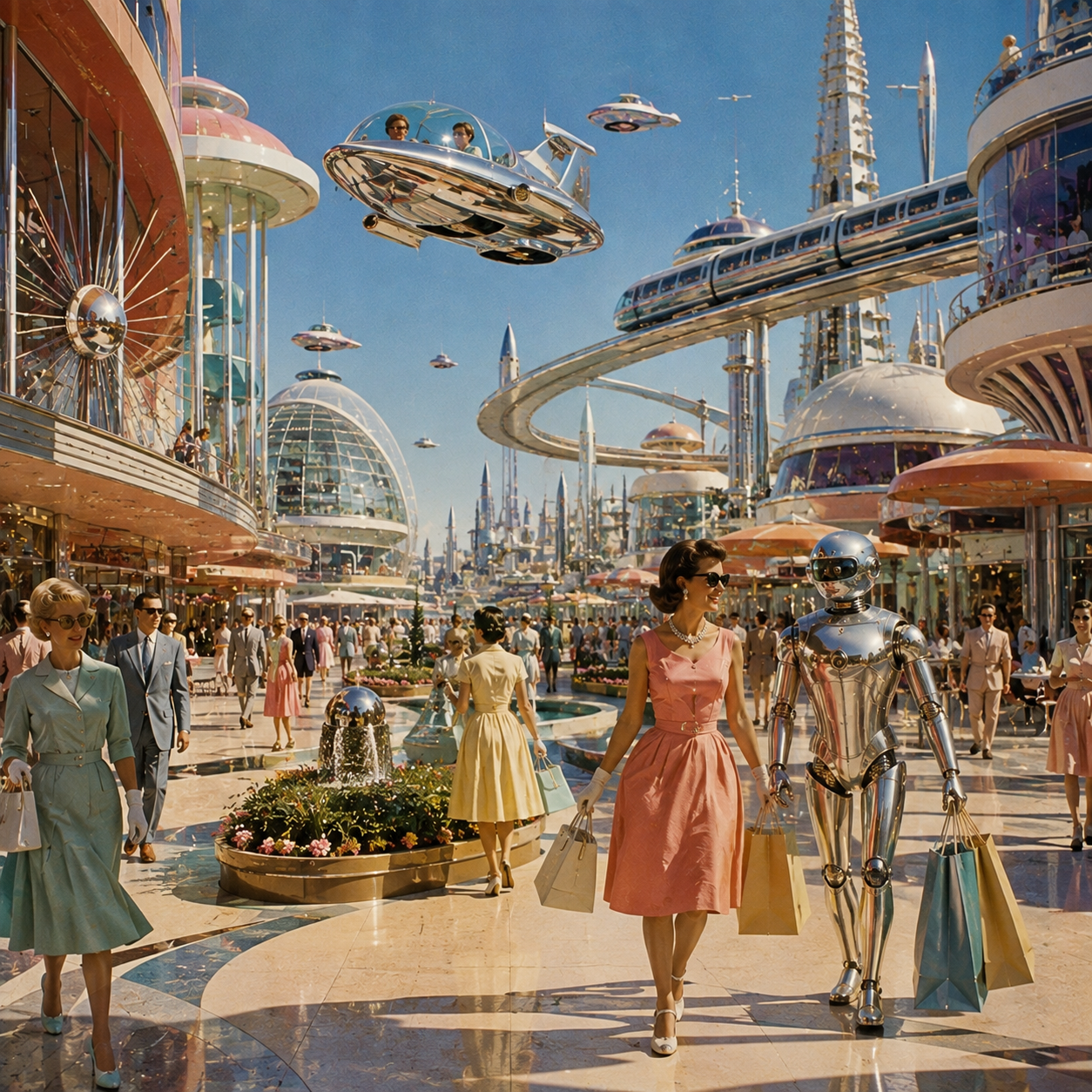
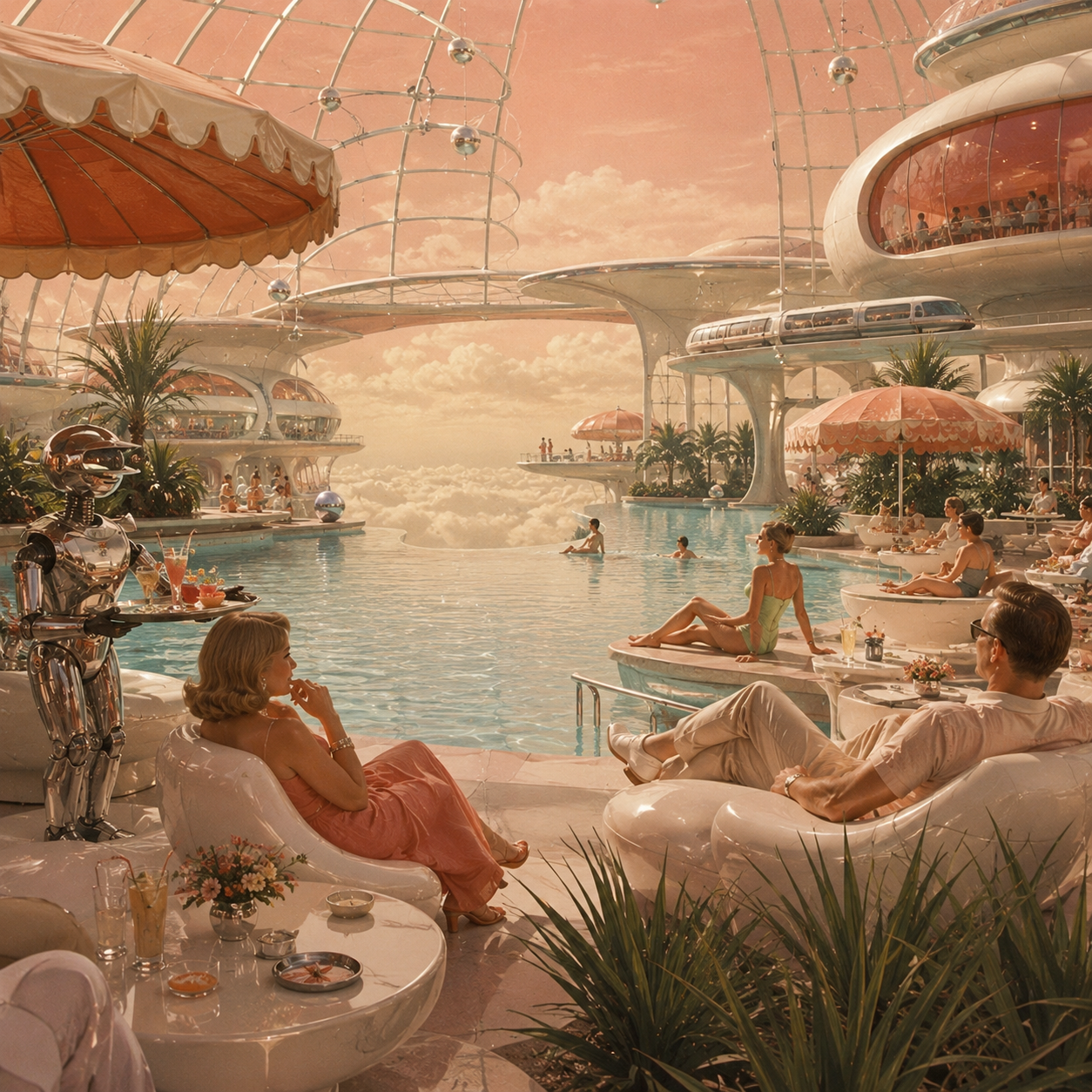
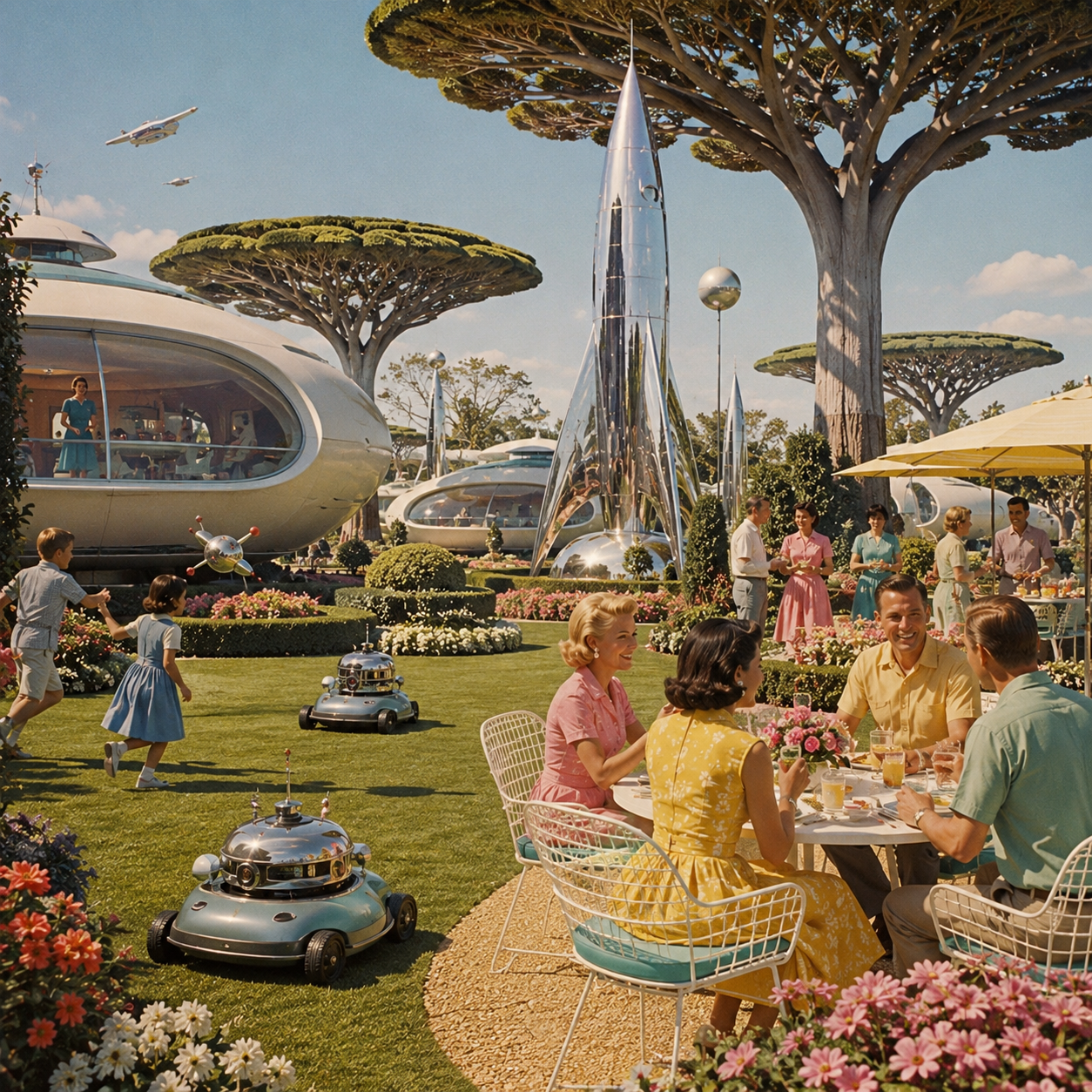
Retrofuturism artwork should capture the bold optimism of the future as imagined by the past. Every image below is designed to spark a story, inviting you to imagine the lives unfolding within chrome cities, bustling rocket terminals, atomic suburbs and gleaming space-age worlds. Perhaps families are boarding an elegant rocket for their annual holiday on Mars, diners overlook glowing lunar landscapes, or robot assistants quietly go about their daily routines beneath soaring observation domes. Use these cinematic scenes to inspire unforgettable characters, hopeful adventures and nostalgic visions of a future that never was.
Go Deeper into Retrofuturism Writing
Retrofuturism isn't about predicting the future accurately—it's about imagining the future people once hoped for. Gleaming rocket ships, optimistic cities, helpful robots and atomic-age innovation all reflect a belief that science and technology could build a brighter tomorrow. Whether your story embraces that optimism or quietly questions it, the most memorable retrofuturist worlds feel full of possibility, ambition and wonder.
◆ Think like someone living in the past. Imagine you're designing the future from the perspective of the 1950s or 1960s. What technologies would seem revolutionary? Flying cars, household robots, underwater cities and holidays on the Moon all feel exciting because they're grounded in the dreams of their era rather than modern expectations.
◆ Celebrate bold, optimistic design. Retrofuturism is instantly recognisable through its architecture and aesthetics. Fill your world with sweeping curves, polished chrome, colourful plastics, soaring observation towers, streamlined monorails, neon signs and dramatic rocket silhouettes that make every location feel like tomorrow has already arrived.
◆ Let everyday life feel extraordinary. Instead of focusing only on scientists and astronauts, imagine ordinary families living in this future. What does a school trip to Mars look like? How does a robot help prepare dinner? What might a weekend holiday aboard a luxury space liner involve? Small domestic details make grand ideas feel believable.
◆ Create inventions that inspire wonder. The best retrofuturist technology isn't necessarily practical—it's imaginative. Personal jetpacks, weather machines, rocket-powered trains, robotic butlers and underwater holiday resorts all capture the playful optimism that defines the genre.
◆ Use advertisements to shape your world. Retrofuturism is full of confident promises about the future. Think about travel posters for Venus, brochures advertising lunar suburbs, television commercials for domestic robots or newspaper headlines celebrating humanity's newest achievement. These small details instantly establish the tone of your setting.
◆ Balance optimism with mystery. A perfect future becomes even more interesting when something doesn't quite fit. A rocket that always arrives early, a city built from impossible blueprints or a World's Fair exhibit that nobody remembers constructing can introduce intrigue without losing the genre's hopeful atmosphere.
◆ Tell stories through the environment. Every location should suggest a larger world. Vintage ticket stubs, elegant travel luggage, futuristic restaurant menus, postcards from Mars and souvenir guidebooks all hint at lives unfolding beyond your protagonist's story.
◆ Remember that every future has a history. Even the brightest visions of tomorrow are built upon countless individual lives. Consider the newspapers people read, the letters they exchanged, the travel itineraries they followed and the souvenirs they brought home. These seemingly ordinary objects make fictional worlds feel authentic because they suggest real people have lived there long before your story begins.
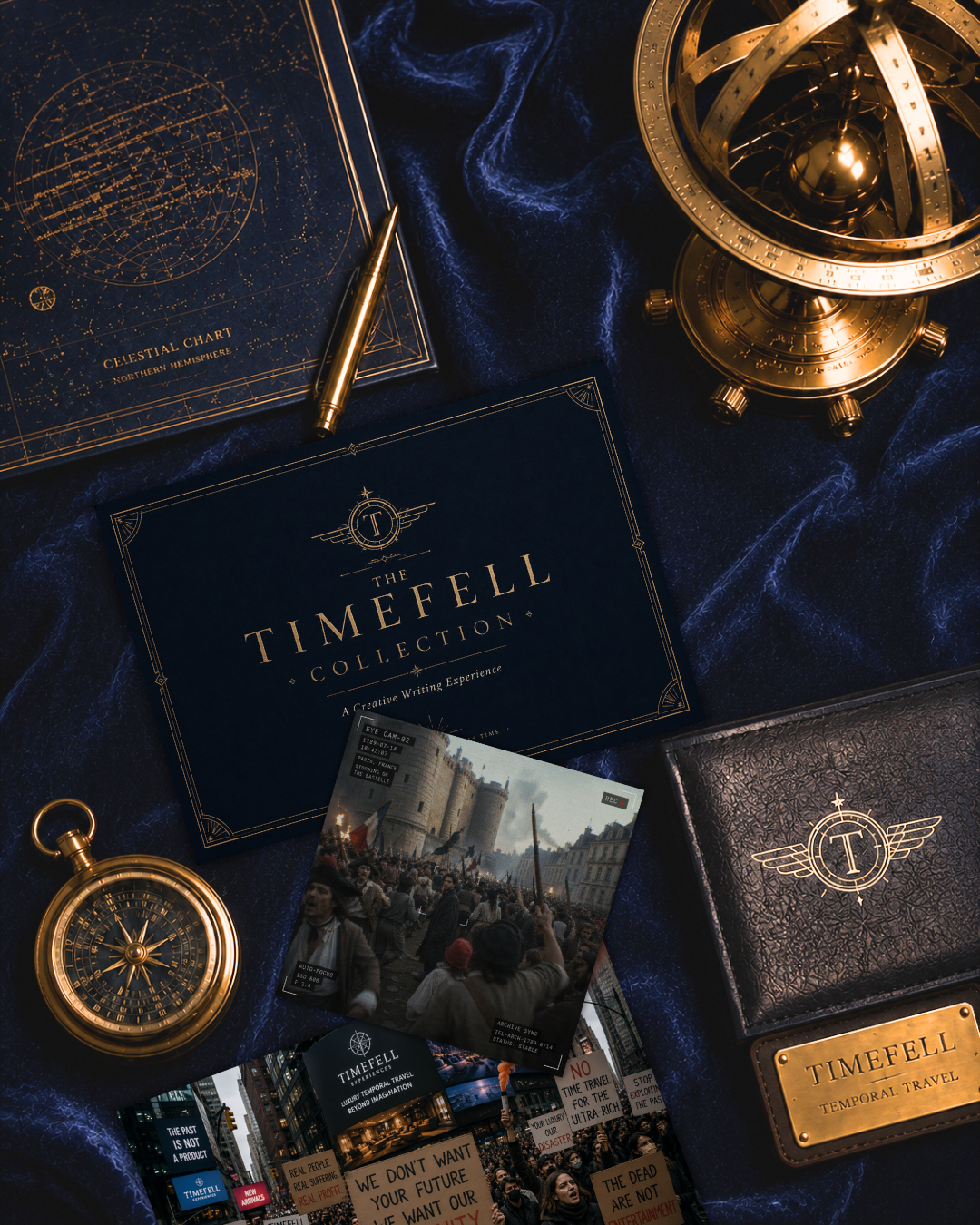
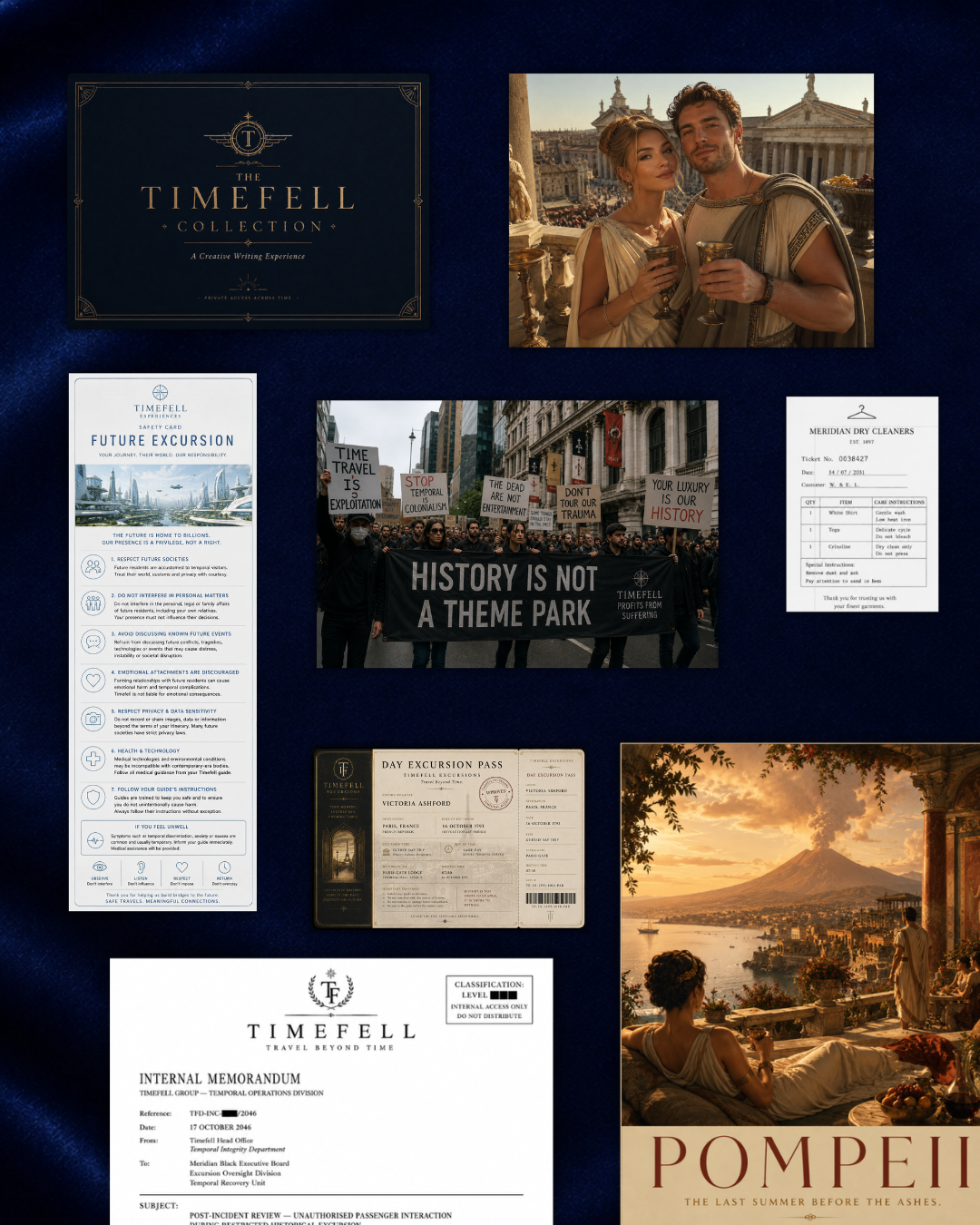
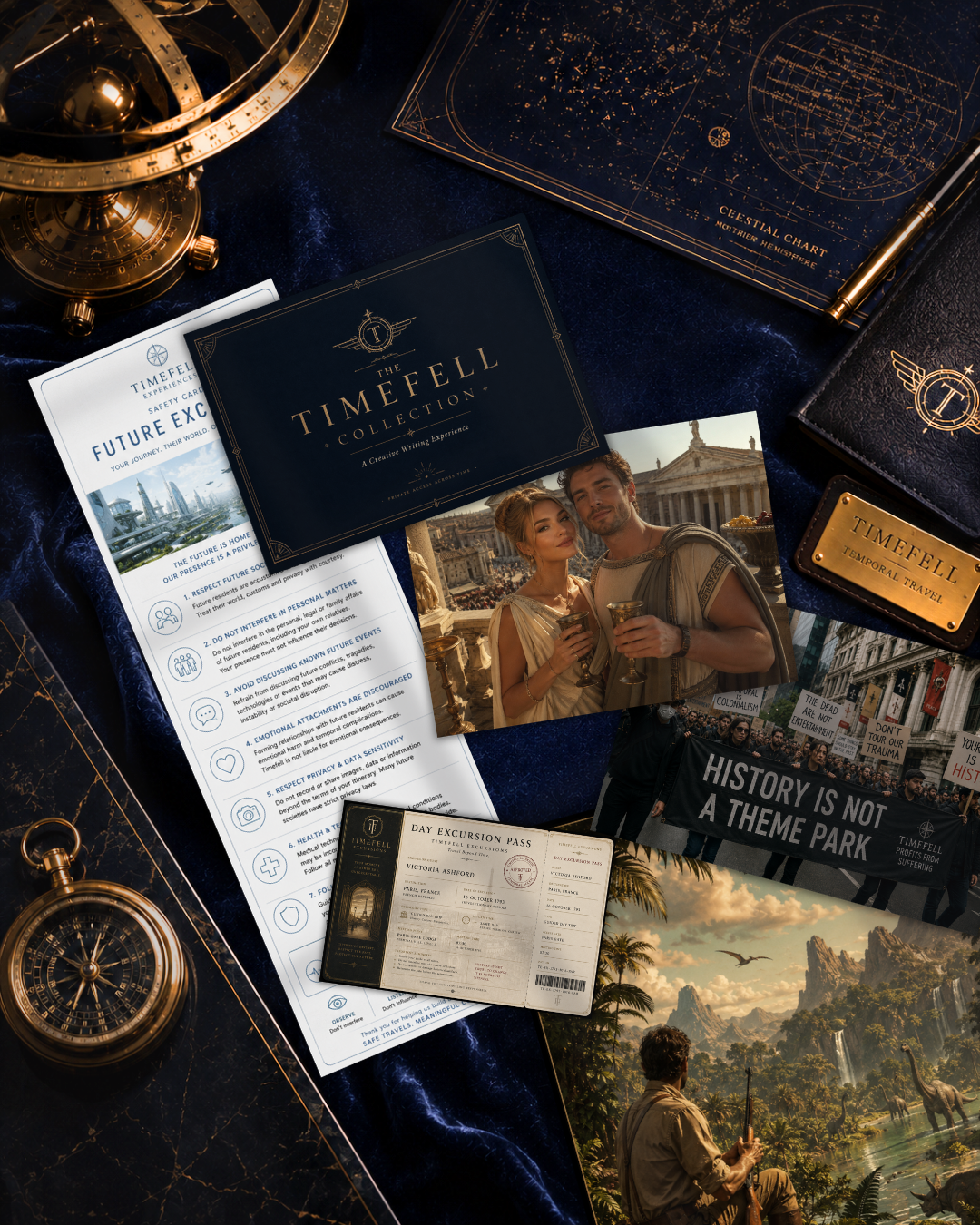
If you'd like to explore this style of immersive worldbuilding, The Timefell Collection Storyworld Archive offers a future where time travel has become a thriving tourism industry, revealed through more than 50 interconnected fictional artefacts. Instead of following a traditional narrative, you'll piece together the world through travel posters, boarding passes, hotel records, newspaper articles, diary entries, handwritten notes and private correspondence. Much like the best retrofuturism, it builds a believable future through the everyday details, inviting you to uncover the stories hidden between the documents and discover how an entire world can emerge from the smallest fragments.
Final Thoughts
Retrofuturism reminds us that the future is shaped as much by imagination as innovation. Long before smartphones, reusable rockets and artificial intelligence became reality, artists, architects and writers dreamed of chrome cities, robot companions, lunar holidays and lives transformed by scientific progress. Whether your stories celebrate those optimistic visions or explore the gap between expectation and reality, retrofuturism offers a rich playground where nostalgia and possibility exist side by side.
If these prompts have inspired your next story, explore the Sci-Fi Writing Hub for even more futuristic writing prompts, worldbuilding ideas and science fiction inspiration. You can also browse the Creative Writing Archive to discover hundreds of creative writing prompts, picture prompts, characters, settings, plot ideas and story starters across fantasy, horror, mystery, historical fiction, romance and every other genre.
Choose Your Next Adventure