A Married State by Katherine Philips: Summary, Themes & Analysis
Marriage, gender roles, control, expectation, and female autonomy are central to A Married State, where Katherine Philips presents a sharply ironic critique of marriage. The poem contrasts the supposed burdens of married life with the freedom of remaining unmarried, using satire, listing, and direct address to challenge social expectations placed on women. If you are studying or teaching Songs of Ourselves Volume 1 for CIE English Literature (0475), you can explore in-depth analyses of every poem from the 2026 and 2027 Paper 1 in the Songs of Ourselves Volume 1 Hub, or a wider range of texts in the Literature Library.

Context of A Married State
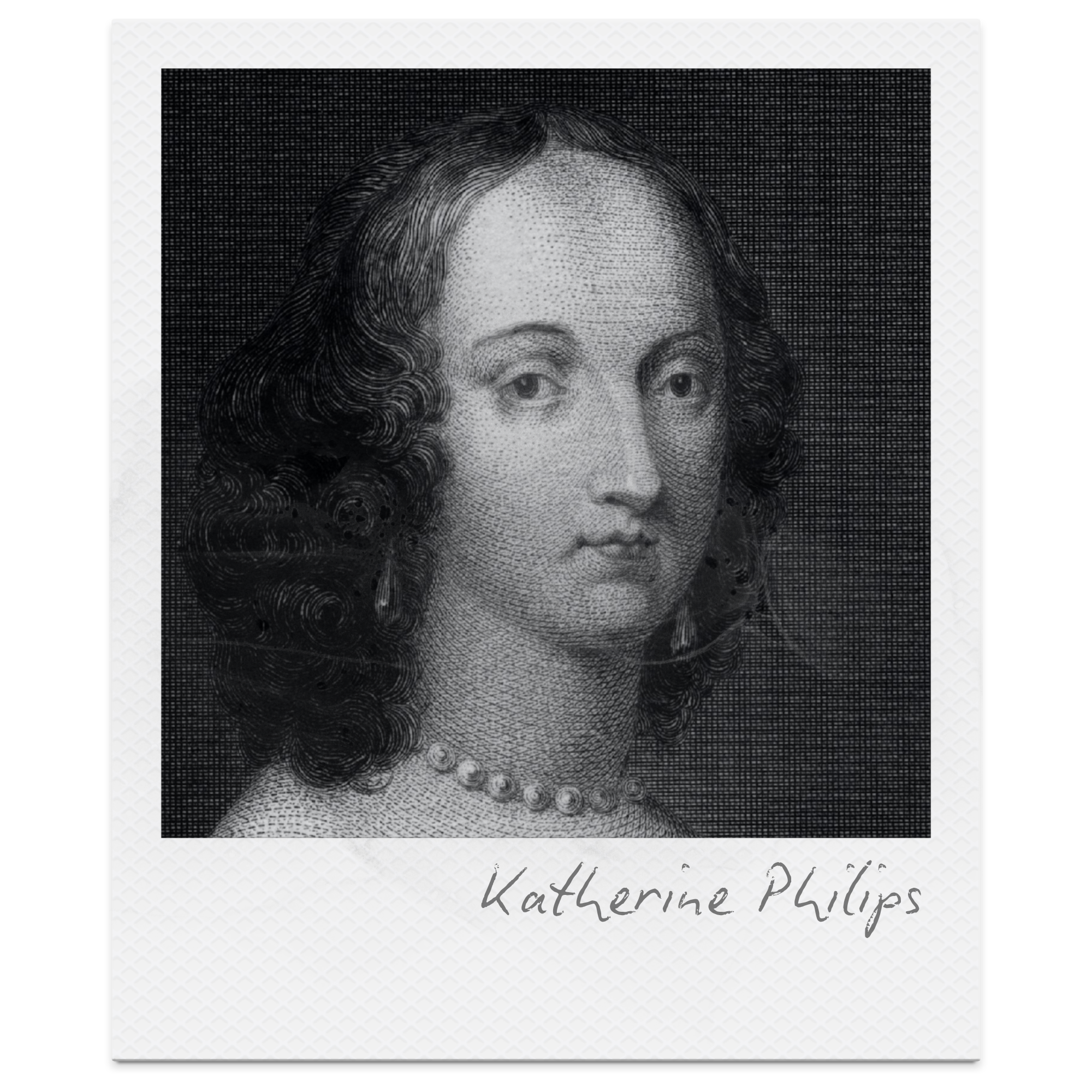
Katherine Philips was a 17th-century poet writing at a time when women were usually expected to marry, obey their husbands, and define their lives through domestic duty. Marriage was not simply romantic; it was also a legal, social, and economic institution that often reduced women’s independence. Under the principle of coverture, a married woman’s legal identity was largely absorbed into her husband’s, meaning marriage could bring security but also serious restriction.
Philips herself married young, but much of her writing values female friendship, emotional loyalty, and intellectual companionship, especially through her poetic circle, the “Society of Friendship.” This matters because A Married State does not present marriage as a natural happy ending for women. Instead, it questions the social assumption that marriage is desirable by exposing its emotional pressure, physical suffering, domestic labour, and loss of freedom.
The poem is also deliberately witty and provocative. Its praise of the “virgin state” challenges the idea that unmarried women are incomplete or pitiable. By advising a woman to reject love’s “Levity,” Philips uses satire to question whether women are truly happier inside marriage, or whether society simply teaches them to pretend they are.
A Married State: At a Glance
Form: Rhyming couplets
Mood: Satirical, ironic, cautionary
Central tension: Marriage as expectation vs marriage as burden
Core themes: Marriage and control; female autonomy; societal expectation; suffering vs freedom; illusion vs reality
One-sentence meaning: The poem argues, through irony and exaggeration, that marriage brings constraint and suffering, while remaining unmarried offers freedom and peace.
Quick Summary of A Married State
The poem opens by immediately challenging the ideal of marriage, stating that it brings “little ease” and presenting husbands as demanding and difficult to satisfy. The speaker suggests that wives must constantly manage these expectations, often concealing their unhappiness — “they dissemble their misfortunes well” — which introduces the idea that marriage involves performance as well as pressure.
The focus then shifts to the “virgin state,” which is described as peaceful, free, and untouched by suffering. Through a structured list — “No blustering husbands… No pangs of child birth… No children’s cries…” — the speaker emphasises the emotional, physical, and domestic burdens associated with marriage. The poem ends with direct advice to reject love altogether, using humour and irony to argue that avoiding marriage allows women to maintain control, independence, and inner calm, rather than enduring the constraints it brings.
Form, Structure, and Metre in A Married State
The poem’s tight structure and controlled rhythm reinforce its tone of confident, persuasive advice, making the speaker’s argument feel clear, logical, and difficult to challenge. At the same time, this neatness contrasts with the harsh realities of marriage described, highlighting the gap between appearance and experience.
Title
The title A Married State suggests stability, respectability, and social approval, presenting marriage as a desirable condition. However, the poem quickly undermines this expectation, revealing marriage as restrictive and burdensome. The formal, almost detached word “state” adds to the irony, implying something orderly and secure, while the content exposes discomfort and pressure.
Form and Structure
The poem is written as a single, continuous stanza of 16 lines, creating a sense of compression and clarity. This compactness strengthens the speaker’s argument: the case against marriage is presented as so obvious that it requires no extended explanation. The use of rhyming couplets means that each pair of lines often delivers a complete idea, producing a balanced, almost argumentative structure.
The poem progresses logically:
critique of marriage
contrast with the “virgin state”
direct advice
This mirrors a persuasive speech, guiding the reader step-by-step toward the speaker’s conclusion. The final lines shift into imperatives (“Turn, turn…”), increasing urgency and reinforcing authority.
Rhyme Scheme and Poetic Pattern
The poem follows a regular AA BB CC rhyme scheme, giving it a neat, controlled rhythm. For example:
“ease” / “please”
“spell” / “well”
“content” / “innocent”
This pattern creates a light, almost conversational flow, with each couplet working like a set-up and conclusion. However, in the central section, Philips intensifies this effect through a chain of similar sounds:
“fears” / “tears” / “ears” / “prayers”
This extended rhyme sequence groups together the burdens of marriage, making them feel relentless and interconnected. The repetition emphasises how these experiences form a continuous cycle of discomfort.
Metre and Rhythmic Movement
The poem is written primarily in iambic pentameter, a rhythm built from five iambs (unstressed followed by stressed syllables), creating a da-DUM da-DUM da-DUM da-DUM da-DUM pattern. For example:
“A MAR- | ried STATE | afFORDS | but LIT- | tle EASE”
This steady rhythm gives the poem a sense of control and authority, reinforcing the speaker’s confident tone.
However, Philips occasionally disrupts this pattern for emphasis. In the line:
“TURN, TURN | aPOS- | tate TO | LOVE’S LEV- | iTY”
the repeated “TURN, TURN” creates a heavier stress pattern (almost DUM-DUM), known as a spondaic emphasis. This breaks the smooth rhythm and draws attention to the urgency of the speaker’s advice.
These subtle variations show how rhythm is not just decorative but used deliberately to reinforce meaning, highlighting key moments where the speaker’s warning becomes more forceful and direct.
The Speaker in A Married State
The speaker presents herself as a worldly, observant, and authoritative female voice, offering advice to another woman (“madam”) about the realities of marriage. She positions herself as someone who has seen through social appearances, claiming she can read wives’ hidden suffering in their “carefull faces,” even when they “dissemble their misfortunes.” This suggests a speaker who is perceptive and sceptical, challenging the idea that marriage is naturally fulfilling.
Her tone is didactic yet ironic, blending serious warning with wit. On the surface, she speaks like a rational advisor, carefully listing the disadvantages of marriage, but the exaggeration of these burdens — “No pangs of child birth… No children’s crys…” — gives her voice a satirical edge. This creates ambiguity: she may genuinely criticise marriage, or she may be exposing how extreme the argument sounds, prompting the reader to question societal expectations.
The direct address and imperative commands — “Therefore, madam, be advised by me” and “Turn, turn apostate…” — reinforce her authority, making the poem feel like practical guidance rather than abstract reflection. At the same time, her insistence on suppressing “wild nature” acknowledges the tension between natural desire and social restraint, suggesting that remaining unmarried requires control as well as independence.
Overall, the speaker’s voice shapes interpretation by combining confidence, irony, and social awareness, encouraging readers to question whether marriage is truly a source of happiness, or simply an expectation women are taught to accept.
Line-by-Line Analysis of A Married State
This section explores how Katherine Philips develops meaning through language, structure, tone, and irony, moving line by line to show how the poem constructs its critique of marriage. Each section focuses on how specific choices create meaning and reader impact, rather than simply explaining content.
Line 1–2: Marriage as Immediate Disillusionment
“A married state affords but little ease;
The best of husbands are so hard to please:”
The opening immediately establishes a critical tone, with the phrase “little ease” undermining the expectation that marriage brings comfort. The understatement suggests dissatisfaction while maintaining a controlled voice. The superlative “the best” implies that even ideal husbands are demanding and difficult, presenting the problem as structural rather than personal. This creates a sense of inevitability, positioning marriage as inherently burdensome, which challenges social assumptions from the outset.
Line 3–4: Hidden Suffering and Social Performance
“This in wives’ careful faces you may spell,
Though they dissemble their misfortunes well.”
Philips introduces the idea of appearance versus reality, suggesting that wives’ suffering is visible despite attempts to hide it. The verb “spell” implies that these signs must be read and interpreted, positioning the speaker as perceptive and insightful. Meanwhile, “dissemble” highlights deliberate concealment, suggesting that women are expected to perform happiness. This reinforces the idea that marriage involves not just hardship, but also social pressure to mask it.
Line 5–6: Idealising the “Virgin State”
“A virgin state is crowned with much content,
It’s always happy as it’s innocent:”
The metaphor “crowned” elevates unmarried life, suggesting reward, status, and superiority. The repetition of “always” and “innocent” creates an idealised, almost absolute vision of happiness, contrasting sharply with the earlier dissatisfaction of marriage. This shift introduces irony, as the extreme positivity may feel exaggerated, prompting the reader to question whether the speaker is entirely sincere or deliberately provocative.
Line 7–8: Emotional and Physical Burdens of Marriage
“No blustering husbands to create your fears,
No pangs of childbirth to extort your tears,”
The repeated “No” begins a listing structure, emphasising absence and relief. The adjective “blustering” portrays husbands as loud and aggressive, reinforcing a sense of emotional instability. The phrase “pangs of childbirth” introduces physical suffering, while “extort your tears” suggests pain that is forced and unavoidable. Together, these lines present marriage as both emotionally and physically oppressive.
Line 9–10: Domestic Irritation and Spiritual Disruption
“No children’s cries for to offend your ears,
Few worldly crosses to distract your prayers.”
The list continues, shifting to domestic and spiritual burdens. The phrase “offend your ears” suggests irritation and lack of peace, while “worldly crosses” introduces a religious dimension, implying that marriage interferes with spiritual focus and inner calm. This expands the critique, showing that marriage affects not only the body and emotions but also the mind and soul.
Line 11–12: Freedom Defined Through Absence
“Thus are you freed from all the cares that do
Attend on matrimony, and a husband too.”
The word “freed” frames unmarried life as liberation, reinforcing the idea that marriage is restrictive. The phrase “all the cares” exaggerates the burden, suggesting totalising responsibility. The addition of “and a husband too” at the end creates a slightly ironic tone, reducing the husband to just another problem to endure, which subtly undermines his supposed authority.
Line 13–14: Direct Advice and Urgent Warning
“Therefore, Madam, be advised by me:
Turn, turn apostate to love’s levity.”
The connective “Therefore” signals a logical conclusion, reinforcing the poem’s argumentative structure. The direct address “Madam” creates a personal, advisory tone. The repetition “Turn, turn” introduces urgency, while “apostate” (someone who rejects a belief) frames love as something to abandon completely. This elevates the argument from suggestion to forceful warning, intensifying the speaker’s authority.
Line 15–16: Control, Desire, and Ironic Resolution
“Suppress wild nature if she dare rebel,
There’s no such thing as leading apes in hell.”
The phrase “wild nature” refers to natural desire, suggesting that resisting marriage requires self-control. The verb “suppress” highlights tension between instinct and restraint. The final line introduces a humorous, idiomatic expression, implying that fears about remaining unmarried (such as punishment or regret) are baseless. This ending combines irony and wit, leaving the reader with a memorable, slightly playful dismissal of societal expectations, while reinforcing the poem’s central argument about freedom and autonomy.
Key Quotes and Methods in A Married State
This section explores how Katherine Philips uses specific quotations to develop meaning, focusing on technique → effect → impact.
“A married state affords but little ease”
◆ Technique – understatement and declarative opening
◆ Effect – presents marriage as quietly disappointing rather than openly tragic
◆ Impact – immediately challenges idealised expectations, creating a subtle but powerful critique
“The best of husbands are so hard to please”
◆ Technique – superlative (“the best”) and generalisation
◆ Effect – suggests even ideal marriages are difficult
◆ Impact – reinforces the idea that the problem is systemic, not individual
“wives’ careful faces… dissemble their misfortunes well”
◆ Technique – contrast between appearance and reality; verb choice (“dissemble”)
◆ Effect – highlights concealment and emotional restraint
◆ Impact – suggests women are expected to perform happiness, exposing social pressure
“A virgin state is crowned with much content”
◆ Technique – metaphor (“crowned”)
◆ Effect – elevates unmarried life as rewarded and superior
◆ Impact – sharply contrasts with the earlier negativity of marriage, reinforcing the argument
“No blustering husbands to create your fears”
◆ Technique – listing and negative repetition (“No”); adjective (“blustering”)
◆ Effect – emphasises absence of emotional instability and intimidation
◆ Impact – presents marriage as a source of fear, strengthening the critique
“No pangs of childbirth to extort your tears”
◆ Technique – emotive language (“pangs,” “extort”)
◆ Effect – conveys physical pain as forced and unavoidable
◆ Impact – highlights the bodily cost of marriage, deepening the sense of suffering
“No children’s cries for to offend your ears”
◆ Technique – auditory imagery and continuation of listing
◆ Effect – suggests constant irritation and lack of peace
◆ Impact – extends the critique to domestic life, reinforcing the burden
“Few worldly crosses to distract your prayers”
◆ Technique – religious imagery (“crosses,” “prayers”)
◆ Effect – frames marriage as spiritually disruptive
◆ Impact – broadens the argument to include moral and spiritual consequences
“Thus are you freed from all the cares that do attend on matrimony”
◆ Technique – declarative tone and hyperbole (“all the cares”)
◆ Effect – presents unmarried life as total liberation
◆ Impact – reinforces the idea of marriage as restrictive and overwhelming
“Turn, turn apostate to love’s levity”
◆ Technique – repetition and imperative command
◆ Effect – creates urgency and forcefulness
◆ Impact – shifts the poem into direct advice, strengthening the persuasive tone
“Suppress wild nature if she dare rebel”
◆ Technique – personification (“wild nature”) and imperative verb (“suppress”)
◆ Effect – frames desire as something unruly and dangerous
◆ Impact – highlights tension between instinct and control, complicating the argument
“There’s no such thing as leading apes in hell”
◆ Technique – idiomatic expression and humour
◆ Effect – dismisses fears associated with remaining unmarried
◆ Impact – provides a witty, ironic conclusion that reinforces independence and challenges societal expectations
Key Techniques in A Married State
Philips uses a range of structural, linguistic, and rhetorical techniques to construct a persuasive and ironic critique of marriage, combining clarity of form with sharp satirical intent.
◆ Parallelism and Anaphora – The repeated structure in the central section (“No blustering husbands… / No pangs of childbirth… / No children’s cries…”) creates a clear, rhythmic list of absences. This parallel sentence structure reinforces the idea that unmarried life is defined by freedom from suffering, while the repetition of “No” (anaphora) gives the lines a forceful, almost persuasive rhythm, making the argument feel logical and undeniable.
◆ Imperative Language and Direct Address – Commands such as “Turn, turn apostate to love’s levity” and “Suppress wild nature” create a tone of urgency and authority. The speaker positions herself as a guide or advisor, while the repetition “Turn, turn” (epizeuxis) intensifies the emotional pressure, making the advice feel immediate and insistent.
◆ Metaphor – Philips uses metaphor to shape contrasting views of marriage and independence. The phrase “A virgin state is crowned with much content” presents unmarried life as something rewarded and elevated, while “wild nature” represents human desire as something untamed and potentially disruptive. These metaphors simplify complex ideas into vivid, persuasive images.
◆ Personification – Abstract ideas are given human qualities, particularly in “wild nature… dare rebel”, where desire is imagined as something capable of resistance. This personification highlights the internal conflict between instinct and self-control, suggesting that avoiding marriage requires active resistance.
◆ Allusion and Idiomatic Expression – The final line, “There’s no such thing as leading apes in hell”, draws on a cultural belief about unmarried women being punished after death. By dismissing this idea, the speaker challenges social and moral expectations, using humour to undermine a commonly accepted fear.
◆ Caesura and Punctuation for Control – Philips occasionally uses pauses within lines (e.g. “Thus are you freed from all the cares that do / Attend on matrimony, and a husband too.”) to create a sense of measured, reflective thought. Towards the end, punctuation helps slow the rhythm, giving weight to the speaker’s final advice and reinforcing its seriousness.
◆ Contrast and Juxtaposition – The poem is structured around a clear opposition between married life (burden, suffering, restriction) and unmarried life (freedom, peace, innocence). This contrast sharpens the argument, making the advantages of the “virgin state” appear more appealing.
◆ Tone: Satirical and Ironic – While the speaker appears to offer sincere advice, the exaggerated negativity of marriage and idealisation of unmarried life introduce irony. This ambiguity encourages readers to question whether the poem is purely critical or also exposing the extremes of societal attitudes.
◆ Listing and Accumulation – The extended list of marital burdens builds a sense of relentlessness, suggesting that these problems are not isolated but part of a continuous experience. This accumulation increases the emotional weight of the argument.
◆ Sound and Rhythm – The regular iambic pentameter and rhyming couplets create a smooth, controlled flow, reinforcing the speaker’s authority. However, moments of disruption (such as the stressed repetition in “Turn, turn”) draw attention to key ideas, showing how rhythm is used to emphasise urgency and importance.
Together, these techniques allow Philips to construct a poem that is clear, persuasive, and subtly subversive, using formal control to challenge deeply rooted social expectations about marriage.
How the Writer Creates Meaning and Impact in A Married State
Philips creates meaning through a combination of controlled structure, satirical tone, and carefully selected imagery, shaping a persuasive critique of marriage while maintaining an authoritative voice.
◆ Language and Imagery – The poem uses emotive and sensory language to present marriage as uncomfortable and restrictive. Words such as “blustering,” “pangs,” “cries,” and “offend” create a vivid sense of emotional strain, physical pain, and domestic irritation. In contrast, the description of the “virgin state” uses more positive, elevated language like “crowned” and “content,” creating a clear contrast that makes unmarried life appear calm and desirable.
◆ Structure and Progression – The poem follows a clear argumentative structure, moving from criticism of marriage → idealisation of unmarried life → direct advice. This logical progression makes the speaker’s viewpoint feel reasoned and persuasive, guiding the reader step-by-step toward the conclusion. The shift into imperative commands at the end (“Turn, turn…”) increases urgency and reinforces the speaker’s authority.
◆ Voice and Tone – The speaker adopts a didactic, advisory voice, directly addressing “Madam” to create a personal and instructive tone. However, the exaggerated negativity of marriage and the idealised description of single life introduce irony, suggesting that the poem may be both serious and satirical. This layered tone encourages readers to question societal expectations rather than accept them blindly.
◆ Repetition and Listing – The repeated structure beginning with “No…” creates a sense of accumulation, emphasising the many burdens of marriage. This technique makes the argument feel overwhelming and unavoidable, reinforcing the idea that marriage brings continuous difficulty rather than isolated problems.
◆ Sound and Rhythm – The regular iambic pentameter and rhyming couplets create a smooth, controlled rhythm that reflects the speaker’s confidence and authority. Moments of disruption, such as the emphatic repetition in “Turn, turn,” draw attention to key ideas and increase the emotional intensity of the advice.
◆ Contrast and Juxtaposition – The poem’s central meaning is built through the contrast between married life (burden, restriction, suffering) and unmarried life (freedom, peace, innocence). By presenting these opposites so clearly, Philips simplifies the argument, making the speaker’s conclusion feel both logical and compelling.
Through these methods, Philips constructs a poem that is clear, persuasive, and subtly ironic, encouraging readers to reconsider the expectations placed on women and the realities of marriage.
Themes in A Married State
Philips explores a range of interconnected themes, using language, structure, and tone to question accepted ideas about marriage and women’s roles.
Marriage as Burden and Constraint
The poem presents marriage as a source of continuous pressure and discomfort, rather than fulfilment. Through the list of negatives — “No blustering husbands… / No pangs of childbirth… / No children’s cries…” — Philips emphasises the emotional, physical, and domestic demands placed on women. The accumulation of these examples suggests that marriage is not a single hardship but an ongoing state of restriction, reinforced by the phrase “all the cares that do attend on matrimony.”
Female Autonomy and Independence
In contrast, the “virgin state” is depicted as a form of freedom and self-control. The metaphor “crowned with much content” suggests reward and status, elevating independence above marriage. The repeated absence of suffering (“No… No… No…”) reinforces the idea that remaining unmarried allows women to maintain peace, agency, and personal stability, rather than being defined by others’ needs.
Appearance vs Reality
Philips highlights the gap between how marriage appears and how it is experienced. The idea that wives “dissemble their misfortunes well” suggests that unhappiness is deliberately hidden, while “careful faces” reveal the truth beneath the surface. This exposes the performative nature of marriage, where women are expected to present happiness regardless of reality.
Social Expectation and Pressure
The poem critiques the assumption that women should marry, presenting this expectation as something that can and should be resisted. The speaker’s direct advice — “be advised by me” — challenges dominant social norms, while the need to “suppress wild nature” acknowledges the pressure to conform to both social and natural expectations. This highlights the tension between individual choice and societal influence.
Desire vs Control
The phrase “wild nature… dare rebel” personifies desire as something instinctive and potentially disruptive. The command to “suppress” it suggests that independence requires discipline and restraint. This theme complicates the poem’s argument, as it acknowledges that rejecting marriage is not effortless but involves actively resisting natural impulses and social conditioning.
Satire and Irony
The poem’s exaggerated contrast between married and unmarried life introduces satire, raising questions about how seriously the argument should be taken. While the speaker presents marriage as entirely negative and single life as entirely positive, this imbalance may encourage readers to question both extremes. The ironic tone allows Philips to critique societal expectations while engaging the reader through wit.
Religion and Spiritual Distraction
Religious imagery, such as “worldly crosses” and “distract your prayers,” suggests that marriage interferes with spiritual focus and moral clarity. By framing domestic life as a distraction from religious devotion, Philips elevates independence as not only personally beneficial but also spiritually preferable, adding another dimension to her critique.
Together, these themes show how Philips uses the poem to challenge traditional ideas about marriage, presenting it as a complex and potentially restrictive institution, while offering independence as a powerful, if demanding, alternative.
Alternative Interpretations of A Married State
Philips’ poem can be read in different ways depending on how we interpret its tone, exaggeration, and use of irony. These readings shift the meaning of key ideas and images, particularly the contrast between marriage and independence.
Feminist Interpretation: Marriage as Patriarchal Control
From a feminist perspective, the poem is a clear critique of patriarchal power structures that limit women’s freedom. The description of husbands as “blustering” and “hard to please” presents marriage as a system where women must serve, endure, and adapt, rather than exist as equals. The repeated “No…” structure redefines freedom as the absence of male control, suggesting that independence allows women to reclaim agency over their bodies, emotions, and lives.
The need to “dissemble their misfortunes” highlights how women are socially conditioned to hide dissatisfaction, reinforcing the idea that marriage enforces silence and performance. In this reading, the poem is not simply advice but a subtle act of resistance, using wit and irony to challenge dominant expectations.
Satirical Interpretation: Exaggeration to Provoke Debate
Alternatively, the poem can be read as a satirical exaggeration, where the speaker deliberately presents extreme views to provoke thought. The absolute claims — that marriage brings only suffering and the “virgin state” is “always happy” — may be intentionally unrealistic. This exaggeration draws attention to how society itself often presents equally simplified and idealised views of marriage.
In this interpretation, the poem is less about rejecting marriage entirely and more about exposing how both sides of the argument can be distorted, encouraging readers to question accepted beliefs rather than accept them passively.
Psychological Interpretation: Desire vs Self-Control
A psychological reading focuses on the tension between instinct and restraint, particularly in the line “Suppress wild nature if she dare rebel.” Here, desire is personified as something unruly and potentially dangerous, suggesting an internal conflict within the speaker or the audience.
The poem may reflect anxiety about the consequences of both choices: marriage brings suffering, but remaining unmarried requires denying natural impulses. This interpretation highlights the complexity of the speaker’s advice, suggesting that independence is not purely liberating but involves ongoing self-discipline and emotional control.
Social Commentary Interpretation: Marriage as Economic Reality
The poem can also be read as a commentary on the practical realities of 17th-century marriage, rather than a purely emotional critique. References to “pangs of childbirth” and domestic burdens highlight the physical and social responsibilities placed on women.
However, the ability to remain unmarried would have depended on class and financial security, meaning the speaker’s advice may only be realistic for certain women. In this reading, the poem exposes the limitations of choice, suggesting that independence, while appealing, is not equally accessible to all.
Moral / Religious Interpretation: Spiritual Purity vs Worldly Distraction
The reference to “worldly crosses” and “distract your prayers” allows the poem to be read as valuing spiritual focus over domestic life. Marriage is presented as something that pulls women away from religious devotion and inner peace, while the “virgin state” maintains innocence and moral clarity.
This interpretation shifts the poem from social critique to a more moral argument, where avoiding marriage is framed not just as practical but as spiritually beneficial.
These interpretations show how the poem’s meaning is not fixed. Through irony, exaggeration, and contrast, Philips creates a text that can be read as rebellious, satirical, conflicted, or socially aware, depending on how the reader responds to its tone and arguments.
Exam-Ready Insight for A Married State
This section shows how to turn your understanding of A Married State into a strong, exam-focused response for IGCSE Literature (0475), with a clear focus on how meaning is created through methods.
What strong responses do
◆ focus closely on the question
◆ analyse methods (language, structure, and sound), not just ideas
◆ explain how effects are created, not just what is described
◆ track shifts in tone and argument across the poem
◆ use short, precise quotations to support interpretation
Conceptual argument
A strong thesis for A Married State might be:
Philips presents marriage as restrictive and performative through a controlled, persuasive voice that uses contrast, listing, and imperative language to expose the pressures placed on women, while the ironic tone suggests that both marriage and independence are shaped by social expectation rather than true freedom.
Model analytical paragraph
Philips presents marriage as a source of pressure and concealed suffering through contrast and language choices. In the phrase “little ease,” the understated language suggests quiet dissatisfaction, immediately undermining idealised views of marriage. This is reinforced by “the best of husbands are so hard to please,” where the superlative “best” implies that difficulty is unavoidable, presenting the problem as structural rather than individual. The idea of concealment is developed in “dissemble their misfortunes well,” where the verb “dissemble” suggests deliberate performance, highlighting how women are expected to hide unhappiness. In contrast, the “virgin state” is described as “crowned with much content,” using metaphor to elevate independence and present it as rewarding. Through this contrast, Philips exposes how marriage demands emotional labour while appearing socially desirable, encouraging the reader to question its supposed benefits.
Teaching Ideas for A Married State
This poem is ideal for exploring how writers use language, structure, and voice to construct arguments, while also developing discussion-based and analytical classroom approaches.
1. Collaborative Analytical Paragraph (Paired Writing)
Give students a focused question, for example:
How does Philips present marriage as restrictive in A Married State?
Students work together to produce a single paragraph, combining their ideas and interpretations. They should:
◆ select and embed quotations
◆ identify methods (language, structure, sound)
◆ explain meaning → purpose → impact
Because both students contribute, they can challenge and refine each other’s ideas, leading to a stronger, more developed response. This approach reinforces that analytical writing develops through discussion and refinement, not just individual effort.
2. Structured Group Close Analysis (Role-Based)
Instead of traditional annotation, assign students specific roles in small groups for a line-by-line reading of the poem:
◆ Structure specialist – tracks shifts and progression of the argument
◆ Language analyst – explores word choices and imagery
◆ Methods expert – identifies poetic devices and techniques
◆ Tone tracker – comments on voice and shifts in attitude
Each group analyses a section, then feeds back to the class. As responses are shared, build a full interpretation together.
This approach makes close reading active and collaborative, while still developing precise analytical skills.
3. Silent Debate
Set up a silent debate around the question:
Is A Married State a serious critique of marriage or a satirical exaggeration?
Students respond to prompts in writing, building on and challenging each other’s ideas. They should:
◆ use quotations as evidence
◆ respond directly to others’ interpretations
◆ develop and refine arguments over time
This encourages deeper thinking and ensures all students participate. For guidance on structuring this activity, see this post on how to run an effective silent debate in your classroom.
4. Creative Writing: Rewriting the Argument
Ask students to write a short piece offering advice that challenges a widely accepted idea.
Prompt:
Write in the voice of a speaker who challenges a social expectation, using persuasive language and tone.
Students should aim to:
◆ use contrast to challenge assumptions
◆ include persuasive or imperative language
◆ develop a clear, confident voice
◆ show how meaning is shaped through structure and tone
This activity helps students apply techniques such as contrast, voice, and persuasion in their own writing. Many Literature texts provide strong models for this, supporting both analytical and creative skills. For more ideas and structured prompts, explore the Creative Writing Archive.
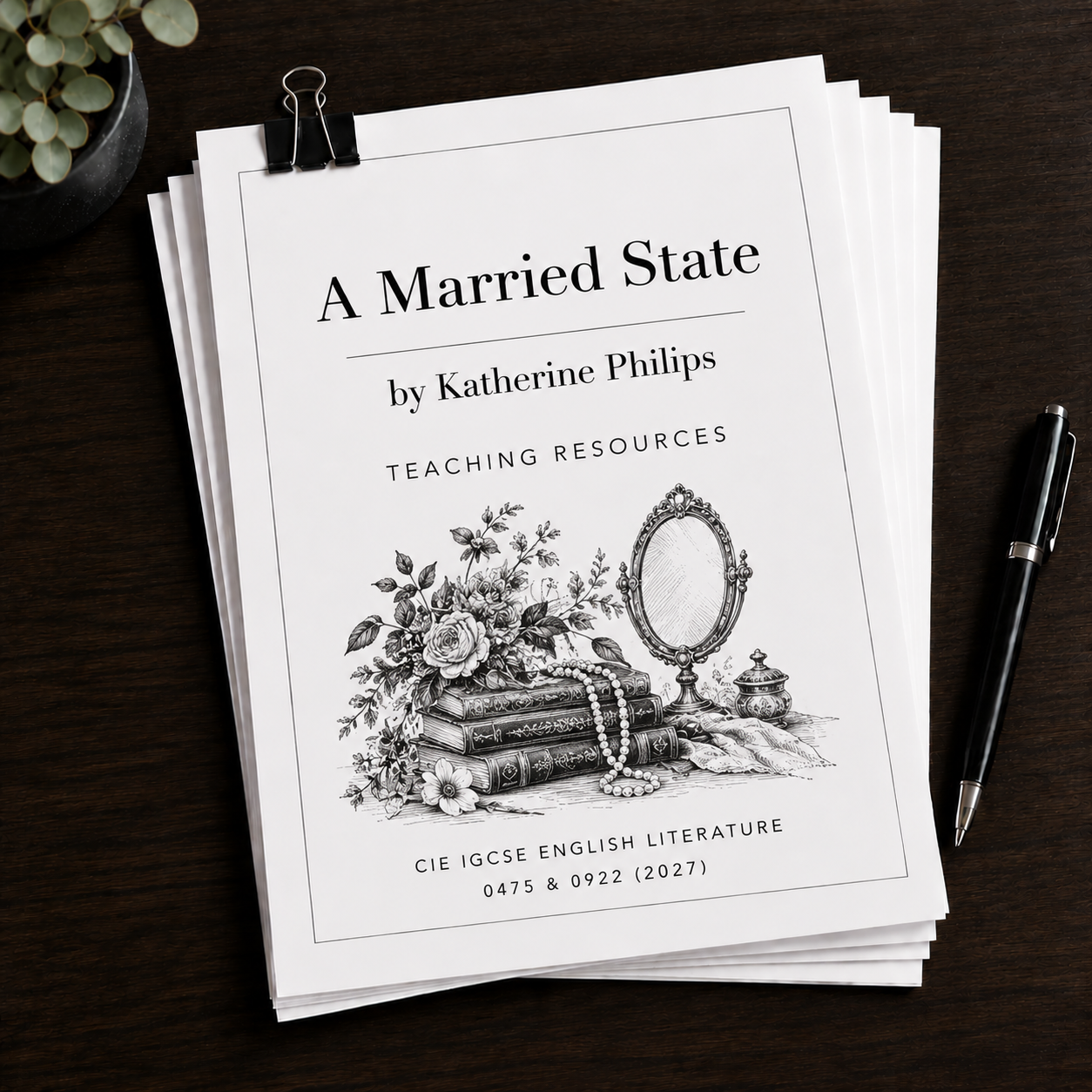
Teach A Married State with minimal prep.
If you’re teaching A Married State by Katherine Philips, you don’t need to spend hours building lessons, discussion tasks, and analytical activities from scratch.
This complete teaching resource pack provides a clear, structured way to guide students from first reading and initial interpretation to confident, developed exam-style analysis — while saving valuable planning time.
Designed for CIE IGCSE English Literature (0475 & 0922, 2027 syllabus), the pack also works flexibly for broader secondary poetry teaching and poetry exploration. It can be used across a full sequence of lessons, whether you’re introducing the poem, analysing Philips’ language and poetic methods, exploring her presentation of marriage and female independence, developing discussion and interpretation, or preparing students for analytical writing and assessment.
Our in-depth study guide for the poem is also available to support teaching and deepen students’ understanding of Philips’ exploration of marriage, freedom, female independence, gender expectations, domestic life, social pressure, power, choice and autonomy.
Why this works
This is not just a collection of disconnected worksheets. It’s a carefully designed set of discussion-led, analysis-focused activities created to help students develop confident, independent interpretations of poetry.
Designed for paired, group, and independent learning
Encourages active thinking, discussion, and interpretation
Includes exam-style questions suitable for Literature and Language preparation
Develops analytical confidence and independent interpretation
Encourages thoughtful debate, discussion, and extended written responses
Helps students explore Philips’ use of direct address, imperatives, contrast, irony, imagery, rhyme, rhythm, structure and persuasive language
What’s included
Poetry analysis task cards covering context, structure, form, language, tone, imagery, symbolism, personal response, and more
10 exam-style essay questions for developing and assessing analytical responses
10 creative writing prompts designed to support skills needed for the Language Paper
Roll the Dice discussion board for low-prep, high-engagement lessons
Silent debate activities built around thought-provoking statements to encourage independent thinking and discussion
Teacher instructions for quick and straightforward implementation
How you can use it
Introduce the poem and build initial understanding
Structure analysis lessons without excessive scaffolding
Run engaging, discussion-led poetry lessons
Explore ideas surrounding marriage, freedom, gender expectations, female independence, domestic responsibility, choice and autonomy
Examine Philips’ presentation of marriage and the alternatives available to women
Explore how direct address, persuasive language, irony, contrast and structural control shape the poem’s argument
Encourage discussion about the poem’s historical context and attitudes towards women and marriage
Set up independent written responses and revision activities
Prepare students for exam-style analytical questions with confidence
What students gain
Greater confidence analysing poetry independently
Experience answering exam-style questions
Stronger ability to form and support interpretations
Improved discussion and analytical writing skills
Greater independence in their thinking
Deeper understanding of Philips’ language, structure, tone, argument and presentation of marriage and female autonomy
Download Now
Download the full A Married State by Katherine Philips teaching resource pack and start using it immediately — from first reading through to confident, exam-style analysis, interpretation and discussion.
Take Your Study of A Married State Further
Help students explore the sharp argument at the heart of A Married State while developing confident, independent interpretations of Philips’ presentation of marriage, freedom, female independence, gender expectations, social pressure and autonomy.
The A Married State Teaching Resource Pack gives you a complete collection of ready-to-use activities for exploring the poem in depth — without spending hours creating additional resources. With analysis task cards, 10 exam-style essay questions, 10 creative writing prompts, a Roll the Dice discussion board, thought-provoking debate activities and teacher guidance, it can support everything from first reading and close analysis to independent work and revision.
Or, if you’re teaching the complete Songs of Ourselves Volume 1 selection, the Complete Teaching Resource Bundle includes resources for all 15 poems on the 2027 CIE IGCSE English Literature syllabus, giving you a consistent bank of analysis, discussion, writing and revision activities for the entire poetry unit.
Give students the tools to question, debate and develop their own interpretations of Philips’ provocative presentation of marriage — while saving yourself hours of lesson preparation.
Go Deeper into A Married State
To strengthen your understanding of A Married State, it’s useful to compare how other writers explore marriage, gender roles, power, and social expectations. These connections help develop more conceptual, top-band responses.
◆ A Wife in London by Thomas Hardy – explores the emotional impact of marriage in the context of war, presenting it as shaped by distance, loss, and delayed communication, offering a more tragic but still critical view of married life.
◆ Sonnet 130 by William Shakespeare – challenges idealised views of love through irony and realism, much like Philips challenges idealised views of marriage, exposing the gap between expectation and reality.
◆The Chimney Sweeper by William Blake – uses a seemingly simple voice to reveal hidden suffering beneath appearances, linking to Philips’ idea that women “dissemble their misfortunes.”
◆From An Essay on Man by Alexander Pope – similarly uses rhyming couplets and a didactic tone to present philosophical ideas, allowing comparison of how structured verse can deliver persuasive arguments.
◆ The Cockroach by Kevin Halligan – examines control, instinct, and behaviour, linking to Philips’ idea of “wild nature” and the tension between impulse and restraint.
By exploring these connections, you can develop comparisons around voice, structure, irony, and theme, helping you move beyond simple analysis into conceptual, comparative insight for higher-band responses.
Final Thoughts
A Married State offers a sharp, controlled, and thought-provoking critique of marriage, using irony, contrast, and persuasive structure to challenge assumptions about women’s roles. Through its measured voice and tightly organised argument, the poem exposes how marriage can involve emotional pressure, physical burden, and social performance, rather than the happiness it promises.
At the same time, Philips does not present a simple solution. While the “virgin state” is idealised as free and peaceful, the need to “suppress wild nature” suggests that independence also requires restraint and self-control. This tension gives the poem its lasting complexity, encouraging readers to question whether true freedom lies in rejecting marriage or in challenging the expectations surrounding it.
Ultimately, the poem remains memorable for its clarity, wit, and subtle defiance, using a calm, rational tone to deliver a quietly radical message. For more poetry analysis and comparison, explore the Songs of Ourselves Volume 1 Hub and the Literature Library.
Choose Your Next Text