A Different History by Sujata Bhatt: Summary, Themes & Analysis
Sujata Bhatt’s A Different History explores language as power, cultural identity, and the legacy of colonial influence, questioning how languages carry both violence and reverence. Through contrast, symbolism, and a shift in tone and perspective, the poem moves from a respectful portrayal of cultural traditions to a critical reflection on the history of language as a tool of oppression. Bhatt creates meaning by exposing the tension between sacred knowledge and linguistic domination, ultimately asking how people come to value the very language that once silenced them. If you are studying or teaching Songs of Ourselves Volume 1 for CIE English Literature (0475), you can explore in-depth analyses of every poem from Paper 1 in the Songs of Ourselves Volume 1 hub, or a wider range of texts in the Literature Library.

Context of A Different History
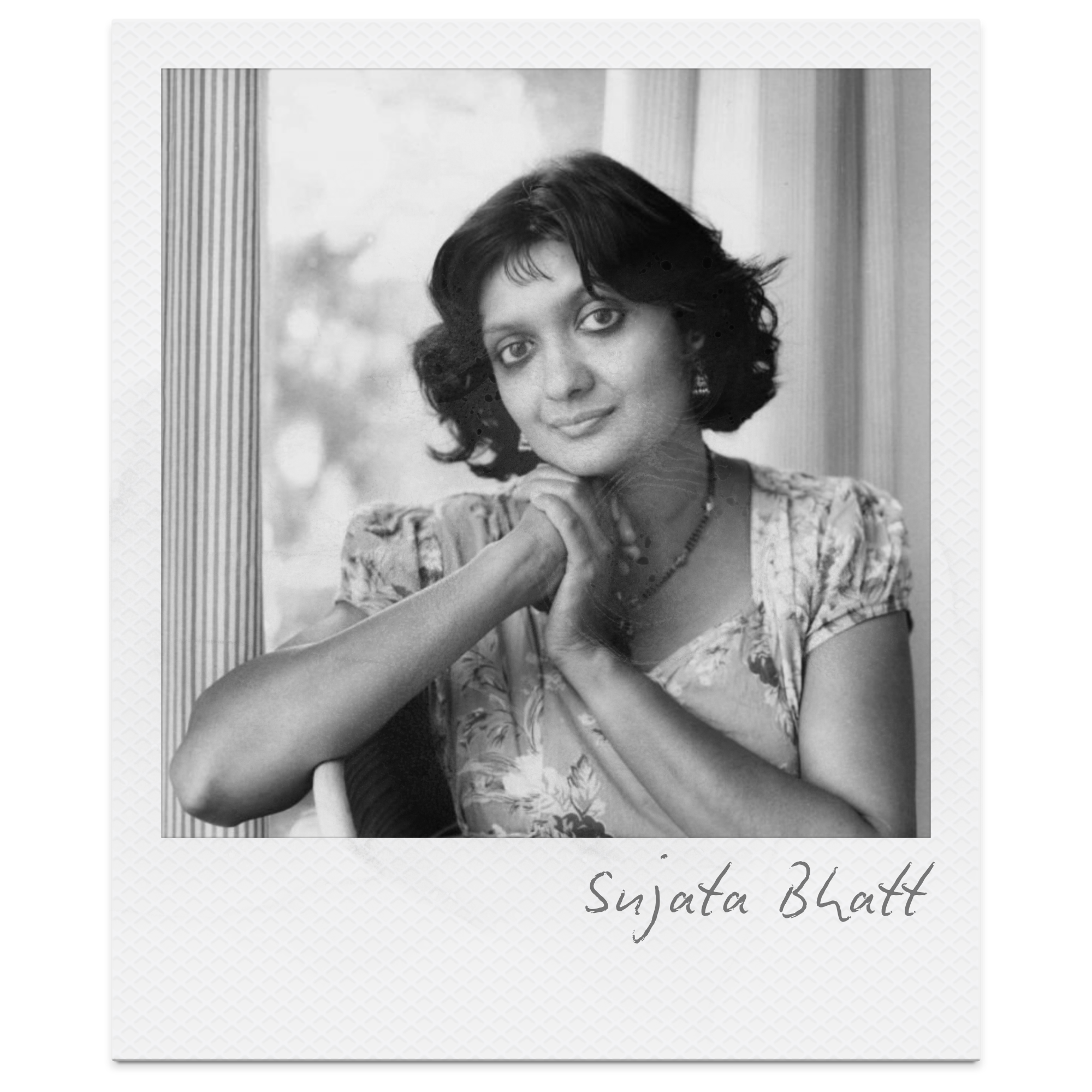
Sujata Bhatt, a contemporary poet with a multicultural background, often explores issues of identity, language, and cultural displacement. Writing in English while engaging with Indian traditions, her work reflects the tensions created by colonial history, where English functions both as a global language and as a legacy of imperial power.
A Different History reflects this context by contrasting a culture that treats knowledge and language as sacred with a history in which language has been used as a tool of oppression and violence. The poem questions how languages become associated with power, and how, over time, those who were once dominated can come to adopt—and even value—the language of the oppressor, revealing the complex relationship between language, identity, and history.
A Different History: At a Glance
Form: Free verse
Mood: Reflective, reverent, questioning
Central tension: The contrast between language as sacred knowledge and language as a tool of oppression
Core themes: Language and power, cultural identity, colonial legacy, reverence for knowledge, violence and memory
One-sentence meaning: The poem explores how language can carry both cultural reverence and historical violence, questioning how people come to value the language of those who once oppressed them.
Quick Summary of A Different History
The poem begins by reimagining the classical god Pan as having “emigrated to India,” immediately blending cultures and suggesting that traditions are not fixed but adaptable. Bhatt then presents a world in which nature, religion, and knowledge are deeply interconnected: gods appear in animals, trees are sacred, and books must be treated with respect. The repeated warnings about handling books carefully emphasise the idea that knowledge is something living and revered, rooted in both spirituality and the natural world.
The poem then shifts into a series of rhetorical questions, moving from reverence to a more critical reflection on language and power. Bhatt questions whether any language is free from being an “oppressor’s tongue,” highlighting its role in violence and control. The final lines suggest a disturbing transformation: even after suffering and cultural loss, future generations come to “love that strange language.” This ending exposes the lasting impact of colonial influence, showing how language can shape identity in complex and often contradictory ways.
Title, Form, Structure, and Metre
Bhatt’s formal choices shape how the poem moves from reverence to critical reflection, using a flexible structure to mirror the complexity of language, culture, and power. The lack of fixed pattern reflects the instability of identity and the shifting meanings attached to language.
Title
The title A Different History immediately suggests a challenge to dominant or accepted narratives. The word “different” implies an alternative perspective, encouraging the reader to reconsider familiar ideas about language, culture, and colonial influence. As the poem develops, this “different history” becomes one that prioritises spiritual respect for knowledge while also exposing the hidden violence embedded within language itself.
Form and Structure
The poem is written in free verse, with no fixed stanza pattern, rhyme scheme, or regular metre. It is divided into two uneven sections, creating a clear structural shift. The first section focuses on a world where nature, religion, and knowledge are deeply interconnected, presenting a tone of reverence and cultural continuity. The second section shifts sharply into a more direct and questioning tone, exploring how language has functioned as a tool of oppression. This structural contrast mirrors the poem’s central tension between sacred tradition and colonial violence, while the final rhetorical questions leave the poem open-ended, forcing the reader to reflect on its implications.
Rhyme Scheme and Poetic Pattern
There is no regular rhyme scheme, but Bhatt creates cohesion through repetition and subtle sound patterning. The repeated structure “a sin…” reinforces the sense of ritual and moral importance in the first section, while later repetition in the rhetorical questions (“Which language…”) creates a more insistent, interrogative rhythm. These patterns replace traditional rhyme, allowing meaning to develop through echo and emphasis rather than fixed structure.
Metre and Rhythmic Movement
The poem does not follow a regular metre, instead using line length, enjambment, and rhythmic variation to shape meaning. Short, controlled lines such as:
Great Pan is not dead;
he simply emigrated
to India.
break a complex idea into manageable parts, creating a sense of clarity and control while introducing significant themes. Enjambment allows ideas to flow across lines, reflecting the movement between cultures and histories. The repeated phrasing in the second section creates a more forceful rhythm, mirroring the speaker’s shift into critical questioning. Overall, the flexible rhythm reinforces the poem’s exploration of fluid identity and the evolving power of language.
The Speaker in A Different History
The speaker presents a reflective, questioning voice that moves between cultural observation and critical analysis, suggesting someone deeply aware of both tradition and the complexities of language and power. While not explicitly identified, the voice appears informed by a perspective that values spiritual reverence for knowledge—seen in the careful treatment of books and nature—while also recognising the historical reality of colonial influence and linguistic domination.
The tone shifts from calm authority in the first section to probing and unsettled in the second, where rhetorical questions challenge the idea of any language being neutral. The speaker’s voice becomes more direct and philosophical, asking how people come to “love that strange language” even after violence and cultural loss. This suggests a speaker who is not simply describing but actively interrogating their own relationship to language, revealing a position that is both critically aware and internally conflicted.
Stanza-by-Stanza Analysis of A Different History
This section offers a close reading of each part of the poem, focusing on how Bhatt uses imagery, symbolism, and structural shifts to develop meaning. By analysing the poem step by step, we can see how it moves from a portrayal of cultural reverence and sacred knowledge to a more critical exploration of language as power, revealing how tone, perspective, and form work together to shape the reader’s understanding.
Stanza 1: Reverence, Knowledge, and Cultural Continuity
The opening stanza establishes a world shaped by spiritual reverence and cultural continuity, beginning with the striking statement that “Great Pan is not dead; / he simply emigrated / to India.” This allusion reimagines a classical Western myth within an Eastern context, suggesting that belief systems are not fixed but can shift across cultures. By presenting India as a space where “gods roam freely,” Bhatt constructs an environment in which the sacred is embedded in everyday life, particularly through the imagery of animals and nature.
This reverence is extended through the repeated phrase “it is a sin,” which creates a ritualistic tone and emphasises the moral importance of respecting knowledge. The focus on books—objects that must not be “shoved,” “slammed,” or treated carelessly—symbolises a deep respect for learning and language, while the reference to Sarasvati, the goddess of knowledge, reinforces this connection. The final lines link books back to the natural world, reminding the reader that paper comes from trees, and therefore knowledge itself has a sacred origin. Through these methods, Bhatt presents a culture in which language and knowledge are treated with care, respect, and spiritual significance, establishing a sharp contrast with the poem’s later exploration of language as a tool of power.
Stanza 2: Language as Oppression and Internalised Power
The second stanza introduces a sharp tonal shift, moving from reverence to interrogation through a series of rhetorical questions. The repetition of “Which language” creates a probing, insistent rhythm, challenging the idea that any language is neutral. By asking whether any language has not been “the oppressor’s tongue,” Bhatt exposes the historical reality of language as a tool of domination, directly contrasting with the earlier presentation of language as sacred.
This darker perspective is intensified through the violent imagery of “torture” and the metaphor of the soul being “cropped / with the long scythe,” suggesting cultural and psychological erasure. The image of the “conqueror’s face” reinforces the connection between language and power, presenting it as something imposed through force. However, the final lines introduce a disturbing complexity: despite this history, “the unborn grandchildren / grow to love that strange language.” This shift reveals the process of internalisation, where the language of oppression becomes normalised and even valued. Through these methods, Bhatt highlights the lasting impact of colonial influence, showing how language can shape identity in ways that are both unavoidable and deeply contradictory.
Key Quotes and Methods in A Different History
Bhatt uses contrast, imagery, and structural shifts to explore how language can be both sacred and oppressive, revealing its complex role in shaping identity and power.
“Great Pan is not dead; / he simply emigrated / to India.”
◆ Technique: Allusion / irony
◆ Meaning: A classical Western god is reimagined within an Eastern context
◆ Purpose: To challenge fixed cultural boundaries and suggest the movement of belief systems
◆ Impact: Encourages the reader to see culture as fluid rather than confined to one tradition
“Here, the gods roam freely, / disguised as snakes or monkeys”
◆ Technique: Imagery / symbolism
◆ Meaning: The divine is present within everyday forms of nature
◆ Purpose: To emphasise a worldview in which the sacred is embedded in the natural world
◆ Impact: Creates a sense of reverence and interconnectedness between culture, nature, and belief
“every tree is sacred / and it is a sin / to be rude to a book”
◆ Technique: Juxtaposition / religious language
◆ Meaning: Nature and knowledge are both treated with spiritual respect
◆ Purpose: To link language, learning, and nature as equally valuable
◆ Impact: Reinforces the idea that knowledge is not neutral but deserving of care and reverence
“It is a sin to shove a book aside… / a sin to slam books down… / a sin to toss one carelessly”
◆ Technique: Repetition / anaphora
◆ Meaning: Improper treatment of books is morally wrong
◆ Purpose: To create a ritualistic tone and emphasise the importance of respecting knowledge
◆ Impact: Highlights the cultural value placed on language and learning
“without disturbing Sarasvati, / without offending the tree”
◆ Technique: Religious allusion / symbolism
◆ Meaning: Knowledge is linked to both divine presence and natural origins
◆ Purpose: To show that language is rooted in both spiritual belief and the physical world
◆ Impact: Deepens the sense of reverence surrounding books and learning
“Which language / has not been the oppressor’s tongue?”
◆ Technique: Rhetorical question
◆ Meaning: All languages may carry histories of domination
◆ Purpose: To challenge the idea of linguistic neutrality
◆ Impact: Forces the reader to reconsider assumptions about language and power
“Which language / truly meant to murder someone?”
◆ Technique: Rhetorical question / provocative diction
◆ Meaning: Language itself is not inherently violent
◆ Purpose: To complicate the argument, suggesting that violence lies in how language is used
◆ Impact: Encourages a more nuanced understanding of language as both tool and system
“after the soul has been cropped / with the long scythe swooping out / of the conqueror’s face”
◆ Technique: Violent metaphor / imagery
◆ Meaning: Language is used to erase identity and culture
◆ Purpose: To convey the destructive impact of colonial domination
◆ Impact: Creates a powerful image of cultural and psychological damage
“the unborn grandchildren / grow to love that strange language”
◆ Technique: Irony / contrast
◆ Meaning: Future generations embrace the language of their oppressors
◆ Purpose: To highlight the lasting effects of colonial influence
◆ Impact: Leaves the reader with a sense of complexity and unease, emphasising how deeply language shapes identity
Key Techniques in A Different History
Bhatt uses a range of structural, linguistic, and figurative techniques to present language as both sacred and dangerous, revealing how it can shape identity, belief, and power across cultures.
◆ Repetition and Anaphora – The repeated phrase “it is a sin” creates a ritualistic, almost religious tone, emphasising the moral seriousness of how books are treated. This repetition builds a sense of cultural reverence, reinforcing the idea that knowledge is sacred. Similarly, the repetition of “without” (“without disturbing Sarasvati, / without offending the tree”) links the divine and the natural world, suggesting that both must be respected. In the second stanza, the repetition of “Which language” introduces a more insistent, questioning rhythm, shifting the tone towards interrogation.
◆ Parallelism and Structural Patterning – Bhatt uses parallel structures such as “From… / From…” and repeated sentence patterns to create a sense of order and control in the first section, reflecting cultural stability. In contrast, similar structural repetition in the second section highlights tension and contradiction, particularly in the paired questions about language. This parallelism allows Bhatt to present opposing ideas—reverence vs violence—within the same structural framework.
◆ Rhetorical Questions – The second stanza is driven by rhetorical questions such as “Which language / has not been the oppressor’s tongue?” These questions challenge the reader directly, forcing them to consider the relationship between language and power. Rather than offering clear answers, Bhatt leaves the questions unresolved, reflecting the complexity of colonial history and linguistic identity.
◆ Allusion (Cultural and Religious) – The reference to “Great Pan” draws on classical Western mythology, while “Sarasvati” refers to the Hindu goddess of knowledge. This juxtaposition of traditions reflects the blending of cultures and highlights the global movement of ideas. It also reinforces the poem’s exploration of how belief systems and languages intersect and evolve.
◆ Imagery and Symbolism – The poem uses vivid imagery such as “Bleeding Hearts,” “sacred” trees, and the “long scythe” to represent both reverence and violence. Books symbolise knowledge and language, while trees represent the natural origin of that knowledge. The scythe, associated with harvesting, becomes a symbol of cultural erasure, suggesting that language can cut away identity and tradition.
◆ Metaphor – Language is metaphorically presented as a tool of violence and control, particularly in the image of the “oppressor’s tongue.” This metaphor suggests that language is not neutral but can be used to dominate and reshape cultures. The idea of the soul being “cropped” reinforces this, presenting oppression as something that removes or diminishes identity.
◆ Enjambment – Bhatt frequently uses enjambment to allow ideas to flow across lines, reflecting the movement between cultures, histories, and languages. This creates a sense of continuity in the first section, but also contributes to the unfolding, questioning tone of the second, where ideas build towards the final, unsettling conclusion.
◆ Juxtaposition – The poem places contrasting ideas side by side, such as sacred respect for books and the violent use of language as an “oppressor’s tongue.” This contrast highlights the central tension of the poem and emphasises the dual nature of language as both constructive and destructive.
◆ Semantic Fields (Religion vs Violence) – The first stanza is dominated by a semantic field of religion and reverence (“sacred,” “sin,” “Sarasvati”), while the second shifts to violence and control (“oppressor,” “torture,” “scythe,” “conqueror”). This shift reinforces the poem’s movement from cultural respect to critical reflection on colonial power.
◆ Sound Patterning (Sibilance and Assonance) – Subtle sound patterns, such as the soft repetition of ‘s’ sounds (“sin,” “slam,” “sacred”), create a controlled, measured tone in the first section. In contrast, harsher sounds in the second stanza contribute to a more unsettling atmosphere, reinforcing the poem’s shift in mood.
◆ Tone Shift – One of the most significant techniques is the movement from a tone of reverence and certainty in the first stanza to one of questioning and unease in the second. This shift mirrors the poem’s thematic movement, guiding the reader from admiration of cultural values to a critical awareness of historical and linguistic complexity.
How the Writer Creates Meaning and Impact in A Different History
Bhatt creates meaning and impact in A Different History through the interplay of language, structure, voice, and sound, revealing how language can function as both a source of reverence and a tool of power and oppression.
Firstly, Bhatt’s use of imagery and symbolism establishes a world in which knowledge is treated as sacred. The repeated idea that it is “a sin” to mistreat books, alongside references to “Sarasvati” and the tree “from whose wood the paper was made,” connects language, nature, and spiritual belief. This creates a sense that knowledge is not simply functional but deeply valued, shaping the reader’s understanding of a culture rooted in respect and continuity.
Structurally, meaning is created through a clear shift between the two sections of the poem. The first presents a controlled, reverent perspective, reinforced by repetition and parallelism, while the second introduces a more fragmented, questioning tone through rhetorical questions. This shift reflects the movement from certainty to uncertainty, mirroring the poem’s exploration of how language can move from being a source of identity to a tool of domination.
Bhatt also uses voice to guide interpretation. The speaker begins with a tone of calm authority, describing cultural practices with clarity and confidence, before shifting into a more probing and philosophical voice. The repeated questioning—“Which language…”—forces the reader to engage with the complexities of colonial history, suggesting that language is not neutral but shaped by power and conflict.
Finally, sound and rhythm contribute to meaning. The absence of a fixed metre allows Bhatt to control pacing through line breaks and enjambment, particularly in the opening lines, where short, carefully structured phrases introduce complex ideas. The repetition of key phrases creates a sense of ritual in the first section and urgency in the second. Together, these methods allow Bhatt to present language as both a cultural inheritance and a historical burden, shaping identity in ways that are both meaningful and deeply complicated.
Themes in A Different History
Bhatt explores how language, culture, and power are deeply interconnected, revealing the tension between reverence for knowledge and the legacy of colonial domination.
Language as Power
A central theme is the idea that language is never neutral but shaped by power structures. The rhetorical question “Which language / has not been the oppressor’s tongue?” suggests that languages carry histories of violence and control, particularly through colonial expansion. Through this, Bhatt presents language as a tool that can both dominate and reshape cultures, reinforcing its role in systems of authority.
Cultural Identity and Continuity
The first section of the poem emphasises a culture in which knowledge and nature are treated as sacred, linking identity to traditions of respect and spiritual belief. References to gods, trees, and books suggest a worldview in which culture is deeply embedded in everyday practices. This highlights the importance of preserving cultural identity, even as it comes into contact with other influences.
Colonial Influence and Legacy
The poem explores the lasting effects of colonialism, particularly through language. The image of the “oppressor’s tongue” and the violent metaphor of the soul being “cropped” suggest cultural erasure and domination. However, the poem also shows how this influence persists across generations, shaping identity long after the initial act of control.
Reverence for Knowledge
Bhatt presents knowledge as something to be treated with care and respect, reinforced through the repeated idea that it is “a sin” to mishandle books. This reflects a cultural attitude in which learning is not purely intellectual but spiritual, connected to both divine presence and the natural world.
Internalisation of Oppression
One of the most complex themes is how oppressed cultures can come to adopt and even value the language of their oppressors. The idea that “the unborn grandchildren / grow to love that strange language” highlights the process of internalisation, where systems of power become embedded within identity. This creates a tension between history and belonging, showing how language can be both imposed and embraced.
Violence and Cultural Erasure
The imagery of “torture” and the “long scythe” suggests that language can be used to destroy not just communication but identity itself. This theme reinforces the idea that cultural domination operates through both physical and psychological means, leaving lasting effects on individuals and communities.
Alternative Interpretations of A Different History
While the poem clearly contrasts reverence for knowledge with language as oppression, Bhatt’s use of structure and questioning allows for multiple interpretations of how language shapes identity.
Psychological Interpretation: Internal Conflict and Identity
From a psychological perspective, the poem can be read as an exploration of internal conflict, where the speaker recognises both the beauty and the violence within language. The shift from reverence to questioning suggests a mind negotiating between inherited cultural values and the realities of colonial history. The final idea that future generations “grow to love that strange language” reflects how identity becomes shaped by forces that are both chosen and imposed, creating a sense of unresolved tension.
Social Interpretation: Colonial Power and Cultural Influence
The poem can be interpreted as a critique of colonial systems, where language functions as a key tool of control. The idea of the “oppressor’s tongue” highlights how dominant cultures impose their language to assert authority, often replacing or diminishing existing traditions. However, Bhatt also shows how this influence extends beyond direct oppression, as later generations adopt the language as part of their identity. This interpretation emphasises the lasting and complex effects of cultural domination.
Philosophical / Existential Interpretation: Language as Constructed Reality
On a broader level, the poem questions the nature of language itself, suggesting it is not inherently good or evil but shaped by human use. The rhetorical questions imply that all languages have the potential to be associated with violence or power, depending on context. The idea that people come to “love that strange language” raises questions about whether identity is formed through history, choice, or adaptation, suggesting that meaning and belonging are not fixed but continually constructed.
Exam-Ready Insight for A Different History
This section shows how to turn your understanding of A Different History into a strong, exam-focused response for IGCSE Literature (0475), with a clear focus on how meaning is created through methods.
What strong responses do
◆ focus closely on the question
◆ analyse methods (language, structure, and sound), not just ideas
◆ explain how effects are created, not just what happens
◆ track shifts in tone and perspective across the poem
◆ use short, precise quotations to support points
Conceptual argument
A strong thesis for A Different History might be:
Bhatt presents language as both something to be respected and something that can be used for control, using contrast, repetition, and rhetorical questions to show how it shapes identity and power.
Model analytical paragraph
Bhatt presents the power of language through contrast and structural shift to show its complex role in shaping identity. In the repeated phrase “it is a sin,” the religious language creates a tone of respect, suggesting that books and knowledge are treated with care and importance. This is reinforced by the reference to “Sarasvati,” linking language to belief and tradition. However, this tone changes with the rhetorical question “Which language / has not been the oppressor’s tongue?”, which introduces the idea of language as a tool of control. The violent metaphor of the soul being “cropped / with the long scythe” emphasises the damaging effects of this power. Through this shift from respect to questioning, Bhatt shows how language can both shape identity and be used to dominate others.
Teaching Ideas for A Different History
This poem is ideal for exploring how writers use language, structure, and voice to present ideas about power, identity, and language, while also building collaborative and discussion-based classroom approaches.
1. Collaborative Analytical Paragraph (Paired Writing)
Give students a focused question, for example:
How does Bhatt present the power of language in A Different History?
Students work together to produce a single paragraph, combining their ideas and interpretations. They should:
◆ select and embed quotations
◆ identify methods (language, structure, sound)
◆ explain meaning → purpose → impact
Because both students contribute, they can challenge and refine each other’s ideas, leading to a stronger, more developed response. This approach helps students understand that effective analytical writing is built through discussion, comparison, and improvement, not just individual effort.
2. Structured Group Close Analysis (Role-Based)
Instead of traditional annotation, assign students specific roles in small groups for a stanza-by-stanza reading of the poem:
◆ Structure specialist – tracks shifts, voice, and progression
◆ Language analyst – explores word choices and imagery
◆ Methods expert – identifies poetic devices and techniques
◆ Tone tracker – comments on voice and emotional shifts
Each group analyses a stanza, then feeds back to the class. As responses are shared, build a full analysis together.
This approach makes close reading more active and collaborative, avoiding a “talk and chalk” lesson while still developing detailed analytical skills.
3. Silent Debate
Set up a silent debate around the question:
Is A Different History more about respect for knowledge or language as a tool of power?
Students respond to prompts in writing, building on and challenging each other’s ideas. They should:
◆ use quotations as evidence
◆ respond directly to others’ interpretations
◆ develop and refine arguments over time
This encourages deeper thinking, ensures all students participate, and allows ideas to develop more thoughtfully than in fast-paced verbal discussion. For guidance on structuring this activity, see this post on how to run an effective silent debate in your classroom.
4. Creative Writing: Rewriting the Voice
Ask students to write a short piece exploring their relationship with language or identity.
Prompt:
Write in the voice of a character reflecting on a language that shapes their identity.
Students should aim to:
◆ use contrast between different perspectives
◆ include imagery and symbolism
◆ develop a clear voice
◆ show how meaning is shaped through language choices
This activity helps students put literary methods into practice by using techniques such as imagery, contrast, and voice in their own writing. Many of the texts they study in Literature are strong starting points for creative writing, giving them regular practice with the skills they need for their Language paper. For more ideas and structured prompts, explore the Creative Writing Archive.
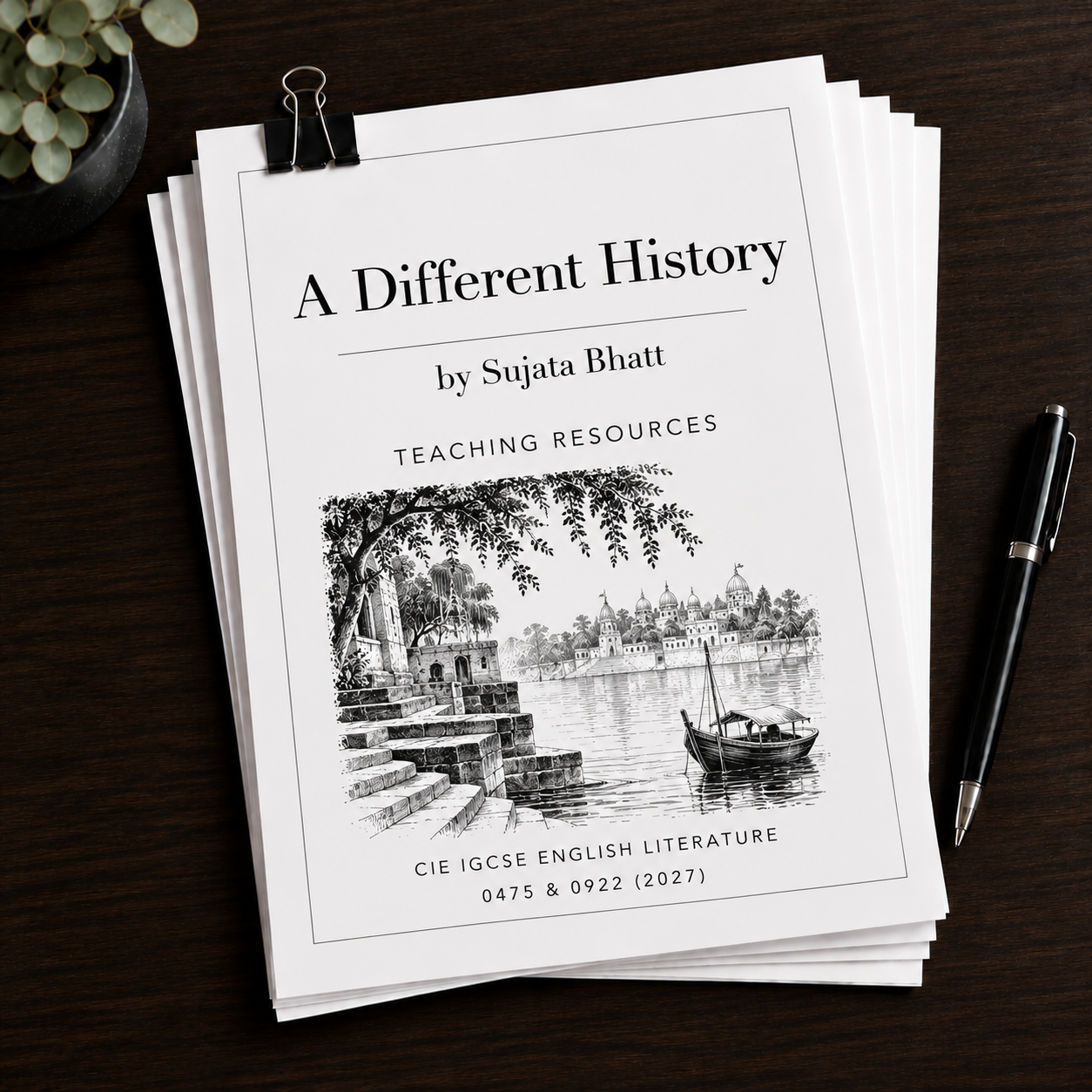
Teach A Different History with minimal prep.
If you’re teaching A Different History by Sujata Bhatt, you don’t need to spend hours building lessons, discussion tasks, and analytical activities from scratch.
This complete teaching resource pack provides a clear, structured way to guide students from first reading and initial interpretation to confident, developed exam-style analysis — while saving valuable planning time.
Designed for CIE IGCSE English Literature (0475 & 0922, 2027 syllabus), the pack also works flexibly for broader secondary poetry teaching and poetry exploration. It can be used across a full sequence of lessons, whether you’re introducing the poem, analysing Bhatt’s language and poetic methods, exploring ideas about language, culture and colonialism, developing discussion and interpretation, or preparing students for analytical writing and assessment.
Our in-depth study guide for the poem is also available to support teaching and deepen students’ understanding of Bhatt’s exploration of language, cultural identity, colonialism, history, education, oppression, resistance, reverence for books and the relationship between language and power.
Why this works
This is not just a collection of disconnected worksheets. It’s a carefully designed set of discussion-led, analysis-focused activities created to help students develop confident, independent interpretations of poetry.
Designed for paired, group, and independent learning
Encourages active thinking, discussion, and interpretation
Includes exam-style questions suitable for Literature and Language preparation
Develops analytical confidence and independent interpretation
Encourages thoughtful debate, discussion, and extended written responses
Helps students explore Bhatt’s use of mythological allusion, imagery, rhetorical questions, repetition, contrast, symbolism, structure, tone and shifts in perspective
What’s included
Poetry analysis task cards covering context, structure, form, language, tone, imagery, symbolism, personal response, and more
10 exam-style essay questions for developing and assessing analytical responses
10 creative writing prompts designed to support skills needed for the Language Paper
Roll the Dice discussion board for low-prep, high-engagement lessons
Silent debate activities built around thought-provoking statements to encourage independent thinking and discussion
Teacher instructions for quick and straightforward implementation
How you can use it
Introduce the poem and build initial understanding
Structure analysis lessons without excessive scaffolding
Run engaging, discussion-led poetry lessons
Explore ideas surrounding language, cultural identity, history, colonialism, education, oppression and resistance
Examine the poem’s presentation of books and language as culturally significant and powerful
Explore how Bhatt moves between myth, cultural tradition and the historical consequences of colonial rule
Analyse how rhetorical questions, repetition, imagery, contrast and changes in tone develop the poem’s argument
Set up independent written responses and revision activities
Prepare students for exam-style analytical questions with confidence
What students gain
Greater confidence analysing poetry independently
Experience answering exam-style questions
Stronger ability to form and support interpretations
Improved discussion and analytical writing skills
Greater independence in their thinking
Deeper understanding of Bhatt’s language, structure, imagery, tone and exploration of cultural and linguistic identity
Download Now
Download the full A Different History by Sujata Bhatt teaching resource pack and start using it immediately — from first reading through to confident, exam-style analysis, interpretation and discussion.
Take Your Study of A Different History Further
Help students explore the complex ideas at the heart of A Different History while developing confident, independent interpretations of Bhatt’s presentation of language, cultural identity, colonialism, history, education, oppression and resistance.
The A Different History Teaching Resource Pack gives you a complete collection of ready-to-use activities for exploring the poem in depth — without spending hours creating additional resources. With analysis task cards, 10 exam-style essay questions, 10 creative writing prompts, a Roll the Dice discussion board, thought-provoking debate activities and teacher guidance, it can support everything from first reading and close analysis to independent work and revision.
Or, if you’re teaching the complete Songs of Ourselves Volume 1 selection, the Complete Teaching Resource Bundle includes resources for all 15 poems on the 2027 CIE IGCSE English Literature syllabus, giving you a consistent bank of analysis, discussion, writing and revision activities for the entire poetry unit.
Give students the space to question how language, history and power intersect in Bhatt’s poem — while giving yourself a ready-made collection of activities for teaching it with depth.
Go Deeper
To build stronger comparison skills, it’s useful to explore how other texts present language, power, and identity, particularly in relation to control and cultural influence.
◆ Search for My Tongue – Sujata Bhatt
Explores the tension between native language and colonial language, directly linking to Bhatt’s concern with identity and linguistic inheritance.
◆ Carpet-Weavers, Morocco – Carol Rumens
Examines how language and voice represent labour and identity, offering a comparison in how writers give voice to cultural experience.
◆ The Chimney Sweeper – William Blake
Presents how systems of power and control shape individual experience, linking to Bhatt’s exploration of how structures influence identity.
◆ Half-Caste – John Agard
Challenges ideas about language, identity, and power, particularly how dominant perspectives shape meaning and understanding.
◆ Island Man – Grace Nichols
Explores cultural identity and displacement, linking to Bhatt’s ideas about how individuals exist between different cultural influences.
◆ Sonnet 18 – William Shakespeare
Offers a contrasting view of language as something that preserves and celebrates, rather than controls or oppresses.
By comparing these texts, students can explore how writers present language as power, the shaping of identity, and the lasting effects of cultural influence, strengthening more developed and conceptual responses.
Final Thoughts
A Different History presents language as both a source of respect and a means of control, showing how it can shape identity in complex and often conflicting ways. Through its use of contrast, repetition, and rhetorical questioning, the poem moves from a world where books and knowledge are treated with care to one where language is linked to power and violence, revealing how meaning is created through shifting perspectives.
Ultimately, the poem is memorable for the way it leaves the reader with unresolved questions, highlighting the tension between history and identity. By showing how people can come to value the language of those who once dominated them, Bhatt exposes the lasting impact of colonial influence. For further exploration, revisit the Songs of Ourselves Volume 1 Hub or explore a wider range of literary analysis in the Literature Library.
Choose Your Next Text