Storyteller by Liz Lochhead: Summary, Meaning, Themes & Analysis
Liz Lochhead’s Storyteller presents the power of oral tradition through memory, voice, and everyday labour, showing how storytelling shapes both community and identity. Through imagery, repetition, and extended metaphor, the poem captures the way stories are created, shared, and carried forward, even as they seem to disappear. Lochhead reveals storytelling as both practical and creative work, suggesting that its impact lies not in permanence, but in how it lives on within those who hear it. If you are studying or teaching Songs of Ourselves Volume 1 for CIE English Literature (0475), you can explore in-depth analyses of every poem from the 2026 and 2027 Paper 1 syllabus in the Songs of Ourselves Volume 1 Hub, or a wider range of texts in the Literature Library.

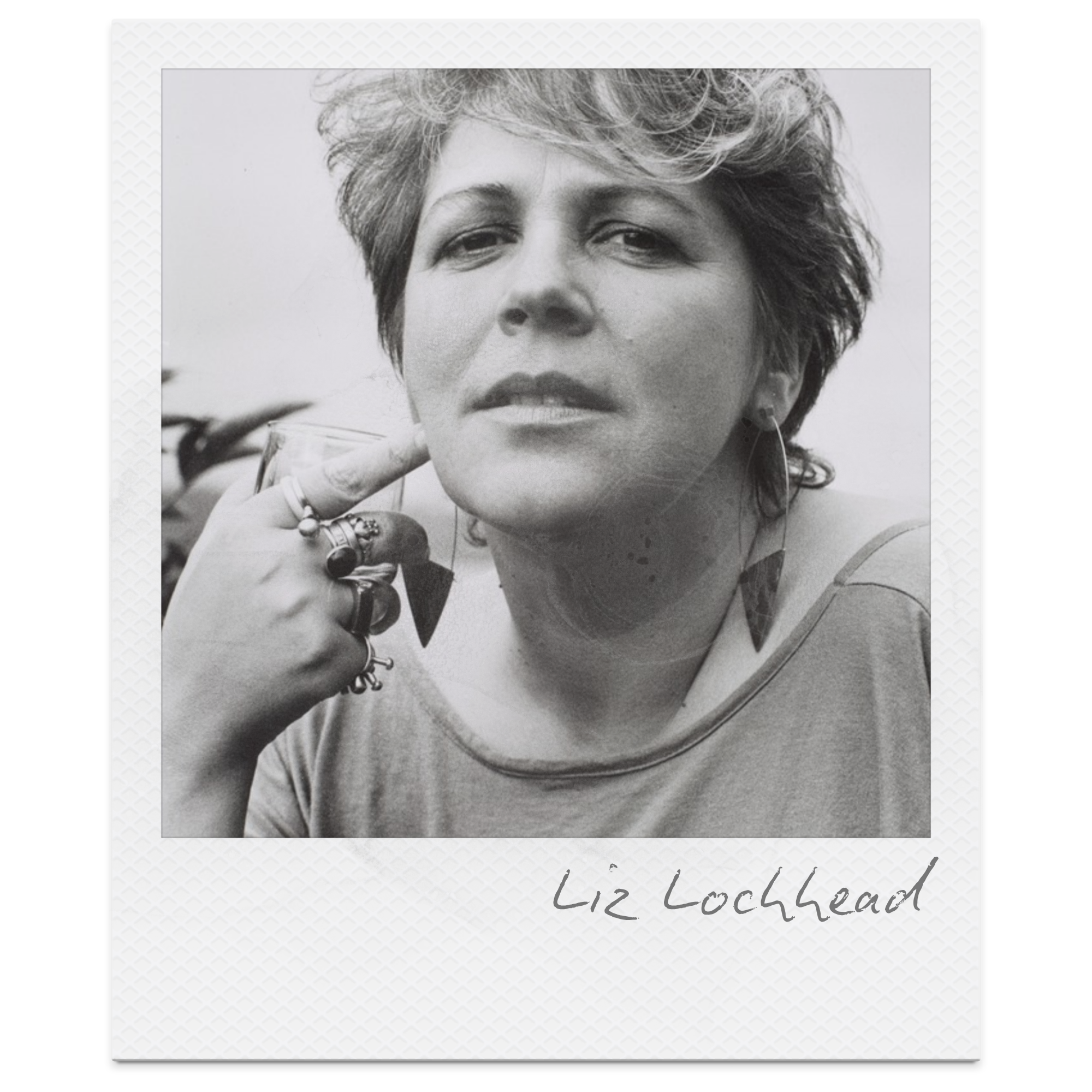
Context of Storyteller
Liz Lochhead is a Scottish poet and playwright whose work often explores voice, identity, and the importance of oral storytelling traditions, particularly within working-class and female communities. She frequently draws on everyday experiences and domestic settings to show how culture and identity are shaped through shared language and memory.
Storyteller reflects this interest by presenting storytelling as a form of labour embedded within daily life, especially women’s work. The poem connects traditional domestic tasks with the act of storytelling, suggesting that stories are not separate from life but woven into it. At the same time, it explores how oral stories are both temporary and enduring, disappearing in the moment yet continuing to shape identity across generations.
Storyteller: At a Glance
Form: Free verse narrative poem
Mood: Reflective, admiring, quietly nostalgic
Central tension: The temporary nature of storytelling vs its lasting impact on memory and identity
Core themes: Storytelling and memory, oral tradition, work and creativity, community and identity, transformation
One-sentence meaning: Lochhead presents storytelling as a form of everyday work that appears fleeting but continues to shape identity and memory long after it is told.
Quick Summary of Storyteller
The poem begins by presenting the storyteller within a domestic setting, surrounded by the routines of daily work. As she sits at the “scoured table” in the “swept kitchen,” storytelling takes place alongside practical tasks such as sewing, cooking, and preparing food. The repeated listing of these activities emphasises that storytelling is not separate from labour but part of it, as the speaker insists that “to tell the stories was her work.” Through this, Lochhead shows how stories are created within ordinary life, shaped by community, rhythm, and shared experience.
As the poem develops, storytelling is compared to spinning, suggesting a creative process that transforms something intangible into something meaningful. The storyteller holds her audience in suspense, even when the ending is already known, highlighting the power of voice and performance. In the final section, however, the stories seem to fade with the coming of morning, dissolving into everyday life. Yet this disappearance is only temporary, as the stories remain in the “sleeping heads of the children,” ready to be retold. This shift shows that while storytelling may appear fleeting, its influence continues through memory and imagination.
Title, Form, Structure, and Metre
Lochhead’s formal choices shape how the poem presents storytelling as both work and creation, using a flexible structure to mirror the movement between everyday life and imagination. The lack of fixed pattern reflects the fluid, oral nature of storytelling, where meaning is carried through voice rather than rigid form.
Title
The title Storyteller immediately centres the figure of the woman, suggesting that her identity is defined by her role in creating and sharing stories. Rather than focusing on a specific story, the title emphasises the act of storytelling itself, drawing attention to process over product. As the poem develops, this role becomes more complex, revealing storytelling as both labour and creative transformation, elevating something often overlooked into something significant.
Form and Structure
The poem is written in free verse, with no regular stanza pattern, allowing it to reflect the natural rhythms of speech and oral narration. The structure moves from a detailed depiction of the storyteller’s domestic environment into a more reflective exploration of how stories are created and remembered. Lists of everyday actions—“five or forty fingers stitched,” “corn was grated,” “patchwork was pieced”—create a sense of ongoing labour, while the shift towards imagery of “spinning” marks a transition into the imaginative process. The ending moves outward again, showing how stories disperse and continue beyond the moment of telling, reinforcing their lasting impact despite their apparent disappearance.
Rhyme Scheme and Poetic Pattern
There is no regular rhyme scheme, but Lochhead creates cohesion through repetition and patterned phrasing. The repeated structures and parallel clauses mirror the rhythms of spoken storytelling, while the accumulation of similar sentence forms builds a sense of continuity. This replaces traditional rhyme with a more subtle form of structural echo, reflecting how oral stories rely on repetition to aid memory and engagement.
Metre and Rhythmic Movement
The poem does not follow a fixed metre, instead using irregular line lengths and enjambment to control pacing. Shorter lines slow the reader down, emphasising key moments such as “she sat down” or “To tell the stories was her work,” while longer, flowing lines mimic the movement of spoken narrative. Enjambment allows ideas to spill across lines, reflecting how stories unfold gradually. This flexible rhythm reinforces the idea that storytelling is shaped by voice, timing, and performance, rather than strict poetic pattern.
The Speaker in Storyteller
The speaker presents an observant, reflective voice that appears closely connected to the storyteller, suggesting a perspective shaped by memory and shared experience. The detailed description of the domestic setting and the storyteller’s actions implies familiarity, as if the speaker has witnessed—or been part of—the scenes described. This creates a tone of respect and quiet admiration, positioning the storyteller as someone whose work is both ordinary and significant.
At the same time, the speaker’s voice carries a sense of distance, particularly in the shift to “she” and later “us,” which broadens the perspective to include a wider community. The inclusion of “us waiting, held / breath” suggests that the speaker may be one of the children who listened to these stories, reinforcing the idea that storytelling shapes identity through collective memory. This dual perspective—both inside and observing—allows the speaker to highlight the storyteller’s importance while also reflecting on how her stories continue to influence those who heard them.
Stanza-by-Stanza Analysis of Storyteller
This section explores how Lochhead develops meaning through imagery, structure, and voice, tracing the movement from domestic routine to creative transformation and finally to the lasting impact of storytelling. By analysing each section closely, we can see how the poem presents storytelling as both everyday labour and a powerful force that shapes memory and identity.
Stanza 1: Domestic Precision and the Setting of Storytelling
The opening lines establish a carefully controlled domestic setting, where the storyteller is positioned within a world of order, routine, and labour. The phrases “scoured table” and “swept kitchen” suggest cleanliness and discipline, while the detail of “cracked delft” introduces a sense of age and history, hinting at a space shaped by repeated use and memory. Through this imagery, Lochhead grounds storytelling firmly within the everyday, rather than presenting it as something separate or elevated.
The metaphor “every last crumb of daylight was salted away” signals a transition from day to night, marking the moment when storytelling begins. The idea of “salting away” suggests both preservation and care, implying that time itself is being stored or prepared, just as food might be. This positions storytelling as something that emerges out of the rhythms of daily life, transforming ordinary moments into something meaningful and lasting.
Stanza 2: Storytelling as Work and Productivity
This section directly challenges the idea that storytelling is unproductive, asserting that “No one could say the stories were useless.” The firm, declarative tone establishes the storyteller’s role as valuable, positioning storytelling alongside physical labour. The phrase “as the tongue clacked” places storytelling within the rhythm of work, suggesting that speech itself becomes a kind of mechanical, ongoing action, integrated into daily life.
The list of activities—“fingers stitched,” “corn was grated,” “patchwork was pieced,” “darning was done”—uses parallel structure to emphasise continuous, practical labour. By aligning storytelling with these tasks, Lochhead presents it as equally purposeful and necessary, rather than decorative or optional. The accumulation of actions reinforces a sense of productivity, while also highlighting how storytelling operates within a collective, communal space, where work and creativity happen simultaneously.
Stanza 3: Defending the Storyteller and the Craft of Creation
This section reinforces the value of the storyteller, rejecting any suggestion that she is “shiftless” through a defensive, almost conversational tone. The contrast between “sloven or spotless” and “Dishwater or tasty” suggests that her domestic standards may vary, but this is irrelevant because her true labour lies elsewhere. The emphatic statement “To tell the stories was her work” redefines productivity, positioning storytelling as a form of skilled labour rather than idle talk.
The simile “It was like spinning” develops this idea further, presenting storytelling as a creative process that transforms “thin air” into something tangible and strong. This image suggests both craftsmanship and imagination, showing how stories are carefully constructed. The phrase “the singlest strongest / thread” implies unity and strength, reinforcing the idea that storytelling creates something enduring. The final lines shift to the audience, where “she’d have us waiting, held / breath,” capturing the power of voice and performance. Even though the ending is familiar, the storyteller maintains suspense, highlighting how meaning is shaped not just by content but by the act of telling itself.
Stanza 4: Dissolution and Enduring Memory
The final section shifts to the arrival of morning, marked by the repeated “as,” which creates a rhythmic, cyclical structure reflecting the return to daily labour. Images such as “build the fire,” “feet felt for clogs,” and “thin grey washed over flat fields” ground the poem once again in the routine of work, suggesting that storytelling belongs to the night and must give way to practical life. The phrase “the stories dissolved in the whorl of the ear” suggests their immediate disappearance, reinforcing the idea that oral storytelling is temporary and cannot be physically preserved.
However, this apparent loss is quickly complicated. The striking image of stories that “hung themselves upside down / in the sleeping heads of the children” suggests that they continue to exist in a hidden, internal form. The verb “hung” implies suspension rather than disappearance, while the unusual positioning “upside down” hints at transformation. The final image of the stories flying again “in the storytellers night” completes this cycle, showing how storytelling is continually renewed. Through this shift, Lochhead reveals that although stories may fade in the moment, they endure through memory, ready to be retold and reshaped across generations.
Key Quotes and Methods in Storyteller
Lochhead uses imagery, structure, and metaphor to present storytelling as both labour and creative transformation, showing how it moves between the everyday and the imaginative.
“she sat down / at the scoured table / in the swept kitchen”
◆ Technique: Imagery / domestic setting
◆ Meaning: The storyteller is placed within a clean, controlled domestic space
◆ Purpose: To ground storytelling in everyday life rather than elevating it as separate
◆ Impact: Emphasises that storytelling emerges from ordinary routines and shared spaces
“every last crumb of daylight was salted away”
◆ Technique: Metaphor
◆ Meaning: Daylight is preserved like food, suggesting careful transition into night
◆ Purpose: To signal the shift from work to storytelling while linking both through preparation
◆ Impact: Suggests storytelling is something stored, valued, and prepared for
“No one could say the stories were useless”
◆ Technique: Declarative statement / defensive tone
◆ Meaning: The speaker rejects the idea that storytelling lacks value
◆ Purpose: To assert storytelling as meaningful and necessary
◆ Impact: Reinforces the idea of storytelling as a form of valid labour
“as the tongue clacked / five or forty fingers stitched”
◆ Technique: Parallelism / sound imagery
◆ Meaning: Speech and manual work happen simultaneously
◆ Purpose: To align storytelling with physical labour
◆ Impact: Creates a sense of rhythm, showing storytelling as part of ongoing productive activity
“To tell the stories was her work”
◆ Technique: Emphatic statement
◆ Meaning: Storytelling is defined as labour
◆ Purpose: To elevate storytelling to the same level as domestic tasks
◆ Impact: Challenges assumptions about what counts as useful work
“It was like spinning, / gathering thin air to the singlest strongest / thread”
◆ Technique: Simile / extended metaphor
◆ Meaning: Stories are created from nothing but become strong and unified
◆ Purpose: To show storytelling as a process of craft and creation
◆ Impact: Highlights the skill involved and the transformation from intangible to meaningful
“she’d have us waiting, held / breath, for the ending we knew by heart”
◆ Technique: Enjambment / collective voice
◆ Meaning: The audience is emotionally engaged despite knowing the outcome
◆ Purpose: To emphasise the power of performance and voice
◆ Impact: Shows storytelling’s ability to create suspense and shared experience
“the stories dissolved in the whorl of the ear”
◆ Technique: Metaphor / auditory imagery
◆ Meaning: Stories disappear after being heard
◆ Purpose: To highlight the temporary nature of oral storytelling
◆ Impact: Suggests storytelling is fleeting, existing only in the moment
“hung themselves upside down / in the sleeping heads of the children”
◆ Technique: Surreal imagery / personification
◆ Meaning: Stories remain in memory in a transformed state
◆ Purpose: To show how stories continue internally even after being told
◆ Impact: Creates a vivid image of storytelling as something that endures in imagination
“till they flew again / in the storytellers night”
◆ Technique: Symbolism / cyclical structure
◆ Meaning: Stories return to life when retold
◆ Purpose: To present storytelling as a continuous cycle
◆ Impact: Reinforces the idea that stories are never truly lost, only temporarily paused
Key Techniques in Storyteller
Lochhead uses a range of structural, linguistic, and figurative techniques to present storytelling as both labour and creative transformation, showing how it moves between the everyday and the imaginative.
◆ Lower-case opening / in medias res – The poem begins with “she sat down” rather than a capitalised opening, creating the sense that the reader enters mid-action. This reflects the nature of storytelling itself, suggesting it is part of an ongoing cycle rather than a fixed beginning, and reinforces the idea that stories—and work—are continuous.
◆ Simile (Spinning) – The comparison “It was like spinning, / gathering thin air to the singlest strongest / thread” presents storytelling as a form of craft. The image transforms something intangible into something strong and unified, linking storytelling to traditional forms of women’s labour and emphasising both skill and creation.
◆ Extended Metaphor (Storytelling as Labour) – Across the poem, storytelling is consistently aligned with tasks such as sewing, cooking, and darning. This extended metaphor positions storytelling as productive work, challenging assumptions that it is passive or unimportant. It also connects creativity to everyday survival and community life.
◆ Imagery (Domestic and Rural) – Lochhead uses detailed imagery such as “scoured table,” “swept kitchen,” and “flat fields” to ground the poem in a real, physical environment. This creates authenticity while emphasising that storytelling emerges from ordinary settings, not abstract spaces.
◆ Parallelism and Listing – The sequence “fingers stitched / corn was grated / patchwork was pieced / or the darning was done” uses parallel structure to convey continuous labour. This repetition mirrors the rhythm of work and reinforces the idea that storytelling operates alongside these tasks, not separately.
◆ Repetition – Repeated structures such as “as the…” in the final stanza create a sense of routine and cycle, reflecting the return to daily life at dawn. This reinforces the idea that storytelling exists within, and is shaped by, recurring patterns of life.
◆ Enjambment – The frequent use of enjambment allows lines to flow into one another, mirroring the fluid movement of speech and the unfolding nature of oral storytelling. This creates a natural, conversational rhythm and reflects how stories develop gradually rather than in rigid units.
◆ Sound Imagery – The phrase “the tongue clacked” introduces a subtle auditory element, presenting storytelling as something physical and rhythmic, almost mechanical. This reinforces the idea that storytelling is active and continuous.
◆ Juxtaposition – Lochhead contrasts “sloven or spotless” and “Dishwater or tasty” to show that the storyteller’s value is not judged by domestic standards. This contrast highlights how storytelling allows her to exist slightly outside traditional expectations, while still remaining within the community.
◆ Metaphor (Preservation and Dissolution) – The image of daylight being “salted away” suggests preservation, while later the stories “dissolved in the whorl of the ear” suggests disappearance. This contrast reflects the tension between storytelling as both temporary and enduring.
◆ Personification and Surreal Imagery – The image of stories that “hung themselves upside down / in the sleeping heads of the children” gives them an almost living presence. This suggests that stories continue to exist internally, reinforcing their lasting psychological impact.
◆ Cyclical Structure – The poem moves from evening to night to morning and back to night again, reflecting a cycle. This structural pattern mirrors how stories are told, forgotten, and retold, reinforcing the idea of storytelling as an ongoing cultural process.
◆ Tone Shift – The poem shifts from a tone of observation and routine to one of wonder and reflection, particularly in the final stanza. This shift highlights the transformation of storytelling from everyday activity to something with lasting emotional and imaginative power.
How the Writer Creates Meaning and Impact in Storyteller
Lochhead creates meaning and impact in Storyteller through the interplay of language, structure, voice, and imagery, presenting storytelling as both everyday labour and a powerful force that shapes memory and identity.
Firstly, Lochhead uses domestic imagery to ground storytelling in the routines of daily life. Descriptions such as “scoured table” and “swept kitchen” create a sense of order and routine, while the listing of tasks like stitching and darning aligns storytelling with physical work. This positioning makes storytelling feel practical and necessary, rather than decorative, reinforcing the idea that it is part of how communities function and connect.
Structurally, meaning is shaped through a clear progression from evening to night and into morning. The poem begins with preparation and labour, moves into the act of storytelling itself, and then shifts to the apparent disappearance of stories at dawn. However, this is complicated by the cyclical return of storytelling in the final lines. This structure mirrors the way stories are told, forgotten, and retold, emphasising their ongoing impact despite their temporary nature.
Lochhead also uses metaphor to present storytelling as a creative process. The comparison to “spinning” suggests that stories are crafted from nothing, transforming “thin air” into something strong and unified. This metaphor highlights both the skill involved and the way storytelling creates meaning through shaping and structure, rather than simply recording events.
Finally, voice and rhythm play a key role. The use of enjambment creates a flowing, speech-like quality, reflecting the oral nature of storytelling, while the collective “us” draws the reader into a shared experience. This combination of fluid structure and inclusive voice reinforces the idea that storytelling is not just an individual act but a communal one, shaping how people understand themselves and their world.
Themes in Storyteller
Lochhead explores how storytelling operates within everyday life, revealing its importance in shaping memory, identity, and community, even when it appears temporary.
Storytelling as Work
A central theme is the idea that storytelling is a form of labour. The poem repeatedly aligns storytelling with tasks such as stitching, cooking, and darning, reinforced by the statement “To tell the stories was her work.” Through this, Lochhead challenges the assumption that storytelling is passive or unproductive, presenting it instead as a skilled, necessary activity within the community.
Oral Tradition and Memory
The poem emphasises the power of oral storytelling, showing how stories are passed on through voice rather than written form. Although the stories “dissolve in the whorl of the ear,” they continue to exist in the “sleeping heads of the children,” highlighting how memory preserves and transforms them. This suggests that storytelling is both temporary and enduring, existing beyond the moment of telling.
Community and Shared Experience
Storytelling is presented as a collective experience, bringing people together during moments of work and rest. The shift to “us waiting, held / breath” shows how the audience participates in the act of storytelling, reinforcing its role in creating connection and shared understanding within the community.
Creativity and Transformation
Through the metaphor of “spinning,” storytelling is shown as a process of creation, transforming “thin air” into something meaningful. This reflects the imaginative power of storytelling, suggesting that it shapes not just entertainment but the way people understand their experiences and the world around them.
Women’s Roles and Value
The poem explores how women’s work is often judged by domestic standards, seen in contrasts such as “sloven or spotless.” However, the storyteller exists slightly outside these expectations, as her storytelling grants her a different kind of value. This highlights the theme of redefining usefulness, suggesting that creative and cultural contributions are just as important as physical labour.
The Cycle of Storytelling
The poem presents storytelling as part of a continuous cycle, moving from night to day and back again. Although stories seem to disappear in the morning, they return “in the storytellers night,” reinforcing the idea that storytelling is never truly lost. This cyclical pattern reflects how stories are constantly retold, reshaped, and carried forward across generations.
Alternative Interpretations of Storyteller
While the poem clearly presents storytelling as labour and creative expression, Lochhead’s use of voice, structure, and language allows for multiple interpretations of how storytelling functions within identity and culture.
Psychological Interpretation: Memory and Imagination
From a psychological perspective, the poem explores how stories are internalised and reshaped within the mind. The image of stories that “hung themselves upside down / in the sleeping heads of the children” suggests that storytelling does not simply end but continues in a transformed, almost dreamlike state. This reflects how memory works—stories are not stored exactly as they are told, but altered and reimagined. The familiar endings “we knew by heart” also suggest comfort and repetition, highlighting how storytelling provides a sense of stability and continuity, even as it evolves.
Social Interpretation: Oral Tradition and Cultural Identity
The poem can be read as a reflection of oral storytelling traditions, particularly within Scottish culture, where stories are passed down through voice, community, and shared experience rather than written form. Lochhead’s use of spoken rhythms and informal phrasing creates a sense of authenticity, reflecting how stories are shaped by the teller’s voice. This is reinforced by subtle traces of Scottish-inflected language, such as “shiftless” used in a colloquial, conversational tone, which grounds the poem in a specific cultural context.
Through this, storytelling becomes a communal act embedded within daily life, where stories are told alongside work and remembered collectively. The cyclical structure—stories told at night, fading by morning, and returning again—mirrors how oral traditions survive across generations, carried not by text but by memory and repetition.
Philosophical Interpretation: Creation from Nothing
On a broader level, the poem can be interpreted as a reflection on the nature of creation itself. The simile of storytelling as “spinning… gathering thin air to the singlest strongest thread” suggests that meaning is created from nothing, shaped through imagination and voice. This raises questions about where stories come from and how they gain significance.
The apparent disappearance of stories—“dissolved in the whorl of the ear”—contrasts with their later return, suggesting that meaning is not fixed but constantly recreated. In this sense, storytelling becomes a metaphor for human experience itself: something temporary, yet continually reshaped and sustained through memory, voice, and retelling.
Exam-Ready Insight for Storyteller
This section shows how to turn your understanding of Storyteller into a strong, exam-focused response for IGCSE Literature (0475), with a clear focus on how meaning is created through methods.
What strong responses do
◆ focus closely on the question
◆ analyse methods (language, structure, and sound), not just ideas
◆ explain how effects are created, not just what happens
◆ track shifts in tone and perspective across the poem
◆ use short, precise quotations to support points
Conceptual argument
A strong thesis for Storyteller might be:
Lochhead presents storytelling as both everyday work and a powerful creative act, using imagery, structure, and metaphor to show how stories appear temporary but continue to shape memory and identity.
Model analytical paragraph
Lochhead presents storytelling as both labour and creative transformation through metaphor and structural development. In the statement “To tell the stories was her work,” storytelling is directly defined as labour, aligning it with the surrounding domestic tasks and challenging the idea that it is unproductive. This is developed through the simile “like spinning, / gathering thin air to the singlest strongest thread,” which suggests that stories are carefully crafted from nothing into something strong and unified. However, this sense of creation is contrasted by the image that the stories “dissolved in the whorl of the ear,” implying that they are temporary and cannot be physically preserved. Despite this, the final image of stories existing in the “sleeping heads of the children” shows that they continue through memory. Through this contrast between disappearance and endurance, Lochhead reveals that storytelling is both fleeting and lasting, shaping identity across generations.
Teaching Ideas for Storyteller
This poem is ideal for exploring how writers use language, structure, and voice to present ideas about storytelling, memory, and identity, while also building collaborative and discussion-based classroom approaches.
1. Collaborative Analytical Paragraph (Paired Writing)
Give students a focused question, for example:
How does Lochhead present the importance of storytelling in Storyteller?
Students work together to produce a single paragraph, combining their ideas and interpretations. They should:
◆ select and embed quotations
◆ identify methods (language, structure, sound)
◆ explain meaning → purpose → impact
Because both students contribute, they can challenge and refine each other’s ideas, leading to a stronger, more developed response. This approach helps students understand that effective analytical writing is built through discussion, comparison, and improvement, not just individual effort.
2. Structured Group Close Analysis (Role-Based)
Instead of traditional annotation, assign students specific roles in small groups for a stanza-by-stanza reading of the poem:
◆ Structure specialist – tracks shifts, voice, and progression
◆ Language analyst – explores word choices and imagery
◆ Methods expert – identifies poetic devices and techniques
◆ Tone tracker – comments on voice and emotional shifts
Each group analyses a stanza, then feeds back to the class. As responses are shared, build a full analysis together.
This approach makes close reading more active and collaborative, avoiding a “talk and chalk” lesson while still developing detailed analytical skills.
3. Silent Debate
Set up a silent debate around the question:
Is Storyteller more about work or imagination?
Students respond to prompts in writing, building on and challenging each other’s ideas. They should:
◆ use quotations as evidence
◆ respond directly to others’ interpretations
◆ develop and refine arguments over time
This encourages deeper thinking, ensures all students participate, and allows ideas to develop more thoughtfully than in fast-paced verbal discussion. For guidance on structuring this activity, see this post on how to run an effective silent debate in your classroom.
4. Creative Writing: Recreating the Storytelling Voice
Ask students to write a short piece inspired by the idea of oral storytelling.
Prompt:
Write a short scene in which a storyteller holds an audience’s attention, even though they already know the ending.
Students should aim to:
◆ use rhythm and flow to reflect spoken language
◆ include imagery and repetition
◆ develop a clear voice
◆ show how meaning is shaped through language choices
This activity helps students put literary methods into practice by using techniques such as imagery, structure, and voice in their own writing. Many of the texts they study in Literature are strong starting points for creative writing, giving them regular practice with the skills they need for their Language paper. For more ideas and structured prompts, explore the Creative Writing Archive.
Teach Storyteller with minimal preparation.
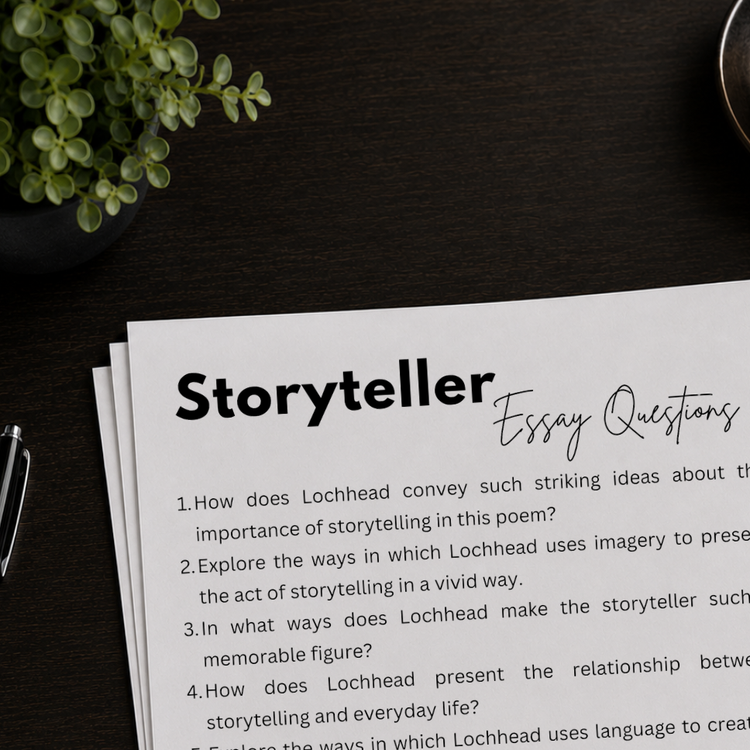
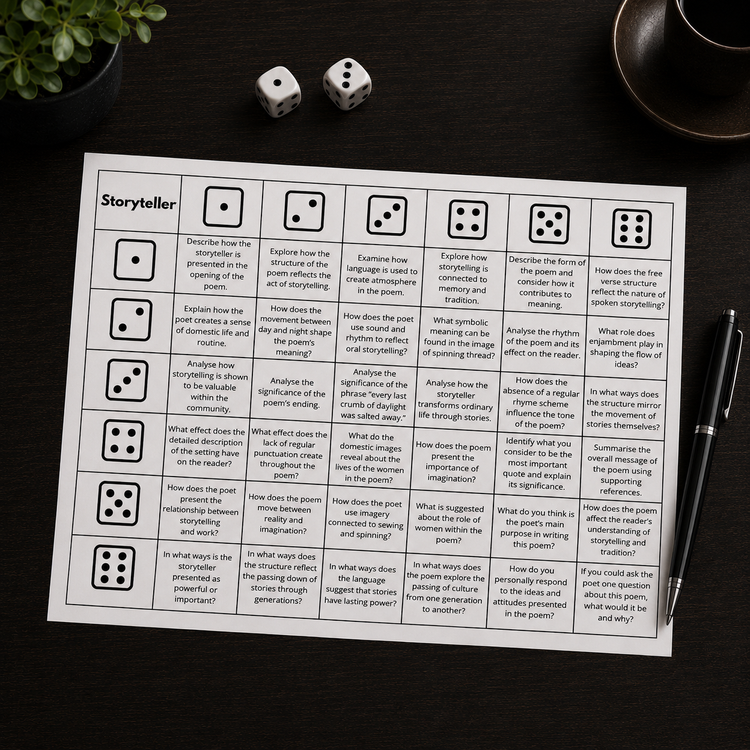
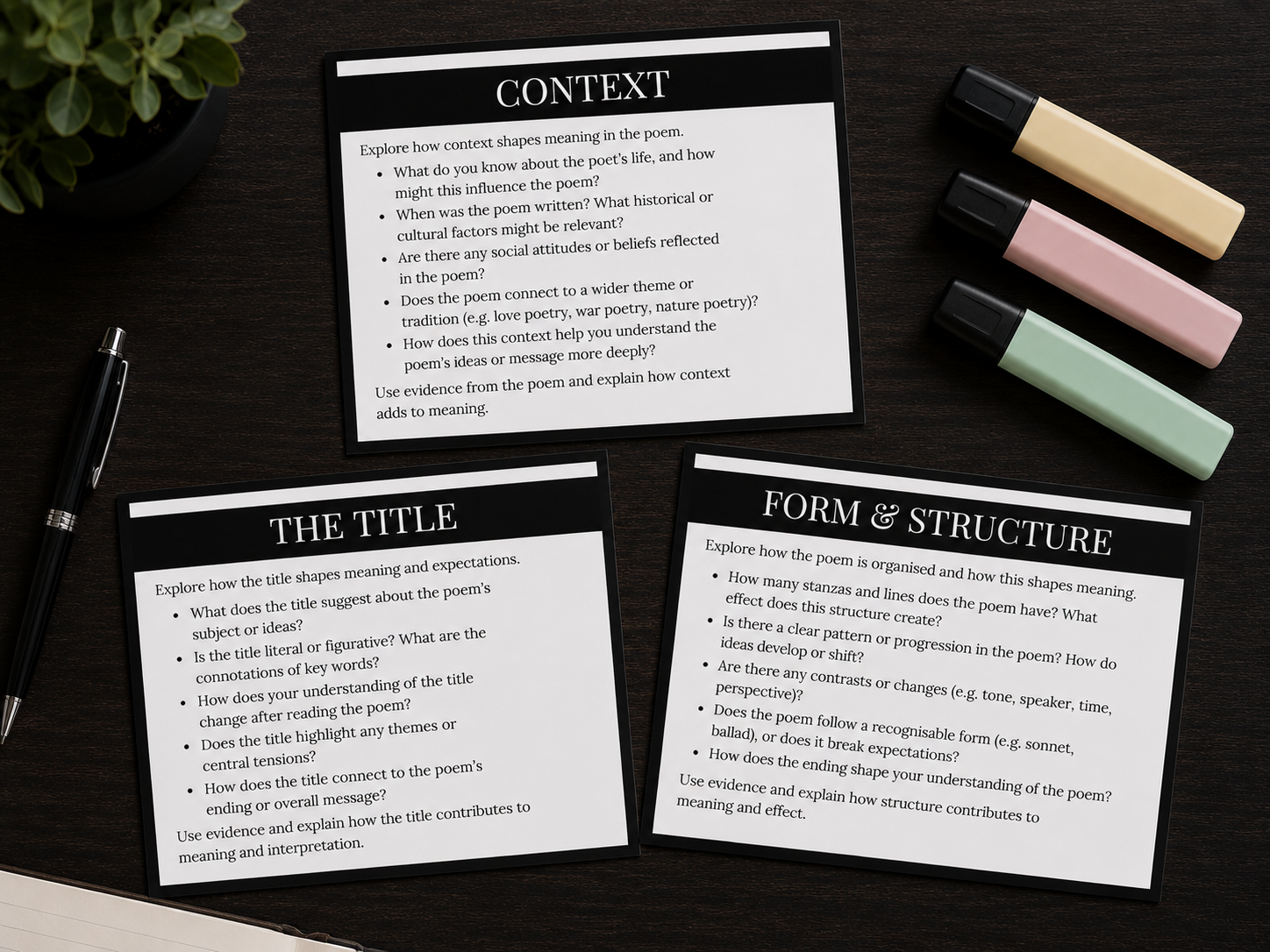
Download the complete teaching resource pack for Storyteller by Liz Lochhead — designed for CIE IGCSE English Literature (0475 & 0922, 2027 syllabus) while remaining flexible for broader secondary English, GCSE, and high school poetry teaching. This ready-to-use bundle includes analytical task cards, exam-style essay questions, creative writing prompts, silent debate activities, and discussion-led lessons that help students explore voice, memory, identity, and storytelling methods with greater confidence. Perfect for building independent interpretation, stronger close analysis, and more developed written responses — without spending hours planning lessons and classroom activities yourself.
Go Deeper
To strengthen comparison skills, it’s useful to explore how other texts present voice, memory, and the role of storytelling in shaping identity and community.
◆ Search for My Tongue – Sujata Bhatt
Explores the relationship between language, identity, and inheritance, linking to how voice and storytelling shape personal and cultural experience.
◆ Half-Caste – John Agard
Uses spoken voice and informal structure to challenge ideas about identity, offering a strong comparison in how language reflects cultural perspective.
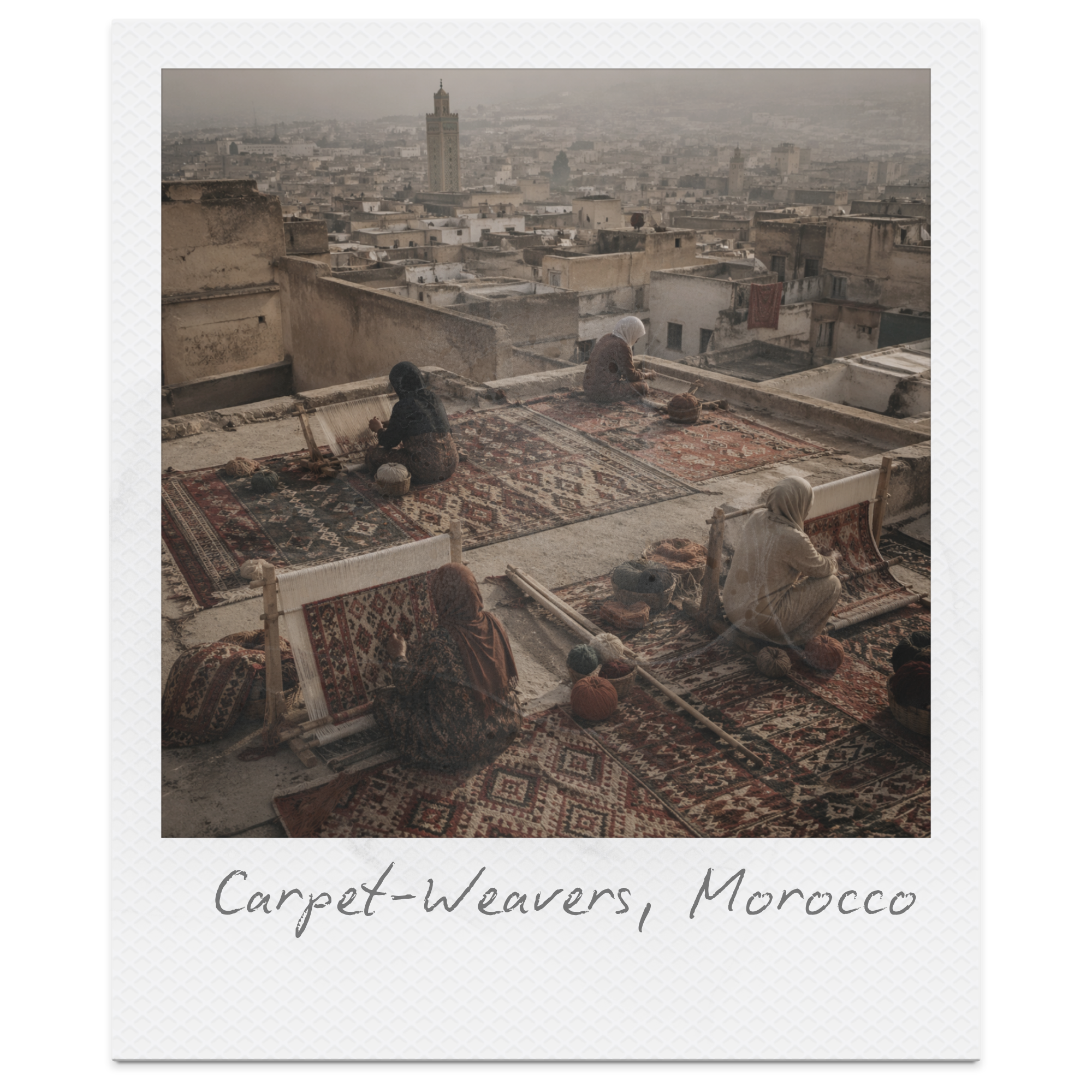
◆ Carpet-Weavers, Morocco – Carol Rumens
Presents labour within a community setting, allowing comparison with how Lochhead links work and storytelling.
◆ The Chimney Sweeper – William Blake
Explores how voice represents lived experience, particularly through a speaker shaped by social conditions, linking to Lochhead’s focus on everyday life.
◆ Piteous My Rhyme Is – Christina Rossetti
Examines ideas about the value of creative expression, offering a contrast in how poetry reflects on its own purpose and usefulness.
◆ Island Man – Grace Nichols
Explores memory, routine, and the movement between different states of experience, linking to Lochhead’s cyclical structure and focus on internalised memory.
By comparing these texts, students can explore how writers use voice, structure, and imagery to present experience, memory, and identity, supporting more developed and conceptual responses.
Final Thoughts
Storyteller presents storytelling as both everyday work and a powerful form of creative expression, showing how it is embedded within the routines of daily life while shaping memory and identity. Through imagery, structure, and metaphor, Lochhead reveals how stories are created, shared, and carried forward, even when they appear to disappear in the moment.
What makes the poem particularly memorable is its focus on storytelling as a cycle, moving between telling, forgetting, and retelling. The final image of stories returning “in the storytellers night” reinforces the idea that stories are never truly lost, but live on through those who remember and repeat them. For further exploration, revisit the Songs of Ourselves Volume 1 Hub or explore a wider range of literary analysis in the Literature Library.
Choose Your Next Text