The Cockroach by Kevin Halligan: Summary, Themes & Analysis
InThe Cockroach, Kevin Halligan exploresidentity, psychological unease, and the unsettling nature of self-recognition through precise observational imagery, controlled structural progression, and a reflective first-person voice. The poem begins with a detached description of a cockroach’s movement, which appears purposeful but gradually becomes erratic and disordered, mirroring a shift from control to instability. By the final line, this external observation turns inward, as the speaker recognises himself in the insect’s restless behaviour, transforming a simple scene into a disturbing reflection on human behaviour and existential discomfort. If you are studying or teaching Songs of Ourselves Volume 1 for CIE English Literature (0475), you can explore in-depth analyses of every poem from the 2026 and 2027 Paper 1 syllabus in the Songs of Ourselves Volume 1 hub, or a wider range of texts in the Literature Library.

Context of The Cockroach
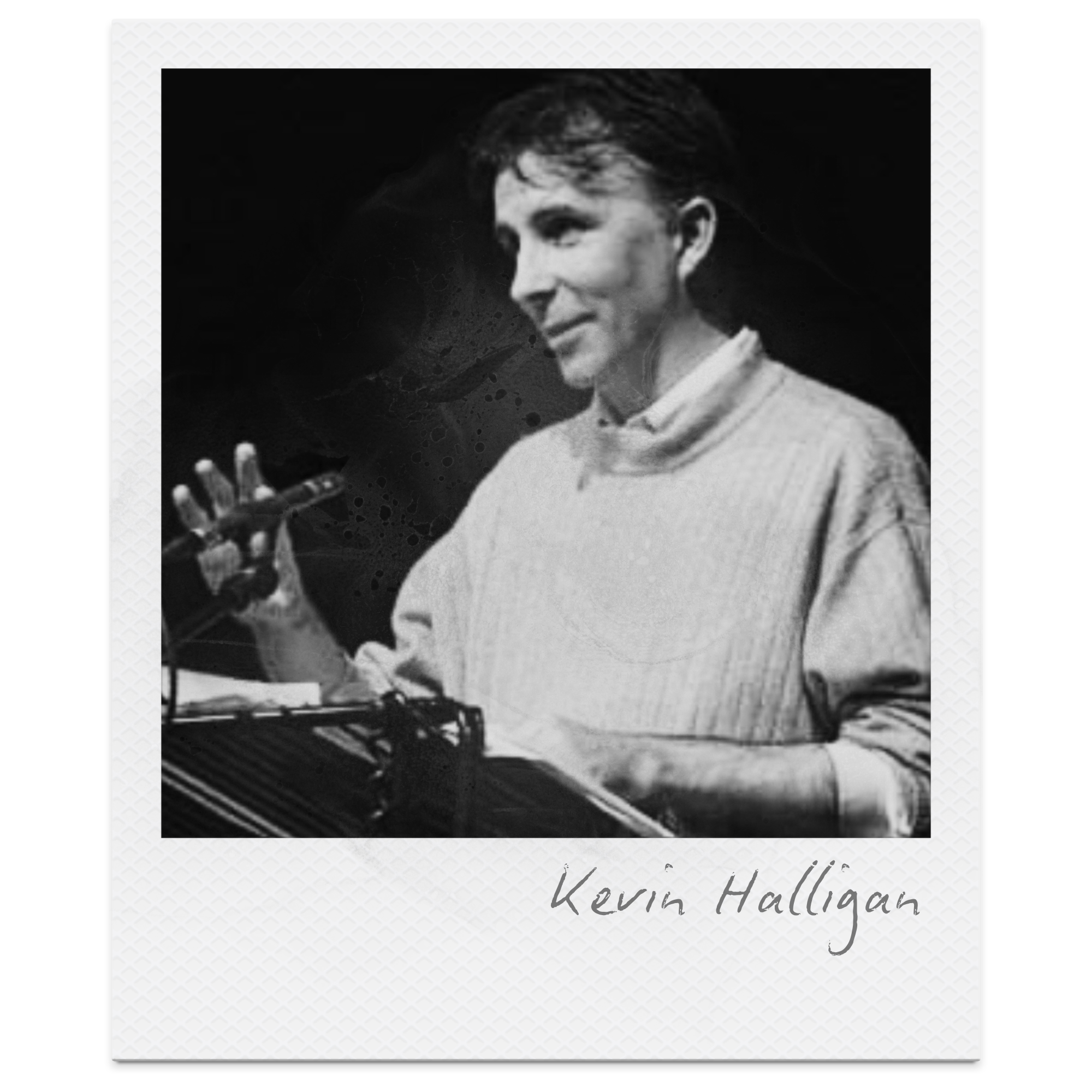
Kevin Halligan is known for poems that explore human psychology through unusual perspectives, often using external observations to reveal internal states. In The Cockroach, this approach is clear as the speaker begins with a detached, almost scientific description of the insect before projecting increasingly human characteristics onto it. This context helps explain the poem’s shift from observation to self-reflection, where the cockroach becomes a vehicle for exploring identity and mental unease.
The poem can also be linked to ideas of reincarnation and moral consequence, particularly in the speculative question about a “former life.” This introduces a philosophical dimension, suggesting behaviour may be shaped by forces beyond conscious control. As the speaker begins to recognise himself in the insect, the context deepens into a reflection on existential uncertainty, where the boundary between observer and subject becomes unstable.
The Cockroach: At a Glance
Form: Single stanza with controlled, continuous development
Mood: Observational, uneasy, increasingly reflective
Central tension: The speaker’s attempt to observe objectively vs. the gradual identification with the cockroach
Core themes: Identity, self-recognition, psychological unease, existential uncertainty, control vs instability
One-sentence meaning: The poem transforms a detached observation of a cockroach into a disturbing reflection on human behaviour, revealing how easily external observation can become internal self-recognition.
Quick Summary of The Cockroach
The poem begins with the speaker observing a cockroach moving across the floor, initially describing its actions in a controlled and detailed way. The insect appears to follow a clear path, moving with purpose as it avoids obstacles, which creates a sense of order and direction. However, as the poem progresses, its movement becomes increasingly erratic, shifting into “crooked rings” and restless motion that suggests a loss of control.
As the cockroach continues to behave unpredictably, the speaker begins to interpret its actions as signs of psychological disturbance, even imagining it as the result of a “former life” and some kind of punishment. This shift from observation to speculation marks a turning point, and by the final line, the speaker recognises himself in the insect’s behaviour. This transforms the poem into a reflection on identity and self-awareness, ending with a sense of unease as the boundary between observer and subject collapses.
Title, Form, Structure, and Metre
Halligan uses a traditional poetic form but deliberately unsettles it, mirroring the cockroach’s erratic movement and the speaker’s growing sense of psychological instability. The tension between control and disruption is central to how meaning is created.
Title
The title, “The Cockroach,” is deliberately blunt and unpoetic, focusing on a creature typically associated with dirt, decay, and discomfort. This immediately contrasts with expectations of a sonnet, a form often linked to love or idealised subjects. By pairing a traditionally elevated form with such an unpleasant subject, Halligan creates a sense of irony, suggesting that the poem will challenge conventional expectations and explore something more unsettling about human identity.
Form and Structure
The poem is a sonnet (14 lines), which traditionally conveys order, control, and often romantic themes. Here, however, that form is used to contain something chaotic and unstable, creating tension between structure and content.
The poem begins with relatively controlled observation, but this stability gradually breaks down as the cockroach’s movement becomes more erratic and the speaker’s interpretation becomes more speculative. While sonnets often include a clear volta (turn) between the octave and sestet, this shift is less neatly defined here. Instead, the poem drifts into uncertainty, particularly as the speaker begins to question meaning and identity, reflecting the cockroach’s aimless movement.
Rhyme Scheme and Poetic Pattern
The poem uses a mixed rhyme scheme:
ABAB CDCD EFG EGF
The opening follows the more regular alternating pattern of an English sonnet, for example:
“pace” / “trace”
“floor” / “door”
This creates an initial sense of order and predictability. However, the final six lines shift into a less regular pattern, disrupting expectations. This structural change mirrors the cockroach’s movement, which begins with direction but becomes increasingly disordered and circular.
By breaking away from a fully consistent rhyme scheme, Halligan reinforces the poem’s themes of confusion, instability, and loss of control.
Metre and Rhythmic Movement
The poem is largely written in iambic pentameter, creating a steady underlying rhythm:
I WATCHED | a GI- | ant COCK- | roach START | to PACE
This regular pattern reflects the speaker’s initial sense of control and careful observation. However, Halligan introduces subtle variations that disrupt this rhythm. For example:
SKIRTing | a BALL | of DUST | that RODE | the FLOOR
The opening trochee (“SKIRTing”) disrupts the expected iambic pattern, creating a slight rhythmic imbalance that mirrors the cockroach’s uneven movement.
Later, awkward stress patterns (such as clustered stresses in phrases like “RIGHT OVer”) create a more jerky rhythm, reflecting increasing restlessness. These disruptions prevent the poem from feeling fully controlled, reinforcing the central idea that beneath apparent order lies instability.
The Speaker in The Cockroach
The speaker appears to be an adult observer, adopting a detached, almost analytical perspective as he watches the cockroach move. His tone is initially calm and controlled, suggesting someone who is used to observing rather than reacting. The setting, with details such as a “ball of dust” and a “rusty” table leg, implies a slightly neglected environment, reinforcing the idea that the speaker is isolated or lacking clear purpose, with little to occupy his attention beyond this moment of observation.
As the poem develops, the speaker’s voice becomes more reflective and speculative, shifting from objective description to philosophical questioning. His suggestion that the cockroach might be suffering for a “former life” introduces a more imaginative, even uneasy perspective, revealing a mind searching for meaning. By the final line, this distance collapses as he recognises himself in the insect’s behaviour. This moment of self-identification suggests a tone that is both self-aware and slightly self-deprecating, as the speaker aligns himself not with something admirable but with something aimless and insignificant, reflecting a deeper sense of uncertainty about identity and purpose.
Line-by-Line Analysis of The Cockroach
This section offers a close reading of how the poem develops meaning step by step, focusing on how Halligan uses imagery, movement, and subtle structural shifts to move from detached observation to unsettling self-recognition. As the cockroach’s behaviour becomes increasingly erratic, the speaker’s interpretation also shifts, revealing deeper concerns about identity, control, and psychological unease.
Lines 1–2: Detached Observation and Controlled Movement
The poem opens with the speaker “watching” the cockroach, a verb that establishes a position of distance and control, as though the scene is being carefully examined rather than emotionally experienced. The exaggerated description of a “giant cockroach” immediately elevates the insect beyond realism, making it feel more significant and potentially symbolic. Its movement, described as “skirting” a “ball of dust,” suggests deliberate, almost cautious navigation, creating an initial sense of order and direction.
Lines 3–4: Illusion of Purpose
The cockroach appears to move with intention, as it “seemed quite satisfied to trace / A path”, suggesting a sense of purpose or routine. The verb “trace” implies repetition and familiarity, as though the insect is following a known route. This creates the illusion of control and stability, reinforced by the clear spatial boundaries between the “wainscot” and the “door.” At this stage, the movement appears logical, encouraging the reader to interpret the behaviour as meaningful rather than random.
Lines 5–6: Shift into Disorder
This sense of control quickly breaks down as the cockroach begins to move in “crooked rings,” a phrase that introduces irregularity and loss of direction. The adjective “crooked” suggests distortion and imbalance, while the circular motion implies aimlessness rather than progress. The repeated movement around the “rusty table leg” reinforces a sense of being trapped in a loop, suggesting that what initially appeared purposeful is actually repetitive and futile.
Lines 7–9: Escalating Restlessness
The cockroach’s behaviour becomes increasingly erratic, as it is described “flipping right over” and scratching its wings. The sudden, awkward verb “flipping” disrupts the earlier controlled movement, creating a sense of physical instability. The comparison to “the victim of a mild attack / Of restlessness” introduces a more explicitly psychological interpretation, suggesting that the insect’s behaviour resembles anxiety or agitation. The phrase “worsened over time” implies a gradual loss of control, deepening the sense of unease.
Lines 10–11: Pause and Uncertainty
The cockroach’s movement slows as it climbs “an open shelf” and “stopped,” creating a moment of stillness that contrasts with its earlier restlessness. However, this pause does not suggest resolution; instead, the insect appears “uncertain where to go,” reinforcing the idea of confusion rather than control. The shift from movement to hesitation highlights a deeper sense of indecision, suggesting that the earlier activity lacked true purpose.
Lines 12–13: Philosophical Speculation
The speaker moves beyond observation into speculation, questioning whether the cockroach’s behaviour is punishment for a “vicious crime” in a “former life.” This introduces ideas of reincarnation and moral consequence, shifting the poem into a more philosophical register. The uncertainty of “I don’t know” undermines this interpretation, revealing the speaker’s lack of clear answers and reinforcing the poem’s theme of existential uncertainty.
Line 14: Self-Recognition and Unease
The final line delivers a sudden and unsettling shift, as the speaker admits “I thought I recognised myself.” This moment collapses the boundary between observer and subject, transforming the cockroach into a reflection of the speaker’s own behaviour and state of mind. The phrasing remains tentative (“thought”), suggesting hesitation and discomfort, but the identification is clear enough to create a powerful sense of unease, re-framing the entire poem as a reflection on human identity and aimlessness.
Key Quotes and Methods in The Cockroach
These key quotations show how Halligan uses imagery, movement, and structural shifts to move from detached observation to unsettling self-recognition.
“I watched a giant cockroach”
◆ Technique: First-person narration and exaggeration
◆ Meaning: The speaker positions himself as a detached observer, while “giant” elevates the insect beyond realism
◆ Purpose: To create distance while also signalling that the cockroach may have symbolic significance
◆ Impact: Encourages the reader to see the cockroach as more than an insect, preparing for deeper interpretation
“Skirting a ball of dust”
◆ Technique: Precise verb choice and visual imagery
◆ Meaning: The cockroach appears to move carefully and deliberately
◆ Purpose: To establish an initial sense of control and direction
◆ Impact: Creates the illusion of purposeful movement, which is later undermined
“Seemed quite satisfied to trace / A path”
◆ Technique: Tentative language (“seemed”) and metaphor
◆ Meaning: The cockroach appears content and purposeful, but this is uncertain
◆ Purpose: To suggest that the sense of order may be projected by the speaker
◆ Impact: Introduces ambiguity, encouraging the reader to question the reliability of interpretation
“Crooked rings”
◆ Technique: Symbolic imagery
◆ Meaning: The movement becomes irregular and circular, lacking direction
◆ Purpose: To show a shift from order to disorder
◆ Impact: Suggests aimlessness and instability, reinforcing psychological unease
“Flipping right over to scratch his wings”
◆ Technique: Dynamic verb choice and physical imagery
◆ Meaning: The cockroach’s movement becomes awkward and uncontrolled
◆ Purpose: To emphasise increasing restlessness and instability
◆ Impact: Disrupts the earlier sense of control, making the behaviour seem erratic
“A mild attack / Of restlessness”
◆ Technique: Personification and medical imagery
◆ Meaning: The cockroach’s behaviour is interpreted as a psychological condition
◆ Purpose: To shift the poem from observation to interpretation
◆ Impact: Encourages the reader to see the insect’s behaviour as reflective of human experience
“Worsened over time”
◆ Technique: Temporal phrase and escalation
◆ Meaning: The restlessness increases gradually
◆ Purpose: To suggest a loss of control that develops rather than appears suddenly
◆ Impact: Builds tension and deepens the sense of unease
“He looked uncertain where to go”
◆ Technique: Humanising language
◆ Meaning: The cockroach is given human-like indecision
◆ Purpose: To blur the boundary between insect and human behaviour
◆ Impact: Prepares for the final identification between speaker and subject
“Was this due payment for some vicious crime”
◆ Technique: Rhetorical question and moral speculation
◆ Meaning: The speaker imagines the cockroach’s state as punishment
◆ Purpose: To introduce ideas of reincarnation and moral consequence
◆ Impact: Shifts the poem into a philosophical register, adding depth
“I thought I recognised myself”
◆ Technique: First-person shift and self-recognition
◆ Meaning: The speaker identifies with the cockroach
◆ Purpose: To reveal the true focus of the poem: human identity
◆ Impact: Creates a powerful, unsettling ending that redefines the entire poem
Key Techniques in The Cockroach
Halligan uses a range of language, structural, and sound techniques to transform a simple observation into a reflection on identity, restlessness, and self-recognition.
◆ Anthropomorphism – The cockroach is repeatedly described using human qualities (e.g. seeming “satisfied” or “uncertain”), which encourages the reader to interpret its behaviour as psychological rather than instinctive. This blurs the boundary between insect and human, preparing for the final moment of self-identification
◆ Extended observation as metaphor – The cockroach’s movement becomes a metaphor for human behaviour, particularly aimlessness and lack of direction. What begins as literal description gradually develops into symbolic meaning, revealing how external observation reflects internal states
◆ Imagery of movement – Descriptions such as “skirting,” “crooked rings,” and “flipping” track a shift from controlled motion to erratic behaviour. This progression mirrors a movement from stability to psychological unease, reinforcing the poem’s central tension
◆ Juxtaposition – The contrast between the cockroach’s initial orderly path and later disordered movement highlights the illusion of control. This shift exposes how apparent purpose can quickly collapse into confusion
◆ Enjambment – Lines frequently run on without punctuation, creating a sense of continuity and movement. This reflects the cockroach’s ongoing motion and contributes to the impression of restless, uncontained activity
◆ Caesura – Strategic pauses (e.g. “And stopped.”) interrupt the flow of the poem, creating moments of hesitation and uncertainty. These breaks mirror the cockroach’s pauses and reinforce the theme of indecision
◆ Tentative language – Words and phrases such as “seemed,” “as if,” and “I don’t know” introduce uncertainty, suggesting that meaning is being imposed rather than observed. This undermines the speaker’s authority and highlights the instability of interpretation
◆ Rhetorical question – The speaker’s speculation about a “former life” introduces philosophical uncertainty and shifts the poem from observation to reflection on morality and existence
◆ First-person perspective – The use of a reflective “I” allows the poem to move from detached observation to personal identification, culminating in the recognition of the self in the cockroach
◆ Irony – The poem begins with apparent objectivity, but ends with self-recognition, revealing that the speaker has been analysing himself all along. This reversal adds depth and complexity to the poem’s meaning
◆ Structural shift (volta) – Although subtle, the poem transitions from description to reflection, particularly in the final lines. This shift mirrors the movement from external observation to internal realisation
How the Writer Creates Meaning and Impact in The Cockroach
Halligan creates meaning through the interaction of language, structure, voice, and movement, gradually transforming a simple observation into a reflection on identity and psychological unease.
The poem’s imagery is central to this development. The cockroach’s movement is initially described with controlled, precise verbs such as “skirting” and “trace,” creating an impression of purpose and direction. However, this shifts into more irregular and unstable imagery, such as “crooked rings” and “flipping,” which suggests disorder and loss of control. This progression in imagery mirrors a psychological shift, allowing the cockroach to become a reflection of human restlessness rather than just an insect.
The poem’s structure reinforces this movement from control to instability. Although the sonnet form suggests order and discipline, the poem resists a neat turning point, instead drifting into uncertainty as the speaker’s interpretation becomes more speculative. The shift towards the final line, where the speaker recognises himself, redefines the entire poem, showing how meaning develops gradually rather than through a single clear moment.
The voice and tone also shape meaning. The speaker begins with a detached, observational tone, but this becomes increasingly tentative through phrases such as “seemed” and “I don’t know,” revealing uncertainty. This shift suggests that the speaker is not simply describing the cockroach, but projecting his own thoughts onto it. By the final line, the voice becomes fully self-reflective, collapsing the distance between observer and subject.
Finally, Halligan uses sound and rhythm to reinforce meaning. The generally steady rhythm reflects an attempt to impose order, but variations in stress and phrasing create moments of disruption, mirroring the cockroach’s erratic movement. Techniques such as enjambment contribute to a sense of ongoing motion, while pauses disrupt this flow, reinforcing the tension between control and instability that defines the poem.
Themes in The Cockroach
Halligan explores a range of interconnected themes, using imagery, movement, and structural shifts to transform a simple observation into a reflection on identity and human experience.
Identity and Self-Recognition
At its core, the poem explores identity, particularly the unsettling moment of self-recognition. The speaker begins by observing the cockroach as something separate, but gradually projects human qualities onto it, culminating in the realisation that he recognises himself in its behaviour. This shift suggests that identity is not fixed, but can be revealed through unexpected reflections, forcing the speaker to confront uncomfortable truths about himself.
Psychological Unease and Restlessness
The cockroach’s movement becomes a representation of psychological instability, shifting from controlled motion to erratic, circular behaviour. Phrases such as “crooked rings” and “restlessness” suggest a lack of direction and inner agitation. This reflects a broader sense of unease, where the speaker recognises similar patterns in his own behaviour, suggesting that restlessness is a shared human experience.
Control vs Instability
The poem presents an initial illusion of control, as the cockroach appears to move with purpose, but this quickly breaks down into disorder. This contrast highlights the fragility of control, suggesting that beneath apparent structure lies unpredictability. The speaker’s attempt to interpret and rationalise the cockroach’s movement mirrors a human desire to impose meaning on chaos.
Observation and Interpretation
The poem explores the gap between objective observation and subjective interpretation. The speaker initially describes what he sees, but gradually begins to impose meaning, imagining motives and even a “former life.” This shift reveals how easily observation becomes projection, suggesting that what we see is often shaped by our own thoughts and experiences.
Existential Uncertainty
Through the speaker’s speculation and final self-recognition, the poem reflects a deeper sense of existential uncertainty. The cockroach’s aimless movement becomes a metaphor for human life, raising questions about purpose, direction, and meaning. The lack of clear answers, reinforced by phrases like “I don’t know,” leaves the reader with a sense of unresolved tension.
Isolation and Insignificance
The setting and focus on a single insect create a sense of isolation, while the comparison between human and cockroach suggests a reduction of human importance. By identifying with the insect, the speaker implies that human lives may be just as small and insignificant, reinforcing the poem’s unsettling tone.
Alternative Interpretations of The Cockroach
While the poem can be read as a reflection on identity and self-recognition, Halligan’s use of imagery, voice, and structure allows for multiple interpretations that deepen its meaning.
Psychological Interpretation: Projection and Self-Reflection
From a psychological perspective, the poem can be read as an example of projection, where the speaker imposes his own thoughts and anxieties onto the cockroach. The increasingly human descriptions—such as being “uncertain” or suffering from “restlessness”—suggest that the insect is less important than what it represents. The final recognition implies that the speaker has been analysing his own behaviour all along, revealing a moment of uncomfortable self-awareness.
Social Interpretation: Modern Life and Aimlessness
The poem can also be read as a comment on modern existence, where individuals may feel directionless despite appearing to move with purpose. The cockroach’s shift from a clear path to “crooked rings” reflects a sense of routine without meaning, suggesting that human life can become repetitive and lacking in clear direction. The speaker’s identification with the insect highlights a broader sense of disillusionment and lack of fulfilment.
Philosophical / Existential Interpretation: Meaning and Insignificance
On a philosophical level, the poem explores questions of purpose and existence. The cockroach’s behaviour, initially interpreted as meaningful, ultimately appears random and instinctive, raising doubts about whether human actions are any more purposeful. The reference to a “former life” introduces the idea of moral consequence, but the speaker’s uncertainty undermines this, leaving the poem unresolved. The final identification suggests a troubling possibility: that human life may be as insignificant and directionless as that of the insect.
Exam-Ready Insight for The Cockroach
This section shows how to turn your understanding of The Cockroach into a strong, exam-focused response for IGCSE Literature (0475), with a clear focus on how meaning is created through methods.
What strong responses do
◆ focus closely on the question
◆ analyse methods (language, structure, and sound), not just ideas
◆ explain how effects are created, not just what happens
◆ track shifts in voice and tone across the poem
◆ use short, precise quotations to support points
Conceptual argument
A strong thesis for The Cockroach might be:
Halligan presents the cockroach’s movement as initially controlled but increasingly erratic, using shifting imagery, structure, and tentative voice to reveal how observation becomes projection, ultimately exposing the speaker’s own psychological unease and uncertainty about identity.
Model analytical paragraph
Halligan presents the cockroach’s movement as a reflection of psychological instability, using shifting imagery to undermine the illusion of control. In the phrase “skirting a ball of dust,” the verb “skirting” suggests careful, deliberate movement, creating an initial sense of purpose and direction. However, this is disrupted when the cockroach begins moving in “crooked rings,” where the adjective “crooked” introduces irregularity and distortion, suggesting a loss of control. This contrast is reinforced by the description of a “mild attack / Of restlessness,” where the noun “attack” frames the behaviour as involuntary and escalating, implying that the movement is driven by internal agitation rather than intention. Through this progression, Halligan transforms a simple observation into a reflection of human restlessness, linking the cockroach’s behaviour to the speaker’s own psychological state and reinforcing the poem’s exploration of identity and uncertainty.
Teaching Ideas for The Cockroach
This poem is ideal for exploring how writers use language, structure, and voice to present ideas about identity, restlessness, and self-recognition, while supporting collaborative and discussion-based approaches.
1. Collaborative Analytical Paragraph (Paired Writing)
Give students a focused question, for example:
How does Halligan present the cockroach’s movement in The Cockroach?
Students work together to produce a single analytical paragraph. They should:
◆ select and embed quotations
◆ identify methods (language, structure, sound)
◆ explain meaning → purpose → impact
Because both students contribute, they can challenge and refine each other’s ideas, leading to a more developed and precise response. This reinforces that strong analytical writing is built through discussion and refinement, not just individual effort.
2. Structured Group Close Analysis (Role-Based)
Instead of traditional annotation, assign students specific roles in small groups for a line-by-line reading:
◆ Structure specialist – tracks shifts from control to instability
◆ Language analyst – explores imagery and verb choices
◆ Methods expert – identifies techniques and effects
◆ Tone tracker – comments on the shift from observation to reflection
Each group analyses a section of the poem, then feeds back to the class. As responses are shared, build a full interpretation together.
This approach makes close reading more active and collaborative, while still developing detailed analytical skills.
3. Silent Debate
Set up a silent debate around the question:
Is the cockroach simply an insect, or a reflection of the speaker’s identity?
Students respond to prompts in writing, building on and challenging each other’s ideas. They should:
◆ use quotations as evidence
◆ respond directly to others’ interpretations
◆ develop and refine arguments over time
This encourages deeper thinking and ensures all students participate. For guidance on structuring this activity, see the Silent Debate post.
4. Creative Writing: Observing the Ordinary
Ask students to write a short piece based on observing an everyday object or creature.
Prompt:
Write about something ordinary, but gradually reveal that it reflects something about your own thoughts or behaviour.
Students should aim to:
◆ use detailed observation
◆ shift from description to reflection
◆ develop a clear narrative voice
◆ reveal deeper meaning through imagery
This activity helps students apply literary methods such as imagery, structure, and voice in their own writing. For more ideas and structured prompts, explore the Creative Writing Archive.
Teach The Cockroach with minimal preparation.
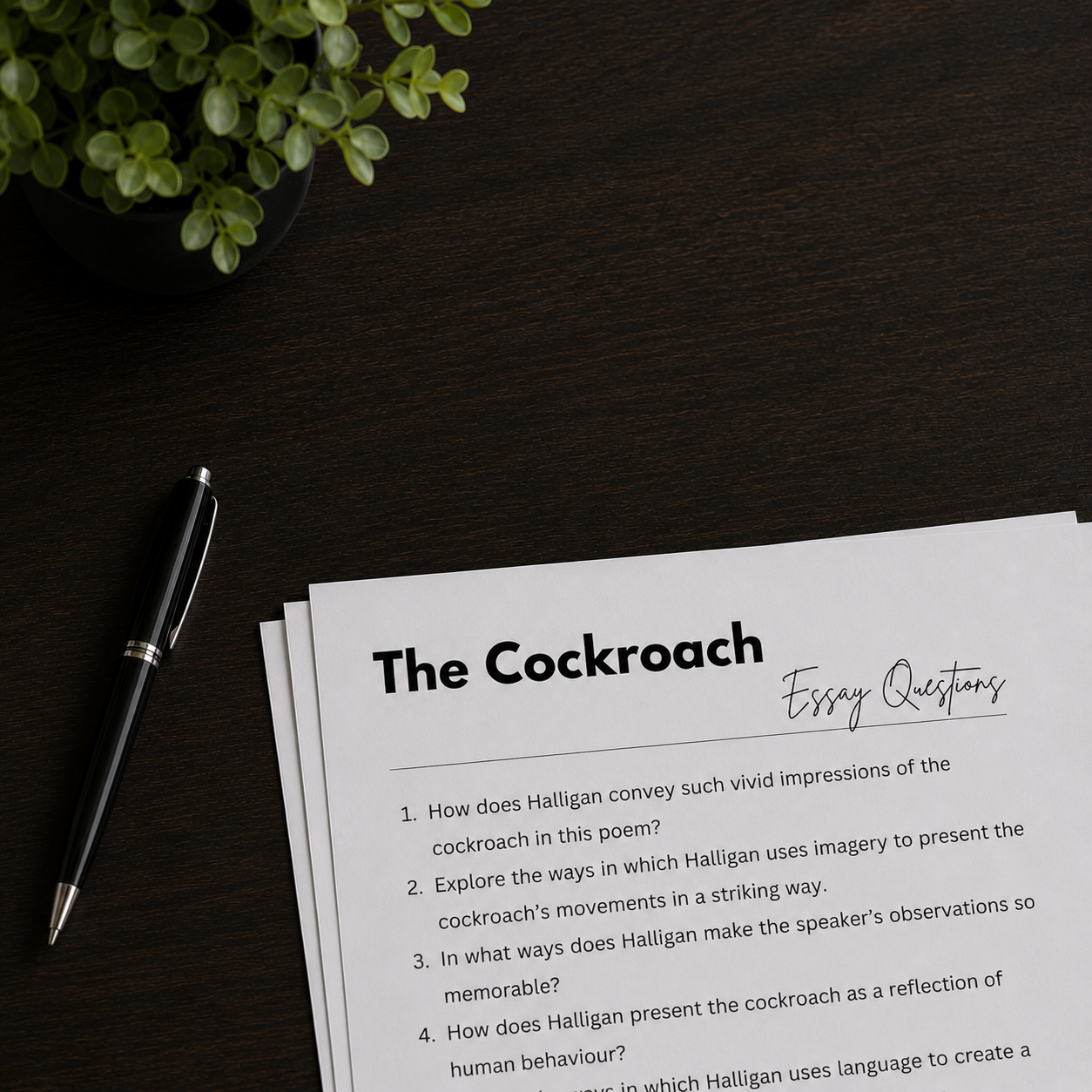
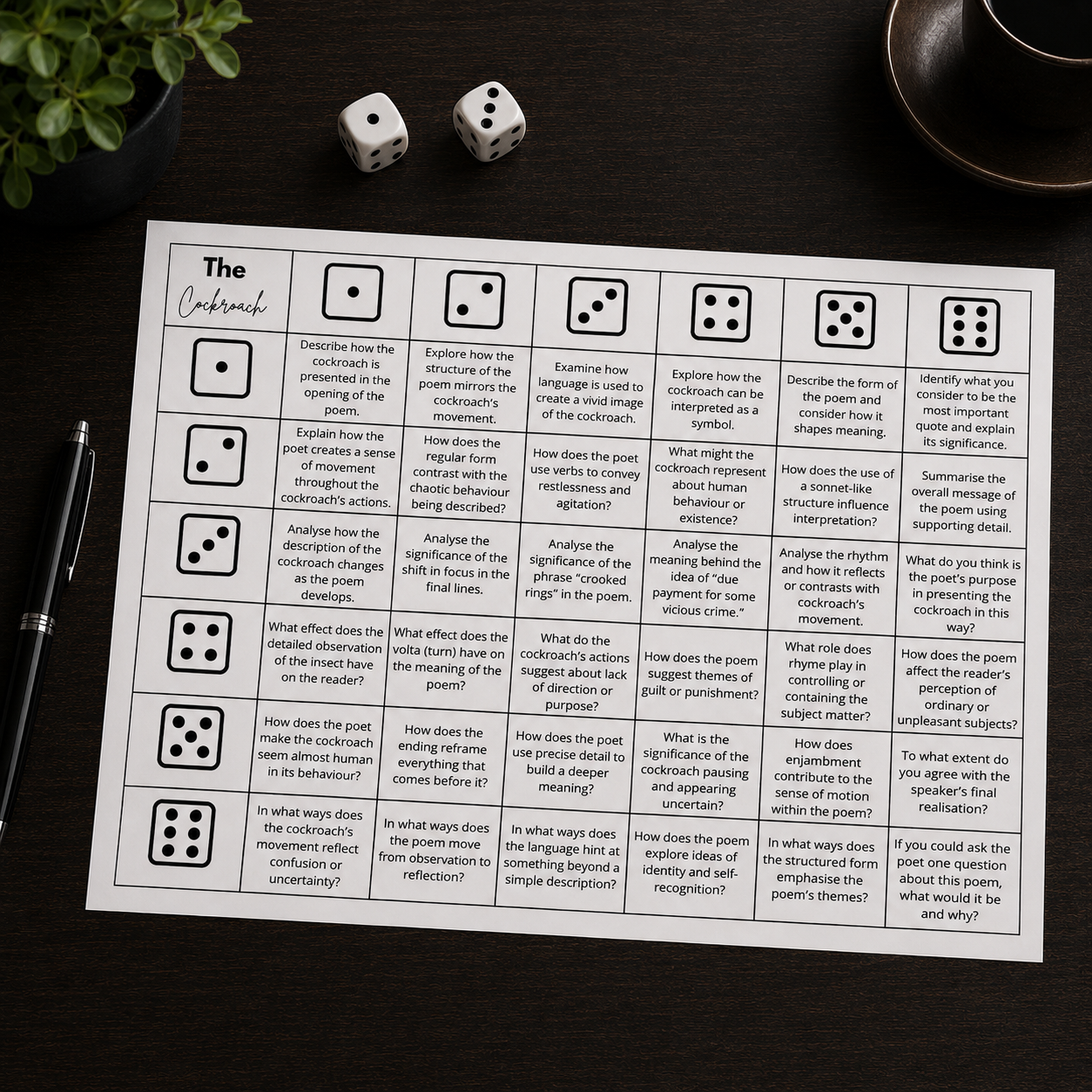
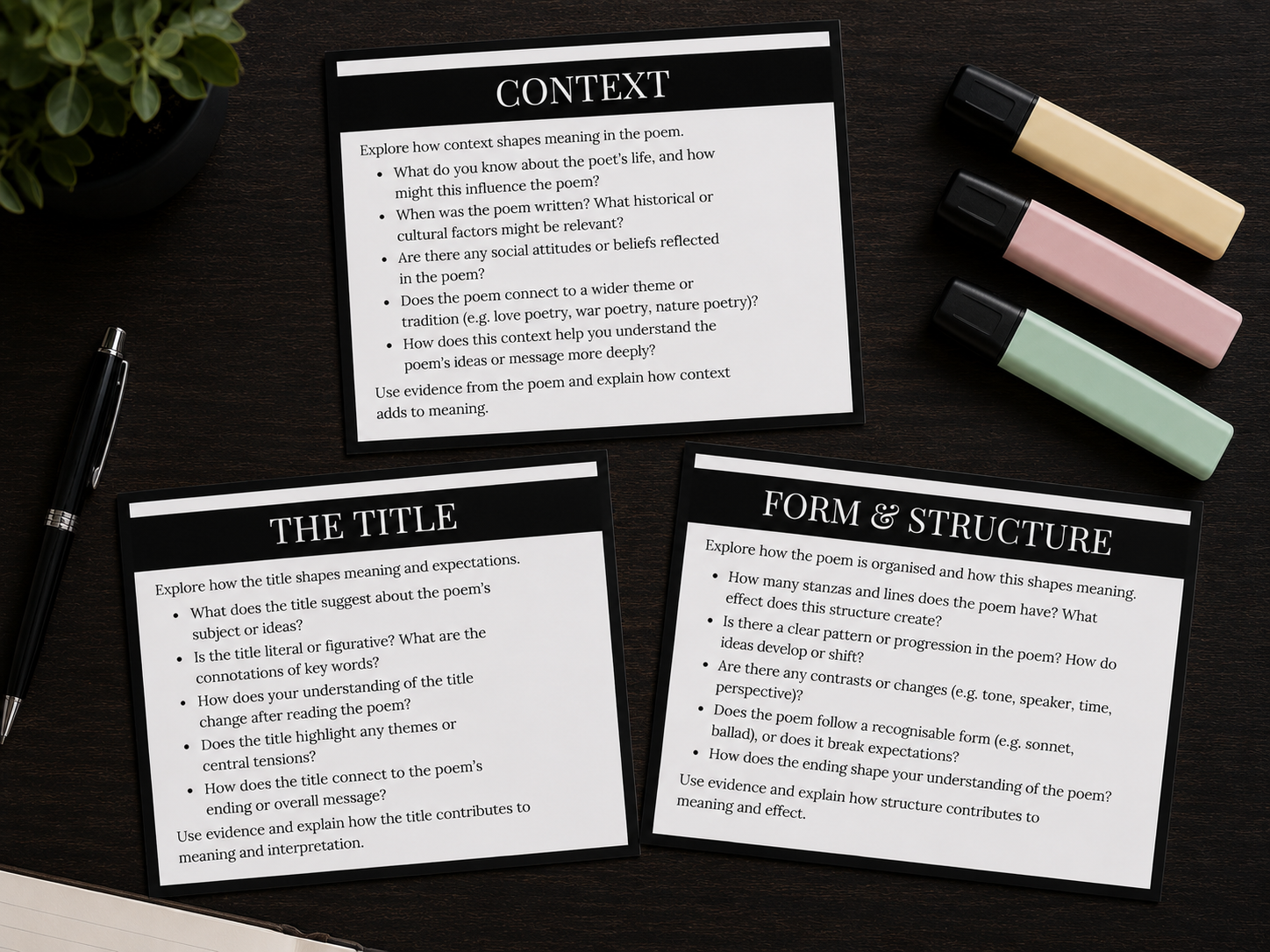
Download the complete teaching resource pack for The Cockroach by Kevin Halligan, including analytical task cards, exam-style essay questions, creative writing prompts, silent debates, and discussion-led activities designed to build confident, independent literary analysis and stronger written responses. Originally created for CIE IGCSE English Literature (0475 & 0922, 2027 syllabus), the pack also works flexibly across a wide range of secondary English, GCSE, IGCSE, and high school literature classrooms — helping teachers deliver engaging, analytical lessons without spending hours creating resources from scratch.
Go Deeper into The Cockroach
To strengthen comparison skills and develop more conceptual responses, explore how The Cockroach connects to other poems and texts that examine identity, restlessness, and self-reflection.
◆ The Love Song of J. Alfred Prufrock – T. S. Eliot
Explores indecision, self-consciousness, and psychological paralysis. Like The Cockroach, it presents a speaker trapped in cycles of thought, allowing comparison of how writers use movement and voice to reflect inner instability.
◆ The Man He Killed – Thomas Hardy
Examines how ordinary actions can be reinterpreted through reflection and uncertainty. Both poems move from a seemingly simple situation to a deeper questioning of human behaviour and meaning.
◆ Mirror – Sylvia Plath
Uses an object as a lens for self-recognition, much like the cockroach becomes a reflection of the speaker. Both texts explore how observation can lead to uncomfortable truths about identity.
◆ Half-Caste – John Agard
Challenges perception and the reliability of interpretation, encouraging readers to question assumptions. This links to how the speaker in The Cockroach imposes meaning onto what he observes.
◆ The Tyger – William Blake
Explores the relationship between observation and philosophical questioning, particularly around creation and meaning. Both poems use a central figure to provoke deeper reflection on existence.
◆ Digging – Seamus Heaney
Although focused on family and identity, it similarly transforms a simple act into a reflection on self-understanding. Both poems show how observation leads to insight about personal identity.
These comparisons help students move beyond single-text analysis, developing more sophisticated responses by linking themes, methods, and interpretations across texts.
Final Thoughts
The Cockroach transforms a simple moment of observation into a powerful reflection on identity, restlessness, and the discomfort of self-recognition. Halligan begins with controlled, almost clinical description, using precise imagery and structured form to create the illusion of order. However, as the cockroach’s movement becomes increasingly erratic, this sense of control breaks down, revealing a deeper instability beneath the surface.
What makes the poem particularly striking is its final shift, where the boundary between observer and subject collapses. The speaker’s recognition of himself in the cockroach reframes the entire poem, suggesting that human behaviour may be just as aimless and uncertain. In doing so, Halligan creates a subtle but unsettling exploration of how easily external observation becomes internal reflection. For further analysis of poetry from this collection, explore the Songs of Ourselves Volume 1 hub, or deepen your comparisons through the Literature Library.