Follower by Seamus Heaney: Summary, Themes & Analysis
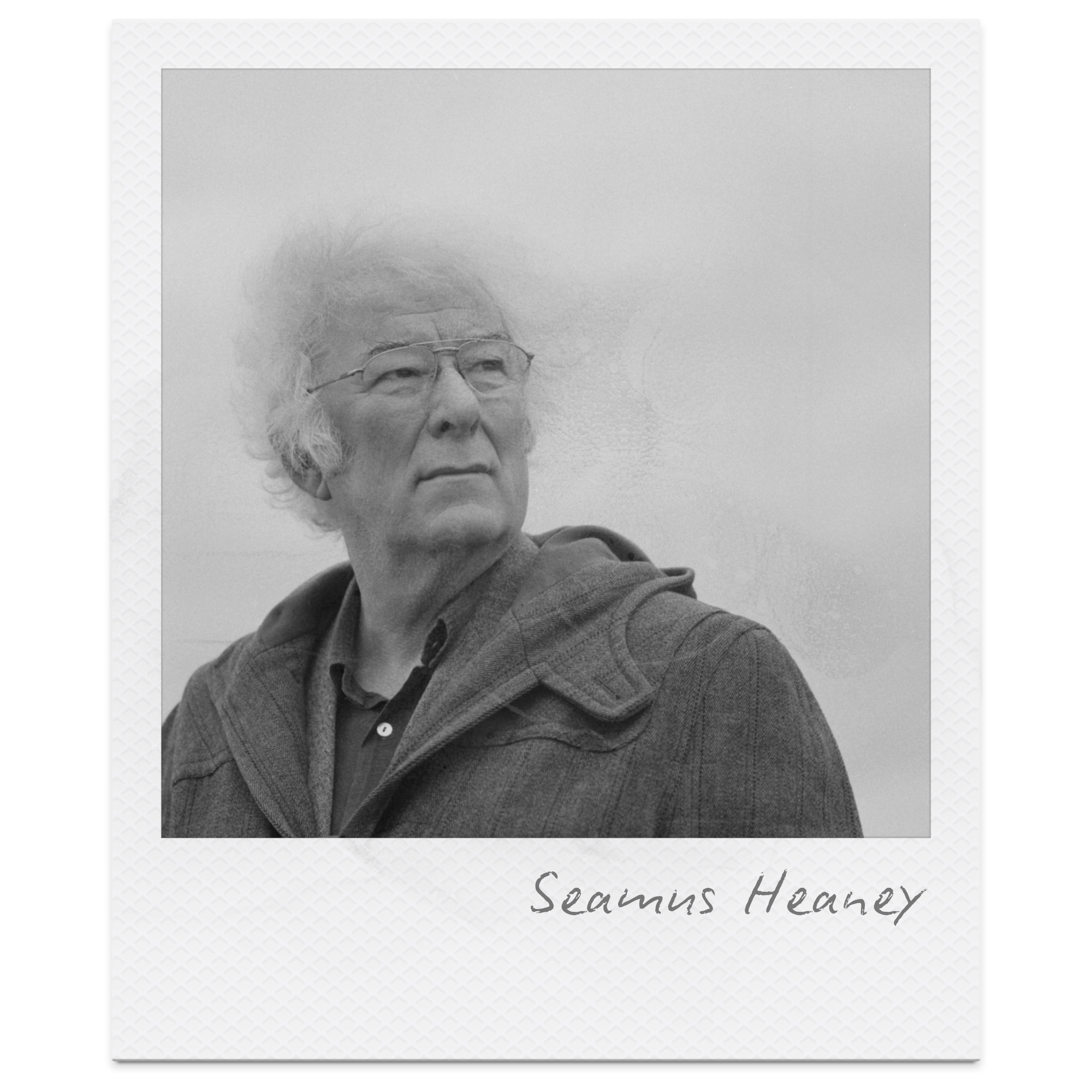
In “Follower,” Seamus Heaney exploresadmiration, family relationships, and the shifting nature of identity over time through vivid rural imagery, controlled structural development, and a reflective first-person voice. The poem begins by presenting the speaker’s father as powerful, skilled, and deeply authoritative, before gradually revealing the speaker’s own sense of inadequacy as he struggles to keep up. By the final stanza, however, Heaney introduces a quiet but powerful reversal, showing how time changes both people and relationships, and turning a poem about childhood hero-worship into one about ageing, memory, and emotional unease. If you are studying or teaching Songs of Ourselves Volume 1 for CIE English Literature (0475) or World Literature (0408), you can explore in-depth analyses of every poem from the 2026 and 2027 Papers in the Songs of Ourselves Volume 1 hub, or a wider range of texts in the Literature Library.

Context of Follower
Heaney’s poem is rooted in his upbringing in rural Northern Ireland, where farming life shaped both identity and masculinity. The detailed description of ploughing reflects a world in which skill, physical strength, and precision are highly valued, helping to explain the speaker’s deep admiration for his father. This context reinforces the father’s authority and expertise, presenting him as a figure who is completely at ease within his environment and role.
At the same time, the poem reflects a growing generational shift, as the speaker does not continue in agricultural labour but instead moves into a different path. This creates a subtle tension between inheritance and individual identity, as the speaker looks back with both respect and a sense of distance. The final role reversal, where the father becomes dependent, gains deeper meaning in this context, highlighting the effects of ageing, but also the emotional complexity of outgrowing the world that once defined both father and son.
Follower: At a Glance
Form: Six quatrains with a regular, controlled structure
Mood: Admiring, nostalgic, reflective, quietly unsettled
Central tension: The speaker’s childhood admiration of his father vs. the later reversal of roles in adulthood
Core themes: Family relationships, identity, admiration, time and change, role reversal, masculinity
One-sentence meaning: The poem explores how childhood hero-worship evolves into a more complex awareness of ageing, dependence, and the shifting nature of father-son relationships over time.
Quick Summary of Follower
The poem begins with a detailed description of the speaker’s father working as a skilled ploughman, presented as powerful, controlled, and deeply connected to the land. Through precise imagery and technical language, the father is shown as an expert, confidently directing the horses and shaping the earth with accuracy. In contrast, the young speaker struggles to keep up, stumbling behind him and feeling physically and emotionally inadequate, despite his strong admiration and desire to imitate his father.
As the poem develops, the speaker reflects on his childhood dependence, remembering moments of closeness but also his own sense of being a burden. In the final stanza, however, Heaney introduces a striking role reversal, revealing that the father now follows the speaker, “stumbling” behind him. This shift transforms the poem into a reflection on time, ageing, and changing family dynamics, ending with a tone that is both unsettled and emotionally complex, as the speaker confronts a relationship that has been fundamentally reversed.
Title, Form, Structure, and Metre
Heaney uses a controlled, regular structure to reflect the father’s precision and skill, while subtle rhythmic variations mirror the speaker’s instability and the poem’s final emotional shift.
Title
The title, “Follower,” immediately establishes a relationship of dependence and hierarchy, positioning the speaker as someone who trails behind his father. It suggests admiration and a desire to imitate, reinforced by the speaker’s childhood perspective. However, this meaning shifts in the final stanza, where the father becomes the one who “follows,” transforming the title into a reflection on role reversal, ageing, and changing identity.
Form and Structure
The poem is written in six quatrains, creating a stable and controlled structure that mirrors the order and discipline of ploughing. Each stanza contributes to a clear progression: the father’s mastery, the child’s struggle, and the final reversal of roles.
The structure is largely linear, reflecting the forward movement of the plough through the field, with each stanza building on the last. However, the final stanza introduces a conceptual shift, disrupting the earlier admiration by revealing the father’s dependence, which creates a more complex and uneasy ending.
Rhyme Scheme and Poetic Pattern
The poem follows a largely regular ABAB rhyme scheme, reinforcing a sense of control, balance, and repetition. For example:
“plough” / “now”
“arm” / “farm”
These full rhymes create a steady rhythm that reflects the methodical nature of agricultural work. Softer sound echoes, such as “strung” / “tongue,” add cohesion without disrupting the flow. This consistent pattern supports the speaker’s idealised view of his father, suggesting order and reliability.
Metre and Rhythmic Movement
The poem is broadly written in iambic tetrameter, creating a steady, driving rhythm that mirrors the physical movement of ploughing. For example:
my FAther WORKED | with A | HORSE-PLOUGH
This regular beat reflects the father’s control and precision, reinforcing his authority. However, the metre is not perfectly consistent, and slight variations reflect the speaker’s instability, particularly in lines describing his own actions, such as “I stumbled in his hobnailed wake.”
These subtle disruptions prevent the rhythm from becoming mechanical, instead capturing the contrast between the father’s skill and the speaker’s awkwardness, while also hinting at the poem’s eventual shift in control.
The Speaker in Follower
The speaker is an adult narrator looking back on his childhood, using a reflective first-person voice to explore how his relationship with his father has changed over time. Although he describes events from the perspective of a young boy, his language is controlled and precise, suggesting distance and maturity. This dual perspective allows him to present his father as powerful and almost heroic, while also recognising his own earlier inadequacy and dependence.
The speaker’s tone combines admiration with a growing sense of unease. As a child, he idolises his father and wants to imitate him, but he repeatedly presents himself as clumsy and incapable of matching his father’s skill. By the final stanza, this tone shifts as the speaker reveals a role reversal, where his father now “keeps stumbling” behind him. This change introduces a more complex emotional response, suggesting not only the effects of ageing but also discomfort at becoming the dominant figure in the relationship.
The speaker can be read as closely linked to Heaney himself, drawing on his rural upbringing and experience as the son of a farmer. However, the voice remains carefully constructed, allowing the poem to move beyond autobiography and explore broader ideas about identity, inheritance, and the pressure to follow a parent’s path.
Stanza-by-Stanza Analysis of Follower
This section offers a close reading of how the poem develops meaning across each stanza, focusing on how Heaney uses imagery, structure, and voice to shape the speaker’s perspective. Each stanza builds on the contrast between the father’s skill and authority and the speaker’s admiration and inadequacy, before leading to the final role reversal that redefines the poem’s emotional impact.
Stanza 1: Strength and Control
The poem opens with a clear statement of the father’s role, immediately establishing his authority and connection to traditional labour through the image of the “horse-plough.” The simile “shoulders globed like a full sail” elevates him, suggesting both strength and power, while also introducing subtle nautical imagery that makes his work appear controlled and almost effortless. This comparison implies that the father dominates his environment, much like a ship moving confidently through water.
The phrase “between the shafts and the furrow” places the father physically at the centre of the action, reinforcing his role as a figure of balance and control. Meanwhile, the horses “strained,” highlighting the difficulty of the labour, but the father remains calm, directing them with a simple “clicking tongue.” This contrast emphasises his skill and authority, presenting him as someone who commands both animals and land with precision, shaping the speaker’s early sense of admiration.
Stanza 2: Technical Mastery and Precision
Heaney develops the father’s authority by explicitly labelling him “An expert,” immediately reinforcing the speaker’s sense of admiration. The use of specialised agricultural vocabulary such as “wing” and “steel-pointed sock” emphasises the father’s technical knowledge, suggesting a deep, almost instinctive understanding of his craft. This precise language also elevates the work itself, presenting farming as skilled and exact rather than simple manual labour.
The image of the “sod rolled over without breaking” highlights the father’s control and precision, suggesting that his movements are smooth and efficient. This reinforces the idea that he works in harmony with the land, shaping it effortlessly. The phrase “with a single pluck” further emphasises his economy of movement, showing that even complex actions are performed with ease. Together, these details strengthen the portrayal of the father as both powerful and highly skilled, deepening the speaker’s admiration while reinforcing the contrast with his own later clumsiness.
Stanza 3: Control and Calculation
The father’s authority is further reinforced through his effortless control of the “sweating team,” suggesting both the physical strain of the work and his ability to manage it with ease. The phrase “turned round / And back into the land” reflects a smooth, continuous motion, reinforcing the sense of rhythm and discipline that defines his labour.
The focus then shifts to the father’s precision, as his eye “narrowed and angled at the ground,” suggesting intense concentration and careful measurement. The verb “mapping” elevates his work beyond physical labour, implying a form of skill and intellectual control, as though he is calculating and planning each movement. The adverb “exactly” reinforces this idea of perfection, presenting the father as both physically powerful and mentally precise, and deepening the speaker’s sense of admiration.
Stanza 4: Inadequacy and Dependence
The focus shifts to the speaker, immediately contrasting with the father’s control as he “stumbled” in his “hobnailed wake.” The nautical term “wake” continues the earlier imagery, but here it emphasises the speaker’s position as someone who can only follow behind, highlighting his inferiority and lack of skill. His repeated falling onto the “polished sod” reinforces his clumsiness, disrupting the perfection his father has created.
However, the stanza also introduces a moment of closeness and dependence, as the father lifts him onto his back. The phrase “dipping and rising to his plod” mirrors the earlier rhythmic movement of the plough, suggesting that the speaker physically experiences his father’s labour. This creates a sense of admiration and connection, but also reinforces the imbalance in their relationship, as the speaker remains reliant on his father rather than capable of matching him.
Stanza 5: Aspiration and Limitation
The speaker directly expresses his childhood ambition to imitate his father, revealing a strong desire to inherit both his skill and identity. The actions “close one eye” and “stiffen my arm” show how closely he observes and attempts to replicate his father’s technique, suggesting both admiration and a longing to achieve the same level of control and precision.
However, this aspiration is immediately undercut by the admission that “all I ever did was follow,” reinforcing his continued inadequacy. The phrase “broad shadow” suggests both the father’s physical dominance and his overwhelming influence, implying that the speaker is unable to step out of this shadow or define his own identity. The stanza highlights the gap between idealised ambition and reality, deepening the contrast between the father’s mastery and the speaker’s limitations.
Stanza 4: Inadequacy and Dependence
The focus shifts to the speaker, immediately contrasting with the father’s control as he “stumbled” in his “hobnailed wake.” The nautical term “wake” continues the earlier imagery, but here it emphasises the speaker’s position as someone who can only follow behind, highlighting his inferiority and lack of skill. His repeated falling onto the “polished sod” reinforces his clumsiness, disrupting the perfection his father has created.
However, the stanza also introduces a moment of closeness and dependence, as the father lifts him onto his back. The phrase “dipping and rising to his plod” mirrors the earlier rhythmic movement of the plough, suggesting that the speaker physically experiences his father’s labour. This creates a sense of admiration and connection, but also reinforces the imbalance in their relationship, as the speaker remains reliant on his father rather than capable of matching him.
S5: I wanted to grow up and plough, To close one eye, stiffen my arm. All I ever did was follow In his broad shadow round the farm.
Show moreShow less
Stanza 5: Aspiration and Limitation
The speaker directly expresses his childhood ambition to imitate his father, revealing a strong desire to inherit both his skill and identity. The actions “close one eye” and “stiffen my arm” show how closely he observes and attempts to replicate his father’s technique, suggesting both admiration and a longing to achieve the same level of control and precision.
However, this aspiration is immediately undercut by the admission that “all I ever did was follow,” reinforcing his continued inadequacy. The phrase “broad shadow” suggests both the father’s physical dominance and his overwhelming influence, implying that the speaker is unable to step out of this shadow or define his own identity. The stanza highlights the gap between idealised ambition and reality, deepening the contrast between the father’s mastery and the speaker’s limitations.
S6: I was a nuisance, tripping, falling, Yapping always. But today It is my father who keeps stumbling Behind me, and will not go away
Show moreShow less
Stanza 6: Role Reversal and Unease
The speaker reflects critically on his younger self, describing himself as a “nuisance” who was constantly “tripping” and “falling,” reinforcing his earlier inadequacy. The verb “yapping” suggests childish persistence and irritation, presenting a more self-aware and slightly dismissive tone, as the speaker recognises how disruptive he once was.
However, the conjunction “But today” introduces a sharp turning point, shifting the poem into the present and revealing a striking role reversal. The father, once defined by control and precision, now “keeps stumbling / Behind” the speaker, echoing the child’s earlier clumsiness. This repetition creates a powerful parallel, emphasising the effects of ageing and the inevitability of change. The final phrase “will not go away” introduces a note of unease, suggesting emotional complexity: the speaker may feel burdened, conflicted, or even guilty, as the relationship is redefined in a way that cannot be undone.
Key Quotes and Methods in Follower
These key quotations highlight how Heaney uses language, imagery, and structure to present the father’s authority, the speaker’s admiration, and the poem’s final role reversal.
“His shoulders globed like a full sail strung”
◆ Technique: Simile and nautical imagery
◆ Meaning: The father is compared to a sail, suggesting strength, power, and controlled movement
◆ Purpose: To elevate the father’s physical presence and make his work seem skilled and almost heroic
◆ Impact: Encourages the reader to share the speaker’s admiration, presenting the father as larger than life
“The horses strained at his clicking tongue”
◆ Technique: Verb choice and auditory imagery
◆ Meaning: “Strained” suggests physical effort, while “clicking” shows subtle control
◆ Purpose: To emphasise the contrast between the effort of the horses and the father’s ease of command
◆ Impact: Reinforces the father’s authority and mastery over both animals and environment
“The sod rolled over without breaking”
◆ Technique: Visual imagery and controlled verb phrase
◆ Meaning: The land is turned smoothly and perfectly
◆ Purpose: To highlight the father’s precision and technical skill
◆ Impact: Suggests harmony between man and nature, deepening the sense of admiration
“Mapping the furrow exactly”
◆ Technique: Metaphor and precise adverb
◆ Meaning: The father’s work is compared to careful planning or navigation
◆ Purpose: To present farming as both intellectual and skilled, not just physical labour
◆ Impact: Elevates the father’s role, making his actions appear deliberate and exact
“I stumbled in his hobnailed wake”
◆ Technique: First-person contrast and nautical imagery
◆ Meaning: The speaker follows behind awkwardly, unable to match his father
◆ Purpose: To emphasise the speaker’s inadequacy in contrast to the father’s control
◆ Impact: Highlights the imbalance in their relationship and reinforces the idea of “follower”
“Dipping and rising to his plod”
◆ Technique: Rhythmic phrasing and movement imagery
◆ Meaning: The father’s movement is steady and repetitive
◆ Purpose: To reflect the physical rhythm of labour and the speaker’s experience of it
◆ Impact: Creates a sense of closeness while still reinforcing the father’s dominance
“All I ever did was follow”
◆ Technique: Emphatic phrasing and repetition of title idea
◆ Meaning: The speaker admits he never matched or replaced his father
◆ Purpose: To summarise his childhood role and sense of limitation
◆ Impact: Reinforces the central theme of identity and dependence
“It is my father who keeps stumbling / Behind me”
◆ Technique: Role reversal and repetition of “stumbling”
◆ Meaning: The father now mirrors the speaker’s earlier clumsiness
◆ Purpose: To show the effects of ageing and shifting family roles
◆ Impact: Creates a powerful emotional shift, prompting reflection on time and change
“Will not go away”
◆ Technique: Short declarative phrase and tone shift
◆ Meaning: The father’s presence is constant and unavoidable
◆ Purpose: To introduce ambiguity about the speaker’s feelings
◆ Impact: Leaves the reader with a sense of unease, suggesting burden, guilt, or unresolved emotion
Key Techniques in Follower
Heaney uses a range of language, structural, and sound techniques to present the father’s authority, the speaker’s admiration, and the poem’s final emotional shift.
◆ Simile – The comparison “like a full sail” elevates the father, suggesting strength, control, and almost heroic stature, reinforcing the speaker’s admiration
◆ Extended nautical imagery – References to “sail,” “wake,” and “dipping and rising” connect farming to navigation, presenting the father as a figure who masters his environment with precision
◆ Specialised agricultural lexis – Words such as “wing,” “sock,” “furrow,” and “headrig” emphasise technical expertise, elevating farming as skilled, knowledgeable work rather than simple labour
◆ Assonance – Repeated vowel sounds (e.g. long “o” in “globed,” “sod,” “rolled”) create a smooth, flowing sound, mirroring the controlled movement of ploughing and reinforcing a sense of rhythm
◆ Consonance and sibilance – Soft sounds (e.g. “s,” “sh”) create a calm, steady tone, while harder consonants add subtle structure, reflecting both the physical effort and control within the work
◆ Enjambment – Lines flow across line breaks (e.g. “His shoulders globed like a full sail strung / Between…”), creating a sense of continuity and movement, mirroring the ongoing action of ploughing
◆ End-stopping – Frequent punctuation at the end of lines creates a sense of control and order, reinforcing the father’s precision and the structured nature of his work
◆ Parallelism – Repeated sentence structures (e.g. “He would…”) emphasise the father’s consistency and routine, suggesting mastery built through repetition
◆ Juxtaposition – The contrast between the father’s skill and the speaker’s clumsiness highlights the speaker’s inadequacy and deepens the theme of admiration and identity
◆ Repetition – Words such as “stumbling” are repeated to create a link between past and present, reinforcing the poem’s role reversal and the effects of ageing
◆ Onomatopoeia – The “clicking” of the father’s tongue creates a subtle auditory image, reinforcing his control over the horses with minimal effort
◆ Irony – The final reversal, where the father becomes the one who follows, creates situational irony, challenging the earlier presentation of authority and introducing emotional complexity
How the Writer Creates Meaning and Impact in Follower
Heaney creates meaning through the interplay of language, structure, voice, and sound, carefully shaping the reader’s understanding of the father-son relationship and its transformation over time.
The use of imagery is central to the poem’s impact. The father is described through powerful, controlled images such as “a full sail” and the smooth movement of the land that “rolled over without breaking,” which elevate him and present his work as both skilled and almost effortless. In contrast, the speaker’s actions are described using verbs like “stumbled” and “fell,” creating a clear contrast that emphasises his inadequacy. This contrast shapes the reader’s perception of the father as dominant and the speaker as dependent.
Heaney’s structure reinforces this development of meaning. The poem moves in a clear, linear progression from admiration, to self-awareness, to final role reversal. While the quatrain structure remains consistent, the final stanza introduces a significant shift, where the father becomes the one who “keeps stumbling.” This structural turn forces the reader to reinterpret the earlier stanzas, highlighting the effects of time and ageing.
The voice and tone also play a key role. The reflective first-person voice allows the speaker to present both his childhood perspective and his adult understanding. Early in the poem, the tone is dominated by admiration and awe, but this gradually becomes more self-critical, before shifting again in the final stanza to something more uneasy and emotionally complex. This tonal progression deepens the poem’s exploration of changing relationships.
Finally, Heaney uses sound and rhythm to reinforce meaning. The steady, controlled rhythm reflects the father’s precision and the repetitive nature of ploughing, while subtle variations in rhythm reflect the speaker’s instability. Sound devices such as assonance and consonance create a smooth, flowing quality that mirrors the physical movement of the work, contributing to the poem’s reflective and controlled tone.
Themes in Follower
Heaney explores a range of interconnected themes, using imagery, contrast, and structural shifts to develop a complex reflection on relationships, identity, and time.
Family Relationships and Role Reversal
The poem centres on the evolving father-son relationship, beginning with clear admiration and hierarchy, before shifting into dependence and reversal. The father is initially presented as dominant, skilled, and authoritative, while the speaker is clumsy and subordinate. However, the final stanza reverses this dynamic, showing the father “stumbling” behind the speaker. This highlights the inevitable shift in responsibility between generations and creates emotional complexity, as admiration gives way to unease.
Admiration and Hero-Worship
The speaker’s childhood perspective is shaped by intense admiration, presenting his father as almost heroic. Through elevated imagery and precise descriptions, the father appears powerful, controlled, and flawless. This sense of hero-worship is reinforced by the speaker’s desire to imitate him, showing how identity is initially formed through admiration of a parental figure.
Identity and Inadequacy
The poem explores the speaker’s struggle to define his own identity, particularly in relation to his father. Despite his desire to follow in his father’s footsteps, he repeatedly presents himself as inadequate, “stumbling” and unable to match his father’s skill. This creates tension between expectation and reality, suggesting that identity is shaped not only by influence but also by difference and failure.
Time and Ageing
Heaney emphasises the impact of time, showing how relationships and roles inevitably change. The father’s transformation from a figure of strength to one who “keeps stumbling” reflects the effects of ageing, while the speaker’s shift into a position of control highlights the passage of time. This theme adds emotional depth, as the speaker confronts the loss of the father he once admired.
Tradition and Change
The poem reflects a tension between tradition and change, particularly through the focus on farming as a way of life. The father represents continuity, skill, and inherited knowledge, while the speaker ultimately does not continue this path. This suggests that traditional roles and practices are vulnerable to change, raising questions about inheritance, legacy, and what is preserved or lost over time.
Power and Control
Throughout the poem, the father is associated with control, both physically and mentally, as he directs the horses and shapes the land with precision. This control contrasts with the speaker’s lack of coordination and later shifts as the father loses this authority. The changing balance of power reinforces the poem’s exploration of shifting roles and the instability of dominance over time.
Alternative Interpretations of Follower
While the poem can be read as a straightforward reflection on a father-son relationship, Heaney’s use of imagery, structure, and voice allows for deeper and more complex interpretations.
Psychological Interpretation: Identity and Pressure
From a psychological perspective, the poem explores the speaker’s struggle with identity formation and the pressure to live up to a dominant parental figure. The father represents an almost idealised standard of strength and competence, while the speaker repeatedly presents himself as inadequate. The final role reversal may not simply reflect ageing, but also the speaker’s unresolved feelings, suggesting lingering guilt, resentment, or discomfort as he becomes the more capable figure.
Social Interpretation: Changing Generations and Tradition
The poem can also be read as a reflection on broader social change, particularly the decline of traditional rural life. The father embodies a world defined by manual labour, skill, and inherited knowledge, while the speaker represents a generation moving away from these traditions. The final image of the father “stumbling” behind suggests that this older way of life is no longer dominant, highlighting the tension between continuity and change.
Philosophical / Existential Interpretation: Time and Inevitability
On a more philosophical level, the poem explores the inevitability of time, ageing, and shifting human roles. The repeated motif of “stumbling” links past and present, suggesting a cyclical pattern where roles are eventually reversed. The ending, where the father “will not go away,” can be read as a reflection on the inescapability of responsibility, memory, or even mortality, leaving the reader with a sense of unresolved tension about the nature of human relationships over time.
Exam-Ready Insight for Follower
This section shows how to turn your understanding of Follower into a strong, exam-focused response for IGCSE Literature (0475) or World Literature (0408), with a clear focus on how meaning is created through methods.
What strong responses do
◆ focus closely on the question
◆ analyse methods (language, structure, and sound), not just ideas
◆ explain how effects are created, not just what happens
◆ track shifts in voice and tone across the poem
◆ use short, precise quotations to support points
Conceptual argument
A strong thesis for Follower might be:
Heaney presents the father as a figure of precision and authority through controlled imagery and structured form, but uses contrast and a final role reversal to show how admiration evolves into a more complex awareness of ageing, identity, and emotional unease.
Model analytical paragraph
Heaney presents the father’s authority through controlled imagery and contrast to emphasise the speaker’s admiration and inadequacy. In the simile “like a full sail,” the father is elevated, suggesting strength and effortless control, while the smooth image of the land that “rolled over without breaking” reinforces his precision and skill. This is contrasted with the speaker’s clumsy movement, as he “stumbled in his hobnailed wake,” where the verb “stumbled” highlights his lack of control and positions him as inferior. However, this dynamic is later reversed in the final stanza, where the father “keeps stumbling / behind,” creating a powerful parallel that reflects the effects of ageing. Through this structural shift and repetition, Heaney transforms the poem from one of admiration into a more complex reflection on changing roles and identity over time.
Teaching Ideas for Follower
This poem is ideal for exploring how writers use language, structure, and voice to present ideas about identity, admiration, and change over time, while also supporting collaborative and discussion-based approaches.
1. Collaborative Analytical Paragraph (Paired Writing)
Give students a focused question, for example:
How does Heaney present the relationship between father and son in Follower?
Students work together to produce a single analytical paragraph. They should:
◆ select and embed quotations
◆ identify methods (language, structure, sound)
◆ explain meaning → purpose → impact
Because both students contribute, they can challenge and refine each other’s ideas, leading to a more developed and precise response. This reinforces that strong analytical writing is built through discussion and refinement, not just individual effort.
2. Structured Group Close Analysis (Role-Based)
Instead of traditional annotation, assign students specific roles in small groups for a stanza-by-stanza reading:
◆ Structure specialist – tracks shifts, progression, and the final reversal
◆ Language analyst – explores imagery and word choices
◆ Methods expert – identifies techniques and effects
◆ Tone tracker – comments on voice and emotional changes
Each group analyses one stanza, then feeds back to the class. As responses are shared, build a full interpretation together.
This approach makes close reading more active and collaborative, while still developing detailed analytical skills.
3. Silent Debate
Set up a silent debate around the question:
Does the speaker feel admiration or resentment towards his father by the end of the poem?
Students respond to prompts in writing, building on and challenging each other’s ideas. They should:
◆ use quotations as evidence
◆ respond directly to others’ interpretations
◆ develop and refine arguments over time
This encourages deeper thinking and ensures all students participate. For guidance on structuring this activity, see the Silent Debate post.
4. Creative Writing: Shifting Perspective
Ask students to write a short reflective piece from the perspective of the father at a different point in his life.
Prompt:
Write from the perspective of someone whose role in a relationship has changed over time.
Students should aim to:
◆ explore voice and perspective
◆ show a shift in power or identity
◆ use imagery and detail to reflect experience
◆ shape meaning through language choices
This activity helps students apply literary methods in their own writing, reinforcing skills such as imagery, contrast, and voice - ultimately helping them with the skills needed for their Language paper. For more ideas and structured prompts, explore theCreative Writing Archive.
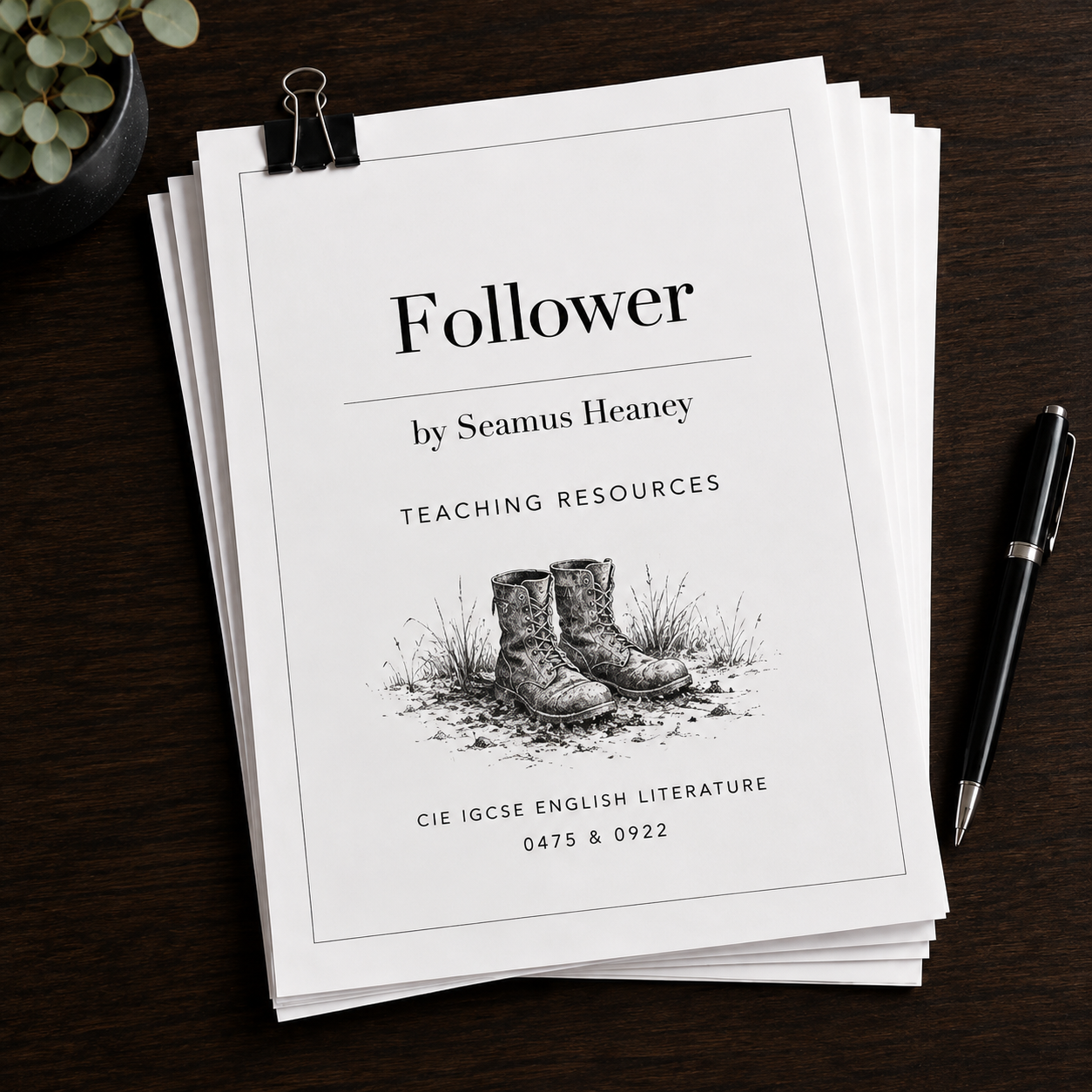
Teach Follower with minimal prep.
If you’re teaching Follower by Seamus Heaney, you don’t need to spend hours building lessons, discussion tasks, and analytical activities from scratch.
This complete teaching resource pack provides a clear, structured way to guide students from first reading and initial interpretation to confident, developed exam-style analysis — while saving valuable planning time.
Designed for CIE IGCSE English Literature (0475 & 0922), the pack also works flexibly for broader secondary poetry teaching and poetry exploration. It can be used across a full sequence of lessons, whether you’re introducing the poem, analysing Heaney’s language and poetic methods, exploring the changing relationship between father and son, developing discussion and interpretation, or preparing students for analytical writing and assessment.
Our in-depth study guide for the poem is also available to support teaching and deepen students’ understanding of Heaney’s exploration of fatherhood, admiration, childhood, memory, family relationships, ageing, role reversal, identity, and the passage of time.
Why this works
This is not just a collection of disconnected worksheets. It’s a carefully designed set of discussion-led, analysis-focused activities created to help students develop confident, independent interpretations of poetry.
Designed for paired, group, and independent learning
Encourages active thinking, discussion, and interpretation
Includes exam-style questions suitable for Literature and Language preparation
Develops analytical confidence and independent interpretation
Encourages thoughtful debate, discussion, and extended written responses
Helps students explore Heaney’s use of imagery, metaphor, simile, sound, contrast, structure, movement, perspective, tone, and the poem’s final reversal
What’s included
Poetry analysis task cards covering context, structure, form, language, tone, imagery, symbolism, personal response, and more
10 exam-style essay questions for developing and assessing analytical responses
10 creative writing prompts designed to support skills needed for the Language Paper
Roll the Dice discussion board for low-prep, high-engagement lessons
Silent debate activities built around thought-provoking statements to encourage independent thinking and discussion
Teacher instructions for quick and straightforward implementation
How you can use it
Introduce the poem and build initial understanding
Structure analysis lessons without excessive scaffolding
Run engaging, discussion-led poetry lessons
Explore themes such as fatherhood, admiration, childhood, memory, ageing, family relationships, identity, role reversal, and the passage of time
Examine how Heaney presents the father through physical imagery, agricultural language, movement, sound and the speaker’s childhood perspective
Explore the structural significance of the poem’s movement from childhood admiration to the final reversal between father and son
Set up independent written responses and revision activities
Prepare students for exam-style analytical questions with confidence
What students gain
Greater confidence analysing poetry independently
Experience answering exam-style questions
Stronger ability to form and support interpretations
Improved discussion and analytical writing skills
Greater independence in their thinking
Deeper understanding of Heaney’s language, imagery, structure, themes, perspective and presentation of the father-son relationship
Download Now
Download the full Follower by Seamus Heaney teaching resource pack and start using it immediately — from first reading through to confident, exam-style analysis, interpretation and discussion.
Take Your Study of Follower Further
Want to turn your understanding of Follower into confident classroom discussion and exam-ready analysis?
The Follower by Seamus Heaney Teaching Resource Pack gives you a complete set of ready-to-use activities designed to help students explore the poem for themselves — without hours of additional lesson planning. With analysis task cards, 10 exam-style essay questions, 10 creative writing prompts, a Roll the Dice discussion board, thought-provoking debate activities and teacher guidance, there’s plenty to use across lessons, homework and revision.
Or, if you’re teaching the complete Songs of Ourselves Volume 1 selection, the Complete Teaching Resource Bundle includes resources for all 15 poems on the 2027 CIE IGCSE English Literature syllabus — giving you a consistent bank of analysis, discussion, writing and revision activities for the entire poetry unit.
One poem or the whole collection — choose the resources that save you time and get your students thinking.
Go Deeper into Follower
To strengthen comparison skills and develop more conceptual responses, explore how Follower connects to other poems and texts that examine family relationships, identity, and change over time.
◆ Digging – Seamus Heaney
Another autobiographical poem exploring the speaker’s relationship with his father, contrasting manual labour with intellectual work. Both poems examine inheritance and the pressure to follow a parental path, but Digging resolves this more confidently, while Follower remains emotionally unsettled.
◆ Mid-Term Break – Seamus Heaney
Focuses on family dynamics and emotional response within a domestic setting. While Follower explores admiration and role reversal, this poem presents a more direct confrontation with loss, allowing comparison of how Heaney presents family relationships and emotional restraint.
◆ Piano – D. H. Lawrence
Explores memory and childhood through a reflective adult voice. Like Follower, it uses a shift in time to contrast past and present, showing how memory reshapes emotional understanding.
◆ My Parents – Stephen Spender
Examines a child’s perspective on authority and power dynamics within relationships. While Follower presents admiration, this poem explores fear and resentment, offering a useful contrast in how children perceive adult figures.
◆ Before You Were Mine – Carol Ann Duffy
Explores the changing parent-child relationship over time, particularly through retrospection. Both poems reflect on how children reinterpret their parents as individuals, shaped by time and shifting perspectives.
◆ Sonnet 29 (“When, in disgrace…”) – William Shakespeare
Explores identity, self-worth, and comparison to others. While not directly about family, it offers a useful comparison for how speakers reflect on inadequacy and emotional change.
These comparisons help students move beyond single-text analysis, developing more sophisticated responses by linking themes, methods, and interpretations across texts.
Final Thoughts
Follower is a powerful reflection on admiration, identity, and the inevitable changes that shape family relationships over time. Heaney begins by presenting the father as a figure of strength, precision, and authority, using controlled imagery and structure to elevate both the man and his work. However, the poem’s carefully managed progression leads to a subtle but striking shift, where this authority is undone through ageing and dependence.
What makes the poem particularly memorable is its emotional complexity. The final image resists a simple interpretation, suggesting not only role reversal, but also a sense of unease, as the speaker struggles to reconcile past admiration with present reality. In doing so, Heaney transforms a personal memory into a broader exploration of time, inheritance, and the changing nature of identity.
If you are exploring more poems from this collection, you can continue building your understanding through the Songs of Ourselves Volume 1 hub, or explore a wider range of texts and comparisons in the Literature Library.
Choose Your Next Text