At Home by Christina Rossetti: Summary, Themes, Symbolism & Analysis
Christina Rossetti’s At Home is a haunting exploration of memory, loss, and emotional detachment after death, presenting a speaker who returns to observe the world she has left behind. The poem’s central tension lies in the contrast between the continuity of life for the living and the speaker’s growing awareness of her own absence and erasure. Through vivid imagery and a shifting emotional tone, Rossetti reveals how quickly the dead are separated from the rhythms of everyday life.
This analysis of At Home explores themes of memory, exclusion, time, and identity, alongside Rossetti’s use of imagery, structure, and perspective to construct a quietly devastating portrayal of being forgotten. For more poetry analysis, explore the Christina Rossetti Poetry Hub and the wider Literature Library.

Context of At Home
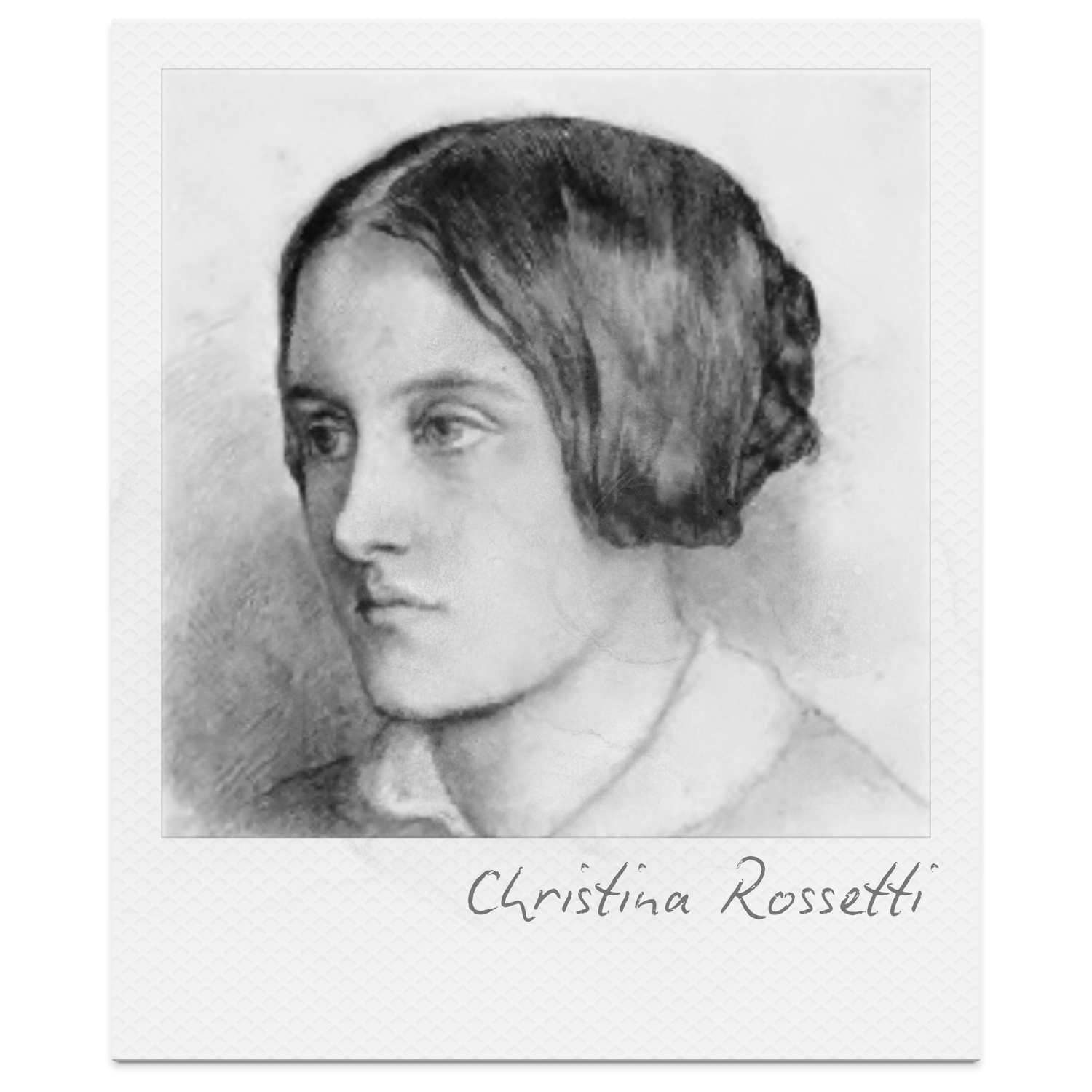
Christina Rossetti’s At Home reflects her deep engagement with death, memory, and the separation between the living and the dead, themes shaped by both her personal experiences and her religious beliefs. Rossetti lived within a Victorian culture that was highly preoccupied with mourning rituals and remembrance, where the dead were often idealised and kept present through memory, objects, and social practices. However, this poem challenges that comforting idea, suggesting instead that the dead may be quickly forgotten and excluded from the world they once inhabited.
Rossetti’s Anglo-Catholic faith also informs the poem, particularly in its focus on the soul’s existence after death. Yet unlike more traditionally consoling religious poetry, At Home presents a speaker who is neither fully at peace nor fully integrated into an afterlife. Instead, she occupies a liminal position, observing the living but unable to participate. This reflects a more unsettling exploration of spiritual disconnection and emotional isolation, rather than clear salvation or reunion.
The poem also engages with Victorian anxieties about identity and remembrance, raising the question of what remains of a person once they are gone. The speaker’s gradual realisation that she is no longer part of the social world she once belonged to suggests that identity is not fixed, but dependent on recognition, interaction, and memory. In this way, At Home can be read as both a personal and cultural reflection on the fragility of human connection.
For a broader exploration of these ideas, see the Christina Rossetti Context post.
At Home: At a Glance
Form: Four octet stanzas with regular rhyme and narrative progression
Mood: Reflective, melancholic, increasingly detached
Central tension: The persistence of life for the living vs the speaker’s exclusion from it after death
Core themes: Memory and erasure, death and identity, time and continuity, belonging and isolation
One-sentence meaning:
The poem presents a dead speaker observing her former life, revealing how quickly the living move on and how identity fades when one is no longer remembered or present.
Summary of At Home
The poem begins with the speaker, now dead, returning in spirit to a familiar house where her friends are gathered. She observes them feasting, laughing, and enjoying one another’s company, surrounded by rich sensory detail—fruit, wine, and conversation. The scene is full of warmth and vitality, emphasising the continuity of life despite her absence. Although she is present as an observer, she is already separated from the physical and emotional world they inhabit.
In the second stanza, the speaker listens to their conversation, which is focused entirely on the future. Her friends speak of plans, journeys, and anticipated pleasures, repeatedly invoking “to-morrow.” This forward-looking perspective highlights their hope and engagement with life, while subtly reinforcing the speaker’s exclusion. She is not part of their future; she exists outside of their temporal world.
The third stanza sharpens this contrast, as the repetition of “to-morrow” becomes more pronounced. The speaker realises that no one speaks of the past, and therefore no one speaks of her. The line “I was of yesterday” crystallises this moment of recognition—she belongs entirely to what has already passed, while the living exist in a continuous present and future. This marks a shift from observation to painful awareness of erasure.
In the final stanza, the speaker experiences a deep sense of emotional and physical detachment. She “shivers” but cannot affect the world around her, emphasising her lack of presence and agency. Her inability to influence even the smallest detail underscores her complete separation from the living. The poem ends with her departure, comparing herself to “the remembrance of a guest / That tarrieth but a day,” suggesting that memory itself is fleeting, and that even those once loved are ultimately forgotten.
Title, Form, Structure, and Metre
Rossetti’s At Home uses controlled regularity alongside subtle disruption to mirror the speaker’s emotional experience. The poem’s form appears stable and measured, yet its recurring structural shift suggests an underlying sense of interruption, absence, and incompleteness, reflecting the speaker’s position between presence and erasure.
Title
The title At Home initially suggests familiarity, comfort, and belonging. It evokes a space of social connection and emotional security, where one is recognised and included. However, Rossetti quickly subverts this expectation. Although the speaker returns to a place that was once “home,” she is no longer part of it. The title therefore becomes deeply ironic, highlighting the tension between physical proximity and emotional exclusion.
Form and Structure
The poem is composed of four octet stanzas, each following a consistent structural pattern. The extended length of each stanza allows Rossetti to develop a reflective, almost narrative voice, as the speaker observes and processes what she sees.
Within each stanza, the first seven lines unfold in a steady, flowing rhythm, creating a sense of continuity and immersion. However, each stanza ends with a noticeably shorter line, which disrupts this flow. This repeated structural contraction mirrors the speaker’s experience: just as the stanza narrows at its conclusion, so too does her sense of belonging collapse into isolation.
This pattern creates a cyclical effect, where each stanza builds a sense of connection before abruptly undercutting it. The repetition of this structure reinforces the idea that the speaker is repeatedly confronted with the same painful realisation—that she is no longer part of the world she once inhabited.
Rhyme Scheme and Poetic Pattern
The poem largely follows a consistent rhyme pattern, typically structured as ABCBDEFE within each stanza. This alternating pattern produces a gentle, almost song-like rhythm that runs quietly beneath the poem, allowing the narrative and emotional development to take precedence.
The subtlety of the rhyme reflects the speaker’s diminished presence; nothing in the structure draws overt attention to itself, mirroring how she herself has become unnoticed and forgotten.
However, the third stanza intensifies this pattern through the repetition of similar rhyme sounds, particularly around “day” and “away.” This creates a more insistent, echoing effect, reinforcing the speaker’s realisation that she belongs only to the past—“yesterday”—while the living are oriented toward “to-day” and “to-morrow.” The rhyme here becomes more than musical; it emphasises the poem’s central temporal divide.
Metre and Rhythmic Movement
The poem is primarily written in iambic tetrameter, giving it a steady, measured rhythm that reflects the natural flow of speech and observation. For example:
When I | was dead, | my spi- | rit turned
This regularity creates a sense of calm continuity, mirroring the ongoing life of the speaker’s friends. Their world moves forward smoothly, unaffected by her absence.
However, each stanza concludes with a line in iambic trimeter, which shortens the rhythm and creates a subtle sense of interruption:
For each | was loved | of each
This contraction has a powerful effect. After the longer, flowing lines that precede it, the shortened line feels abrupt and incomplete, as though something has been cut short or diminished. This mirrors the speaker’s own condition—her life has ended, and her presence has been reduced to something fleeting and insubstantial.
Across the poem, this rhythmic pattern reinforces the emotional trajectory: a movement from observation to realisation, from apparent continuity to a quiet but devastating sense of absence and exclusion.
The Speaker of At Home
The speaker of At Home is a dead woman who returns in spirit to a familiar place from her past, observing the lives of those she once knew. She exists in a liminal state, neither fully part of the living world nor clearly situated within an afterlife. This perspective allows Rossetti to explore the unsettling experience of being present yet entirely unseen, creating a voice defined by both proximity and exclusion.
At the beginning of the poem, the speaker appears calm and observant, describing the scene with a degree of emotional distance. However, as the poem progresses, her tone shifts toward quiet realisation and growing sorrow. Listening to her friends speak of “to-morrow” without reference to the past, she becomes increasingly aware that she no longer belongs to their world. Her identity, once shaped by relationships and shared experience, begins to dissolve as she recognises that she is no longer remembered or acknowledged.
The speaker’s lack of physical presence is central to her character. She “shivers” but cannot affect the environment around her, highlighting her complete powerlessness and detachment. This inability to interact reinforces the idea that existence, in a social sense, depends on recognition and participation, both of which have been lost to her.
Despite this, the speaker is not entirely detached. Her reluctance to leave—“to stay, and yet to part how loth”—reveals an ongoing emotional connection to the life she has lost. This tension between lingering attachment and enforced separation defines her voice, as she hovers between memory and absence.
Ultimately, the speaker embodies the poem’s central concern: the fragility of identity after death. Without interaction, recognition, or remembrance, she becomes something fleeting—“the remembrance of a guest / That tarrieth but a day”—suggesting that even those once loved may fade quickly from the lives of the living.
Stanza-by-Stanza Analysis of At Home
A close reading of At Home reveals how Rossetti develops the speaker’s experience from detached observation to painful realisation and eventual withdrawal. Each stanza builds on the last, deepening the contrast between the vital, forward-moving world of the living and the speaker’s growing awareness of her own absence and erasure. Through shifts in imagery, tone, and perspective, the poem traces a quiet but devastating progression from belonging to exclusion.
Stanza 1: Lively Continuity and Immediate Exclusion
The opening stanza establishes the speaker’s position as both present and fundamentally separate. The phrase “When I was dead” immediately situates the voice beyond life, while the action of returning to a “much-frequented house” suggests a place of former belonging. This movement toward familiarity creates an expectation of reconnection, yet what follows quickly reveals a stark emotional divide.
The scene the speaker observes is rich with sensory imagery and communal warmth. Her friends are “feasting,” surrounded by “green orange-boughs,” sharing wine and fruit, and engaging in lively conversation. The repeated physical actions—“pushed,” “sucked,” “sang,” “jested,” “laughed”—emphasise vitality and physical presence, reinforcing the fullness of life continuing without her. The abundance of food and shared experience suggests not just survival, but celebration and connection.
However, this vivid depiction of togetherness simultaneously highlights the speaker’s exclusion. She is able to see and hear, but not participate, creating a subtle but powerful contrast between observation and involvement. The final line, “For each was loved of each,” is particularly significant. Its balanced phrasing reflects mutual affection within the group, but it also underscores the speaker’s absence from this network of love. She is no longer included in the reciprocal relationships that once defined her identity.
Overall, the stanza establishes the poem’s central tension: a world that remains full, active, and emotionally connected, contrasted with a speaker who is present yet entirely outside of it.
Stanza 2: Forward-Looking Hope and Temporal Exclusion
In the second stanza, the speaker shifts from visual observation to attentive listening, drawing closer to the inner lives of her friends while remaining excluded from them. The phrase “honest chat” suggests authenticity and ease, reinforcing the sense that life continues naturally and unaffected by her absence.
The conversation is dominated by references to the future, particularly through the repeated use of “to-morrow.” This forward-looking language conveys hope, continuity, and anticipation, as the speakers plan journeys and imagine future pleasures. The repetition of phrases like “plod plod” and “miles and miles” emphasises movement and progression, suggesting lives that are actively unfolding and extending beyond the present moment.
At the same time, this focus on the future intensifies the speaker’s separation. She is able to hear these plans, but she is not included in them. The detailed descriptions of journeys—across “featureless sands” and toward the “eyrie-seat”—create a sense of expansion and possibility, which contrasts sharply with the speaker’s static and limited position.
The final line, “To-morrow shall be like / To-day, but much more sweet,” captures the optimism of the living, who expect life to continue and improve. However, this optimism is implicitly exclusive. The speaker, who exists outside of time as they experience it, cannot share in this expectation. Her presence becomes increasingly defined by what she is not: she is not part of their future, nor their unfolding sense of continuity.
Overall, the stanza deepens the poem’s central contrast, presenting a world oriented toward movement, growth, and expectation, while the speaker remains fixed in a position of observation and exclusion.
Stanza 3: Realisation of Erasure and Temporal Displacement
The third stanza marks a turning point, as the speaker moves from observation to painful realisation. The repetition of “To-morrow” becomes more insistent, emphasising the collective optimism of the living, who are described as “strong with hope.” This shared focus on the future creates a sense of unity among the group, reinforcing the idea that life continues confidently and uninterrupted.
However, this forward-looking energy is defined as much by what is absent as by what is present. The line “While no one spoke of yesterday” is crucial, as it signals the speaker’s complete exclusion from memory. “Yesterday” becomes synonymous with the speaker herself, and the silence surrounding it reveals that she has already begun to fade from collective consciousness.
The image “Their life stood full at blessed noon” further intensifies this contrast. Noon suggests fullness, brightness, and the height of life, a moment of completeness and vitality. Against this, the speaker positions herself as something already past, emphasising the divide between presence and absence, fullness and loss.
This contrast is crystallised in the line “I, only I, had passed away:”, where the repetition of “I” isolates the speaker completely. The phrase underscores her singular experience of death, set against the ongoing lives of others. The final line, “I was of yesterday,” delivers the stanza’s most powerful realisation. The speaker defines herself entirely in terms of the past, acknowledging that she no longer belongs to the temporal world of “to-day” and “to-morrow.”
Overall, this stanza deepens the poem’s emotional impact by revealing that the speaker’s exclusion is not only physical, but also temporal and psychological. She has not only left the world of the living—she has been left behind by it.
Stanza 4: Final Detachment and the Fragility of Memory
In the final stanza, the speaker’s emotional response becomes fully internalised, as she confronts the reality of her complete detachment and insignificance. The repetition of “I shivered” conveys both physical discomfort and emotional distress, yet this sensation remains entirely contained within her. The line “but cast / No chill across the table-cloth” emphasises her inability to affect the world around her, reinforcing her status as invisible and powerless.
The phrase “all-forgotten” marks the culmination of the poem’s central realisation. The speaker is not only absent, but erased from the consciousness of those she once knew. This is intensified by the paradox in “To stay, and yet to part how loth”, which captures her emotional conflict. She longs to remain connected to the familiar space and relationships, yet recognises that she no longer belongs there.
The line “I passed from the familiar room” signals a moment of final departure, both physical and symbolic. The repetition of “passed” echoes earlier references to death, reinforcing the idea that she has moved beyond not only life, but also memory and presence. The addition of “I who from love had passed away” suggests that her exclusion is not merely spatial, but emotional—she has been removed from the network of relationships that once defined her.
The closing simile, “Like the remembrance of a guest / That tarrieth but a day,” delivers the poem’s most devastating insight. Memory itself is presented as fleeting and insubstantial, comparing the speaker’s presence to that of a temporary visitor whose impact quickly fades. This reduces even past intimacy to something brief and easily forgotten, underscoring the fragility of human connection.
Overall, the final stanza resolves the poem with a quiet but profound sense of loss, as the speaker accepts her transformation into something transient, insubstantial, and ultimately forgotten.
Key Quotes from At Home
These key quotations reveal how Rossetti constructs a poem centred on memory, exclusion, and the fragility of identity after death. Through imagery, contrast, and perspective, the speaker moves from quiet observation to a devastating recognition of her own erasure from both presence and memory.
“When I was dead, my spirit turned”
◆ Establishes the speaker’s liminal state between life and death
◆ Suggests movement toward the past, driven by memory and attachment
◆ Immediately frames the poem through detachment and retrospection
“the much-frequented house”
◆ Implies familiarity, belonging, and past social connection
◆ Reinforces the speaker’s emotional attachment to place
◆ Creates contrast between past inclusion and present exclusion
“Feasting beneath green orange-boughs”
◆ Rich sensory imagery conveys abundance and vitality
◆ Symbolises life continuing in fullness without the speaker
◆ Highlights the contrast between physical presence and absence
“They sang, they jested, and they laughed”
◆ Repetition of actions emphasises energy and communal joy
◆ Suggests continuity of life and relationships
◆ Reinforces the speaker’s position as observer rather than participant
“For each was loved of each”
◆ Balanced phrasing reflects mutual affection and harmony
◆ Emphasises reciprocal relationships from which the speaker is excluded
◆ Highlights the central theme of belonging vs isolation
“To-morrow shall be like / To-day, but much more sweet”
◆ Reflects optimism and forward-looking hope of the living
◆ Suggests continuity and expectation of improvement
◆ Contrasts with the speaker’s inability to exist within this temporal flow
“While no one spoke of yesterday”
◆ Marks the speaker’s erasure from memory
◆ “Yesterday” symbolically represents both the past and the speaker herself
◆ Highlights the silence surrounding loss and absence
“Their life stood full at blessed noon”
◆ “Noon” symbolises peak vitality and fullness of life
◆ Reinforces the contrast between life at its height and the speaker’s absence
◆ Suggests a world complete without her
“I, only I, had passed away”
◆ Repetition isolates the speaker completely
◆ Emphasises her singular experience of death
◆ Reinforces the divide between individual loss and collective continuity
“Like the remembrance of a guest / That tarrieth but a day”
◆ Simile reduces memory to something temporary and fleeting
◆ Suggests even close relationships fade quickly after death
◆ Concludes the poem with a powerful statement on the fragility of remembrance
Key Techniques in At Home
Rossetti’s At Home uses contrast, imagery, and structural control to construct a powerful meditation on absence, memory, and exclusion. The poem’s techniques work subtly but cumulatively, creating a quiet emotional intensity that emerges through juxtaposition and restraint rather than overt drama.
◆ Juxtaposition (Life vs Death) – The poem’s central technique is the sharp contrast between the vital, sensory world of the living and the speaker’s cold, insubstantial existence. Scenes of feasting, laughter, and movement are set against the speaker’s inability to participate, reinforcing the divide between presence and absence.
◆ Sensory Imagery (Abundance and Vitality) – Rossetti uses rich, tactile imagery to depict the living world: “feasting,” “pushed the wine,” “sucked the pulp of plum and peach.” These verbs emphasise physical engagement and pleasure, while images like “green orange-boughs” evoke growth and fullness. This sensory intensity highlights what the speaker has lost, making her exclusion more pronounced.
◆ Thermal Imagery (Warmth vs Cold) – The contrast between warmth and cold is central to the speaker’s experience. While her friends exist in a space of warmth, movement, and shared energy, the speaker “shivers comfortless,” suggesting emotional and physical isolation. Crucially, she “cast / No chill,” emphasising her lack of impact—her condition is not only cold, but ineffective and invisible.
◆ Repetition (Temporal Focus) – The repeated emphasis on “to-morrow” reinforces the forward-looking optimism of the living, while the absence of “yesterday” signals the speaker’s erasure. This repetition creates a rhythmic insistence that mirrors the continuity of life, while simultaneously excluding the speaker from that temporal flow.
◆ Symbolism (Time and Identity) – Time operates symbolically throughout the poem. “Yesterday” becomes synonymous with the speaker herself, while “to-day” and “to-morrow” represent the ongoing lives of others. The image of “blessed noon” symbolises peak vitality, intensifying the contrast with the speaker’s position outside of time and experience.
◆ Parallelism and Balanced Phrasing – Lines such as “For each was loved of each” use balanced structure to reflect mutual connection and harmony. This symmetry reinforces the completeness of the living world, while implicitly highlighting the speaker’s exclusion from this shared network.
◆ Narrative Perspective (Detached Observer) – The first-person perspective places the reader inside the speaker’s experience, but her role is limited to observation. This creates a tension between proximity and separation, as she witnesses intimacy without participating in it. The perspective reinforces the emotional impact of being present yet unseen.
◆ Caesura and Pauses – Strategic pauses within lines slow the rhythm and create moments of reflection, mirroring the speaker’s gradual realisation. These interruptions contribute to the poem’s meditative tone, allowing emotional weight to build quietly.
◆ Simile (Ephemeral Memory) – The final comparison—“Like the remembrance of a guest / That tarrieth but a day”—reduces memory to something fleeting and temporary. This simile encapsulates the poem’s central idea: that even meaningful relationships may leave only a brief and fading trace.
◆ Subversion of Consolatory Death Poetry – Unlike traditional Victorian poetry that presents death as peaceful or spiritually resolved, Rossetti offers a more unsettling vision. The speaker is neither comforted nor integrated into an afterlife, but remains detached and forgotten, challenging expectations of enduring memory or reunion.
Together, these techniques create a poem that is restrained yet devastating, where meaning emerges through contrast, repetition, and the quiet erosion of presence.
Themes in At Home
Christina Rossetti’s At Home explores a series of interconnected themes centred on absence, identity, and the fragile nature of human connection. Through the speaker’s detached perspective, the poem reveals how quickly the living move forward, raising unsettling questions about memory, belonging, and what remains after death.
Memory and Erasure
One of the poem’s most striking themes is the transition from being remembered to being forgotten. The speaker returns expecting some lingering presence in the lives of her friends, yet realises that she has already been erased from their conversations. The line “While no one spoke of yesterday” signals this absence, as “yesterday” becomes synonymous with the speaker herself. Rossetti suggests that memory is not permanent, but fragile and fleeting, culminating in the final image of the speaker as “the remembrance of a guest / That tarrieth but a day.”
Death and Identity
The poem questions what happens to identity after death. Without interaction, recognition, or participation, the speaker begins to lose her sense of self. She is no longer defined by relationships or shared experience, but reduced to a passive observer. This suggests that identity is not fixed, but dependent on social presence and acknowledgment. Once removed from these, the self becomes diminished, almost insubstantial.
Time and Continuity
Time is presented as something that continues seamlessly for the living, but excludes the dead. The repeated focus on “to-day” and “to-morrow” reflects a forward-moving world defined by expectation and continuity. In contrast, the speaker is confined to the past—“I was of yesterday.” This creates a temporal divide, where life progresses without interruption, while the speaker remains static, unable to move forward or rejoin the present.
Belonging and Isolation
The poem explores the painful shift from belonging to complete isolation. In life, the speaker was part of a community defined by shared affection—“For each was loved of each.” In death, she is excluded from this network, unable to participate or be recognised. This creates a powerful contrast between collective inclusion and individual exclusion, highlighting how belonging is sustained through interaction, and how quickly it dissolves when that interaction ends.
Presence and Absence
Rossetti develops a tension between being physically absent yet emotionally present. The speaker can see and hear everything, but cannot affect the world around her. Her inability to “cast / No chill” underscores her lack of impact, suggesting that true presence requires the ability to interact and be acknowledged. Without this, existence becomes ghostly and insubstantial.
The Transience of Human Connection
Underlying the poem is a broader reflection on the temporary nature of relationships. Even strong bonds, once thought lasting, can fade quickly in the face of time and ongoing life. The comparison of the speaker to a guest whose memory lingers only briefly suggests that connection, while meaningful, is ultimately not permanent, reinforcing the poem’s quiet but devastating realism.
Emotional Detachment and Acceptance
By the final stanza, the speaker begins to move toward a form of reluctant acceptance. Although she feels the pain of exclusion, she ultimately withdraws from the scene. This shift reflects a movement from attachment to detachment, as she recognises that she no longer belongs. The tone remains subdued, suggesting not resolution, but a quiet acknowledgement of loss.
Together, these themes position At Home as a deeply reflective poem that examines not only death, but the fragile structures—memory, identity, and belonging—that give life its meaning.
Alternative Interpretations of At Home
While At Home presents a seemingly simple narrative of a dead speaker observing the living, Rossetti’s use of perspective, imagery, and emotional restraint allows for a range of deeper interpretations. The poem can be read not only as a reflection on death, but as an exploration of memory, identity, and psychological experience.
Psychological Interpretation: Isolation, Depression, and Fear of Being Forgotten
A psychological reading suggests that the poem reflects an intense preoccupation with isolation, invisibility, and emotional detachment, which can be linked to Rossetti’s known struggles with periods of illness and low mood. The speaker’s experience of being present yet unable to connect mirrors feelings often associated with depression—watching life continue while feeling excluded from it.
The inability to influence the environment—“cast / No chill”—can be read as symbolic of a deeper fear: that one’s presence does not matter, that one cannot affect others emotionally. Similarly, the repeated emphasis on being forgotten suggests an anxiety about erasure and insignificance, where identity dissolves without recognition. In this reading, death becomes a metaphor for emotional disconnection within life itself, rather than purely a literal afterlife experience.
Religious Interpretation: Spiritual Displacement Rather Than Consolation
Given Rossetti’s Anglo-Catholic faith, the absence of a clear heaven or divine resolution is striking. Instead of presenting death as peaceful or redemptive, the poem depicts a speaker who remains detached and unsettled, neither fully part of the afterlife nor the living world.
This ambiguity may reflect a more complex engagement with faith, where spiritual certainty is replaced by unease and questioning. The speaker’s position suggests a form of spiritual displacement, raising the possibility that the poem is not offering comfort, but exploring the uncertainty of what follows death.
Existential Interpretation: Identity and Meaning After Death
From an existential perspective, the poem questions whether identity has any permanence beyond social existence. The speaker’s realisation that she is no longer remembered suggests that meaning is constructed through relationships and shared experience, rather than existing independently.
The reduction of the self to “yesterday” implies that once removed from the present, identity loses relevance. In this reading, the poem becomes a meditation on the fragility of human significance, suggesting that existence is tied to time, memory, and recognition, all of which are temporary.
Social Interpretation: Belonging and the Structure of Community
The poem can also be read as an exploration of how communities function. The living are shown to be self-sustaining, bound by mutual affection—“each was loved of each”—yet this structure depends on active participation. Once the speaker is removed, the group continues without disruption, suggesting that belonging is conditional and easily dissolved.
This raises questions about the nature of social bonds: are they enduring, or are they sustained only through presence and interaction? The poem implies the latter, presenting community as something that persists, but not necessarily in a way that preserves individual memory.
Feminist Interpretation: Voice Without Agency
Although less overt than in some of Rossetti’s other poems, a feminist reading can focus on the speaker’s lack of agency and visibility. She is present, observant, and reflective, yet unable to act or be acknowledged. This can be read as symbolic of broader limitations placed on women, particularly within Victorian society, where women’s identities were often shaped by their roles within social and relational structures.
The speaker’s disappearance from both physical space and memory may reflect anxieties about female invisibility and erasure, particularly once removed from socially recognised roles.
Together, these interpretations reveal At Home as a deeply layered poem that extends beyond its surface narrative, offering insight into psychological experience, spiritual uncertainty, and the fragile foundations of identity and belonging.
Teaching Ideas for At Home
At Home offers rich opportunities for exploring perspective, time, and emotional detachment, while also encouraging students to engage in close analysis and interpretive thinking. The poem’s clarity of narrative combined with its deeper implications makes it ideal for both analytical and discussion-based tasks.
1. Model Paragraph Deconstruction Task
Provide students with the following analytical paragraph:
Rossetti presents the speaker in At Home as increasingly aware of her own erasure, particularly through the contrast between the living’s focus on the future and her confinement to the past. The repeated emphasis on “to-morrow” highlights the optimism and continuity of life, while the absence of “yesterday” suggests that the speaker has already been forgotten. This is reinforced by the declarative statement “I was of yesterday,” which reduces the speaker’s identity to something entirely past and no longer relevant. Through this contrast, Rossetti suggests that identity is dependent on memory and participation, both of which are denied to the speaker after death.
Students then:
◆ Write 2–3 possible essay questions this paragraph could answer
◆ Use a mark scheme to assess the paragraph (focus on argument, evidence, and analysis)
◆ Improve the paragraph by:
adding deeper analysis of language or structure
embedding an additional quotation
refining the conceptual argument
This task builds exam awareness, critical evaluation, and analytical precision.
2. Temporal Language Exploration
Ask students to track all references to time in the poem (e.g. “to-day,” “to-morrow,” “yesterday,” “noon”).
Students then:
◆ Categorise each reference (past / present / future)
◆ Analyse how these references shape the poem’s meaning
◆ Write a short response explaining how Rossetti uses time to construct exclusion and identity
This reinforces close reading and thematic development.
3. Perspective and Voice Discussion
Students explore the impact of the poem being told from a dead speaker’s perspective.
Discussion prompts:
◆ How does the speaker’s position affect our understanding of the living?
◆ Is the speaker reliable, or emotionally biased?
◆ Does the poem feel more like observation or judgement?
Students can then write a short paragraph on how perspective shapes meaning.
4. Imagery and Contrast Task
Provide two columns:
Imagery of the living (feasting, fruit, laughter)
Imagery of the speaker (shivering, cold, silence)
Students:
◆ Analyse how Rossetti contrasts these images
◆ Explain how this contrast develops the poem’s central ideas
◆ Link imagery to theme and emotional impact
5. Creative Perspective Rewrite
Students rewrite a section of the poem from:
◆ One of the friends’ perspectives
OR
◆ A narrator who can see the ghost
This encourages:
deeper understanding of voice and perspective
engagement with what is missing or unseen in the original poem
6. Debate: Is the Poem Comforting or Disturbing?
Set up a discussion or silent debate:
“At Home presents a comforting view of death.”
Students must:
◆ Agree or disagree
◆ Support their ideas with textual evidence
◆ Respond to opposing viewpoints
This develops interpretive flexibility and evaluative thinking.
These activities allow students to move from close textual analysis to broader conceptual understanding, making At Home a powerful text for developing both analytical skill and personal interpretation.
Go Deeper into At Home
Rossetti frequently returns to questions of memory, identity, and emotional belonging, and At Home sits within a wider pattern of poems that explore what it means to be present, absent, remembered, or erased. Comparing it with other works reveals how she revisits these ideas from different emotional and philosophical angles.
◆ Remember – While Remember asks to be held in memory after death, it ultimately releases that demand, suggesting it is better to be forgotten than to cause pain. In contrast, At Home presents the harsh reality of that forgetting, showing what it feels like to be erased despite once being loved.
◆ Echo – Both poems explore the persistence of emotional connection beyond absence, but Echo imagines a desired reunion through dreams, while At Home denies this possibility. The speaker in Echo longs for return, whereas the speaker in At Home confronts the finality of separation and exclusion.
◆ Shut Out – This poem similarly depicts exclusion from a once-familiar space. However, while Shut Out suggests the possibility of spiritual or emotional transformation beyond that exclusion, At Home remains grounded in the pain of being left outside without resolution.
◆ From the Antique – Both poems engage with feelings of detachment and estrangement from life. In From the Antique, the speaker expresses weariness with existence itself, while At Home presents the consequence of that separation, where life continues but the self is no longer part of it.
◆ Memory – As the title suggests, Memory explores the persistence of emotional recollection. Unlike At Home, where memory fades quickly, Memory suggests a more enduring attachment, highlighting Rossetti’s shifting perspectives on whether the past can truly be retained or sustained.
◆ Up-Hill – This poem offers a more reassuring, faith-driven perspective, presenting life as a journey that leads to rest and welcome at its end. In contrast, At Home disrupts this comfort, offering a vision of death that is uncertain, isolating, and unresolved.
◆ In an Artist’s Studio – Both poems explore the idea of being reduced or reshaped by perception. In In an Artist’s Studio, the woman is trapped within a male gaze, while in At Home, the speaker is reduced to a fading memory. In both cases, identity becomes something constructed—and diminished—by others.
Together, these comparisons reveal that At Home is part of a broader Rossettian exploration of absence, identity, and the limits of human connection, offering one of her most quietly devastating reflections on what it means to be forgotten.
Final Thoughts
At Home is one of Christina Rossetti’s most quietly unsettling poems, offering a stark meditation on memory, identity, and the fragile nature of human connection. Through the perspective of a speaker who is both present and excluded, Rossetti exposes the uncomfortable truth that life continues seamlessly for the living, even in the absence of those once loved.
What makes the poem particularly powerful is its restraint. There is no dramatic confrontation or overt grief—only the gradual realisation that the speaker has been erased from both presence and memory. This subtle progression, combined with Rossetti’s use of contrast and structure, creates a lingering emotional impact that feels both intimate and universal.
Ultimately, At Home challenges comforting assumptions about remembrance and belonging. It suggests that identity is not fixed, but dependent on recognition, participation, and shared experience, all of which can disappear with time. In doing so, the poem leaves readers with a profound sense of how easily a life—once central and connected—can become something brief, distant, and forgotten.
For more poetry analysis, explore the Christina Rossetti Poetry Hub and the wider Literature Library.
Choose Your Next Text